Corrected-Grain Leather

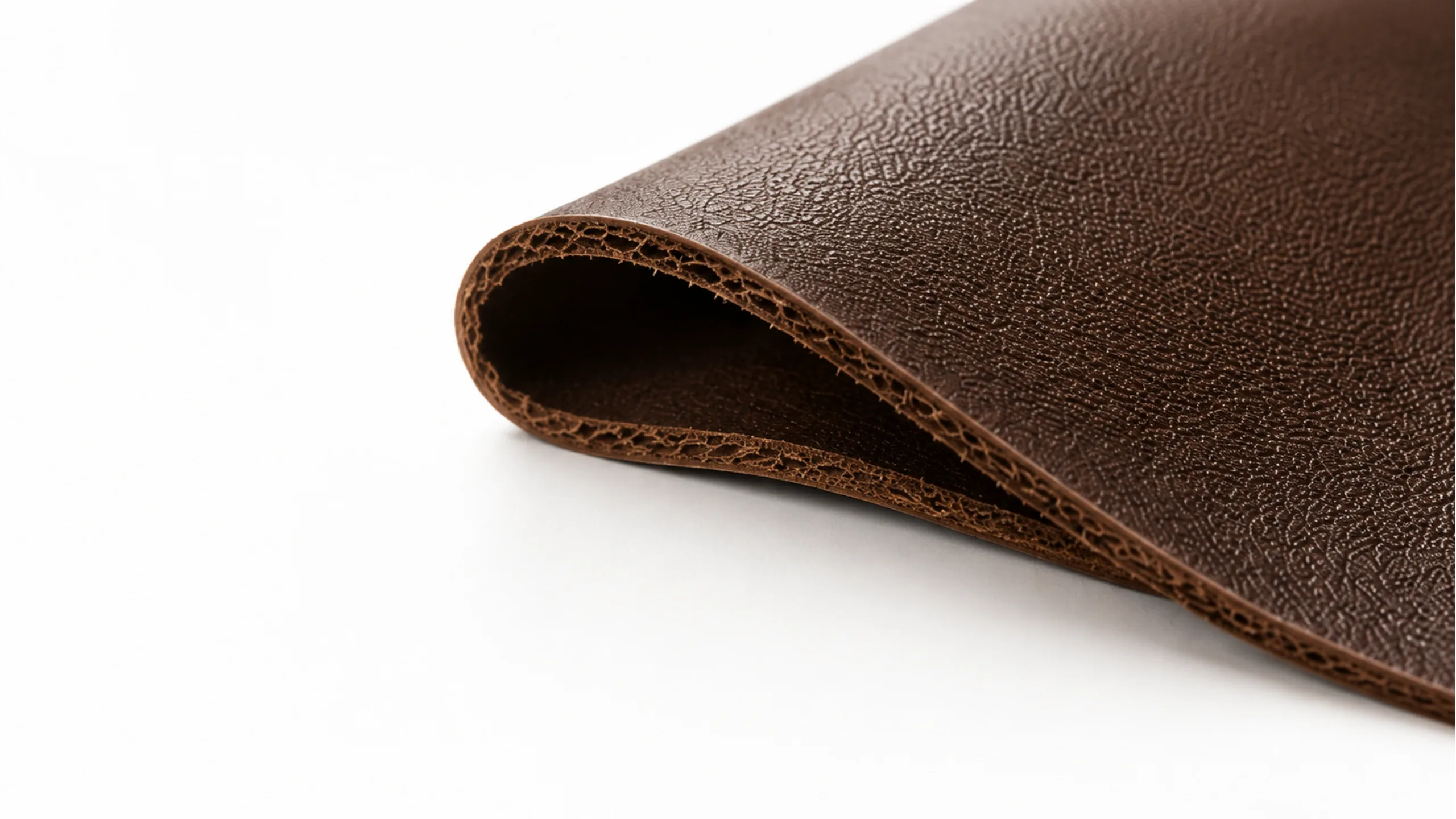
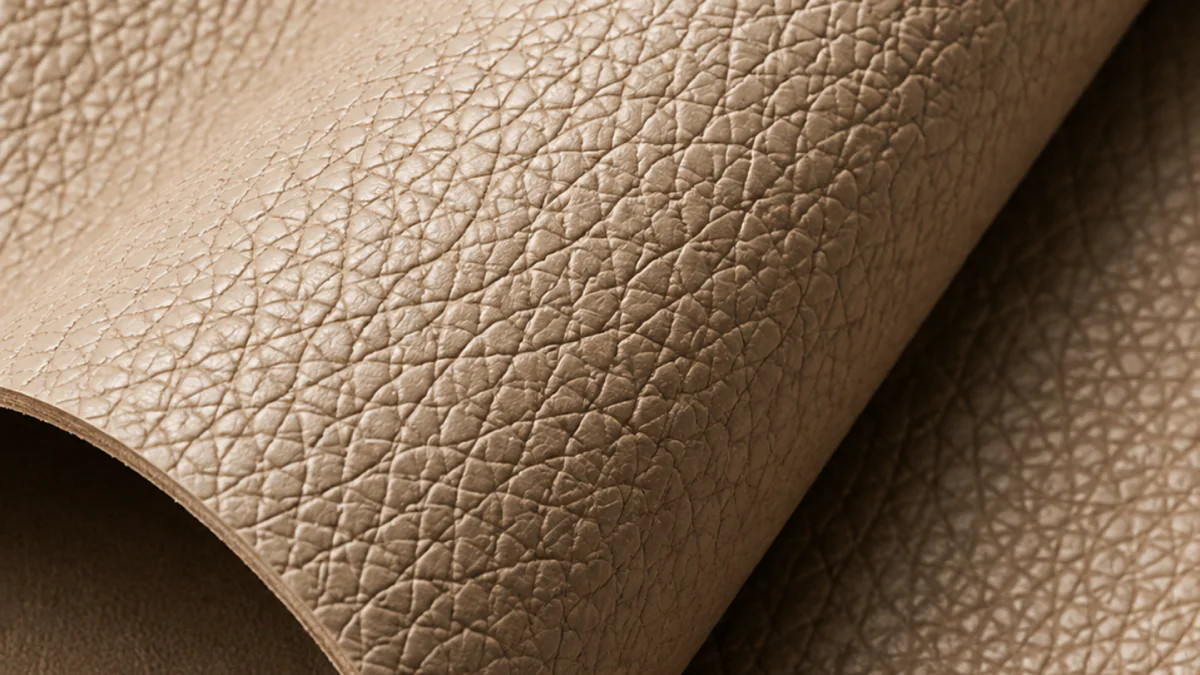
A folded sheet of corrected grain leather, the embossed pebble grain even across the whole surface
Leather Grades & Construction

Corrected Grain Leather: The Surface Was Built, Not Grown

Real hide underneath. A manufactured surface on top. Both halves are true.

The Material

Corrected Grain Leather at a Glance

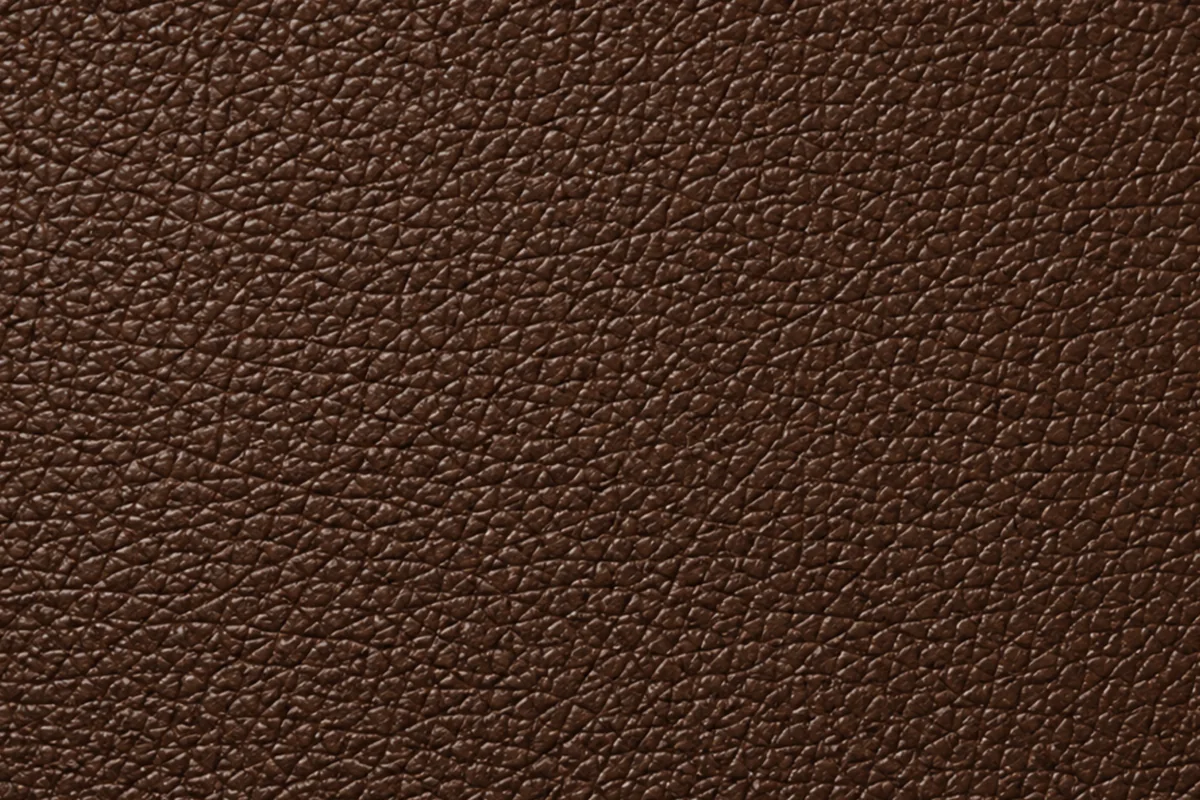
Hide sanded free of its natural surface, levelled with filler, embossed with a grain pattern, then coated in pigment. The leather is real. The grain never grew.

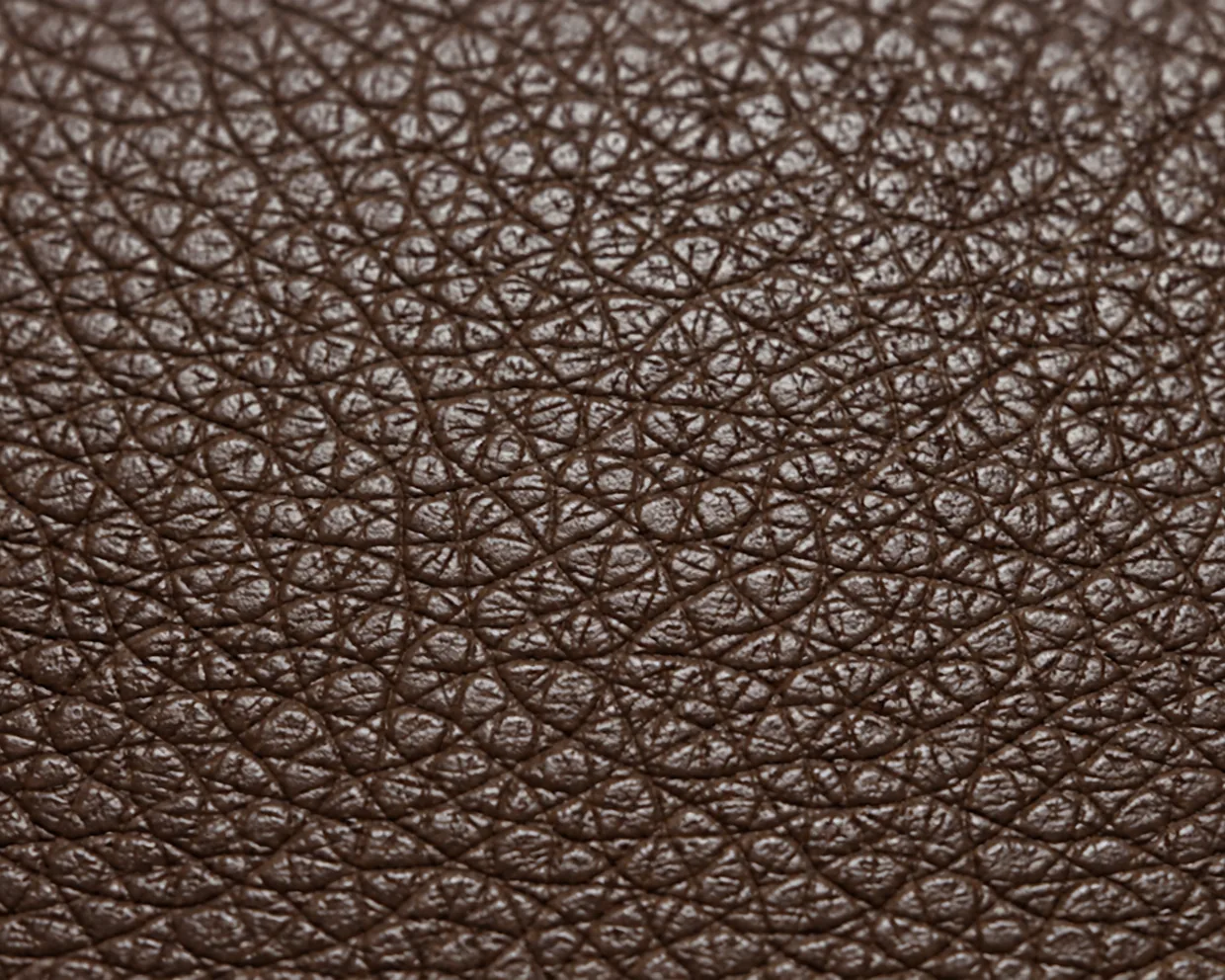
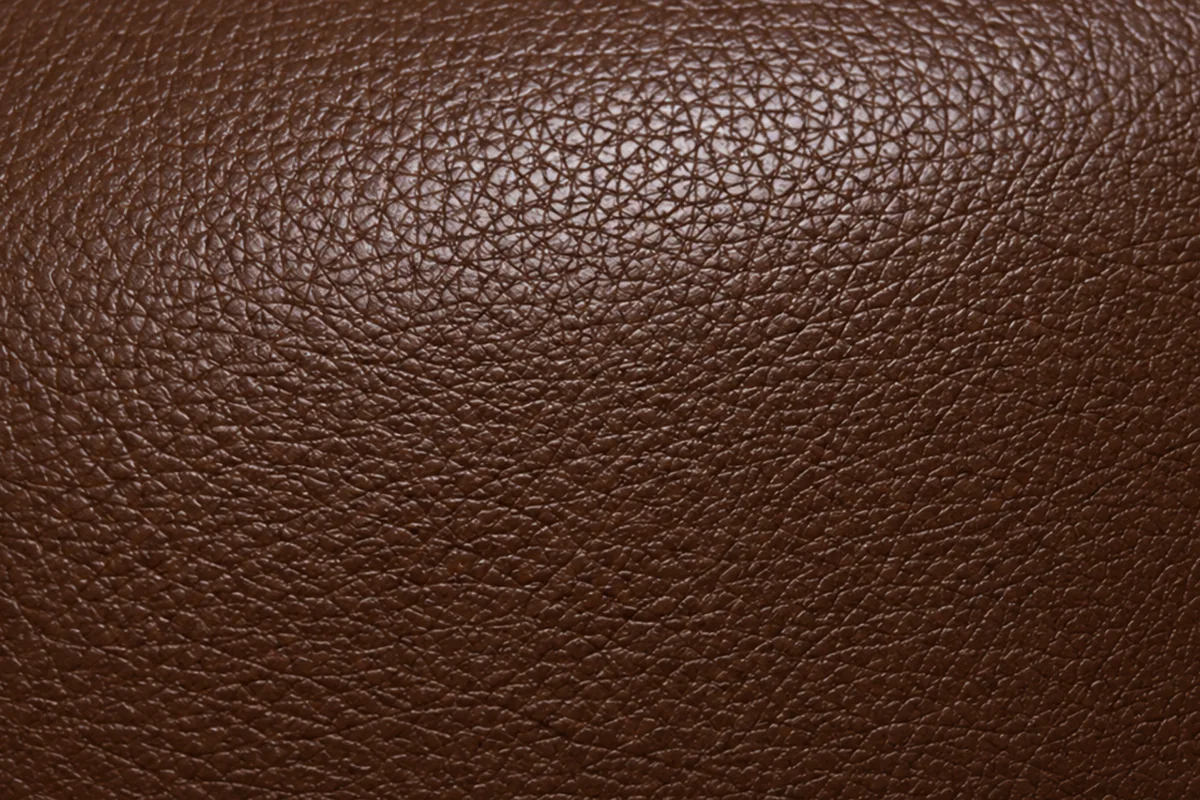
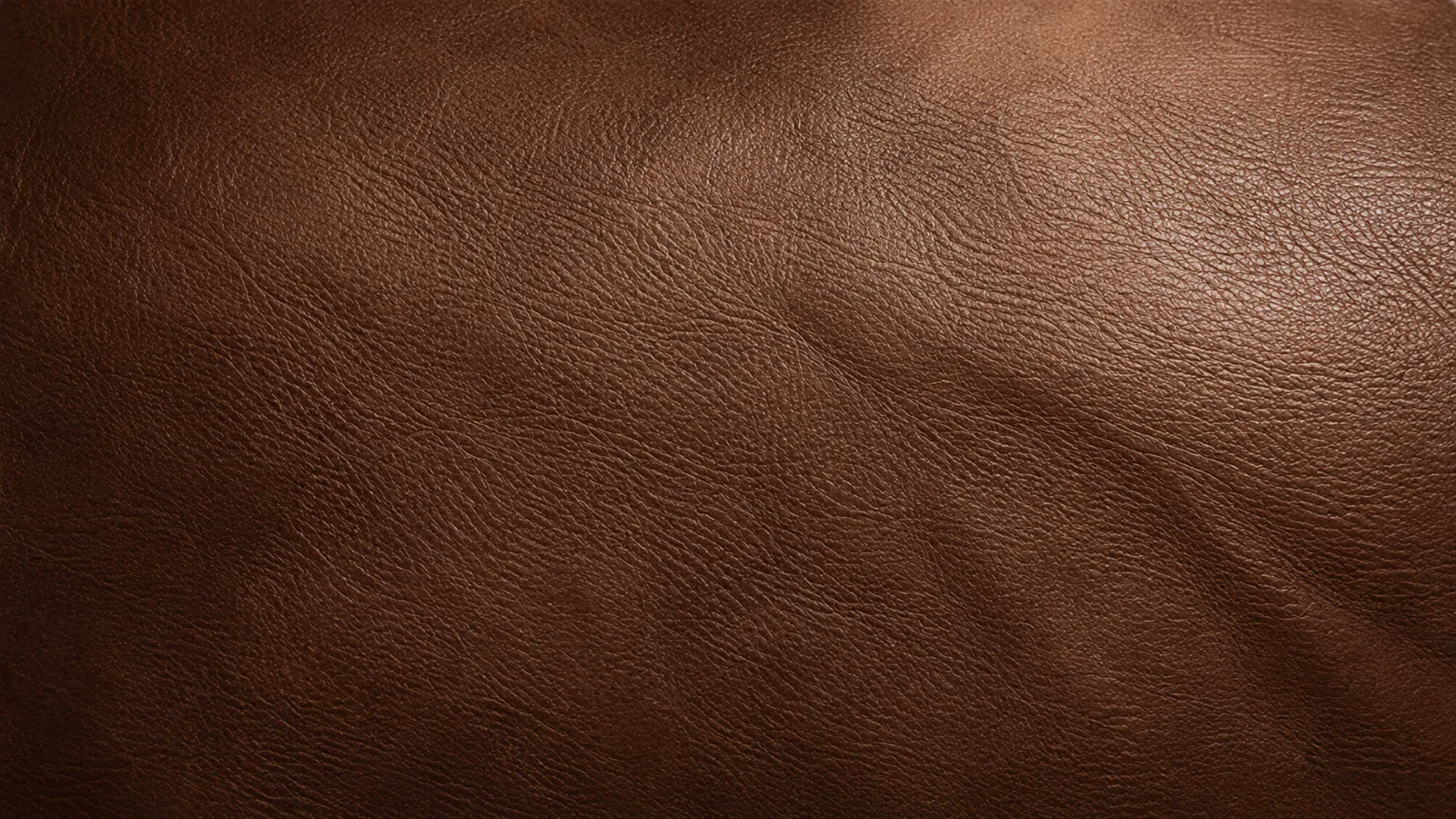
Close view of a corrected grain leather surface showing an even, regular embossed grain pattern under a pigment coating
One pore size, one grain depth, a pattern that repeats.
How It Is Made

Four Things Done to a Hide, in This Order

Terms from Leather Naturally.

  1. 01

    Sanding

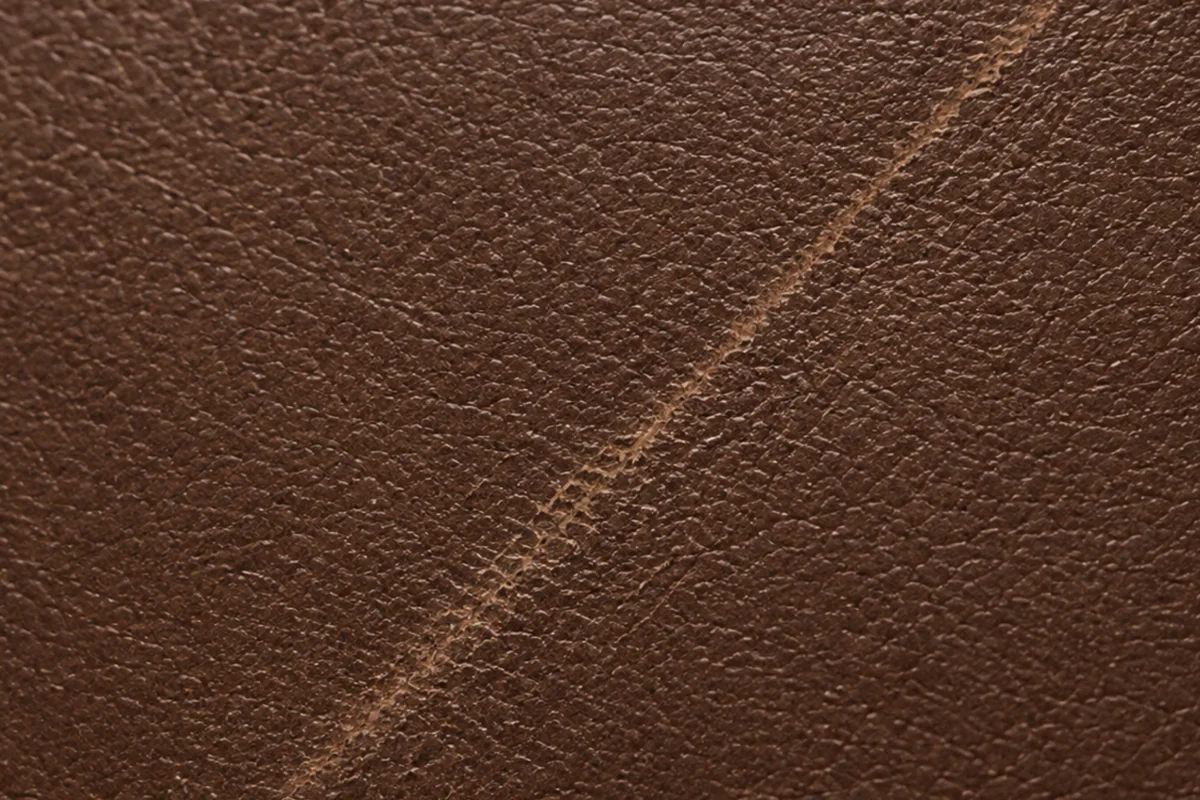
    Brown hide with a healed scar running across it and its natural grain still in place, the kind of mark sanding takes off
    Now

    Free of the scars that stopped it selling.

  2. 02

    Filling

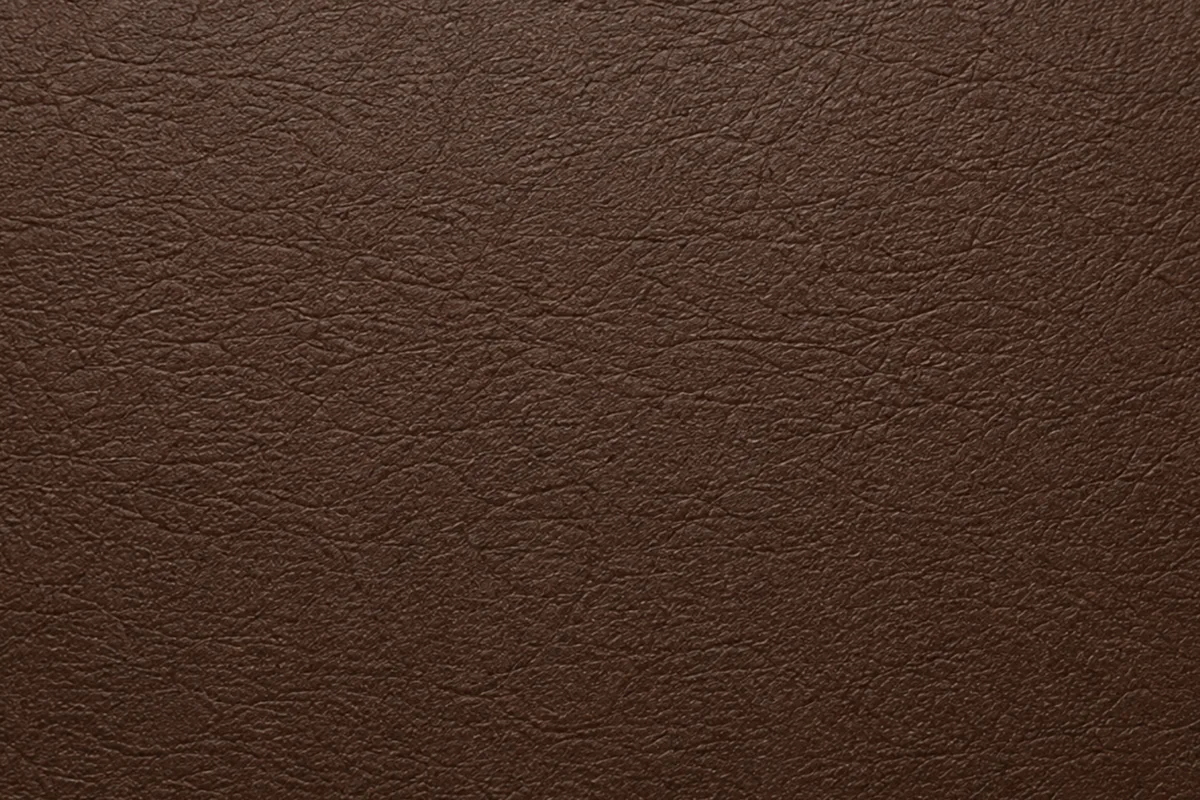
    A levelled hide surface, matte and closed, with the natural grain gone and the filler taken smooth
    Now

    Level. Filler closes it enough to take an impression.

  3. 03

    Embossing

    A fine, even pebble grain freshly pressed into a levelled hide, every pore the same size and depth
    Now

    Grained again by a plate under heat. This station creates the repeat.

  4. 04

    Coating

    The same embossed grain sealed under an opaque pigment coat, with an even colour and a low sheen
    Now

    Sealed and coloured to a repeatable shade. This coat wears through.

Correction is a range. Lightly sanded, it blurs into top grain leather.
The Honest Answer

Is It Real Leather? Split the Question in Two.

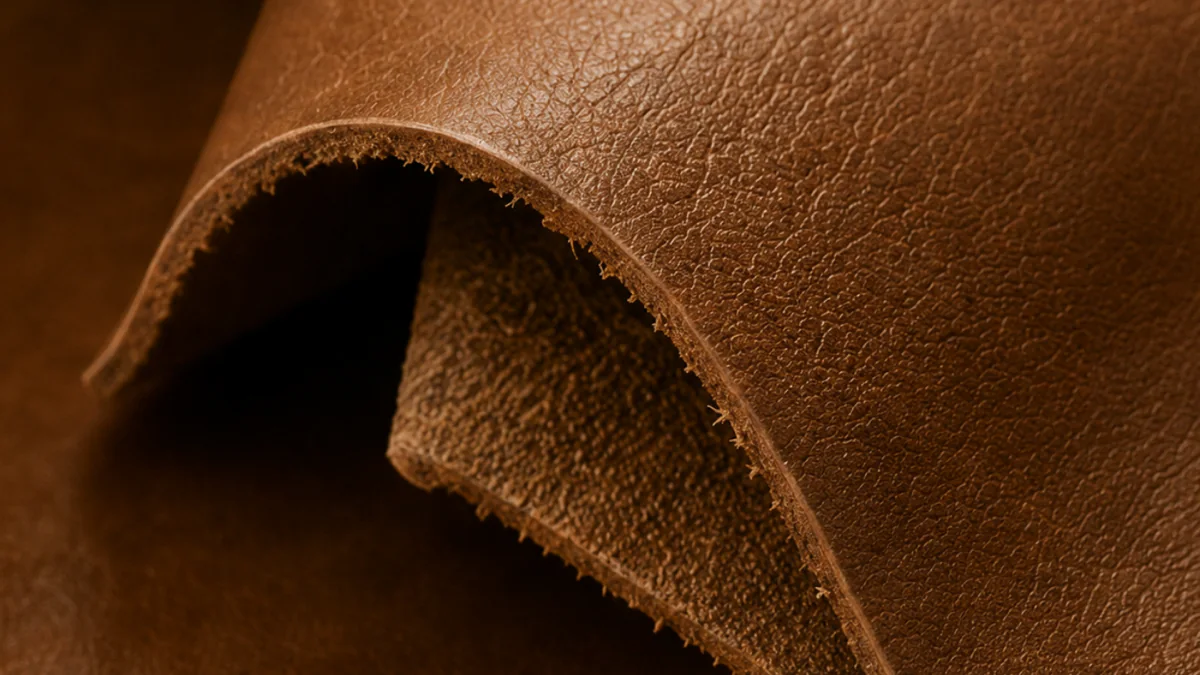
A brown hide folded back on itself, showing the fibrous cut edge and the suede-like flesh side beneath the grain
Hide

What came off the animal

  • One continuous piece, cut from the grain layer.
  • The fibre structure that holds a stitch.
  • The temper that pulls over a frame.
A tan leather sheet rolled into a curve, its pebble grain identical across the whole surface
Manufactured

What came out of the factory

  • The grain pattern, pressed in by a plate.
  • The levelness, which is filler.
  • The colour, sheen and panel-to-panel match.

Yes, it is real leather, and yes, the surface is manufactured. Anyone telling you only one is selling.

Not the same as bonded leather, faux leather or vinyl — none of which hold hide, so none refinish.
Where It Fits

Four Briefs Correction Answers Best

Forty lobby chairs must match, and we reorder
Hotels · property management Delivers

Pigment to a formula, a plate that never changes.

Bulk projects →

A hotel lobby seating group in brown leather: a buttoned sofa and matching armchairs around a low table
Family sofa. Children, a dog, spills
Households with real traffic Delivers

Spills sit on the coat long enough to lift.

Stain & spot cleaning →

A residential living room with a large corner sofa, a low round table and a city view
Seating is wiped between patients
Healthcare · waiting rooms Delivers

A sealed surface takes repeated wiping.

Healthcare seating →

A medical waiting room with pale grey leather sofas and armchairs on light wood legs
The colour has to hit a specification every time
Offices · restaurants Delivers

An opaque coat repeats years later.

Custom colour matching →

A conference room with black leather high-back chairs around a long dark table
Not this brief: a hide that darkens where hands rest. Take full grain in aniline.
How It Ages

How Corrected Grain Leather Ages

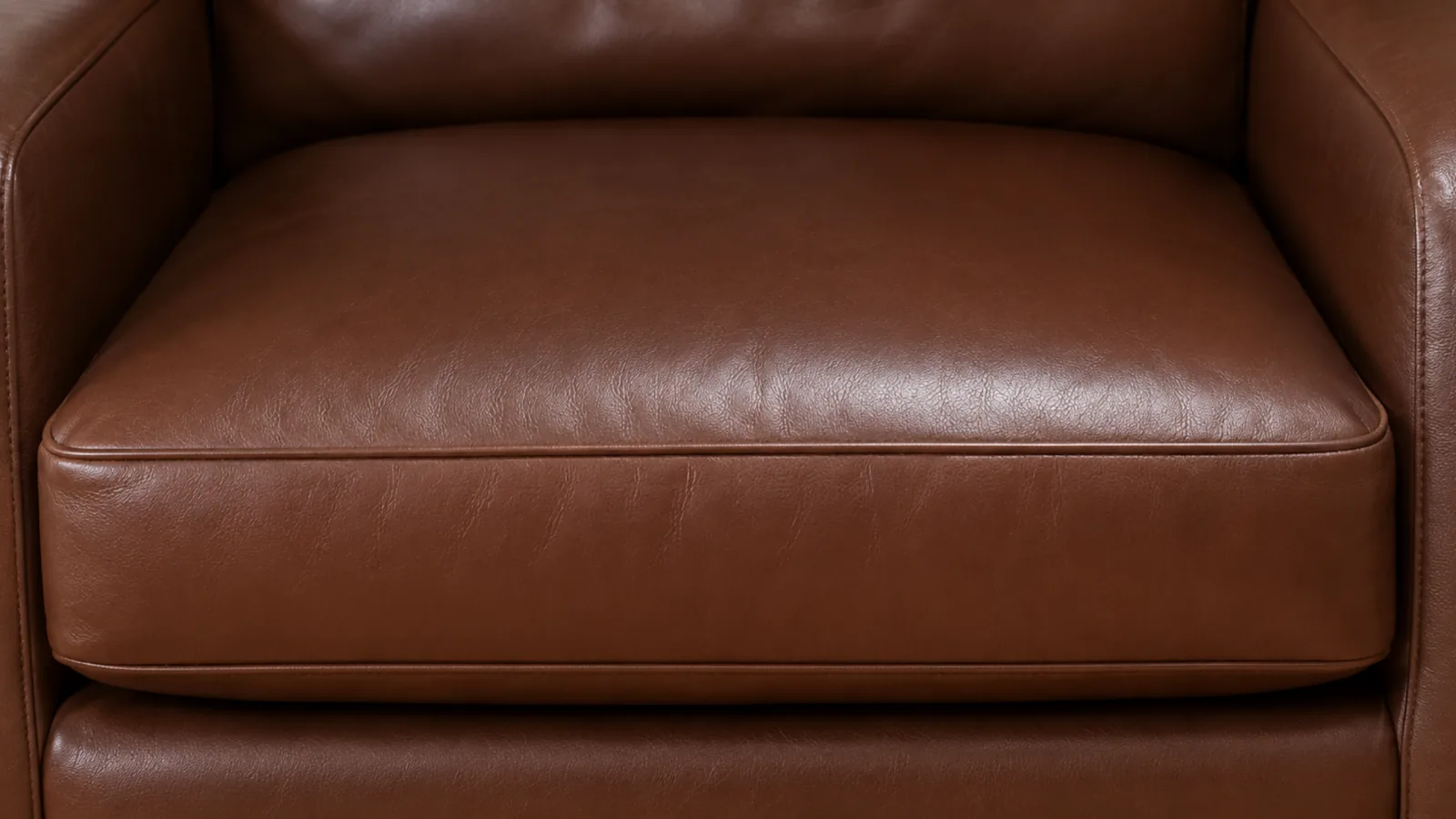
A new corrected grain leather seat cushion with even colour and an intact finish
New

Even grain and colour, finish intact.

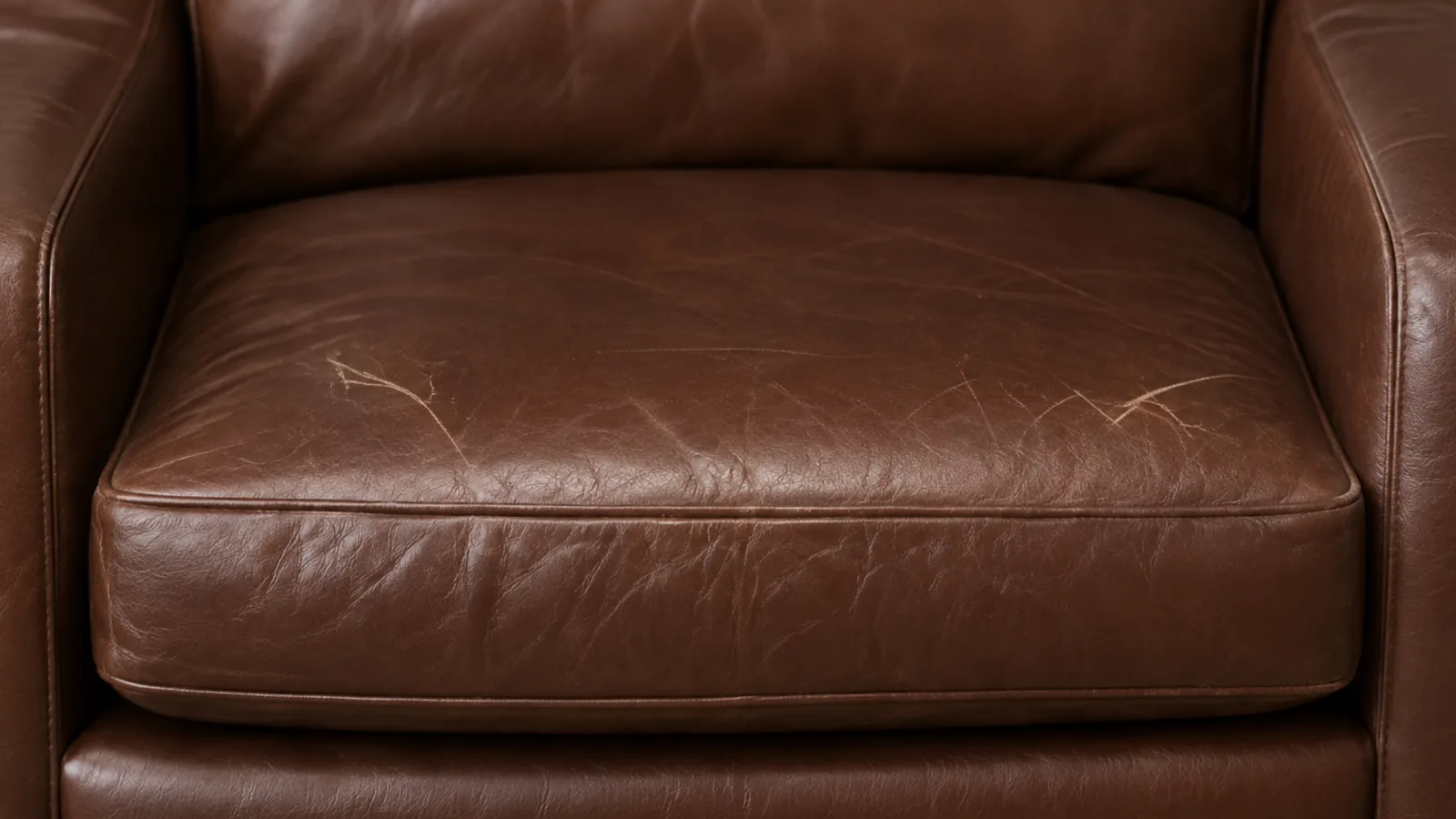
A used corrected grain leather seat cushion showing mild sheen change and light creasing
Used

Sheen shifts, light surface wear.

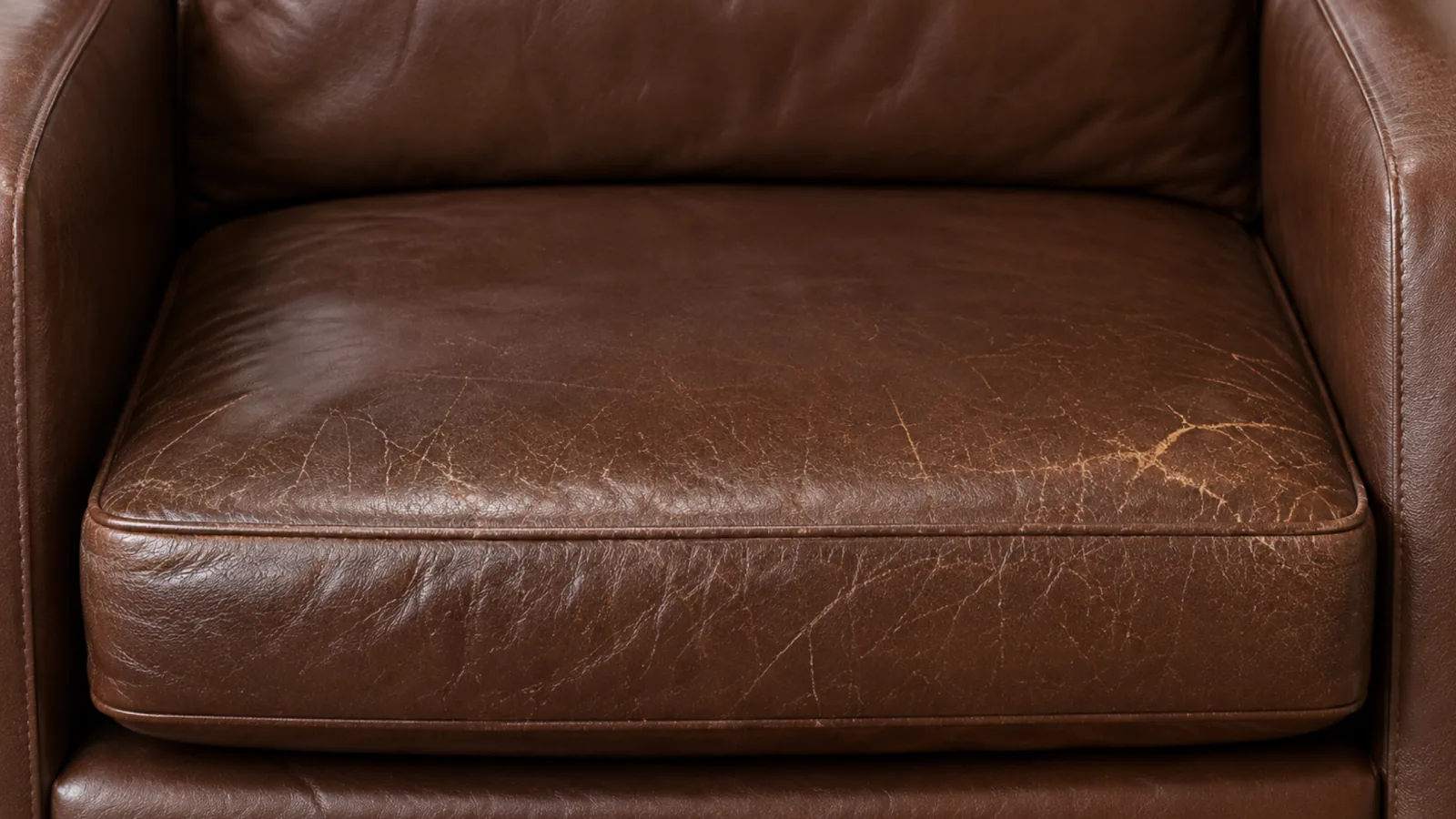
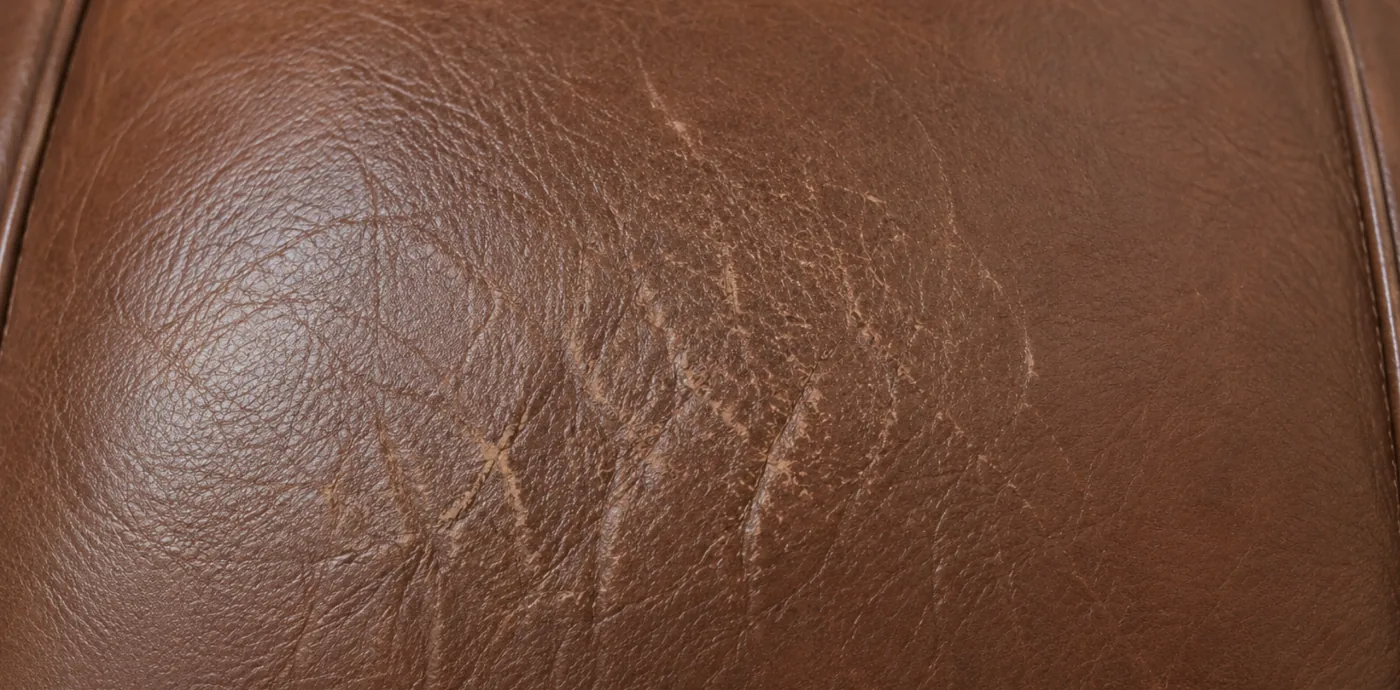
A worn corrected grain leather seat cushion with pigment loss and scratching across the front
Worn

Pigment loss, scratches, dulling.

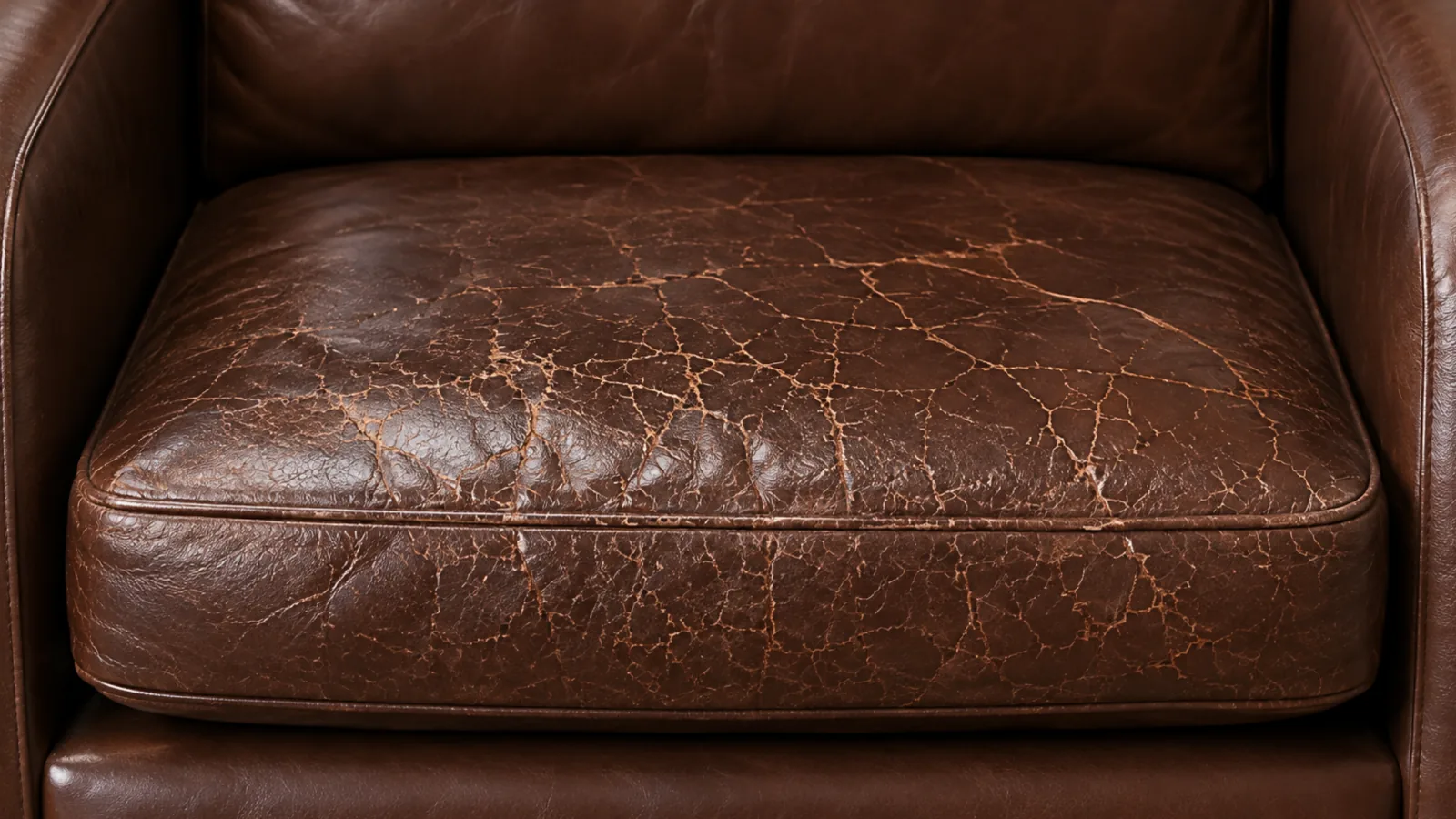
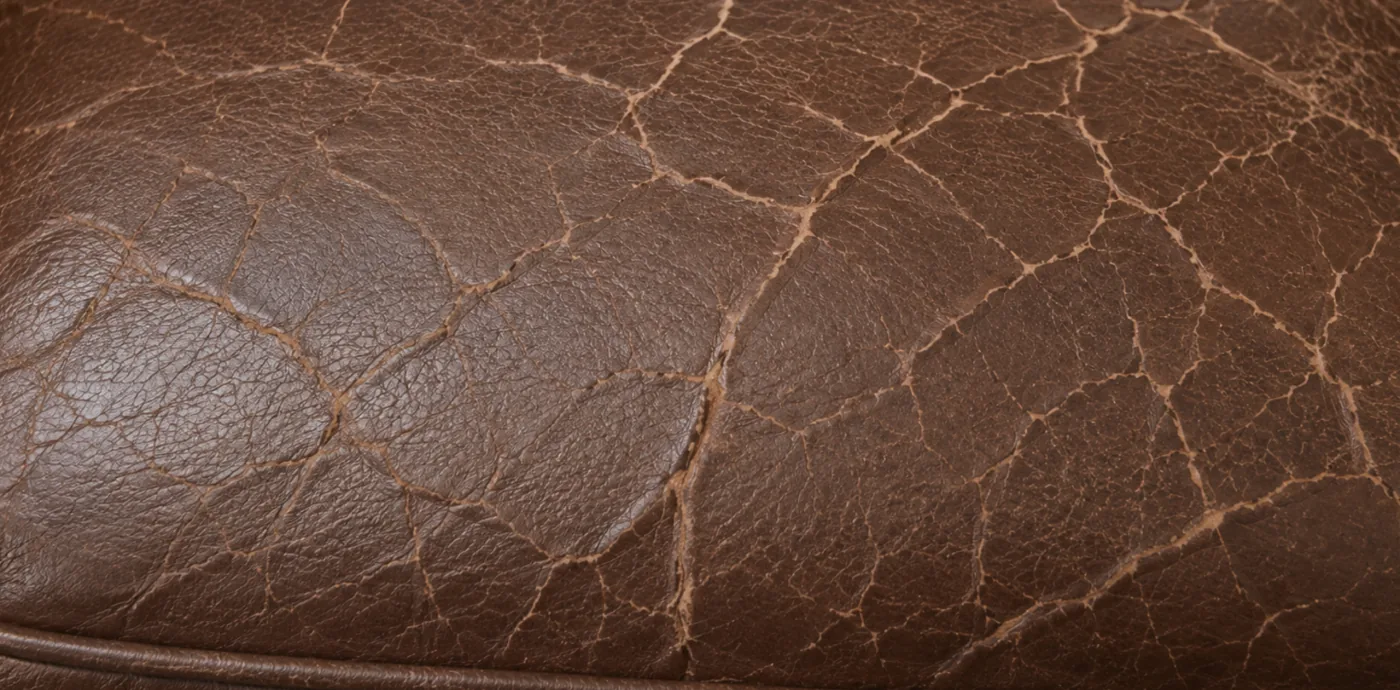
A damaged corrected grain leather seat cushion with the topcoat cracked into a web across the panel
Damaged

Cracking, abrasion, peeling topcoat.

Read the sequence, not the age. Every stage is the coat going, not the hide.
What We Repair

Common Damage on Corrected Grain Leather

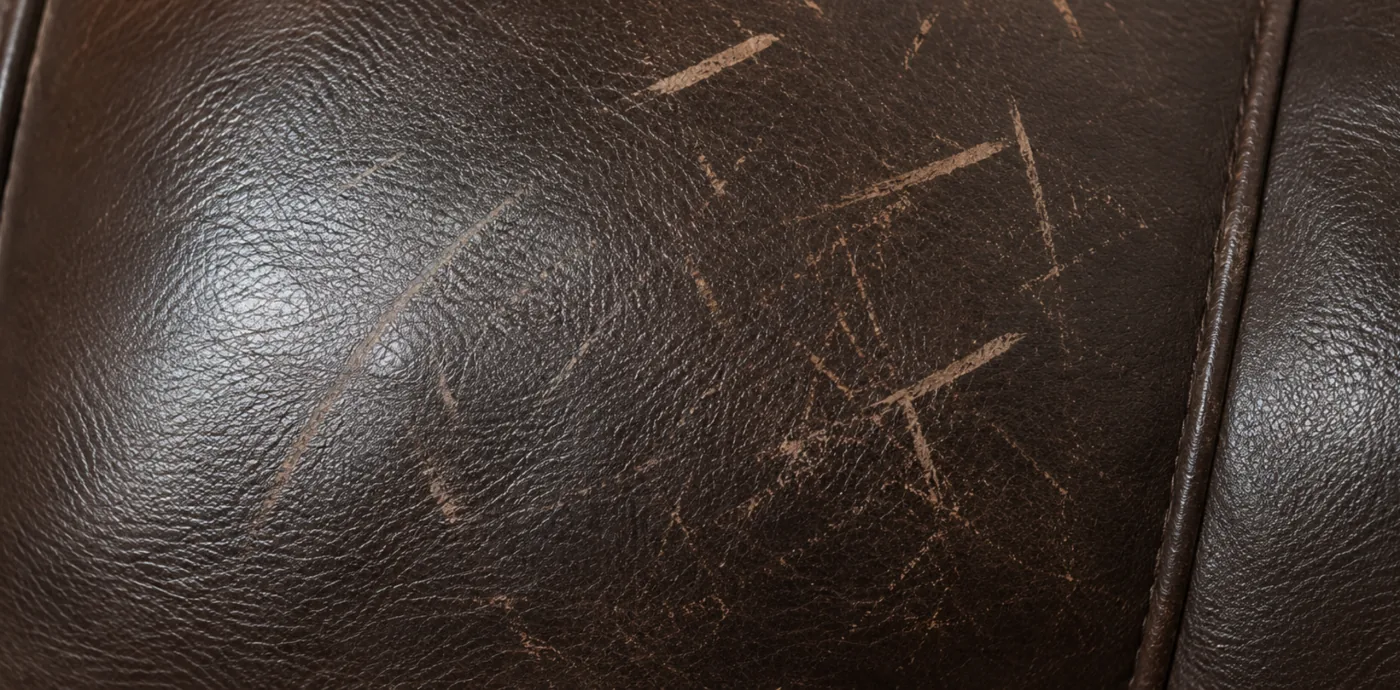
Pale scratches and scuff marks cut through the pigment coat on dark brown corrected grain leather
Scratches & scuffs
A brown corrected grain leather arm where the pigment has worn away to a lighter patch
Colour loss
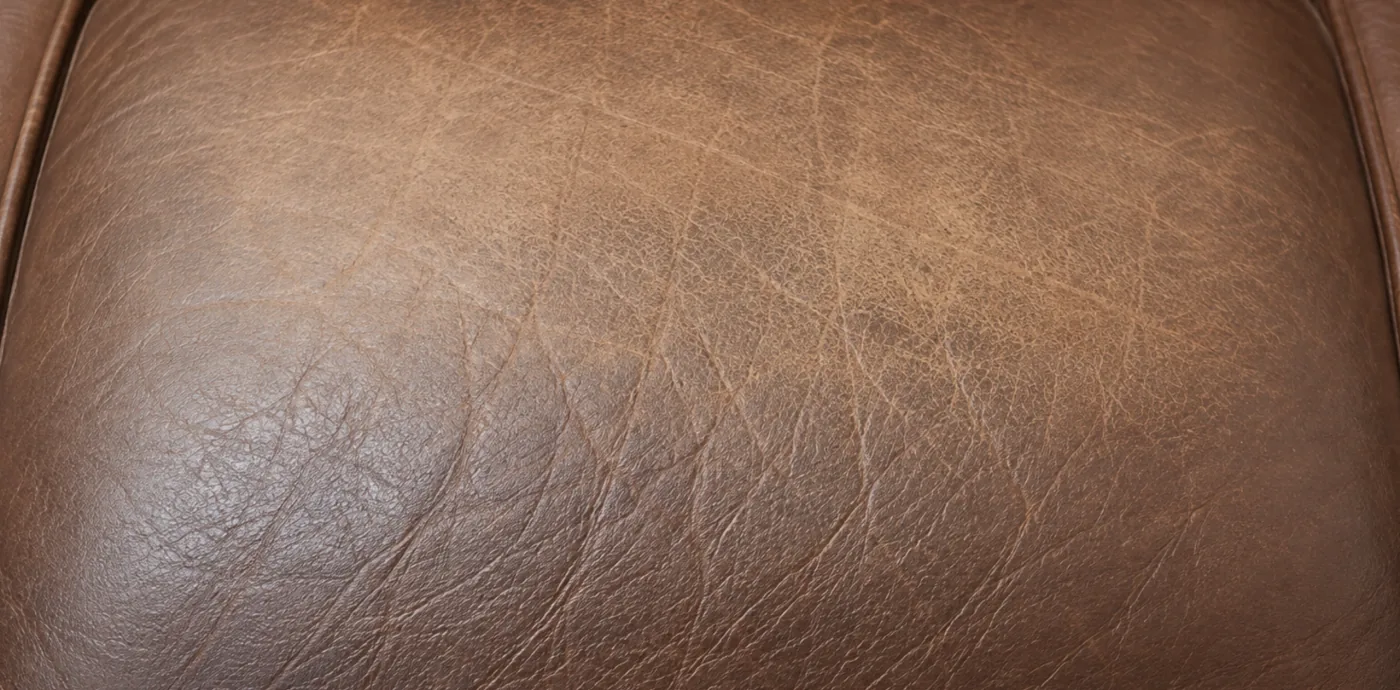
Corrected grain leather faded unevenly, the original shade surviving only at the edges
Fading
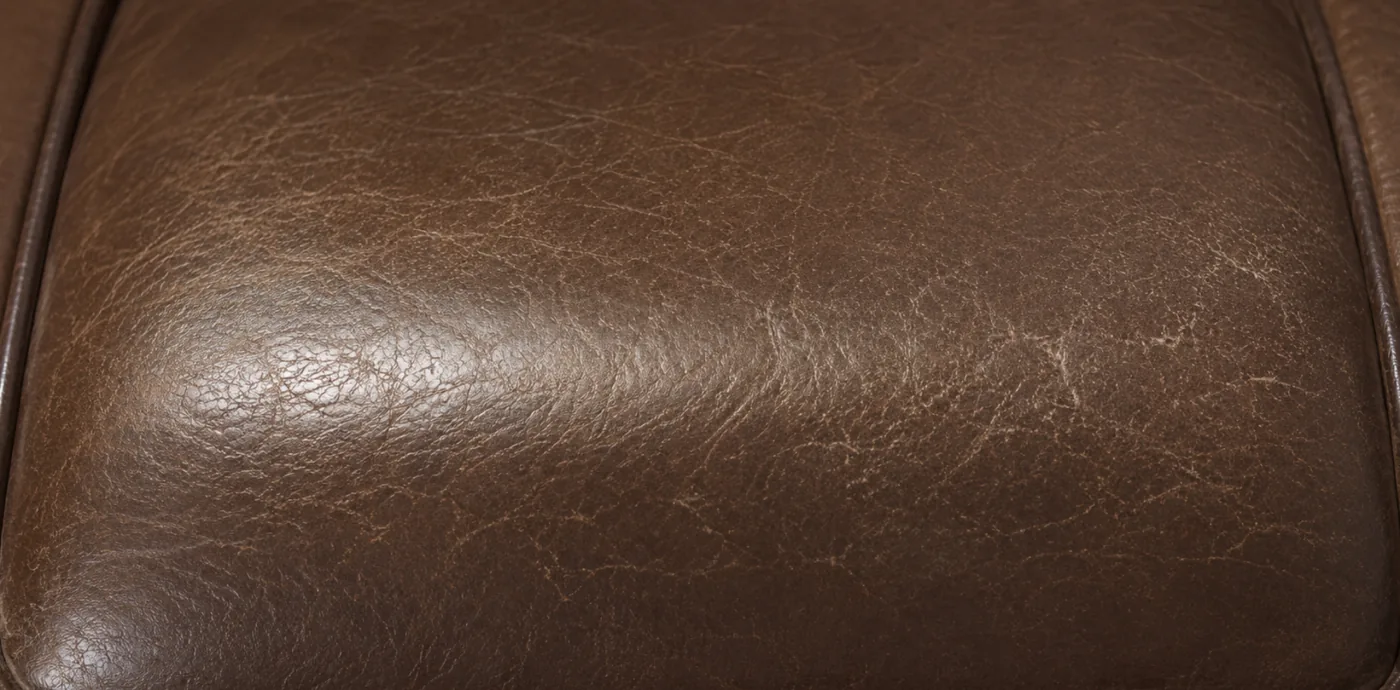
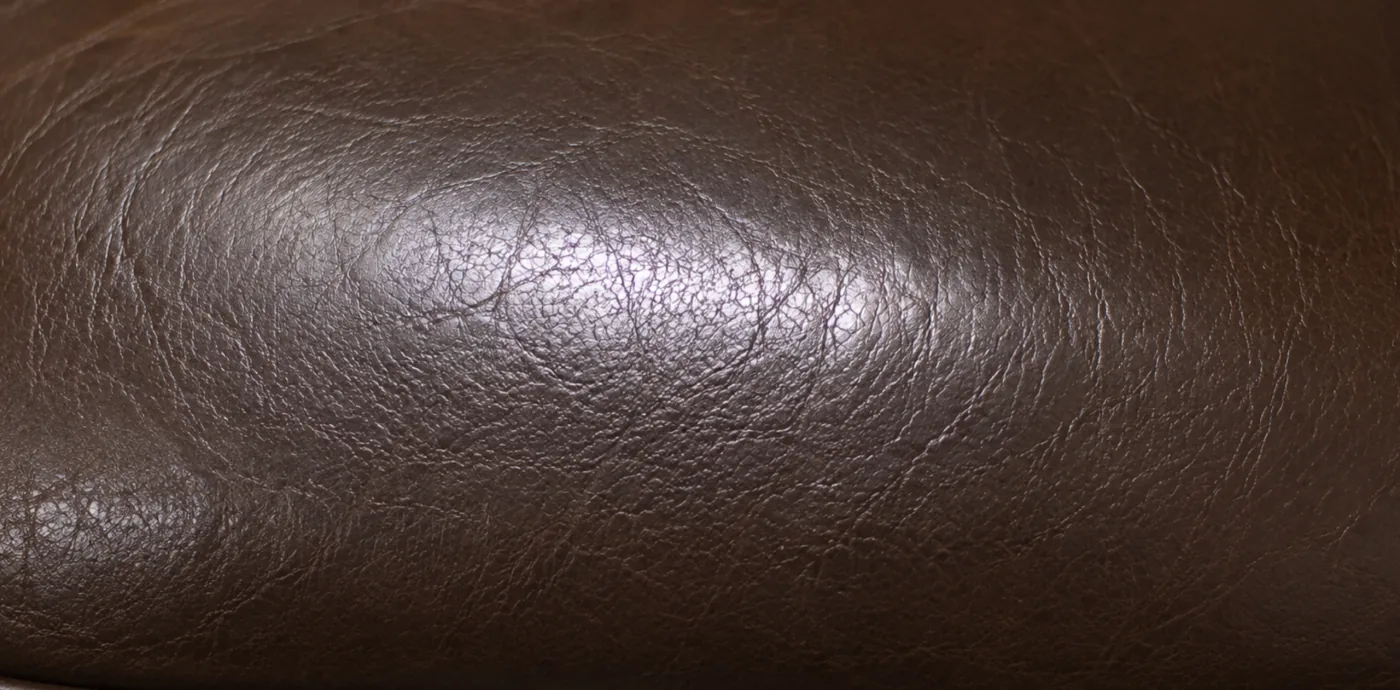
A polished, crazed patch where repeated contact has burnished the coating on corrected grain leather
Surface wear
A web of cracks opening across the topcoat of brown corrected grain leather
Cracking
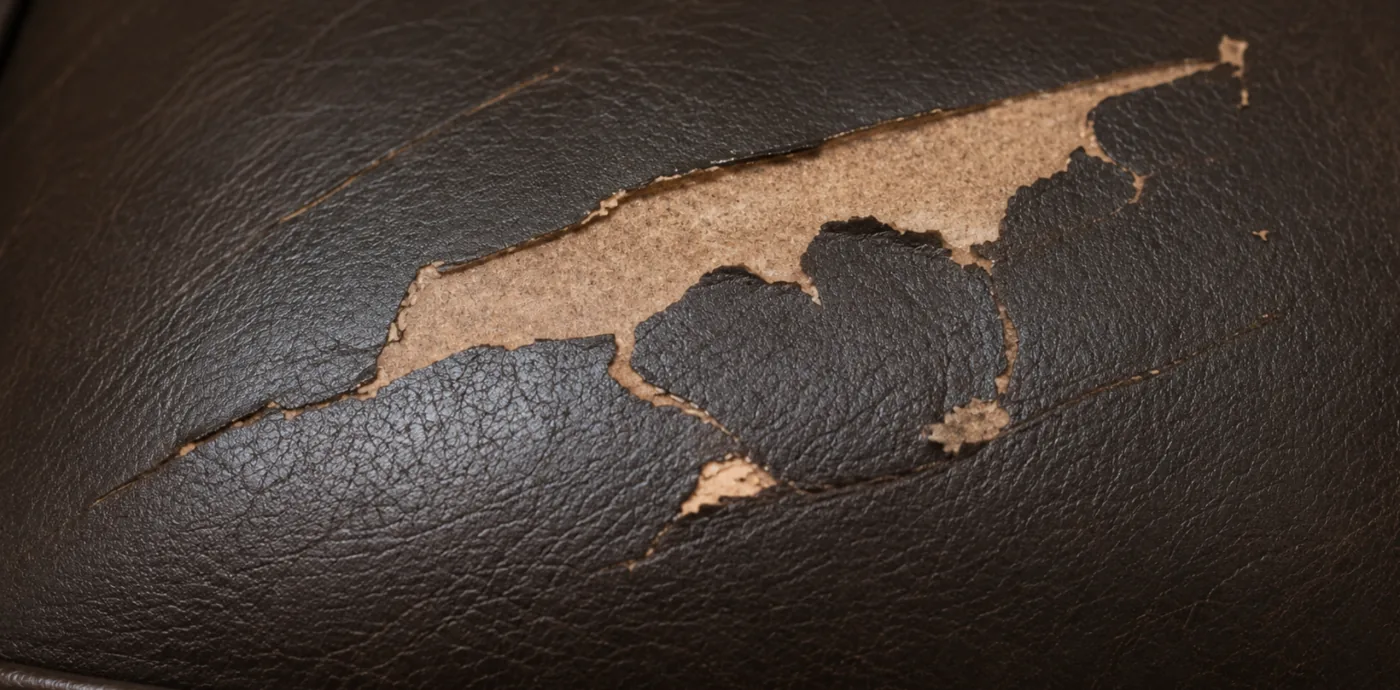
The finish lifted away from corrected grain leather, exposing the pale filled layer beneath
Peeling finish
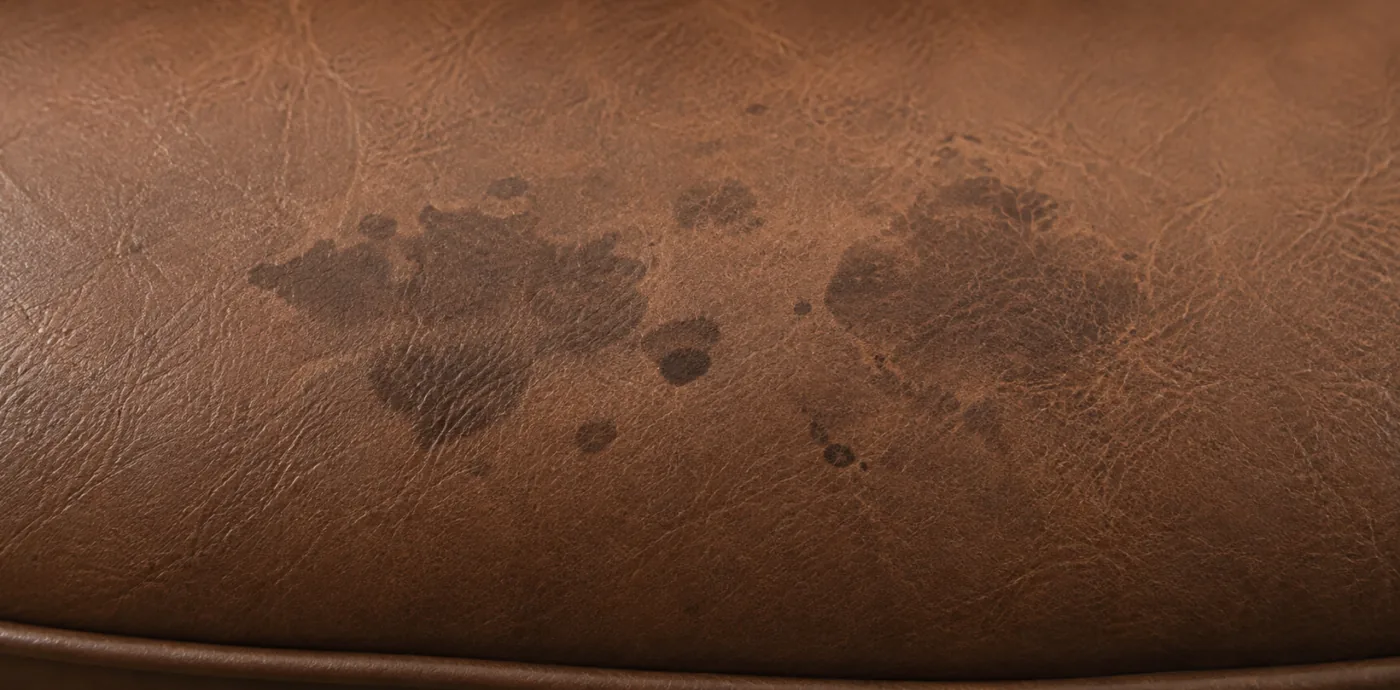
Dark blotchy staining sitting on the coated surface of tan corrected grain leather
Stains
A darkened, glossy band on a corrected grain leather headrest where body oil has built up
Body-oil damage
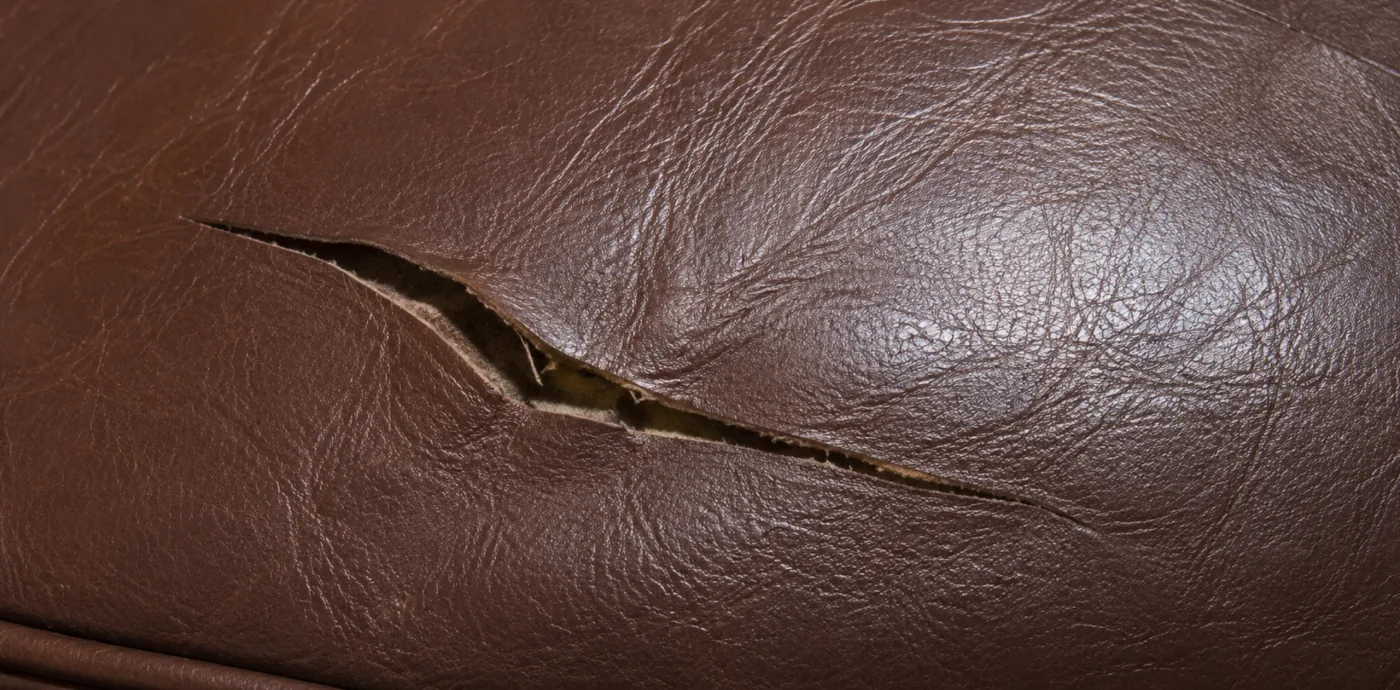
An open cut through a corrected grain leather cushion showing the backing underneath
Cuts & tears
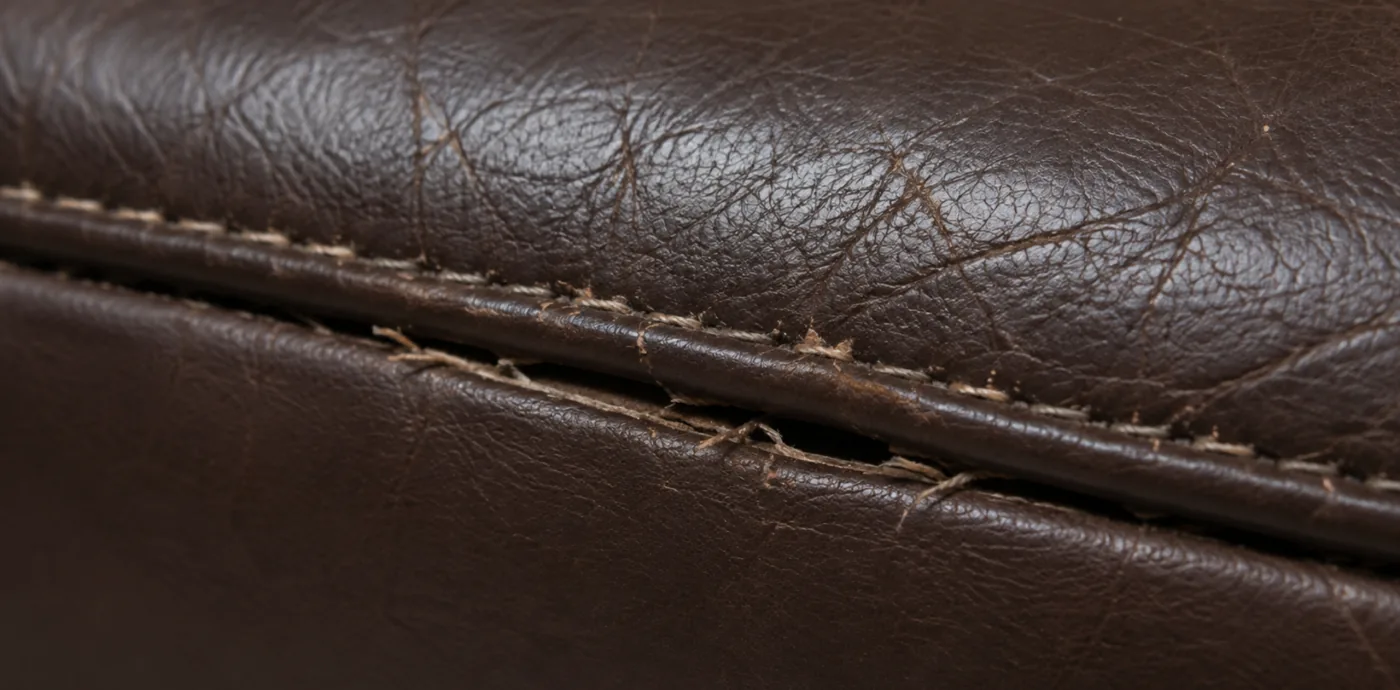
A seam on corrected grain leather where the stitching has broken and the panels have parted
Seam damage
Restoration

A Manufactured Surface Can Be Manufactured Again

Refinishing full grain destroys the patina it earned. Corrected grain has none.

01
Problem

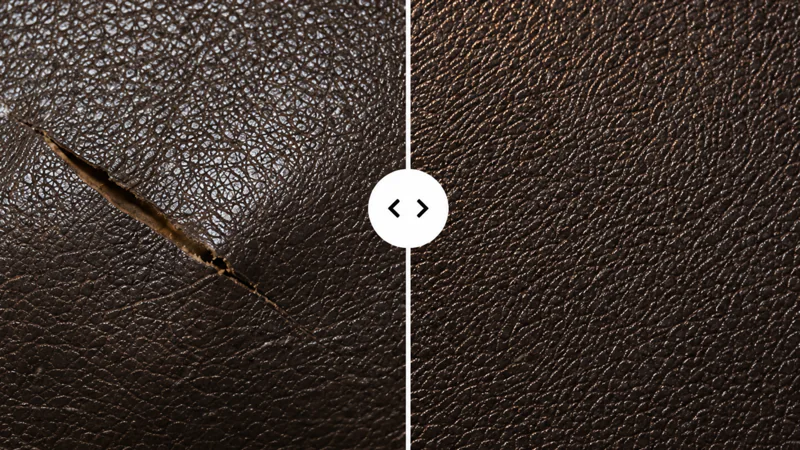
The grain stops at the repair

The fix

Take an impression of the surrounding grain, press it in as the filler cures, then colour.

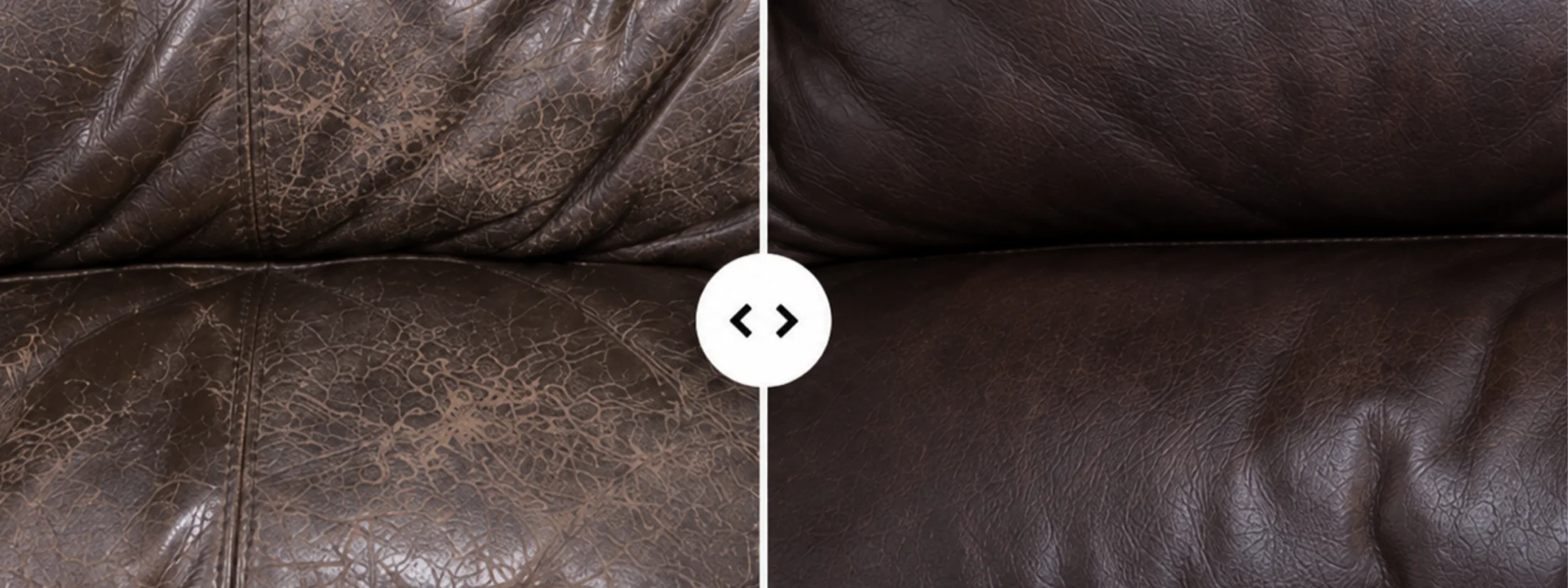
Before and after of a split in corrected grain leather, the gash filled and the surrounding grain carried across it
02
Problem

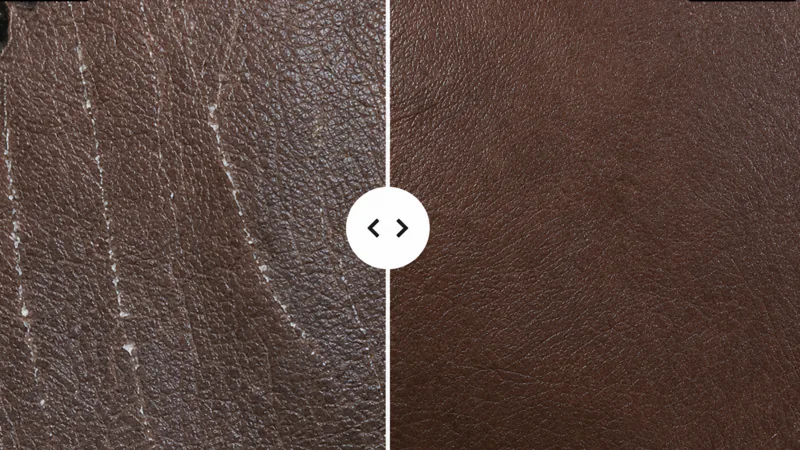
The coating has cracked along the flex lines

The pale line inside a crack is filler.

The fix

Strip the failed coating, clean the cracks rather than paint them, recolour thinly.

Before and after of a cracked corrected grain coating, the pale crack lines stripped and recoloured to an even brown
03
Problem

The panels no longer match each other

The fix

Match the panels that changed least, refinish to the seams. Wrong sheen still reads as a repair.

Before and after across a seam, the faded lighter panel brought back to the colour and sheen of the one beside it
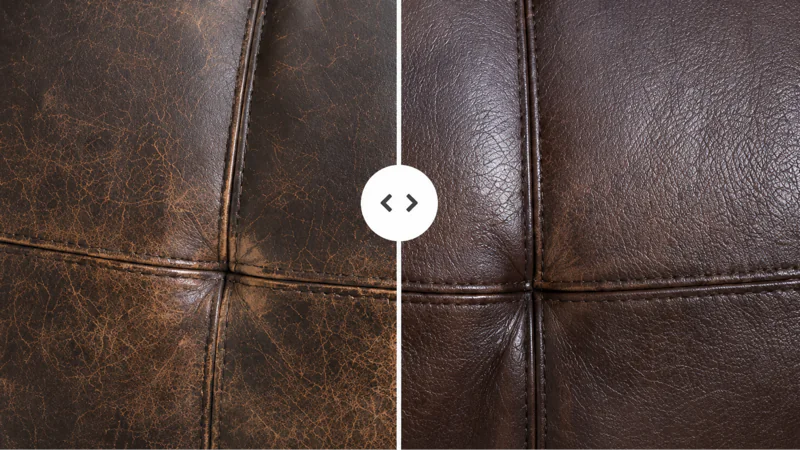
Before and after of a seat and back cushion in dark brown corrected grain leather, the crazed surface rebuilt to an even finish
The last two stations re-run on a worn seat.
Replacing a panel. Emboss, colour and sheen must match at once, so we specify in person. Hide from Global Leathers and District Leather Supply; past refinishing, reupholstery.
Before and After

Corrected Grain Leather, Refinished

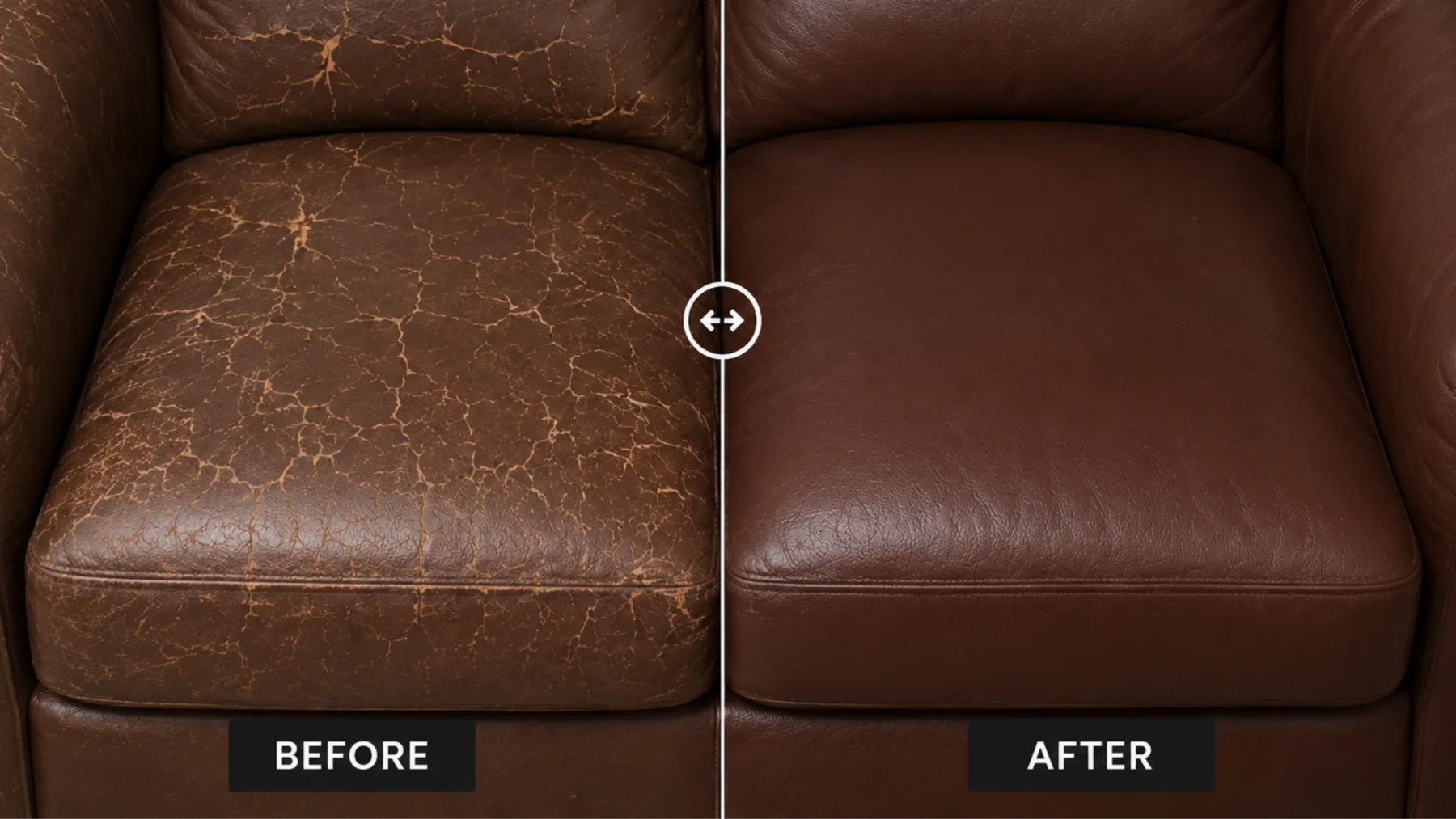
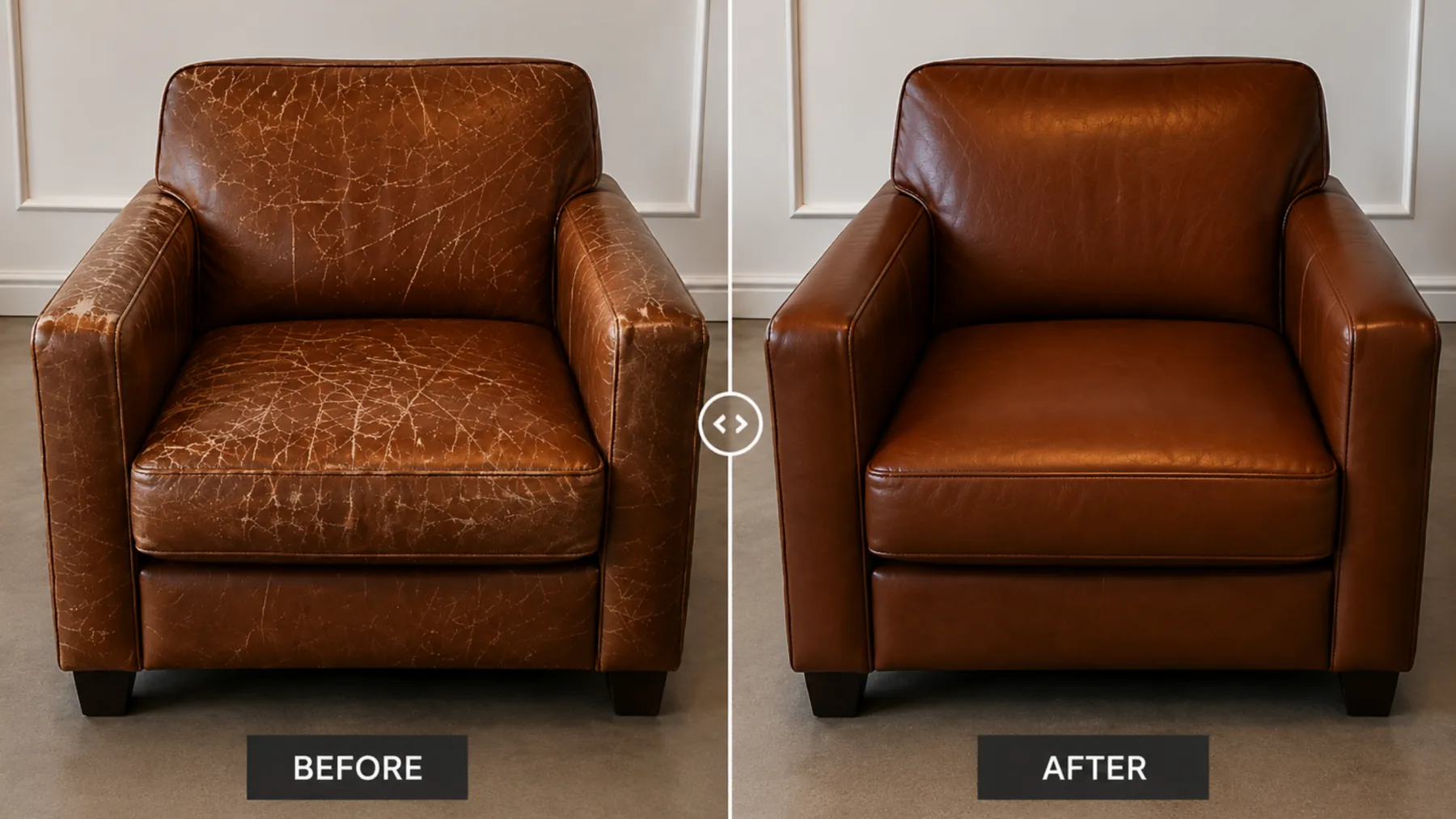
Before and after a corrected grain leather seat: a cracked topcoat on the left, an even rebuilt surface on the right
A cracked topcoat stripped back, regrained and recoated.
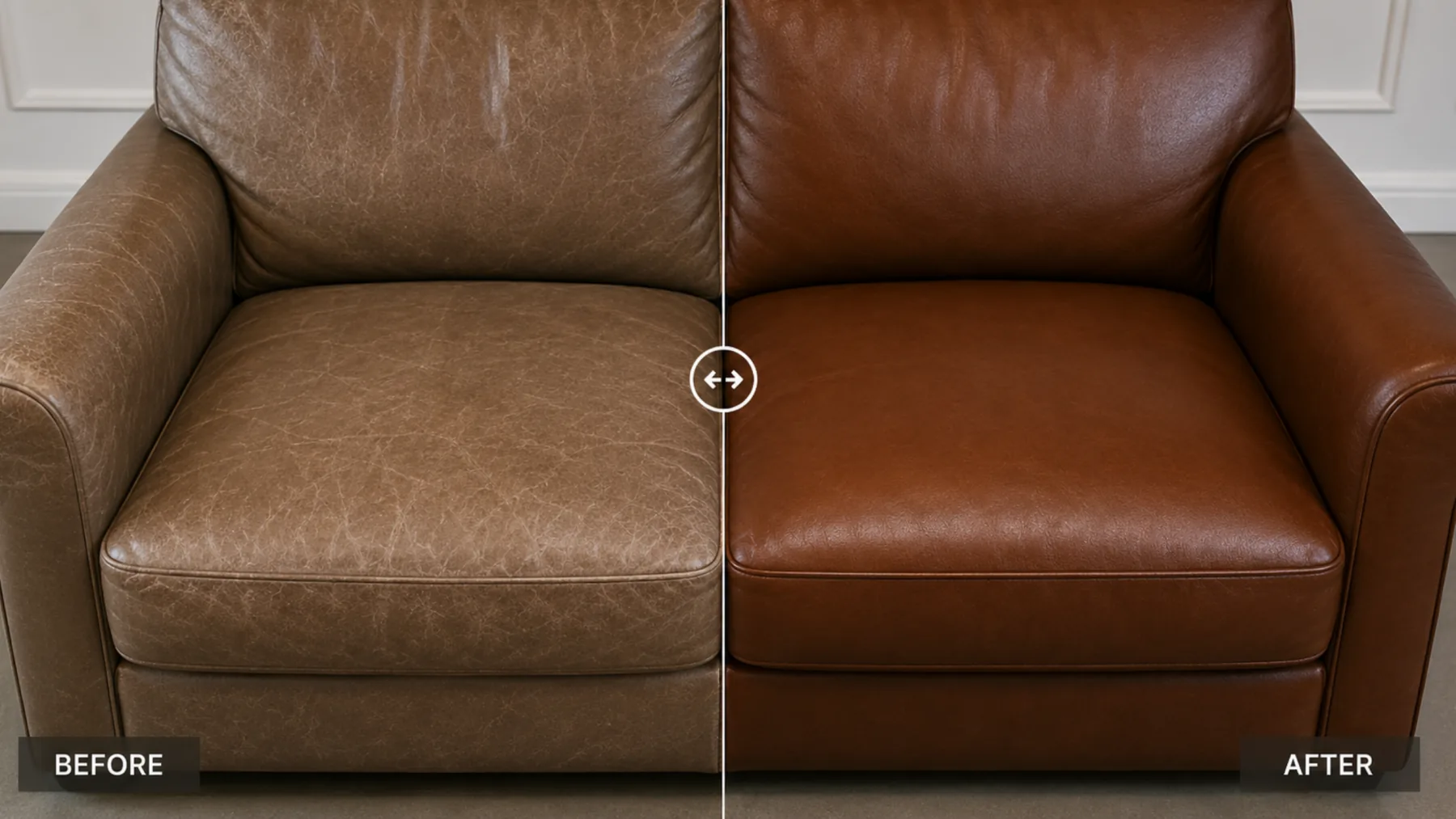
Before and after a corrected grain leather loveseat, faded grey-brown on the left and warm tan on the right
Colour rebuilt across every panel at once.
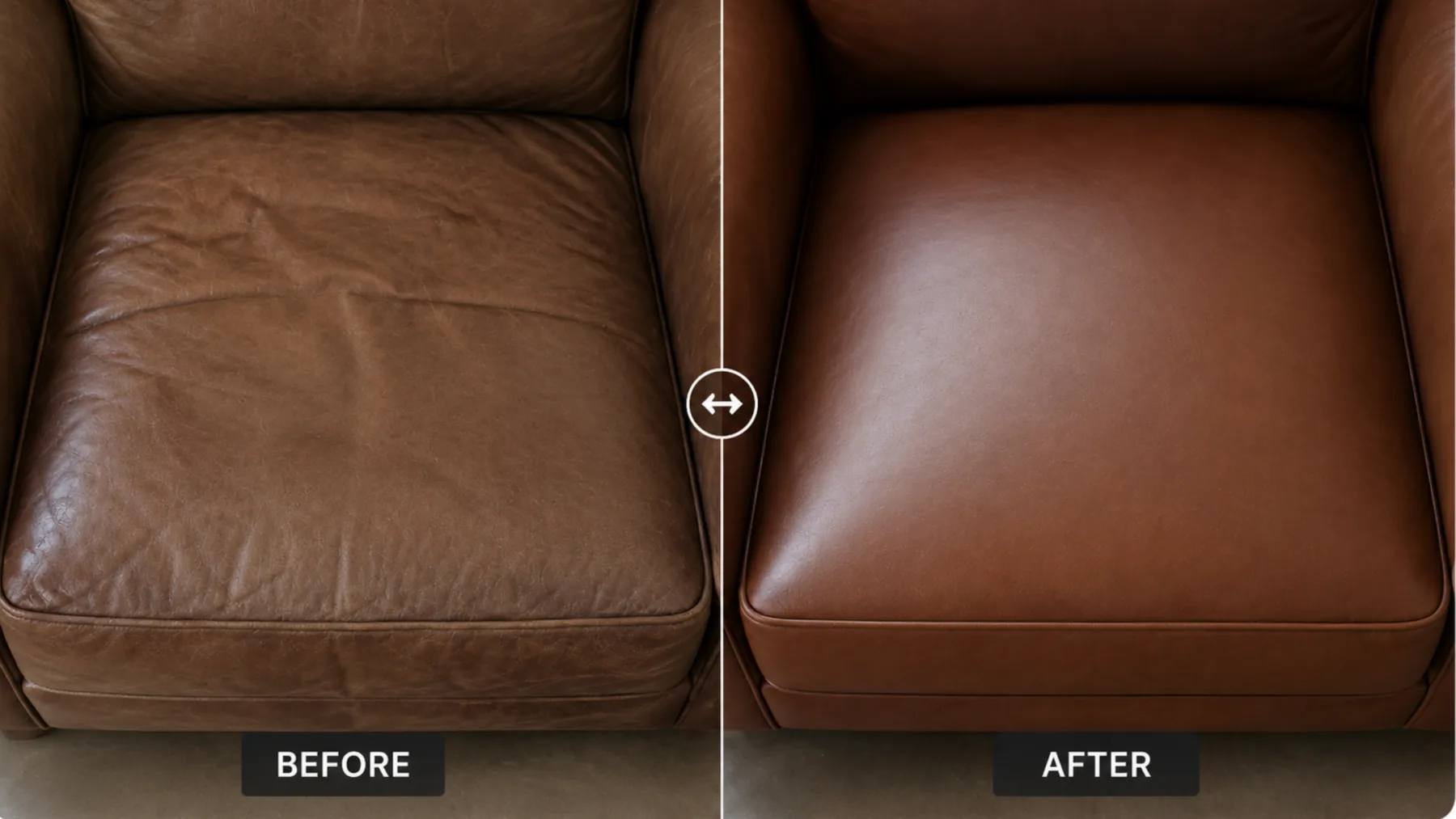
Before and after a corrected grain leather seat cushion, creased and dull on the left, filled and even on the right
Creasing filled, sheen brought back to match.
Before and after a corrected grain leather club chair, heavily crazed on the left and uniform on the right
Whole chair refinished, arms and back included.
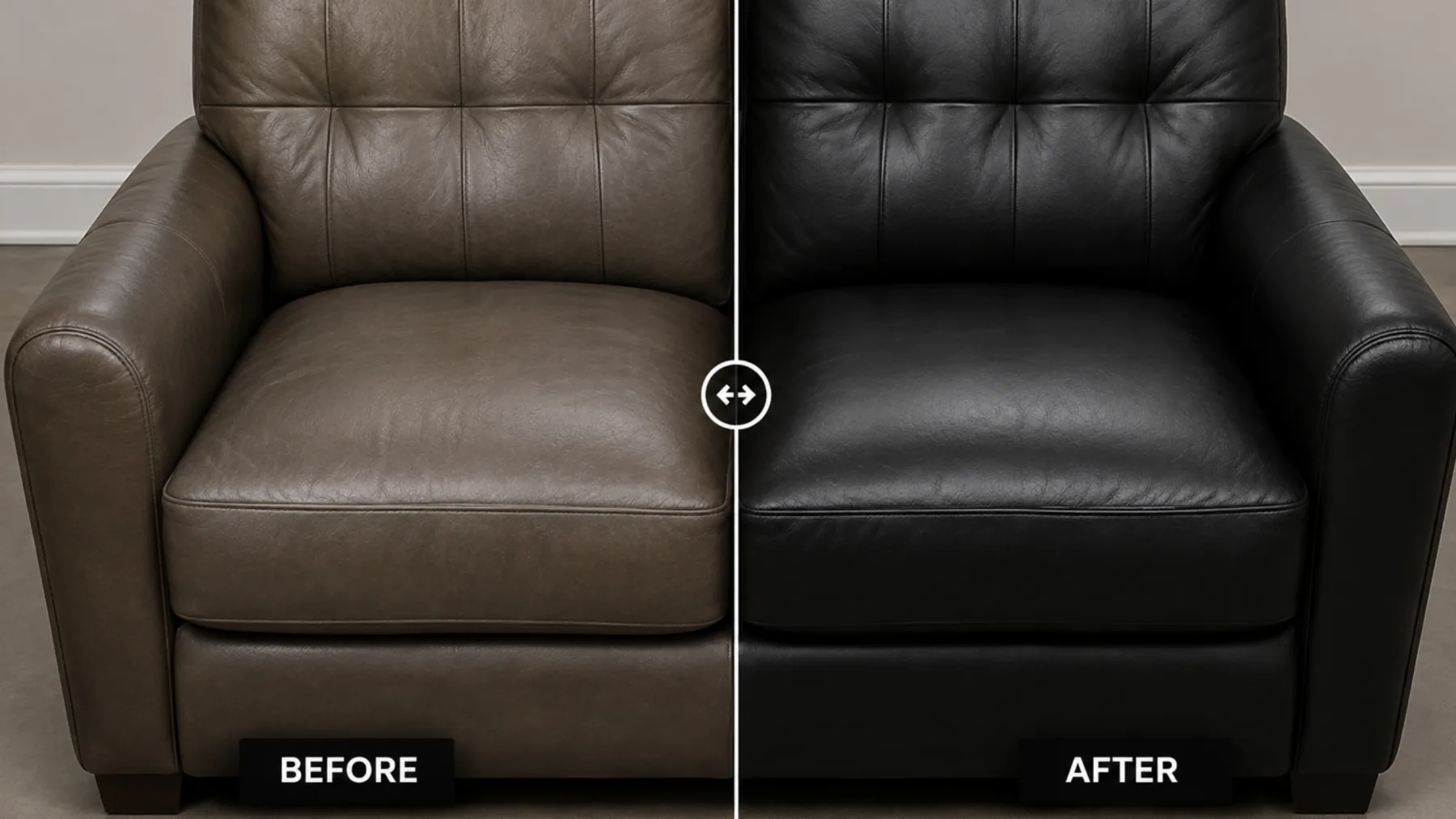
Before and after a corrected grain leather recliner recoloured from grey-brown to near black
An opaque coat takes a full colour change.
Looking After It

You Are Maintaining the Coat, Not the Leather

Almost nothing you apply reaches the hide. The coating is in the way.

What shortens the coat's life

  • Solvent and alcohol wipesThey strip the topcoat until colour lifts off.
  • Silicone and wax restorersThey leave a residue refinishing must strip.
  • Direct sun and radiator heatA sofa with one end in a window cracks there.

What actually extends it

  • Dry dust, then a damp clothLift the grit, or sitters grind it in.
  • Deal with dye transfer earlyDenim marks pale corrected grain the longer it sits.
  • Recoat before it cracksRefreshing an intact surface is cheap. Rebuilding is not.
On conditioners. A conditioner feeds a hide that can absorb it; a pigmented surface cannot. Our conditioning service works differently here.
Common Questions

Corrected Grain Leather Questions

What is corrected grain leather?

Corrected grain leather is hide sanded free of its grain, levelled with filler, embossed with an artificial pattern and coated in pigment.

Is corrected grain leather real leather?

Yes. It is cut from the grain layer of a real hide. Bonded leather is ground scrap; faux leather holds none.

How can I tell corrected grain from top grain?

Look for a repeat. A plate applies the grain, so the same mark returns a hand's width along. Natural grain never repeats.

Is corrected grain leather good for a sofa?

It suits anyone valuing uniformity, colour consistency and easy cleaning. Choose full grain if you want a patina.

Does the label “genuine leather” mean corrected grain?

Often, yes. The phrase promises hide rather than synthetic and says nothing about grade. A retailer holding full grain says so.

Can corrected grain leather be repaired?

It is the most forgiving grade we work on. The surface is already manufactured, so rebuilding it destroys nothing original.

Does corrected grain leather crack or peel?

The coating fails rather than the hide. Cracks open where the leather flexes — cushion fronts, inside arms — and lift at the edges.

Why does corrected grain leather feel like plastic?

Your hand rests on pigment rather than hide. The coating is smooth, cool and even, and it neither warms nor absorbs moisture.

Is corrected grain the same as bonded leather?

No. Corrected grain is one piece of hide with a manufactured surface. Bonded leather is scrap pulp on fabric and cannot be refinished.

Send Us a Photograph Taken Across the Light

One photograph raking across a window tells us whether the grain repeats and where the fault sits. We cover New York City and New Jersey.

Scroll to Top