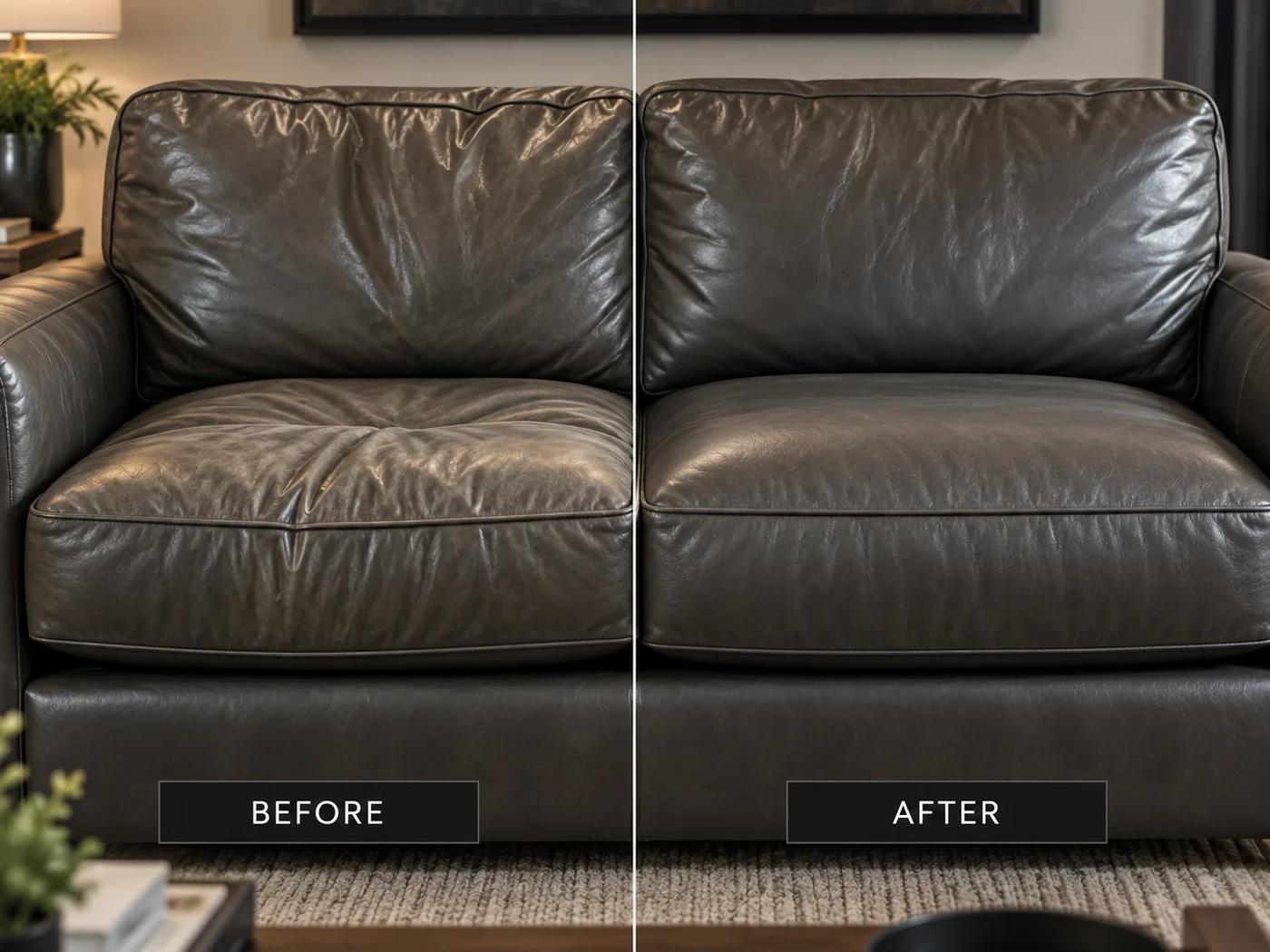
Sofa cushion replacement — NYC, the five boroughs & New Jersey

The Seat Sank. The Sofa Did Not.

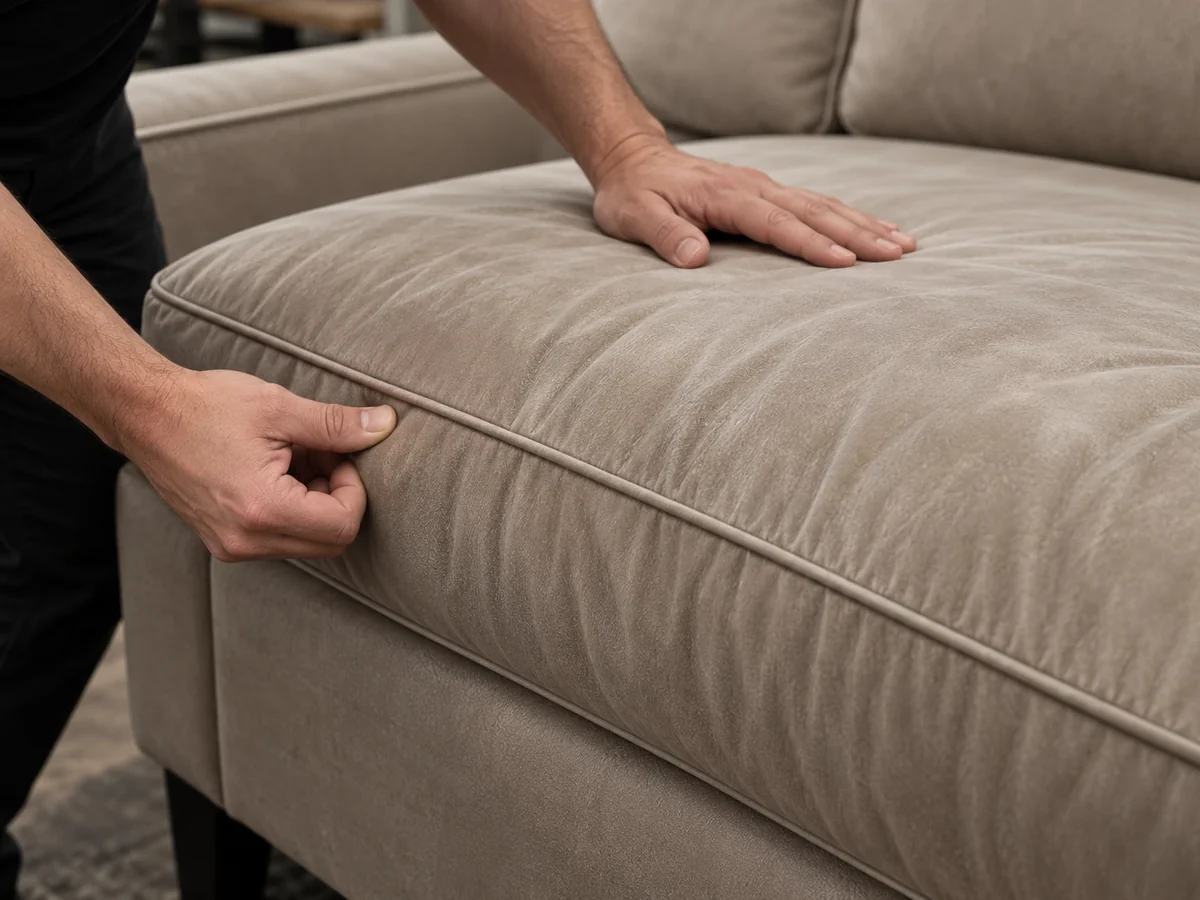
Sofa cushion replacement rebuilds what is inside the cover. New foam, fibre or spring cores are cut to your own cushions, so the seat comes back to its original height and the leather you already own stays on the piece.

Eight signs

Does your sofa need new cushions?

You may need a sofa cushion replacement if any of these describe your seat. All eight are symptoms of the same thing — the fill underneath has stopped carrying weight.
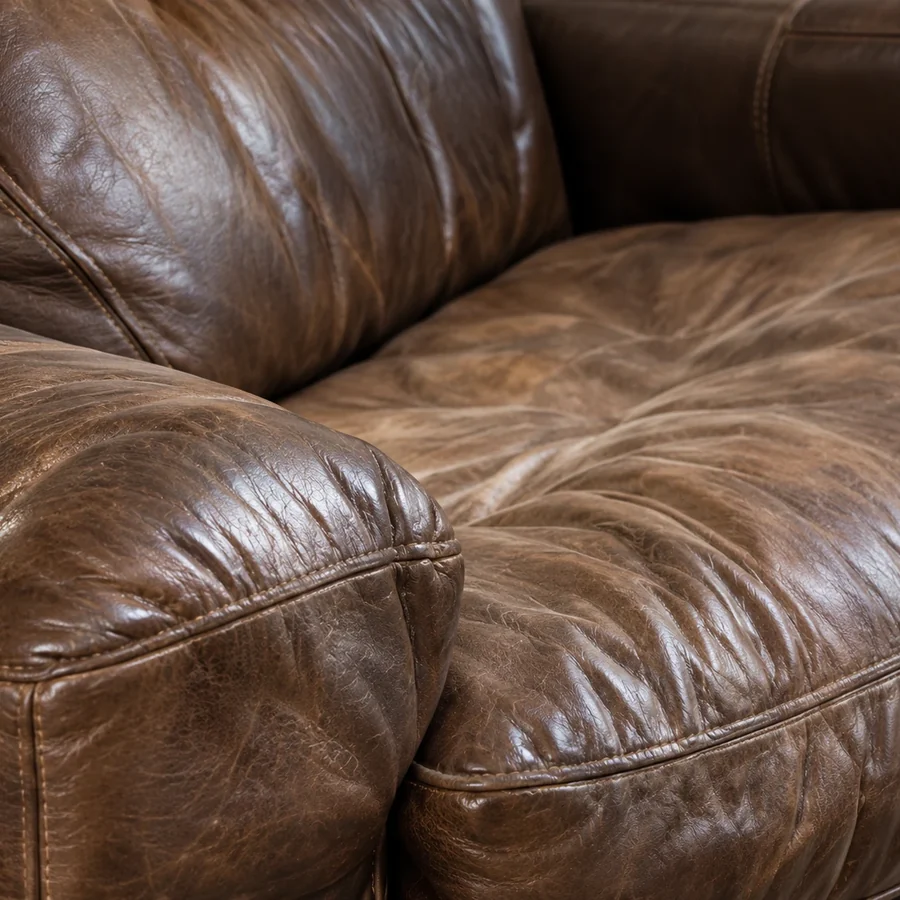
Corner of a brown leather sofa with the seat cushion sagging down into the frame
Sagging cushions
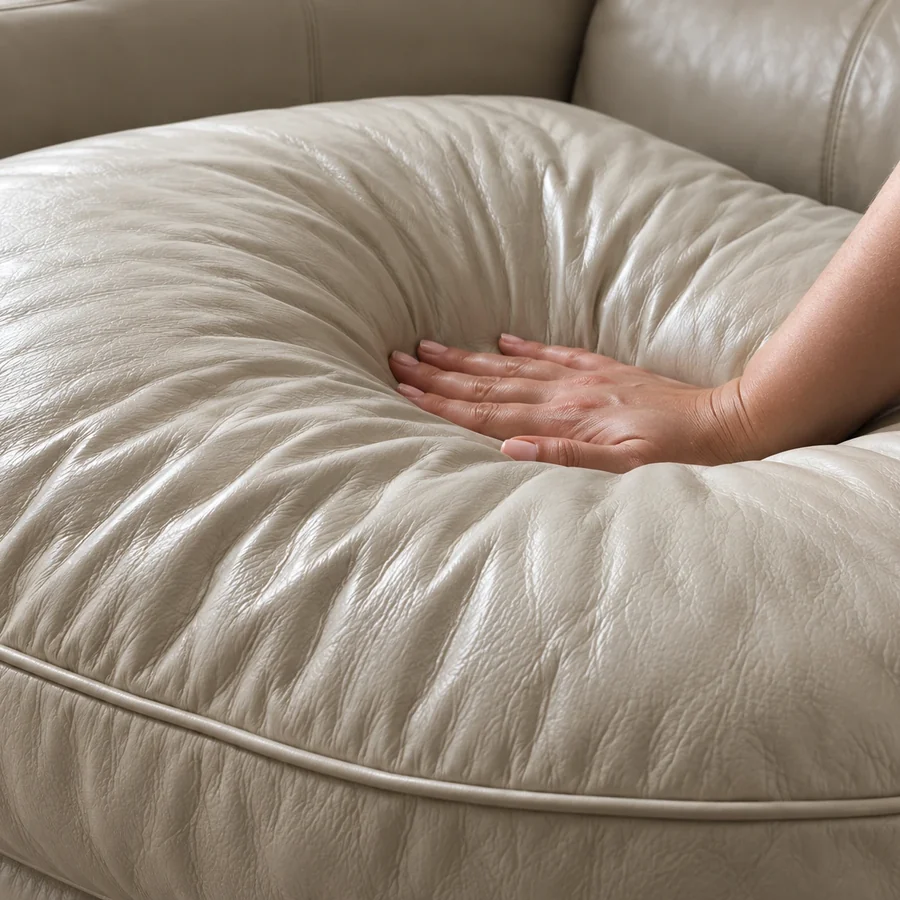
A hand pressing into a cream leather cushion that stays compressed under the palm
Flat and compressed
Loose slack upholstery rippling across a brown leather seat cushion
Loose upholstery
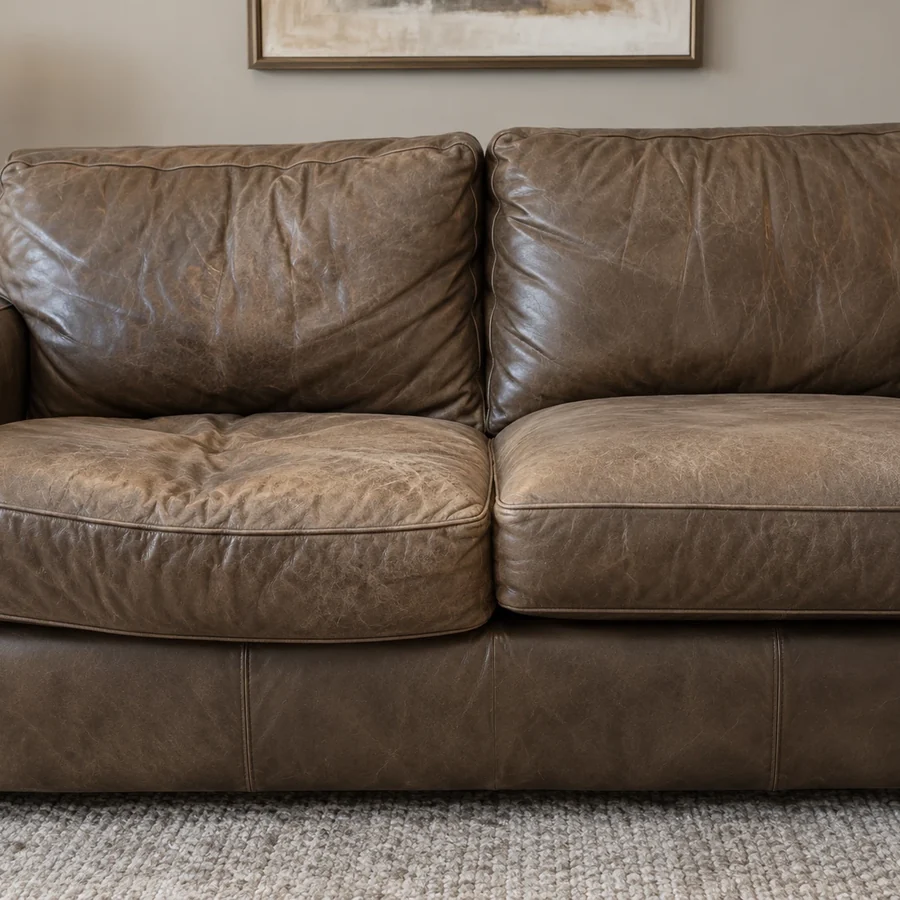
Taupe leather loveseat with its two seat cushions sitting at noticeably different heights
Uneven seat height
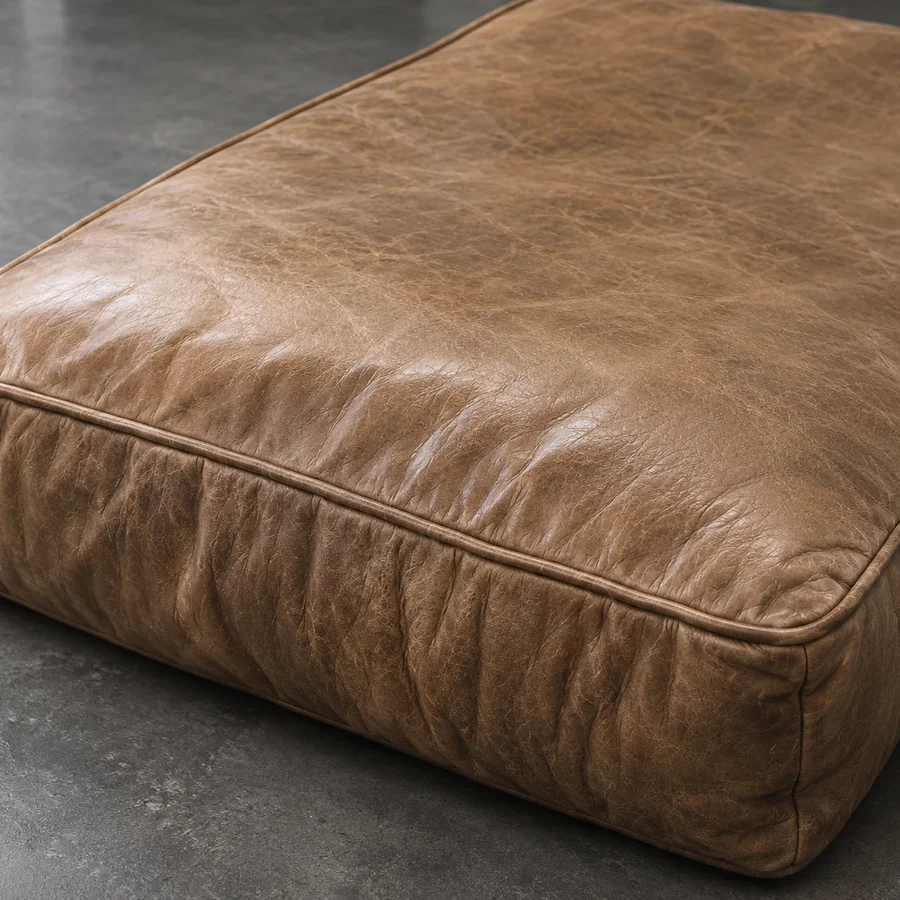
Tan leather seat cushion lying on a concrete floor with almost no loft left in it
Bottoming out
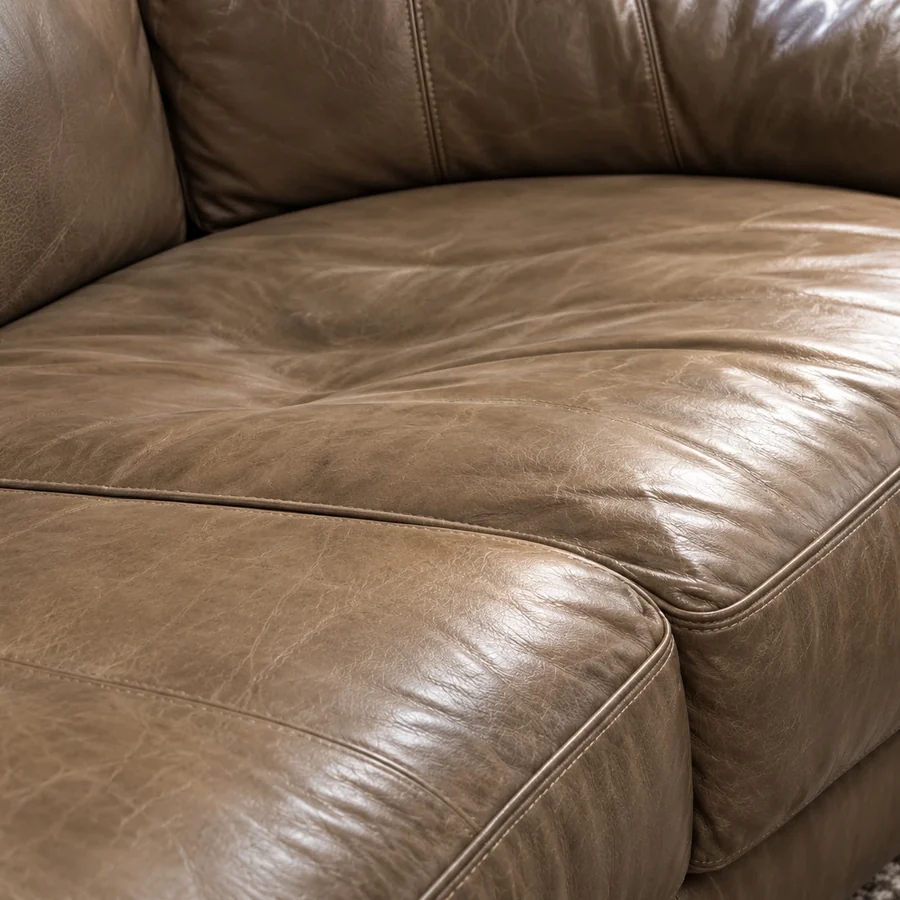
Olive brown leather sofa seat still holding a hollow after someone stood up
Doesn’t spring back
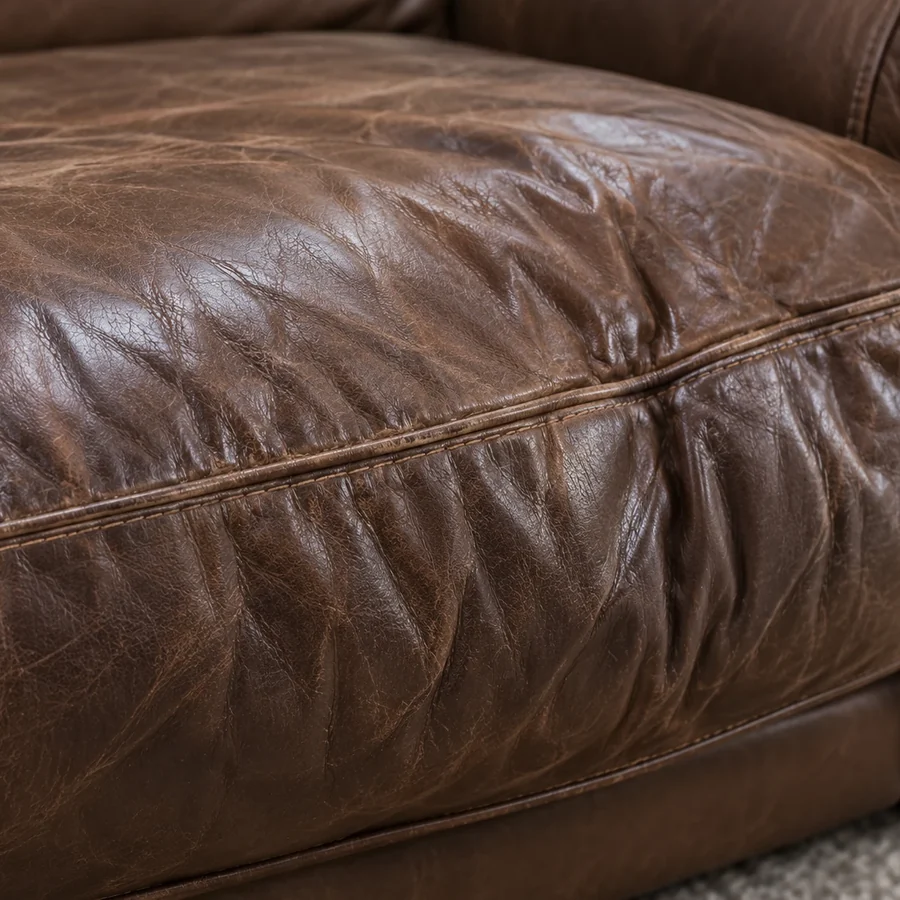
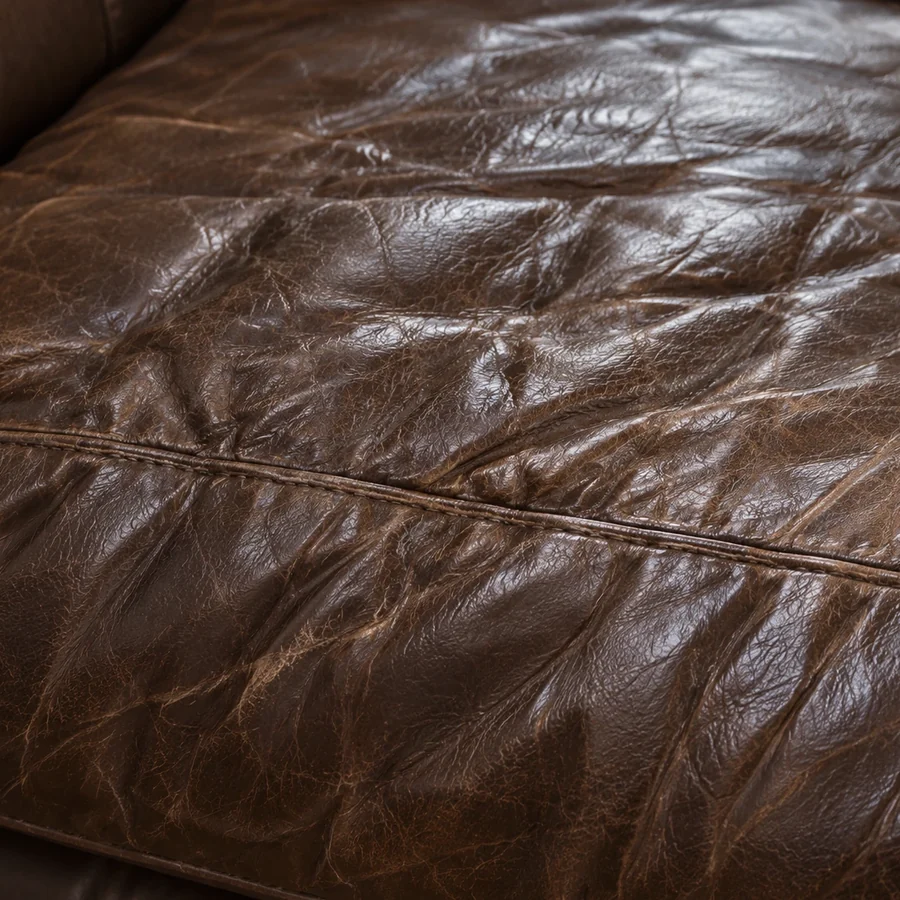
Heavy wrinkling running across the surface of a dark brown leather seat cushion
Wrinkled appearance
Brown leather sofa where the left seat cushion has gone visibly softer than the one beside it
One cushion softer than the others
Insert, cover or both

What actually needs replacing?

A cushion is two things: the insert that carries the weight and the cover that wraps it. Work out which one has failed and the sofa cushion replacement gets a great deal cheaper.
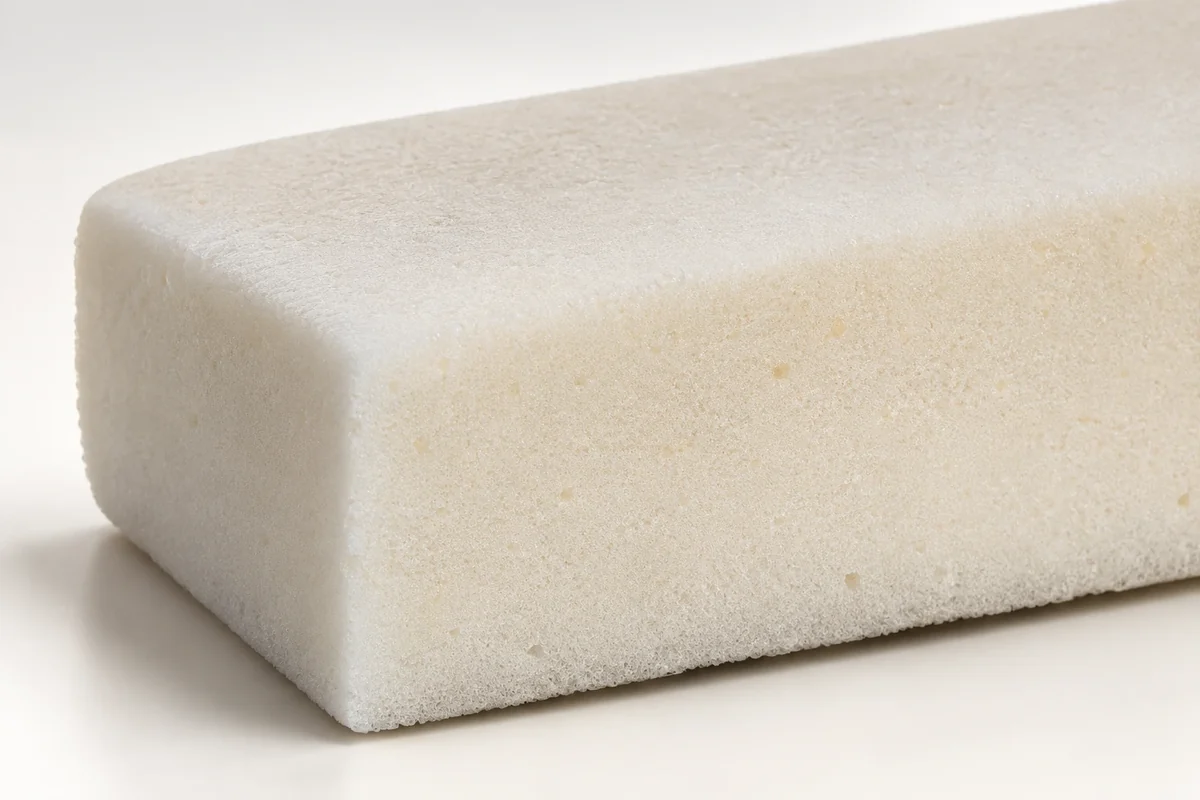
Block of new white upholstery foam cut square for a cushion insert
Cushion insert The foam has collapsed or lost its resilience, but the cover is still in good condition. Replace the insert only.
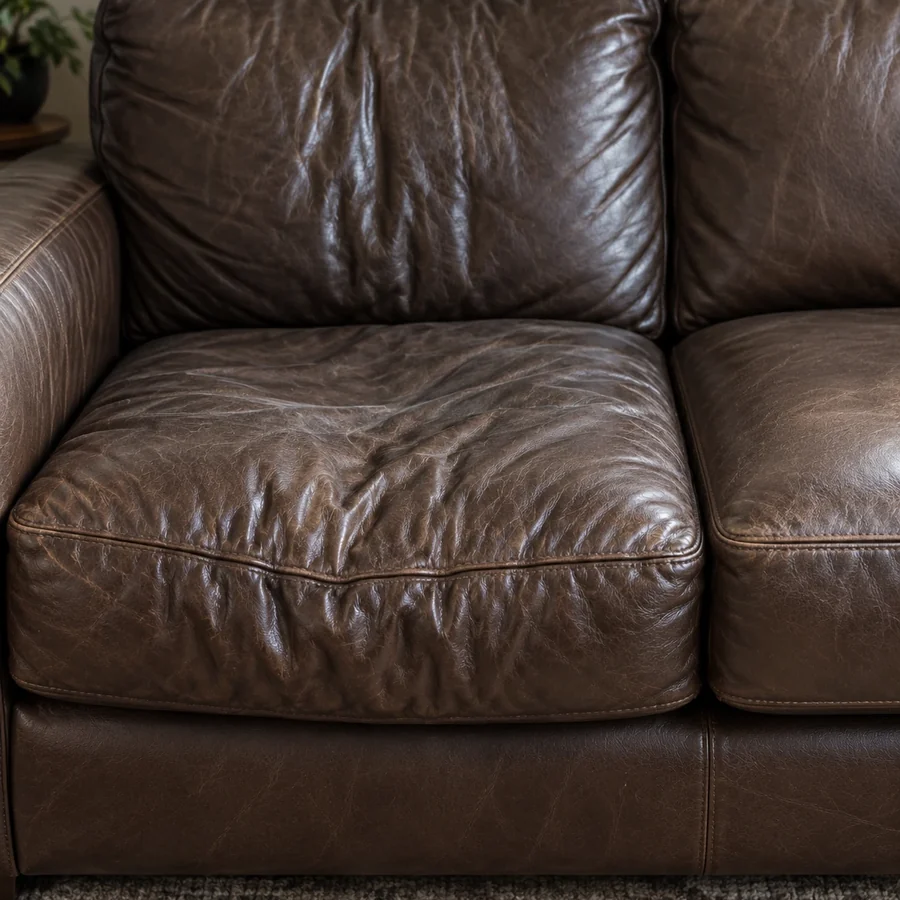
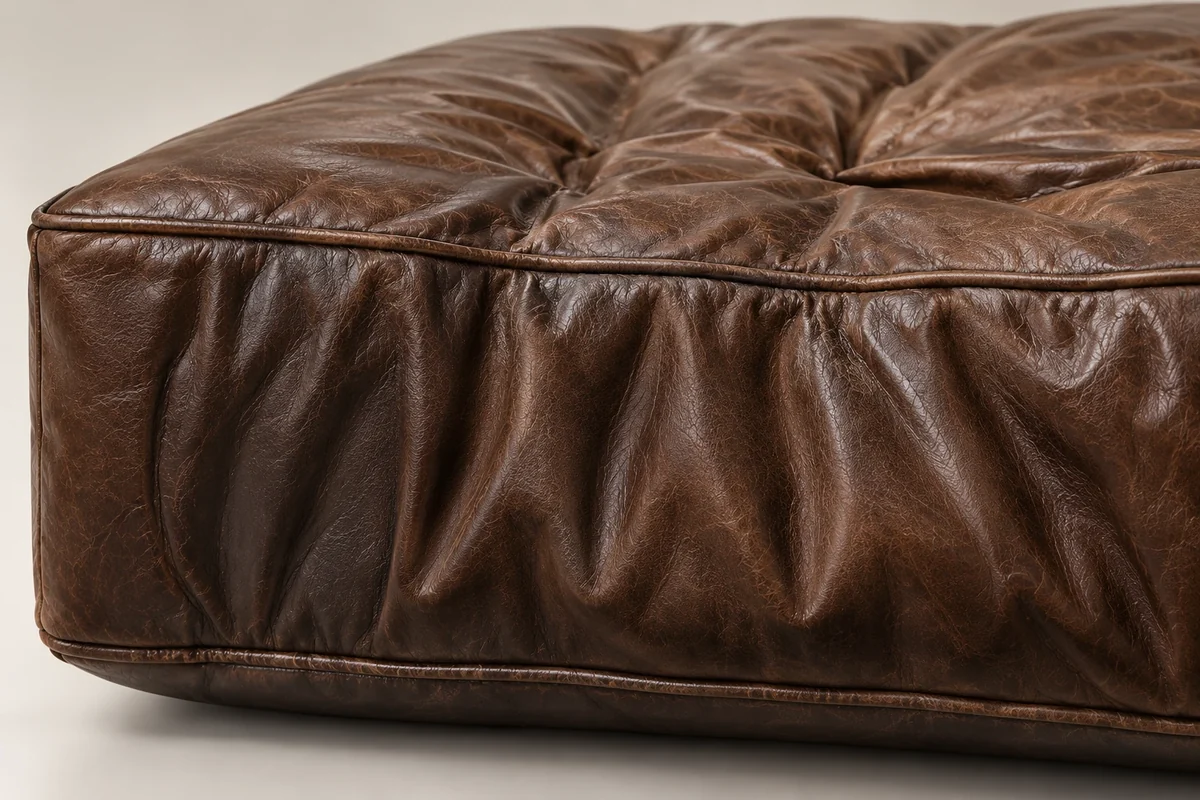
Brown leather cushion cover creased and worn over a core that still holds its shape
Cushion cover The foam is still supportive, but the leather or fabric is torn, peeling or damaged. Reupholster the cushion.
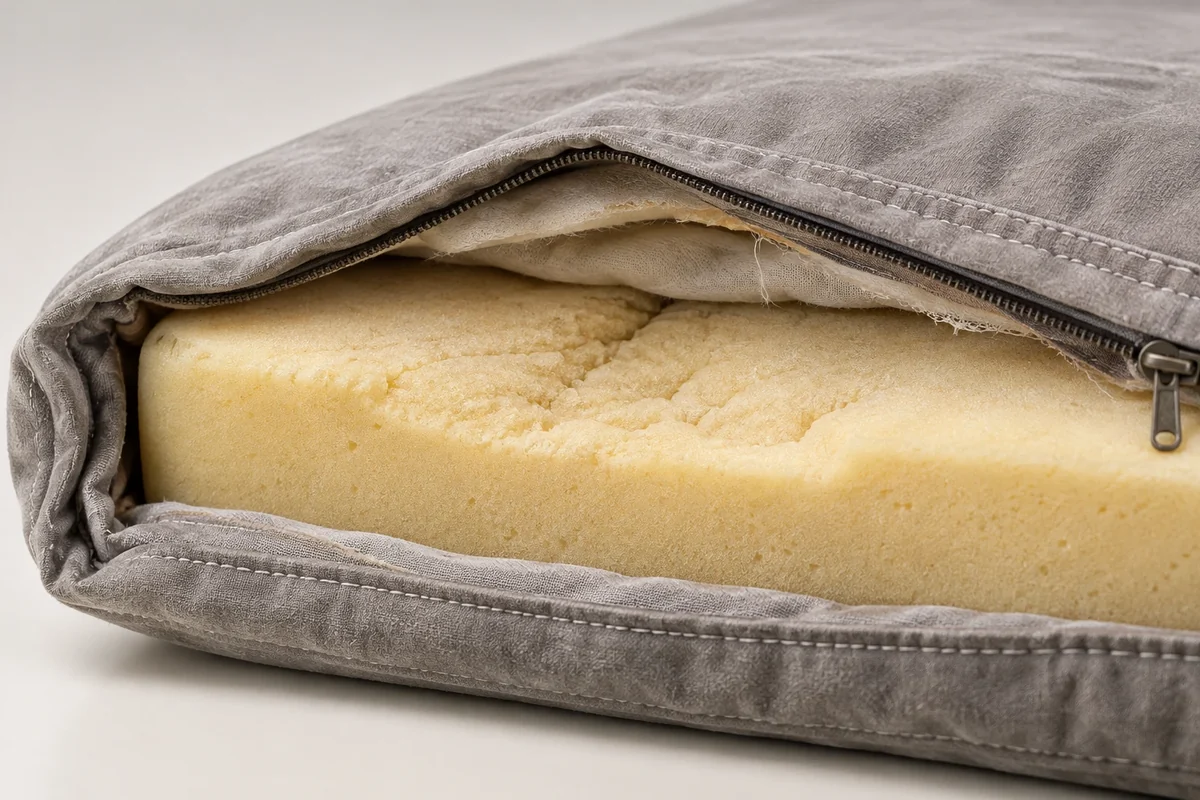
Grey cushion cover unzipped to show the yellowed foam insert sitting inside it
Both The insert has collapsed and the upholstery is damaged with it. Rebuild the complete cushion.
Two tells

How a cushion says the fill is finished

None of these are leather problems. They are all the same problem underneath — the core has stopped pushing back — and no amount of cleaning, feeding or plumping reaches it. Either one on its own is enough to put a sofa cushion replacement on the table.

01

One seat sits lower than the rest

The favourite end goes first. Rotating the cushions buys a little time and then the low seat is simply somewhere else, because the fill is wearing at a different rate under every seat.
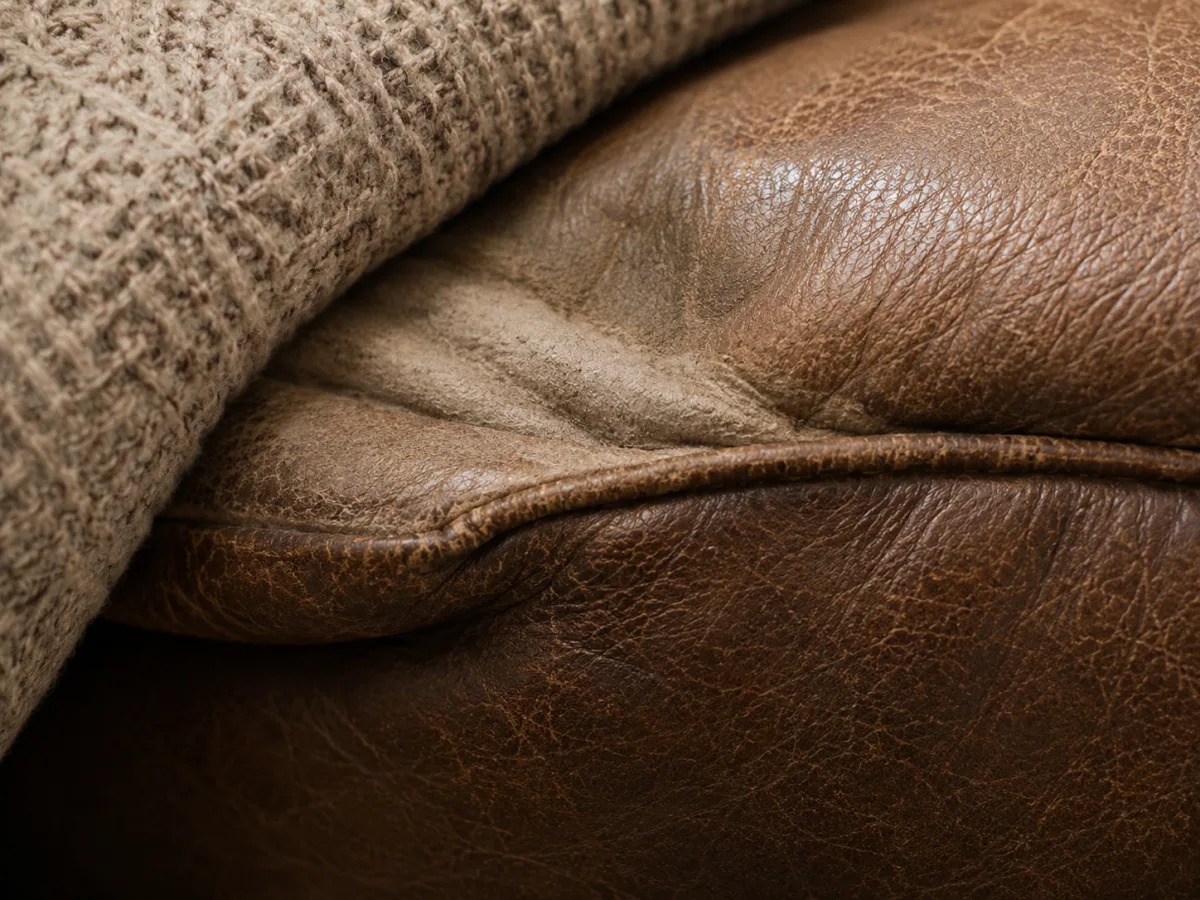
Front edge of a leather seat cushion folded over where the foam beneath it has collapsed
02

The front edge has folded over

The nose of the seat takes every stand-up and sit-down. Once the edge collapses the cover has more leather than it has cushion, so it creases in a line — and that crease is where leather eventually cracks.

Under the cover

A cushion is four things, and only one of them is leather

Knowing which of the four has failed is the whole job. Replace the wrong one and the seat is soft again within the year, which is why a sofa cushion replacement starts with the cover coming off rather than with a foam order.
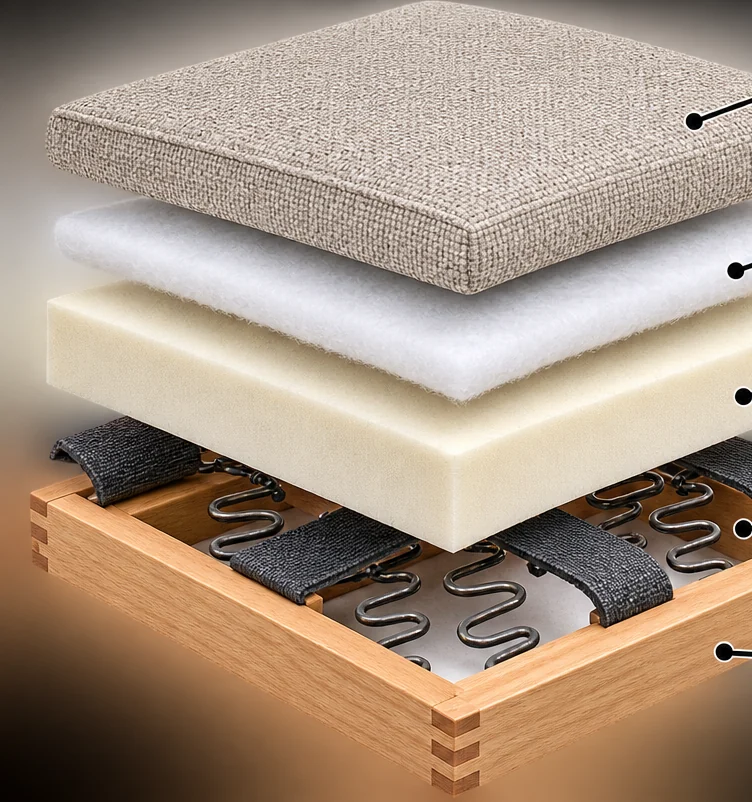
Exploded view of an upholstered seat build: cover, wrap, foam core and the webbed frame beneath
The same stack in every upholstered seat, from the cover down to the frame.
01

The cover

The leather or fabric case. Sound covers are reused — that is the point of the service.

02

The wrap

A soft fibre or down layer around the core. It gives the cushion its rounded face and it flattens years before the core does.

03

The core

Foam or a pocketed spring unit. This is what holds your weight, and this is what has usually died.

04

The deck

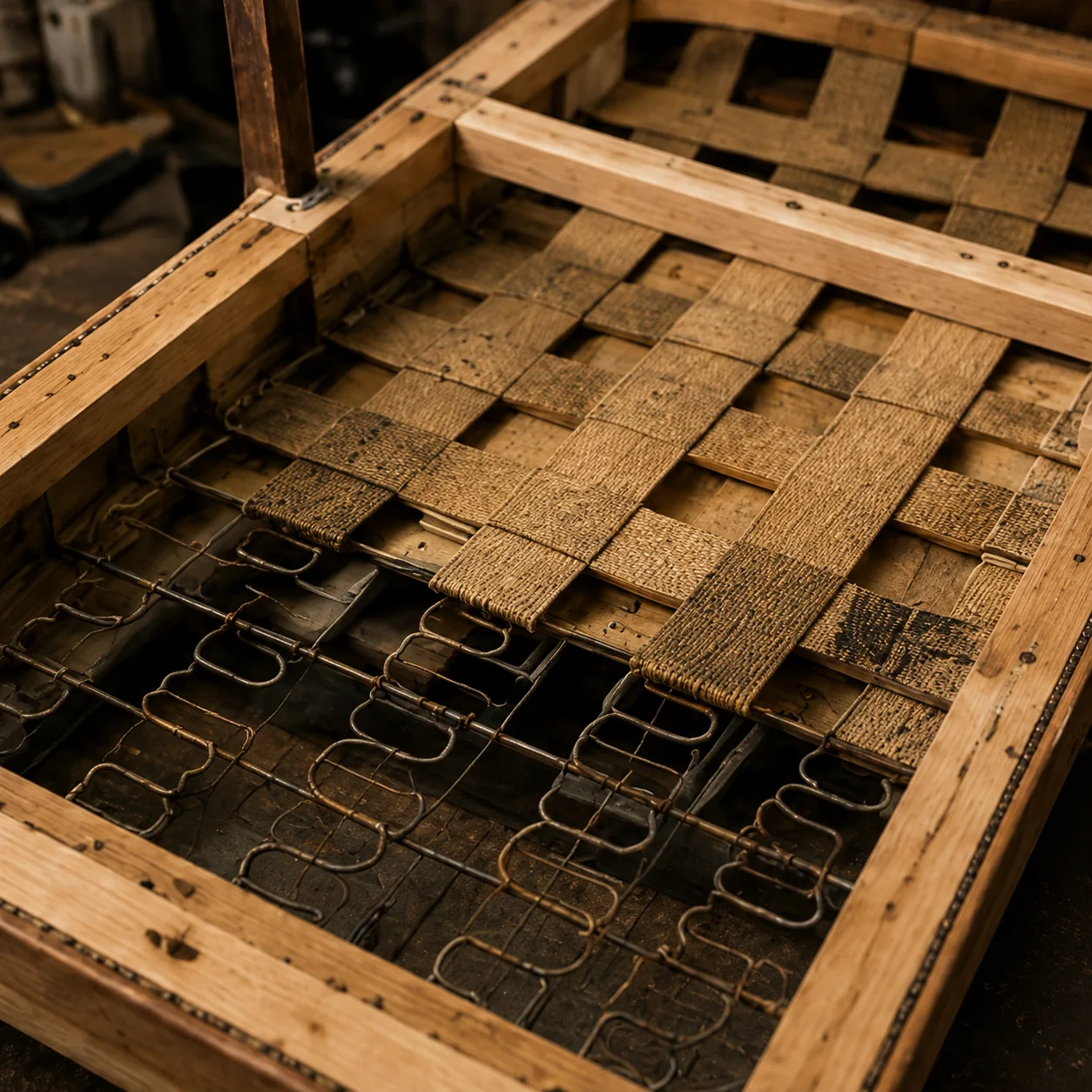
Webbing or springs in the frame, under the cushion. A sagging deck makes a brand new core feel dead on day one.
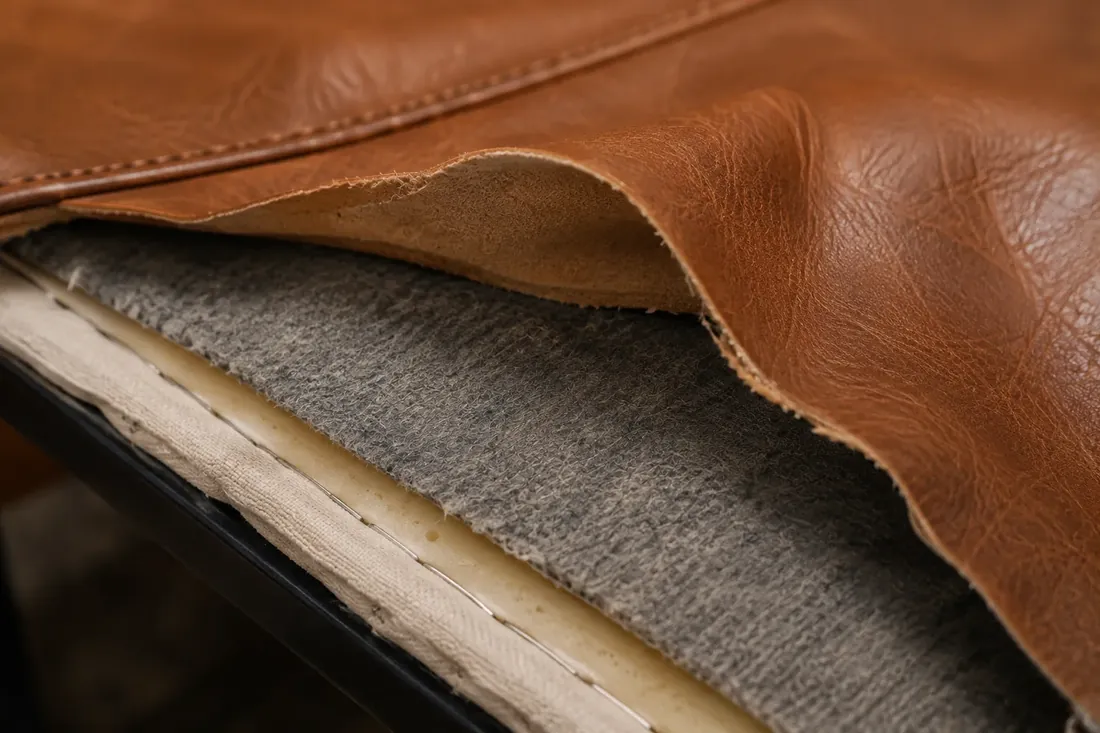
Leather cushion cover peeled back to show the insert inside it
The cover, opened Emptied through the zip or the closing seam and kept intact, so it goes back on the same cushion it came off.
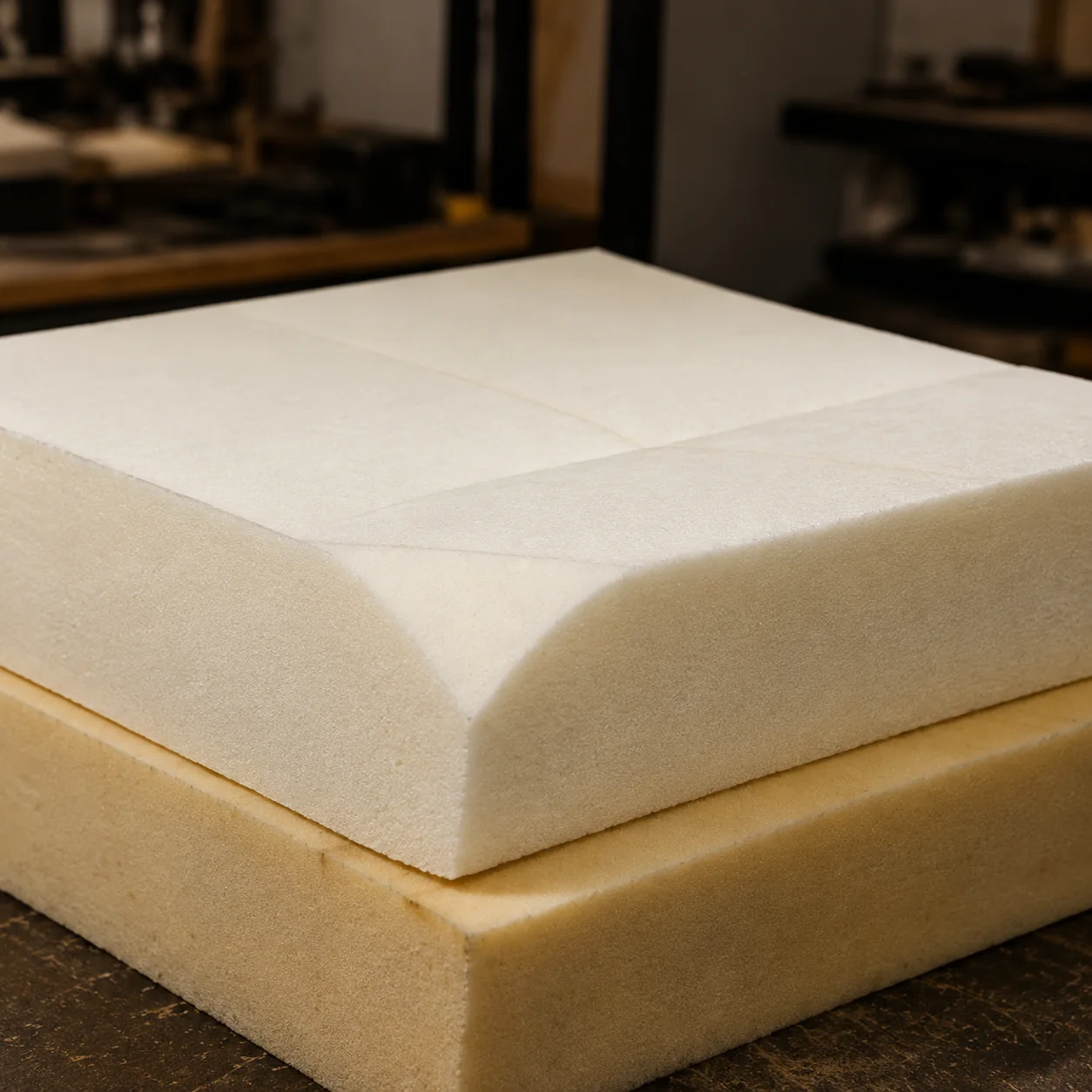
New white foam seat core cut square with a clean profile
The core, cut fresh Cut slightly proud of the cover on purpose. A core cut to the exact measurement reads hollow at the corners.
Seat frame with webbing and springs exposed beneath the cushion
The deck, checked Webbing stretches and clips let go. If the deck has dropped it is retensioned before any new fill goes on top of it.
The fill

The core is cut for your sofa, not ordered by size

Flexible foam is graded by density and by how hard it pushes back — two separate numbers, which is why the polyurethanes industry measures them separately — and a soft dense foam outlasts a firm light one every time.
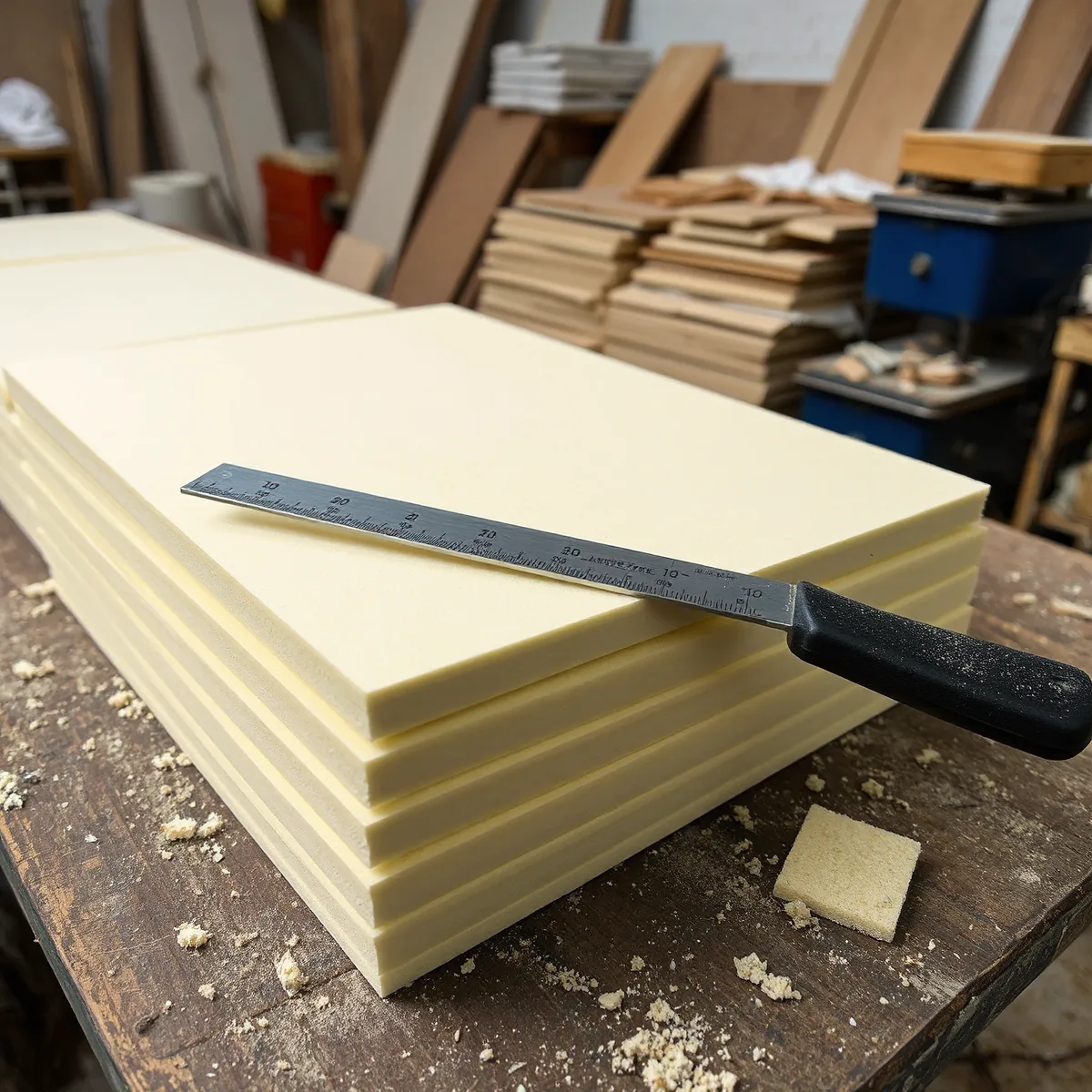
Stacked foam sheets cut into blanks on a workshop bench
Blanks are cut from sheet, not bought pre-sized.
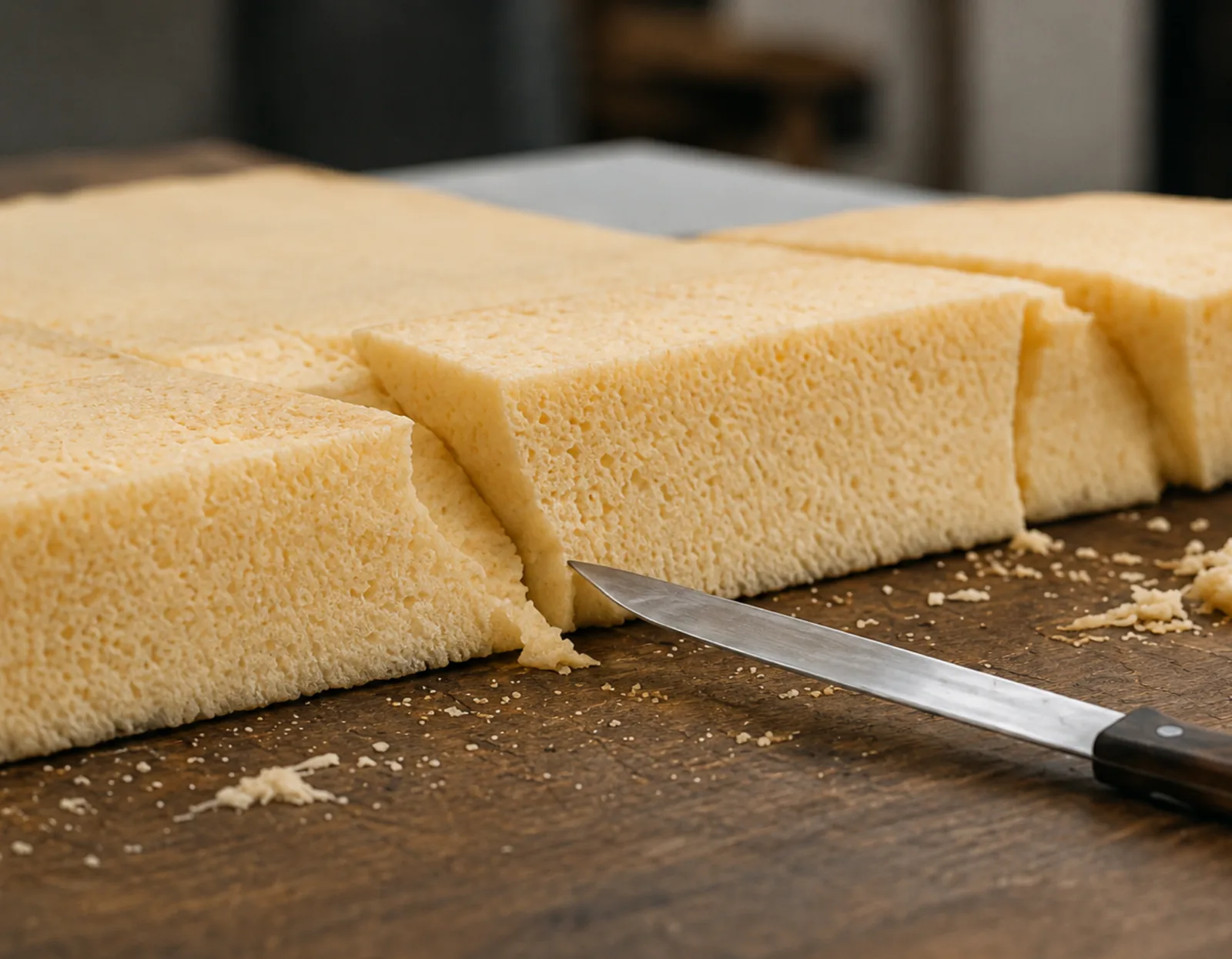
Foam block being cut to a new pattern with a long upholstery knife
Every core is templated off the cover it has to fill.
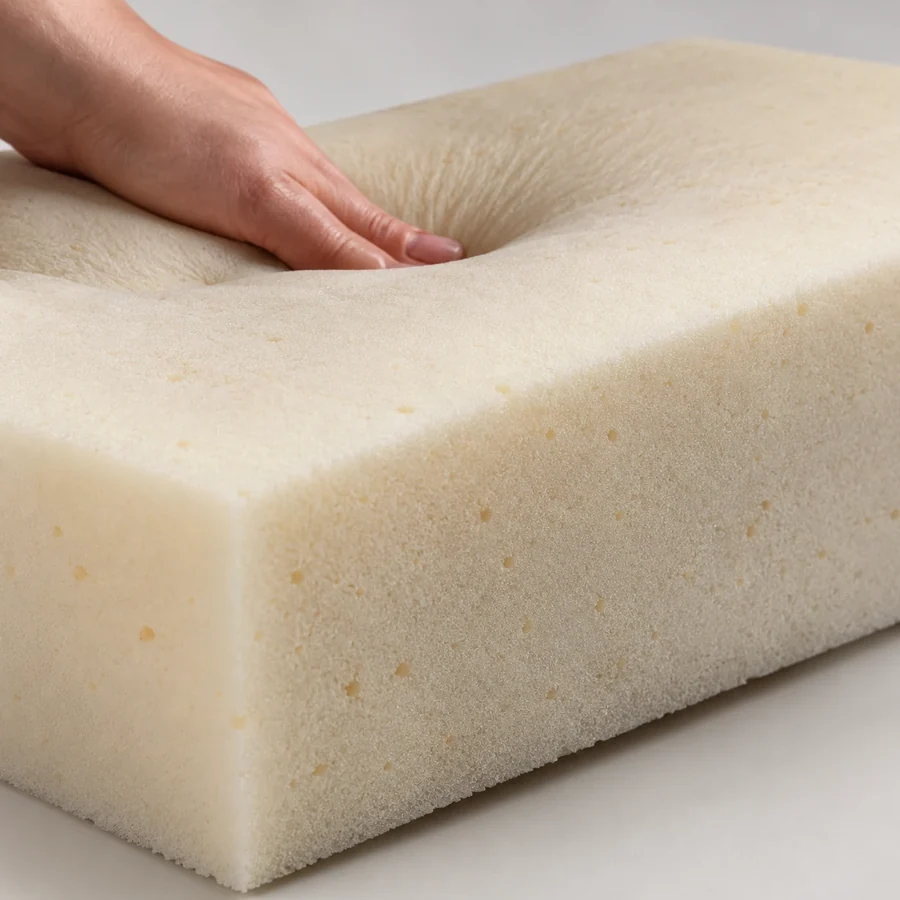
Firmness

Not all cushion foam is the same

Density decides how long a core lasts. Firmness decides how it feels on day one. Pick the feel you actually want and we cut to that grade.
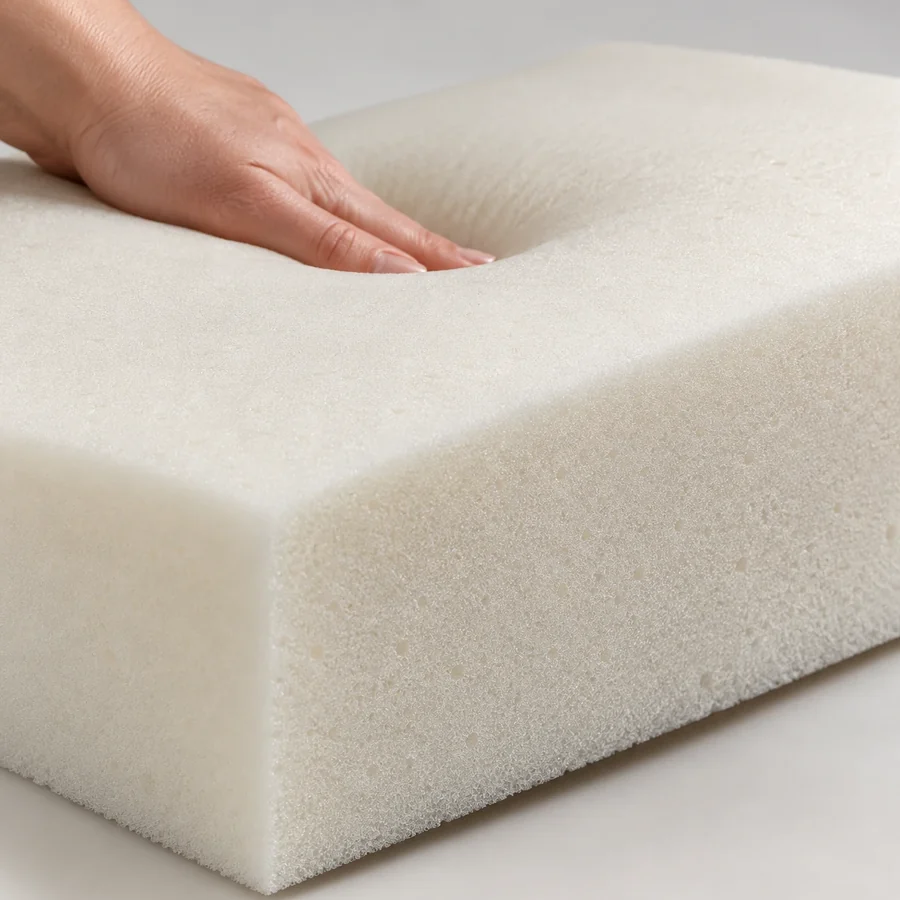
A hand pressing deep into a soft white foam block, leaving a wide hollow
Soft Sink‑in comfort
A hand pressing into an off-white medium foam block that gives part way
Medium Balanced comfort
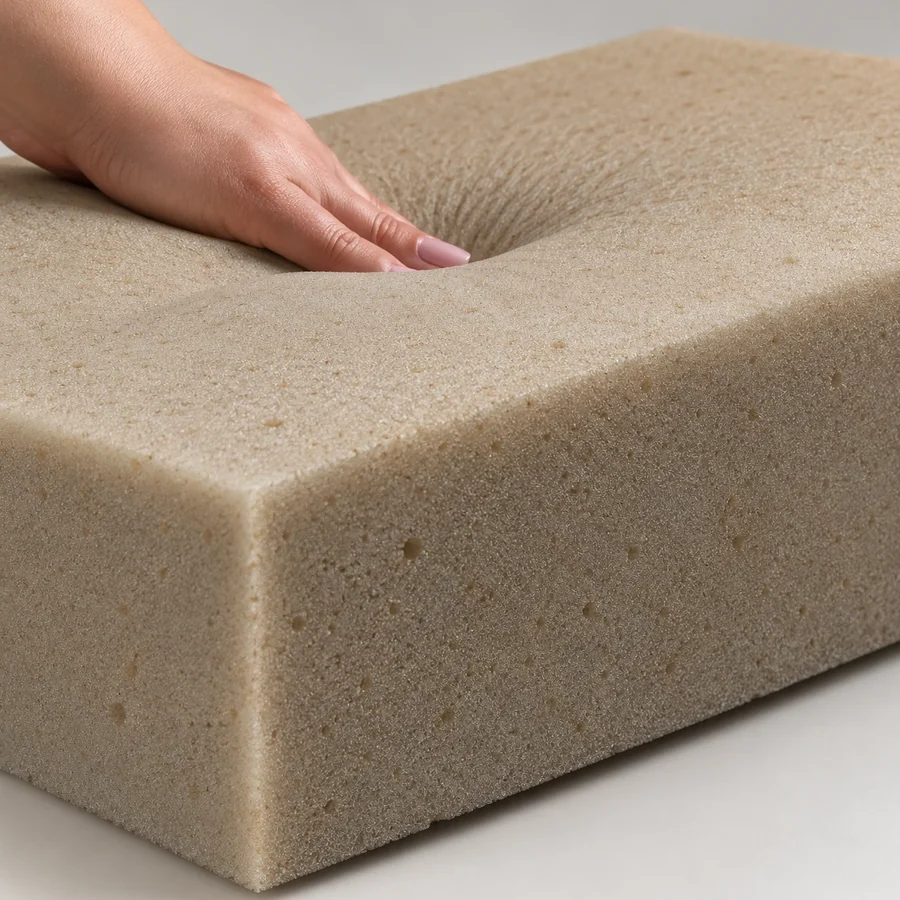
A hand pressing into a dense tan medium-firm foam block that barely dips
Medium‑firm Supportive seating
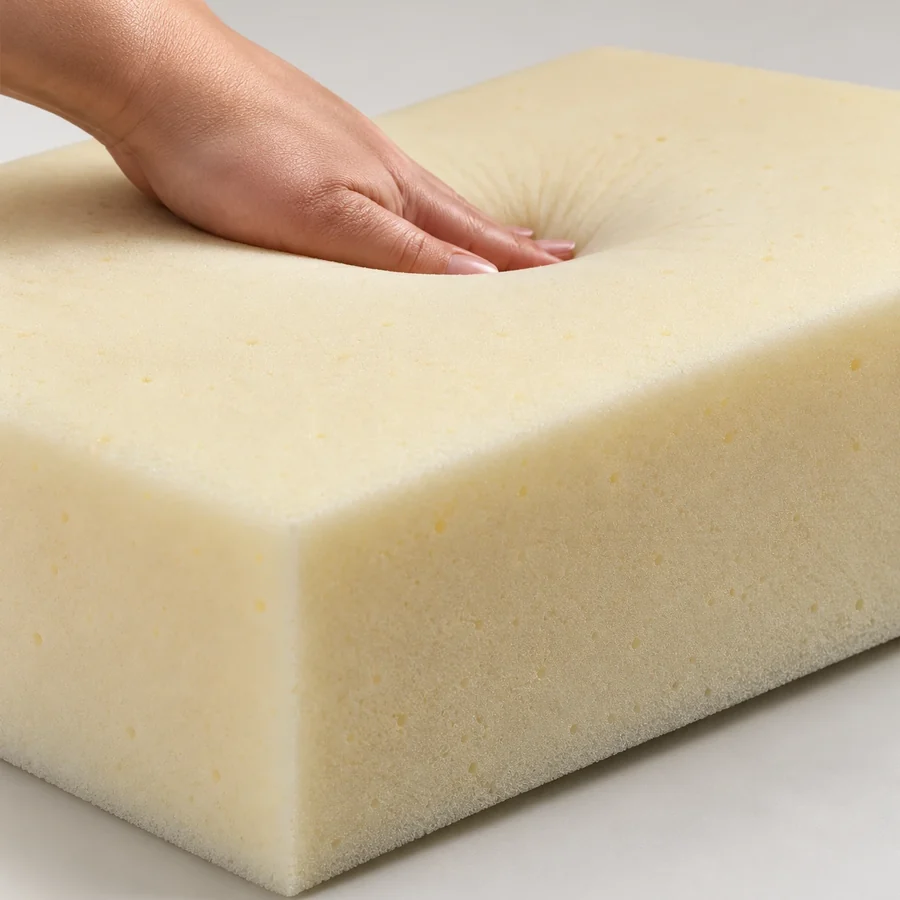
A hand resting on a pale yellow firm foam block that holds its shape under pressure
Firm Less sink, stronger
Eight fills

Cushion materials we use

Everything we cut from, and what each one is good at. Bring a piece in and we match the fill to how the seat is actually used.
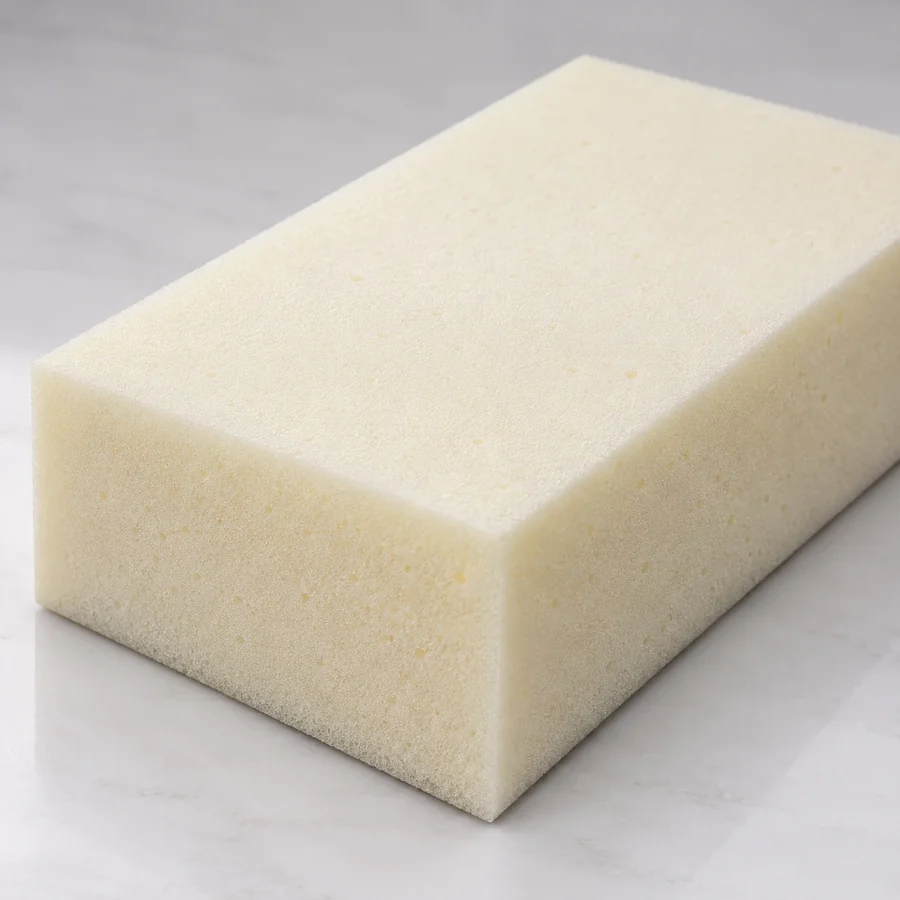
Block of cream high-resilience upholstery foam on a pale bench
High‑resilience foam Springs back hardest. The everyday default.
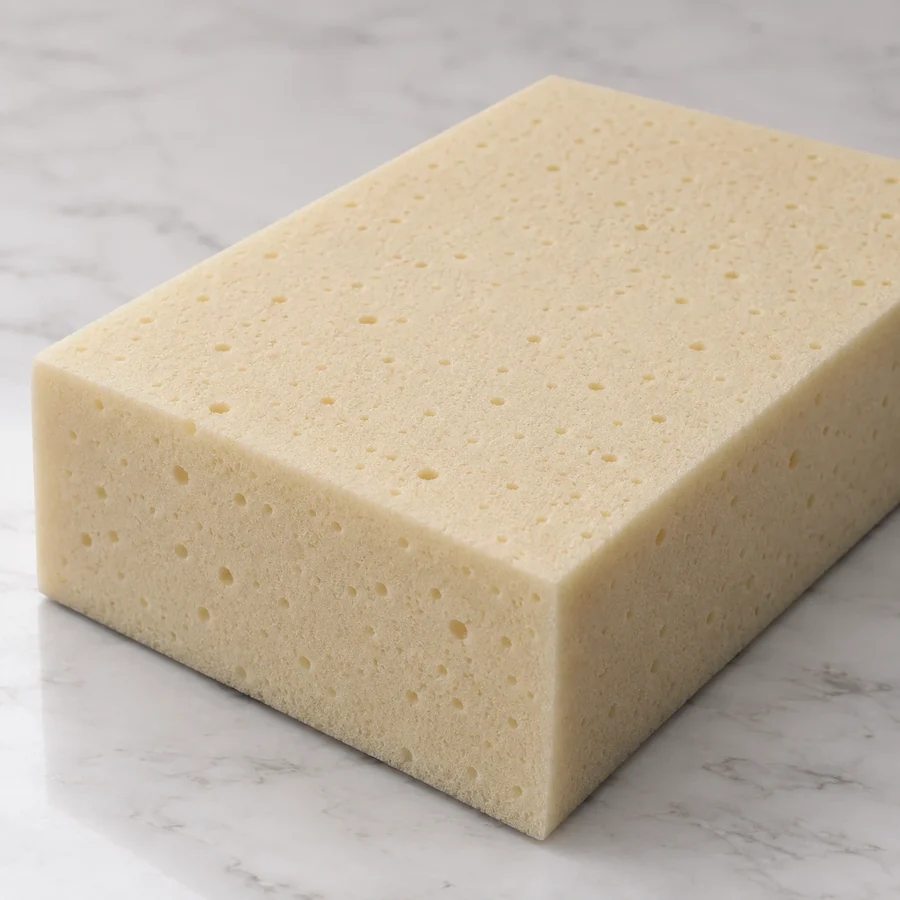
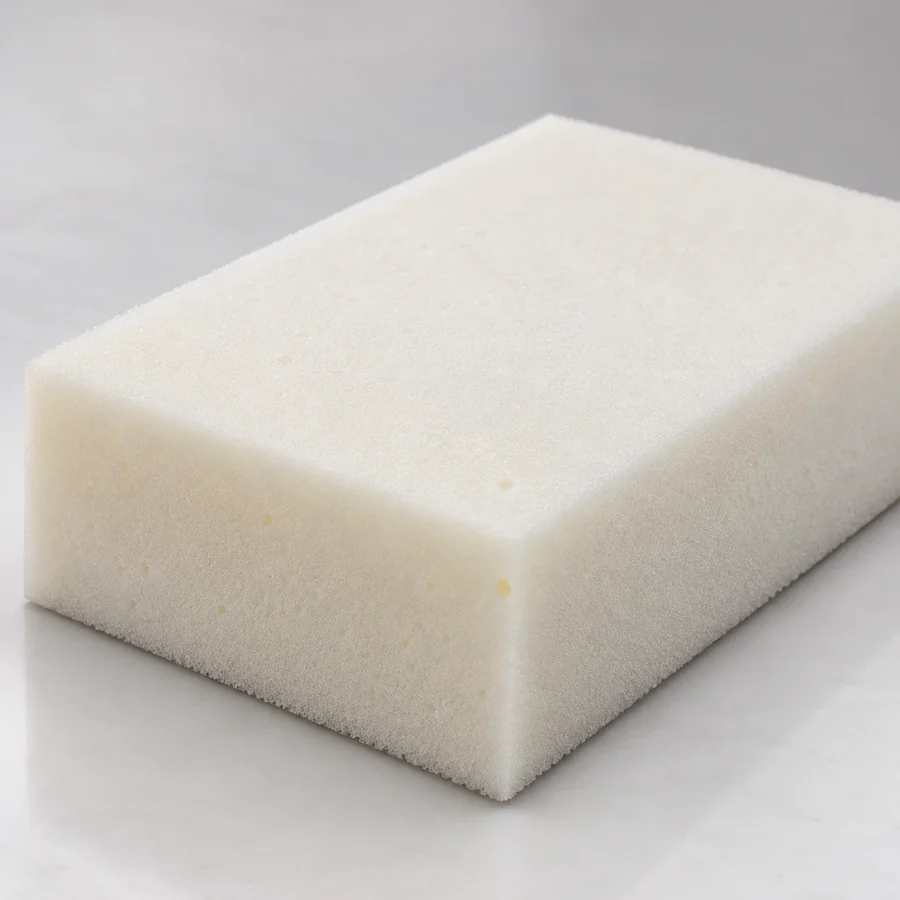
Block of white high-density upholstery foam with a fine closed cell structure
High‑density foam Heavier, tighter cells, the longest life.
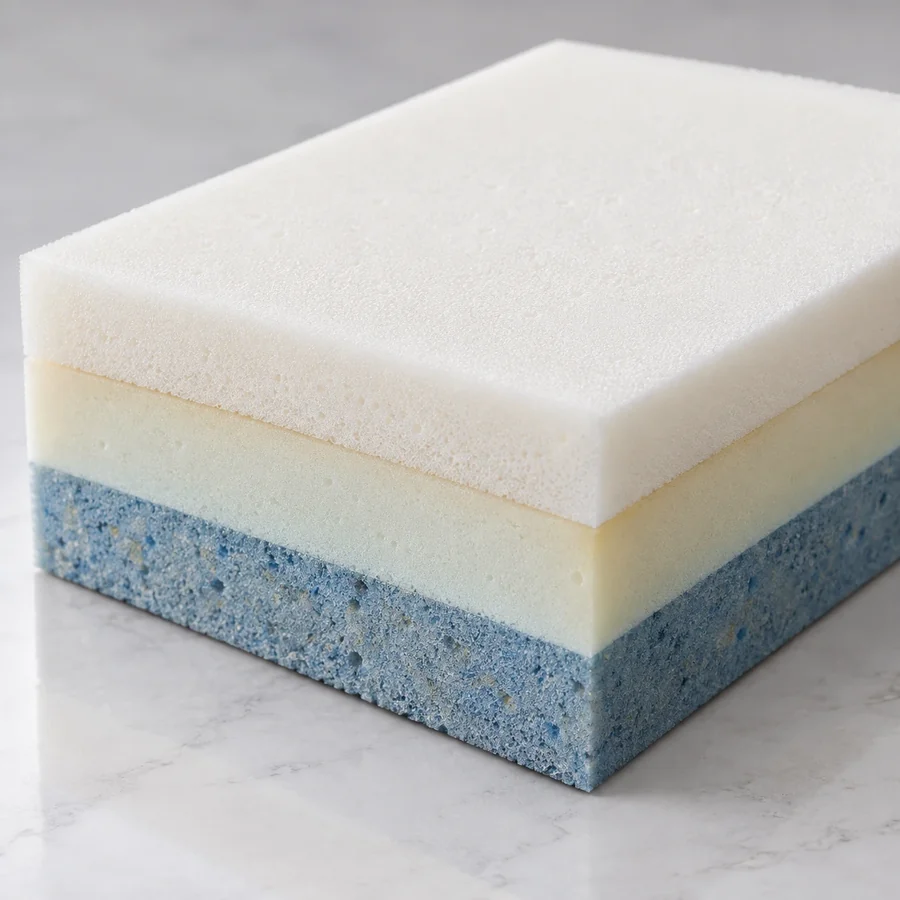
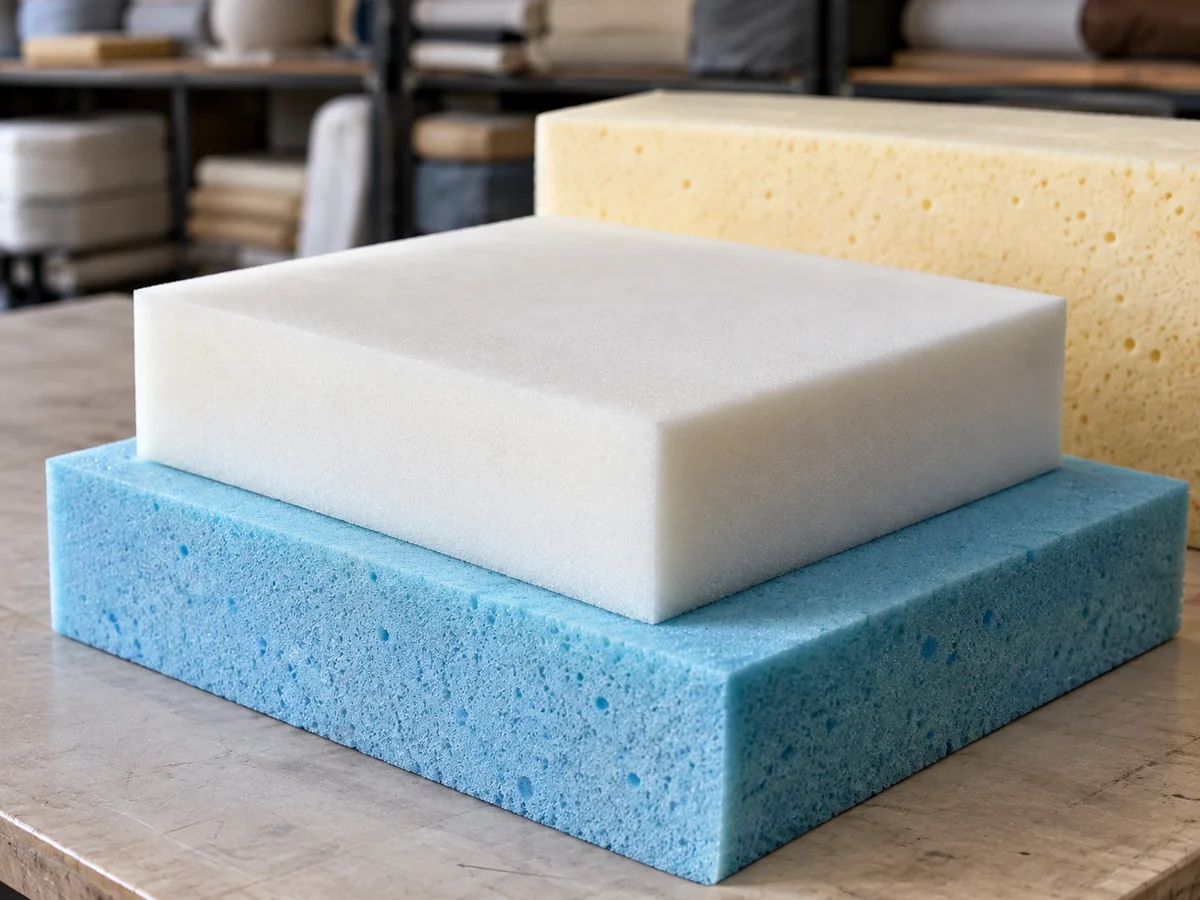
Foam block built from three bonded layers in white, cream and blue
Layered foam Firm base, softer top. Tuned by the layer.
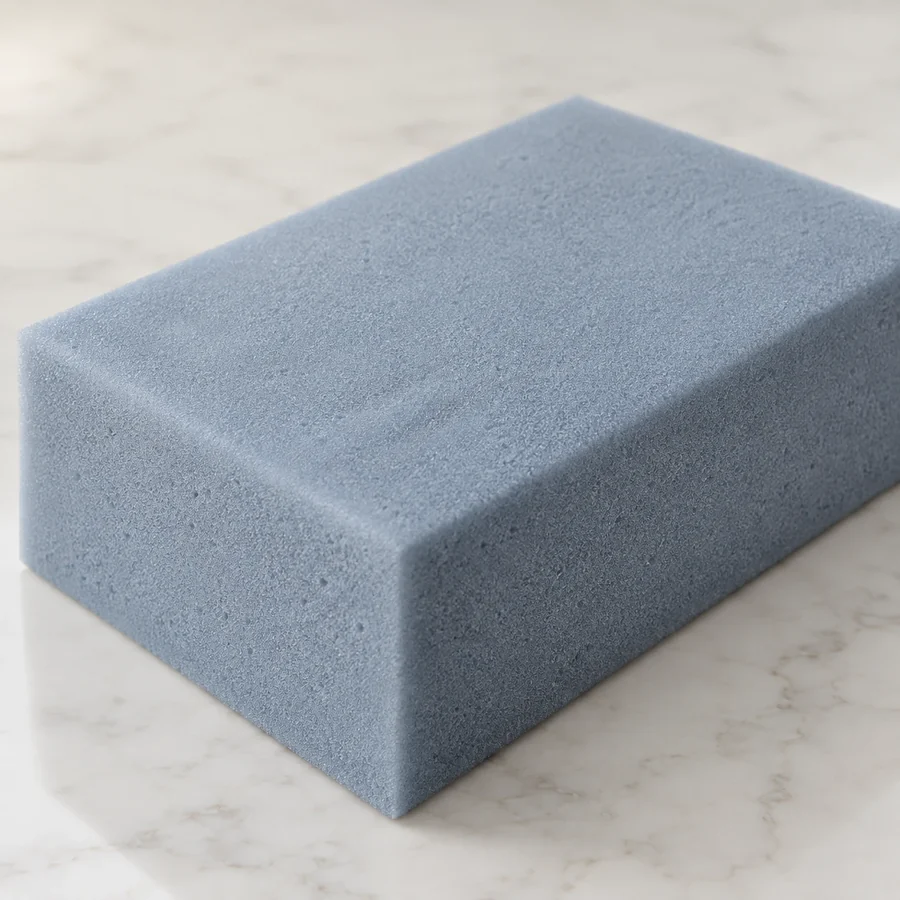
Block of blue-grey memory foam used as a comfort layer
Memory foam A comfort layer on top, never the core.
Pale yellow latex foam block with an open pinhole surface
Latex Buoyant and breathable. Costs more, lasts.
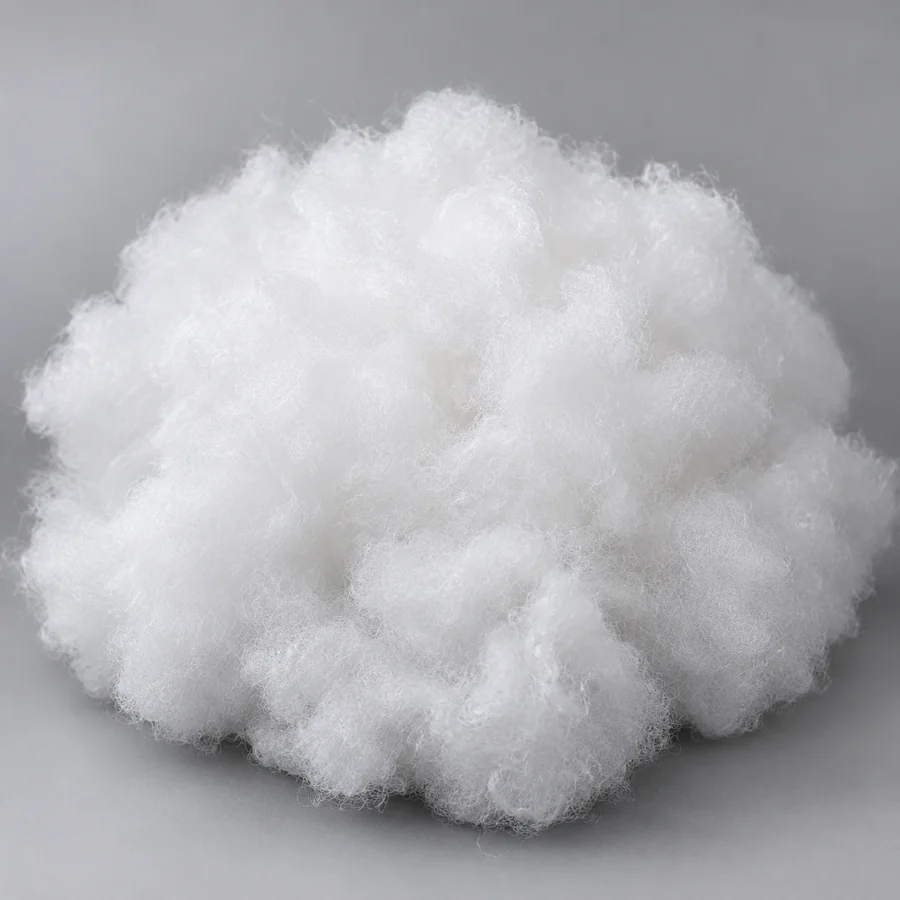
Cluster of white polyester fibre fill
Fibre fill Back cushions and soft wraps. Plumps easily.
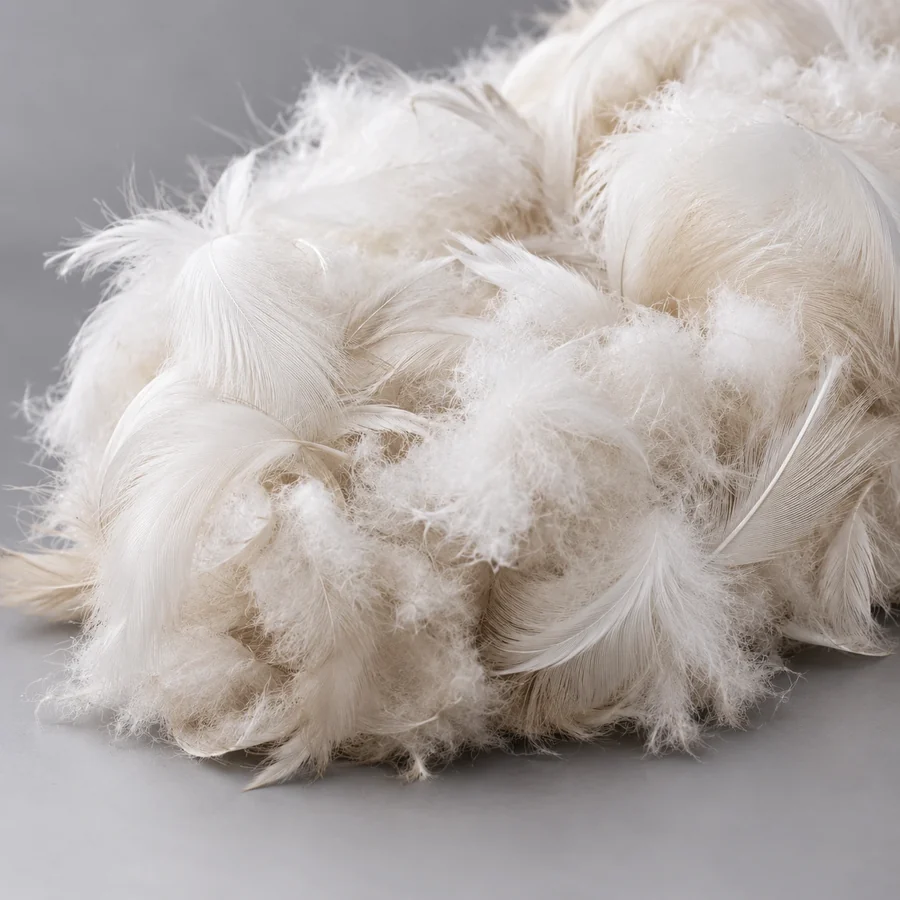
Loose white down and feather fill
Down and feather The loose, sink‑in look. Needs plumping.
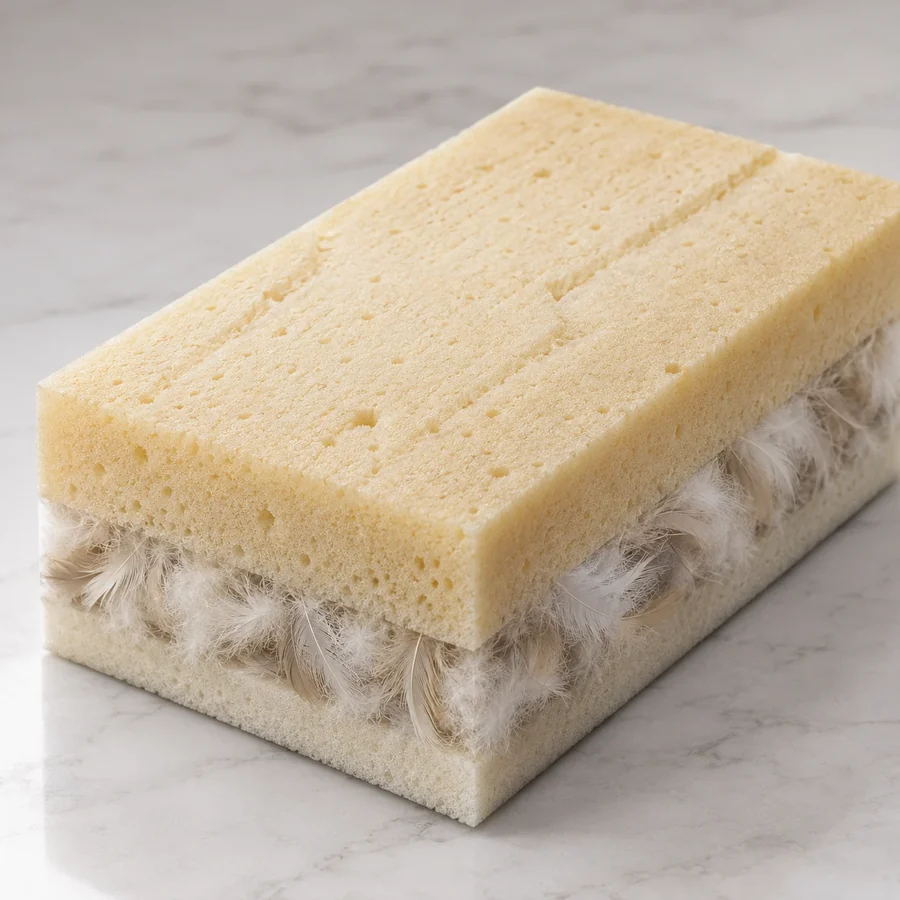
Cream foam core sitting on a layer of down fill
Foam and down Foam holds the shape, down softens the face.
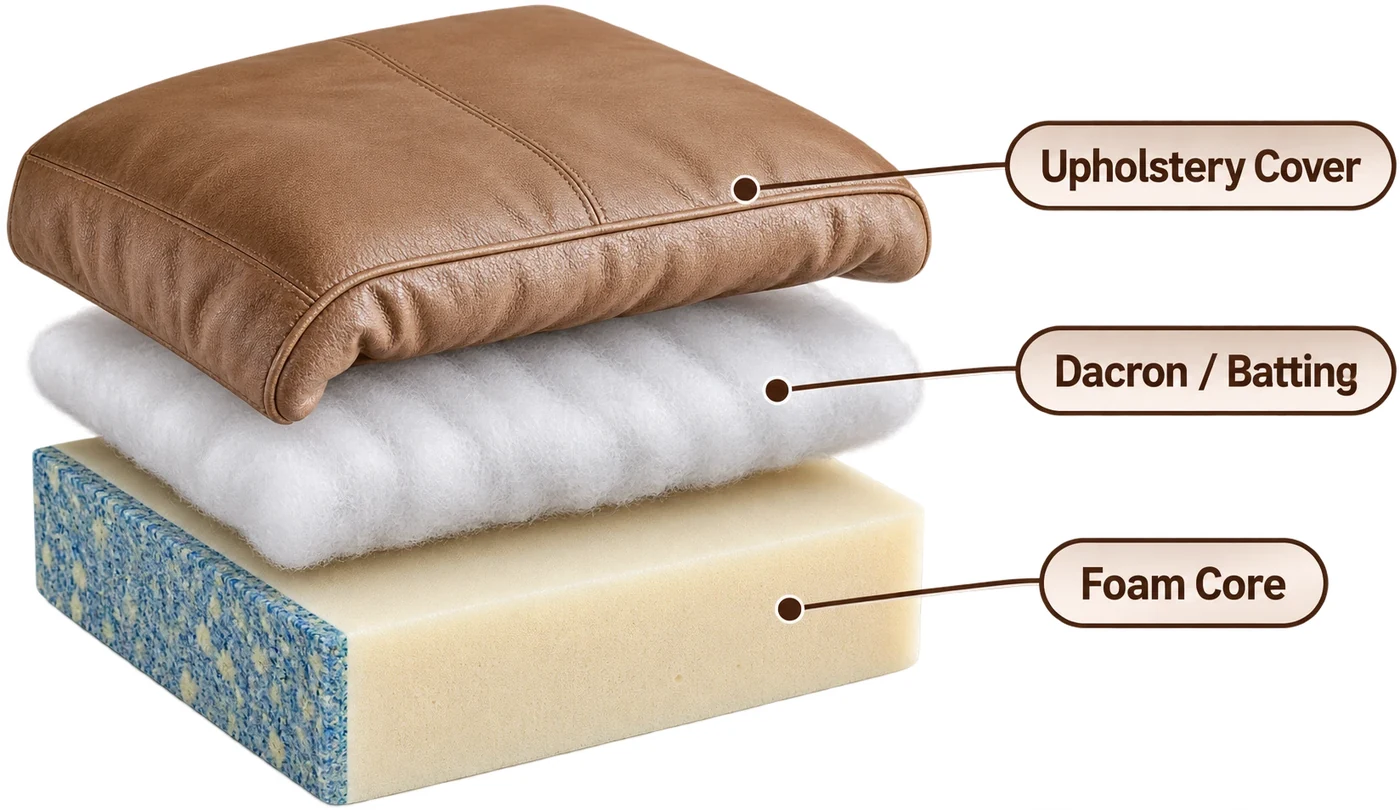
Exploded view of a cushion: brown leather cover, white Dacron batting and the foam core beneath

Foam and Dacron make a better cushion

Dacron wraps the core before the cover goes back on. It fills out the corners, softens the edges and stops a fresh block of foam looking like a fresh block of foam.

Any shape, cut to template

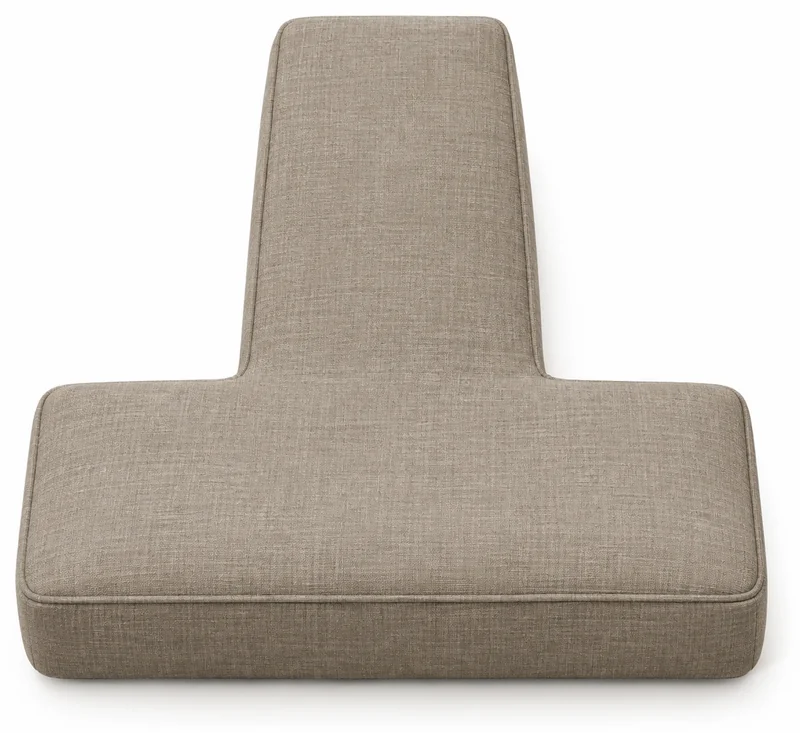
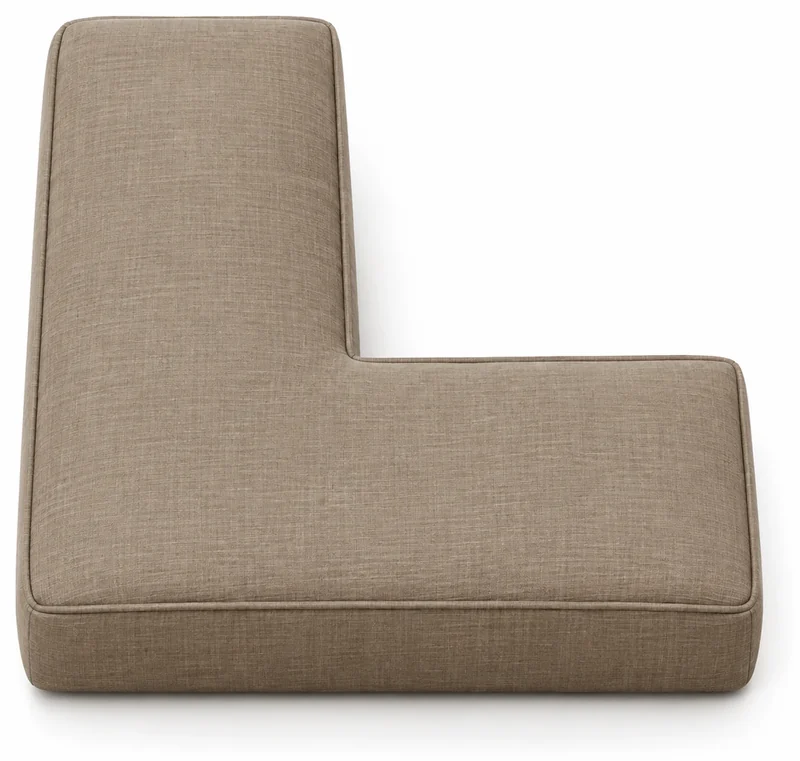
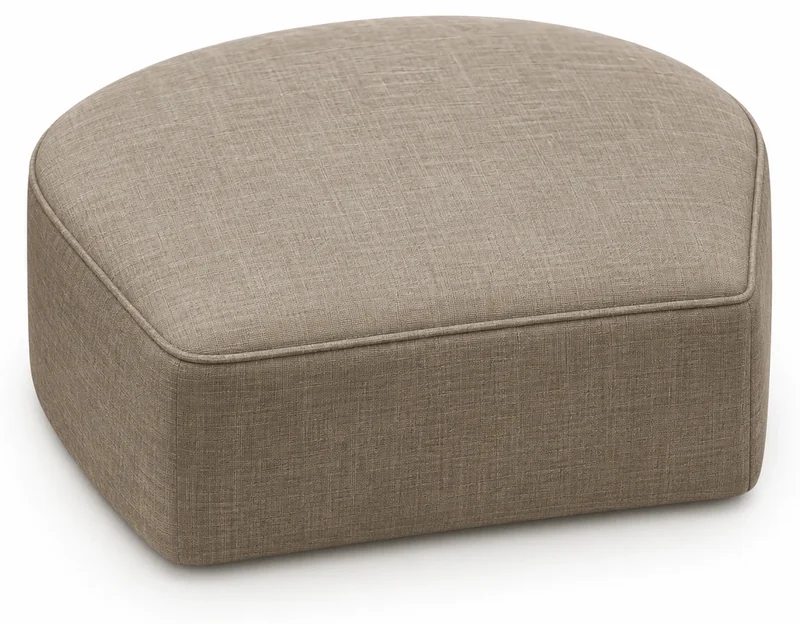
We replace more than rectangles

Sectionals, chaises and corner returns are full of cushions that no supplier stocks. Every core here is cut from a template taken off your own cover.
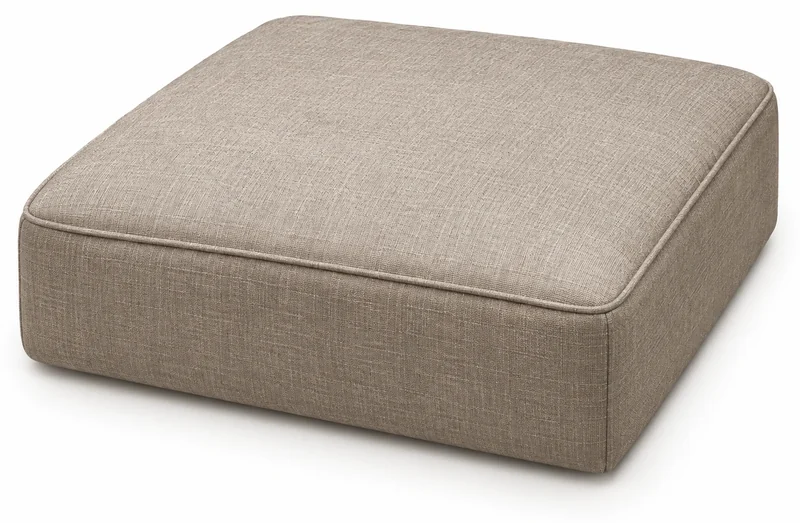
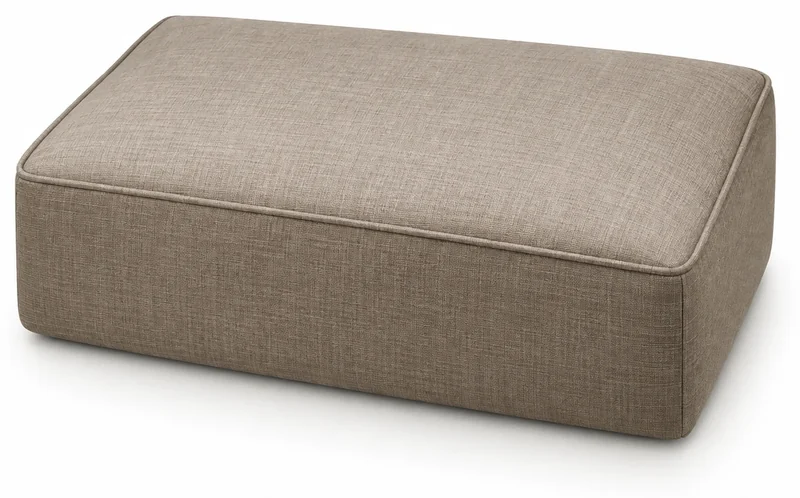
Rectangular seat cushion in taupe upholstery
Rectangle
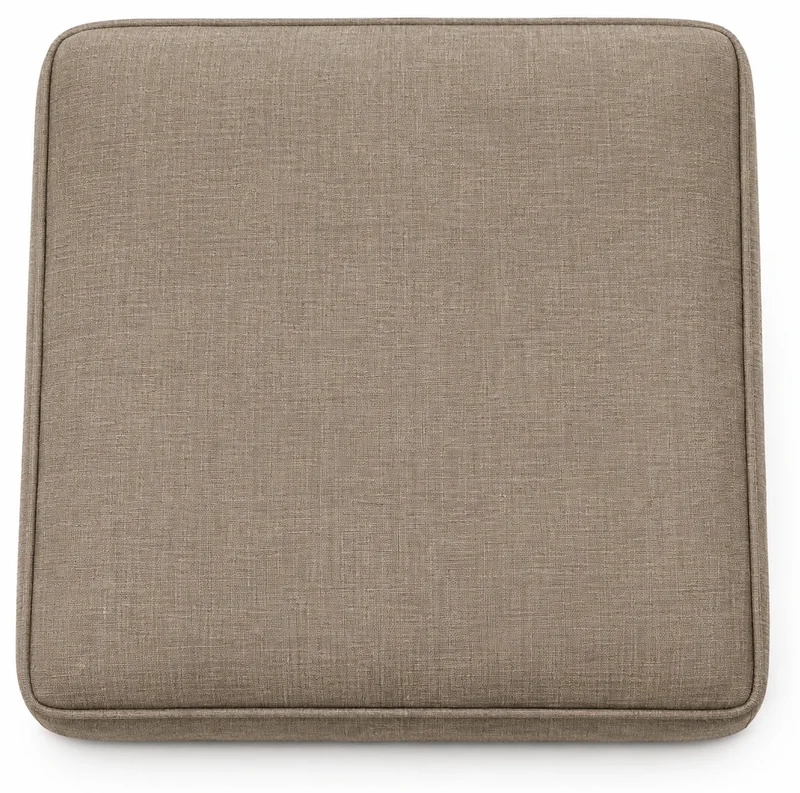
Square seat cushion seen from above
Square
T-shaped seat cushion that wraps around a sofa arm
T‑shape
L-shaped corner seat cushion seen from above
L‑shape
Seat cushion with a curved front edge
Curved
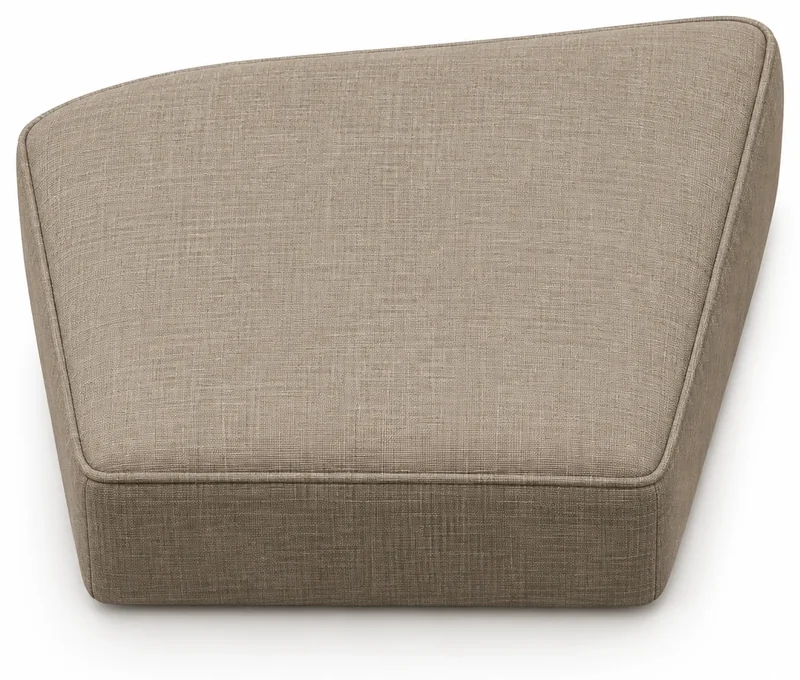
Trapezoid seat cushion with tapered sides
Trapezoid
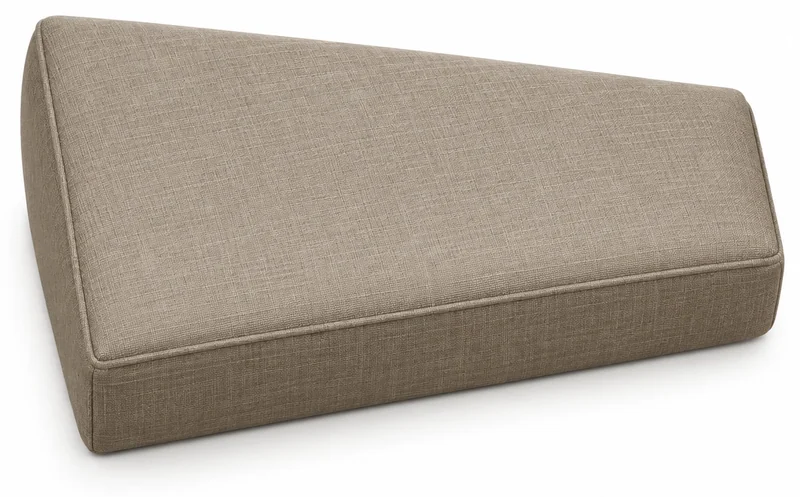
Wedge cushion that narrows from one end to the other
Wedge
Bullnose cushion with a rolled front edge
Bullnose

Attached or removable changes the job
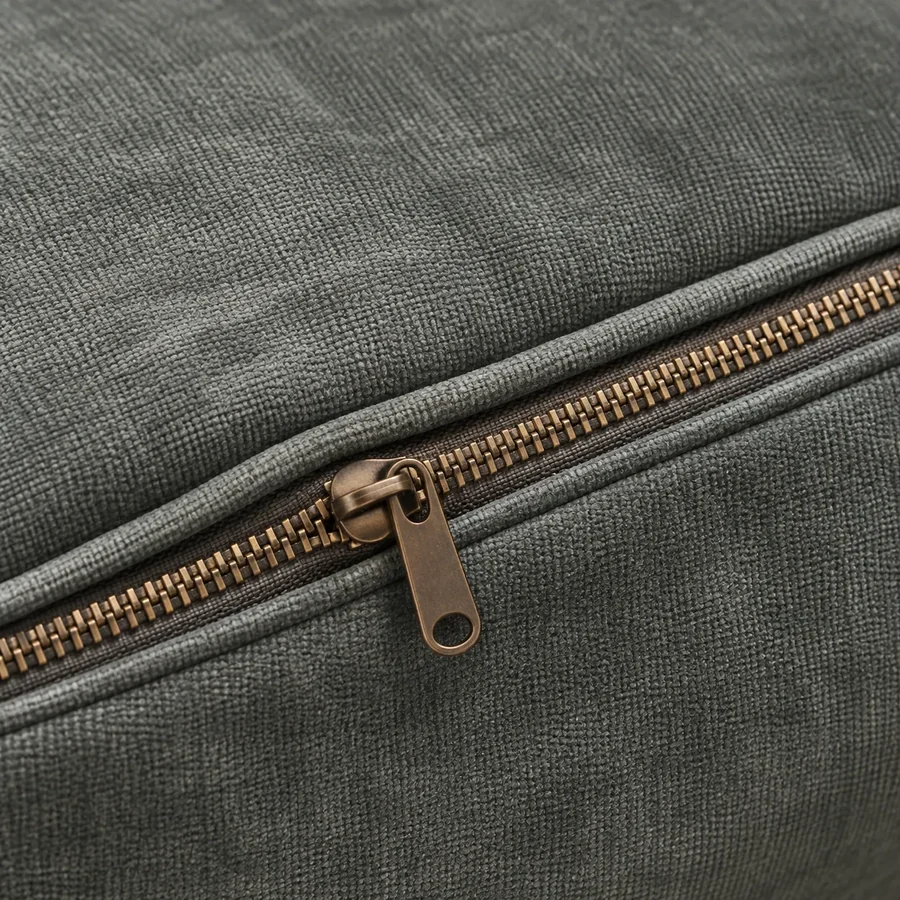
Brass zip running along the seam of a removable cushion cover
Zippered, removable

The cover comes off, the new core goes in, the cover goes back on. No upholstery work at all.
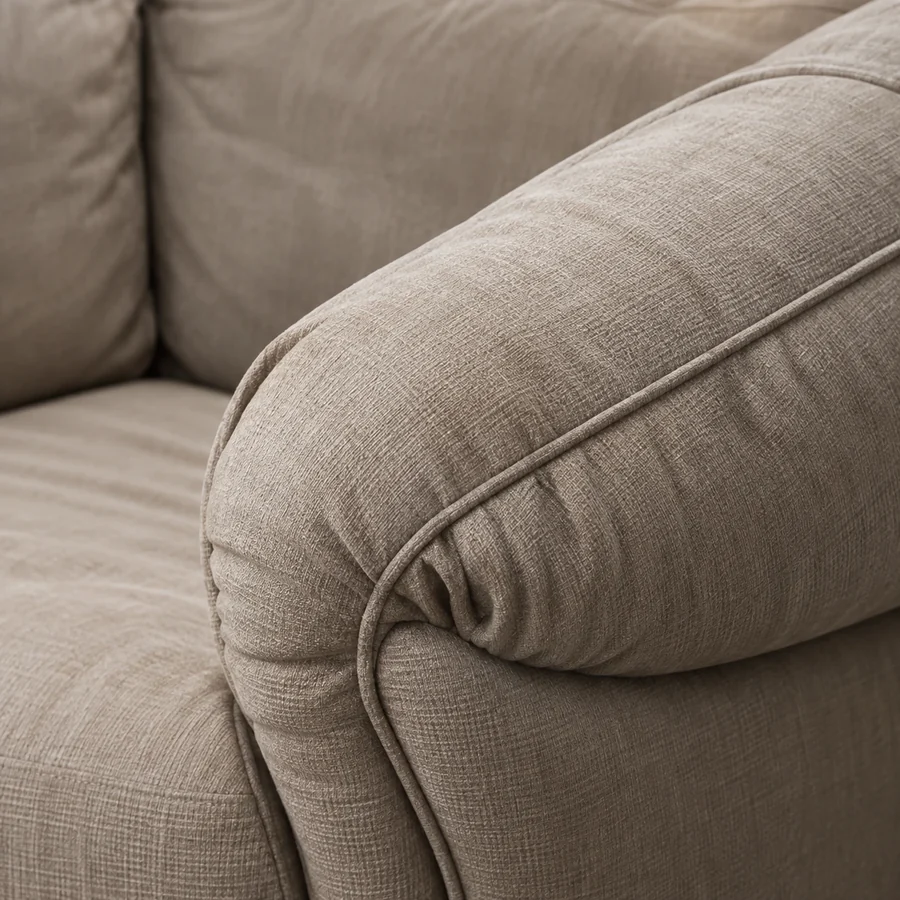
Sofa arm and back where the cushions are sewn to the frame rather than loose
Attached to the frame

A seam is opened, the fill is rebuilt in place and the seam is closed. Upholstery work, done on site.

Ten kinds of cushion

Every cushion on the piece, not just the seats

Seats go first because they carry the weight. Backs, chaises, corners and ottomans wear at their own pace, so each one is specified on its own.
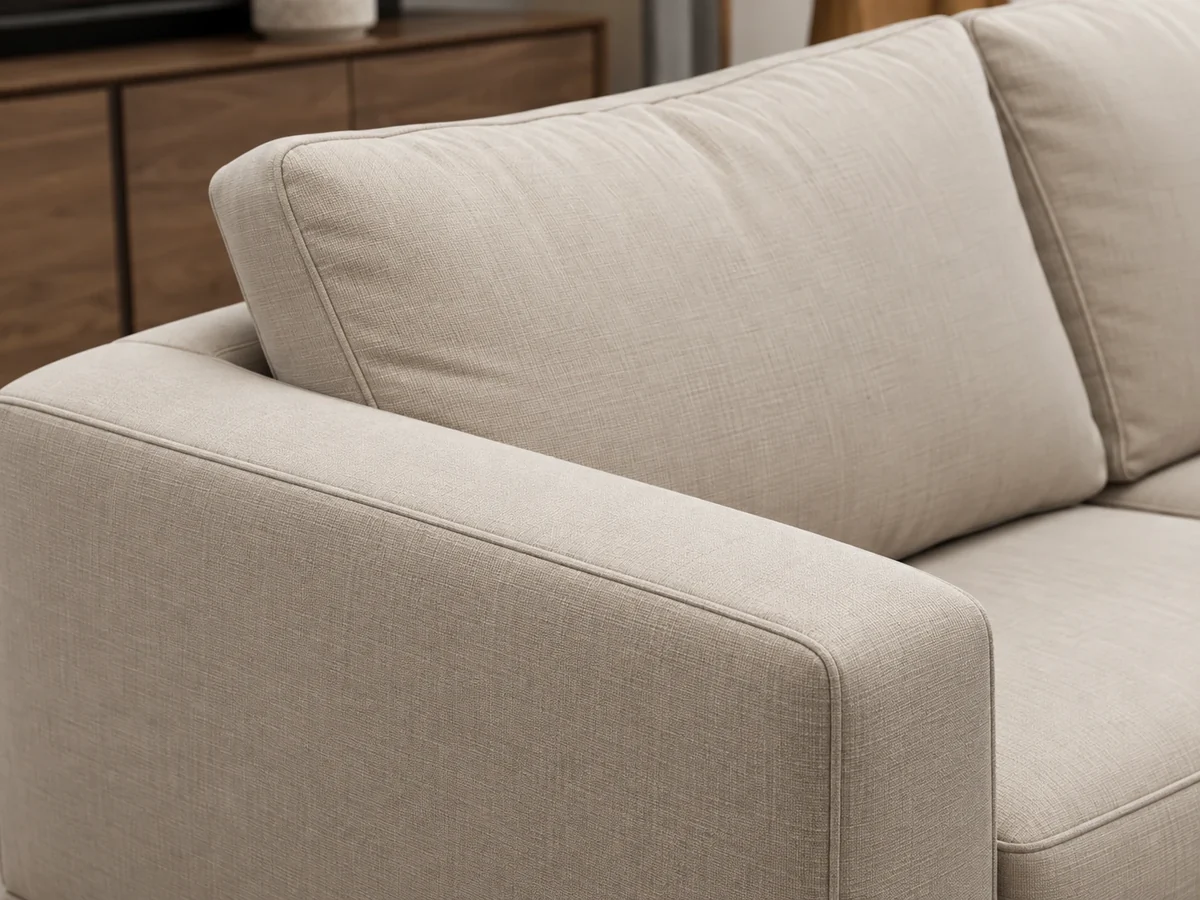
Cream fabric sofa arm and seat cushion needing new fill
Seat cushions
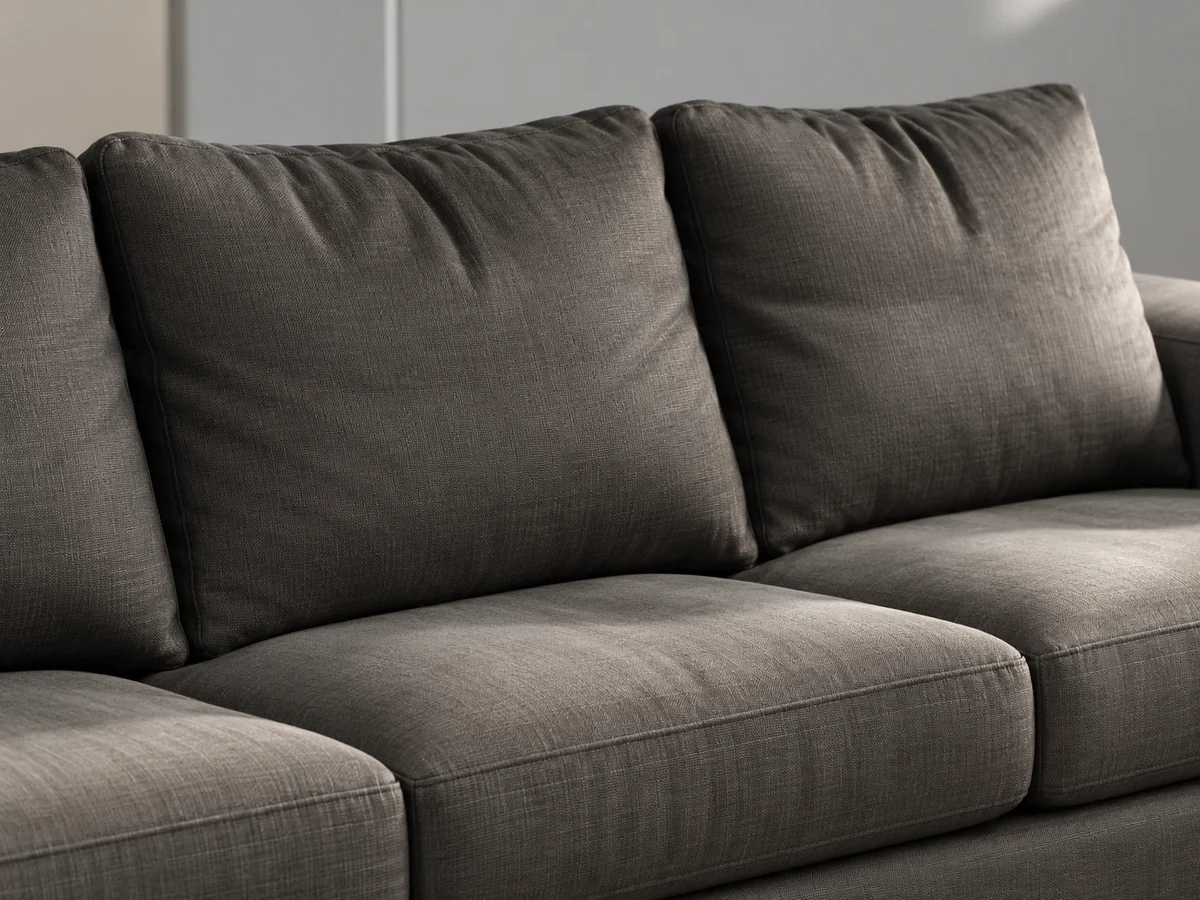
Two loose back cushions on a dark grey fabric sofa
Back cushions
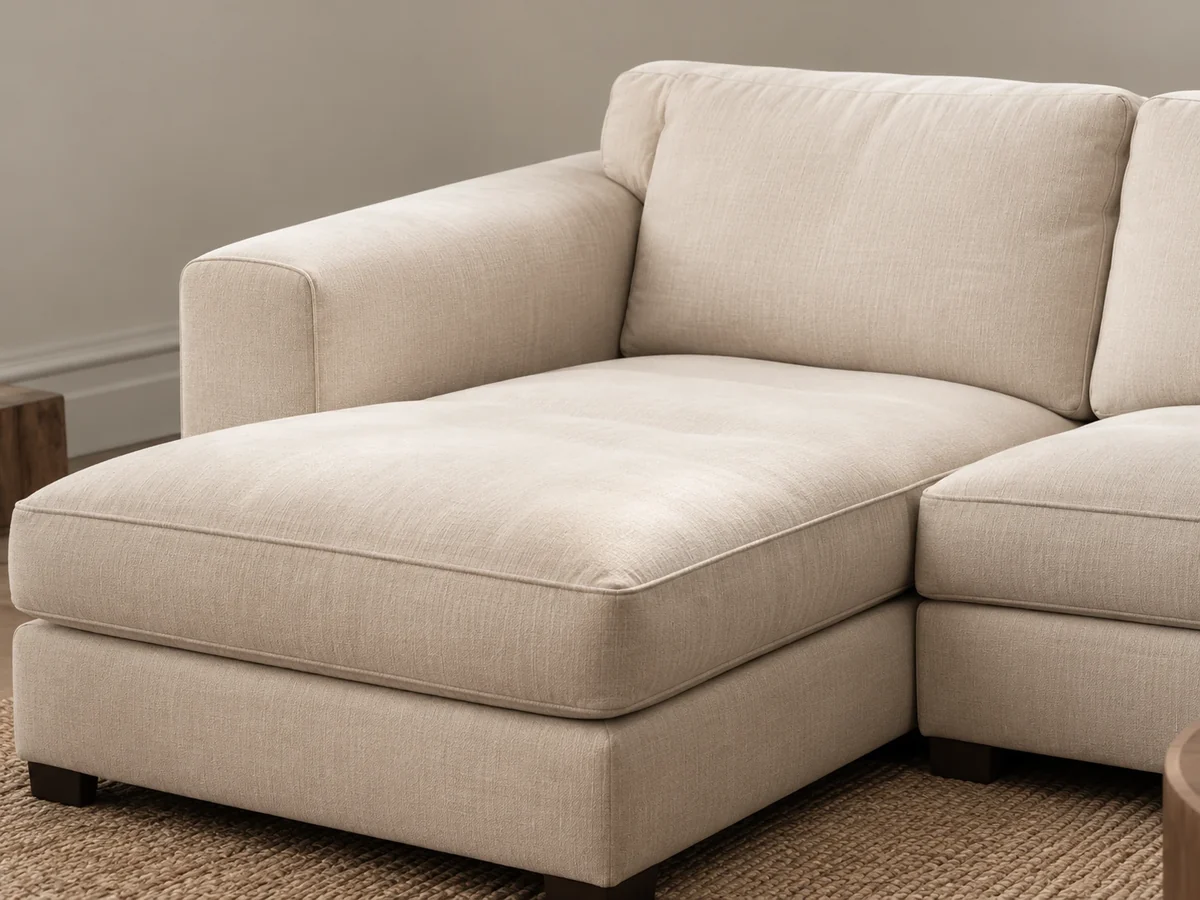
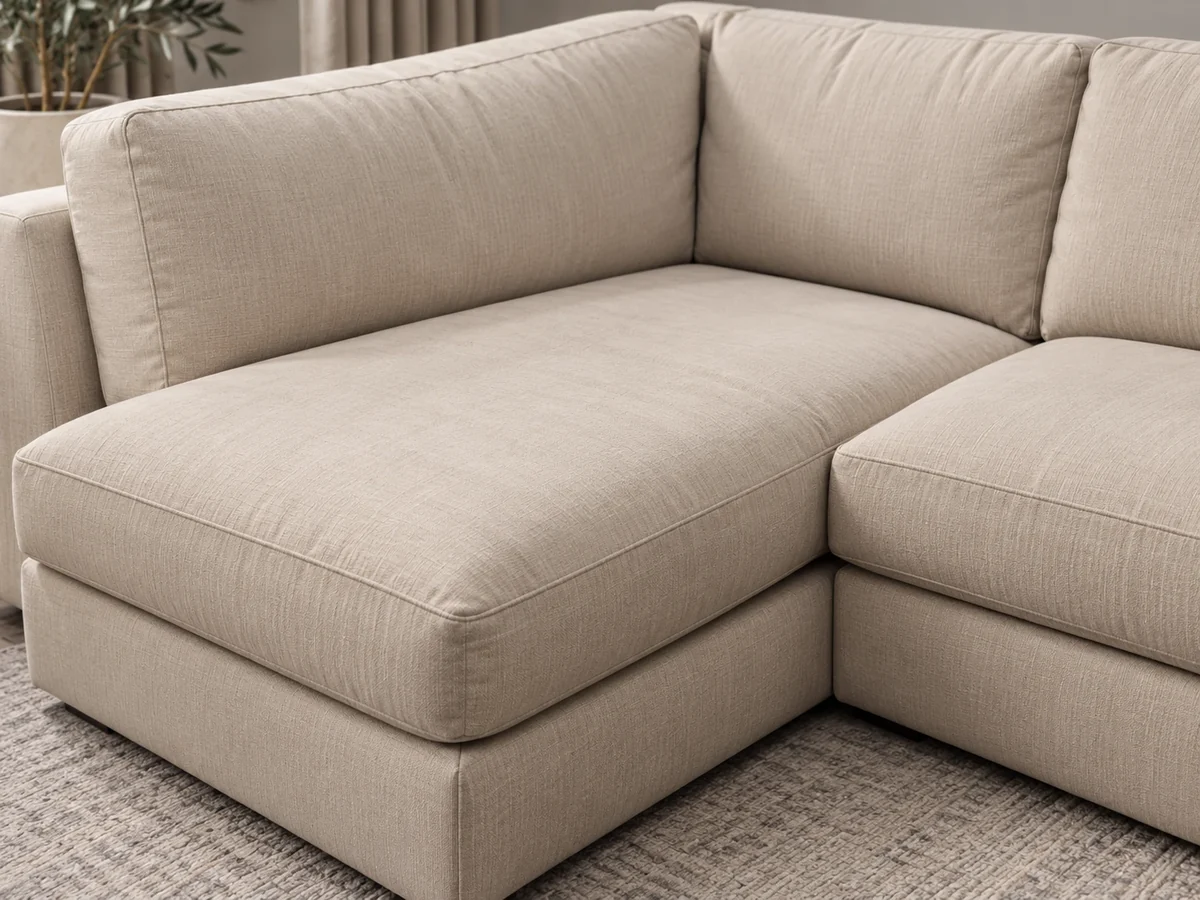
Long chaise seat cushion on a cream fabric sofa
Chaise cushions
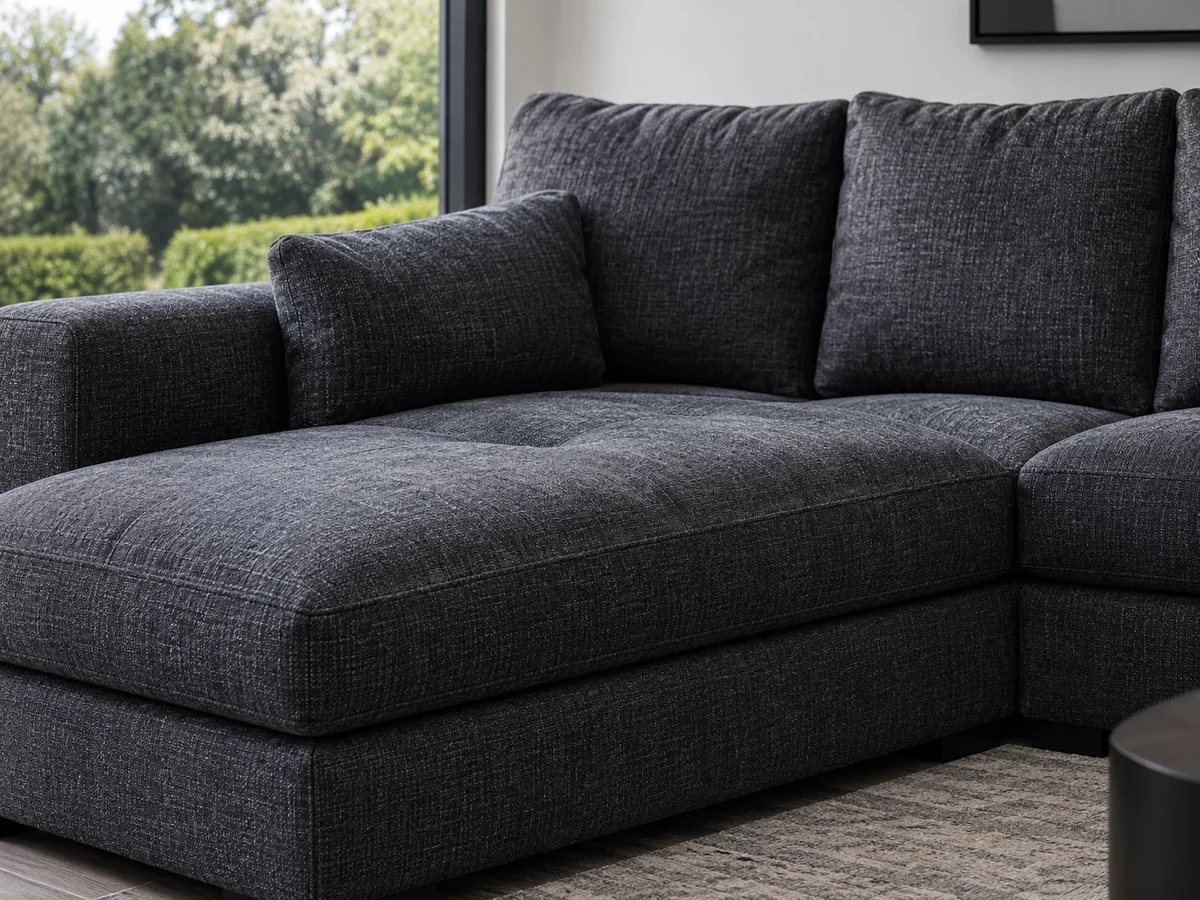
Charcoal sectional with deep seat and back cushions
Sectional cushions
Corner return of an oatmeal sectional where two cushion runs meet
Corner cushions
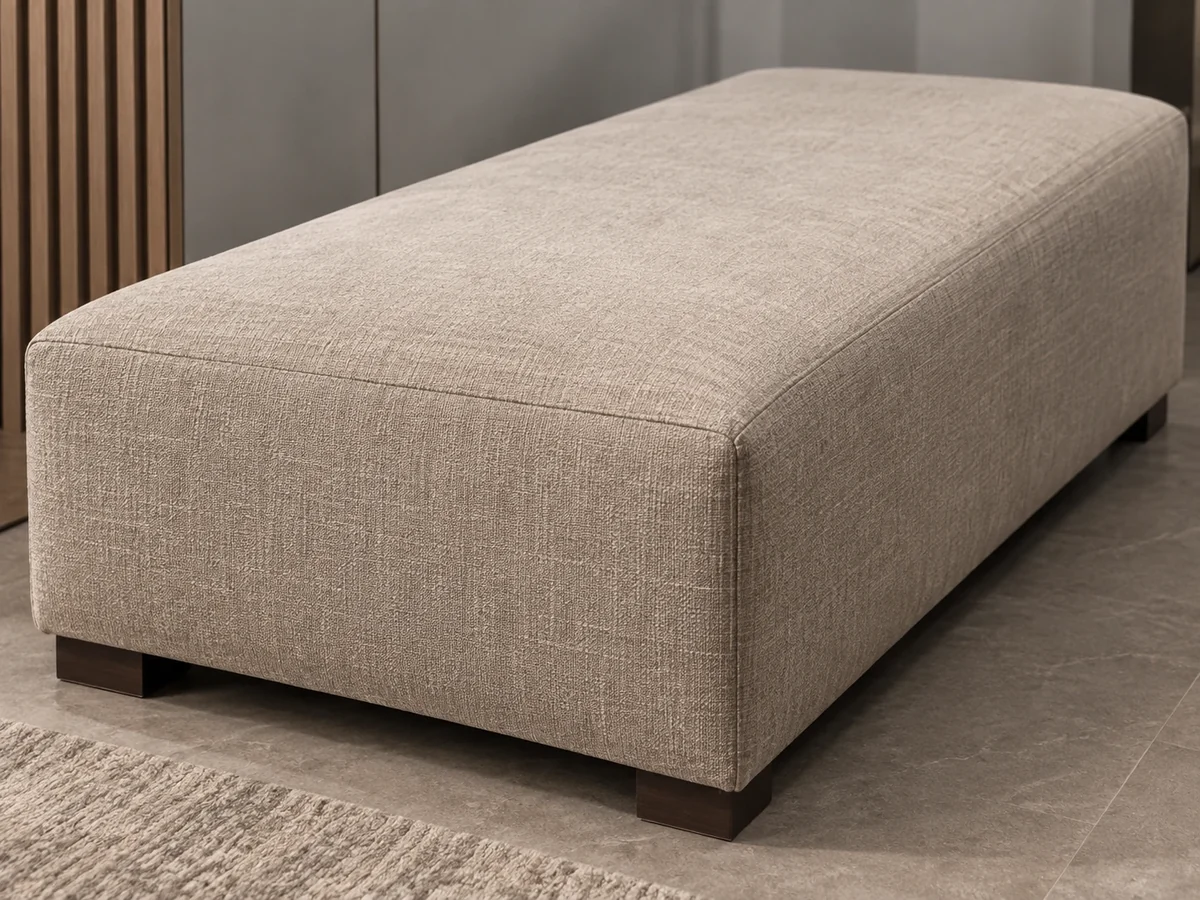
Long taupe bench seat cushion on dark wood feet
Bench cushions
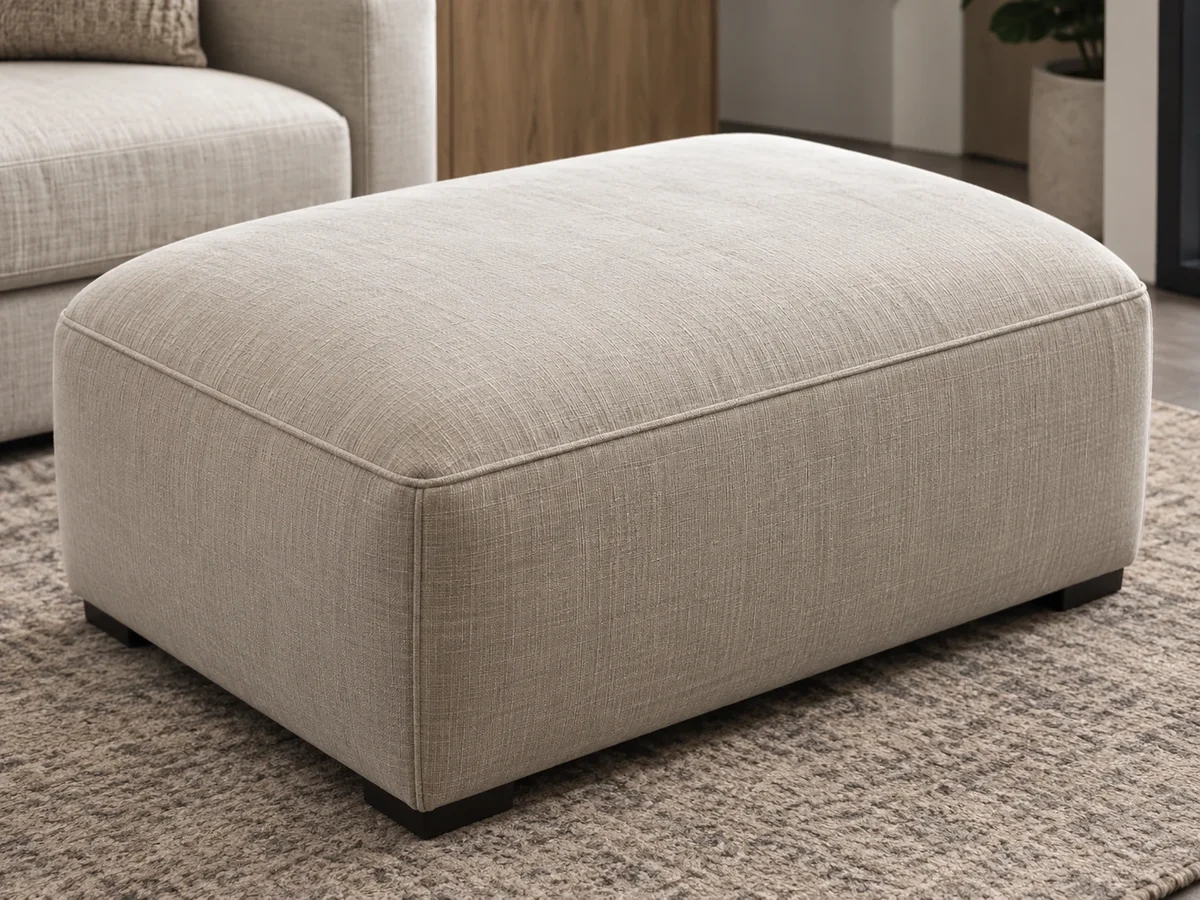
Beige fabric ottoman with a single boxed cushion top
Ottoman cushions
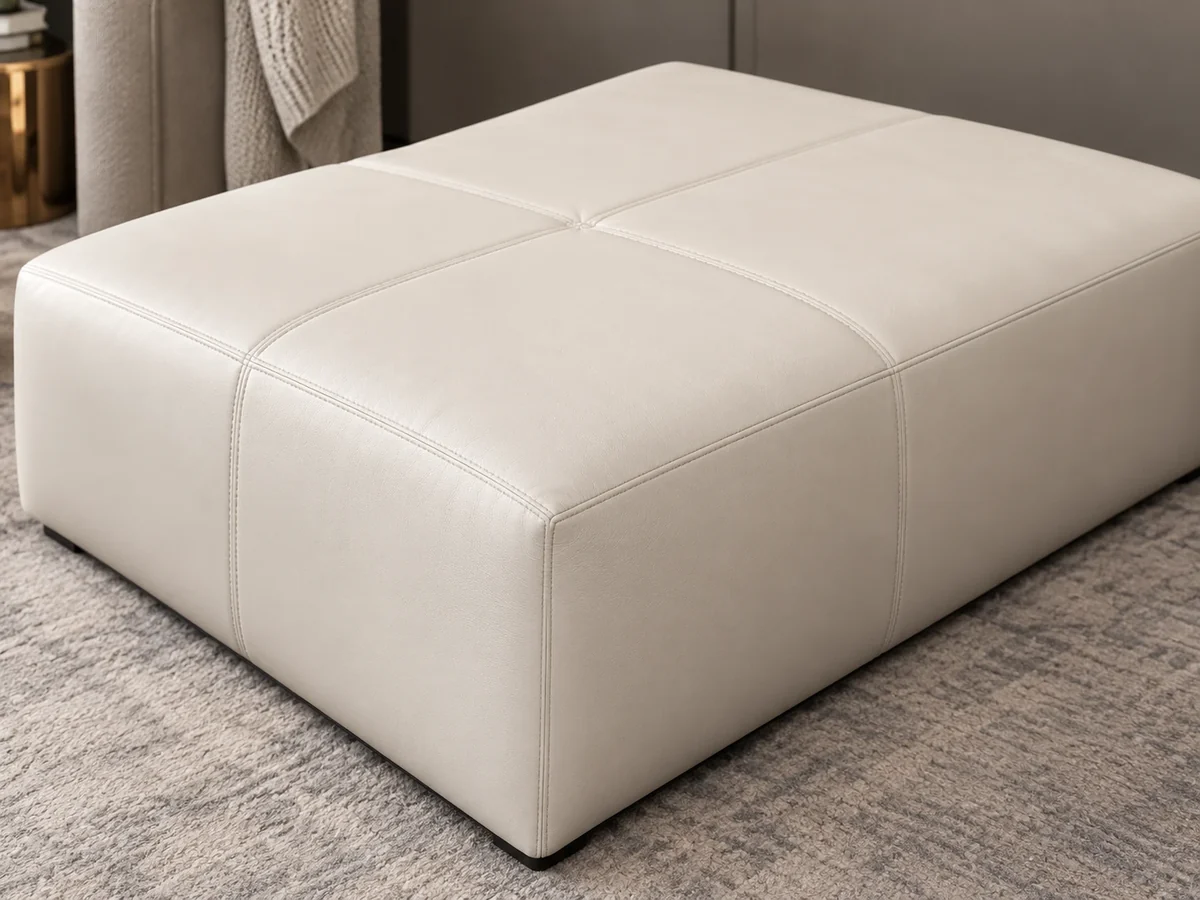
Bone leather ottoman with welted box edges and a panelled top
Leather cushions
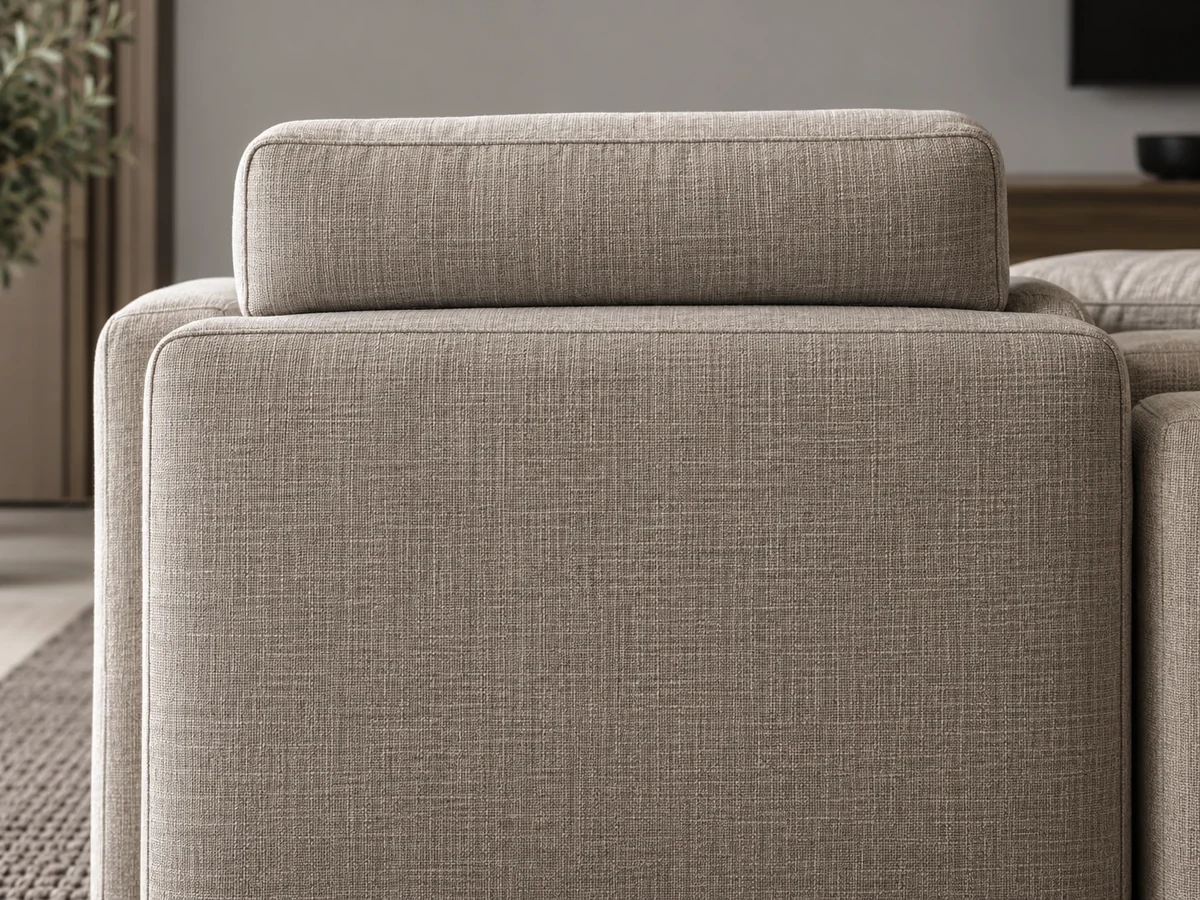
Sofa back sewn to the frame with a headrest bolster above it
Attached cushions
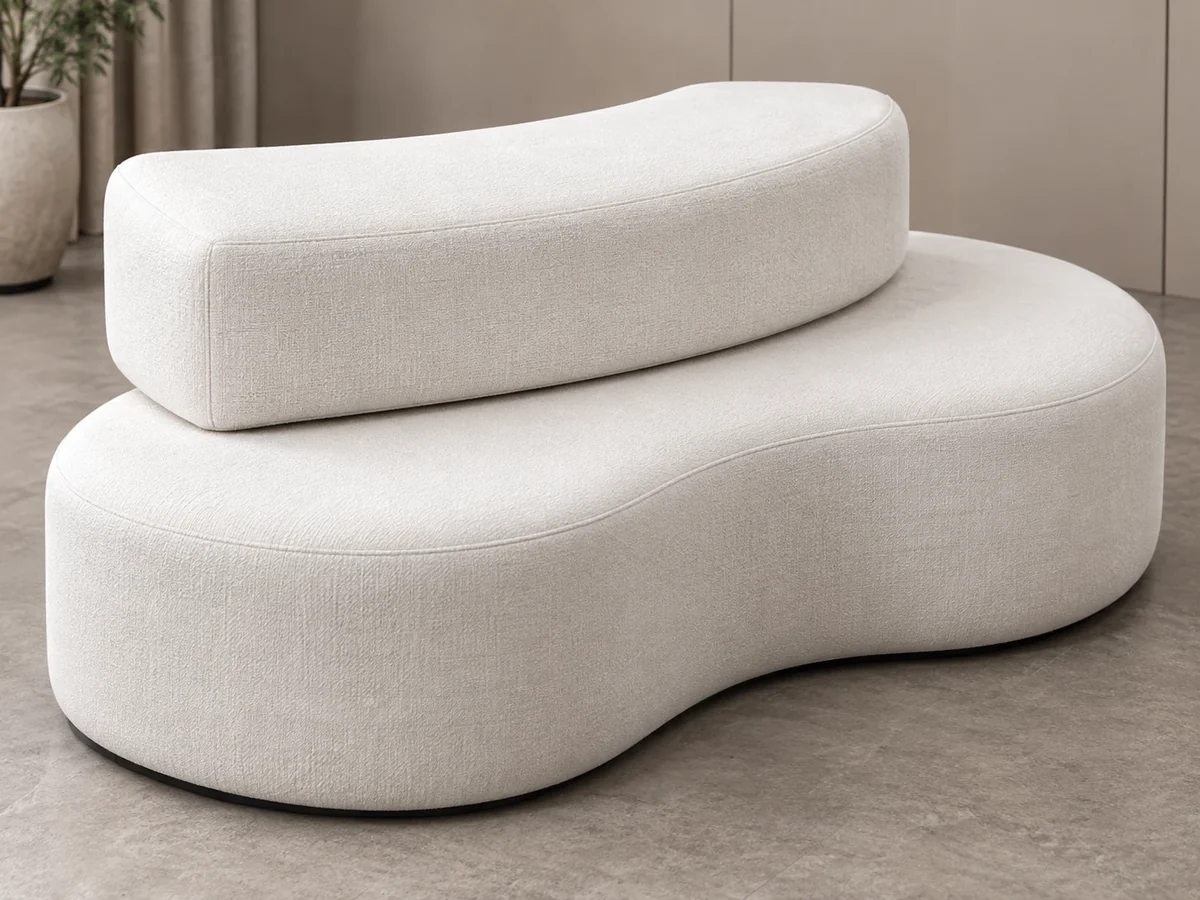
Curved two-tier boucle bench with no straight edges
Custom shapes
Eight steps

How your cushions are rebuilt

A sofa cushion replacement never starts with a new cover. Everything below happens to the cushions you already own.
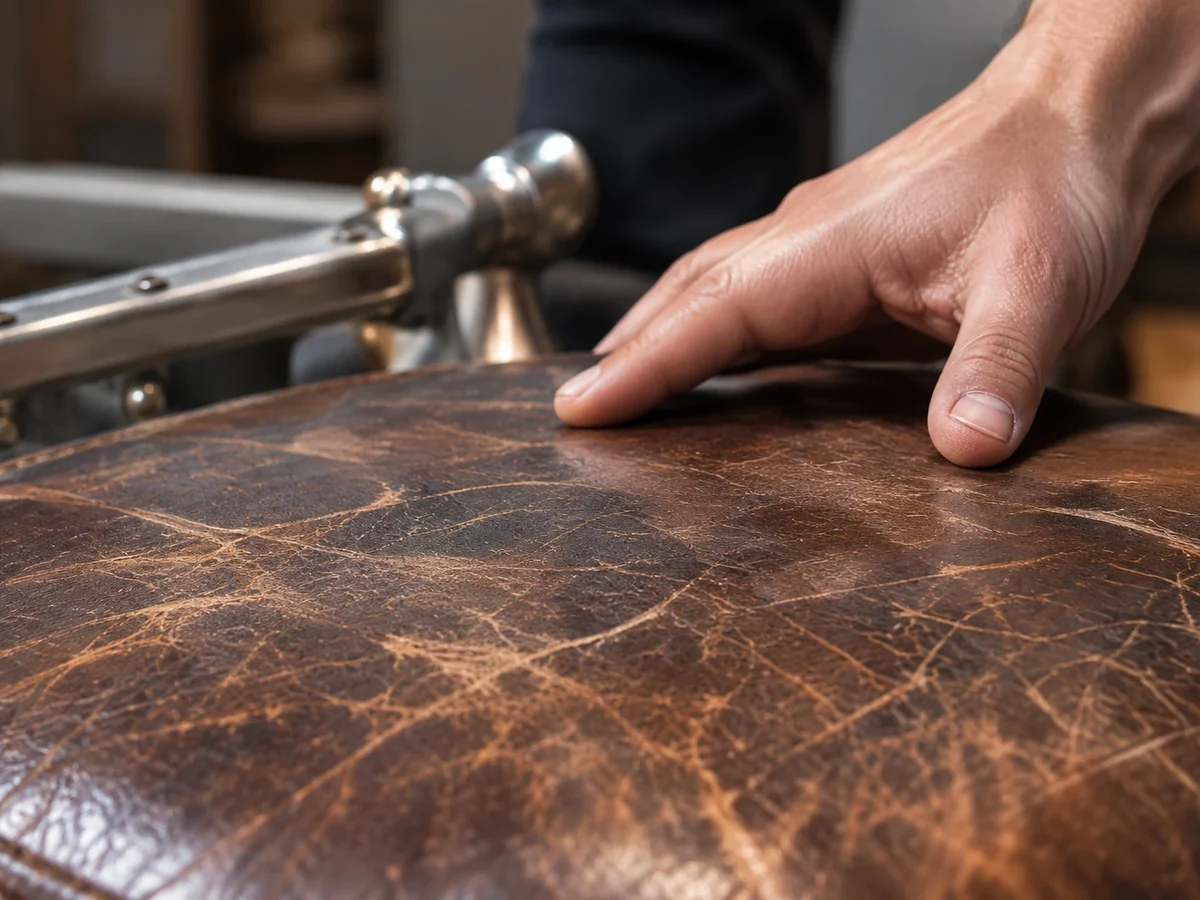
Hand pressing on a cracked dark brown leather seat to test how much support is left
01 Inspect Cushions and cover are assessed before anything is opened.
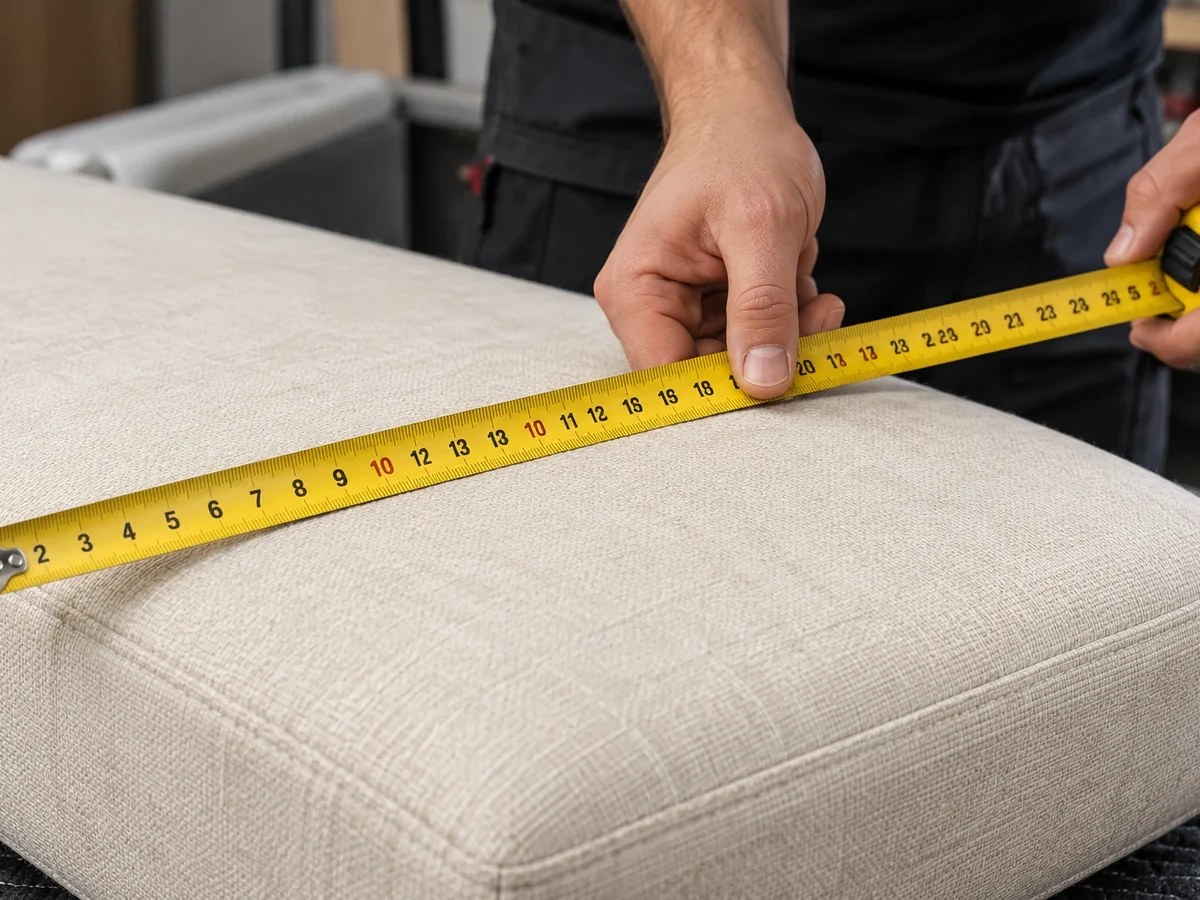
Tape measure laid across a cream fabric sofa cushion to record its width
02 Measure Every seat measured on the piece, not read off a chart.
Three foam blocks of different density stacked on a workshop bench
03 Select A core chosen for how that sofa is actually sat on.
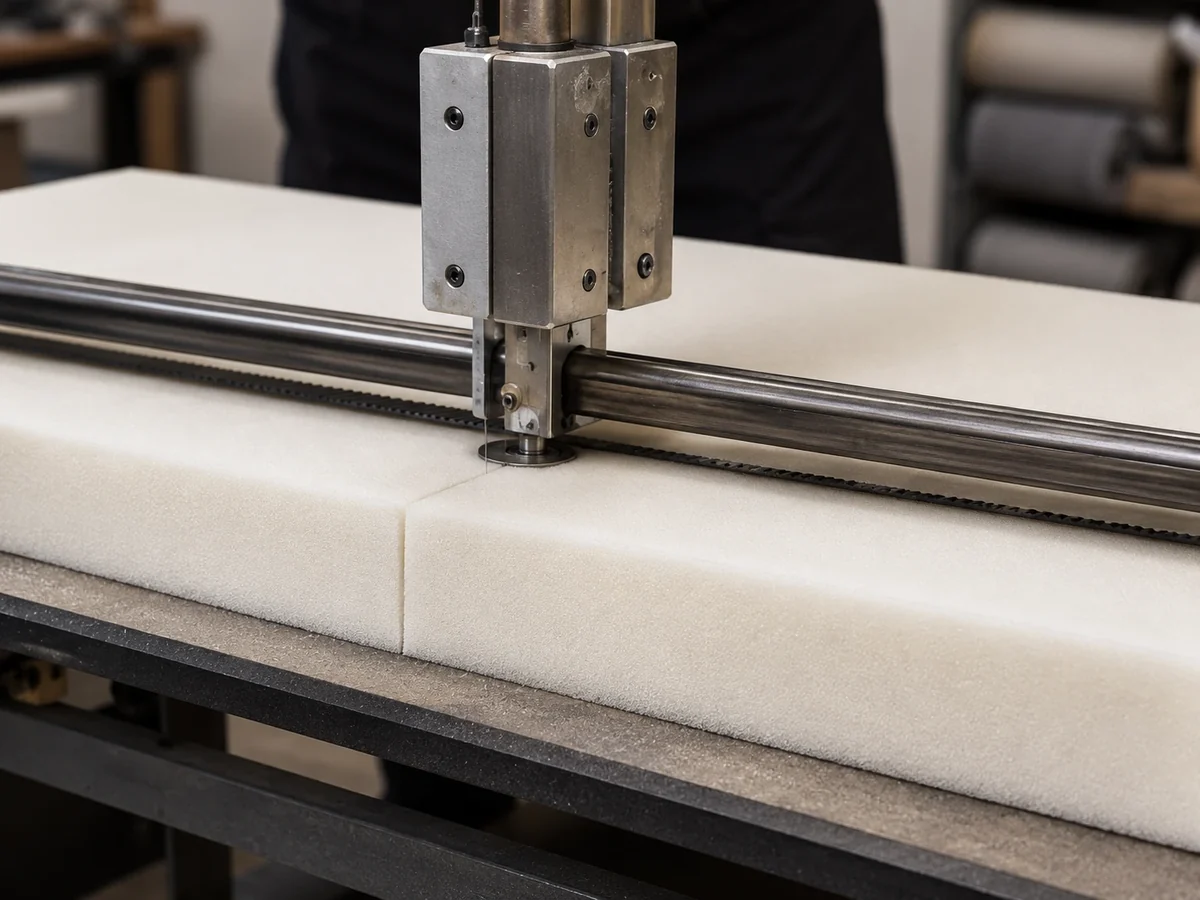
Vertical blade cutting a long foam blank to size on a workshop table
04 Cut Blanks cut to your pattern, never to a stock size.
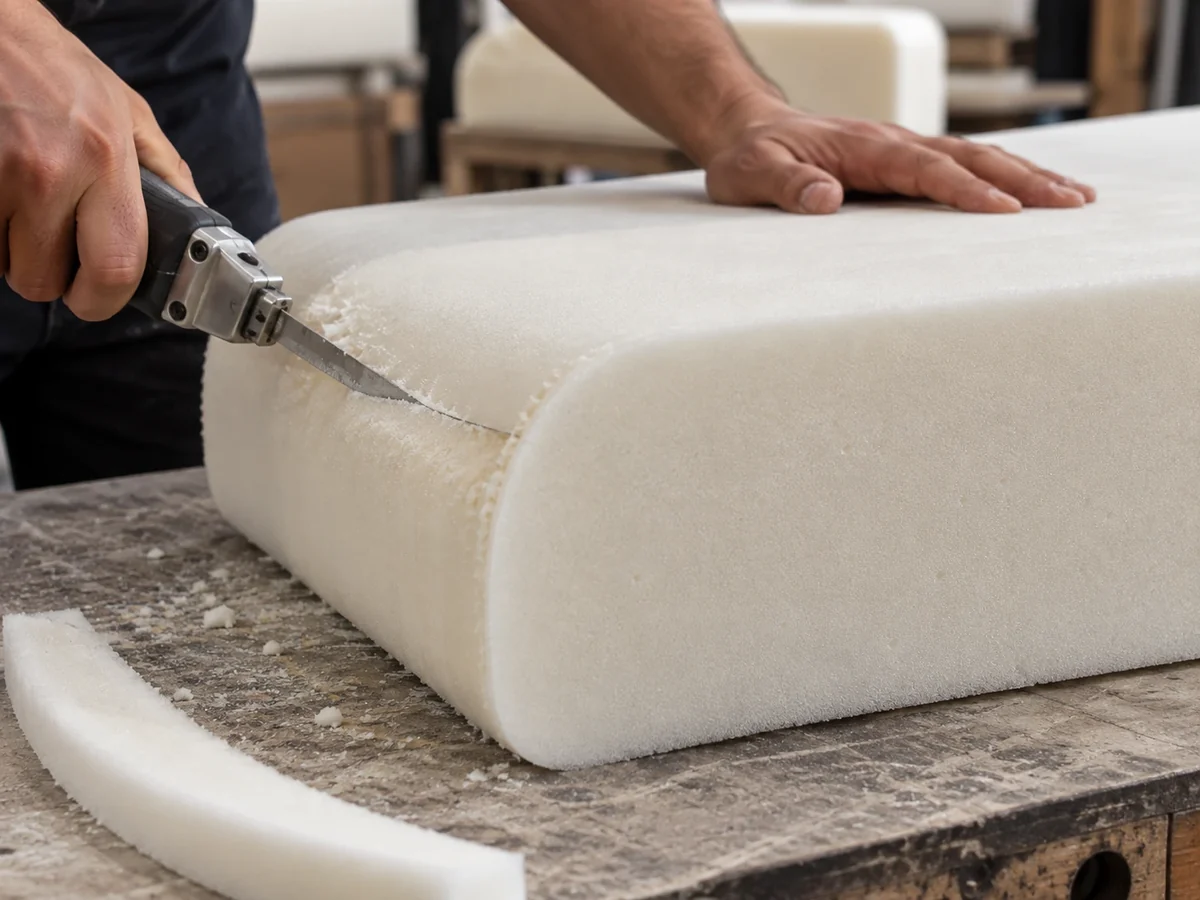
Upholsterer contouring the rounded front edge of a foam core with an electric knife
05 Shape Edges contoured so the cover fills out square.
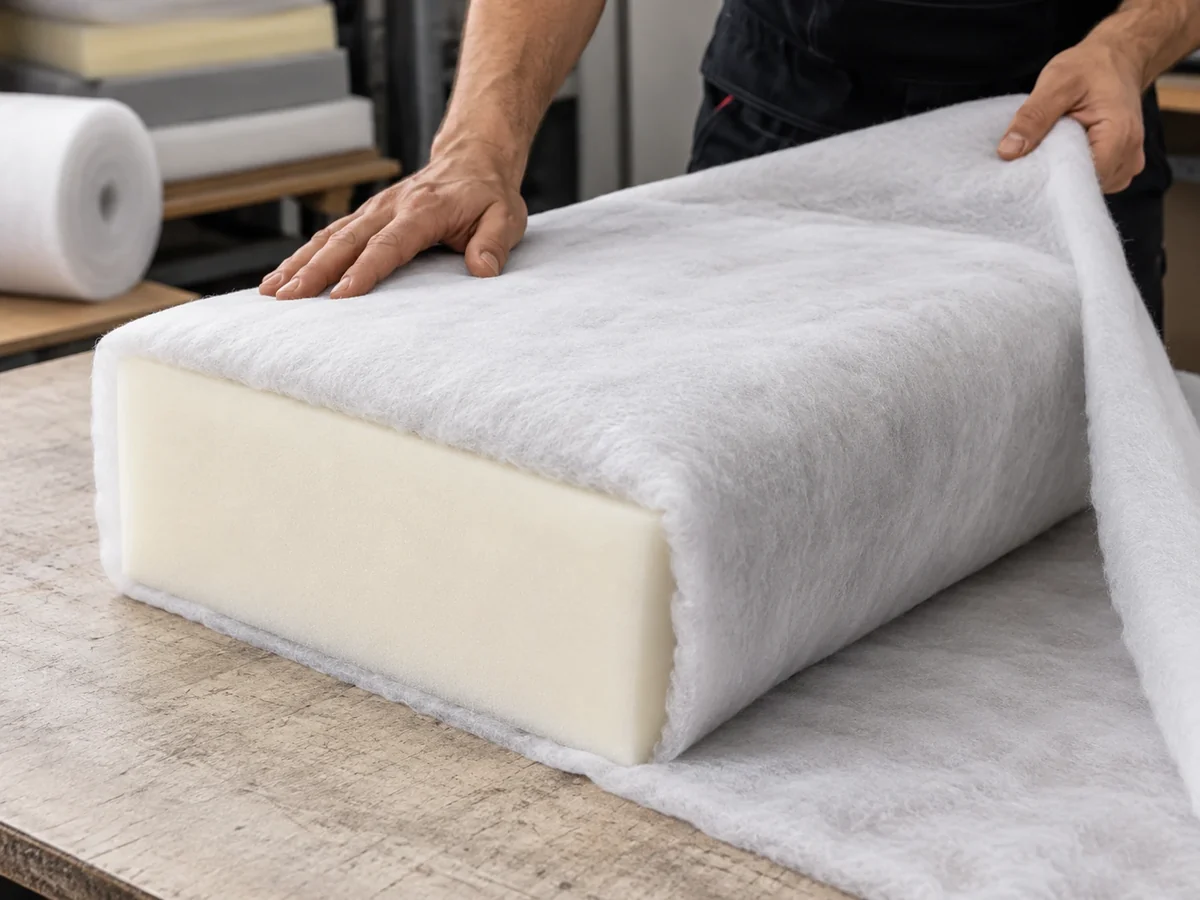
White Dacron batting being wrapped around a cream foam cushion core
06 Wrap Dacron softens the corners and takes the new-foam look off.
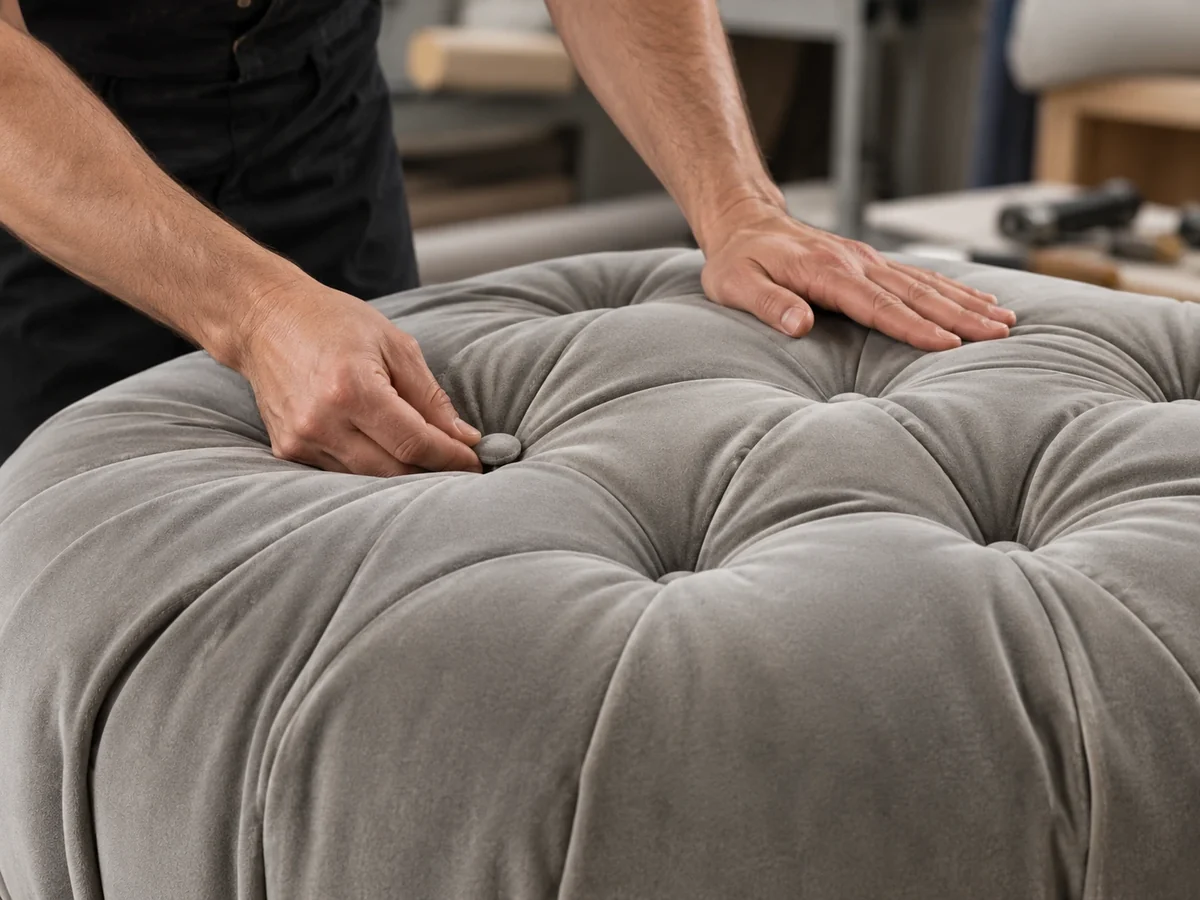
Hands settling a rebuilt insert into a grey tufted cushion cover
07 Install The insert goes back into your own cover.
Hands checking the height and piping of a finished taupe sofa cushion
08 Final check Height, comfort and alignment checked across the run.
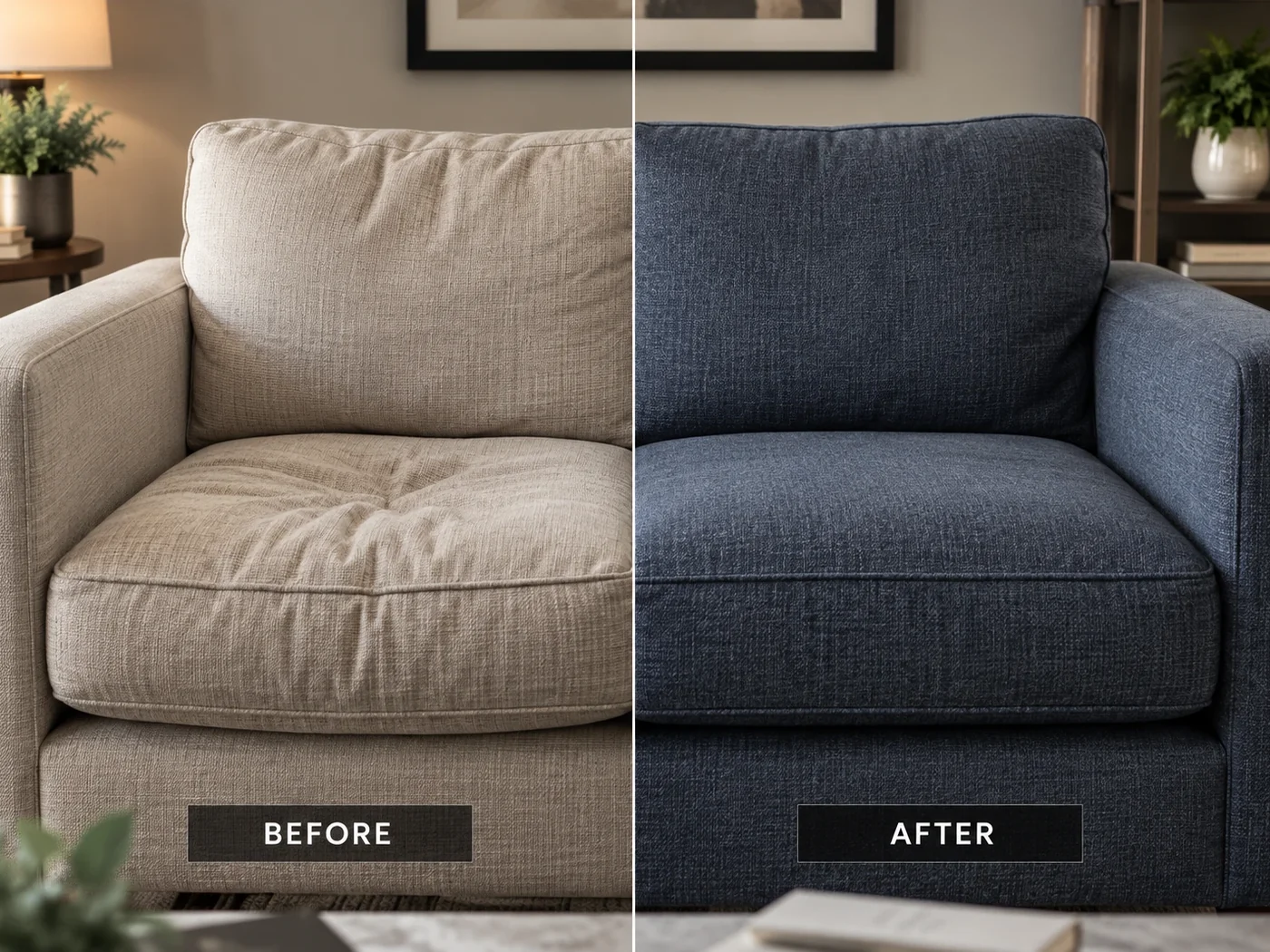
Before and after

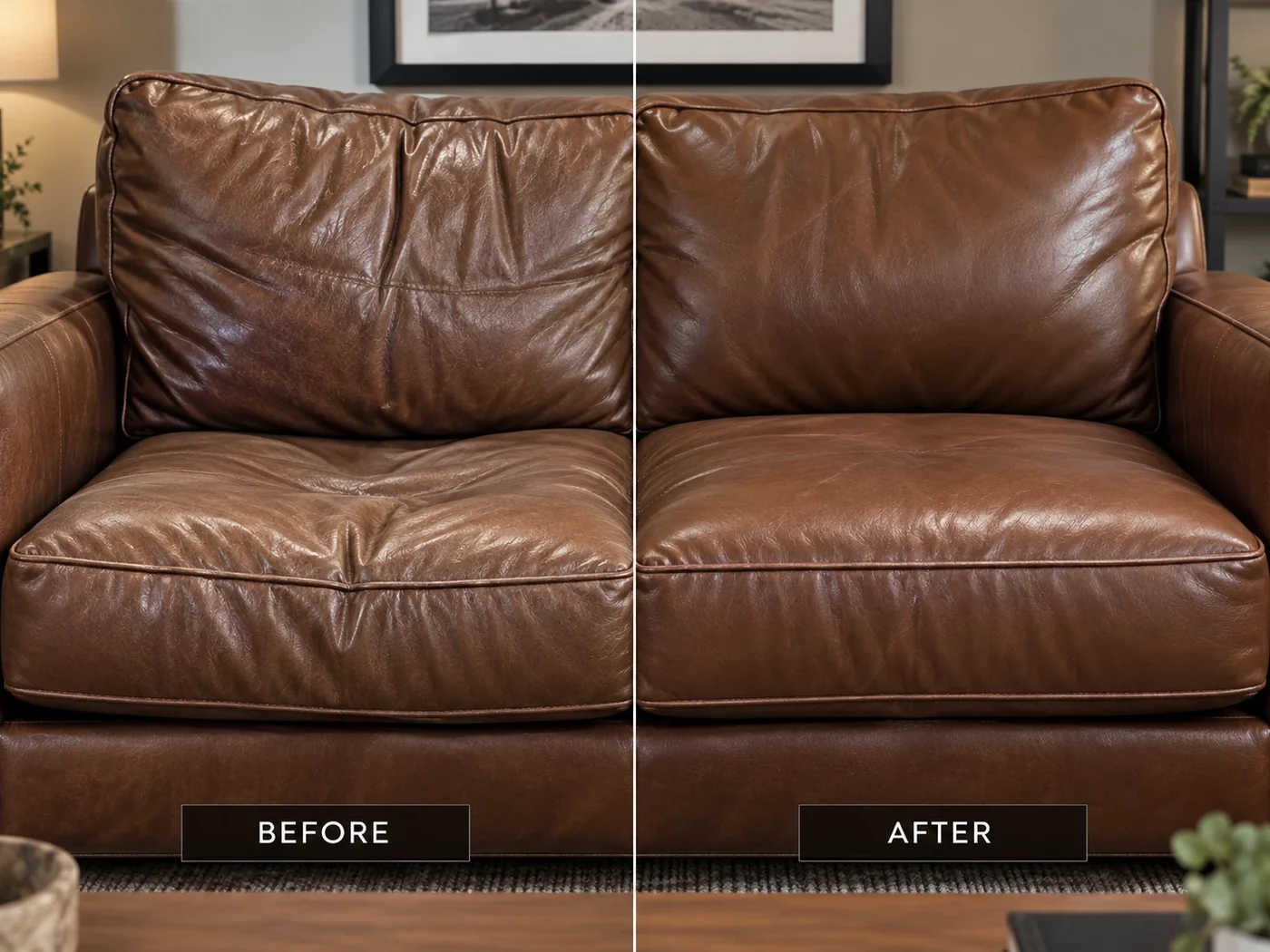
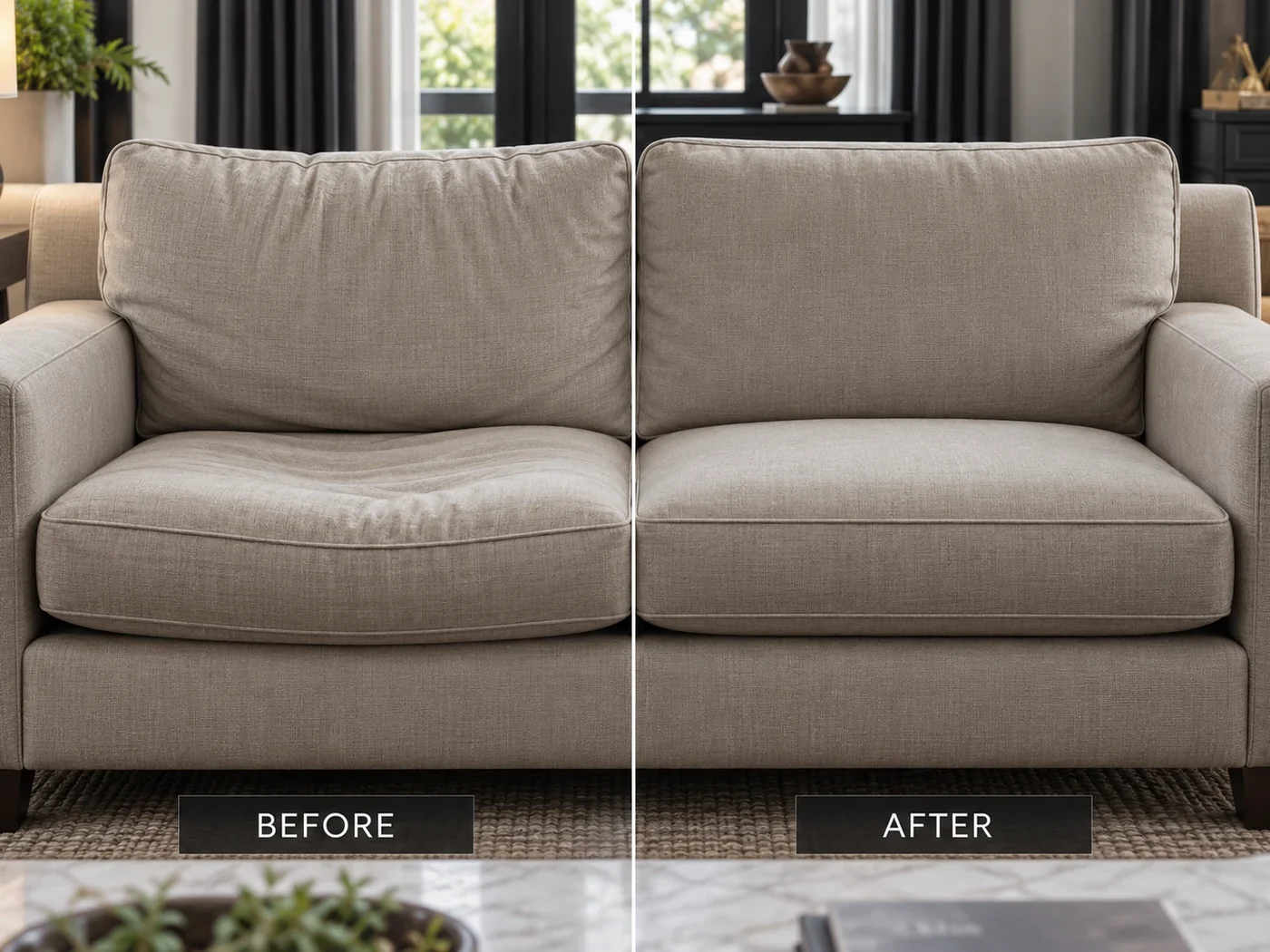
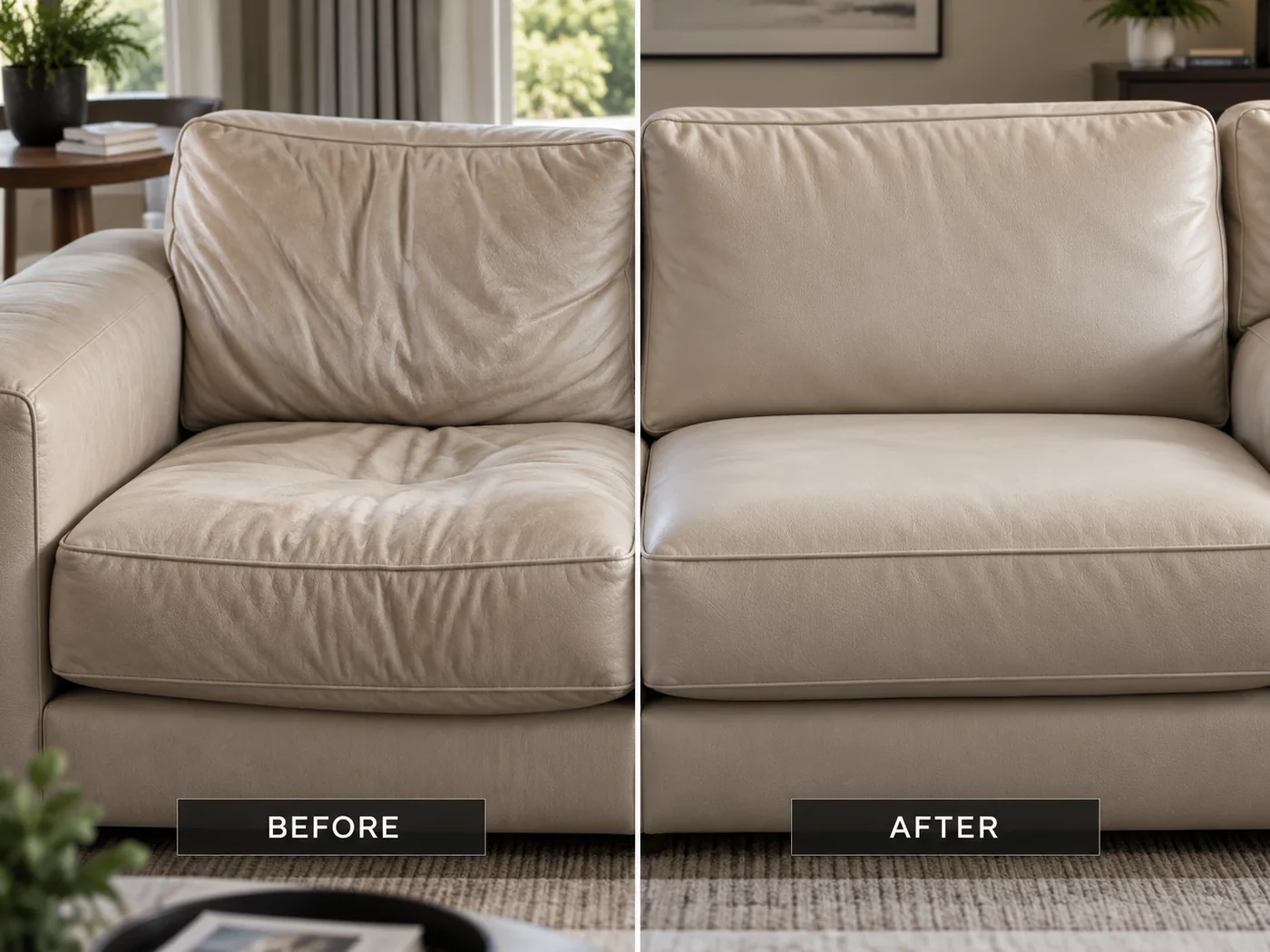
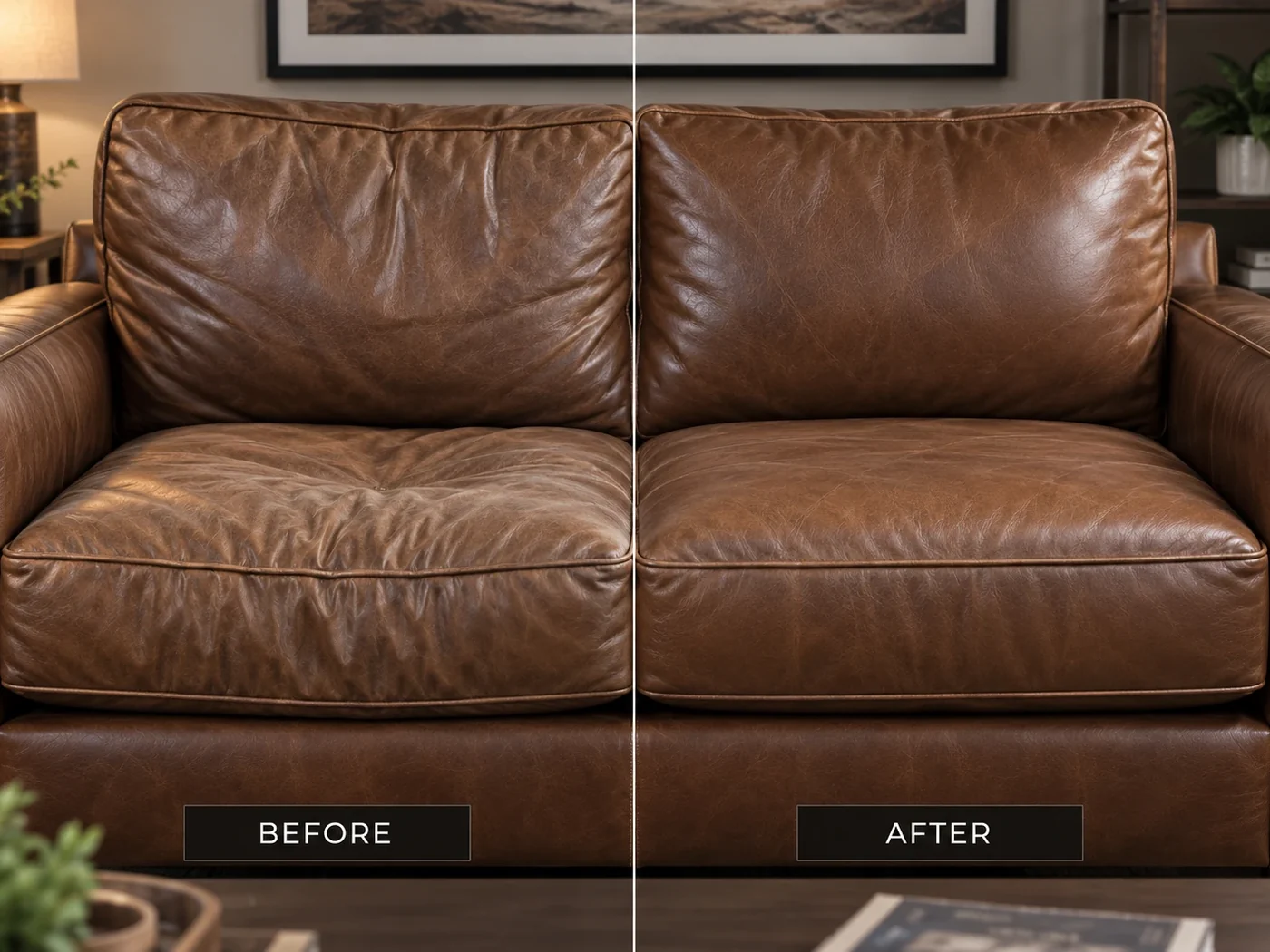
The same covers, sitting where they used to

Same frames, same covers, new cores. The armchair is the exception — it was recovered at the same time.
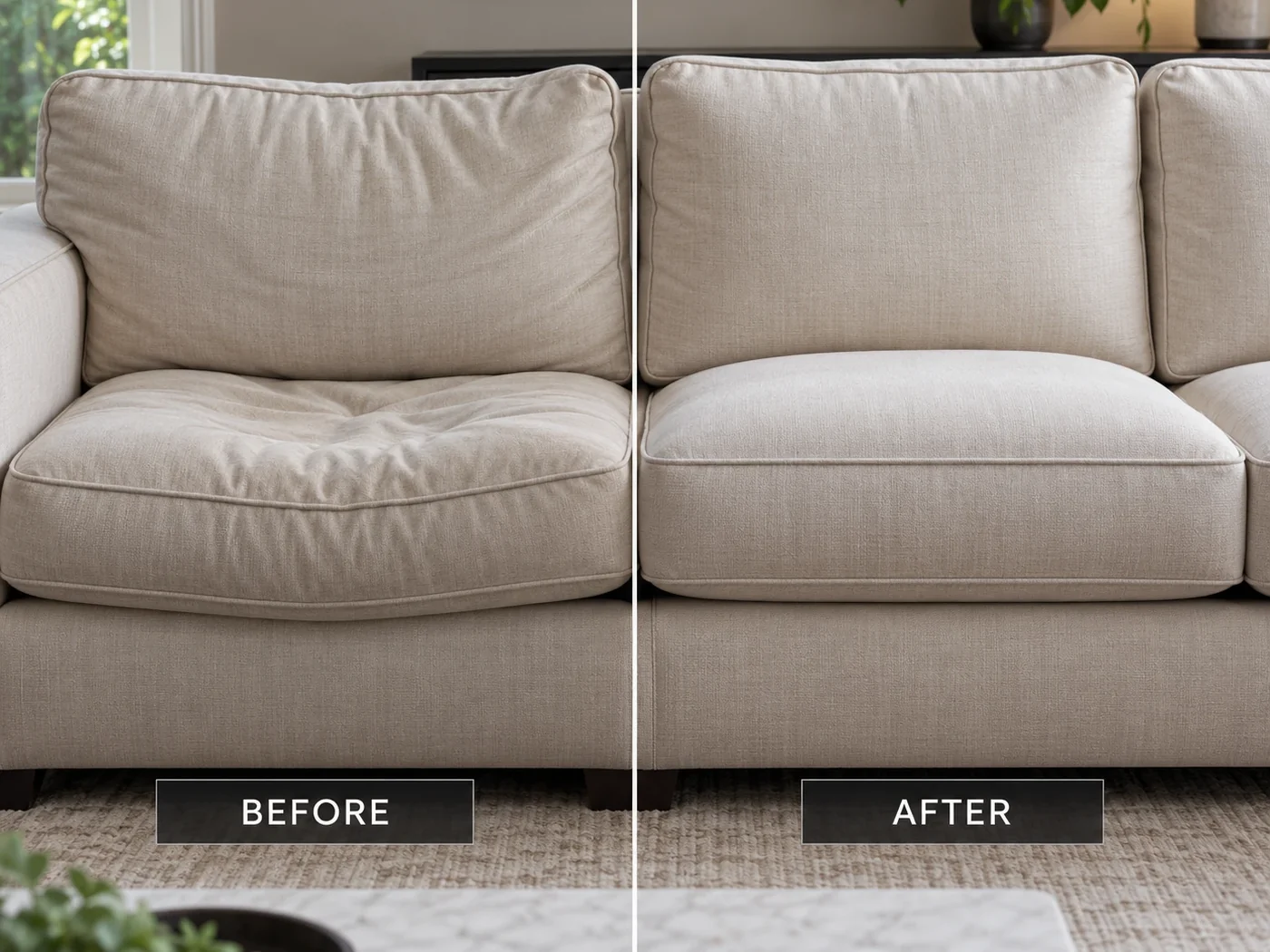
Cream fabric sofa before and after sofa cushion replacement, the sunk seat back at full height
Cream fabric sofa.
Armchair before and after new cushion fill and new navy covers
Armchair, recovered in navy at the same time.
Brown leather loveseat before and after new cushion cores, the original leather kept
Brown leather loveseat.
Taupe fabric loveseat before and after the seat cushions were refilled
Taupe fabric loveseat.
Bone leather sofa before and after new foam cores under the original covers
Bone leather sofa.
Charcoal leather loveseat before and after the creased seat was rebuilt
Charcoal leather loveseat.
Cognac leather loveseat before and after sofa cushion replacement
Cognac leather loveseat.
Three jobs this is not

When new fill is the wrong thing to buy

A sofa cushion replacement inside a failing cover is money spent on the part nobody can see. Say what the leather is doing when you send photos and the right one of these gets quoted instead.

The covers have gone too

Cracked, split or worn through at the seams. Rebuilding the fill inside a cover that is on its way out means opening the same cushion twice.

Reupholstery

There are no covers to fill

A window seat, a boat berth, a banquette run being built from nothing. Those are made to measure, cover and core together.

Custom cushions

The fill is fine, the leather is not

Still firm underneath, but the panel is torn, scuffed or cracked on the face. That is surface work and the cushion never gets opened.

Leather cushion repair

Asked before you book

Sofa cushion replacement, answered

What is sofa cushion replacement?

Replacing what is inside the cushion, not the cushion you can see. The cover is opened, the collapsed foam or flattened fibre comes out, and a new core is cut to that specific cover and fed back in. The leather or fabric you have stays on the piece.

Can you replace the fill without replacing the leather covers?

Yes, and that is the normal job. Covers are opened at the zip or the closing seam, emptied, refilled and closed again. The condition of the leather is judged separately: if it is sound, it goes straight back on.

How do I know if the problem is the cushion or the frame?

Lift the cushion off and press the deck underneath. If the deck is taut and the cushion is soft, it is the cushion. If the deck sags, dips or you can feel a rail through it, the webbing or the springs have gone and new fill on top will sink straight back down.

Do the cushions have to leave my home?

The cushions do, but the sofa does not. Loose cushions are labelled where they sat, collected, rebuilt at the bench and brought back. Fixed and built-in seating is the exception and is worked on where it stands.

Will new foam feel the same as the sofa did when it was new?

It will feel firmer at first, because you are comparing it against a cushion that has been softening for years rather than against the showroom. The fill is specified to match the original build, and a firmer or softer grade can be chosen on purpose if the old feel was never right.

Can you do one cushion, or does the whole sofa have to be done?

One is possible, but it rarely reads well. A single new core sits higher and firmer than the seats either side of it, so the difference you were trying to remove moves rather than disappears. Doing the seats as a set is usually the better buy.

What happens if a cover tears when it comes off?

Old leather and thread are inspected before anything is opened, and a cover judged too brittle to survive being emptied is flagged before the job starts, not after. If a seam gives way, it is restitched; if the panel itself is gone, that cushion needs a new cover rather than new fill.

Send photos

Photograph the sofa, then the cushion on its own

One shot of the whole piece and one of the sunk seat from the side is enough to price a sofa cushion replacement. Lift a cushion off and photograph the deck underneath as well — that picture is what tells us whether the frame is coming into the job.

Scroll to Top