
Full Grain Leather: The Layer Nothing Was Taken Off
Full grain leather keeps the hide’s own outer surface. Every other grade is what is left after sanding.
Full Grain Leather at a Glance
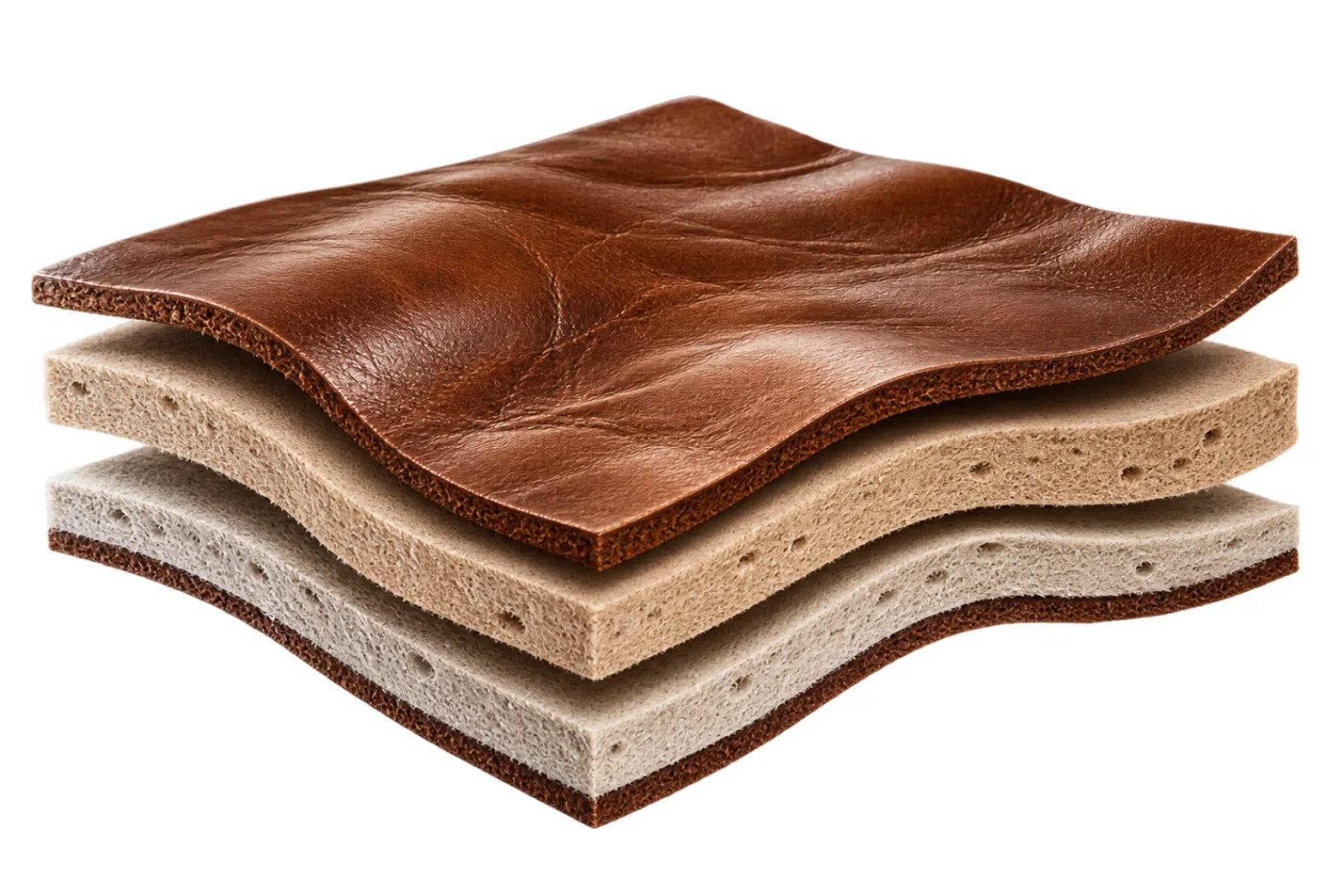
Full grain leather is the outermost layer of the hide with its grain surface intact: nothing sanded off, no pattern pressed in, no filler.
Four Checks, and It Has to Pass All Four
Any one alone can mislead. Together they are hard to fake.
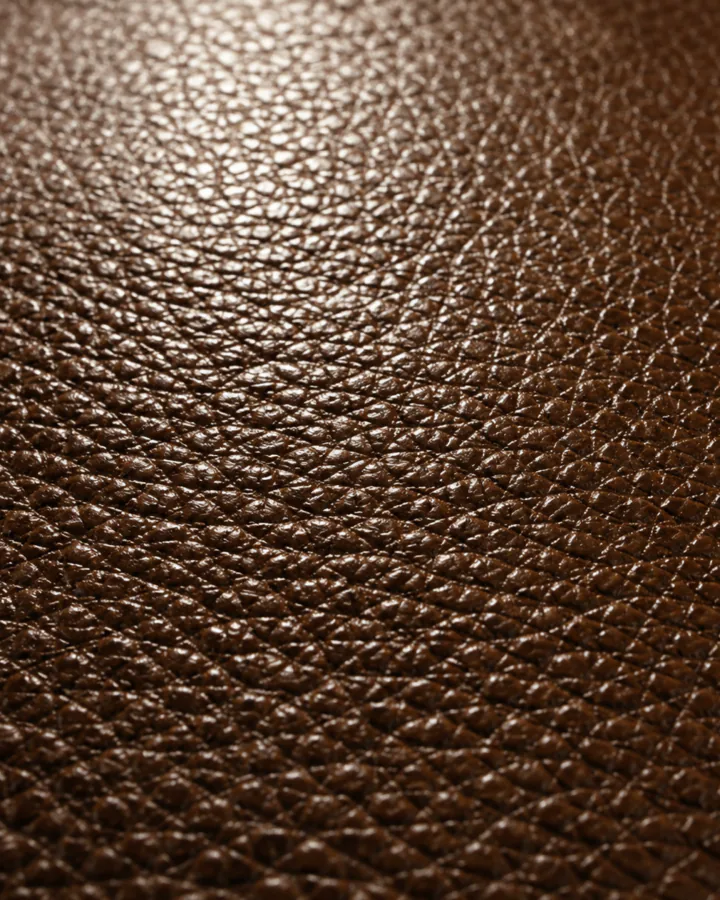
Read the pores at a raking angle
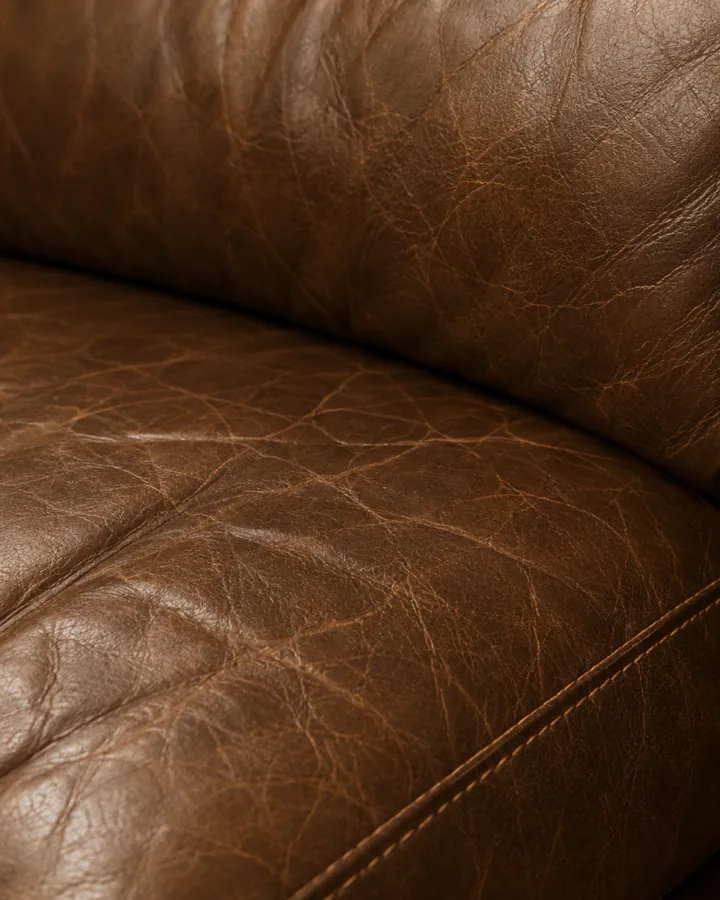
Look for a history
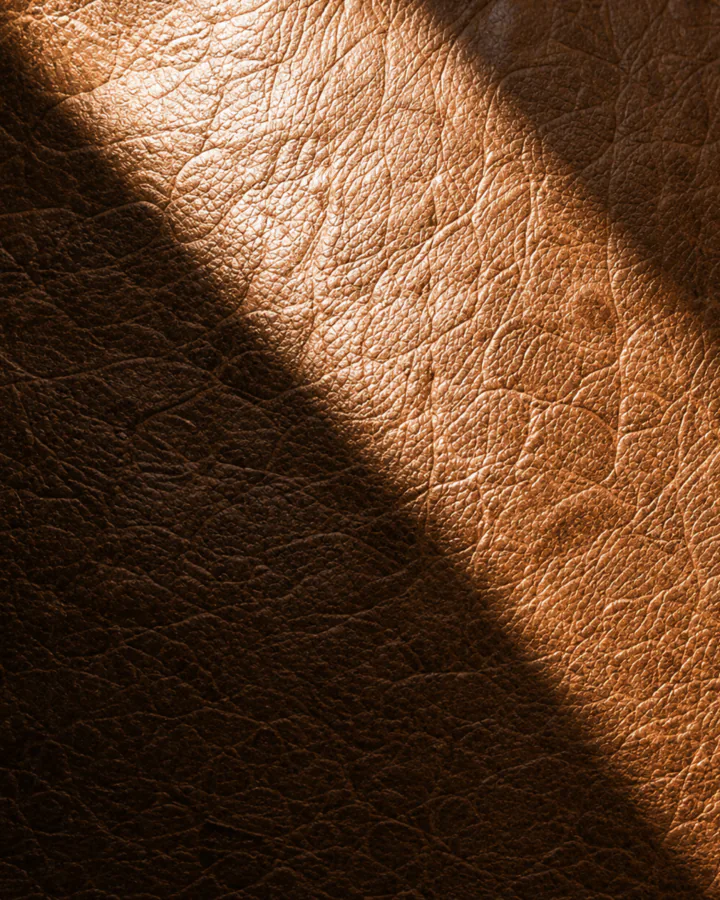
Compare panels in daylight
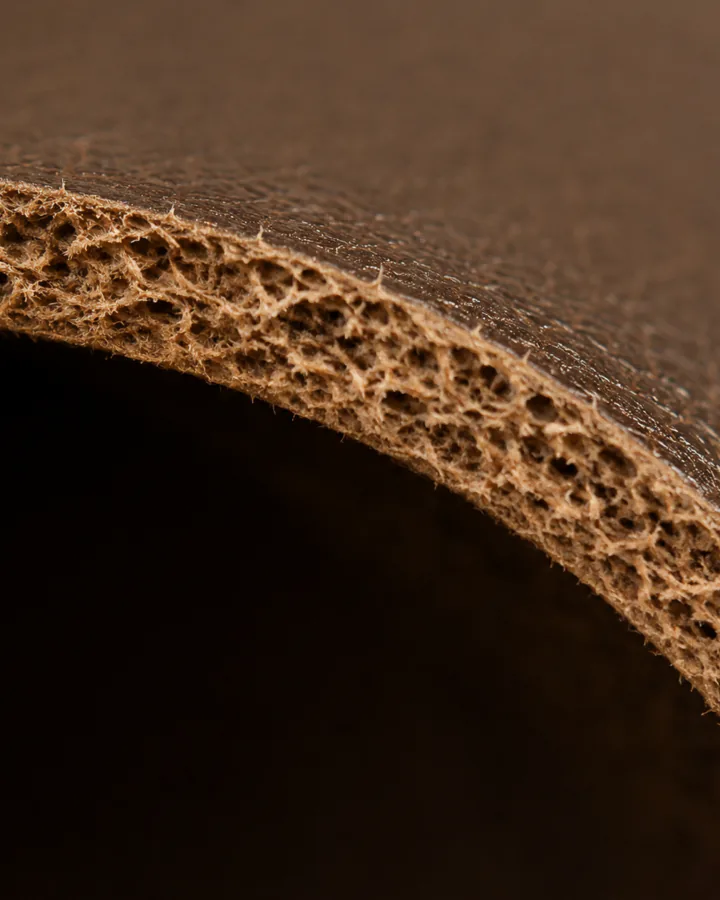
Find a cut edge
How Full Grain Leather Ages
The grain is still there, so the surface changes instead of wearing through.
-

New
Even colour, smooth surface.
-
Used
Softening, first creases set.
-
Developing patina
Warmer tones, colour varies.
-
Mature patina
Depth, and a record of use.
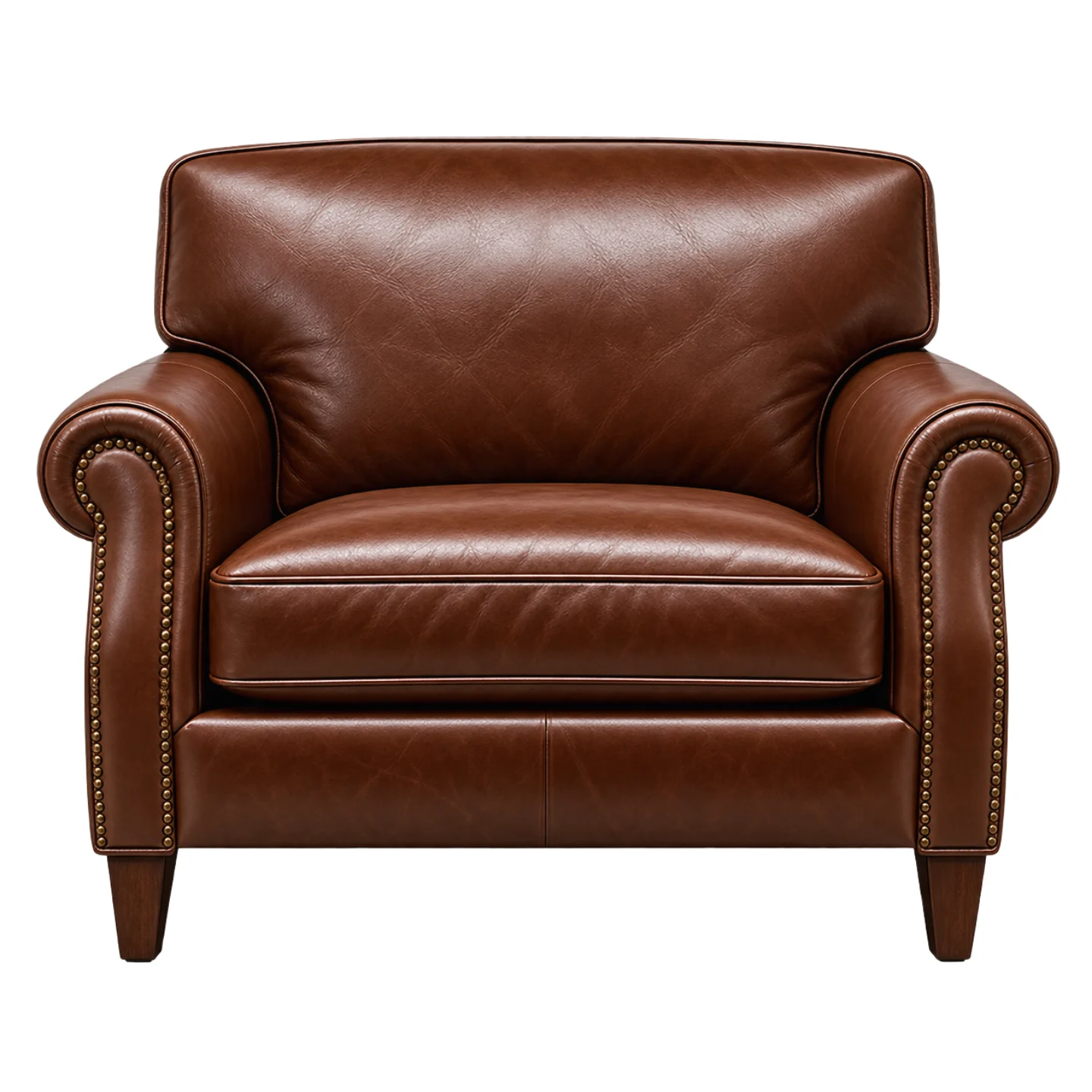
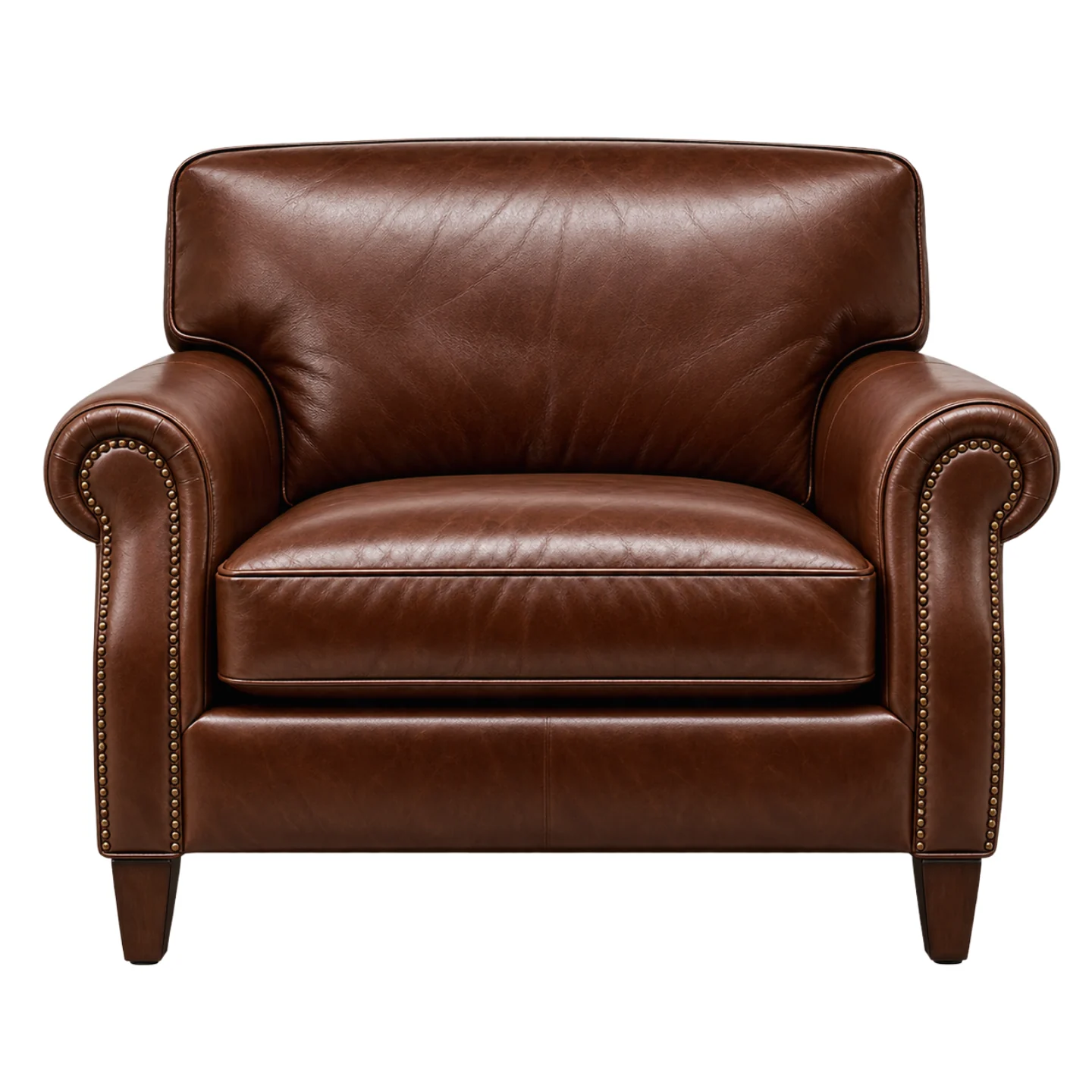
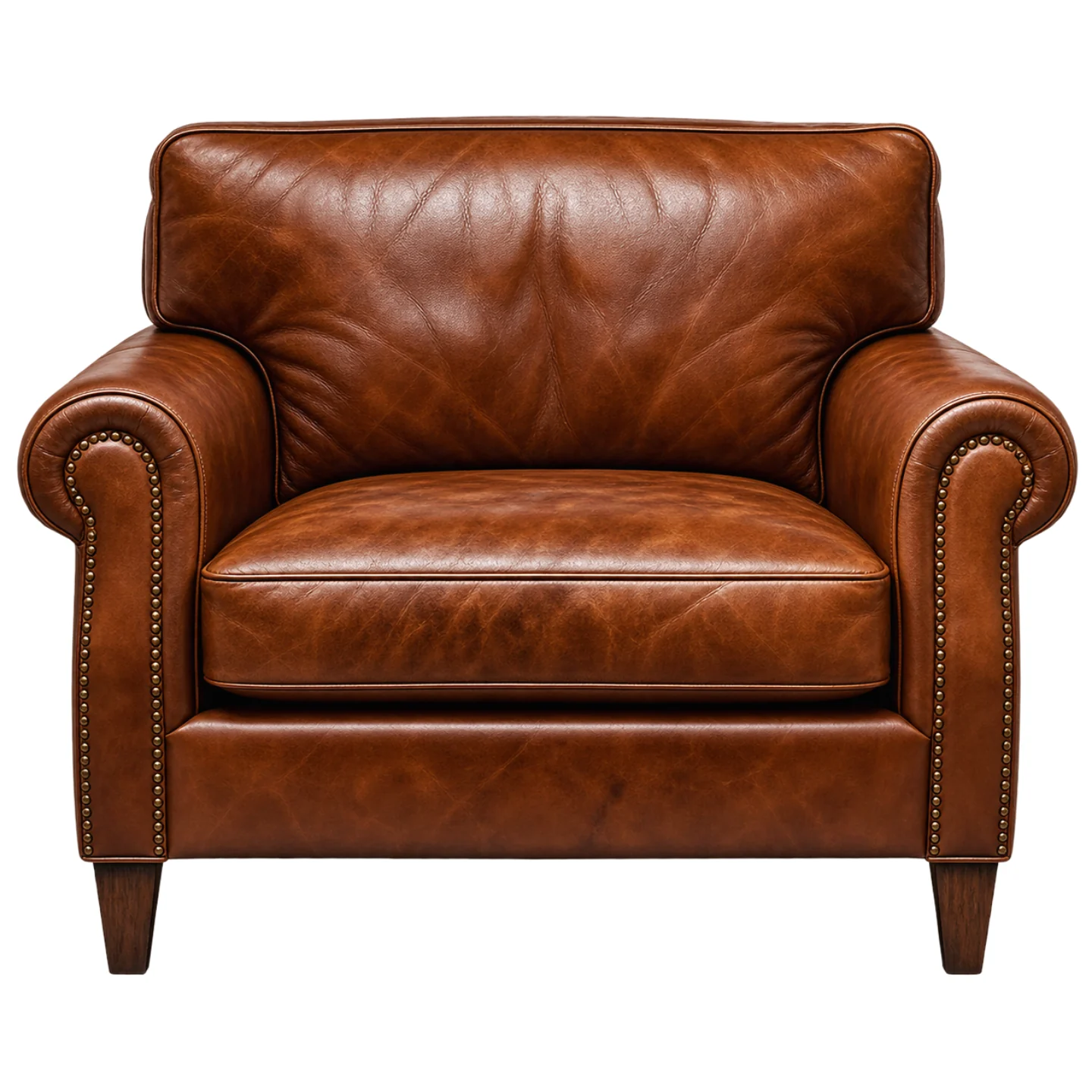
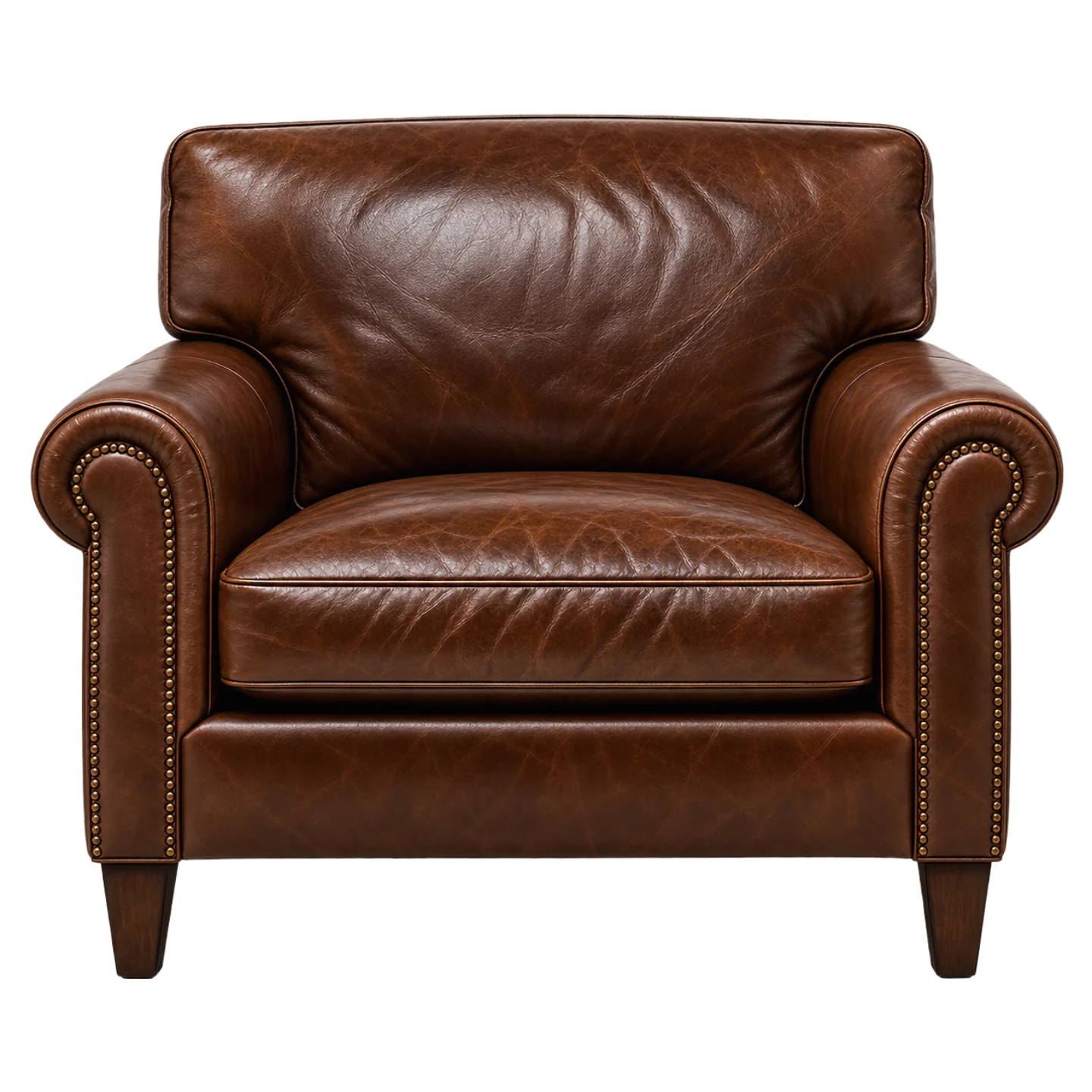
Corrected grain cannot do this. Its colour sits in a film that holds still, then fails. See where this sits.
Grade Tells You the Layer. Finish Tells You the Coat.
Aniline, semi-aniline or pigmented. The coat decides what a spill does.
Dyed through, sealed at most
- How it fails
- It absorbs. Wine, hand cream, a wet coat.
- In restoration
- Nothing seals it, so it takes correction well.
A thin coat over the dye
- How it fails
- The coat thins before the hide does.
- In restoration
- We rebuild the coat, not the leather.
An opaque film on top
- How it fails
- It cracks along the flex lines. The hide beneath is sound.
- In restoration
- Refinishable, with something solid underneath.
One Hide, Four Things It Can Be Sold As
Top to bottom, in the order a hide is worked down.
Full Grain Leather
The outer surface, intact. Nothing sanded, printed or filled.
You are hereTop Grain Leather
The same layer, lightly buffed to remove the worst markings.
Grain sanded 03Corrected Grain Leather
Sanded, filled to level it, then embossed with a printed grain.
Grain printed 04Split Leather
The fibrous under-layer left once the grain comes off.
No grain layerBonded leather is shredded fibre; nubuck is a finish. Both are indexed on the upholstery materials page.
Why Full Grain Leather Is Worth Bringing Back
The repair happens in the hide, so it can be done again.
How far it has to go
Most pieces stop at one of the first three.
Stages 01 and 03 look identical from standing height. Send a daylight photograph for a free estimate and we will tell you which.
Natural Character or Actual Damage?
One group came in with the hide. The other is work.
Character
-
Grain variation
-
Healed scar
-
Neck wrinkles
-
Patina
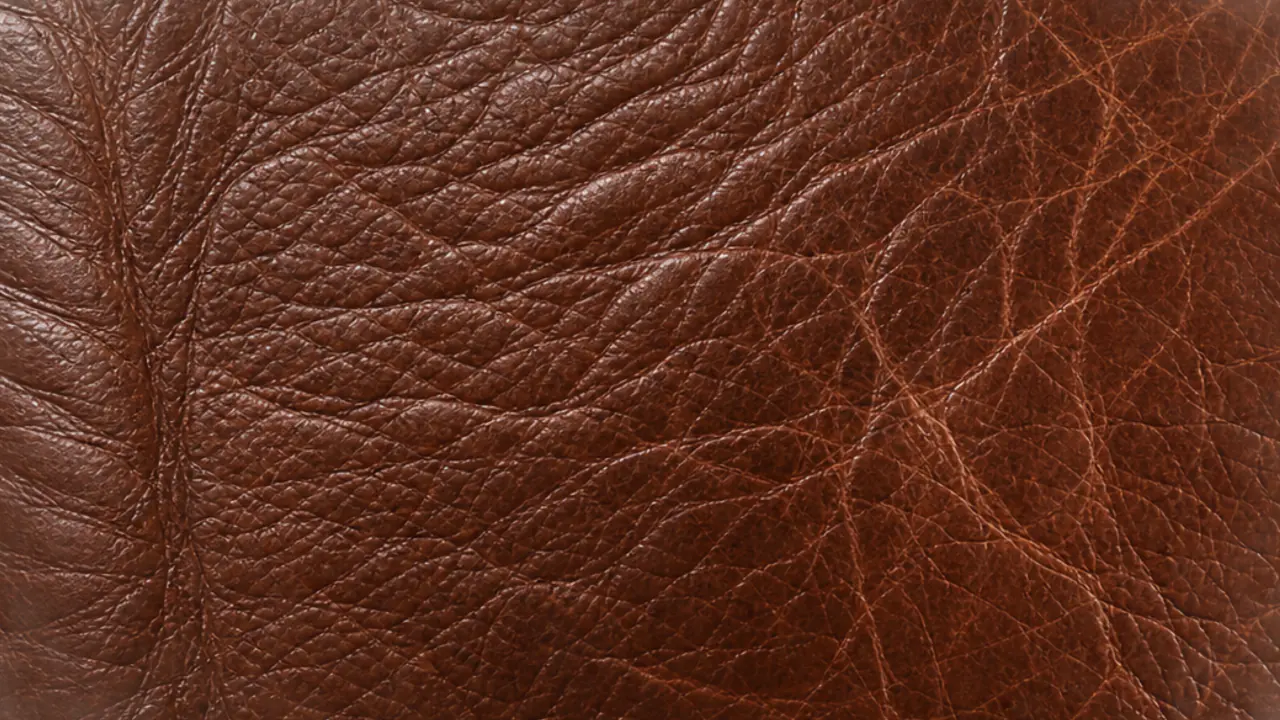
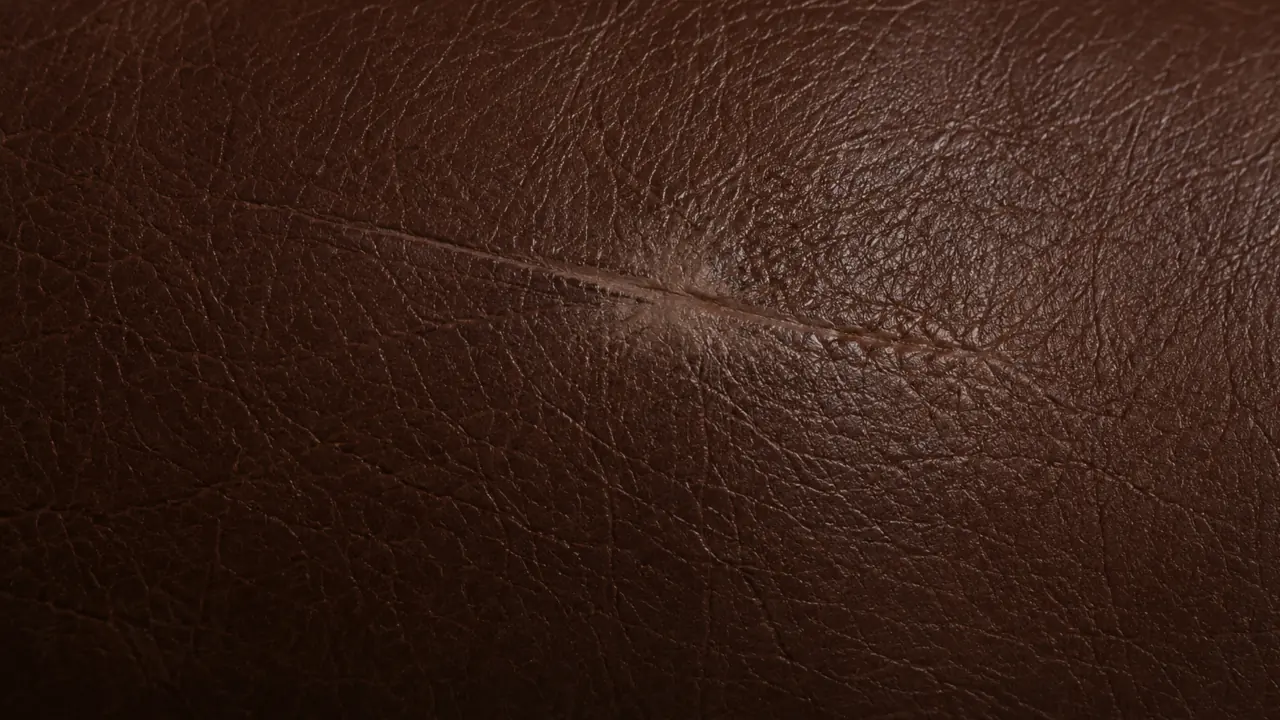
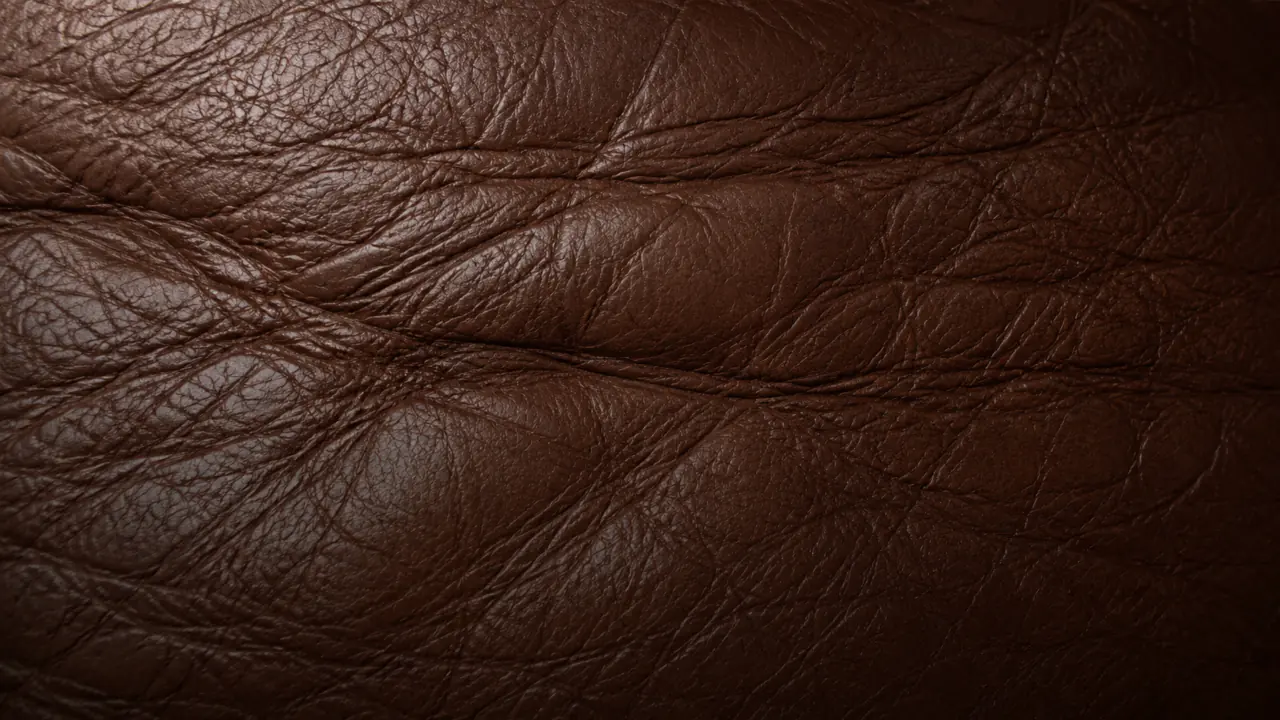
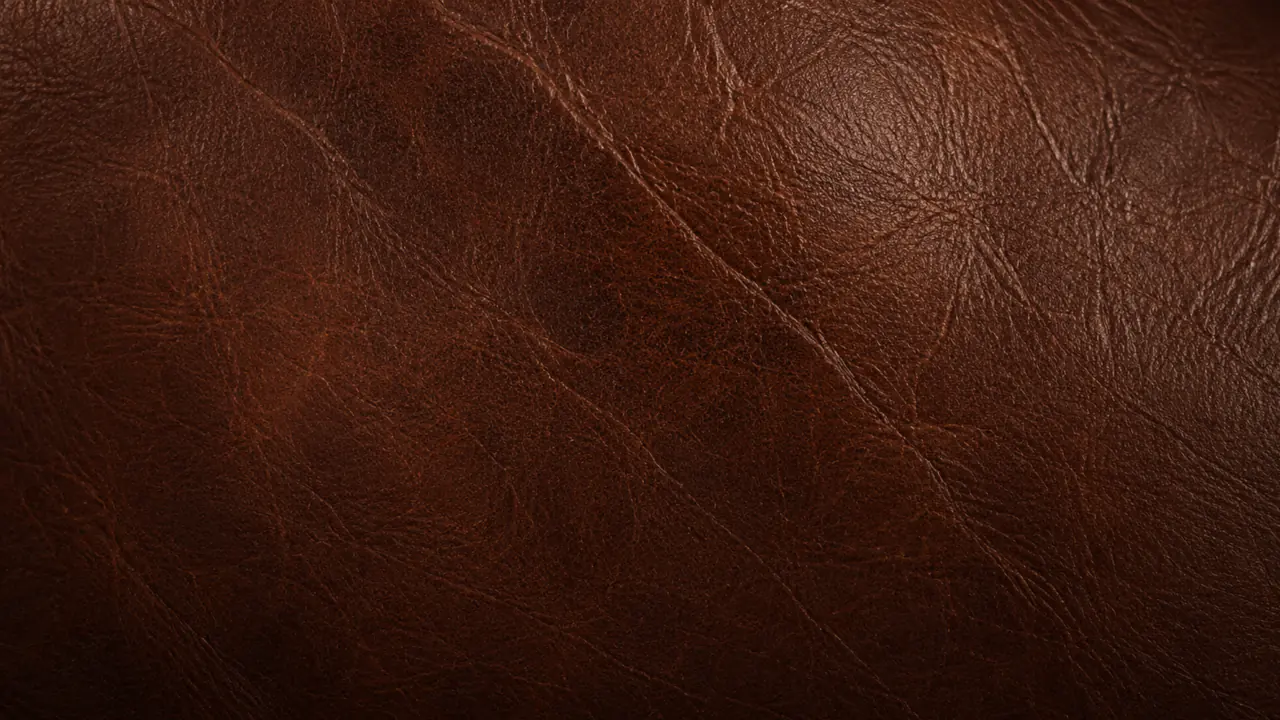
What we restore
-
Deep scratches
-
Fading
-
Oil saturation
-
Cracking
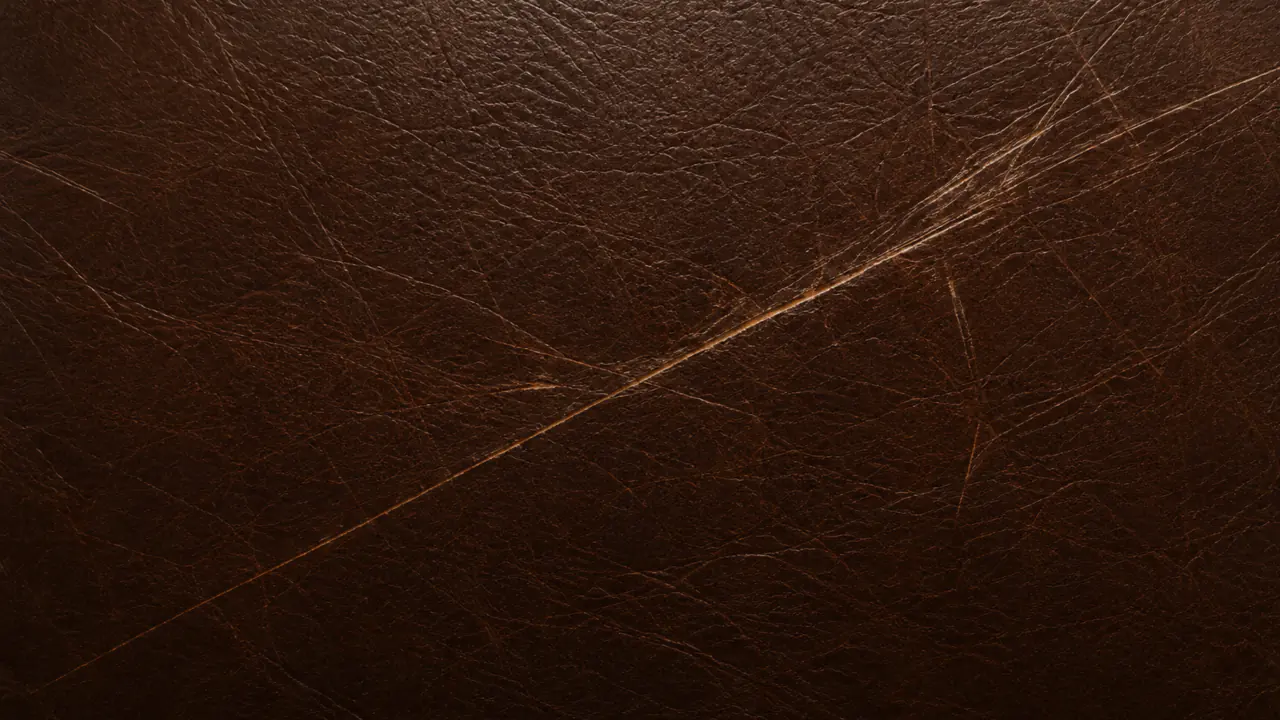
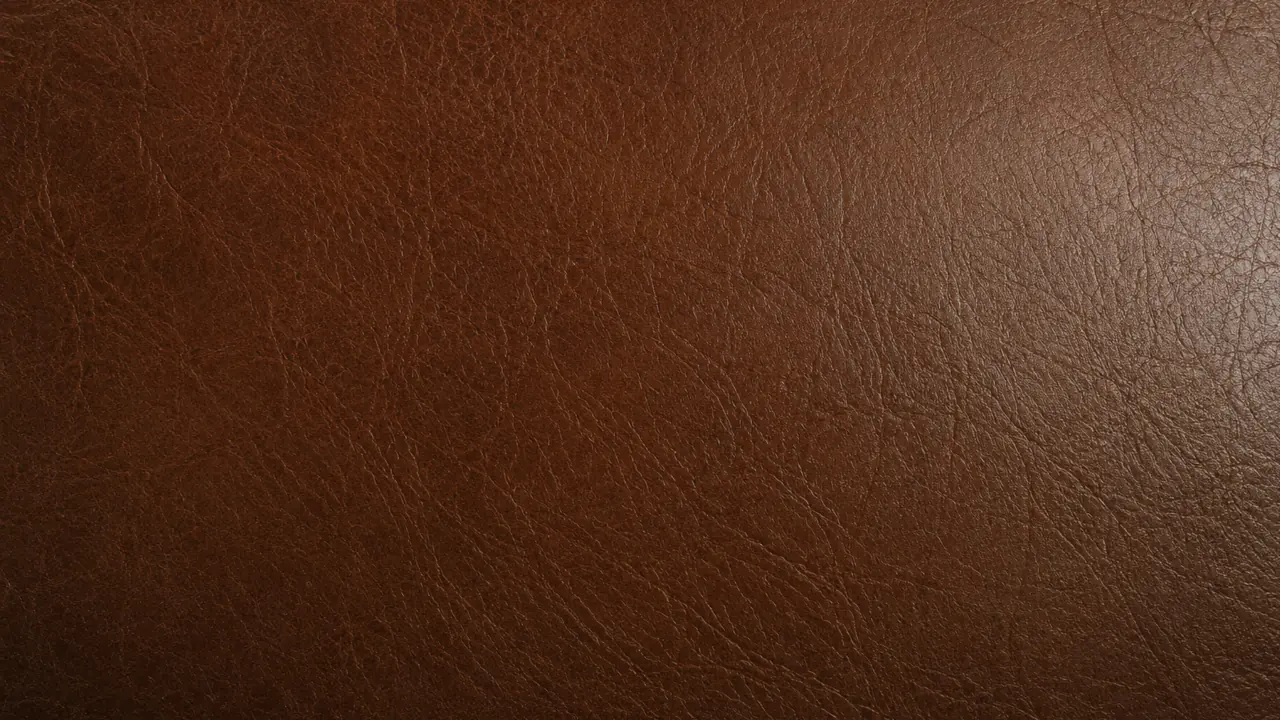
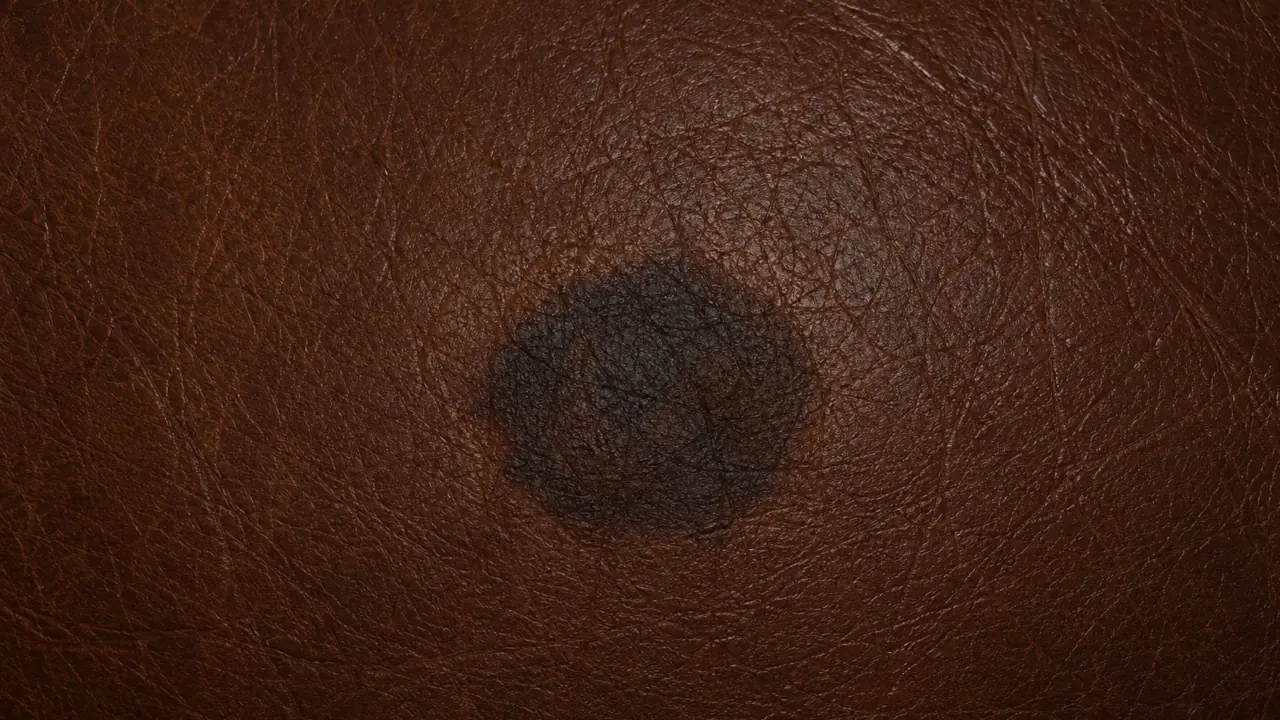
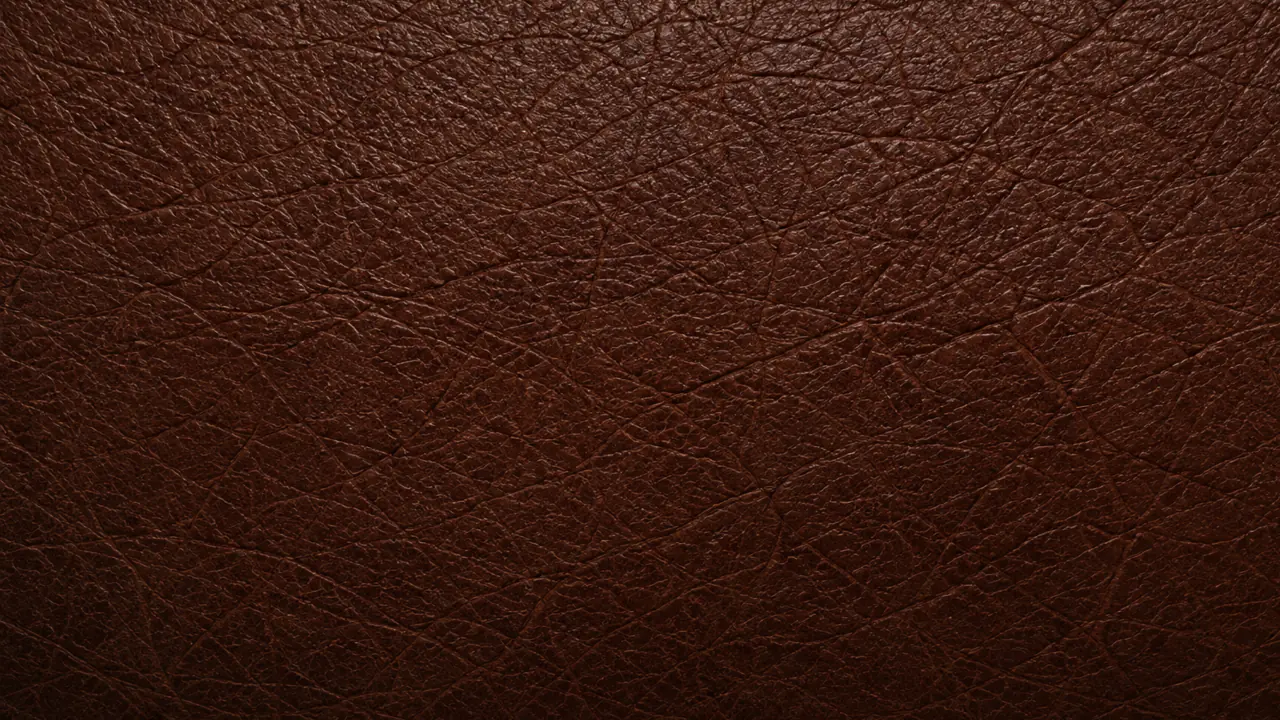
The character above is why the hide was chosen. The damage below is surface, and on full grain the surface is repairable because the grain under it is intact. We pick hides at Global Leathers and lay the cleanest area on the seat. On tanneries, see the Leather Working Group.
What Full Grain Will Not Do For You
It is not stain-proof
That is the finish’s job. If spills matter, choose a semi-aniline or pigmented finish and keep the grade.
It will not stay the colour it arrived
It darkens where you sit and where your hands land.
It will not hide a bad repair
A surface that shows the hide’s history shows a heavy colour coat too.
For a single odd panel we match a new hide, specified from a house like Moore & Giles. At volume, see commercial leather repair.
Where We Meet Full Grain in Commercial Work
We specify it when a piece must look better in year five than year one.
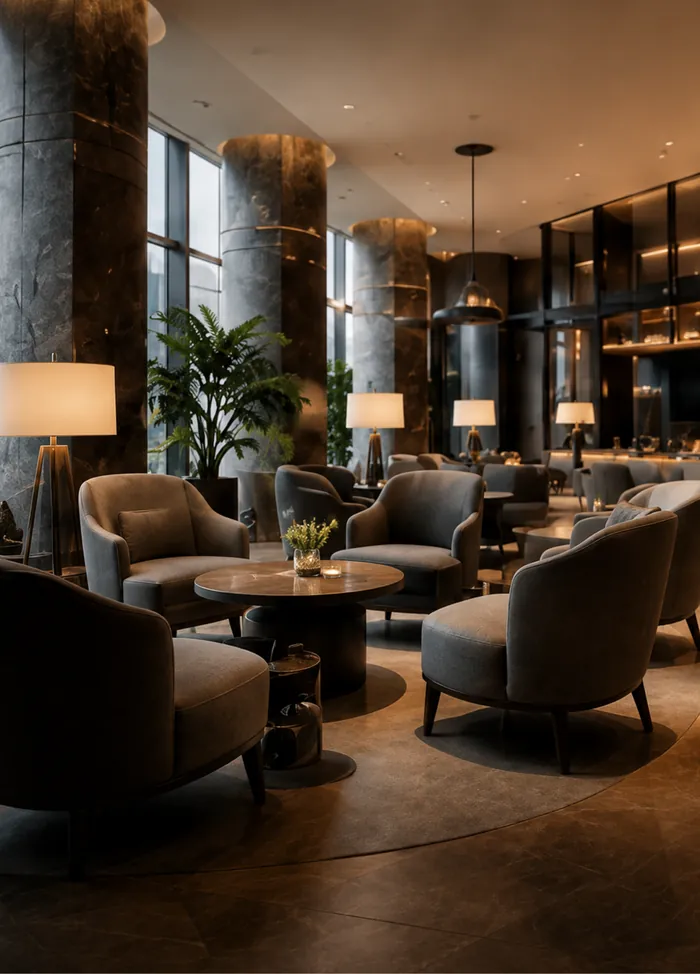
Hotels
Lobby seating, club chairs, headboards. View →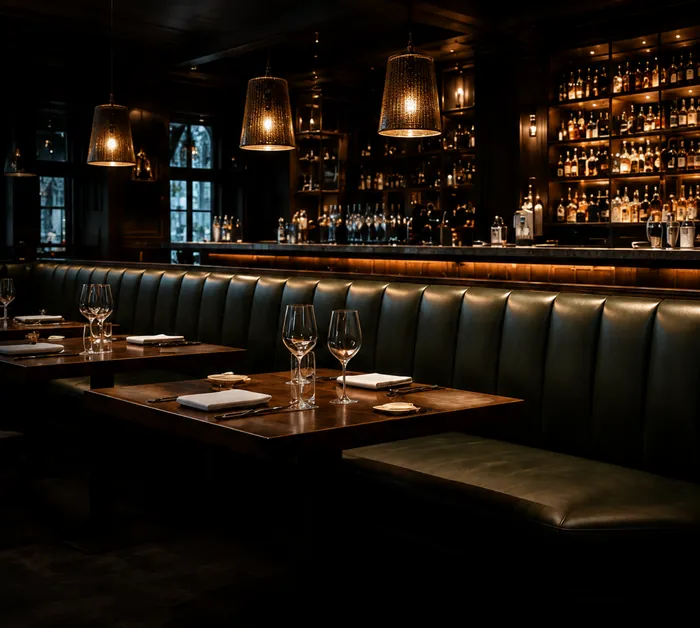
Restaurants
Banquettes and booth backs. View →
Private country clubs
Library and card-room chairs. View →
Event venues
Lounge furniture, moved and stacked. View →
Property management
Lobby and amenity seating. View →
Real estate
Model apartments and staged units. View →See property & facility programs, commercial services and commercial leather repair.
Before and After
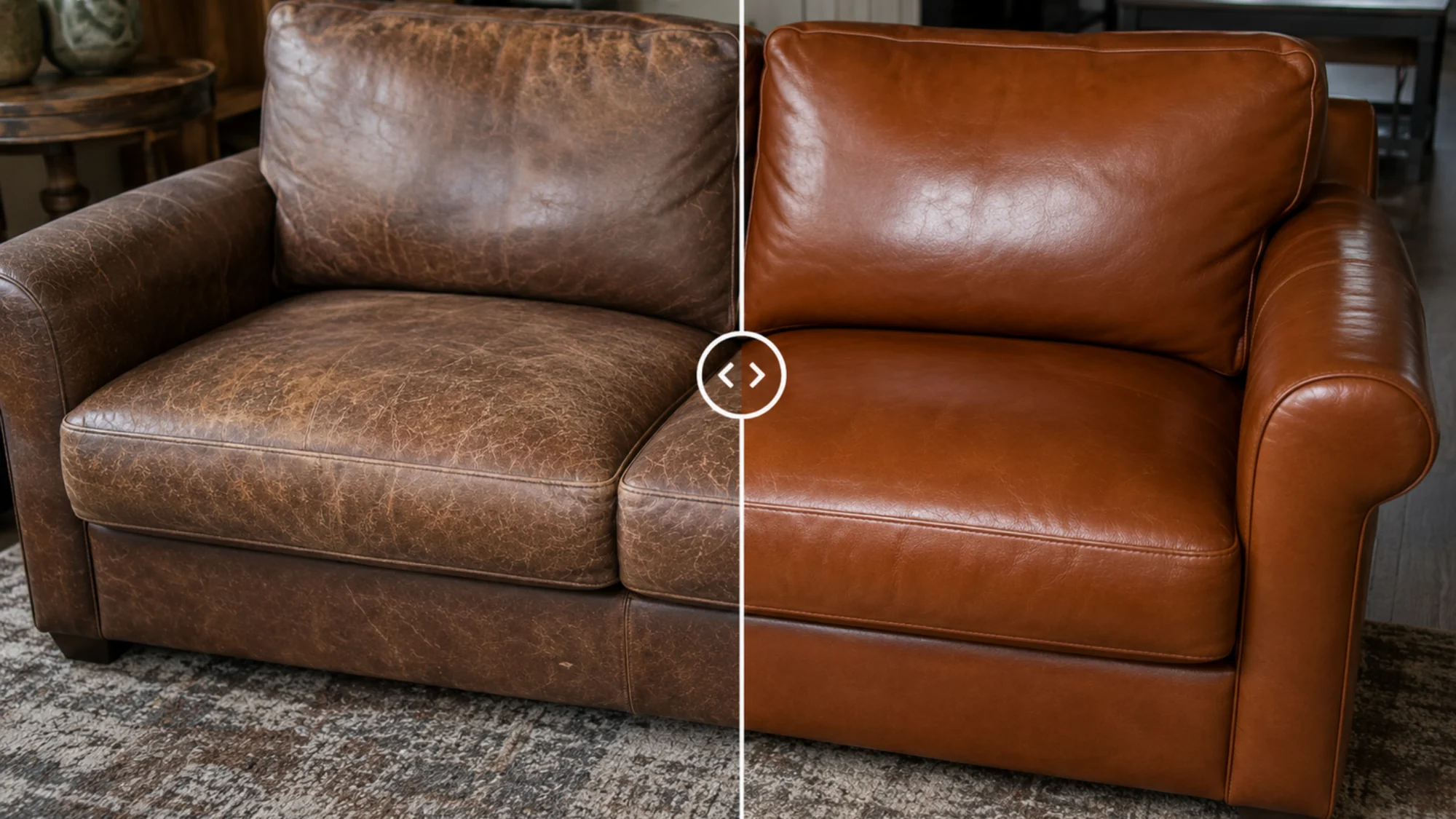
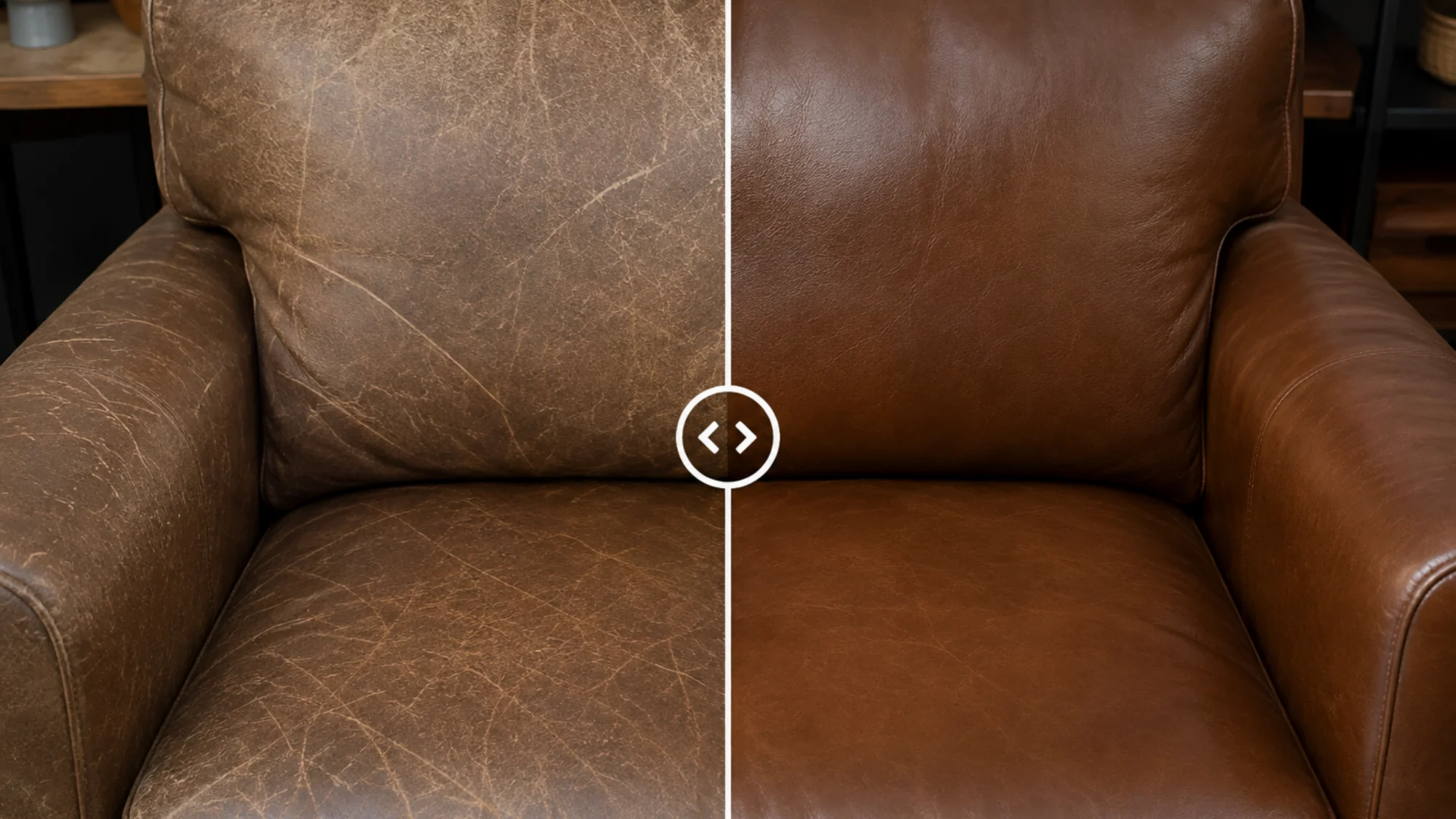
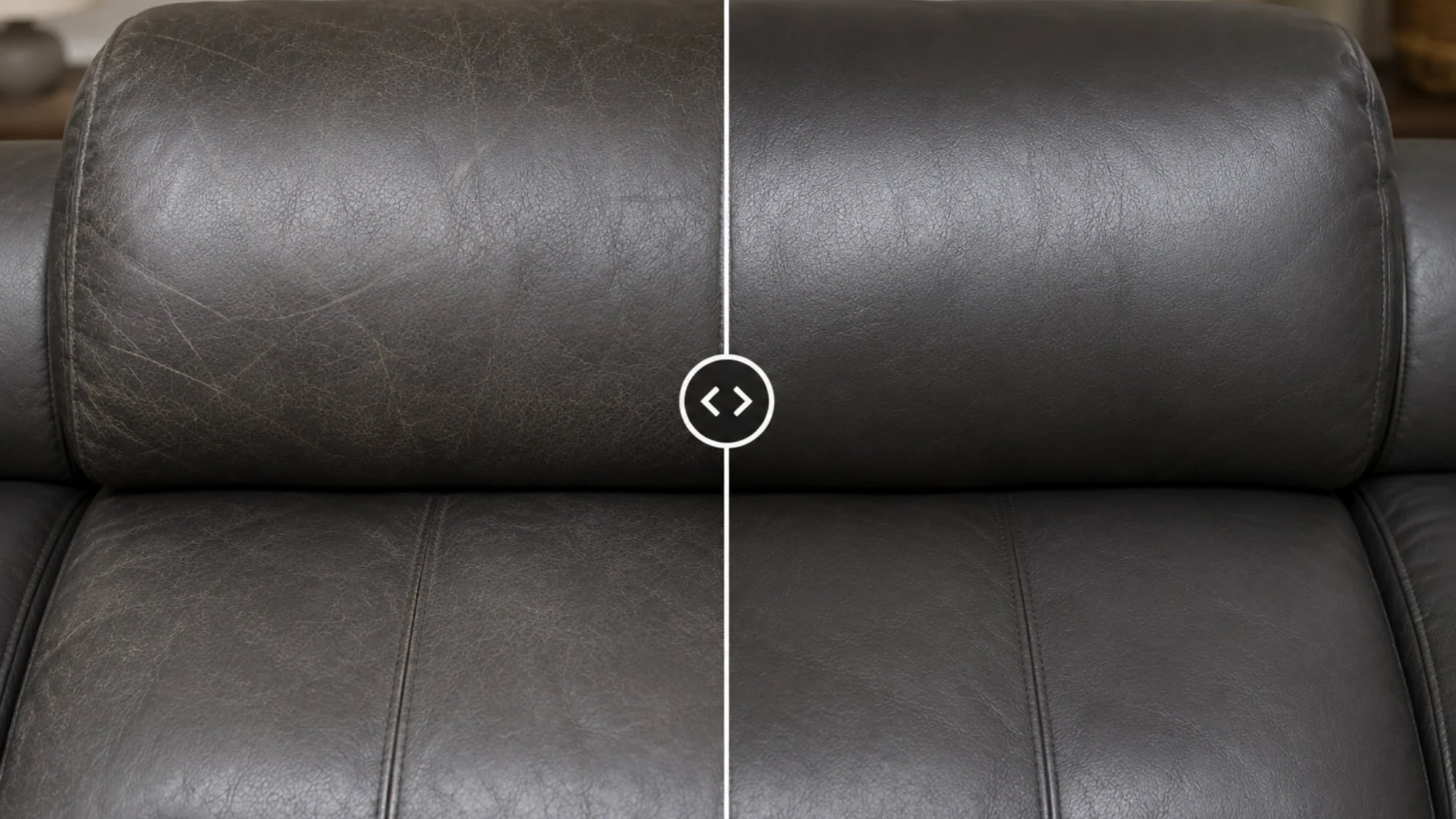
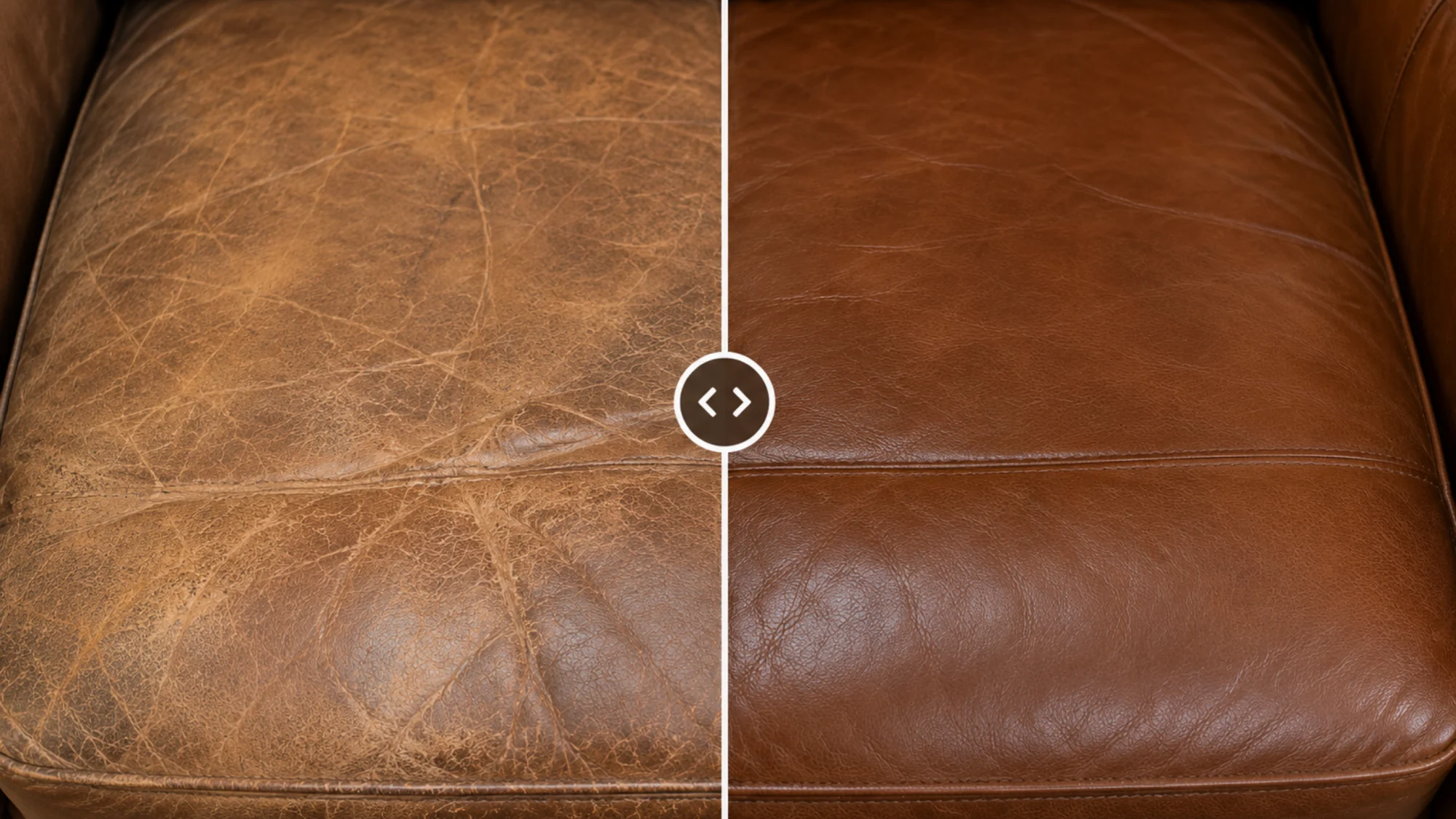
The colour had gone. The grain under it had not.
-
BeforeAfter
Rolled-arm sofa Colour worn off the seat and back. Cleaned, recoloured, fed. -
BeforeAfter
Club armchair Surface dried until it crazed. Fed, then recoloured. -
BeforeAfter
Grey leather sofa Headrest scuffed pale. Recoloured to match the frame. -
BeforeAfter
Seat cushion The worst panel on the piece. Grain intact underneath.
Full Grain Leather Questions
What is full grain leather?
Full grain leather is the outermost layer of the hide with its grain surface intact: nothing sanded off, no pattern pressed in, no filler. No tannery can add that back to a hide afterwards.
Is full grain leather better than top grain leather?
For service life and restoration, yes, but the gap is smaller than marketing suggests. Top grain is the same layer, lightly buffed to even out the worst markings: most of the strength, less of the character.
How can I tell if my sofa is full grain leather?
Four checks, and it must pass all four: pores that vary across the panel, a history of healed scars and growth lines, tone that shifts between panels, and a cut edge showing continuous fibre.
Does full grain leather scratch easily?
It marks more readily than a coated surface, and that is the point. A scuff is displaced fibre, not a hole in a coating, so a conditioning cream often closes it. An aniline hide shows more than a pigmented one.
Is full grain leather the same as aniline leather?
No. Full grain describes which layer of the hide you have; aniline describes how that layer was coloured. They are independent, so a full grain hide can be finished aniline, semi-aniline or pigmented.
Can full grain leather be repaired?
Yes, and it is the most rewarding upholstery leather to work on, because you are repairing the hide itself, not a coating over a sanded one. We rebuild worn colour into the grain in thin passes.
Why does full grain leather cost more?
Selection drives the price. A tannery can sell a hide with its markings showing only if it stands up to close inspection, so the sorting happens when the buyer picks it.
Does the label “genuine leather” mean full grain?
No. It is not a grade and promises nothing about which layer you have. It means only that the material contains real leather, which is also true of a corrected grain hide and of split leather products.
Does full grain leather have a topcoat?
It can have any amount of one, and the grade does not tell you which. With none it is aniline; with a light coat, semi-aniline; with a full coat, pigmented. The coat is the consumable; the grain is not.
Is a whole sofa made from full grain leather?
Rarely, and that is normal. Makers cost a piece panel by panel, so the surfaces you touch get the good hide while the outside arms and back get a lesser grade.
Send Us a Photograph of the Cut Edge
Not certain which grade you have? One picture under a cushion flap settles it. We work across New York City and New Jersey.