Leather goes dry long before it cracks
Leather conditioning puts back the oils that heat and dry indoor air pull out of a hide. Done on time it keeps a sofa soft for years. Done late it does little.
What leather conditioning does to a hide that can take it
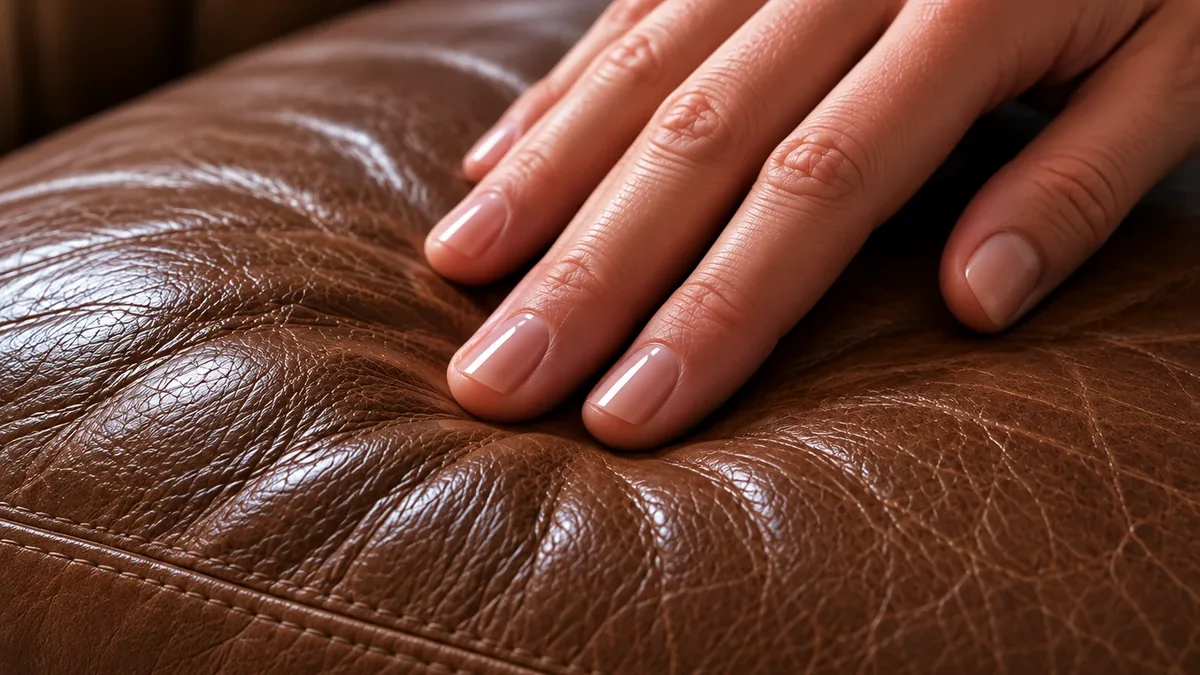
Maintains suppleness
The seat gives under weight instead of holding its shape.
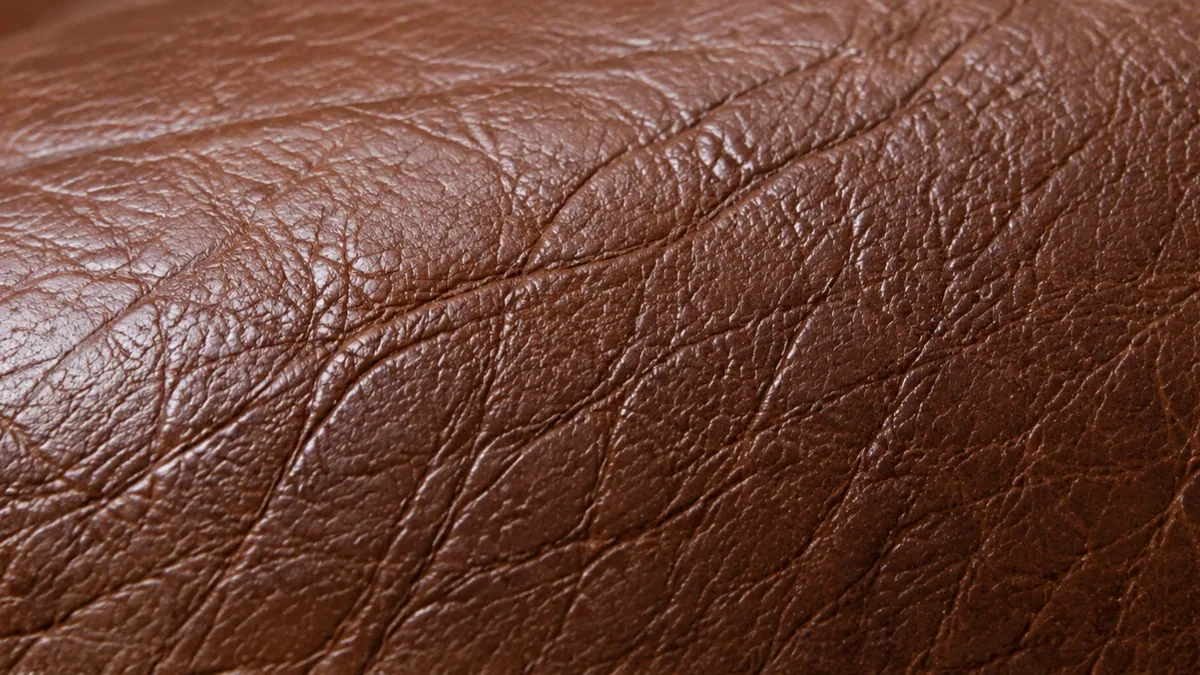
Helps prevent dryness
Replaces the oils that heat and sun pull out.
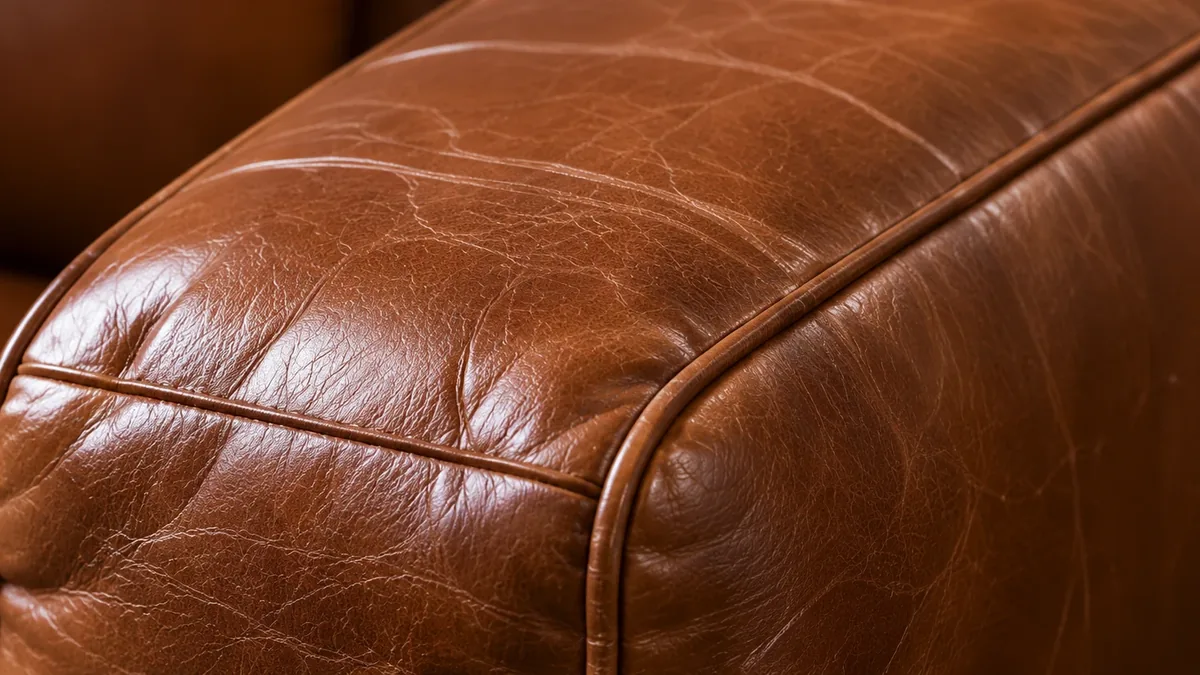
Refreshes appearance
The chalky cast lifts and colour reads deep again.
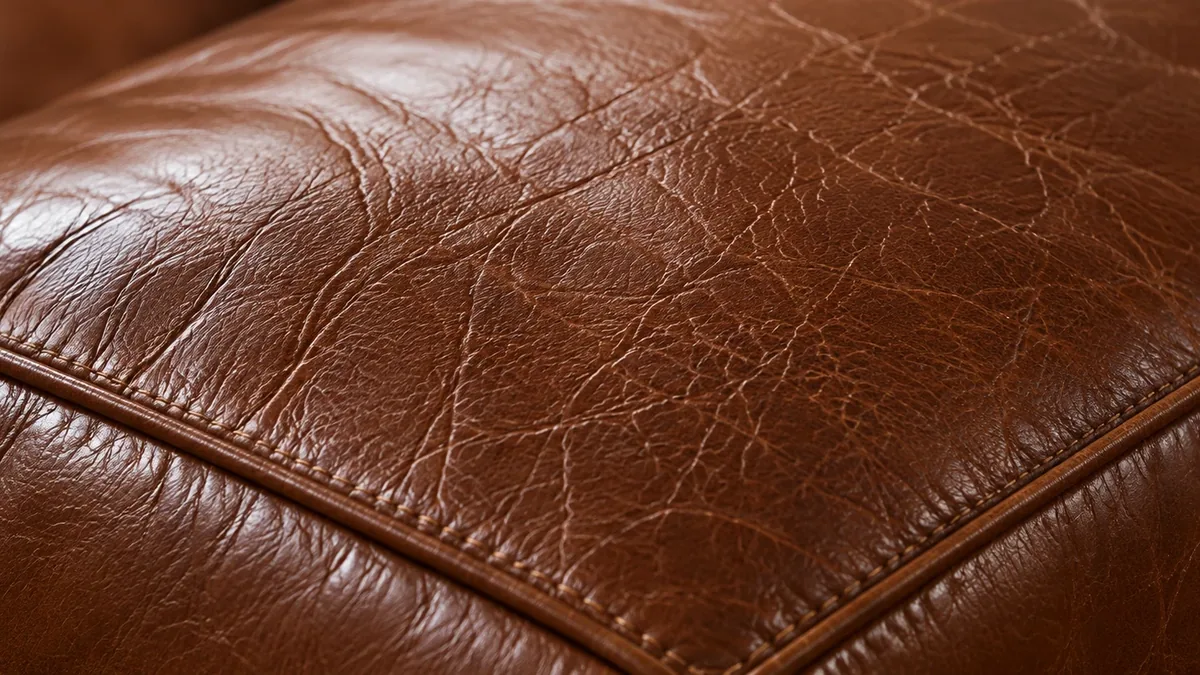
Supports long-term care
Creases in the hide stop deepening into splits.
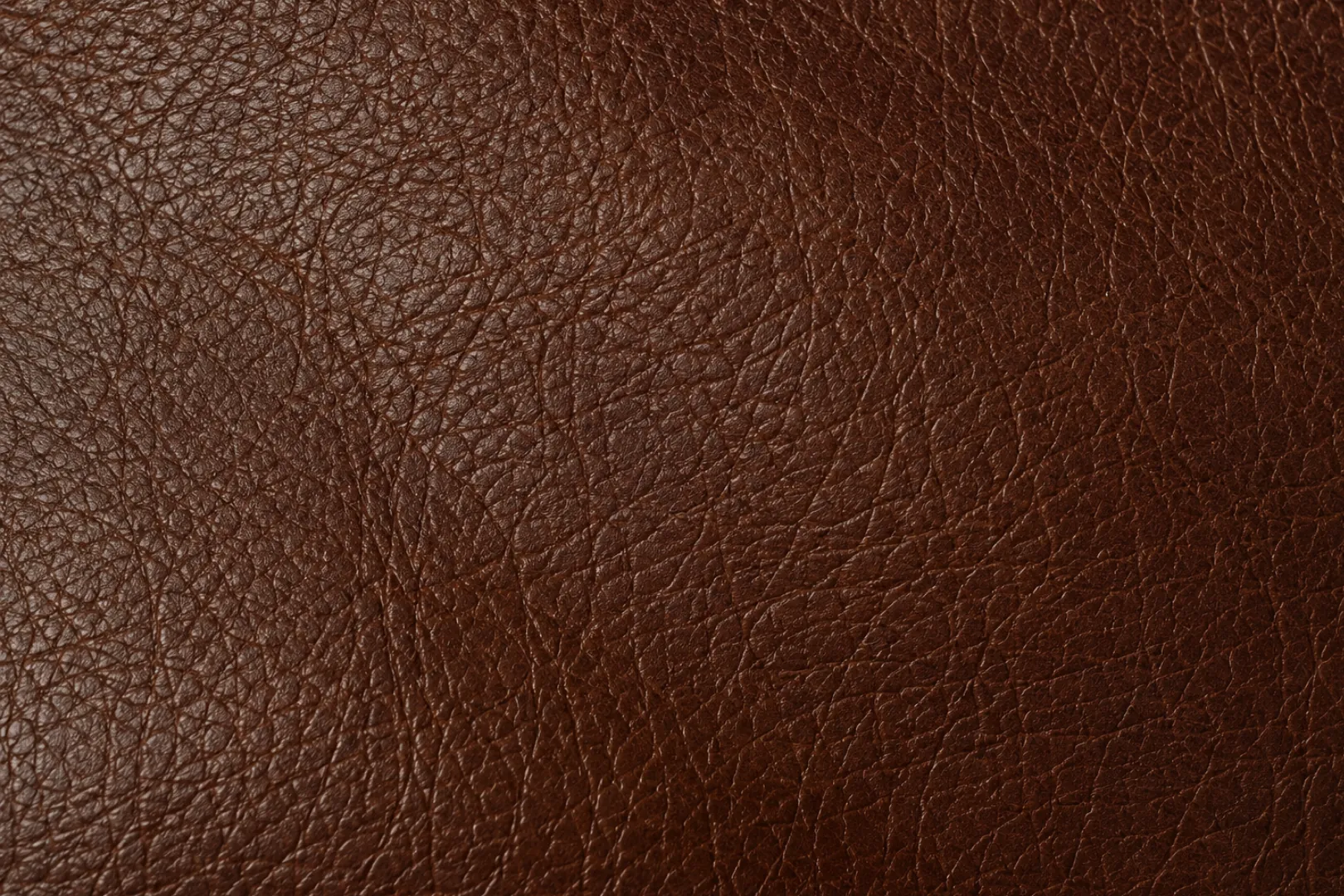
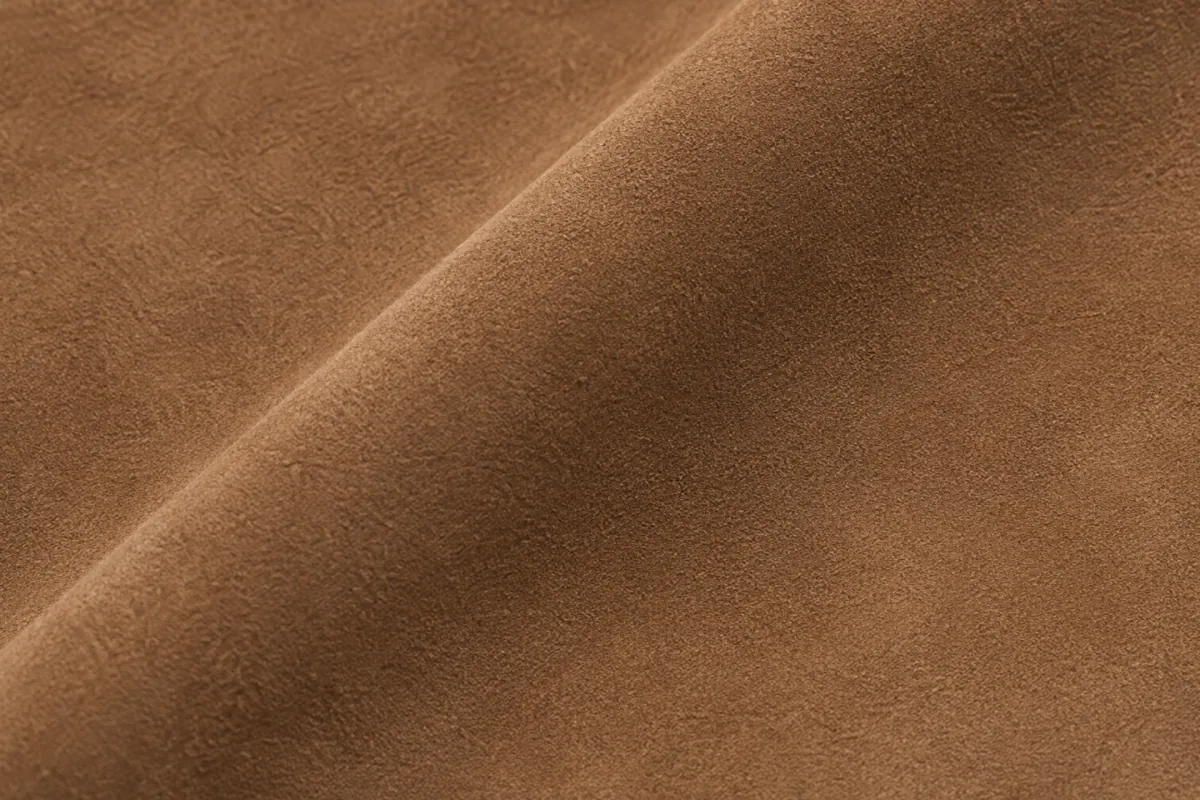
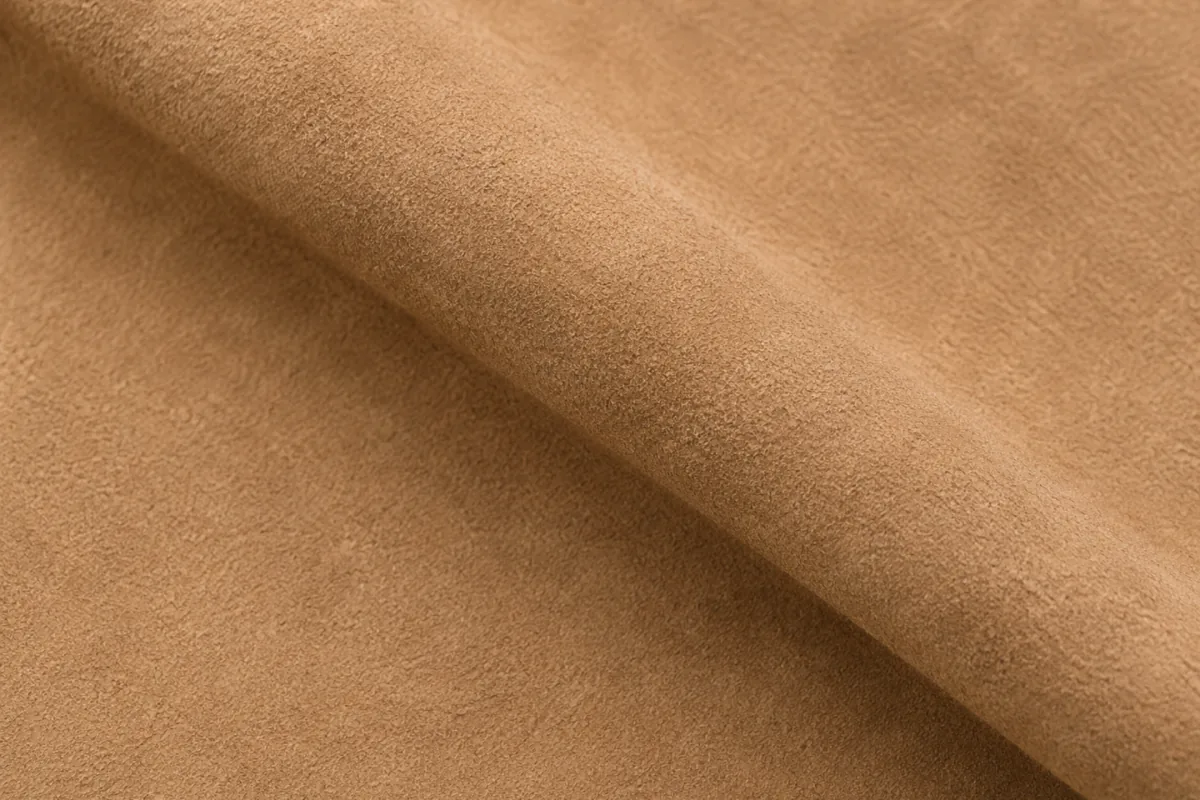
Works on all leather types
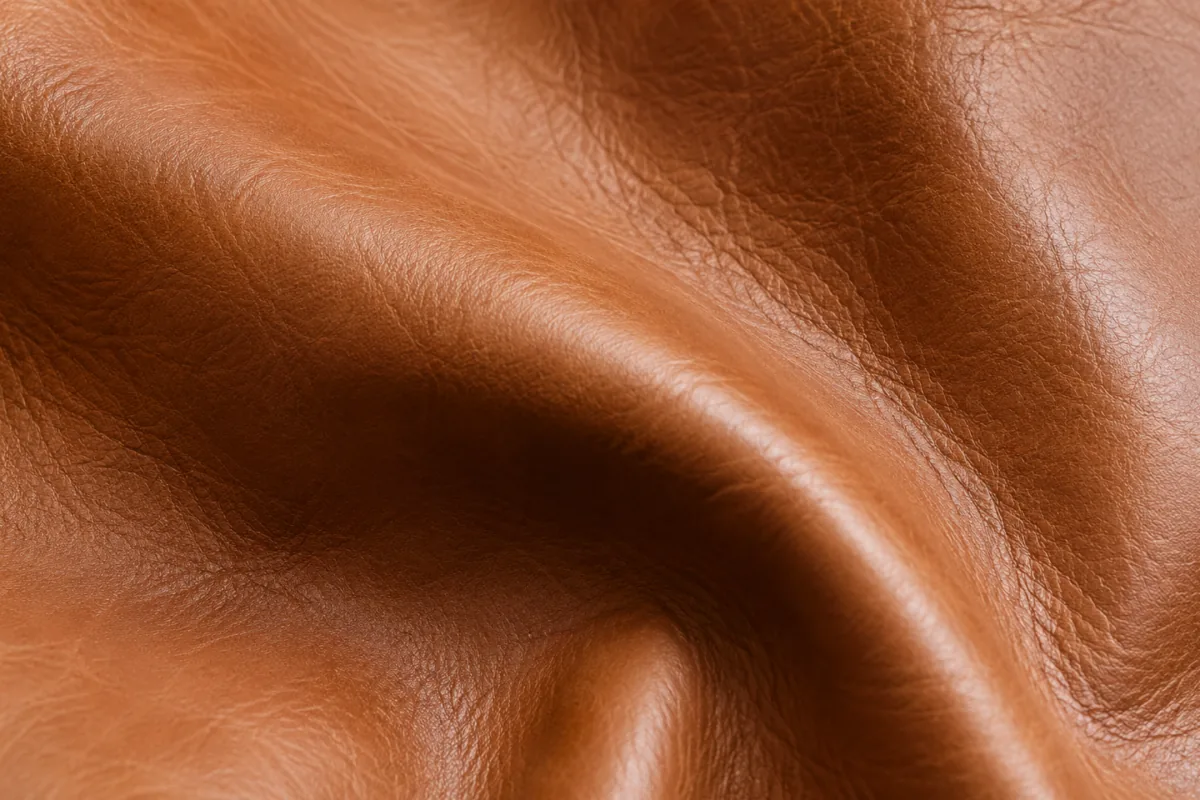
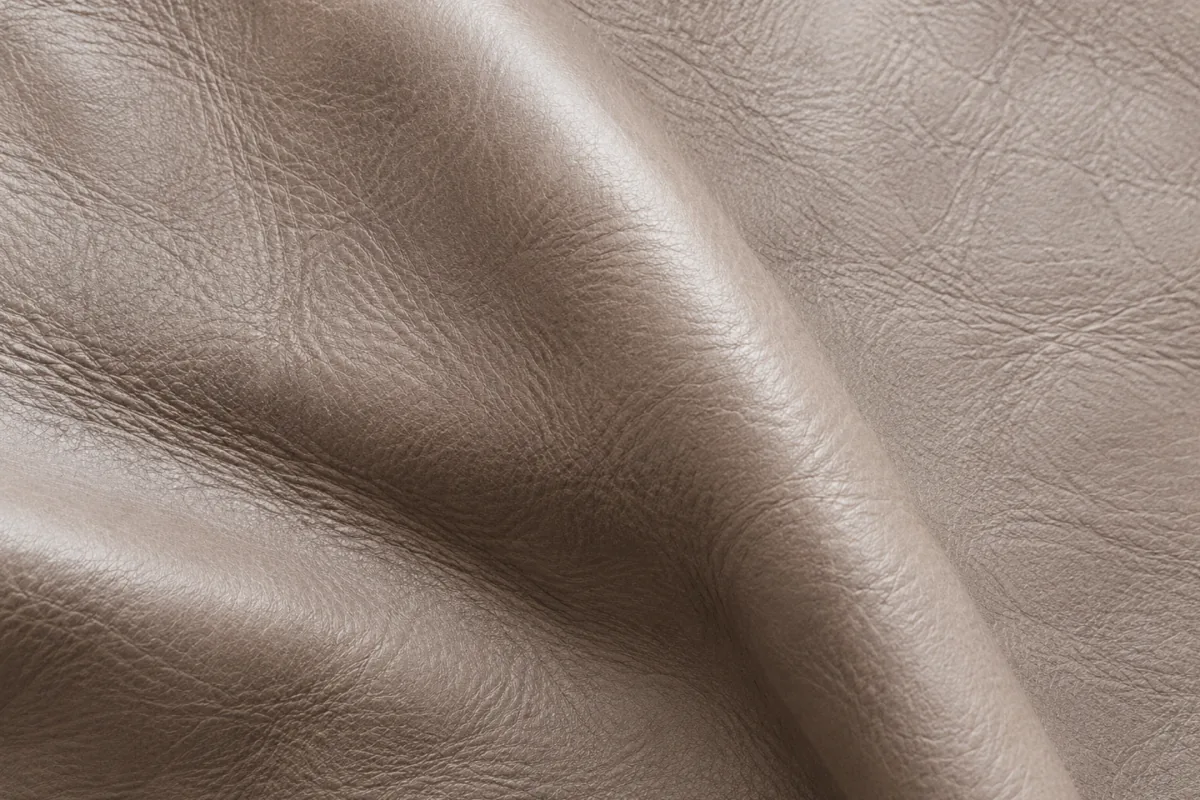
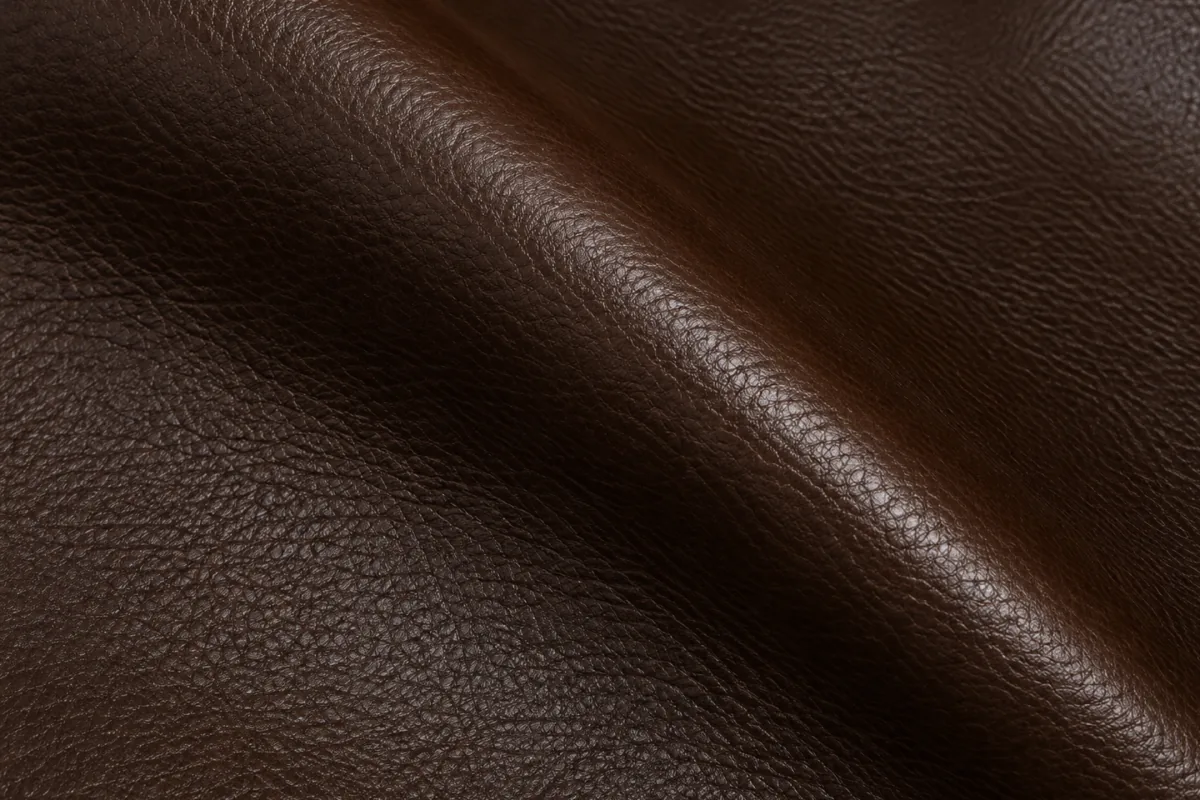
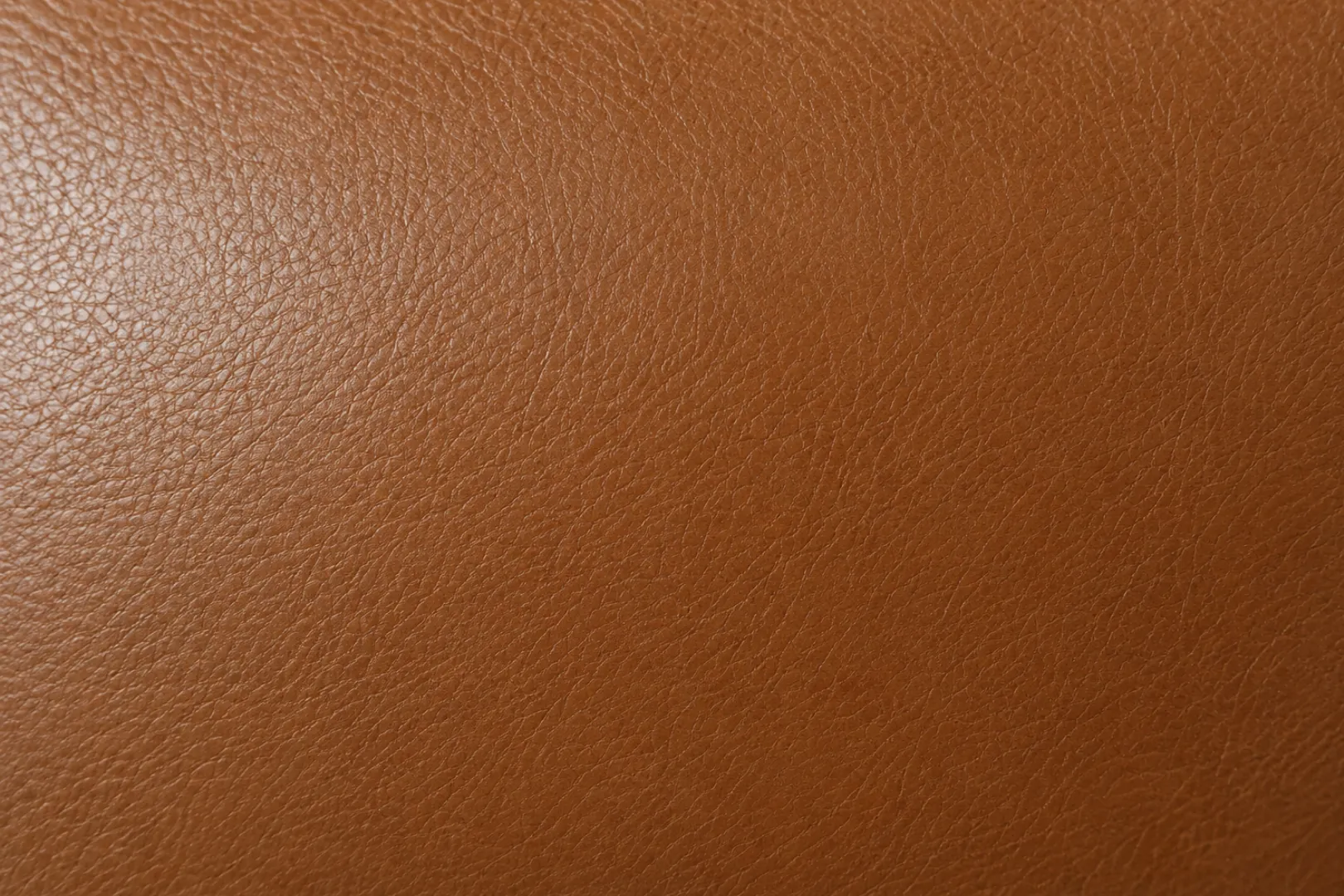
We condition a wide range of leather, using the right product for each material.
The products that cause the damage they promise to fix
Most pieces we see have already been treated with something. If the label does not name a finish, assume neither — as the Leather Conservation Centre advises.
Mink oil, neatsfoot oil
Made for boots. On furniture they over-soften the fibre and darken it permanently.
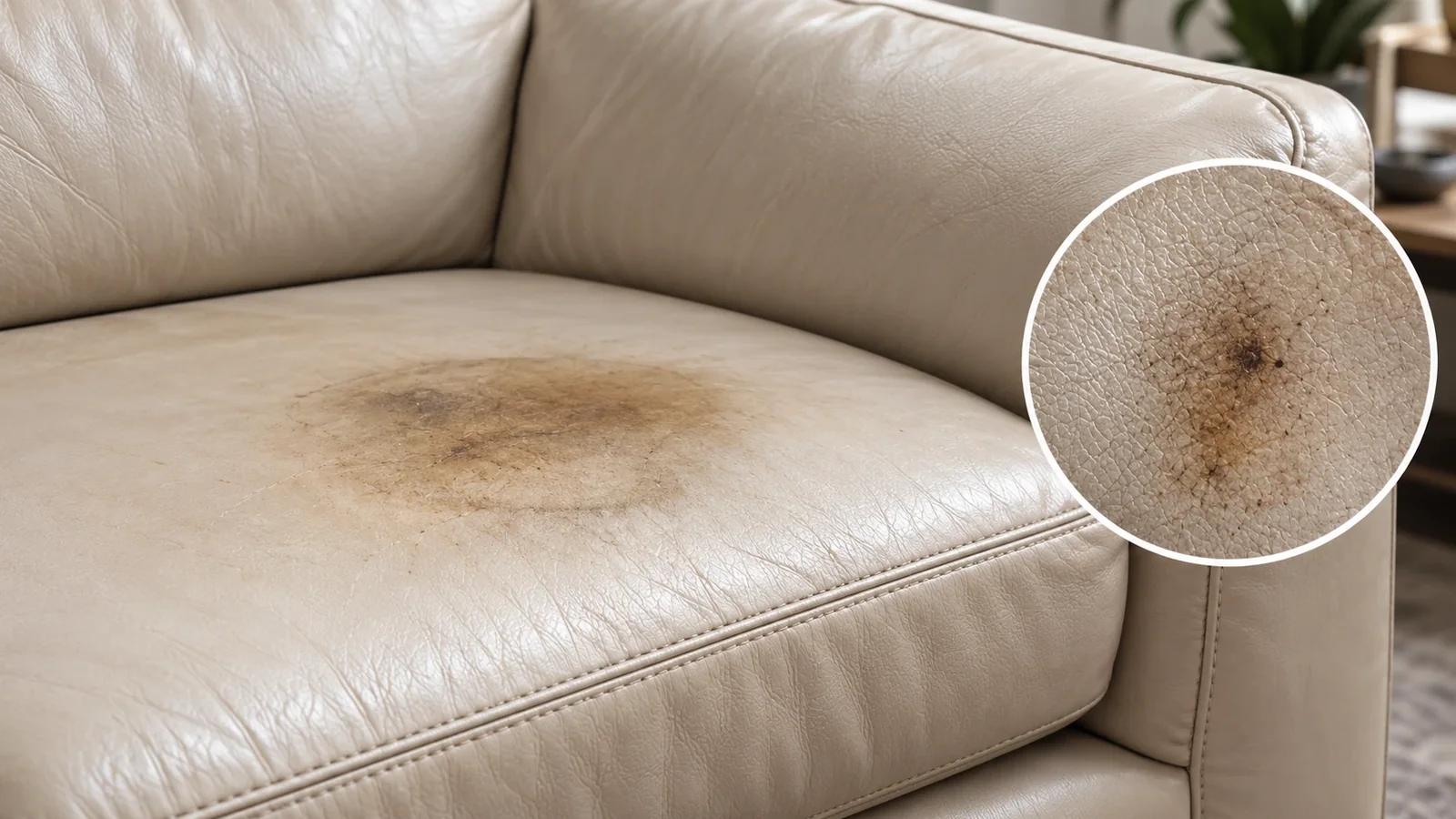
Olive, coconut or baby oil
Food oils. They go rancid inside the hide, and the smell never comes out.
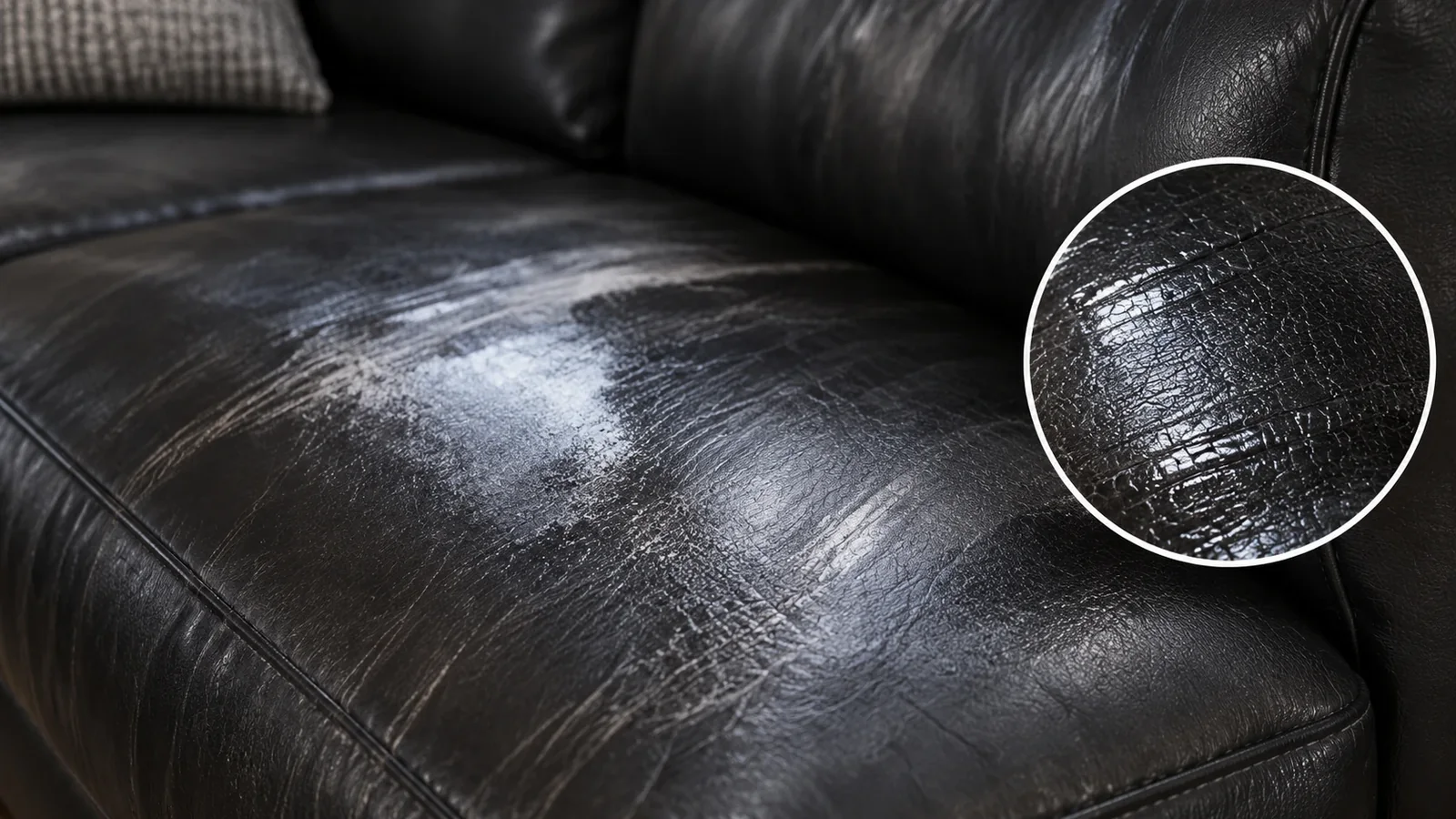
Silicone wipes and shine sprays
A slick film that seals the surface. It has to come off before refinishing.
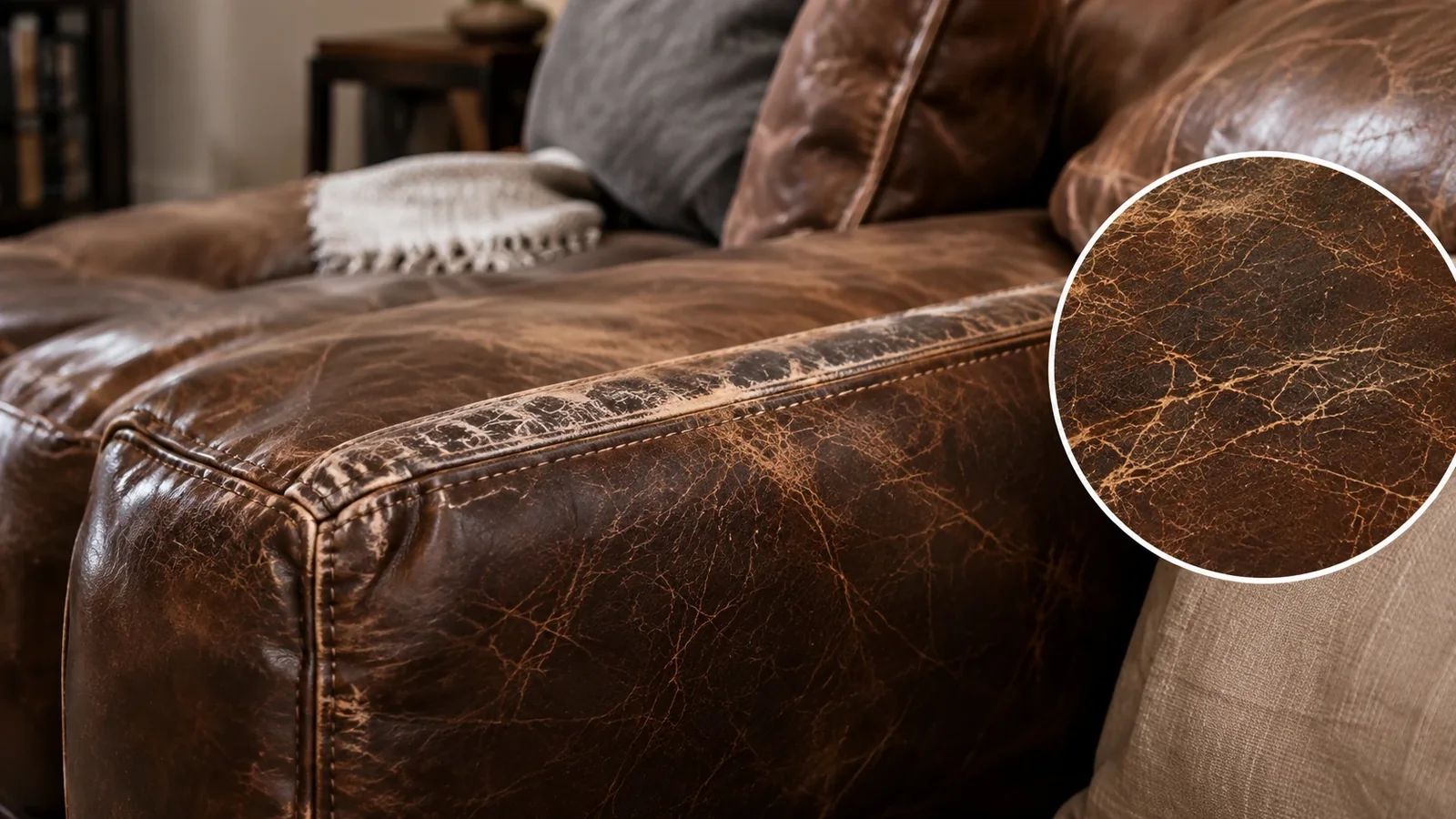
Six kinds of damage that need a repair, not a feed
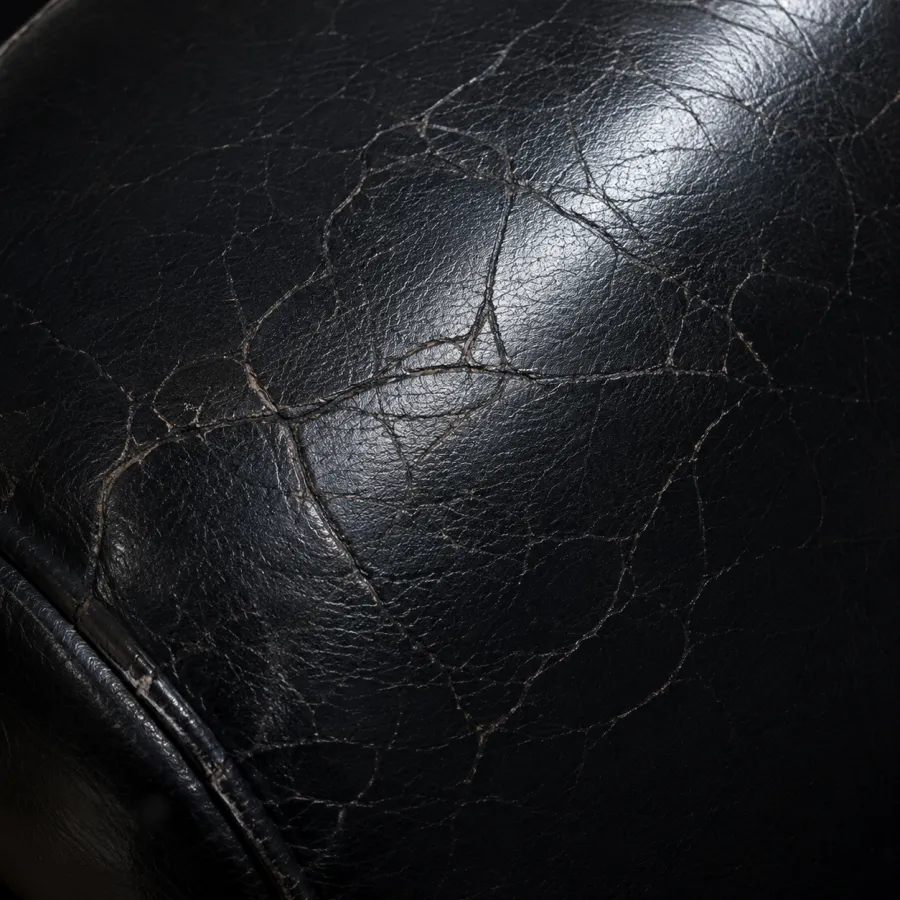
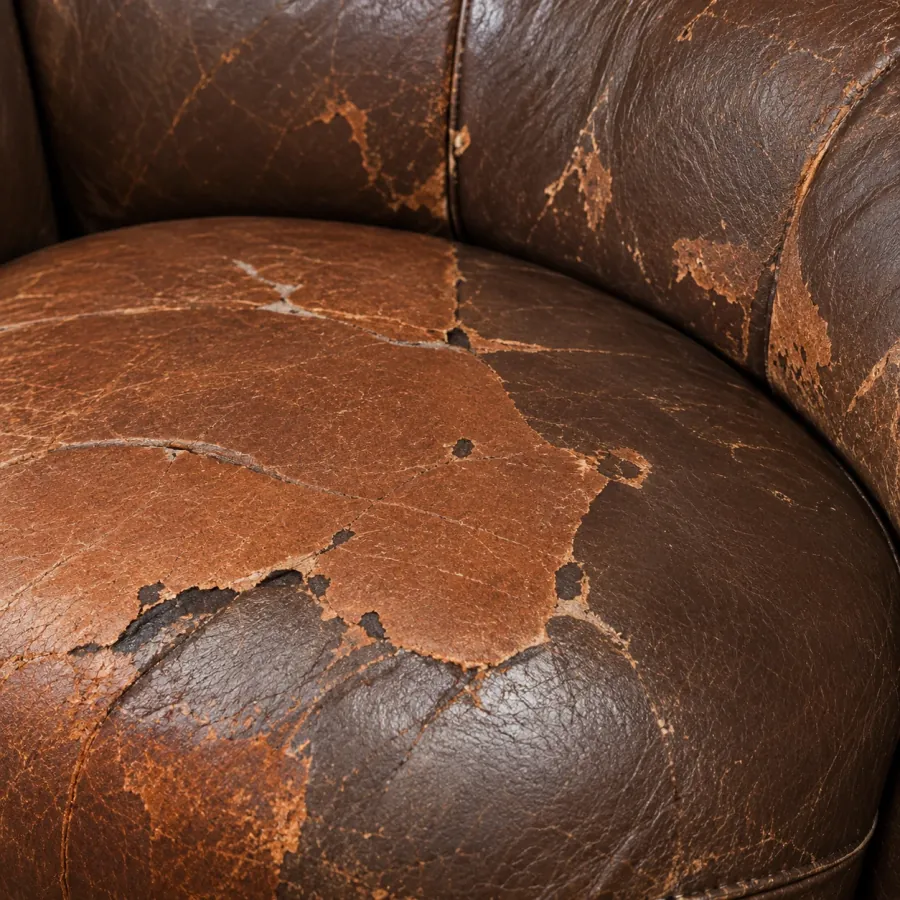
Conditioning restores suppleness, never structure. Anything broken through the finish is separate work — the Canadian Conservation Institute draws the same line.
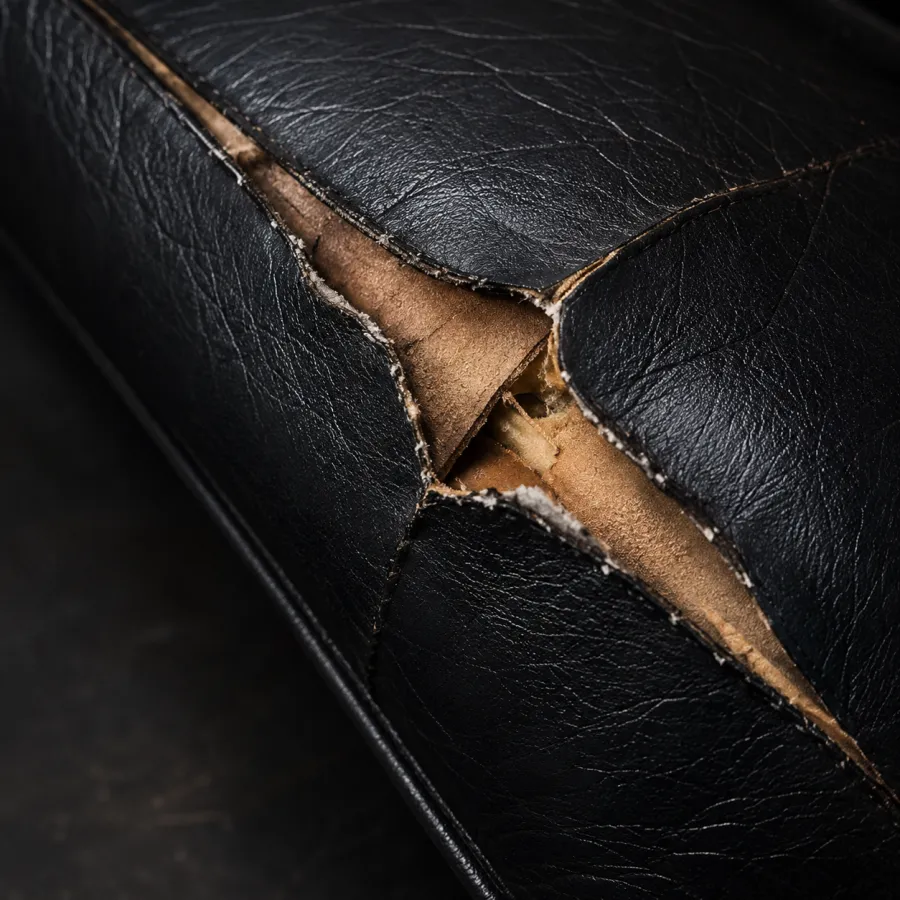
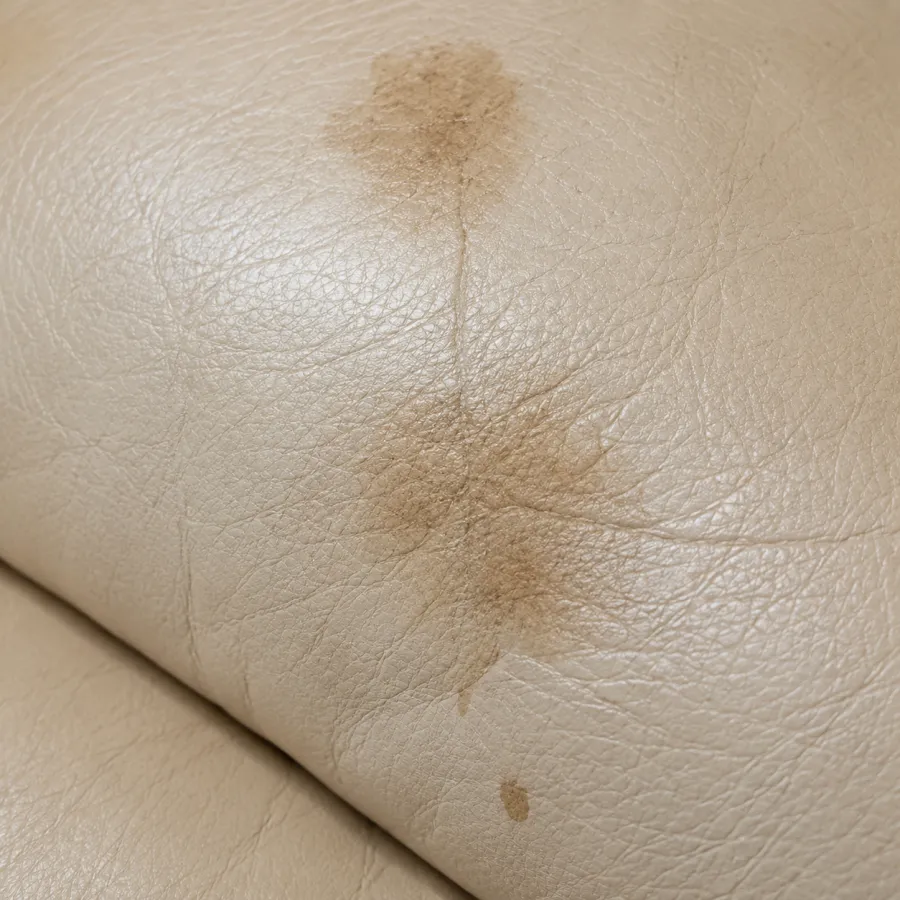
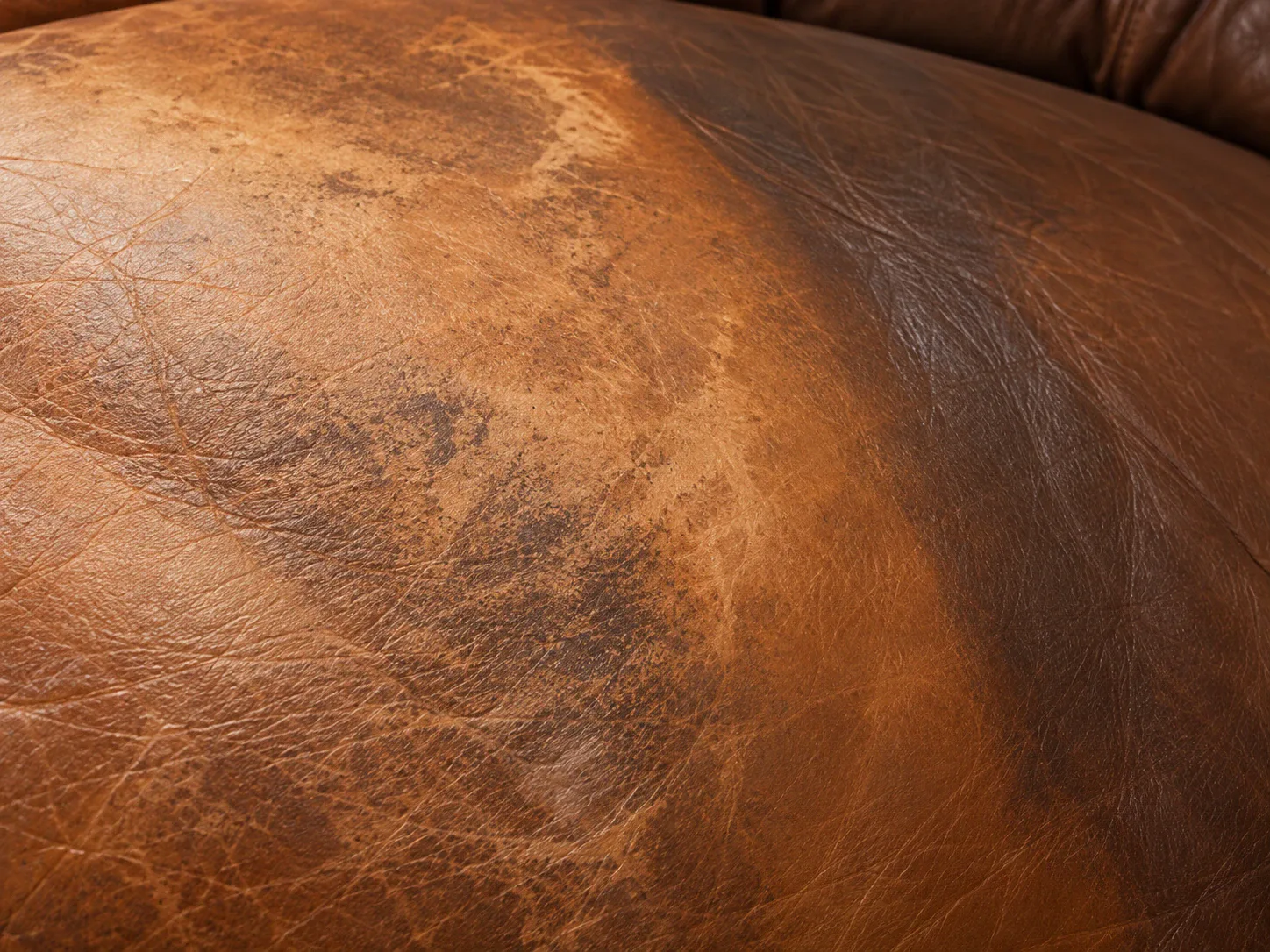
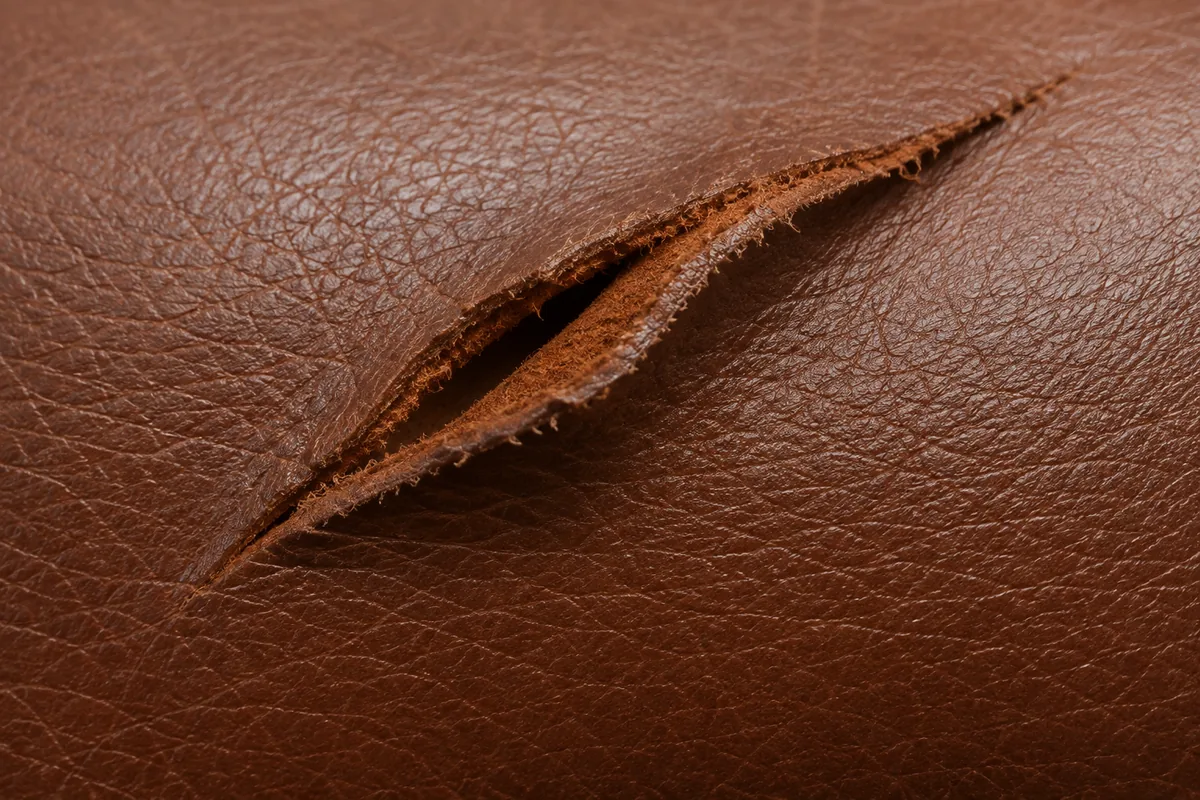
Common areas that need care
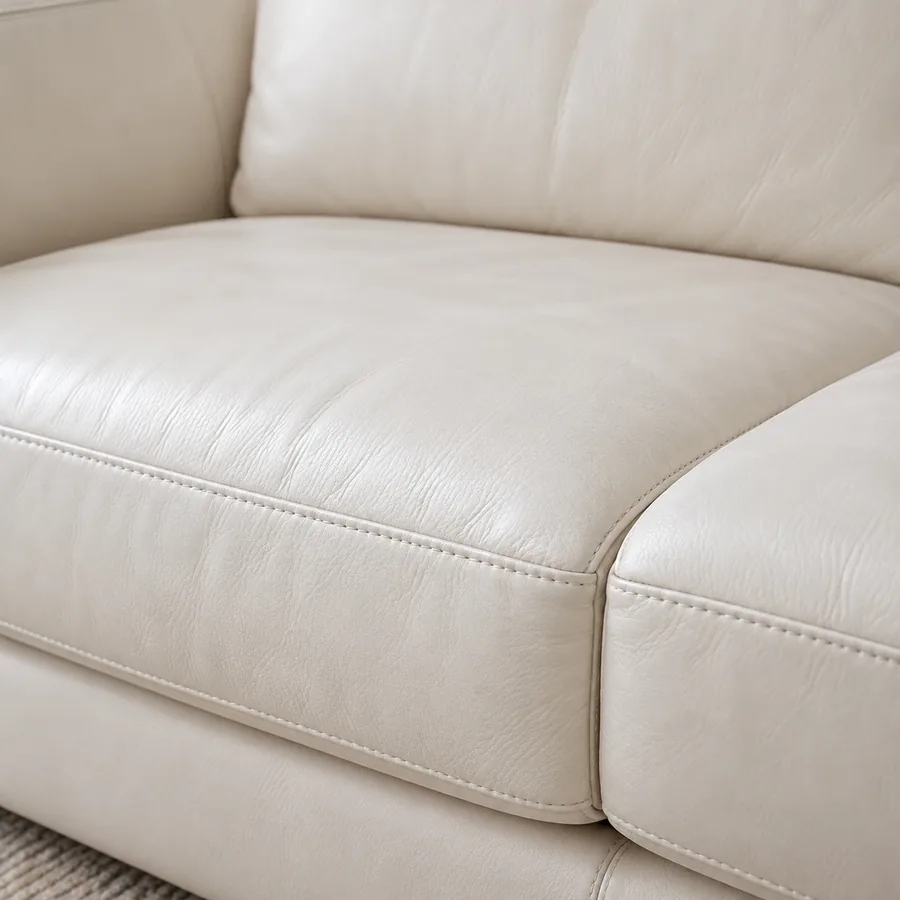
Headrests
Hair and body oils.
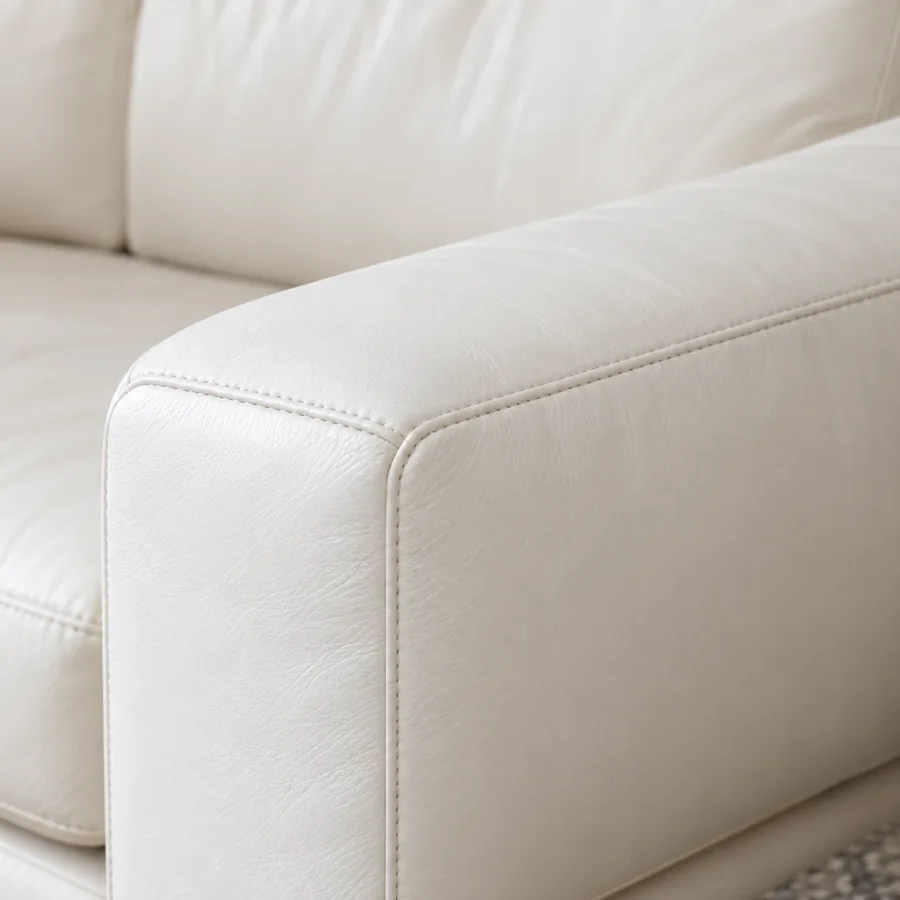
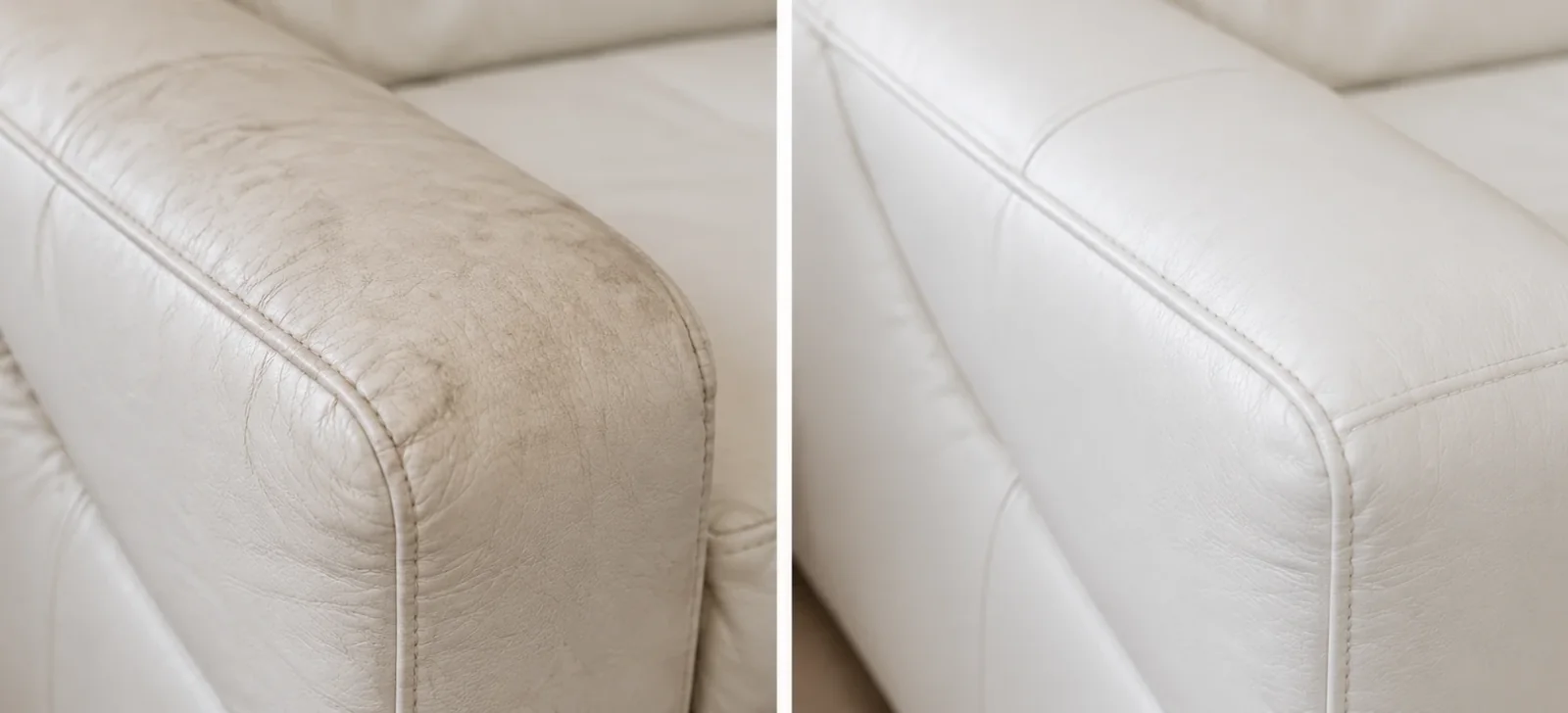
Armrests
Frequent hand contact.
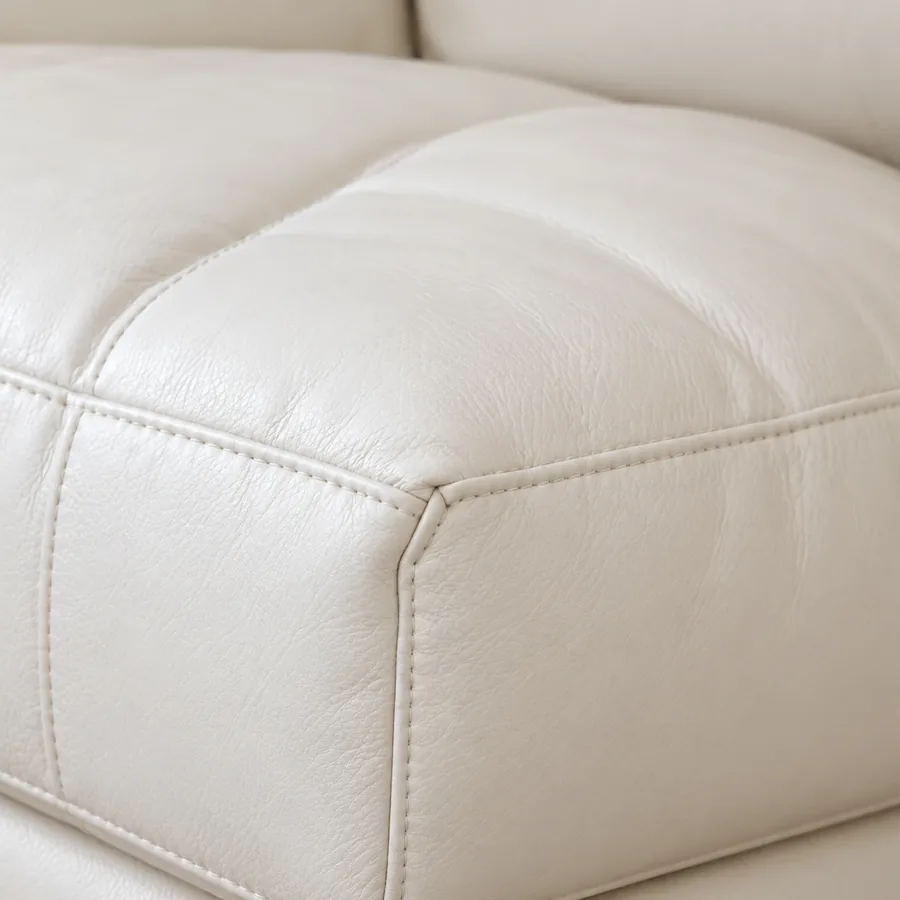
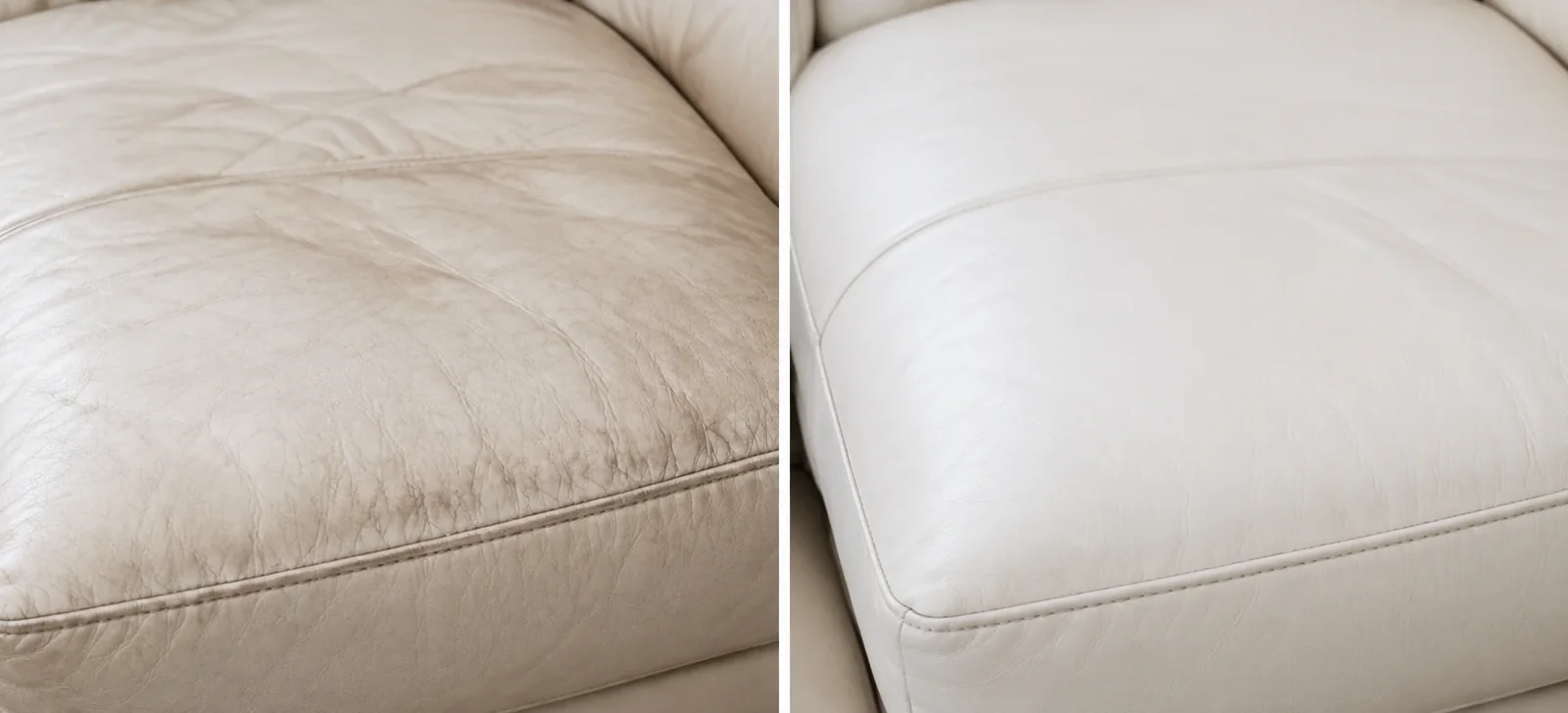
Seat cushions
Everyday use.
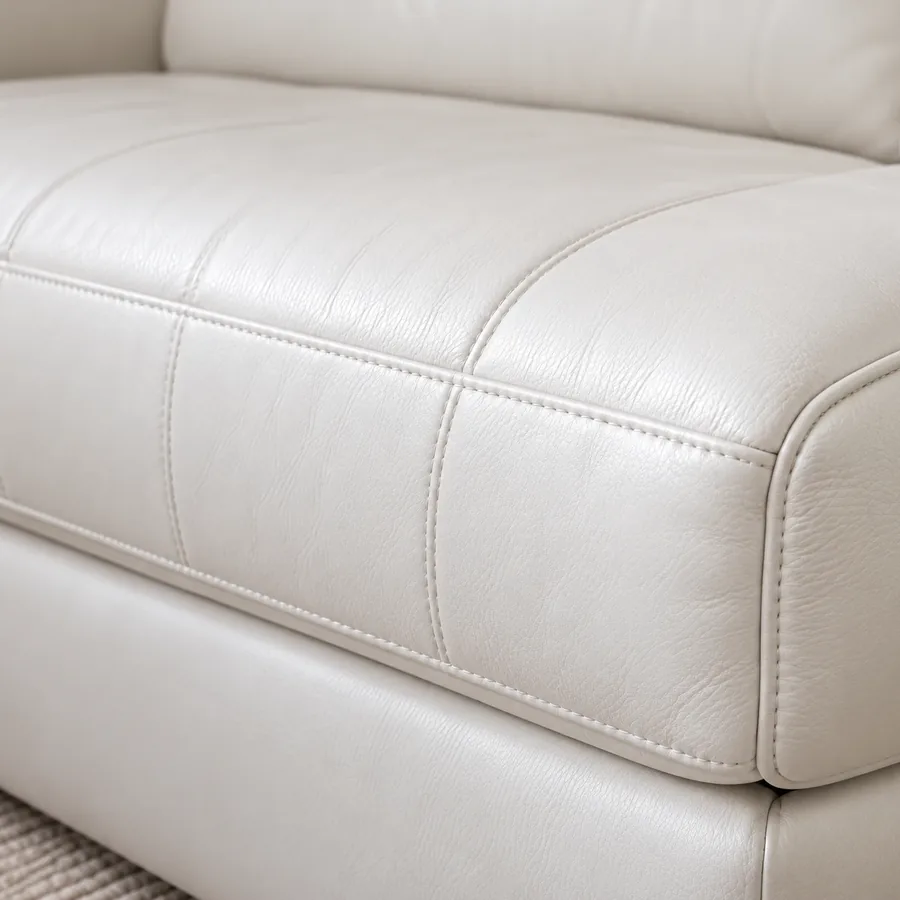
Front nosing
Clothing contact.
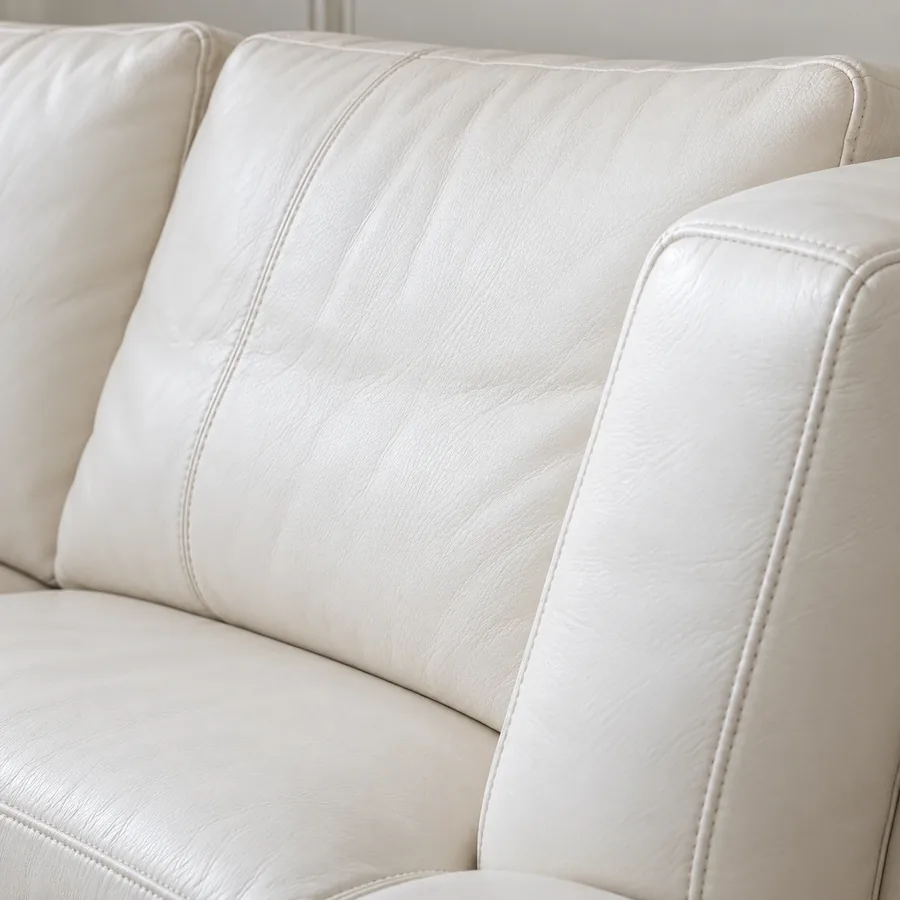
Back cushions
General use.
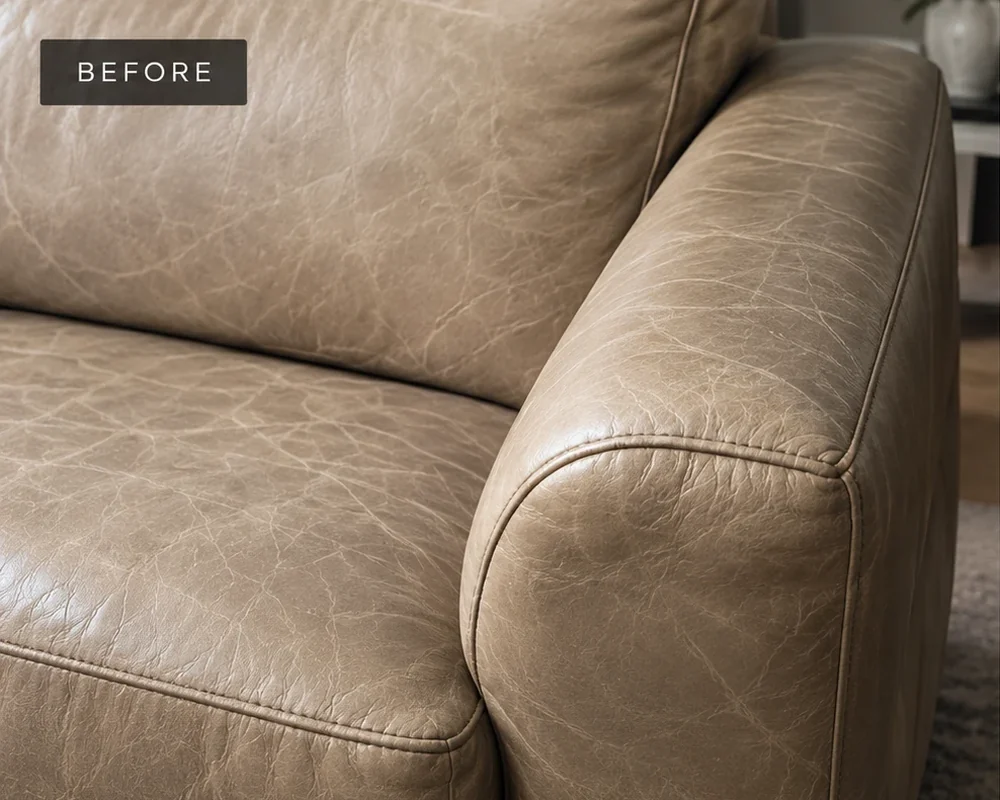
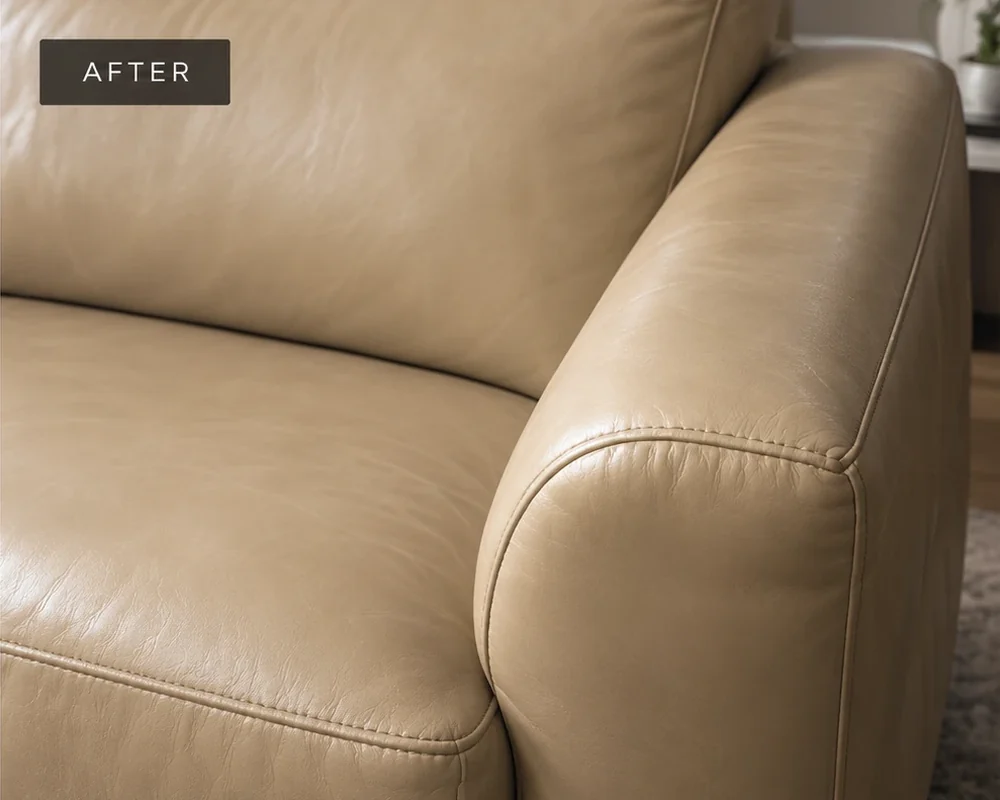
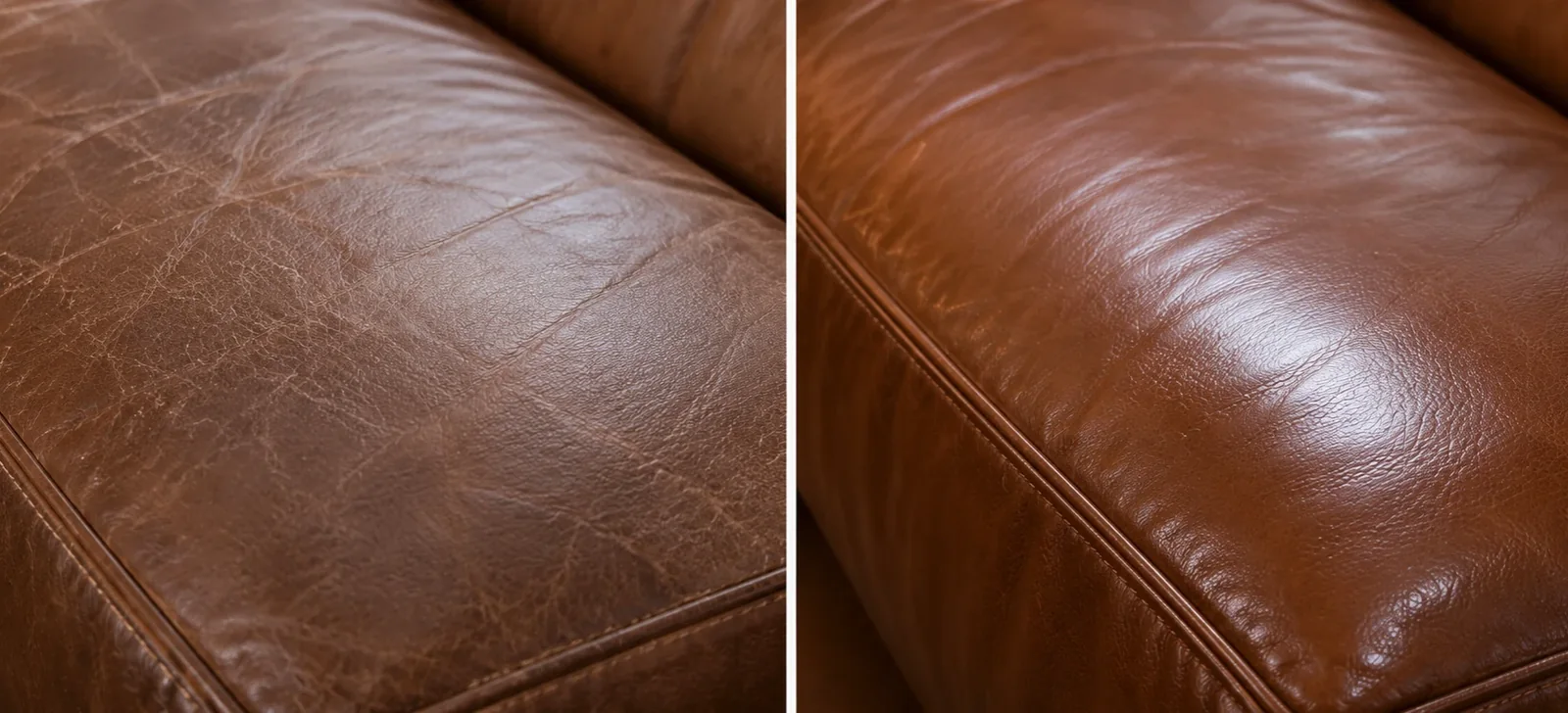
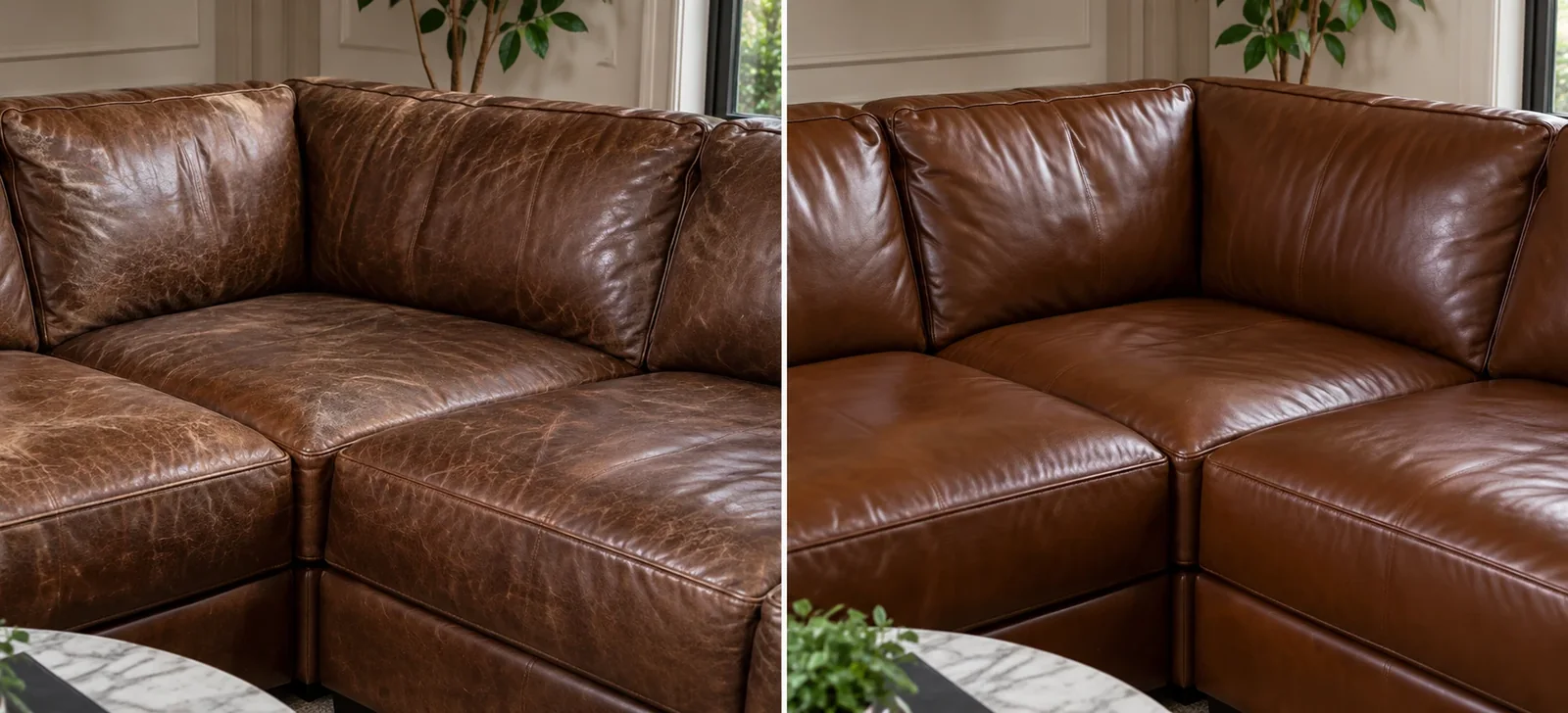
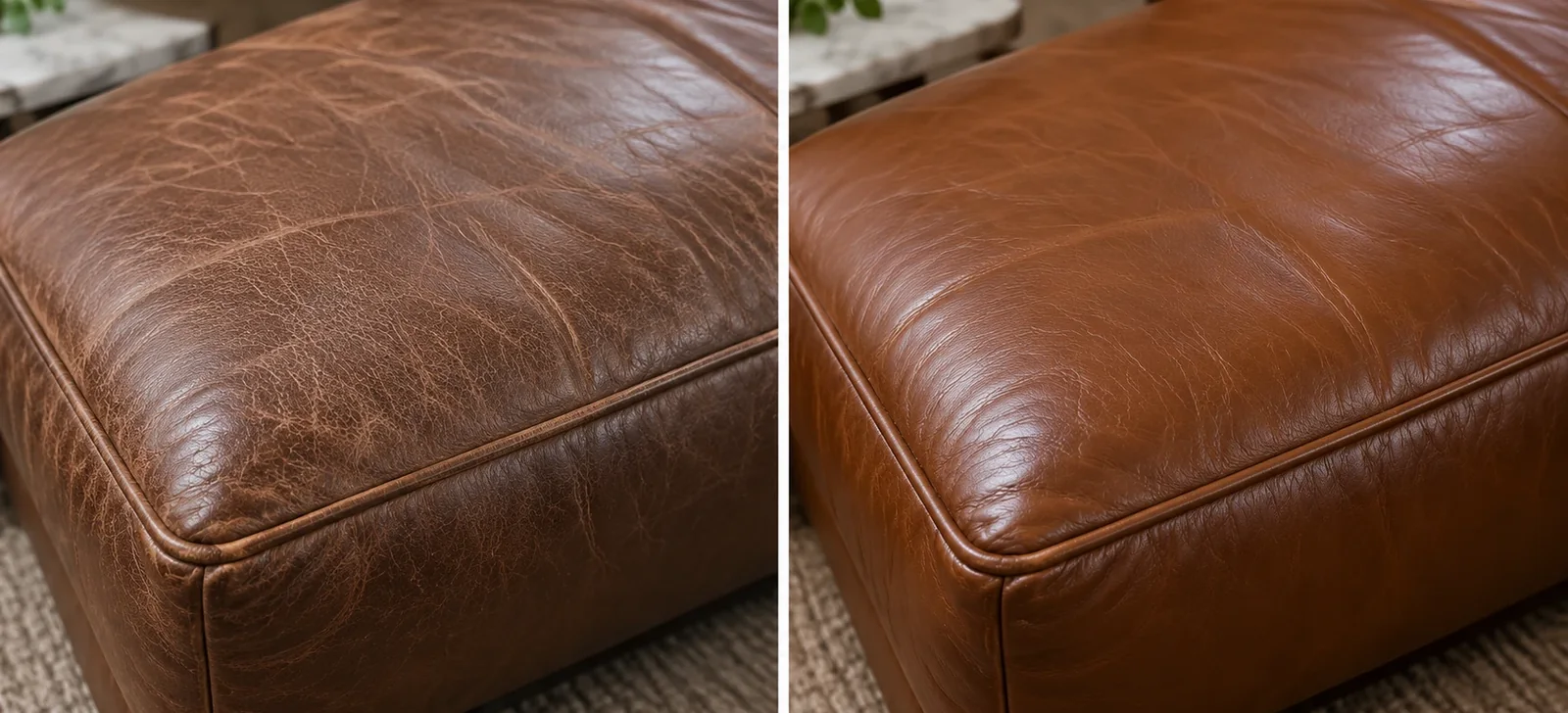
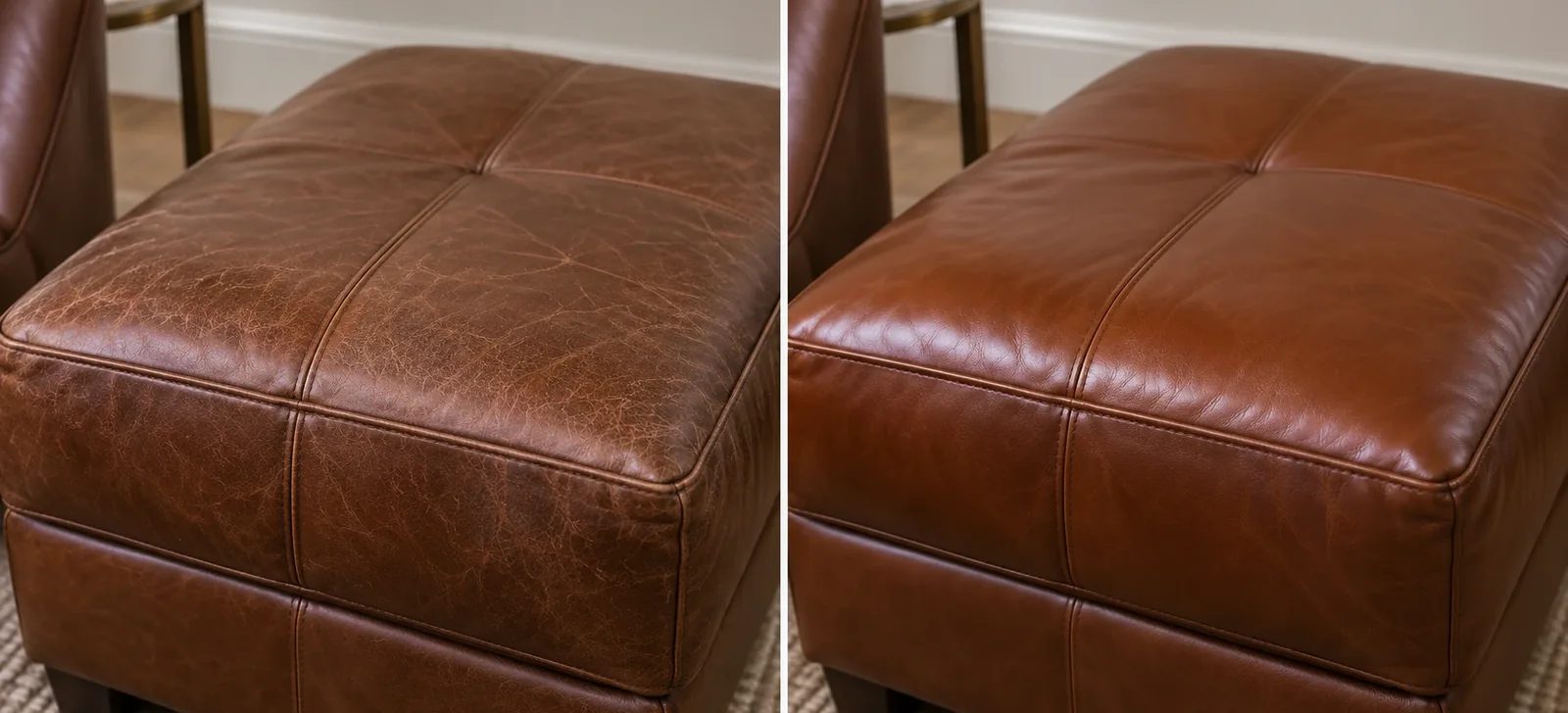
Notice the difference
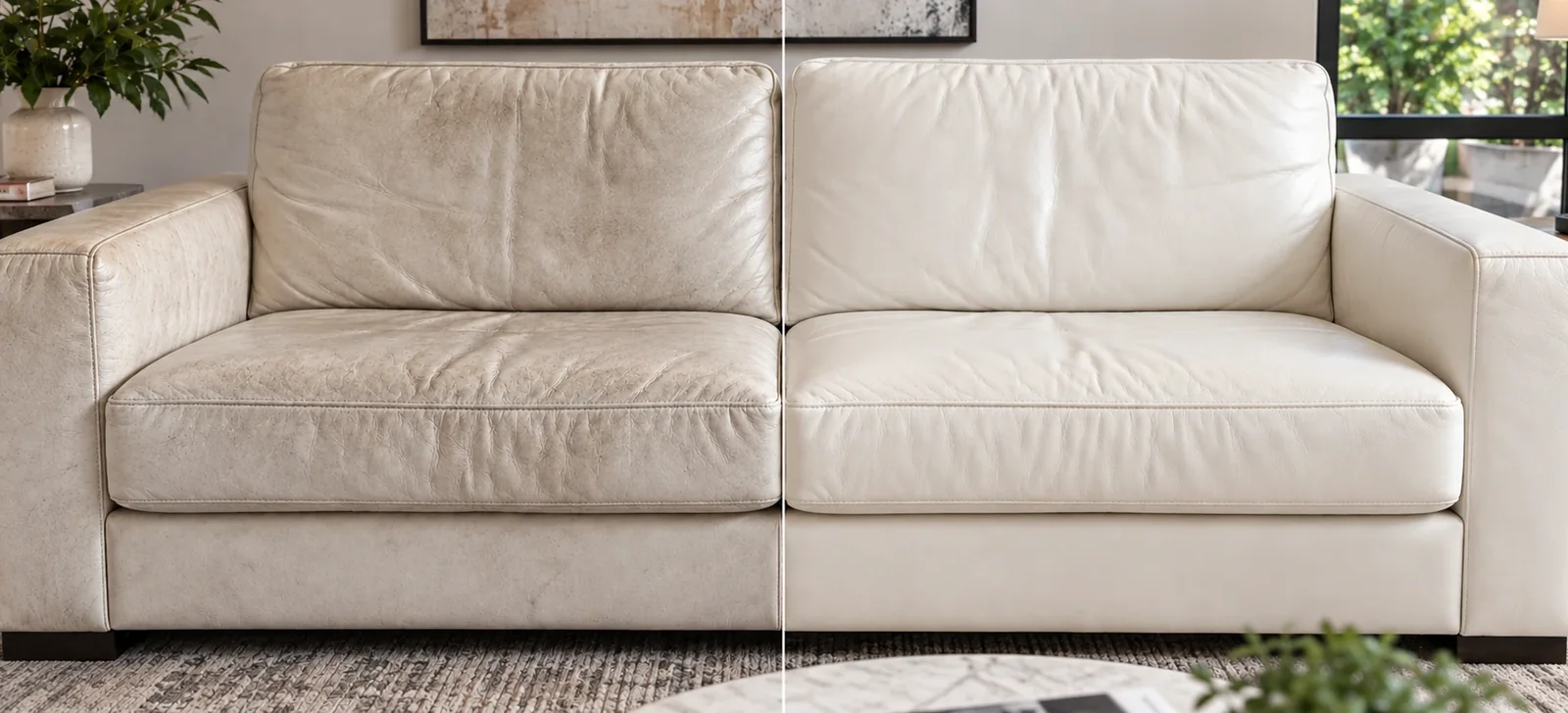
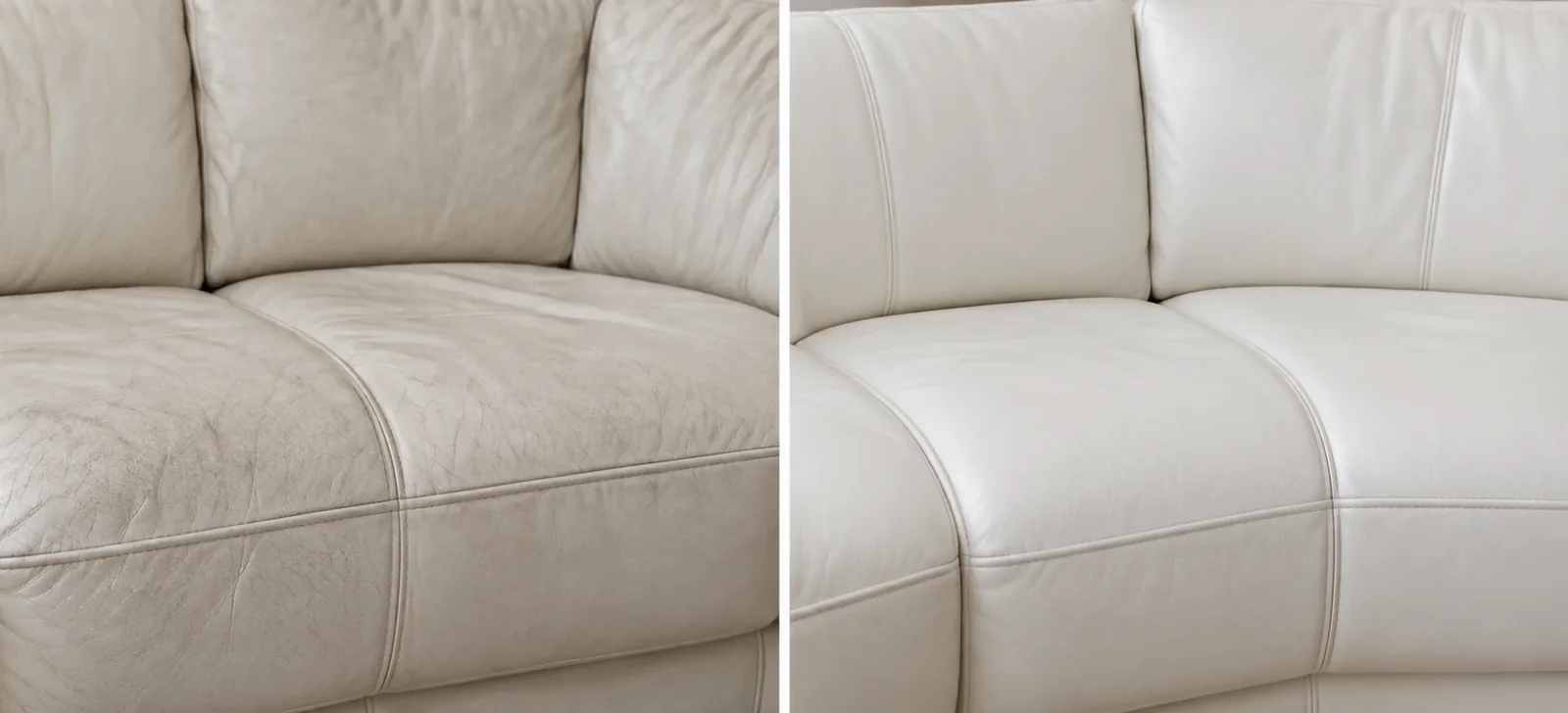
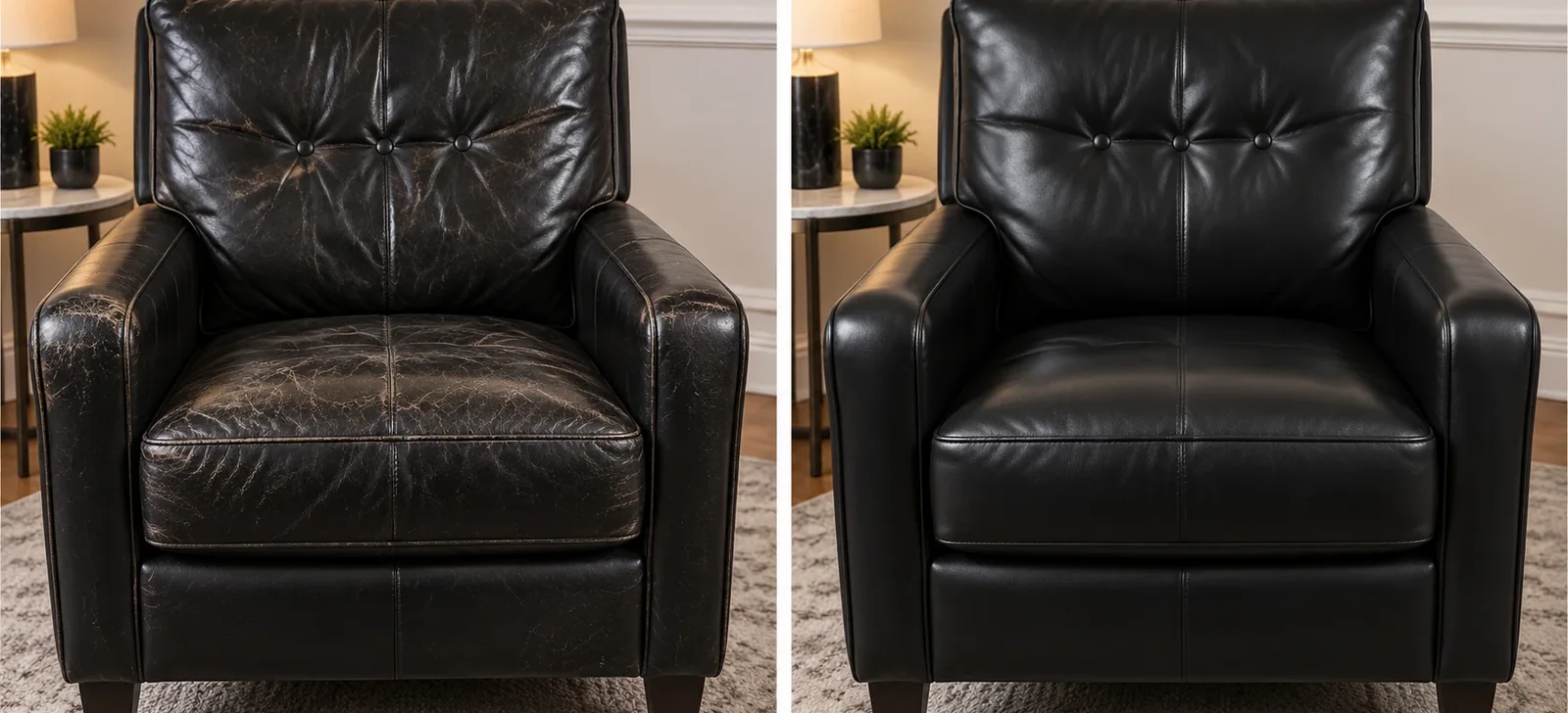
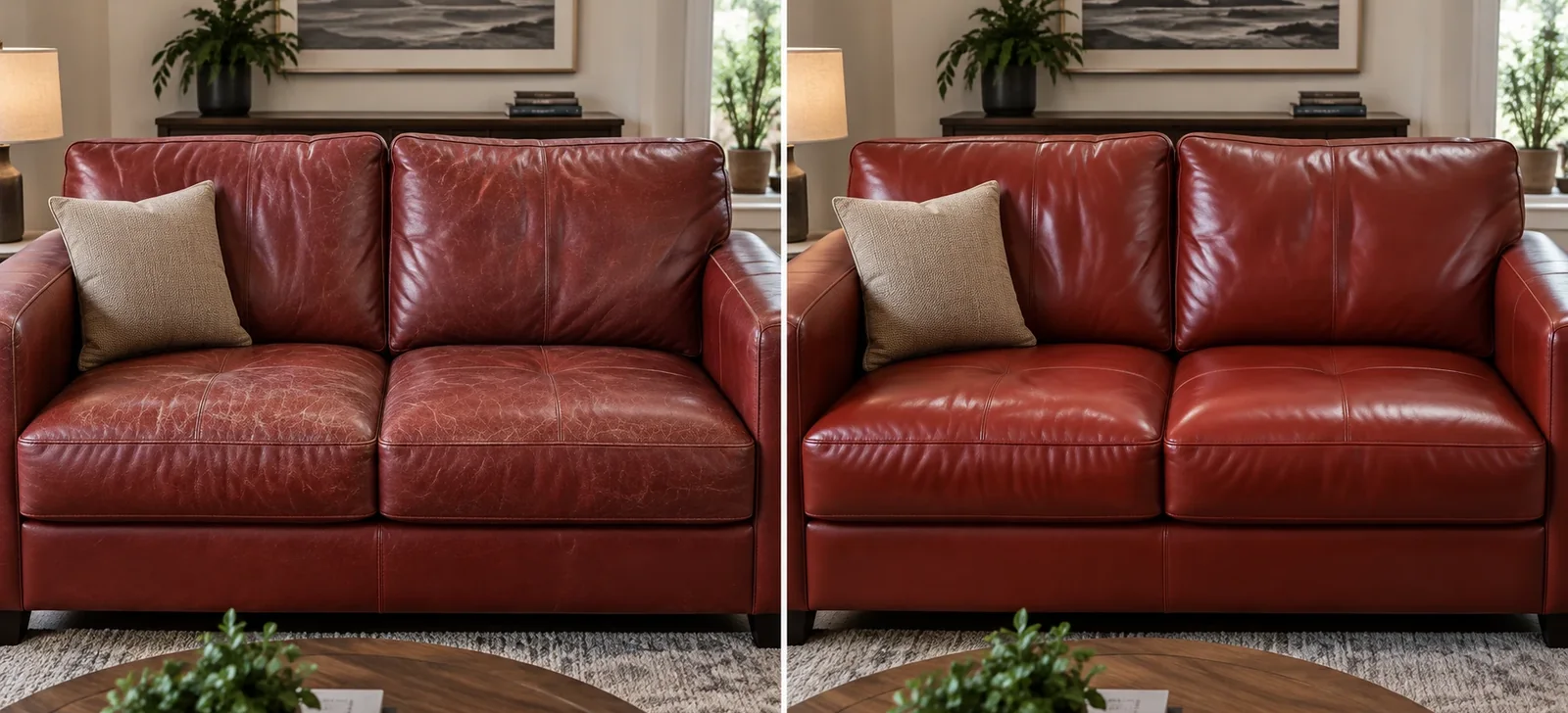
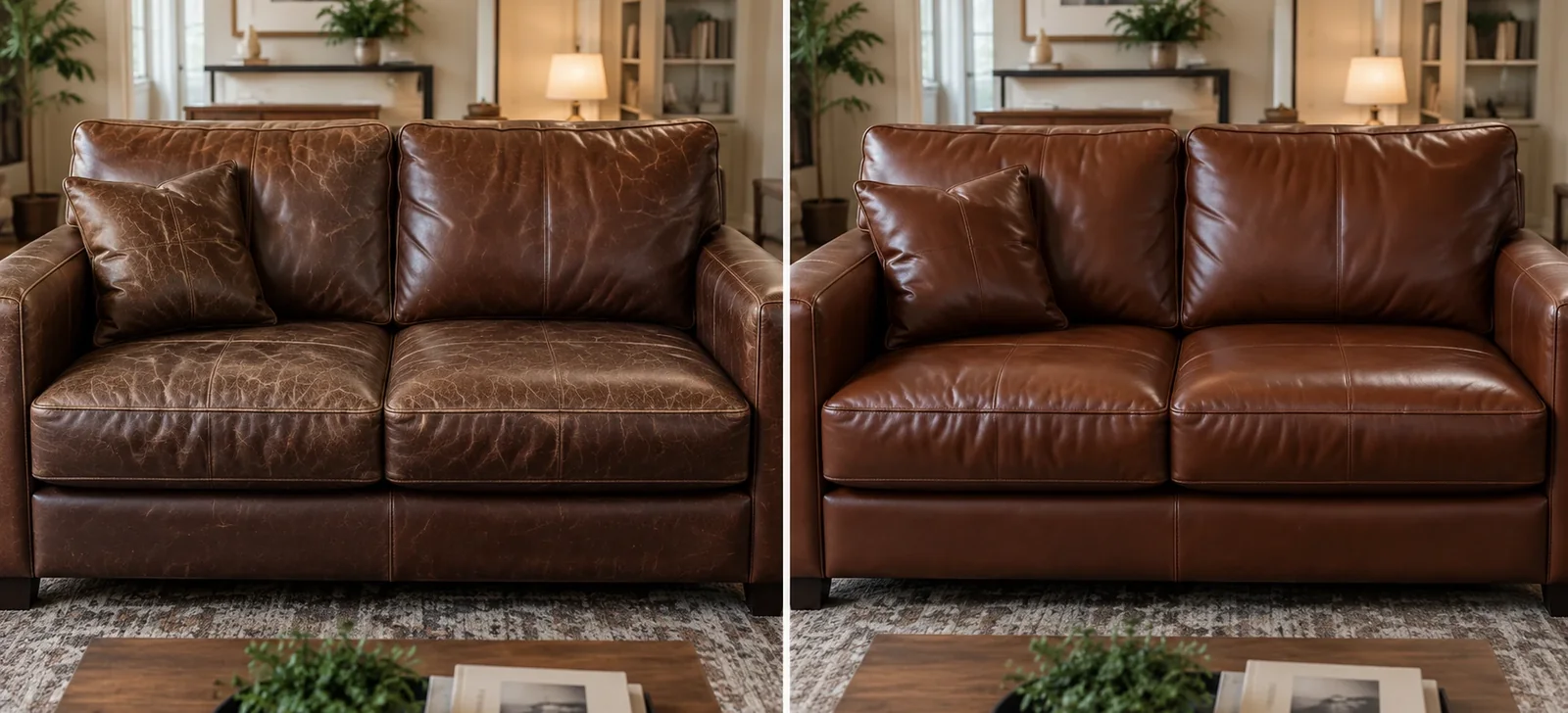
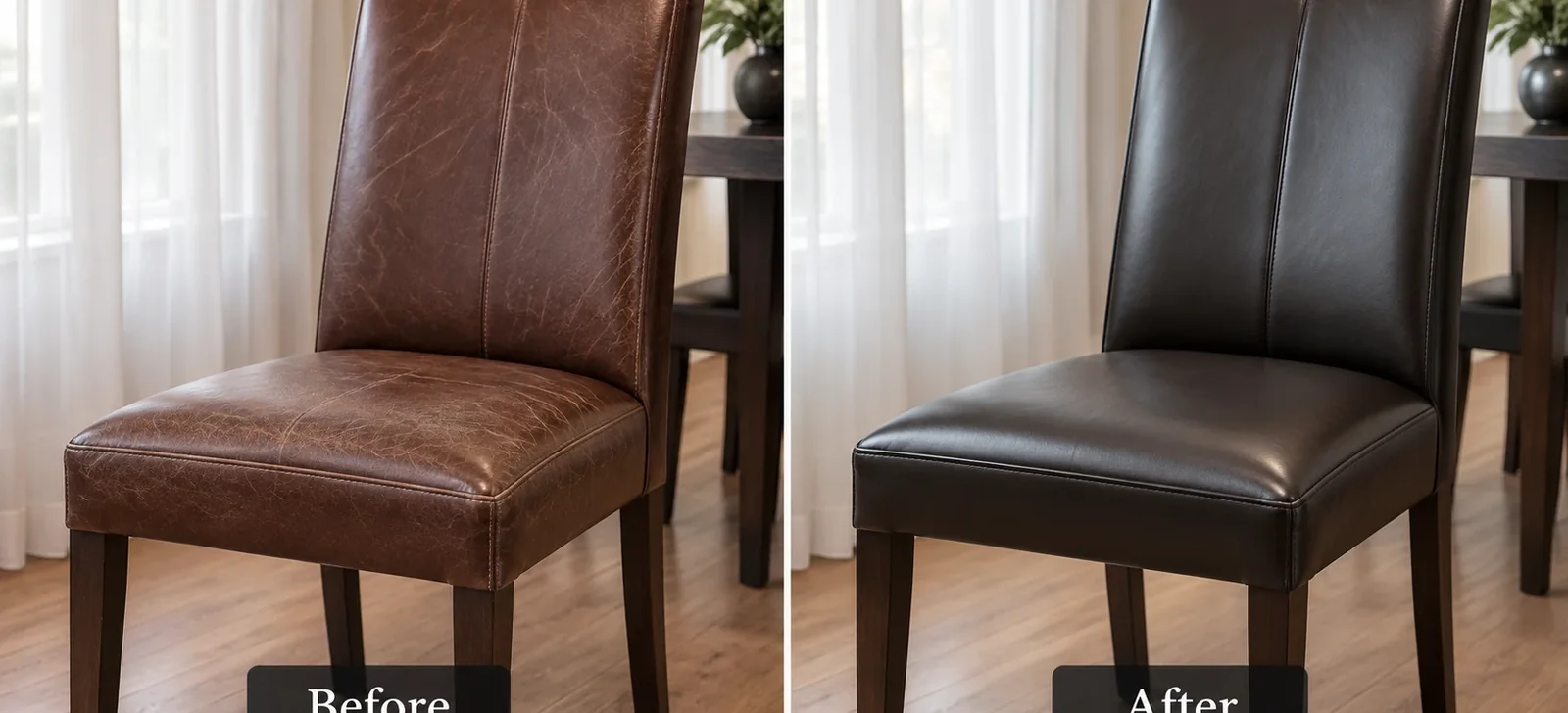
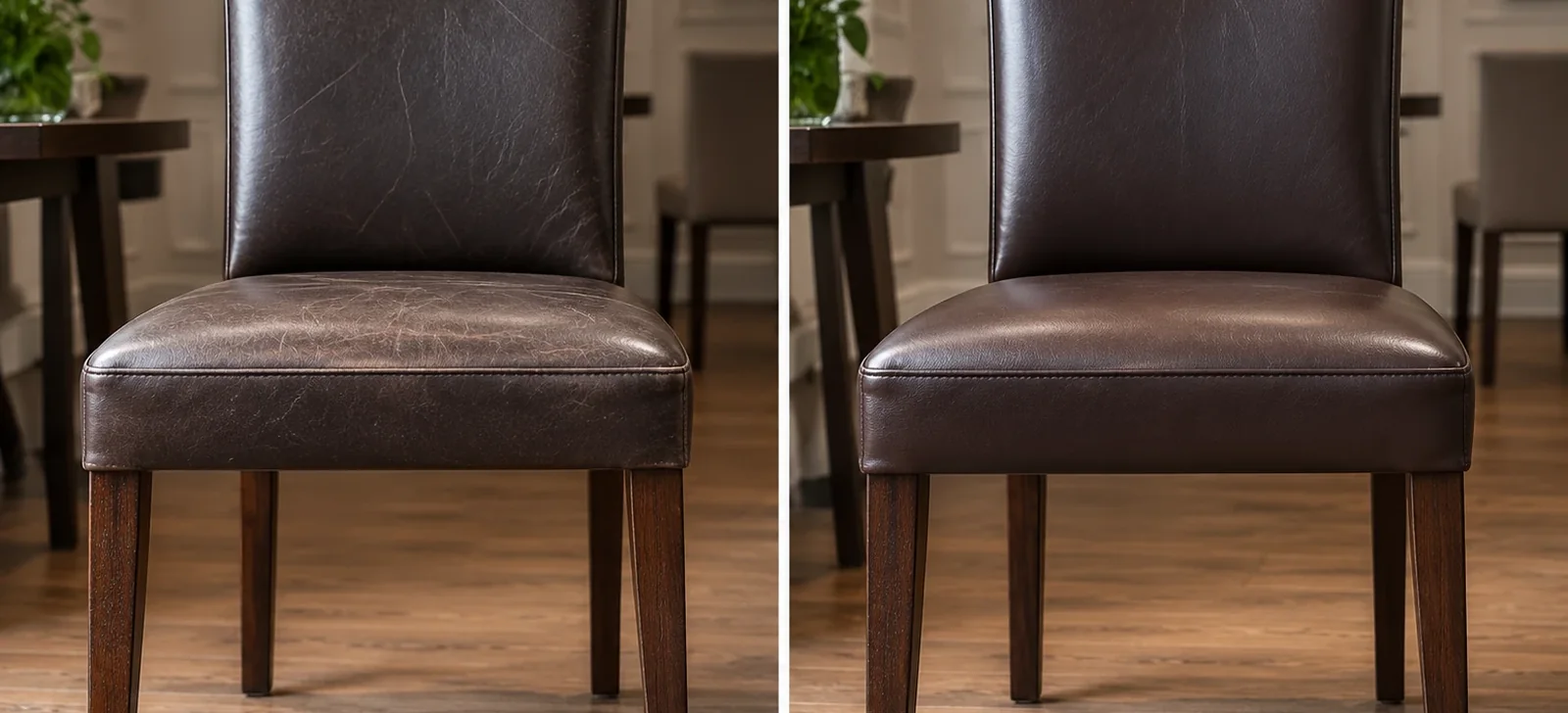
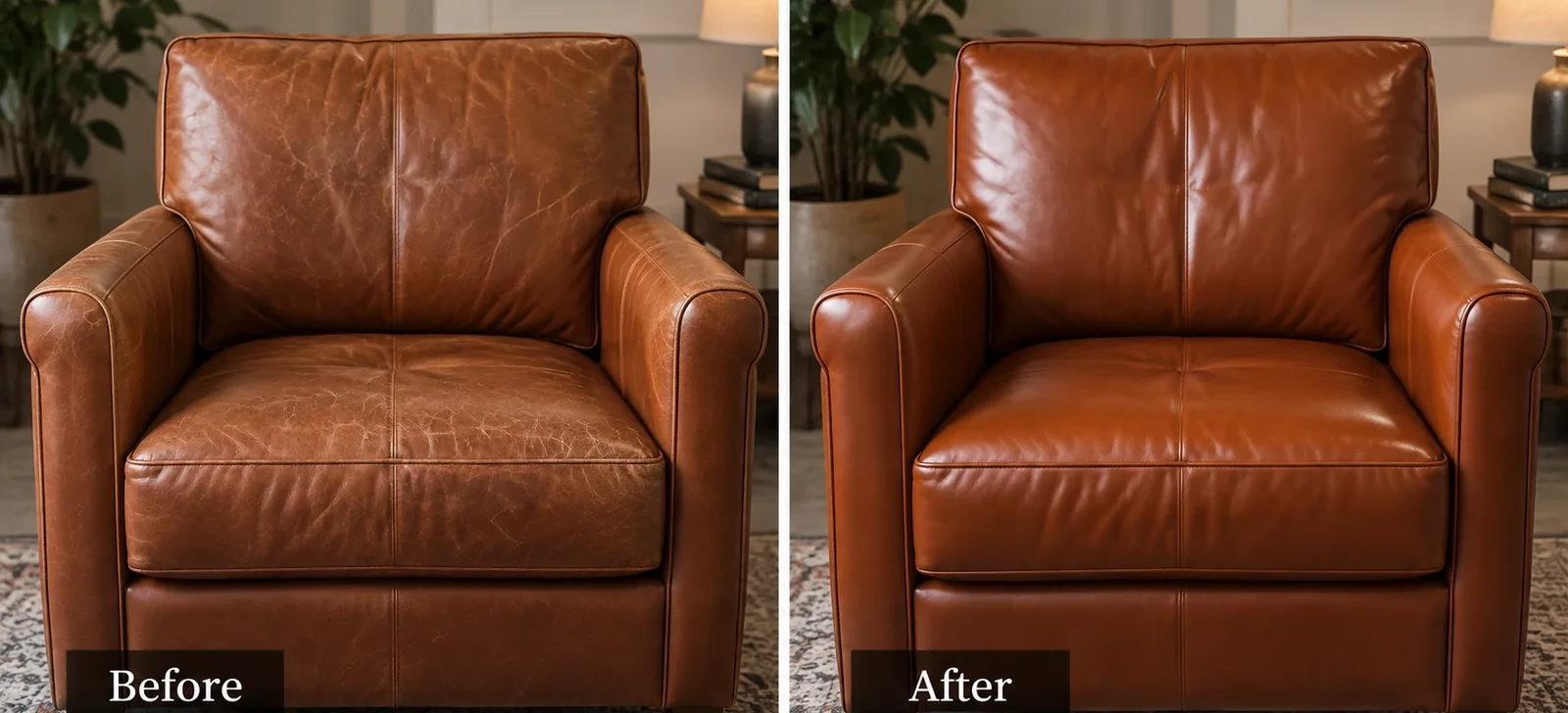
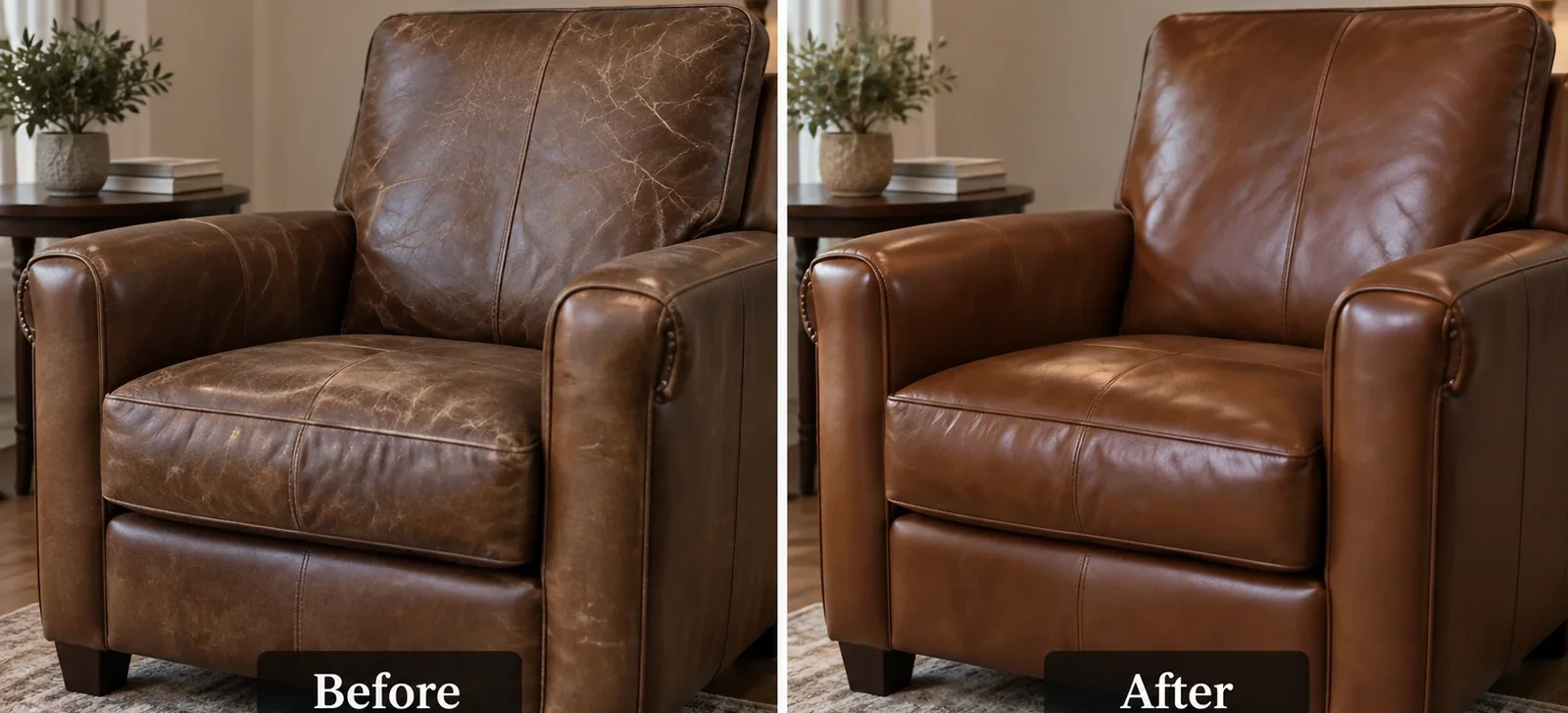
Softness comes back, the chalky cast goes, and the colour reads deep again. Same sofa, healthier hide.
An aniline sofa that spent two winters beside a radiator
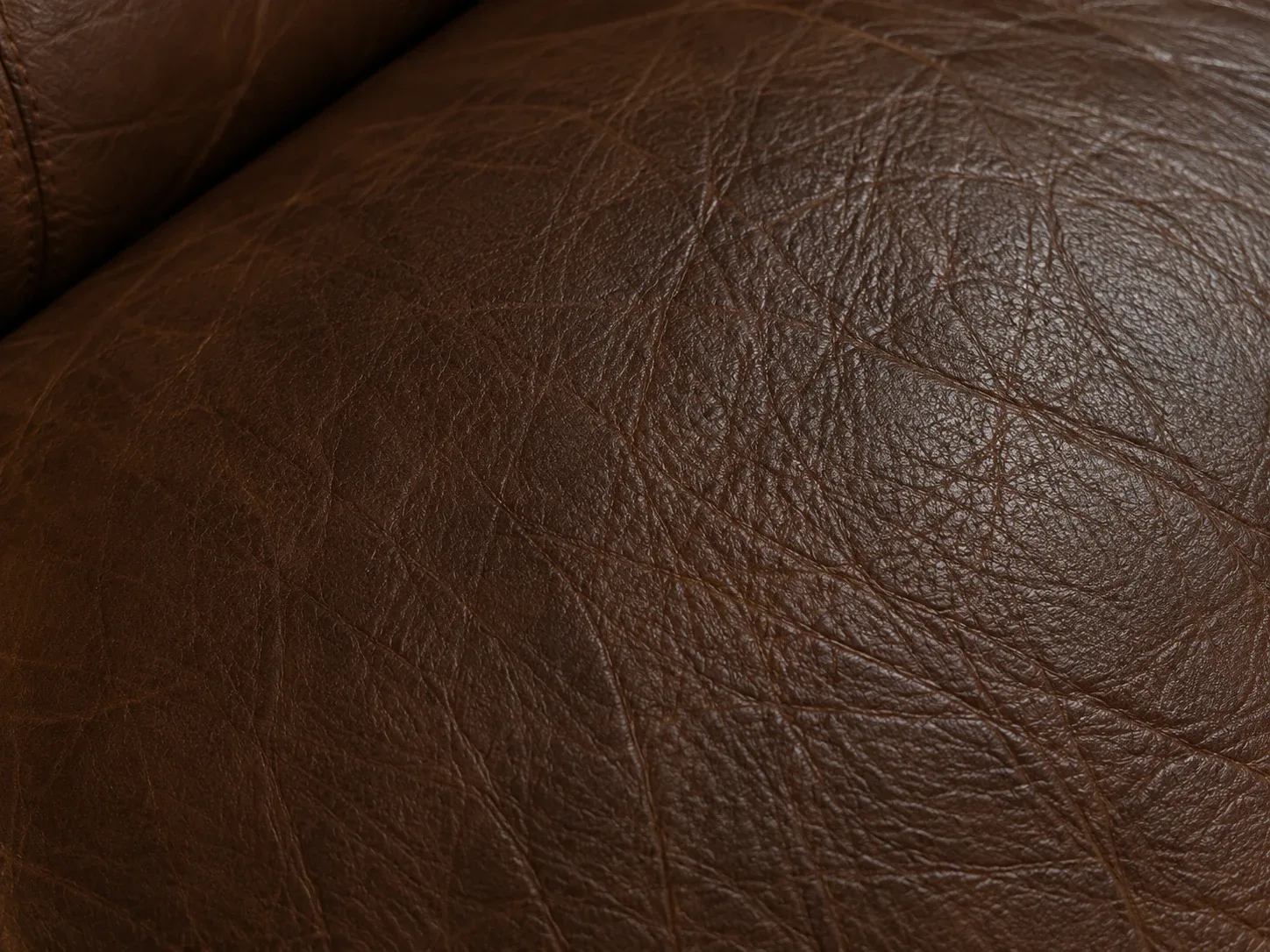
Read the piece before opening anything
The back panels were still supple; the radiator-side cushions had gone stiff. A drop test darkened on contact: aniline.
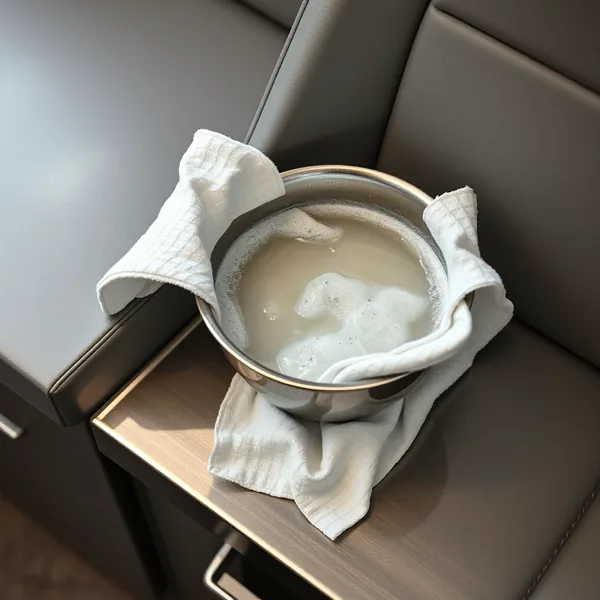
Clean first, or seal the dirt in
Conditioner over body oil traps it under the surface. pH-neutral clean, dried, left overnight.
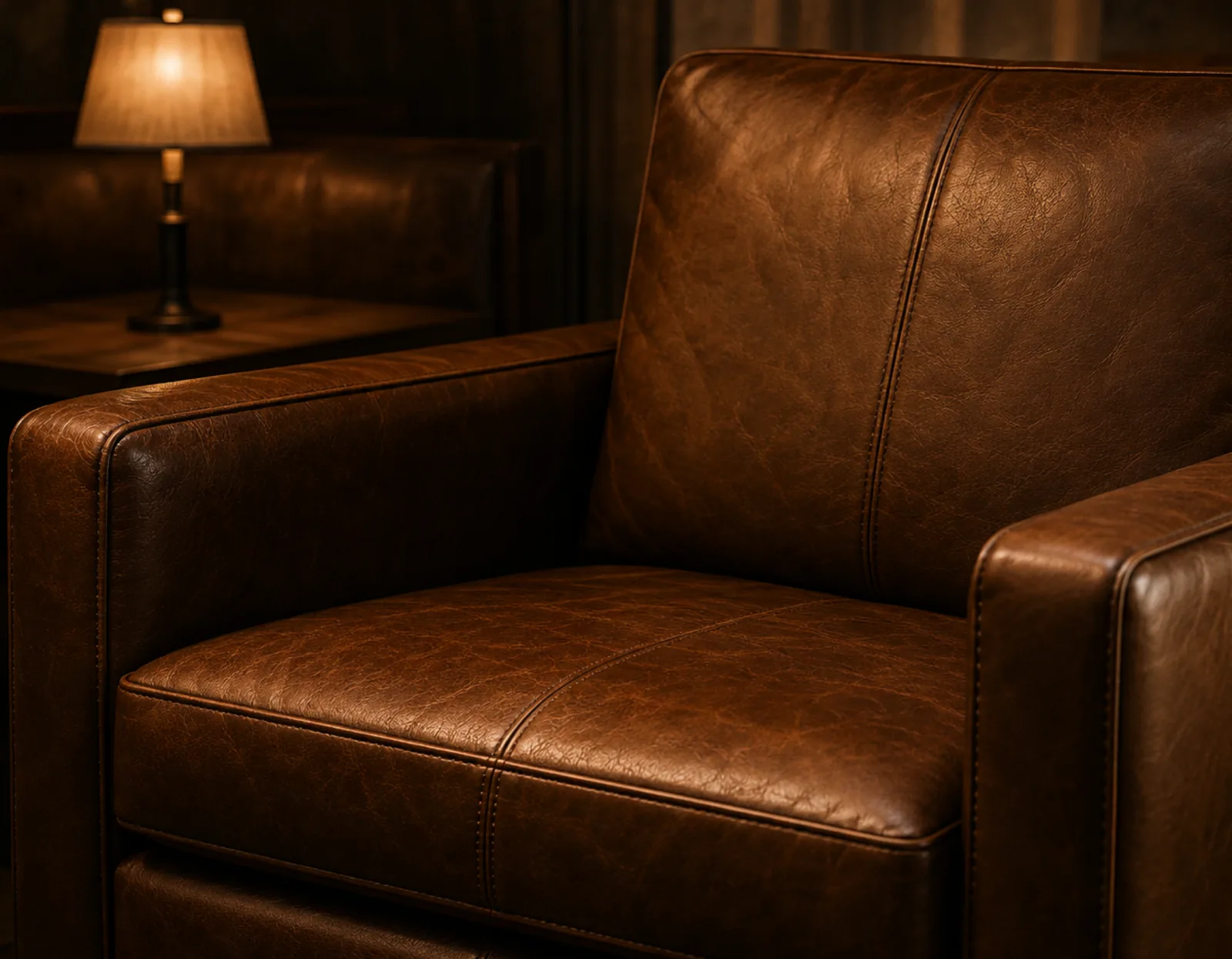
Feed it in thin coats, hours apart
Three light passes worked into the creases by hand. One heavy coat on aniline never evens out.
Before and after, in customers' rooms
Left half before, right half after. All of it leather conditioning, done in the room. More finished work.