
Leather Crack Repair
The finish fails where the hide keeps bending. The hide underneath is usually still sound, which is why leather crack repair rebuilds the panel where it stands.
Common Leather Cracks
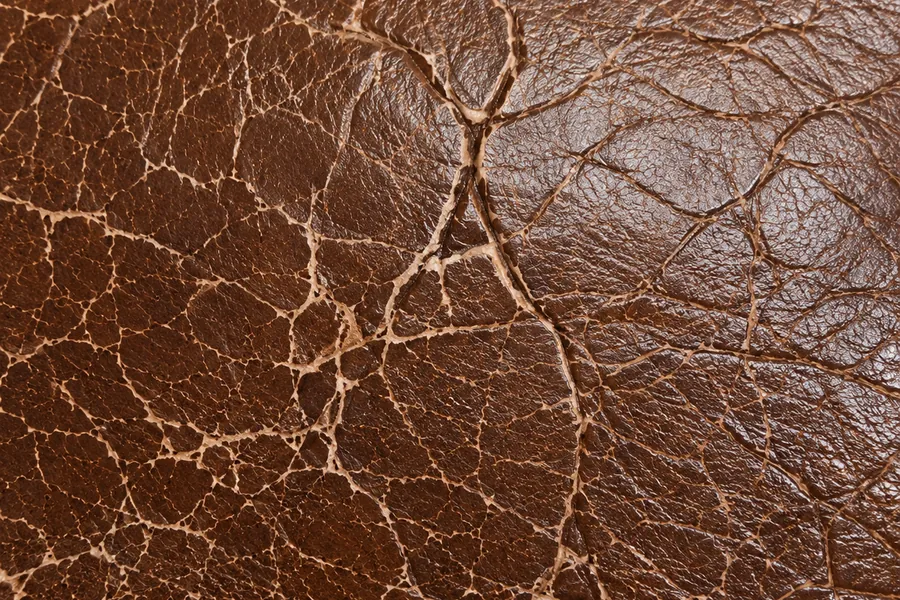
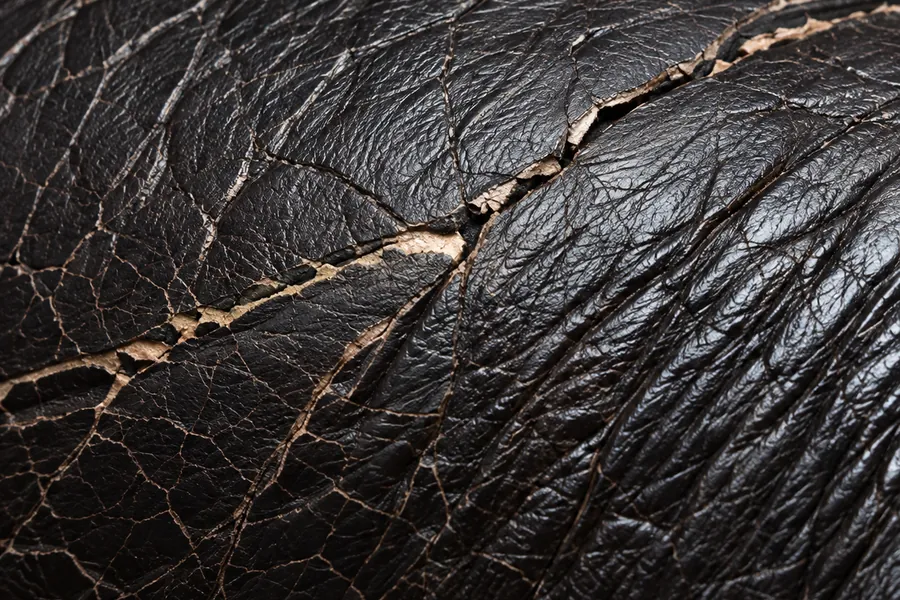
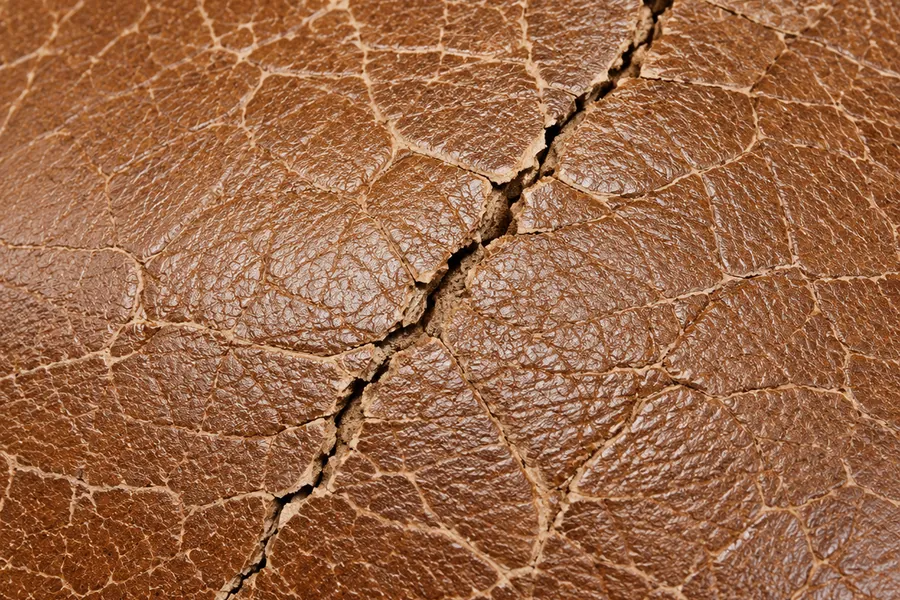

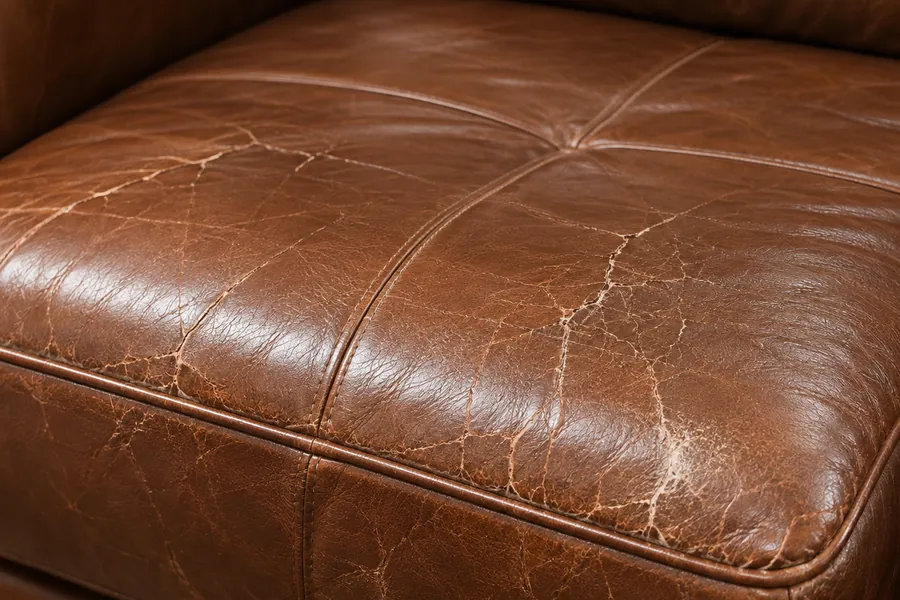
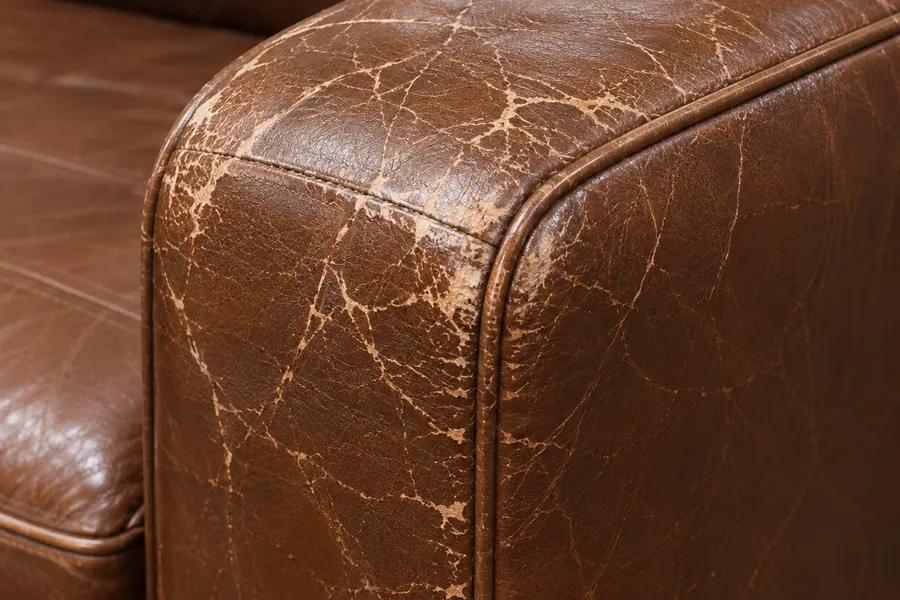
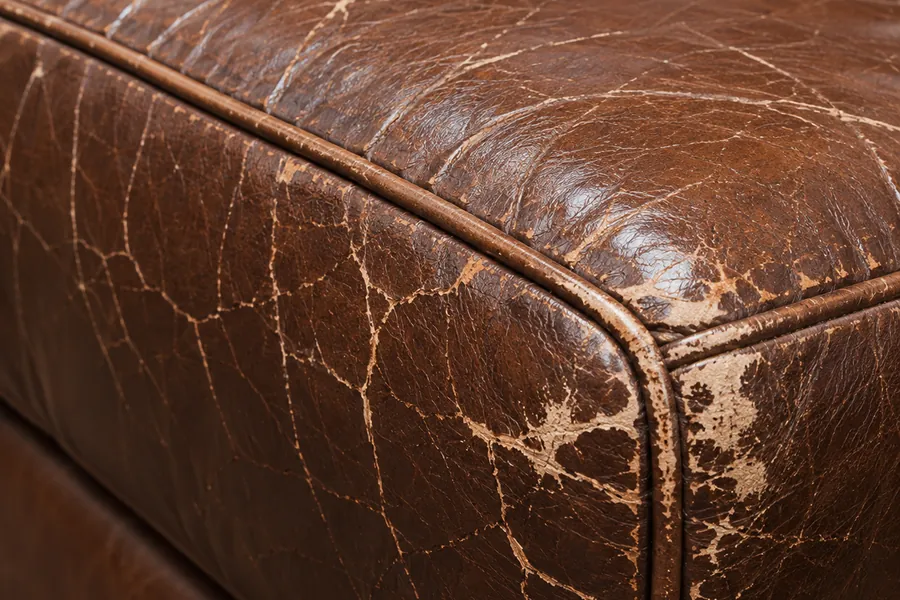
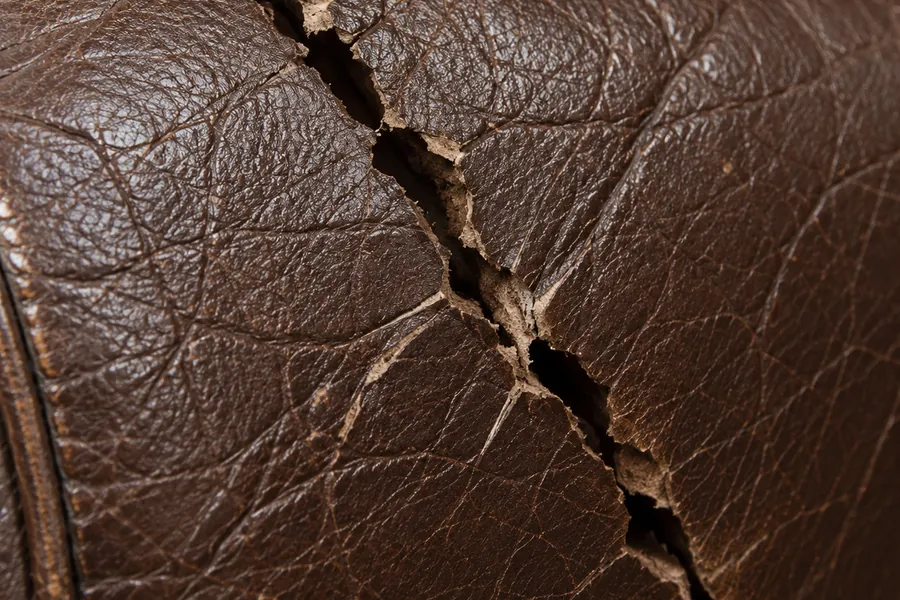
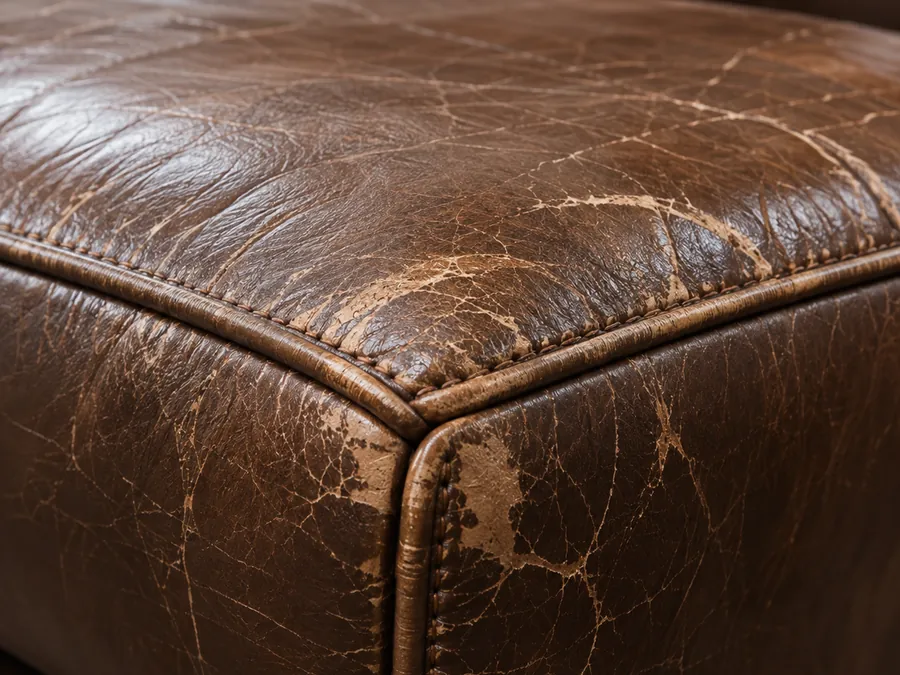
Cracked leather is not one condition — it is four
A progression that does not skip steps. Where your piece sits decides how much finish comes off, and every leather crack repair starts there.
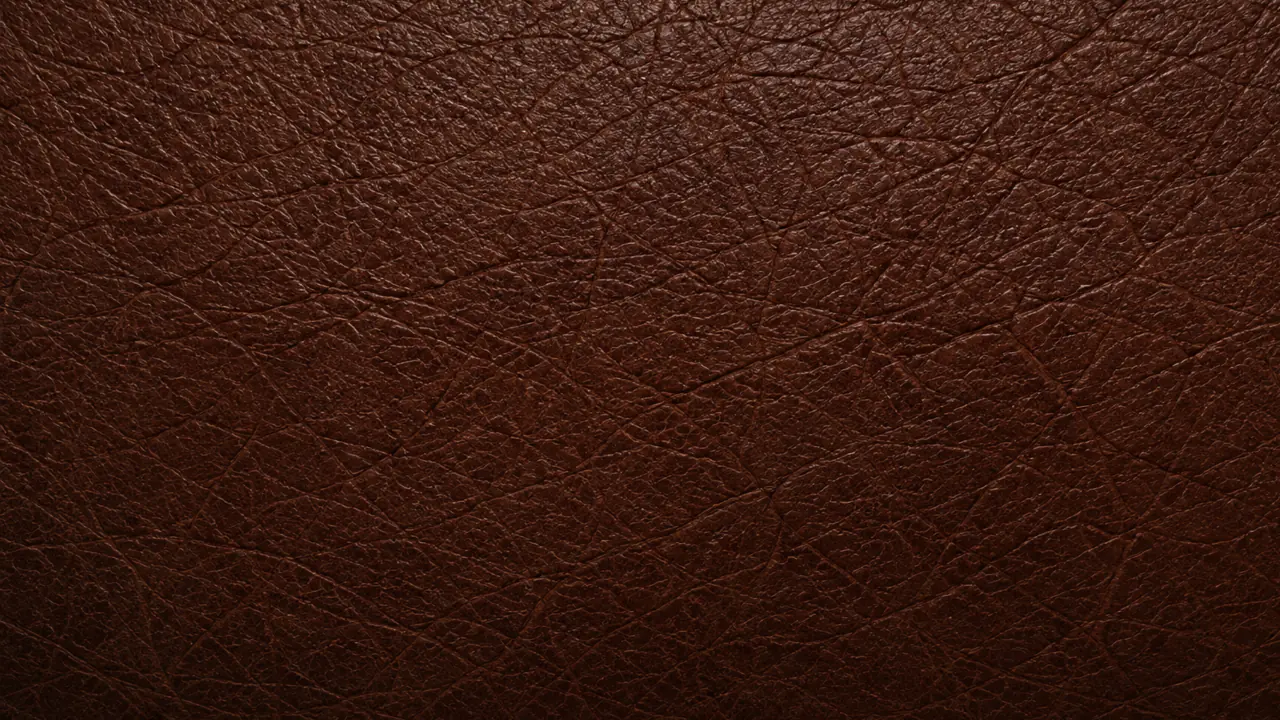
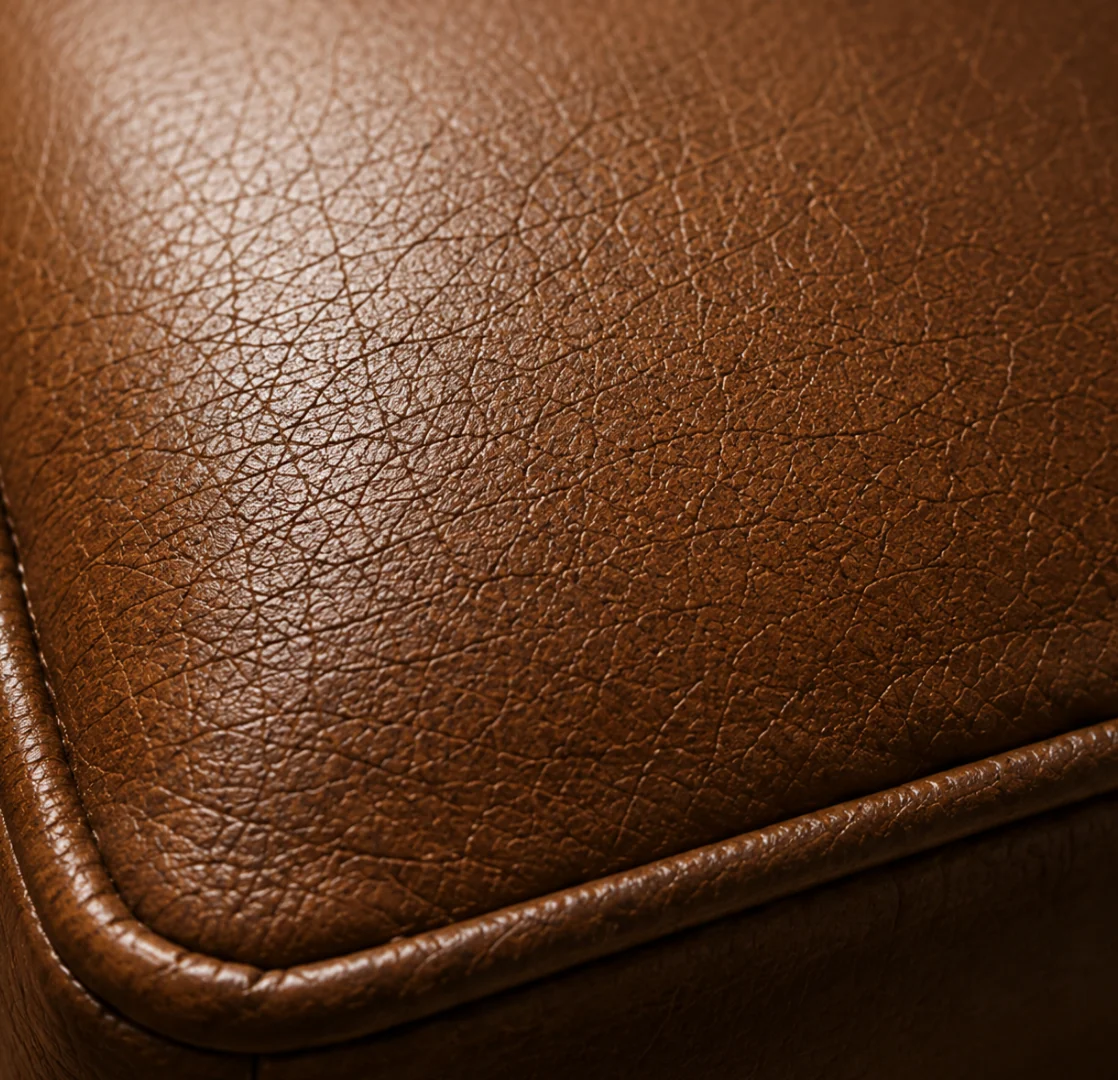
Crazing
A fine web in the topcoat, visible only at an angle. Nothing has opened yet — the cheapest this ever gets.
Open cracks
The web has split. Crack floors read paler than the surface, so filling comes before any colour.
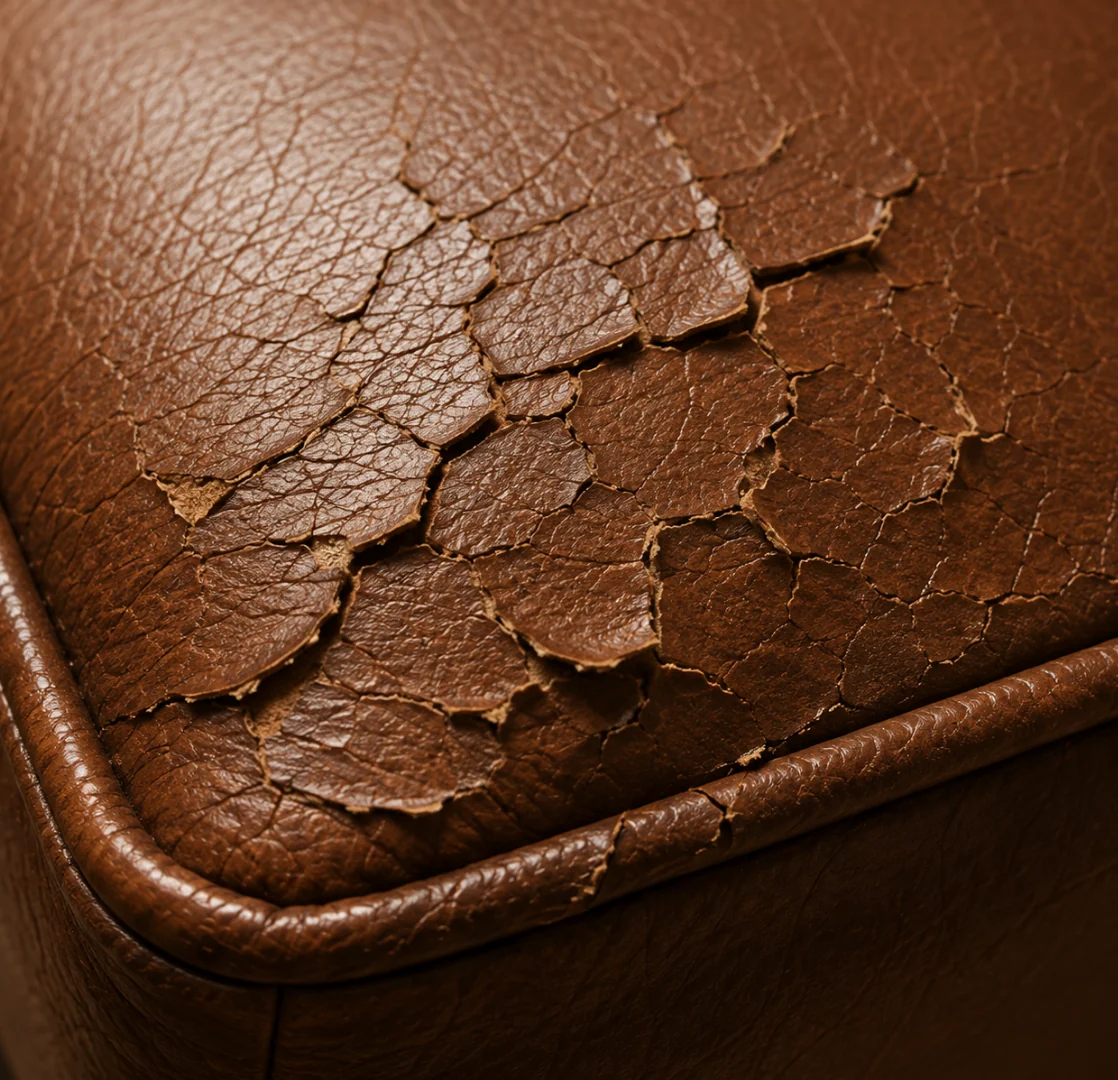
Lifting edges
The crack edges have released. Press one and it moves, so the loose coating is stripped back first.
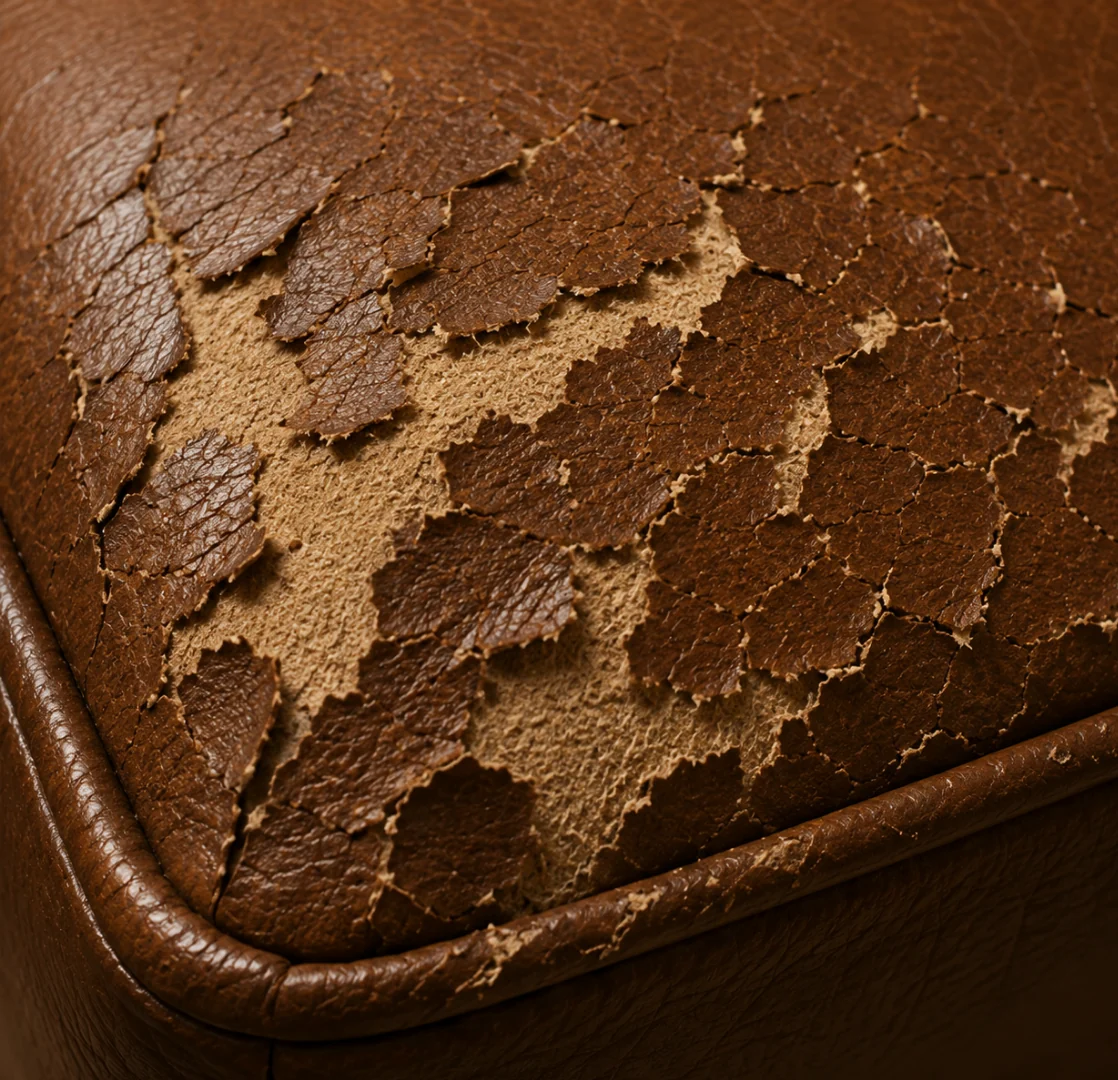
Flaking away
Something paler shows through. On real leather that is hide and it is saveable; on bonded leather it is backing.
Crack vs. scratch vs. peeling
Three faults that look alike in a phone photo. The shape of the mark tells you which leather crack repair question you are asking.
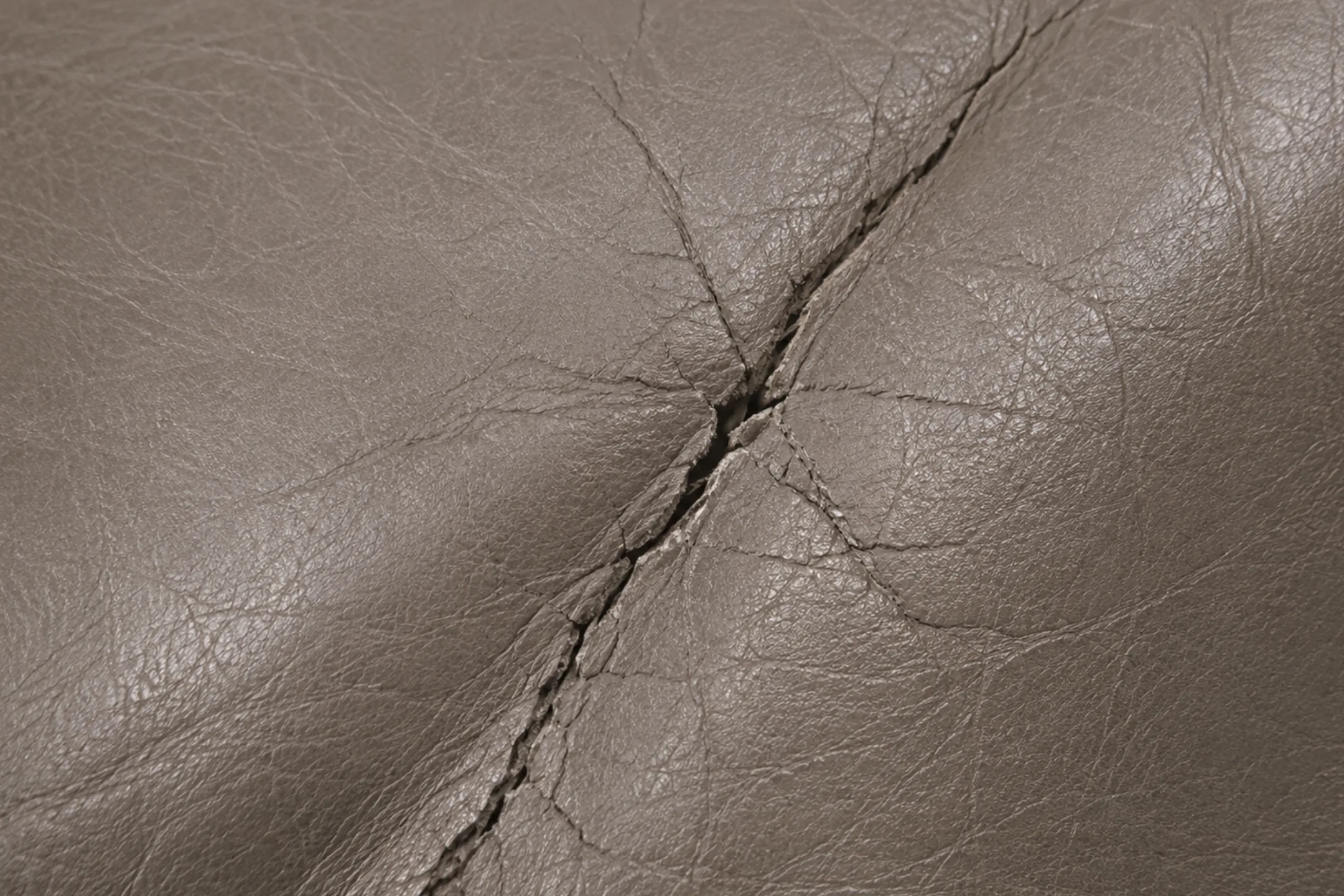
Fractures that branch. A spreading network of lines, heaviest where the panel folds.
You are on this page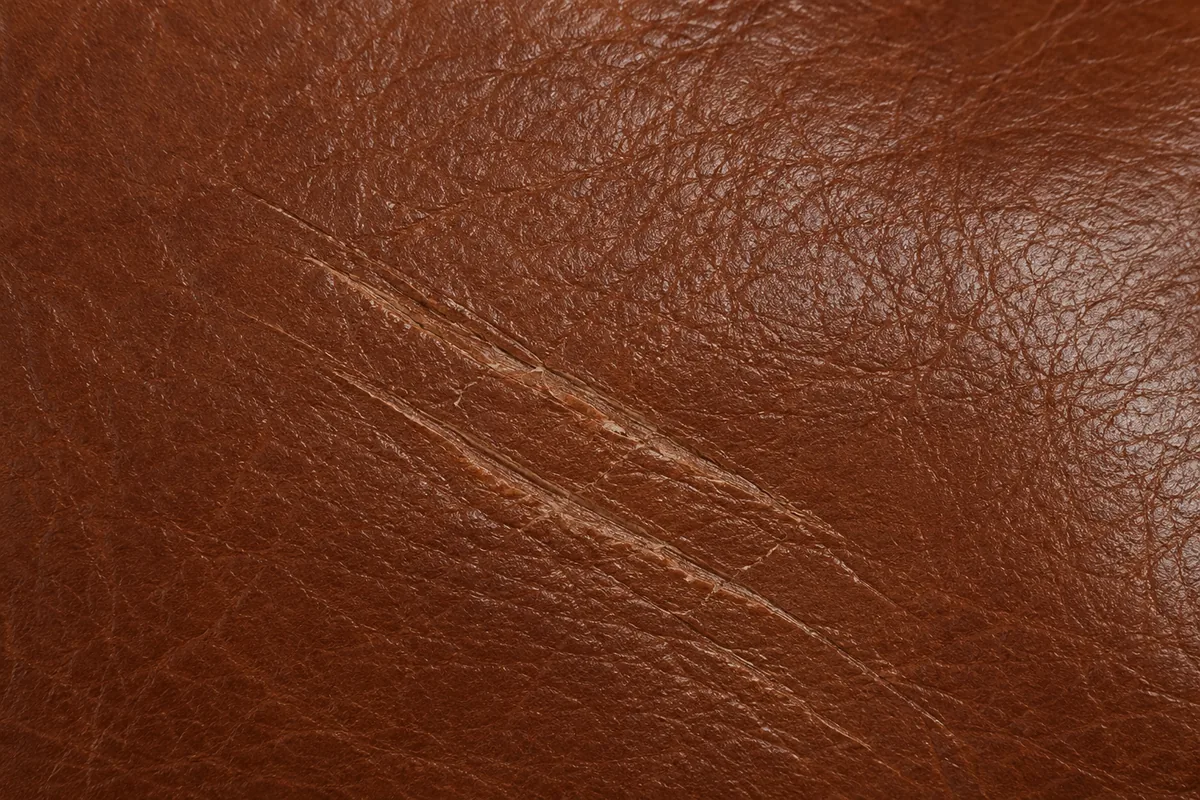
One defined, narrow line with a direction to it. The leather either side is sound.
Leather scratch repair →The coating is lifting off — edges you can catch a fingernail under, flakes on the cushion.
Also this pageHigh-wear zones
Cracking arrives in the same five places on almost every sofa.
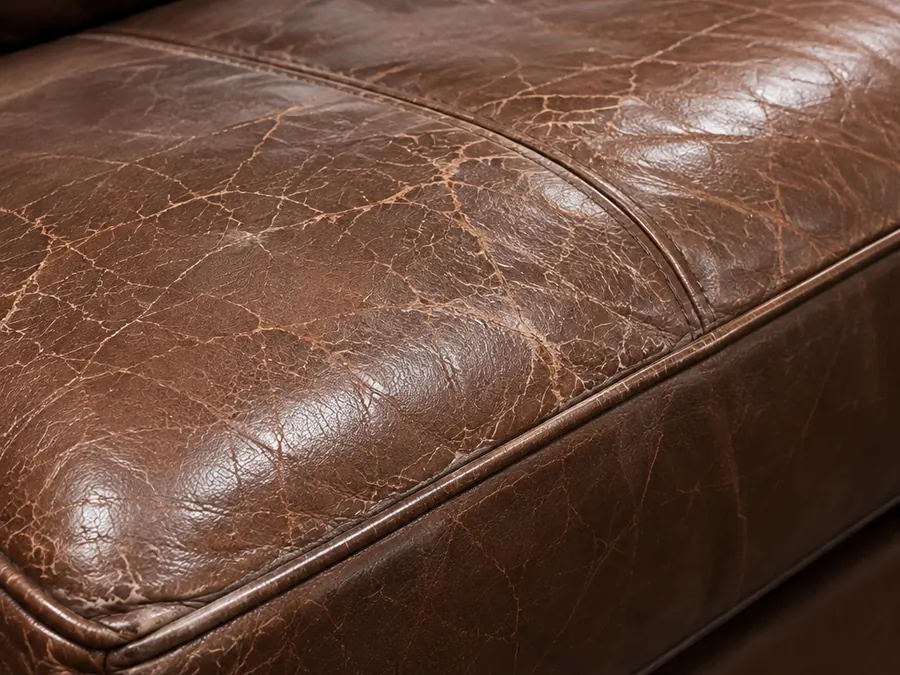
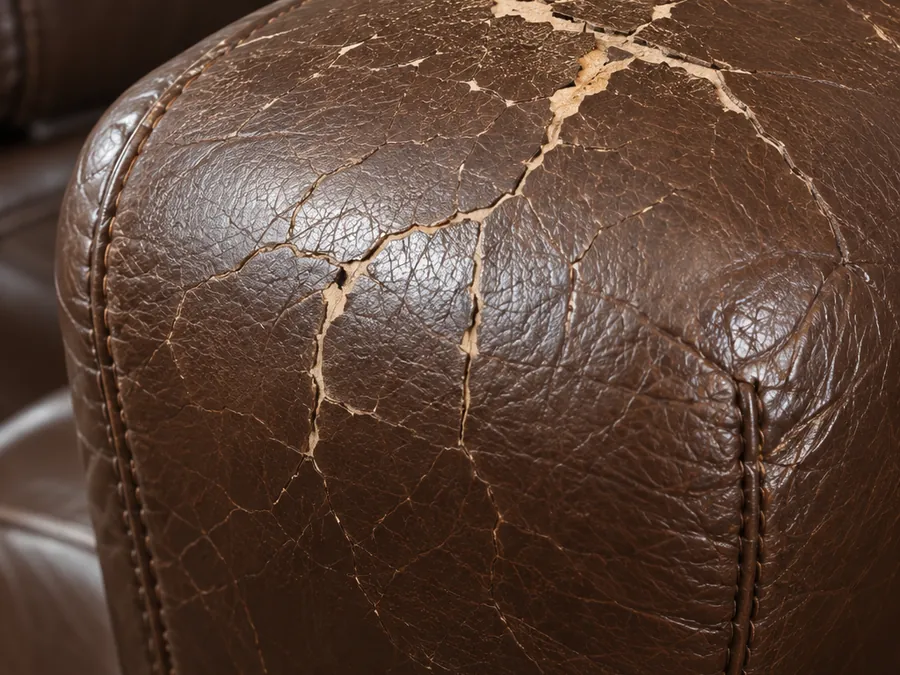
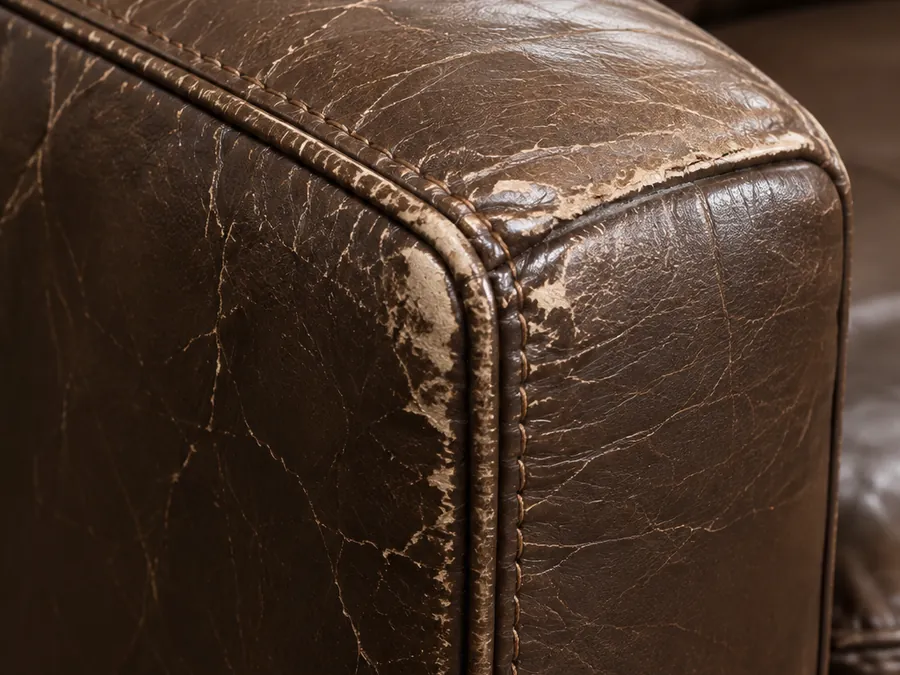
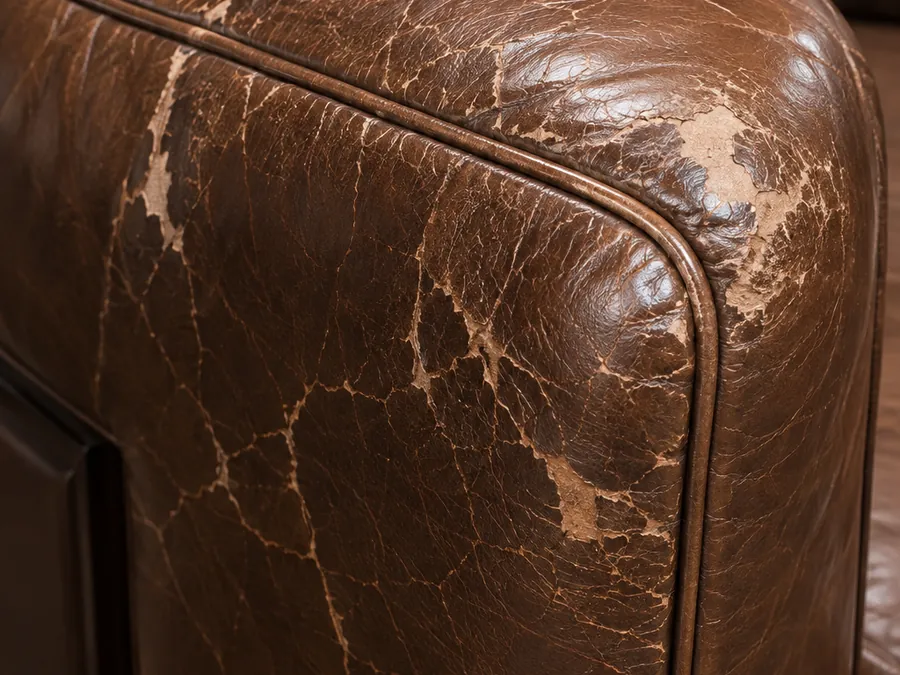
Leather cracks where it bends, not where it wears
The finish is a flexible film, and it survives by moving with the hide. A dry hide stops curving and folds instead. No film follows a fold.
So it lands on seat cushions and front edges, never an outside back. It is also why conditioning closes every job — a rebuilt finish over a dry hide splits along the same folds.
Why leather cracks
Most cracked panels have more than one behind them. Naming yours is what stops a leather crack repair failing twice in the same place.
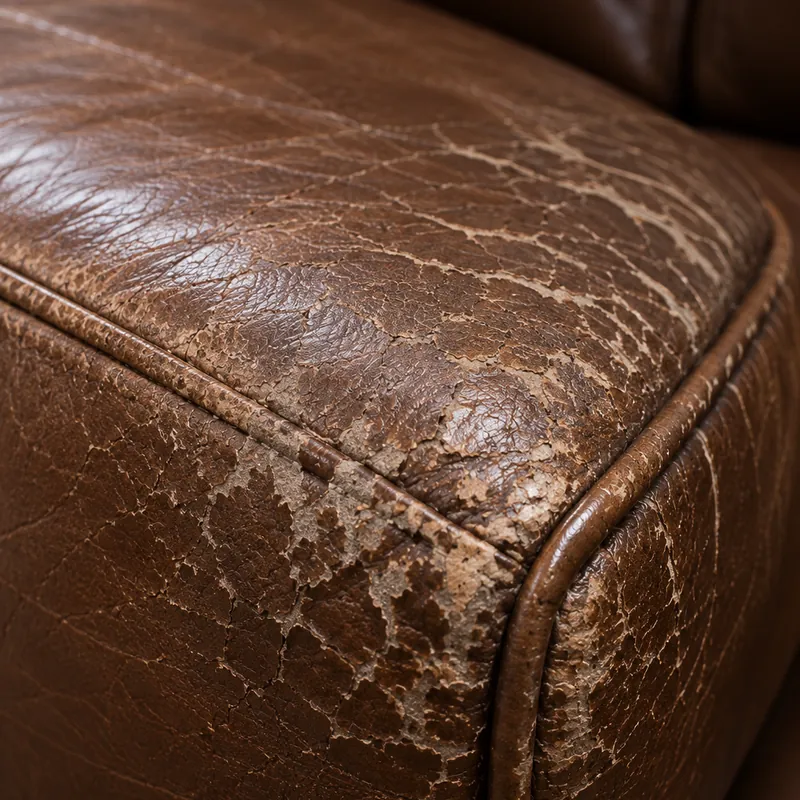
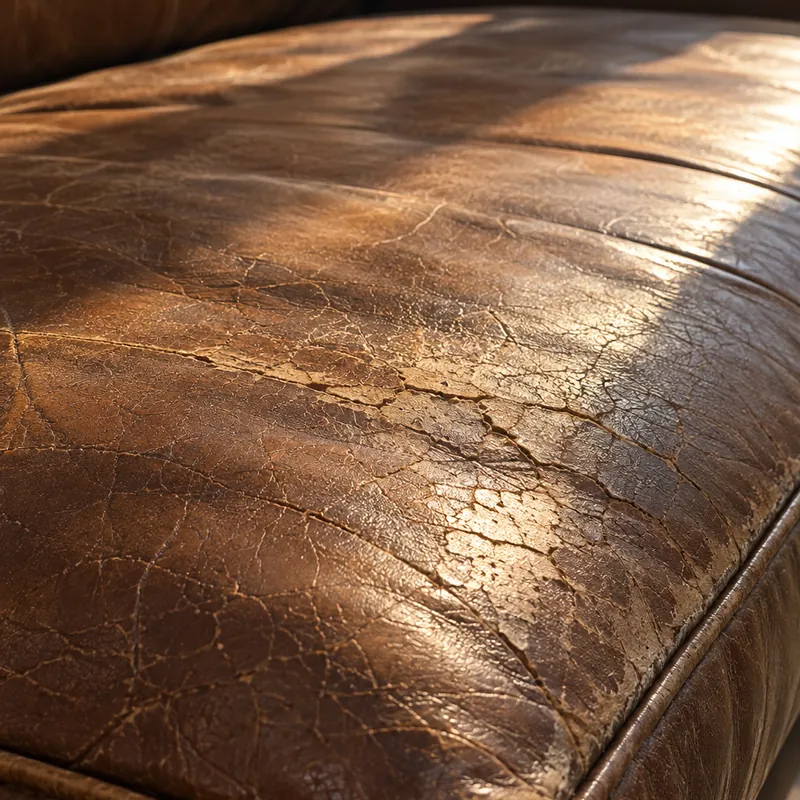
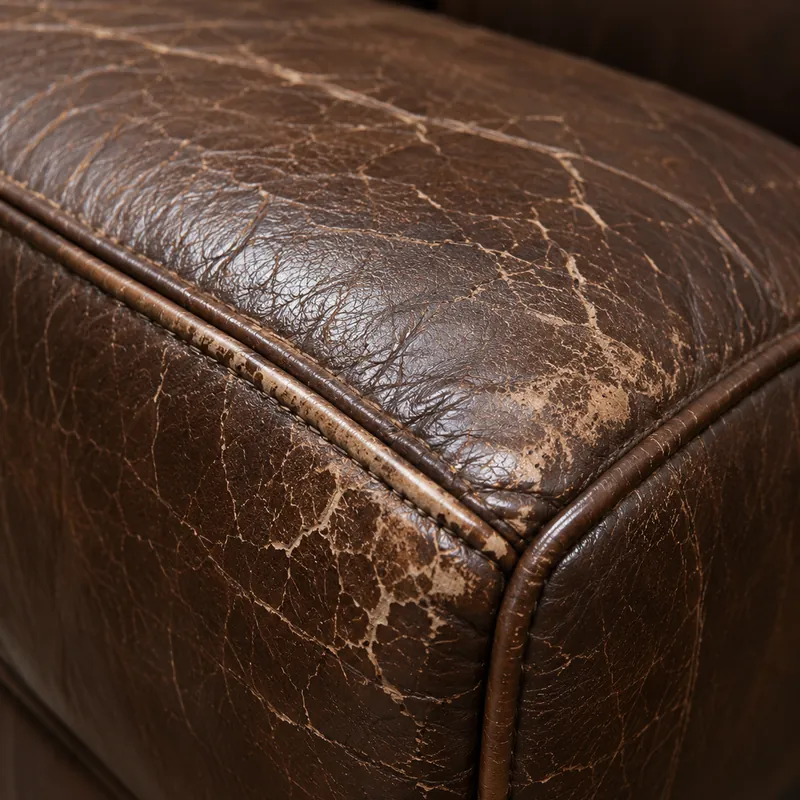
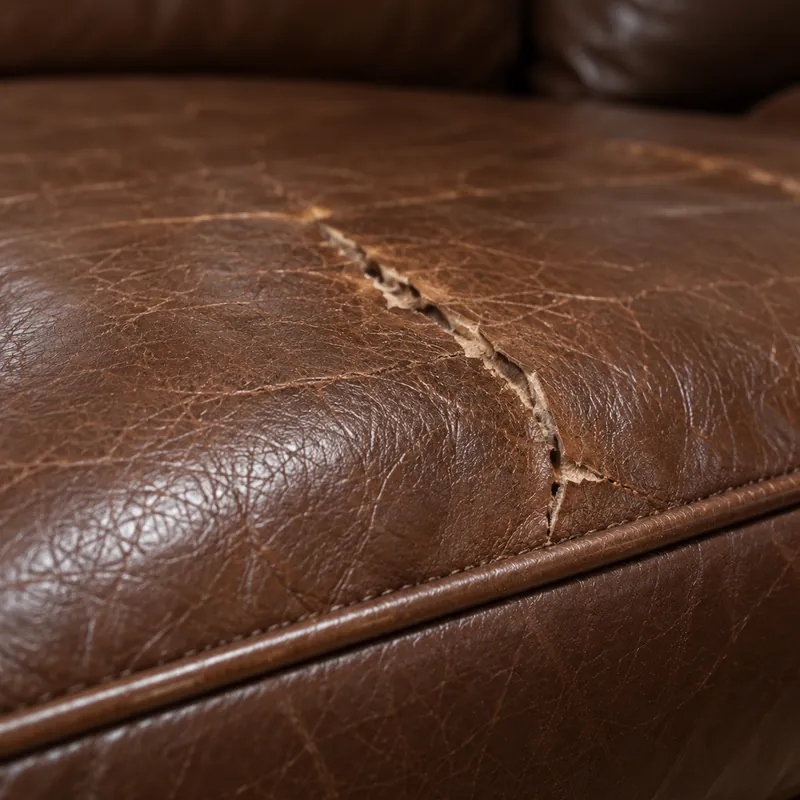
What is under the finish decides whether there is a repair at all
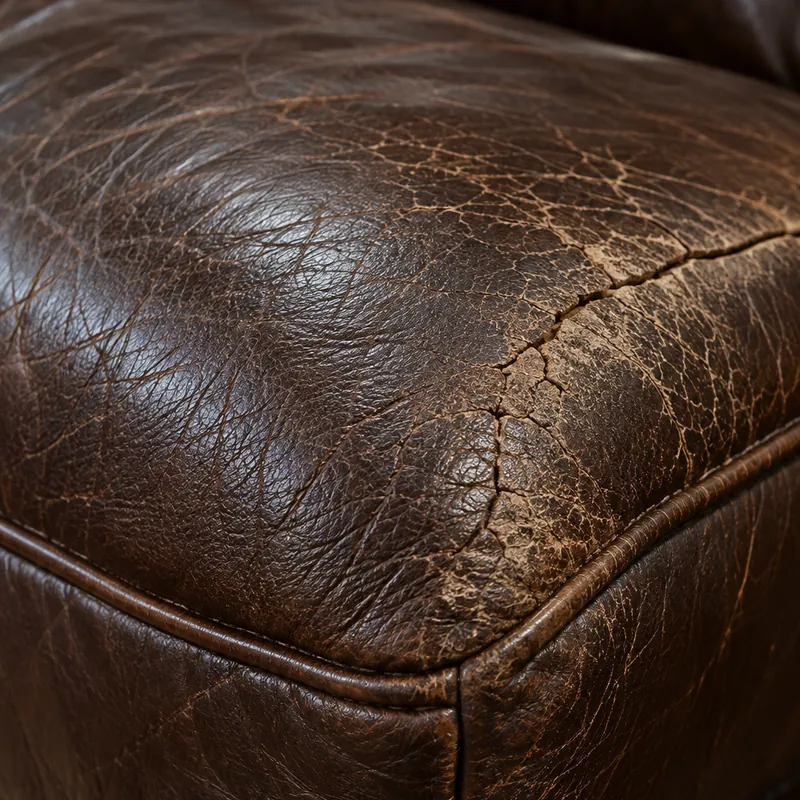
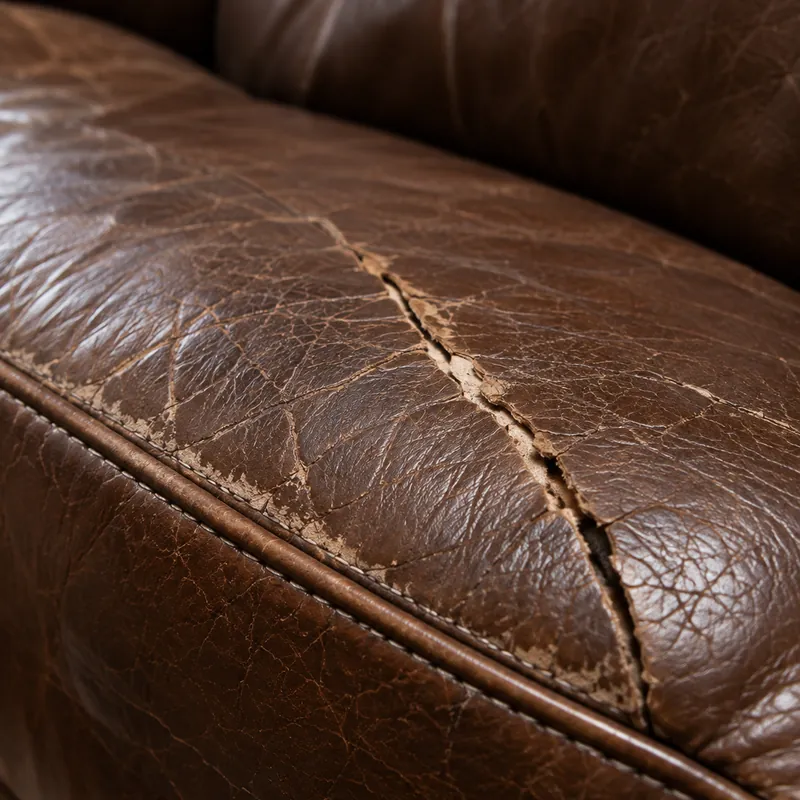
Three materials crack identically in a photograph and end in three different places. Settle this before you pay for leather crack repair anywhere.
Real leather
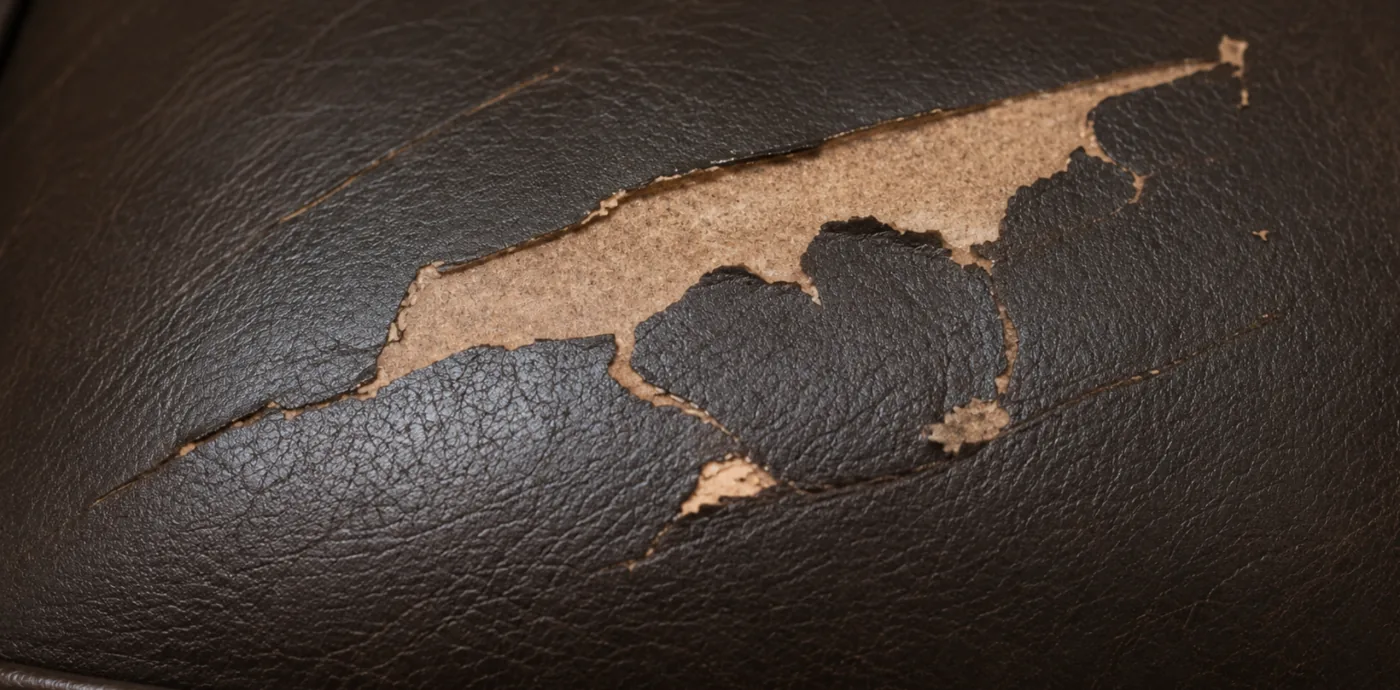
Top-grain, pigmented, semi-aniline and corrected-grain hides carry the finish as a separate layer, as the European tanners’ association sets out. Strip the failed layer and there is sound leather underneath.
This is most of the cracked furniture we are called to, and it is repaired in place.
Vinyl and faux leather
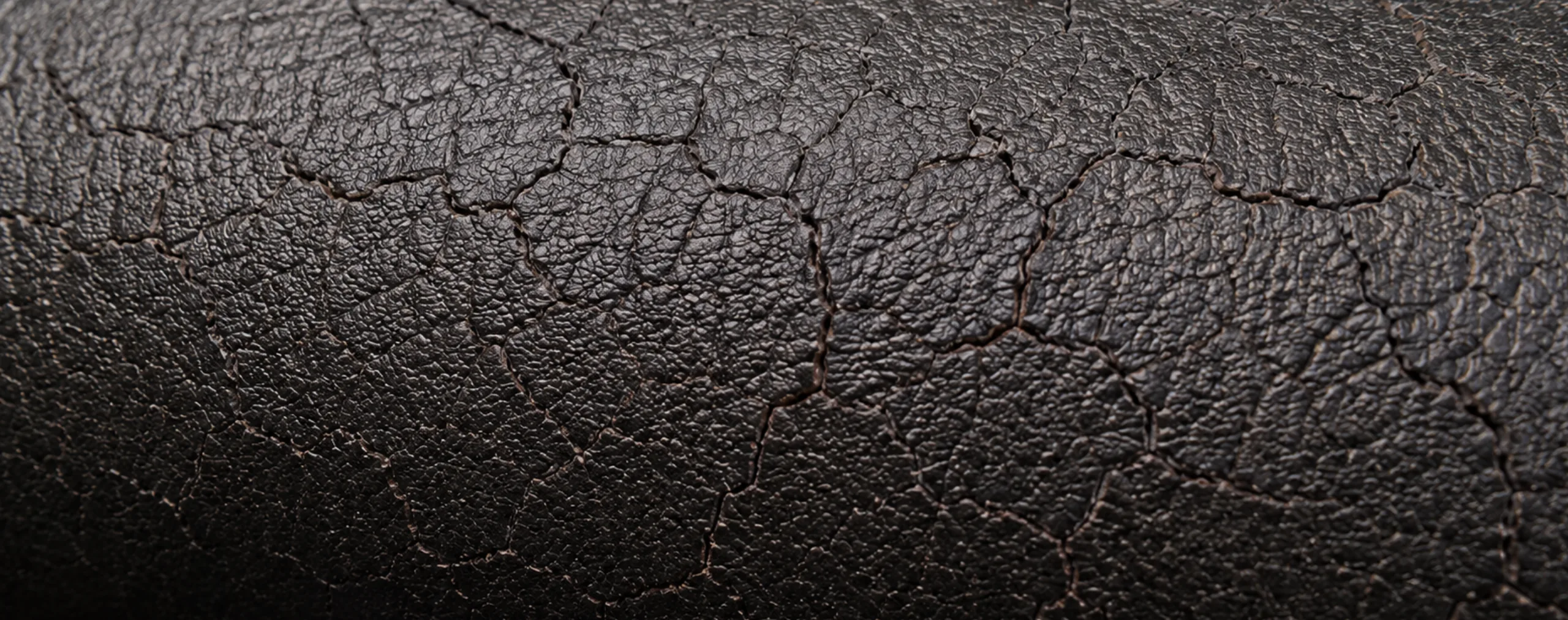
On faux leather and vinyl the coating is the material, so there is no sound layer beneath it. Isolated crazing fills and coats well.
A panel that has gone hard and cracked edge to edge is replaced rather than refinished.
Bonded leather
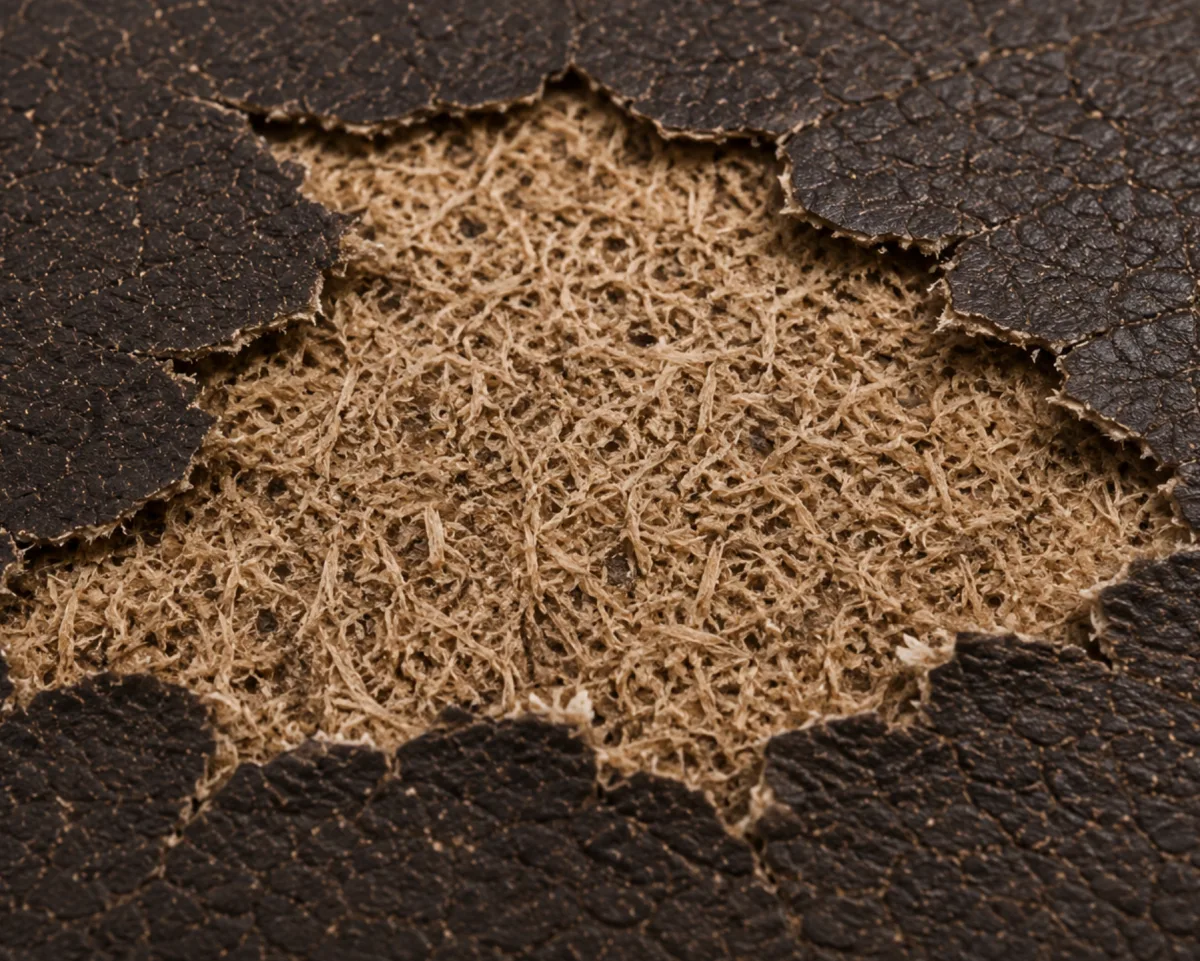
Bonded leather is a polyurethane film glued to pulped fibre. Once that film starts releasing it keeps releasing, and repairing one patch just moves the next failure a few inches along.
We say so before quoting. The route from here is reupholstery.
Four things get called cracking that are a different job
If any of these match yours better, start there instead.
A crack stays in the finish. Once you can see foam or fabric through it, the hide has parted — tear repair, or hole repair if material is missing.
A rubbed, pale or shiny patch with no line through it is abrasion. That is scuff repair — nothing gets filled.
Even colour loss over a sound surface is refinishing, not repair. Colour restoration handles it, quoted by the piece.
When every panel goes at once, the finish is at the end of its life across the whole hide. Rebuilding all of it costs more than reupholstery, and we will say so.
Some cracking is past repair. With nothing sound left to build onto, reupholstery is the honest answer — and you hear that at the free online estimate, from your photos, not after we arrive.
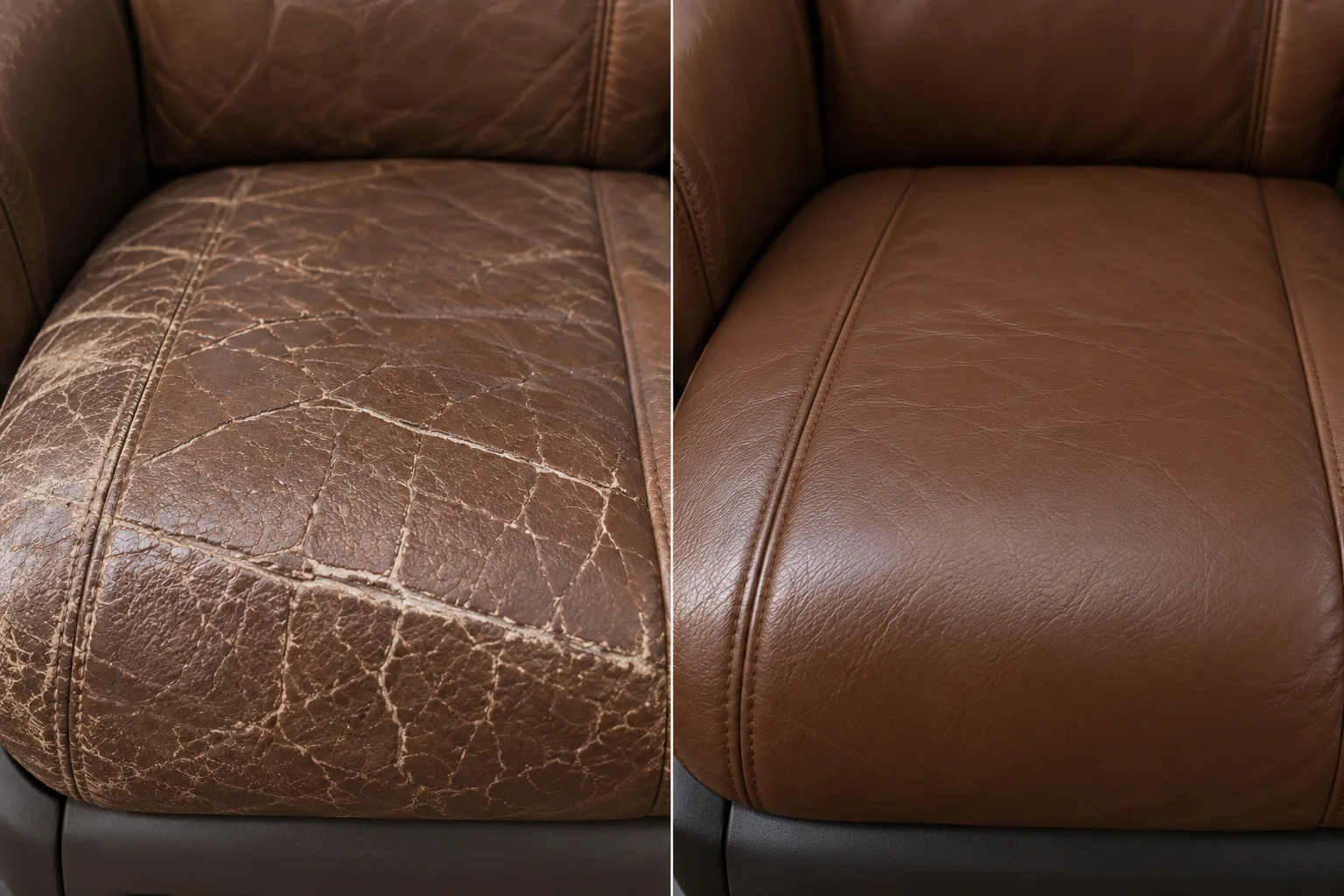
The finished panel should not be findable
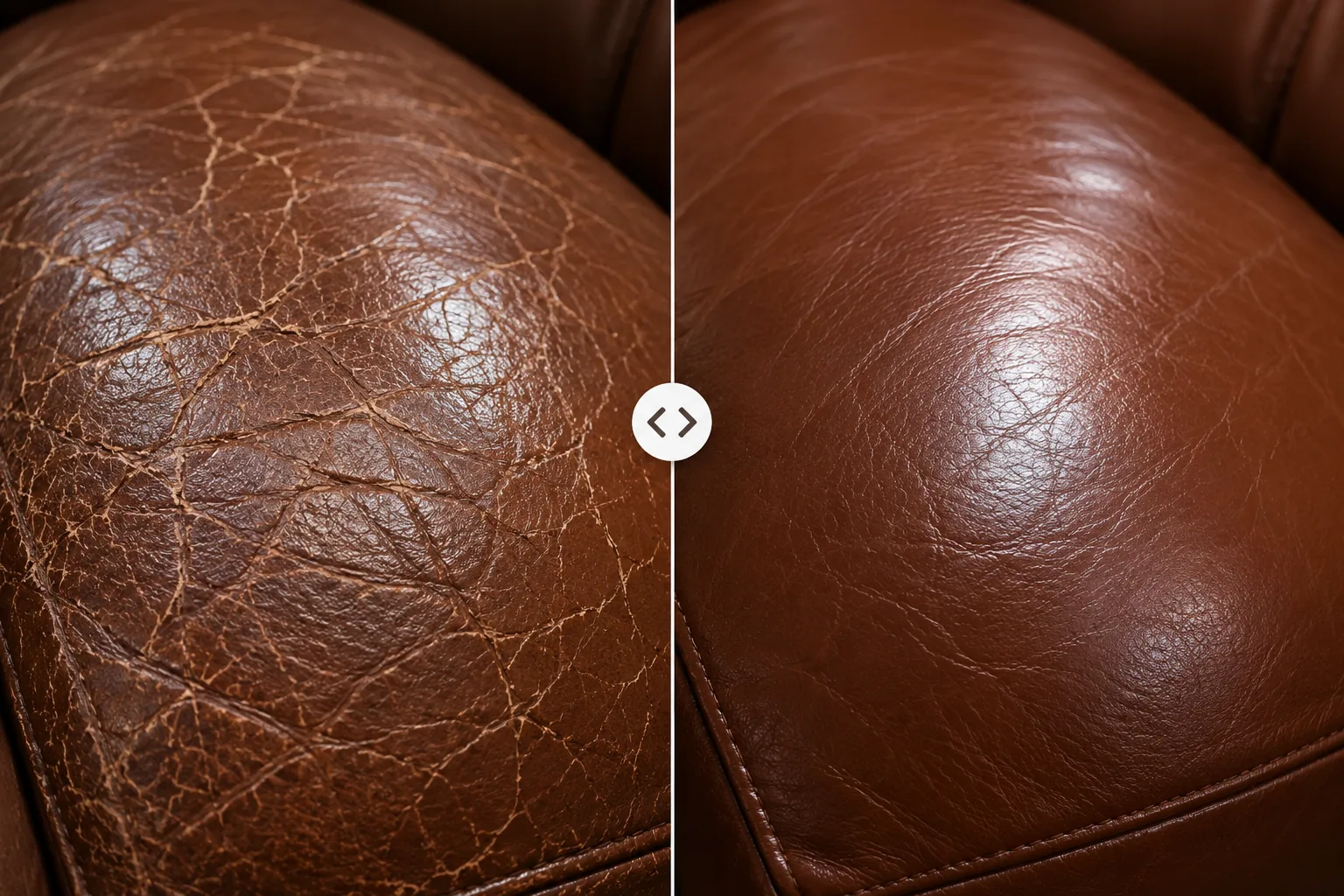
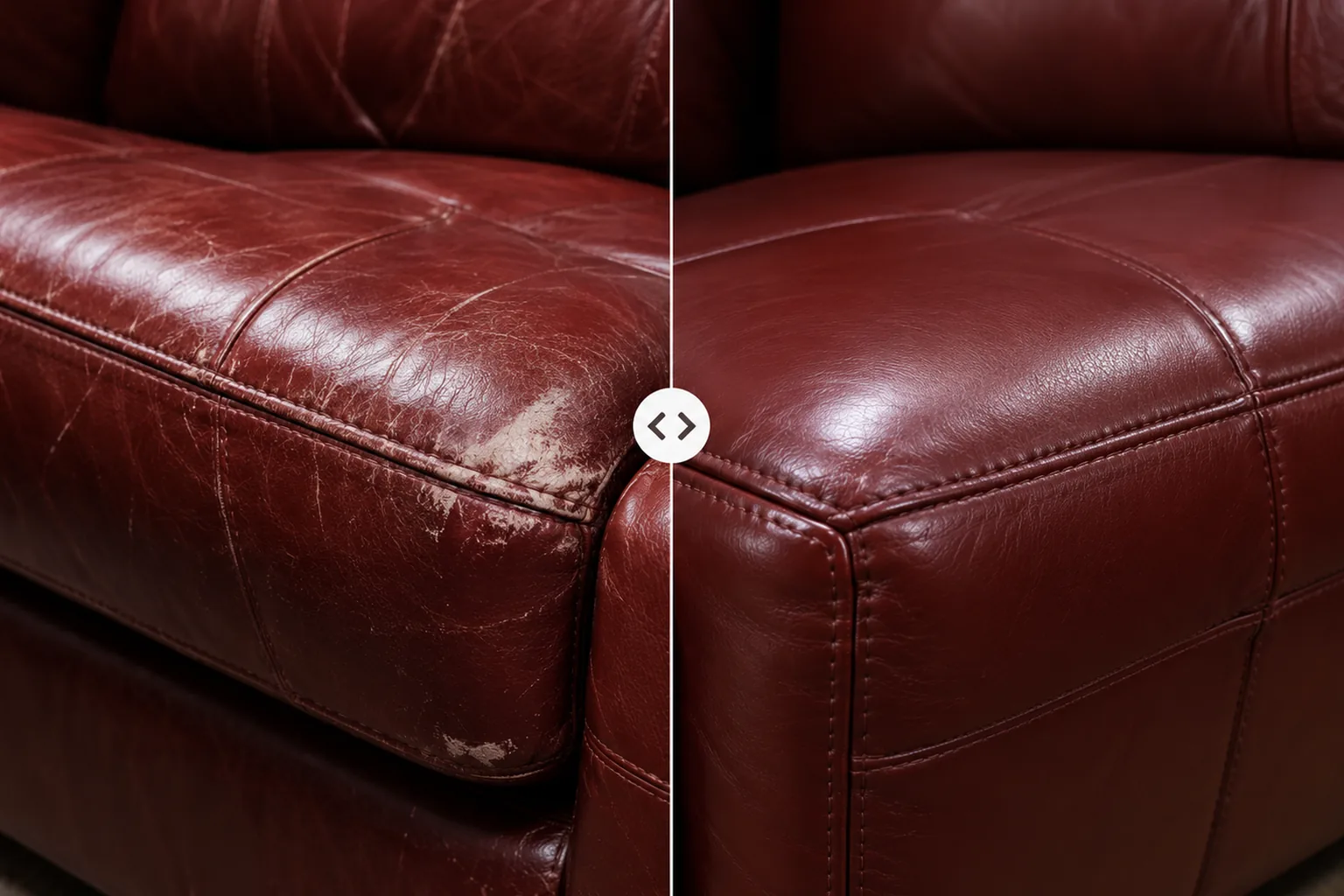
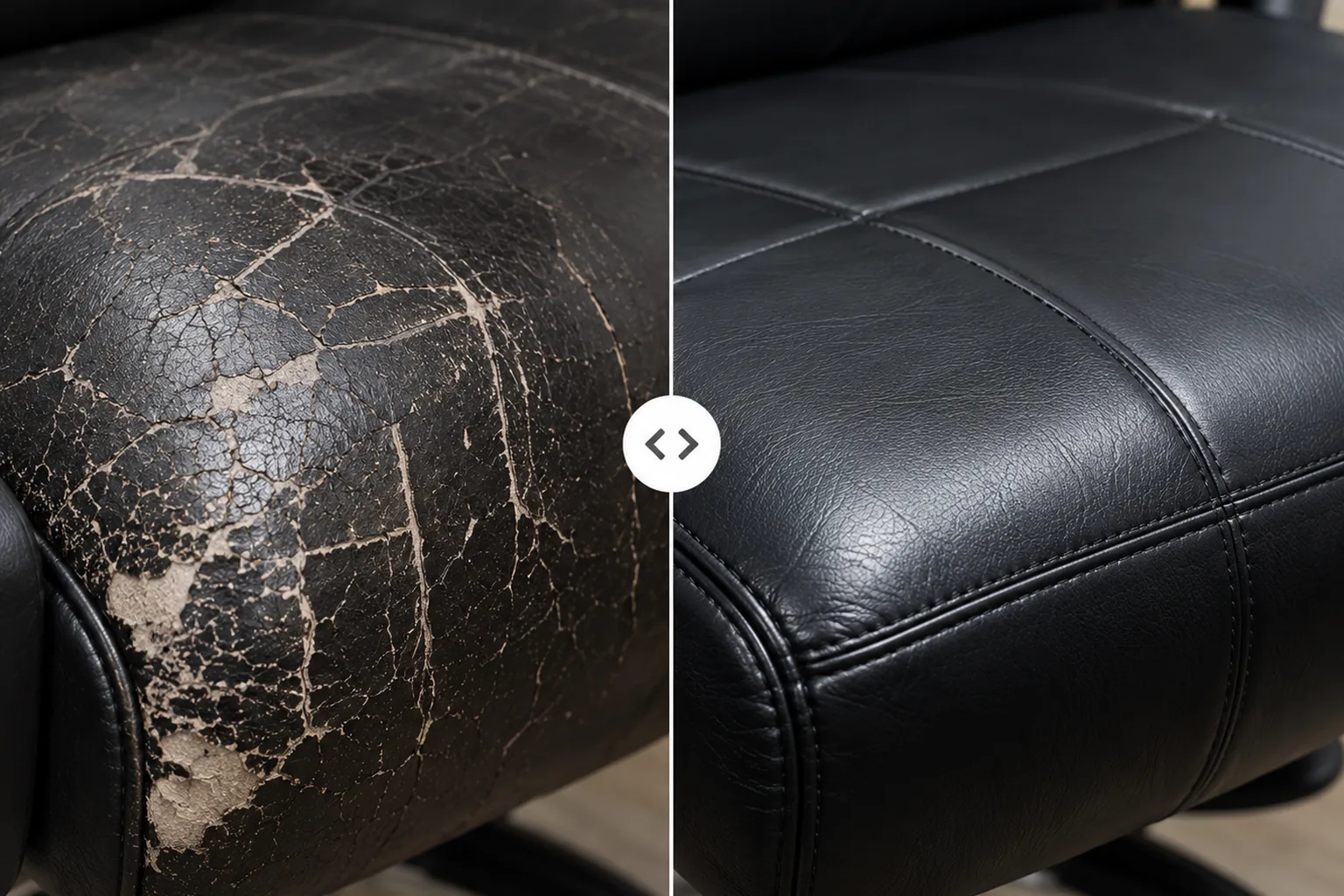
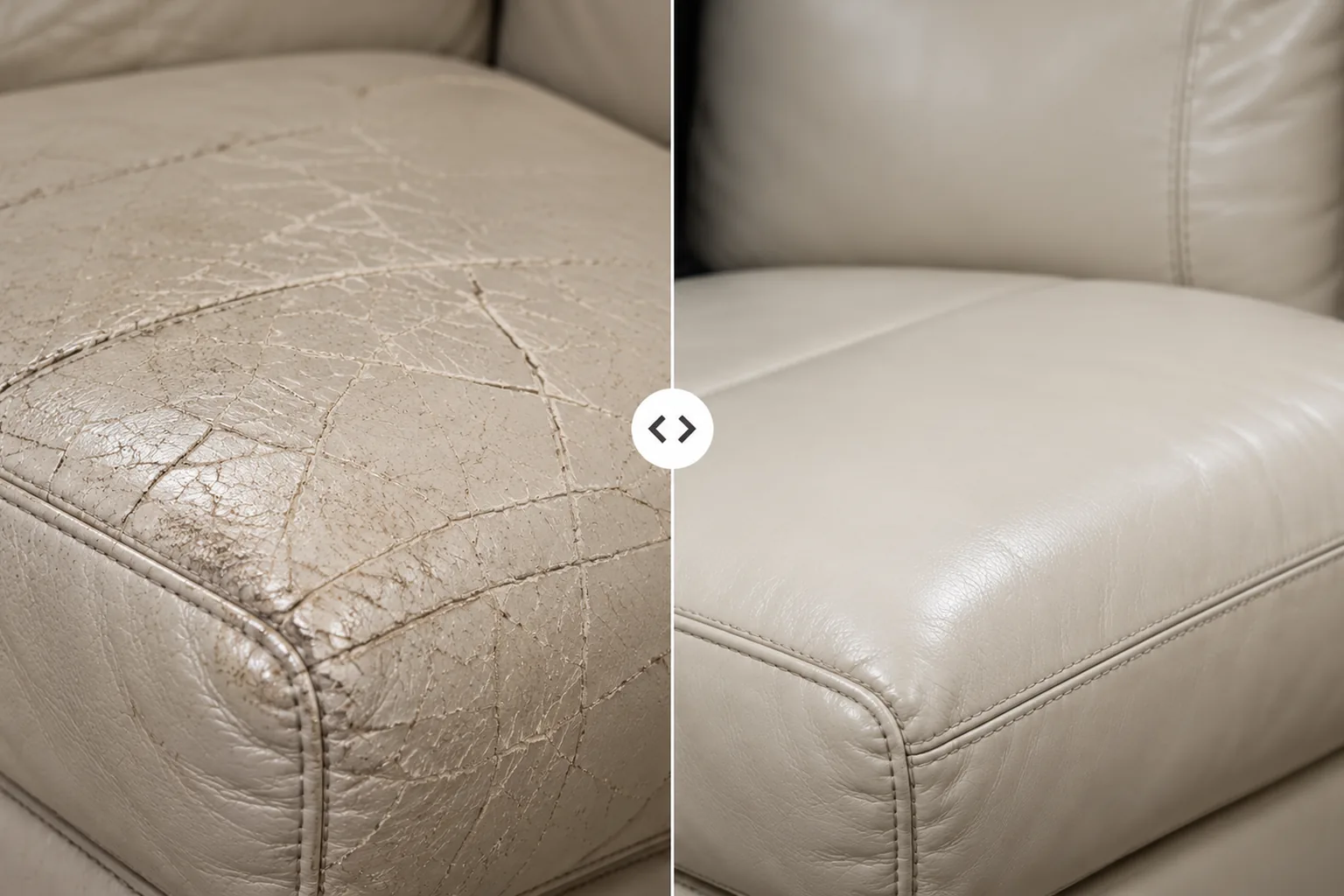
Colour is the easy half. Texture and sheen are what give a leather crack repair away.
 BeforeAfter
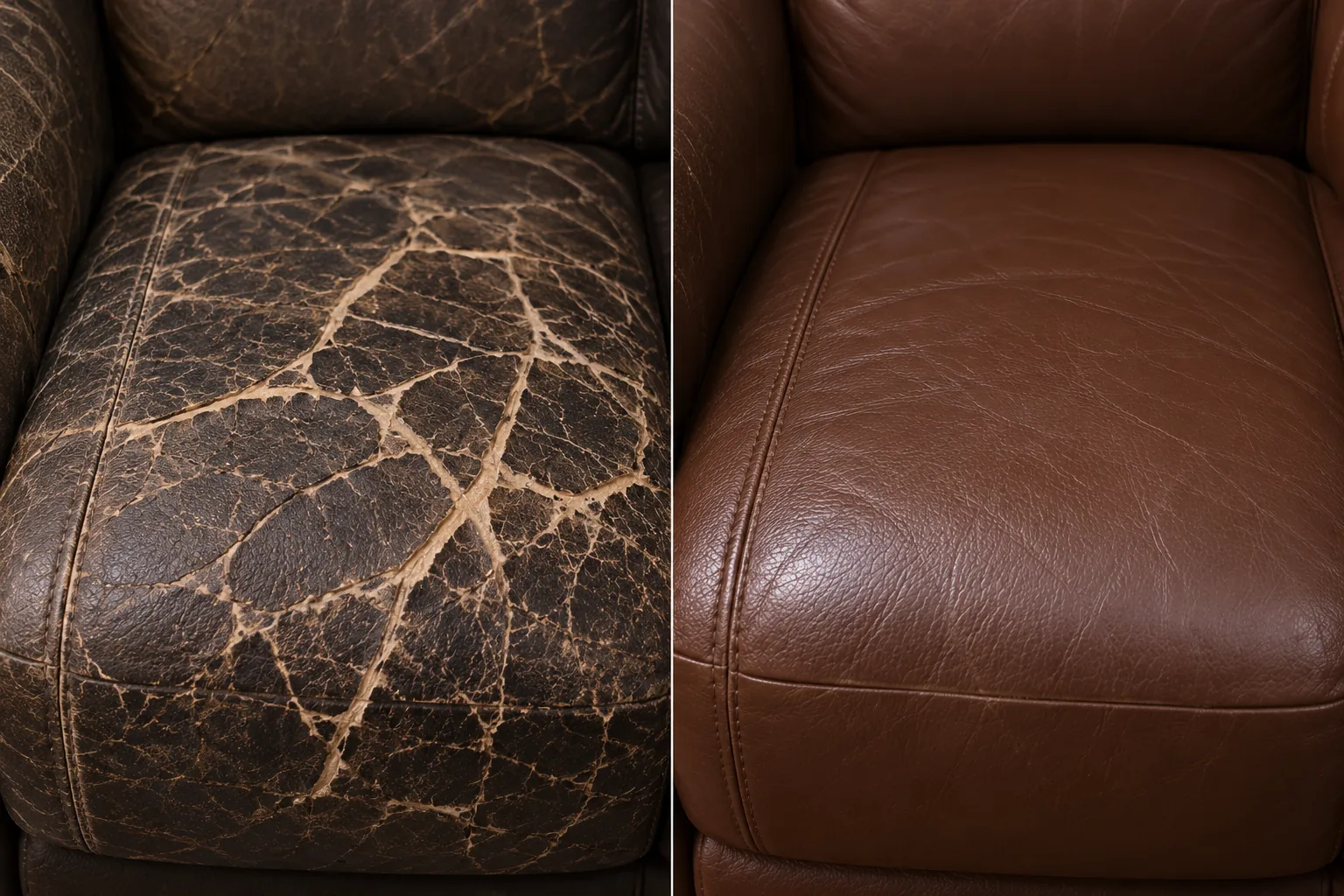 BeforeAfter
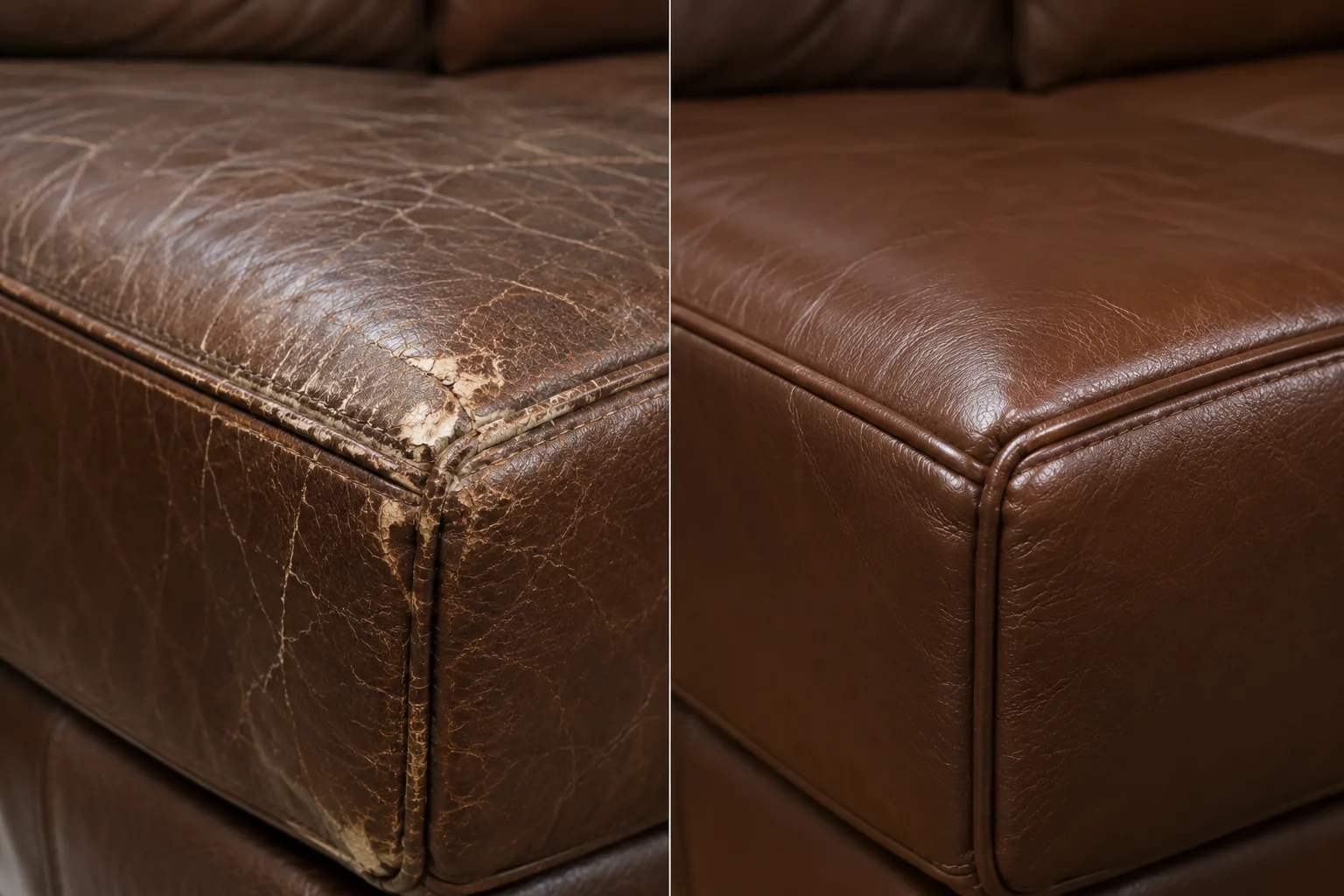 BeforeAfter
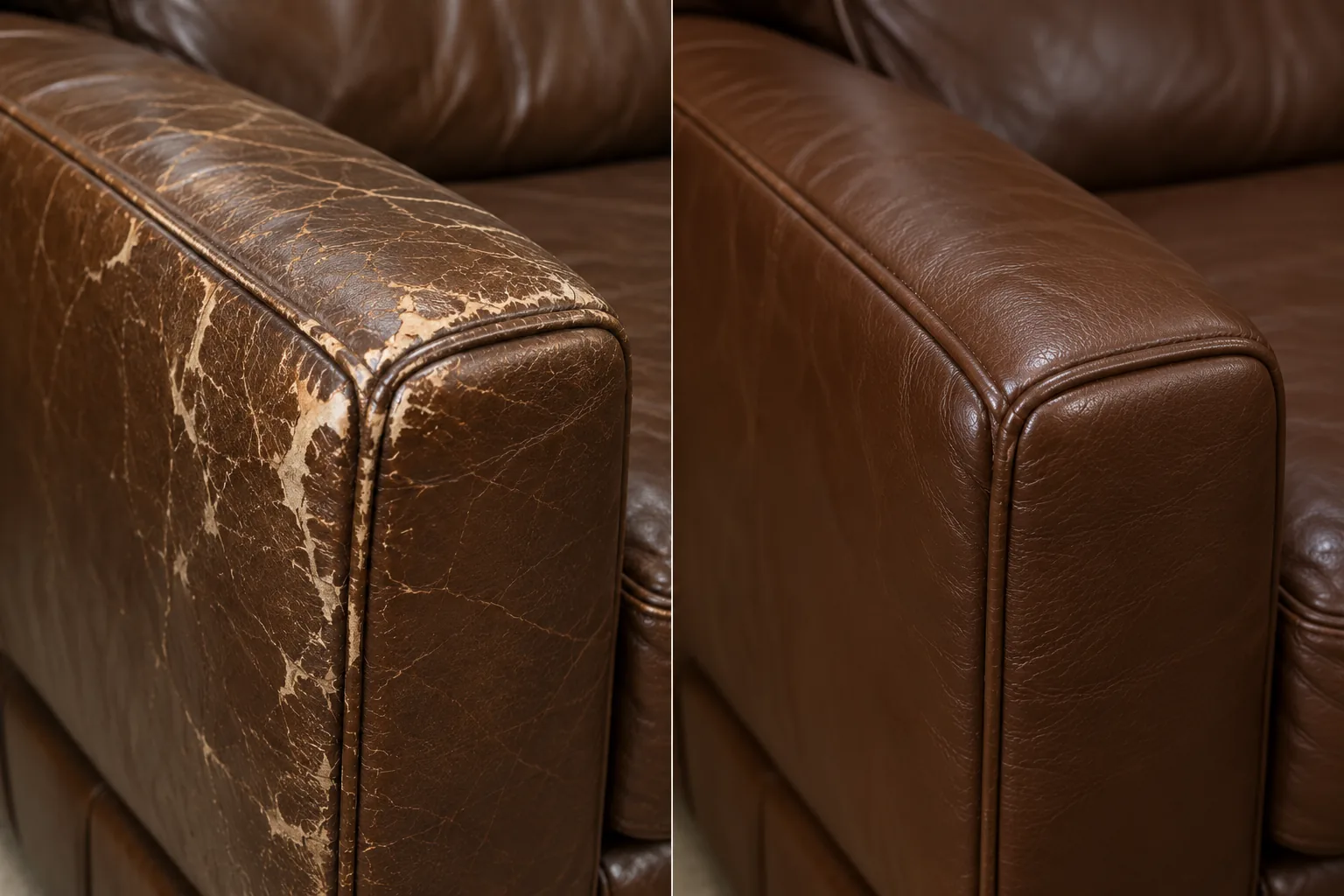 BeforeAfter
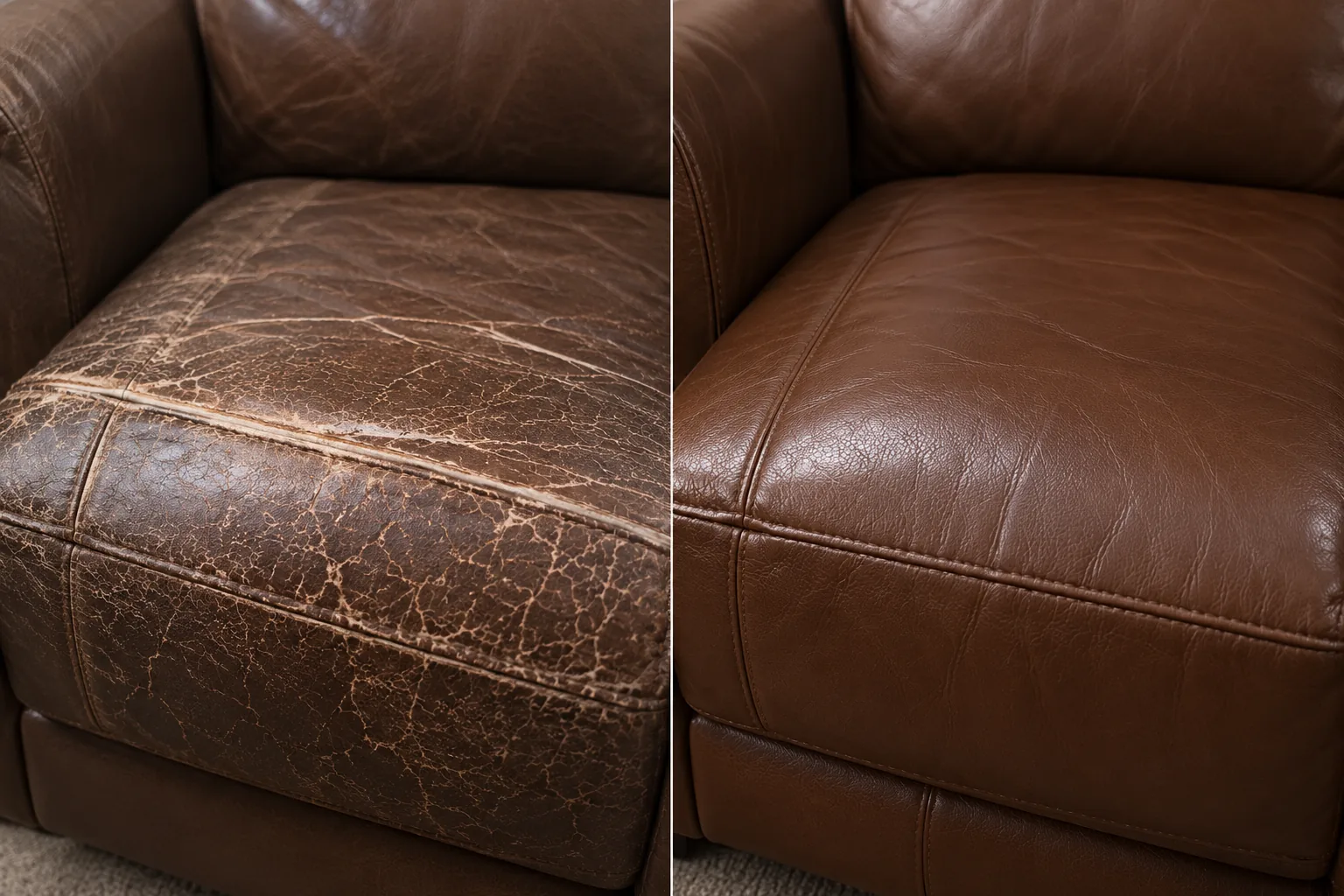 BeforeAfter
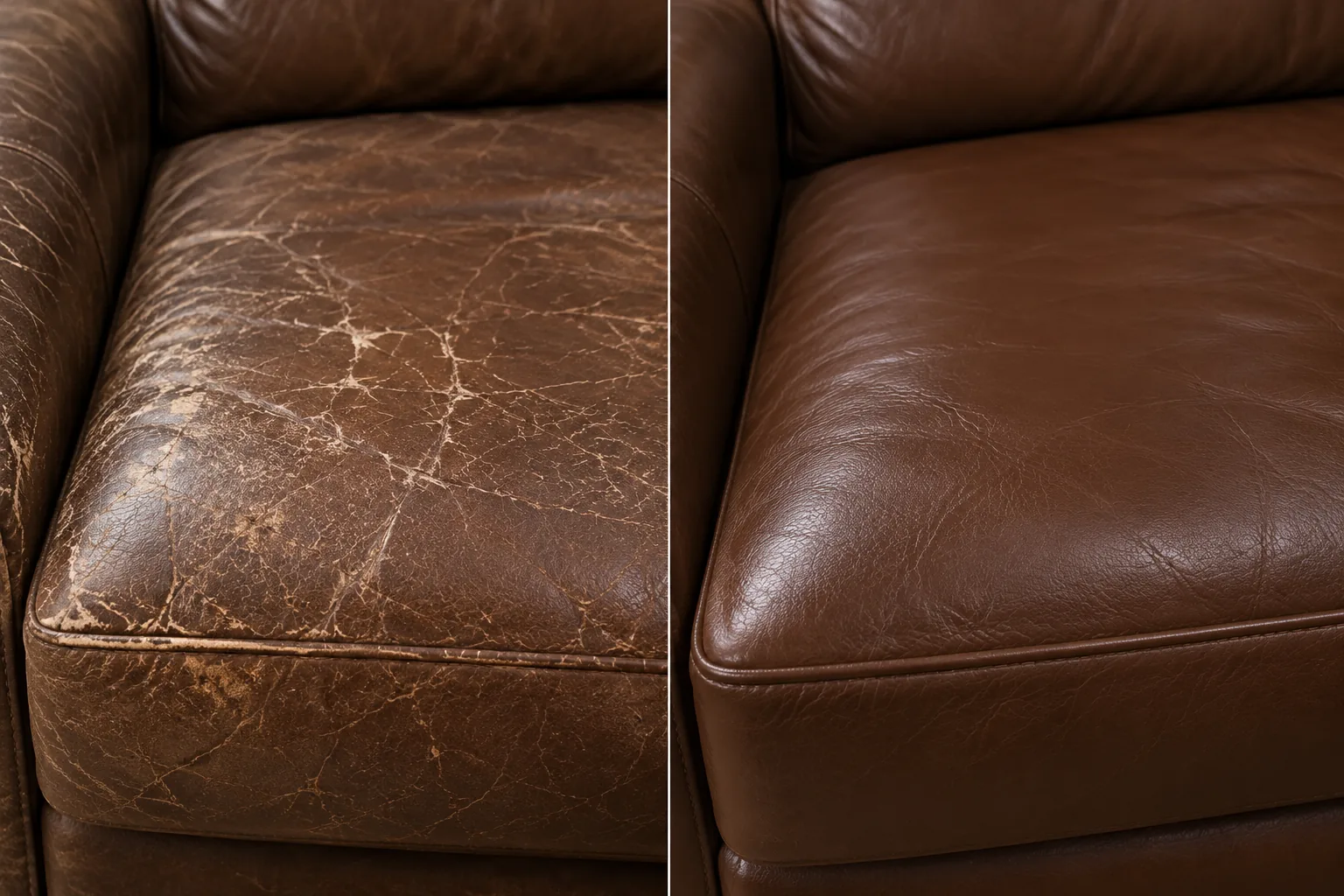 BeforeAfter
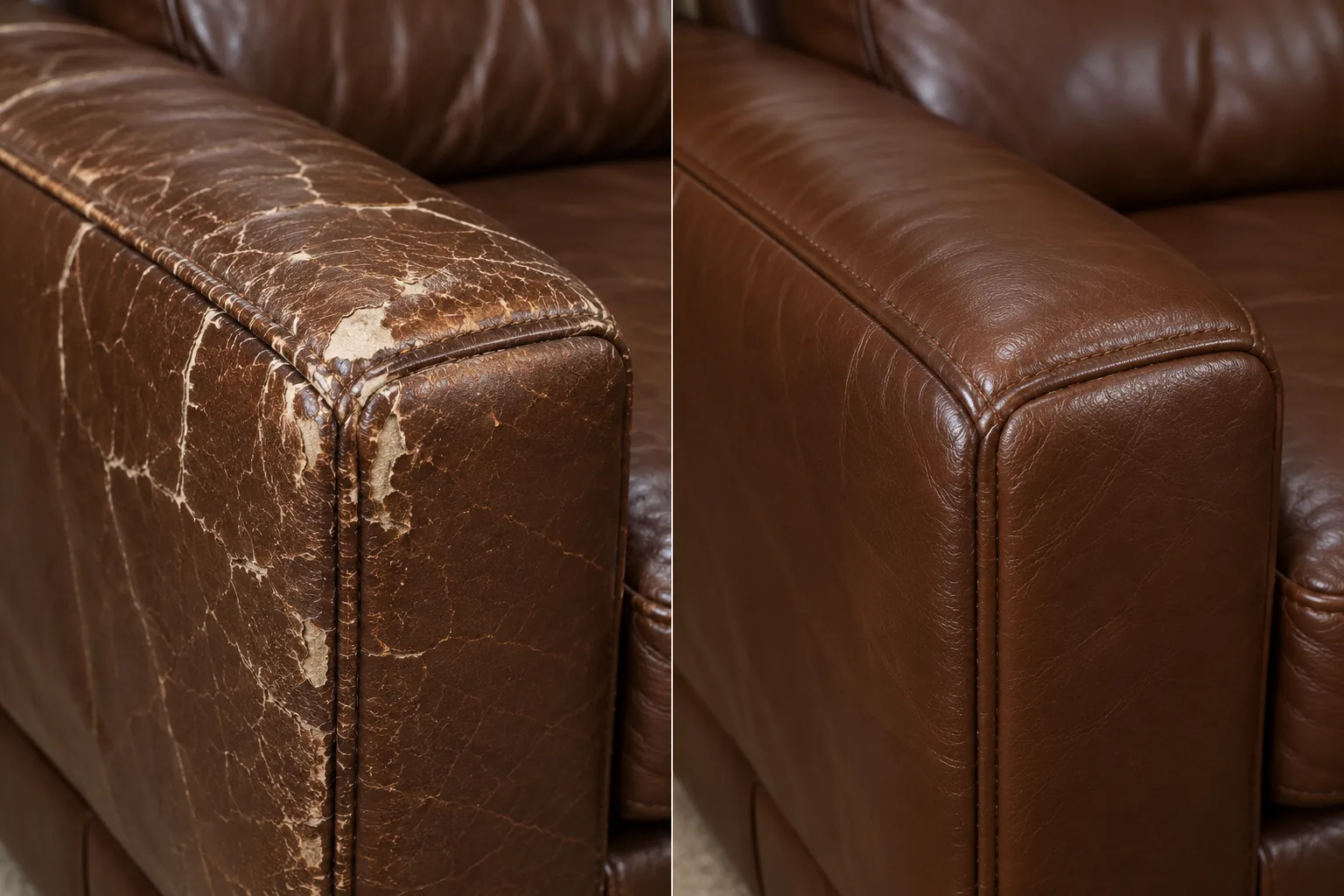 BeforeAfter
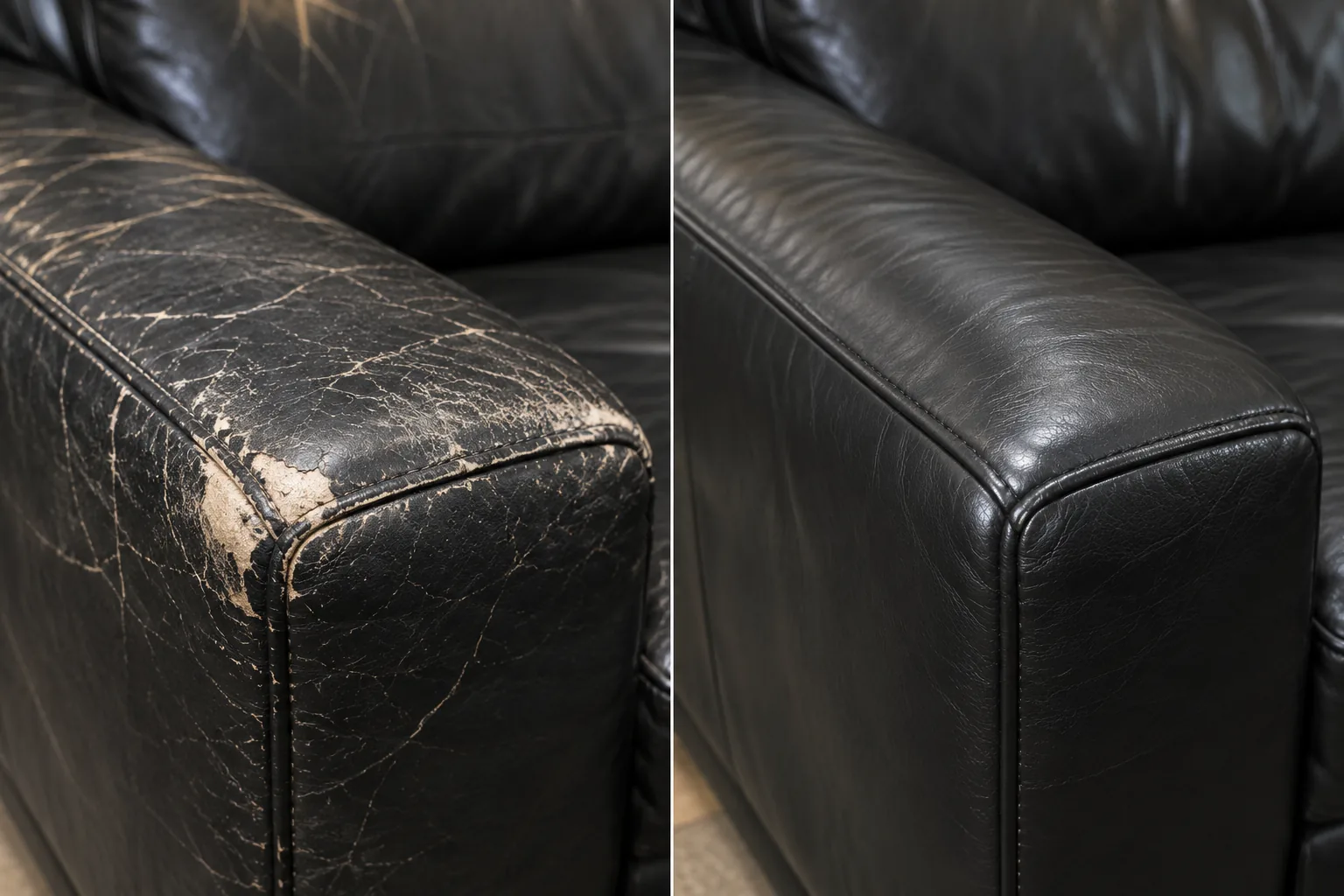 BeforeAfter
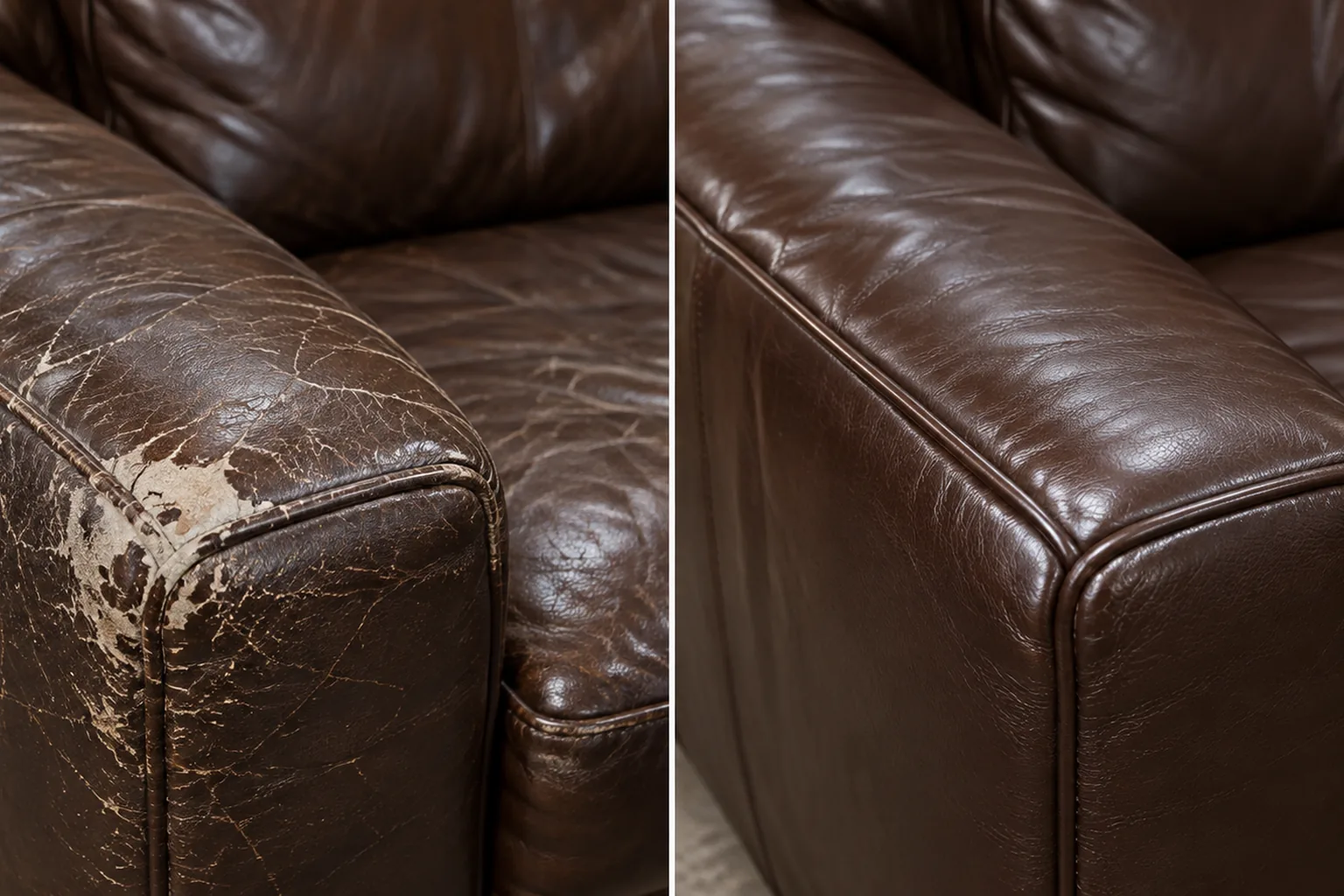 BeforeAfter
 BeforeAfter
 BeforeAfter
 BeforeAfter
 BeforeAfter
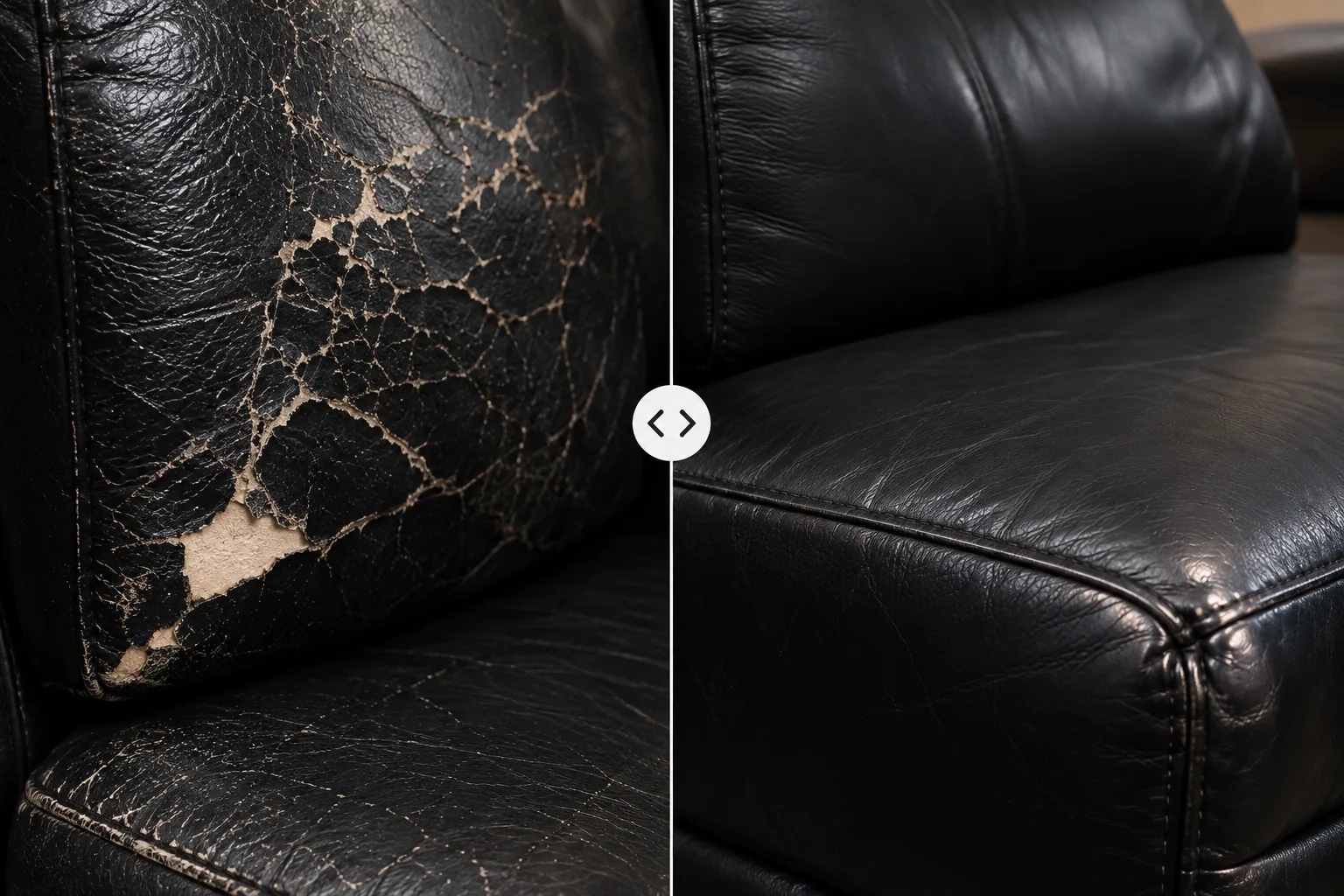 BeforeAfter