

When the Surface Comes Off in Flakes
Leather itself does not peel. Its finish does — or the piece was never leather to begin with. Which of those two you have decides whether this is a repair or a re-cover, and you can settle it in about thirty seconds.
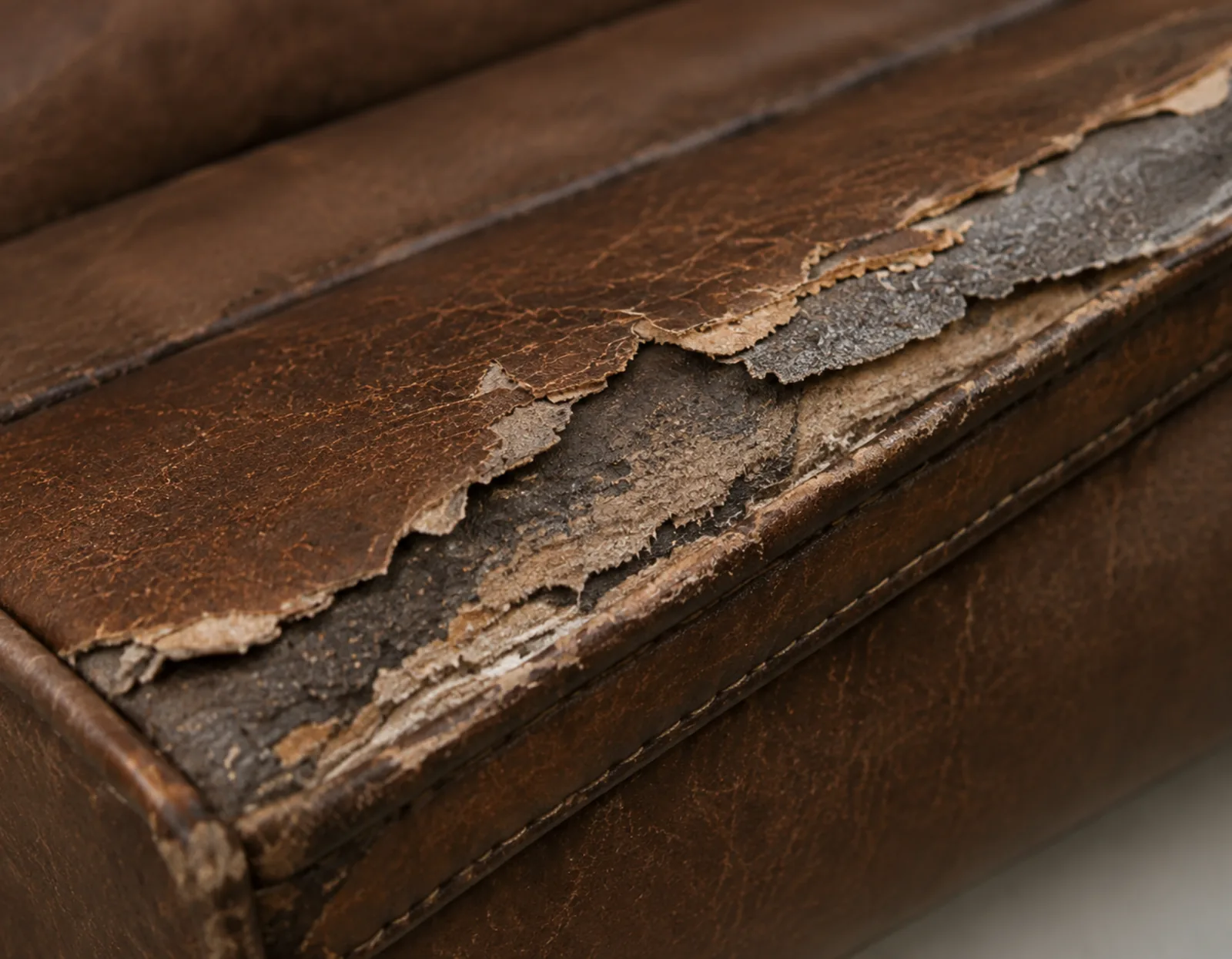
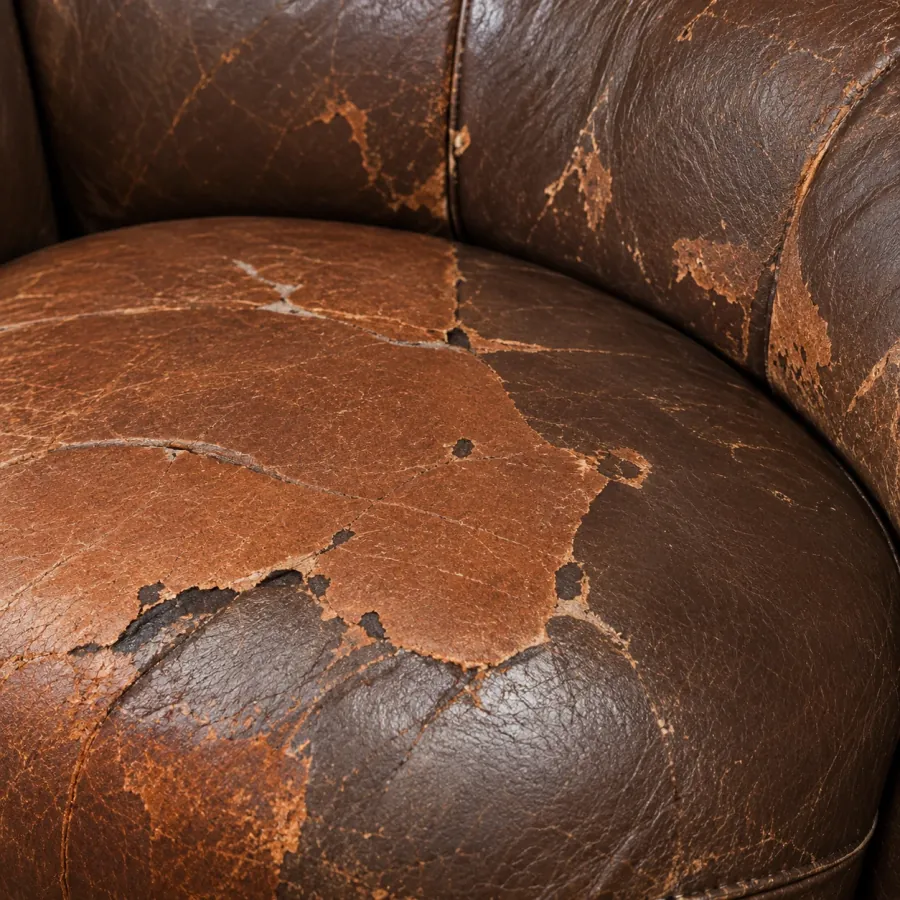
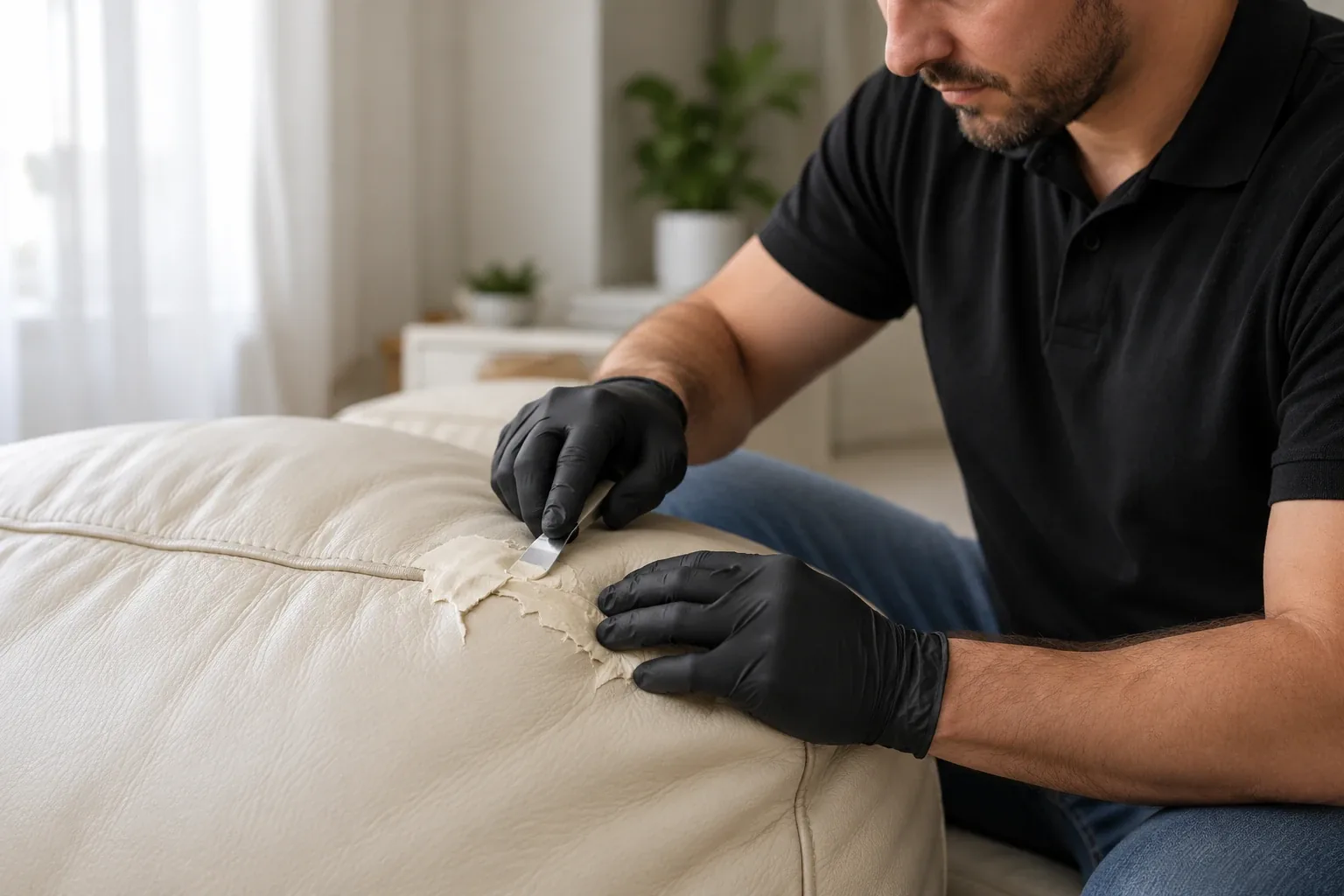
Does your furniture look like this?
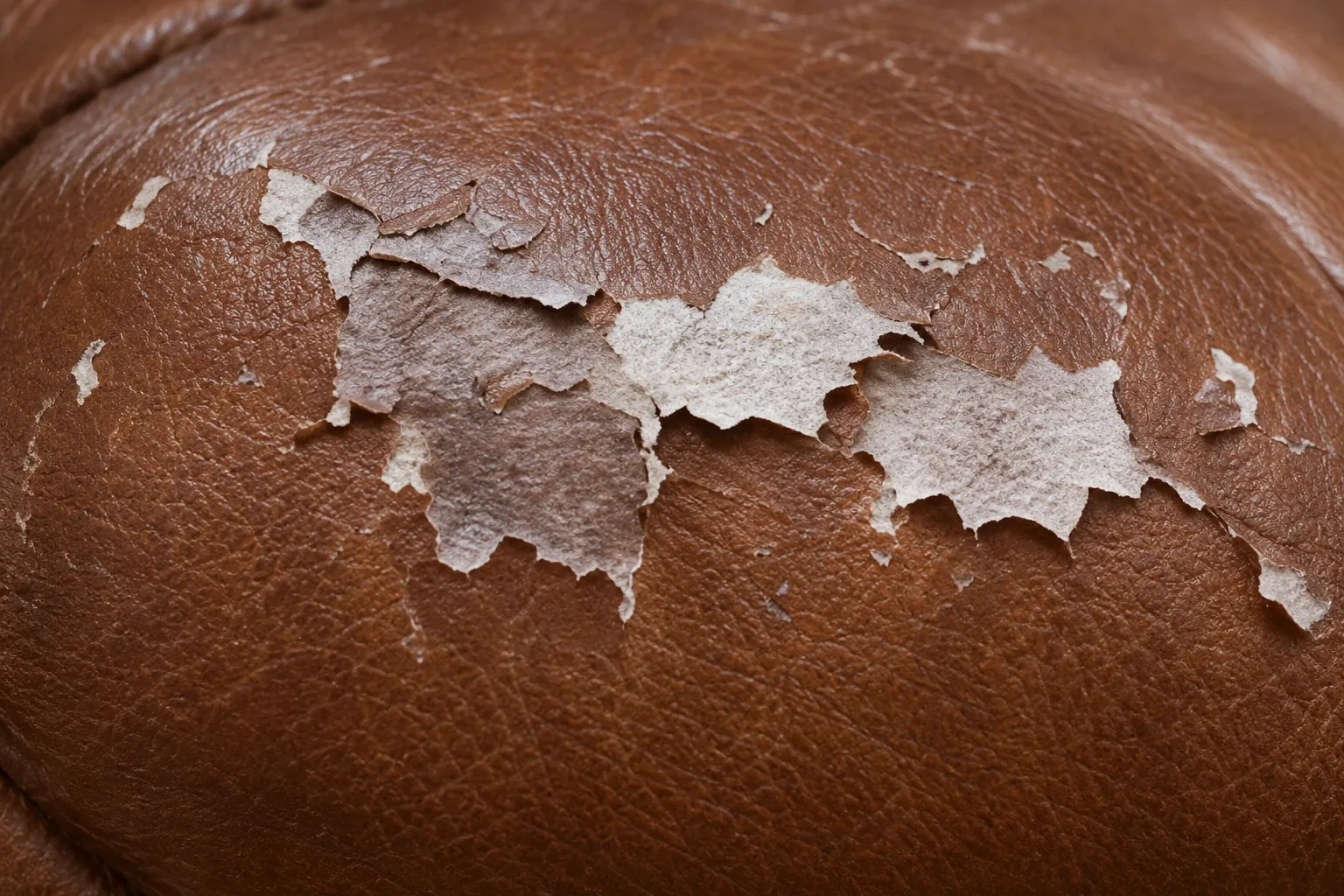
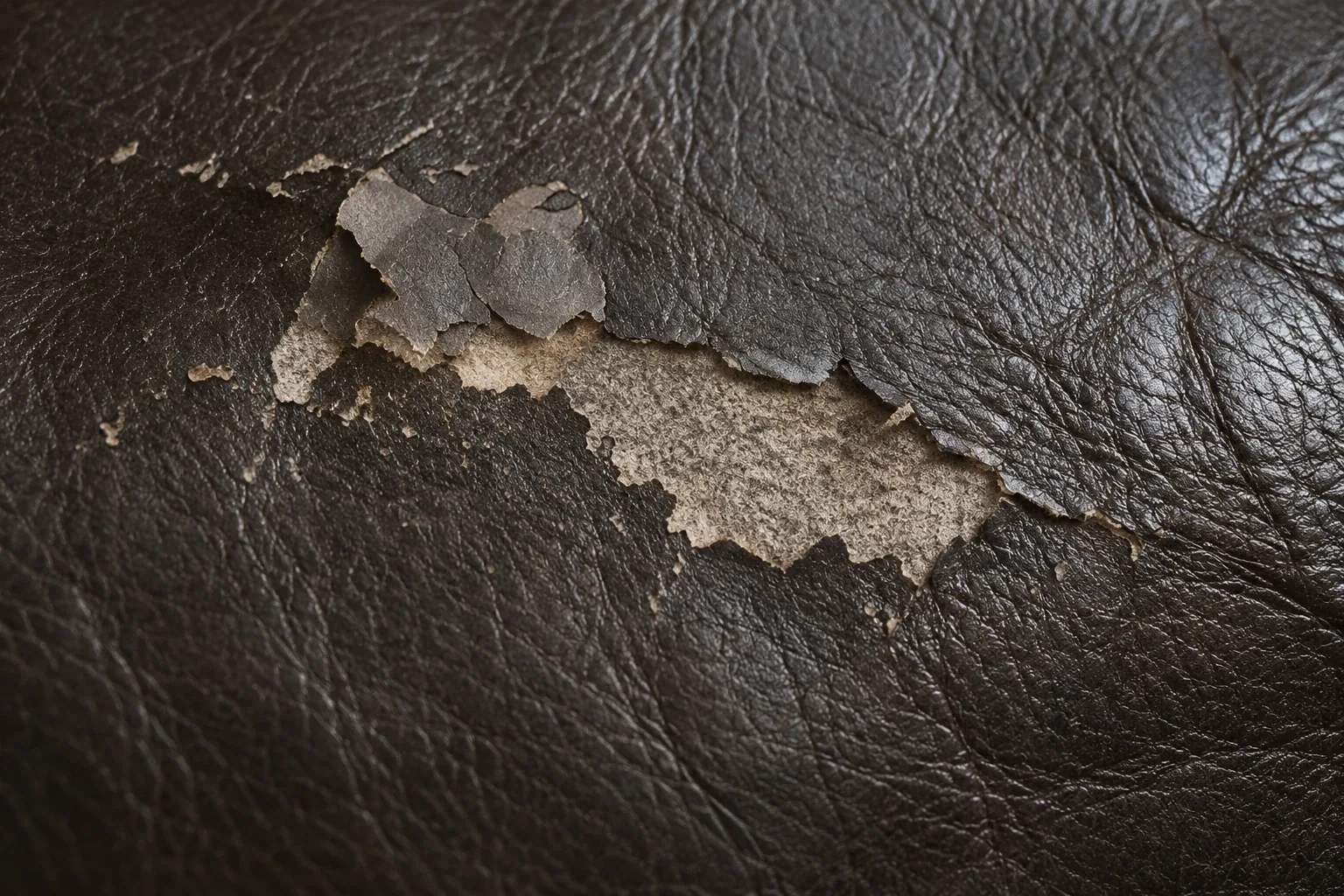
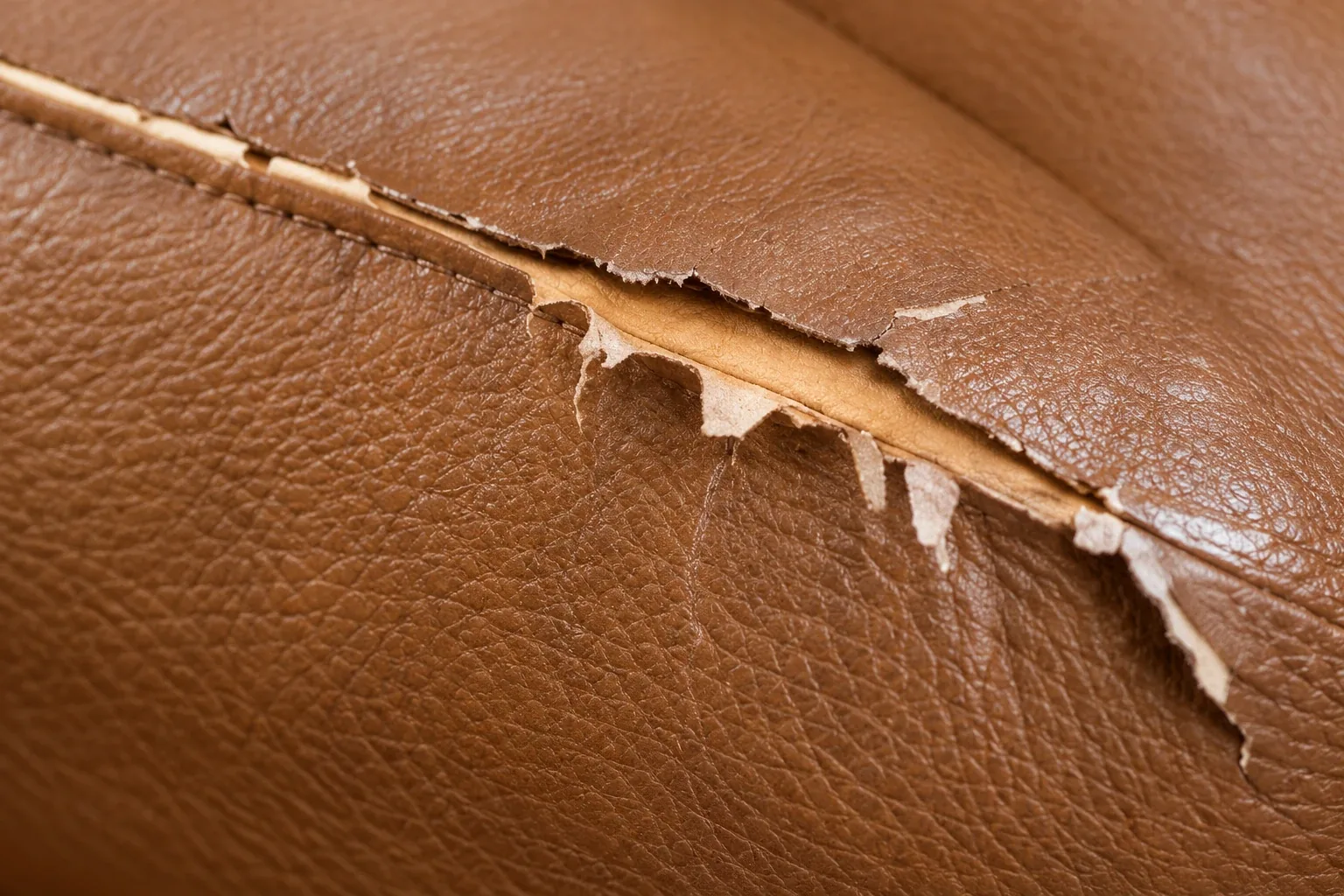
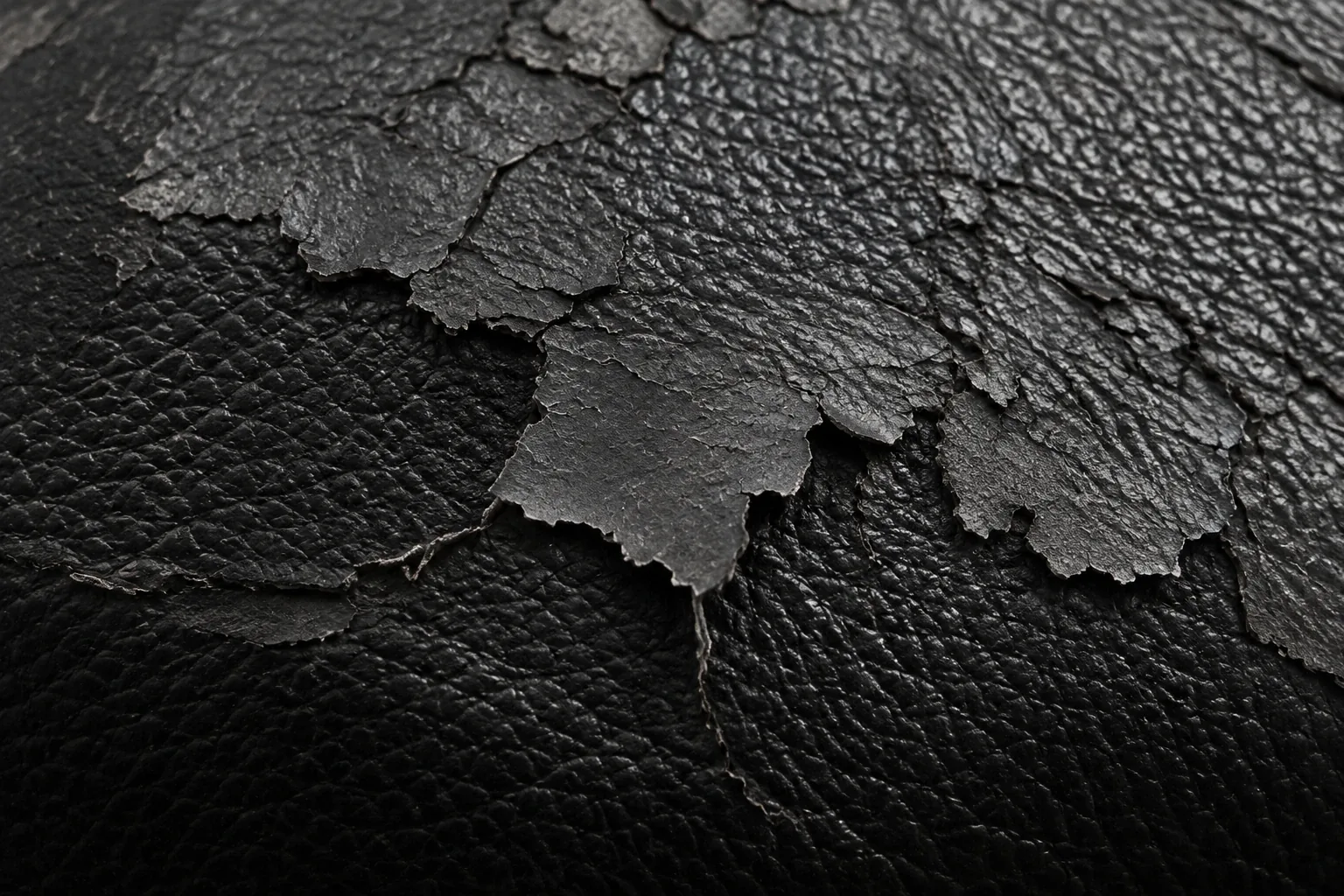
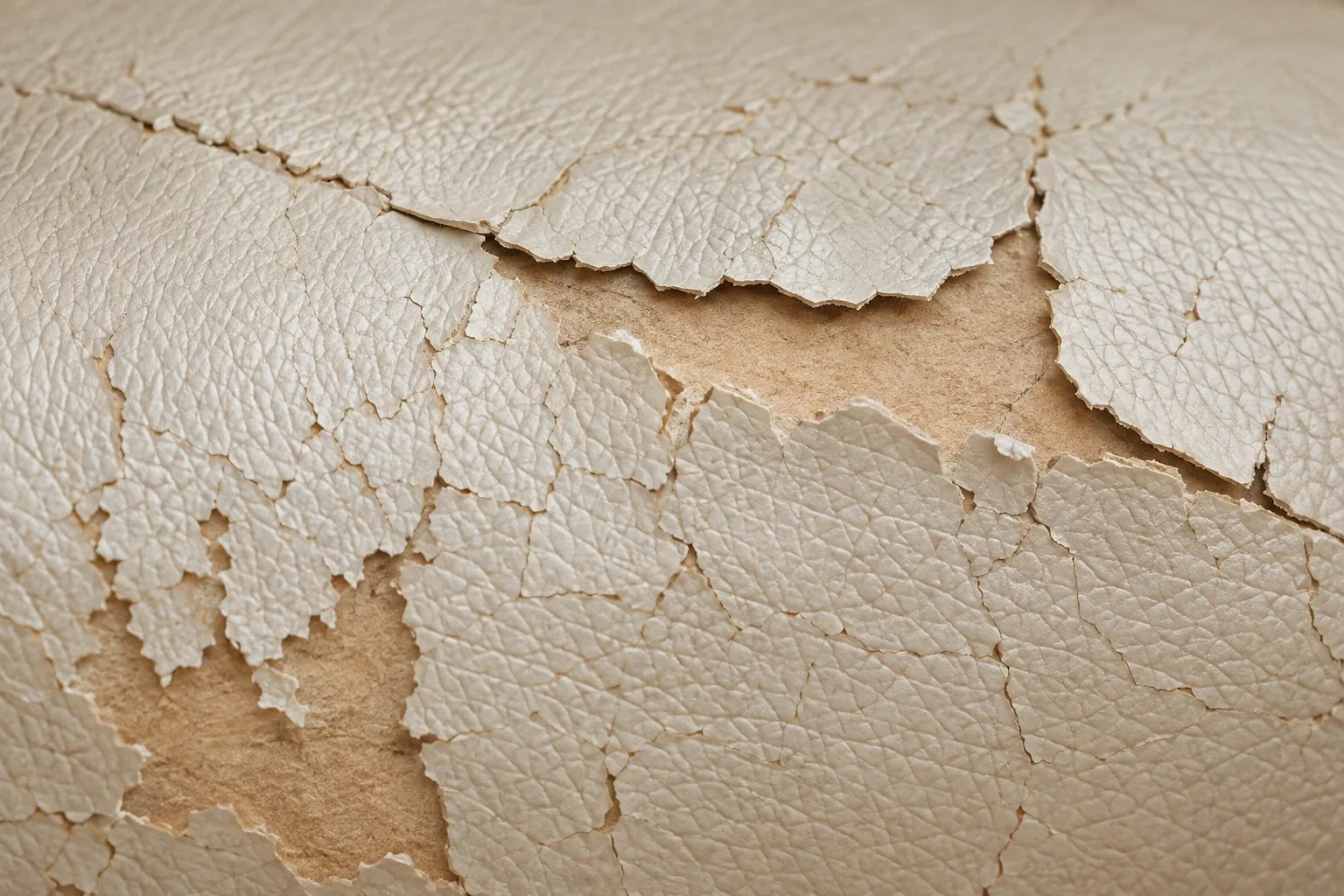
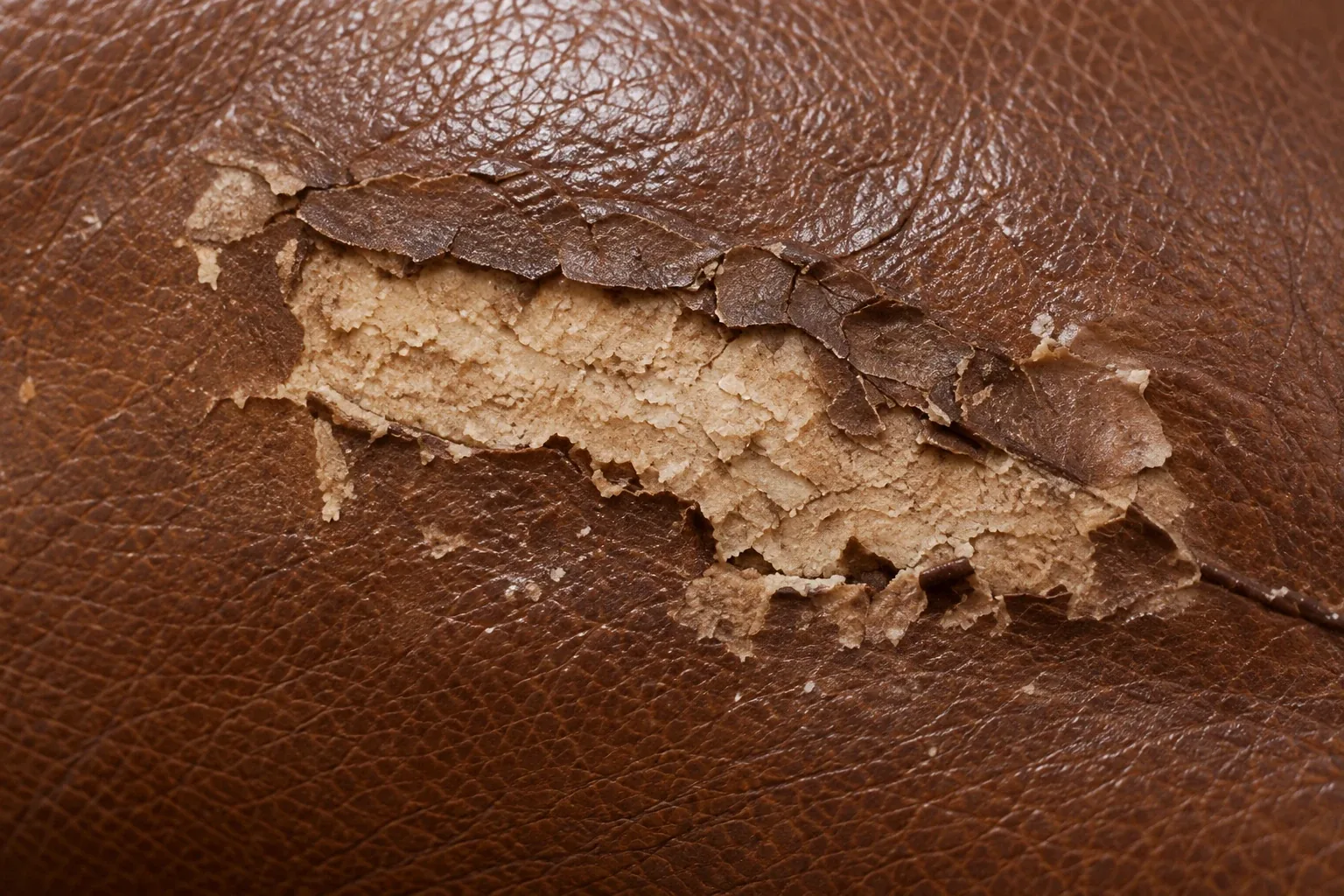
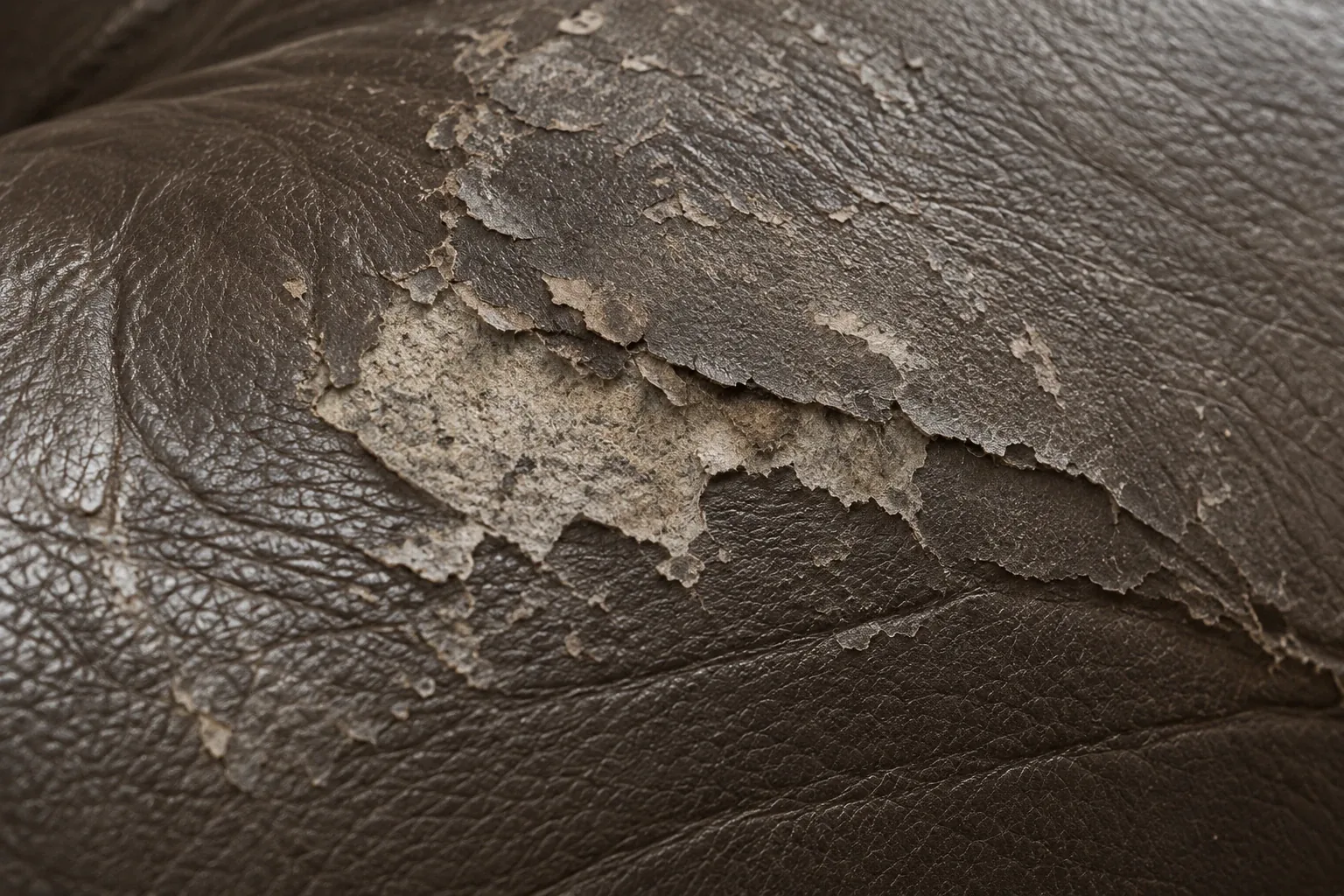
Turn one flake over
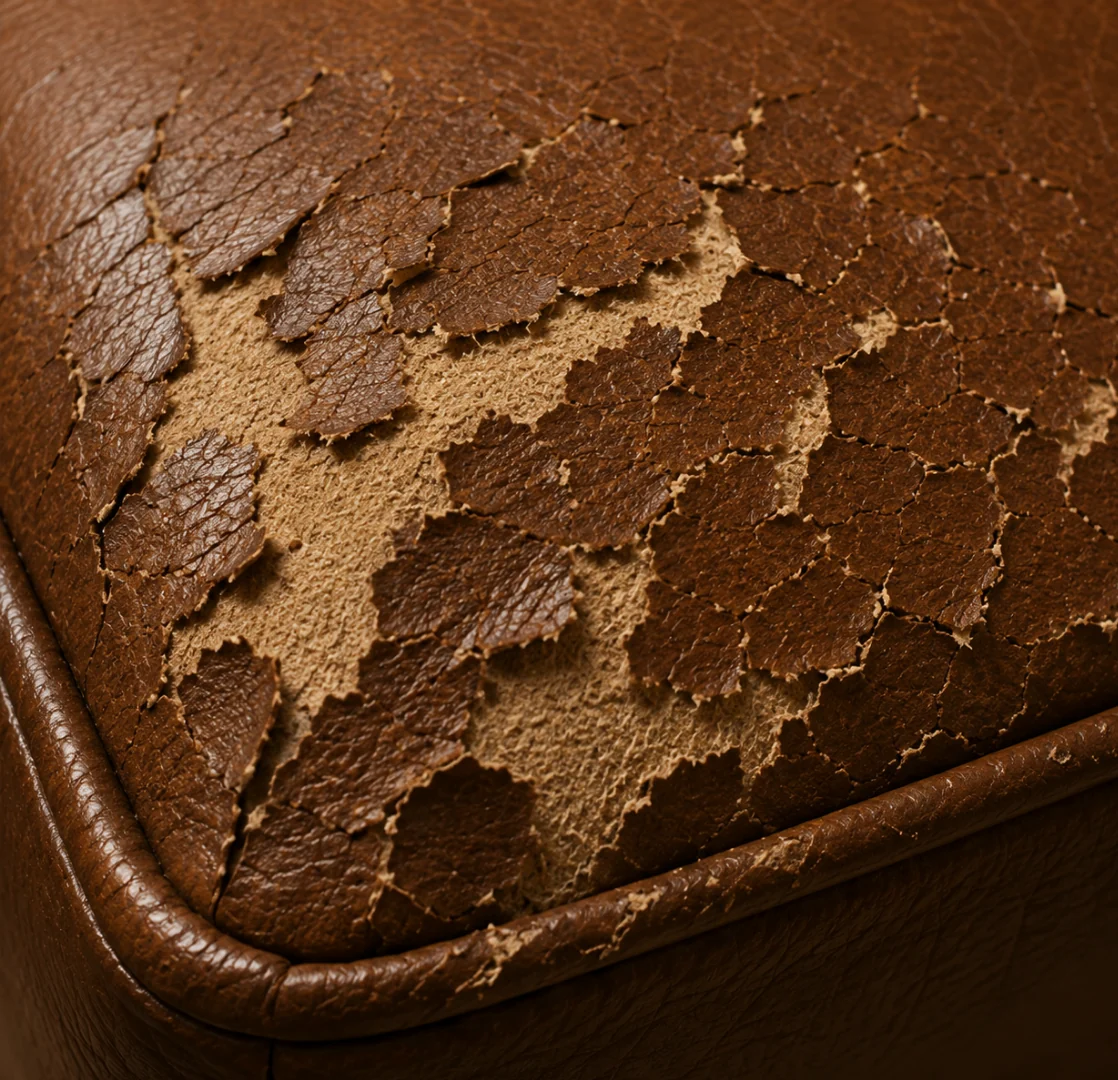
Lift a loose chip at the edge of the patch and look at its back, then at what it came off. Every honest answer about leather peeling repair starts there, and no photograph taken from across the room can do it for you.
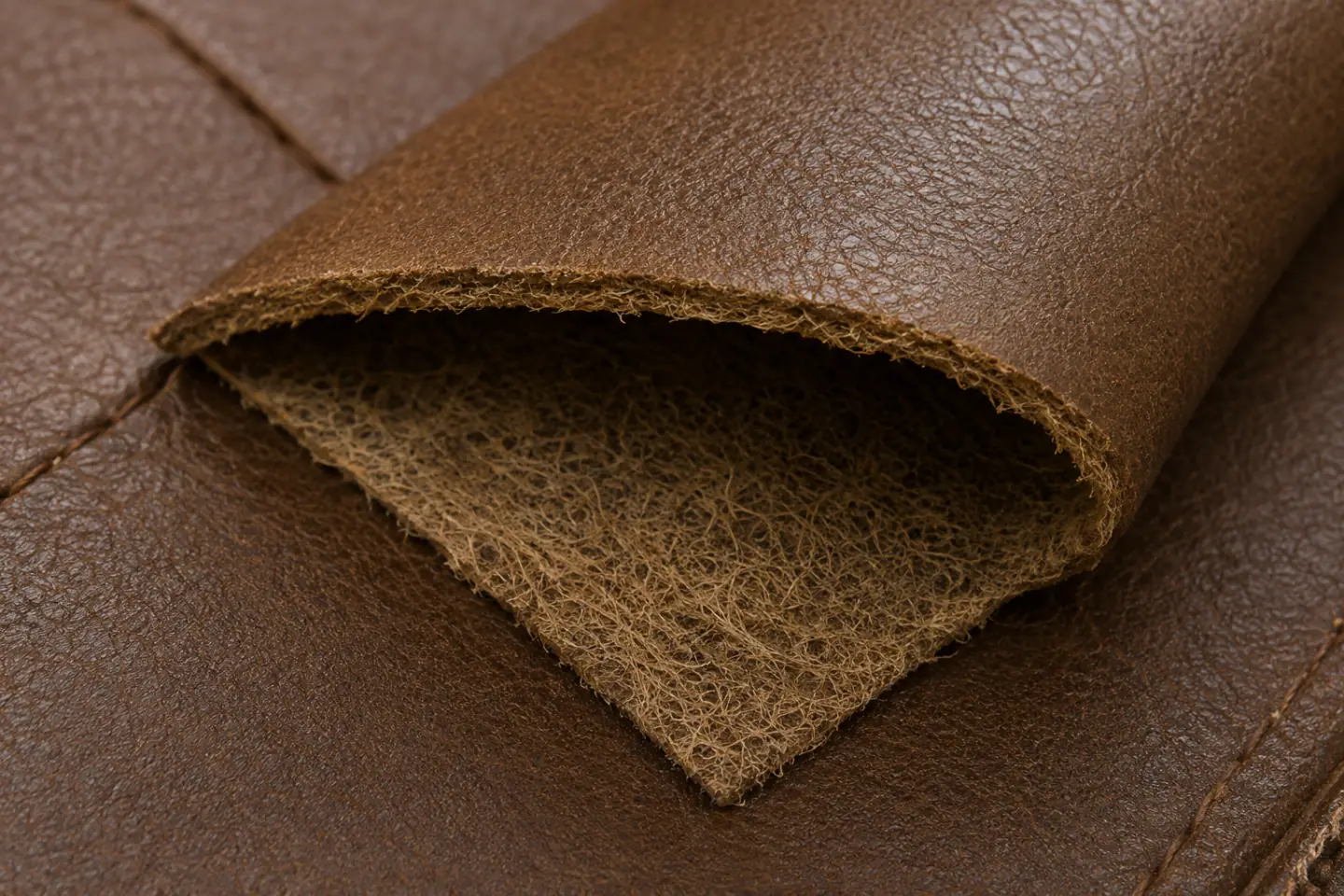
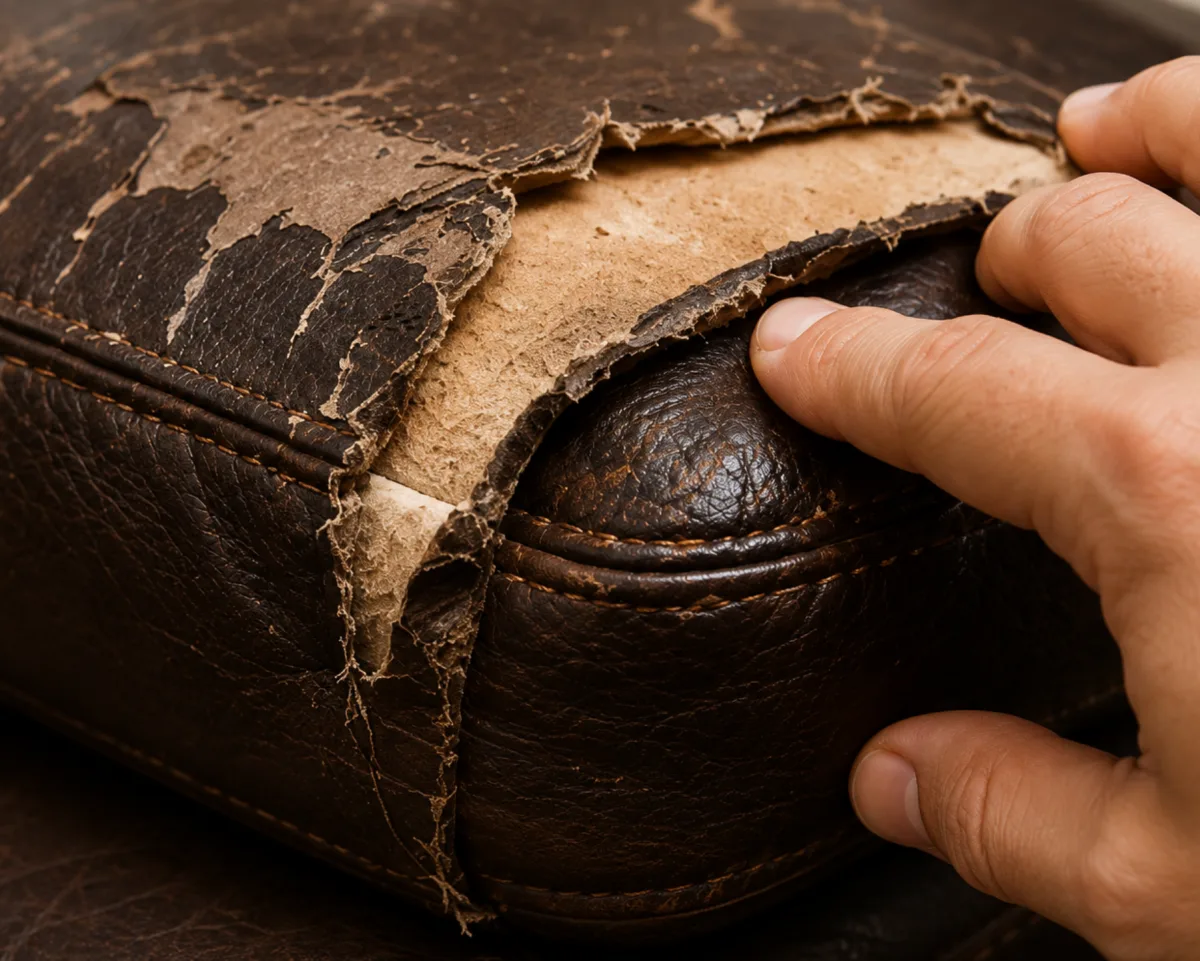
Only one of these has leather underneath
Finish adhesion is a measured property with published international test methods behind it. In a living room the test that decides a leather peeling repair is cruder and just as quick.
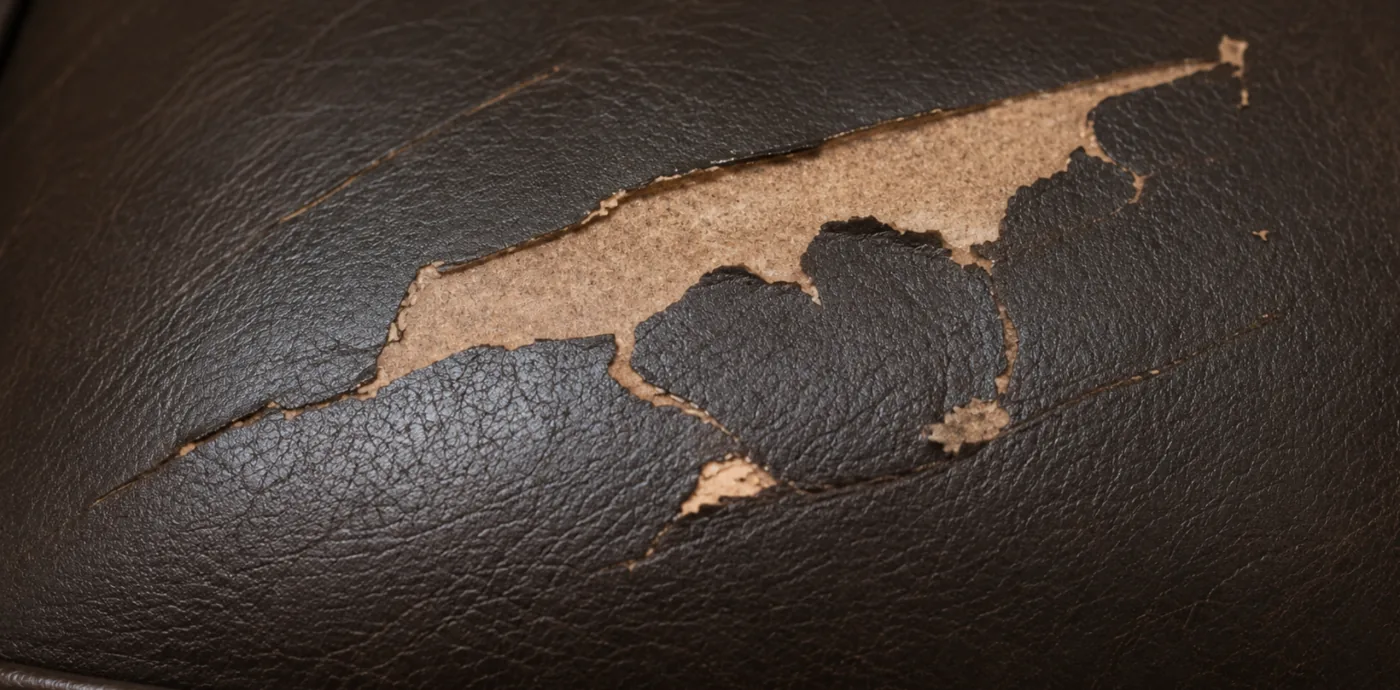
Finish failure on real leather
- The chip's back is smooth coloured film
- What it exposes is dull, suede-like hide
- The patch has a hard edge you can feel
Repairable. The failed coat comes off, the sound coat stays, and the panel is rebuilt on pigmented leather that is still there.
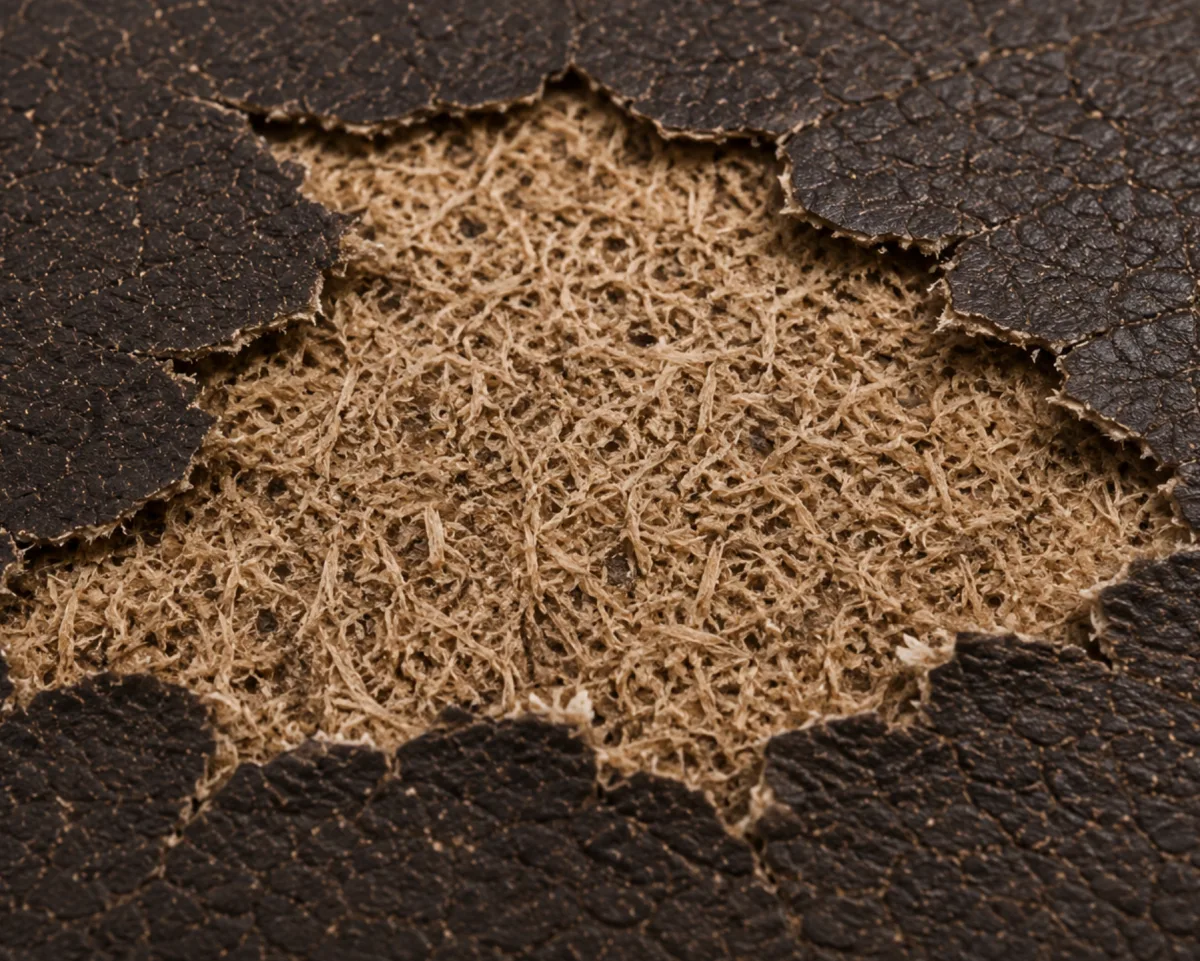
Delamination on bonded or PU
- The chip's back carries matted fibre or cloth
- What it exposes is a fibre sheet, not hide
- It lifts in sheets rather than chips
Not repairable. There is no hide to key into, and the next sheet of bonded leather is already loose.
Peeling gets bigger. Cracking mostly stays put.
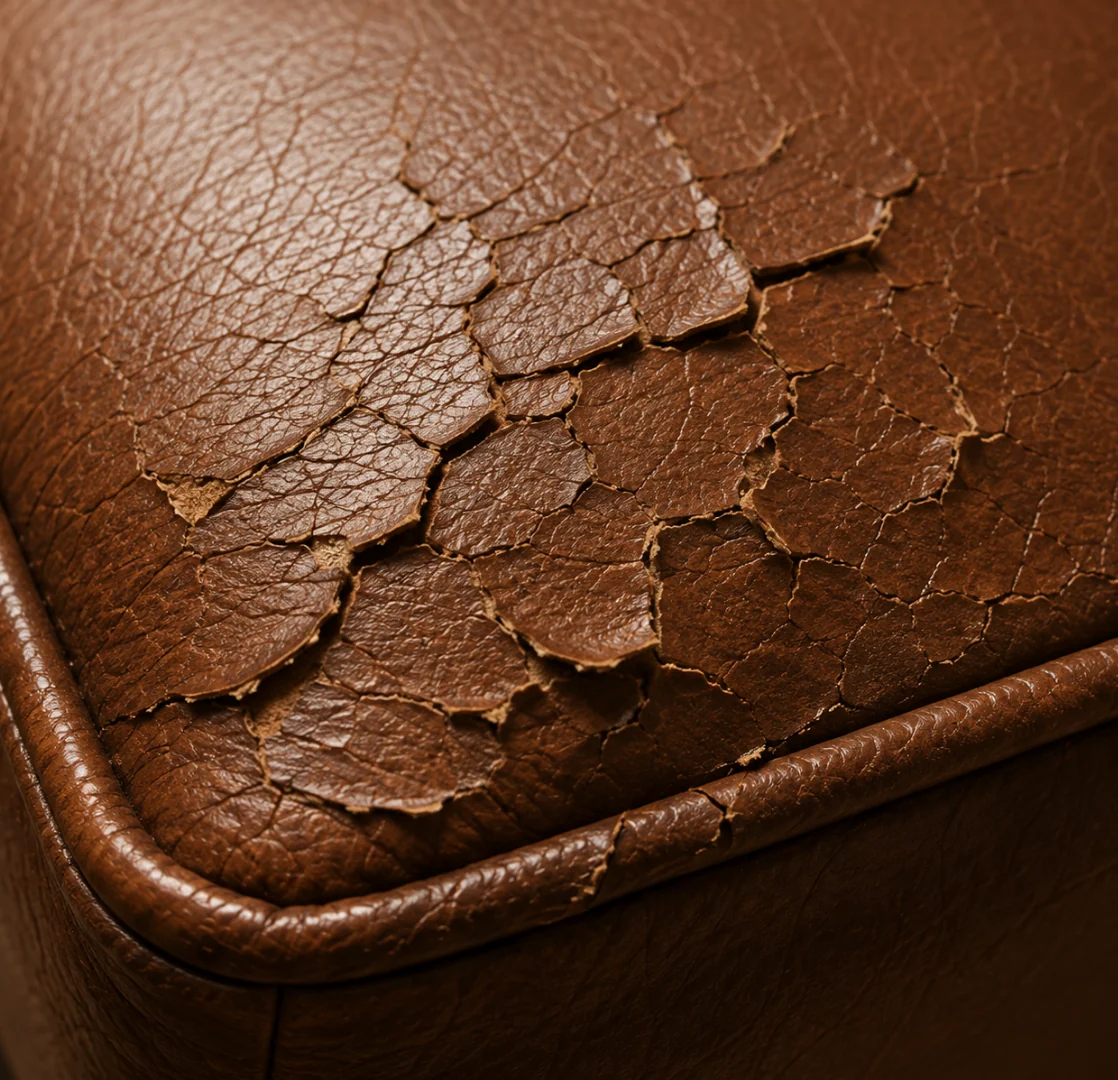
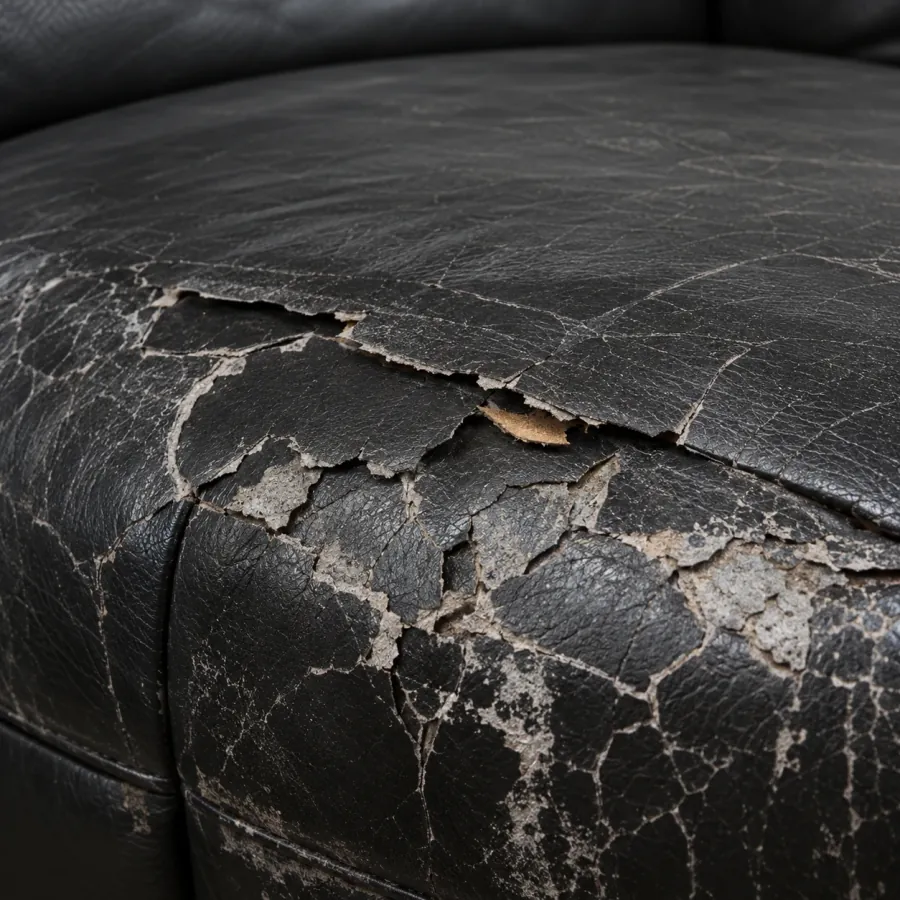
The same pigmented panel in four states. Every stage costs more than the one before it, because every stage leaves less original finish to blend a leather peeling repair into. Cracking that has not lifted yet is a different job, and so is a scuff or a sun-faded panel where the coating is still whole.
-
 Stage 01
Intact
Stage 01
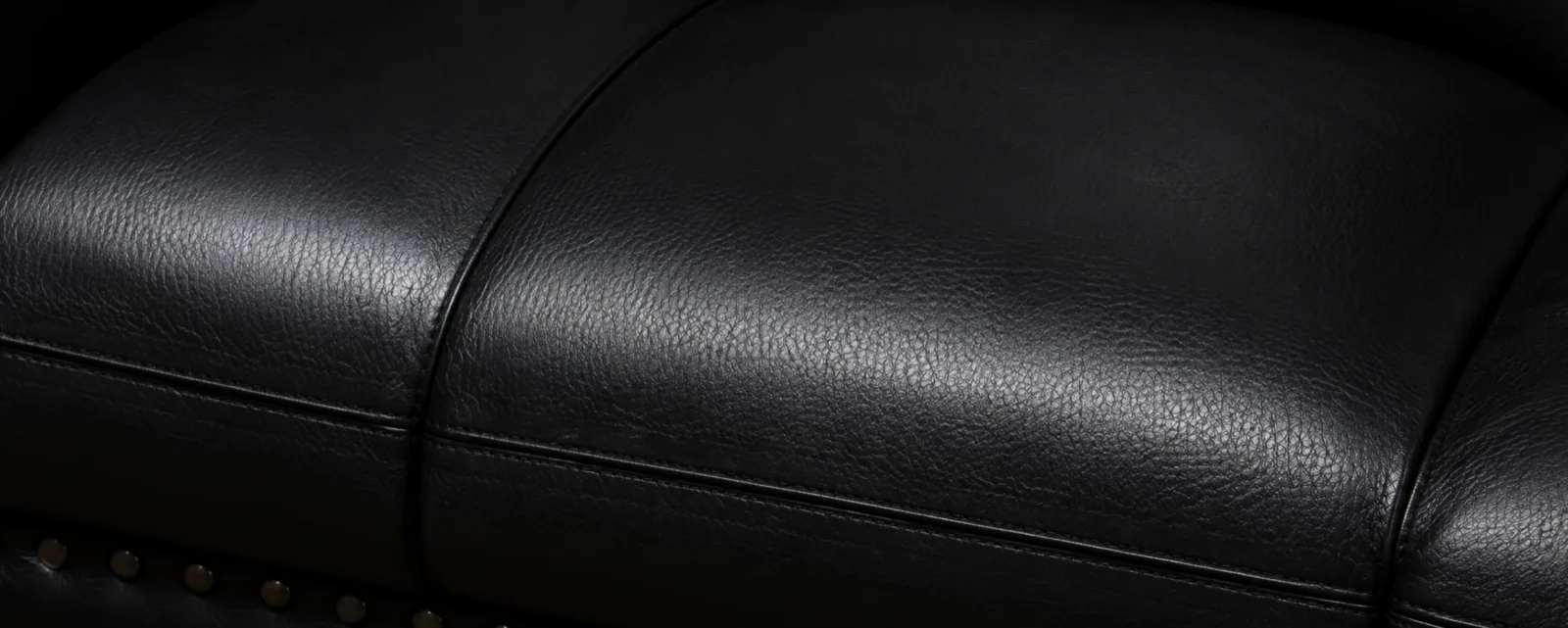
IntactFinish whole, grain still crisp.
-
Stage 02
Crazing
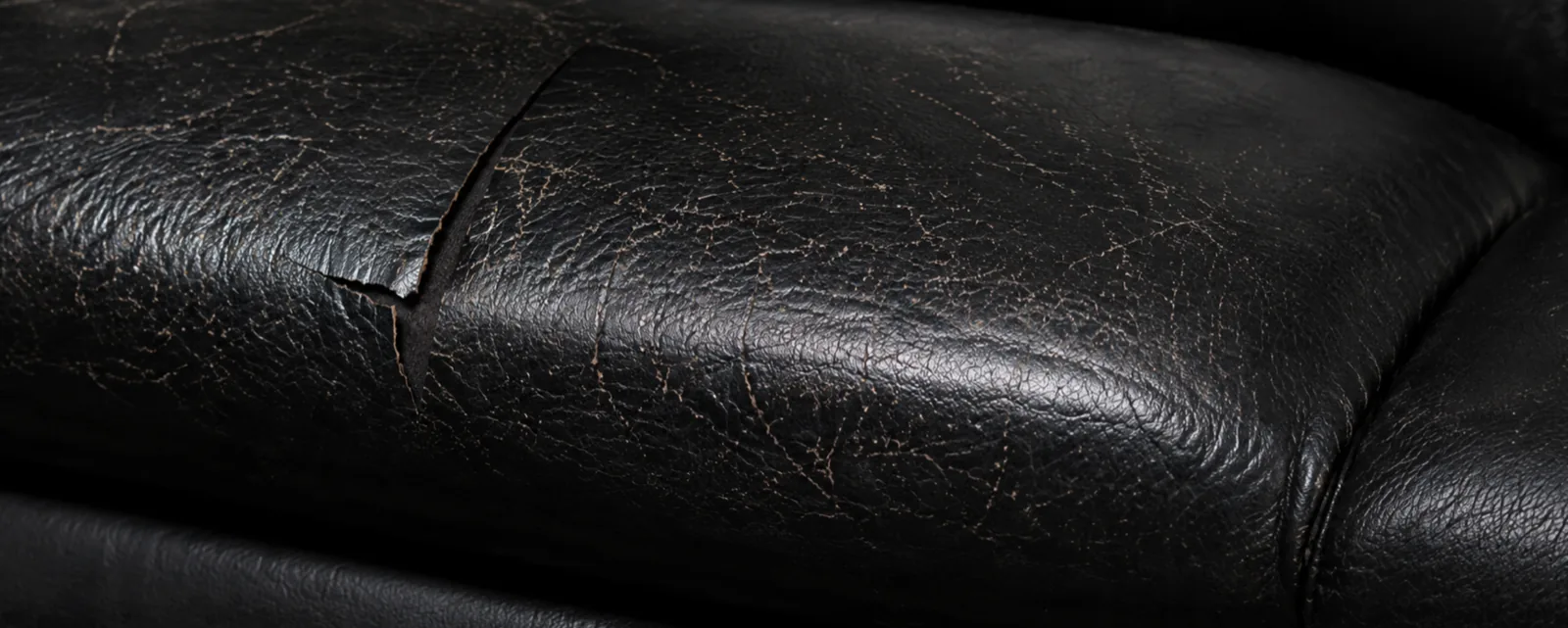
Fine map cracking. The coat has gone brittle but is still stuck down.
-
Stage 03
Lifting
Edges curl. The last stage where the original finish is doing any work.
-
Stage 04
Flaking
Chips gone, hide bare. Now it is colour work across the panel.
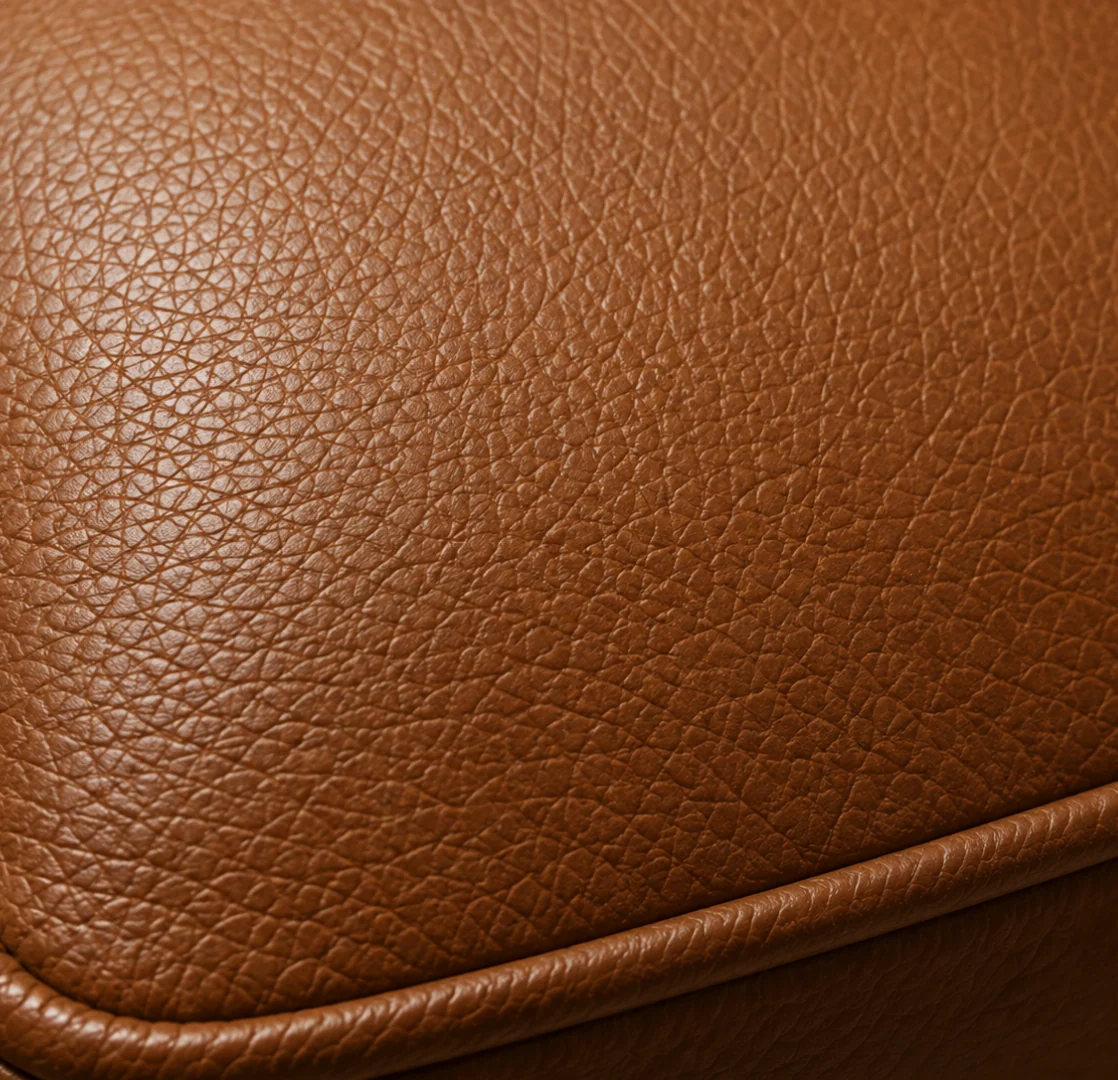
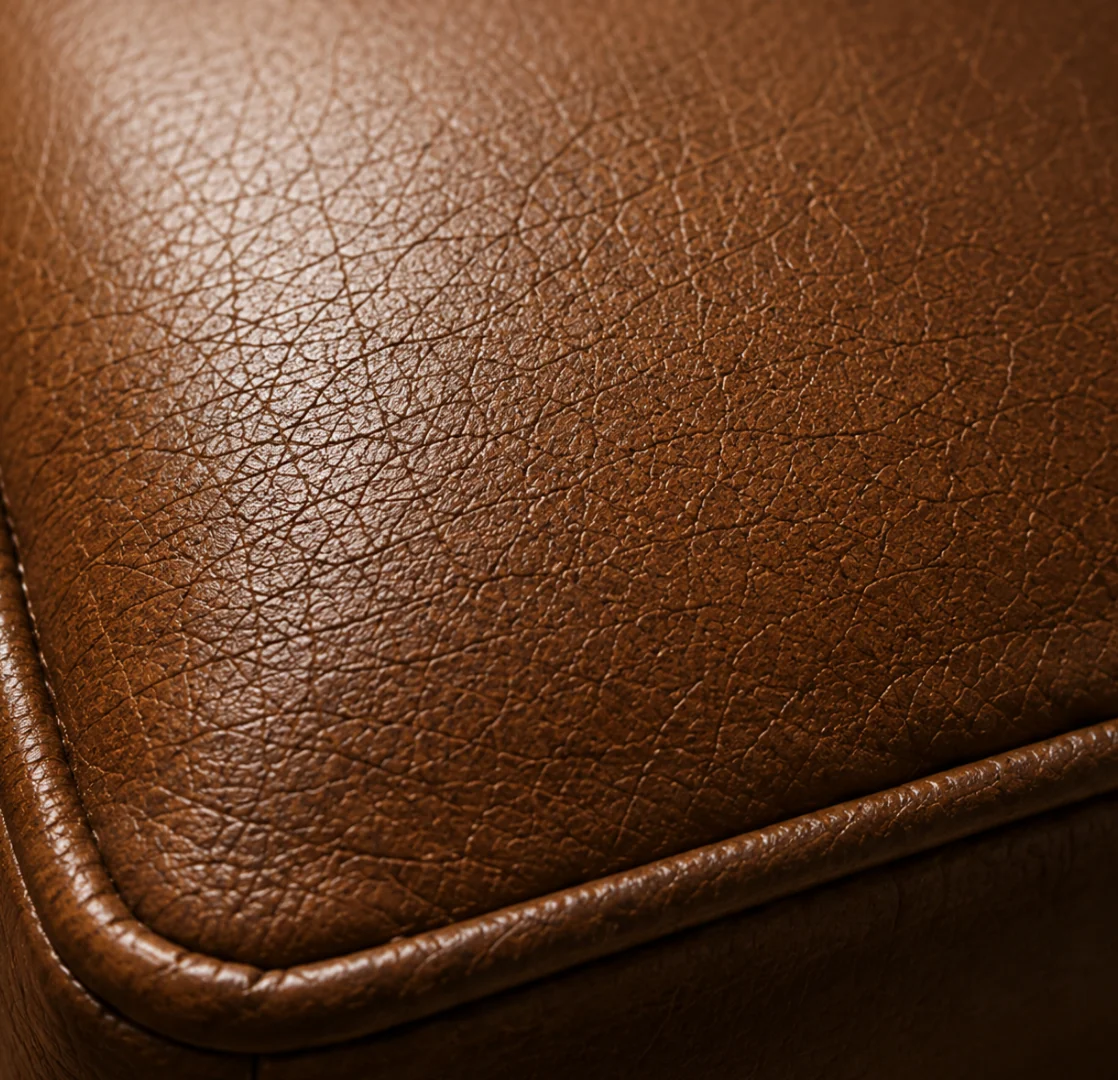
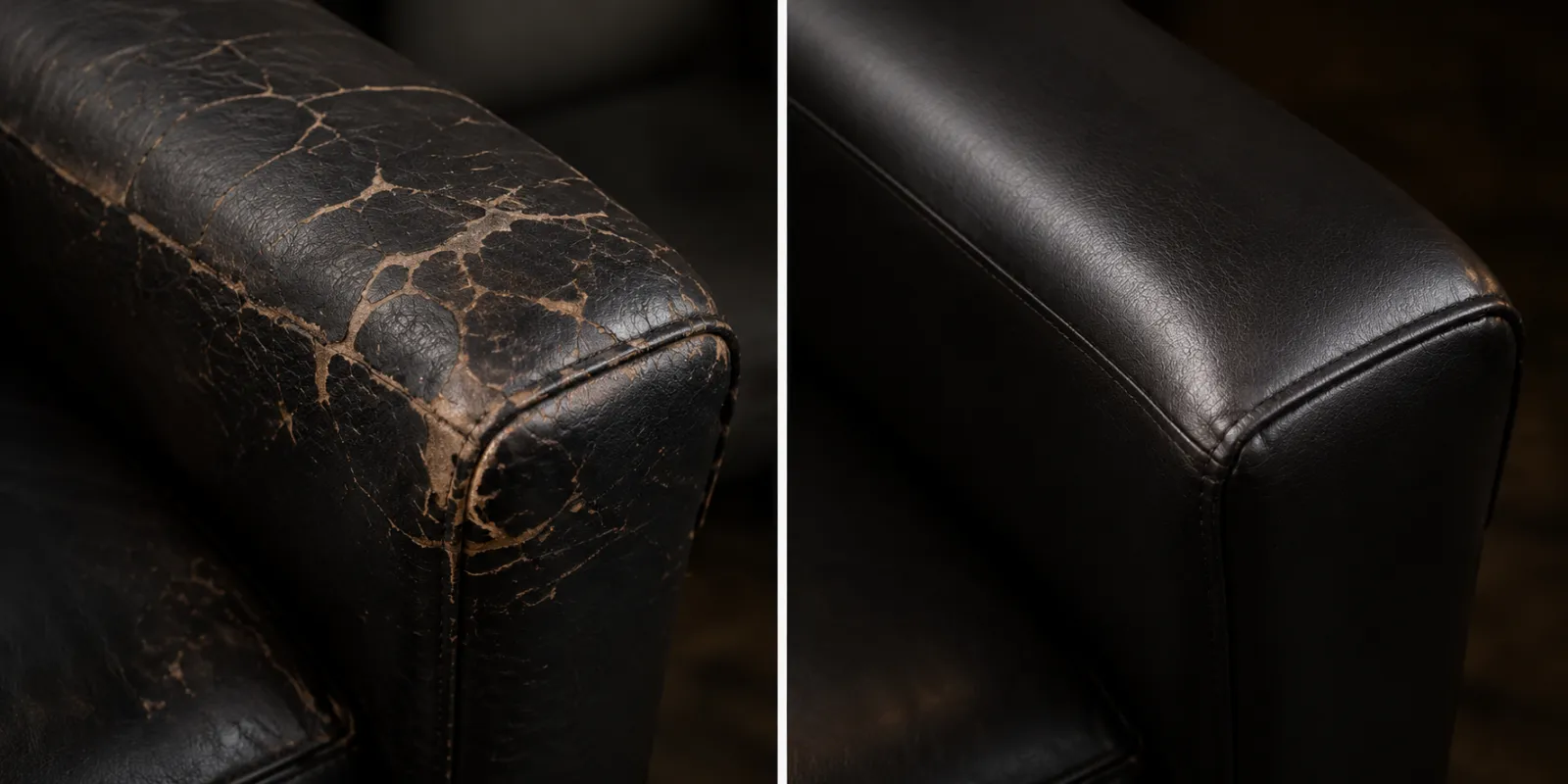
A peeling black armchair
Stage three on the outside back — one leather peeling repair, done in the apartment it stands in.
-
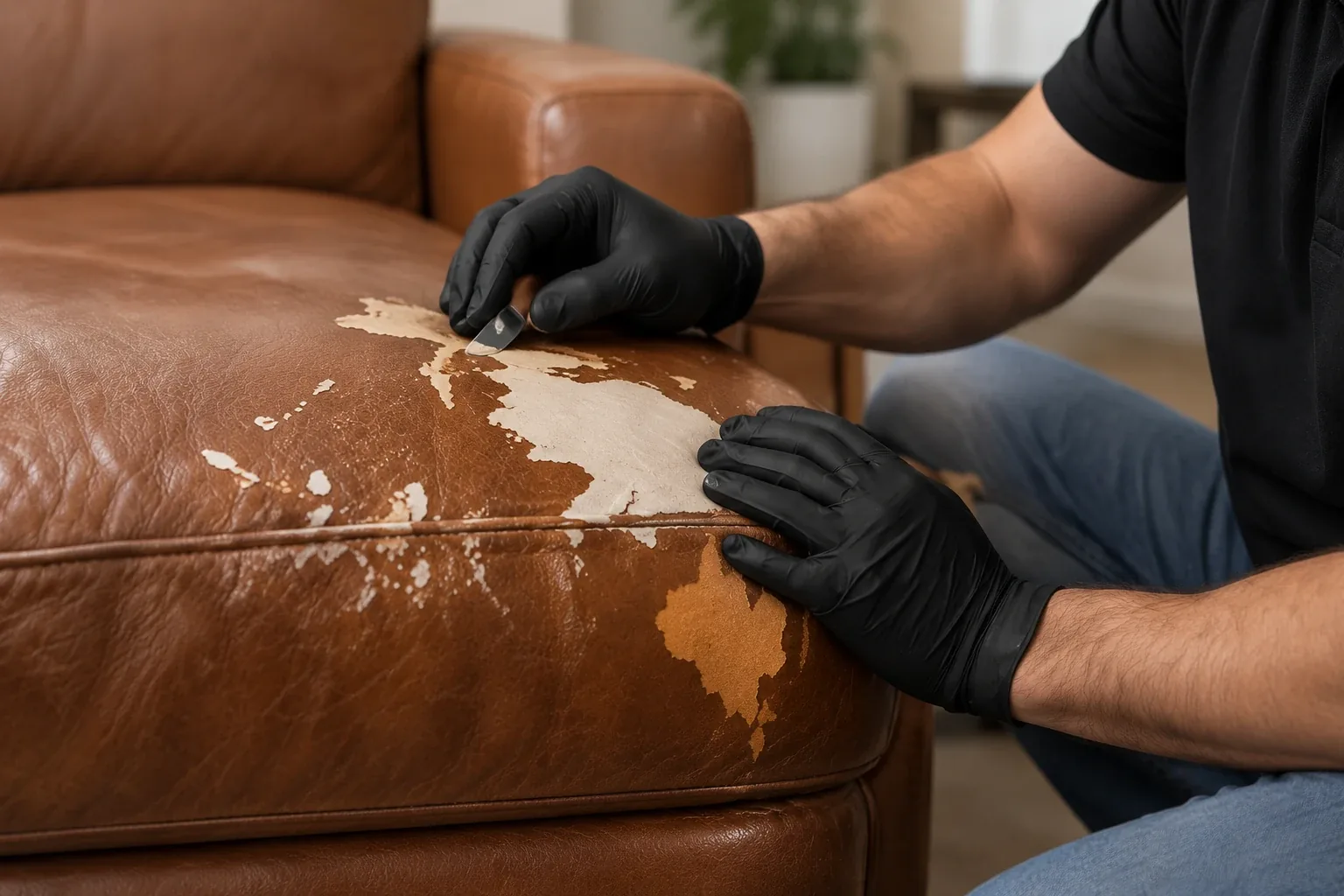
01
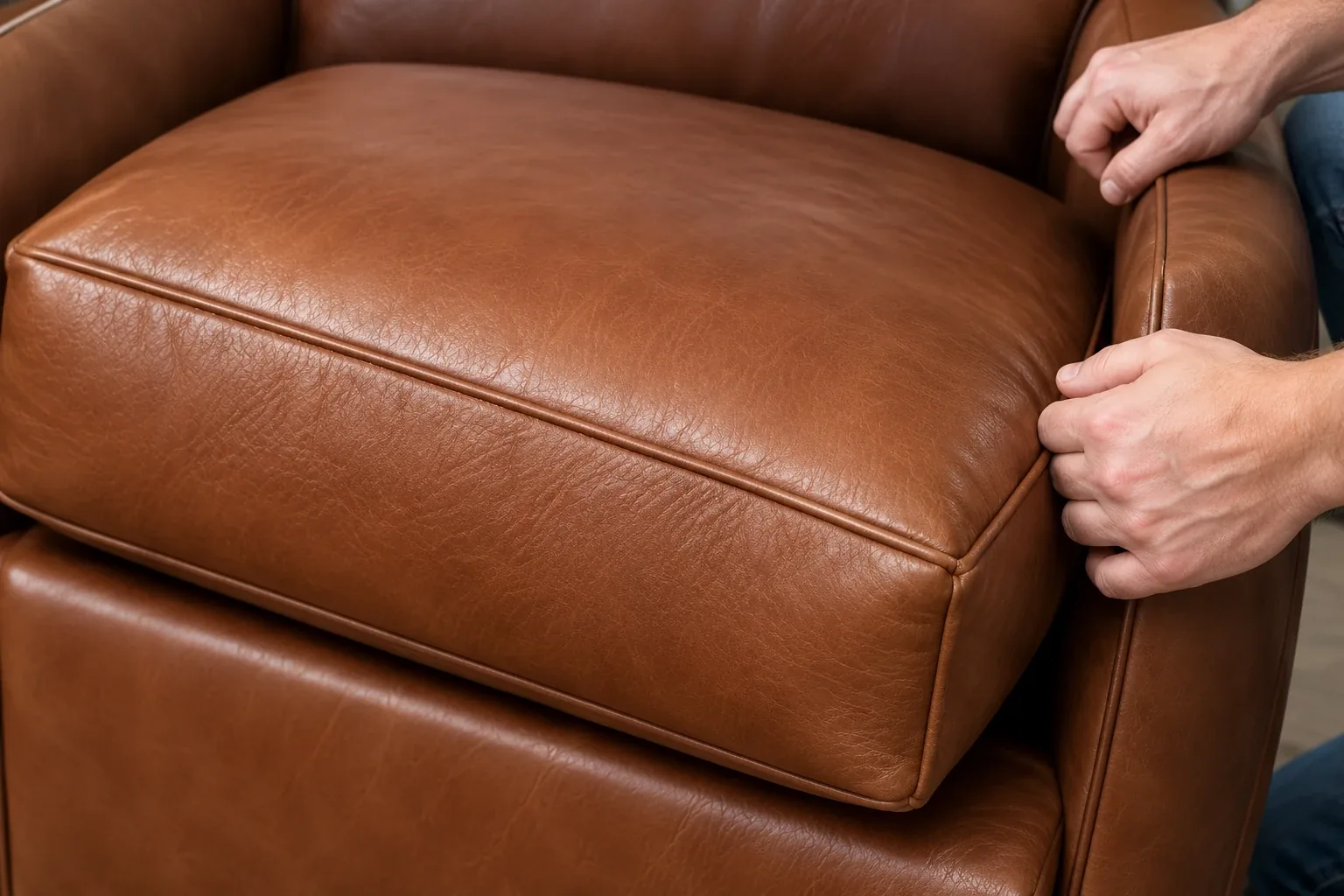
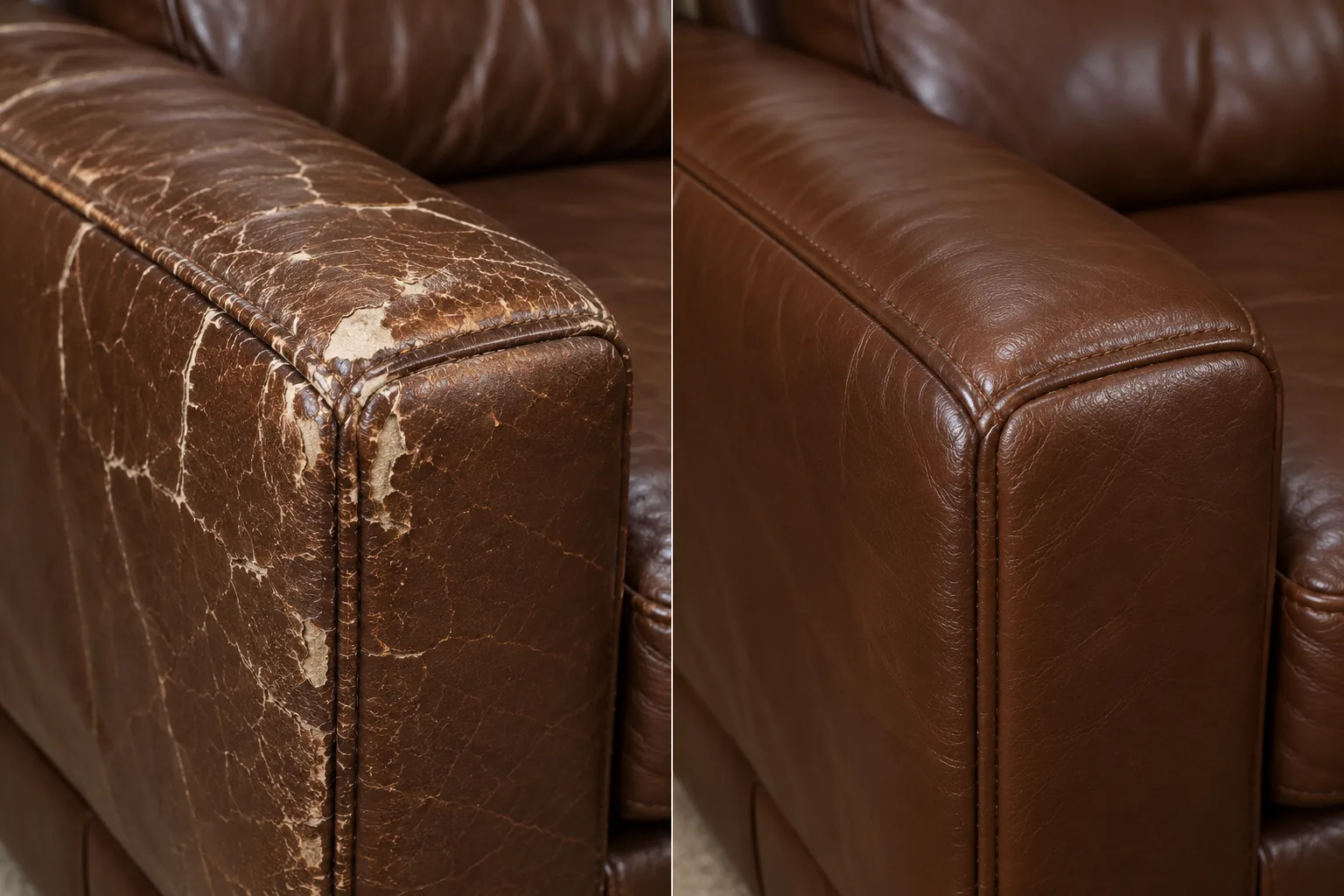
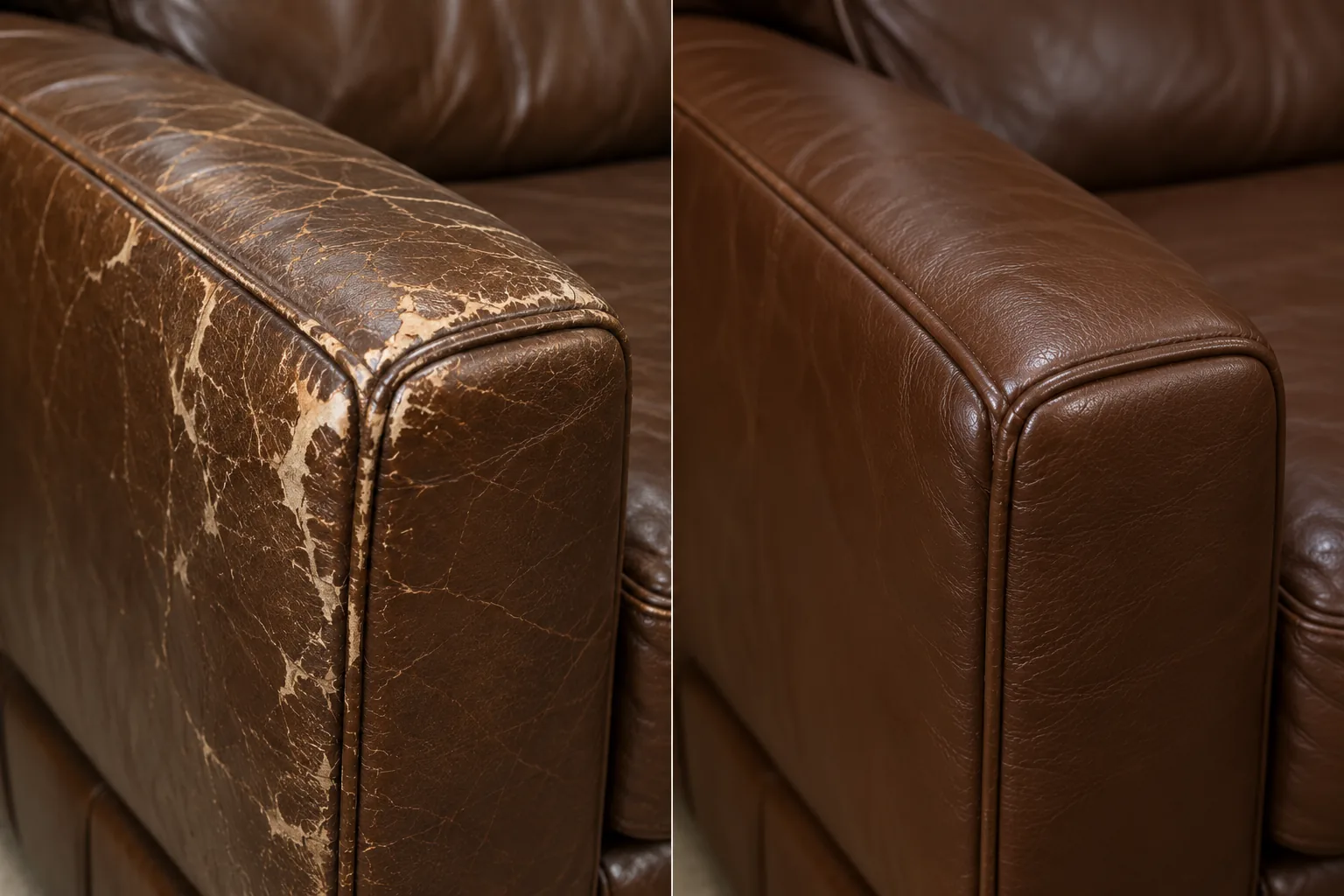
Every loose flake comes off. Anything that lifts under a thumbnail has already failed, and leaving it there guarantees the repair lifts with it. Arms go first on most pieces, which is why armrest repair is the commonest version of this job.
-
02
The hard edge around the patch is feathered back so the join has nowhere to telegraph once the light moves across it.
-
03
A flexible base goes on in thin passes, keyed into the sound finish around it rather than laid over the top of it.
-
04
Colour and sheen are matched wet against the panel, then sealed to the gloss the rest of the piece already carries.
When we tell you not to repair it
Rebuilding a finish needs two things: hide underneath, and a sound edge to feather the new coating into. Five conditions take one or both away. Any of them and leather peeling repair will lift again, whoever does it.
- The backing is fibre, not hideBonded leather is coating pressed onto ground-up fibre. The international leather trade body does not count it as leather. Strip the failed coat and there is no grain left to key into.
- The whole panel has gone, not a patch of itFeathering needs sound finish at the border. When the coating has let go across a full seat, back or arm, there is no border left to work to.
- The polyurethane has turned stickyA tacky, gummy surface means the film is decomposing rather than wearing. Anything laid over it comes away with it, usually within months.
- Someone has already painted over itNew colour on top of an old lifting coat fails at the old bond line, not the new one. That is the most common reason a second leather peeling repair does not hold.
- The hide itself has split at the flex linesOnce the leather is cracked through at seams and fold lines, the fault is structural. A finish will not bridge a substrate that keeps opening.
On any of those, the piece is a re-cover, not a repair — on a three-seater that means sofa reupholstery. We tell you which before you spend anything on a patch that will lift.
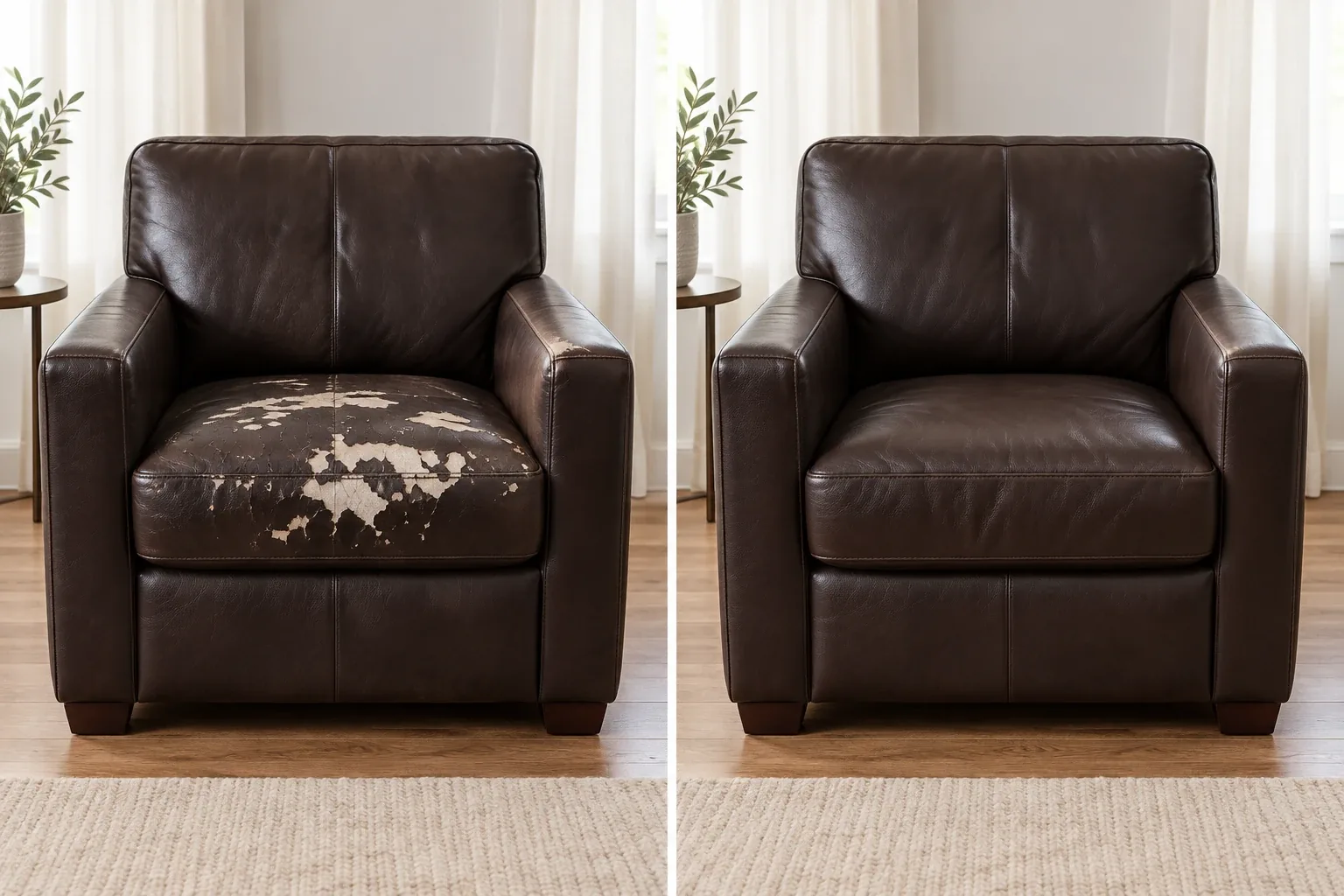
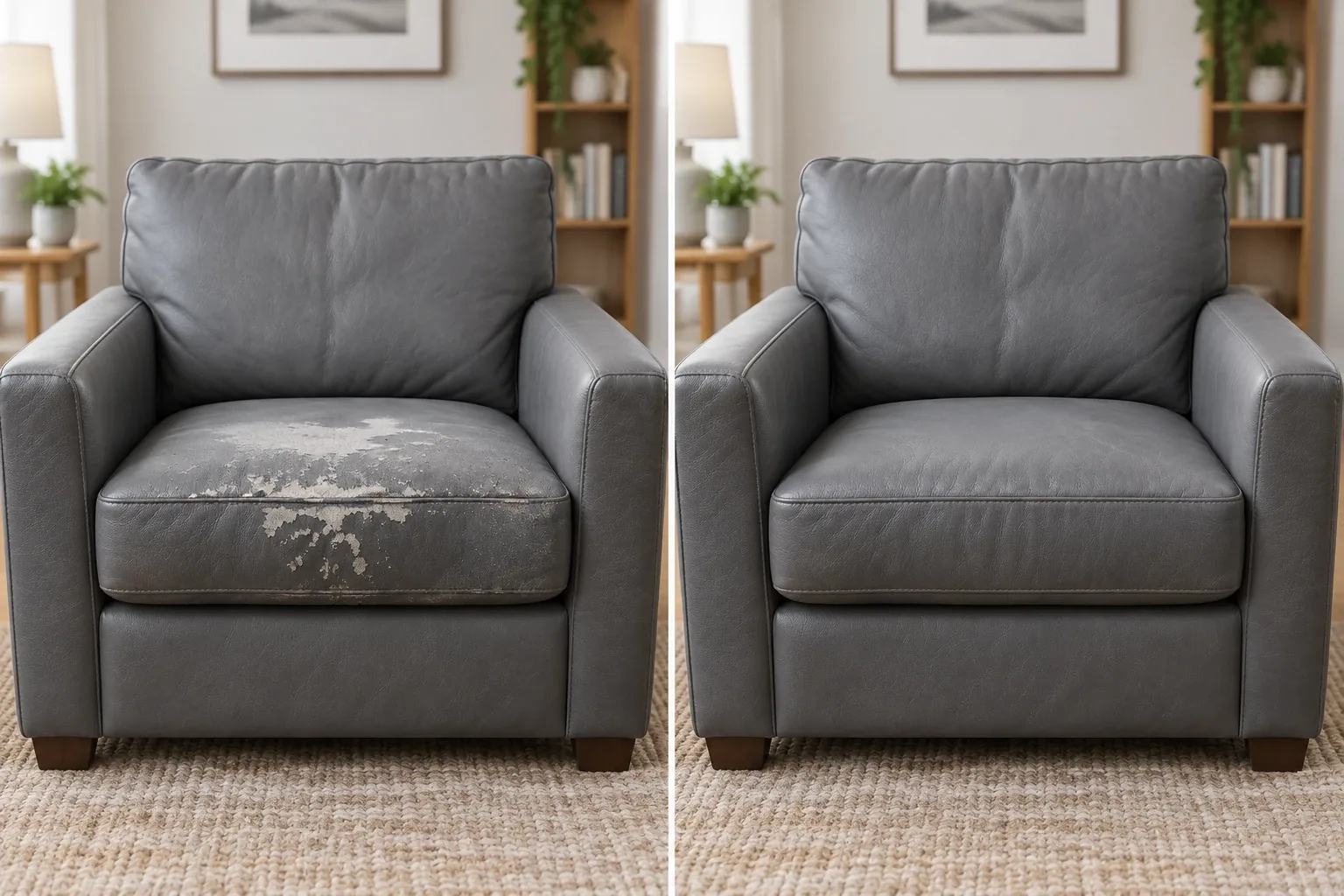
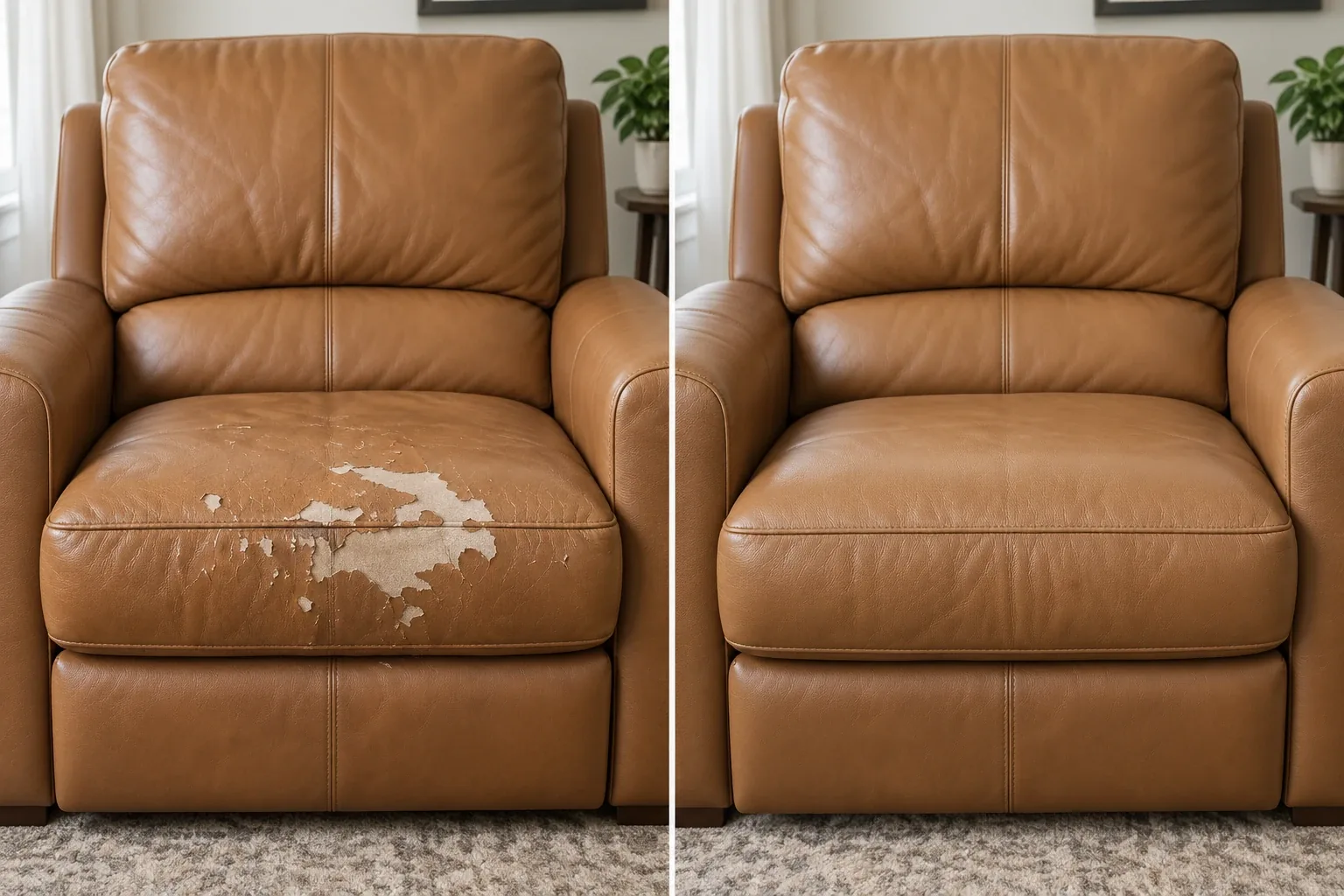
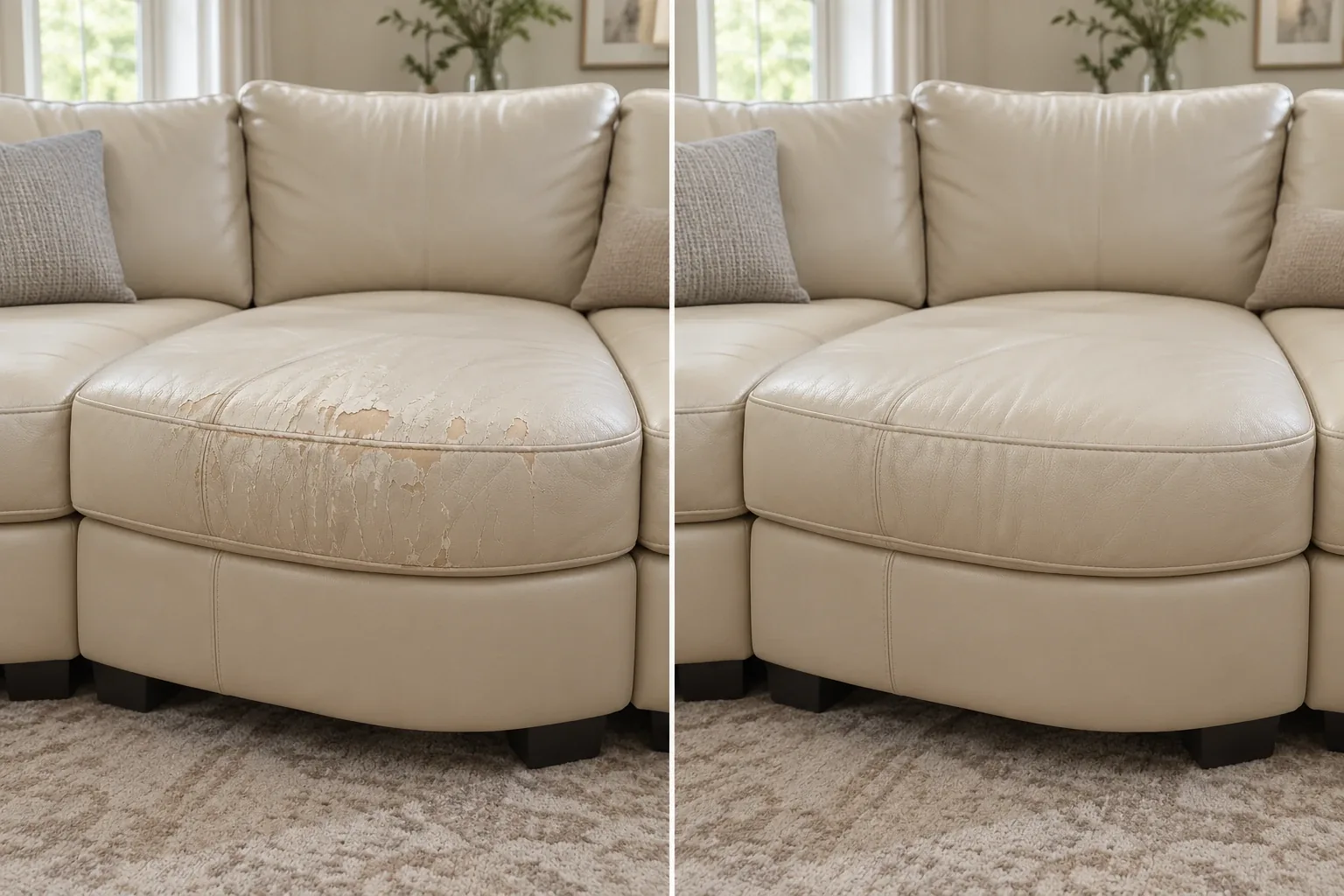
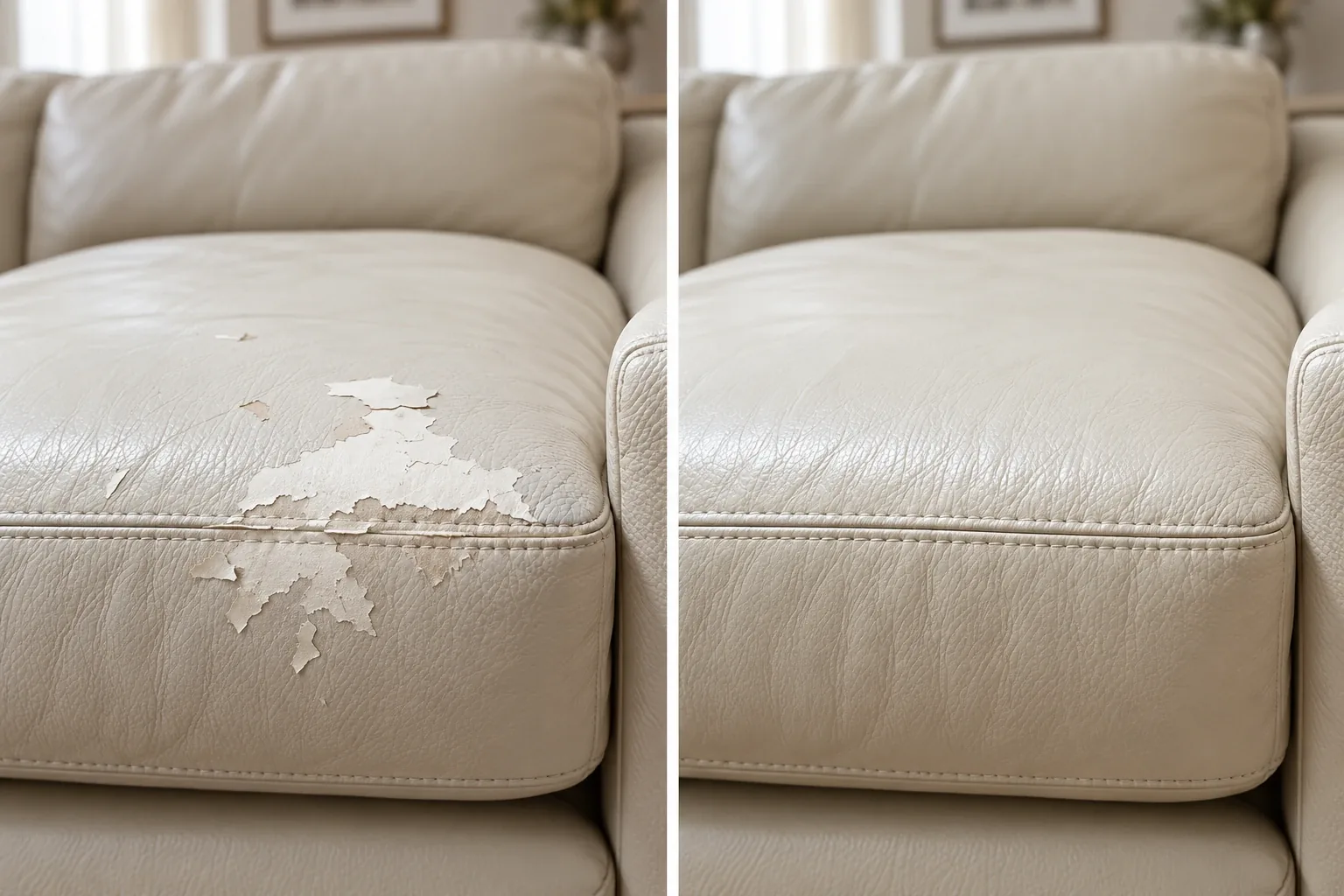
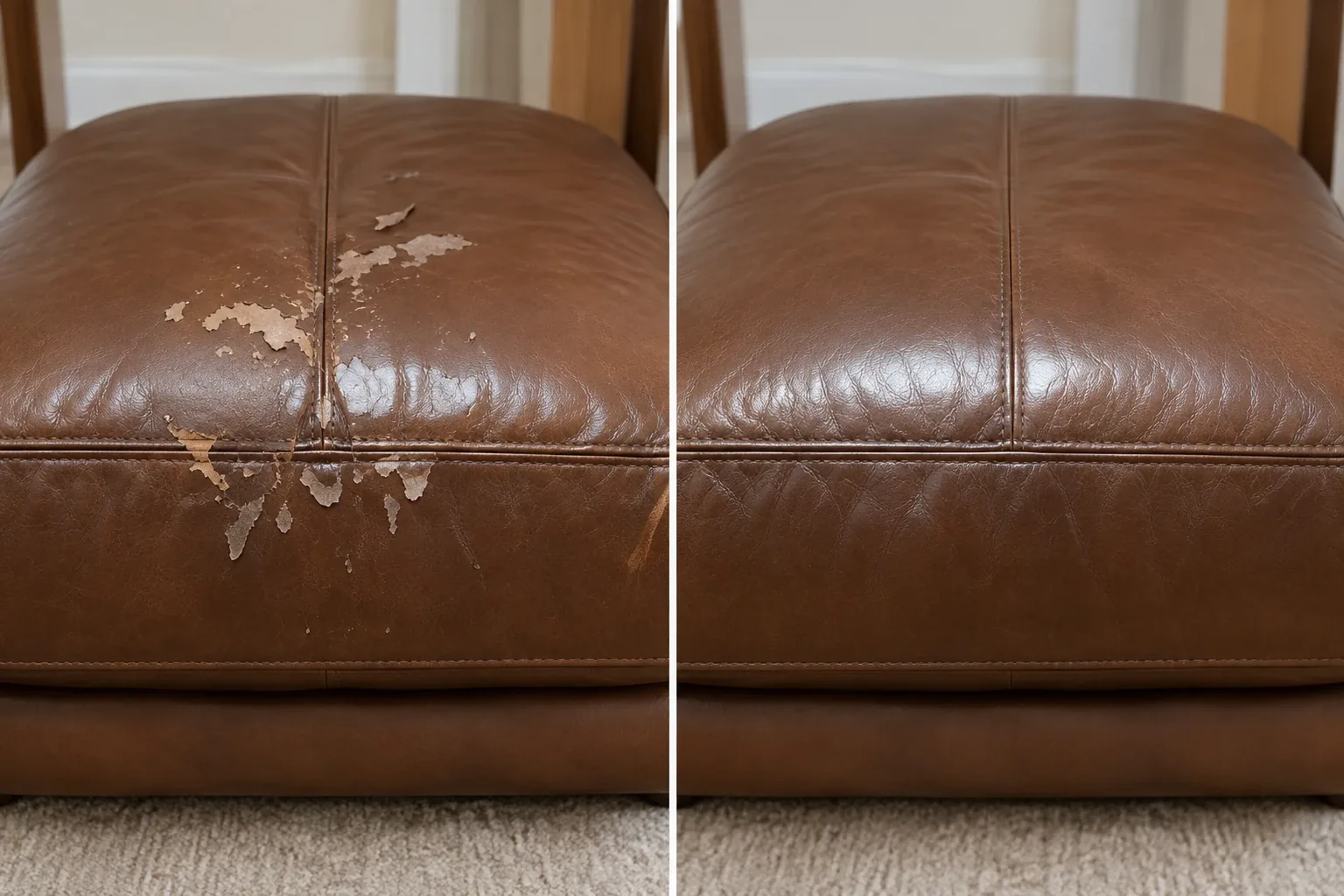
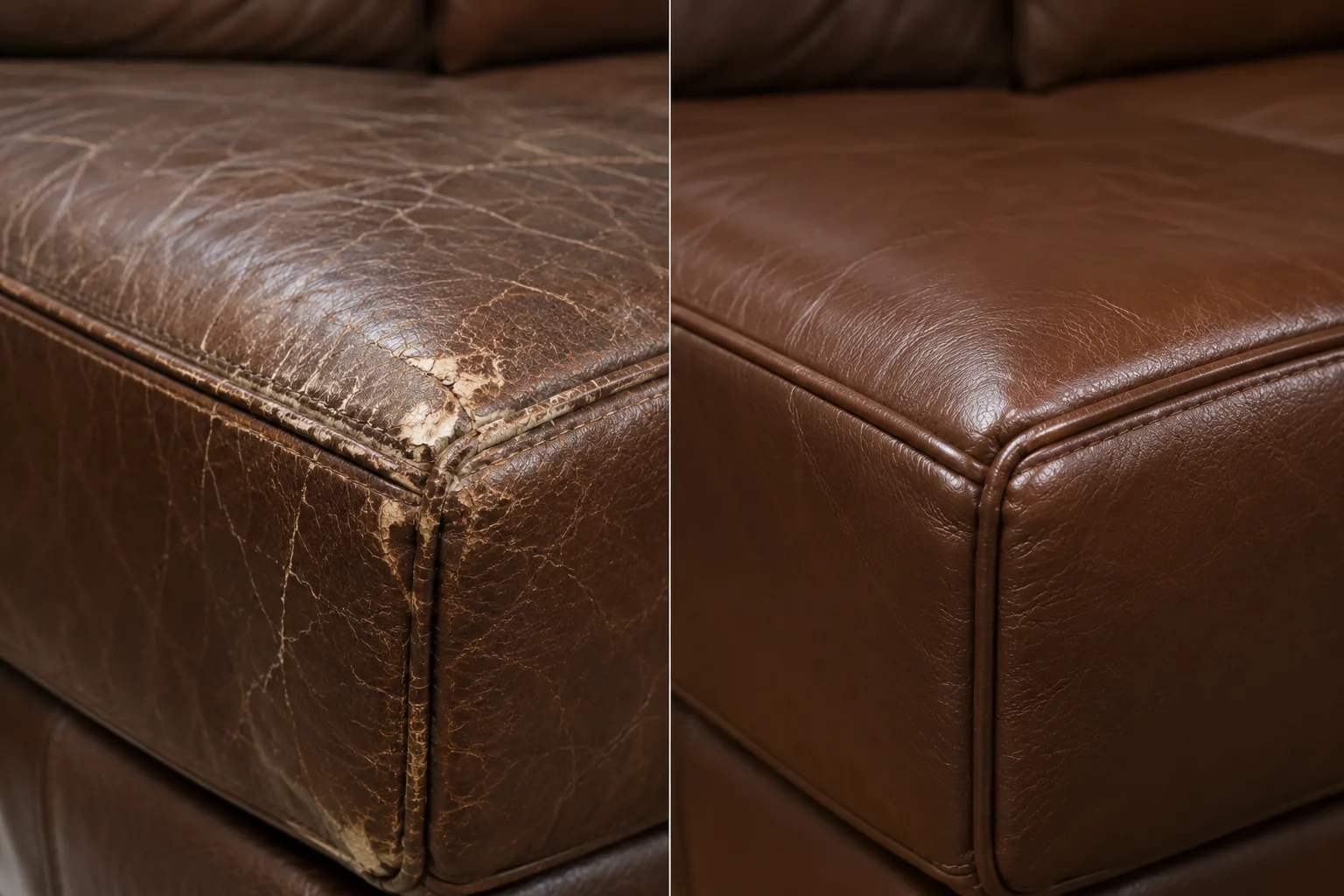
Peeled panels, rebuilt
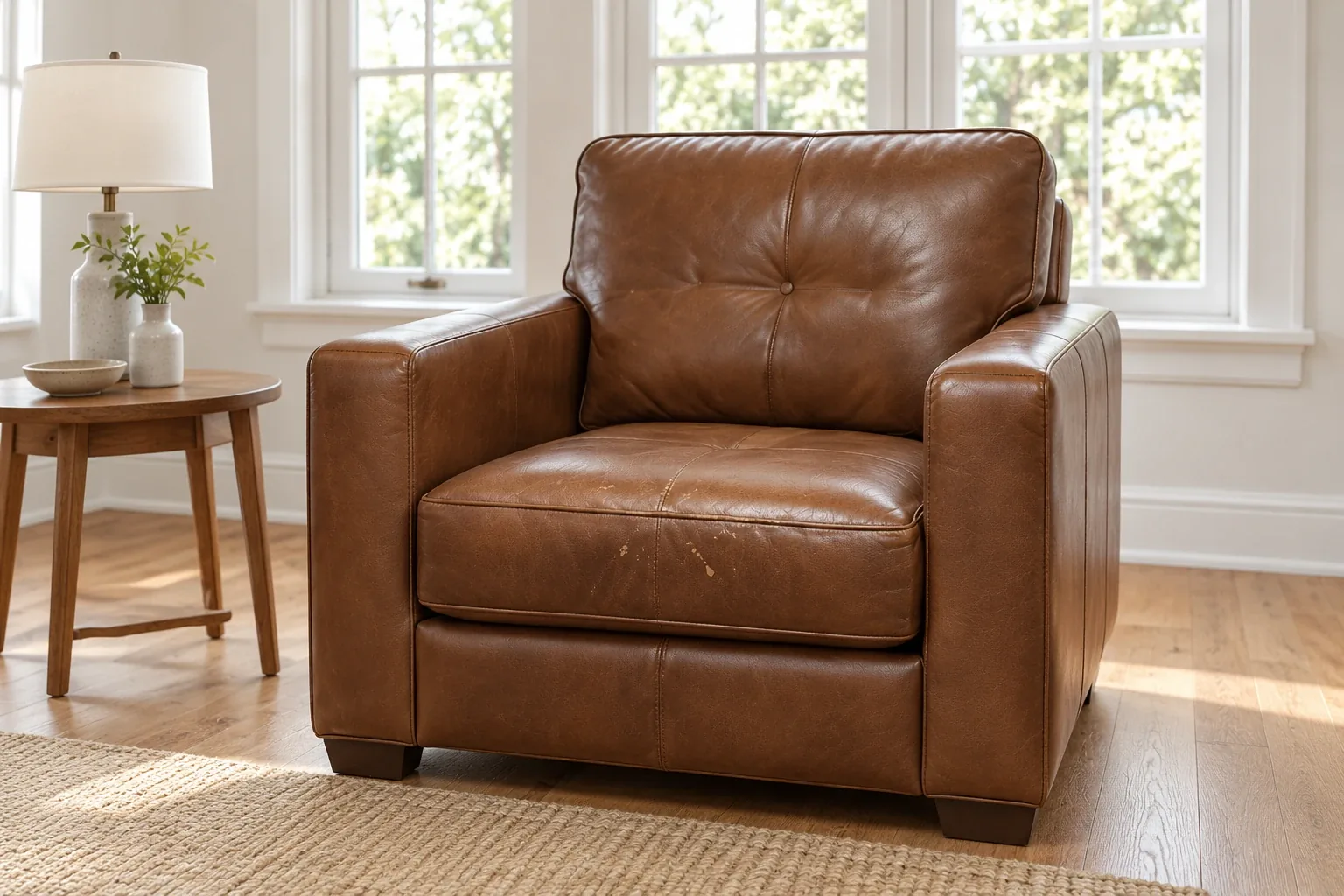
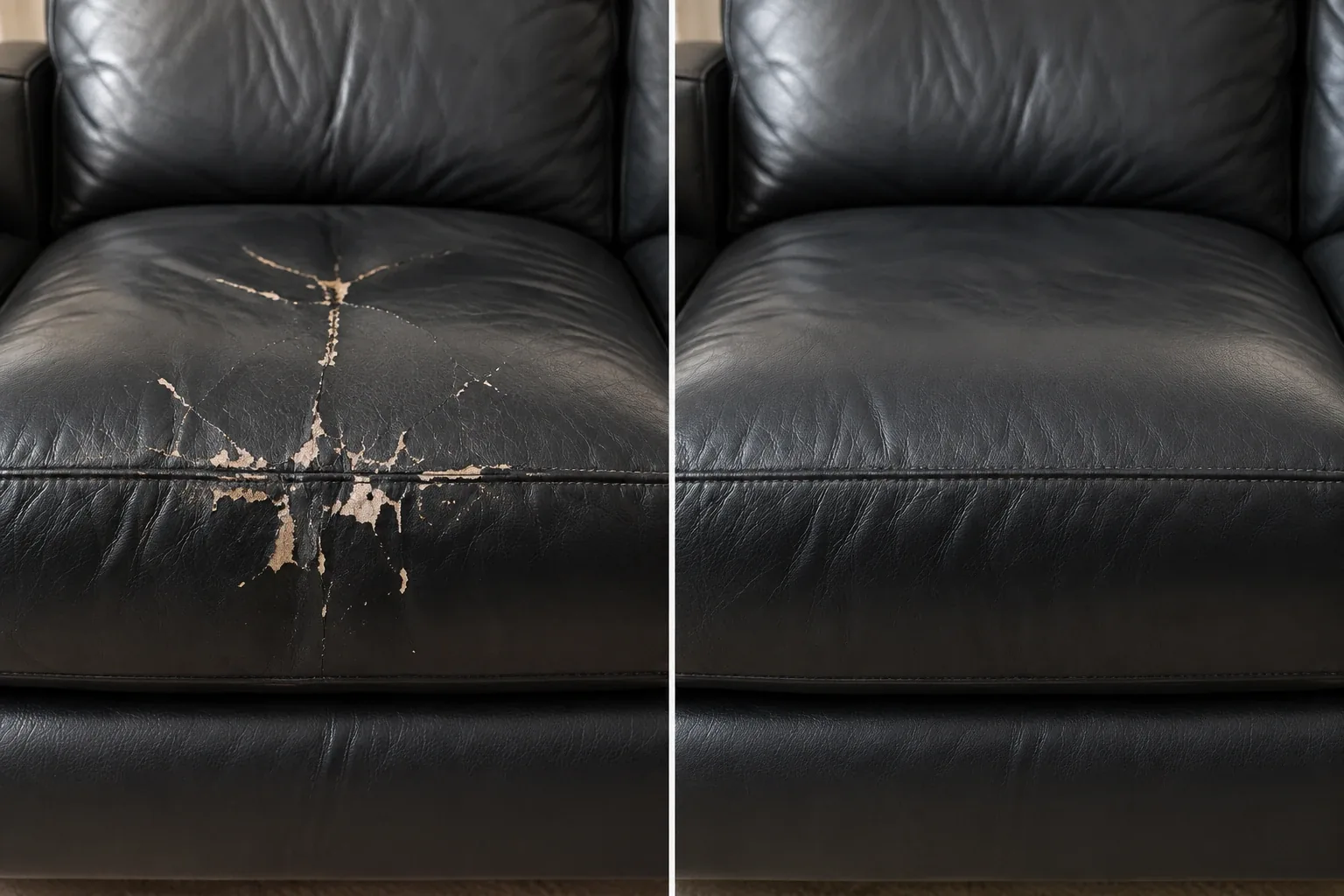
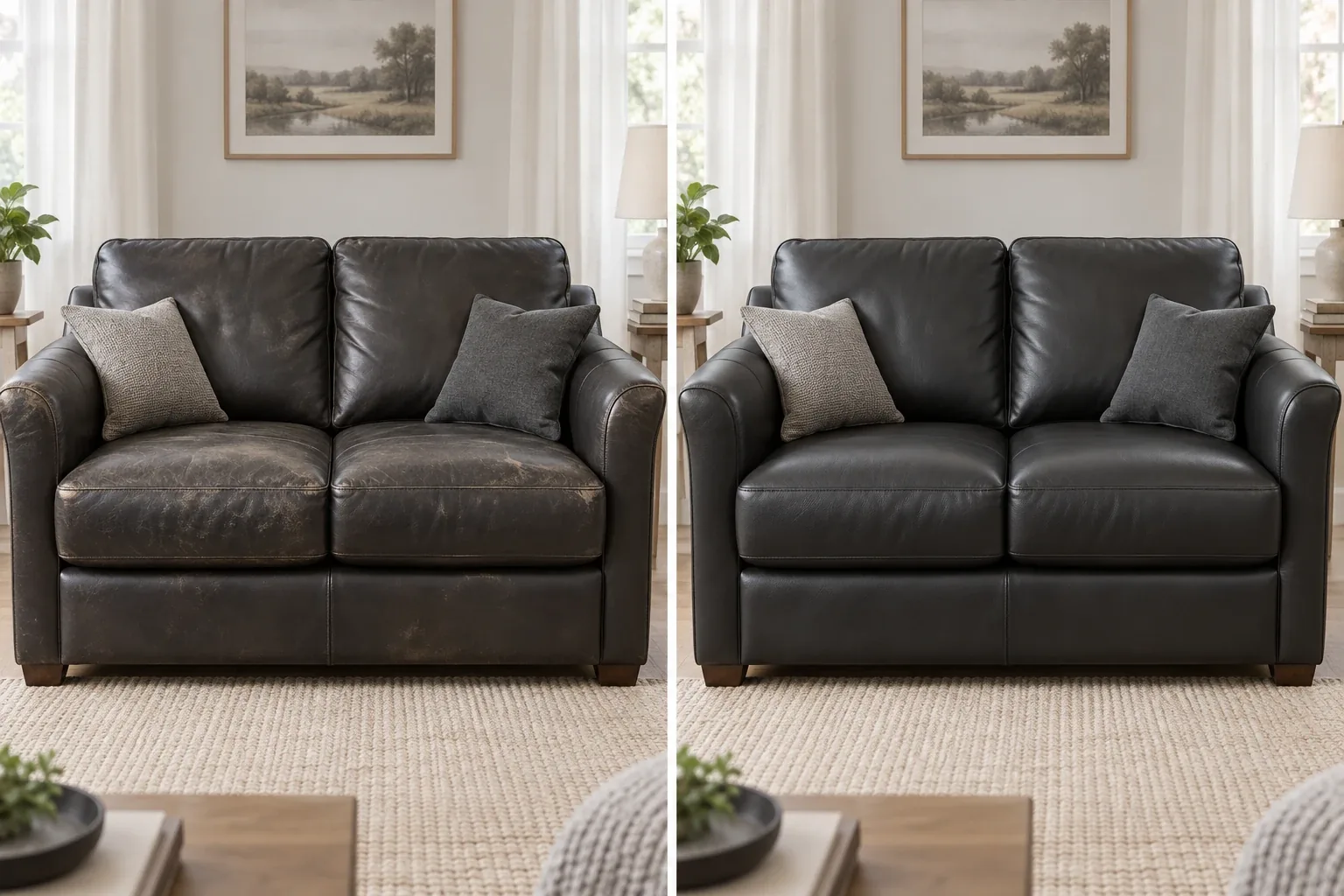
Left is before, right is after. Same piece, same room, same light. Seats lead the list because they take the most flex; where the padding under a peeled panel has gone soft as well, that is cushion repair on top of the finish work.
From photos to a clear plan


Peeling questions
Can peeling leather be repaired?
If the chip lifts off hide, yes. If it lifts off a fibre sheet, no — that is bonded leather, and there is nothing underneath to rebuild on.
Why is my leather sofa peeling?
A finish is a flexible coating over a hide that never stops moving. Heat, body oils and years of flexing set the coating harder than the hide under it, and the harder of the two lets go first.
Can bonded leather be repaired?
No. A patch on bonded leather lifts with the next sheet, because the backing it is bonded to is already failing. Reupholstery is the only lasting option on those panels.
Will the same spot peel again?
Not if the failed coat came off instead of being covered. Leather peeling repair that returns in the same place almost always means someone painted over a coating that was already lifting. Keeping the hide fed with regular leather conditioning slows the next one down.
Send one photo of a flake, one of the panel
Close enough on the chip that we can see its back, and one from a step back with the whole panel in frame. That is all it takes to tell you which of the two faults you have. Runs of seating across a venue are quoted together as a bulk project.