Leather Seam Repair 

Nothing is missing. It came apart.

When a seam opens, both edges are still there — leather seam repair is a question of access, not replacement. We work in New York City, Long Island and New Jersey.

What actually failed

What happened to your seam?

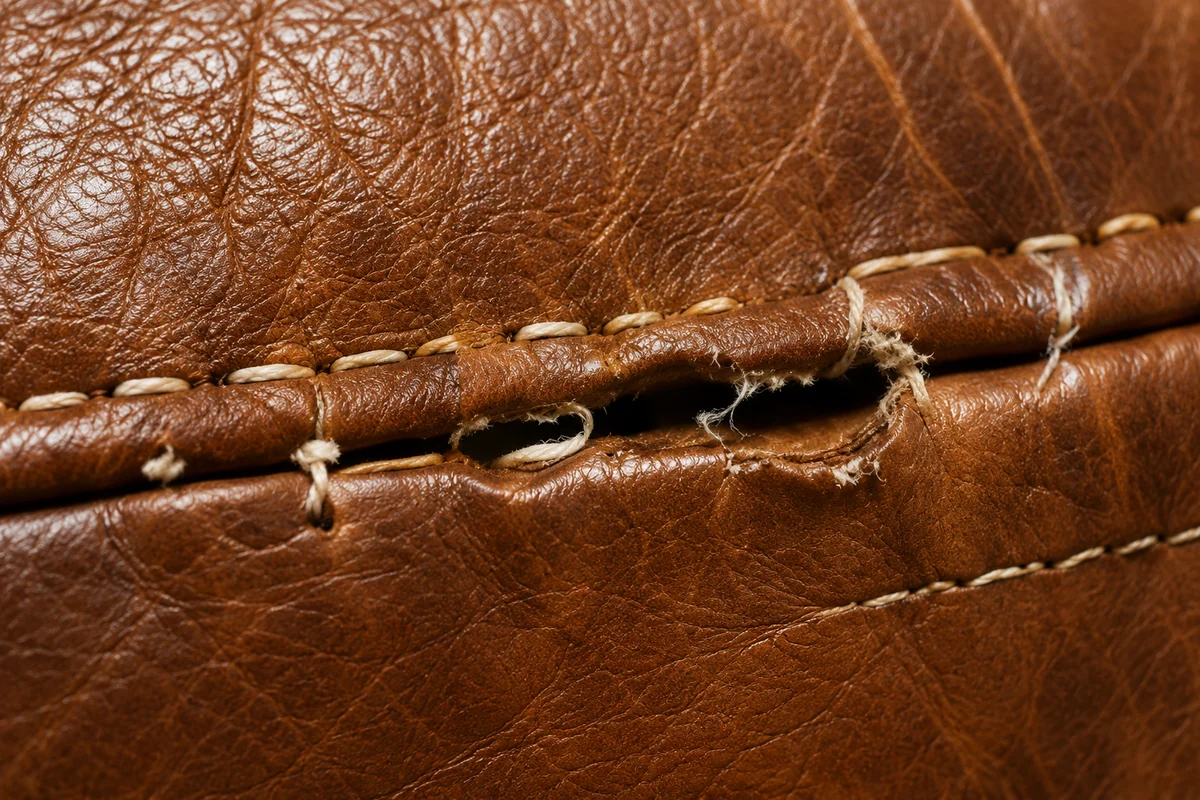
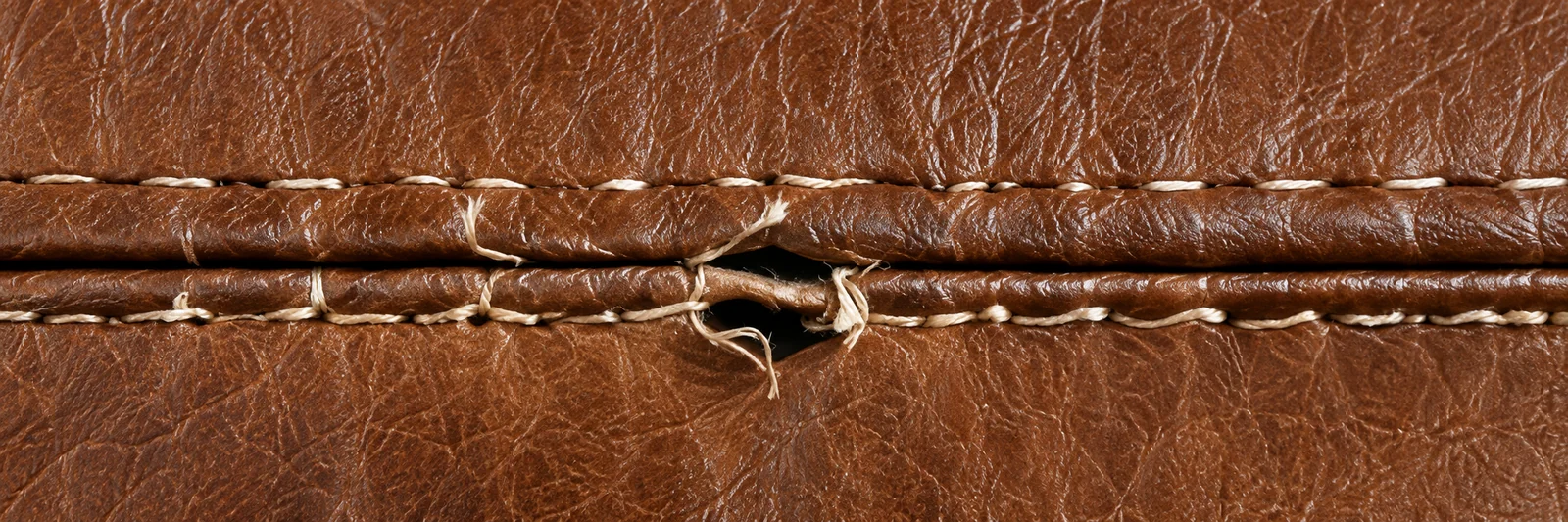
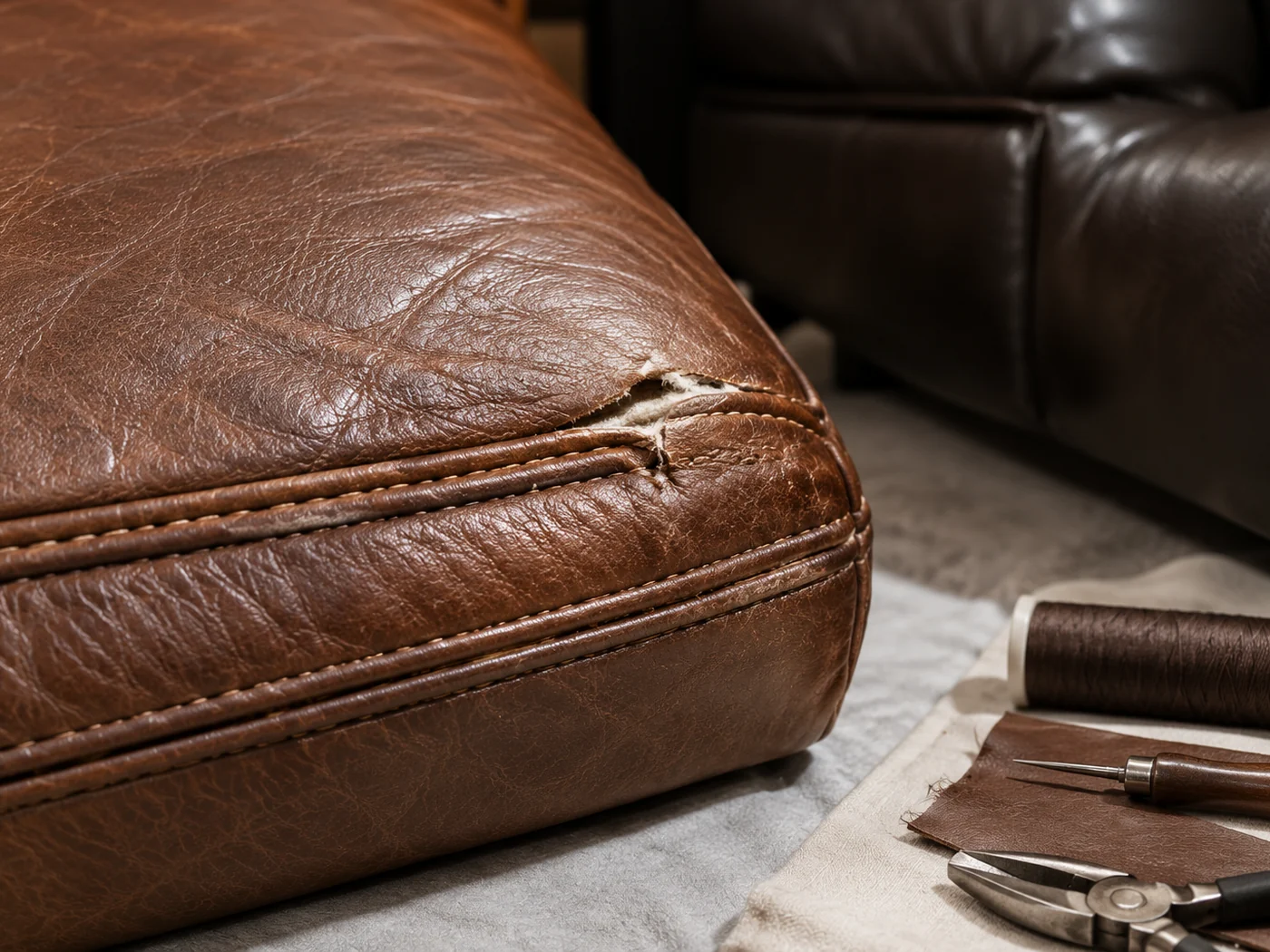
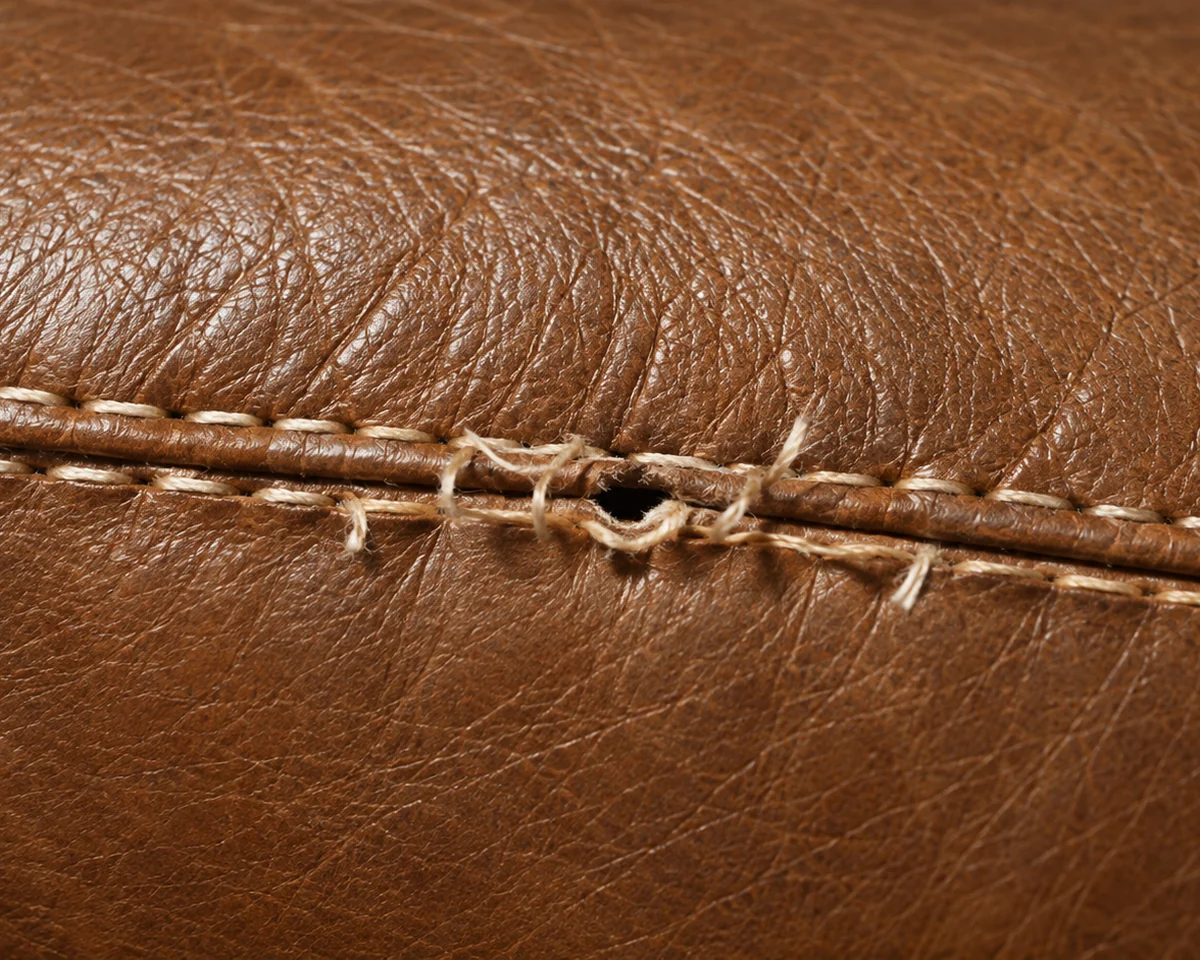
Tan leather seam with the cream topstitching frayed and pulled clear, leaving a small dark gap between the panels
Broken stitching
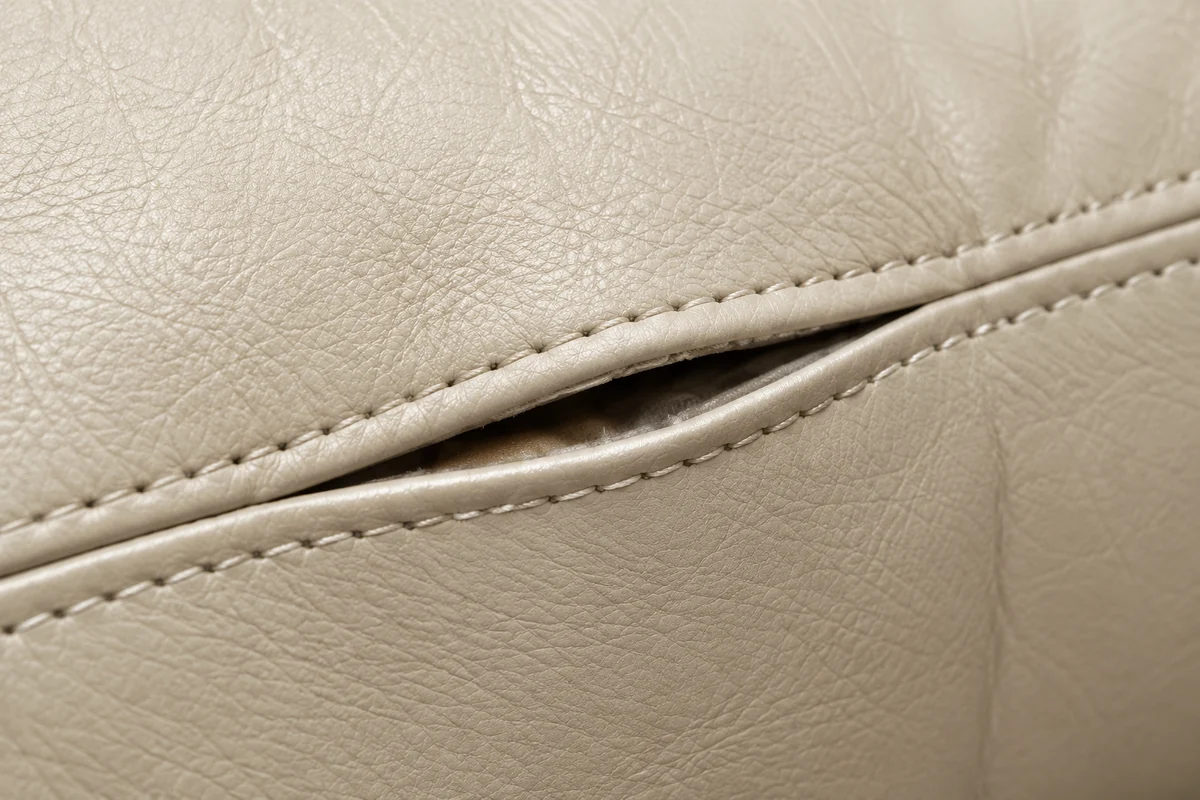
A cream leather cushion seam parted along a curve, the pale fill just visible inside the opening
Open cushion seam
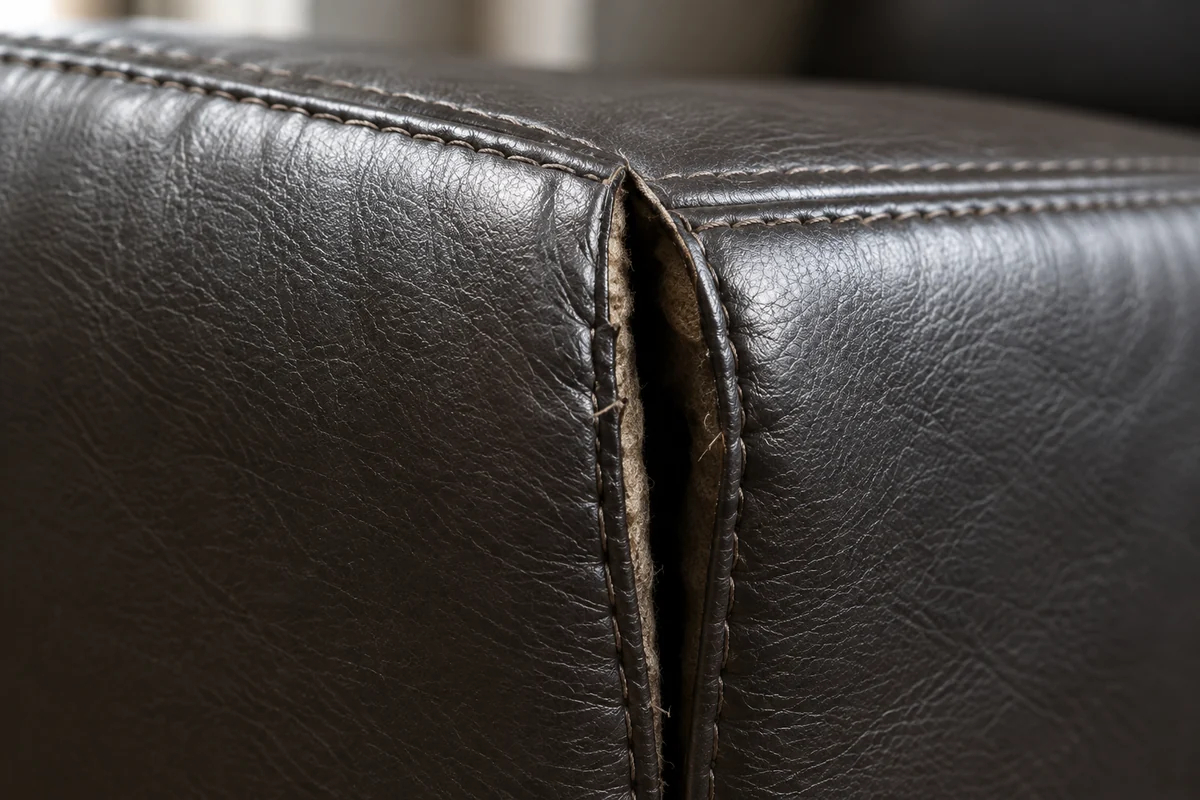
A dark brown leather armrest split down the vertical seam with grey wadding showing through
Split armrest seam
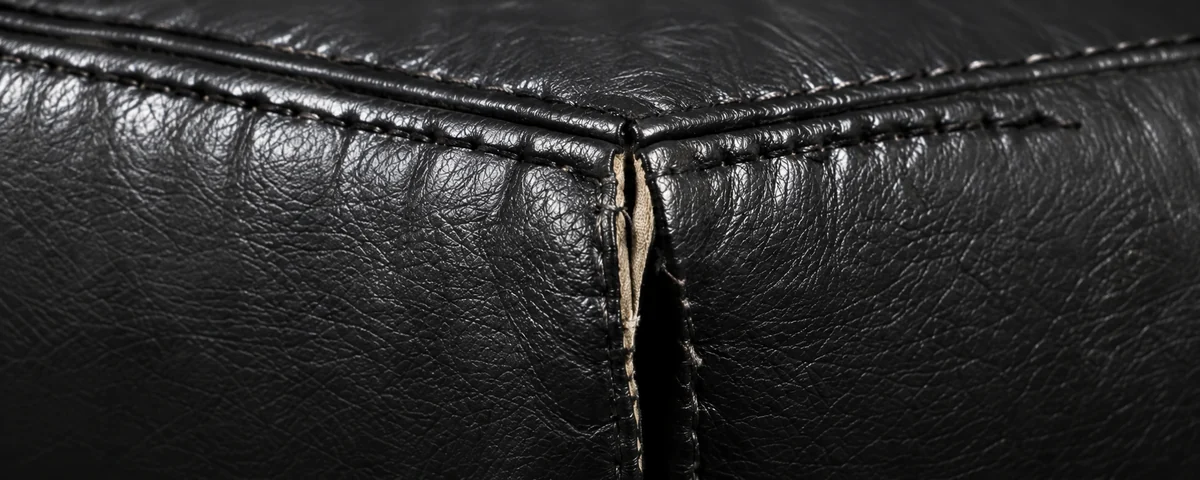
A black leather backrest corner opened at the seam, pale batting pushing out of the gap
Backrest seam opening
Brown leather torn open where the needle holes joined up, the raw fibrous edge exposed along the stitch line
Torn stitch holes
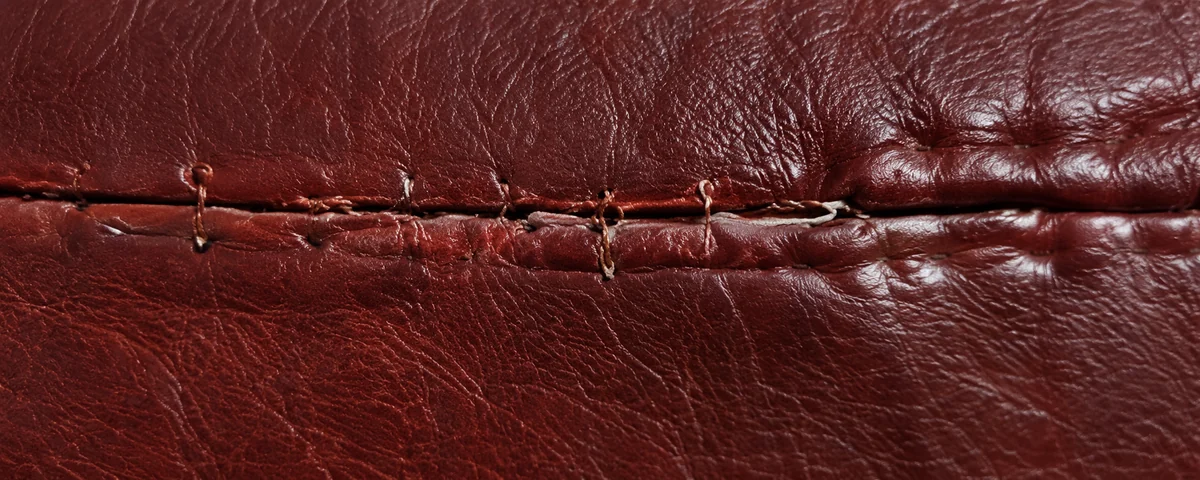
A burgundy leather seam closed with coarse hand stitching at uneven spacing, already lifting away
Previous repair failure
The cause

Why did the seam open?

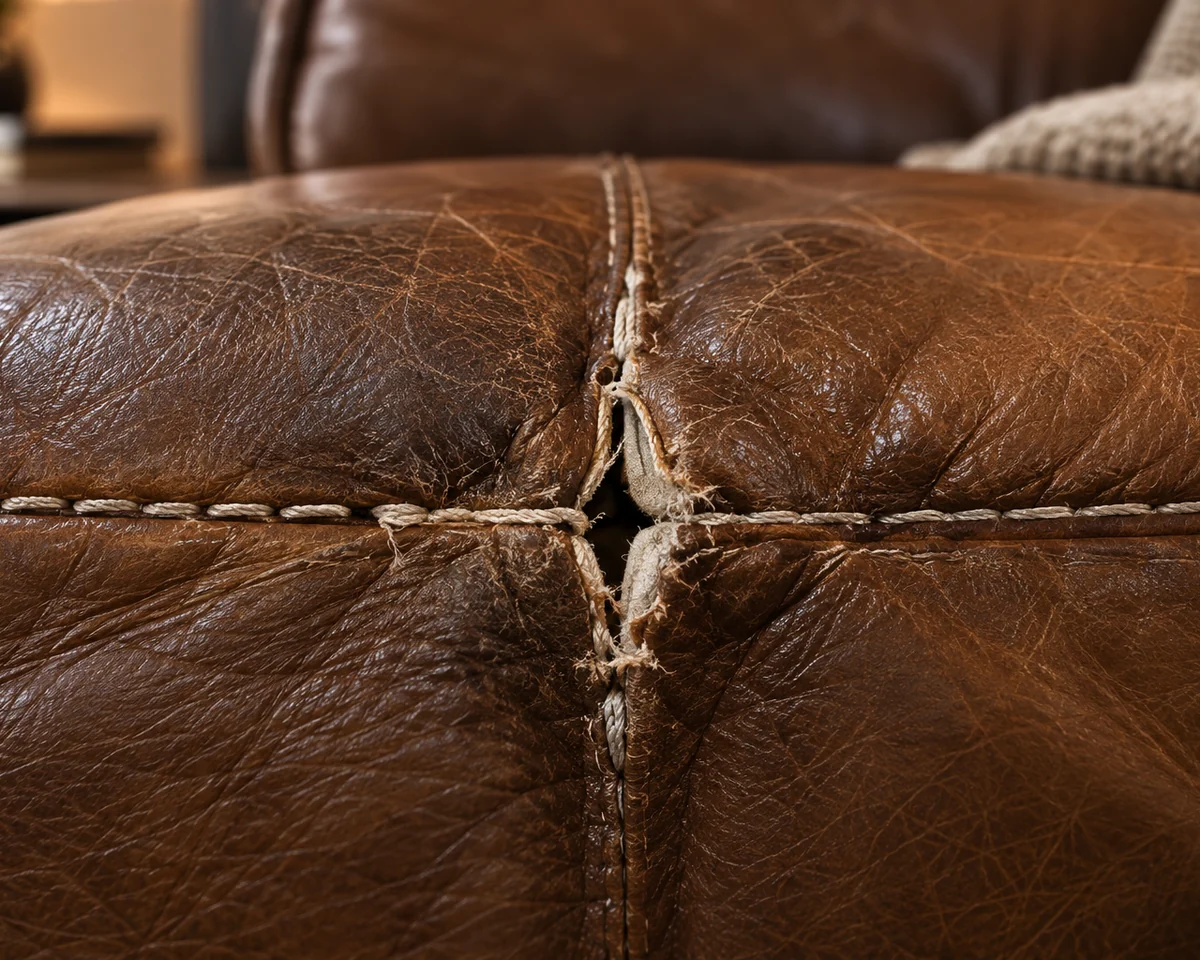
A brown leather cushion where two seams cross, the cream thread frayed through and the join pulled apart
Thread failure Thread breaks down long before the hide does.
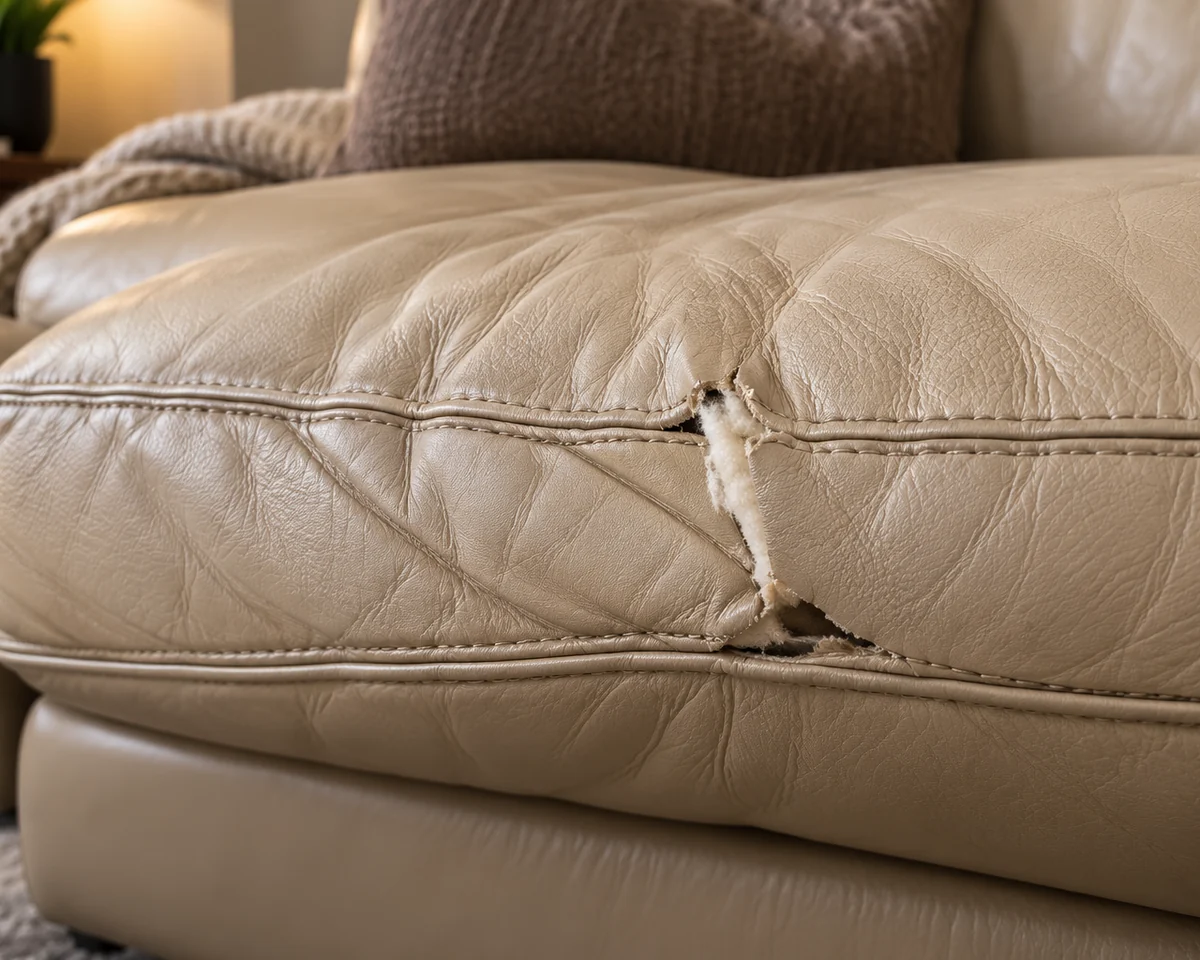
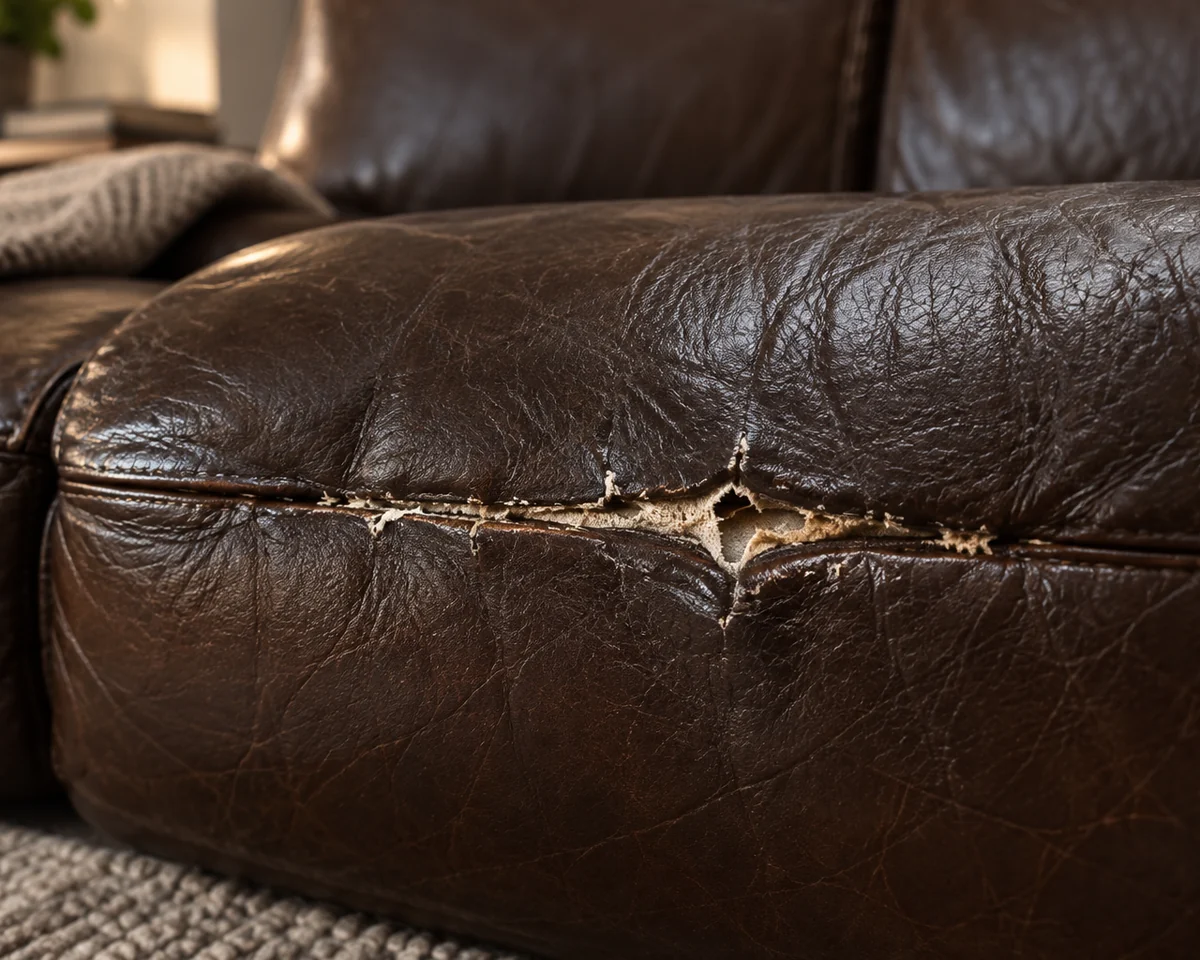
A cream leather seat cushion split open beside the piped seam with white filling pushing out
Tension on the cushion An overfilled seat loads the stitch line every time it is sat on.
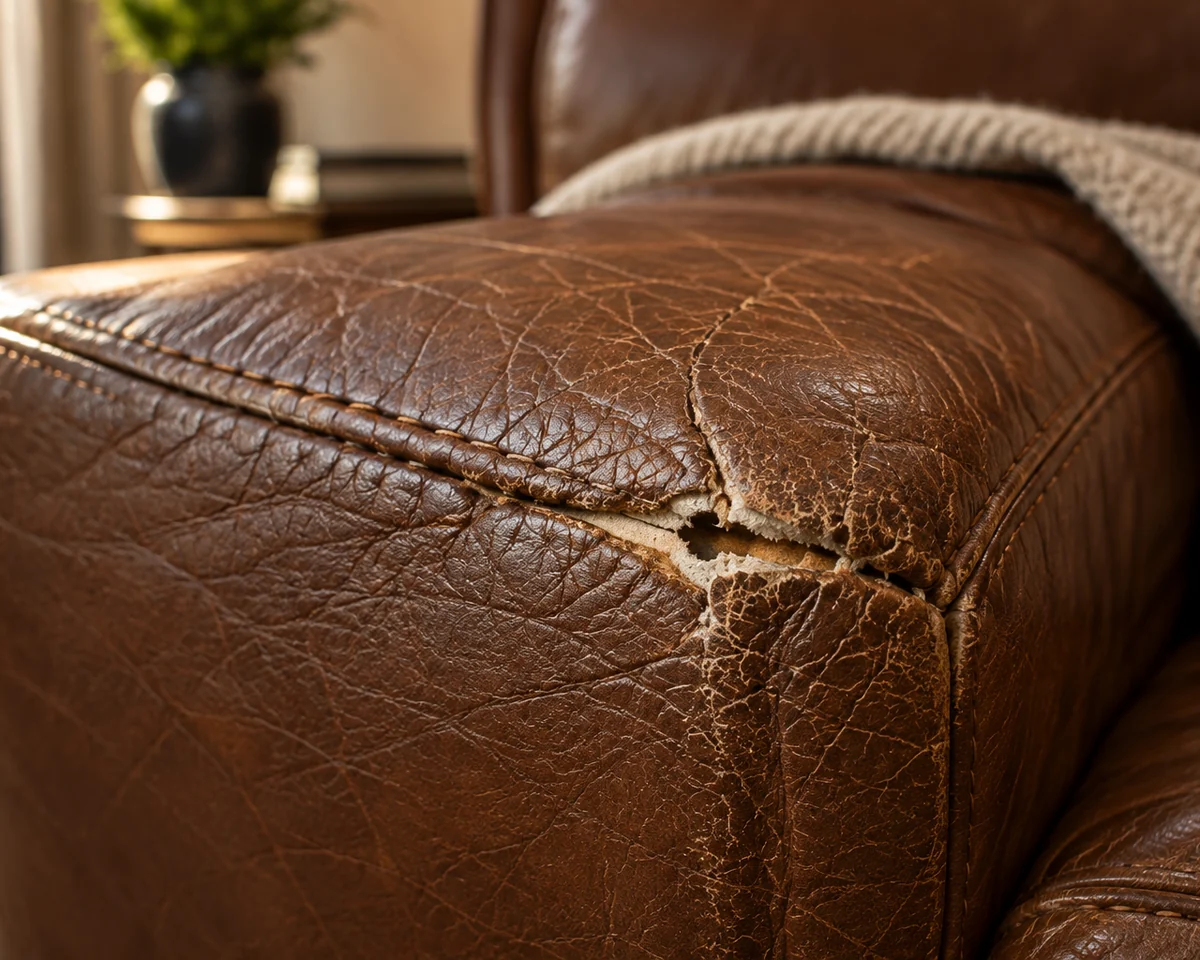
The corner of a brown leather sofa arm where dry, cracked hide has split along the edge of the seam
Worn leather Dry edges give way at the stitch holes first.
A dark brown leather cushion with a long ragged tear running along the seam and pale fibre showing
A previous repair Glue and patches let go under normal use.
Before a needle goes in

Broken thread or torn leather?

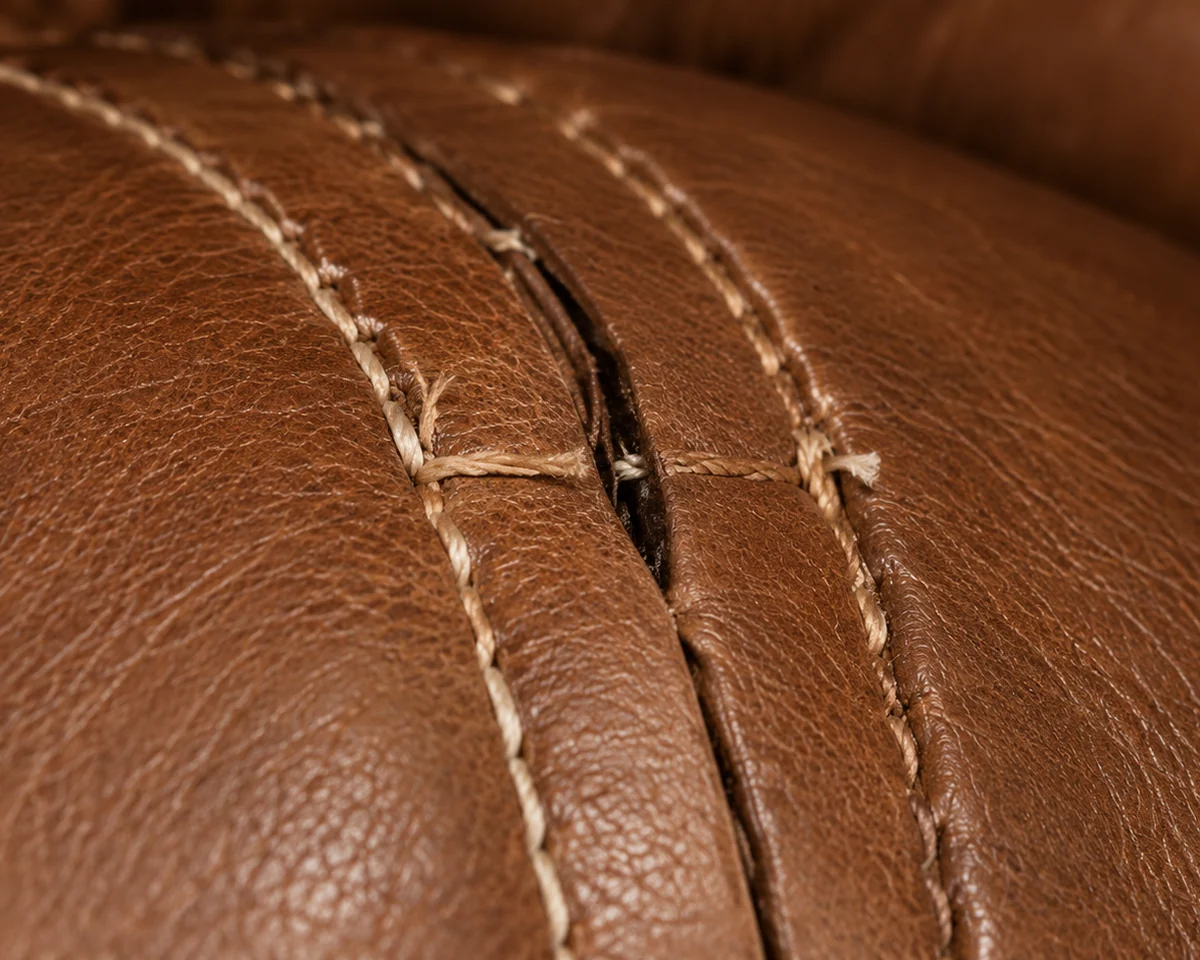
A brown leather seam where the thread has broken at one point, the leather either side clean and unmarked
Sound edges with broken thread Restitchable: the hide either side is intact and only the thread has given way.
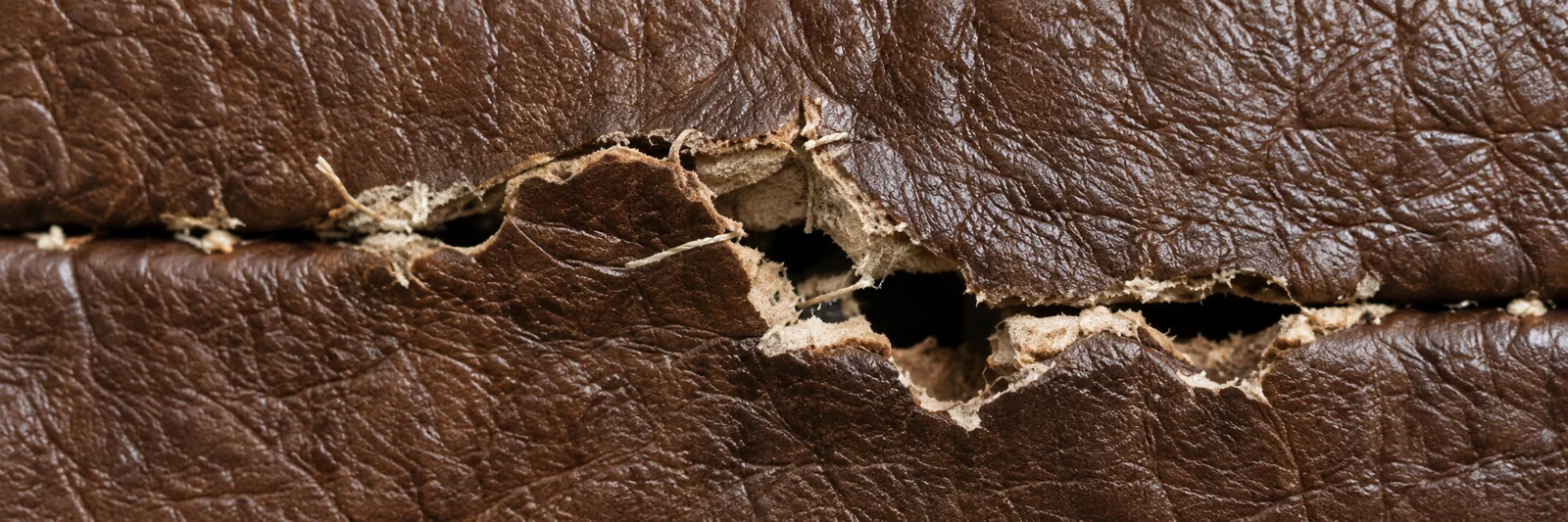
A brown leather seam torn into a ragged open channel, the pale fibre core visible along both edges
Torn or weakened edges The perforations have joined up. A second row of holes would tear again.
What the repair is

The right repair depends on the seam
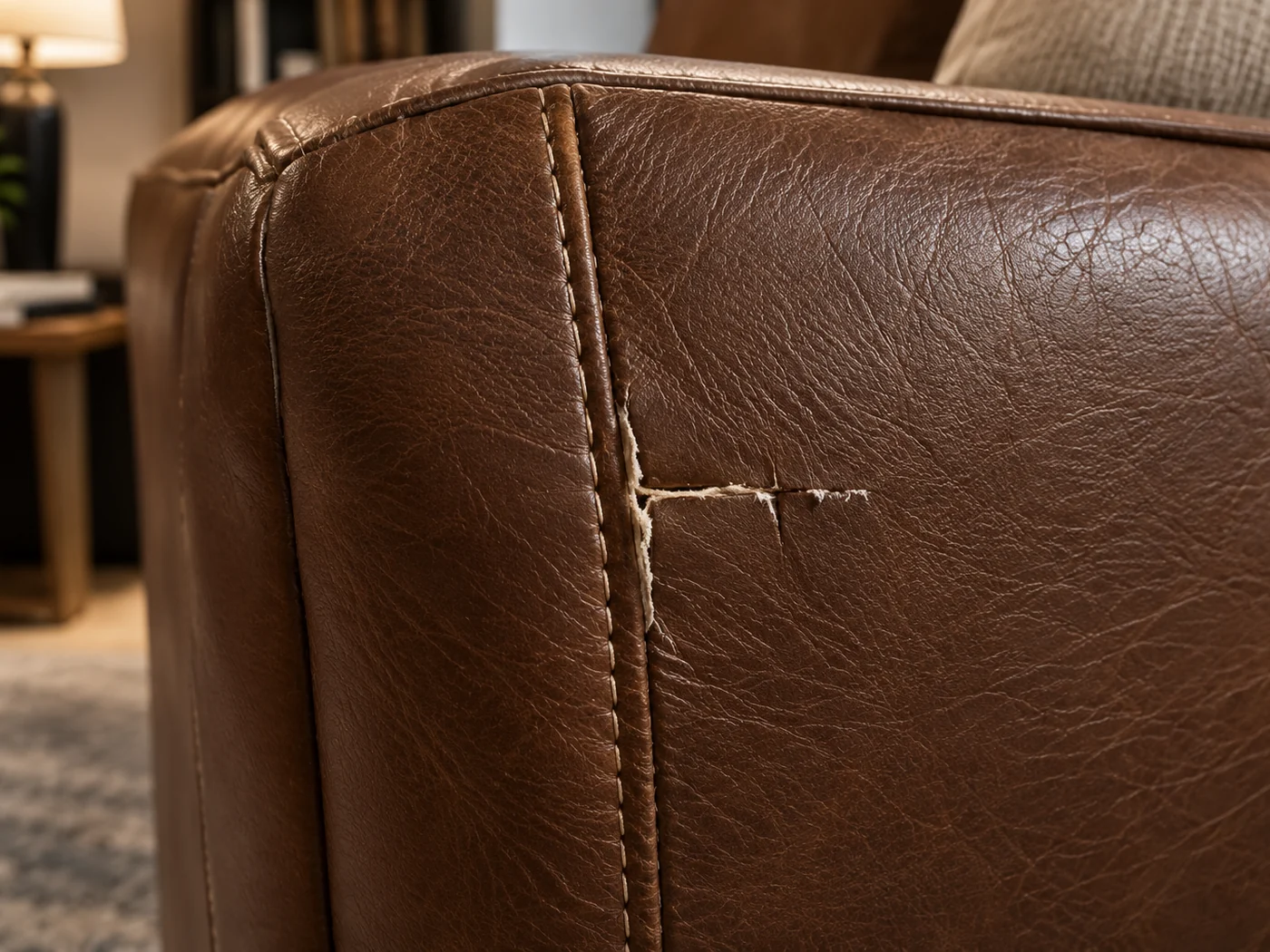
A brown leather chair back where a short split has opened beside an intact vertical stitch line
Restitching sound edges For clean separations with intact leather.
The corner seam of a brown leather ottoman parted at one point, a spool of thread and pliers laid on cloth beside it
Reinforcing suitable areas Adds strength behind the stitch line where it is needed.
A brown leather cushion seam torn wide open at a junction with pale foam and fibre core showing
Replacing damaged panels Best for torn or weakened leather.
Where the work happens

Can this be repaired at home?

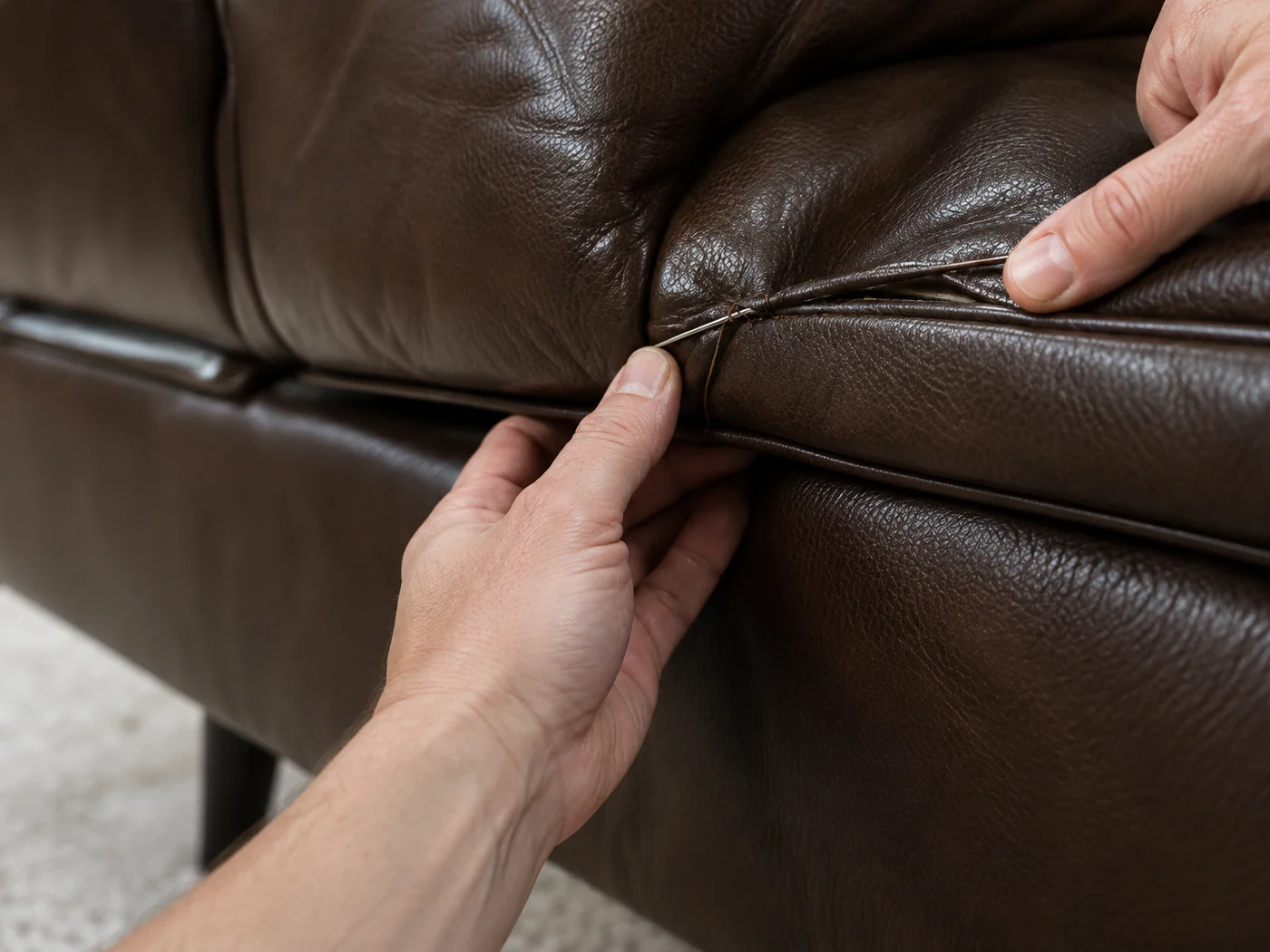
Two hands drawing a curved needle through the seam of a dark brown leather sofa in a living room
On-site repairs Many seams are closed by hand where the piece stands.
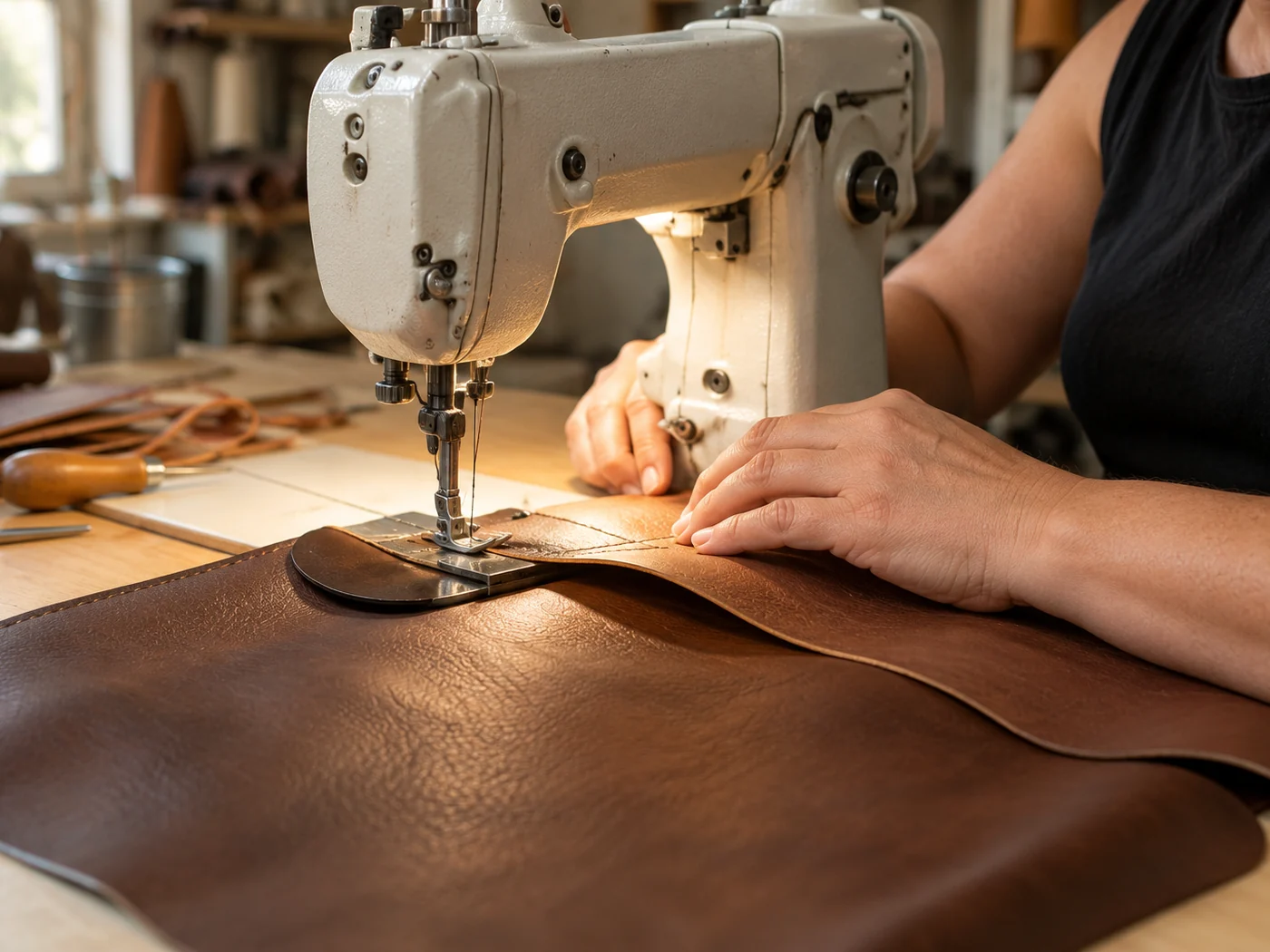
A machinist feeding a large brown leather panel under the foot of an industrial sewing machine in a workshop
Workshop sewing Others need the cover off and a machine to close them.
How we get to it

The back of the seam decides the method

Leather seam repair splits three ways, and every piece lands in one of them.
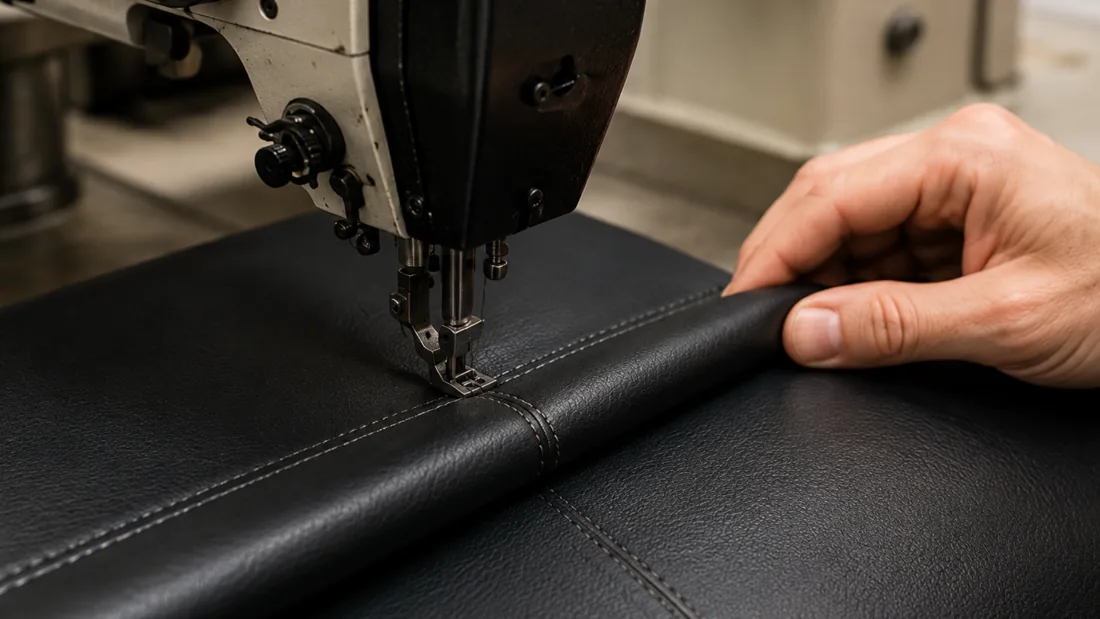
Hands feeding a black leather panel through an industrial walking-foot sewing machine to restitch a seam
01

It opens from behind

Zipped cushion covers and loose seat backs come off. The panel goes flat under a walking-foot machine and is sewn back through the original holes, so the line lands exactly where it was.
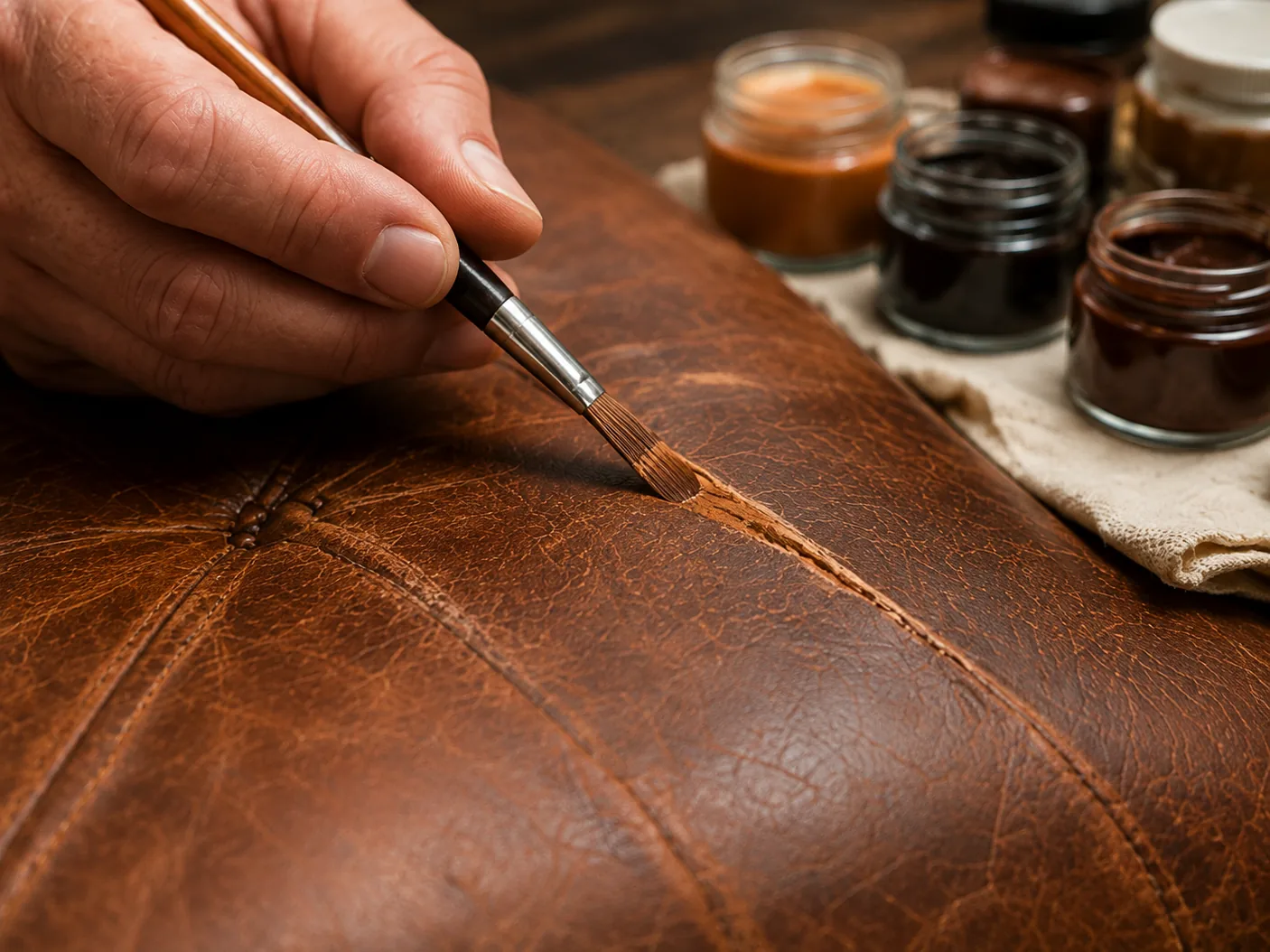
A technician working along a seam on a brown leather sofa arm with a fine brush, pigment pots open behind
02

A needle can reach the front

Fixed backs, arms and armrests are closed with a curved needle by hand, one stitch at a time along the old line. Slower than a machine, and the only way that keeps the piece where it stands.
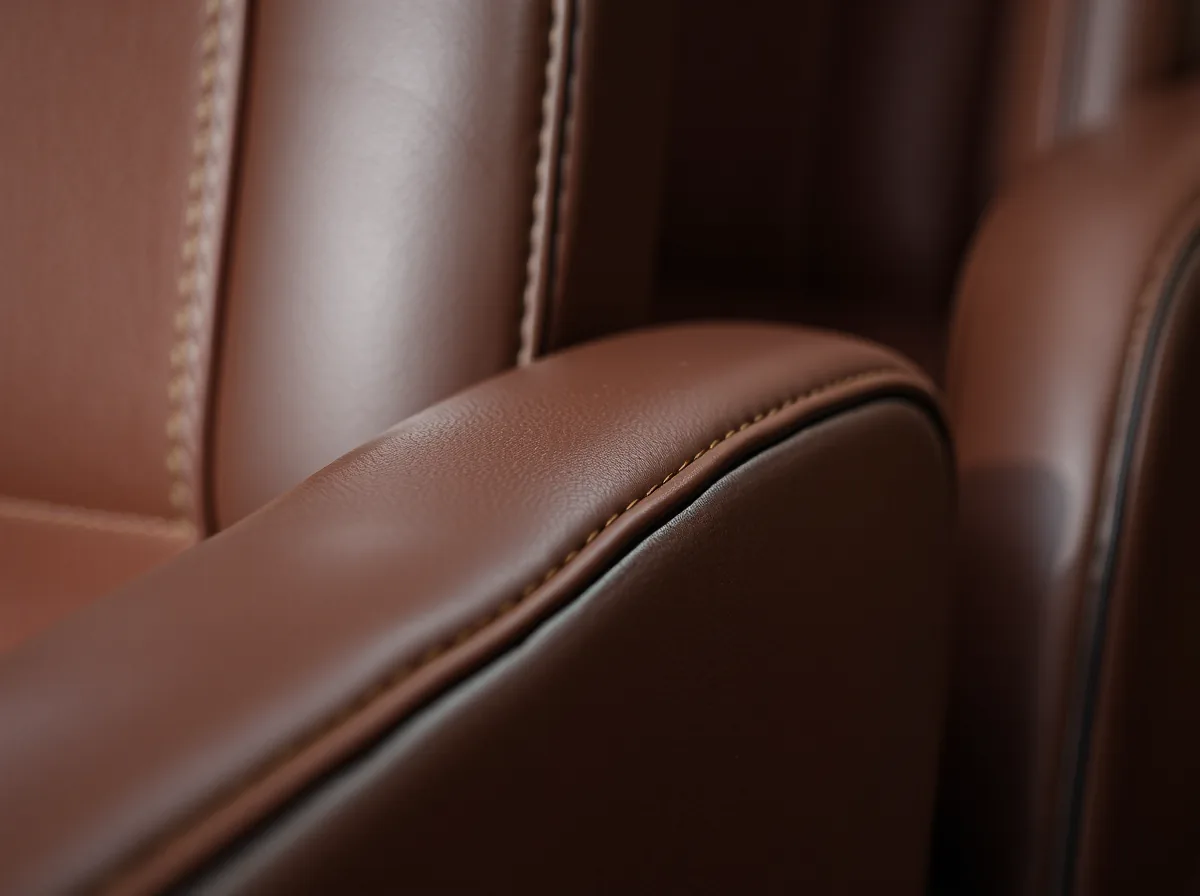
The seamed back and arm of a fixed brown leather theatre seat, upholstered as a sealed unit with no access behind
03

It is a sealed box

Booths, headboards and cinema seating are built shut. A backing is fed in through the opening itself, the edges are bonded down to it, and colour is carried across the join.

Making it disappear

Can the original stitching be matched?
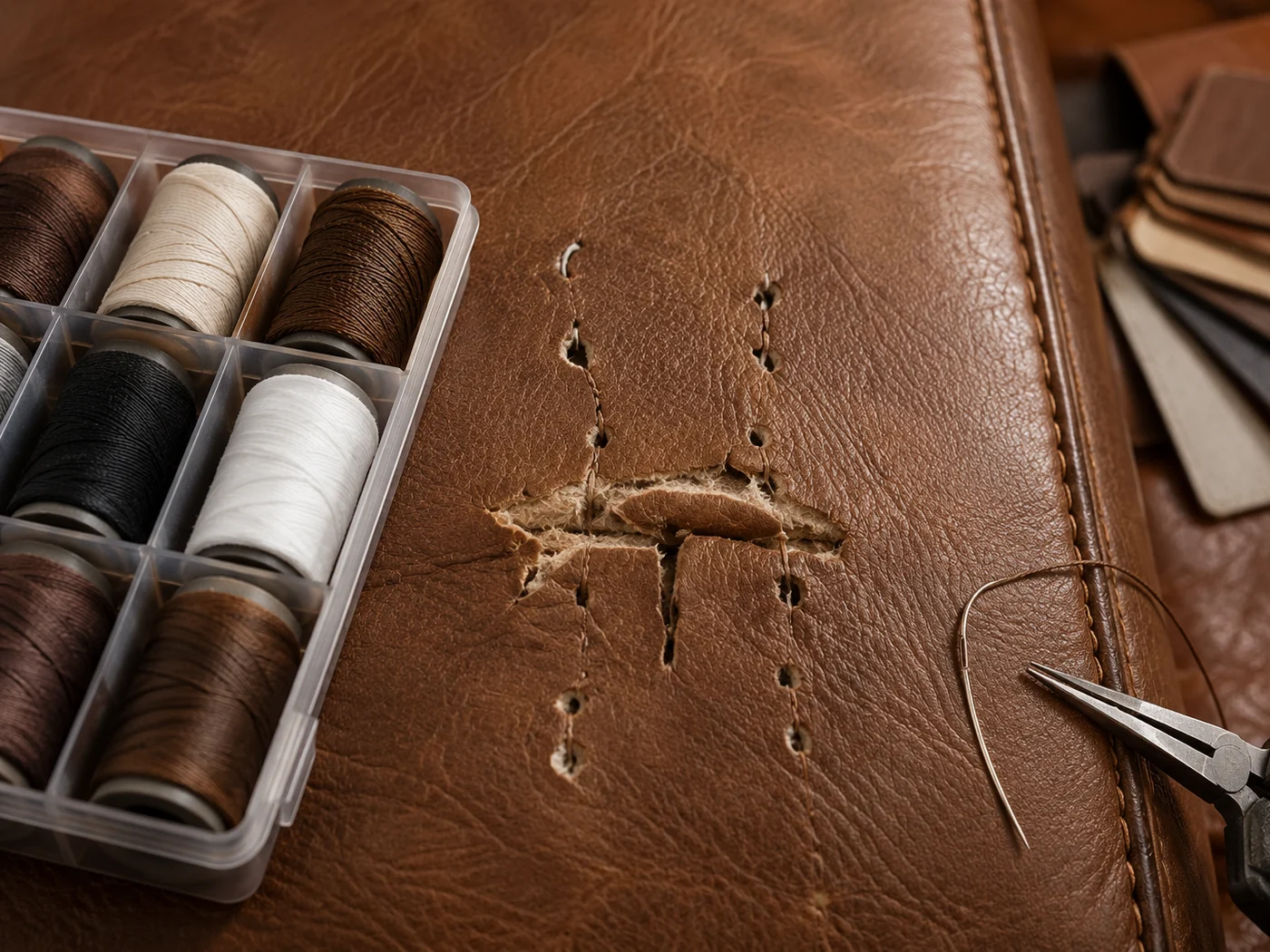
A tray of leather threads in cream, brown, grey and black set beside a torn stitch line in brown leather
Thread color Matched on shade and thickness, not shade alone.
Twin rows of cream stitching along the edge of a brown leather cushion, thread spools and shears laid in front
Stitch pattern Spacing counted off the sound run either side.
An even cream stitch line running the length of a restored brown leather cushion, an awl and leather swatch beside it
Finished seam Colour and sheen carried past the join, so nothing reads as new.

Thread colour, stitch pattern, seam construction and access are all assessed before any leather seam repair starts. Seams are closed in bonded upholstery thread of the grade makers like A&E supply.

One job

A booth back, open to the foam, closed before service
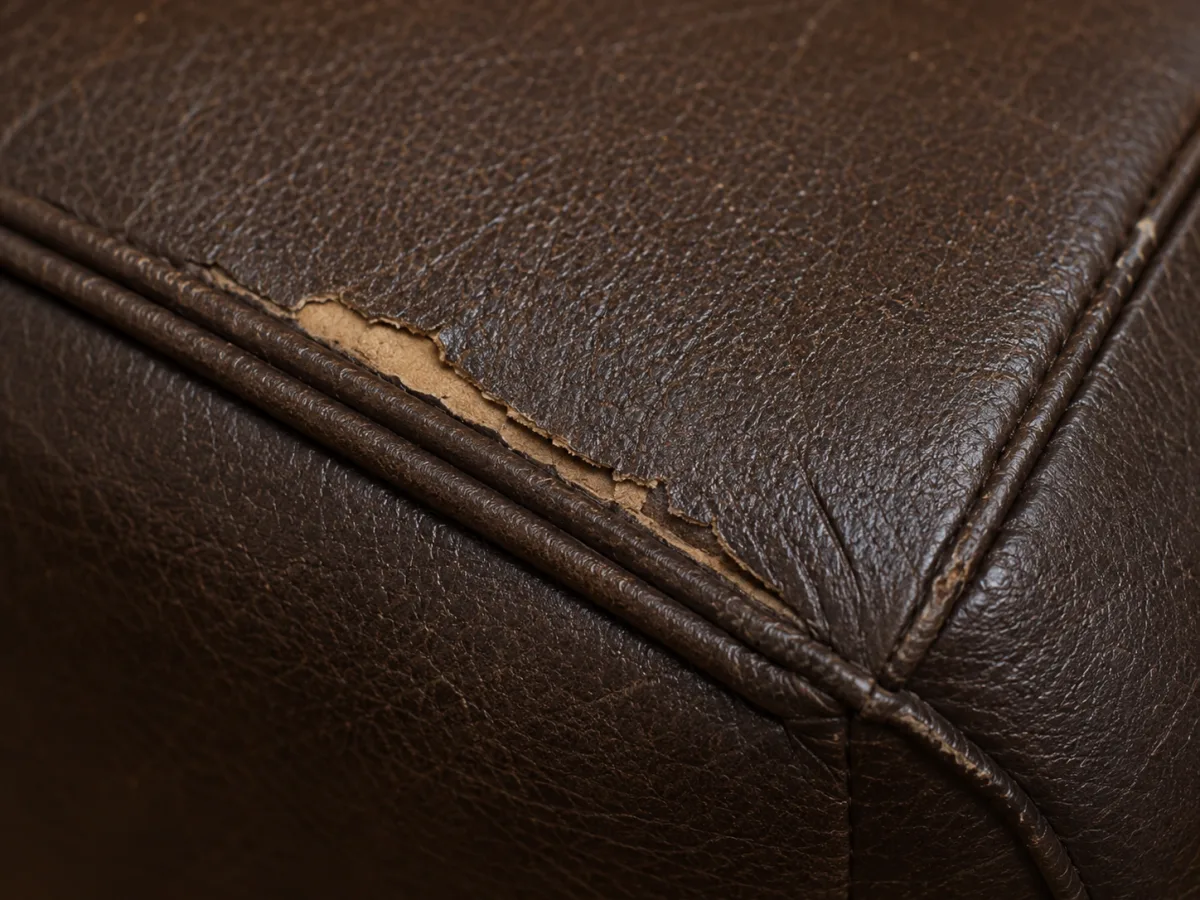
A brown leather restaurant booth with the top seam split wide open and pale foam visible inside Twin rows of tan contrast stitching running along the corner of a brown leather seat A closed and restored seam on a brown leather booth, the contrast stitching even and the colour continuous

01 — Open it up

Failed thread picked out to sound stitching, crushed foam packed back to shape.

02 — Close it

Backed from inside, then hand-stitched through the original holes at the original spacing.

03 — Lose the line

Colour and sheen carried a hand's width past the repair so no edge shows under the lights.

Venues rarely have one bad seam. A whole room of booths and banquettes is quoted as one bulk project and worked overnight.

Seams we have closed

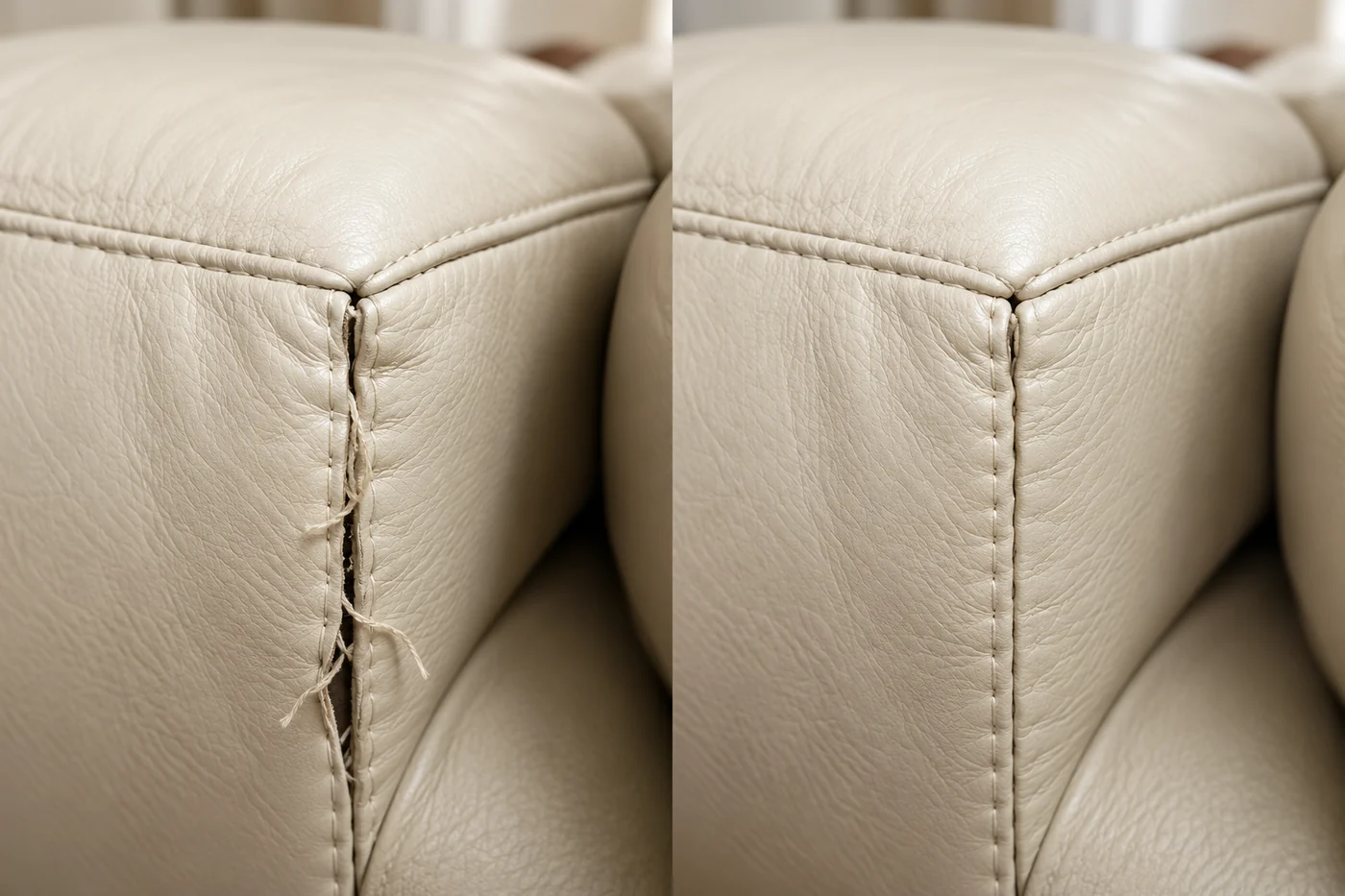
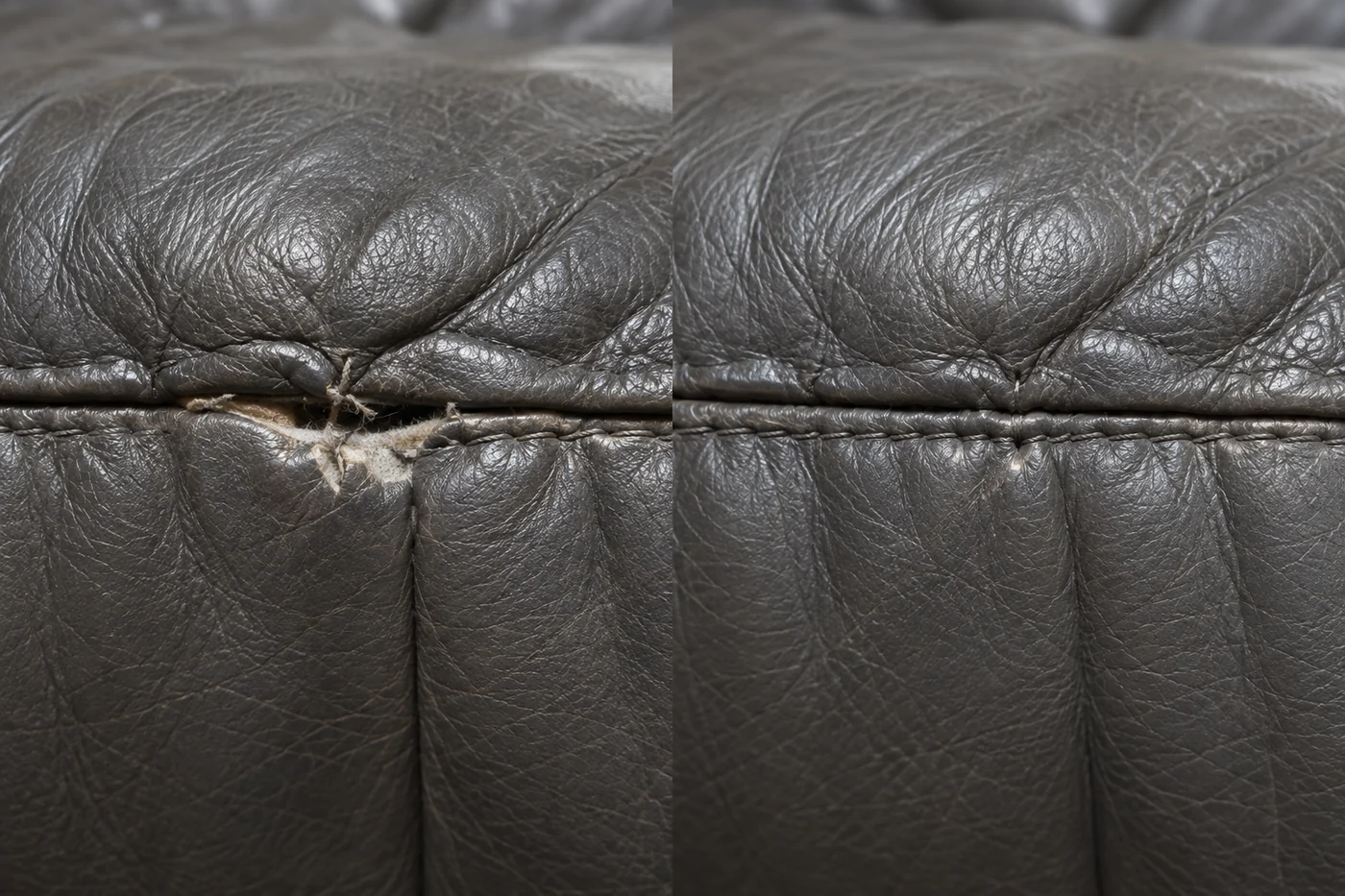
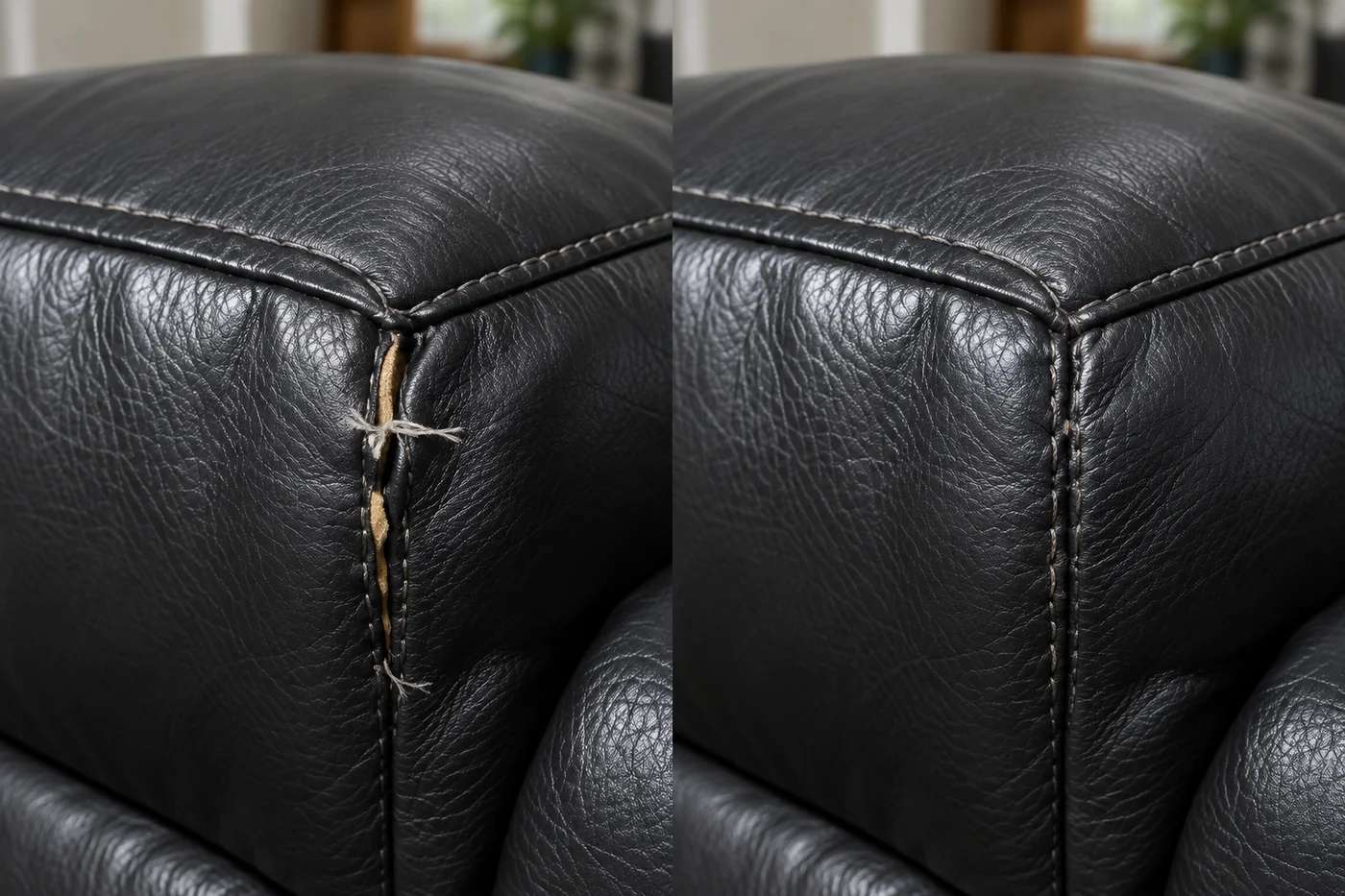
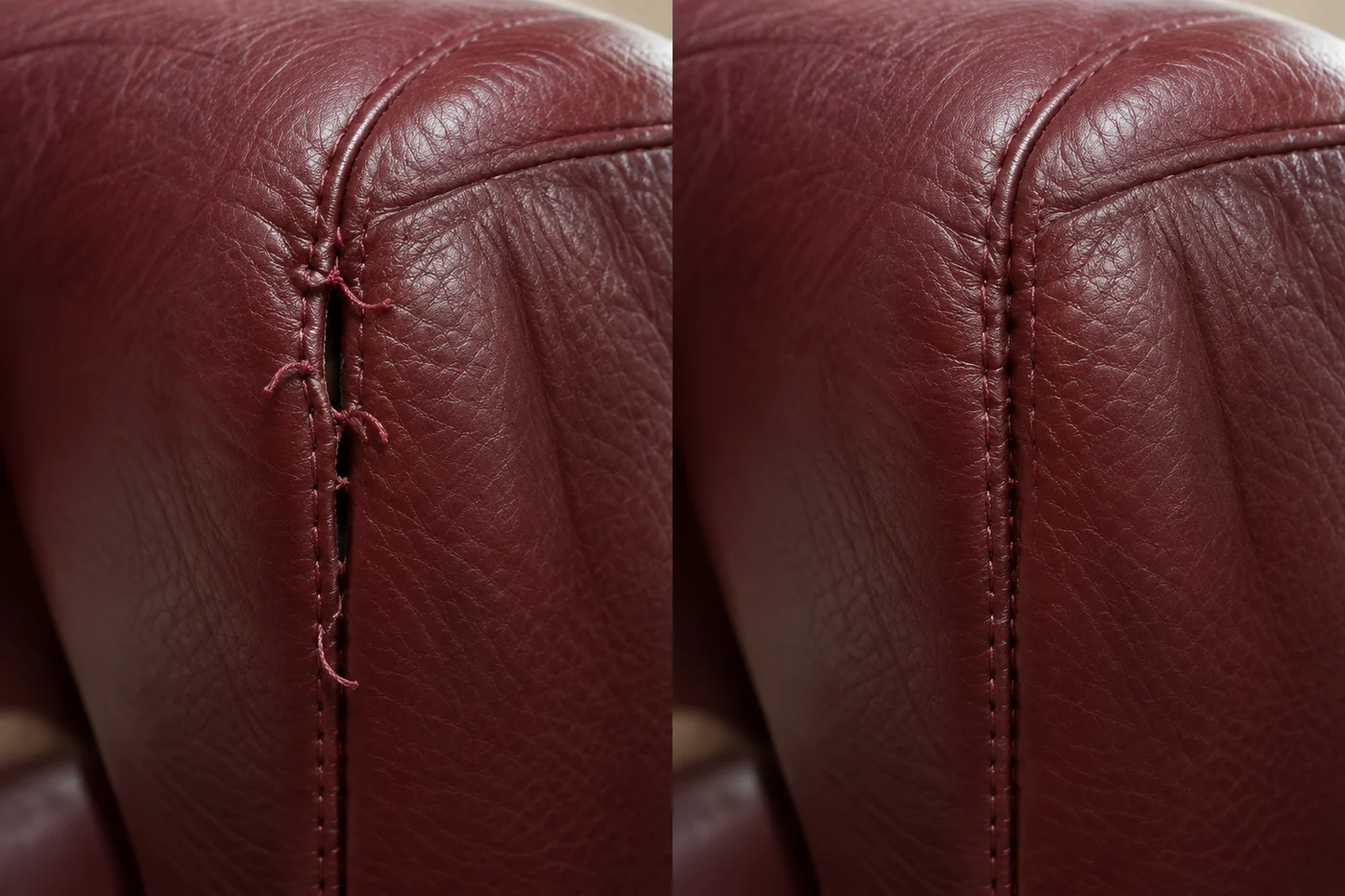
Before on the left, after on the right

All leather seam repair on the customer's own hide.
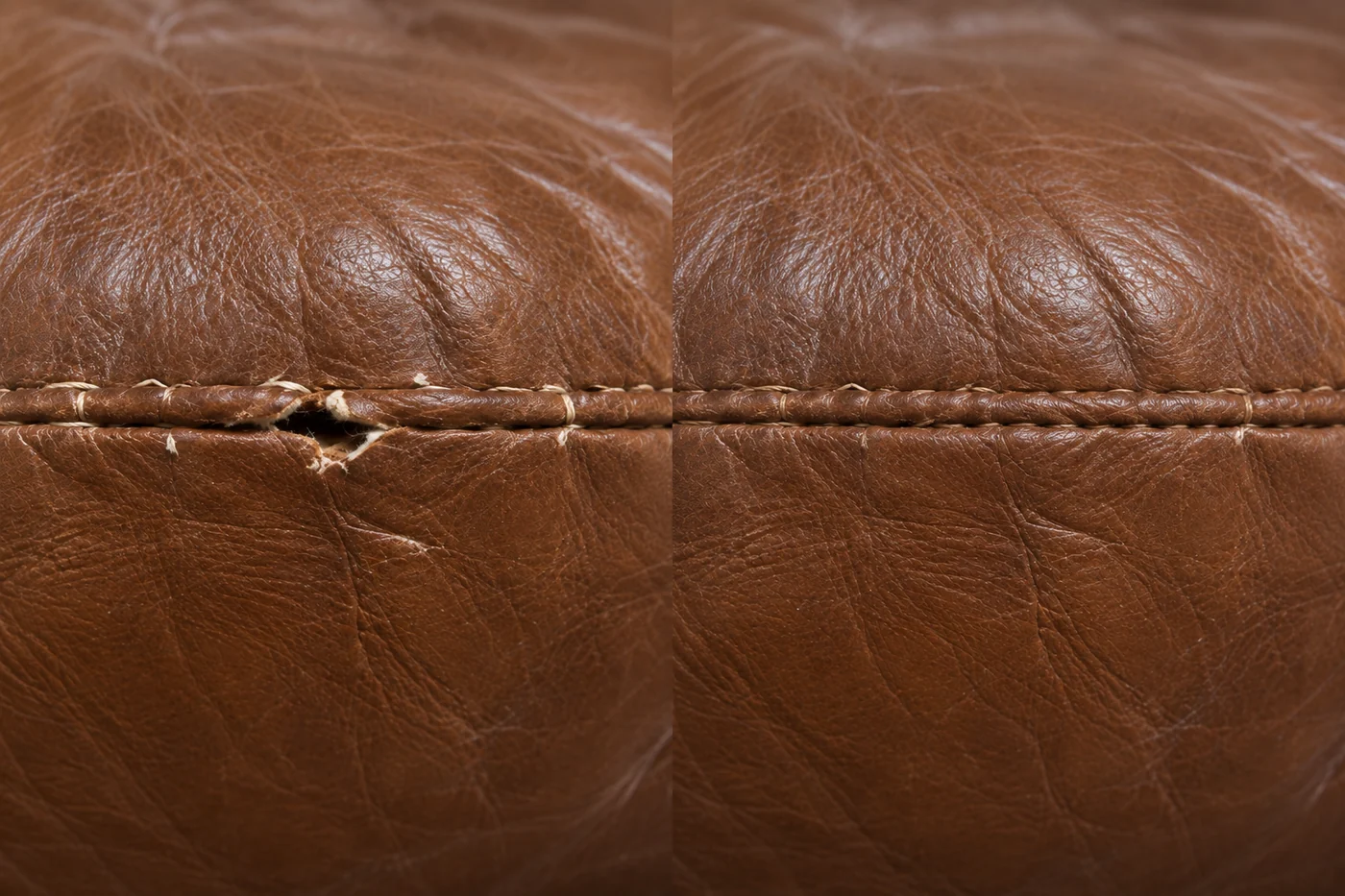
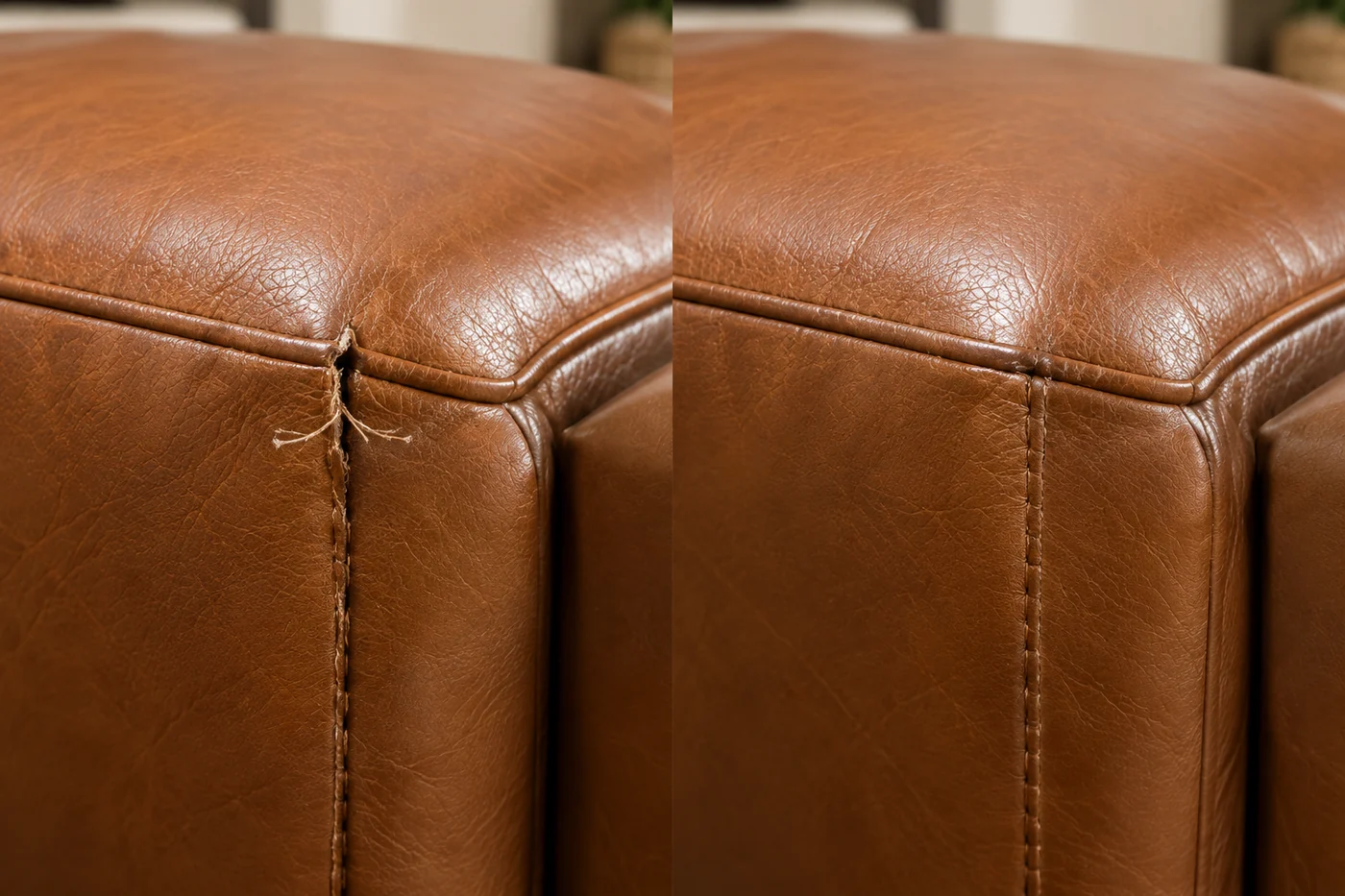
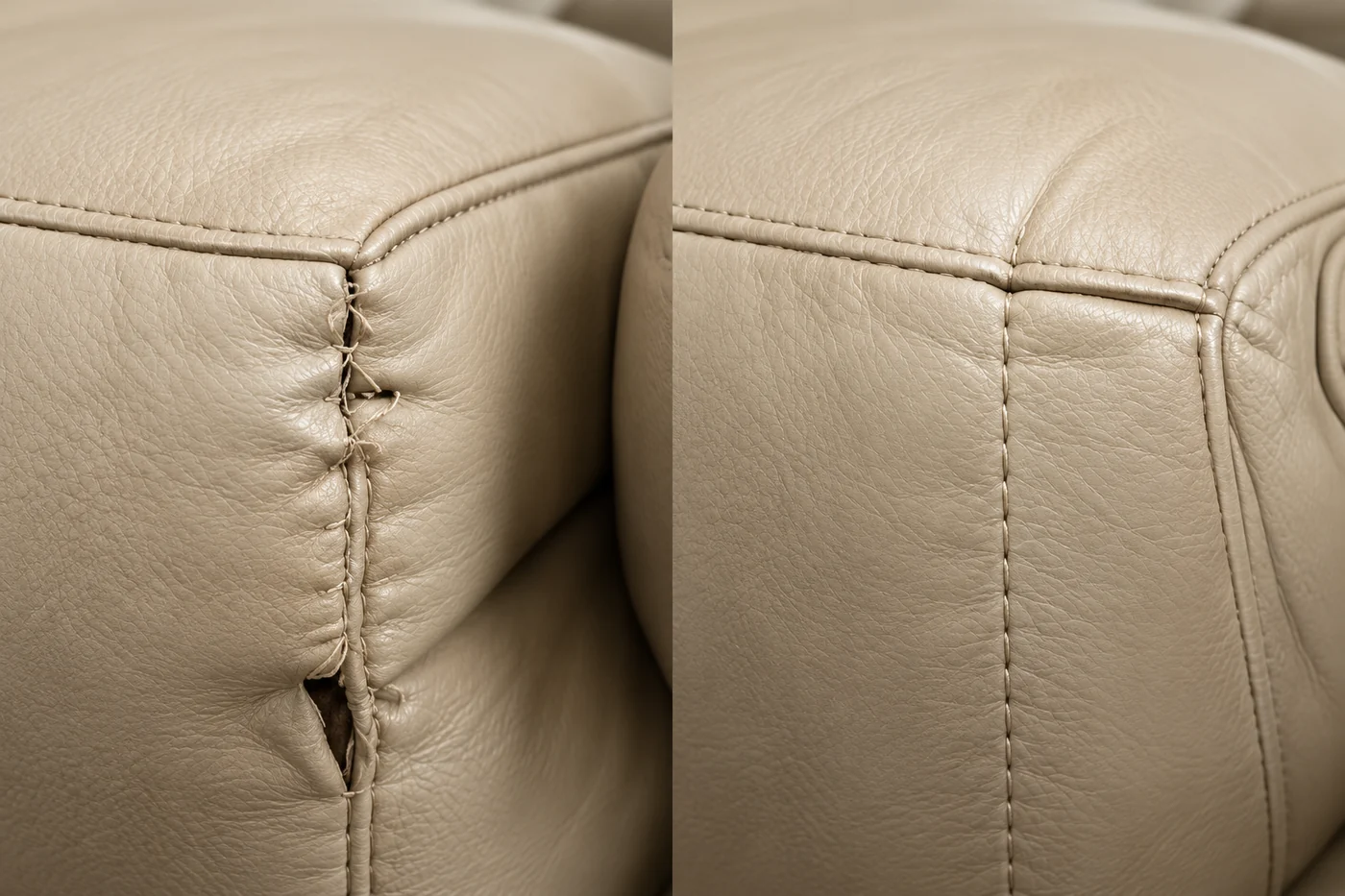
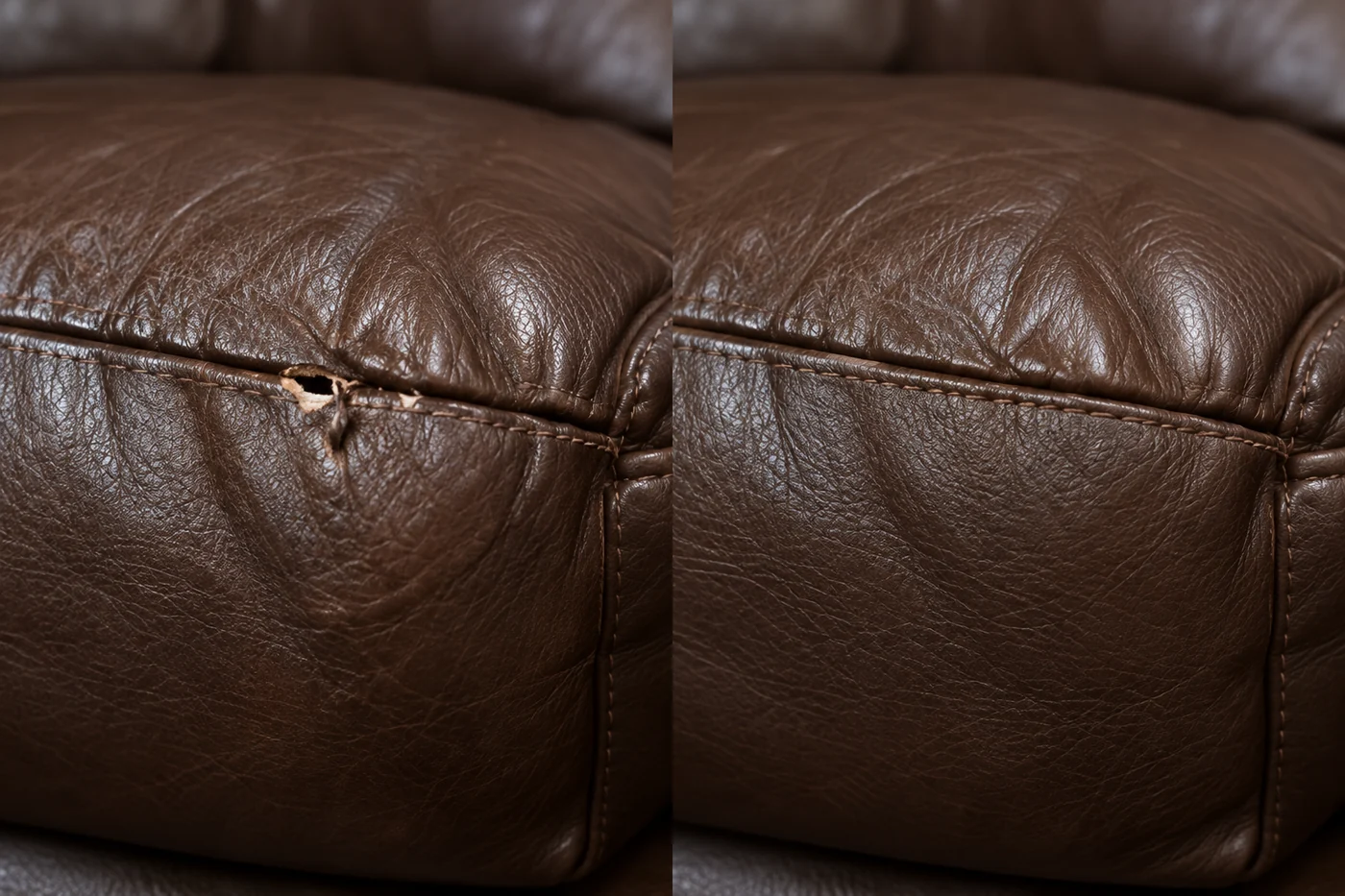
Before and after on a tan leather seat cushion, the seam split open on the left and closed on the right Before and after on a cream leather corner, the parted seam on the left and the restitched line on the right Before and after on a grey leather cushion, the failed seam on the left and the finished seam on the right Before and after on a black leather corner, the open stitch line on the left and the closed one on the right Before and after on a burgundy leather arm, the split seam on the left and the repaired seam on the right Before and after on a caramel leather corner, the gaping seam on the left and the even stitching on the right Before and after on an ivory leather corner, the opened seam on the left and the closed seam on the right Before and after on a dark brown leather seat, the torn seam on the left and the restored seam on the right
Before we quote

What affects your estimate?
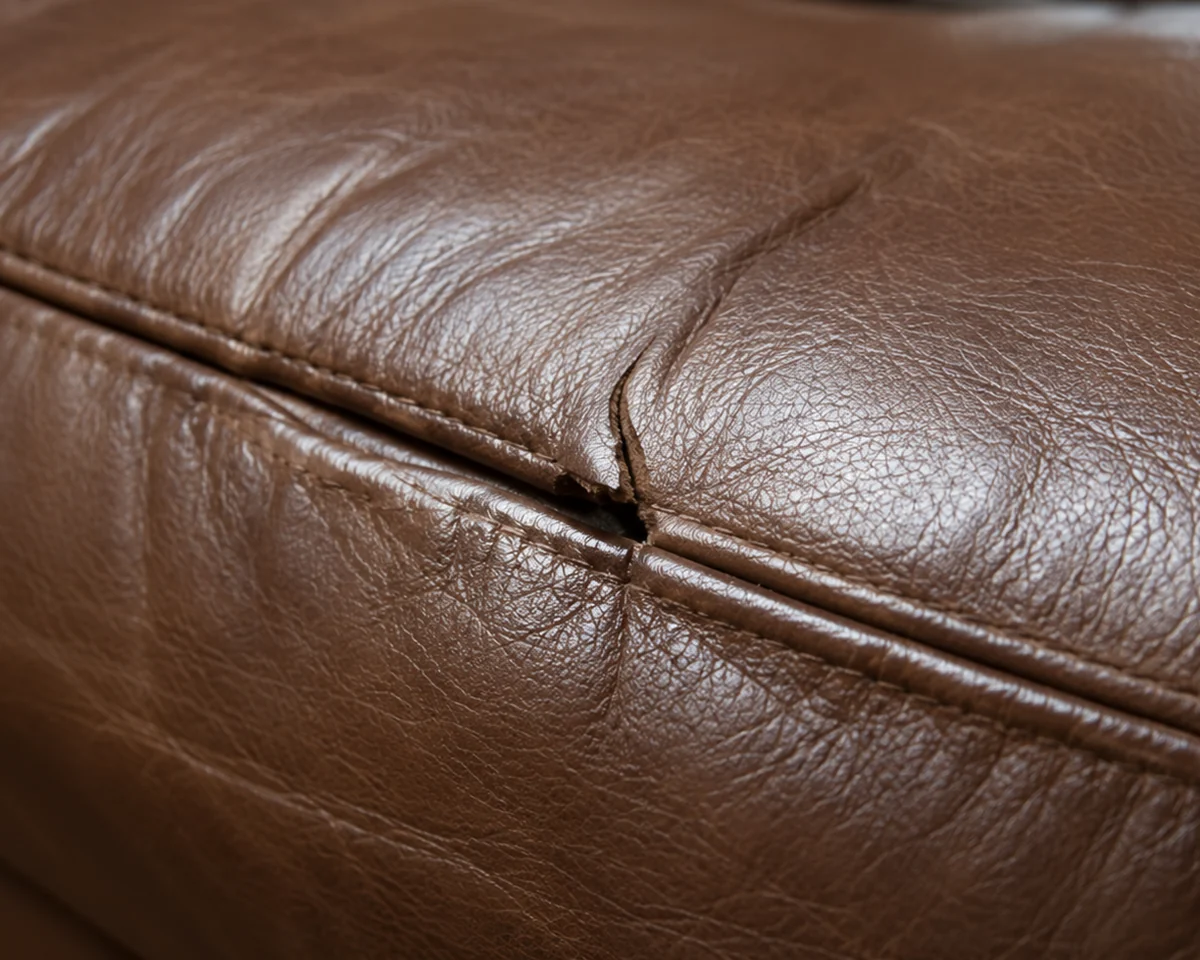
Two long parallel stitch lines running down a tan leather sofa arm, one broken open partway along
Length and location Longer or hard-to-reach seams take more time.
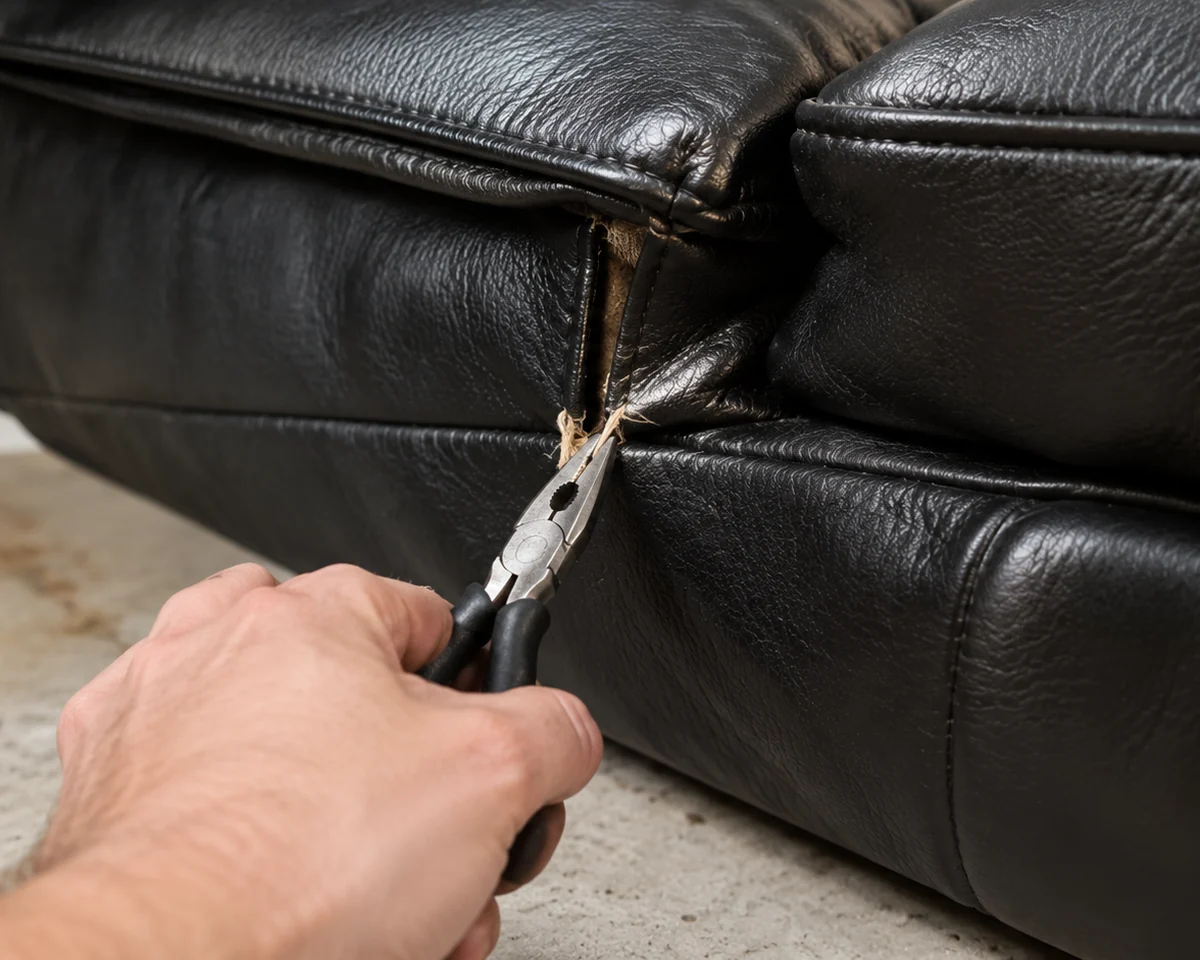
A hand working with pliers at the seam between two black leather sofa cushions
Access Some seams need partial or full disassembly.
A twin-stitched brown leather seam where the thread has frayed and a stitch hole has opened into the hide
Leather condition Edges have to be strong enough to hold stitching.
A dark brown leather cushion where a short vertical seam meets a horizontal one and has parted at the junction
Seam construction Decorative or multi-panel seams are slower to close.
Questions we get

Asked and answered

Will you have to take my sofa away?

Almost never. Most leather seam repair happens where the piece stands — only a piece that needs stripping to the frame leaves the building.

Can you match my original thread?

We match shade, thickness and stitch length off the sound run either side of the failure. On contrast stitching that is the whole job — a wrong thread reads long before a wrong colour does.

Why did one seam go when the rest are fine?

Seams fail where the load is. The front edge of a seat, the inside corner of an arm and the top of a booth back take every sit and stand, so the thread there abrades years before the rest of the piece.

1
When the seam is not the problem

Three that arrive booked as seam work
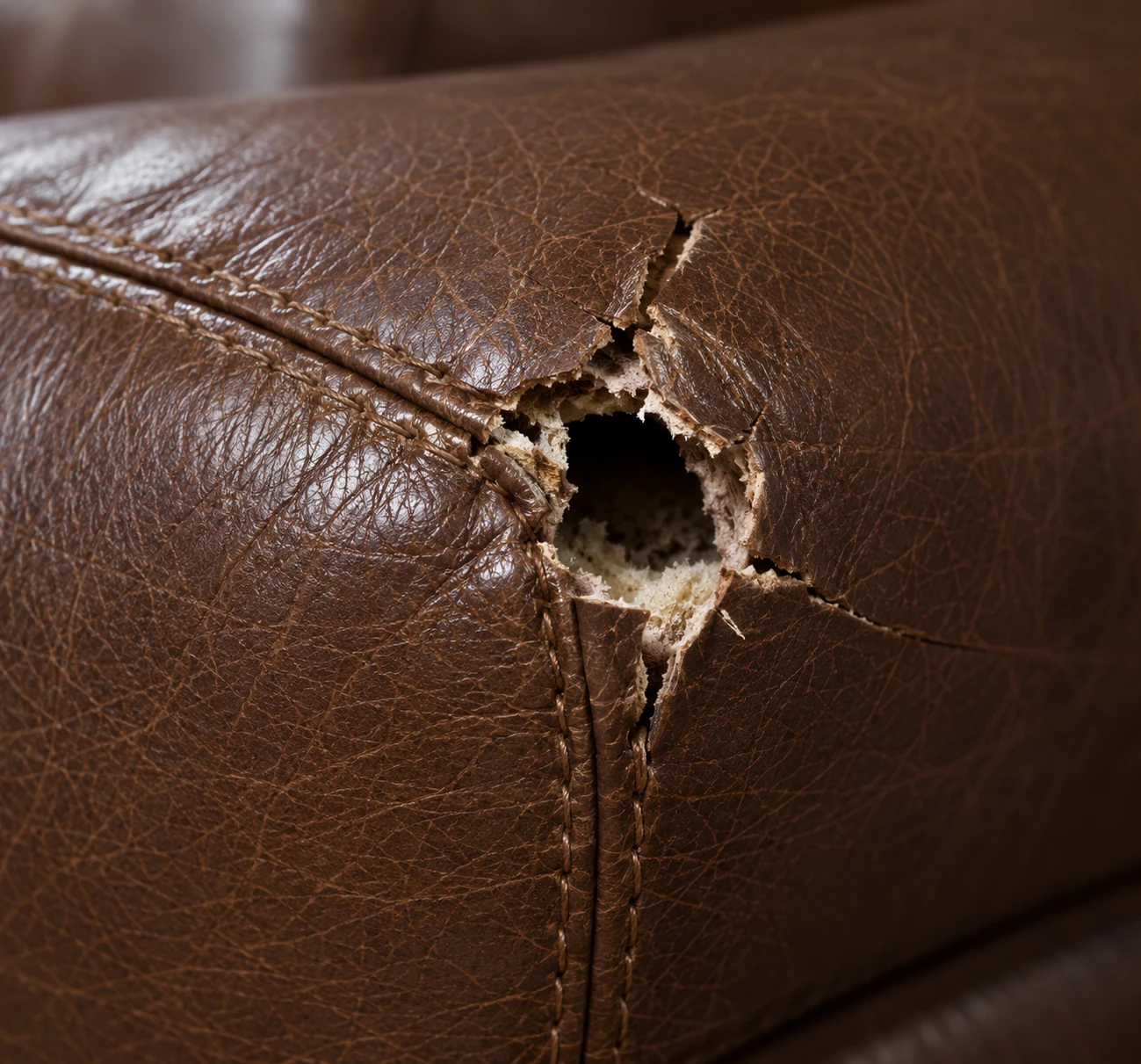
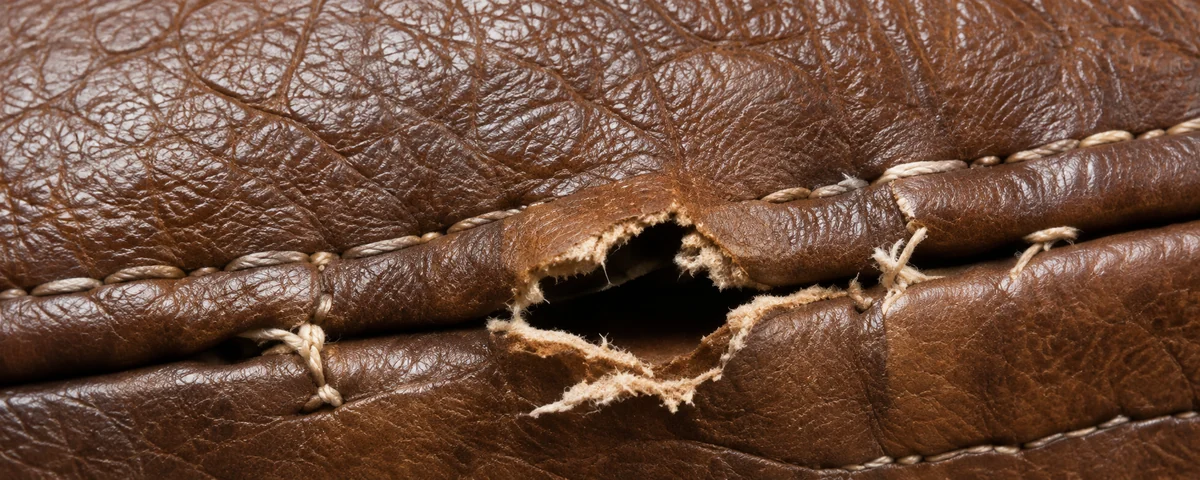
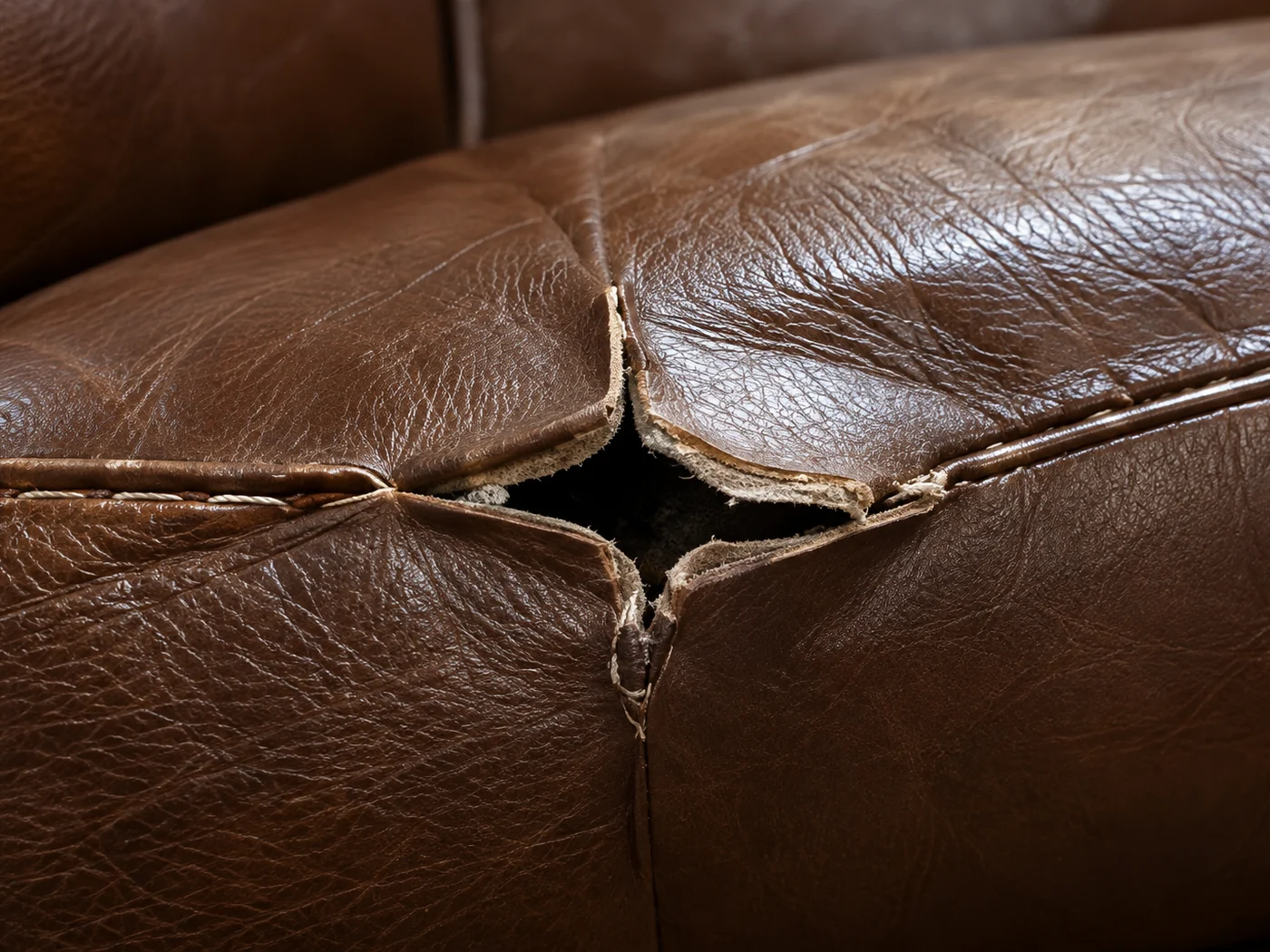
A ragged hole punched clean through brown leather where two seams meet, the dark cavity open behind it

A hole at the junction

Leather is gone, not just unstitched. That is hole repair, filled and grained before any stitching.
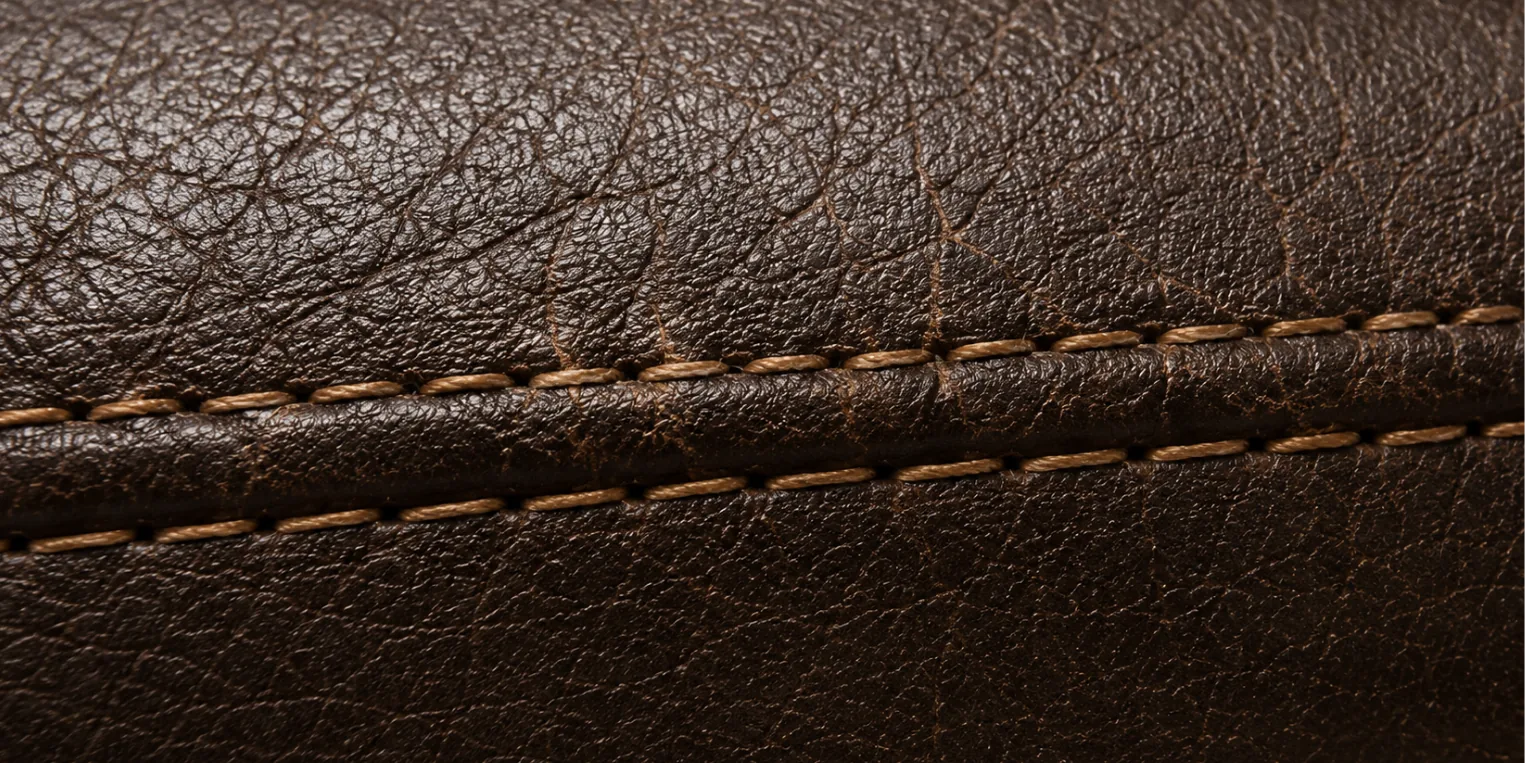
Fine cracking crazed along both sides of a stitched seam on brown bonded leather

Cracking beside the line

The finish is failing where the panel flexes. Restitching it would not help — see crack repair.
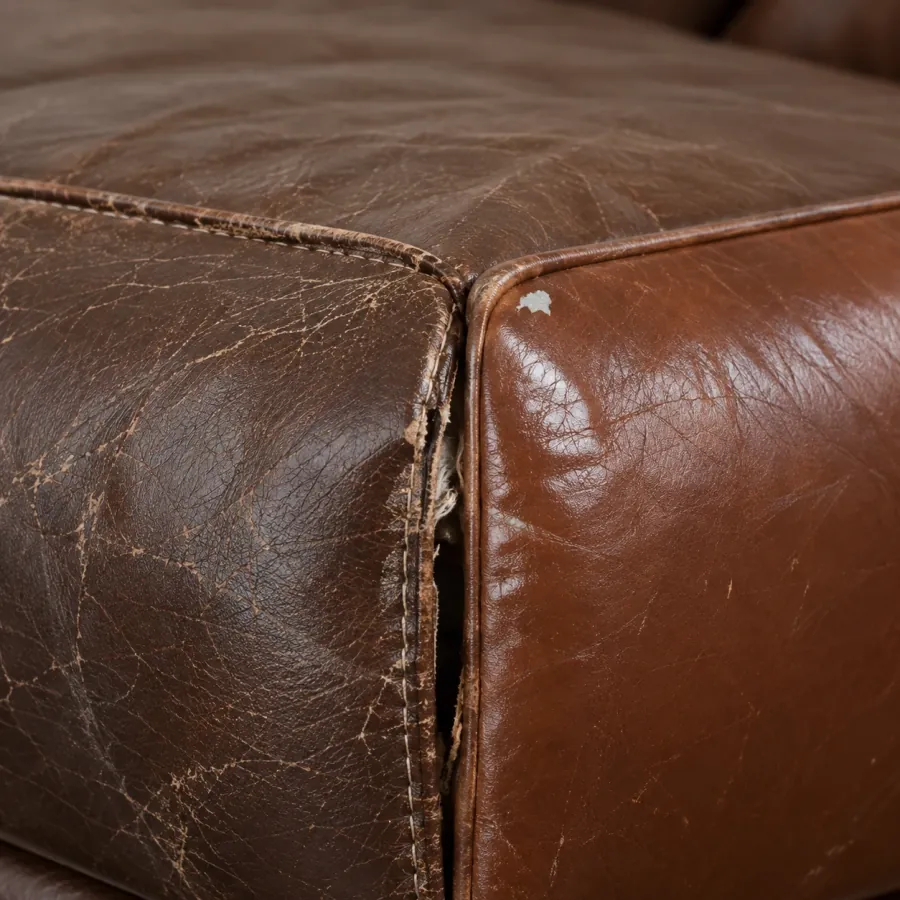
A brown leather corner where three seams meet, the leather stretched and distorted past the point of stitching

The whole corner has gone

Once the hide will not hold thread, the panel comes out. Panel replacement, or reupholstery if several have.

Send one photo

Shoot along the seam, not at it

A raking shot down the length of the opening shows whether the thread went or the leather did. That one frame usually settles the method for leather seam repair.

Scroll to Top