
Home/Materials
Material Field GuideUpholstery Material Types
One guide for each of 15Materials
Your material decides what can be done to it. Two pieces can show identical damage and still need completely different treatment.
Not sure what you have? Send us a few photos and we will identify it.
Leather Types
Five finishes, five different pieces of furniture to work on. What sits on top of the hide — nothing, a little, or a full coat of pigment — decides how it wears and how it is repaired.
• Swatches show typical grain and finish. Real hides vary by dye lot, age and wear, so we match to the piece in front of us rather than to a photograph.
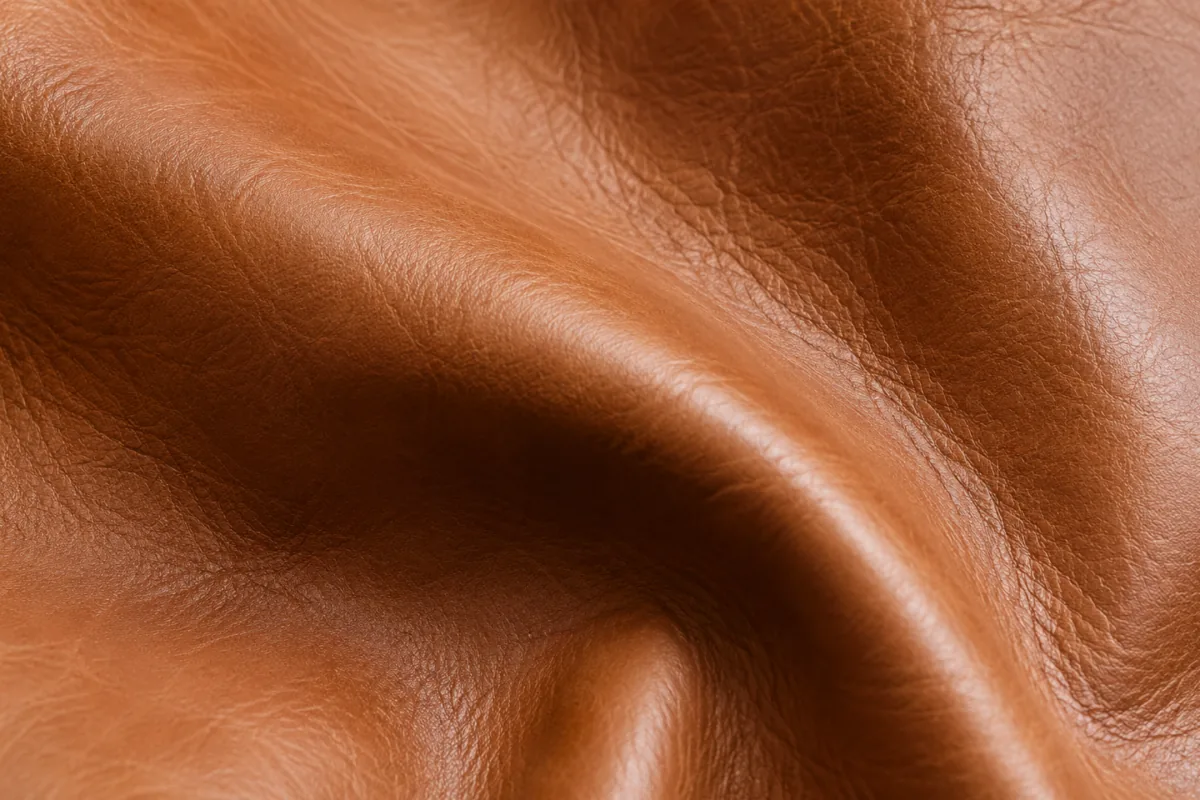 No coating at all. The softest hand, the least protected.Read
Uncoated
No coating at all. The softest hand, the least protected.Read
UncoatedAniline Leather
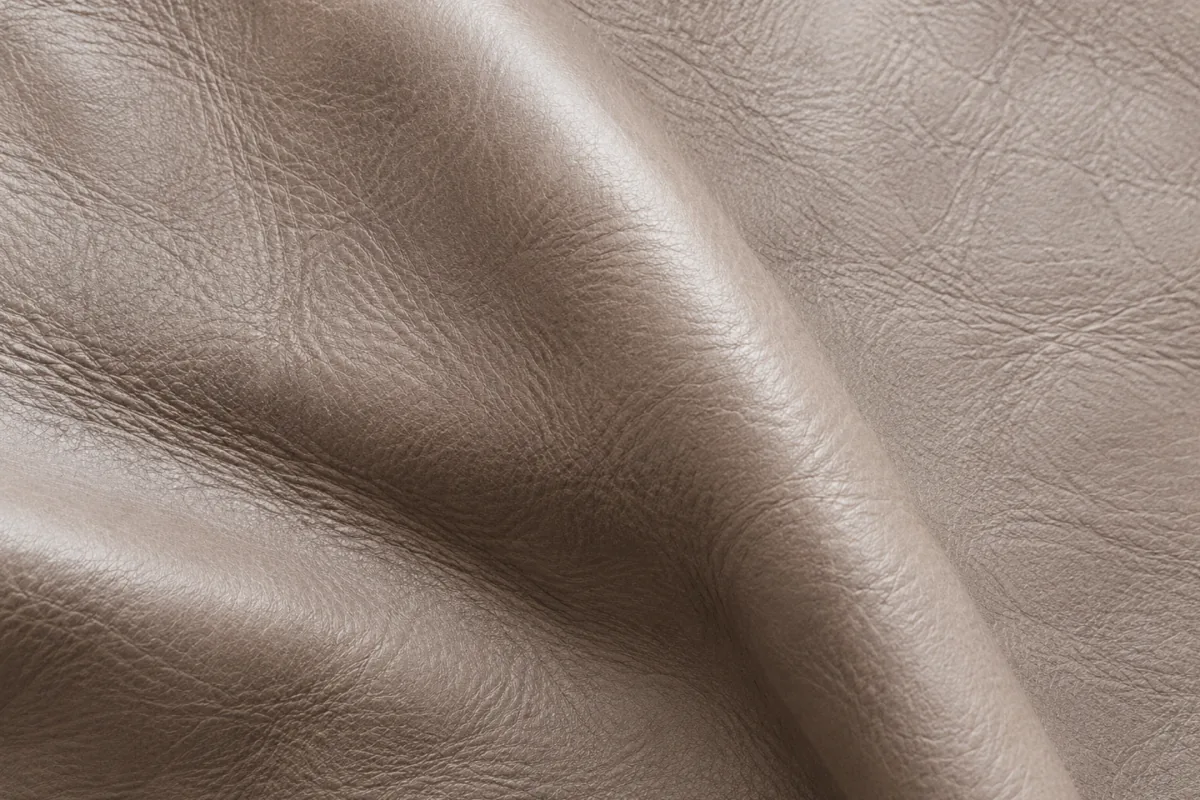 A light protective coat. Natural look, better defence.Read
Lightly finished
A light protective coat. Natural look, better defence.Read
Lightly finishedSemi-Aniline Leather
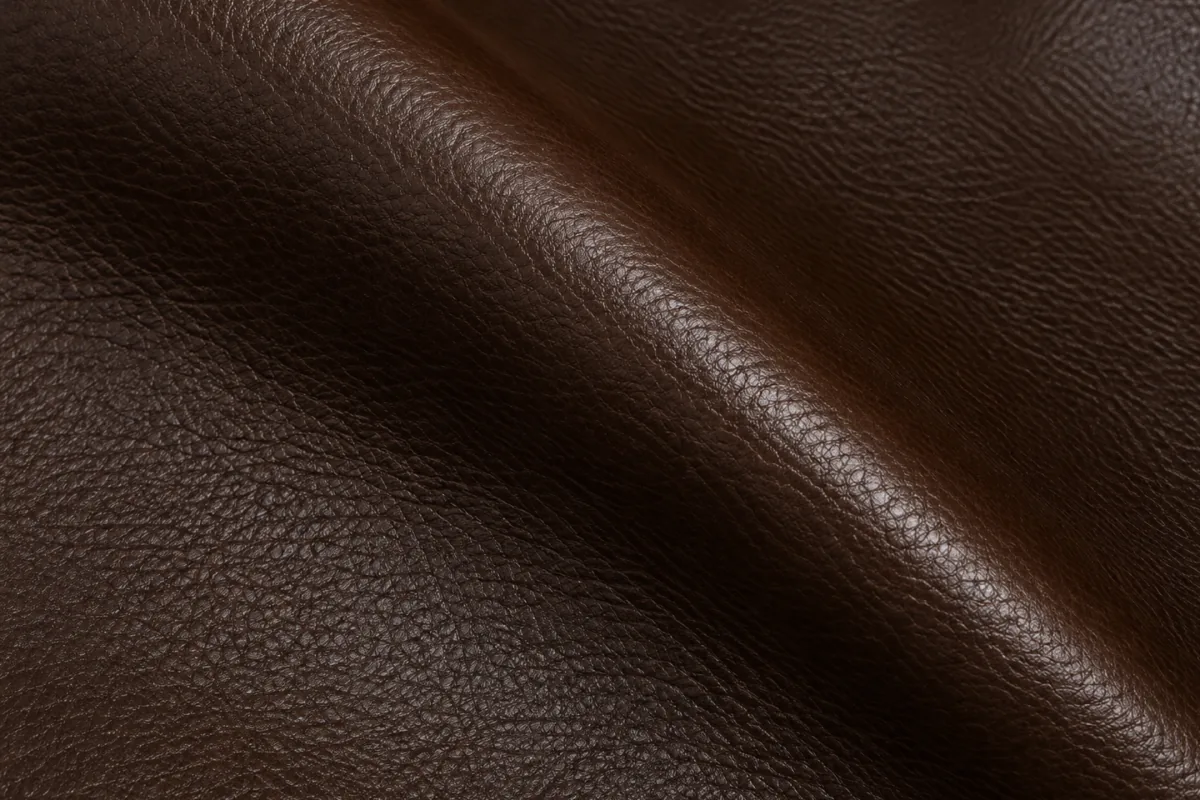 A full pigment coat — the most forgiving to refinish.Read
Pigmented coat
A full pigment coat — the most forgiving to refinish.Read
Pigmented coatPigmented Leather
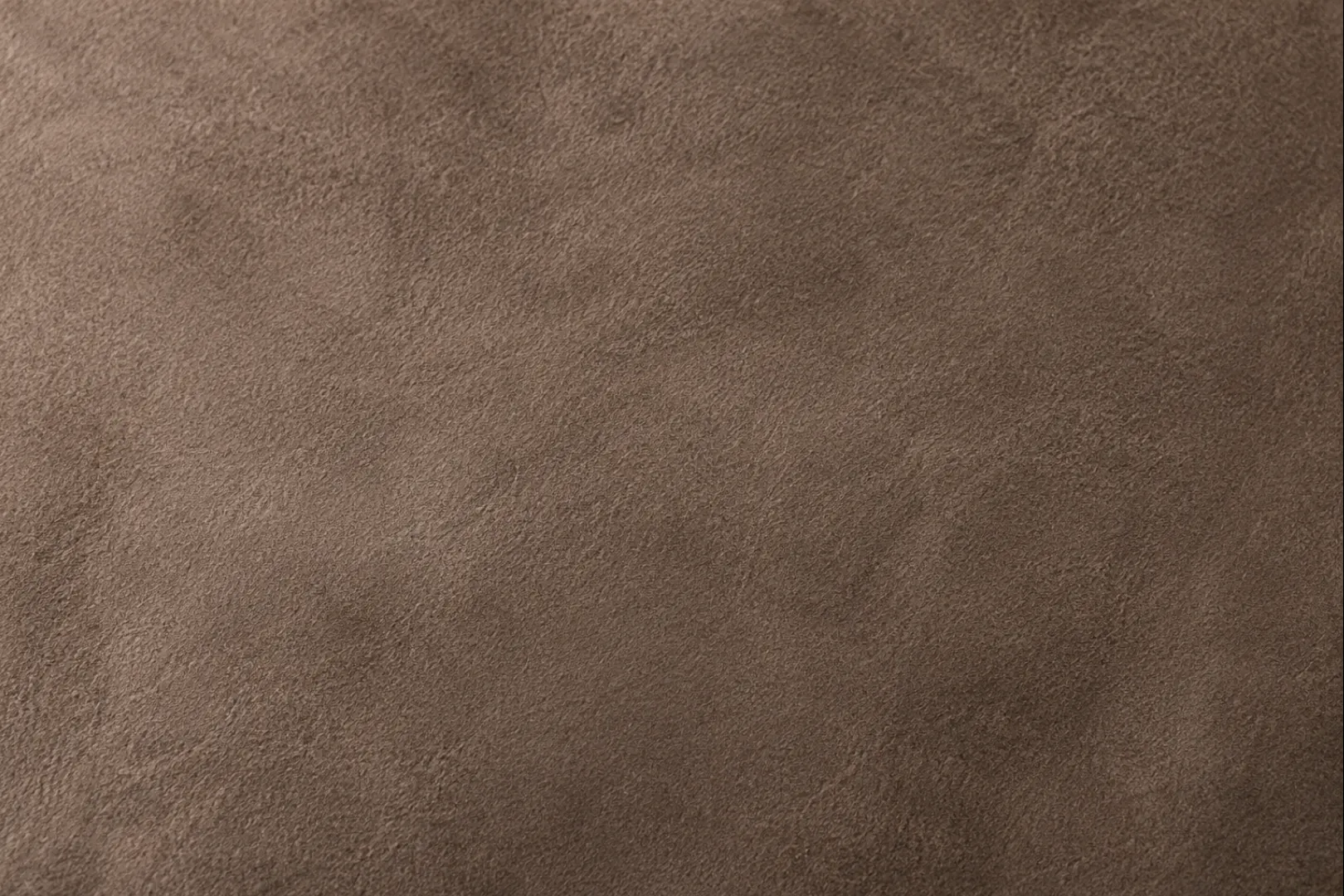 Grain sanded to a nap. Beautiful, and it marks easily.Read
Sanded nap
Grain sanded to a nap. Beautiful, and it marks easily.Read
Sanded napNubuck Leather
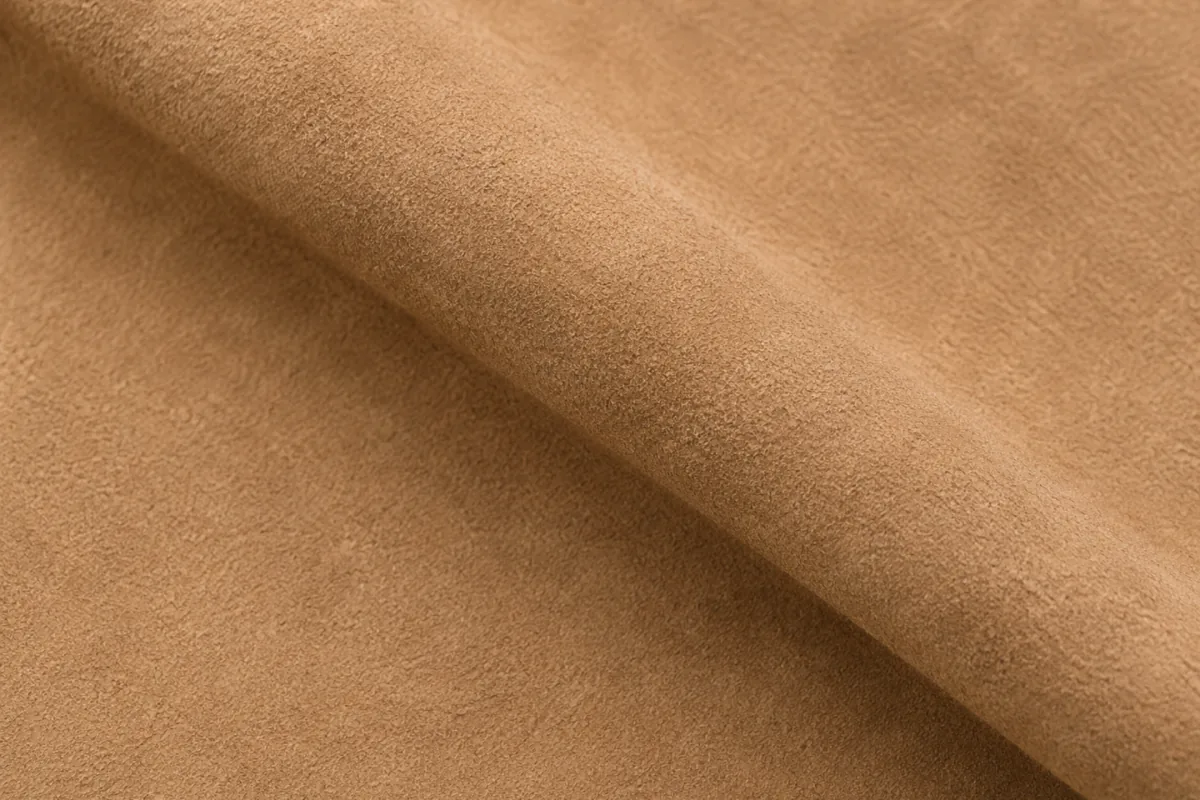 The split side, napped. Holds every mark it takes.Read
Napped split
The split side, napped. Holds every mark it takes.Read
Napped splitSuede
Leather Grades & Construction
Grade is not finish. These four terms describe which part of the hide you are sitting on and how it was processed — which is what decides how deep a repair can go.
• They work alongside the leather types above — Leather Naturally covers the tanning side in more depth.
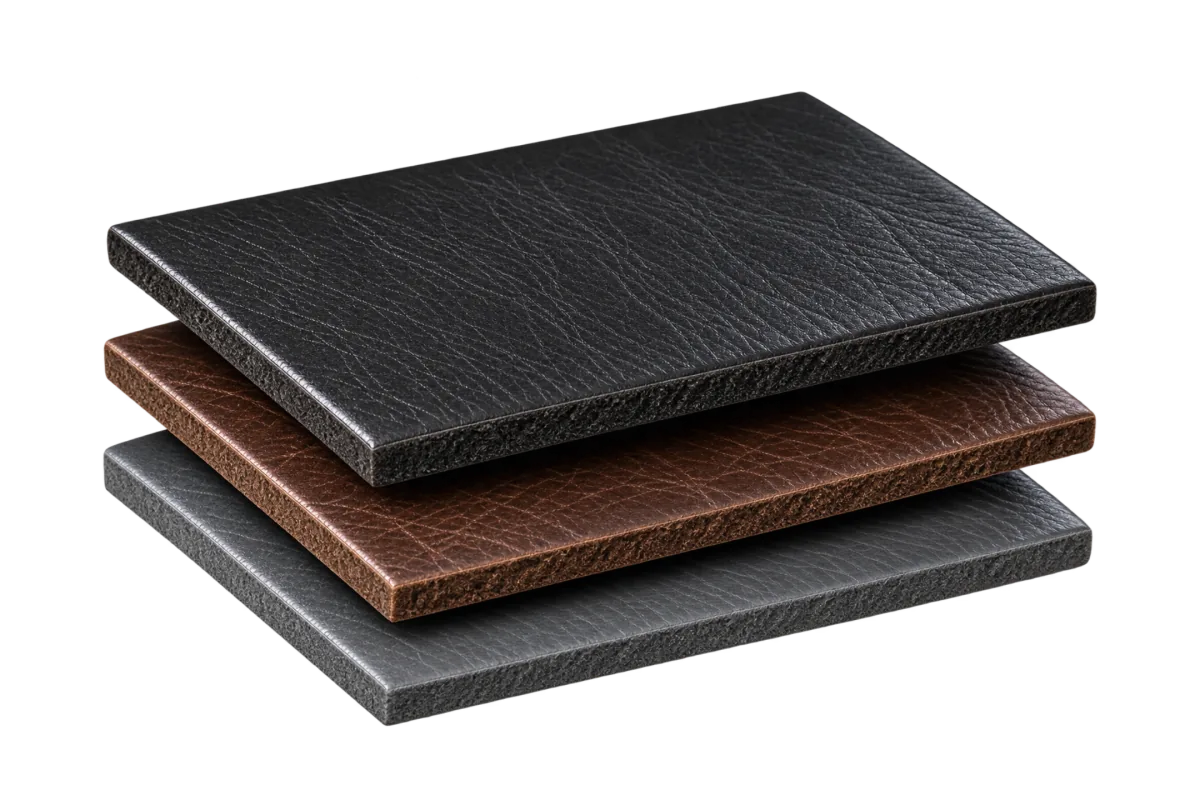 The grain surface untouched. The strongest leather made.Read
Top of the hide
The grain surface untouched. The strongest leather made.Read
Top of the hideFull-Grain Leather
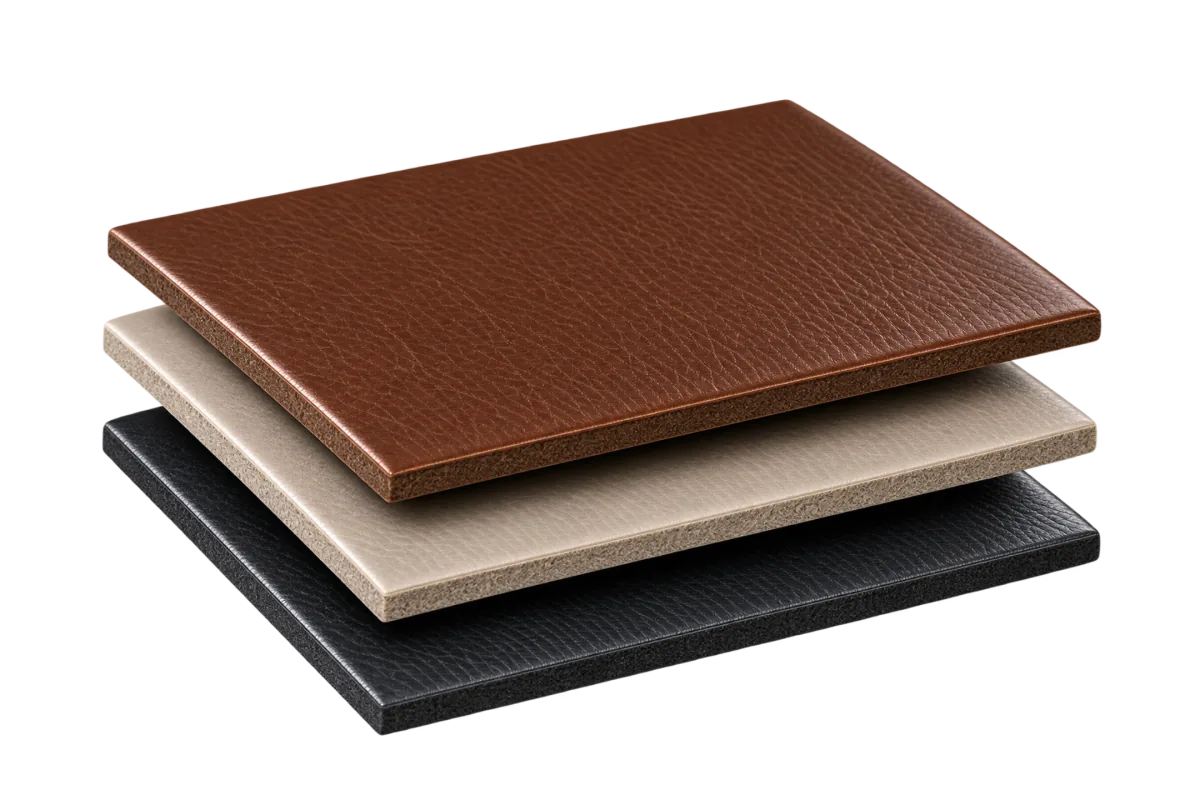 The grain layer, buffed level. Even, and still real grain.Read
Grain, lightly sanded
The grain layer, buffed level. Even, and still real grain.Read
Grain, lightly sandedTop-Grain Leather
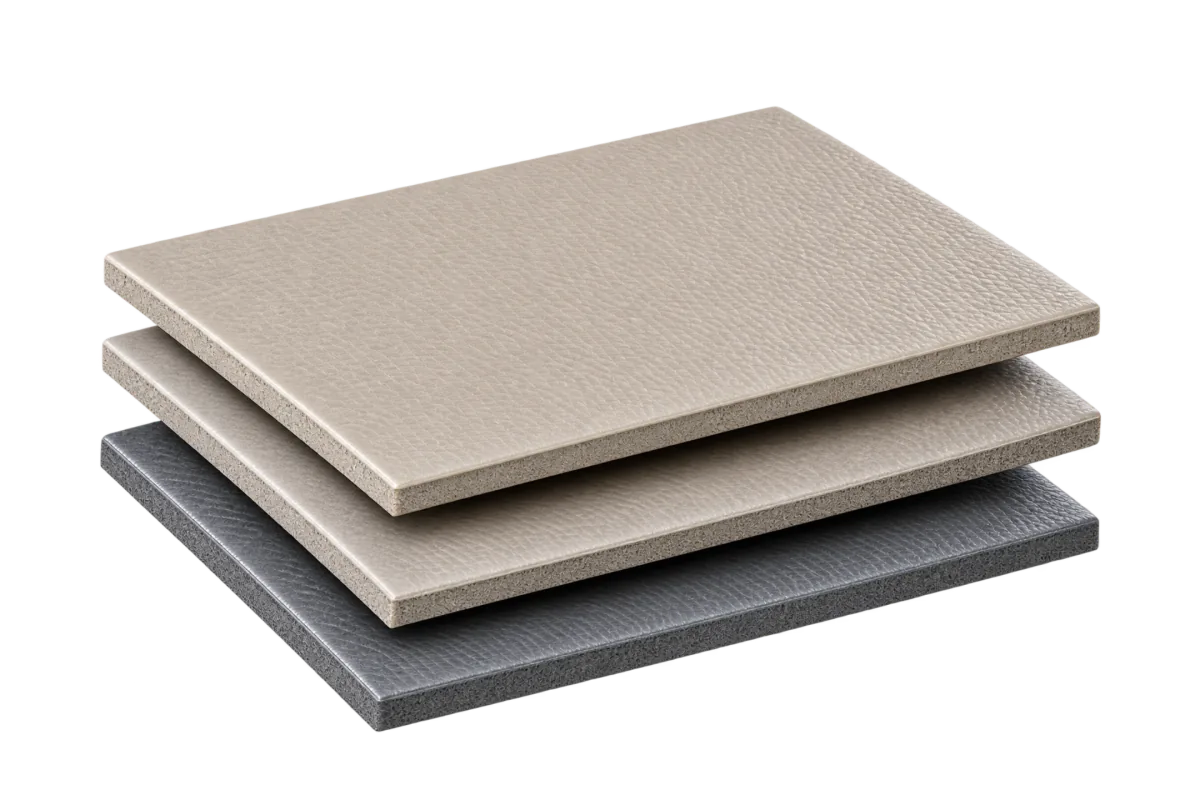
 Grain sanded off, a pattern printed back. Very uniform.Read
Sanded & embossed
Grain sanded off, a pattern printed back. Very uniform.Read
Sanded & embossedCorrected-Grain Leather
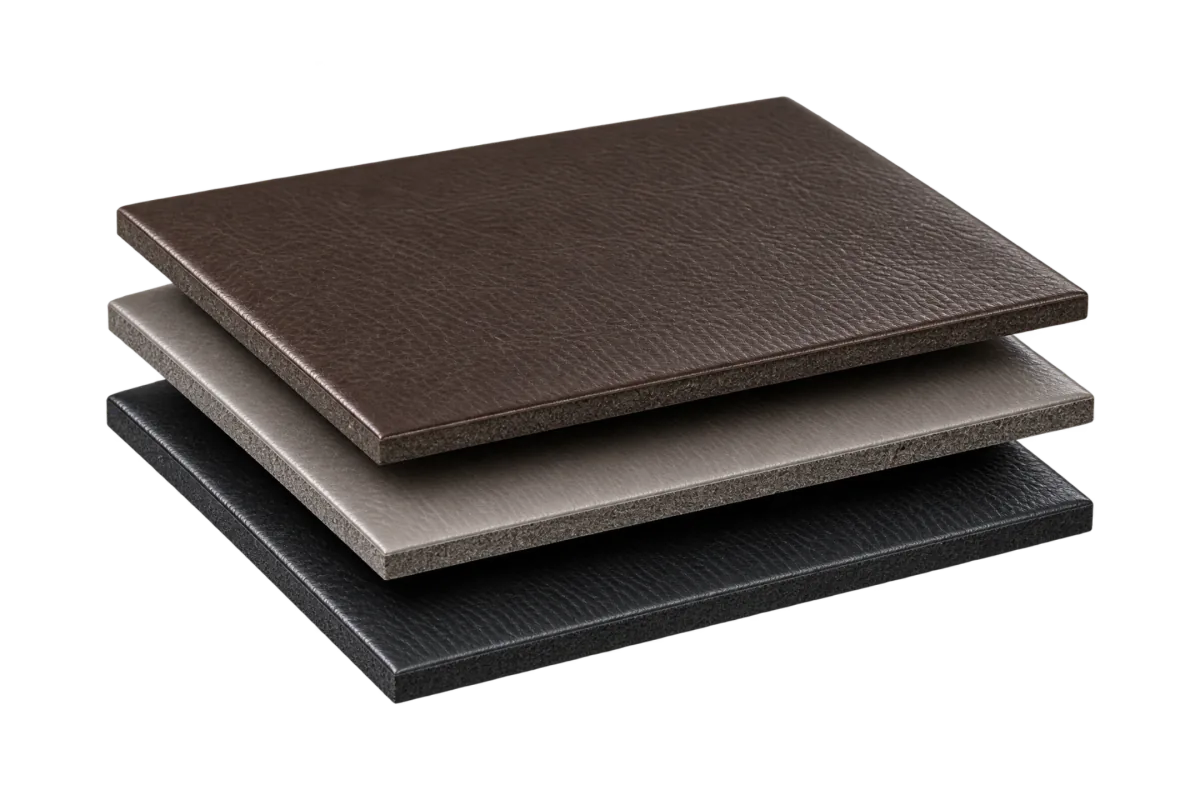
 The lower layers, once the grain has been taken off.Read
Below the grain
The lower layers, once the grain has been taken off.Read
Below the grainSplit Leather
Other Upholstery Materials
Six more upholstery material types beyond leather. Several of them are built to look like it, and they behave nothing like it once they are damaged.
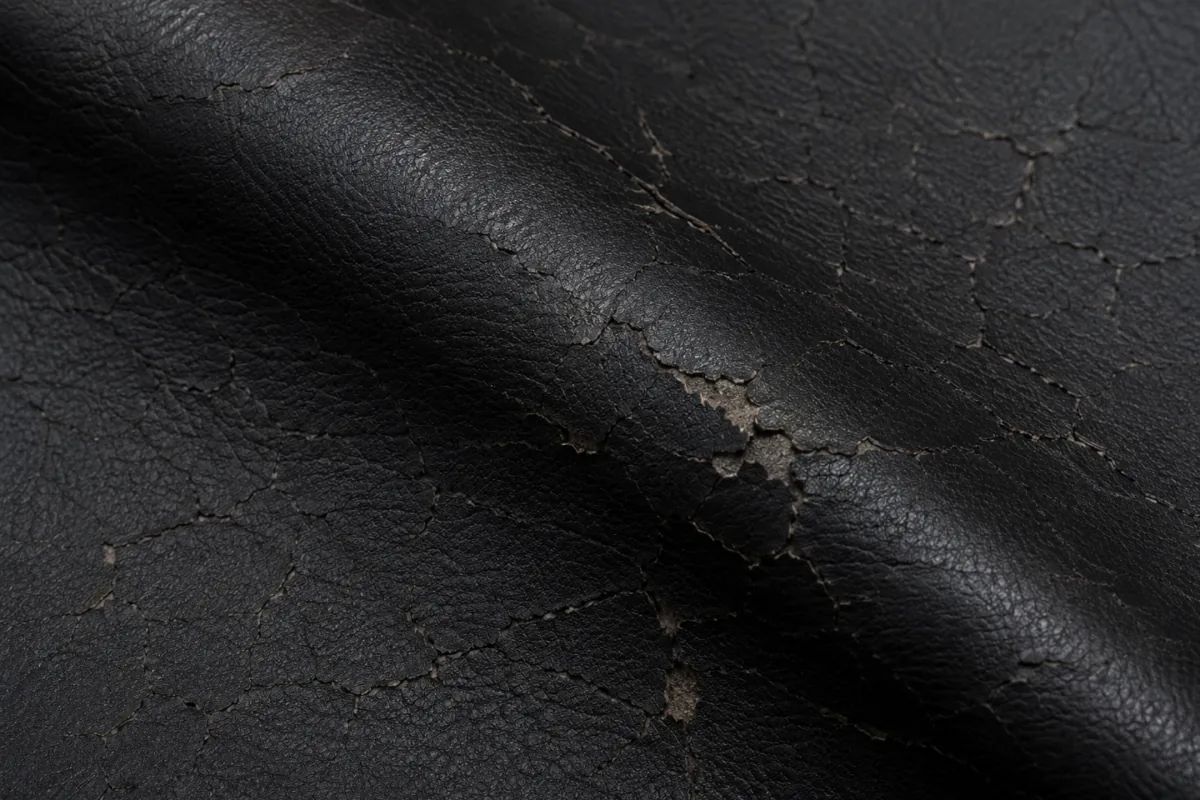 Fibre on a backing. It peels, not scuffs.Read
Fibre & binder
Fibre on a backing. It peels, not scuffs.Read
Fibre & binderBonded Leather
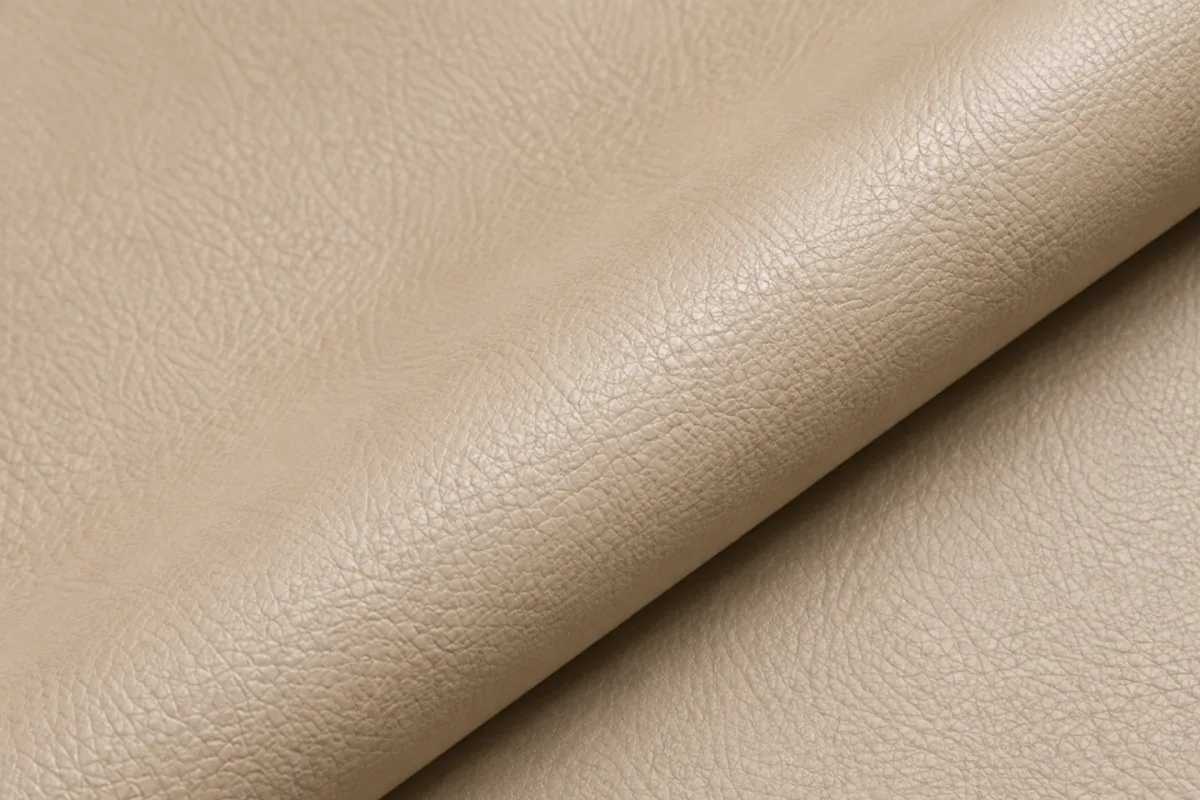 No hide at all. The coating decides.Read
Synthetic
No hide at all. The coating decides.Read
SyntheticFaux Leather
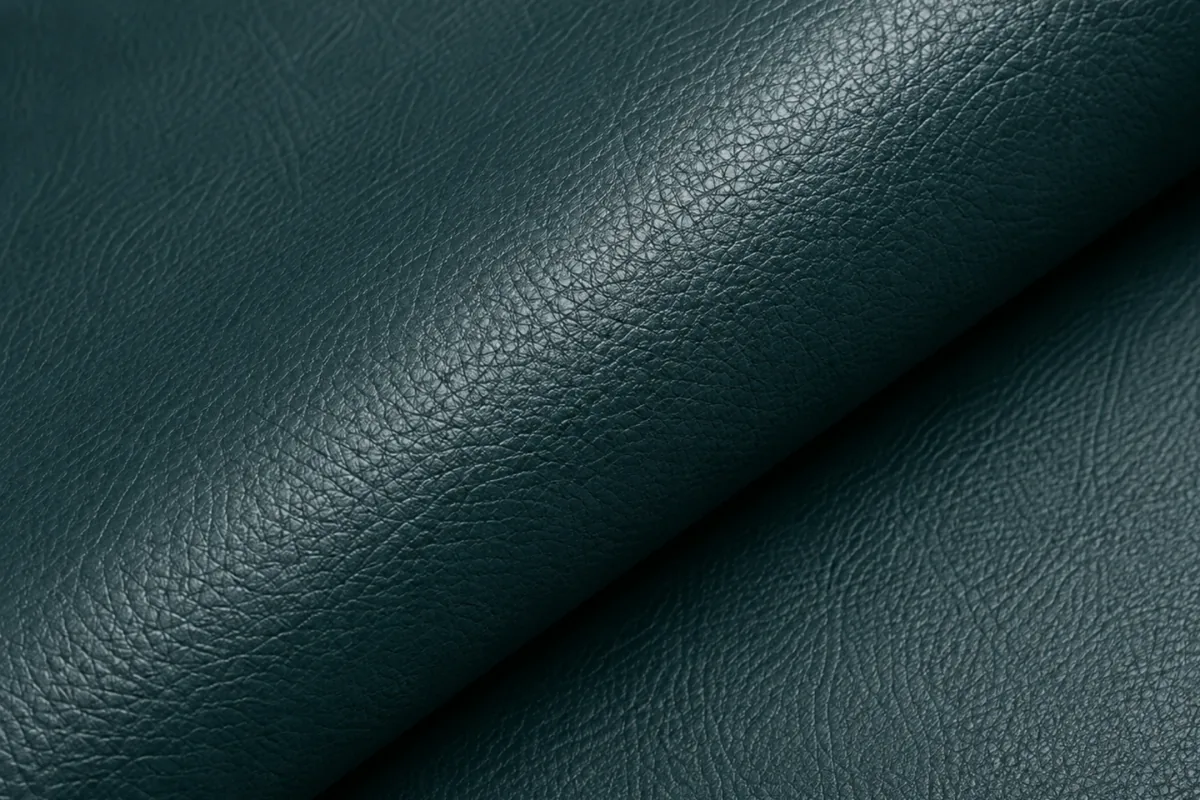 Tough. Scratches and tears repair well.Read
Coated synthetic
Tough. Scratches and tears repair well.Read
Coated syntheticVinyl
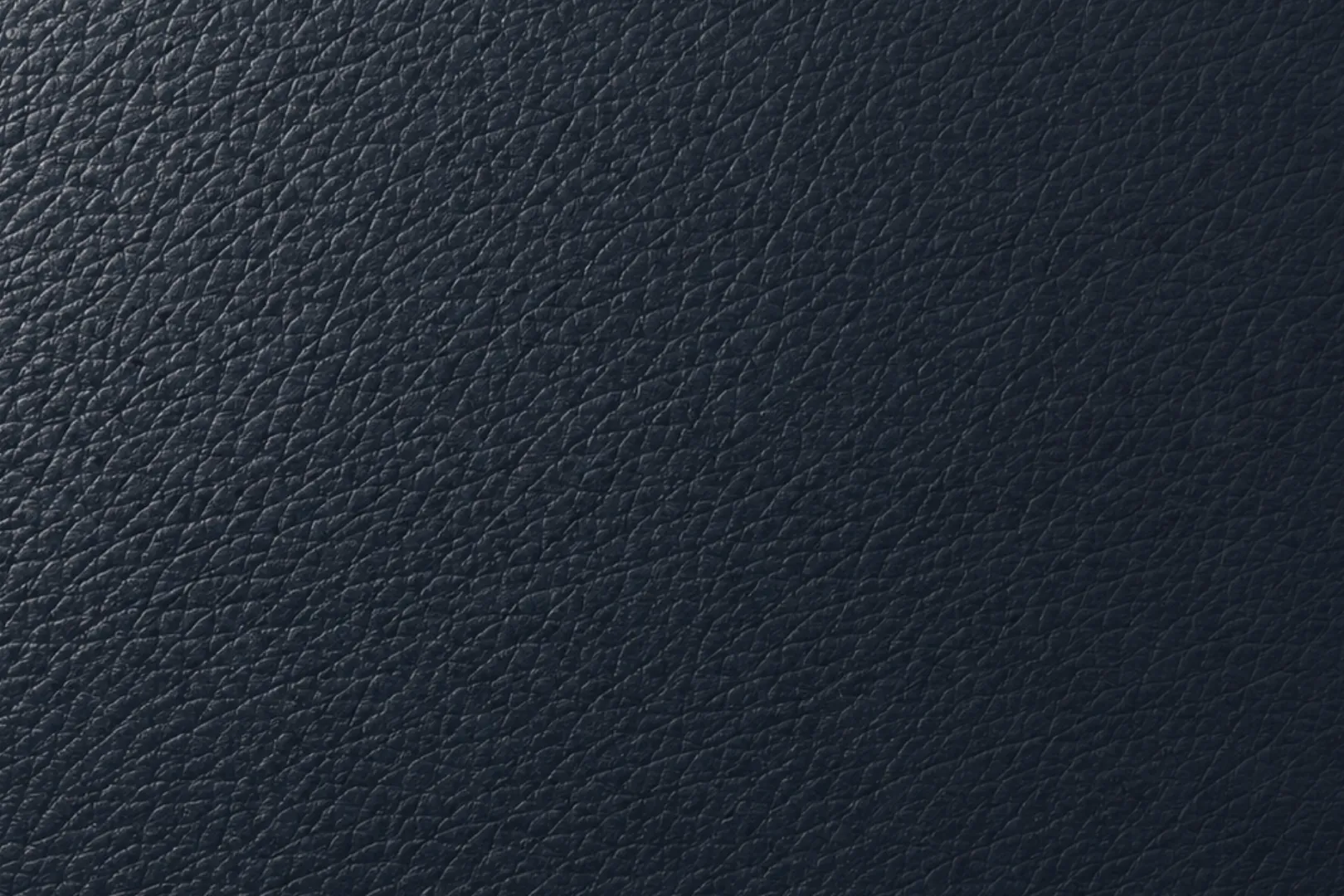 Contract seating, built for heavy use.Read
Contract grade
Contract seating, built for heavy use.Read
Contract gradeCommercial Vinyl
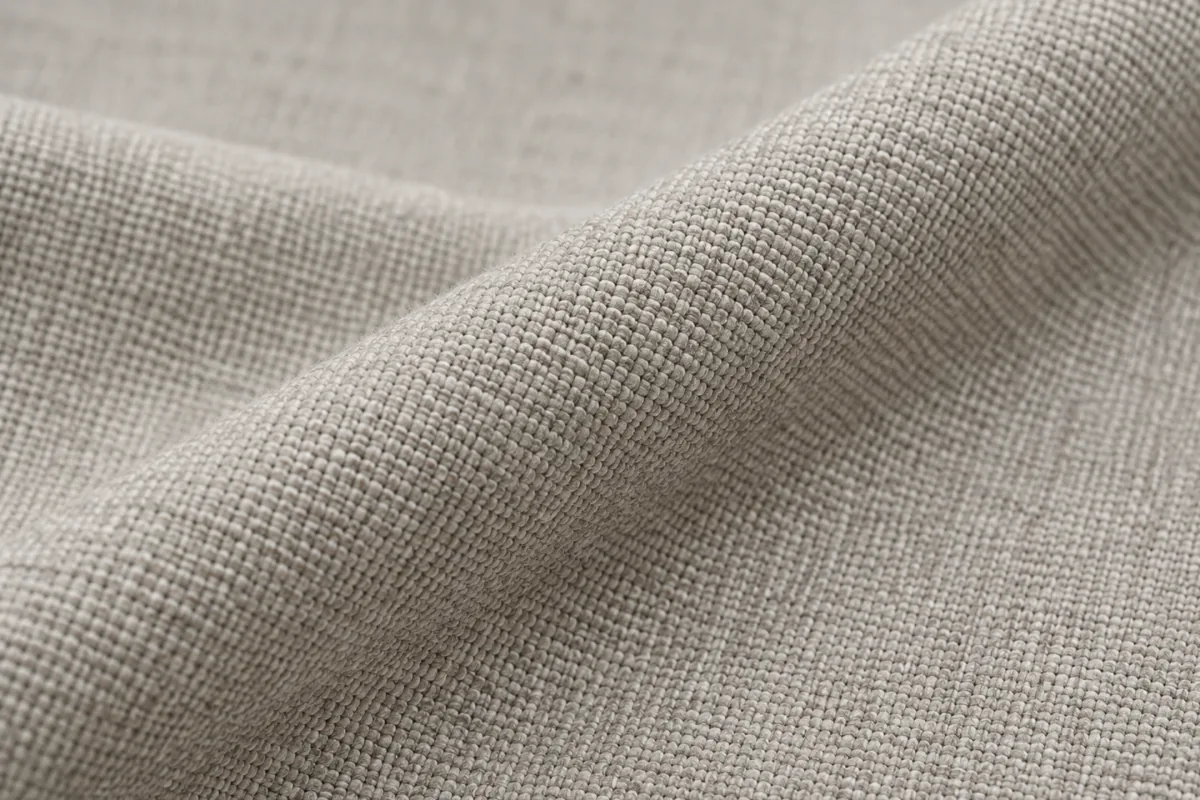 Cleaning and reupholstery, not refinishing.Read
Woven textile
Cleaning and reupholstery, not refinishing.Read
Woven textileUpholstery Fabric
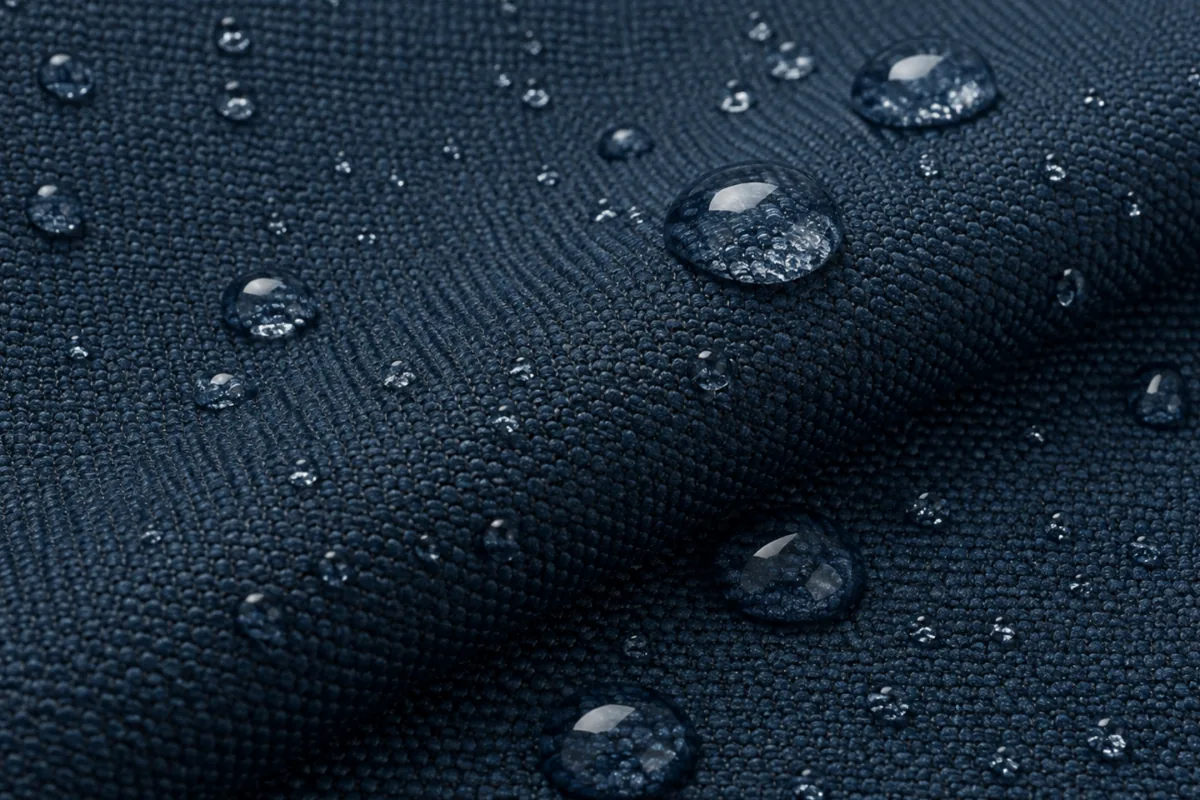 Stain and abrasion resistance, woven in.Read
Treated textile
Stain and abrasion resistance, woven in.Read
Treated textilePerformance Fabric
Put Any Two Materials Side by Side
Leather, vinyl, faux and bonded can look surprisingly similar — and still need completely different treatment. Pick any two upholstery material types and compare how they behave.
How We Identify Upholstery Material Types
Telling upholstery material types apart isn't based on color alone. Our technicians may evaluate:
Surface texture and grain
Natural grain, embossed patterns, nap, texture and surface characteristics.
Absorbency
Different leather finishes respond differently to moisture and cleaning solutions.
Surface coating
We evaluate whether the material has a protective pigment or synthetic surface layer.
Wear pattern
Genuine leather, vinyl, bonded leather and faux leather deteriorate in different ways.
Backing and construction
When visible, the underside or a damaged edge can provide important information about how the material is constructed.
Why Upholstery Material Types Matter
The same-looking damage can require very different treatment depending on the upholstery.
A scratch on aniline leather
is not treated the same as
a scratch on pigmented leather.
Peeling bonded leather
is different from
a damaged leather finish.
A tear in commercial vinyl
requires a different process from
a tear in genuine leather.
Correct material identification helps determine whether the appropriate solution is:
Our goal is not simply to cover visible damage. We determine which process makes sense for the material and its current condition — and we will tell you when the honest answer sits further along that ladder than you were hoping.
Repair, Restore or Reupholster?
Once the material is identified and its condition assessed, the work falls into one of three paths.
 01
01Repair
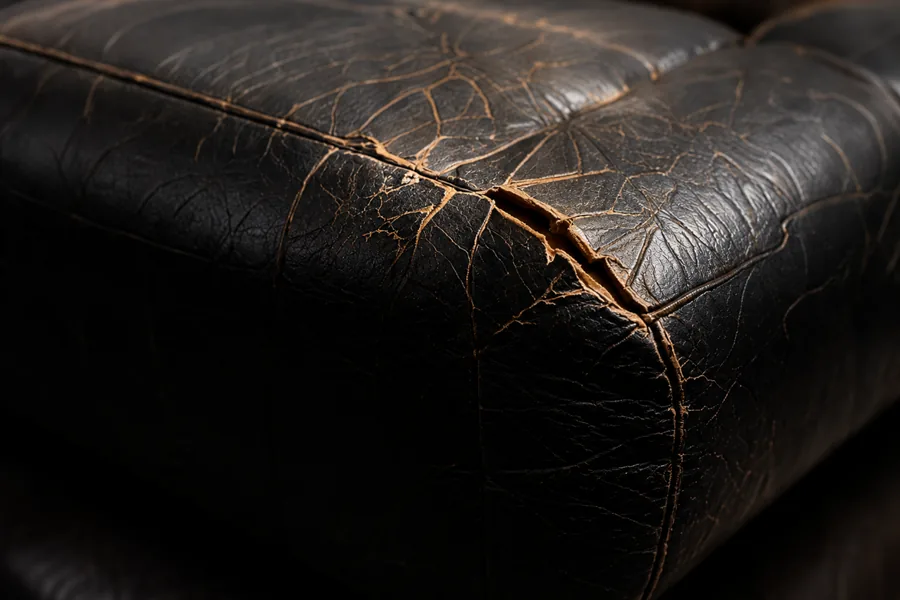
Localized damageTears, cuts, punctures, scratches, burns, open seams and damaged stitching — the surrounding material stays as it is.
Explore Repair Services →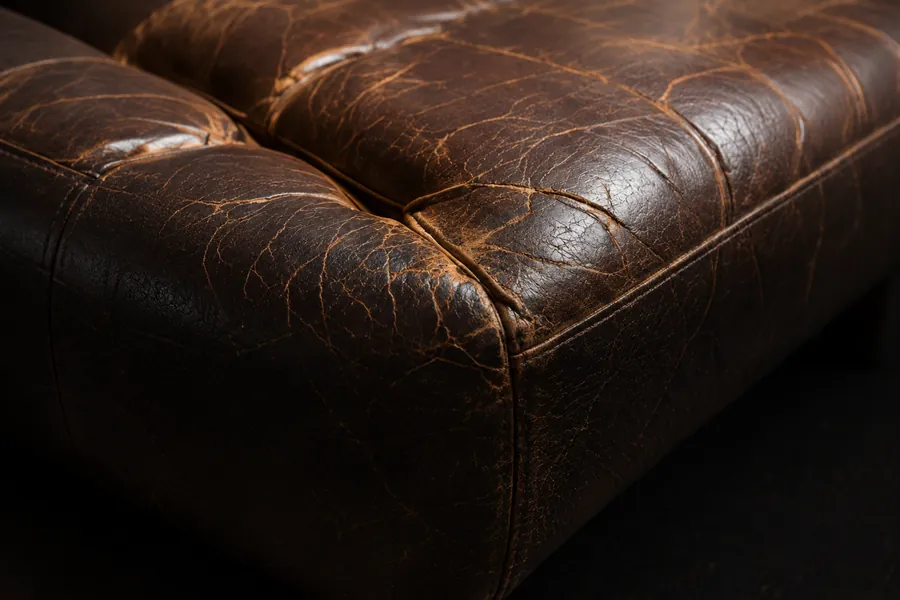 02
02Restoration
Original upholstery preservedFading, discoloration, dryness, surface wear, staining and finish deterioration — color, softness and protection brought back.
Explore Restoration Services →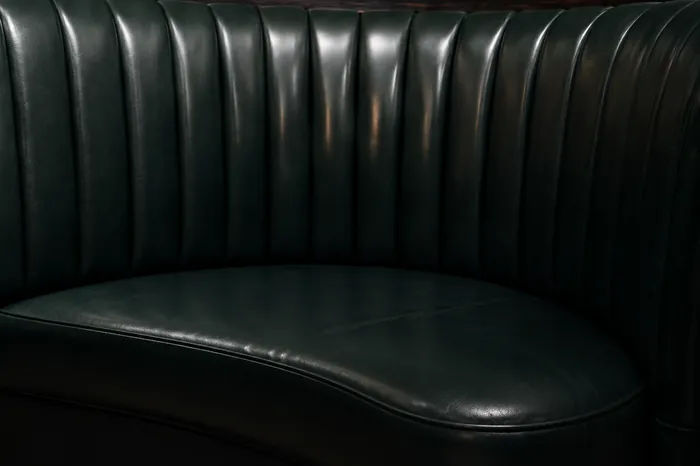 03
03Reupholstery
Material replacedWidespread peeling or cracking, multiple failed areas — or a deliberate change to a different material altogether.
Explore Reupholstery Services →Materials for Commercial Furniture
Commercial furniture needs more than a material that looks good. Restaurants, hotels, offices, healthcare, salons and property managers need surfaces that survive constant use and repeated cleaning. Contract-grade upholstery material types are rated for exactly that, against the ACT voluntary performance guidelines for abrasion, colourfastness and seam strength.
We evaluate factors such asMaterial selection support & samples
On large-volume and commercial projects our team can help you choose the material and supply samples before anything is committed to.
Explore Commercial ServicesWhich Material Suits Which Business
Which upholstery material types make sense depends as much on the room as on the furniture. These are the environments we work in most, and what tends to hold up in each.
 High-turn booths that need a coated, fast wipe-down surface.Read
Pigmented leather & commercial vinyl
Restaurants
High-turn booths that need a coated, fast wipe-down surface.Read
Pigmented leather & commercial vinyl
Restaurants
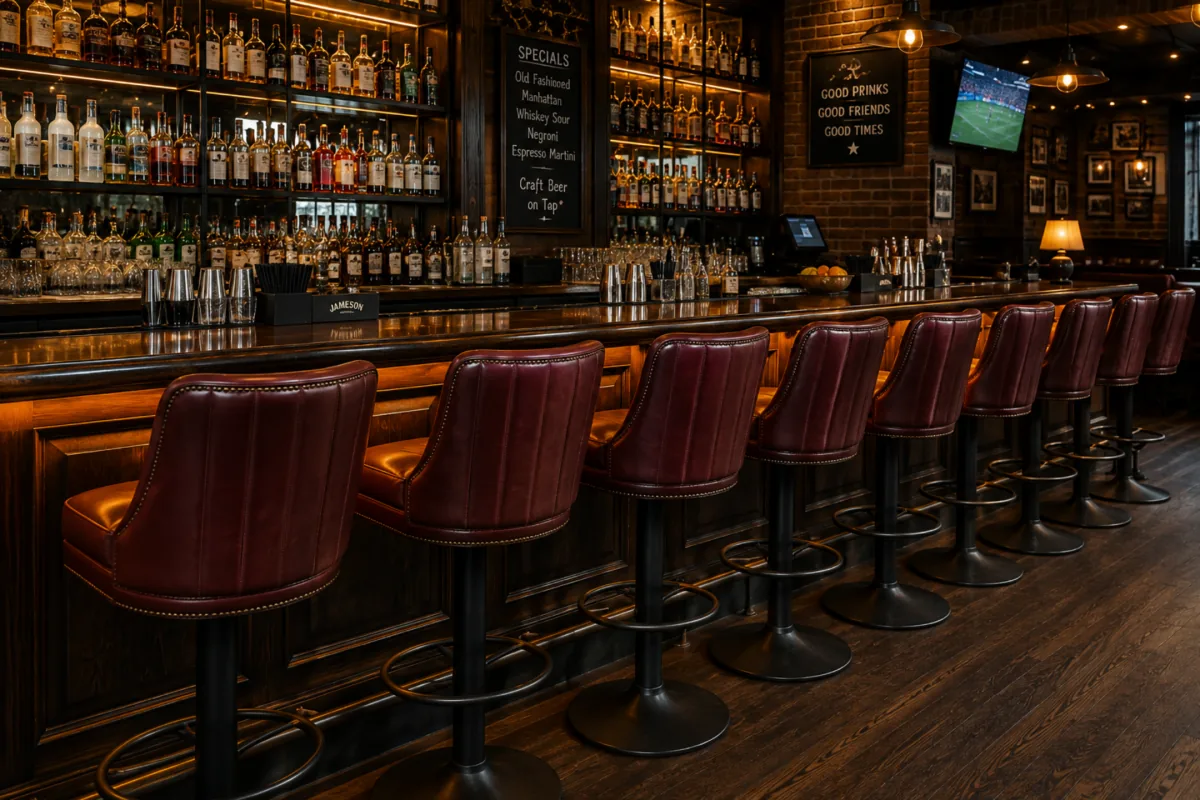 Traffic and spills. The finish takes abuse at armrest height.Read
Heavy-gauge vinyl & pigmented leather
Bars & Nightlife
Traffic and spills. The finish takes abuse at armrest height.Read
Heavy-gauge vinyl & pigmented leather
Bars & Nightlife
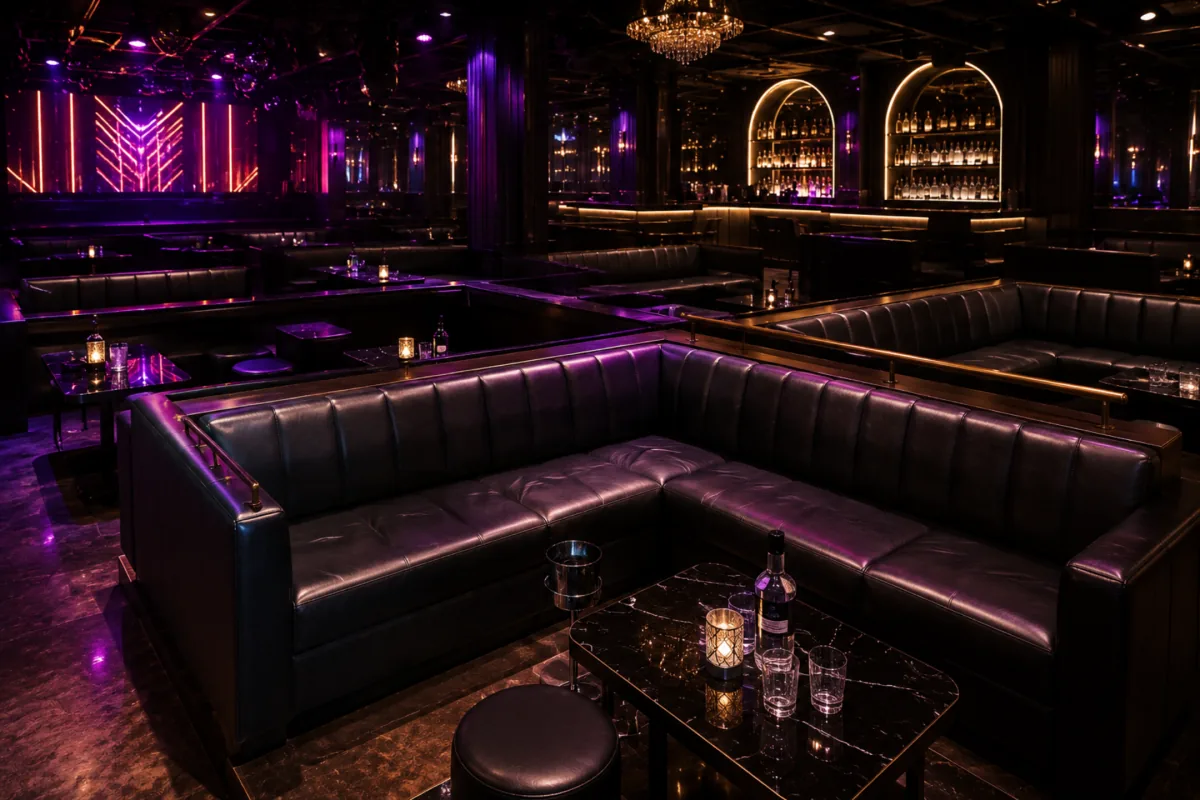 Movement, spills, late nights. Dark coated surfaces hide wear.Read
Dark commercial vinyl
Nightclubs
Movement, spills, late nights. Dark coated surfaces hide wear.Read
Dark commercial vinyl
Nightclubs
 Guests judge by feel, so comfort must survive commercial cleaning.Read
Semi-aniline leather & performance fabric
Hotels & Hospitality
Guests judge by feel, so comfort must survive commercial cleaning.Read
Semi-aniline leather & performance fabric
Hotels & Hospitality
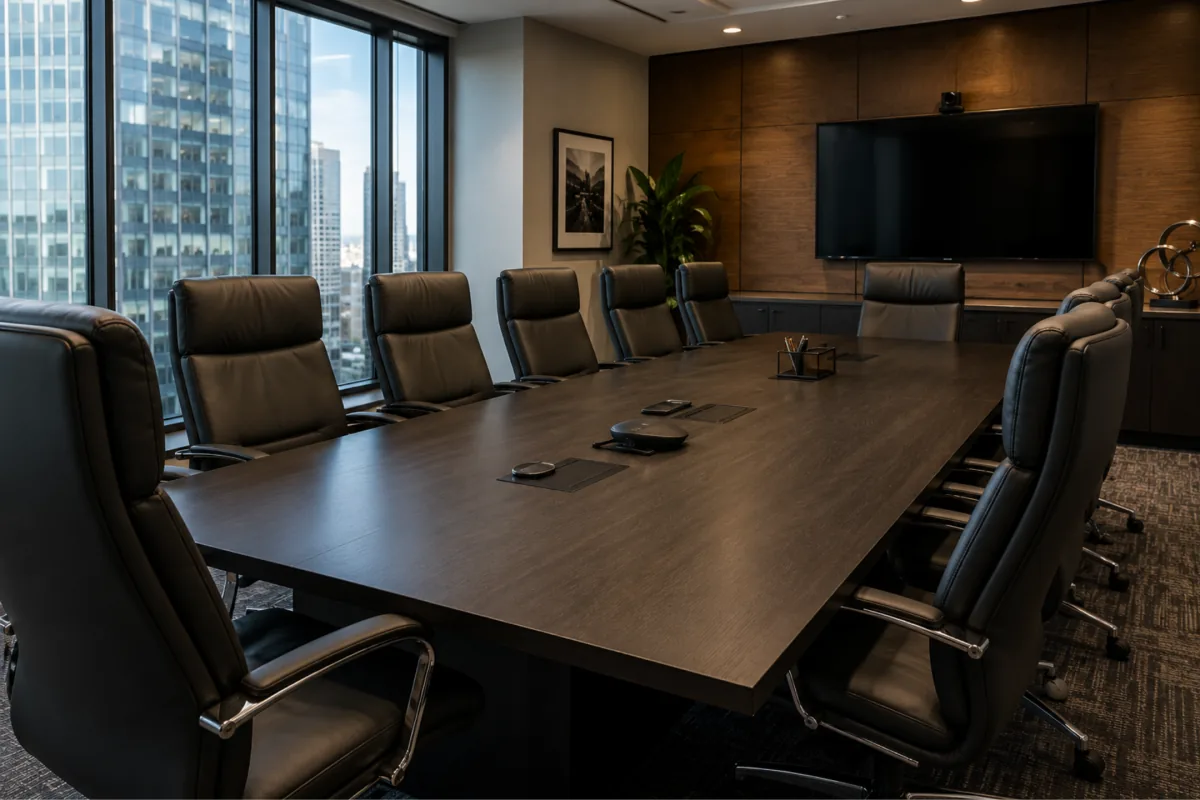 Executive seating that still has to match itself years later.Read
Pigmented leather
Corporate & Offices
Executive seating that still has to match itself years later.Read
Pigmented leather
Corporate & Offices
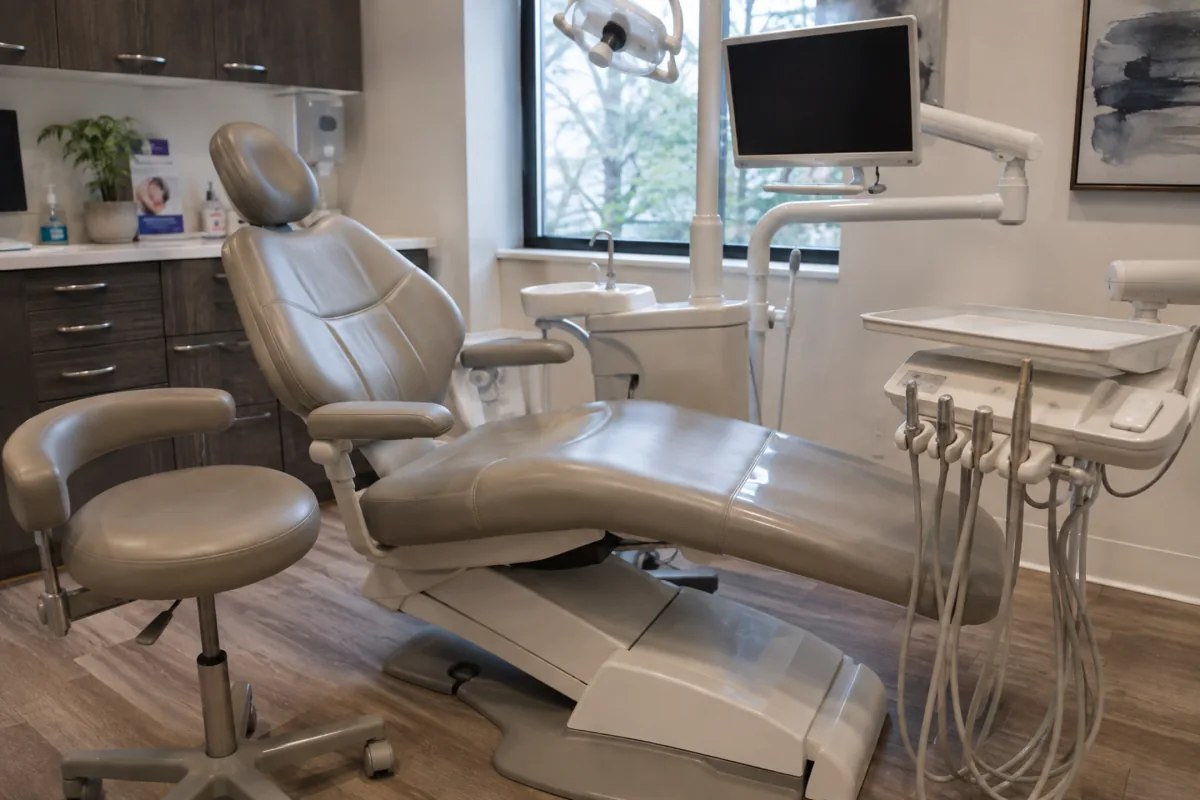 Disinfectant destroys leather. Coated vinyl is the only path.Read
Antimicrobial commercial vinyl
Healthcare
Disinfectant destroys leather. Coated vinyl is the only path.Read
Antimicrobial commercial vinyl
Healthcare
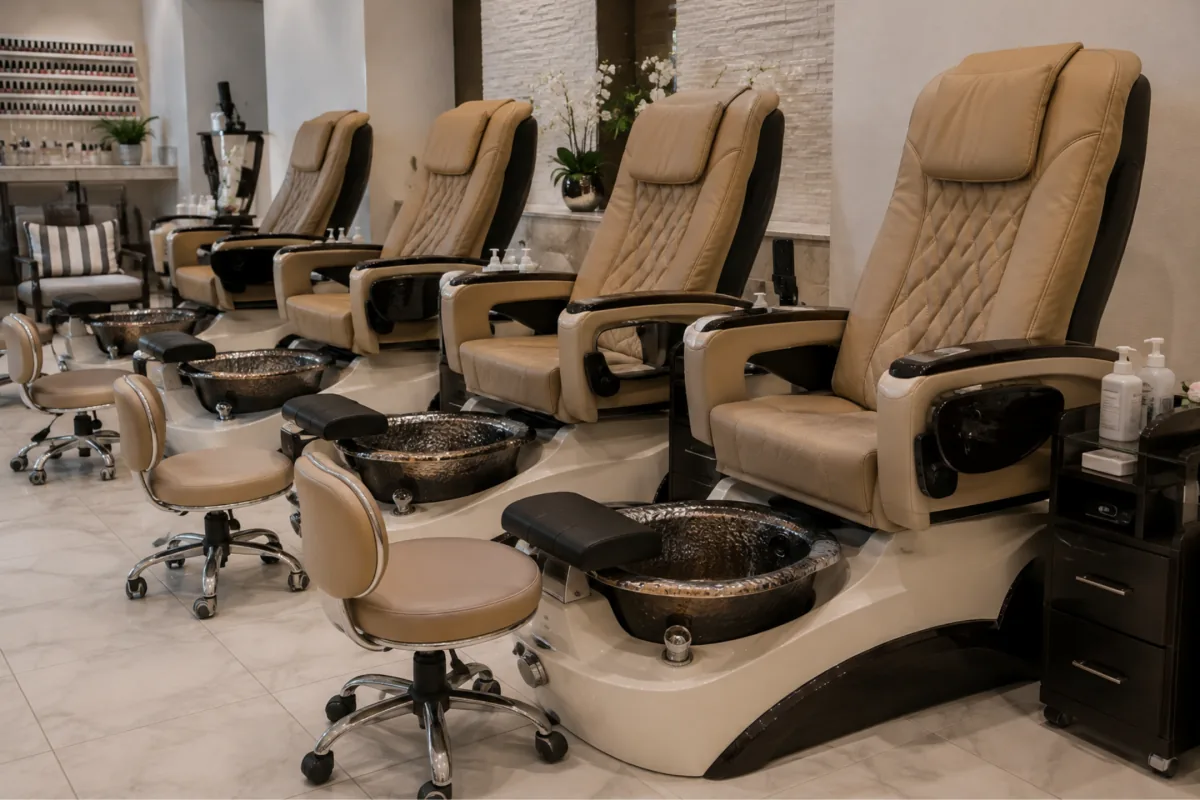 Oils, product and standing water. Absorbent materials fail fast.Read
Wipe-clean vinyl
Beauty & Wellness
Oils, product and standing water. Absorbent materials fail fast.Read
Wipe-clean vinyl
Beauty & Wellness
 Shared lobbies, no supervision. Repairability beats luxury here.Read
Pigmented leather & performance fabric
Property Management
Shared lobbies, no supervision. Repairability beats luxury here.Read
Pigmented leather & performance fabric
Property Management
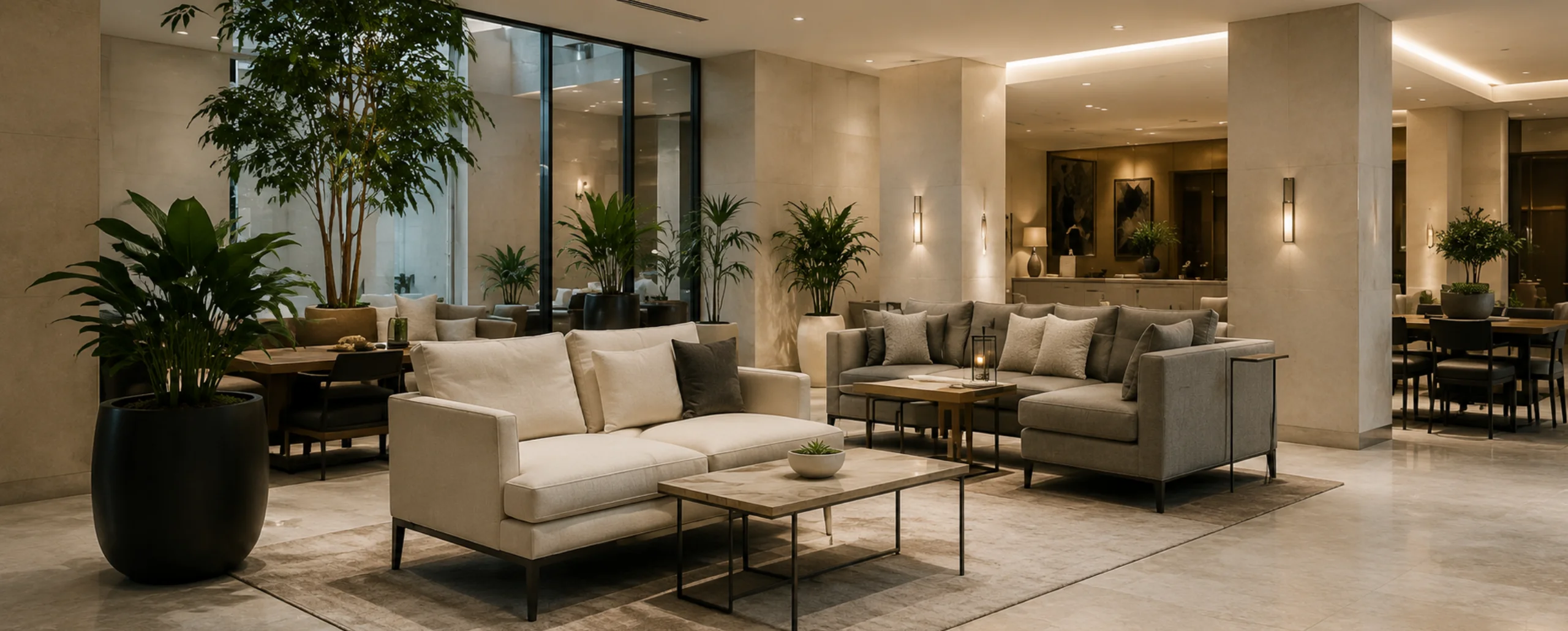 Appearance drives value, so natural grain earns its premium.Read
Aniline & semi-aniline leather
Real Estate & Residential
Appearance drives value, so natural grain earns its premium.Read
Aniline & semi-aniline leather
Real Estate & Residential
 Seating is reset and dragged constantly. Seams fail first.Read
Performance fabric & vinyl
Event Venues
Seating is reset and dragged constantly. Seams fail first.Read
Performance fabric & vinyl
Event Venues
 Refined materials expected to build a patina, not simply wear out.Read
Full-grain & aniline leather
Private & Country Clubs
Refined materials expected to build a patina, not simply wear out.Read
Full-grain & aniline leather
Private & Country Clubs
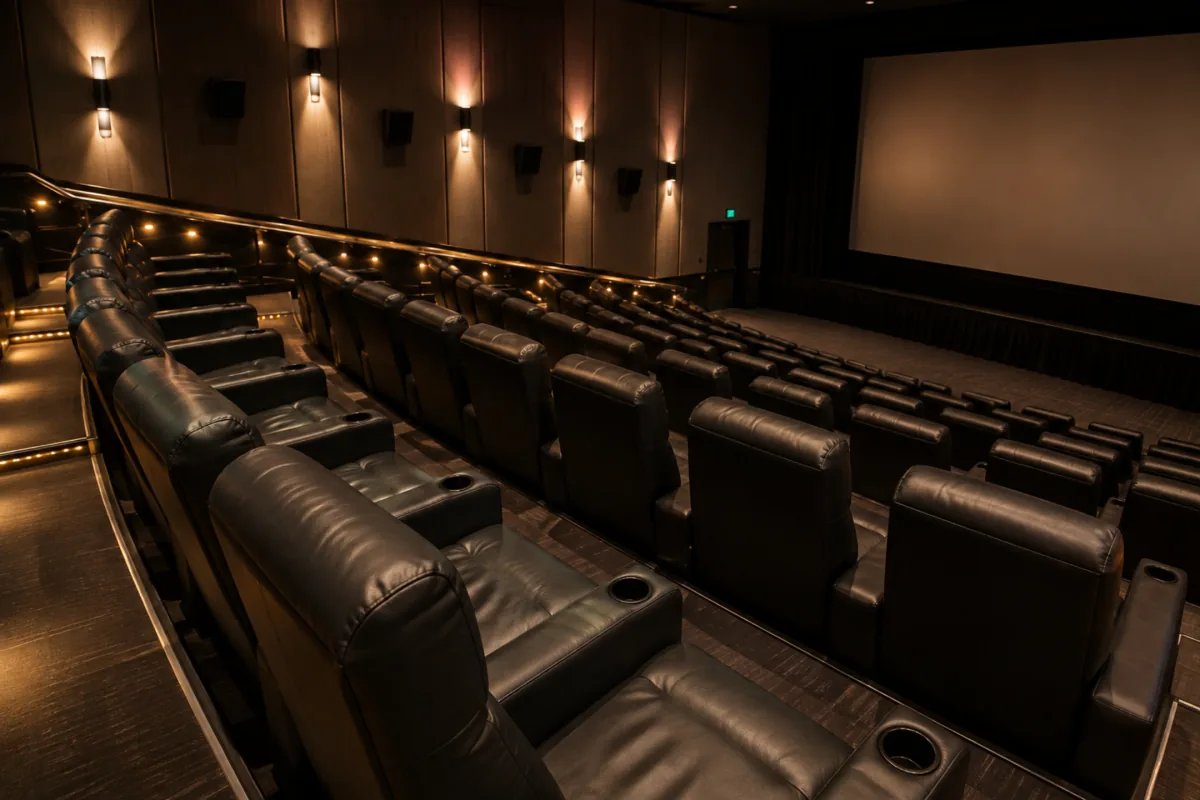 Continuous public seating where every unit must behave alike.Read
Heavy-duty vinyl & pigmented leather
Entertainment
Continuous public seating where every unit must behave alike.Read
Heavy-duty vinyl & pigmented leather
Entertainment
Not Sure What Material You Have?
You don't need to identify it yourself. Our team can review the furniture, tell you which upholstery material types you have and recommend the appropriate next step.
Prefer to talk it through? Call (347) 310-7483 or email info@leatherrestorepro.com.
Frequently Asked Questions
The questions we get most often about identifying upholstery materials.
How can I tell if my furniture is genuine leather?
Natural grain variation, the way the material wears, its backing, surface finish and absorbency can all provide clues. Because modern vinyl and synthetic materials can closely imitate leather, professional evaluation is sometimes necessary.
Can all leather be restored?
No. Repairability depends on the leather type, its condition, the extent of the damage and whether the underlying material remains structurally sound.
Can peeling leather be repaired?
It depends on what is actually peeling. A deteriorating finish on genuine leather is different from widespread delamination of bonded or synthetic material. We evaluate the cause before recommending repair or replacement.
Can vinyl furniture be repaired?
Many localized tears, cuts, punctures, burns, seams, scratches and damaged areas can be repaired. Extensive cracking, peeling or material failure may make replacement or reupholstery more appropriate.
Is bonded leather the same as genuine leather?
No. Bonded leather is manufactured using leather fibers combined with other materials and behaves differently from traditional leather upholstery.
What if I don't know what material my furniture is?
Send us several clear photos. In many cases, our team can narrow it down to one or two upholstery material types and recommend the appropriate service.
Start with the material. The right process follows.
On-site leather, vinyl and upholstery repair across NYC and New Jersey. Send photos and we will identify which upholstery material types you have, assess the condition and tell you which process actually applies.