
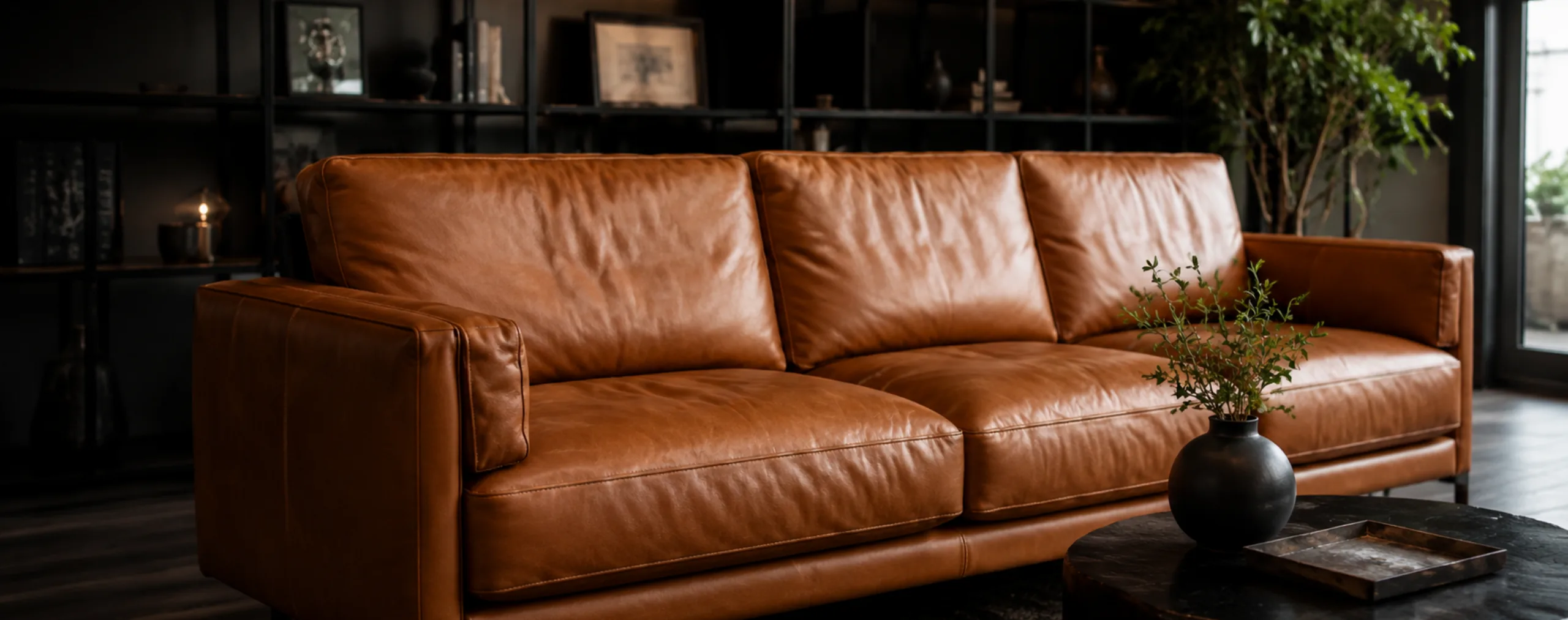
Finest Leather, Least Protected
Transparent dye, no pigment topcoat. That one choice explains the visible grain, the absorbency, the patina — and why it is restored differently.
Pigment topcoat
How pigmented leather is finished
Clear finish
A light coat at most
Transparent dye
Soaks through, not onto
The hide itself
Grain, pores, scars, variation
No Coating Over the Hide
aniline leather
Colored through with transparent dye, no pigment. You see the hide, not a coating.
-
01
Nothing opaque over the grain
Pores and scars stay visible.
-
02
The dye is transparent
No chart can match it.
-
03
No barrier layer on top
Water, wine and oils absorb.
Not to be confused with
Aniline Leather Colors
Every tile is a real hide. None sits on one flat value.
Cognac
Most requested
Camel
Warm mid
Tan
Warm mid
Caramel
Warm mid
Chocolate
Deep
Espresso
Deep
Black
Deep
Cream
Light
Beige
Light
Taupe
Neutral
Gray
Neutral
Burgundy
Saturated
Navy
Saturated
Olive & specialty
Saturated
Custom
Custom match
How Aniline Leather Is Sold
Hides, not rolls. Belly, edges and heavy markings are unusable — a sectional never comes from one.
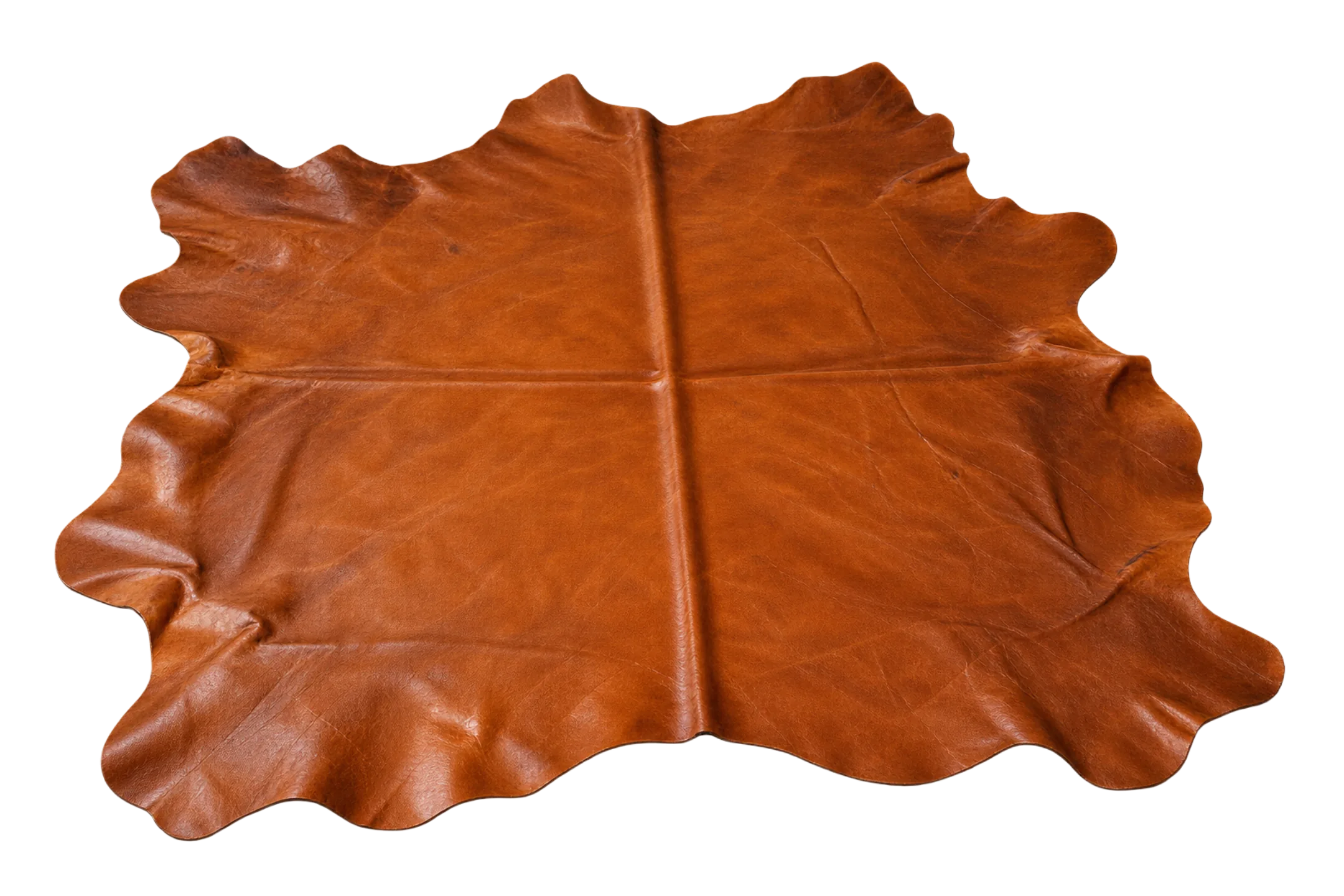
One Hide Is Not One Color
Three hides, all ordered as cognac. Nothing has happened yet.
Hide A
Redder, tighter grain.
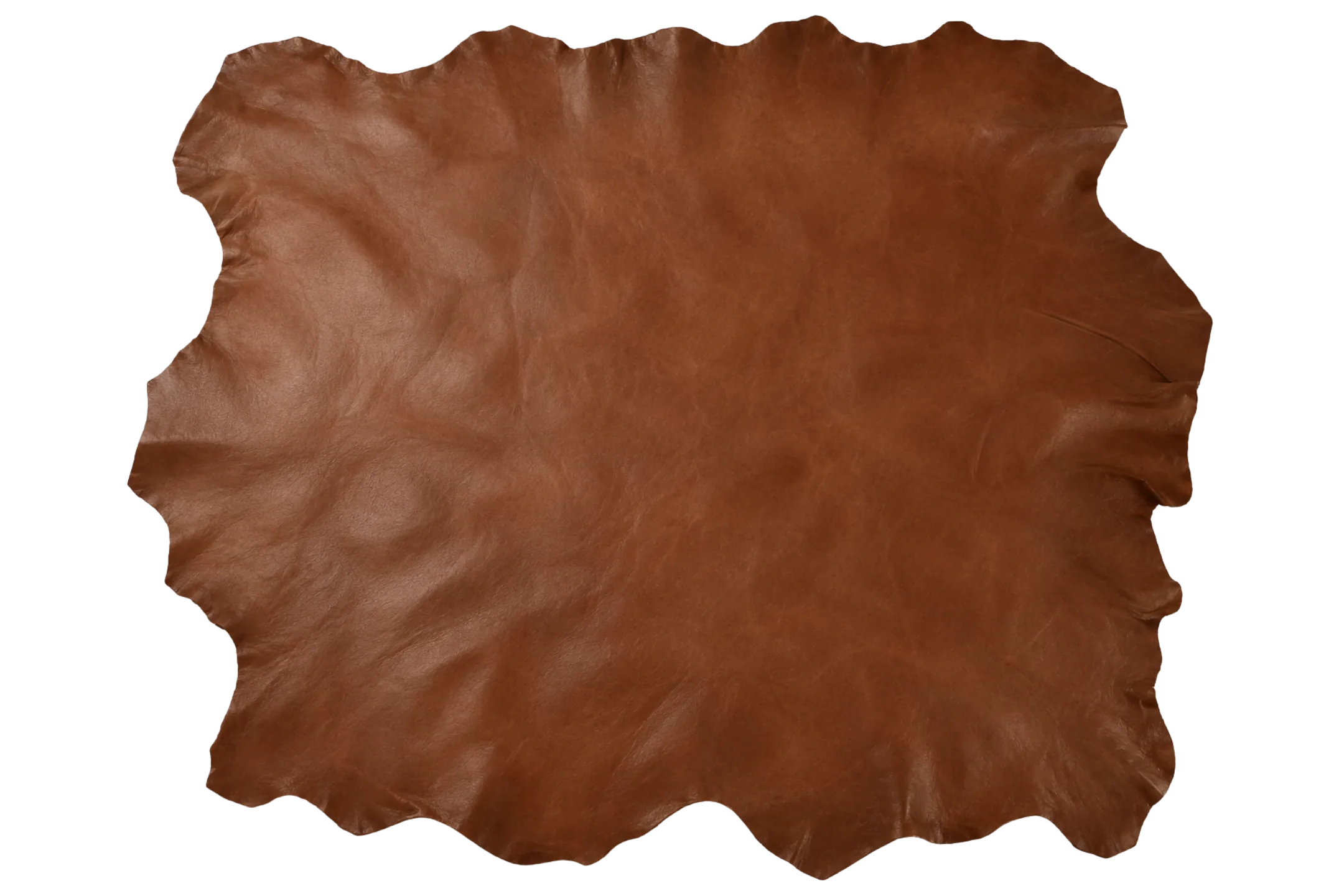
Hide B
The reference tone.
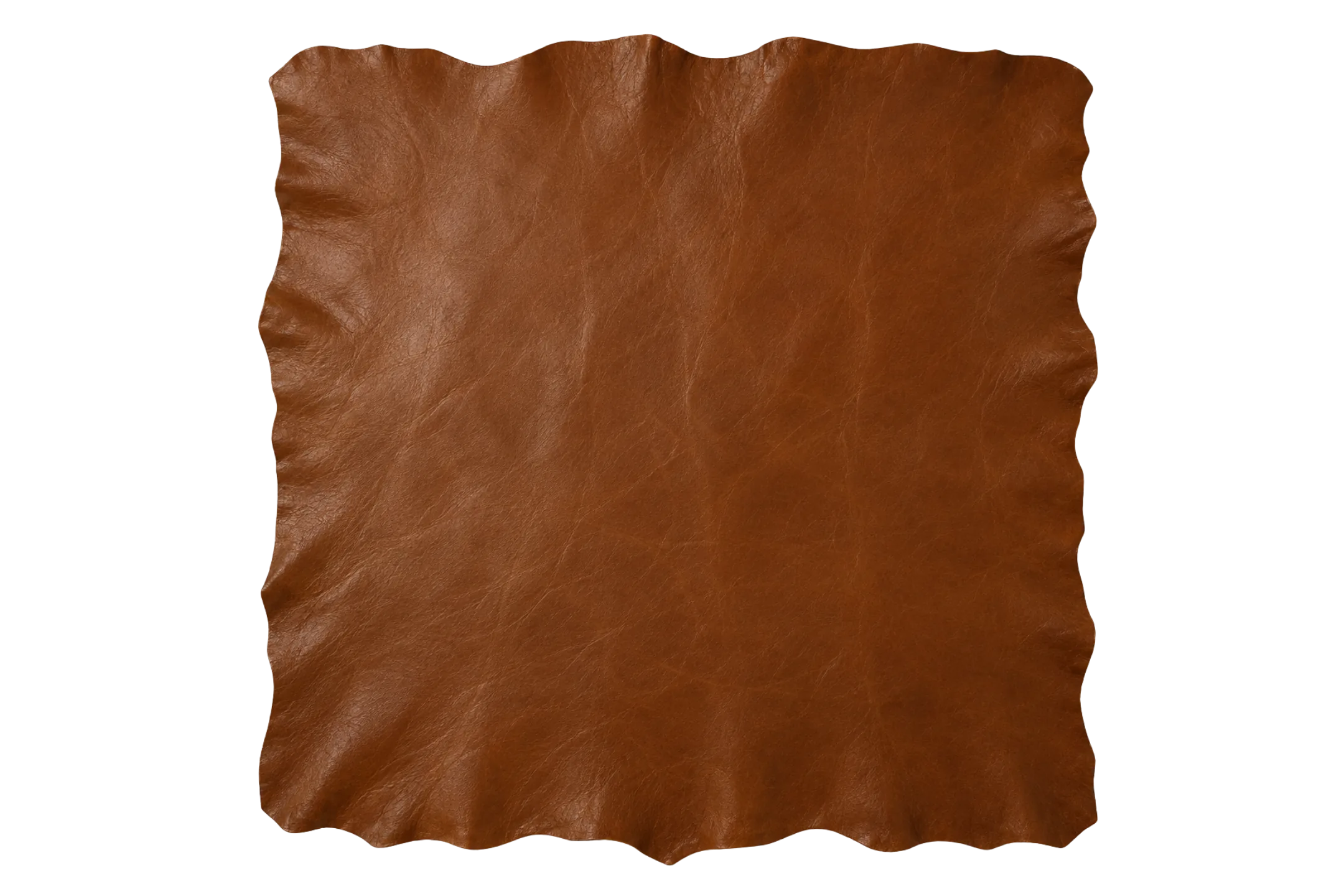
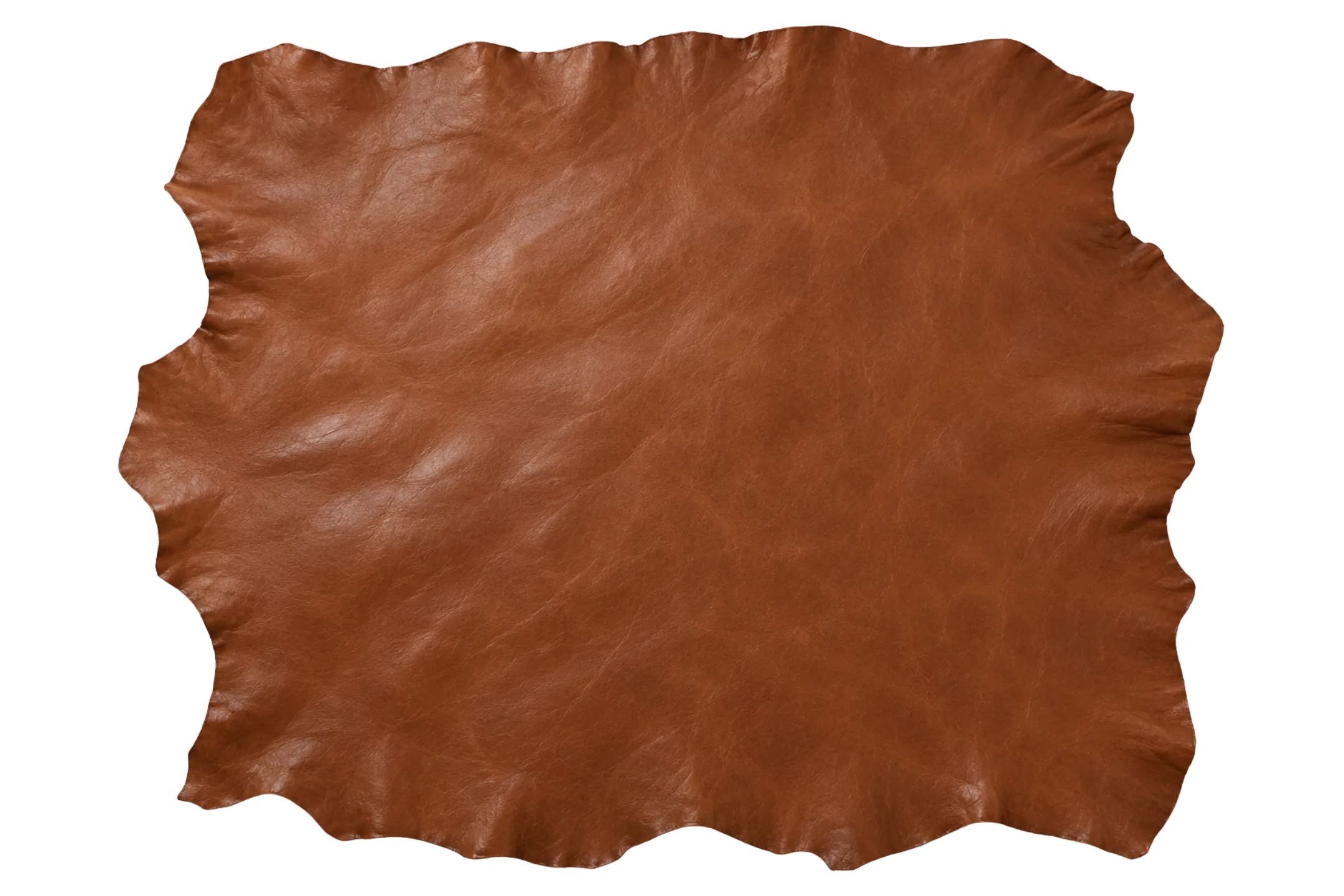
Hide C
Lighter, warmer, more open pores.
Buy pigmented leather. Uniformity is what a coating is for.
We assign hides deliberately: the closest pair to the seat cushions, the outlier to an outside back.
Aniline vs Semi-Aniline vs Pigmented Leather
All three meet the federal definition of real leather. One variable separates them: coating.
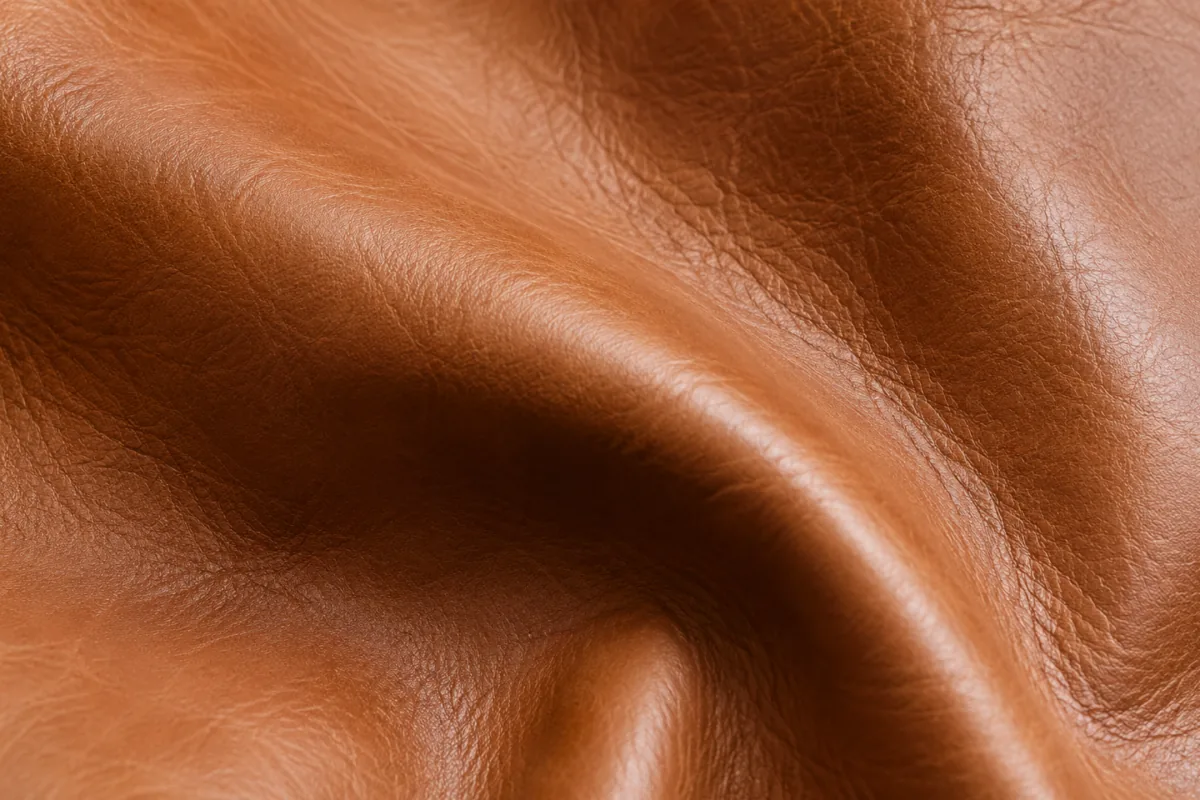
Aniline
No coating. Softest, most absorbent.
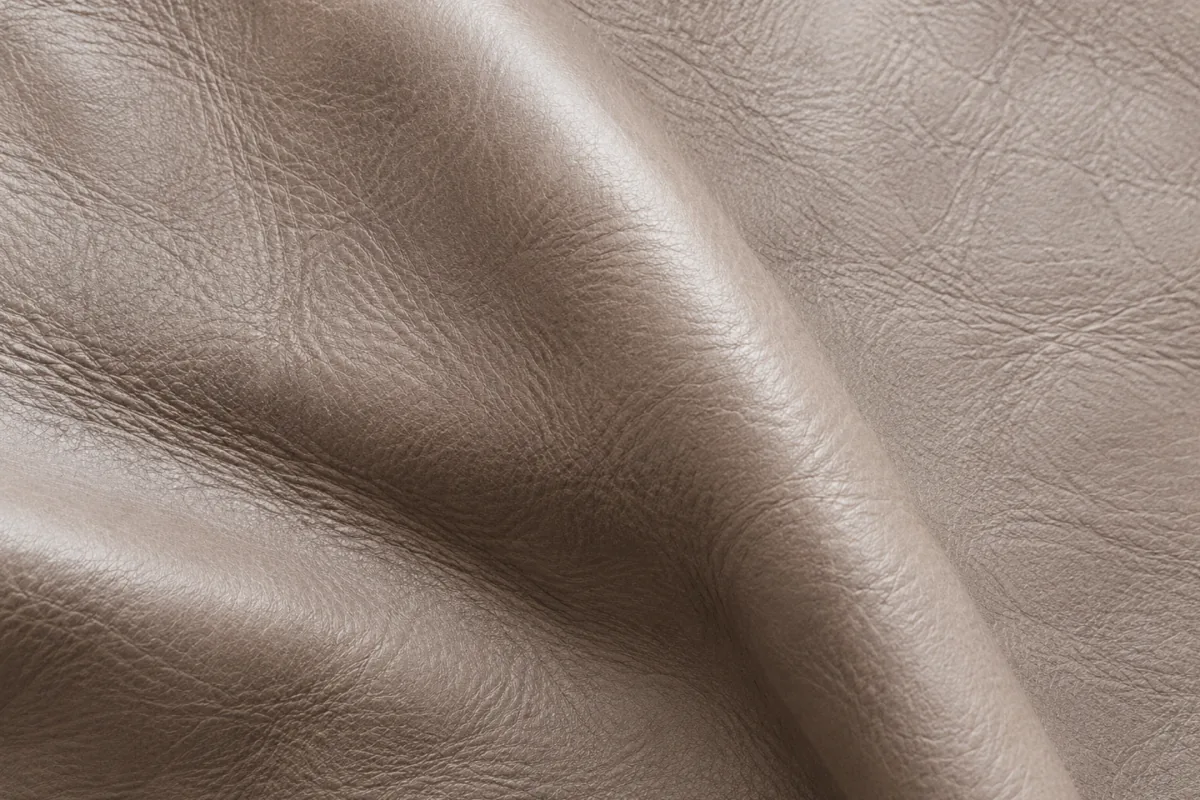
Semi-aniline
Light finish. Some protection, most character.
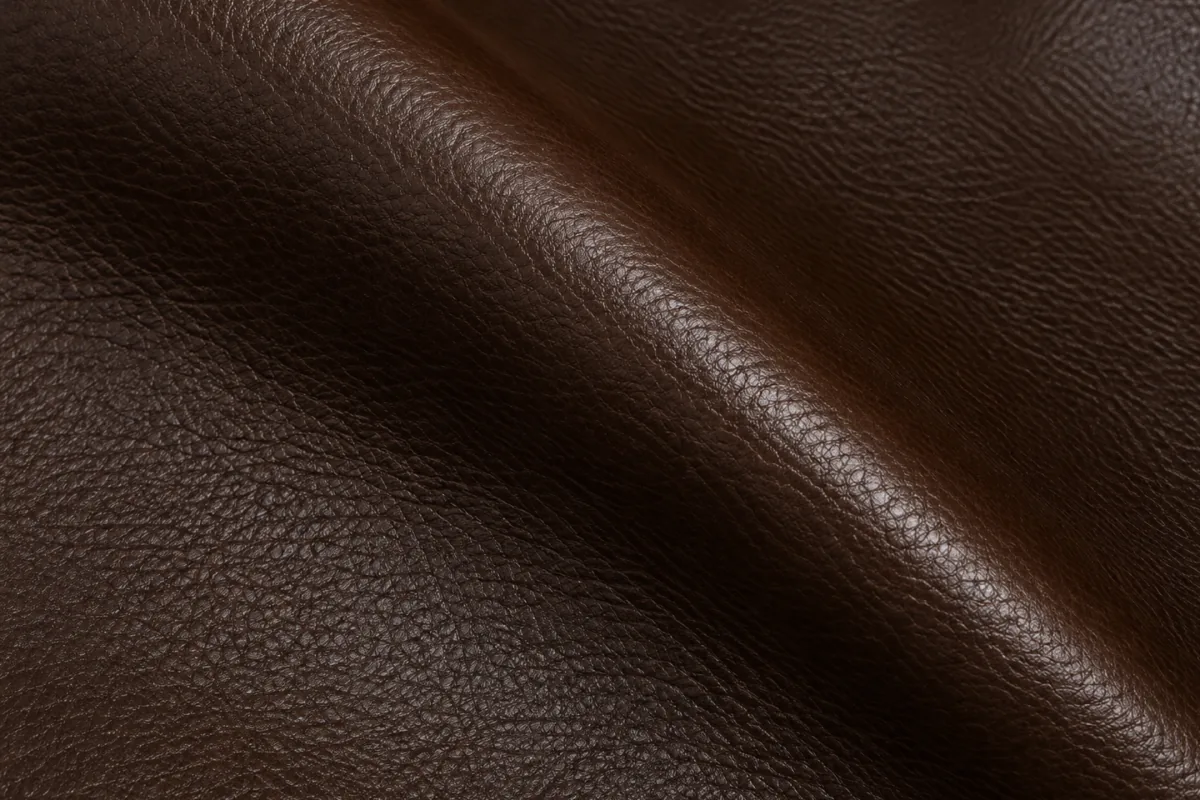
Pigmented
Opaque topcoat. Most uniform and resistant.
Full comparisons: semi-aniline and pigmented leather.
How to Identify Aniline Leather
Five checks, under a minute, on a hidden area.
The water drop test
Aniline darkens, then fades dry. Pigmented beads.
Does the grain repeat?
A repeating pattern is embossed, so coated.
Warmth in the hand
Aniline takes your temperature. Coating stays cool.
How a scratch behaves
On aniline it burnishes back. Through coating it stays.
Panel-to-panel tone
Tonal differences mean aniline; uniformity means pigmented.
What not to test with
No alcohol, acetone, cleaner, magic eraser or baby wipe. Conservators also advise against leather dressings.
Common Damage on Aniline Leather
One cause: nothing stops anything getting in. Patina makes leather look more like itself; damage makes it look less.
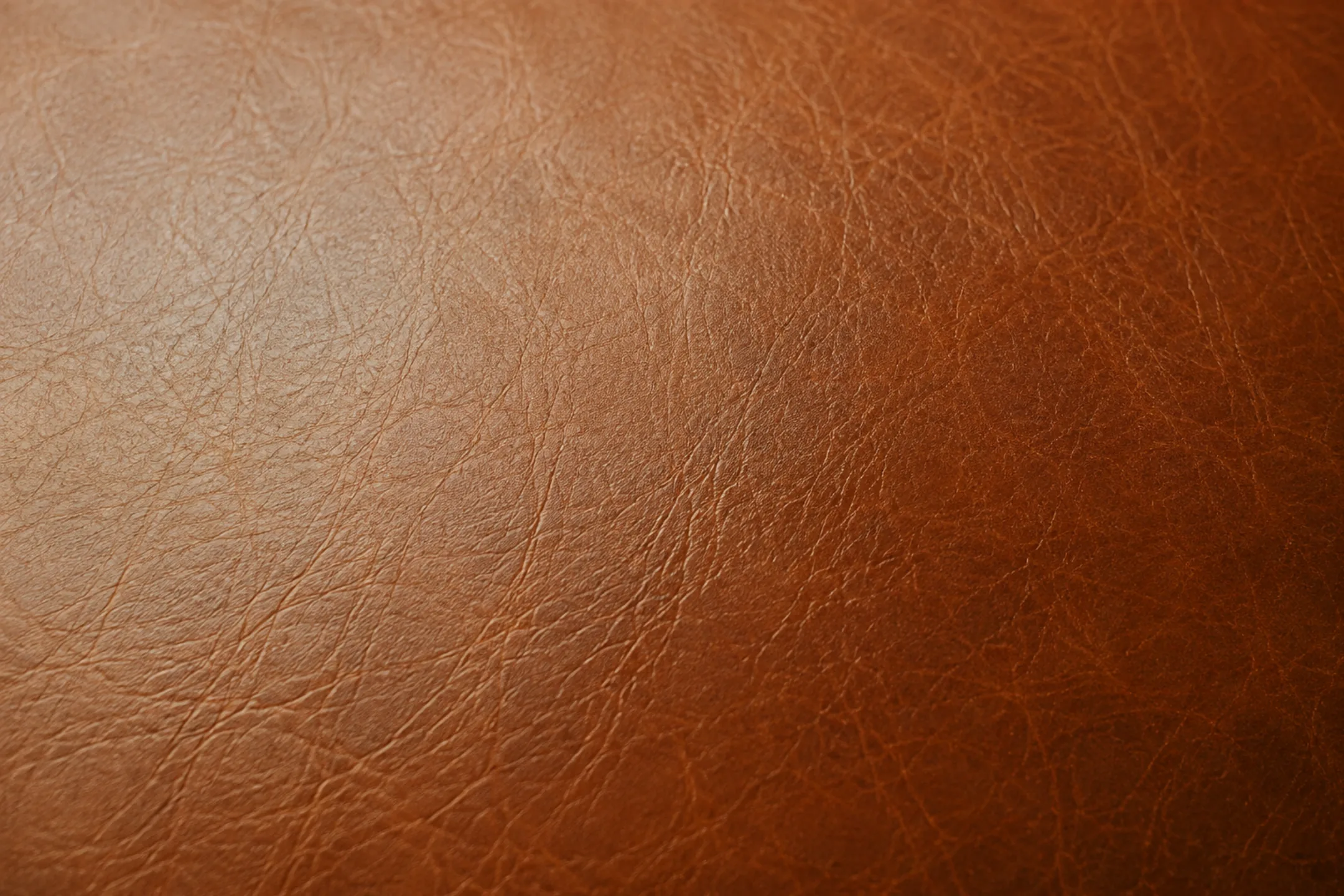
Fading
Cushion tops and the arm nearest a window.
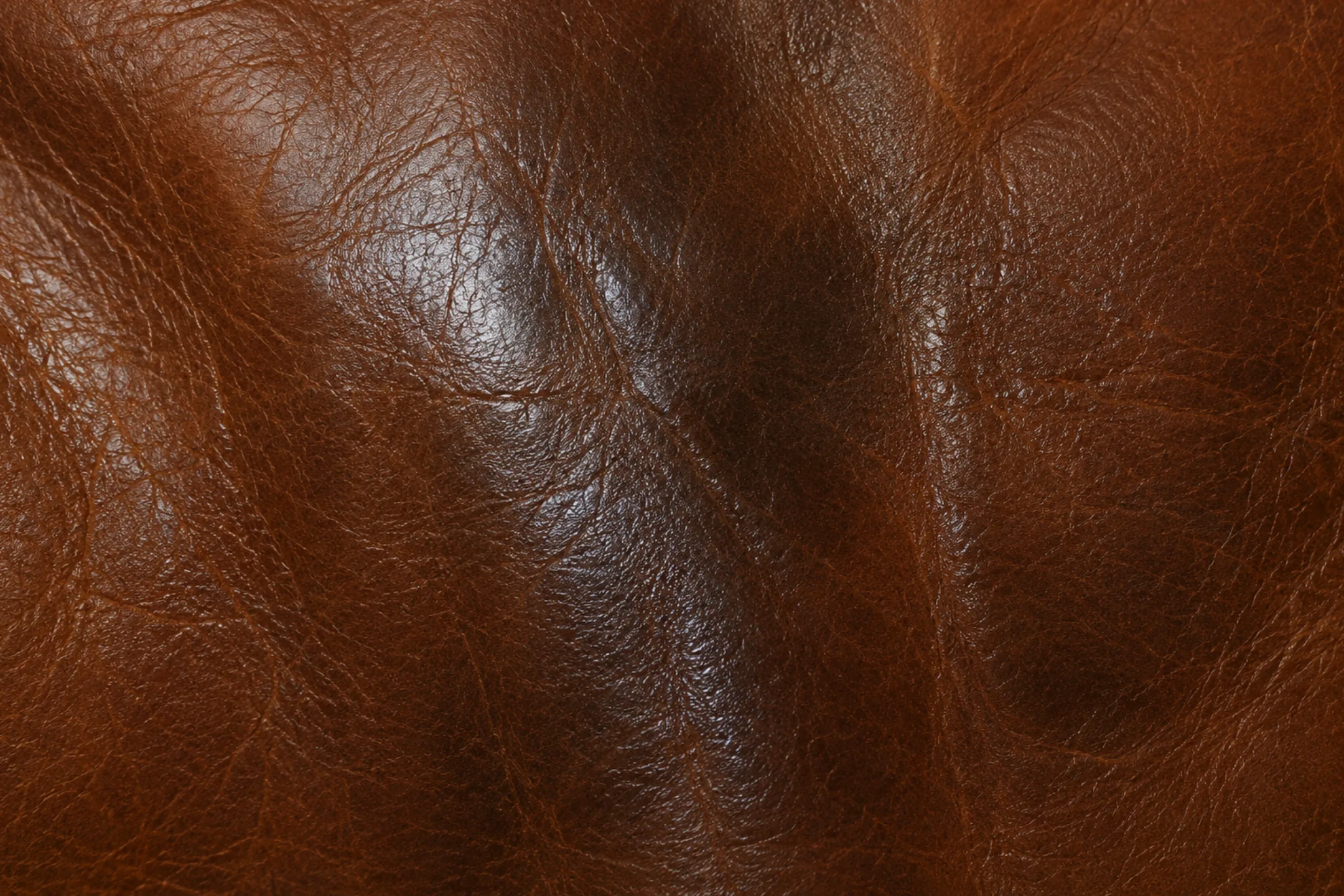
Body oils
Contact points darken into a shiny patch. The commonest complaint.
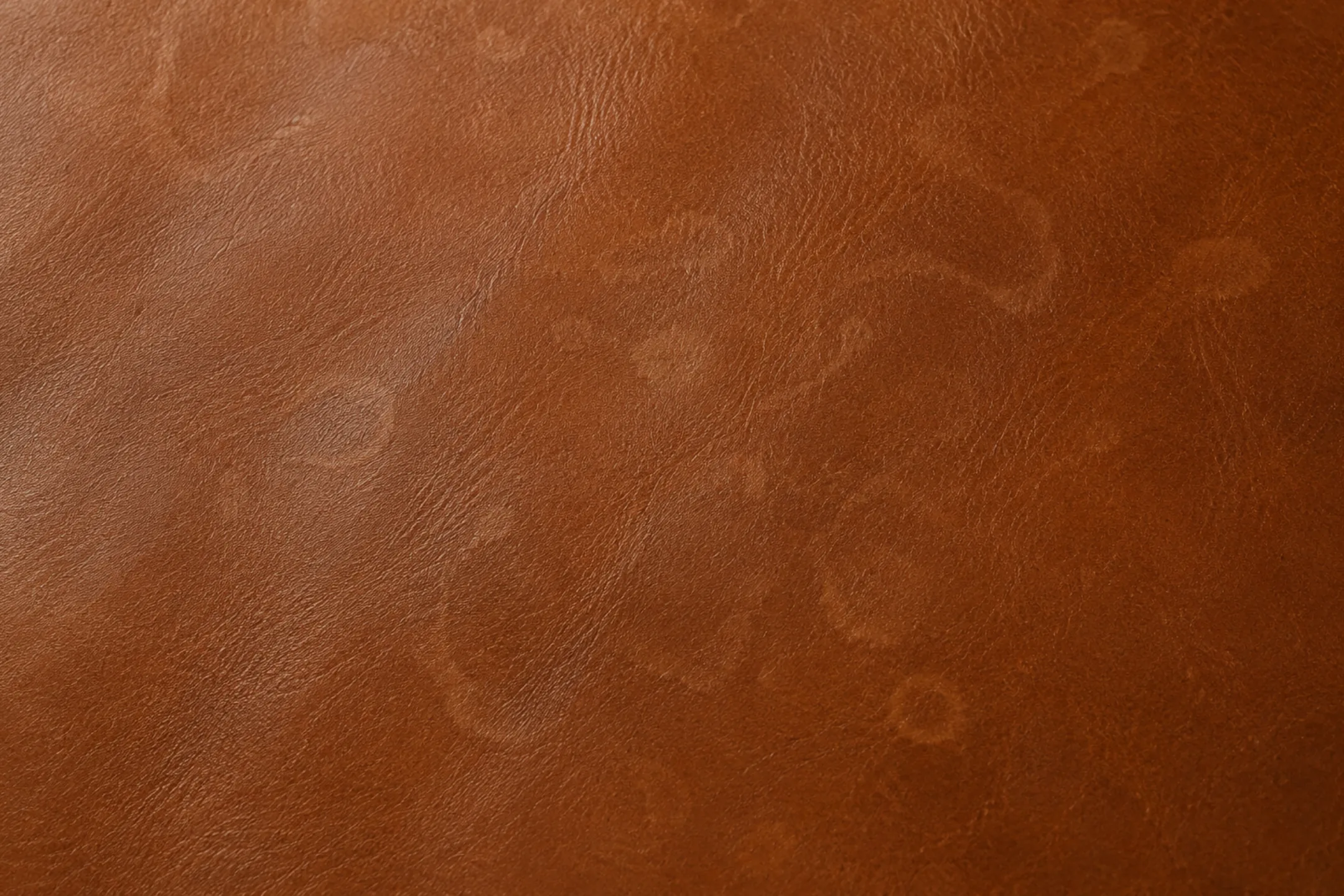
Water marks
The wet edge carries dye outward, leaving a ring.
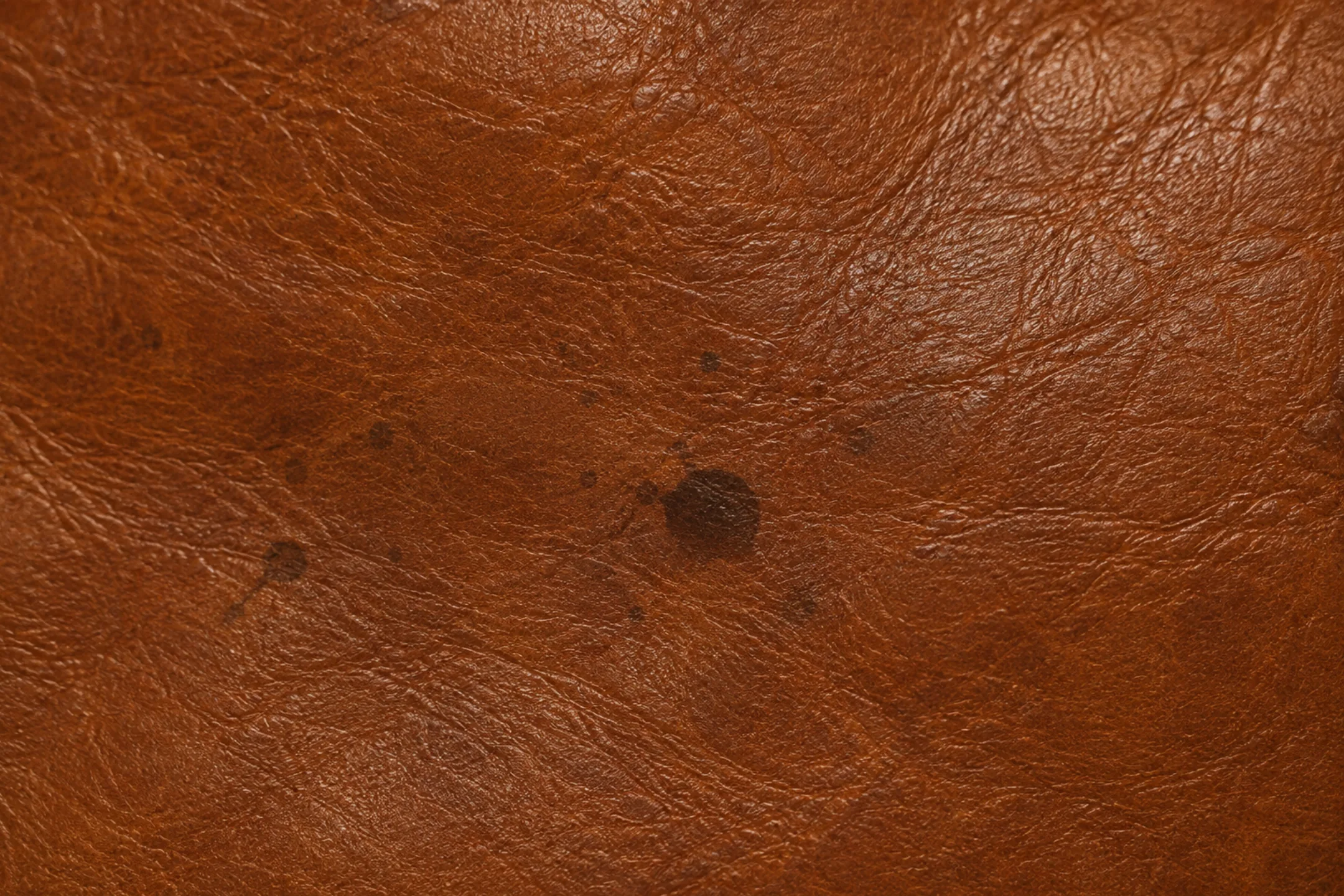
Stains
Ink, denim and drink absorb. Blotting speed decides.
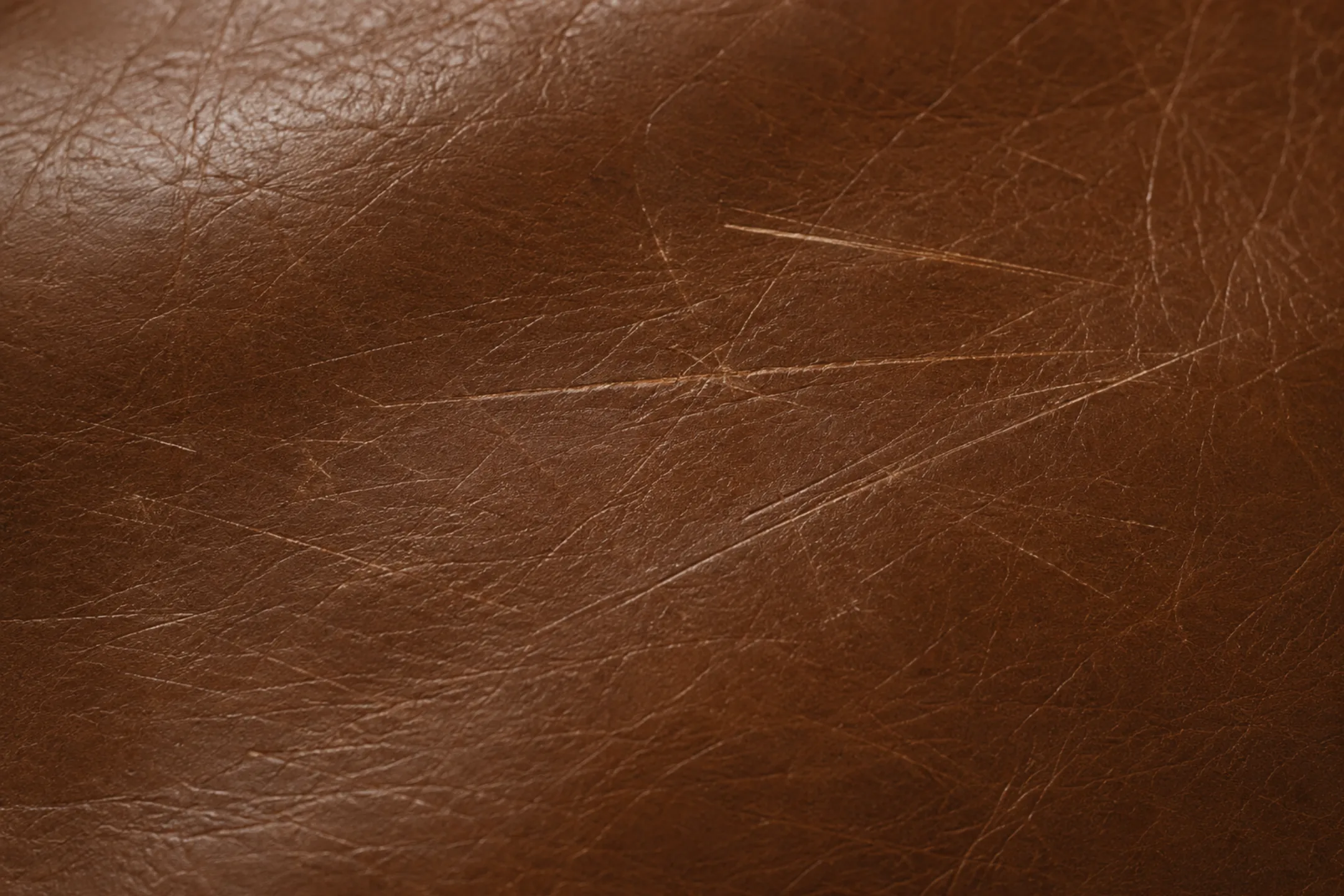
Scratches
Shallow ones burnish out. Deep ones need color work.
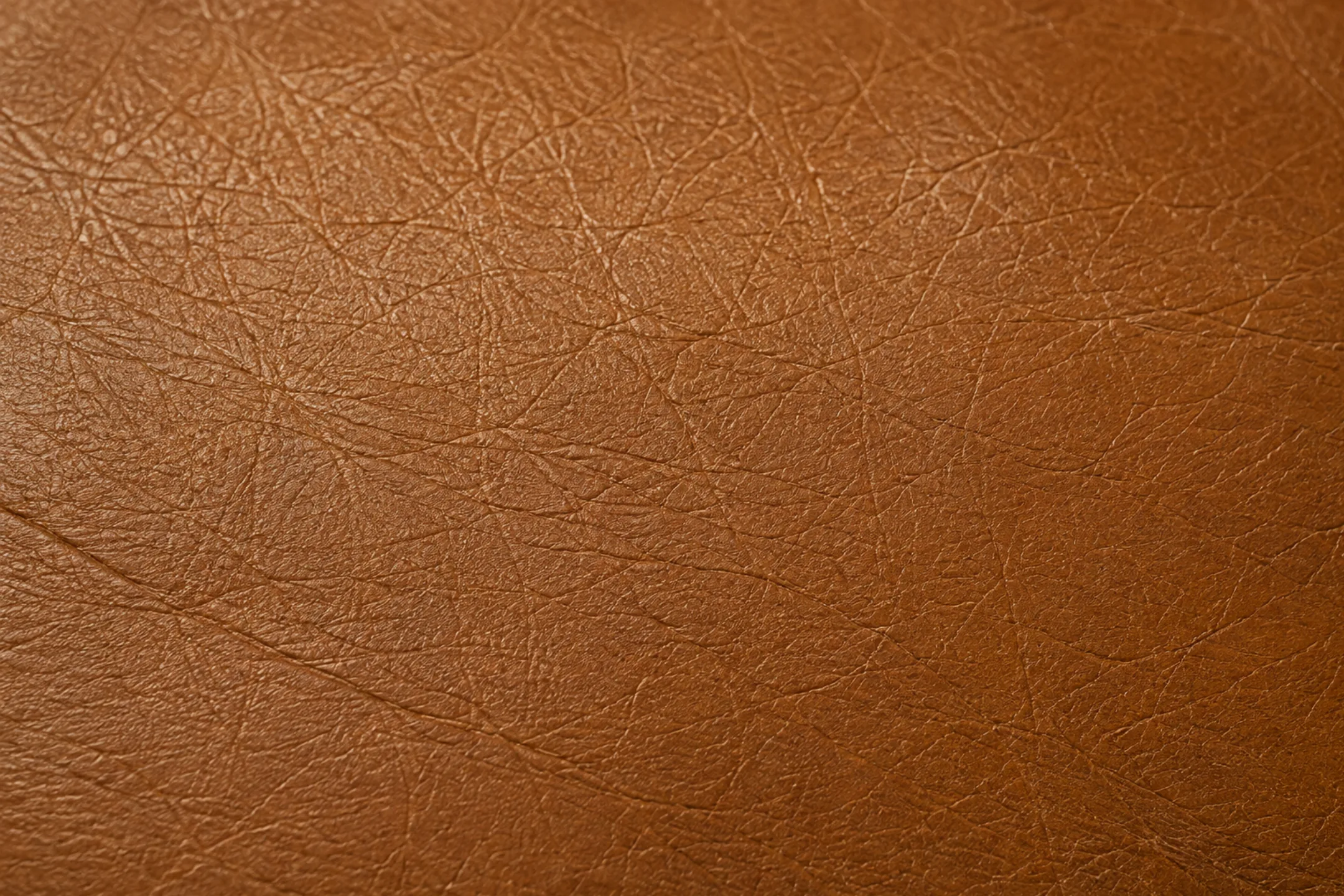
Dryness
Oils leave over years, fastest near a vent. Then it fissures.
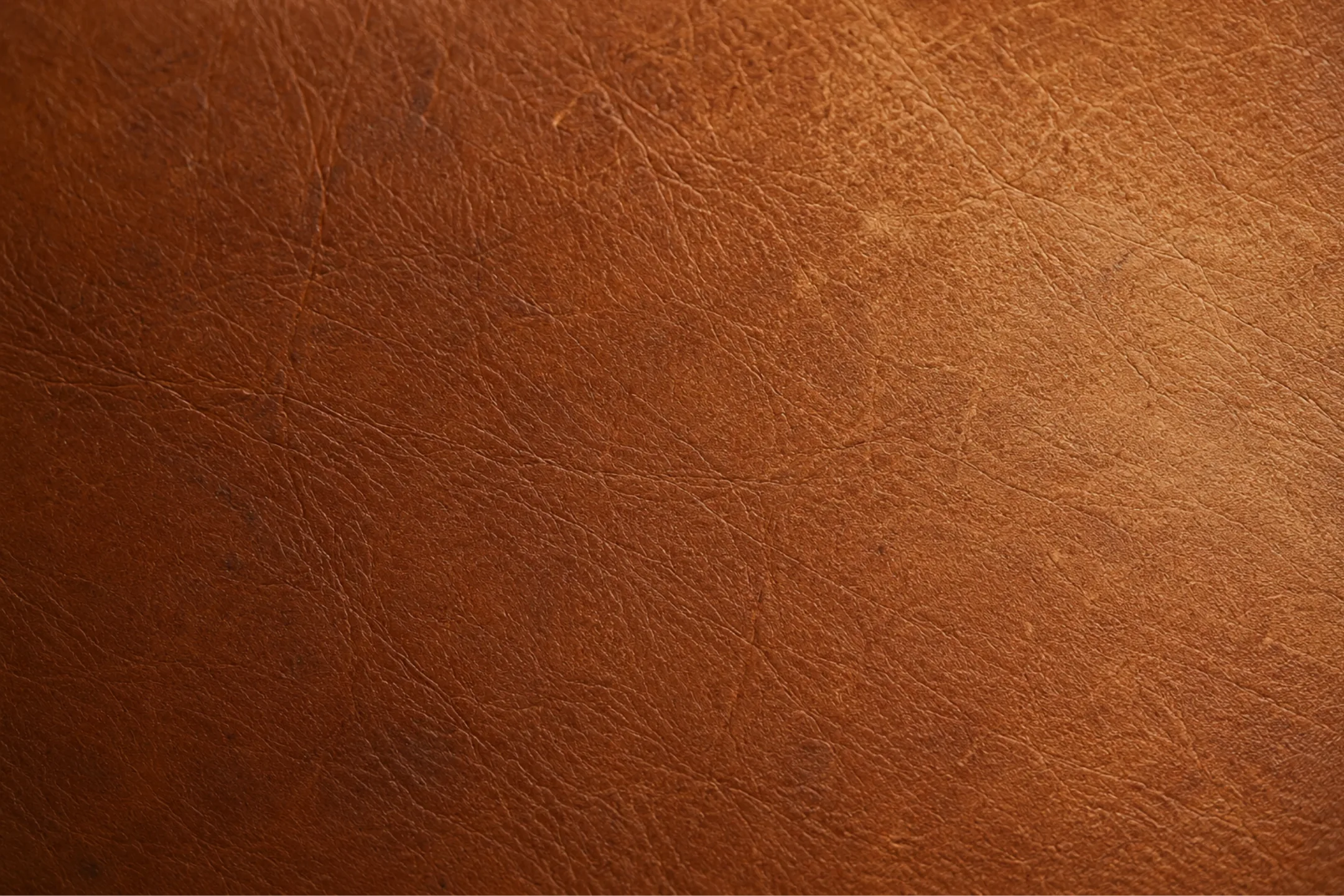
Sun damage
Bleaches and dries at once: lighter and harder together.
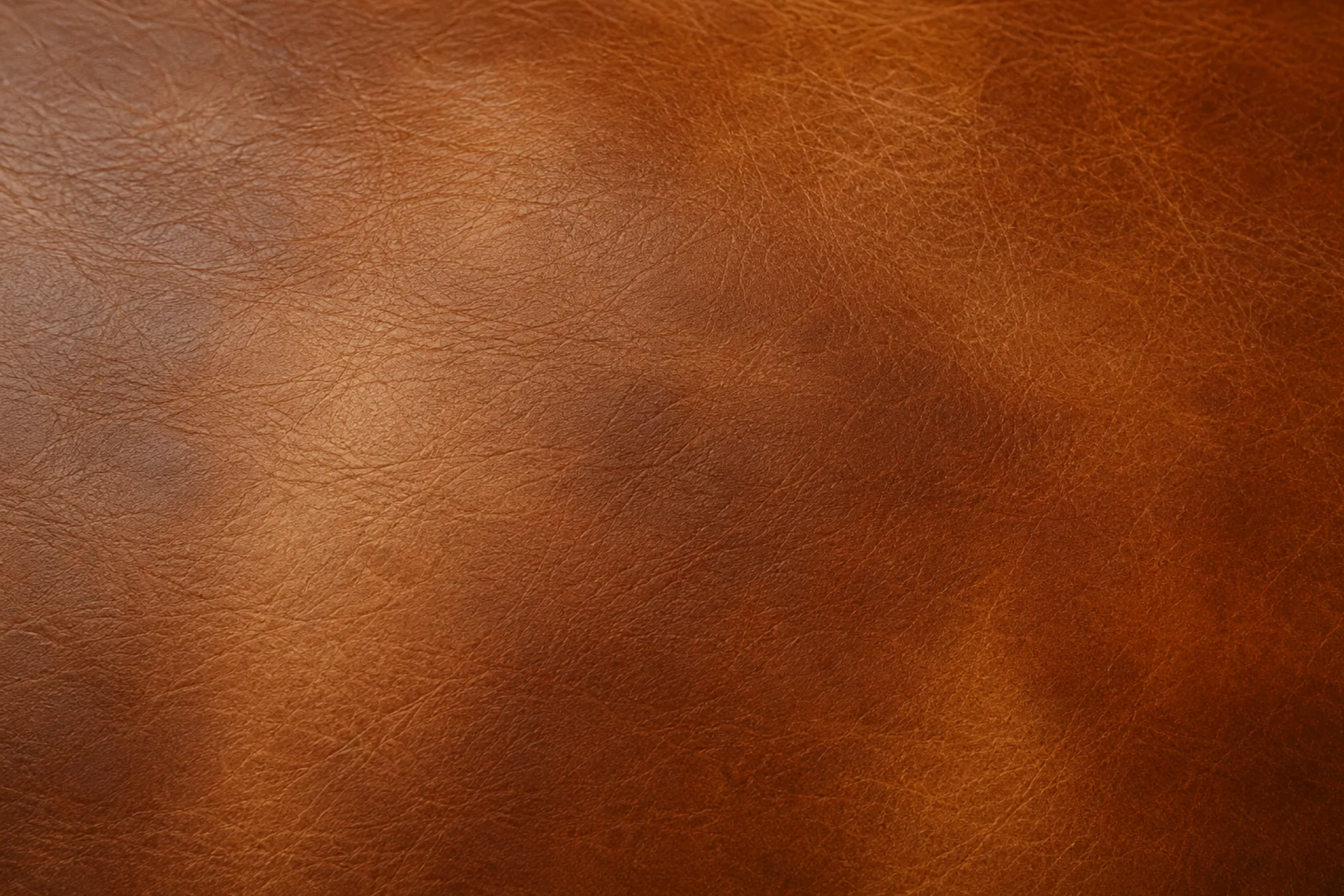
Uneven color
Wear, cleaning and sun pull dye back unevenly.
Severity rarely decides the outcome. An opaque pigment kit already applied does.
Repair, Restoration or Reupholstery
How much of the original leather is still sound. Cost differs by an order of magnitude.
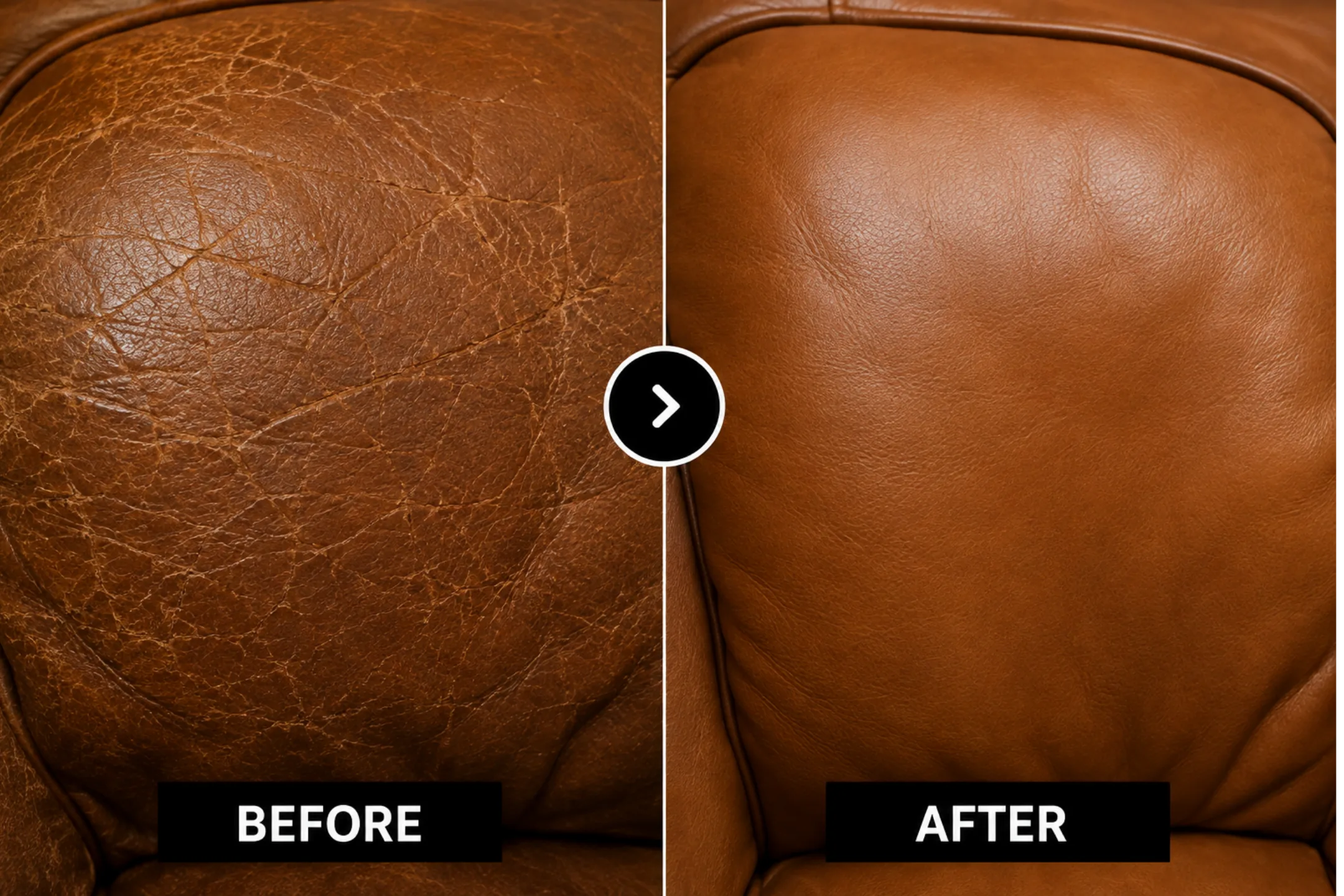
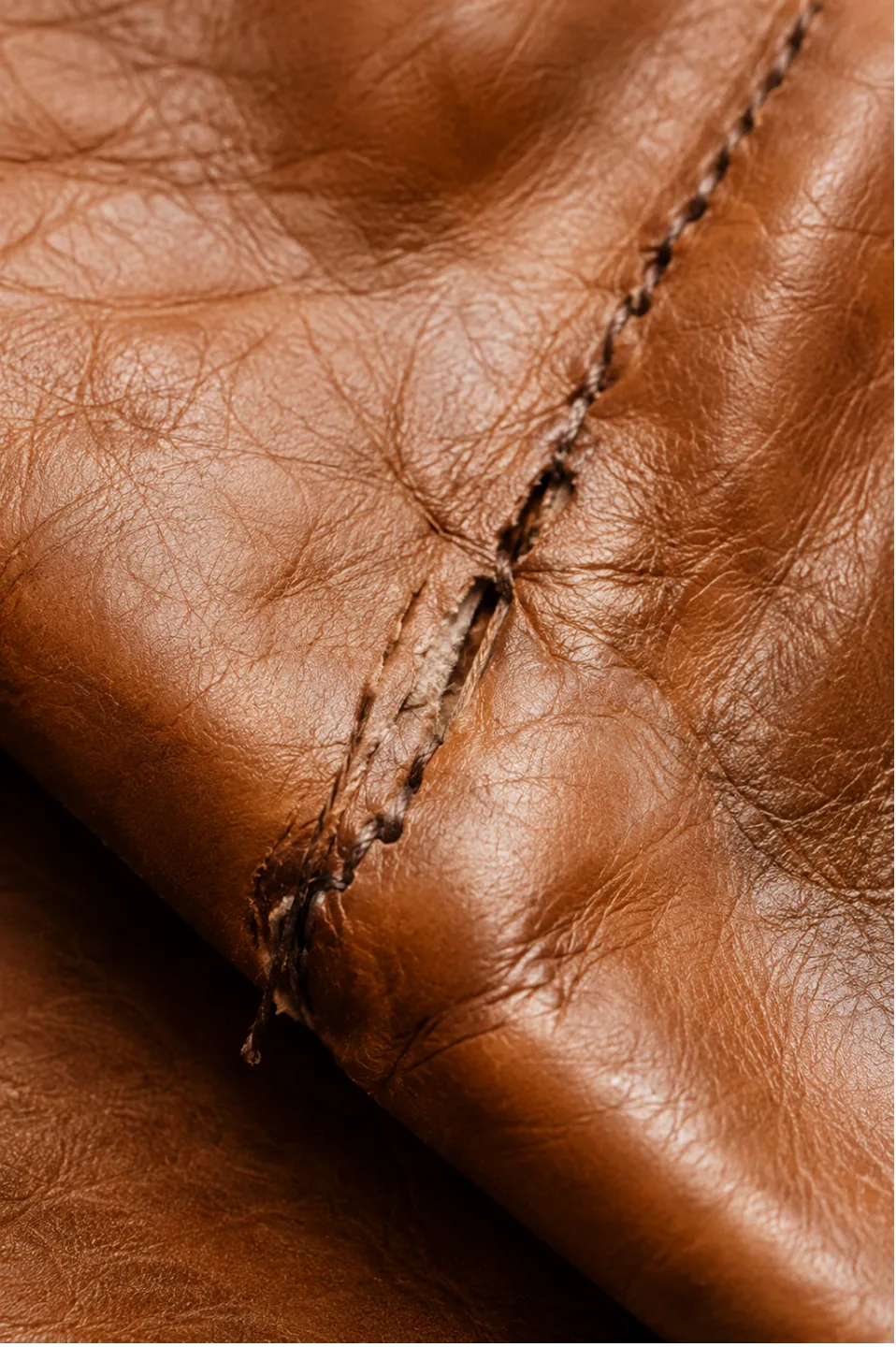
Localized · Least invasive
Repair
One area — a tear, a burn, an opened seam. Color blends outward, no hard edge.
When one spot is wrong, the rest right.
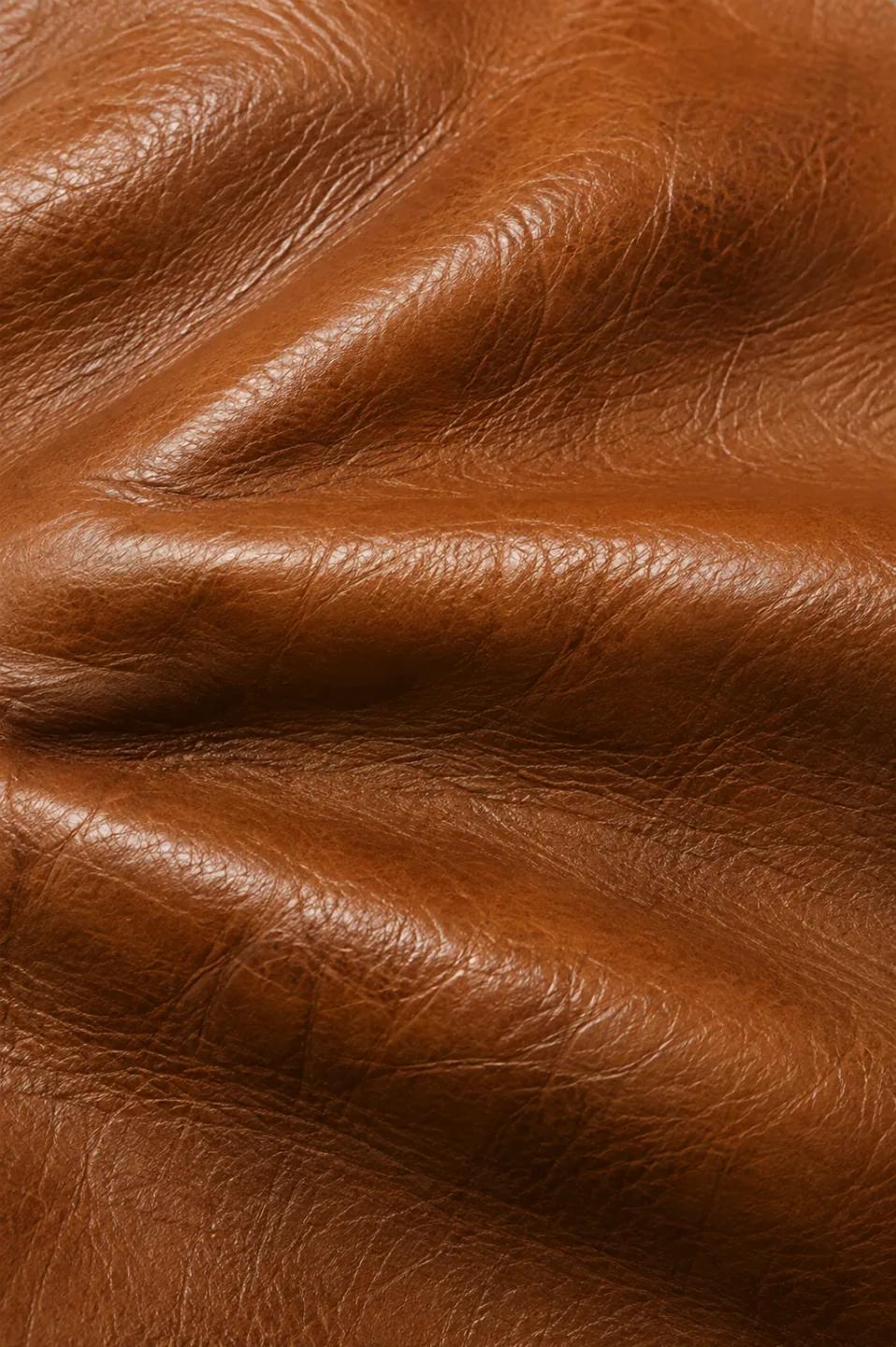
Whole-piece · Color and condition
Restoration
Across the piece — fading, oil darkening, panels adrift. Rebuilt in translucent layers.
When it is sound but no longer looks like itself.
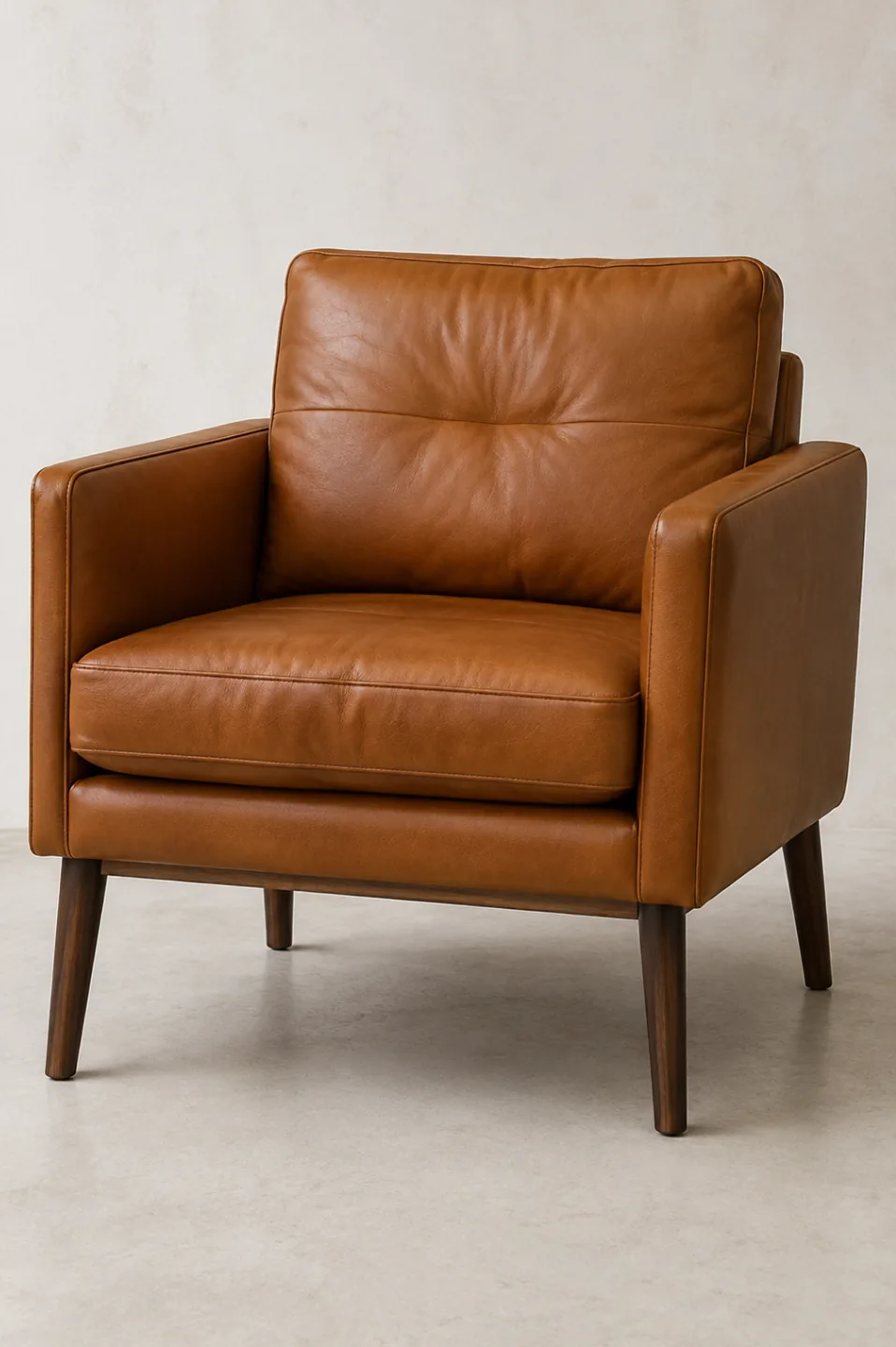
Replacement · New hides
Reupholstery
Failed, not aged — splits, cracking, panels worn through. New hides laid around their markings.
When no color work brings the surface back.
Aniline Leather in Commercial Spaces
It signals quality on sight, and takes maintenance in return.
 Private clubsPatina reads as heritage.
 Hotels & luxury hospitalityA maintenance cycle, not a replacement cycle.
 Executive officesHand oils dominate wear.
Where seating turns over constantly — a banquette, a booth, a healthcare chair — we spec a coated material.
Related Materials
If the checks did not match, one of these will.
Semi-Aniline Leather
A light finish moves the problem to finish wear.
View material
Pigmented Leather
Uniformity and stain resistance, at the cost of hand.
View material
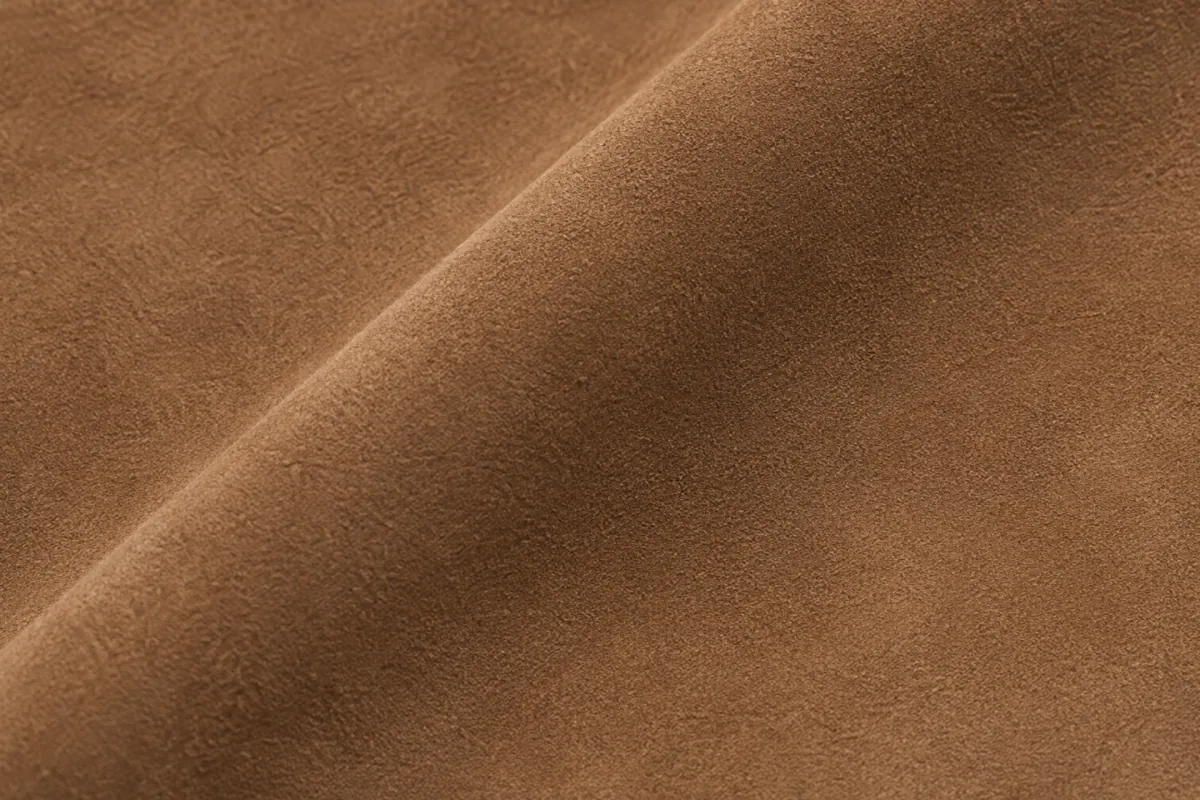 Nubuck Leather
Uncoated, but buffed to a nap. Cleaned differently.
View material
Nubuck Leather
Uncoated, but buffed to a nap. Cleaned differently.
View material
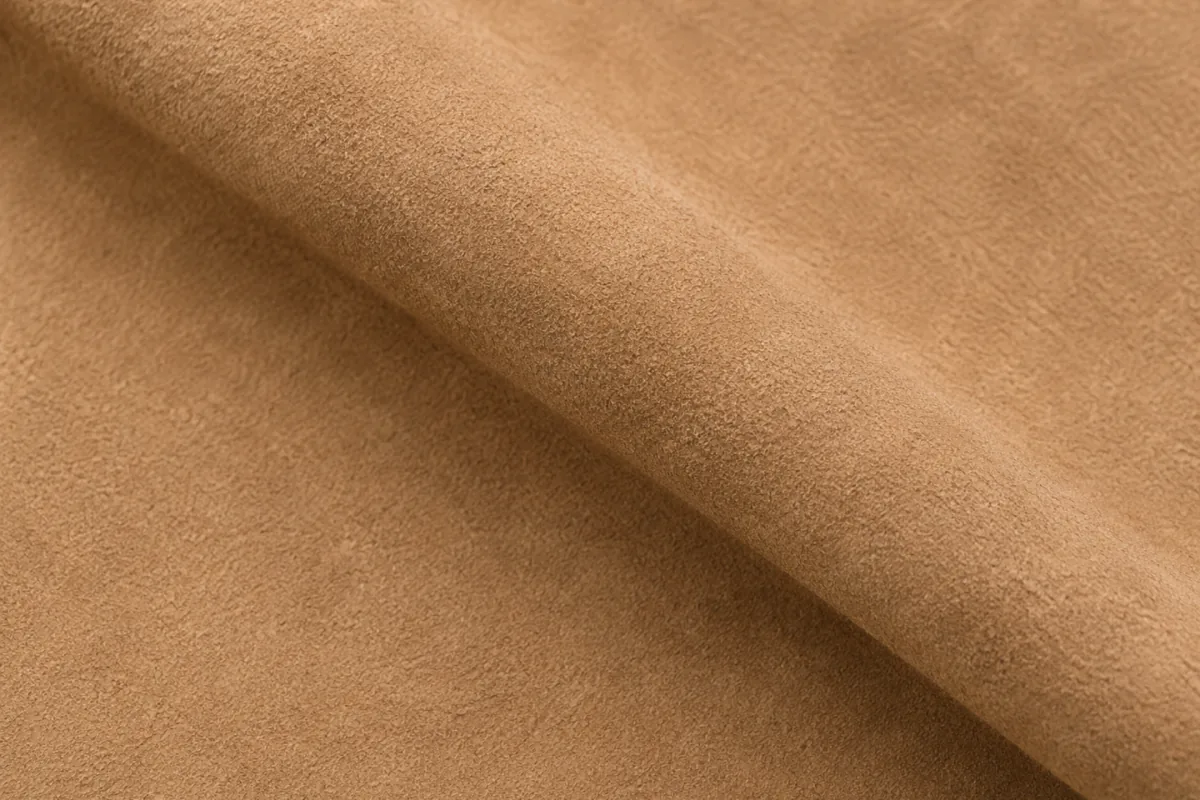 Suede
Napped from the split, not the grain. Least resistant.
View material
Suede
Napped from the split, not the grain. Least resistant.
View material
Frequently Asked Questions
Why does my aniline leather have scars and marks?
They are part of the hide, not manufacturing defects. Healed scars, insect marks and growth lines get covered on pigmented leather. Here the dye is transparent, so they stay visible — and they are the point.
Can aniline leather be restored?
In most cases yes. Fading, dryness, oil darkening, water marks and scratches usually correct. It has to be done in translucent layers — a heavy opaque coating flattens the grain and destroys the hand that made the leather worth restoring.
How can I tell aniline leather from pigmented leather?
Look at whether the grain repeats. Pigmented carries a uniform embossed pattern and a cooler, slightly plastic surface. Aniline never repeats, warms to the touch, and darkens where a drop of water sits. Unsure? Send photos rather than testing with solvent.
Aniline leather rewards being treated as aniline leather.
Send photos. We will confirm what you have and which process applies. NYC and New Jersey.