
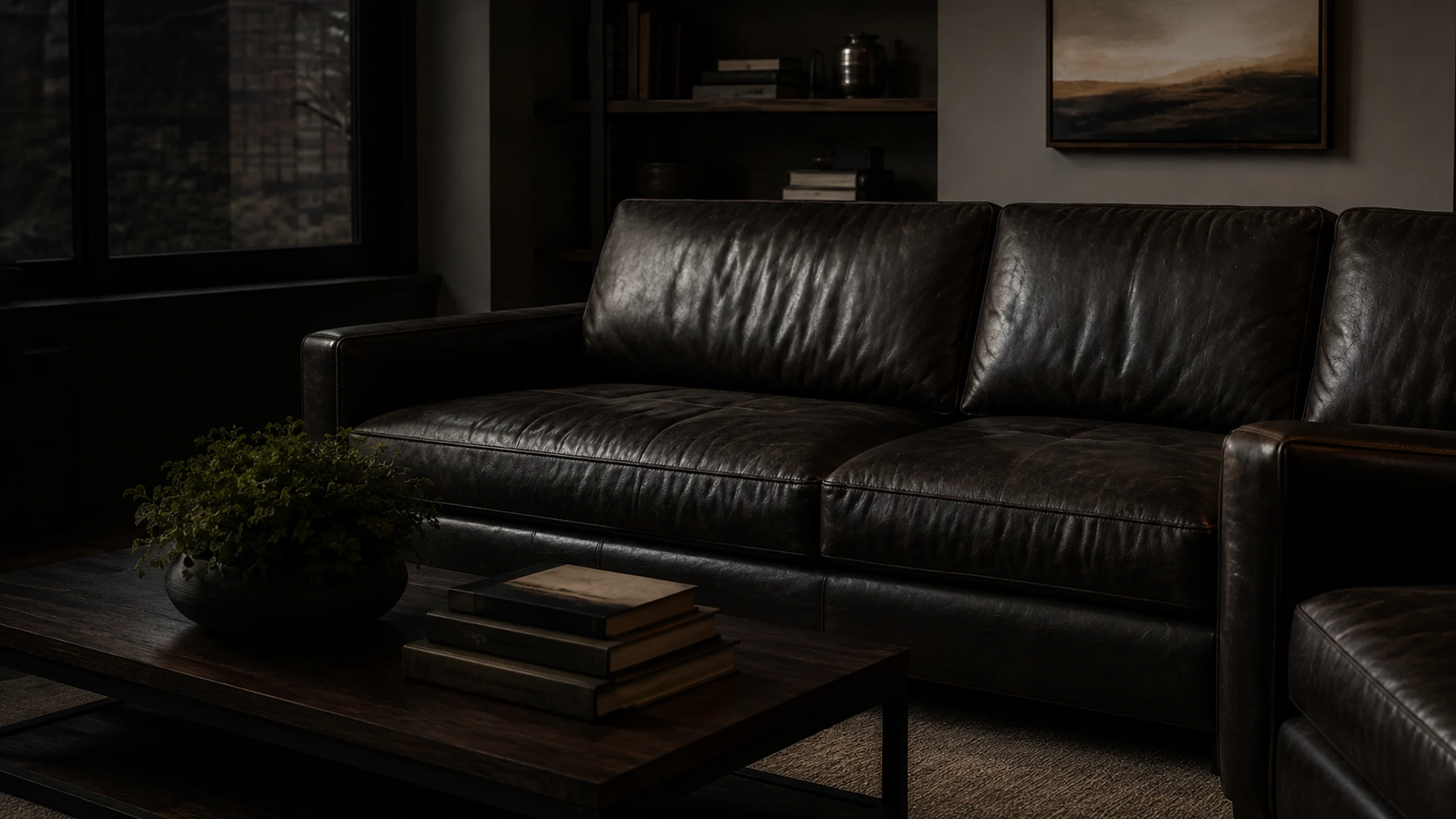
You Never Touch the Hide Real leather, sealed under a colored coating you never see past
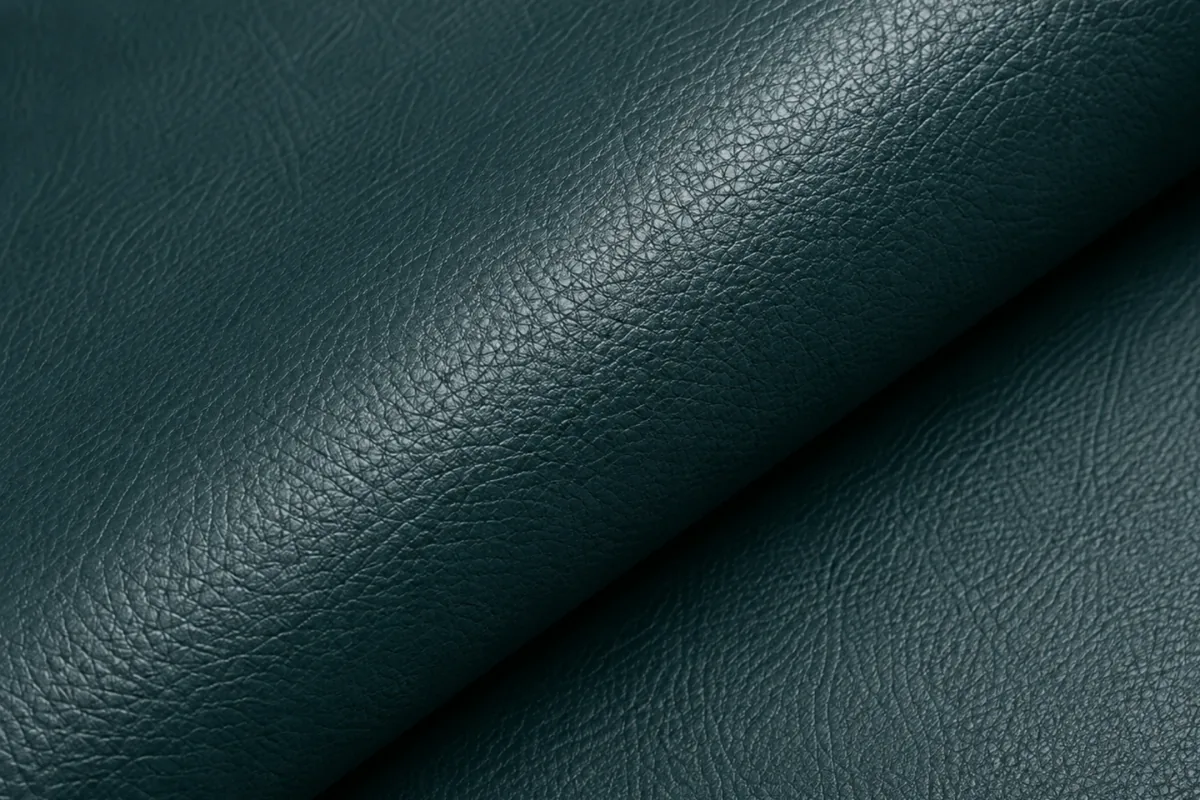
Hide sealed under an opaque colored topcoat. What you touch is finish, not hide. The toughest leather made, and the one most often called fake.
Grown Grain, or Printed Grain?
On a full-grain hide the pattern grew and never repeats. Here it is pressed in.
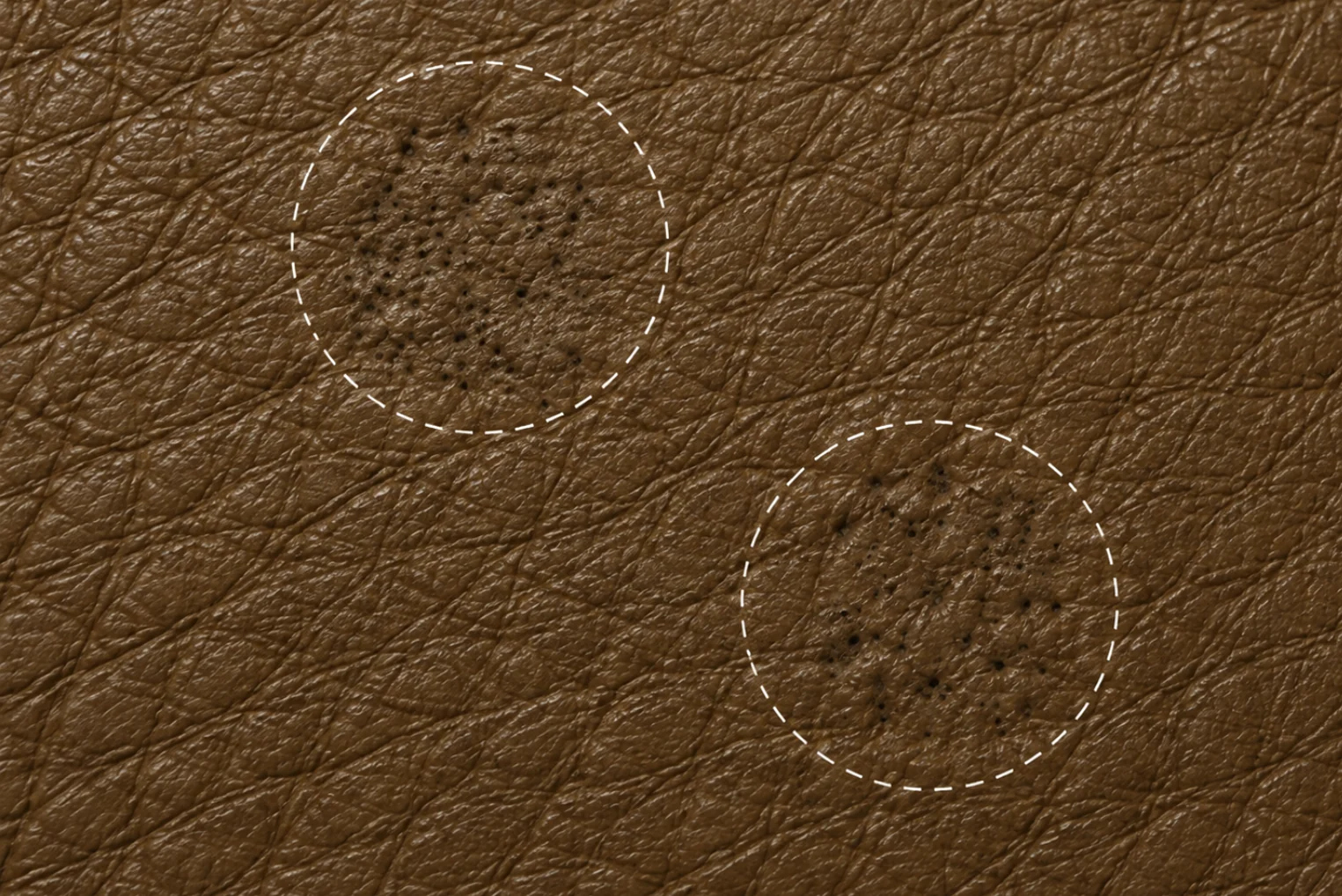 Grown
GrownNatural grain
Pores scatter. No two areas match.
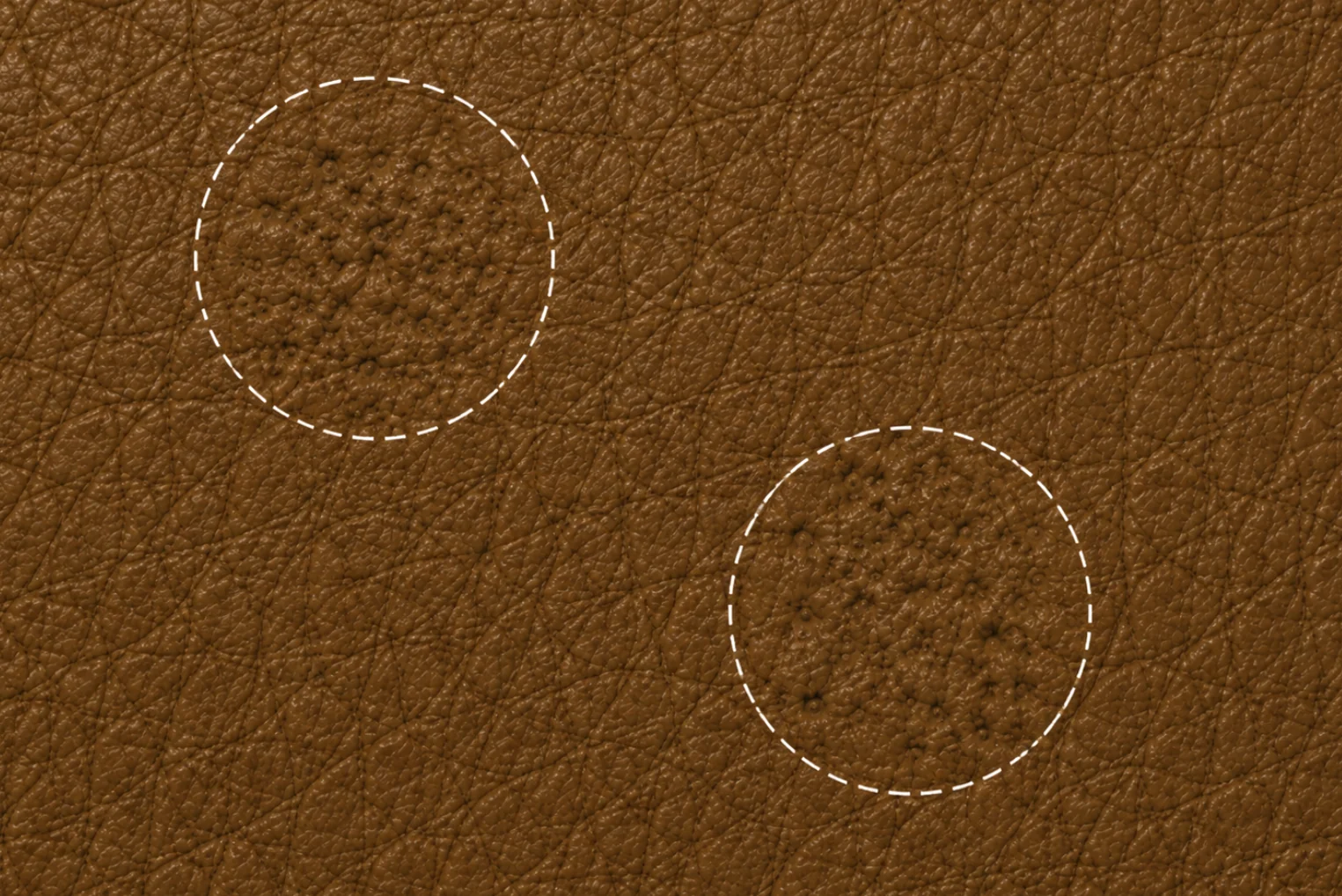 Printed
Embossed grain
One plate, pressed repeatedly. Areas match.
Find the same cluster twice and you have your answer.
The Coating Is the Product
Every other leather asks you to think about the hide. This one asks you to think about the film on top. The coating carries the color, the grain and nearly all the durability.
Makers buy consistency; the trade is patina. Sold also as protected or finished leather — so we specify the finish, not the label.
Matte, satin or gloss?
Sheen match decides whether a repair disappears.
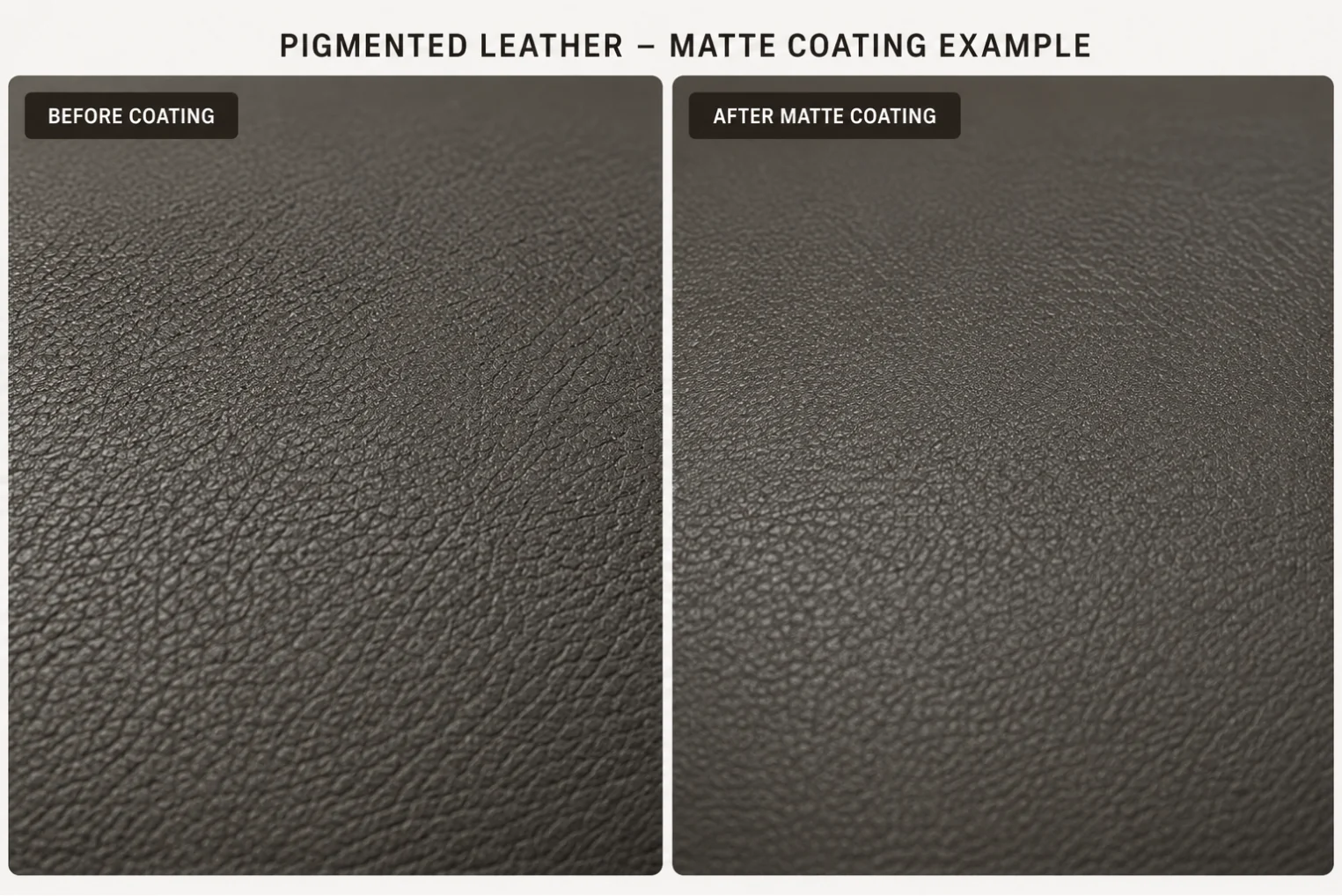
Matte
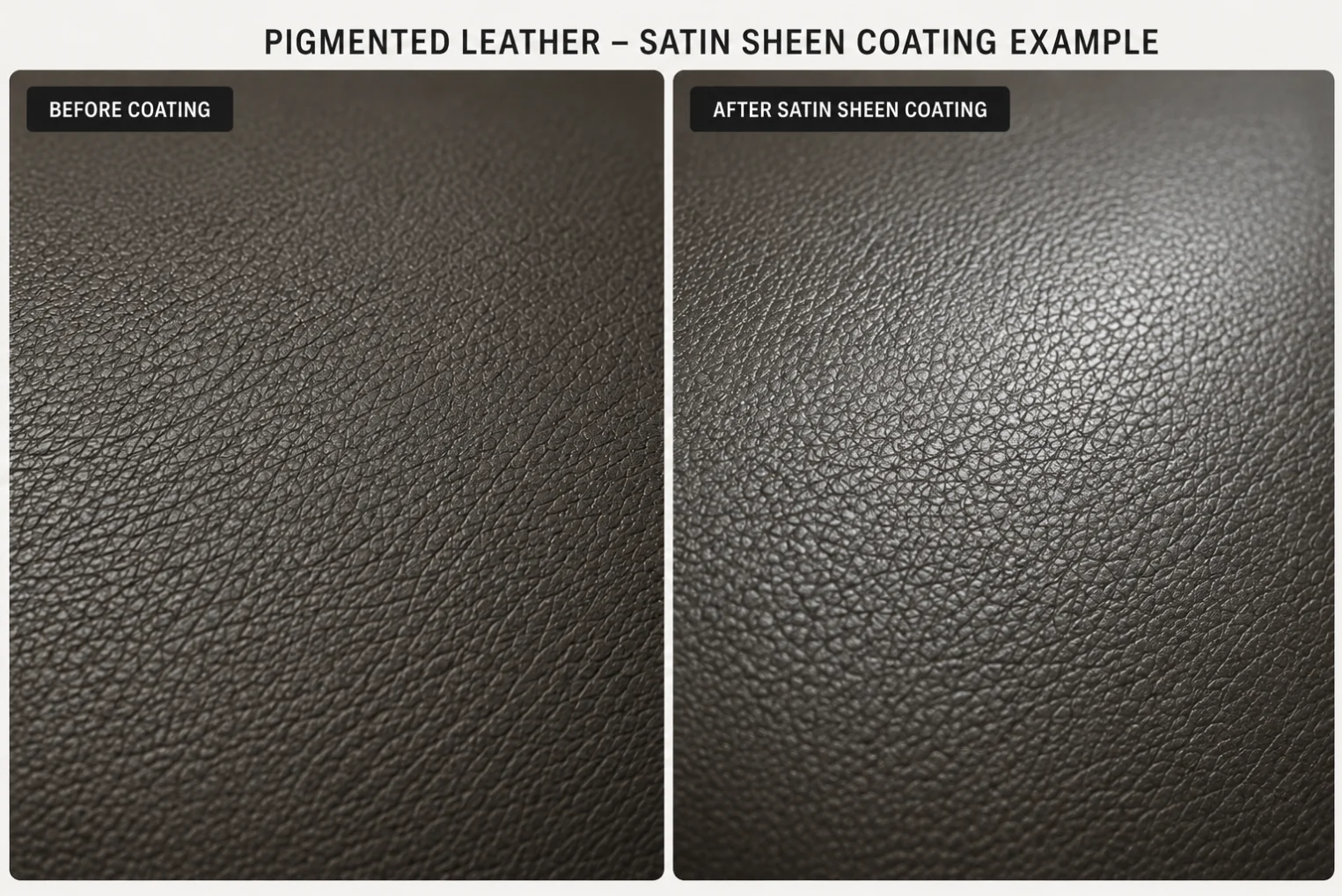
Satin
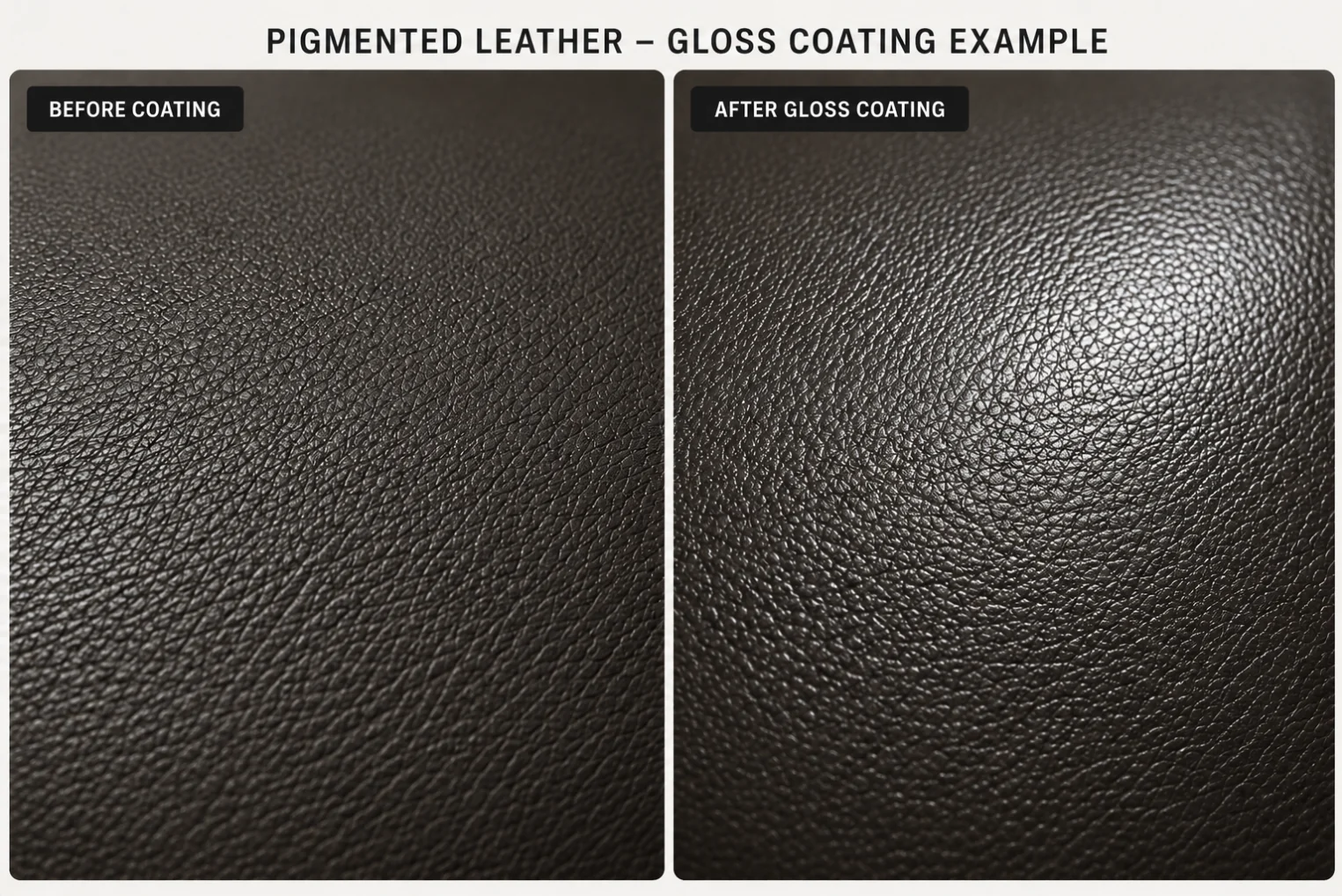
Gloss
Is It Pigmented Leather, or Is It Not Leather at All?
Three checks, in order.
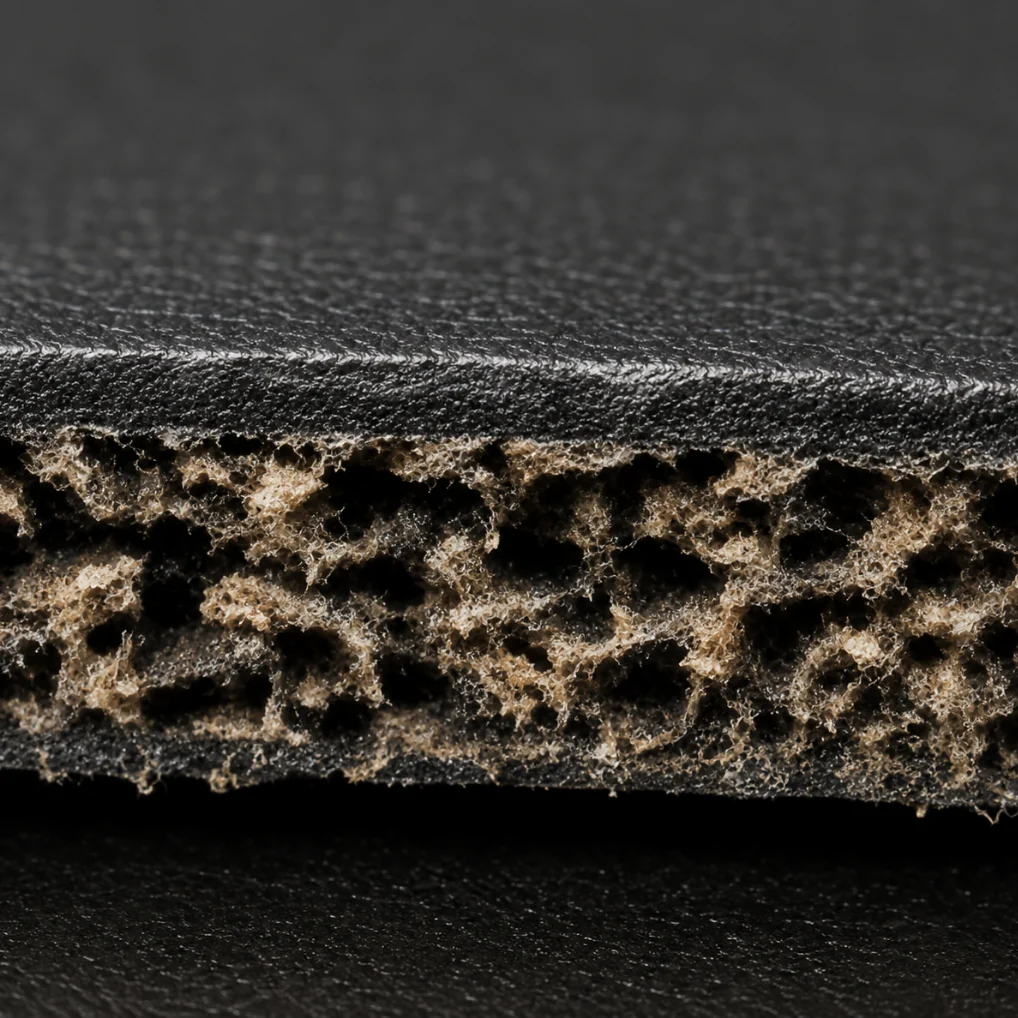
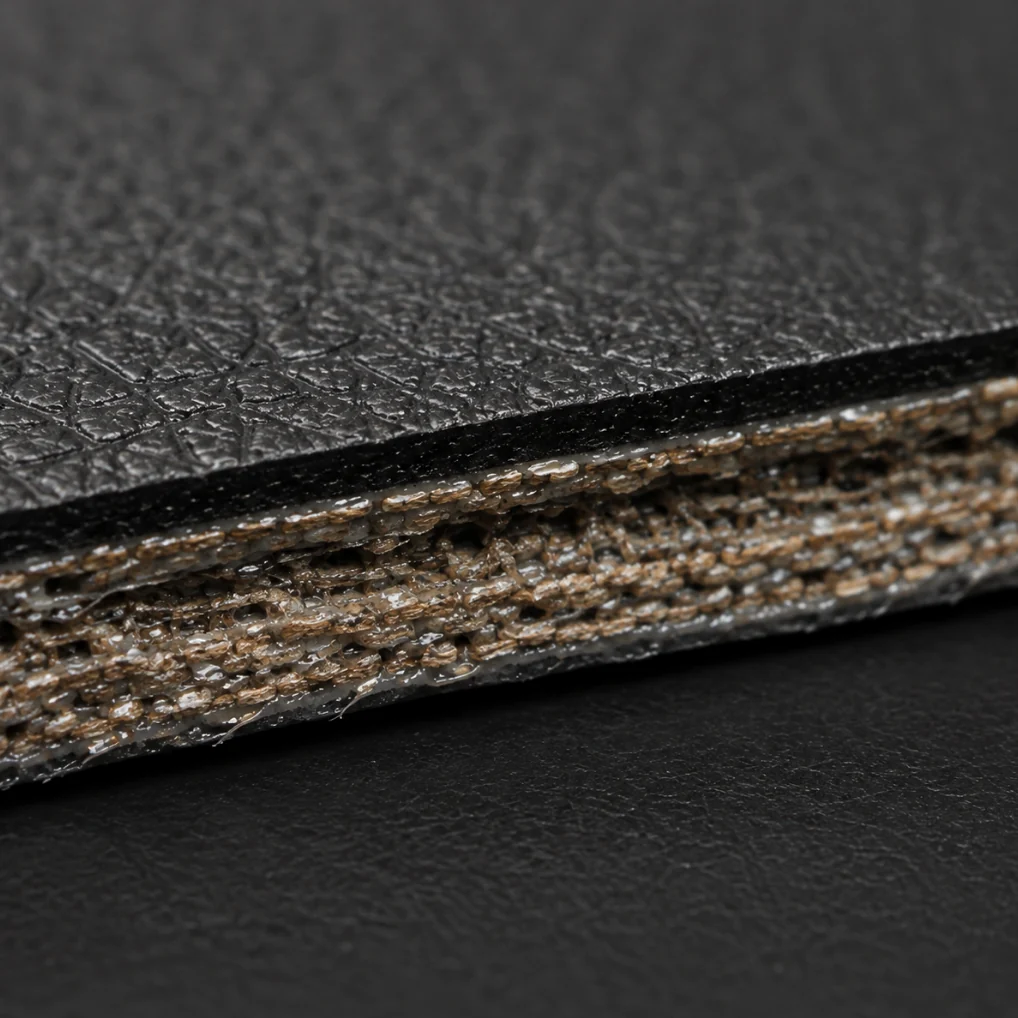
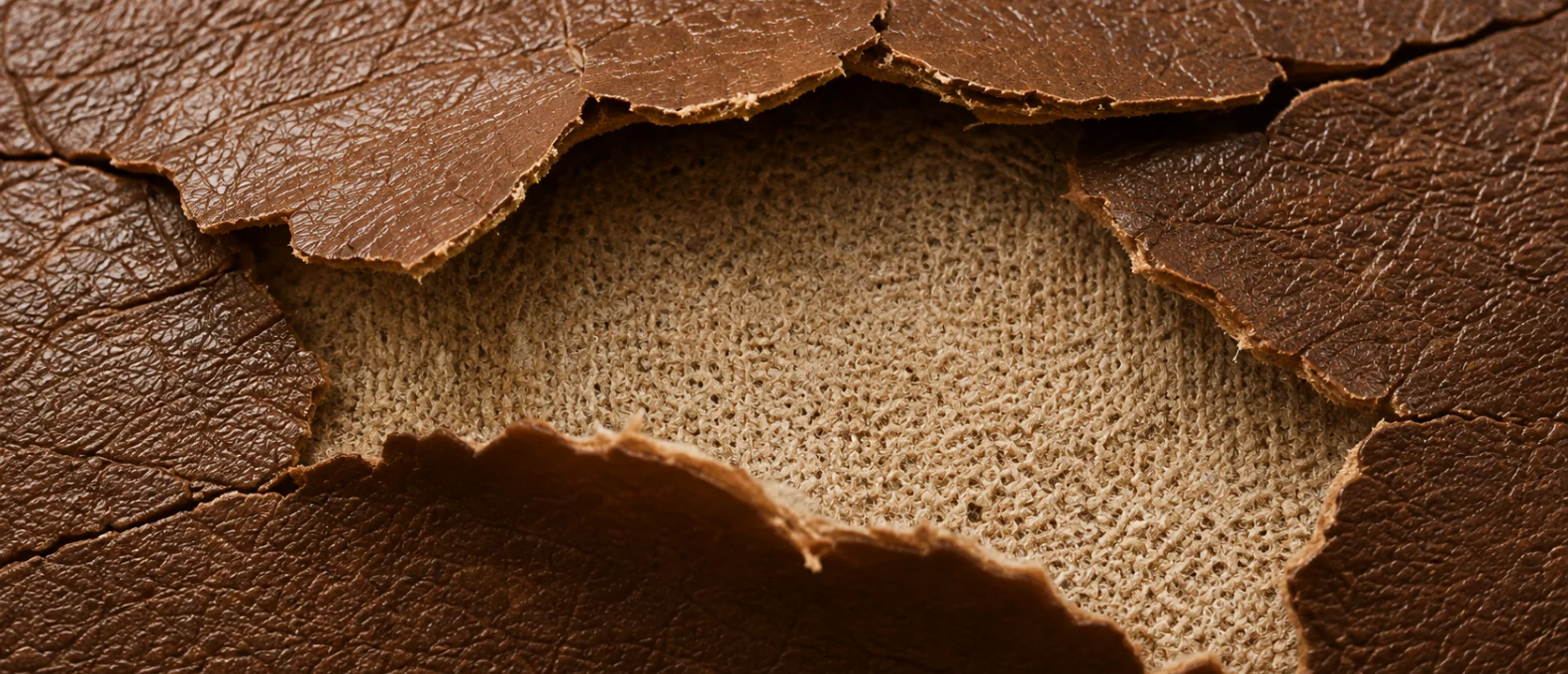
1. Turn a cushion over — look at the flesh side.
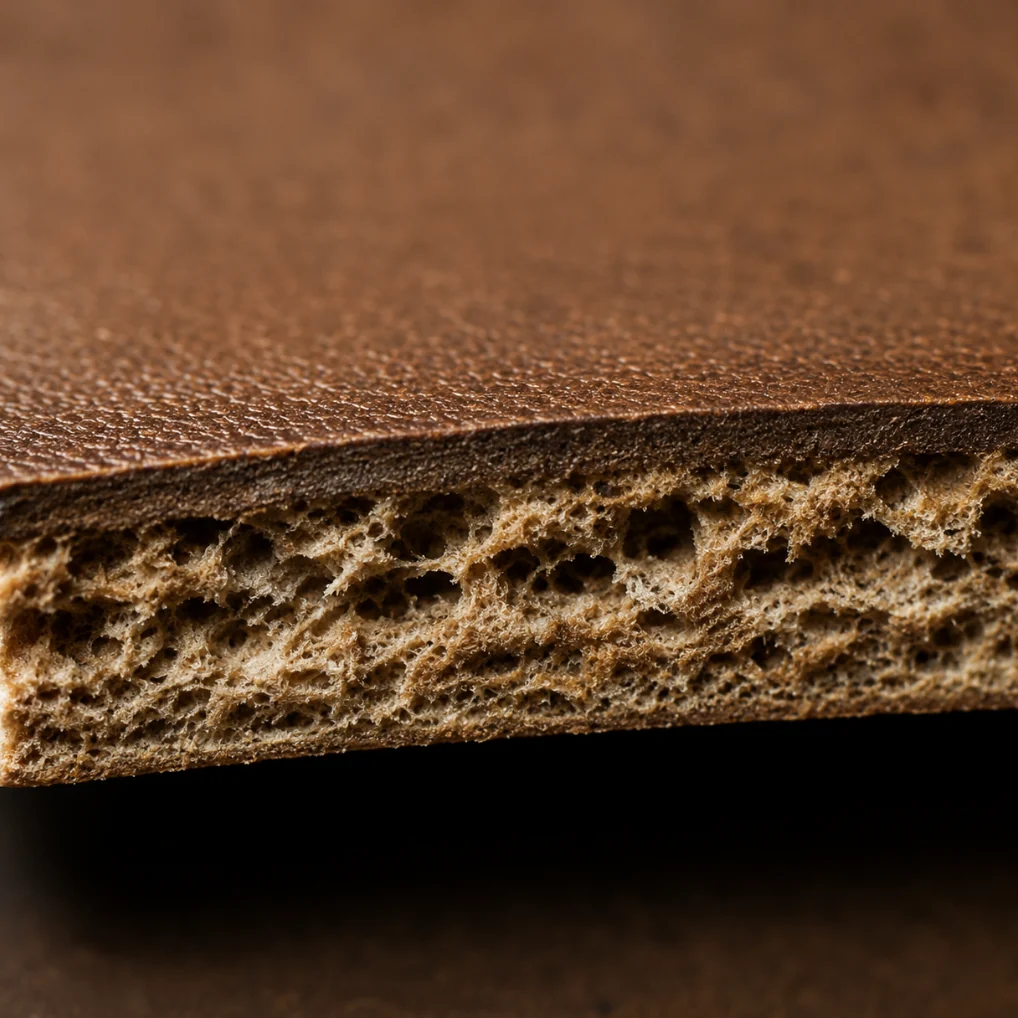
Fibrous, suede-like
Real leather. Which kind, still open.
Woven fabric backing
Not hide. Bonded.
Smooth plastic film
Vinyl. Coated fabric.
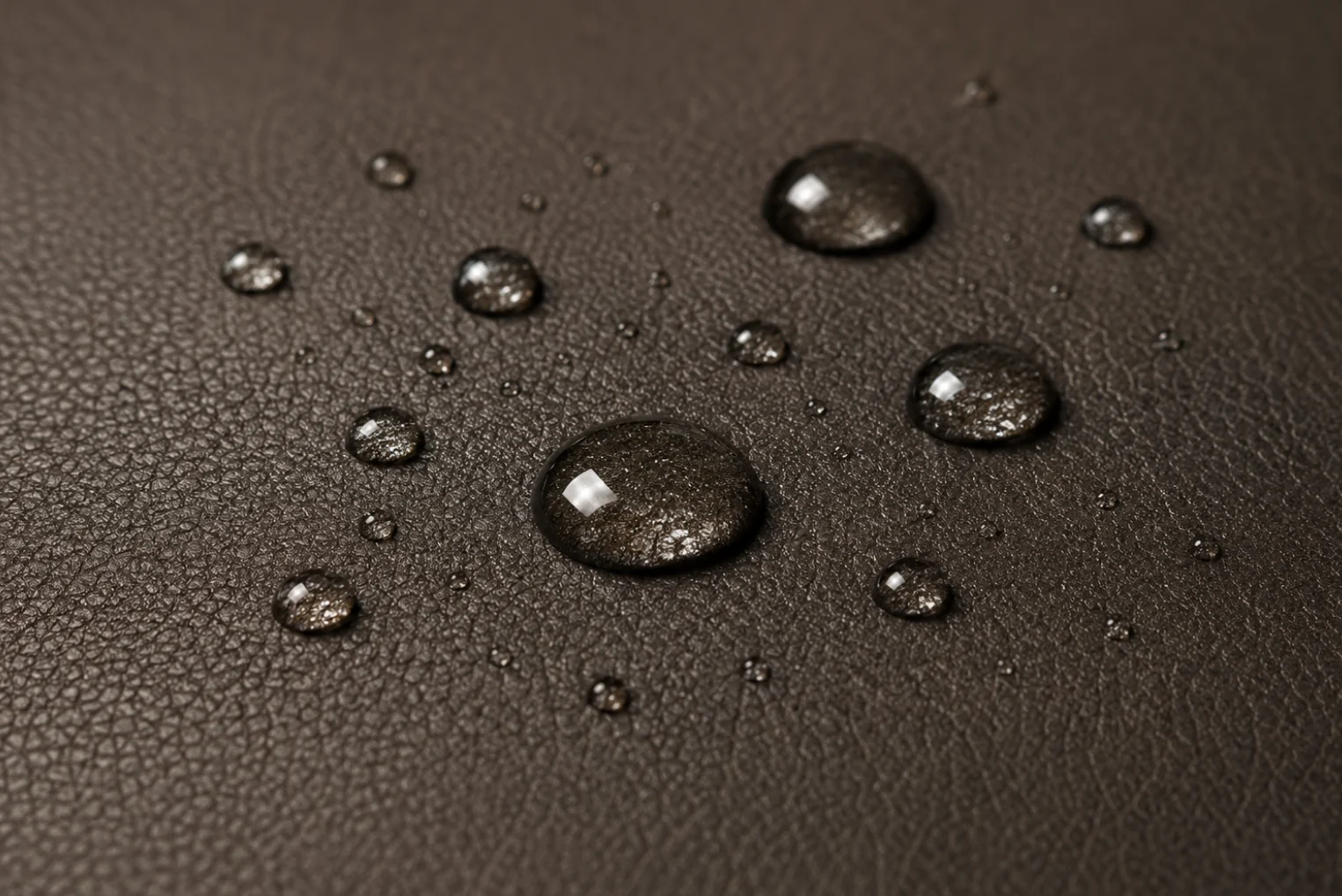
2. Put a drop of water somewhere hidden. Wait, then wipe.
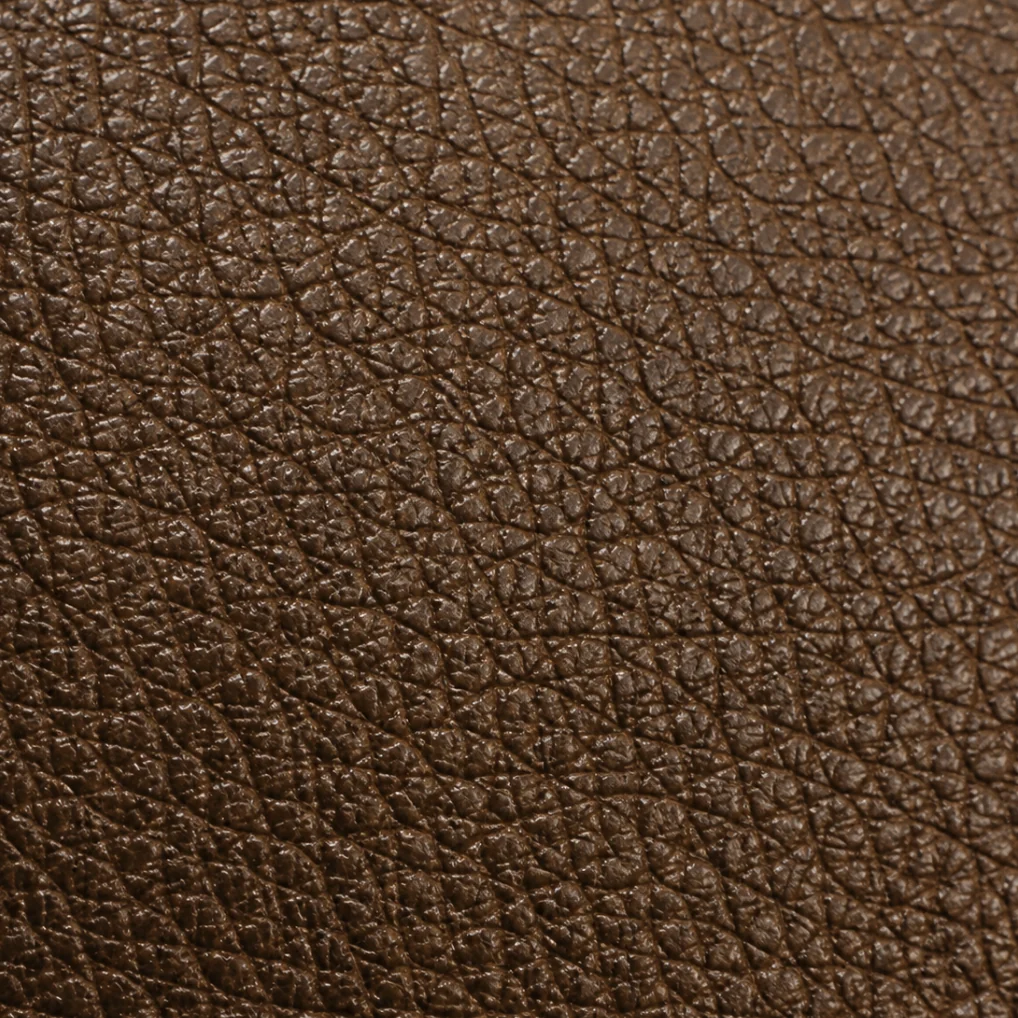
Sits, wipes away clean
Pigmented. No darkening.
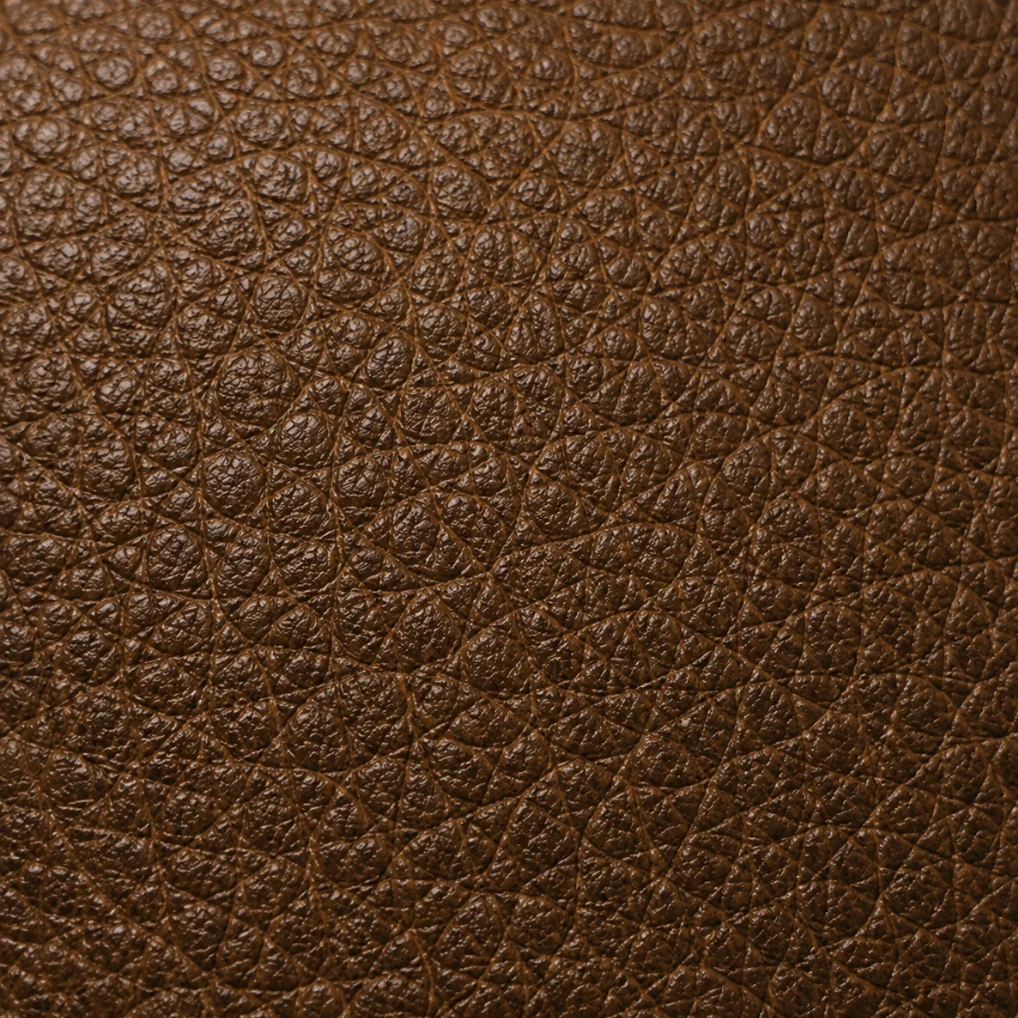
Darkens slowly at the edge
Semi-aniline, already worn. Compare.
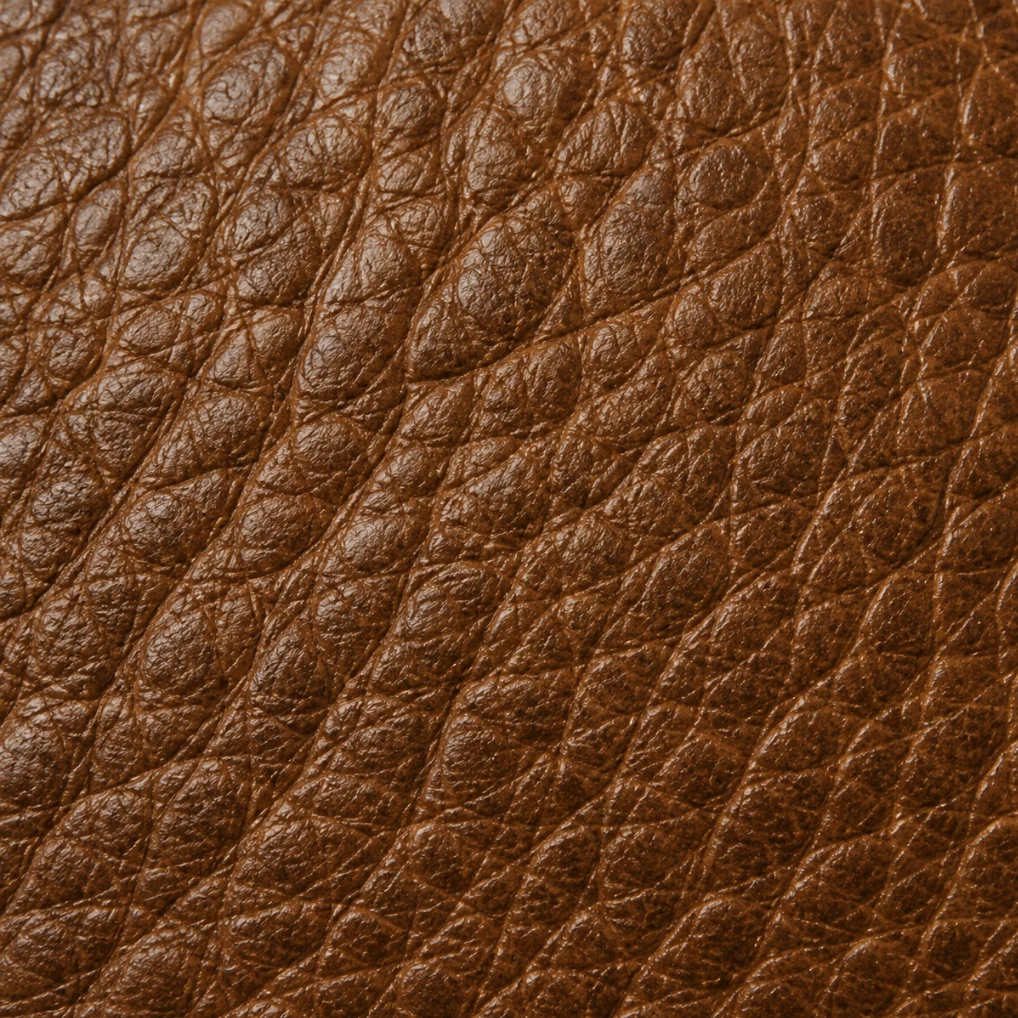
Sinks in within seconds
Aniline. Bare dyed hide. Compare.
3. Hunt for a repeat in the grain, in daylight.
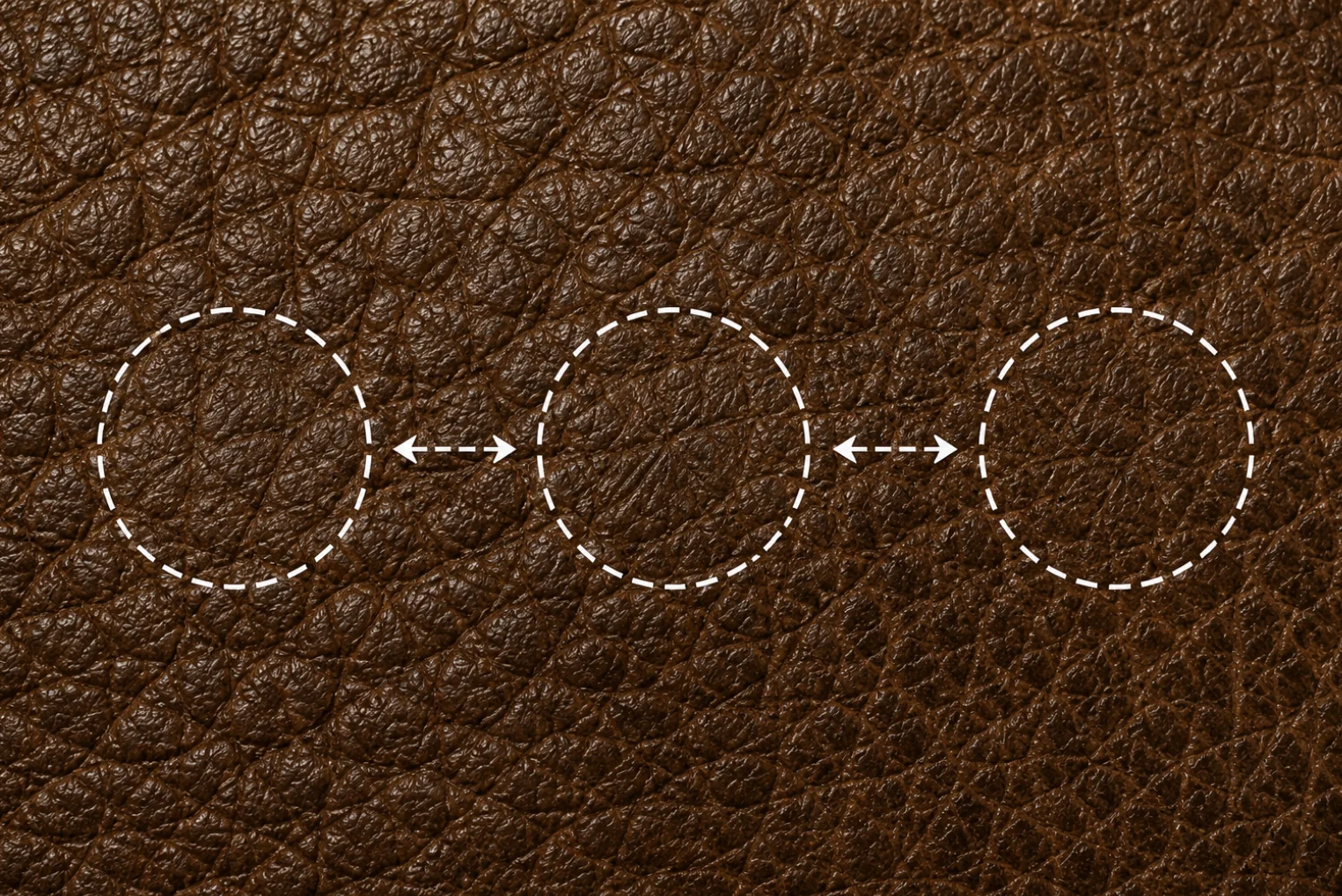
The pattern repeats
Embossed, so pigmented.
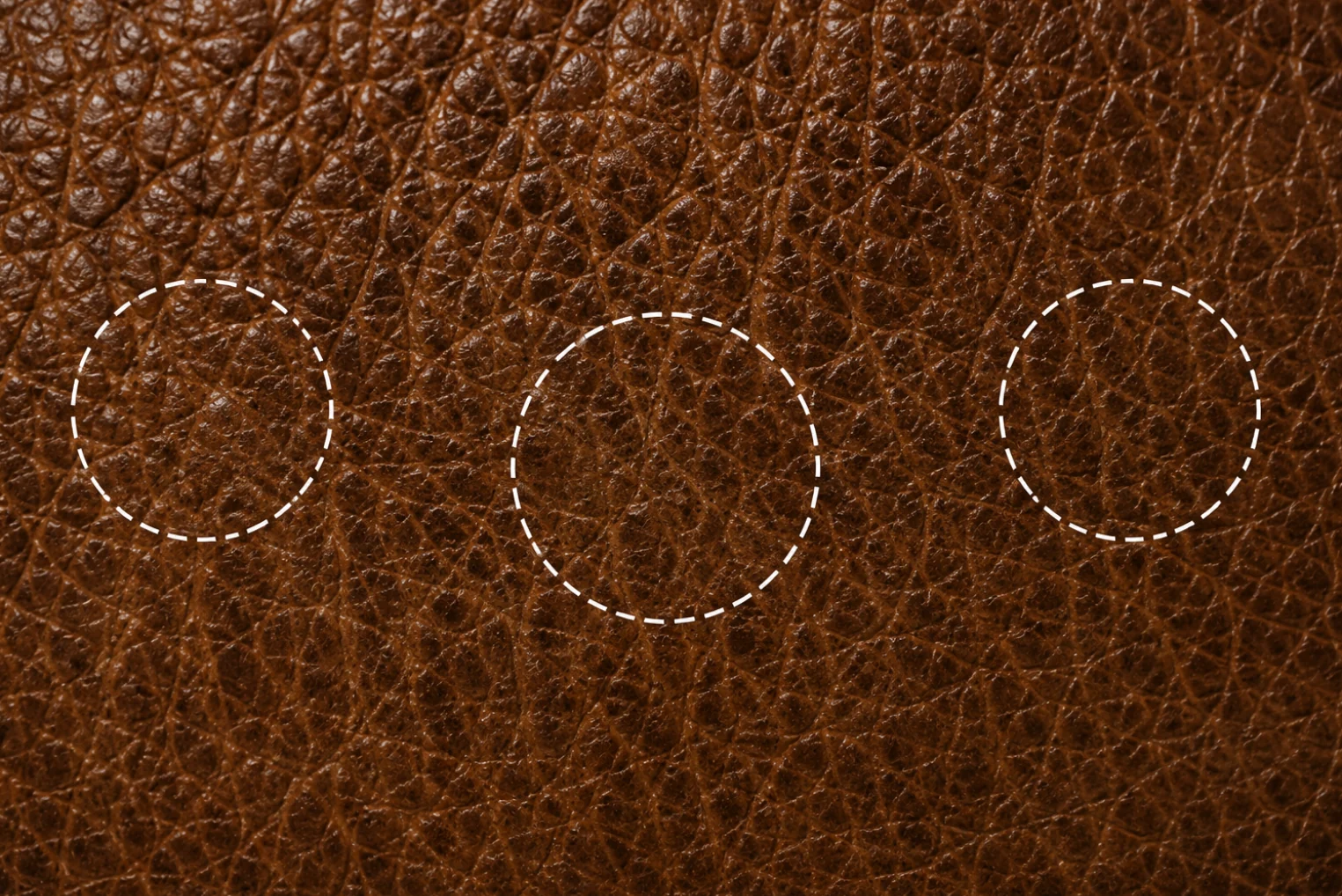
Never repeats
Grown grain. Full-grain.
Too uniform to read Check the flesh side.
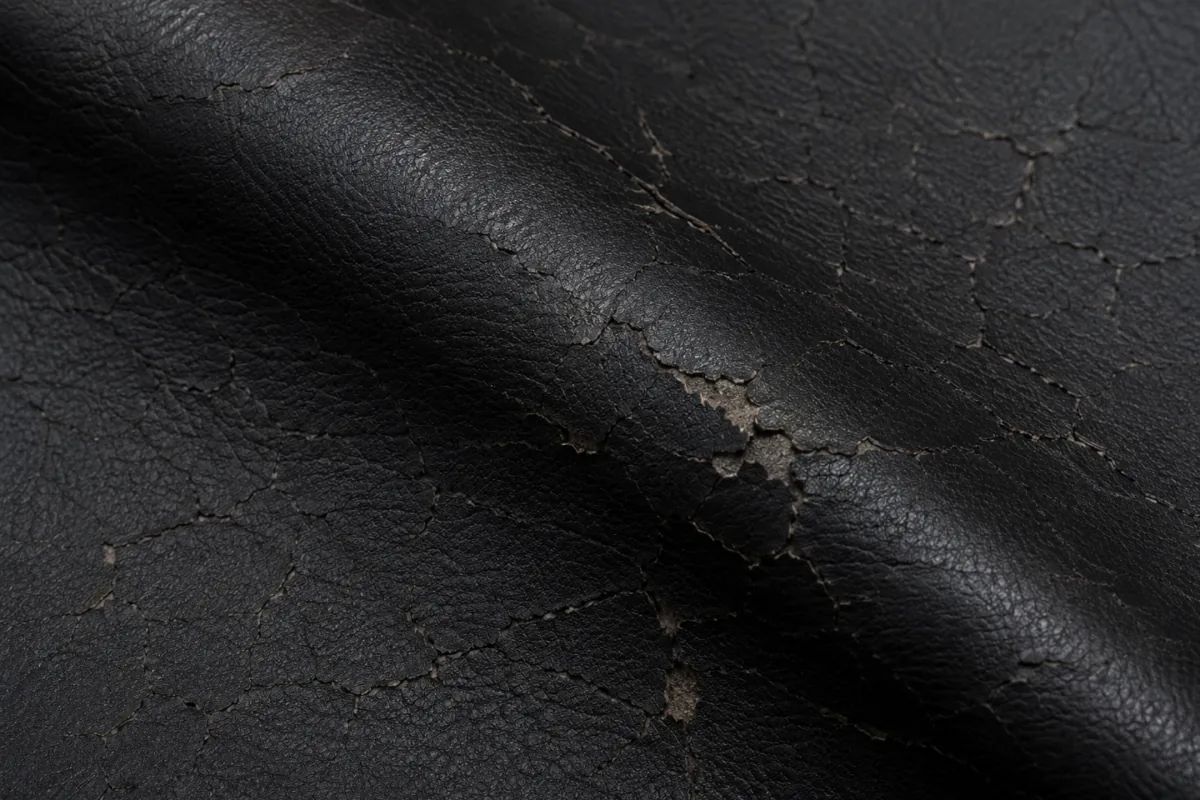
Why Pigmented Leather Cracks & Its Finish Can Peel
Adhesion fails long before the hide does.
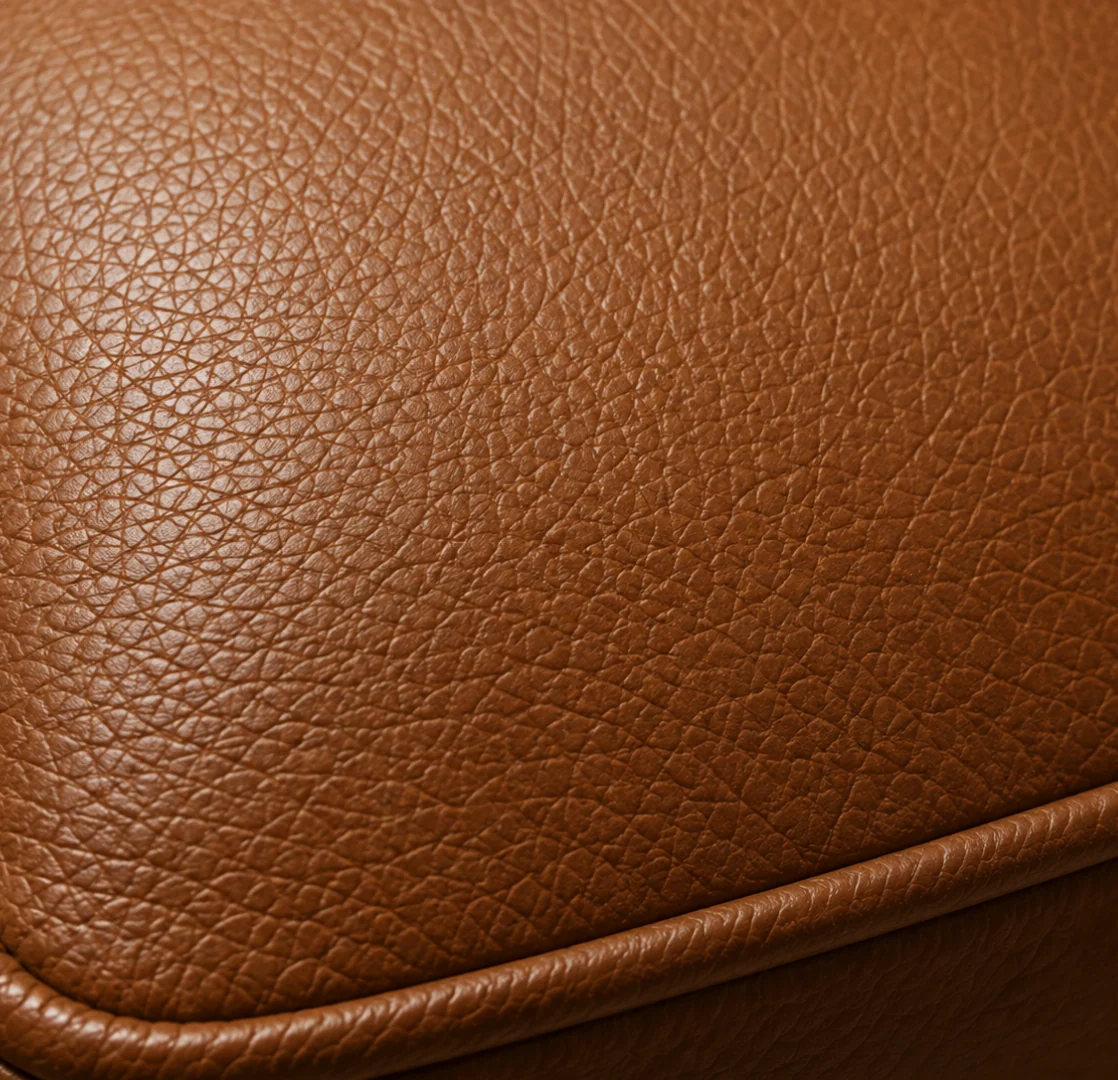
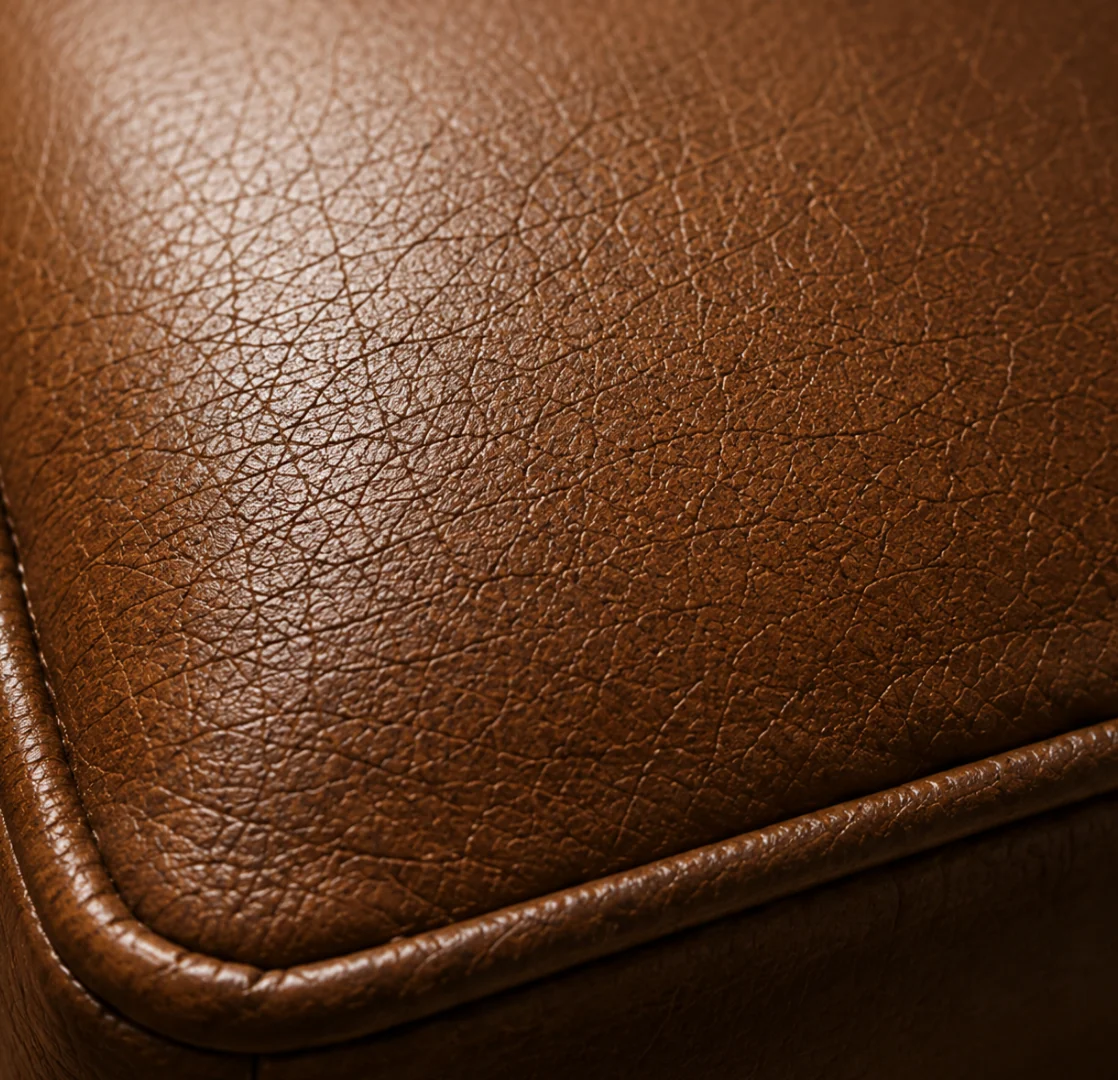
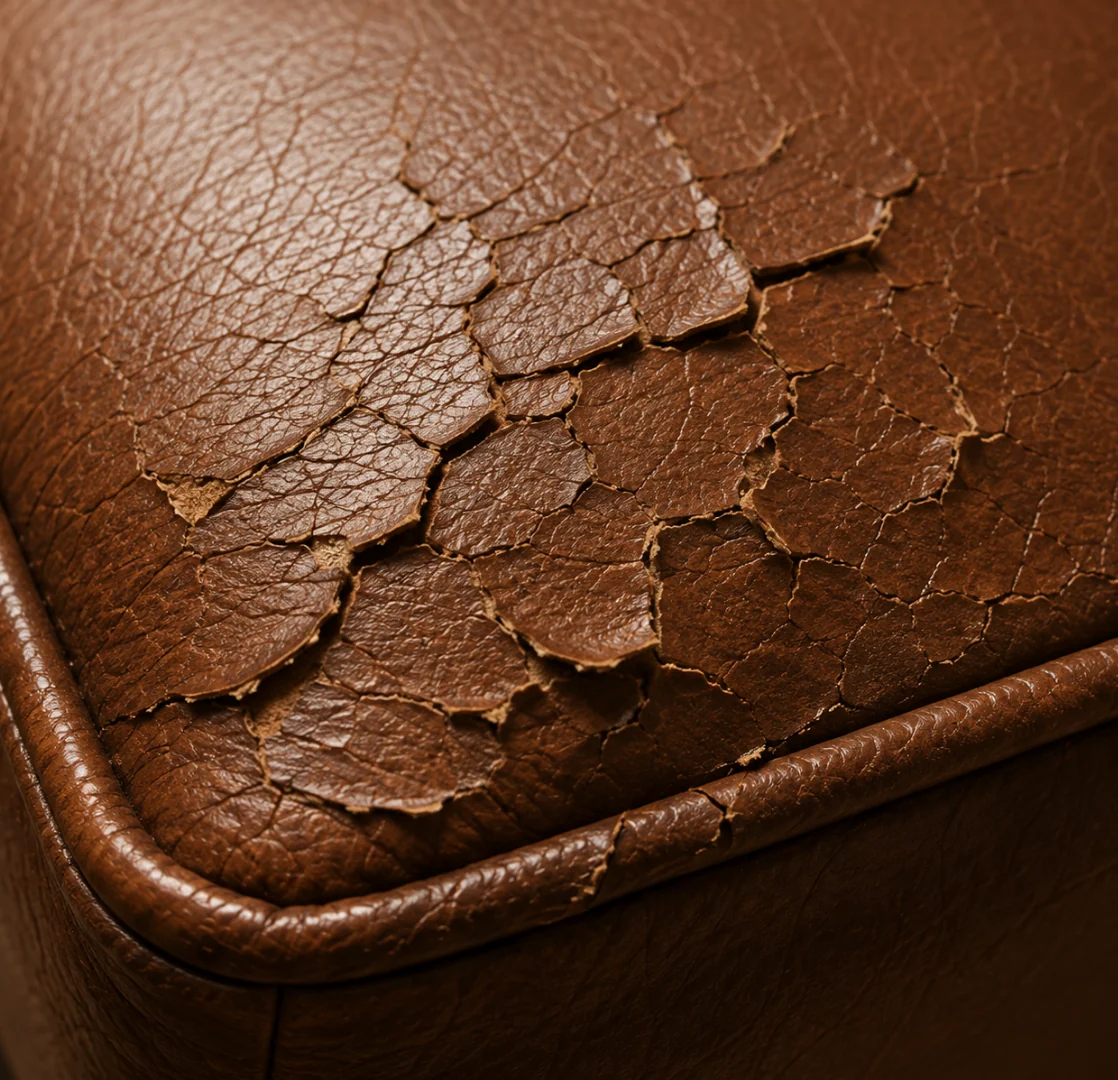
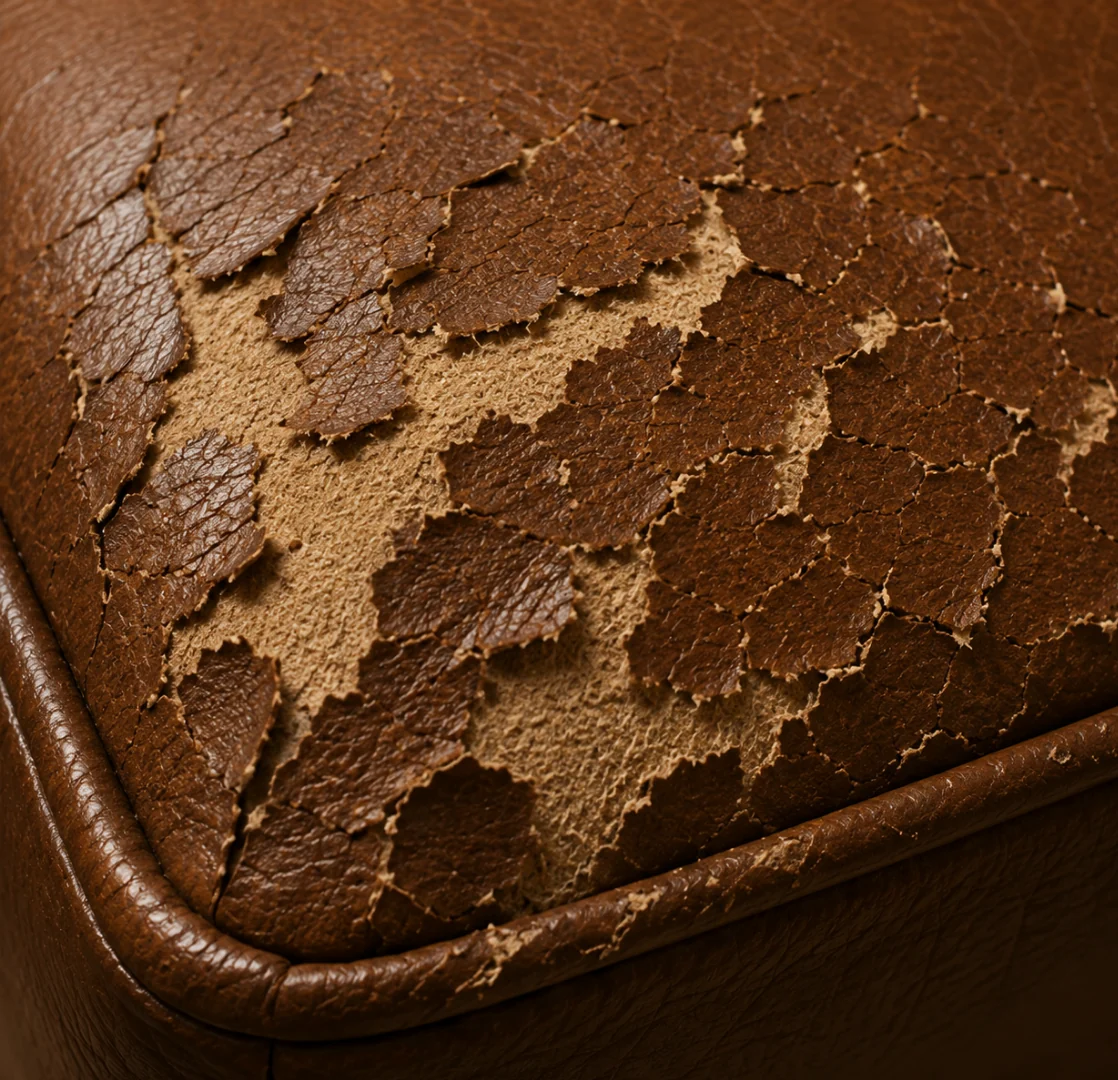
What breaks the bond
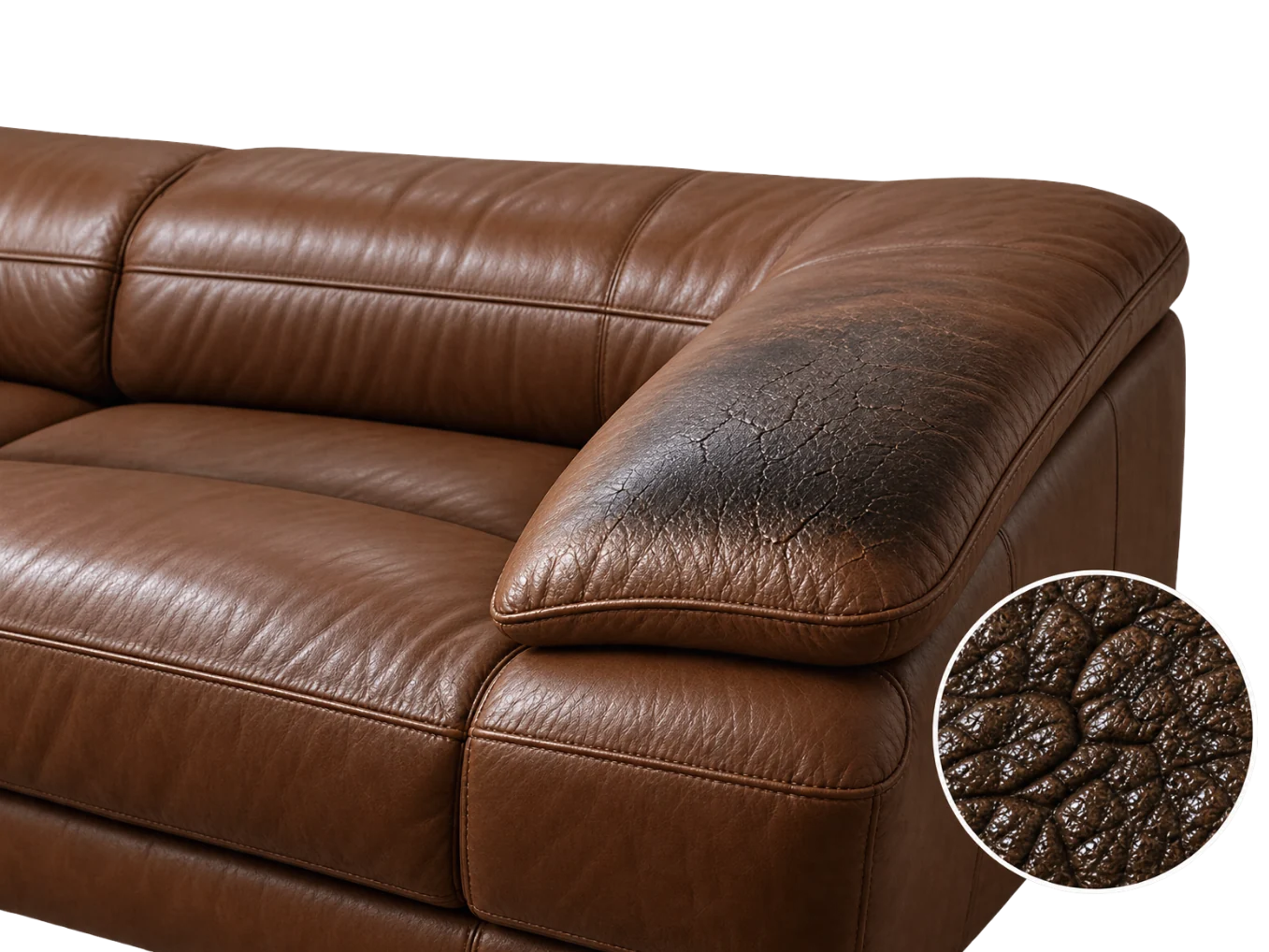
Body oils soften the finish at headrests and arms. Heat accelerates it — a sofa against a radiator fails years earlier.
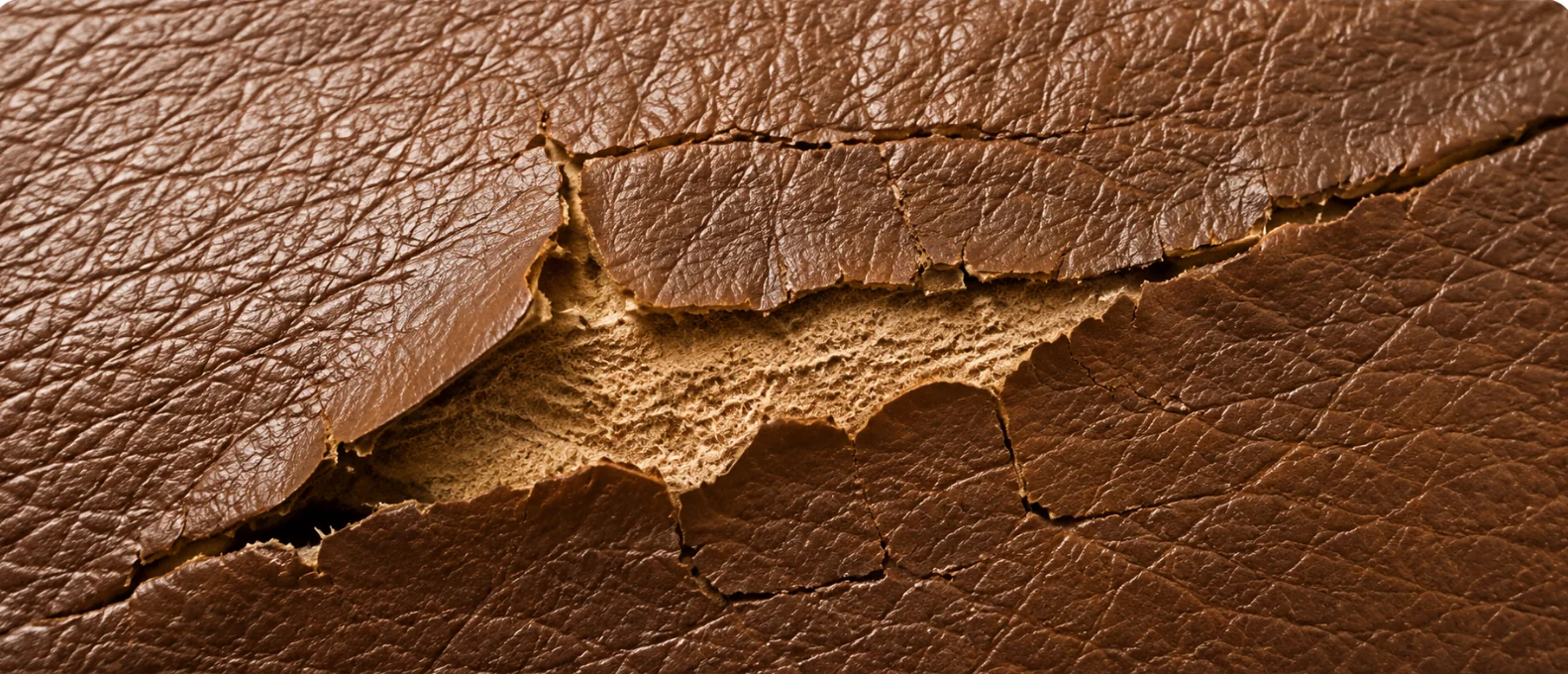
Peeling in sheets? Check it is leather
Real hide peels locally, at contact points. A sofa shedding whole panels is bonded leather.
The Workhorse Leather
If a seat has to survive strangers, this is what was specified.
Also standard in nightclubs, private clubs, salons and spas and transportation — every industry we serve. A whole floor runs as a bulk project.
Care, Repair, Restoration or Reupholstery
How much of the coating still works, and whether the hide is sound.
If a repair kit has been used on it, say so. Consumer pigment does not bond to a factory topcoat.
Where the Replacement Leather Comes From
Most jobs need no new hide. When cracks run through, we buy in person.
What we specify
 01
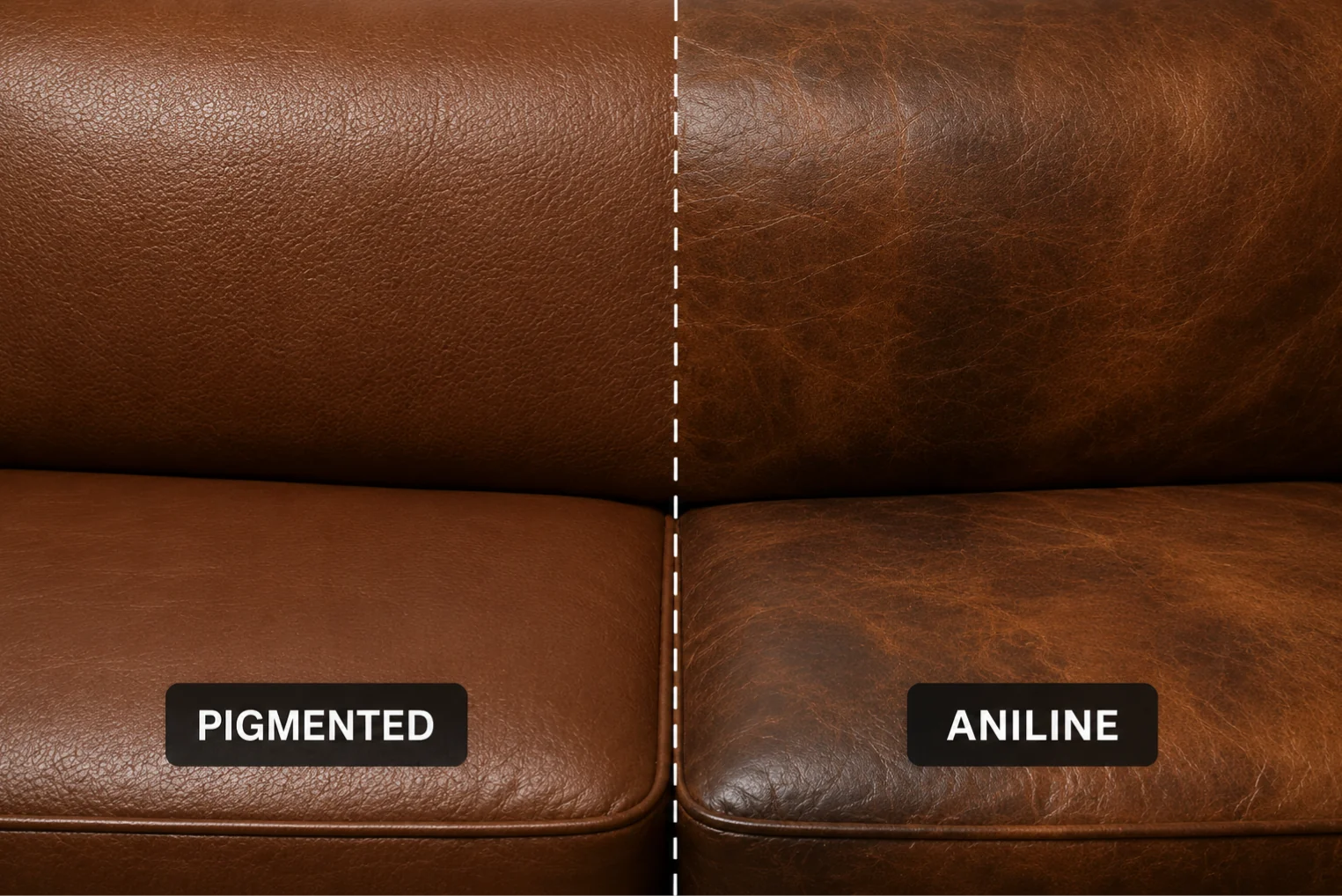
Finish type
Aniline beside pigmented never reads as one piece.
01
Finish type
Aniline beside pigmented never reads as one piece.
 02
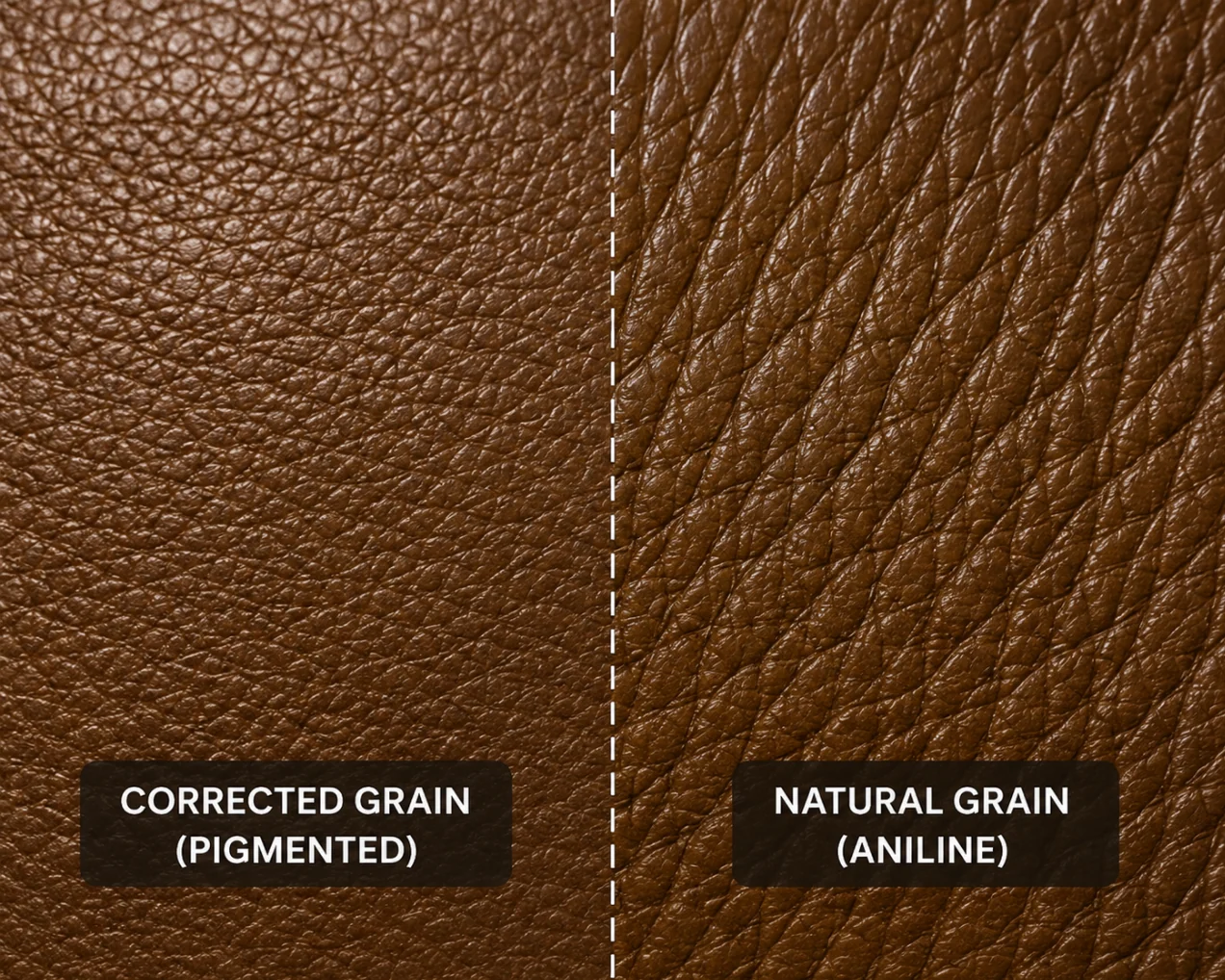
Grain emboss
Printed onto
corrected grain, matched in
daylight.
02
Grain emboss
Printed onto
corrected grain, matched in
daylight.
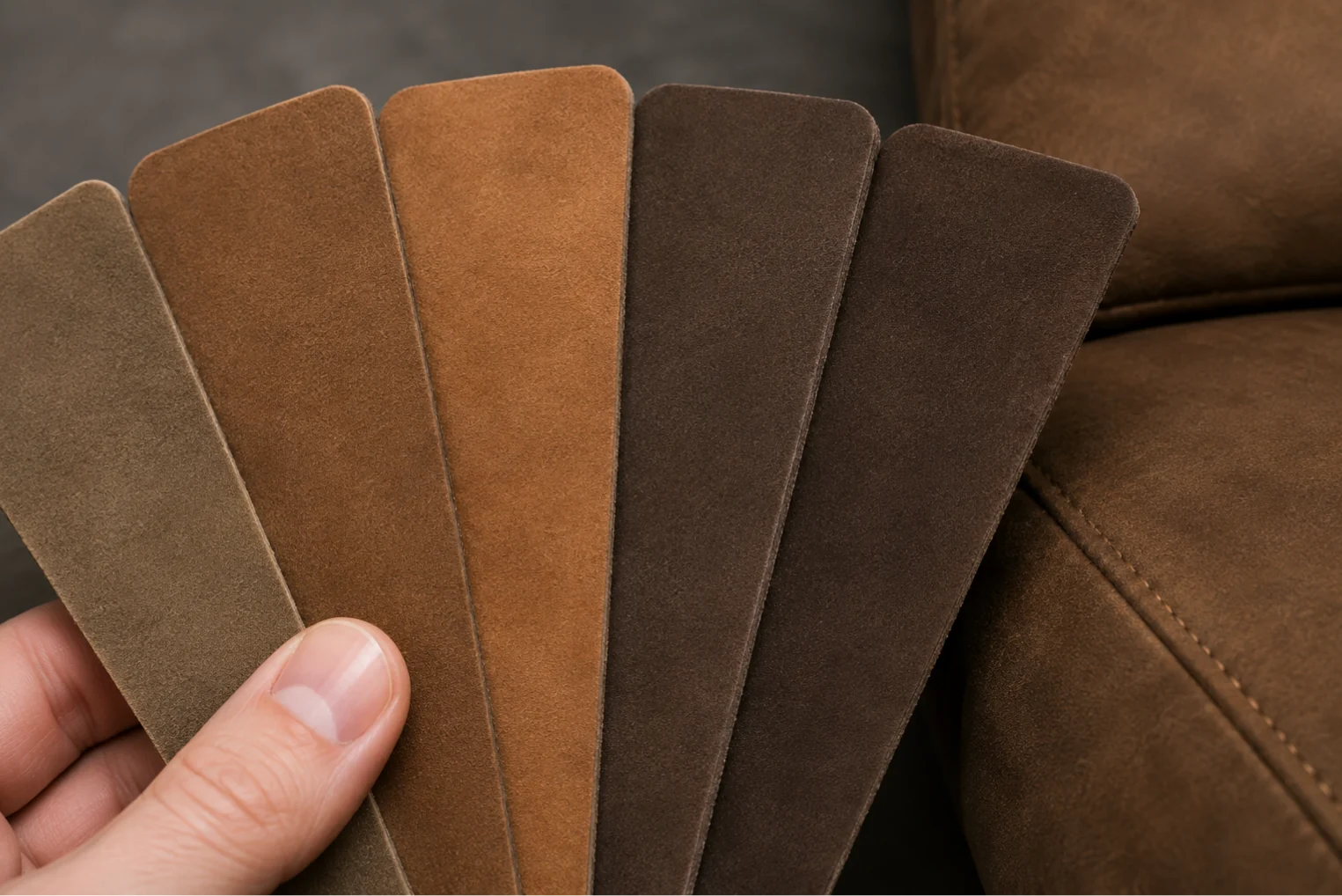 03
Color
As the furniture is now, not as it shipped.
03
Color
As the furniture is now, not as it shipped.
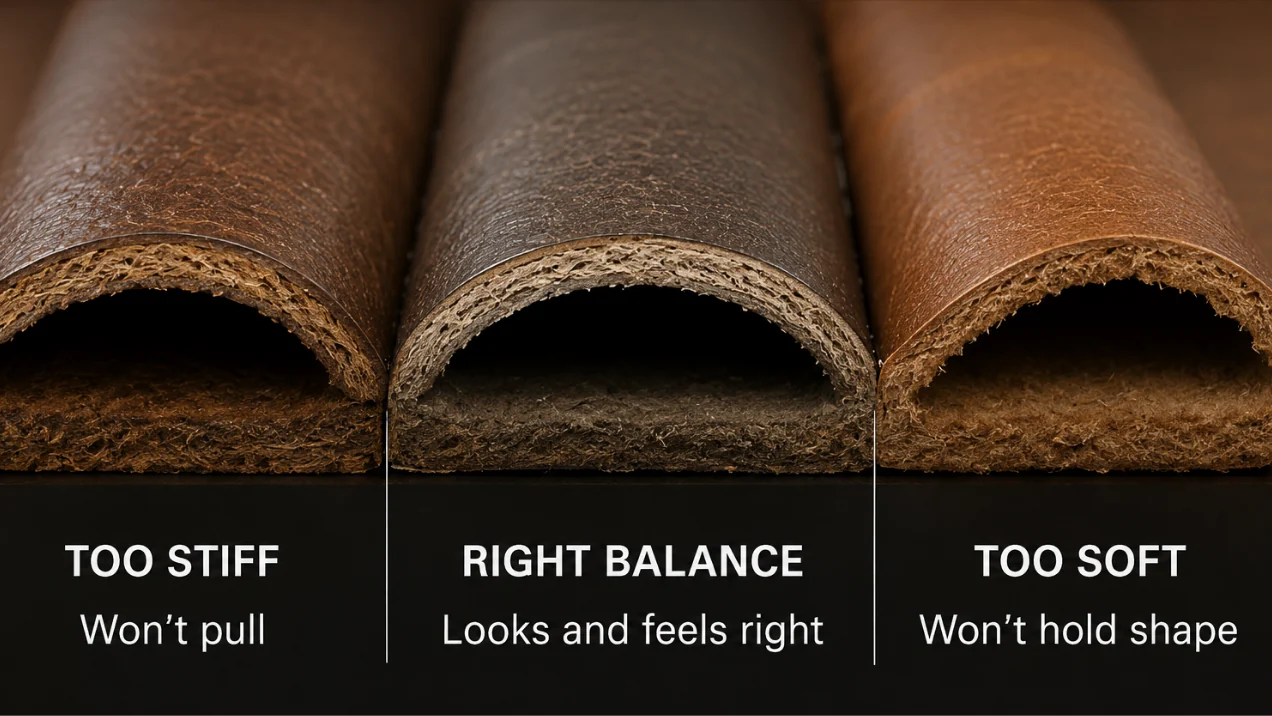 04
Weight and temper
Too stiff will not pull, too soft will not hold.
04
Weight and temper
Too stiff will not pull, too soft will not hold.
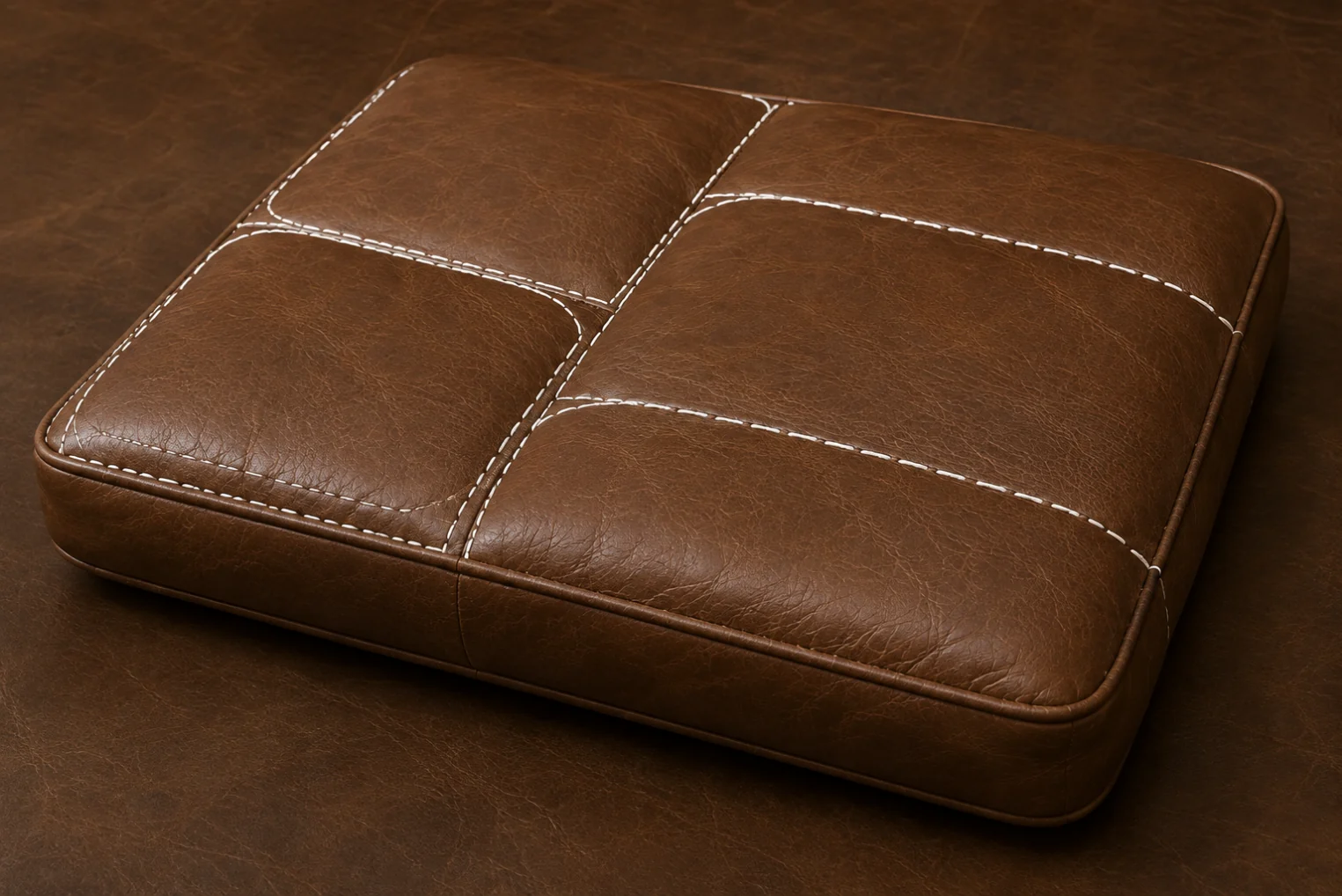 05
How much
Patterned off the panels, never a chart.
05
How much
Patterned off the panels, never a chart.
Who we buy from
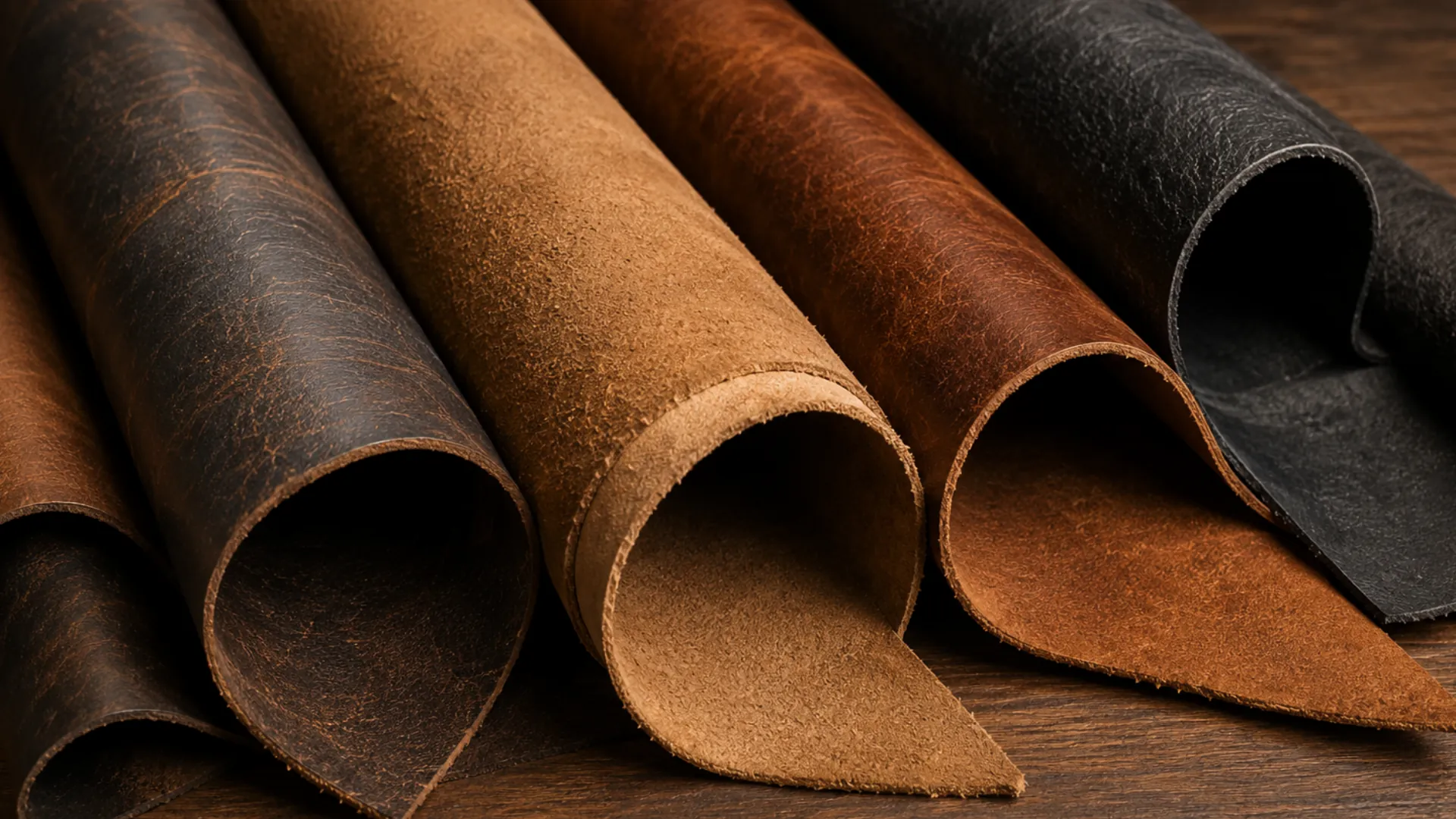
Garment-district trade counters
Ten minutes from the shop. We walk in with the damaged panel, hold it against the rack, and carry the hide out the same day.
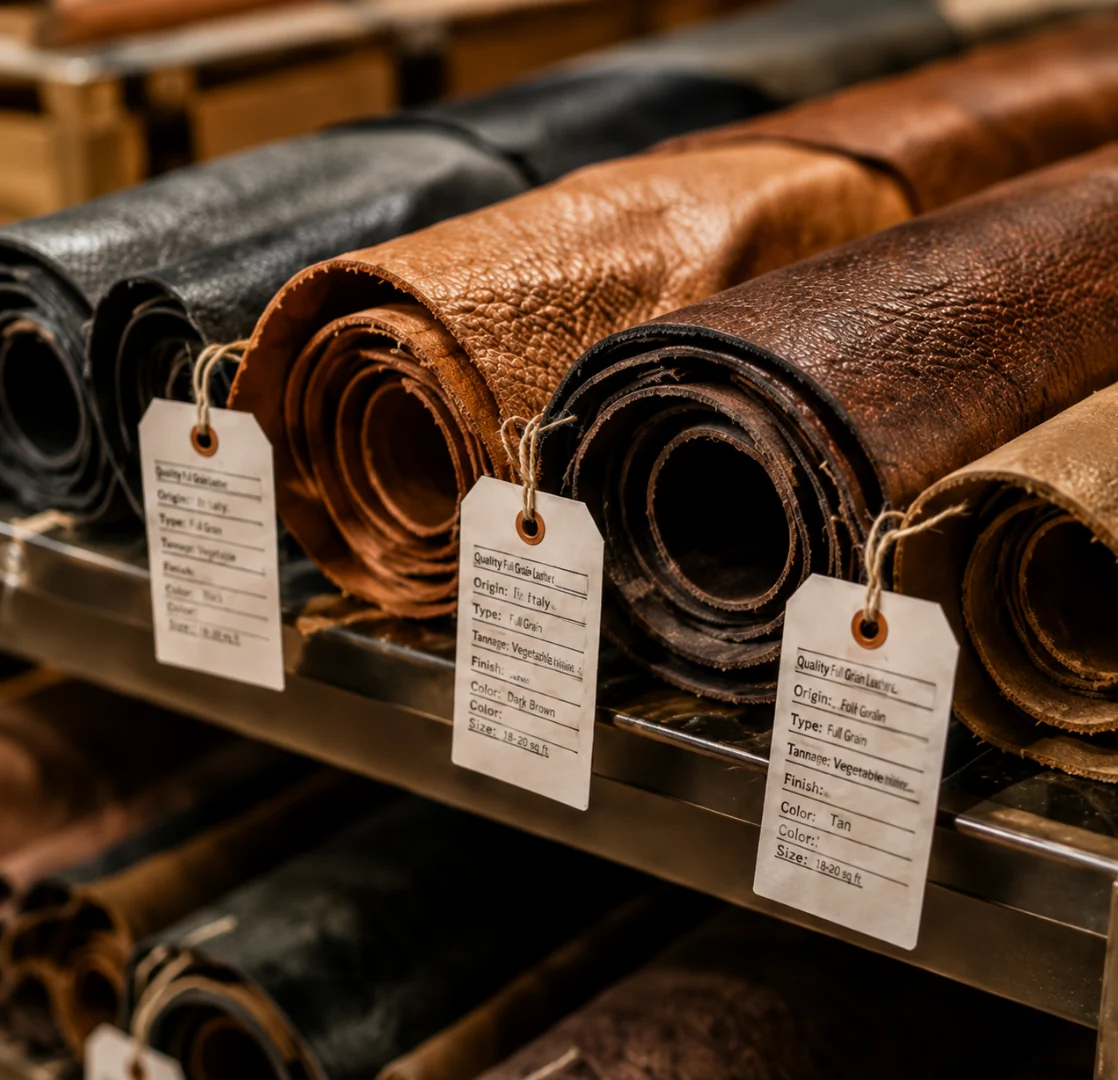
Contract leather houses
When a run has to repeat across a room, we spec from makers like Garrett Leather and Townsend Leather, whose ranges hold one dye lot longer than a counter buy will.
We will not quote a hide count over the phone. It depends on your panel sizes and how they nest.
The One Leather You Can Actually Wipe Down
All of it keeps the topcoat flexible and bonded.
Do this
Never this
What It Is Mistaken For, in Both Directions
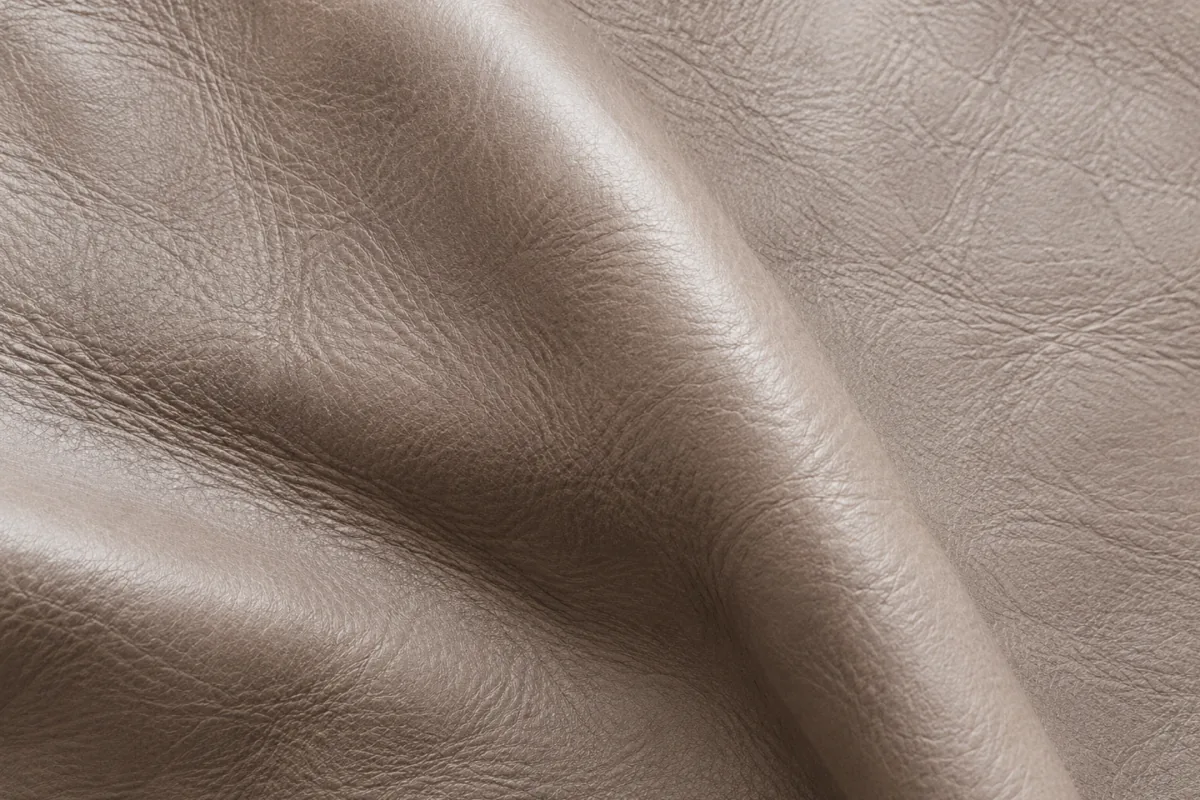
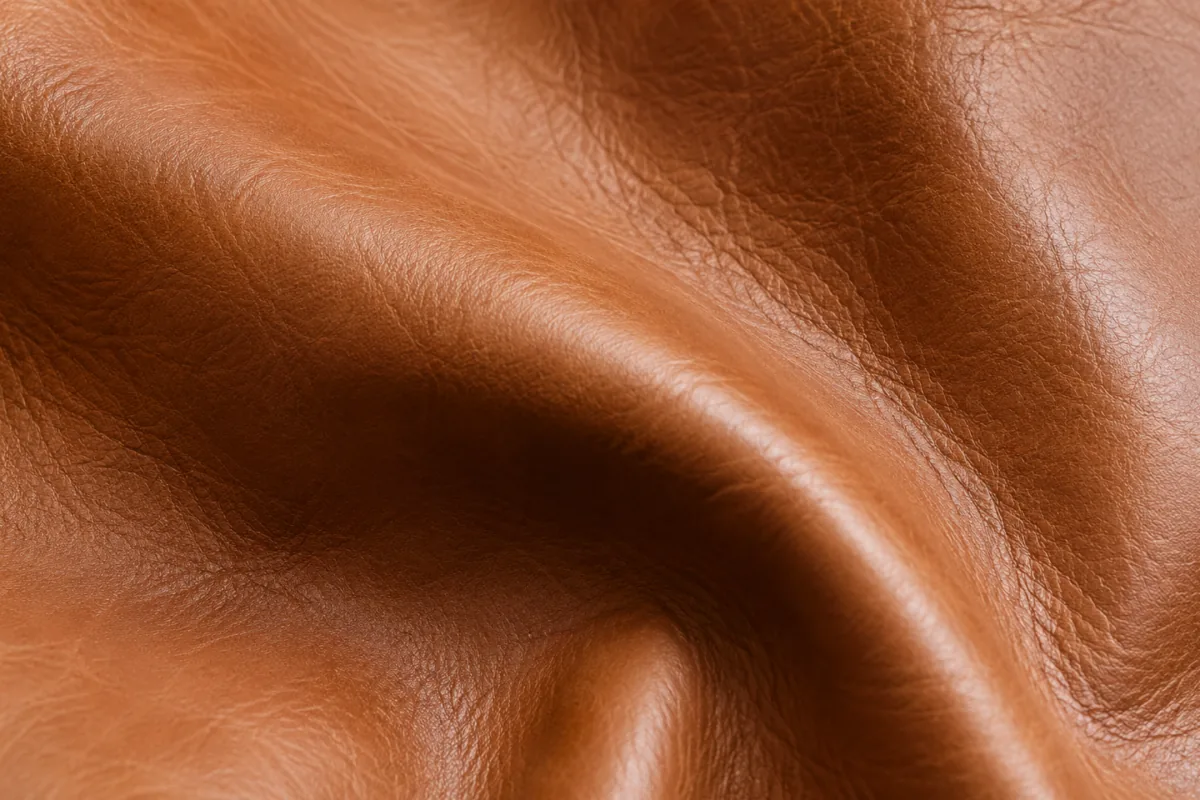
Confused with better leather above, non-leather below.
Pigmented Leather Questions
Is pigmented leather real leather?
Yes — genuine hide with a heavier finish on top. The confusion comes from bonded and faux leather, which are not hide. Check the flesh side: real leather has a fibrous, suede-like underside; bonded and faux sit on a woven backing.
Why is my pigmented leather sofa peeling?
The topcoat has lost adhesion. Body oils, heat and flexing break the bond, the coating micro-cracks, and once an edge lifts, normal use drags it away. Large sheets over a woven backing mean bonded leather, not hide.
Can pigmented leather be repaired?
Yes, and it is the most forgiving leather we work on. The damage sits in a coating, so that coating can be stripped to a sound edge, rebuilt and recolored. Opaque color makes matching far more reliable than on aniline.
What is the difference between pigmented and aniline leather?
Aniline is transparent dye on bare hide: it absorbs spills and develops patina. Pigmented is sealed under opaque color: it resists spills, stays uniform panel to panel and never patinas. Aniline feels soft; pigmented feels firmer.
Send Us Two Photos and We Will Tell You What You Have
One of the damage, one of the underside of a cushion. Enough to tell you whether it is pigmented leather, bonded leather or vinyl — which decides everything after.
Or call (347) 310-7483