NYC, the five boroughs & New Jersey

Leather Tear Repair

A tear goes through the hide, so it cannot be filled from the front. Leather tear repair starts underneath the opening — and that is what decides whether it stays closed.

Five hides

The same repair, in five different leathers

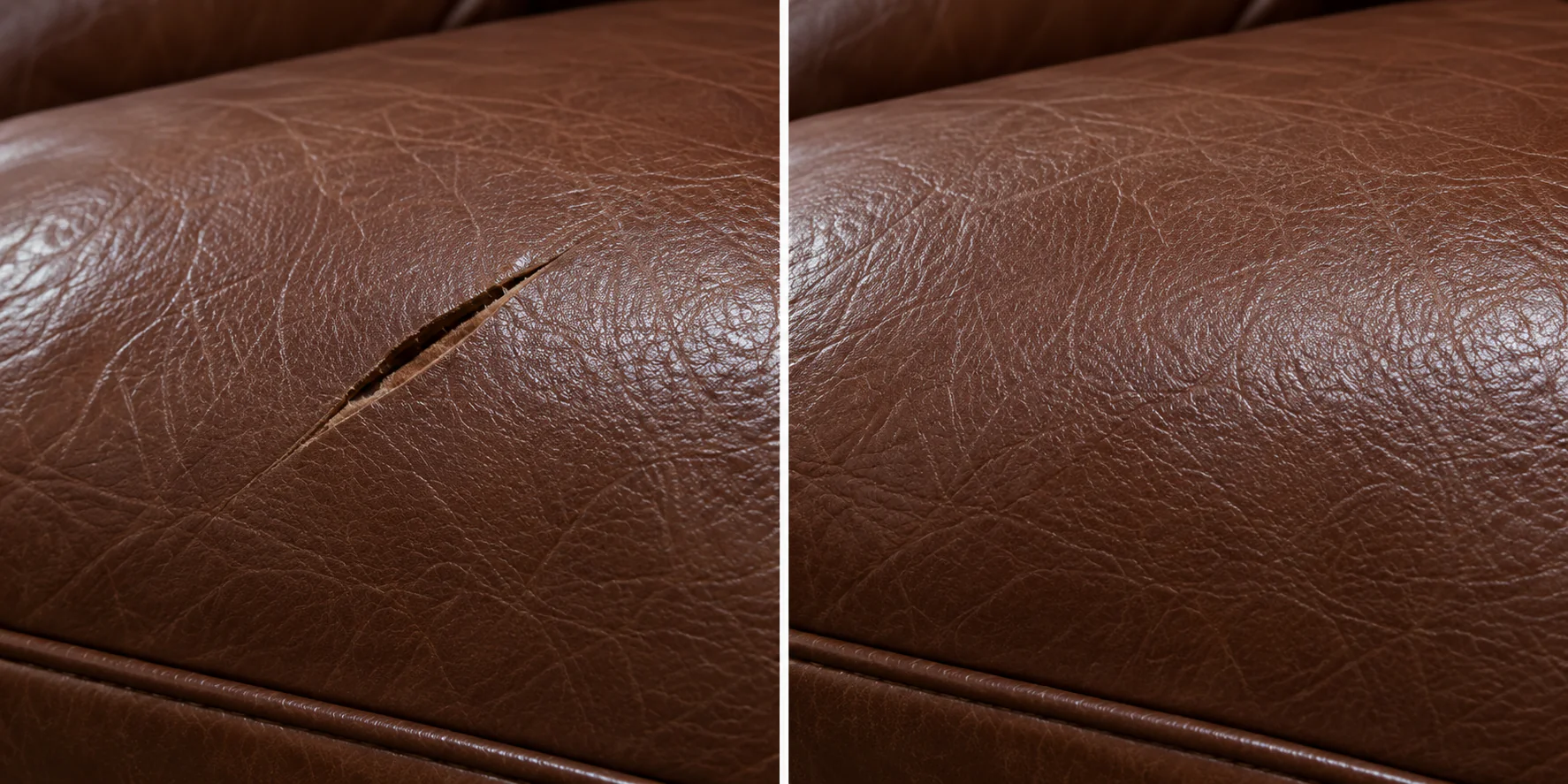
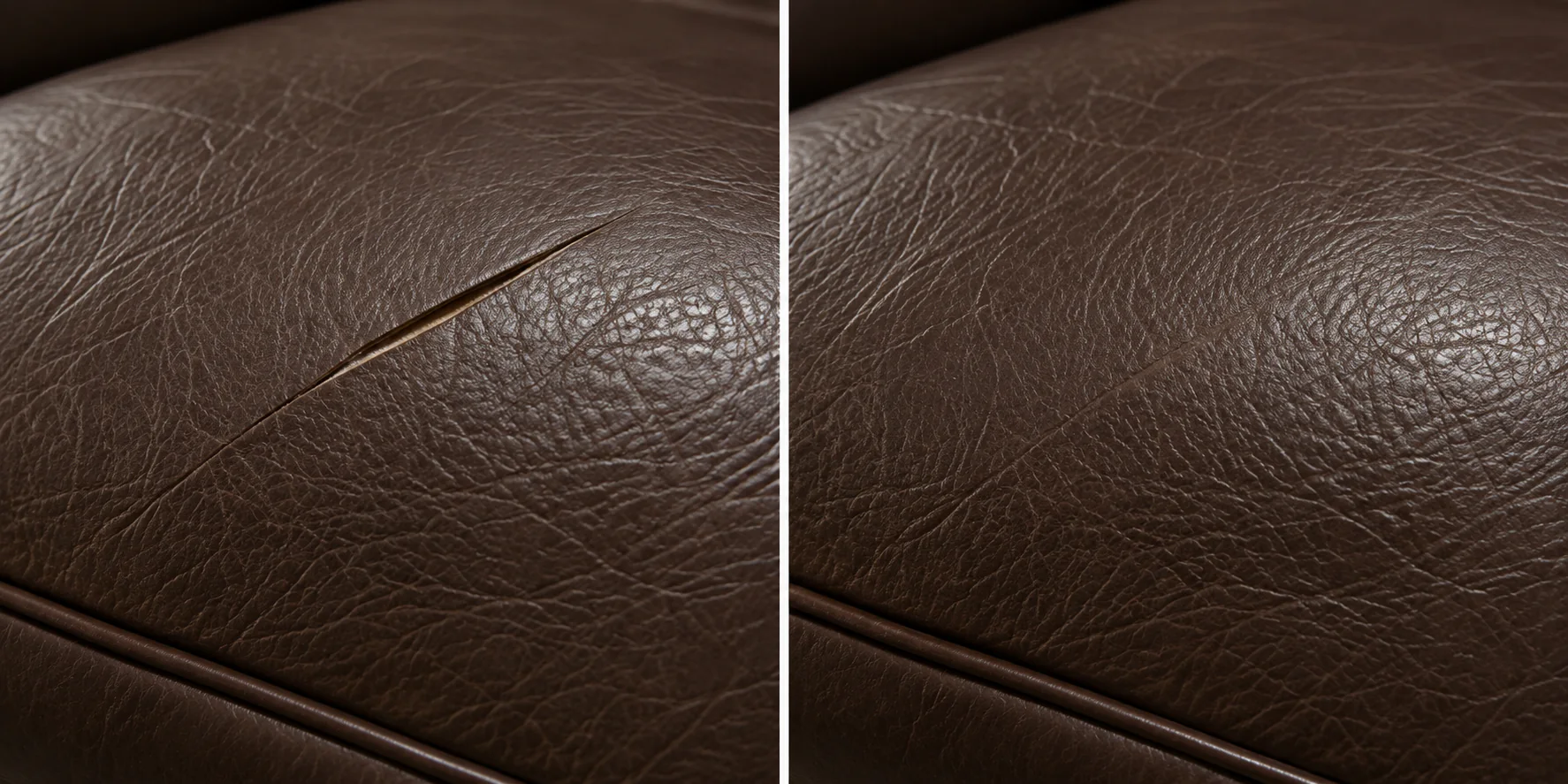
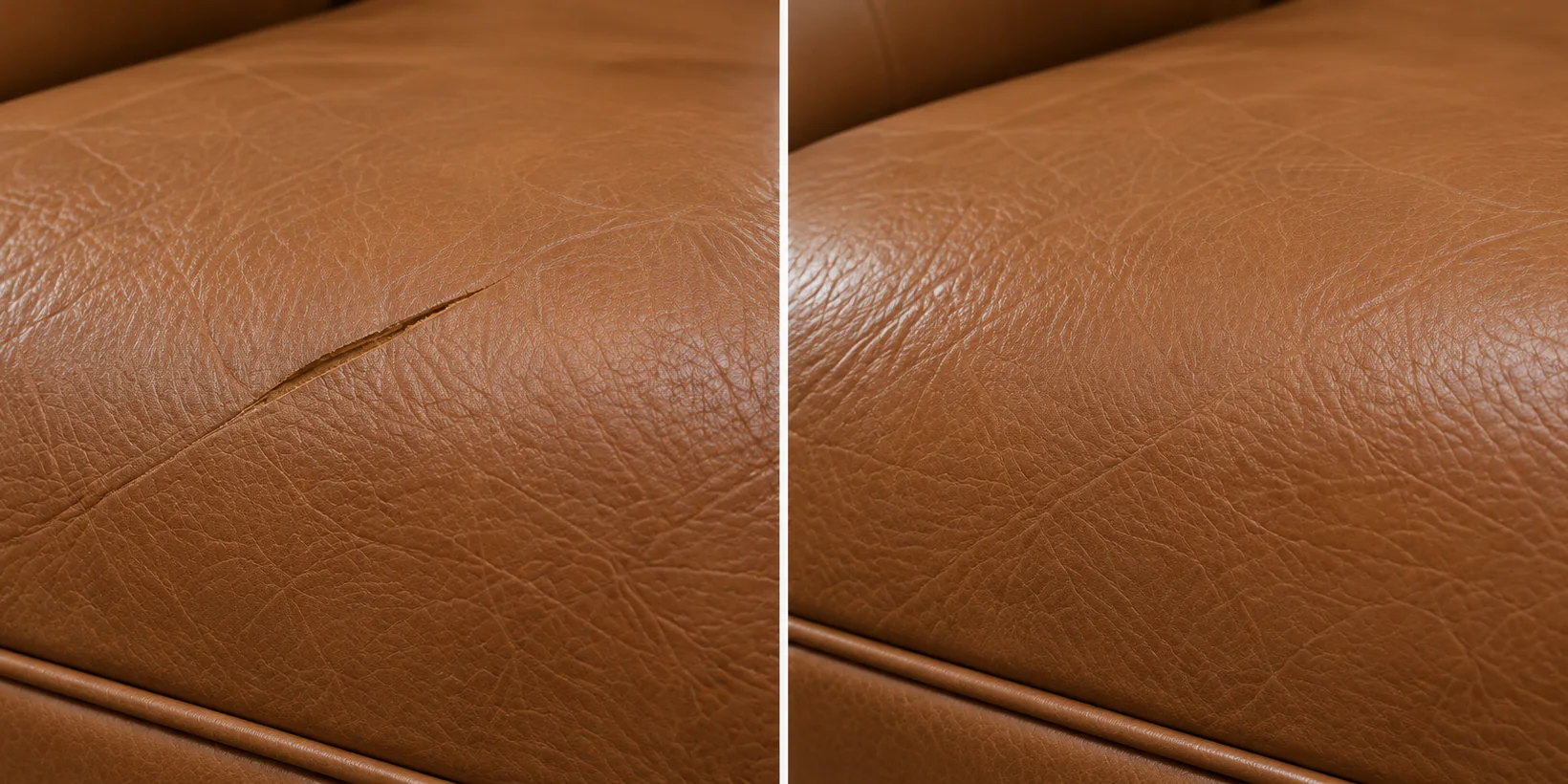
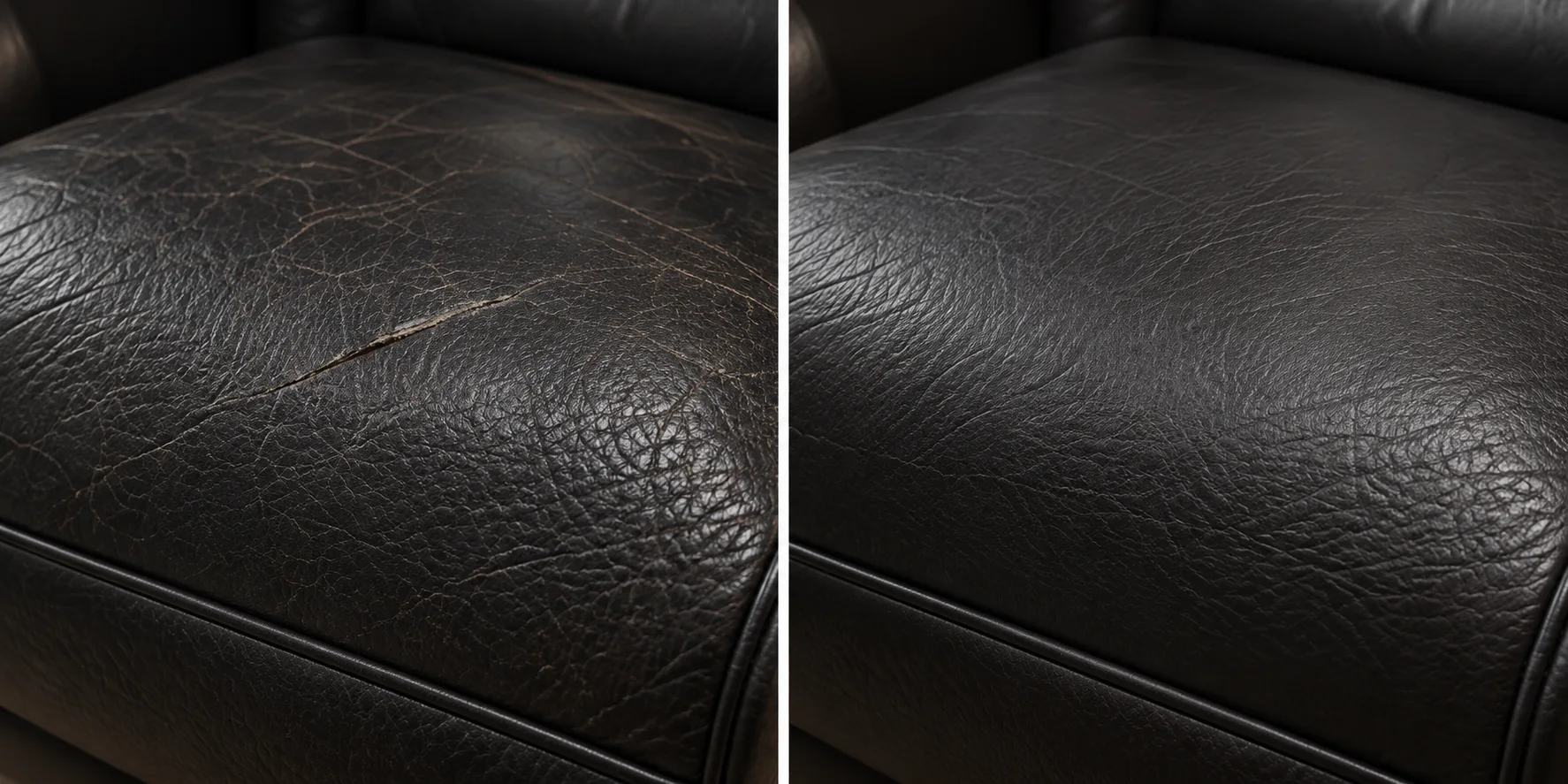
Colour, grain and sheen are matched to the panel the opening sits in.
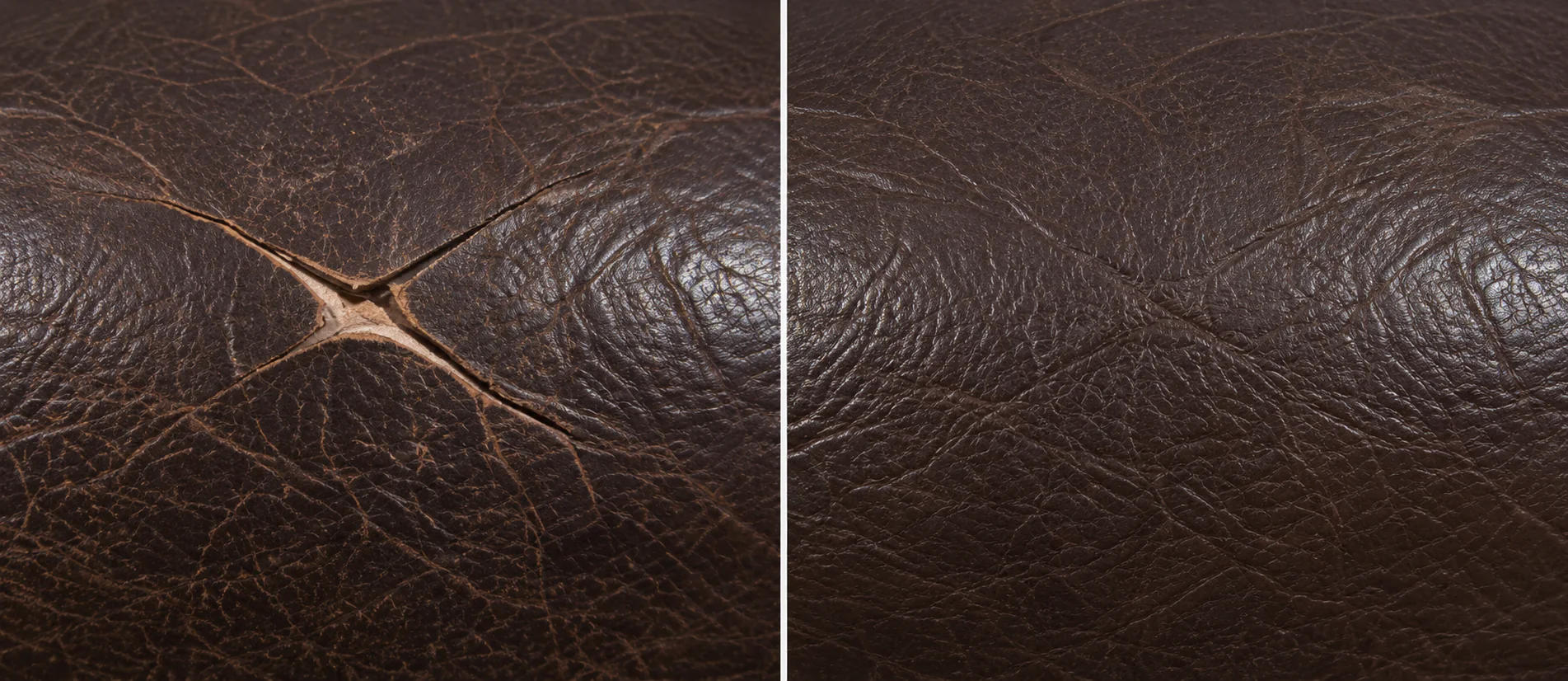
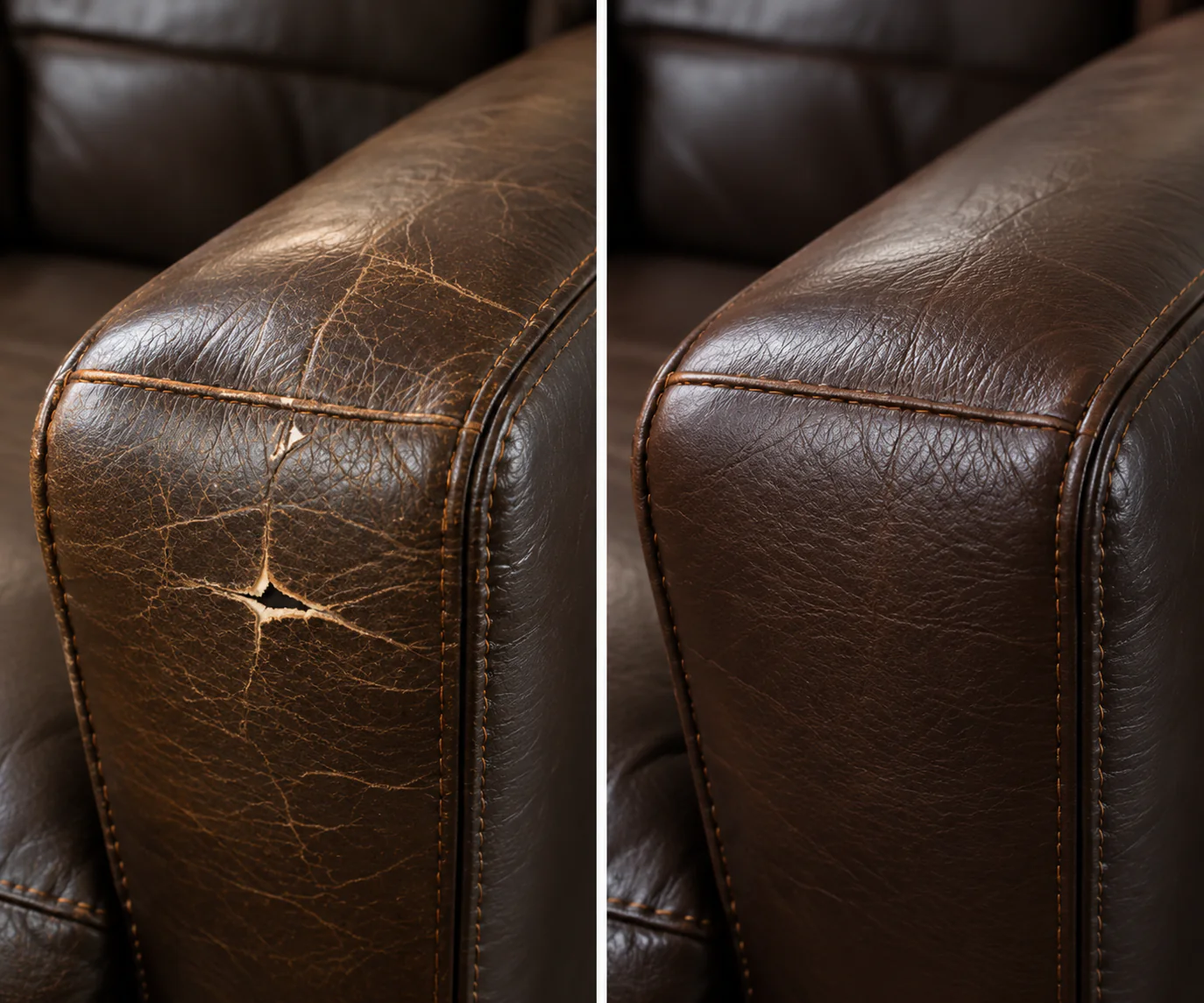
Dark brown leather seat pulled open in a cross shape on the left and closed and matched on the right
Dark brown, pulled open on a flex line.
Mid-brown leather sofa seat with an open slit on the left and the same panel repaired on the right
Mid-brown, a slit with a lifted lip.
Chocolate brown leather seat with a clean straight cut on the left and the closed repair on the right
Chocolate, a clean cut.
Tan leather seat roll with a short opening on the left and the matched repair on the right
Tan, a short opening on the seat roll.
Black leather armchair seat with an opening on the left and the grain rebuilt and matched on the right
Black, grain rebuilt across the opening.
What a tear is

Leather does not knit back together

A hide is a felted mat of fibres, not a film. Scuffing and scratching damage the finish on top of it. A tear parts the mat itself, and those edges will not rejoin.

So leather tear repair never starts with colour. It starts with getting material behind the opening. Everything after that is finishing work on a join already carrying the load.
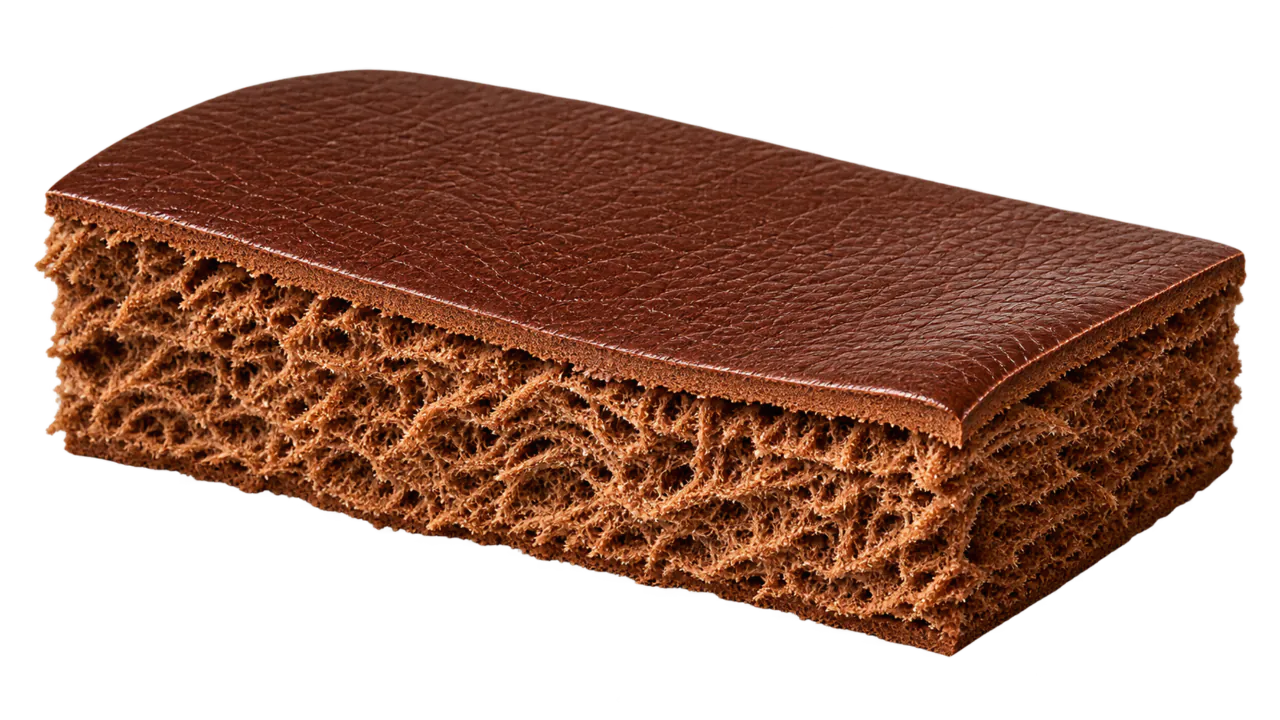
Cross-section through leather showing the dense fibre structure beneath the smooth finished surface
Interlocked fibre under a thin finished surface. A tear goes through both.
Four kinds of opening

Not all of them are the same repair

People call all four a tear, or a rip. The difference decides whether anything has to be bridged.
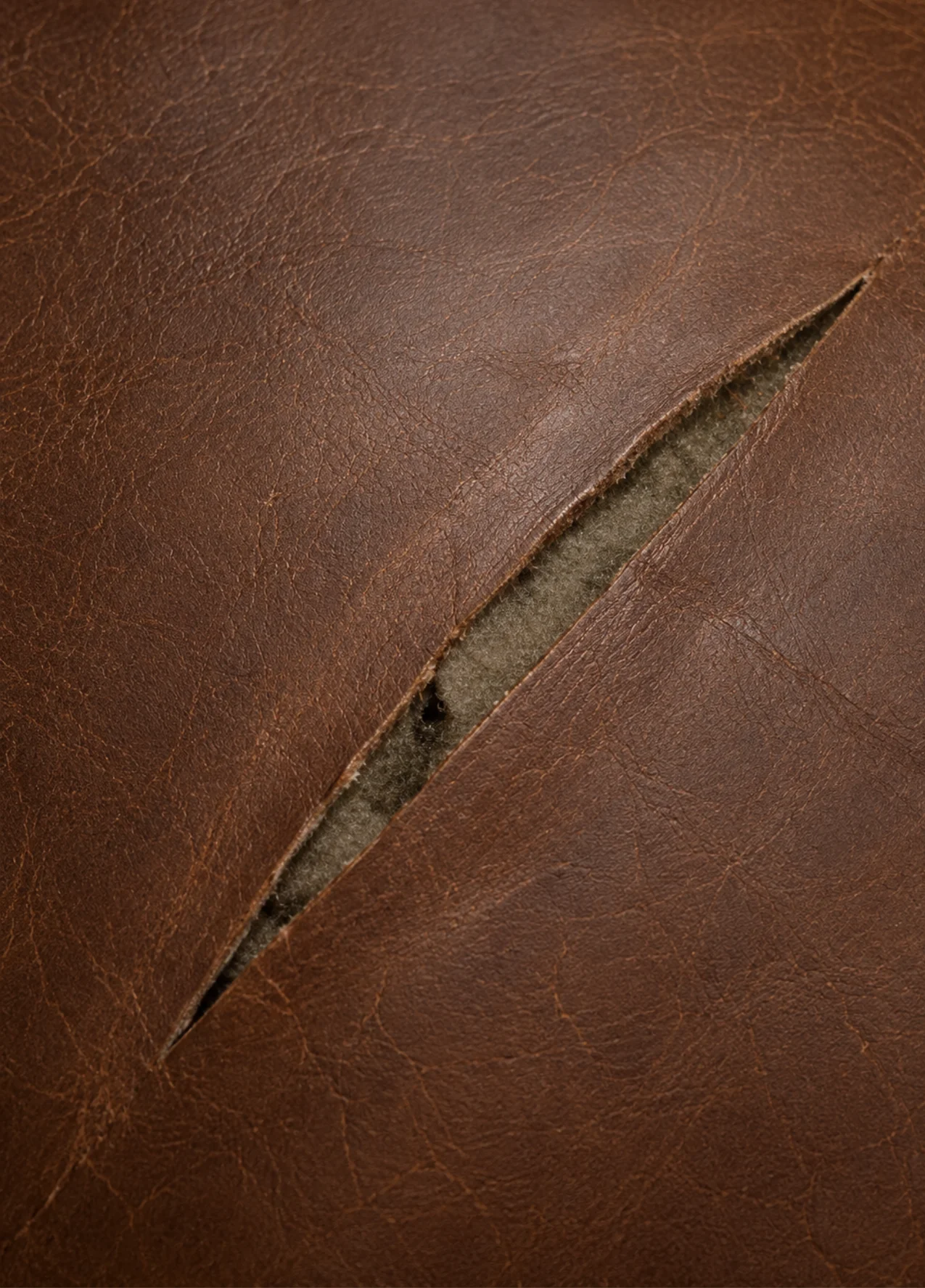
A clean straight cut in tan leather upholstery with the edges still meeting
Clean cut

A blade, and nothing missing

Straight edges that still meet. Nothing was lost, so the sides are drawn together over a backing — of the four, this is the one that disappears.
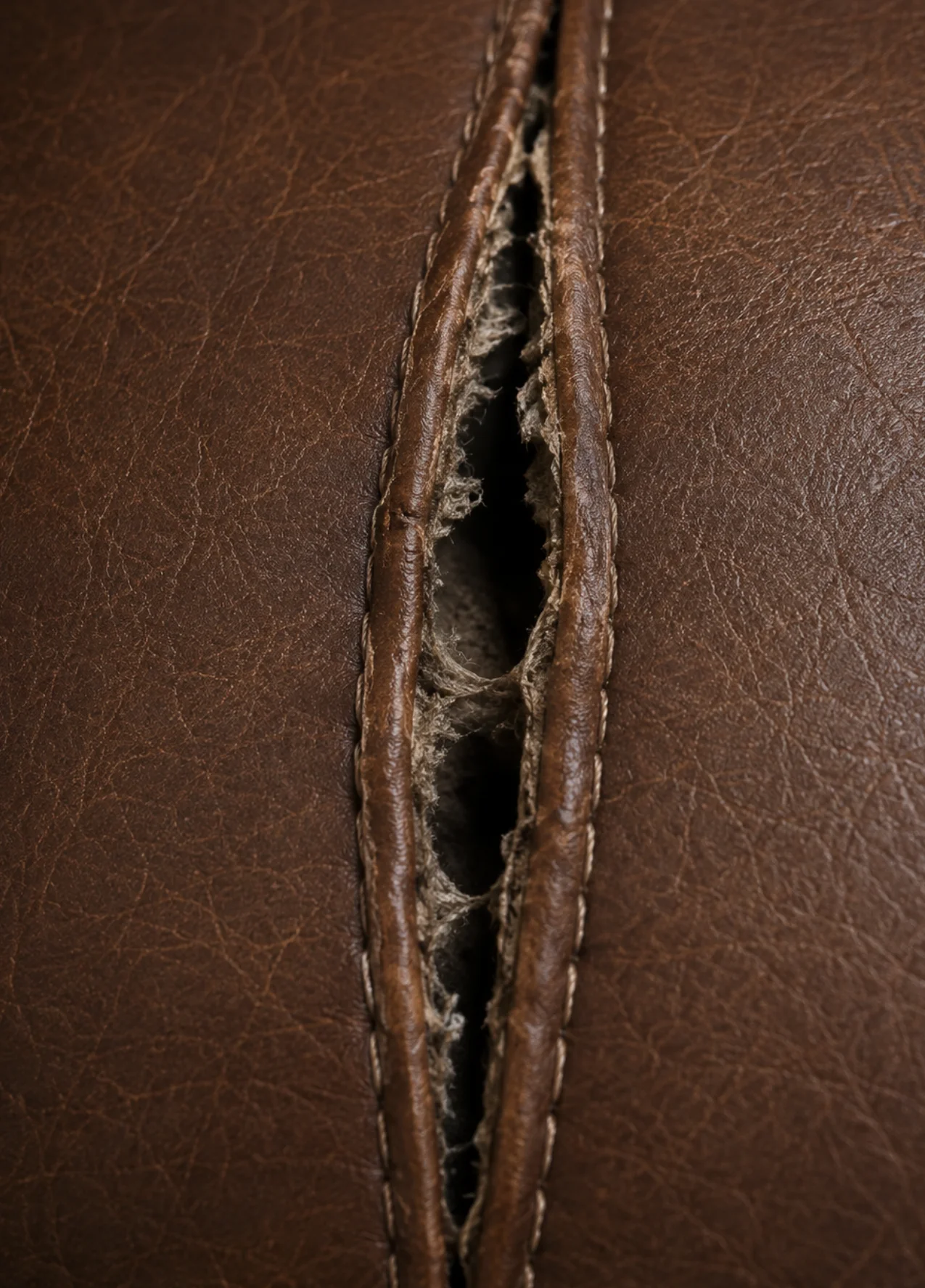
An open seam on dark leather upholstery where the stitching has burst and the panels have separated
Burst seam

The thread failed, not the leather

The panels either side are sound. They are re-joined along the line they were cut for: stitched where a needle reaches, bonded where it cannot.
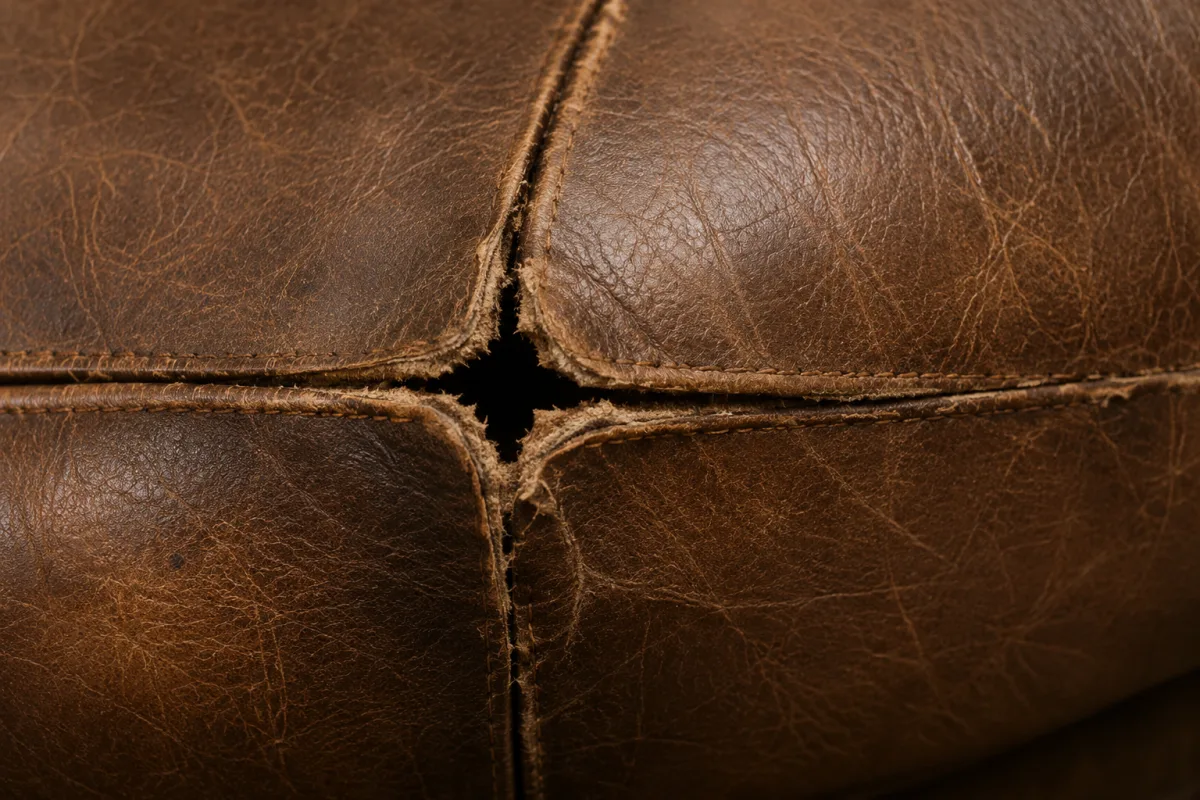
A puncture hole in brown leather upholstery at the junction of two seams
Puncture or hole

Something took material with it

Not enough leather is left to pull together, so the hole is bridged and the grain rebuilt across it.
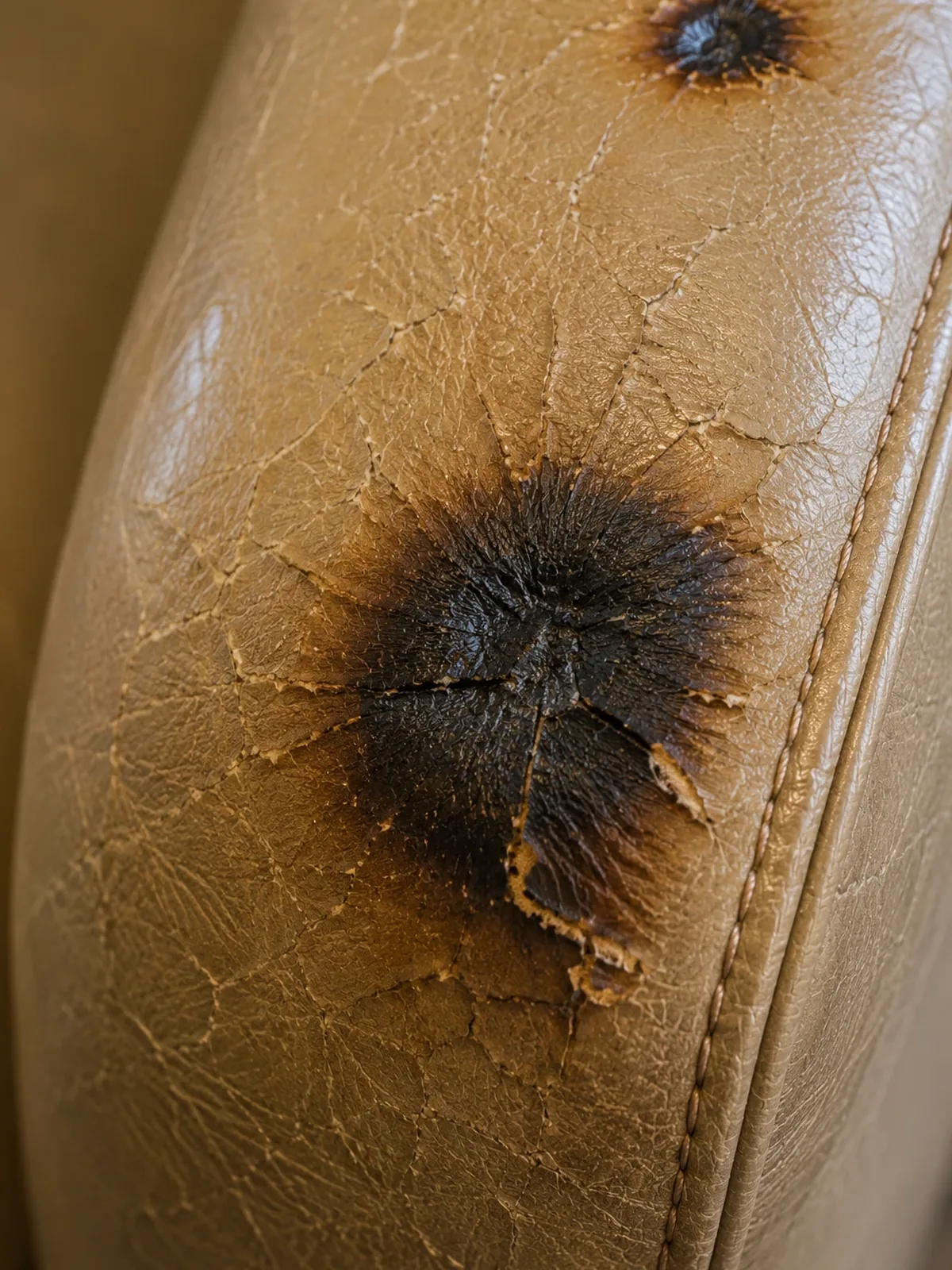
A burn hole in tan leather upholstery with a hardened scorched rim around the opening
Burn hole

The rim has been cooked hard

Heat shrinks and stiffens the edge. A burn has its scorched rim cut back to sound leather first, or the repair sits on a brittle ring.

A worked example

A tear beside a button, start to finish

A deep-buttoned seat back, opened along a flex line. Most leather tear repair runs like this, in the room.
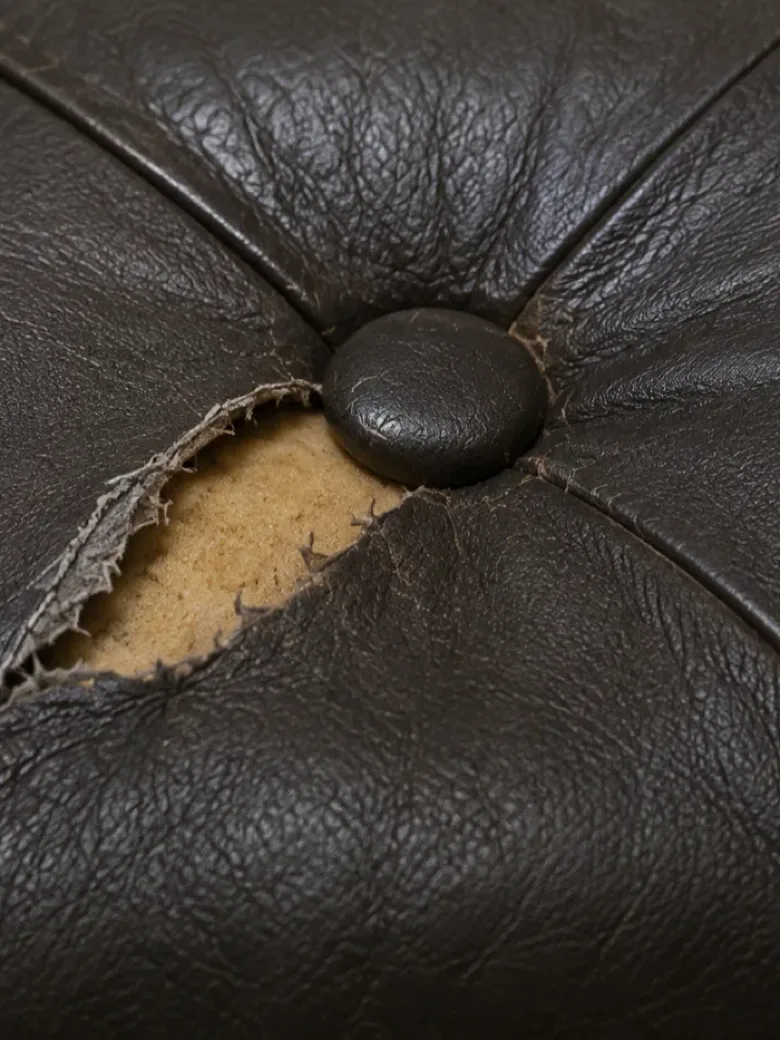
An open tear beside a button on dark buttoned leather upholstery with foam visible inside

Read the opening

Missing material or brittle edges decide whether it closes or has to be bridged.
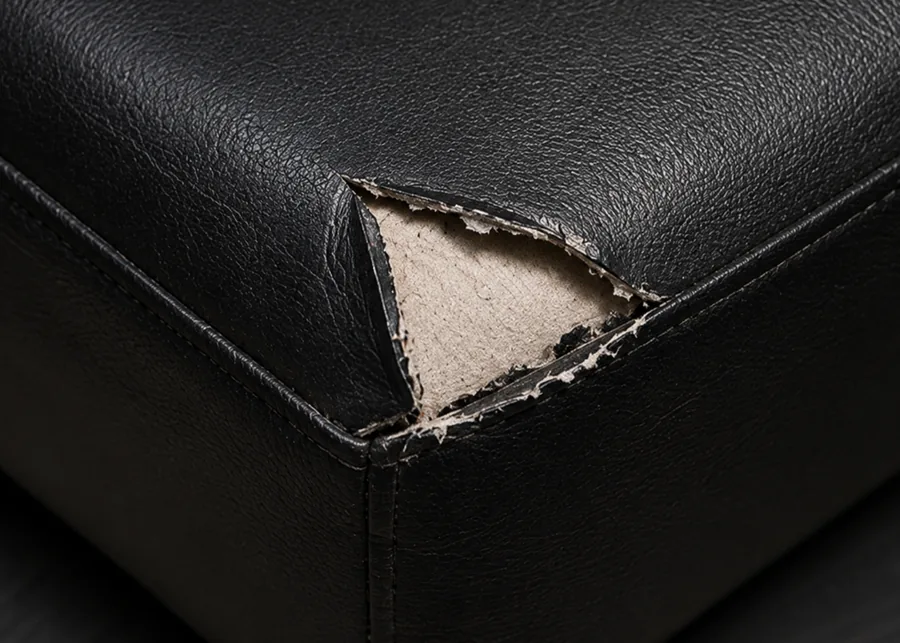
A corner tear in upholstery held open to show the backing layer behind the surface material

Support it from behind

Backing goes in through the opening and is bonded under both edges.
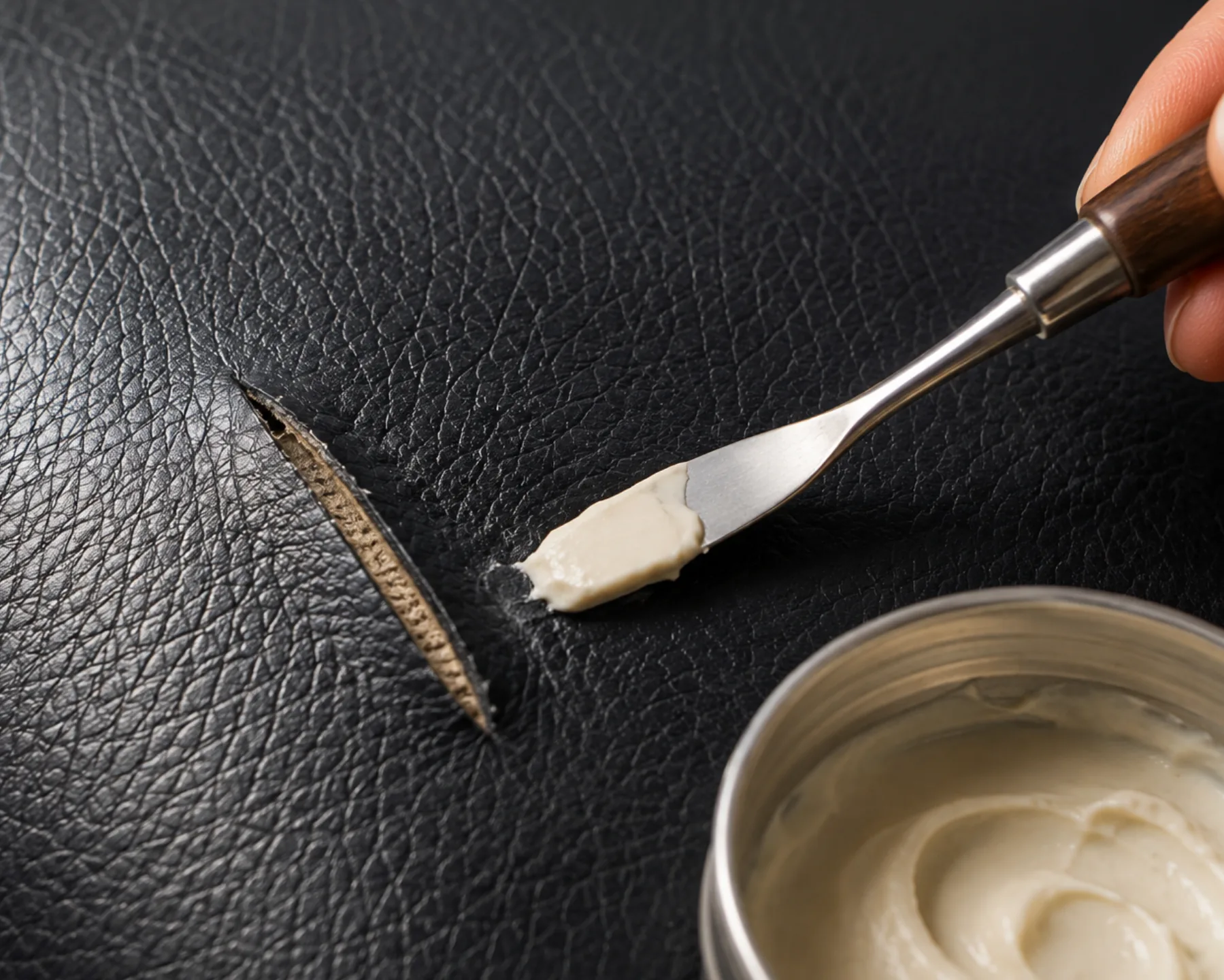
A flexible filler being drawn across a supported cut in leather with a spatula

Build and grain the surface

Flexible filler in thin passes, then the panel's own grain pressed back in.
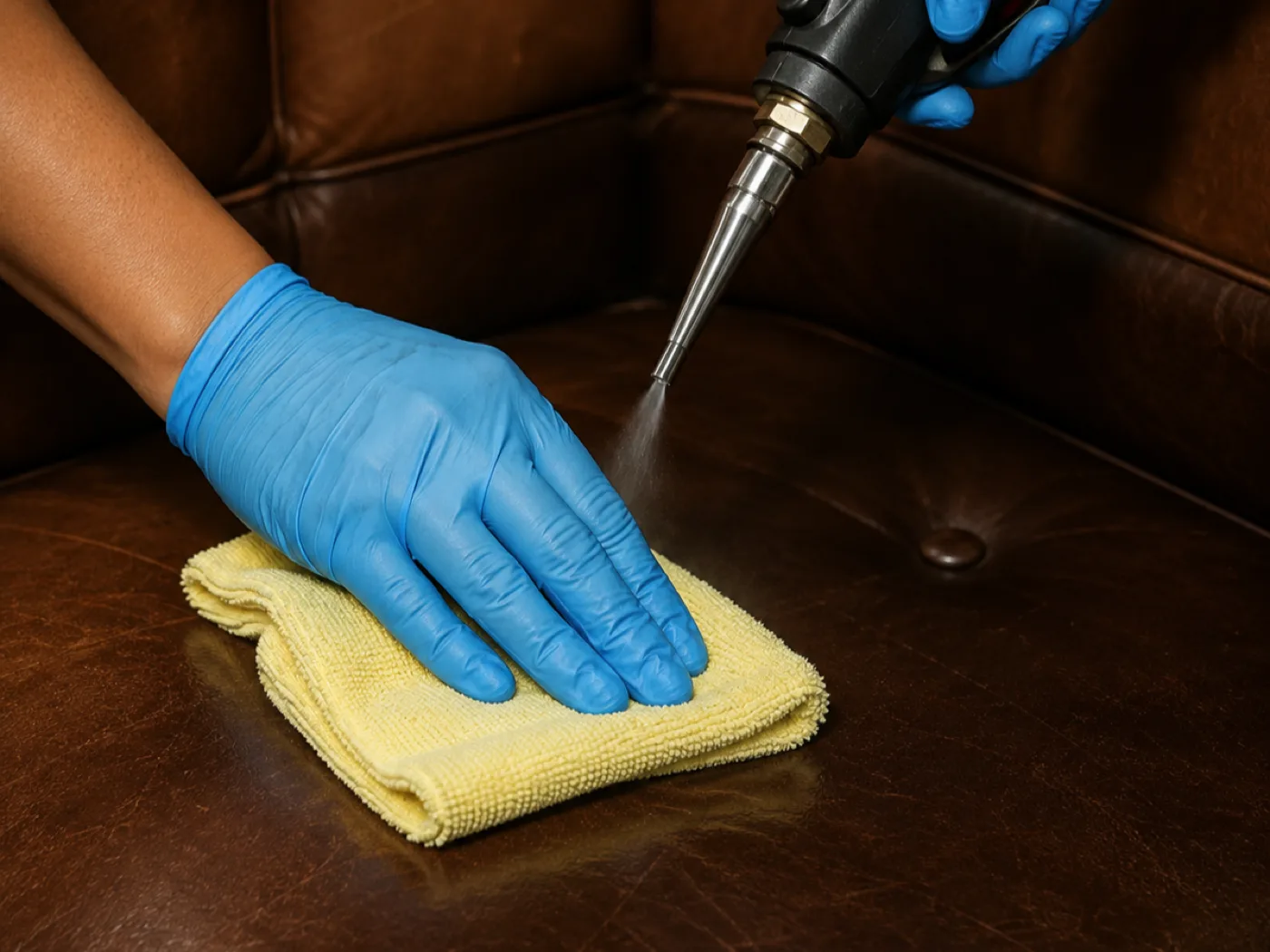
Colour being sprayed onto a brown leather panel to match the repair to the surrounding leather

Colour, then seal

Matched to the piece as it has aged, then sealed at the sheen around it.

Where it ends up

Not everything torn should be repaired

The question is rarely how long the tear is, but whether the leather around it can still hold a join. Leather tear repair is one of three answers, and we will tell you which.
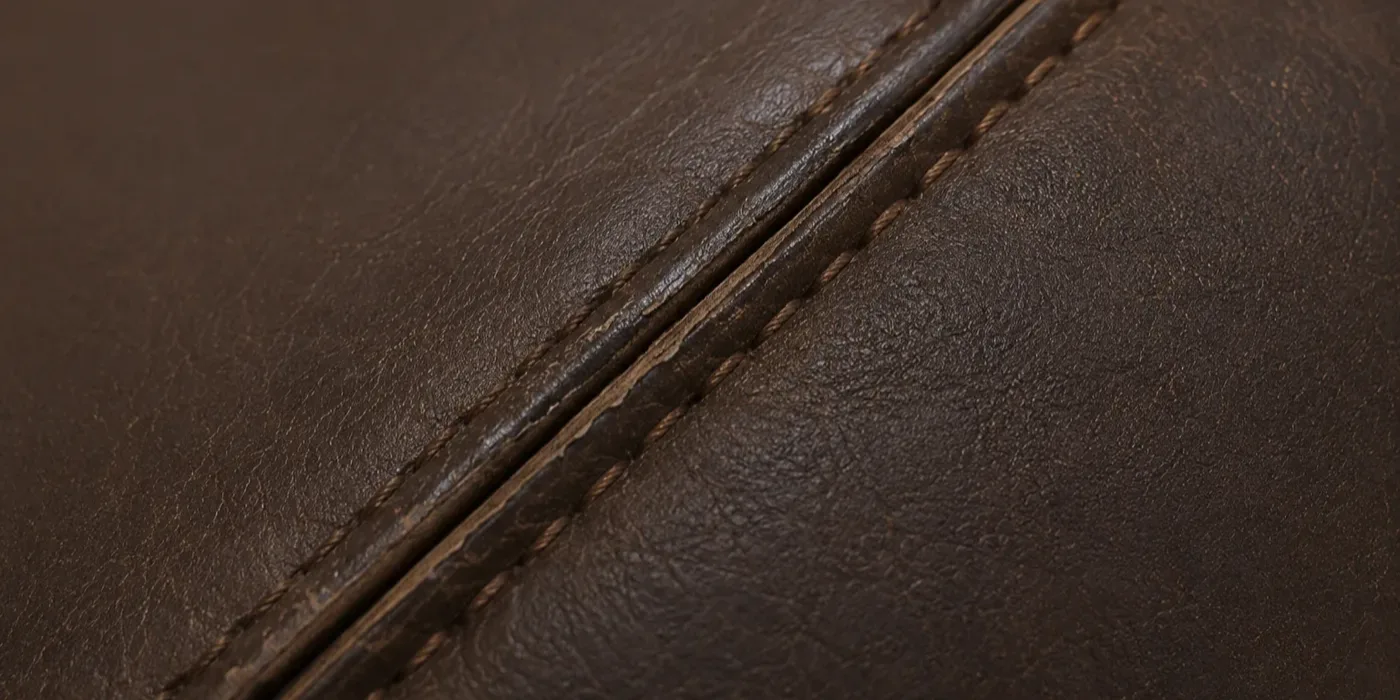
A restored seam on brown leather upholstery, closed and matched to the panel Repaired in place

Sound leather around a single opening. Backed, built, grained and matched where the piece stands, booths included.
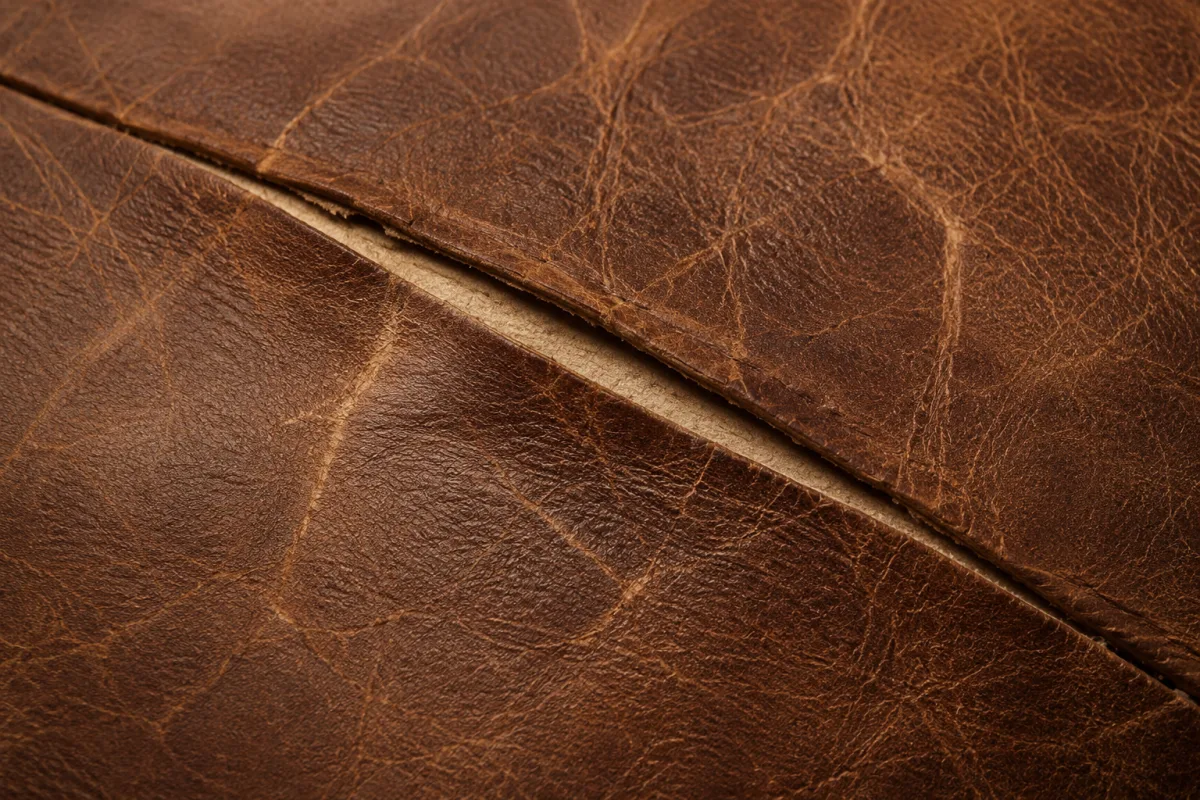
A long split running down a brown leather panel on upholstered furniture Panel replaced

A split running the length of a panel, or several openings on one face. The panel comes out and a new one goes in to the original pattern.
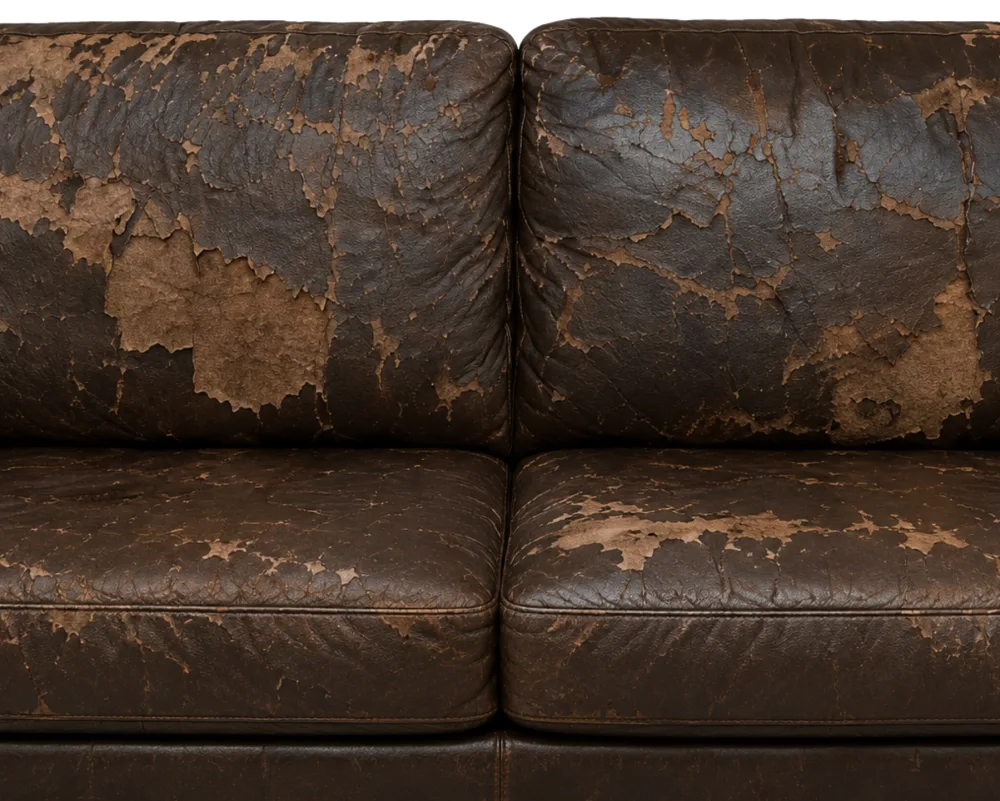
A brown leather sofa with the surface failed and lifting across every cushion and back panel Reupholstered

When the hide has gone dry and brittle across the piece, a repair holds and the leather beside it opens next. That is a reupholstery job, and we will say so.

Runs of matching seating are quoted together — see bulk projects.

Closed and matched

What a closed tear looks like

Same crop, same light. The test is whether you can find the line without being told where it was.
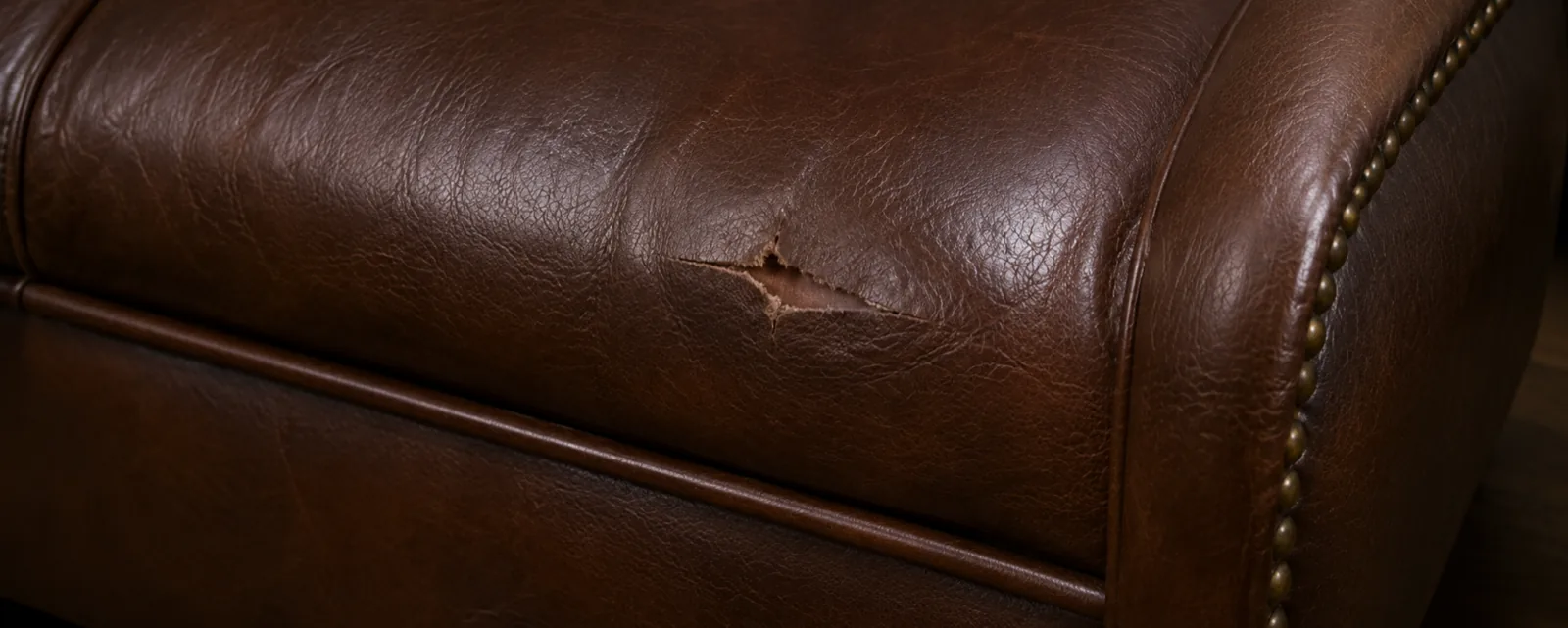
Brown top-grain leather upholstery with an open tear beside a stitched seam Before
The same brown leather panel after the tear has been closed, grained and colour matched After
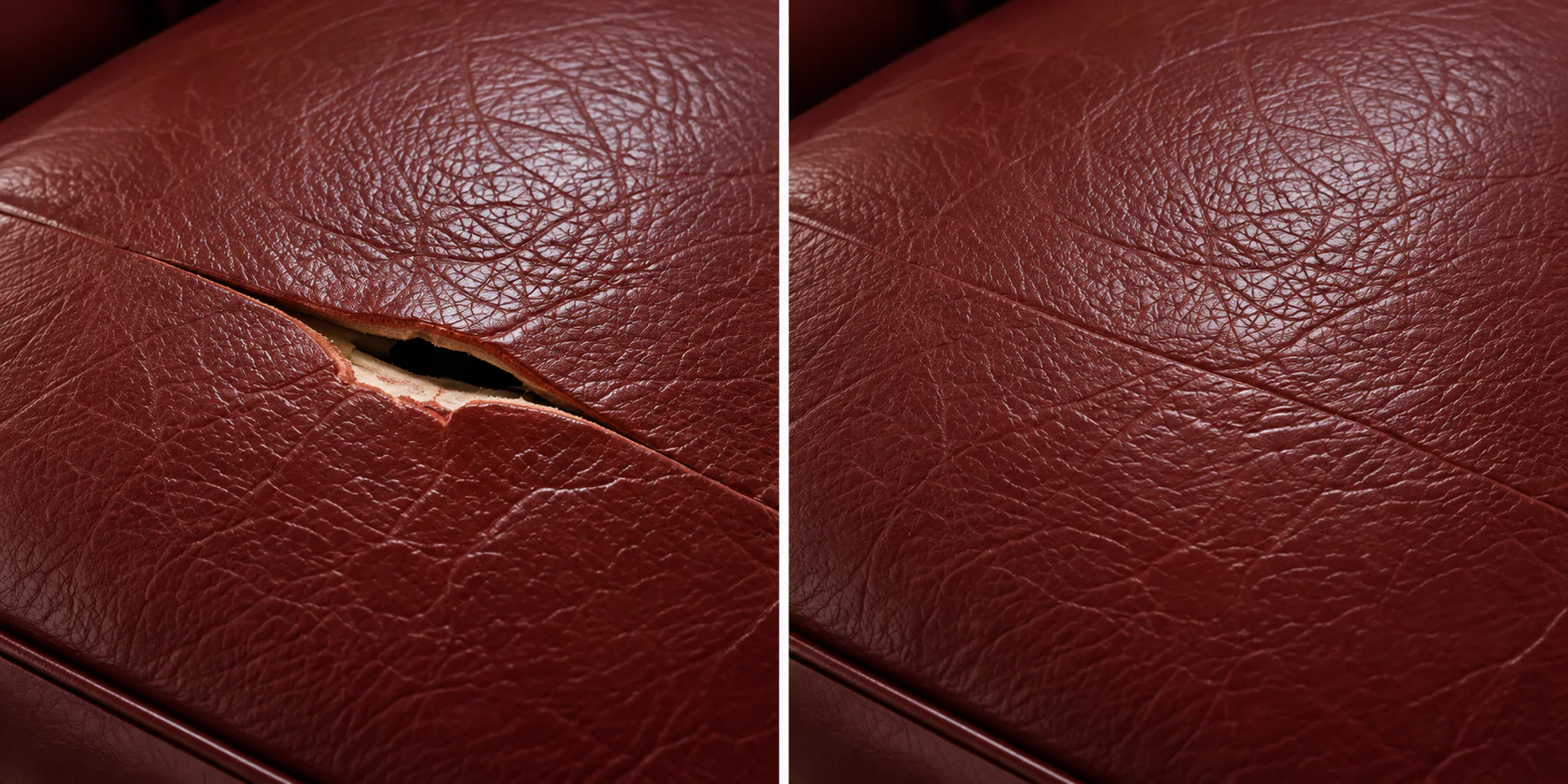
Oxblood leather seat with an open hole on the left and the closed, grain-matched repair on the right
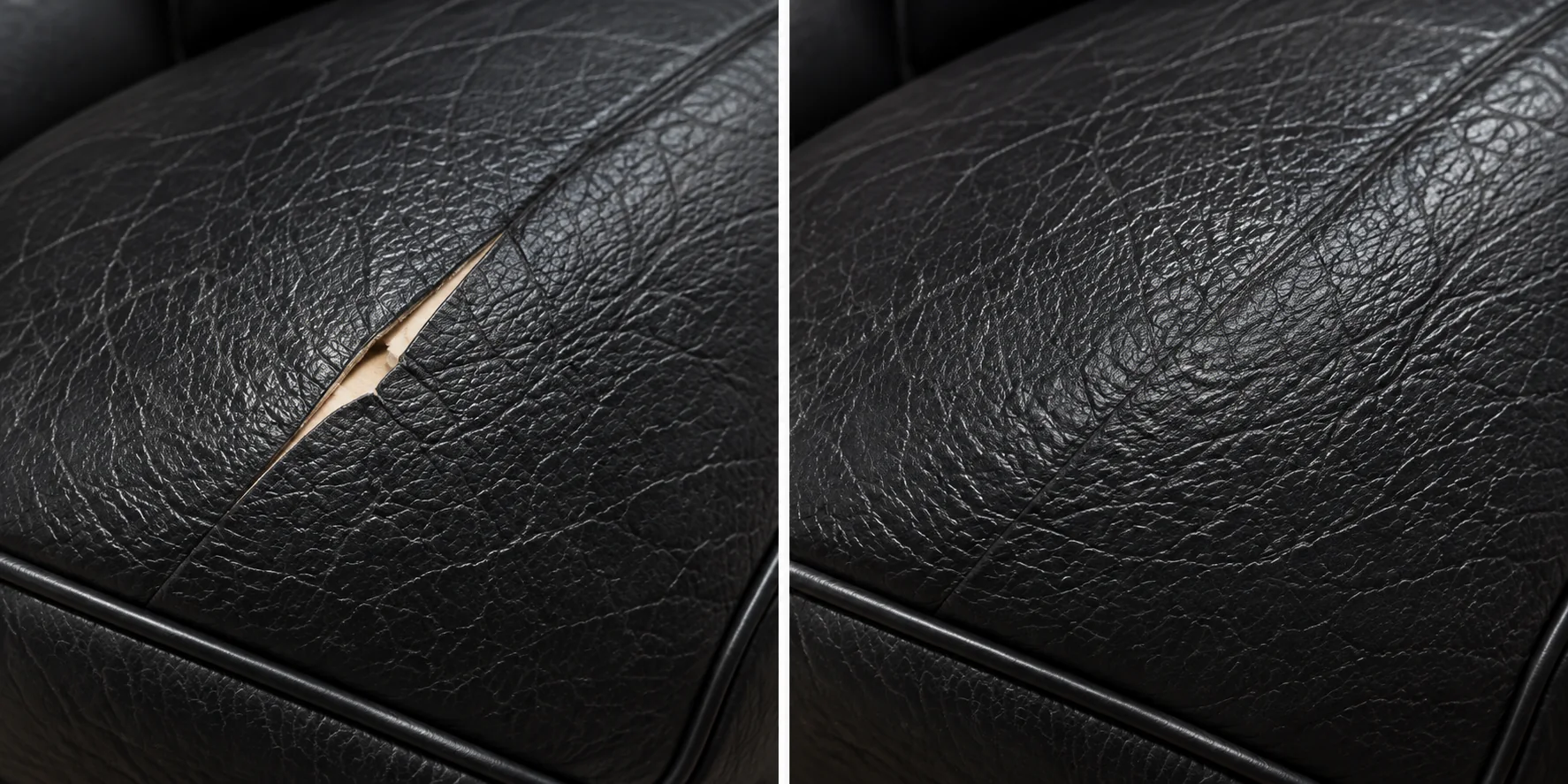
Black leather panel with a diagonal slit on the left and the same panel closed and matched on the right
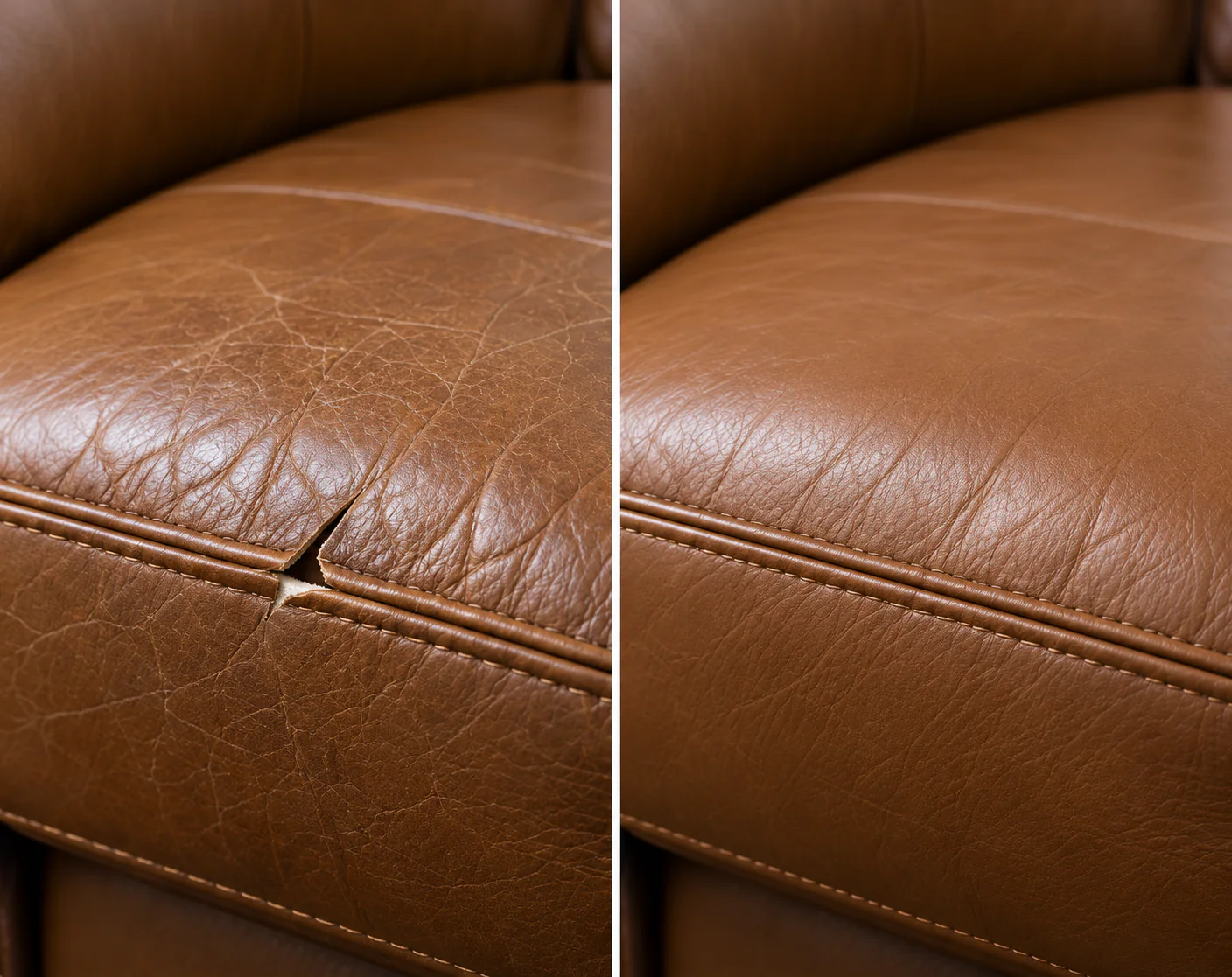
Caramel leather chair seat with a short cut above the welt on the left and the repair on the right
Dark brown leather arm with a star-shaped tear on the left and the rebuilt surface on the right
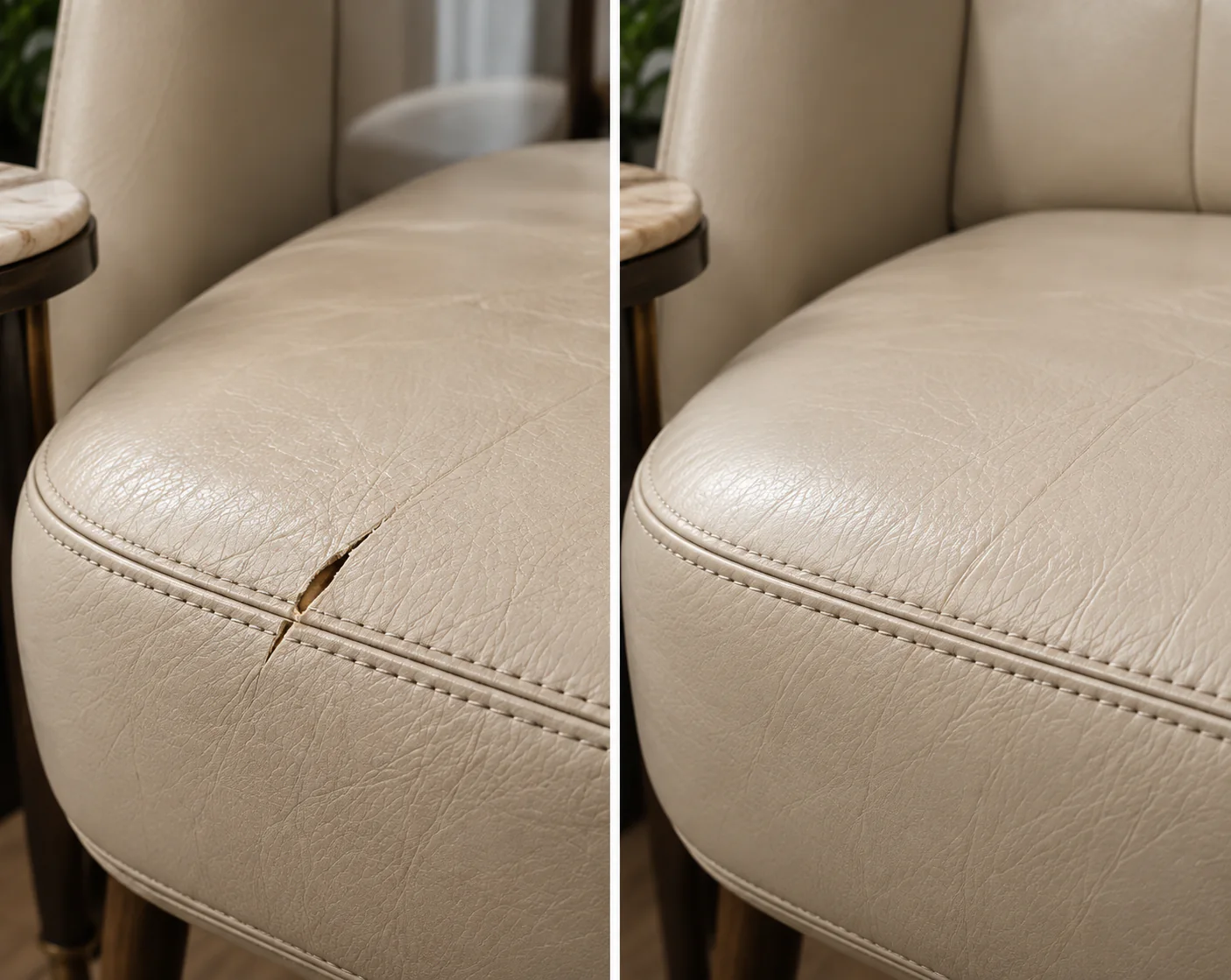
Cream leather chair seat with a small opening above the welt on the left and the matched repair on the right
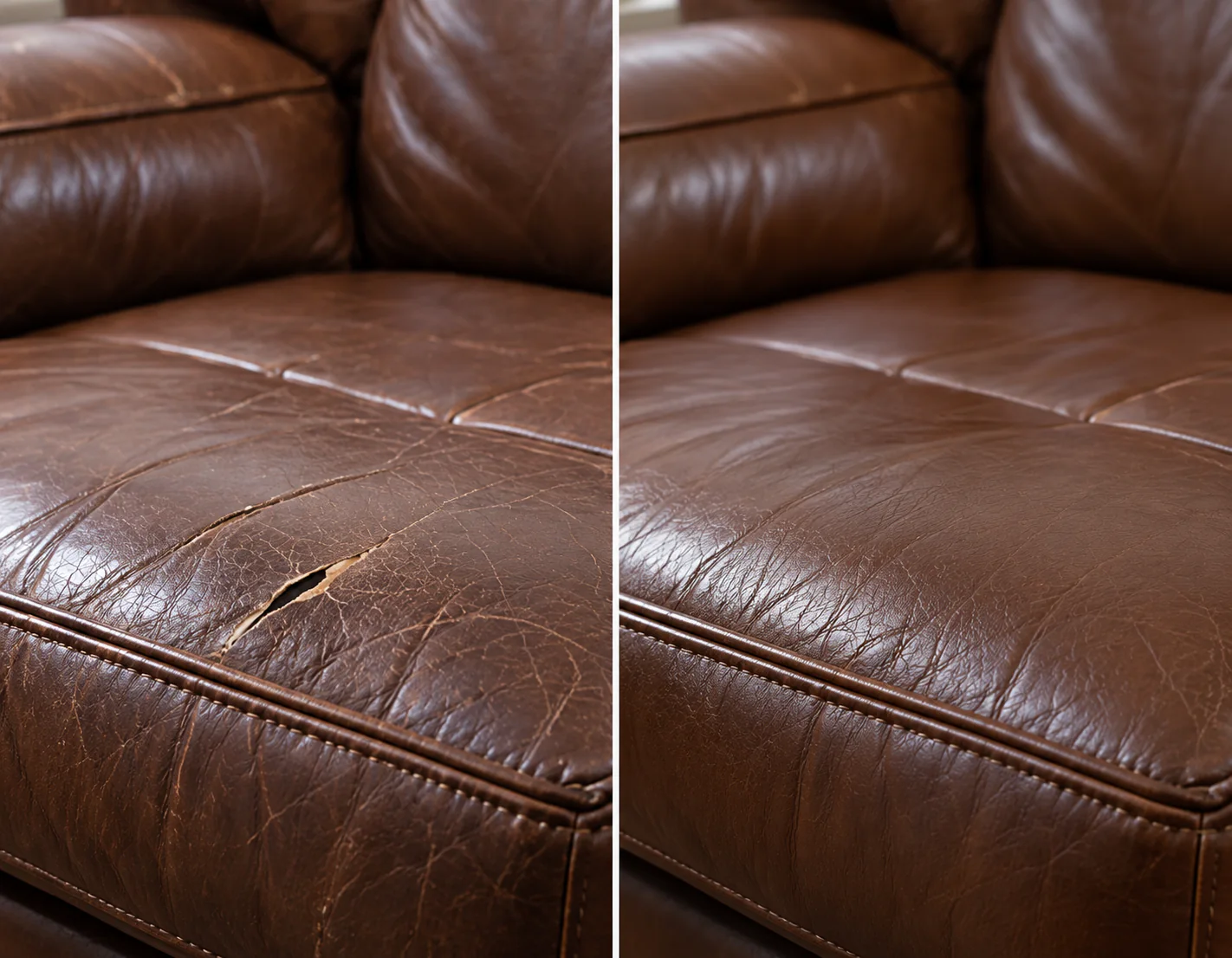
Brown leather sofa seat with a hole beside the welt on the left and the closed repair on the right
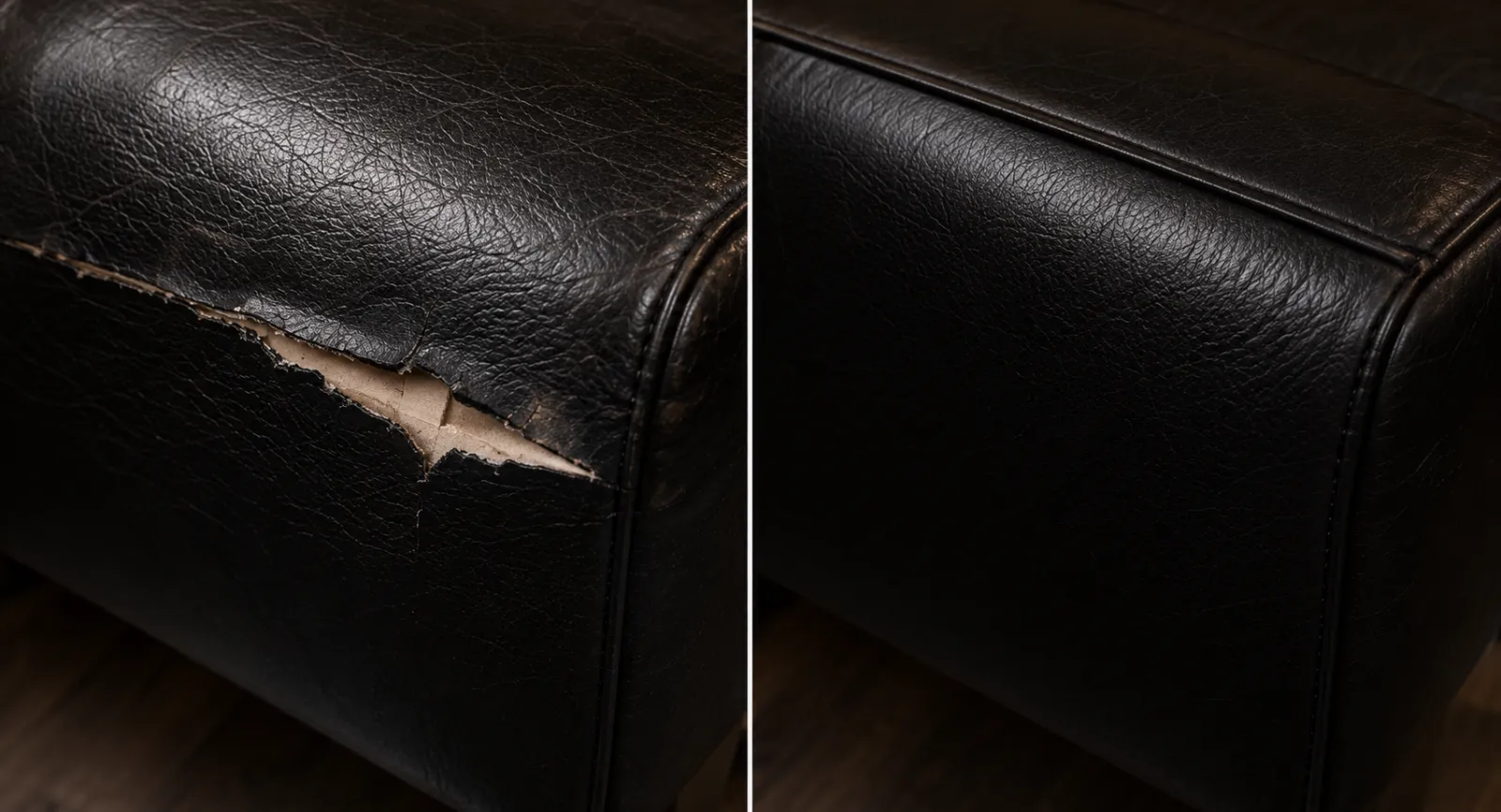
Bench corner in dark leather, torn on the left and closed and recoloured on the right
Bench corner, closed and carried out to the seam.
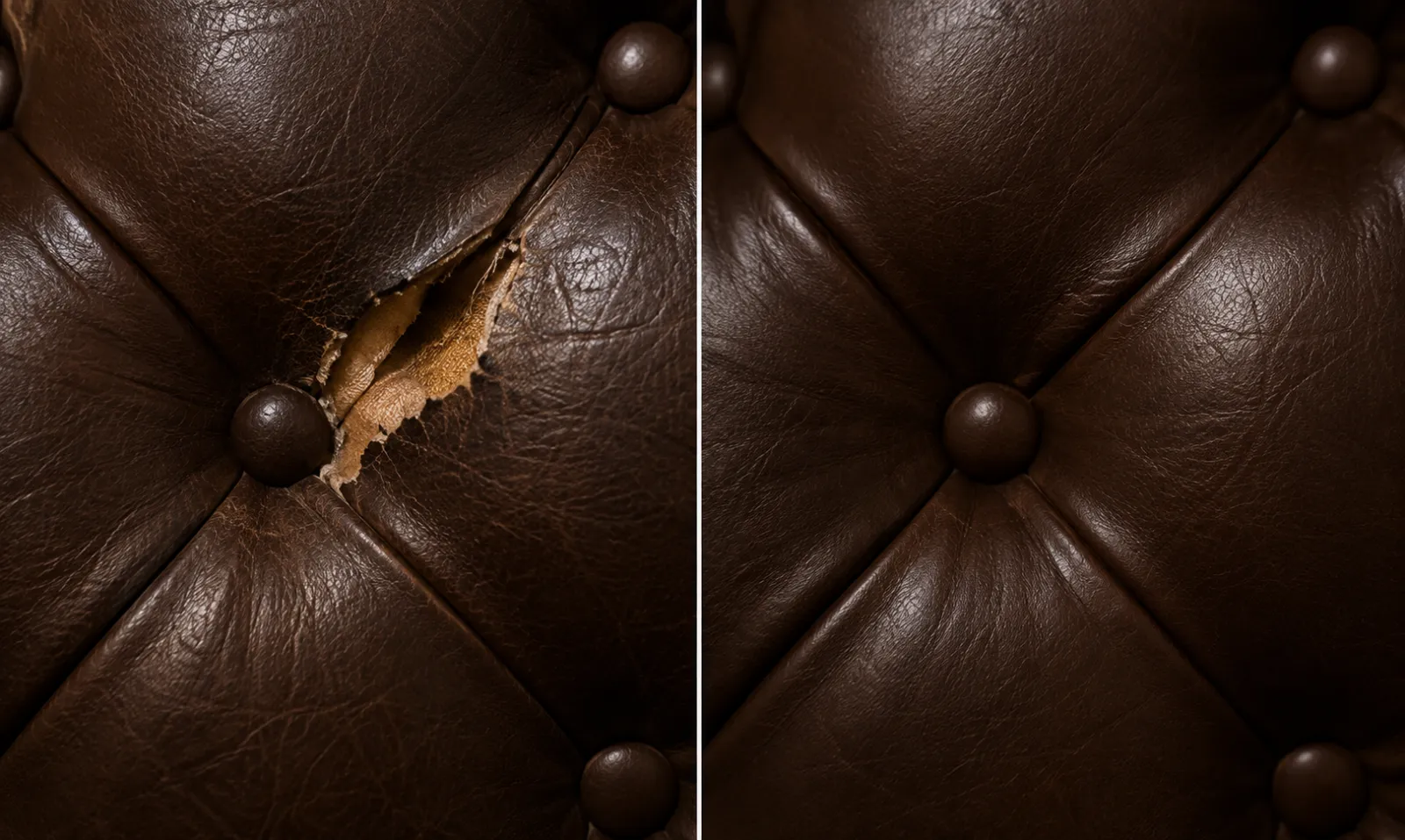
Tufted brown leather seat back, torn beside a button on the left and repaired on the right
Tufted back, backed and grained before any colour went on.
leather tears and holes repair
Questions we get

Before you send photos

Can a tear in leather be repaired?

Usually. What decides it is not the length but whether the leather around it is sound. Hide that crumbles when you press it is not repairable.

Will the repaired tear be invisible?

On pigmented leather a closed tear normally disappears at arm's length. On uncoated aniline there is no finish to hide the join, so close is the honest target.

How long does a leather tear repair last?

Longer than the leather around it, if it was supported from behind. Repairs come back when the opening was filled from the front with nothing underneath. Dry hide opens again beside the repair, so conditioning is part of keeping it closed.

Can you repair a tear along a seam?

Yes, and it is usually the better outcome. The thread failed rather than the leather, so nothing has to be bridged.

Do you repair tears in faux leather and vinyl?

Yes, but differently. On faux leather the coating is the material rather than a layer over hide, so the opening is bridged and re-grained.

Does the furniture have to leave for a tear repair?

Most tear work is finished where the piece stands. Fixed booths and banquettes are worked in place, overnight where the room opens in the morning.

Should I try a leather repair kit first?

On a small clean cut, sometimes. A kit gives you a stock colour, a stock gloss and no backing, so on anything that flexes the filler cracks out and leaves a ridge.

Send it over

Photograph the opening, and the panel around it

One close frame of the tear and one of the whole piece is enough to tell you which of the three yours is, and what leather tear repair involves.

Scroll to Top