
Claws always find the same corner
Fine drag lines, raised fibres, a puncture at the edge of a seam. We fill, re-grain and colour them out where the piece stands, in homes and offices across New York City, Long Island and New Jersey.
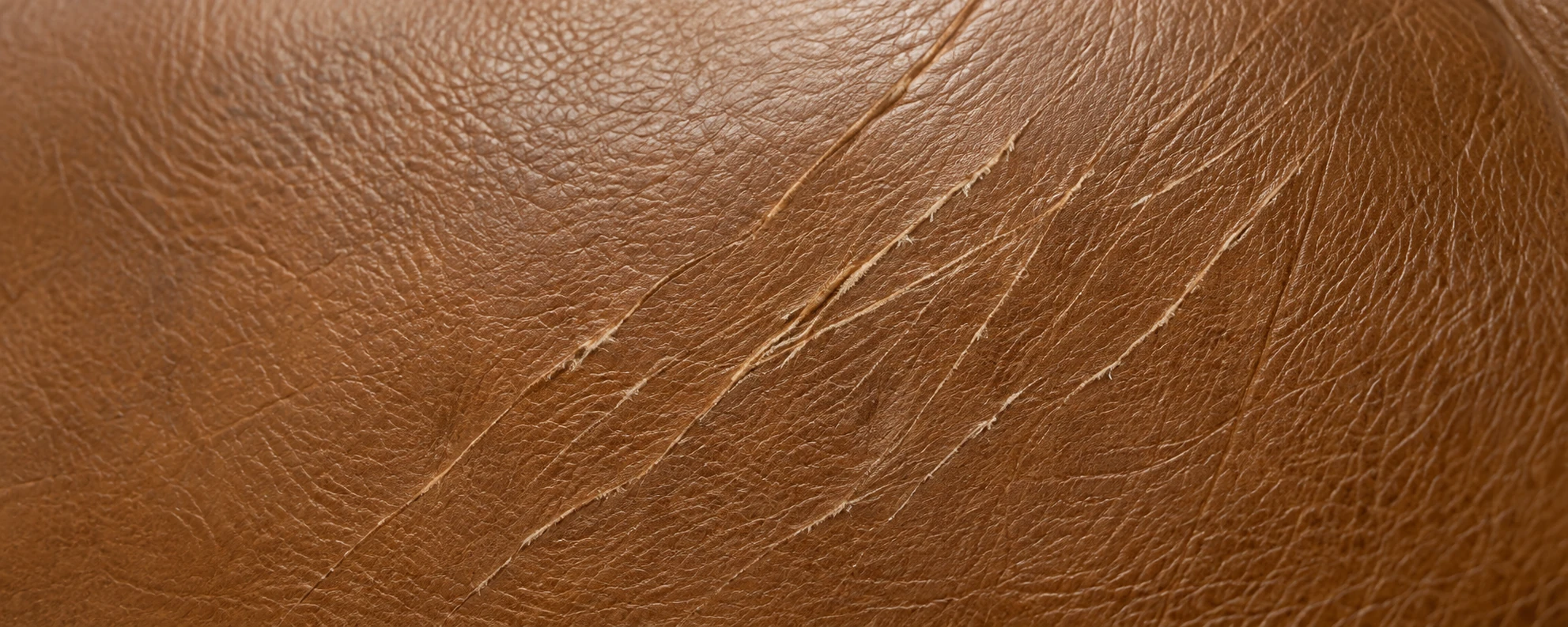
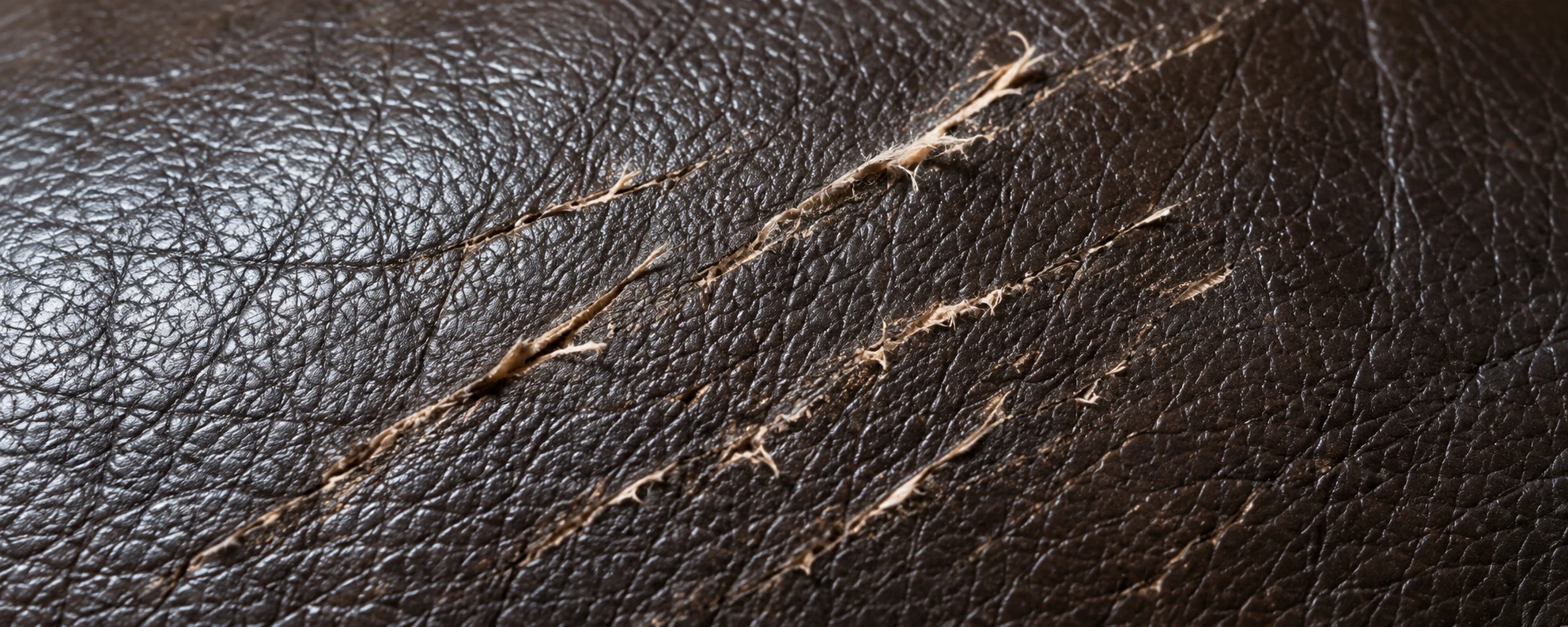
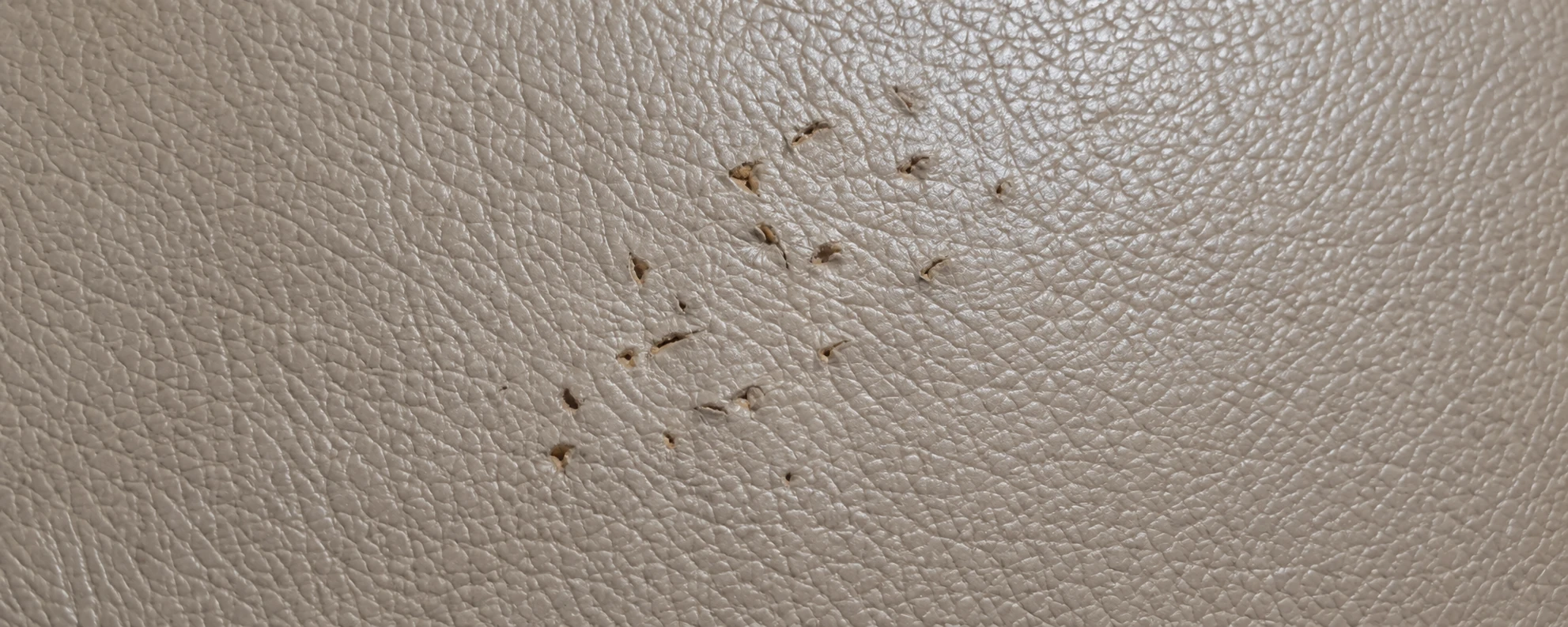
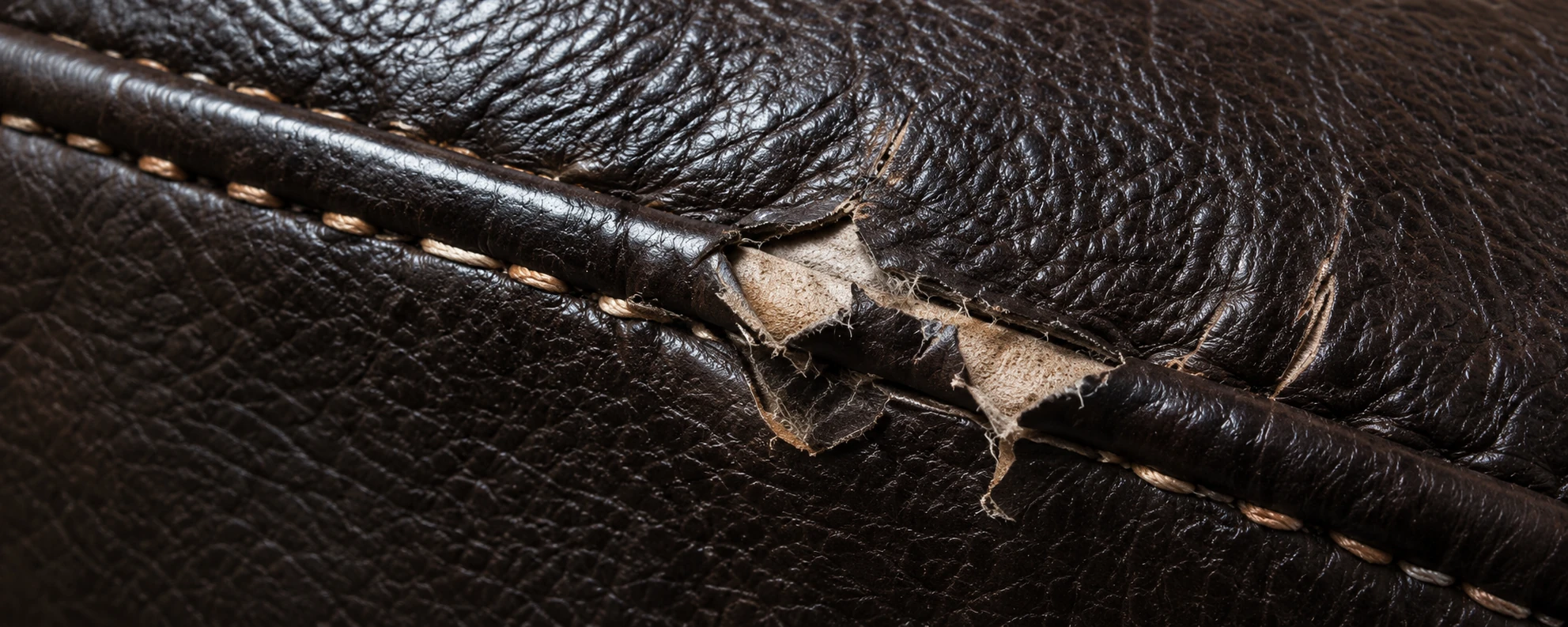
Does your leather look like this?
Six shapes cover nearly every claw job we take. Cat scratch leather repair begins by naming which one you have, because a line that sits in the finish and a hole punched through the hide are not the same piece of work.
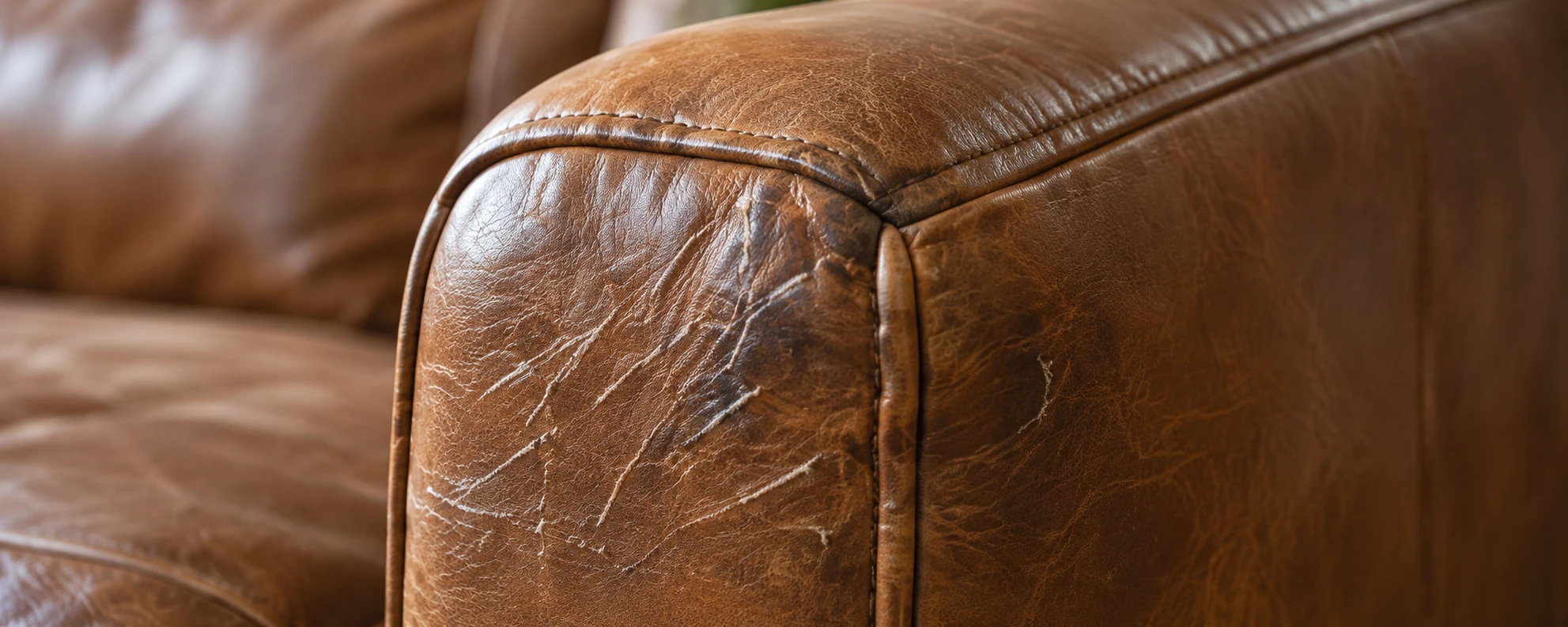
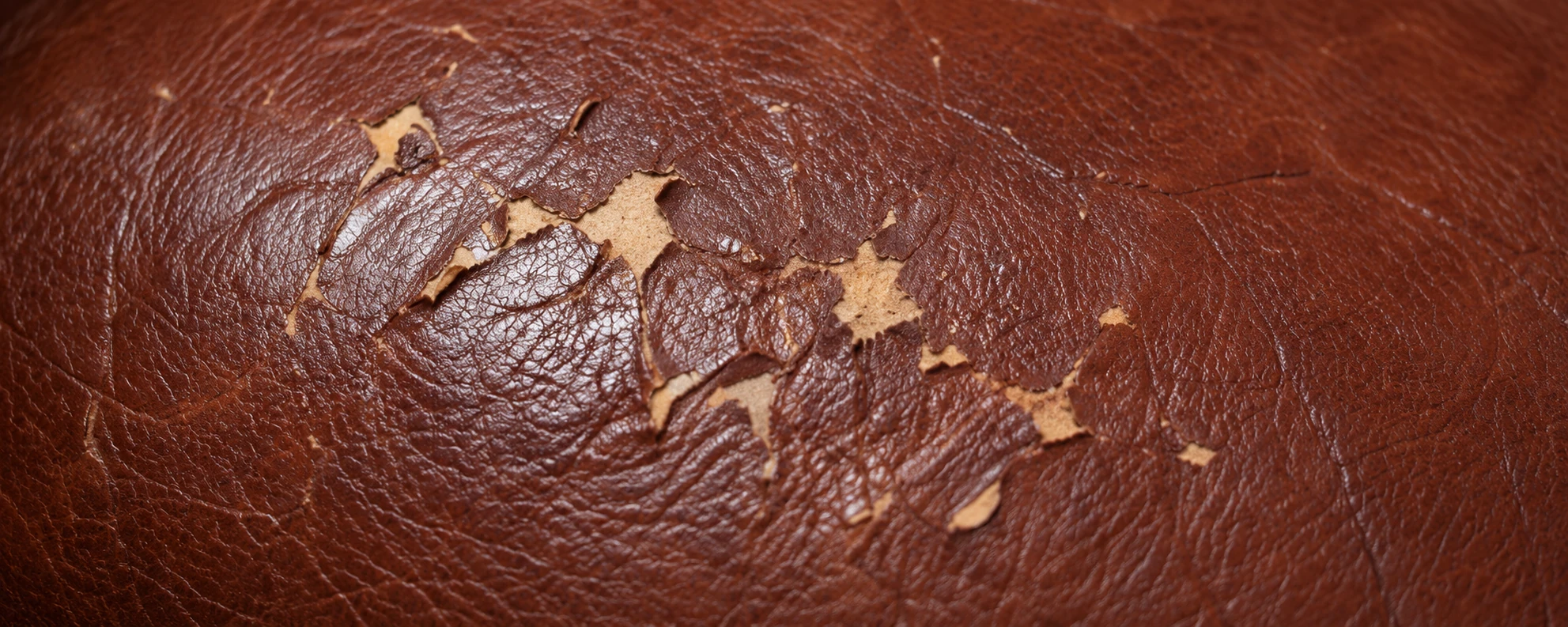
Can your leather be repaired?
Almost always. Depth decides the method, not the length of the mark, so run a fingernail across it and feel whether it catches. An arm that has been used as a post for years often needs all three answers at once.
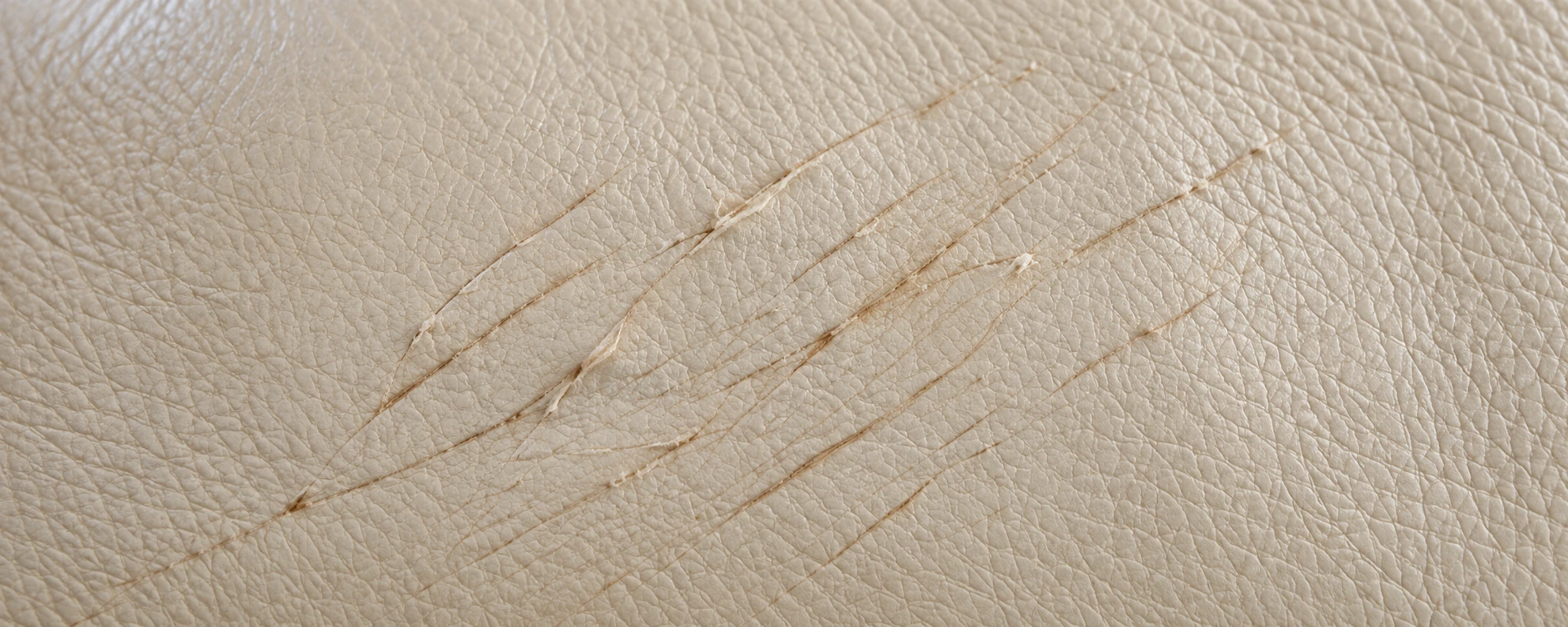
Surface repair
Light scratches sit in the coating. They are cleaned, warmed so the grain lies back down, and closed with a colour pass over the top.
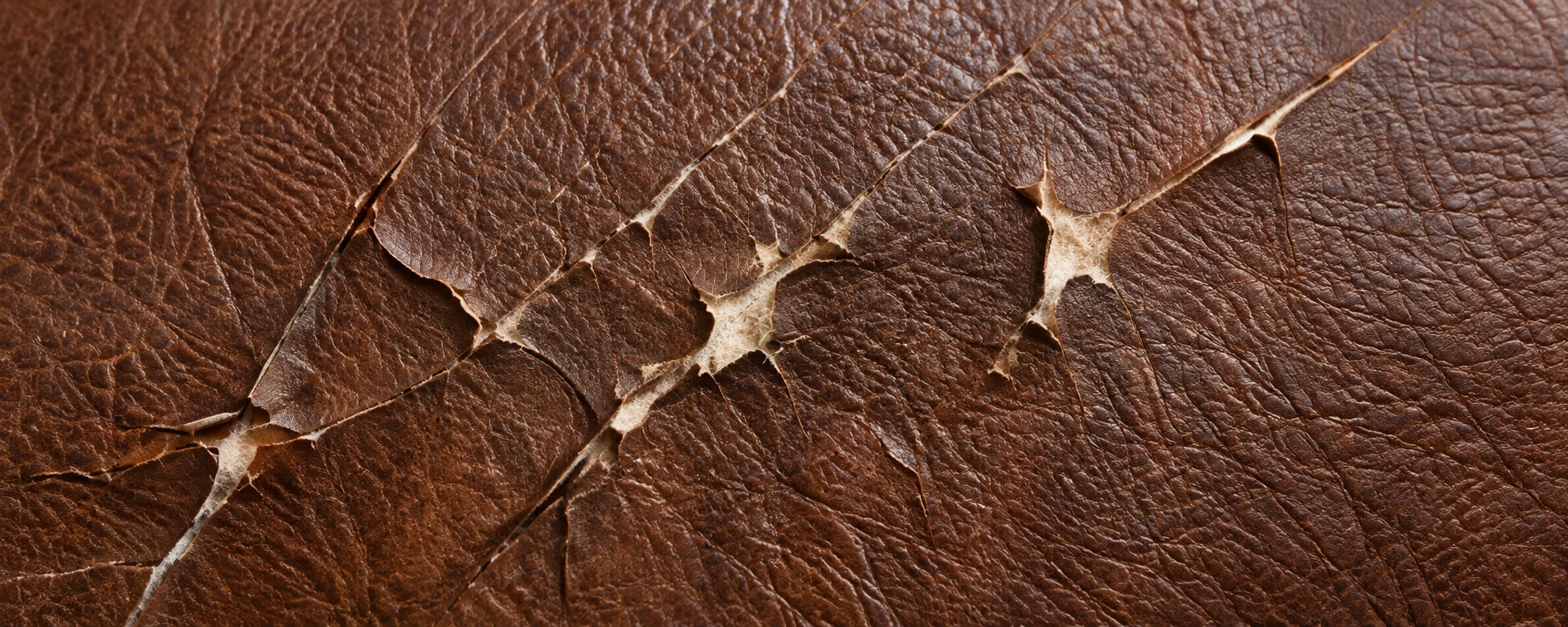
Deeper repair
Once claws are through the coating, the split is backed, filled in thin coats, levelled flush and re-grained before any colour goes near it.
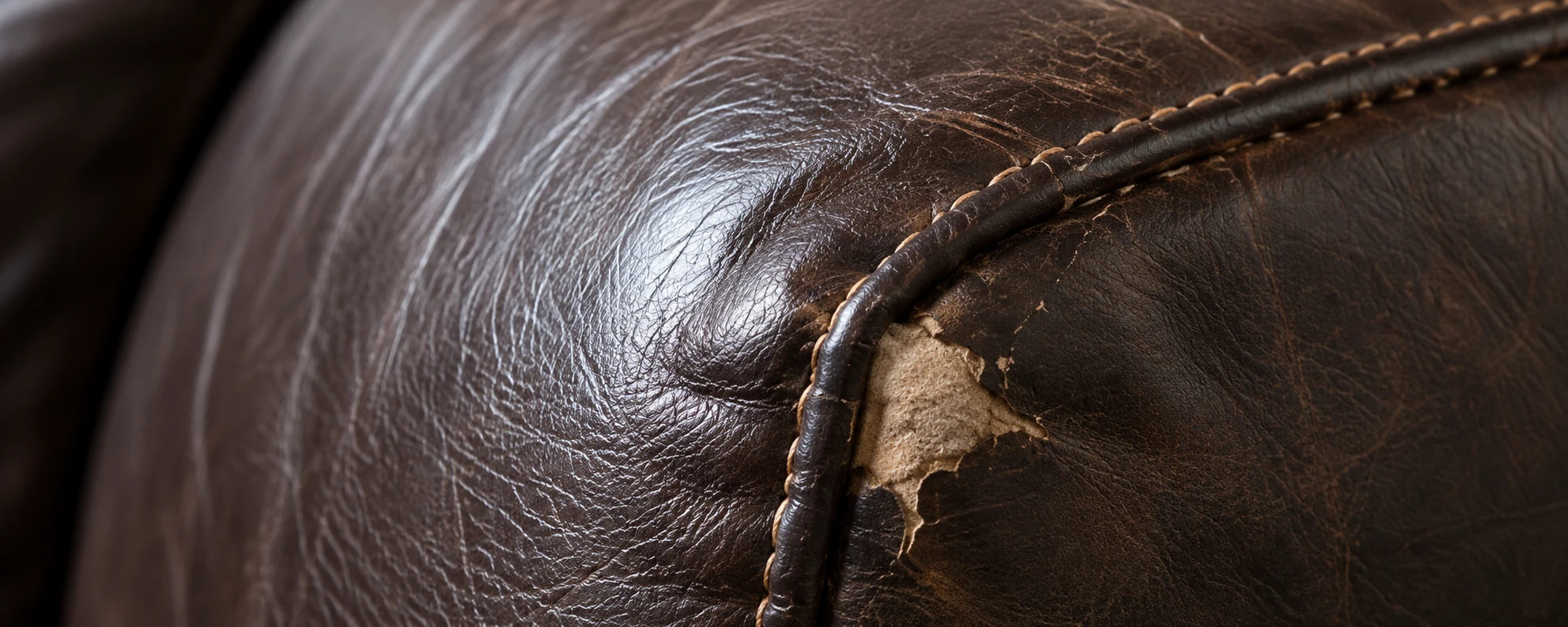
Panel replacement
When a corner is opened up past the size of a hand, filler stops being honest. We cut the section out and set matched leather in.
From scratches to a fresh finish
Four moves, one visit, all of it in the room the sofa lives in. Cat scratch leather repair does not need a workshop, and the piece is usable again the same evening.
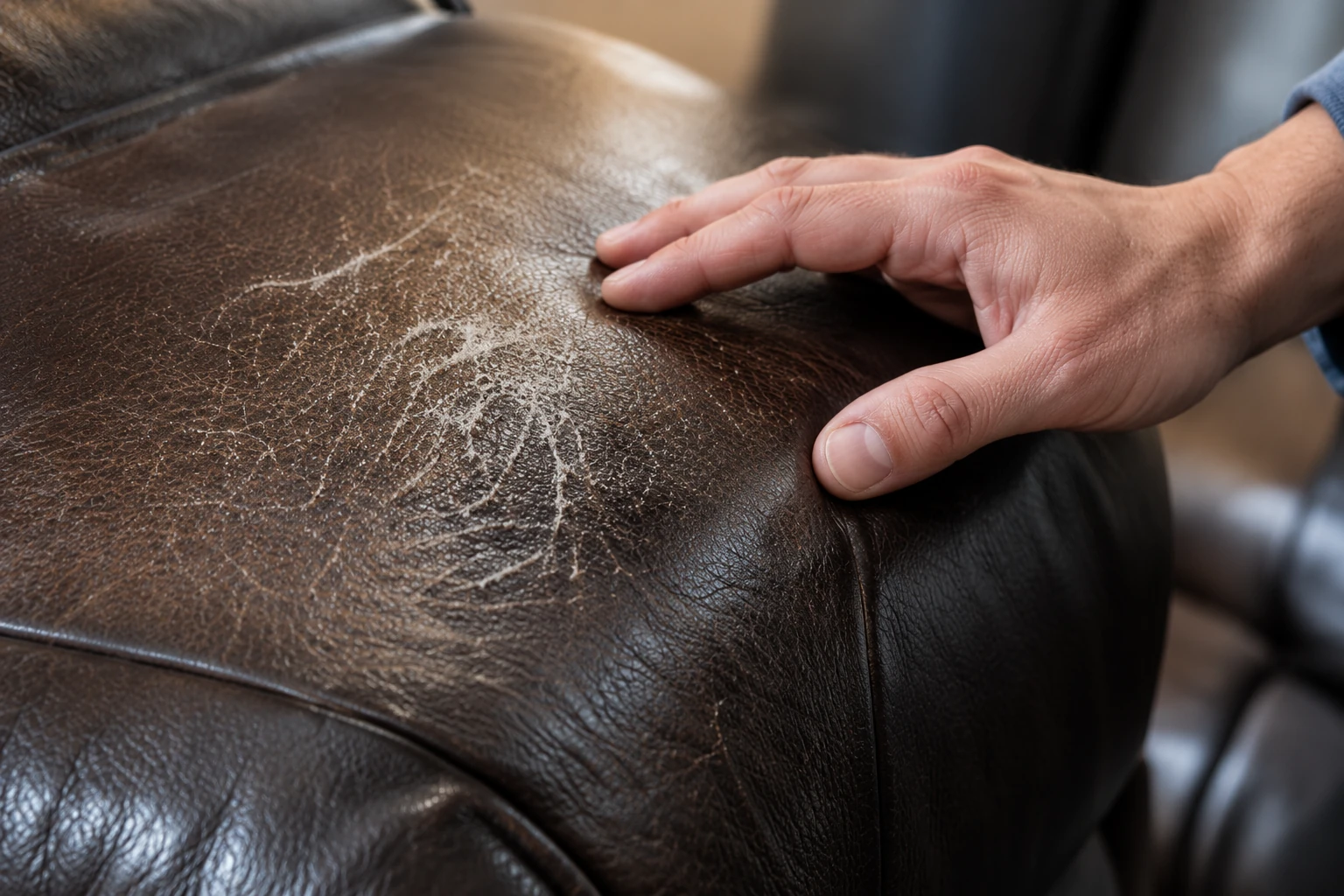
1 — Inspecting the damage
Every mark is graded by depth, not by how long it looks.
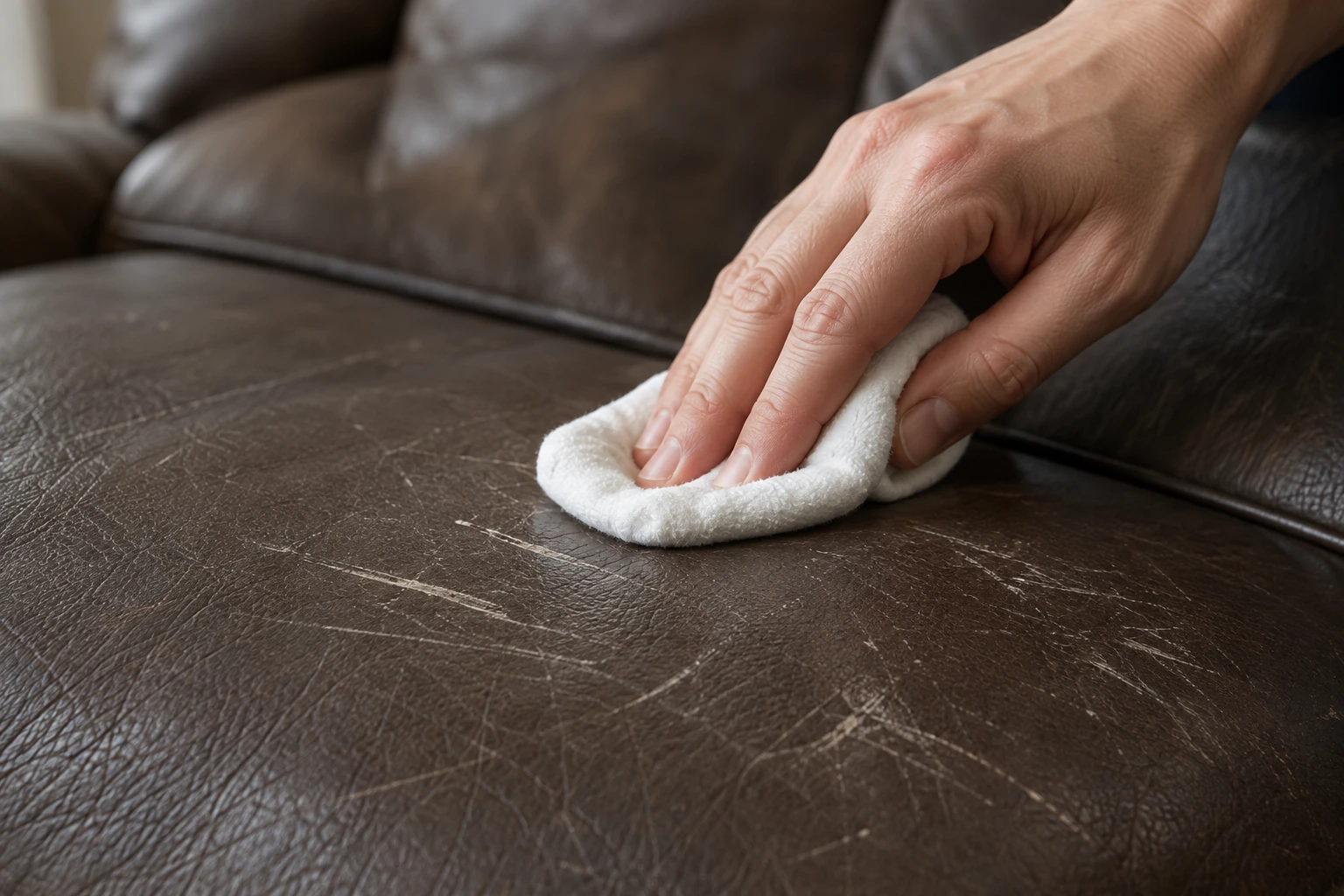
2 — Surface preparation
The area is cleaned and keyed so filler and colour have something to hold.
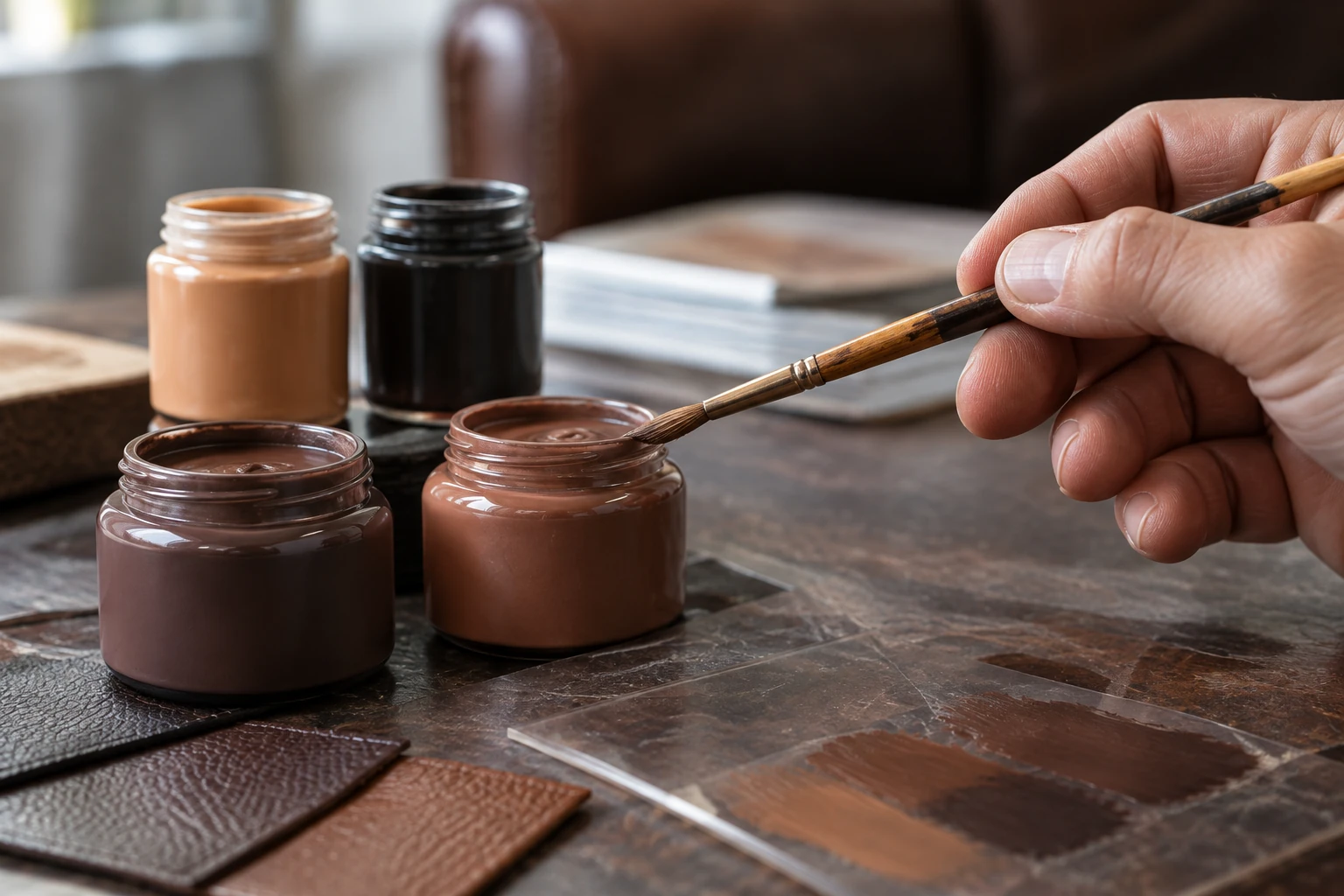
3 — Colour matching
Pigment is mixed against your own panel in daylight and proved on a hidden edge.
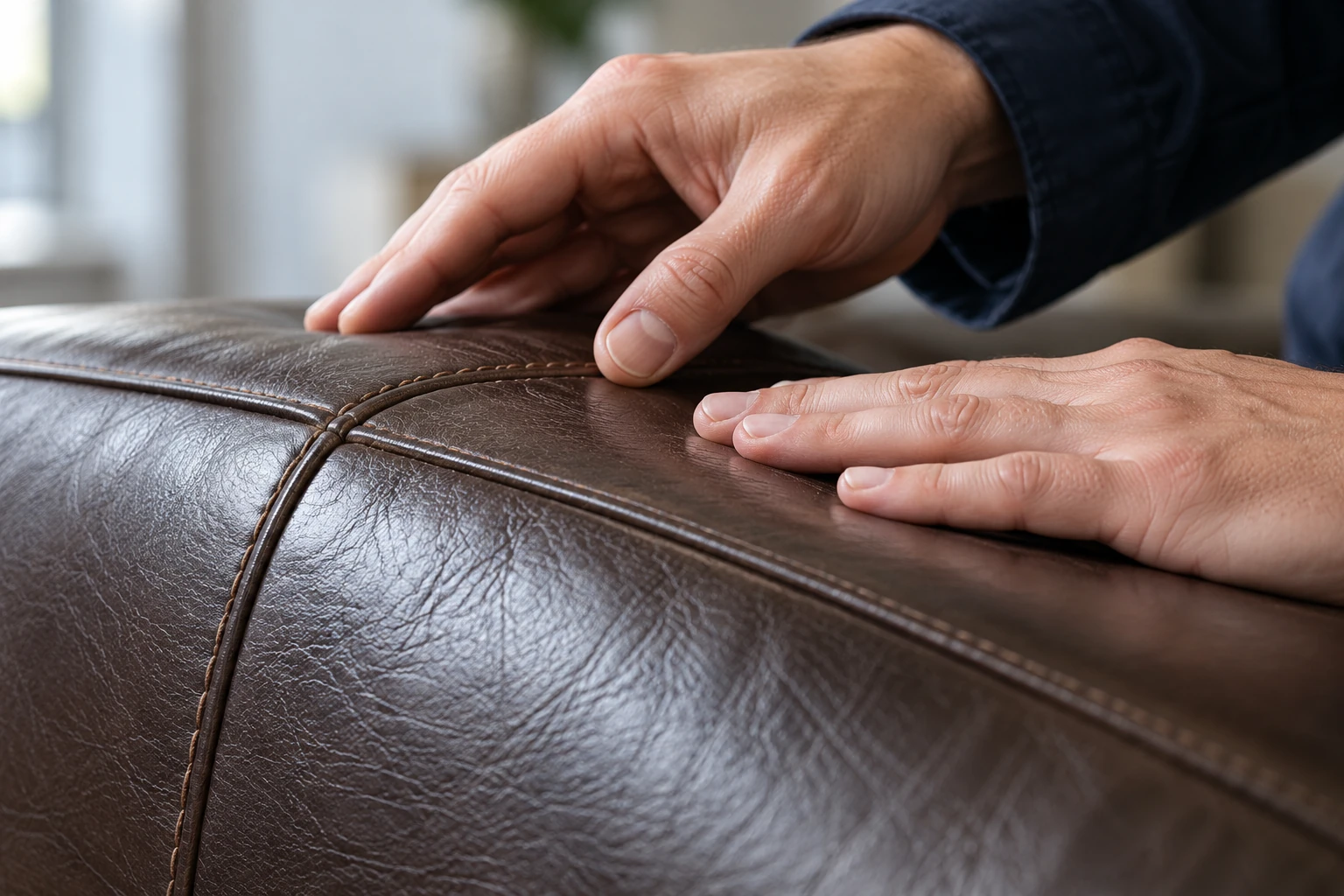
4 — Final inspection
Grain, sheen and seams are checked from the angle you sit at.
Colour. Texture. Natural feel.
A repaired panel has to hold up at arm's length, not from across the room. Four things decide whether it does.
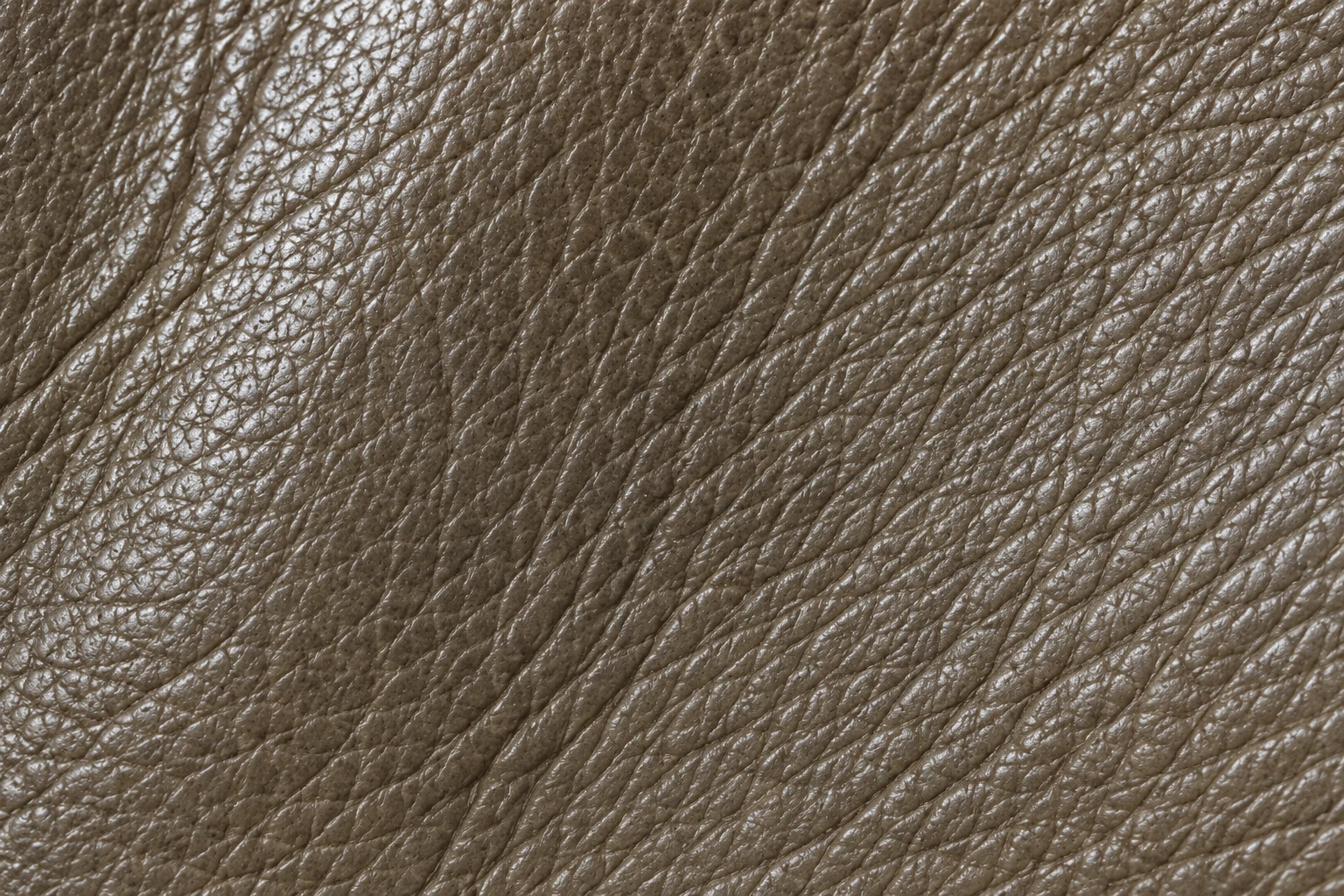
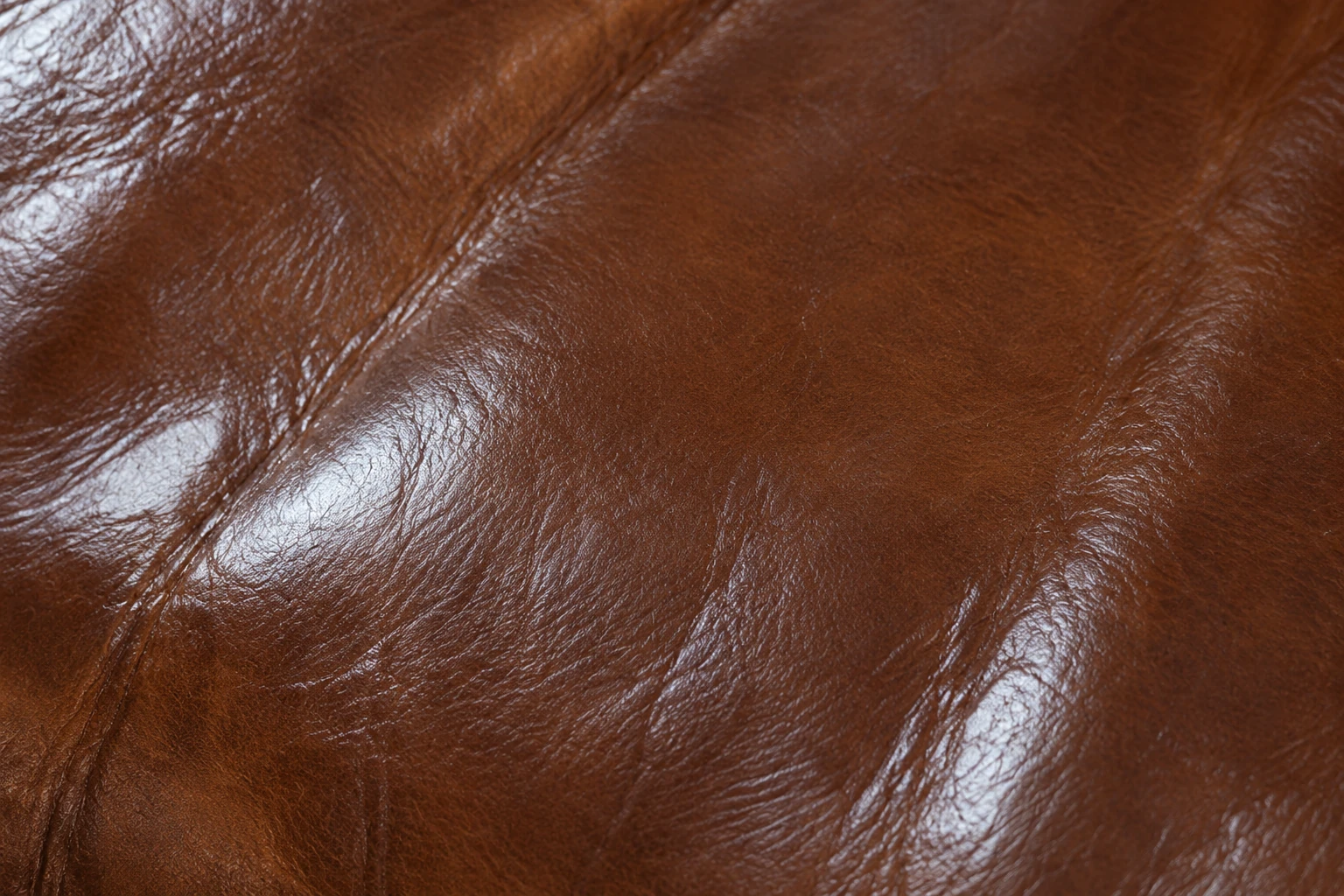
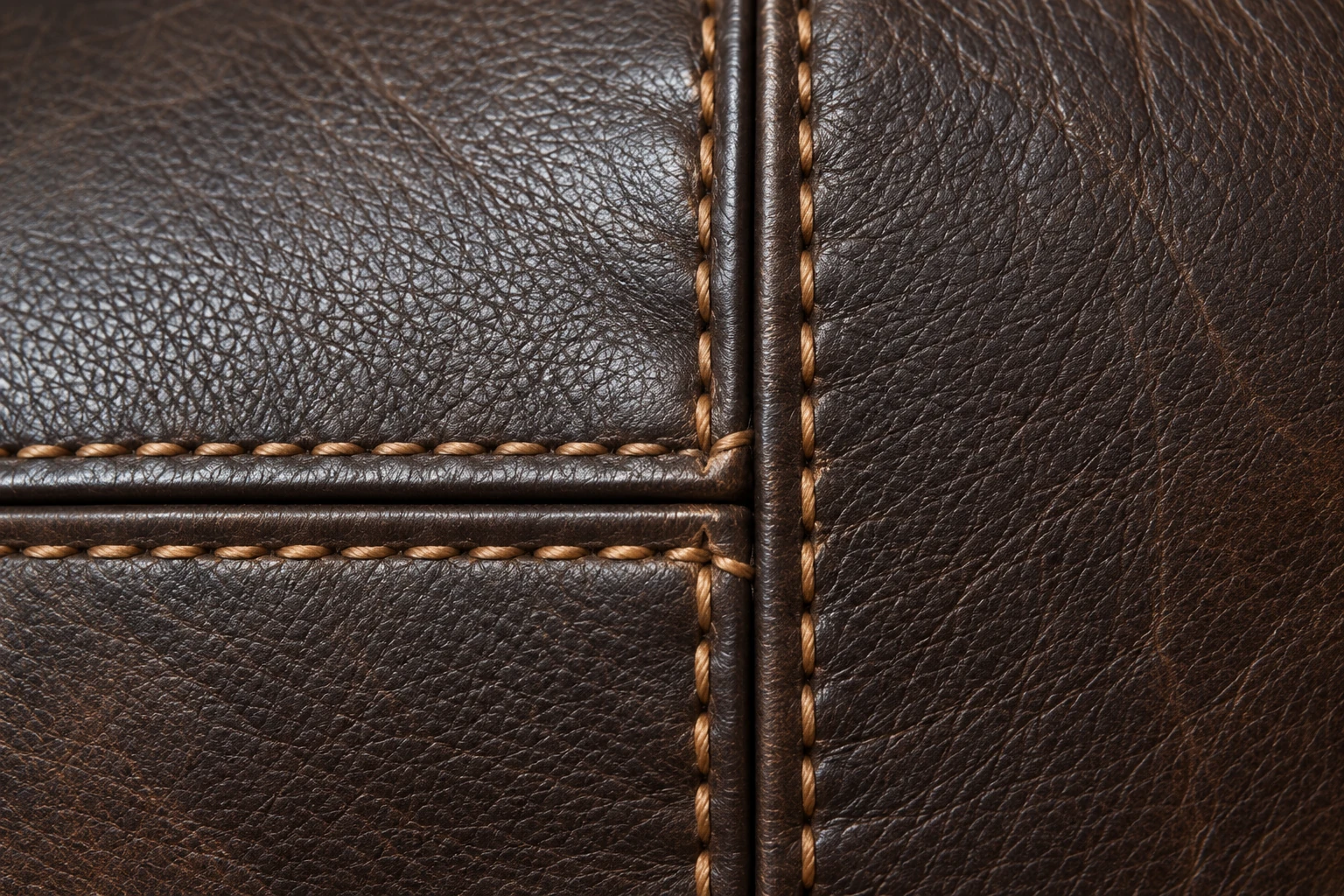
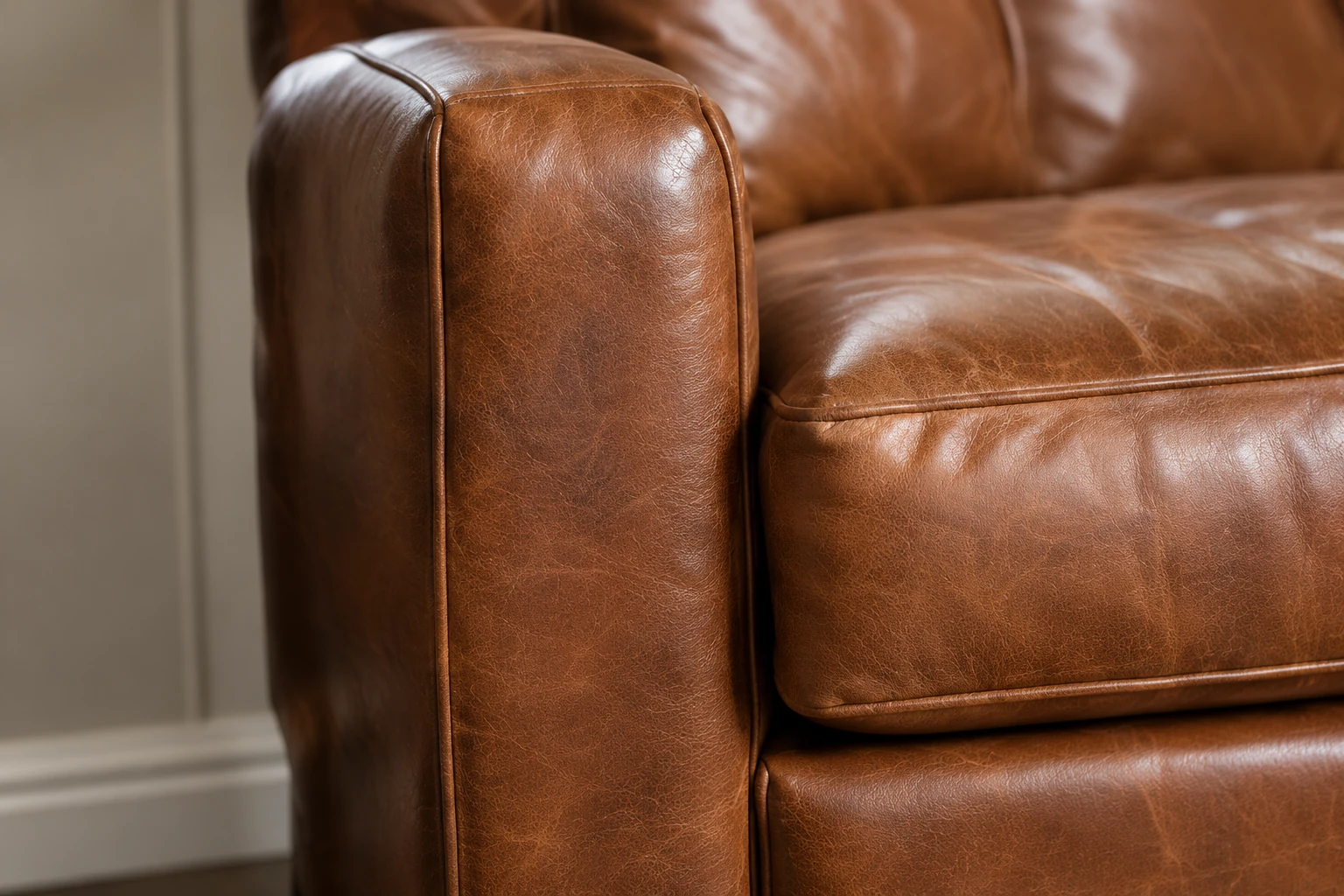
Explore the repair possibilities
Twelve panels in twelve colours — cream, caramel, oxblood, olive, navy, espresso. Each pair is one piece photographed before and after a single visit, and most of them are pigmented hides.
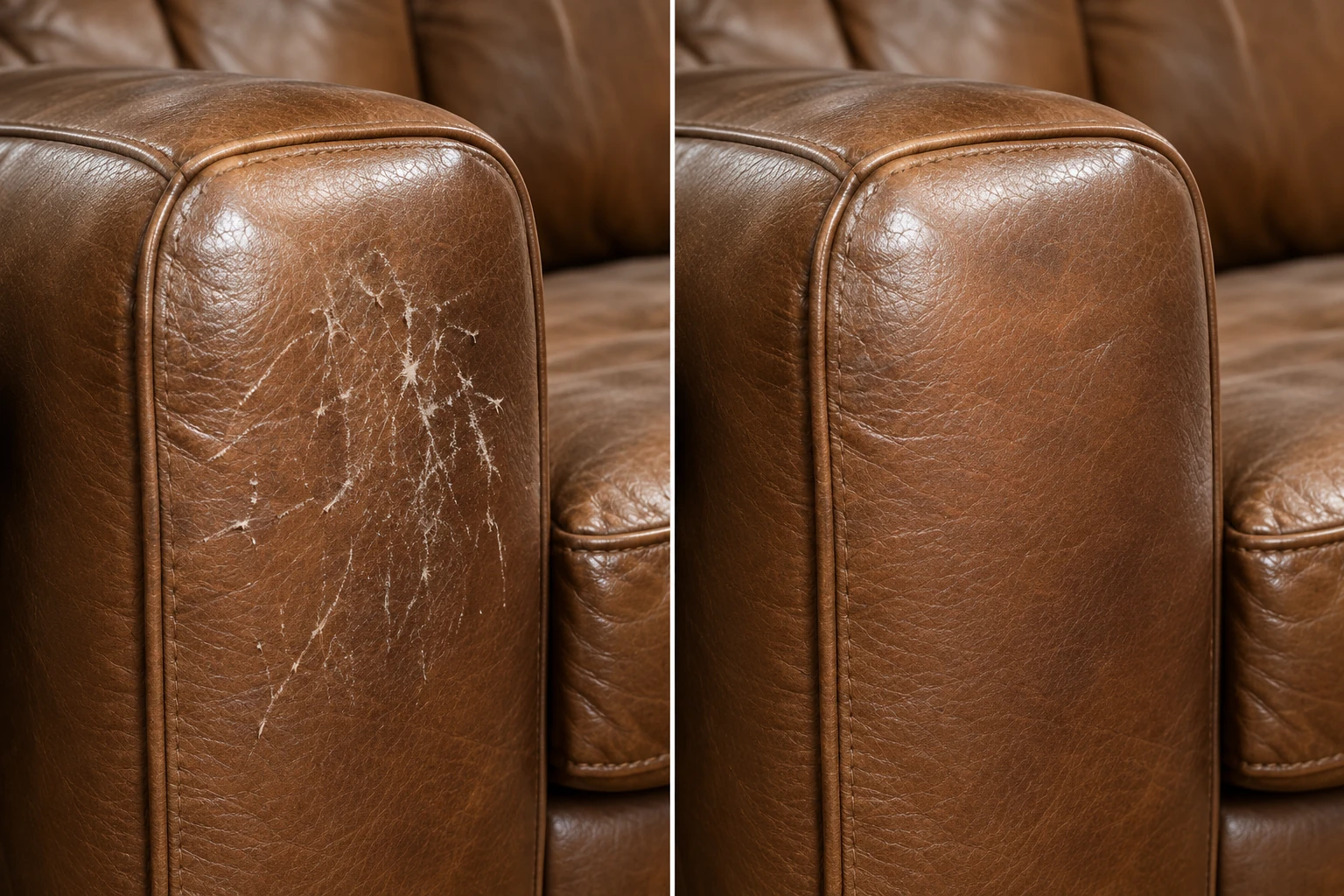 BeforeAfter
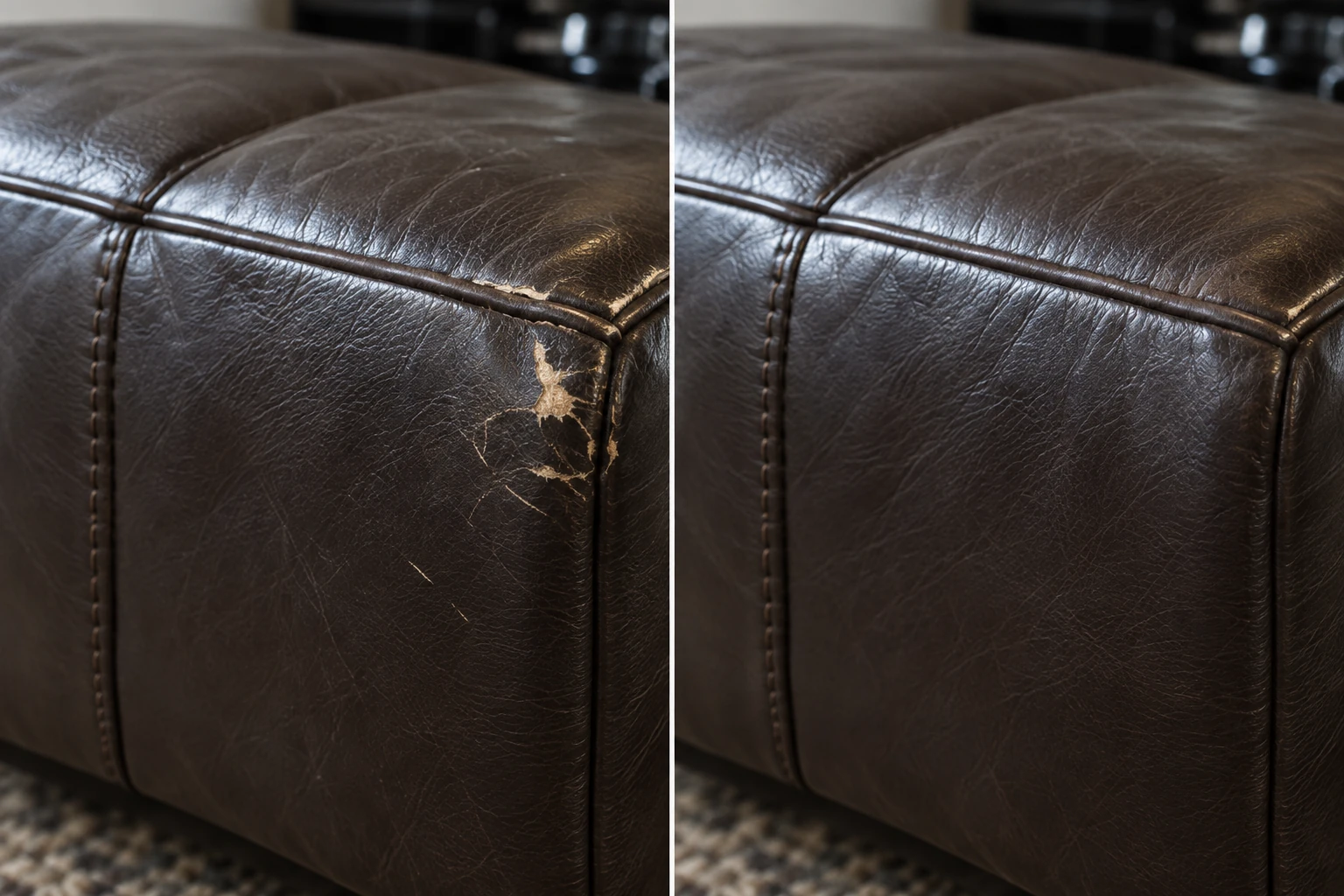 BeforeAfter
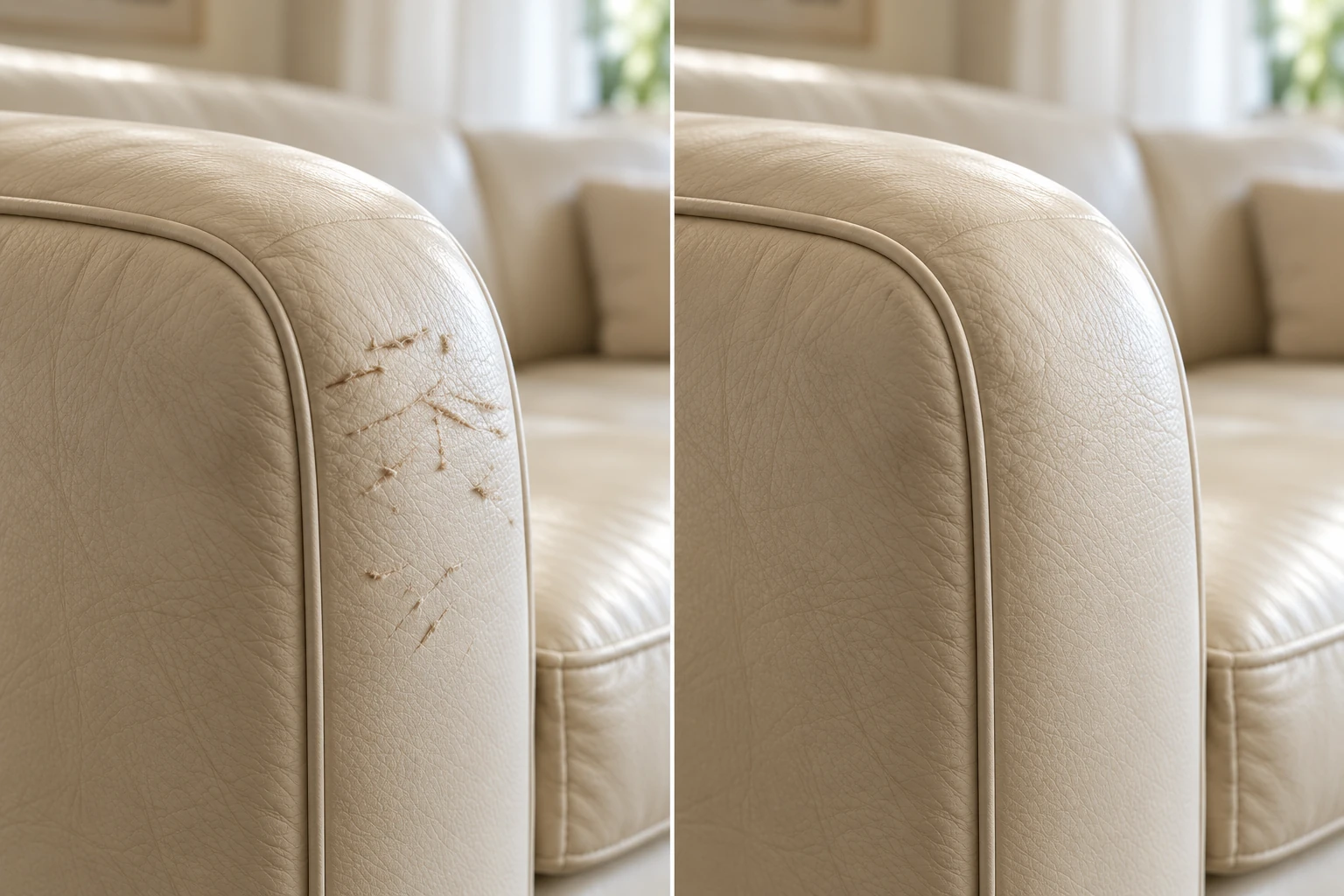 BeforeAfter
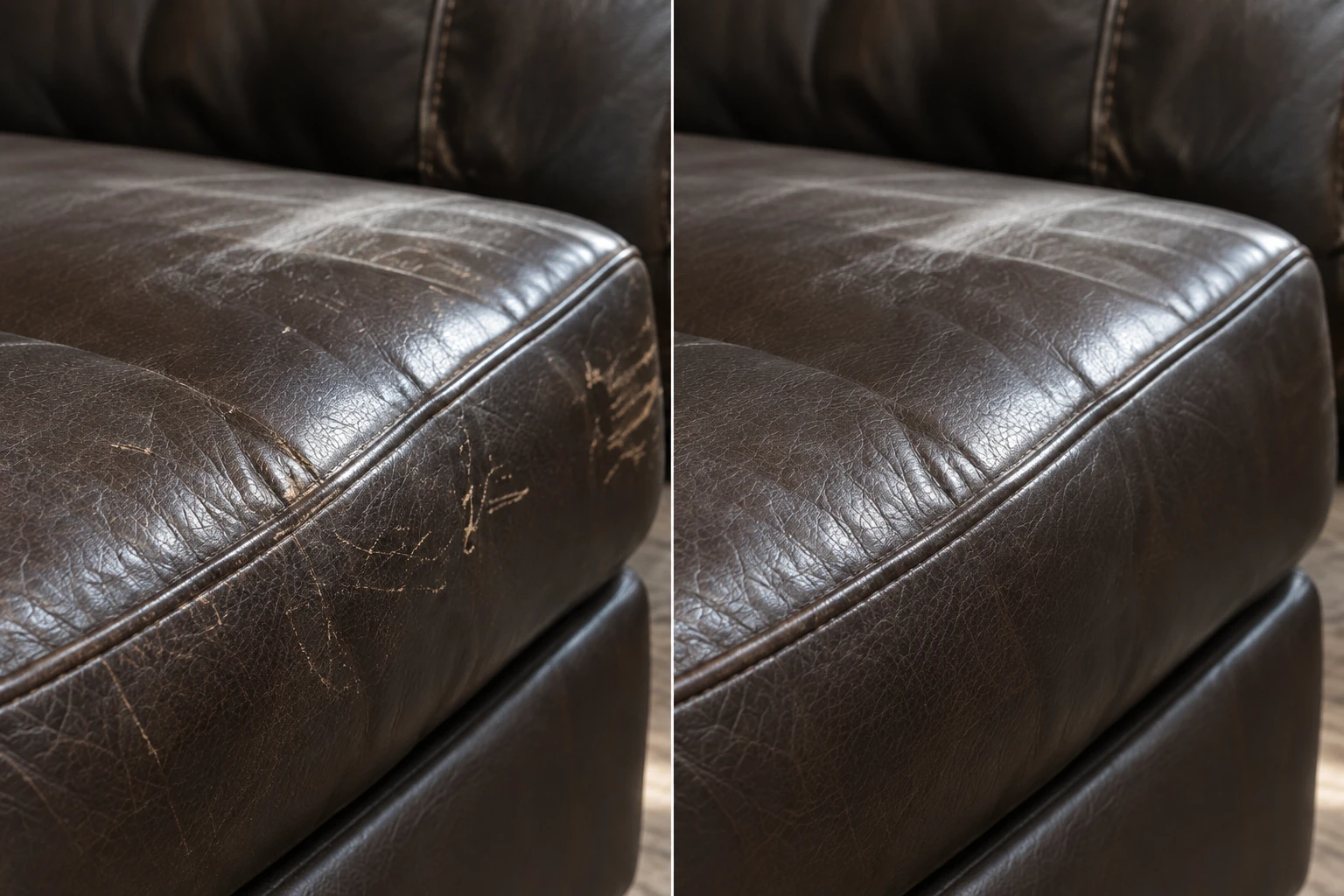 BeforeAfter
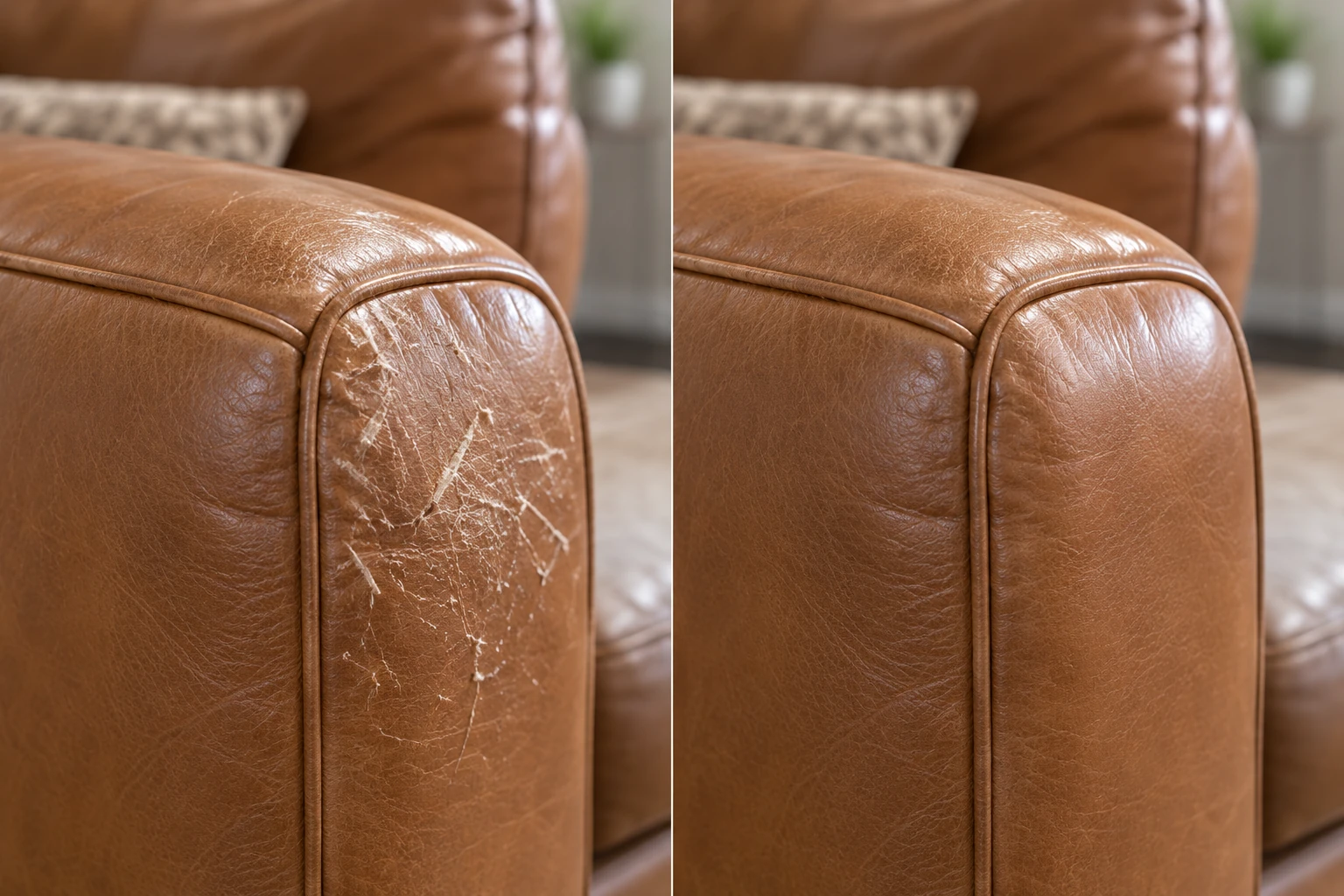 BeforeAfter
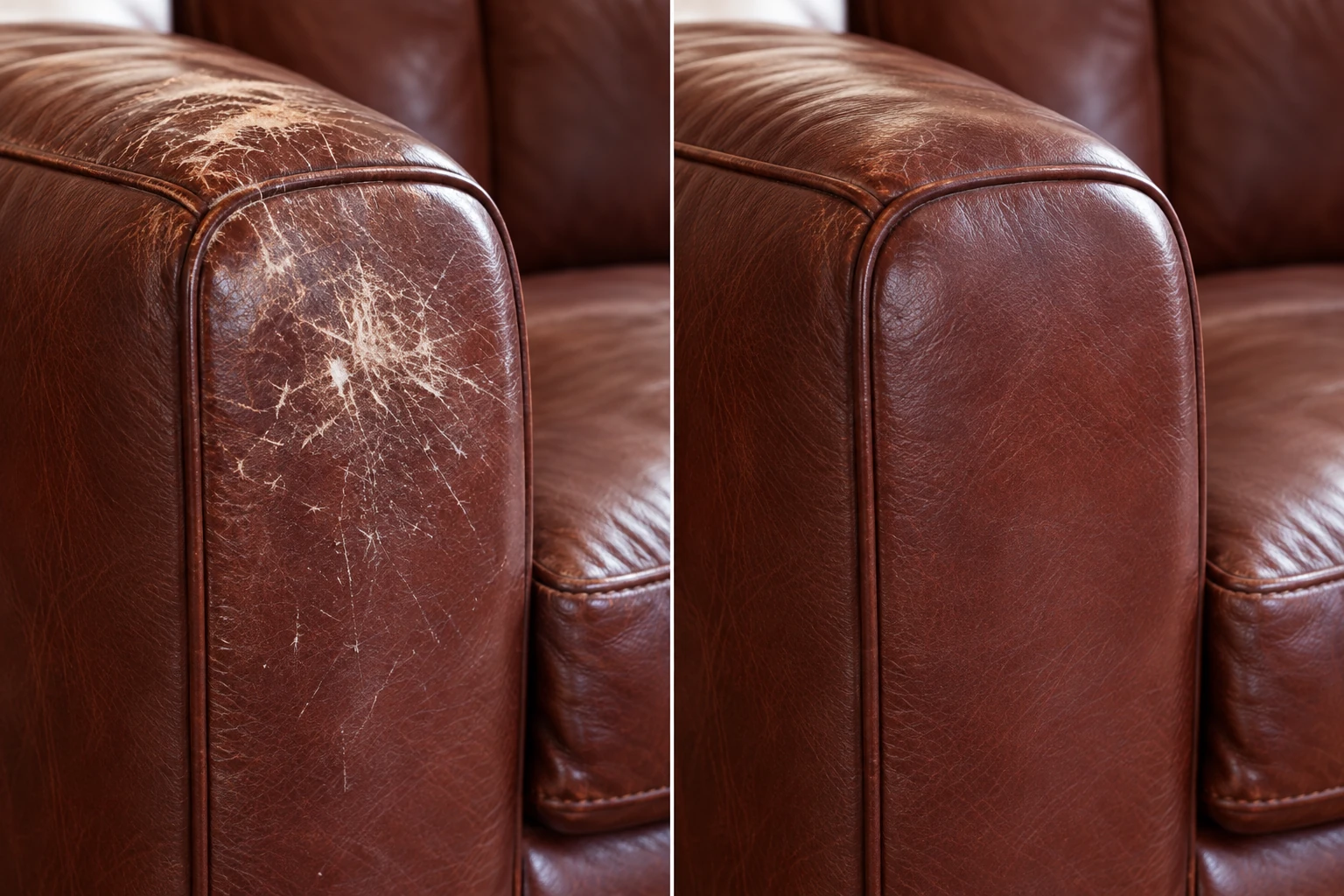 BeforeAfter
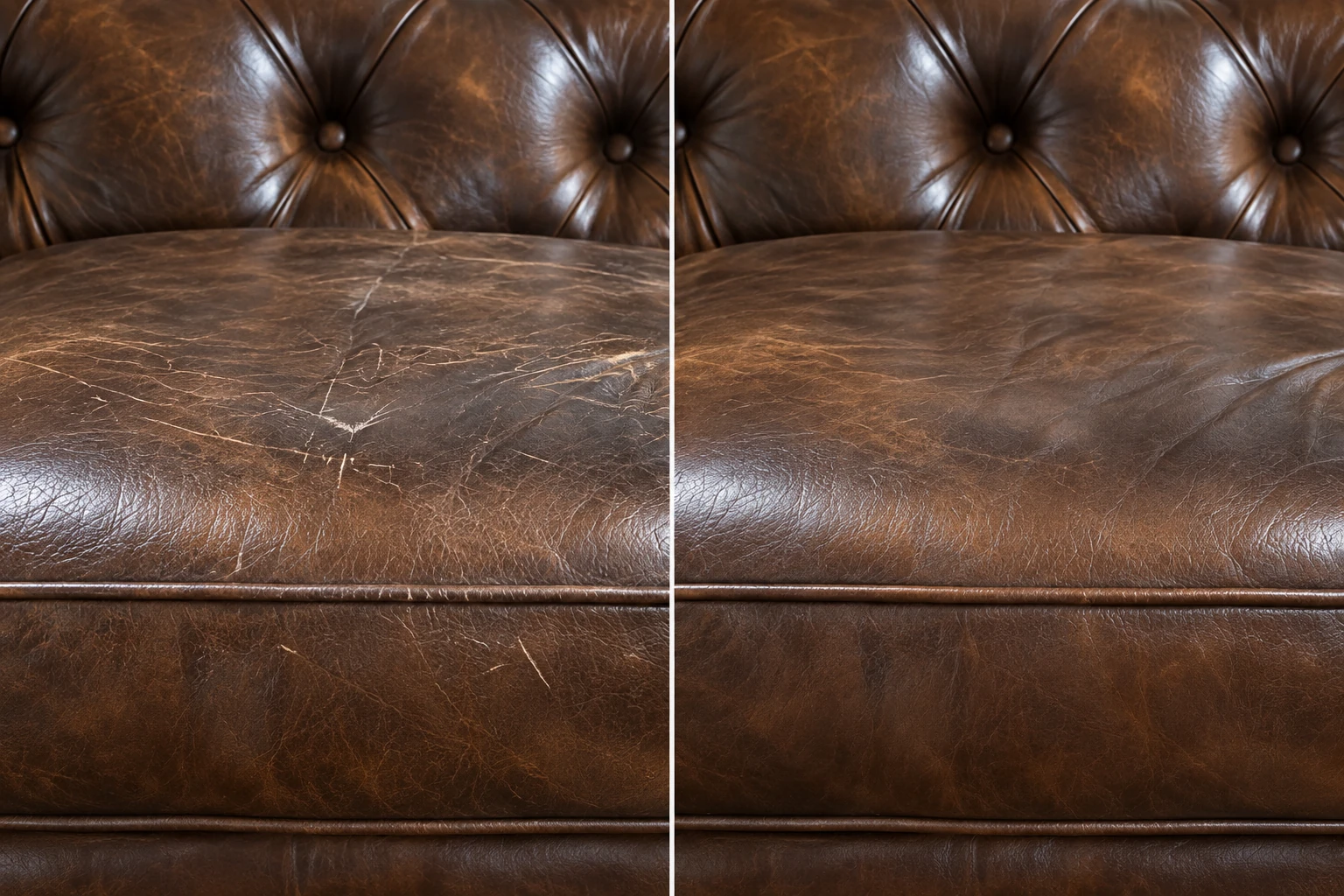 BeforeAfter
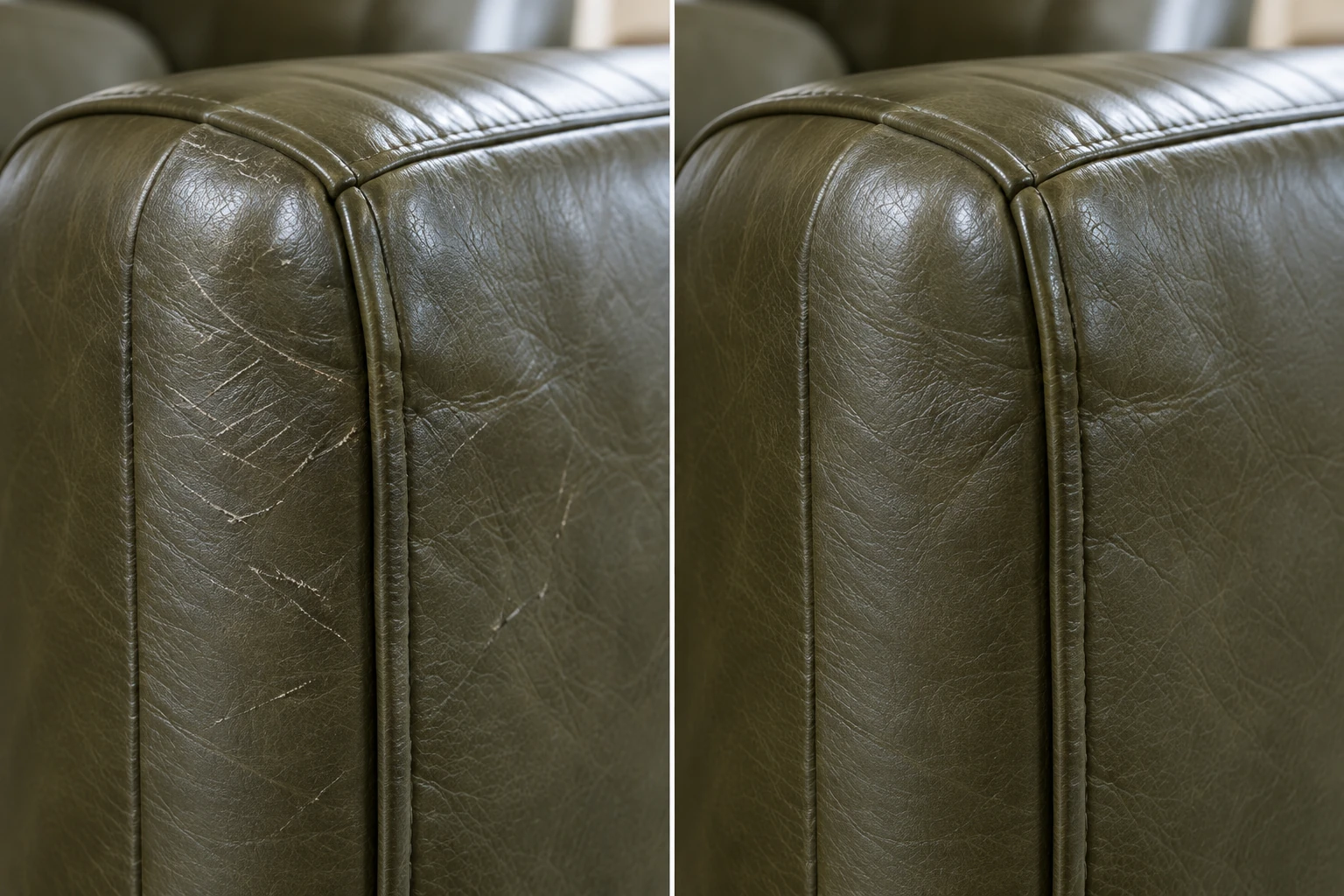 BeforeAfter
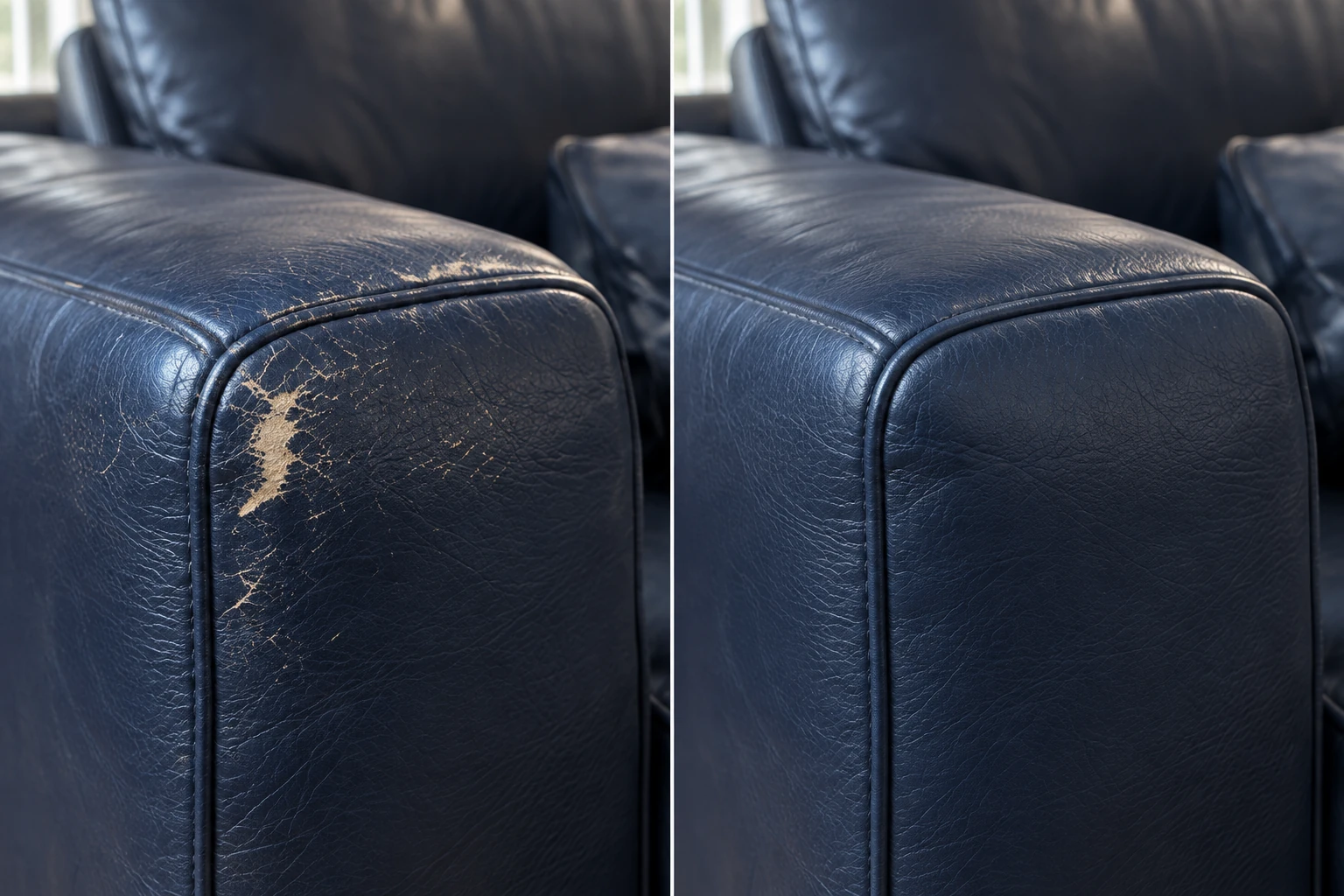 BeforeAfter
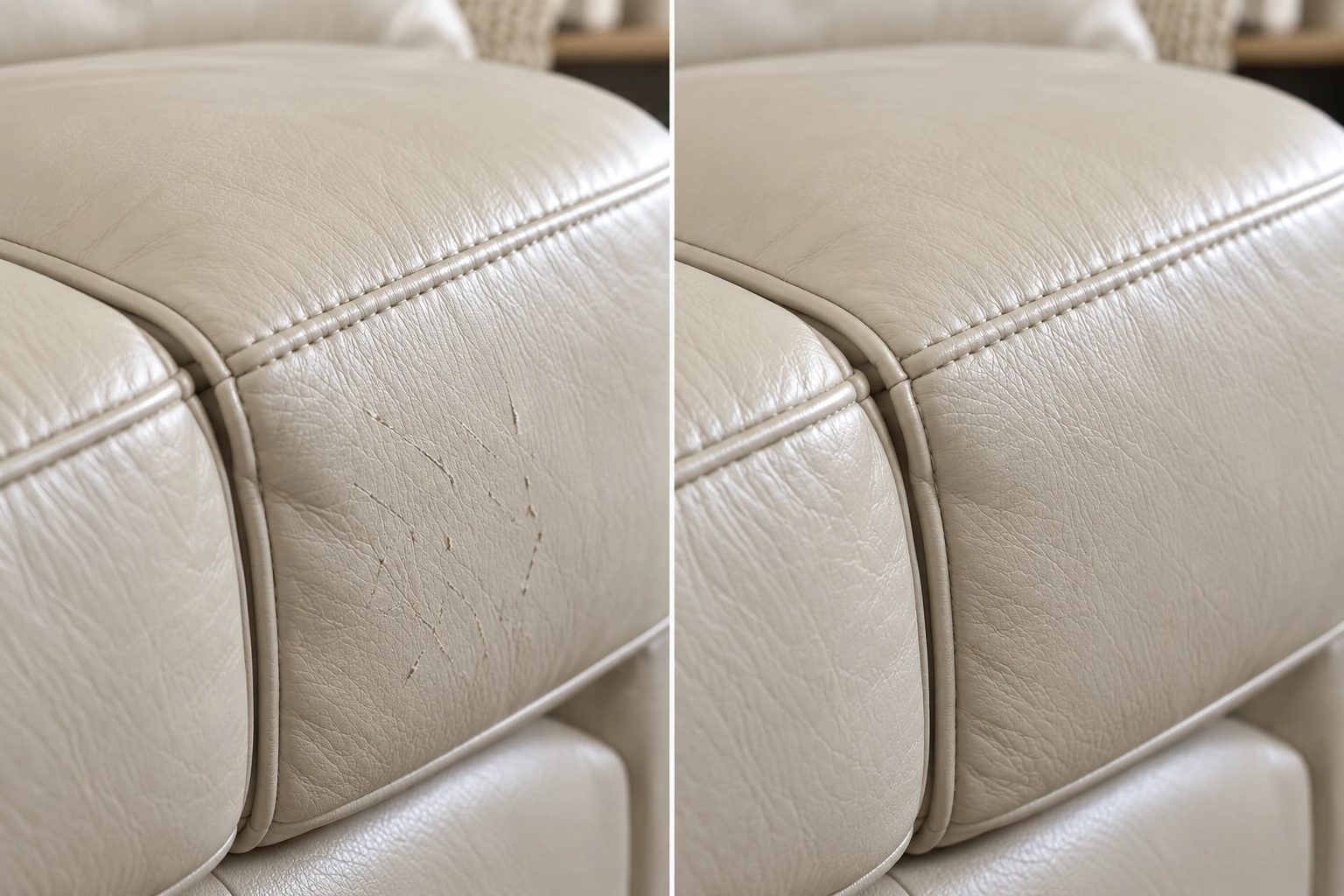 BeforeAfter
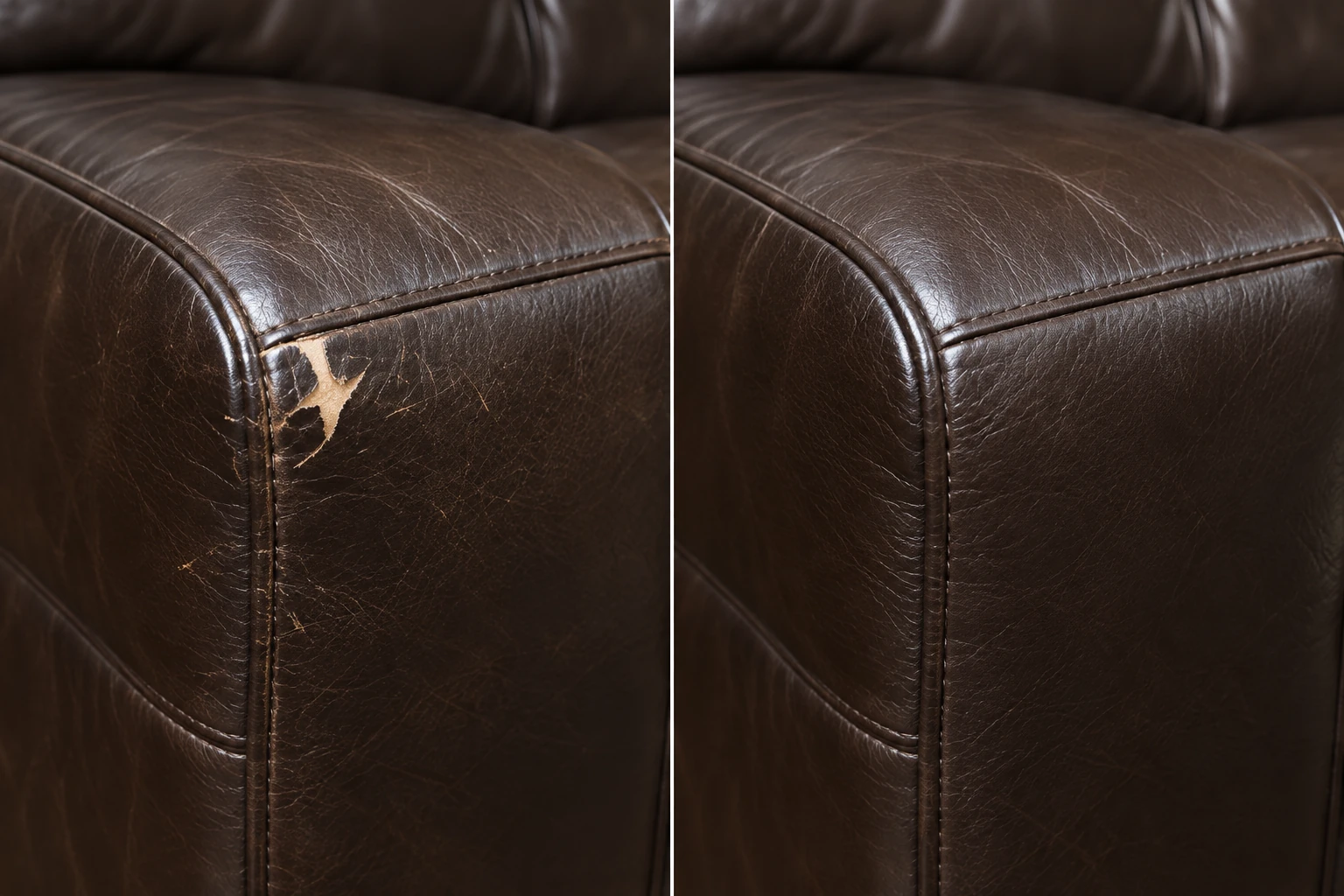 BeforeAfter
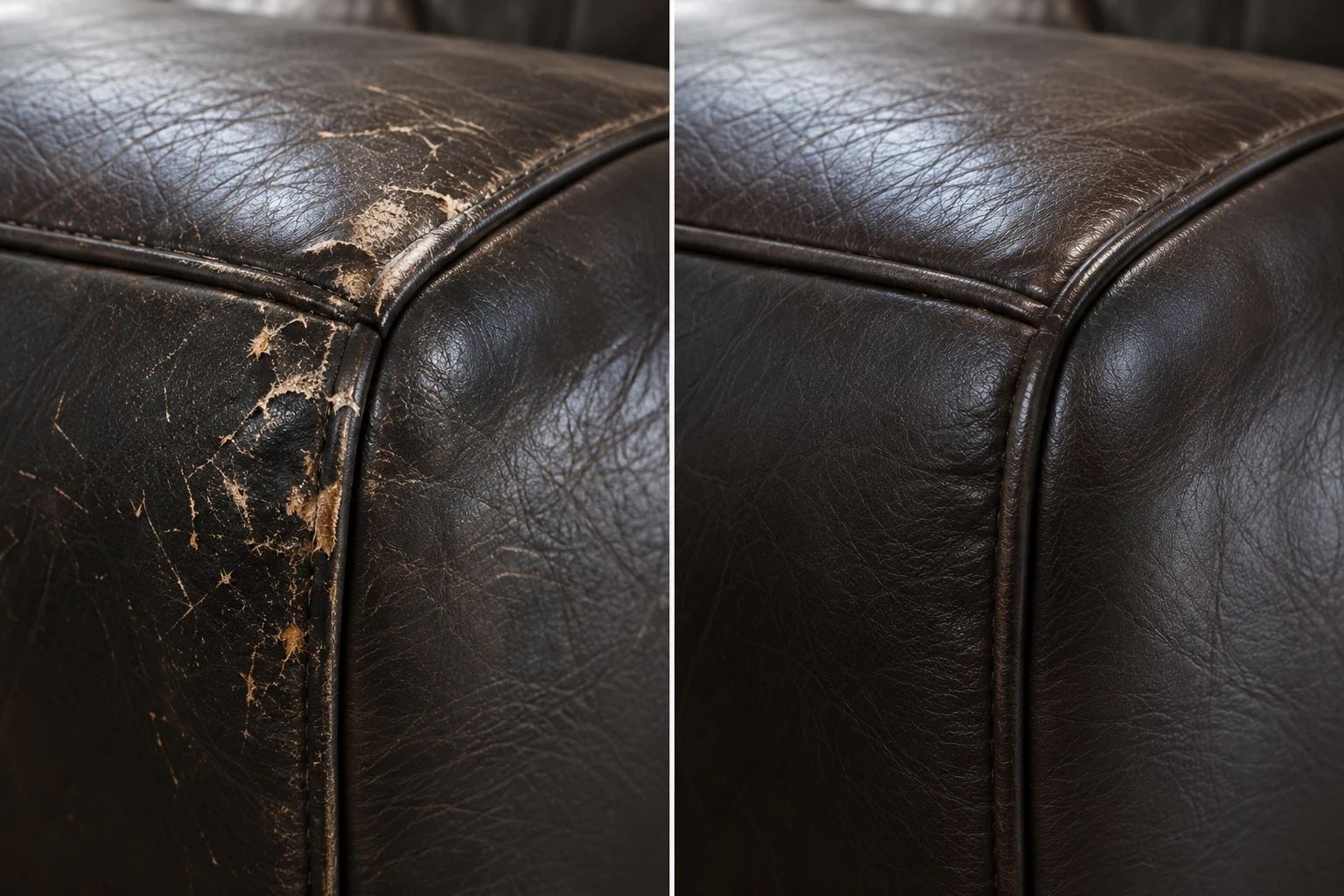 BeforeAfter
Cat scratch leather repair, answered
Will the scratches come back?
The mend is as strong as the hide around it, not stronger. If the cat keeps choosing that corner it will mark again, usually an inch or two away. A post beside the arm changes that faster than anything we can do to the leather.
Can you match my colour?
Yes. Pigment is mixed against your own panel in daylight and tested on a hidden edge before anything touches the visible face. Aniline hides are the hard case, because there is no coating to hide the work behind.
Do I have to send the sofa away?
No. Cat scratch leather repair is done where the piece stands, in your home or office across the five boroughs, Long Island and New Jersey.
What if the leather is torn right through?
Then it has stopped being a scratch. A split is backed and filled from behind; a corner chewed open past the size of a hand gets a new panel set into it.
Care after your repair
Nothing complicated. Three habits keep a repaired panel looking the way it did on the day we packed up.
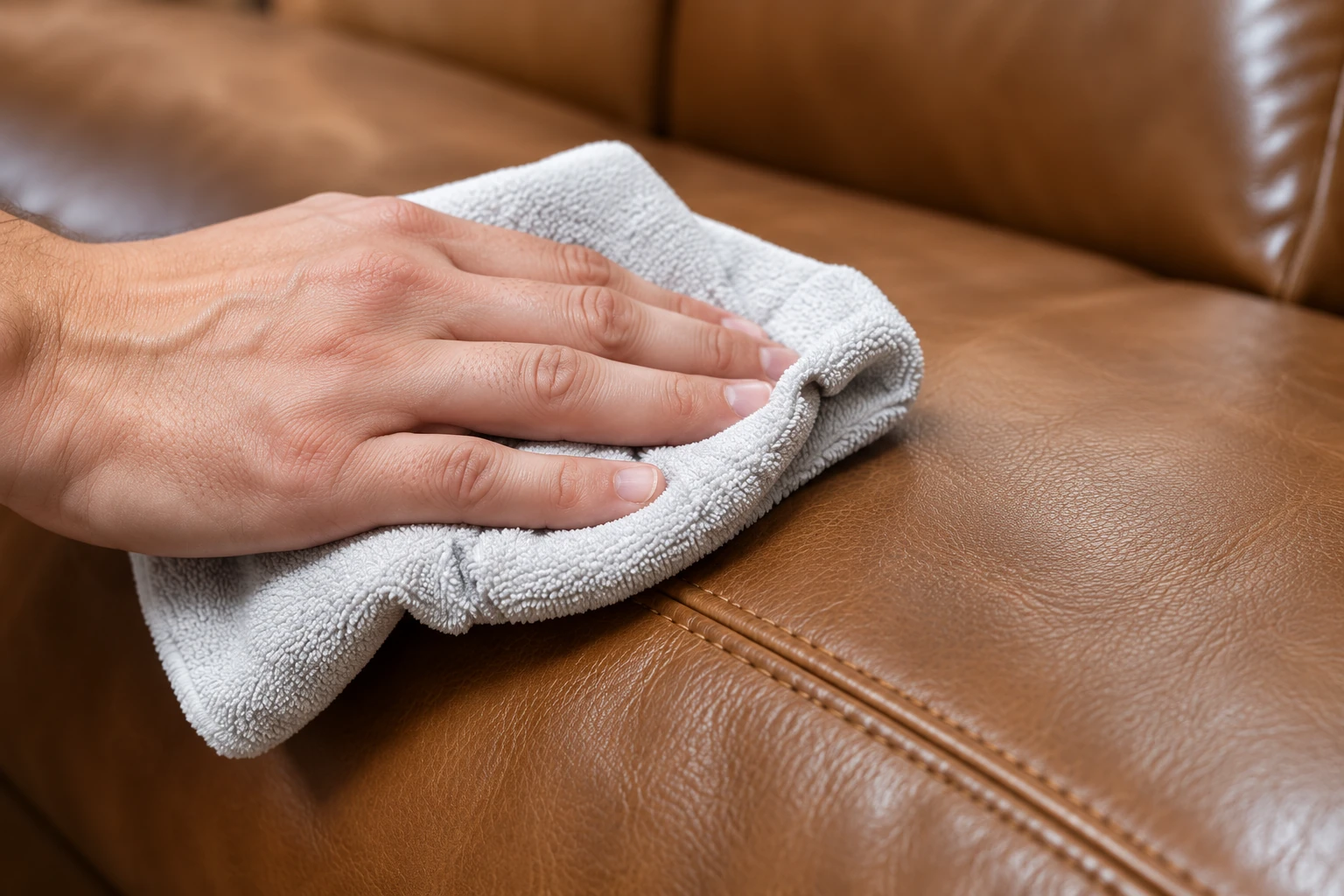
Clean gently
A damp cloth and a light hand. Solvent cleaners lift new colour first, and that is how a finish starts to flake.
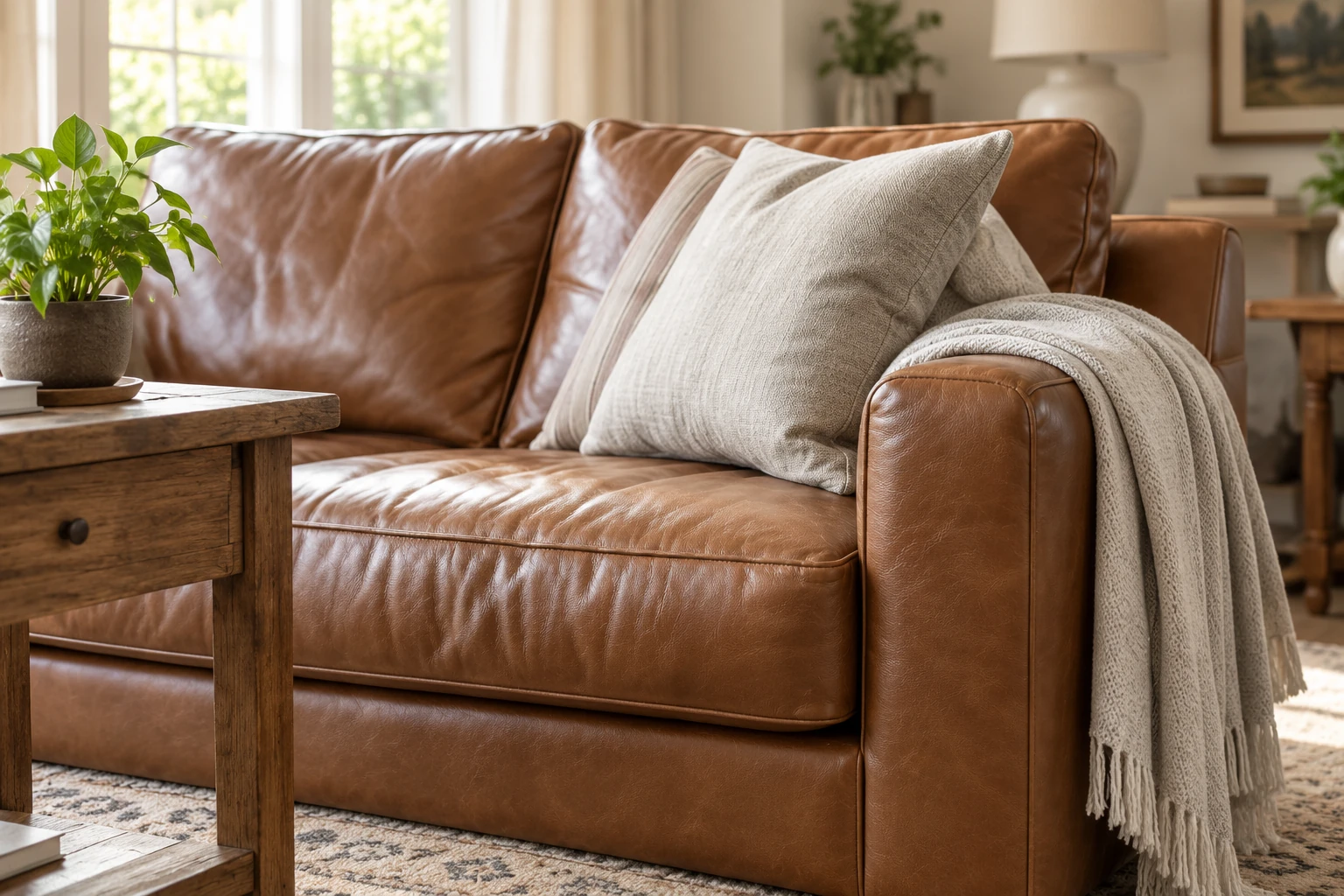
Use a washable throw
Over the arm the cat has already chosen. It takes the claws instead of the hide, and it goes in the machine.
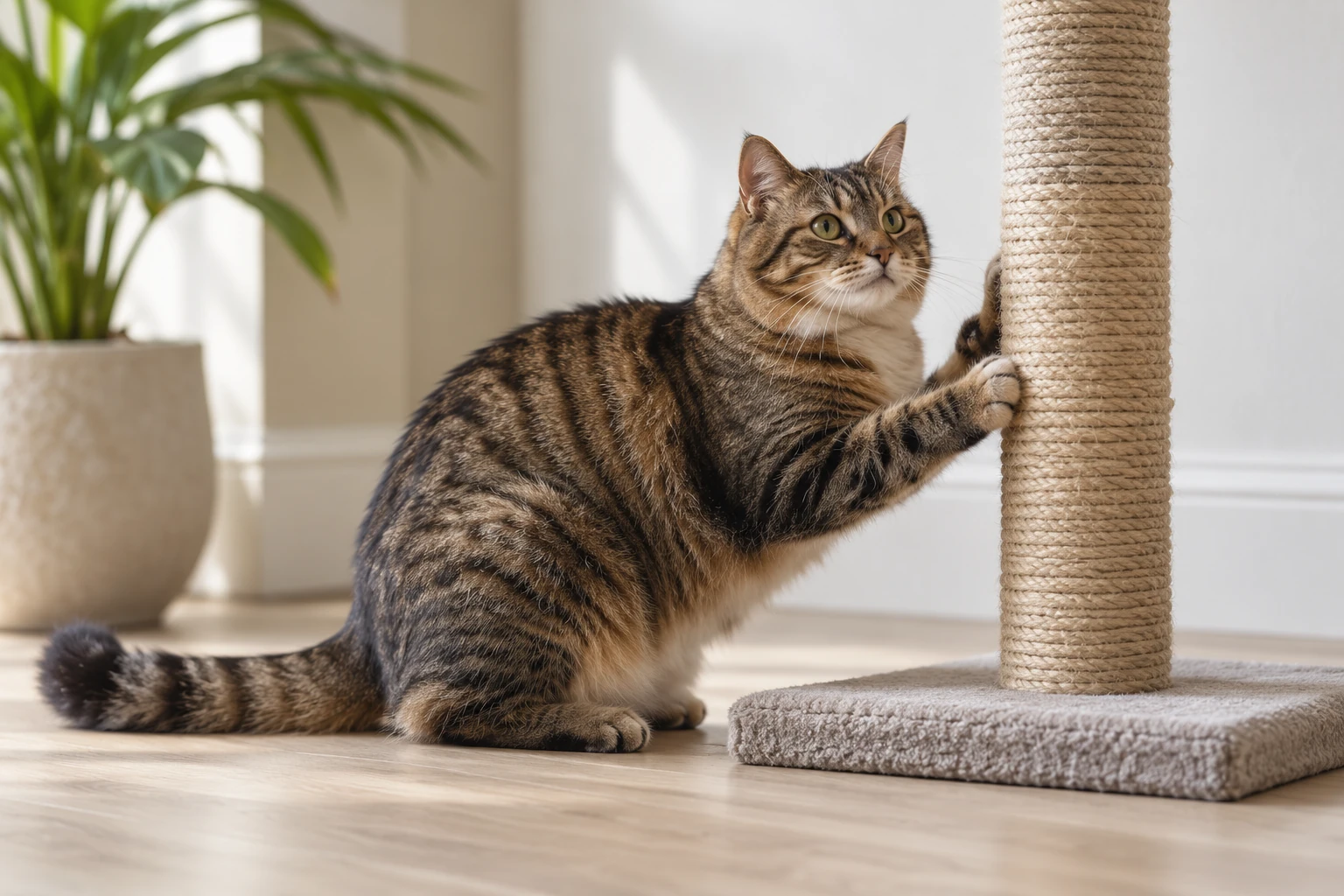
Help redirect scratching
A sisal post at the same height, right beside the piece. Cornell's Feline Health Center and Humane World and the ASPCA all put placement ahead of everything else.
Send one photo of the arm
A single close-up in daylight tells us whether you are looking at a colour pass or a new panel. Quotes come back the same day, and the visit itself is one appointment.