
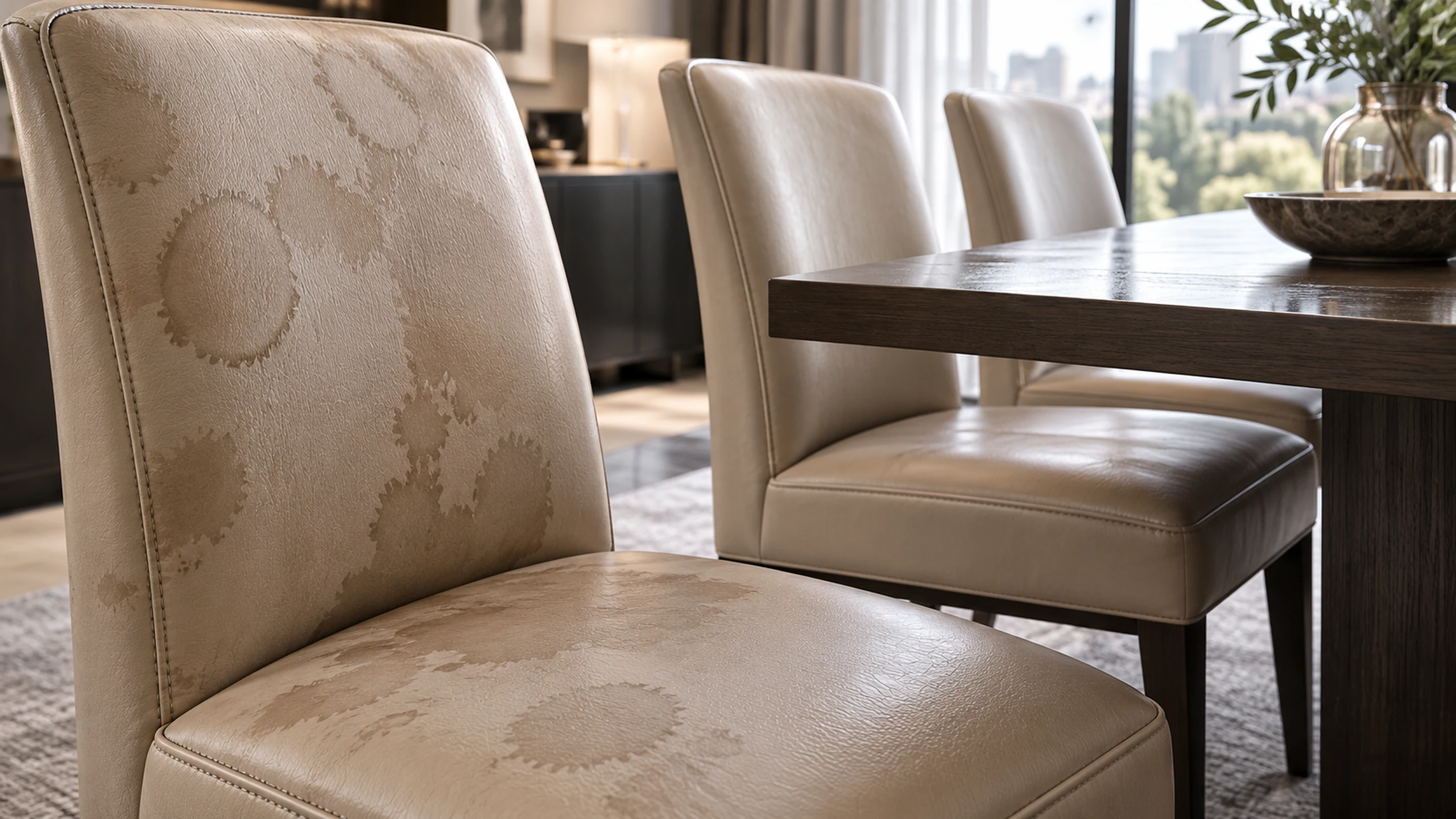
The Damage Happens While It Dries
Water rarely ruins leather on the way in. It ruins it on the way out — pulled from the fibres too fast, or drawn up slowly through a cushion that stayed soaked. By the time the panel looks dry, the mark and the stiffness are set. Leather water damage repair undoes that. It is not a cleaning job.
The source decides the damage
Every leather water damage repair starts with two numbers: how much water, and for how long. Not the size of the mark.
With standing water the room matters before the furniture does. Dry the building on the schedule Ready.gov sets out, and bring in a structural drying contractor — trade bodies like the Restoration Industry Association list firms that do floors and walls. We take the seating from there, collecting across New York City and northern New Jersey.
Water goes down. The damage comes back up.
A leather seat is four materials stacked on a frame. Water passes through all four in seconds, then leaves in the opposite order over weeks, carrying salts and dirt back up. The return trip is what you are looking at.
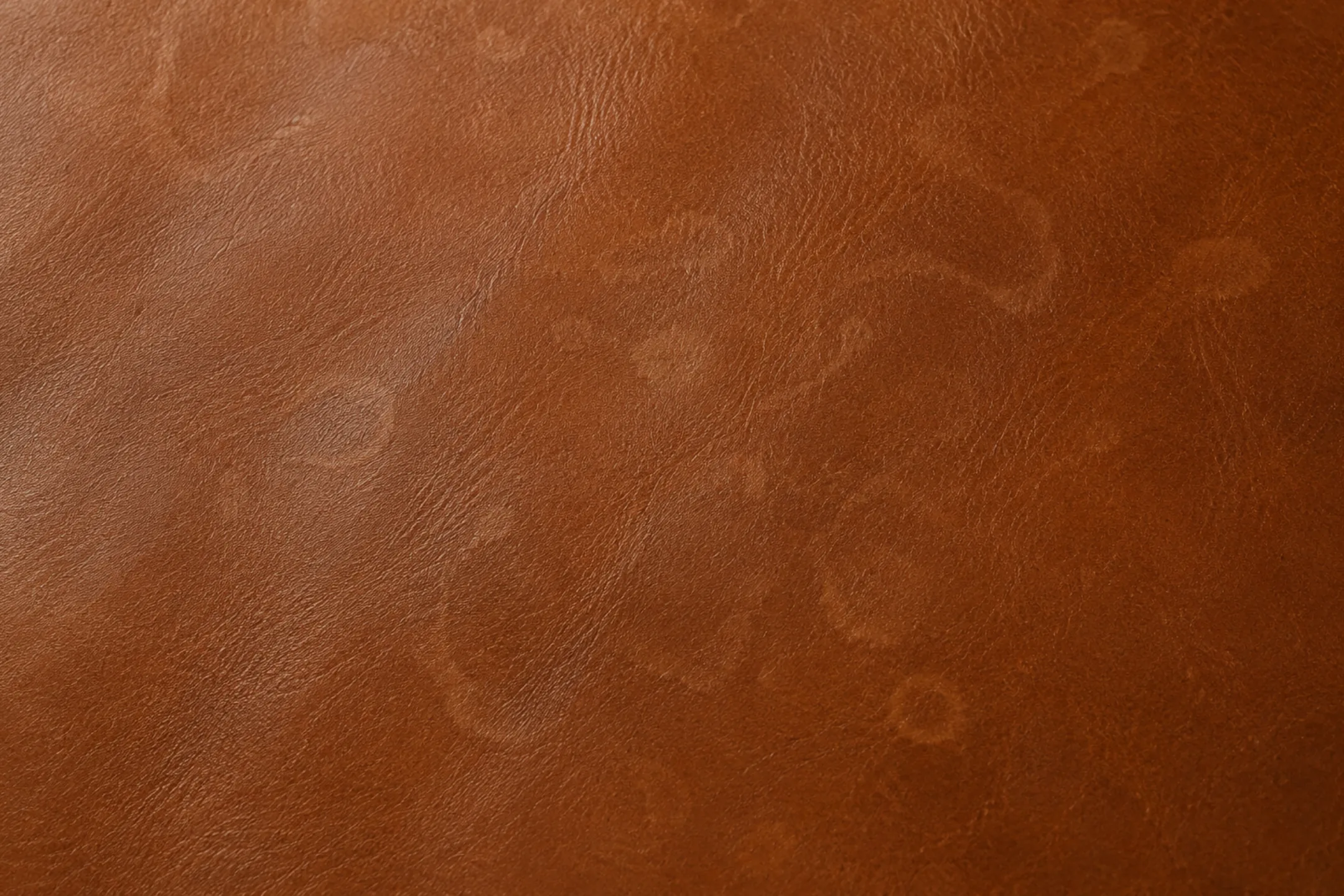 The finish
Clouding, dulled sheen, and a hard-edged ring where the last water evaporated and left everything it carried.
The finish
Clouding, dulled sheen, and a hard-edged ring where the last water evaporated and left everything it carried.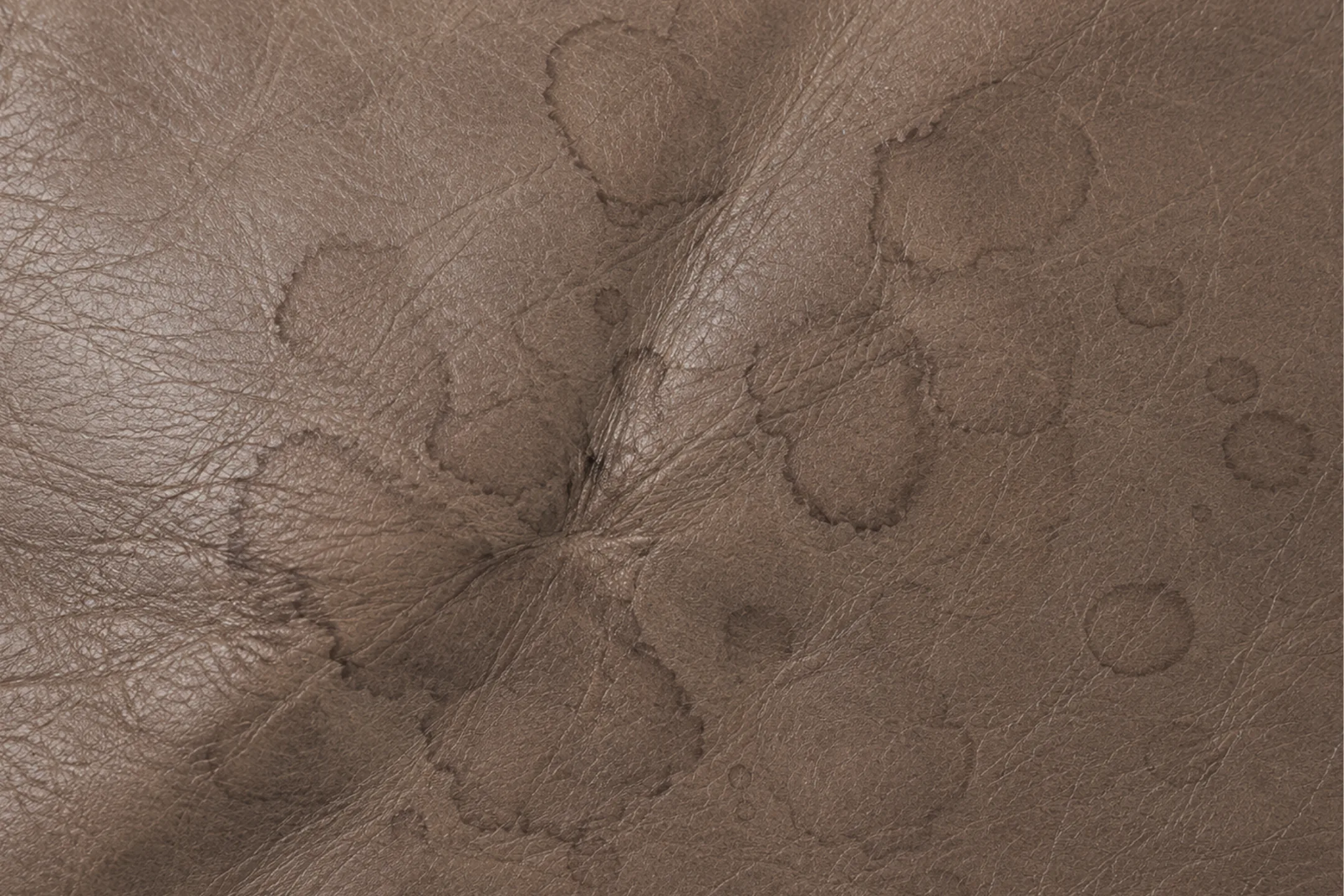 The hide
Tanning oils move with the water and do not come back. The fibres dry tight against each other, which is why a soaked panel ends up stiffer than its neighbour.
The hide
Tanning oils move with the water and do not come back. The fibres dry tight against each other, which is why a soaked panel ends up stiffer than its neighbour.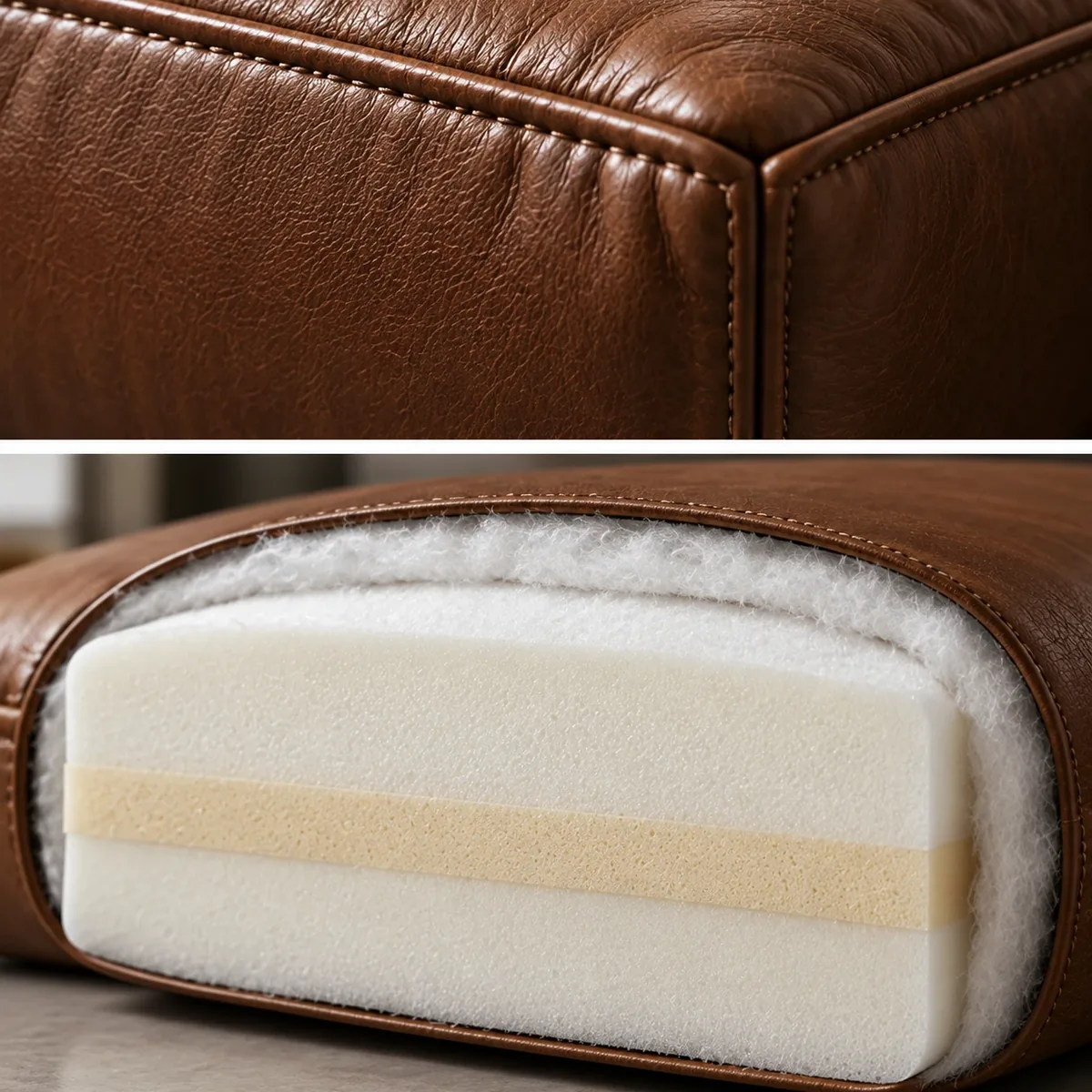 The foam
The reservoir. A wrapped core holds water long after the cover feels dry, and it is almost always why a clean-looking piece still smells.
The foam
The reservoir. A wrapped core holds water long after the cover feels dry, and it is almost always why a clean-looking piece still smells.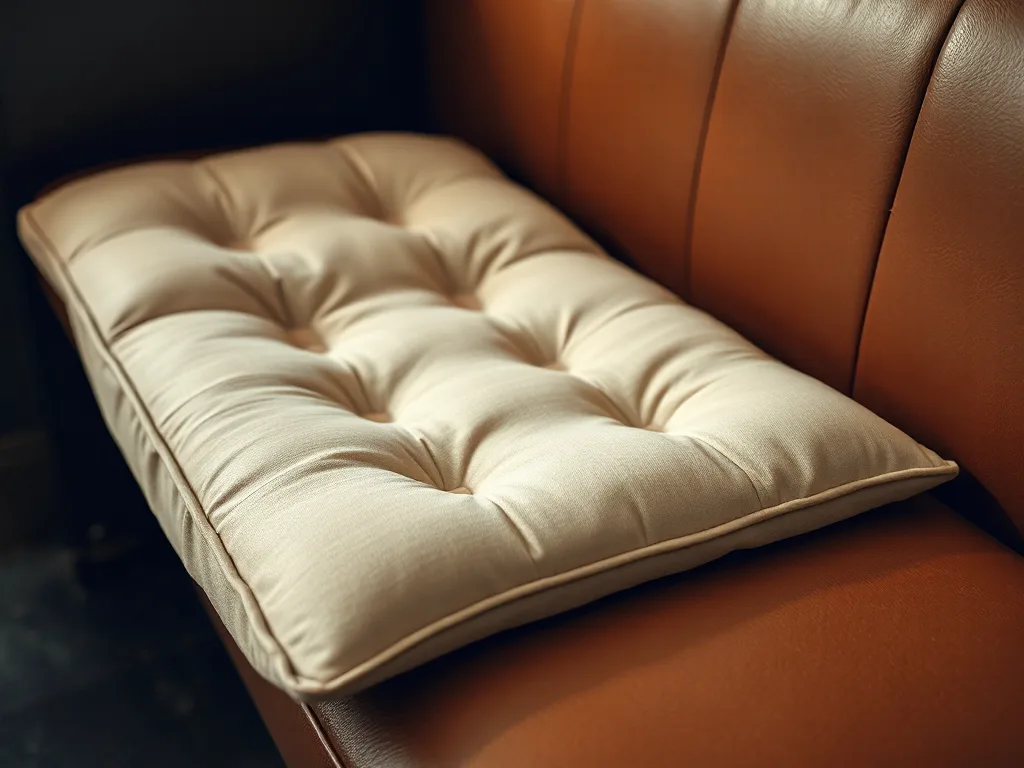 The deck and frame
The lowest point and the last to dry. Decking, webbing and the joints stay damp with a cushion sitting on top like a lid.
The deck and frame
The lowest point and the last to dry. Decking, webbing and the joints stay damp with a cushion sitting on top like a lid.Which layer got wet is the whole quote. Finish and hide are rebuilt in your home. Foam and decking mean the piece opens up, which puts cushion repair — or sofa cushion replacement where the core has collapsed — inside the leather water damage repair rather than after it.
What does water damage look like on leather?
Real examples. Real results.Most leather water damage repair enquiries arrive labelled “water stain”. Eight different things go by that name, and they do not cost the same. Find yours.
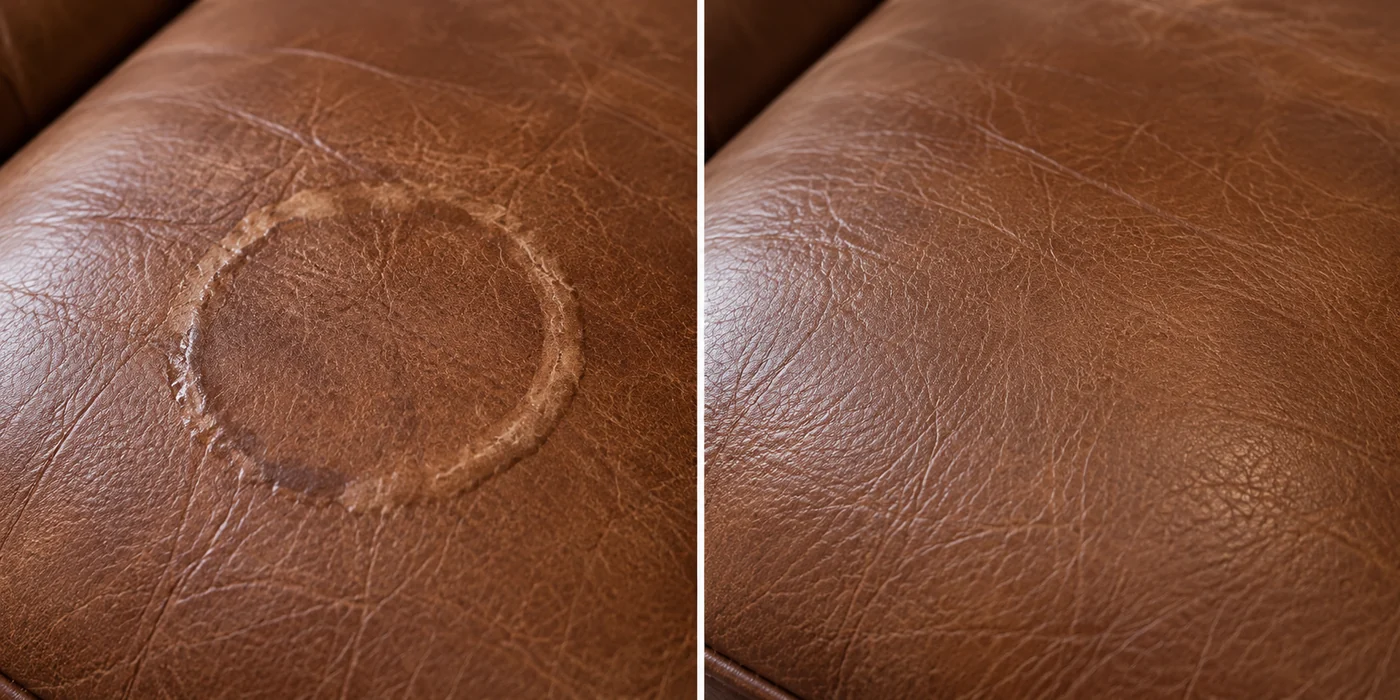 Water rings
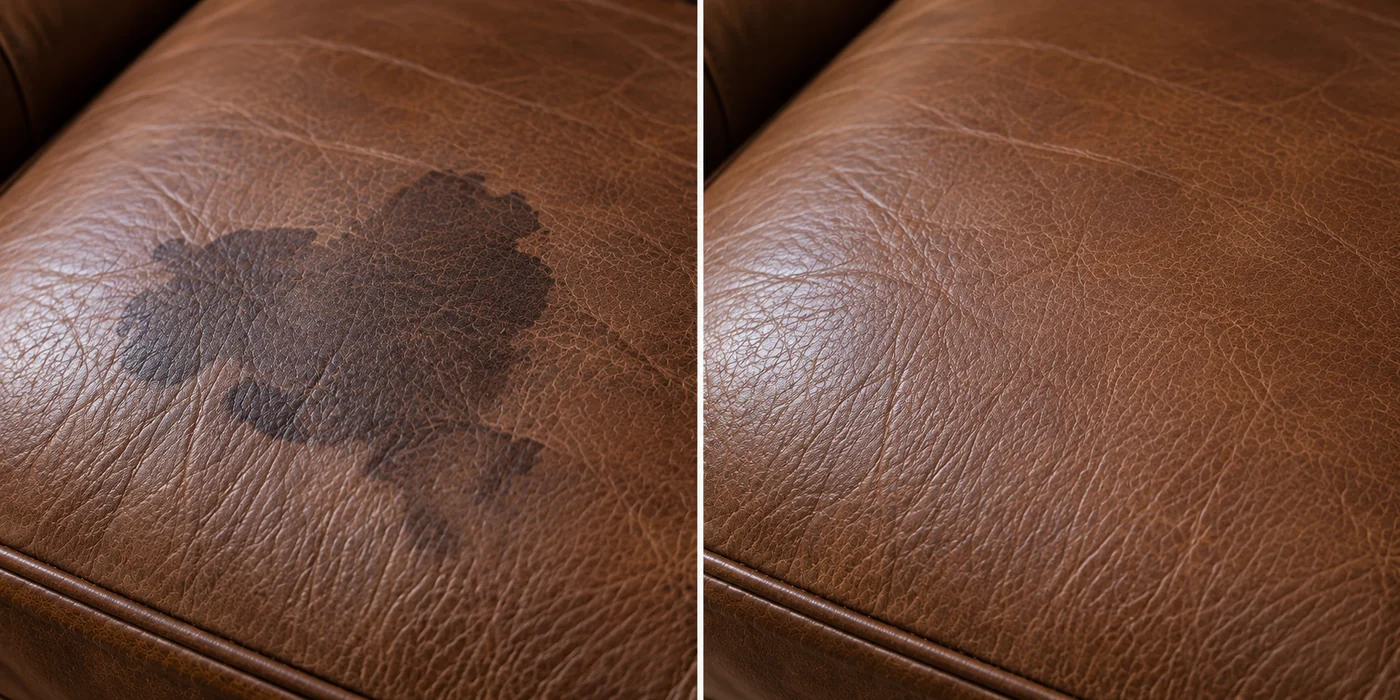 Dark water marks
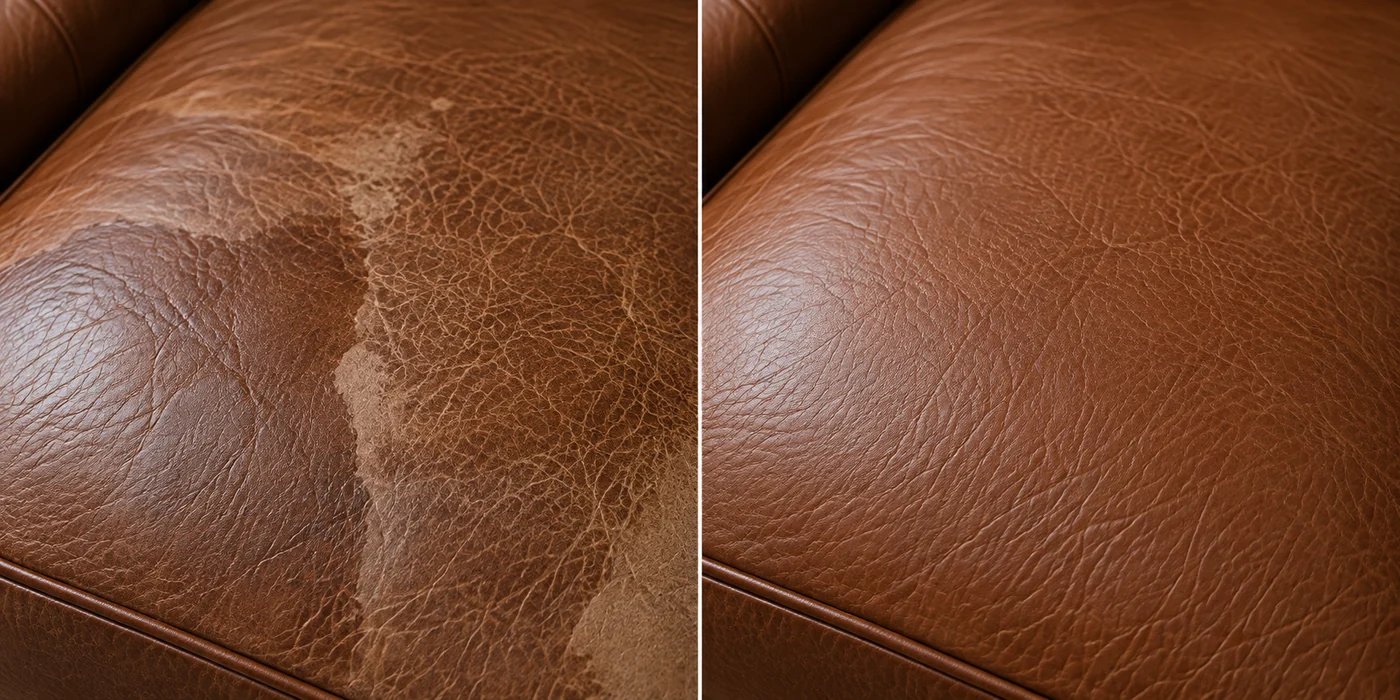 Tide lines
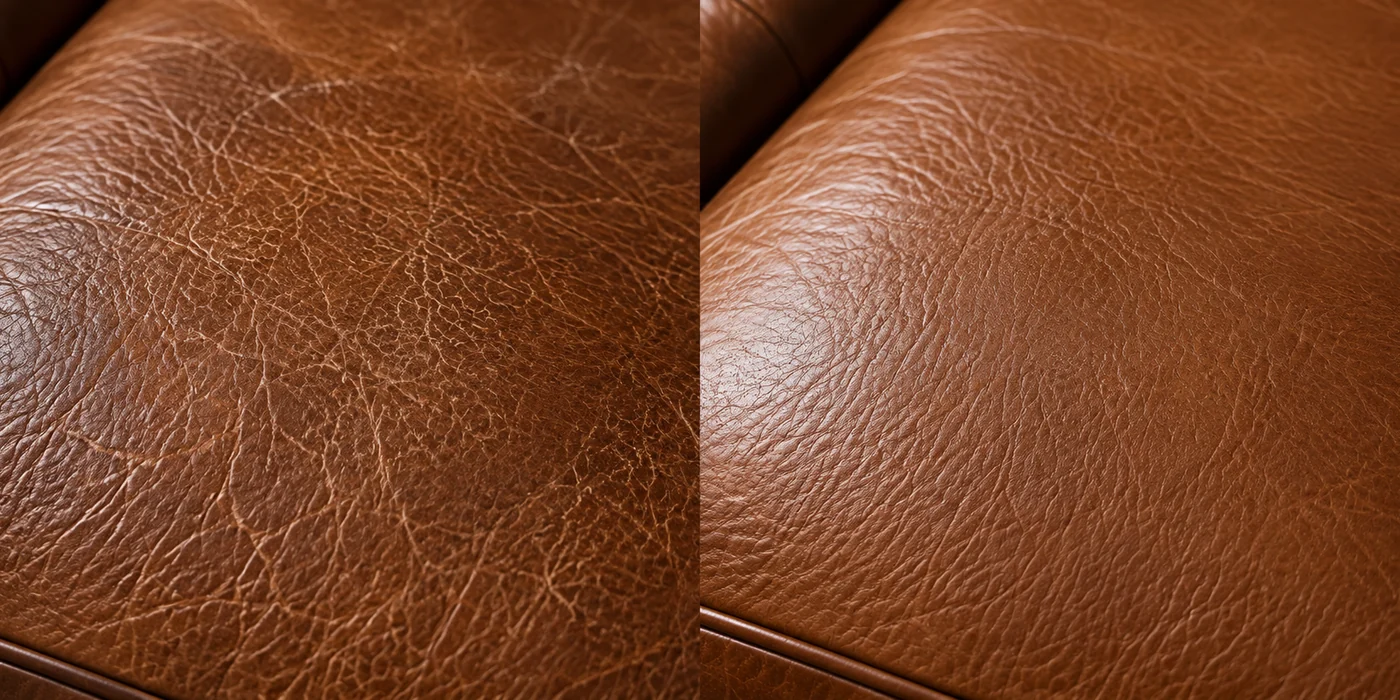 Uneven colour
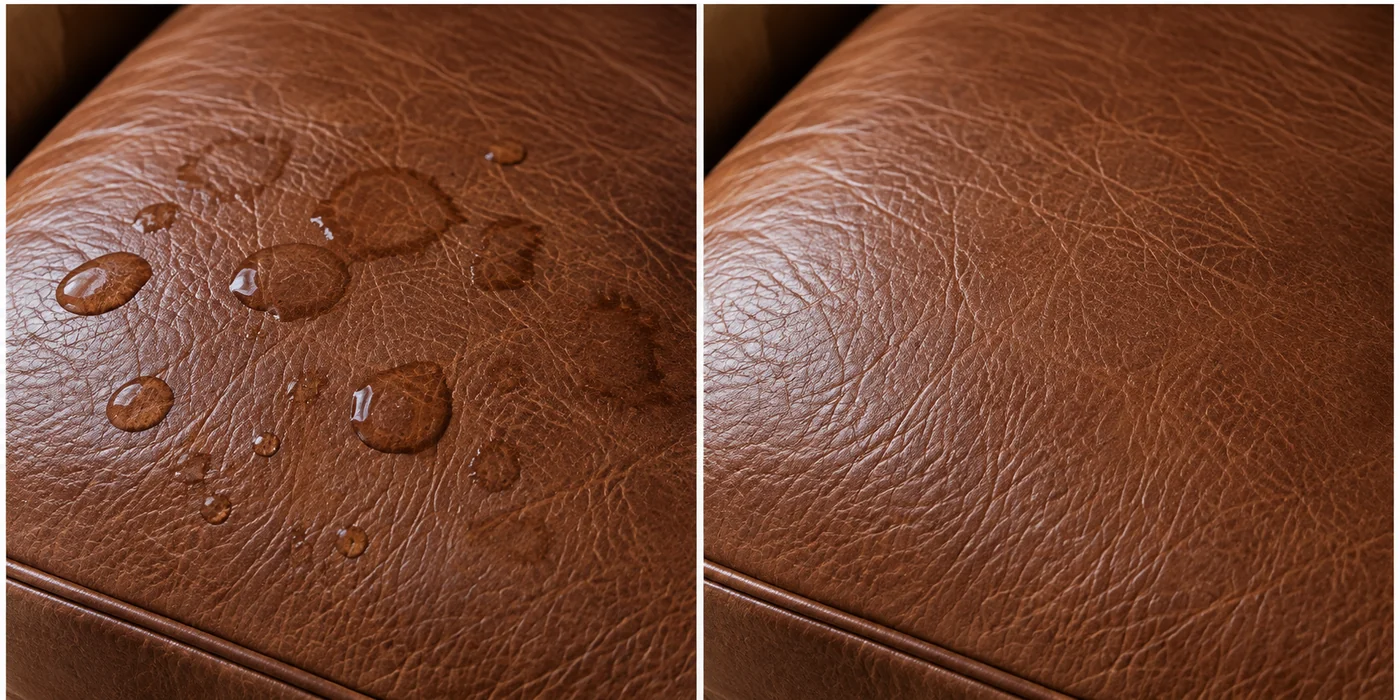 Water spots
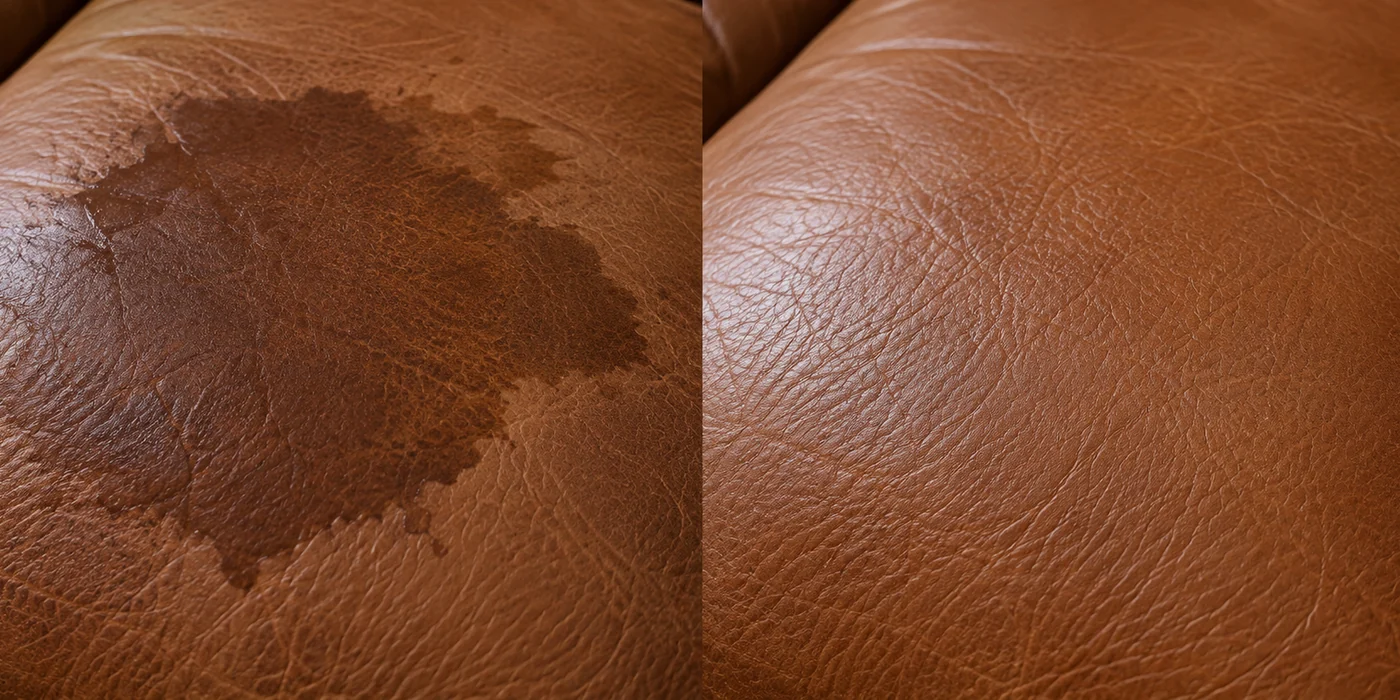 Large spill marks
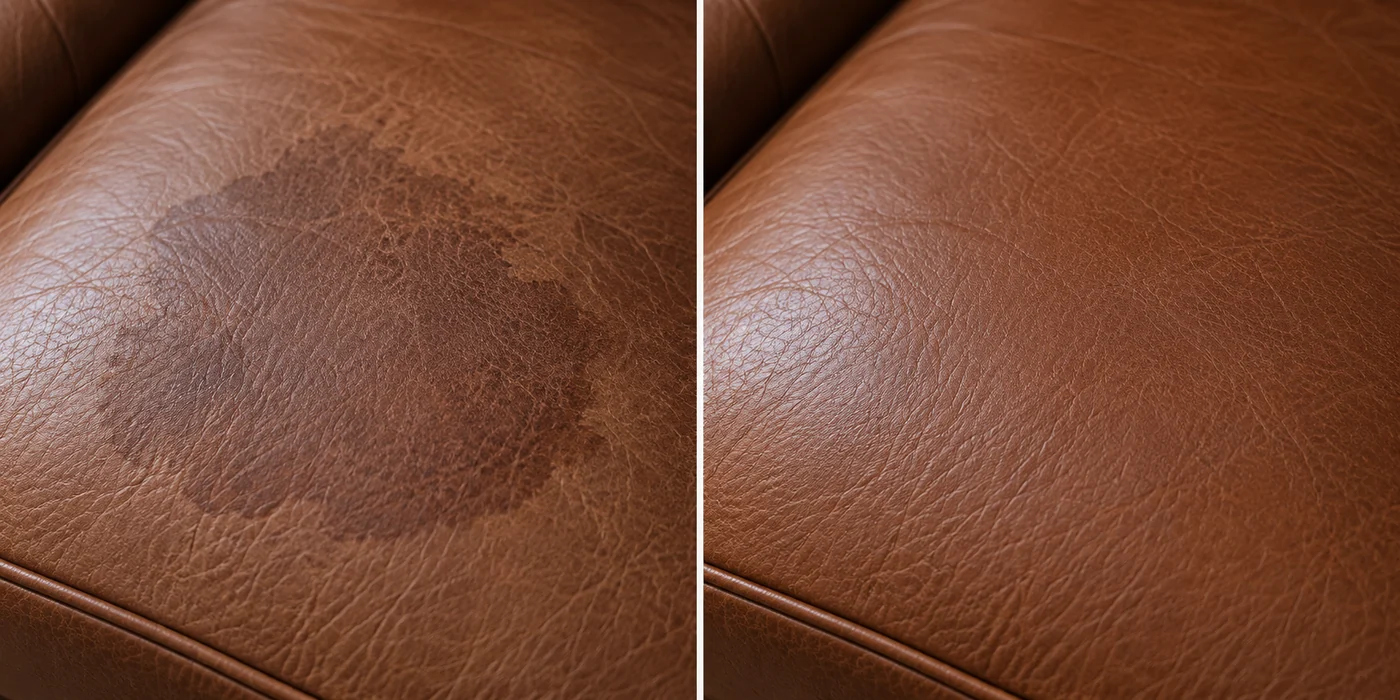 Finish discolouration
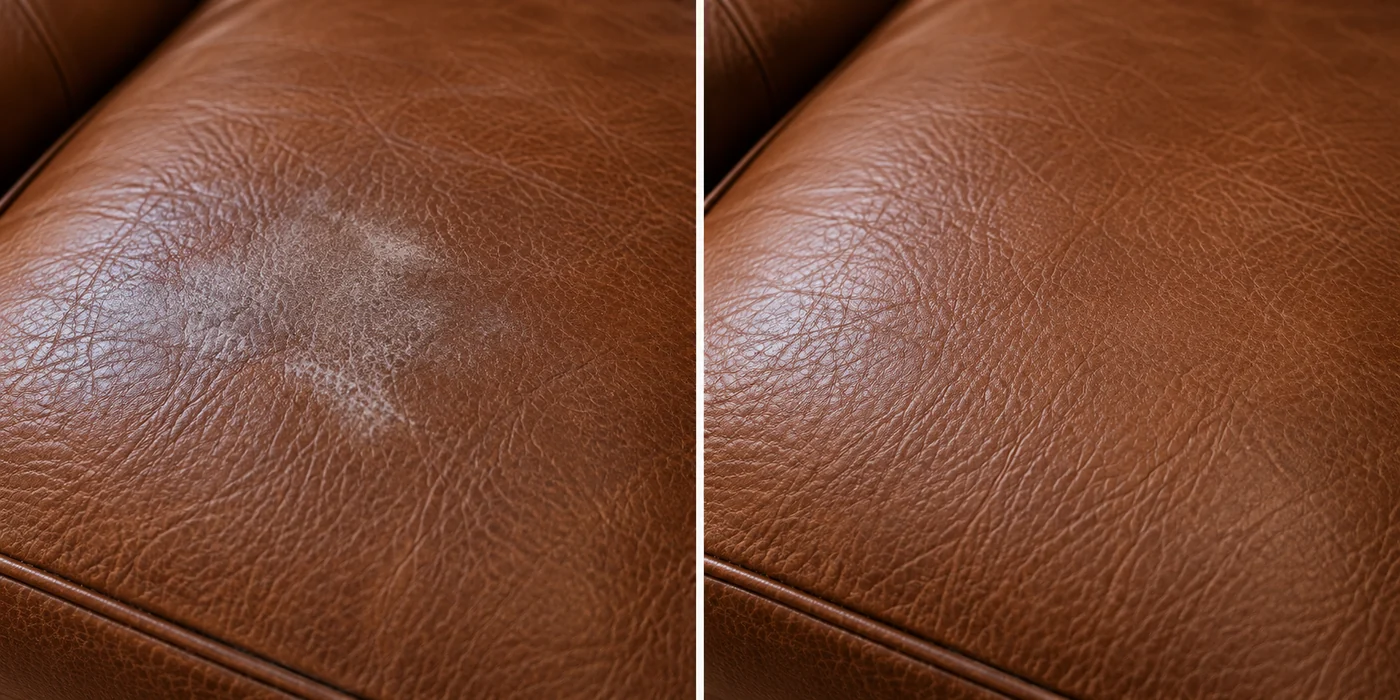 Water and colour loss
Rings, tide lines and spotting are finish work: the mark sits in or on the coating, and the panel is levelled and recoloured. Colour loss is deeper — the pigment left with the water. And if the panel has split along the flex lines it dried too fast: that is crack repair now, and the water is no longer the problem.
The same water. Different results.
Leather type changes everything. The finish on the hide decides whether a spill sits on top for a minute or is in the fibre before you reach a towel — and that is the single biggest factor in what a leather water damage repair costs.
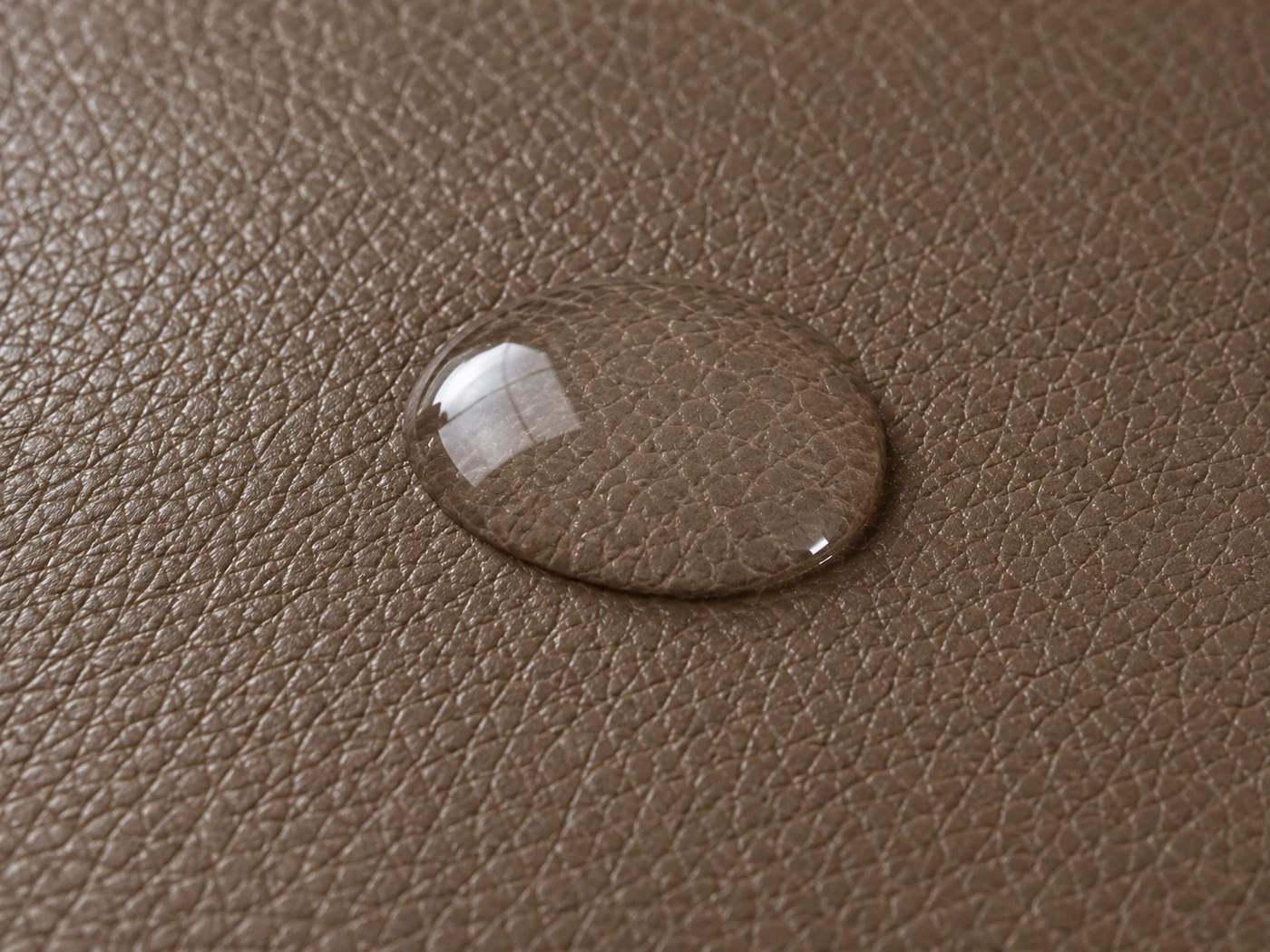
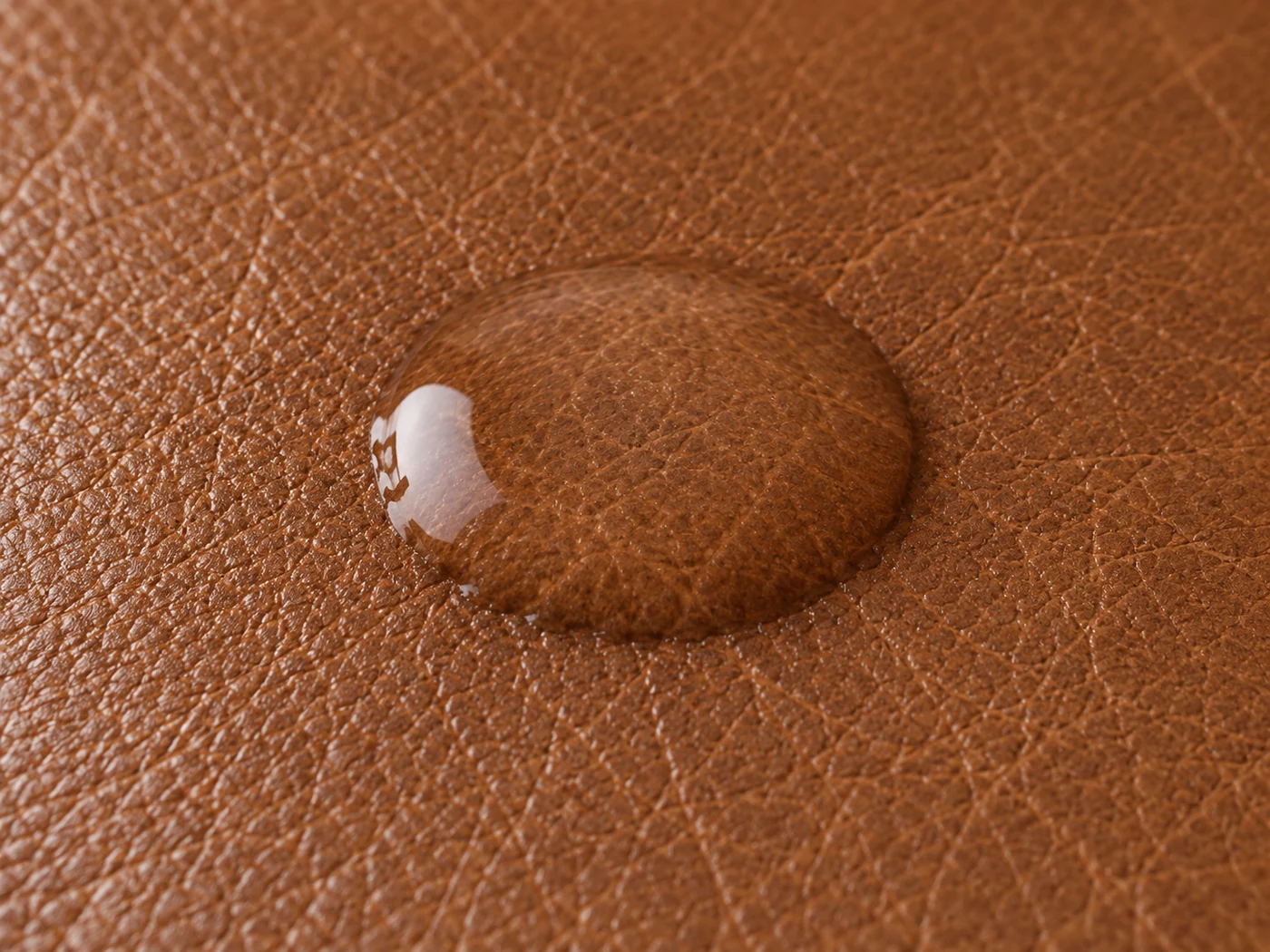
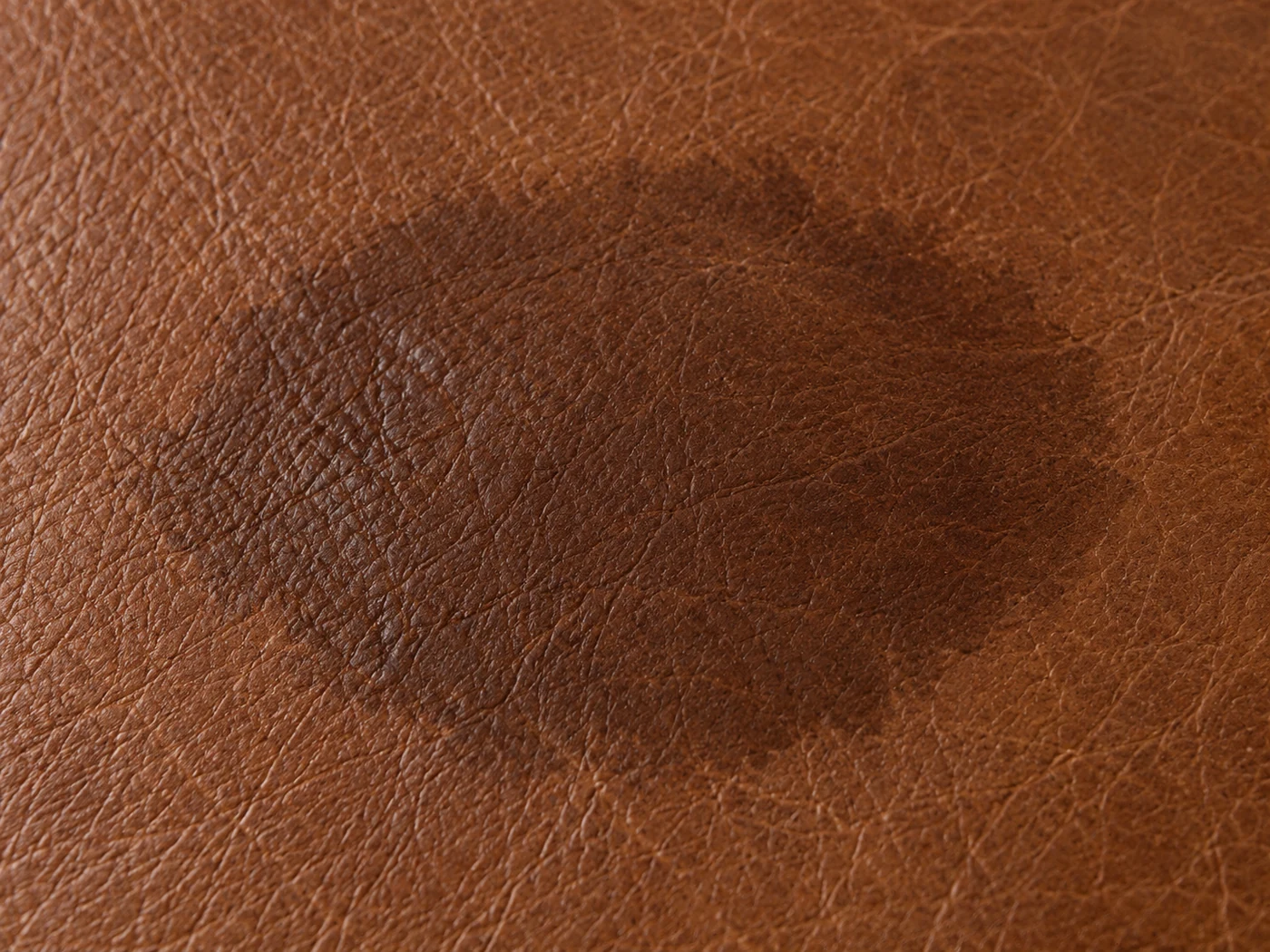
This is why two people with the same spill get different leather water damage repair quotes from us. On pigmented leather the mark stays shallow and is lifted off the coating. On aniline leather there is no coating to lift it from, so the ring is worked outwards through the hide and the panel is recoloured to close it. Semi-aniline leather sits between the two and is quoted between the two. Suede and nubuck are a different job again — the nap mats down where the water sat, and it is raised back rather than recoloured. If you are not sure which you have, put one drop of water on a hidden edge and watch it for a minute.
Water damage as it dries
The same seat, photographed as it dried. The mark looks worst on the first day and is most repairable on the first day — which is why we ask for the wet photo as well as today's.
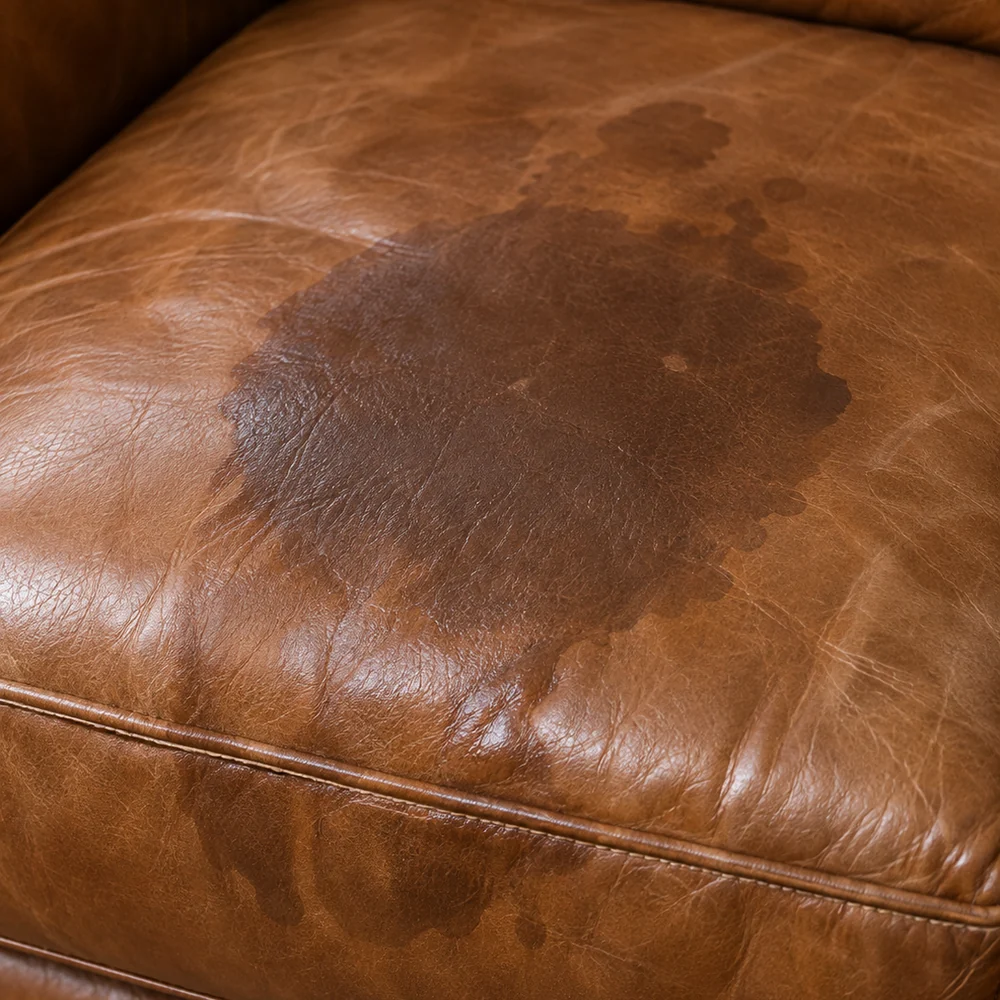
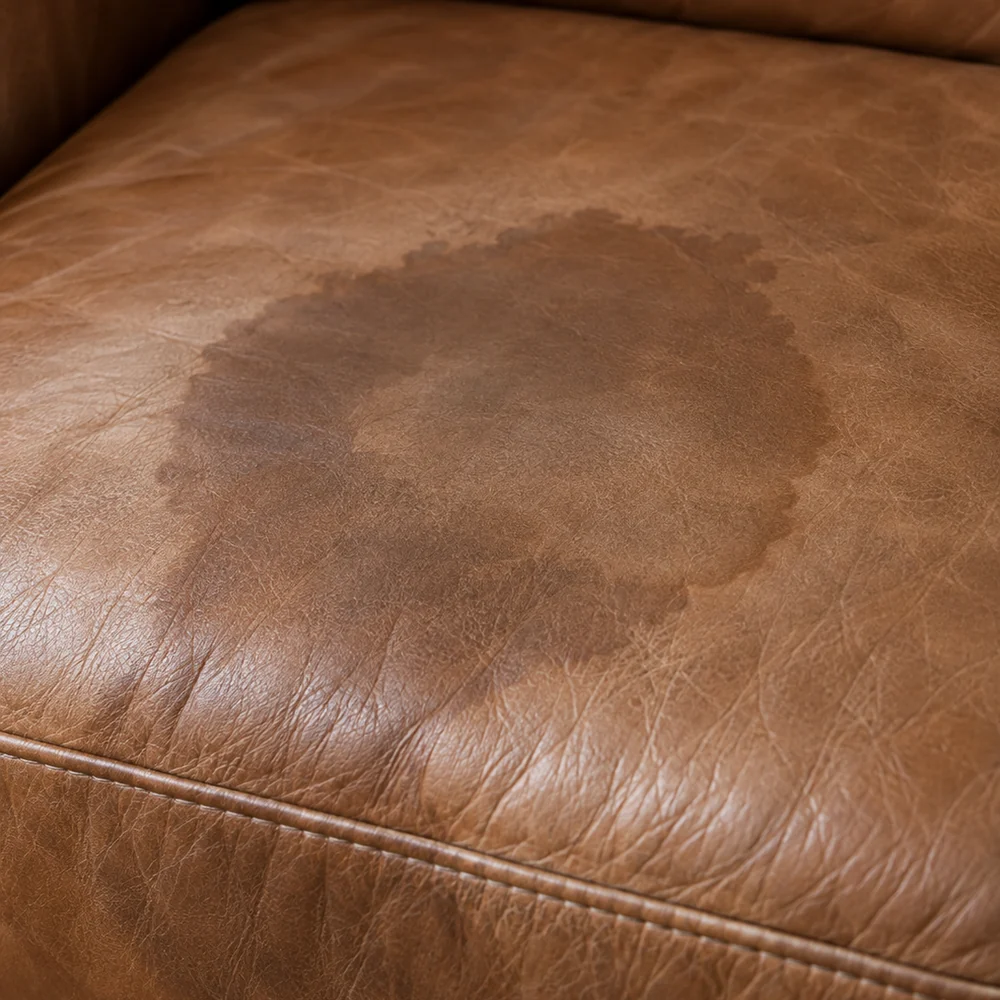
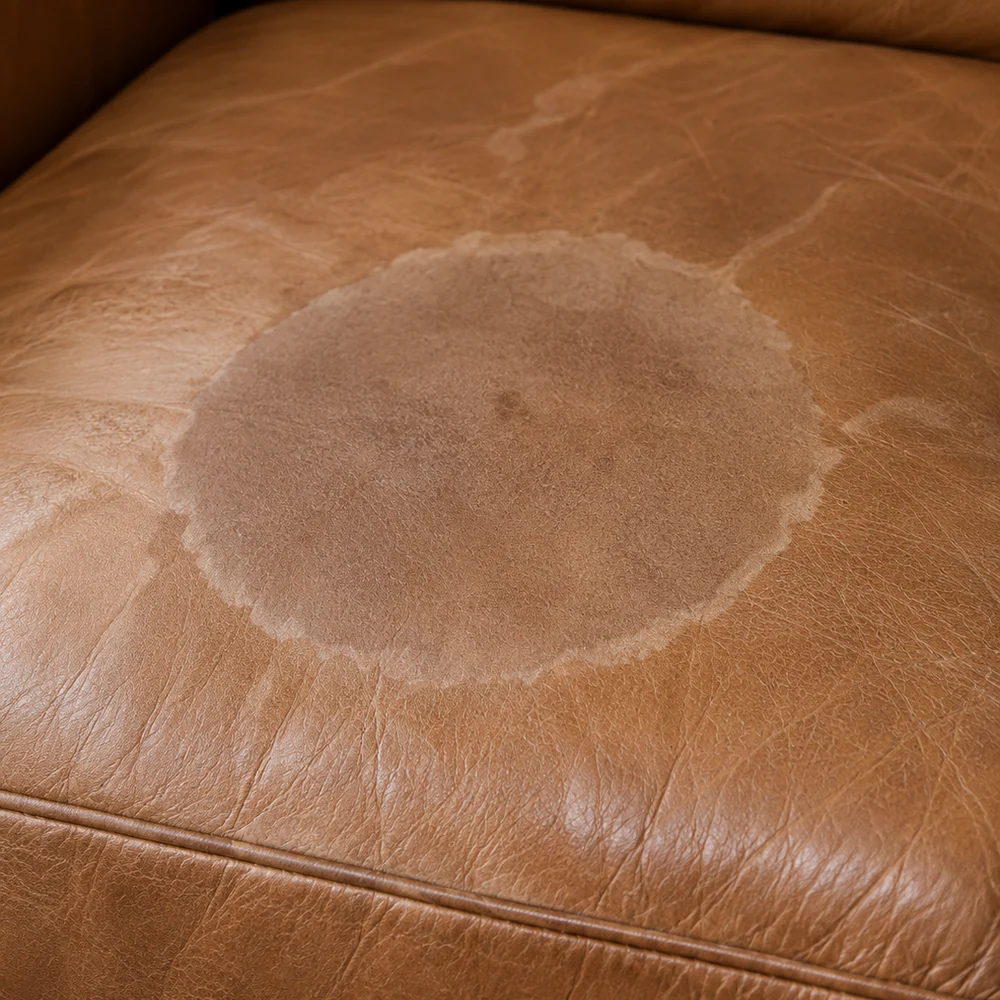
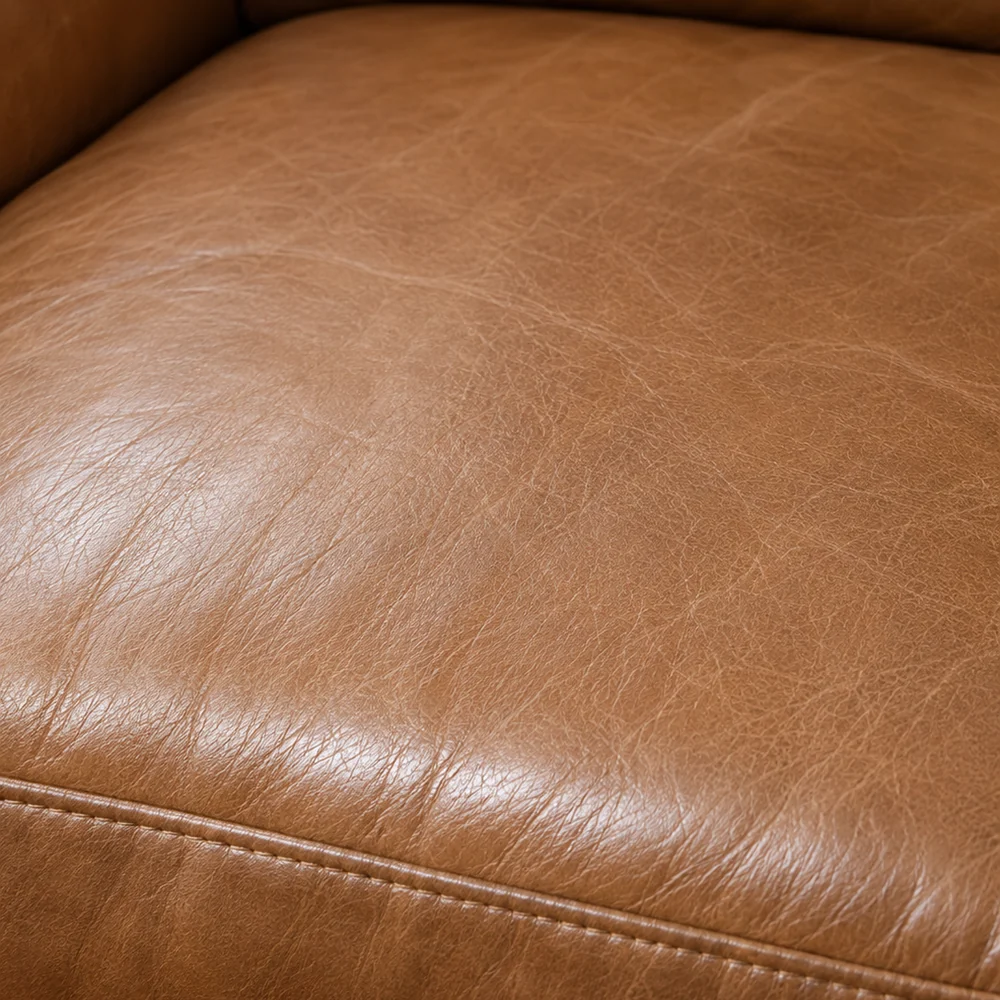
Stage three is where almost every enquiry reaches us, and it is the stage that looks least alarming and reads worst. The colour is gone flat, the rim is loaded with whatever the water carried out of the fill, and the hide underneath has tightened. None of that comes back with cleaning — it is worked out, fed and recoloured across the whole panel so the repair has no edge of its own.
Why water leaves a ring
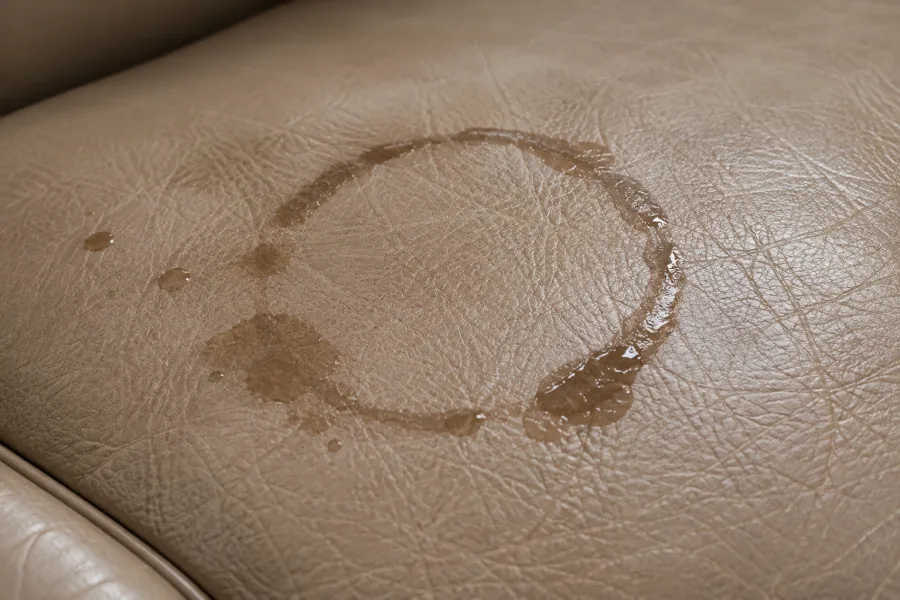
The mark is not the water. It is everything the water carried out to the edge of the wet patch and left behind when it dried — which is also why the three fastest instincts all make it worse.
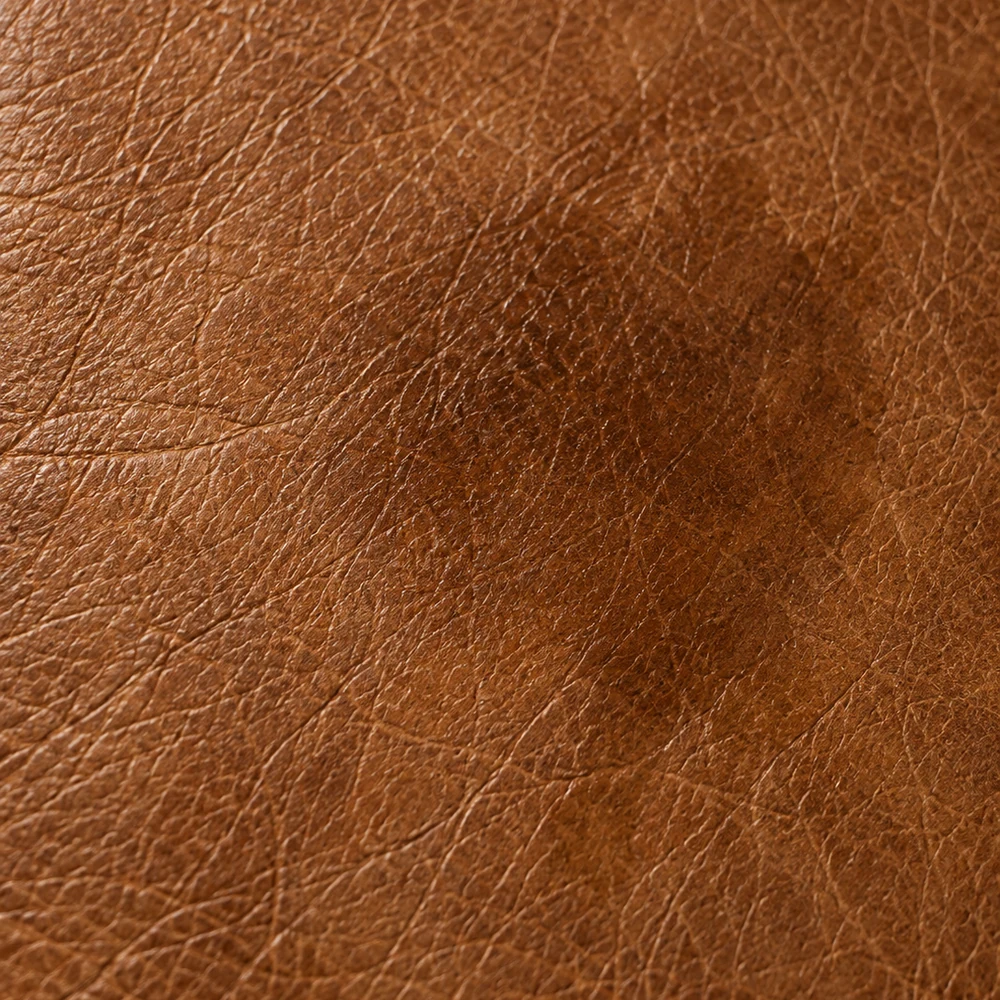
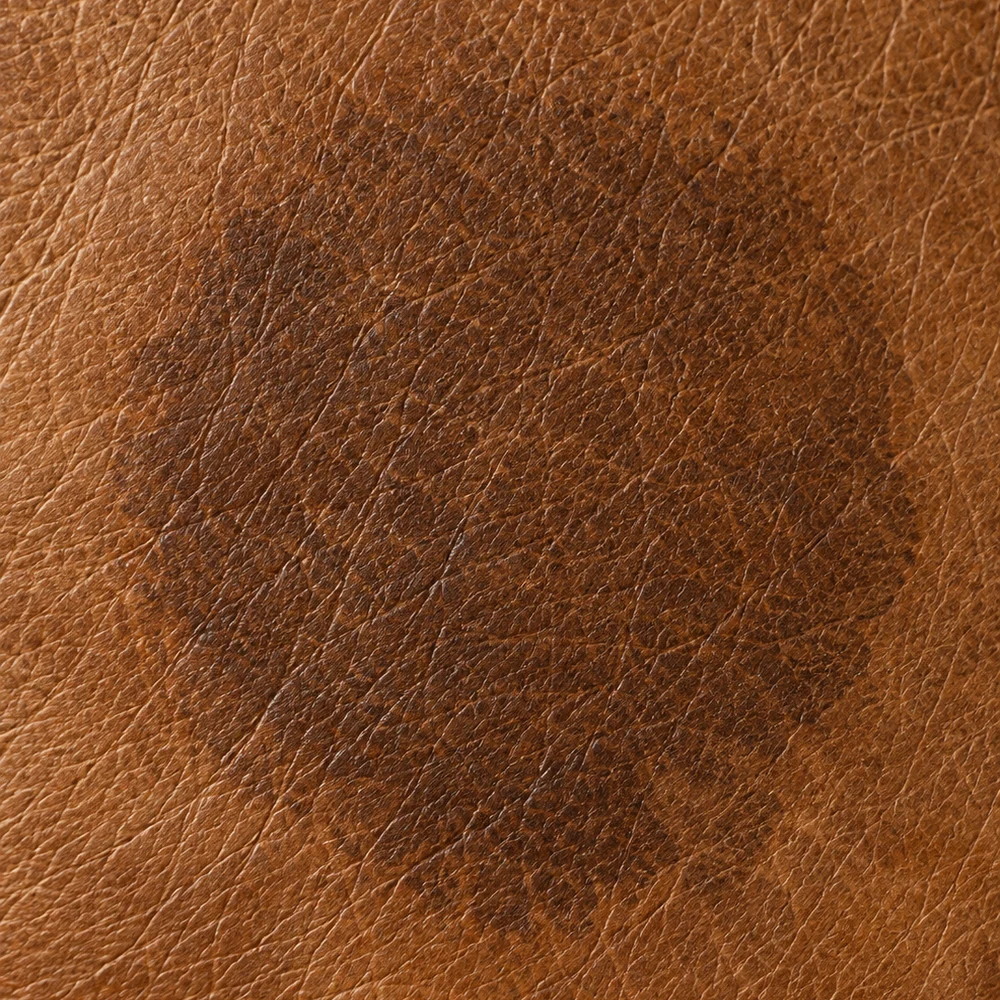
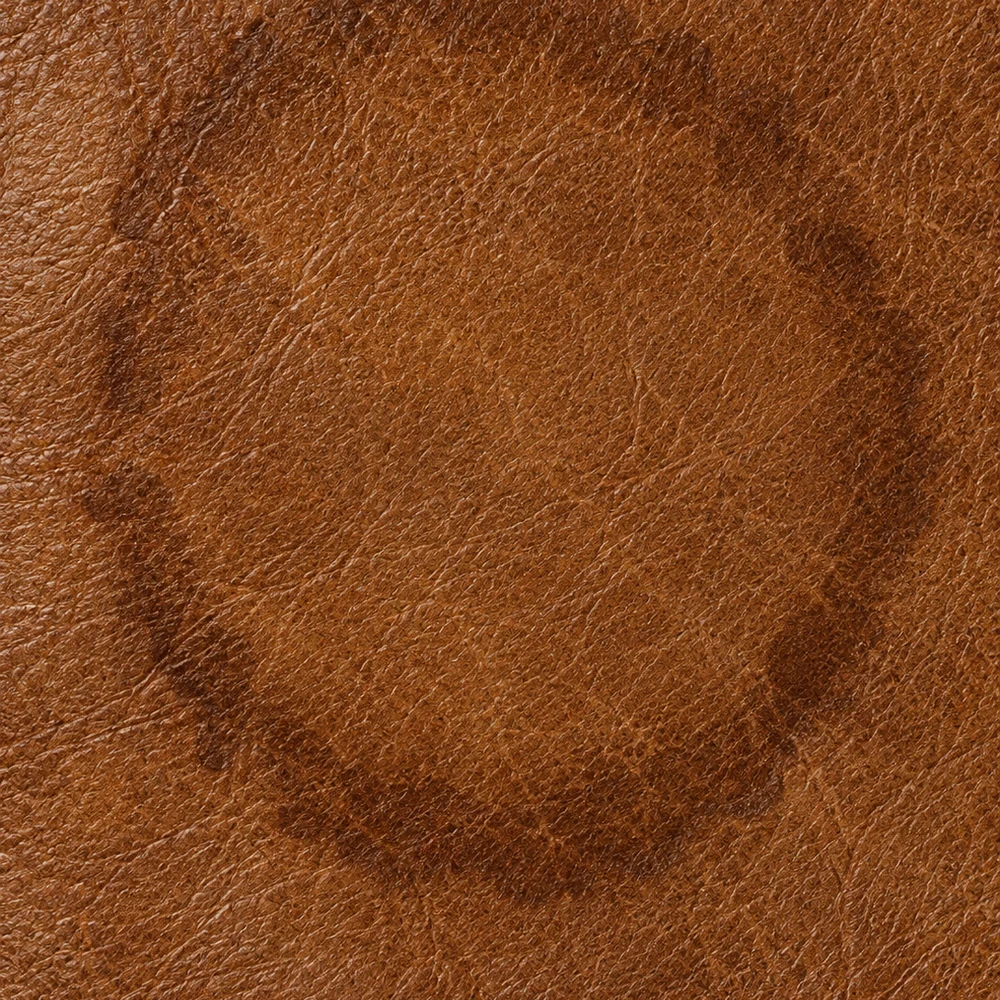
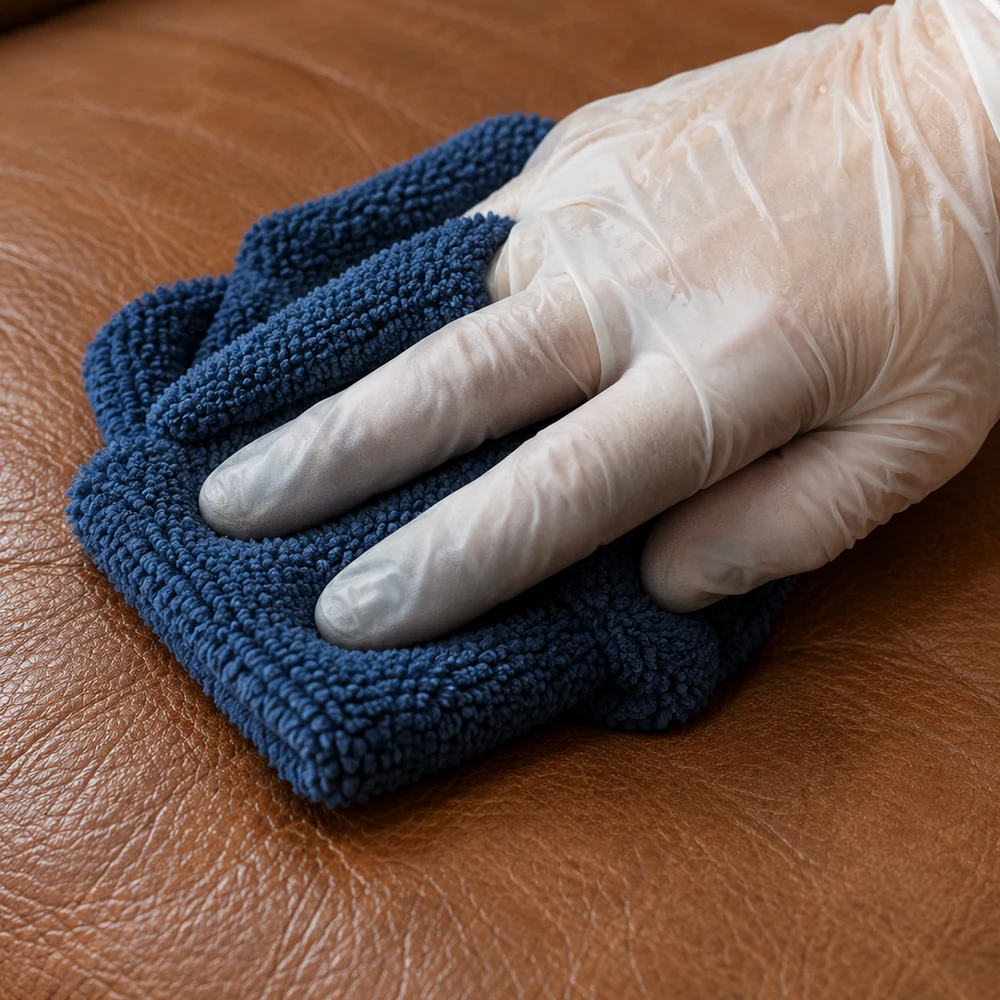
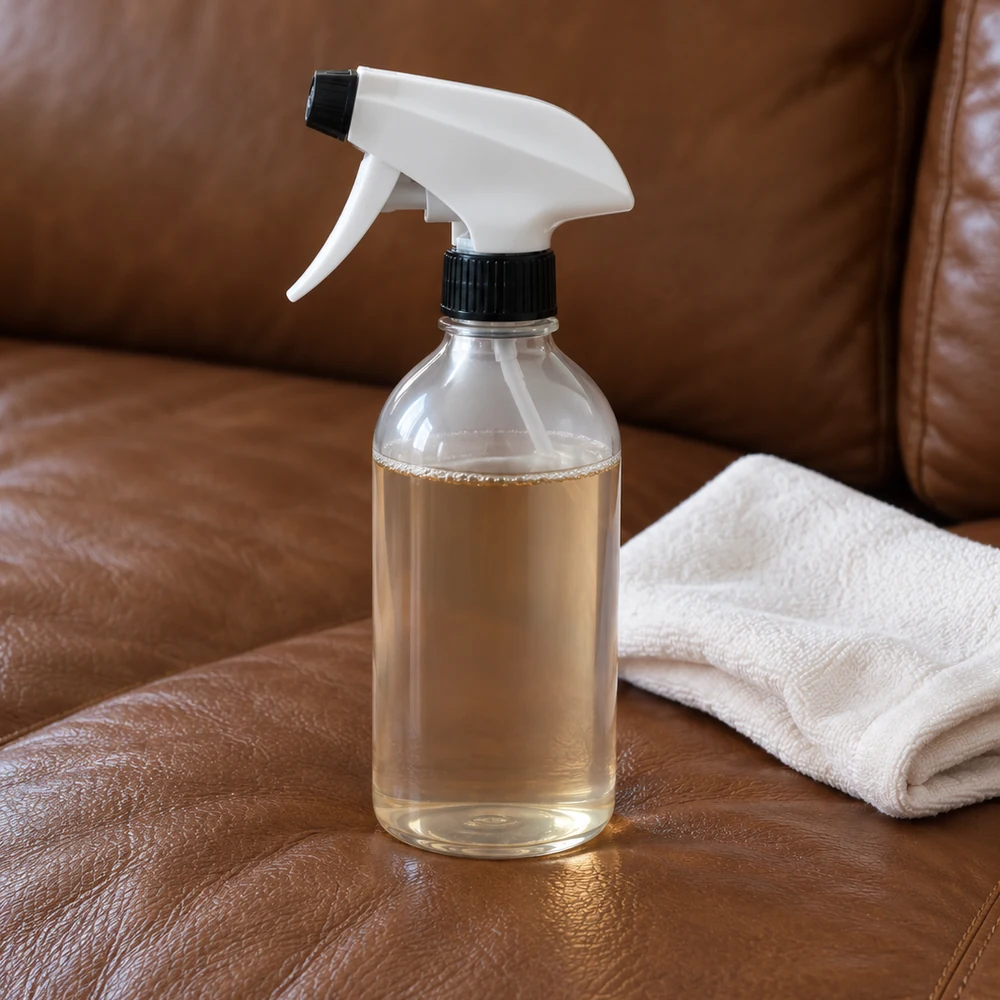
Every leather water damage repair starts by reading that rim — how much it is carrying, and how hard the hide went underneath it. Which is why the two photographs we ask for are the wet one and today's.
The first 48 hours decide most of it
The CDC puts the window plainly: “Clean up and dry out your home fully and quickly (within 24–48 hours) after a flood.” Almost every piece we cannot save was dried too fast by someone trying to beat that clock. Air and time do it; heat does not.
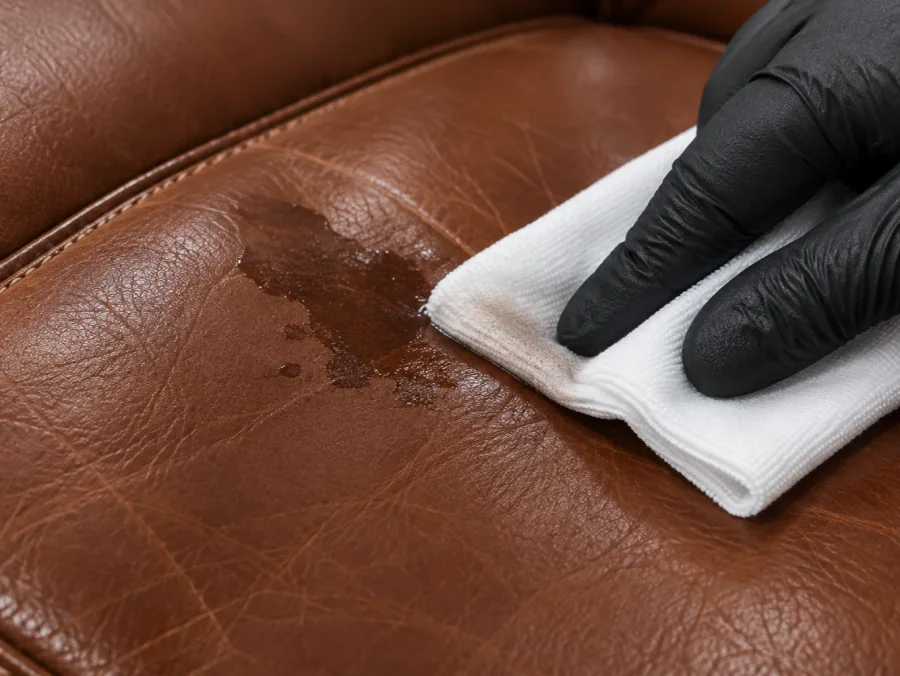
- Blot with a white towel, straight down. Rubbing drives water sideways and makes the ring bigger than the spill.
- Unzip the cushions, take the foam out, stand both on edge so air reaches every face.
- Move air across the room, not at the piece — fan at the wall, windows open, dehumidifier on.
- Photograph it wet. That photo shows how far the water went; the dry piece will not.
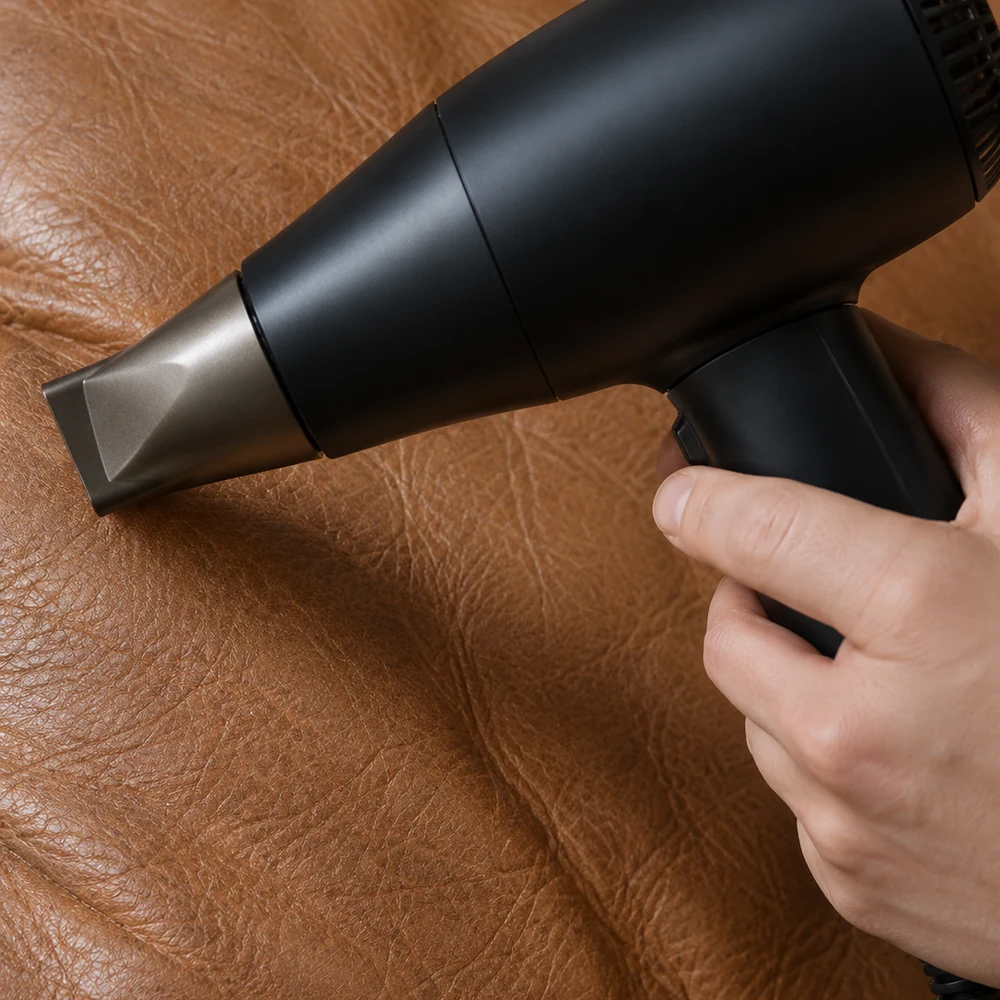
- Keep it out of the sun. Same damage as a heater, plus bleaching.
- Leave conditioner until it is bone dry, or you seal the moisture in under a layer we then have to strip.
If it is a lobby, a restaurant booth or a run of guest rooms and the piece has to be usable tomorrow, call rather than fill in the form — leather water damage repair on that clock runs through emergency repairs. Past four or five pieces it is a bulk project.
Tan sofa, radiator leak, five moves
A Brooklyn client came home to a slow leak running down the back of a tan three-seater and pooling in the right seat. Nine days dry before we saw it. The order this leather water damage repair went in:
Find the waterline, not the mark
The visible ring was on the seat. The real waterline sat higher on the back panel, invisible until a light went across it at a low angle. Repair only what shows from the front and the tide line returns a fortnight later.
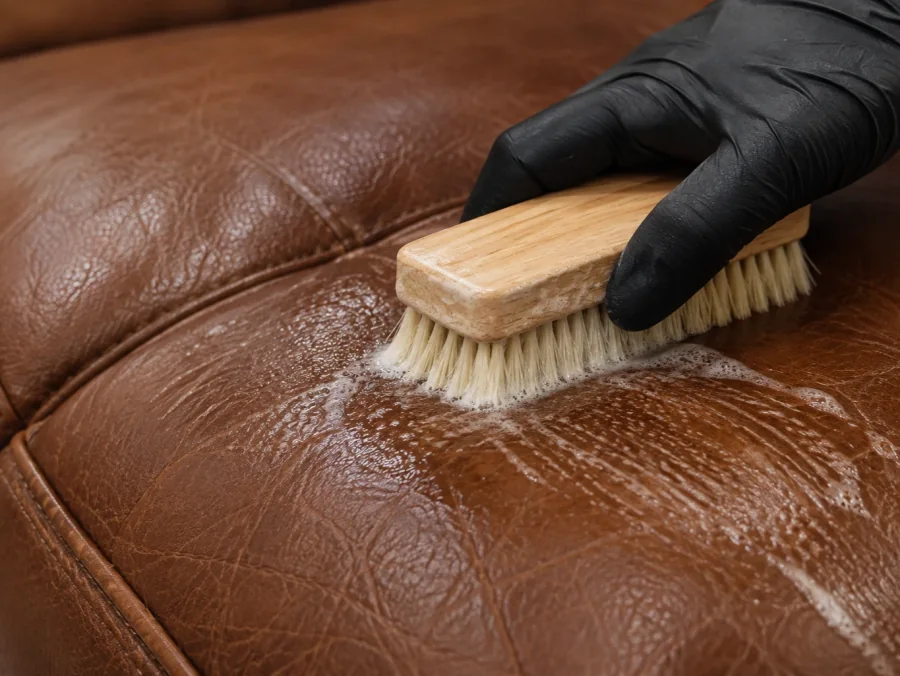
Redissolve the ring and move it
The rim is a deposit, so it is lifted with moisture and walked outwards to the seams on a soft brush, never worked back and forth over the mark itself. The cover came off and the foam went out to dry — nine days zipped shut had done nothing for it.
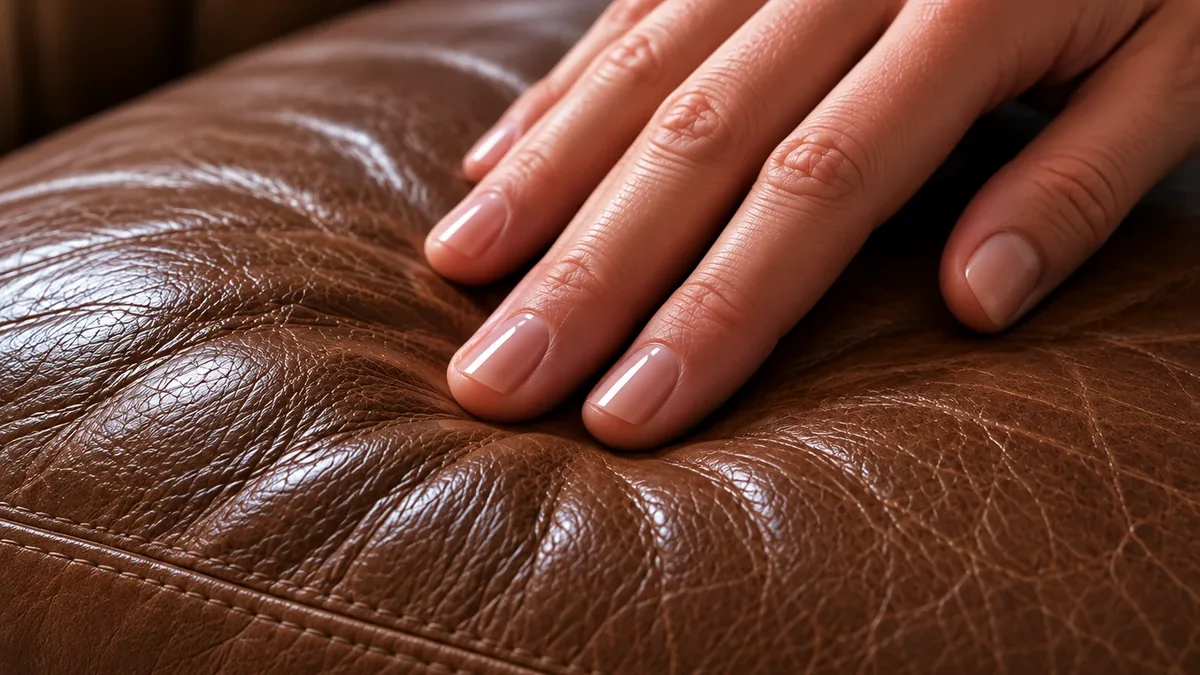
Test what the hide has left
Press a thumb in and fold it. A hide that creases and releases takes colour. One that stays creased has lost its oils and gets fed first — the same work as a leather conditioning visit, before anything is coated.
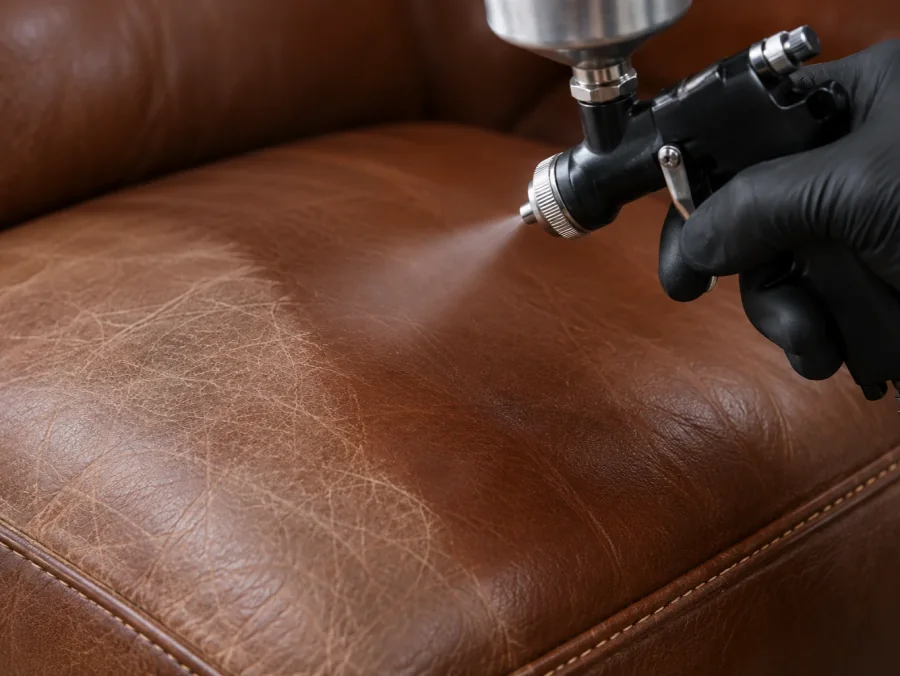
Rebuild colour seam to seam
Colour goes across the whole panel, never just the blotch. Stopping mid-panel leaves a soft edge that reads as a repair from the doorway. This stage is leather colour restoration, run inside the water job.
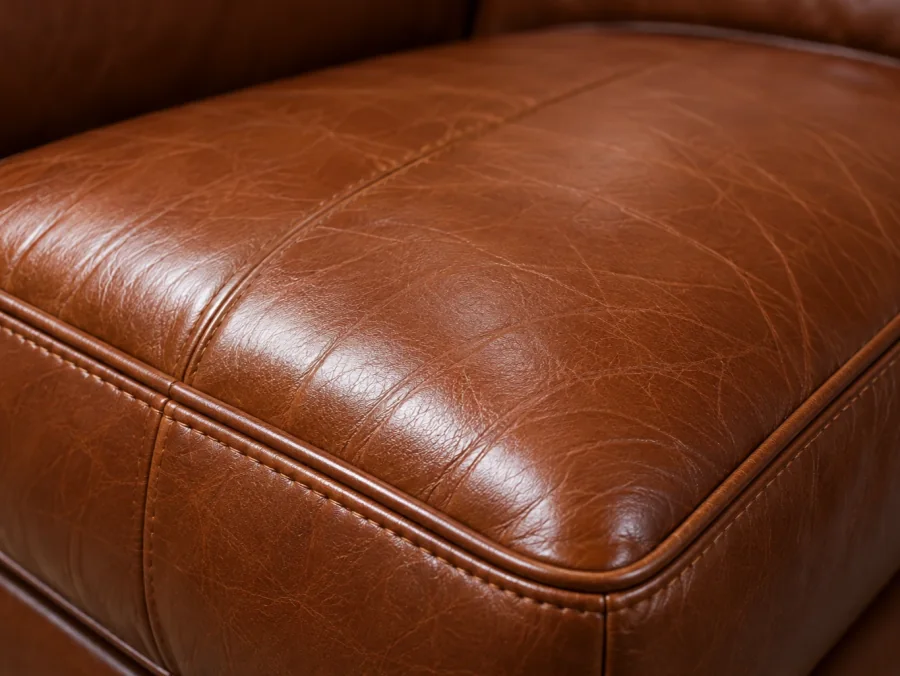
Match the sheen, then seal
A panel one step glossier than its neighbour is more obvious than the mark was. Sheen is matched to the untouched arm, then sealed flexible. The cushion goes back only once the foam reads dry through.
What comes back, and what does not
Water damage has a cleaner line through it than most damage we see. Left is routine leather water damage repair. Right is a piece we will tell you to stop spending on.
- Tide lines and rings. Redissolved, carried to the seam, recoloured panel-wide.
- Lifted or blotched colour. Rebuilt panel-wide, which is why the repair shows no border.
- A hide that dried stiff but still bends. Fed back over two or three passes before any coating.
- Smell, once the fill is out. Odour lives in foam and decking, not in the hide.
- Marked panels on a sound frame. At worst a panel replacement, not the whole piece.
- Hide that shrank hard. If it no longer reaches its own seams, nothing stretches it back.
- Mould through the foam and deck. Growth in the fill is a health question. We replace, not treat.
- Delaminated bonded or PU. A wet fibre backing separates from its film and keeps separating.
- A swollen, split frame. Joints that opened while wet do not close as they dry.
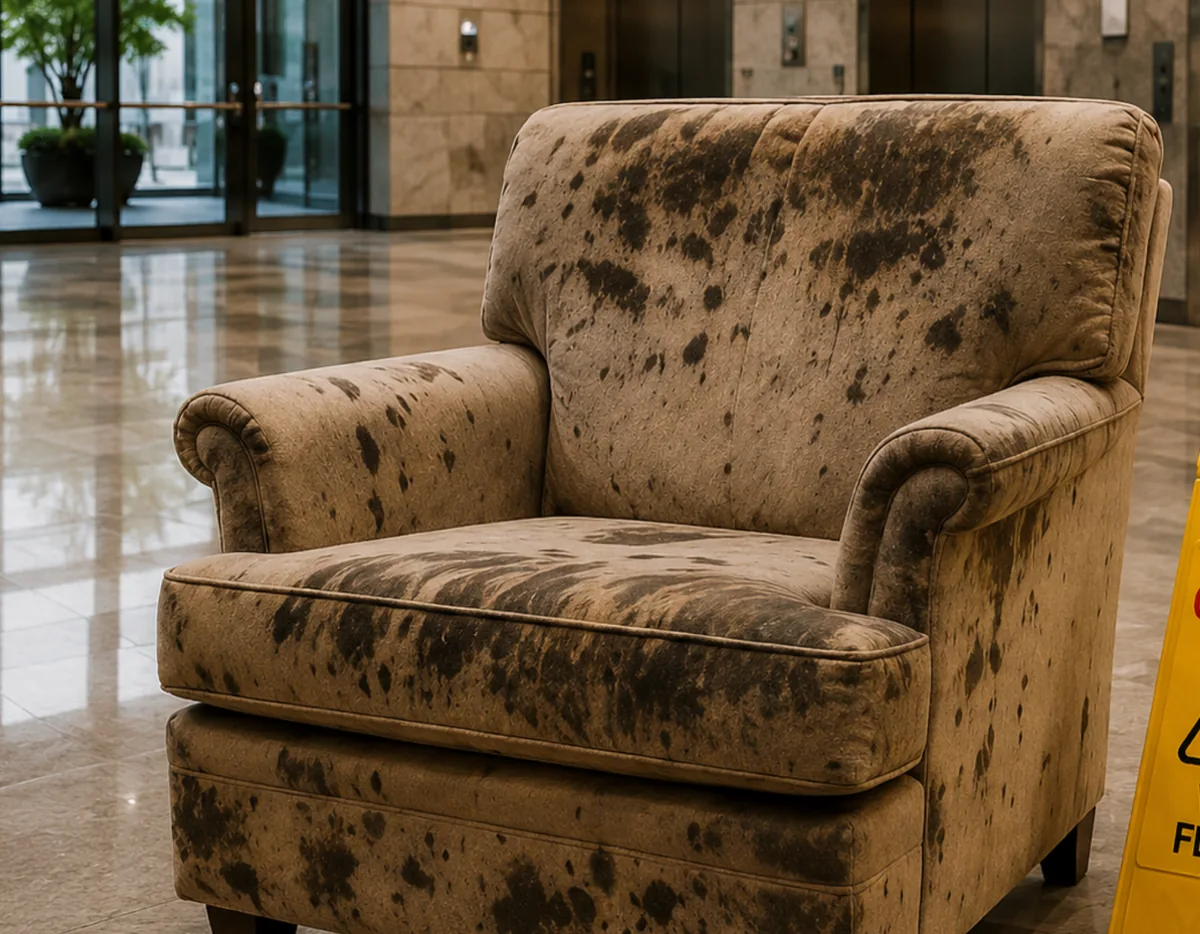 A fabric lobby chair, pulled out of service after a leak and shot on a job where we were assessing the leather seating around it. Not leather — but it shows mould in the fill rather than on the surface, which is the point at which we stop collecting a piece in any material.
A piece in the right-hand column is not written off, it is re-covered: reupholstery with custom cushions cut to the original template, so you keep the shape you bought.
Twelve pieces, before and after
Left is before, right is after — same piece, same room, same light. Where the mark turns out to be a substance rather than water, it is leather stain removal, not leather water damage repair. We tell you which before we start.
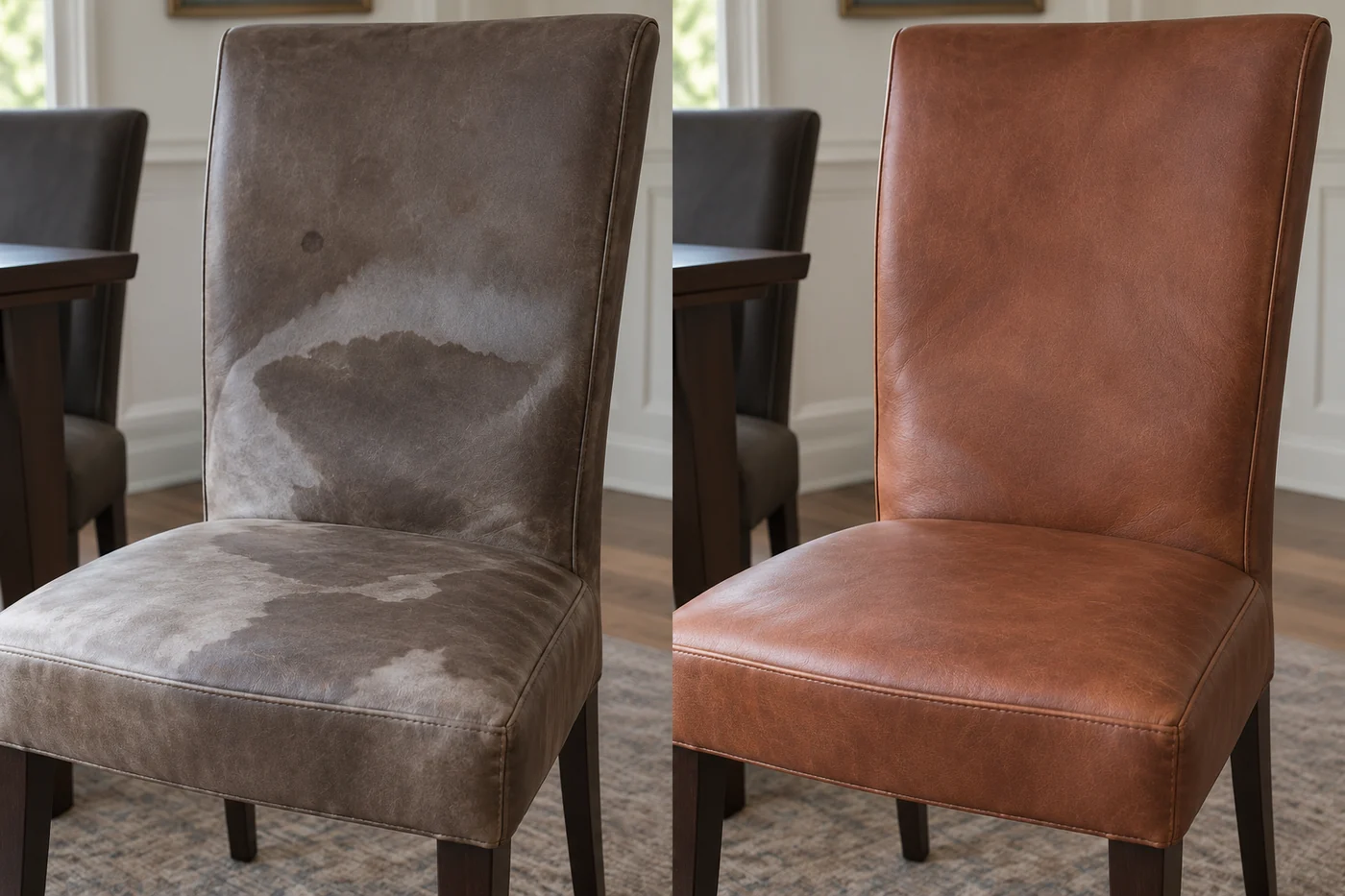 Dining chair. The water took the colour with it, so the whole chair was recoloured.
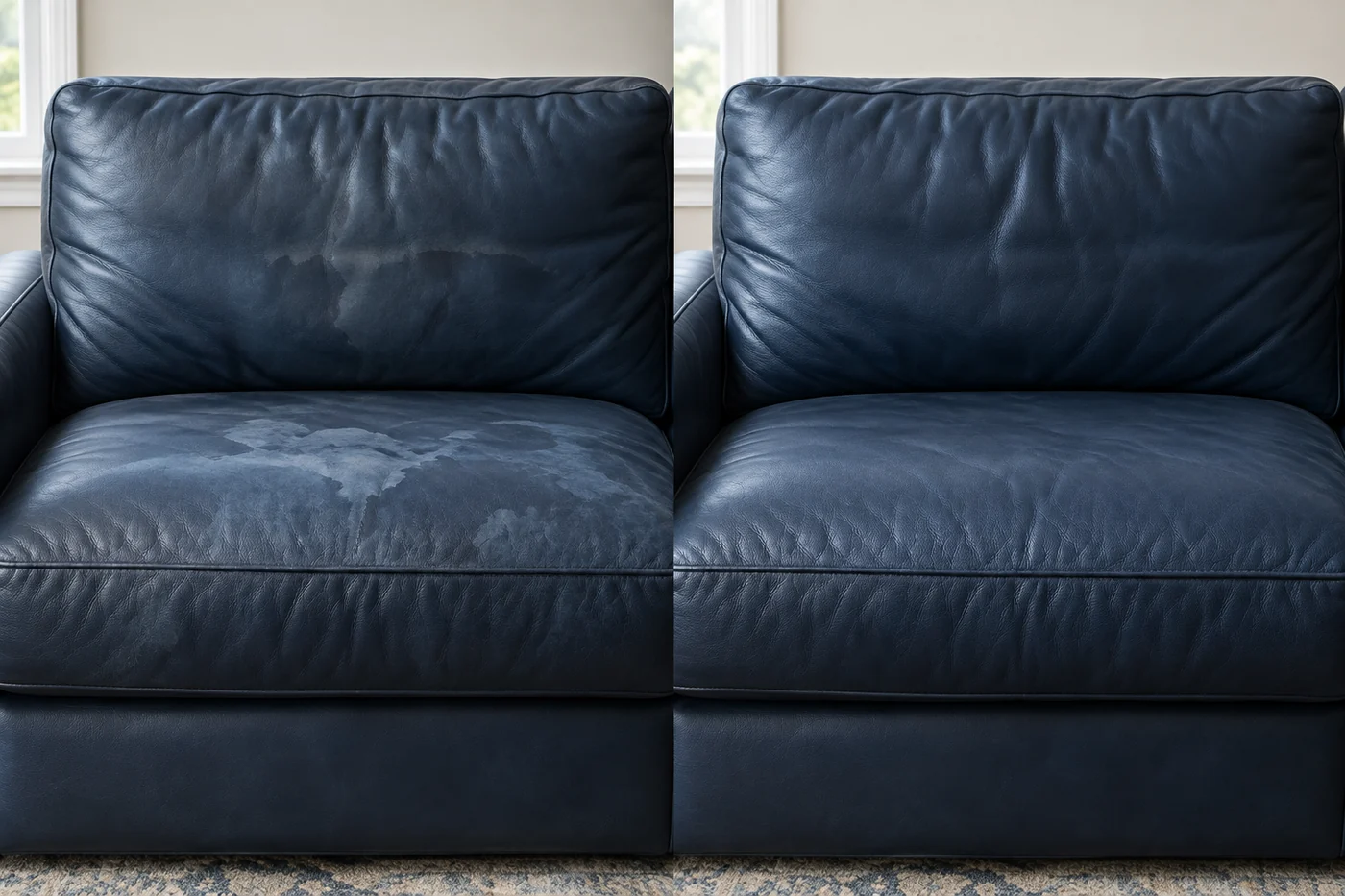 Navy sofa, a tide line dried across the seat cushion.
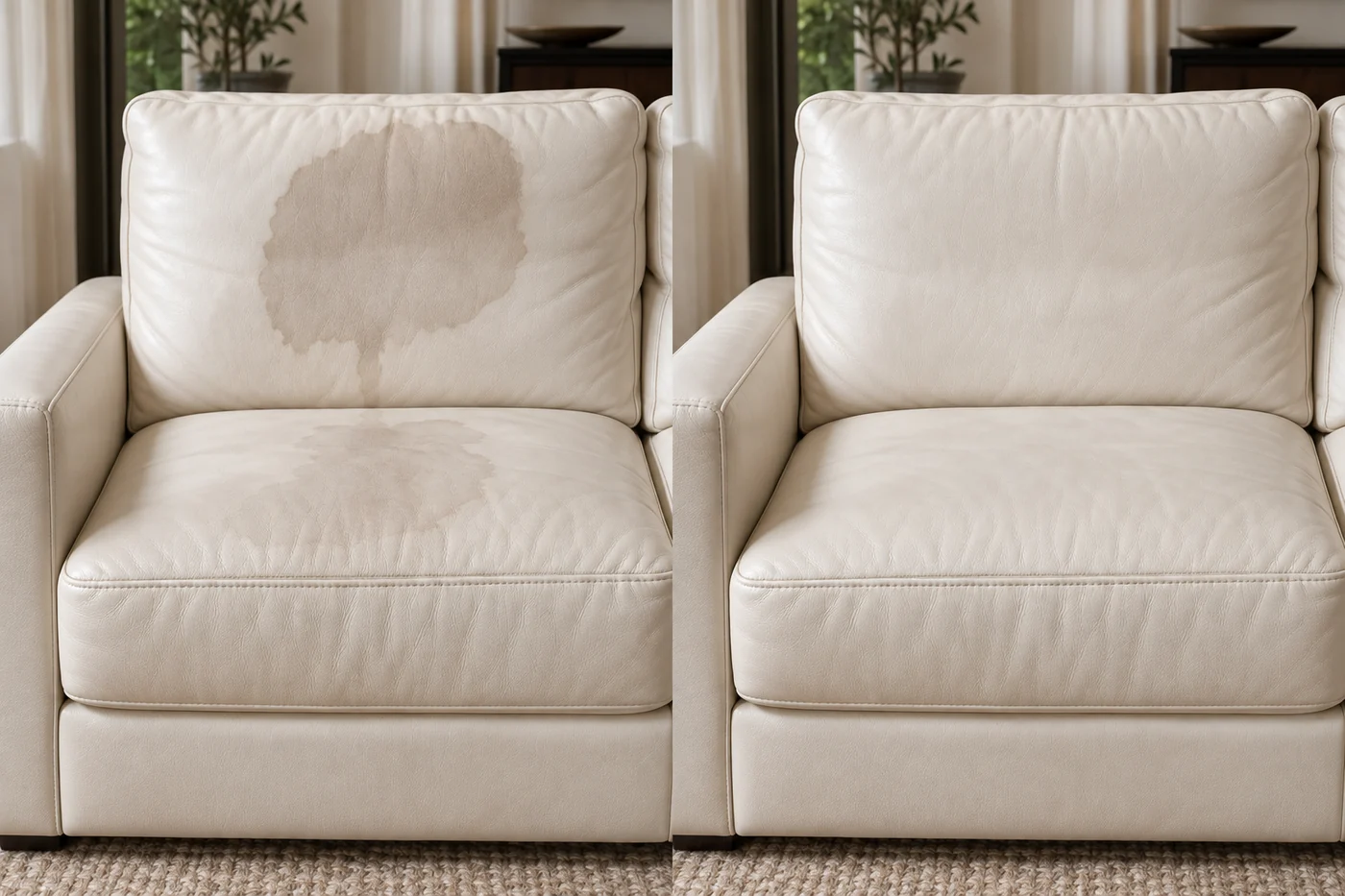 Cream armchair, a bloom on the back cushion with the tide line still showing.
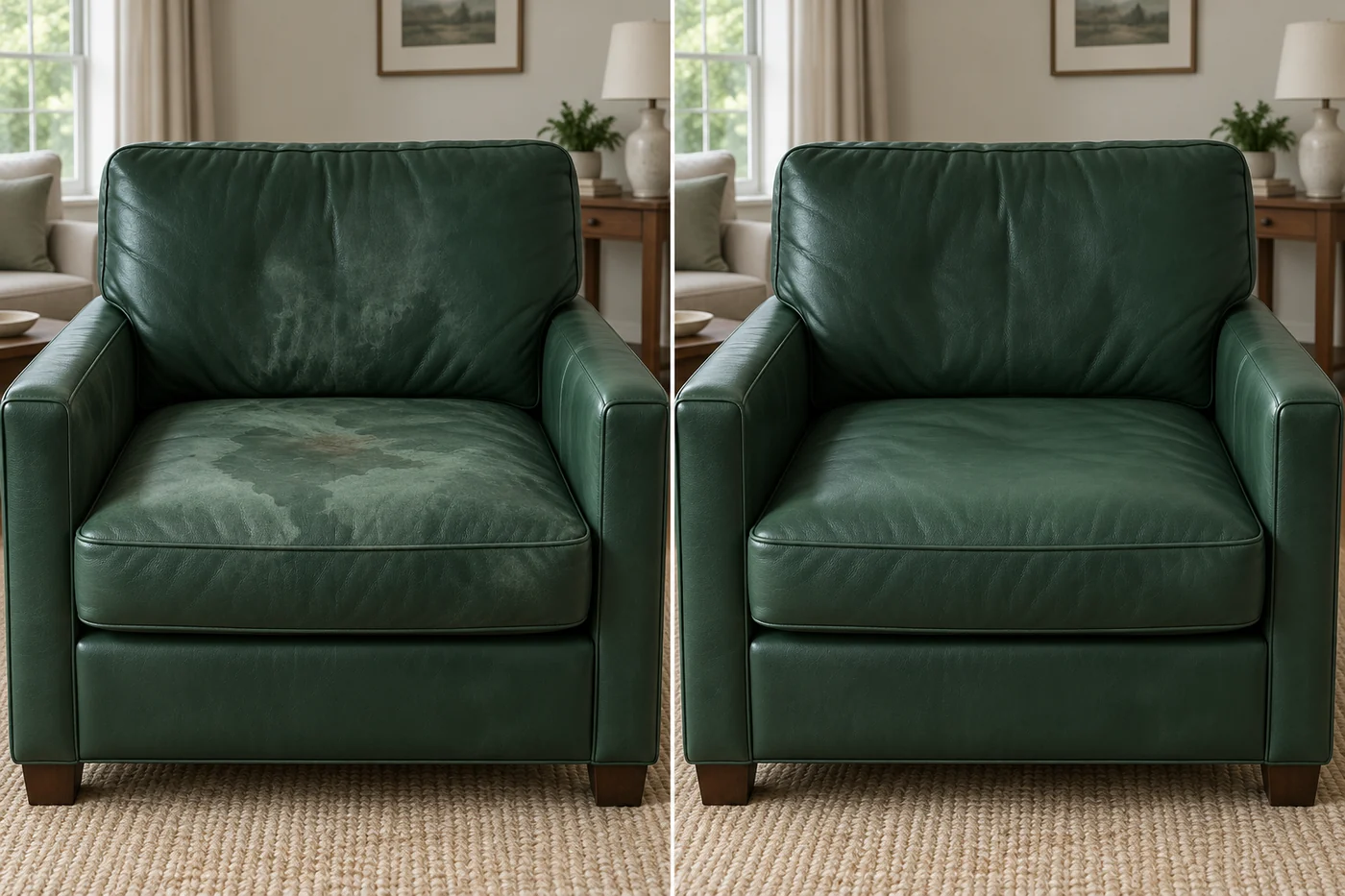 Green armchair, marks down the seat and the inside arm.
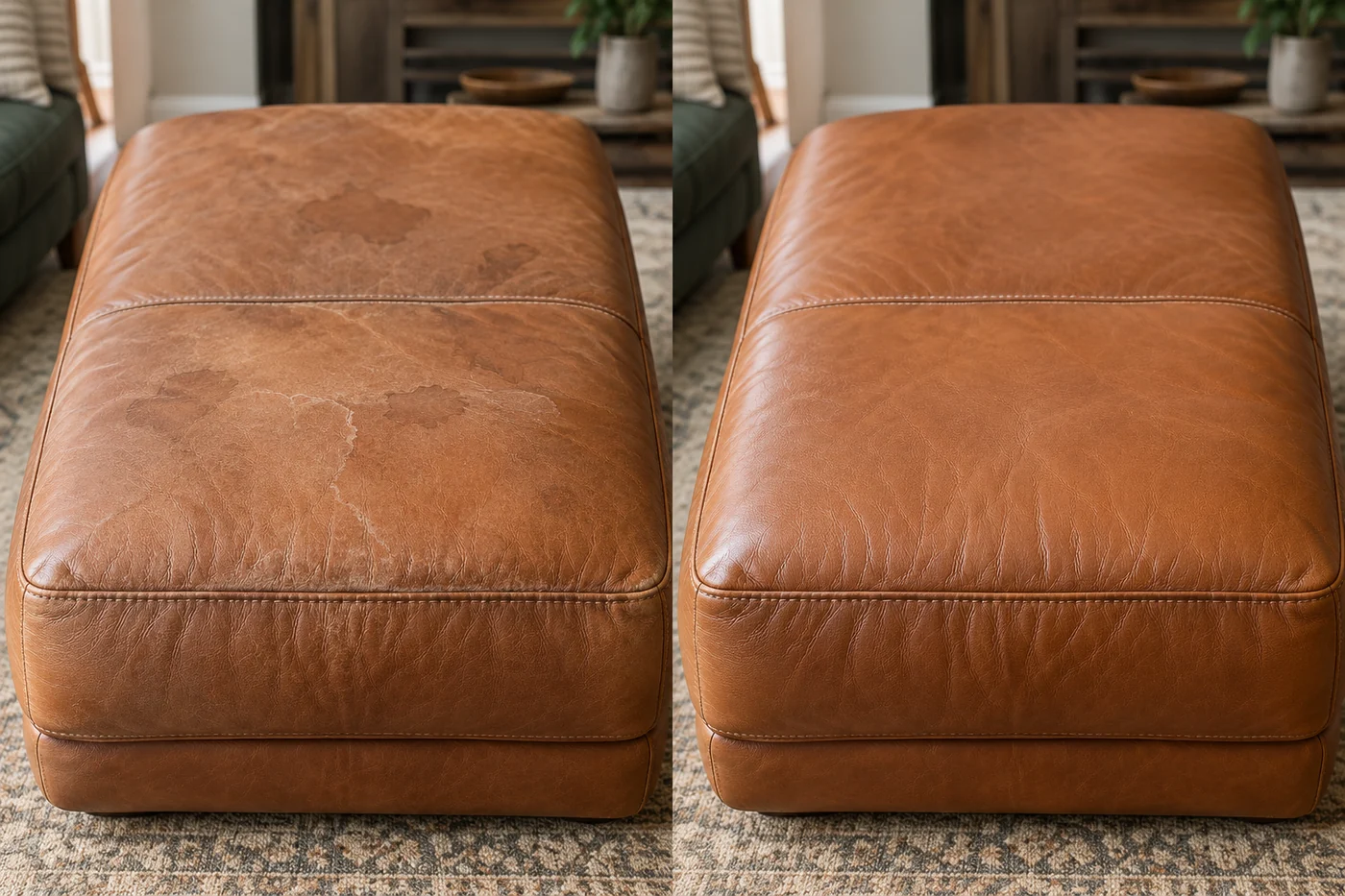 Tan ottoman, a spill that dried into a hard-edged patch across the top.
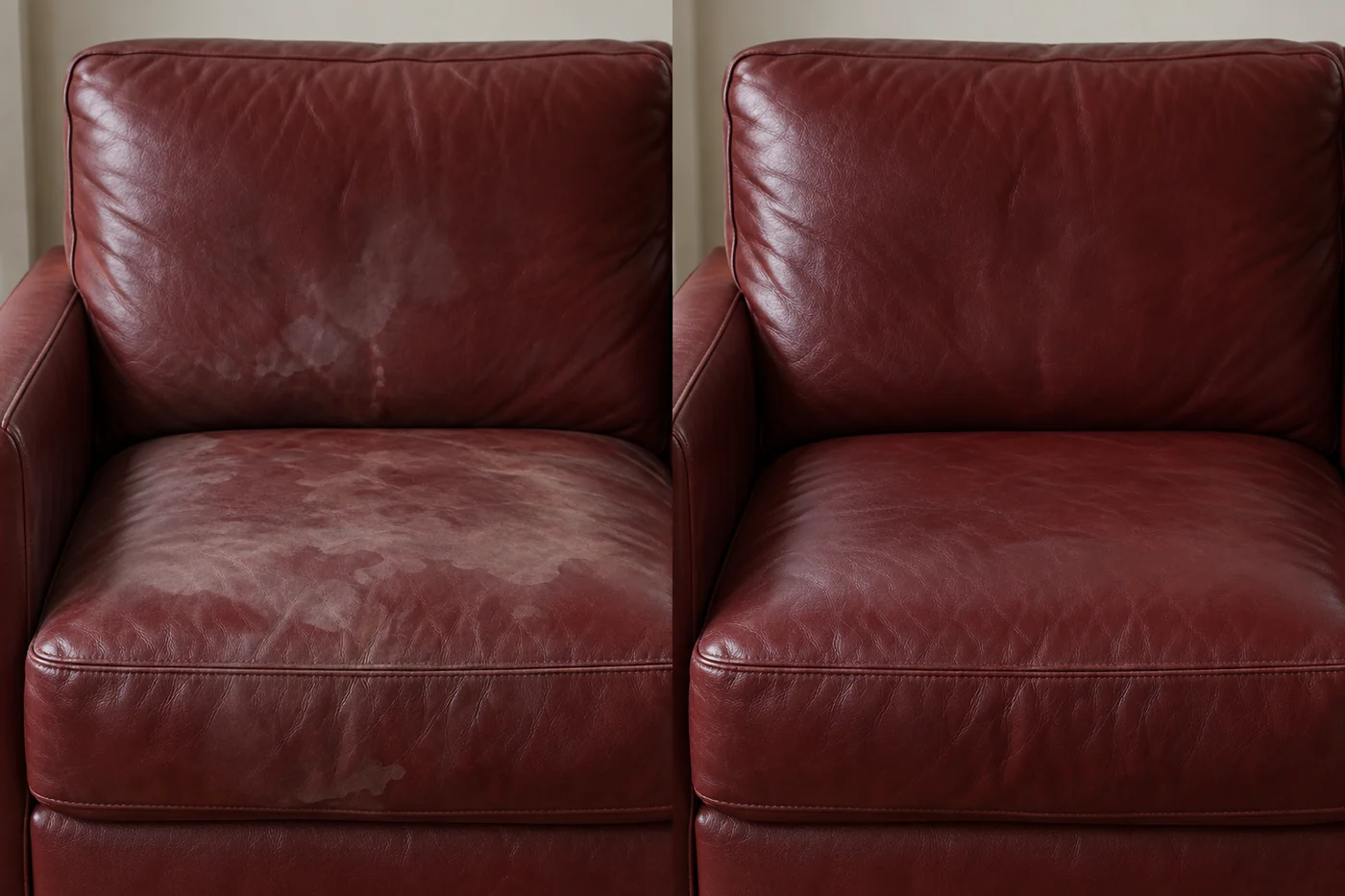 Burgundy chair, spotting across the seat and the back.
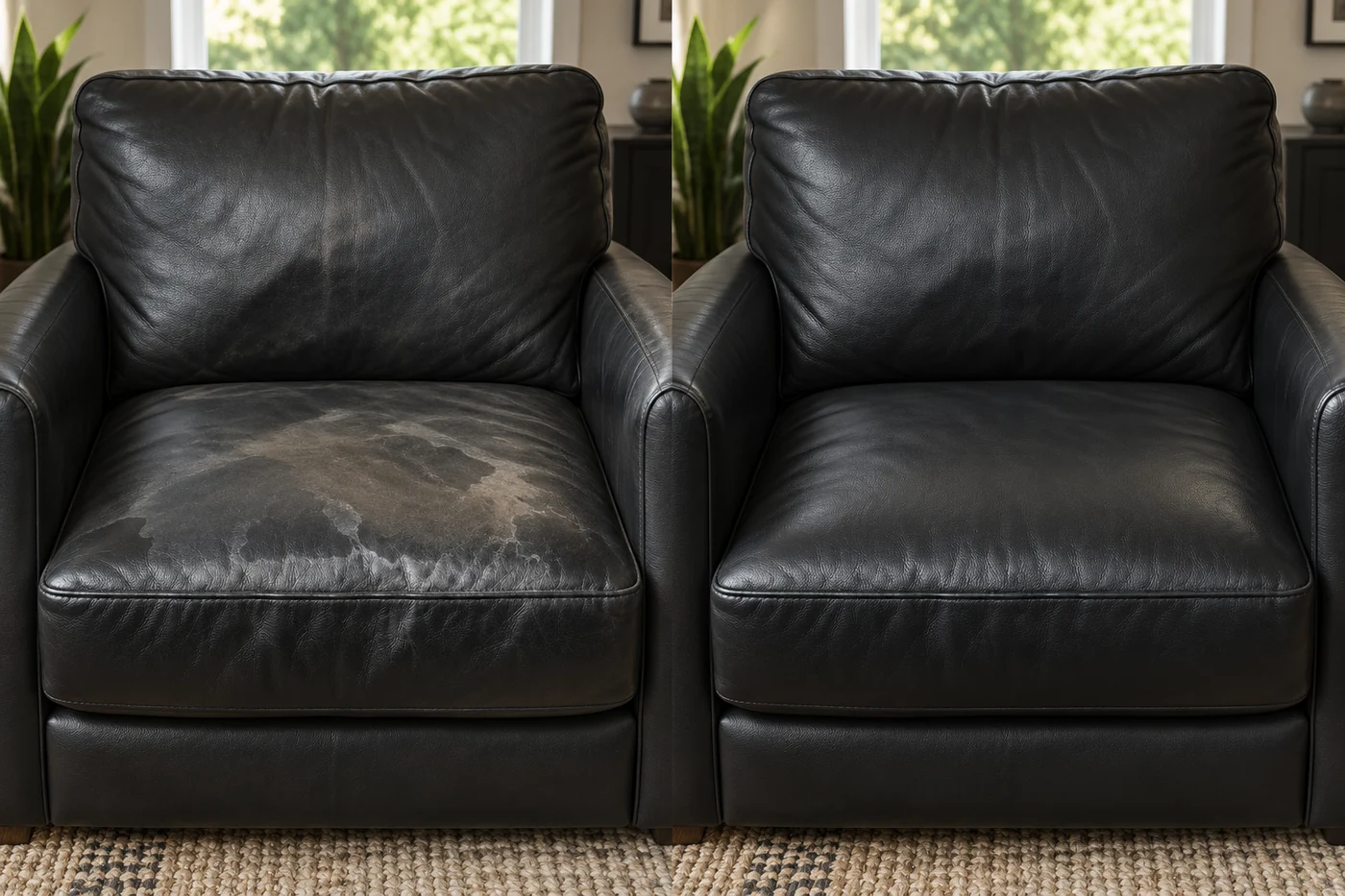 Black armchair, a pale bloom that only showed once it had dried.
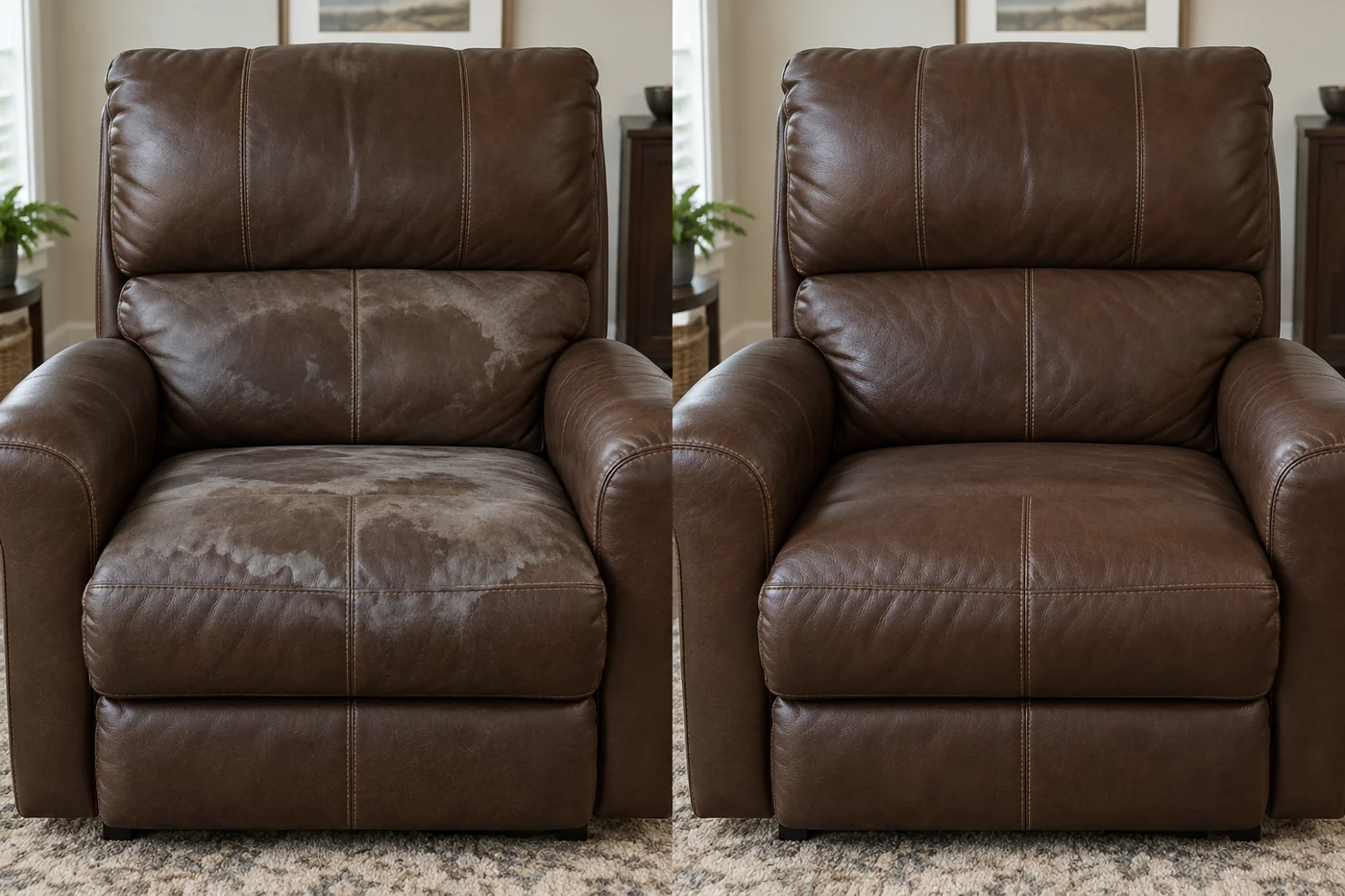 Brown recliner, blotching over the seat and the back panel.
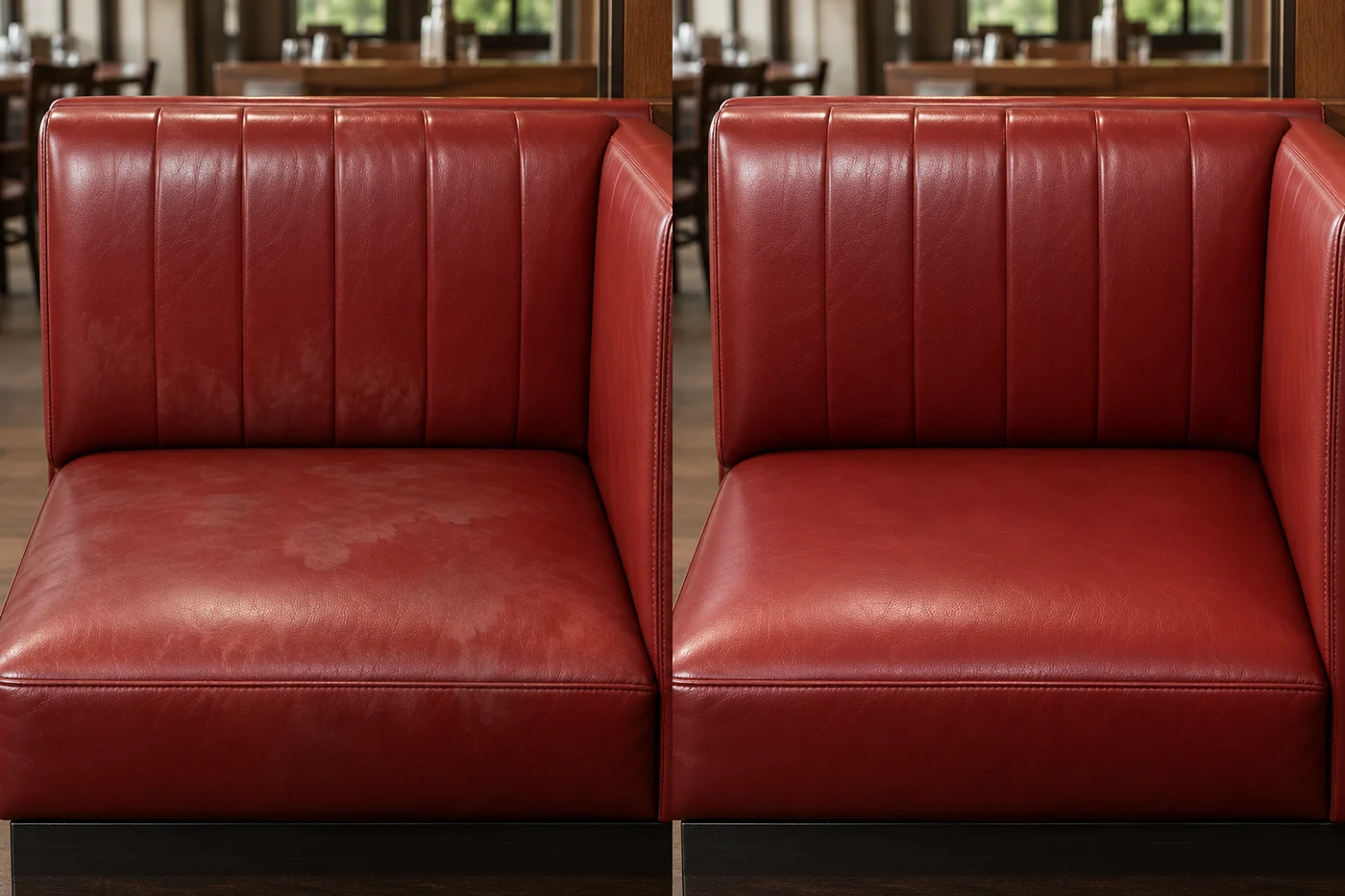 Red booth, marks running down the channel seams.
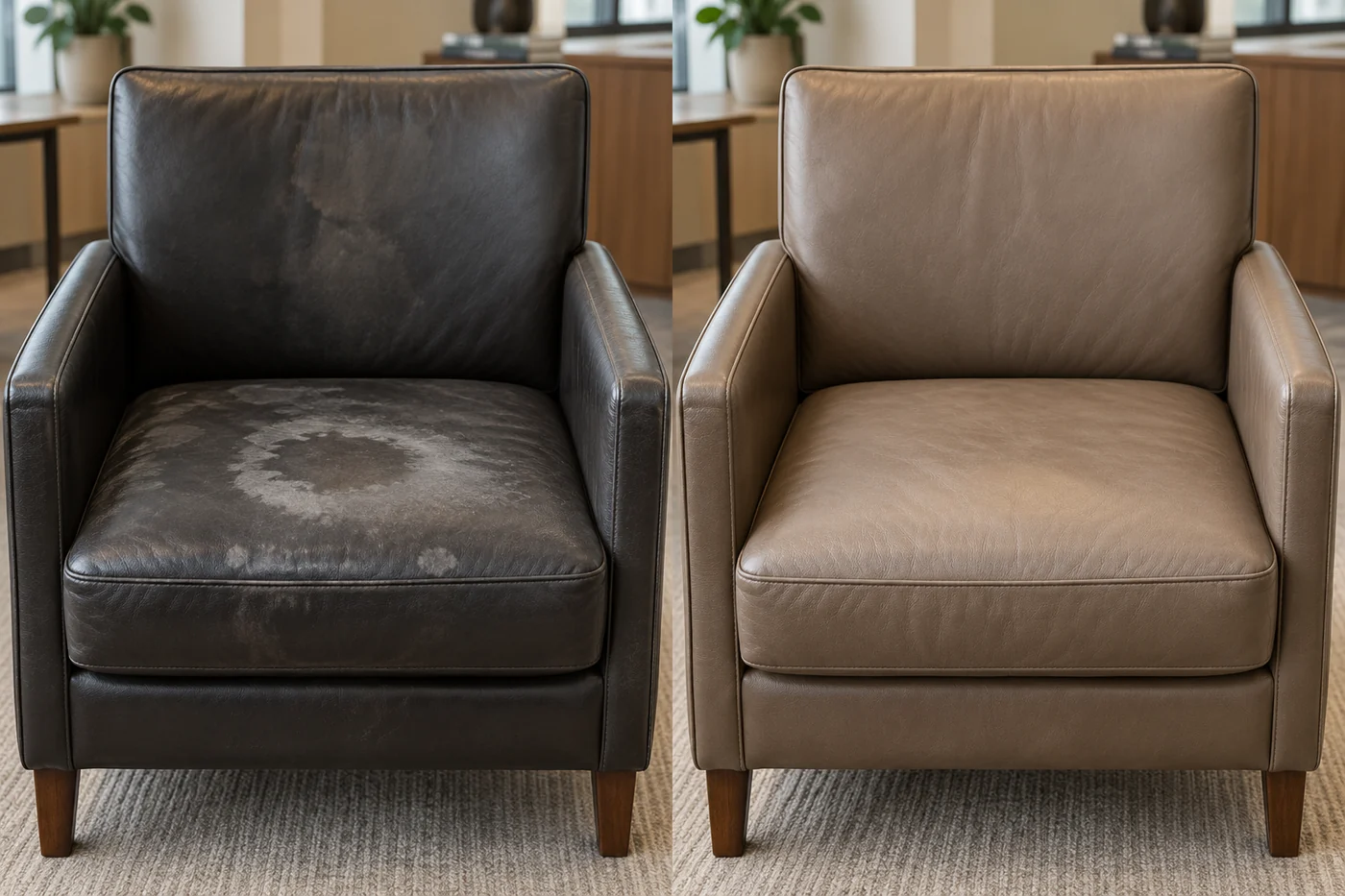 Armchair bleached pale where the water sat, then recoloured throughout.
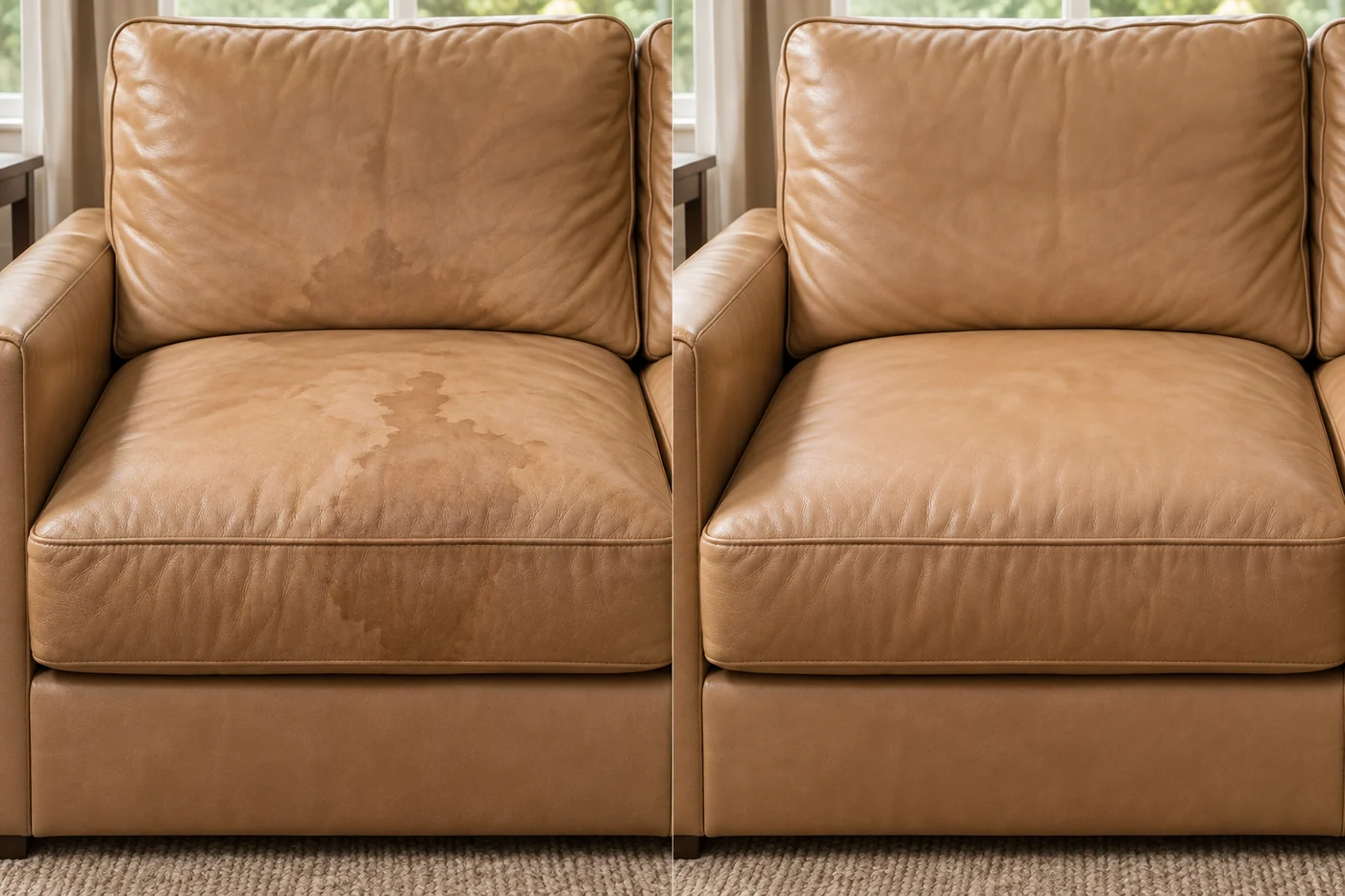 Tan loveseat, darkened along the seat front where the water ran down.
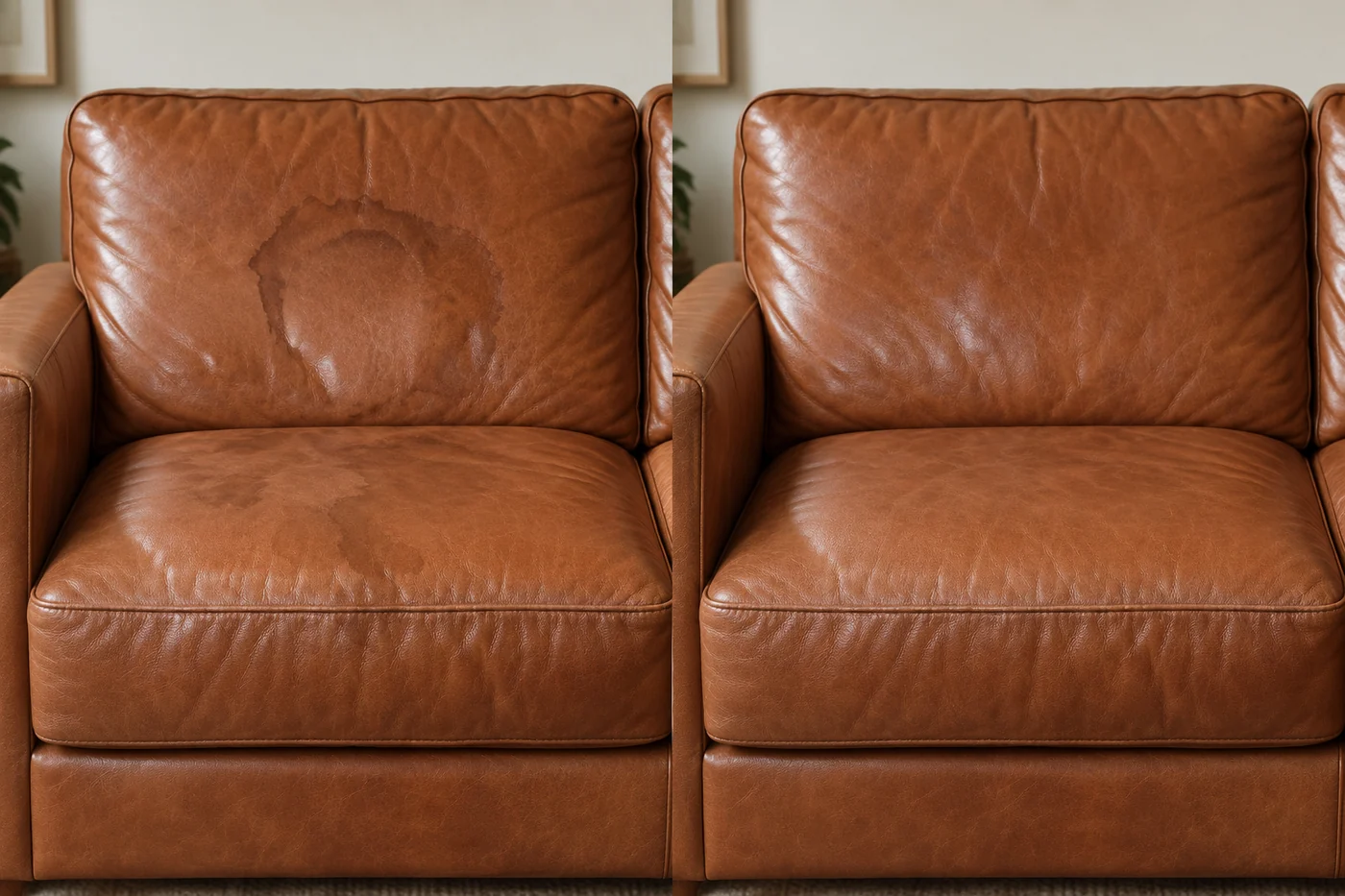 Cognac sofa, a ring dried onto the seat cushion.
Water damage questions
Can water-damaged leather be repaired?
Usually. Tide lines, blotched colour and a hide that dried stiff but still bends are all correctable, and that is most leather water damage repair. What is not: hide that shrank until it no longer meets its seams, and mould through the foam.
Will the water mark come out completely?
On pigmented leather, yes — the colour sits in a coating we rebuild panel-wide. On aniline the mark is in the hide, so the ring is worked out to the seams rather than lifted, and the panel finishes even rather than spotless.
It looks dry but it still smells. Why?
The leather dried and the foam did not. A cushion holds water for weeks under a surface that feels fine within a day. Smell that survives cleaning means the fill has to come out.
Can I just let it dry on its own?
Air-drying at room temperature is fine, and it is what we ask you to do. Drying it fast is what causes the damage: heat pulls moisture out faster than the fibres can settle, and that is what leaves it hard. The CDC’s mould cleanup tips cover the timings.
Send the wet photo and the dry one
If you have a photo from while it was still wet, send that as well as today's. The wet one shows how far the water went; the dry one shows what it left. Between them we can usually price the leather water damage repair before we come out.