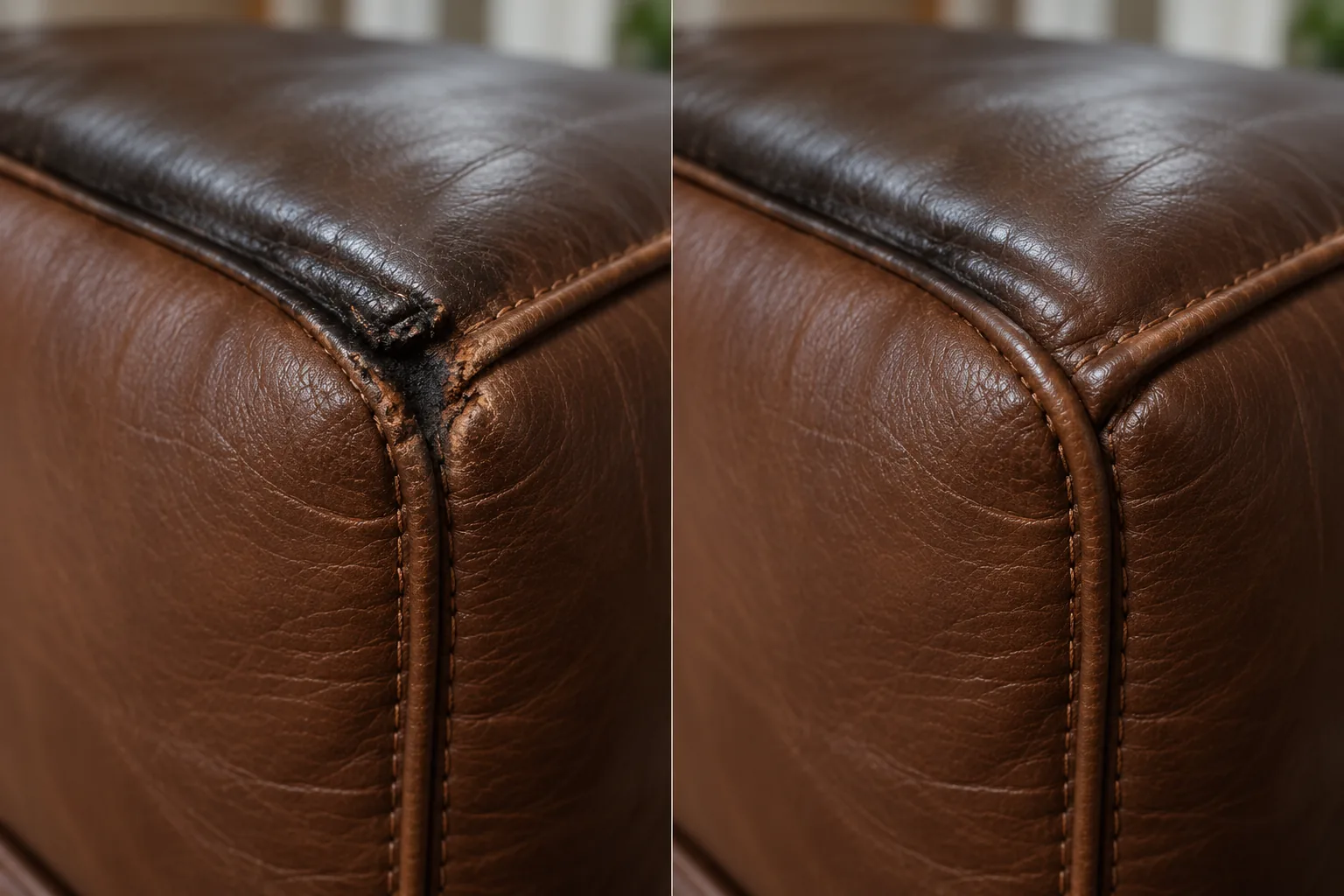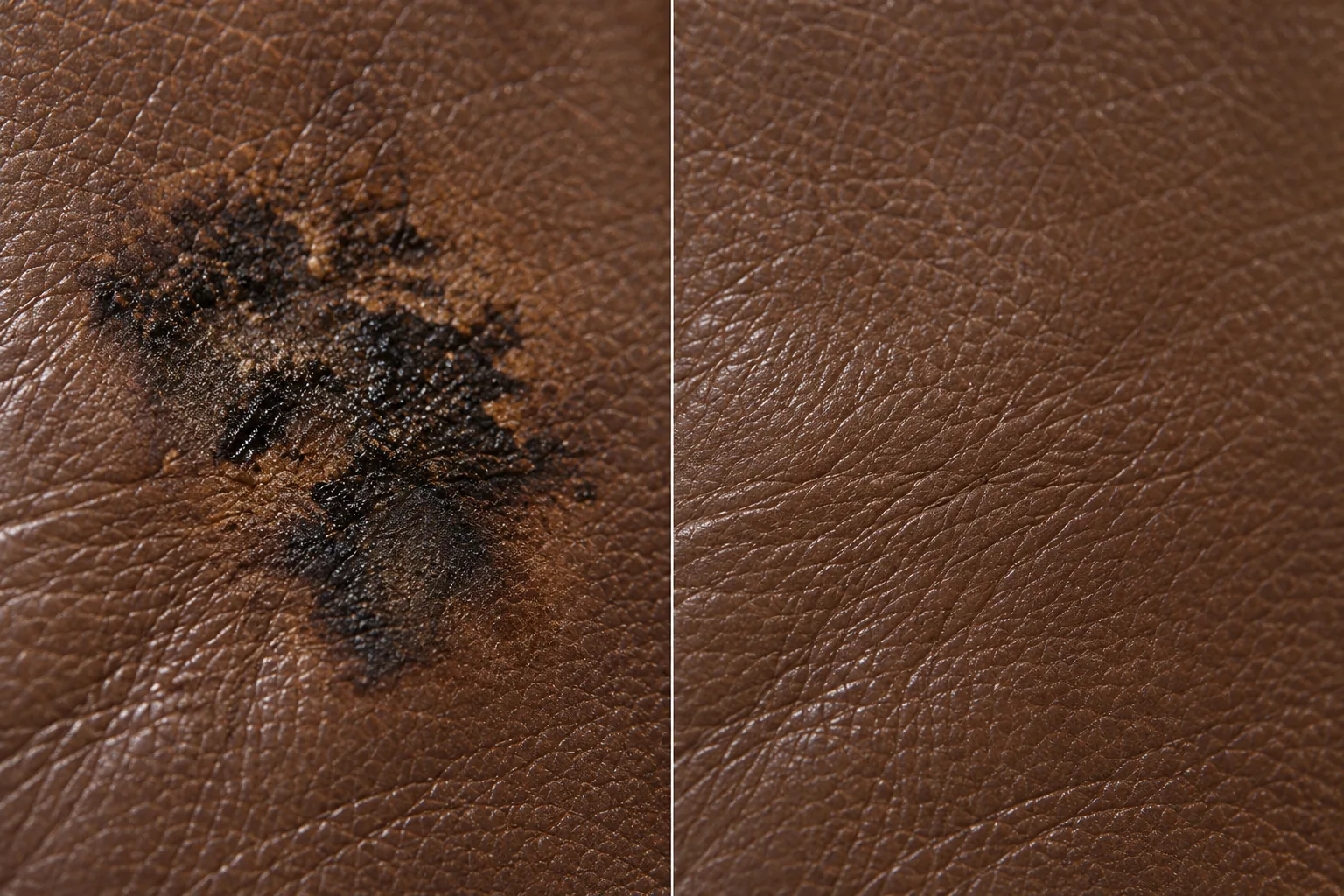
Cigarette Burns, Ember Marks and Melted Finish
Leather burn repair for sofas, booths, dining chairs and car seats across New York City and northern New Jersey. Send two photos and we will tell you whether it fills or the panel goes.
A burn destroys leather. A cut only opens it.
Cut leather leaves two sound edges that still hold a bond. Heat does not. It carbonises the fibre it touches and cooks the ring around it brittle, millimetres past anything you can see. So leather burn repair starts wider than the burn: dead fibre comes out first, or the new surface lifts with it.
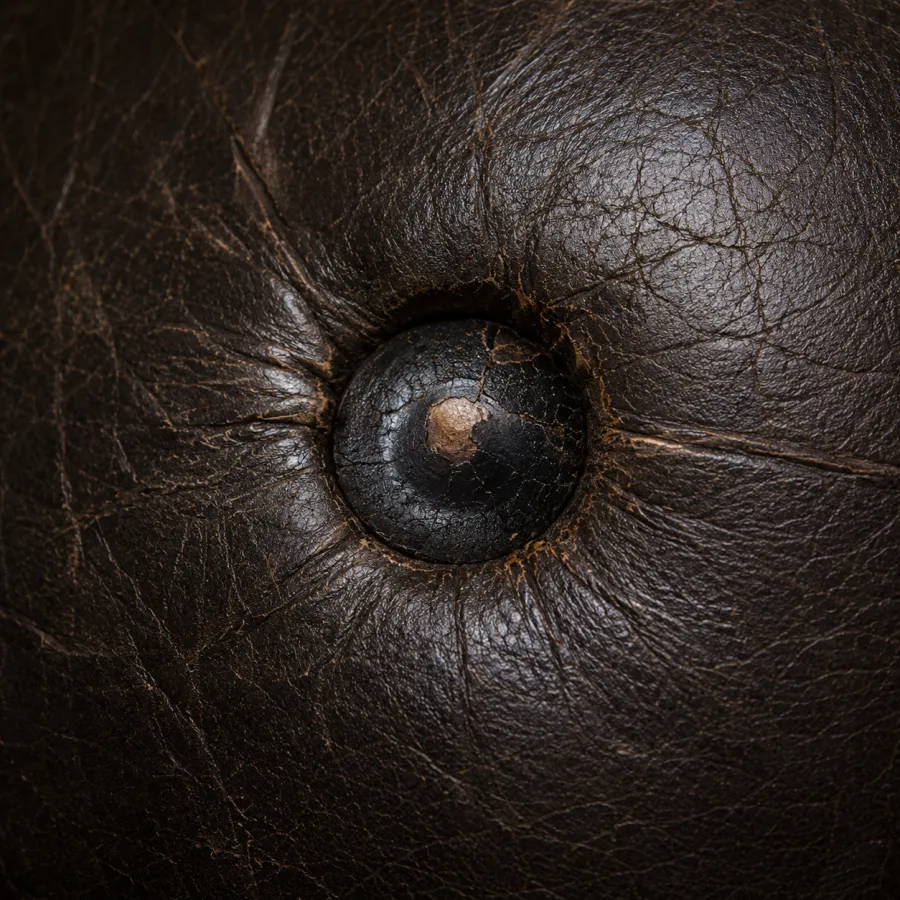
How deep is the burn?
Not width. Depth decides whether leather burn repair means correcting the finish, filling and rebuilding, or a new panel.
-
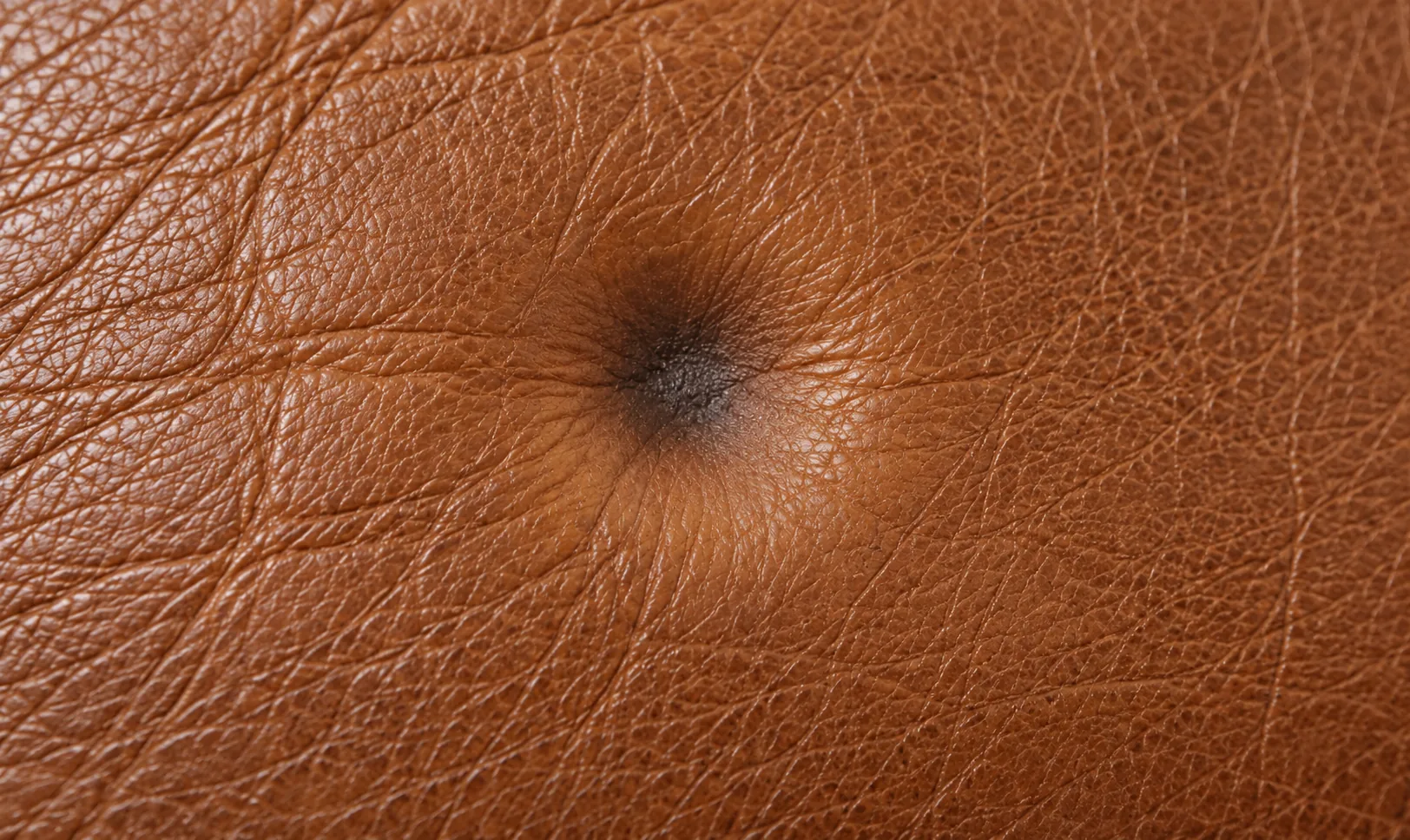
 01Heat mark
Colour and sheen have changed. The hide underneath is sound, so the correction happens in the finish.
-
02Surface burn
The top layer is dead but nothing has opened. It is taken back and the grain rebuilt level.
-
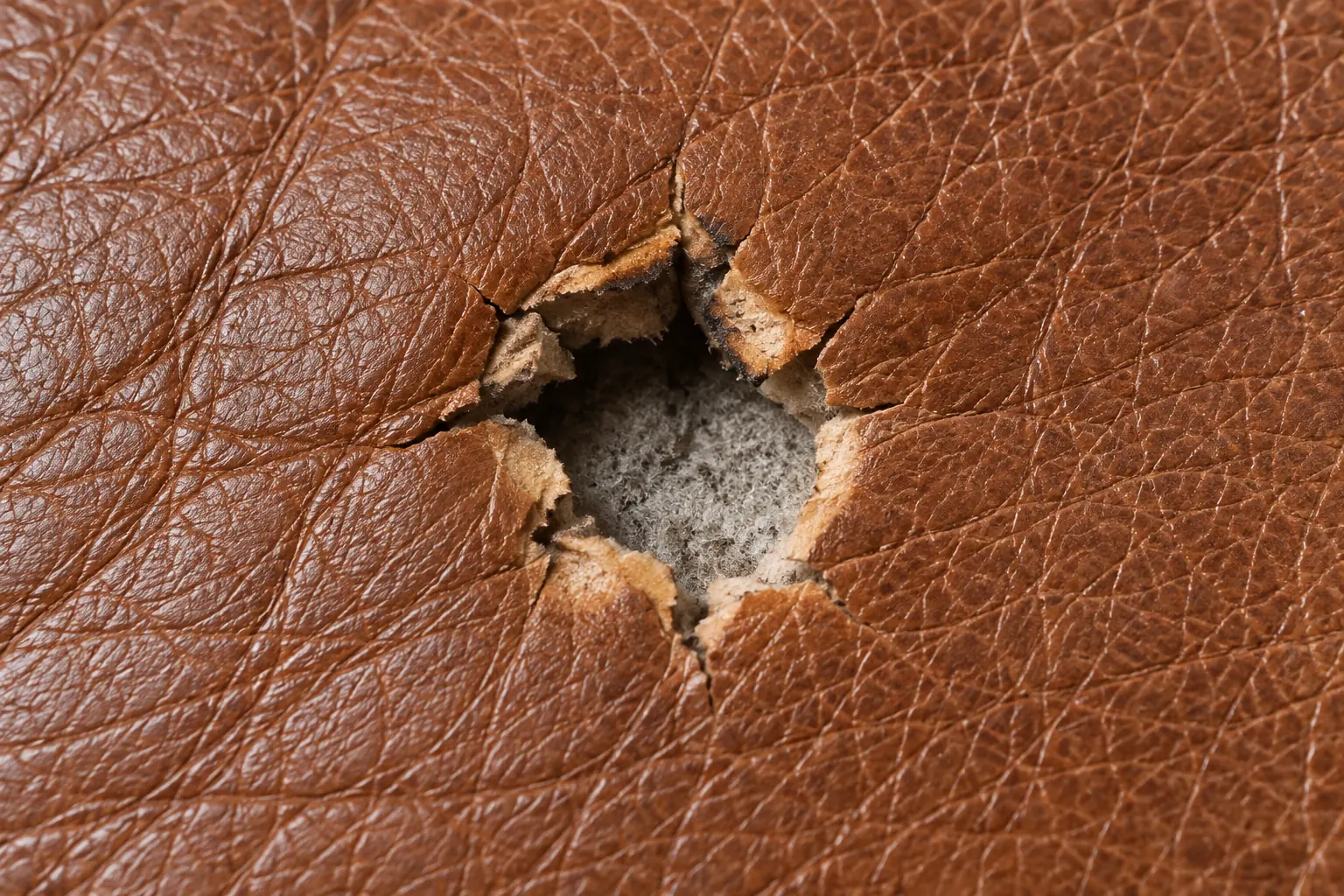
03Burn hole
Heat has gone through. Material is missing, so a backing goes in before any filling starts.
-
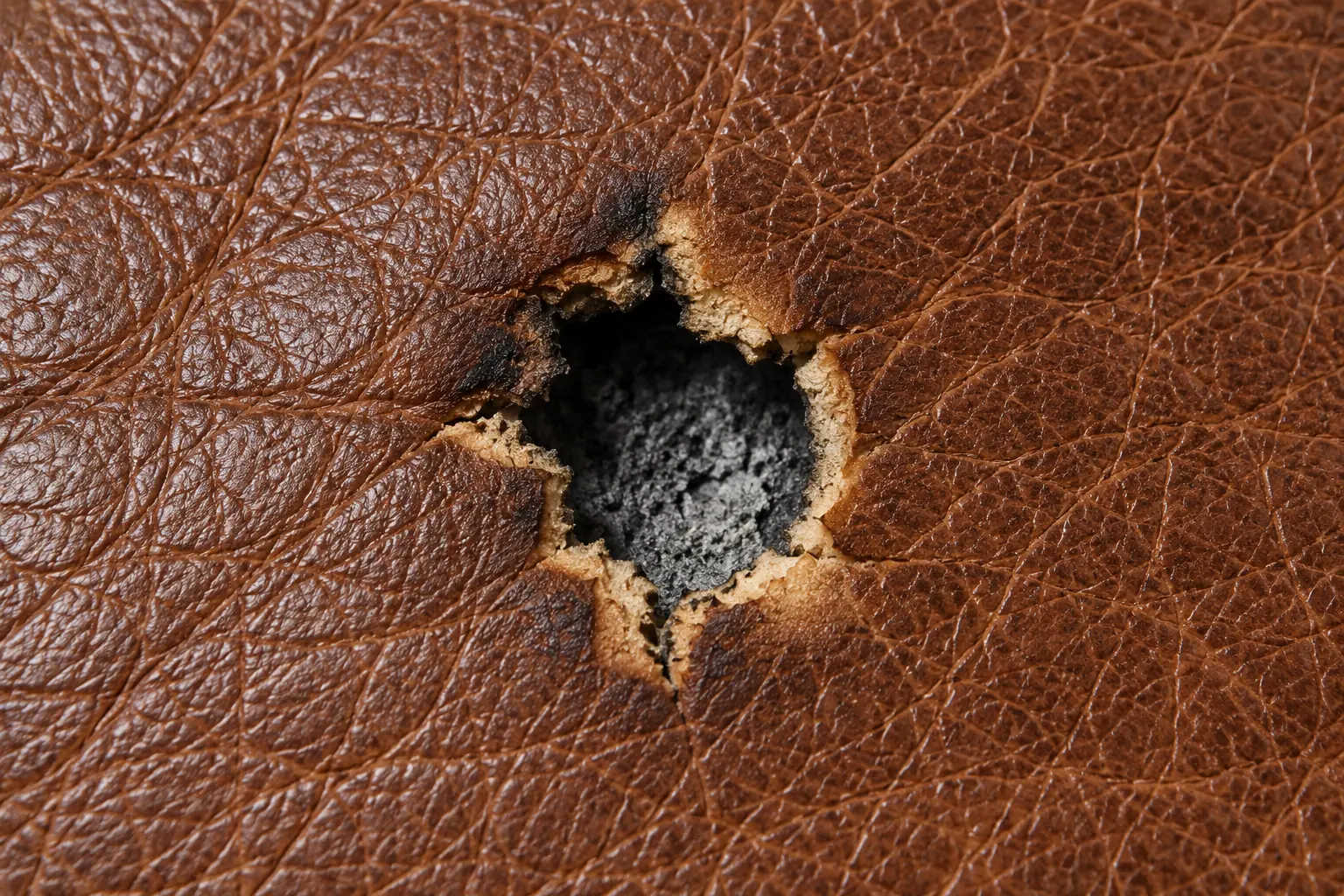
04Severe burn
Charred or brittle across a wide area. Panel replacement is usually the honest answer.
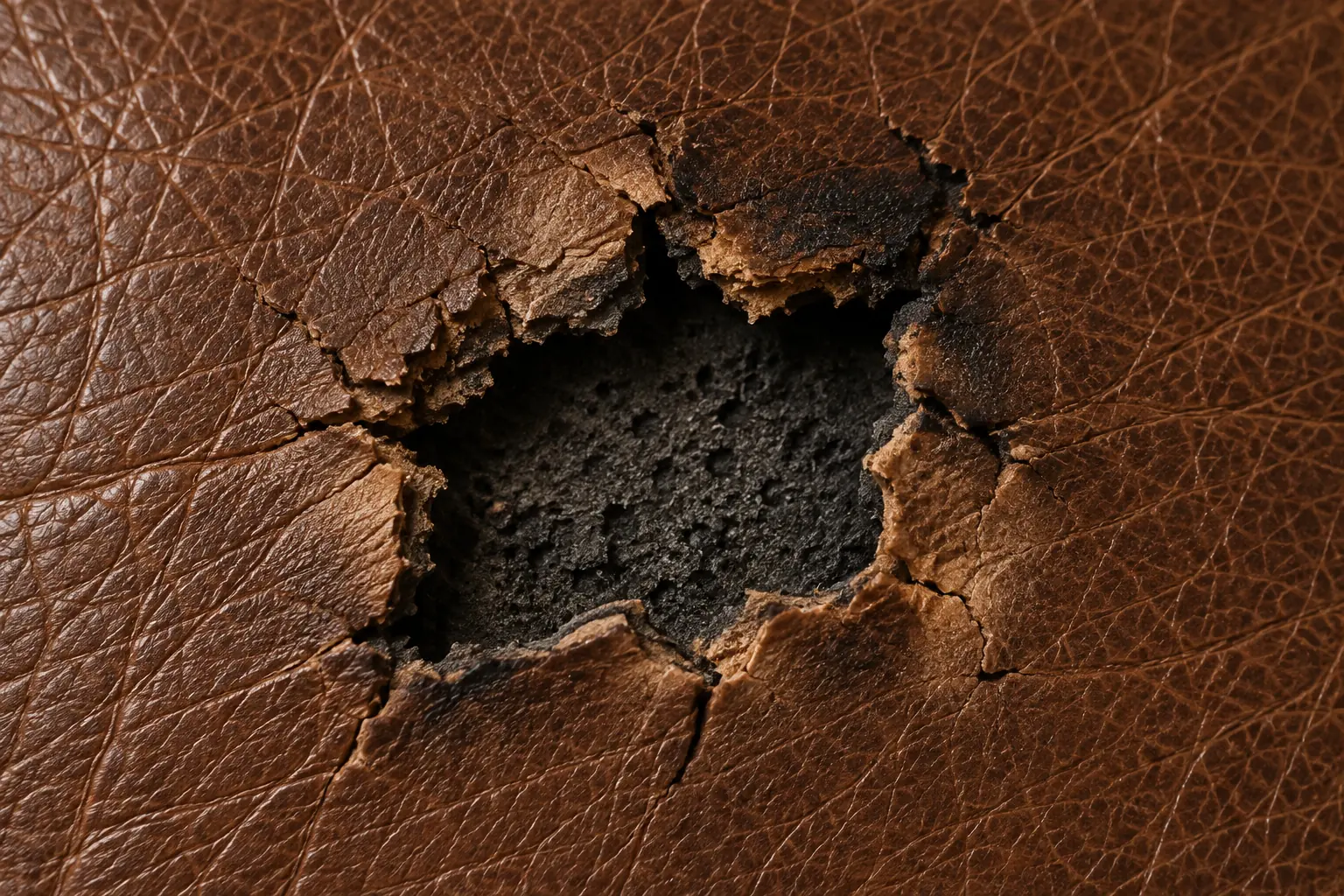
Types of leather burns we repair
Eight patterns cover almost everything we are sent, each read the same way: how deep, and how sound the leather around it is.
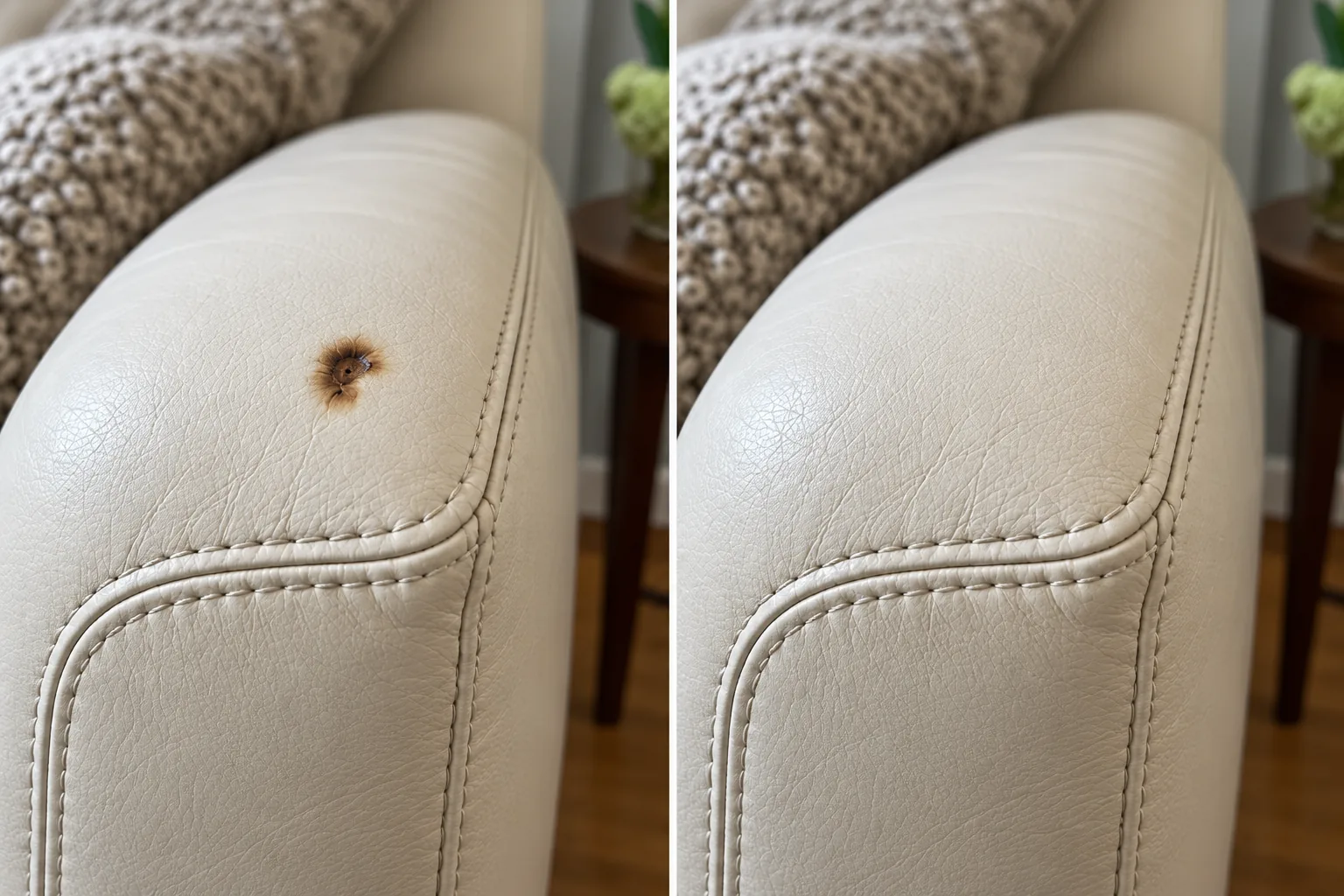
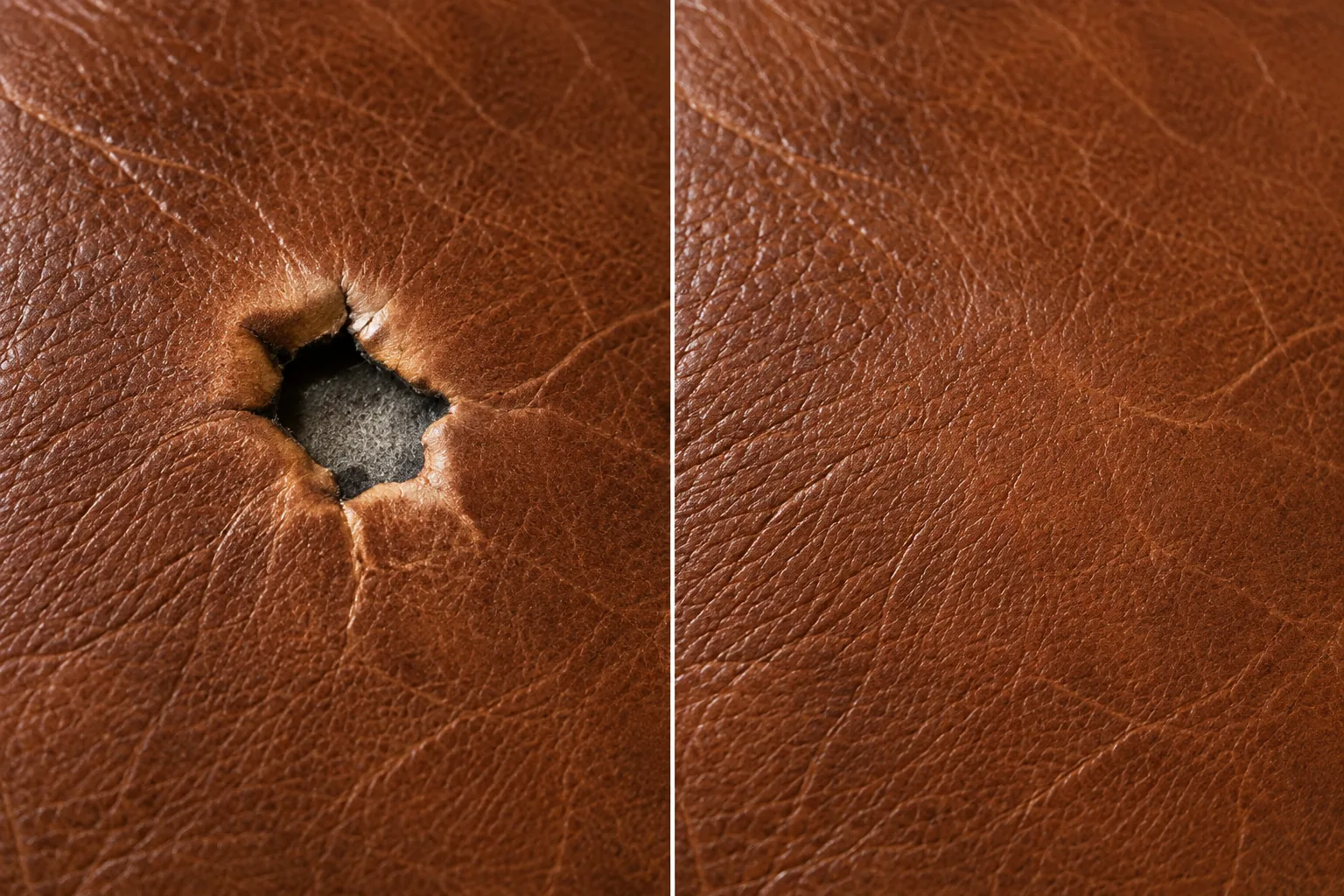
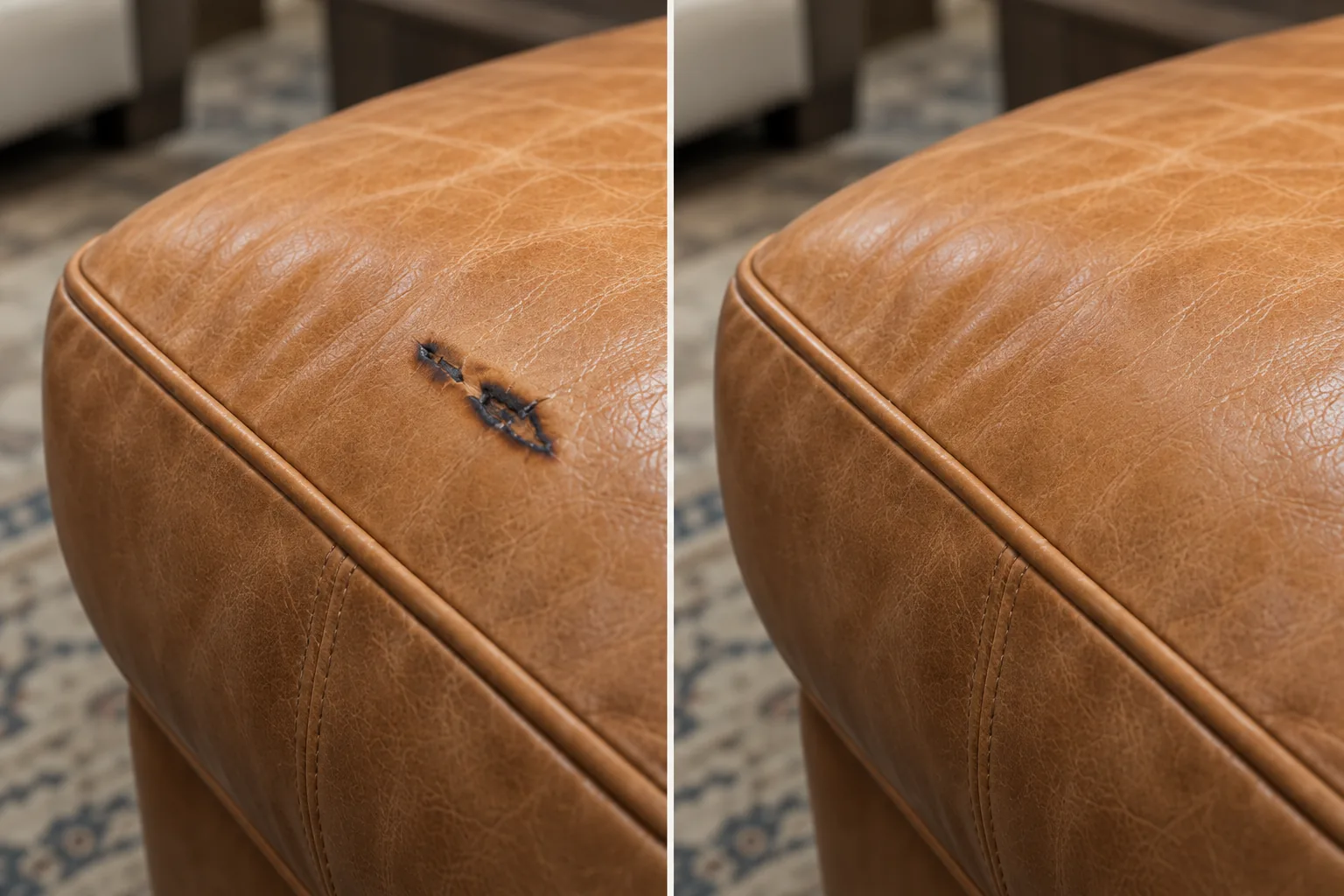
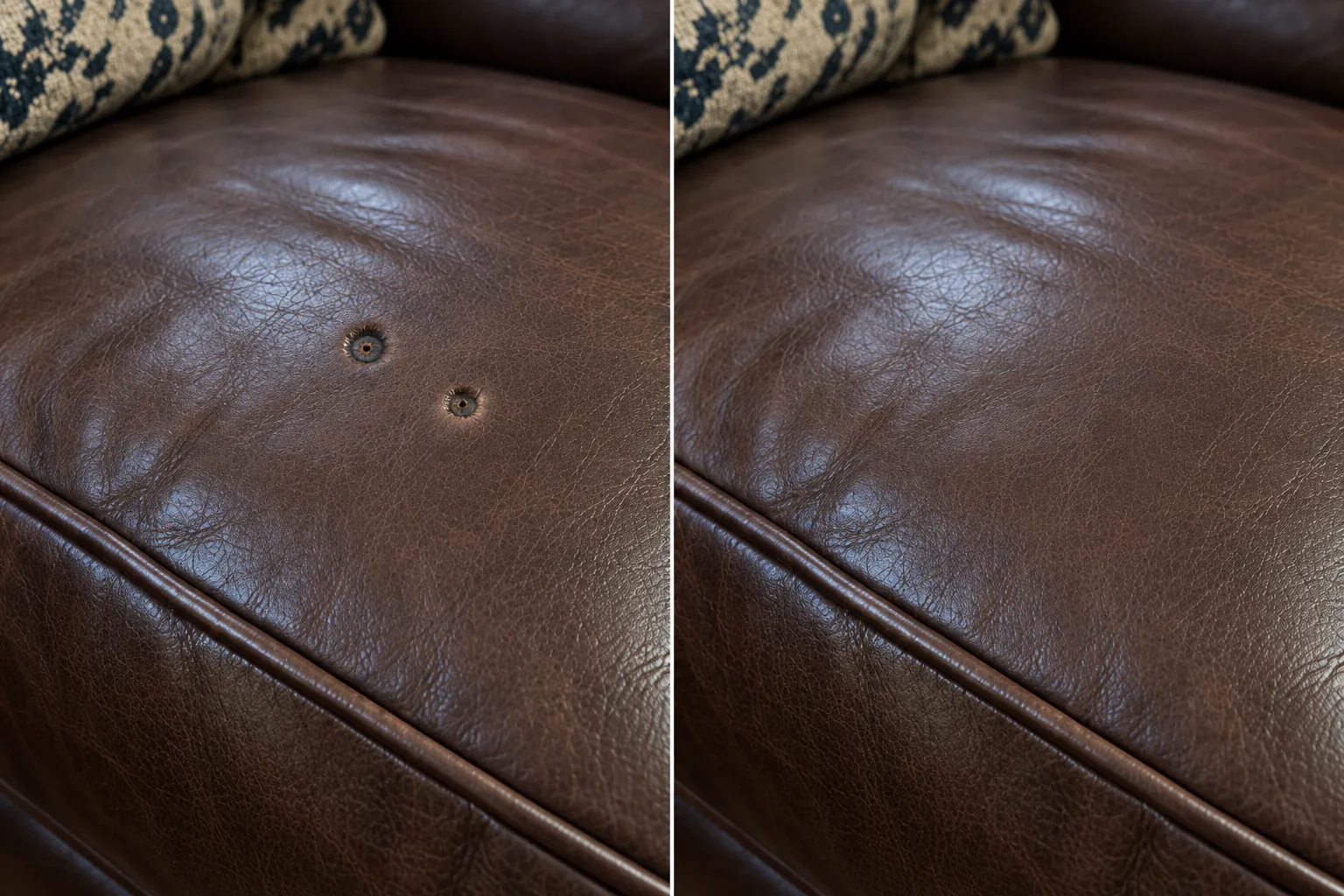
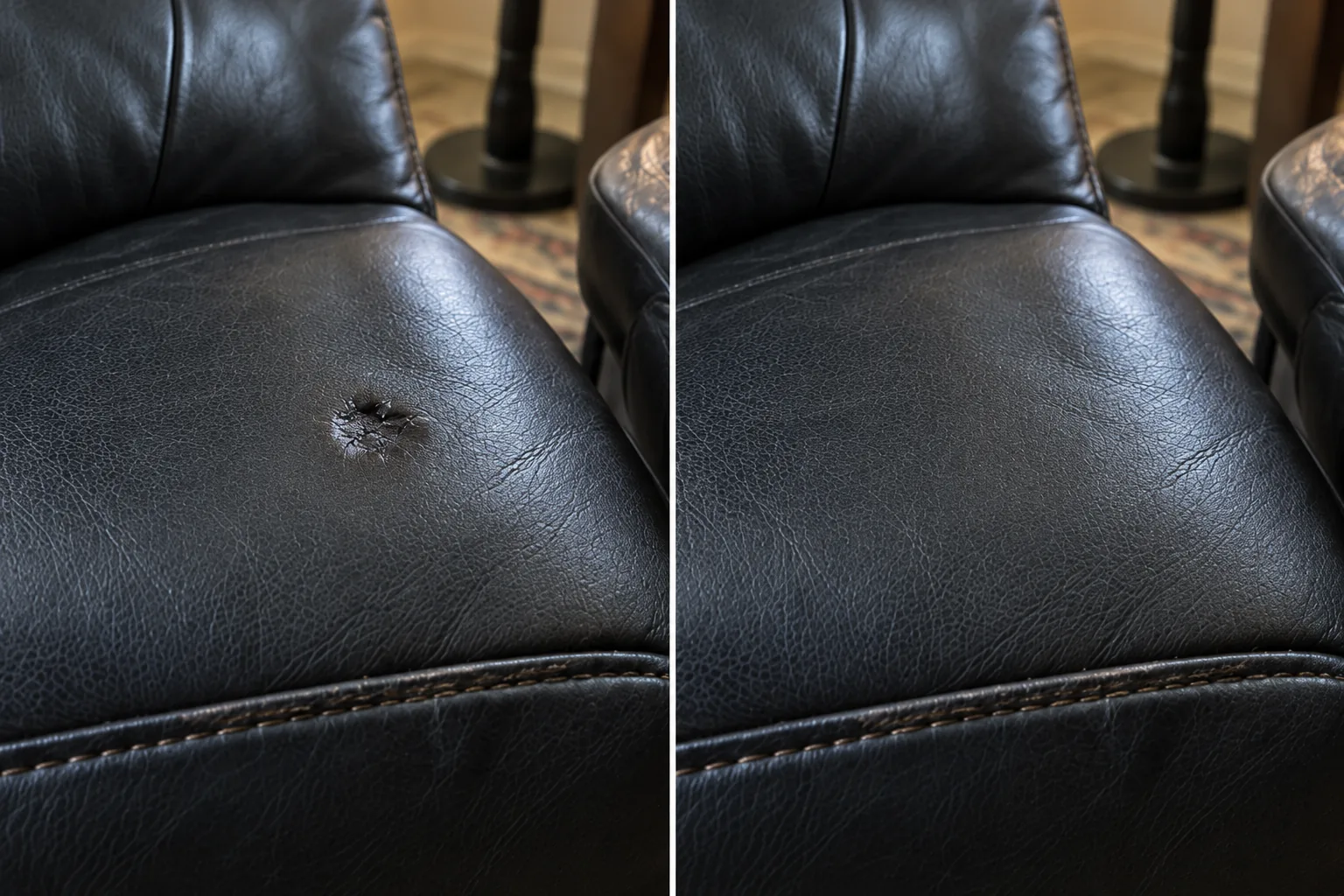
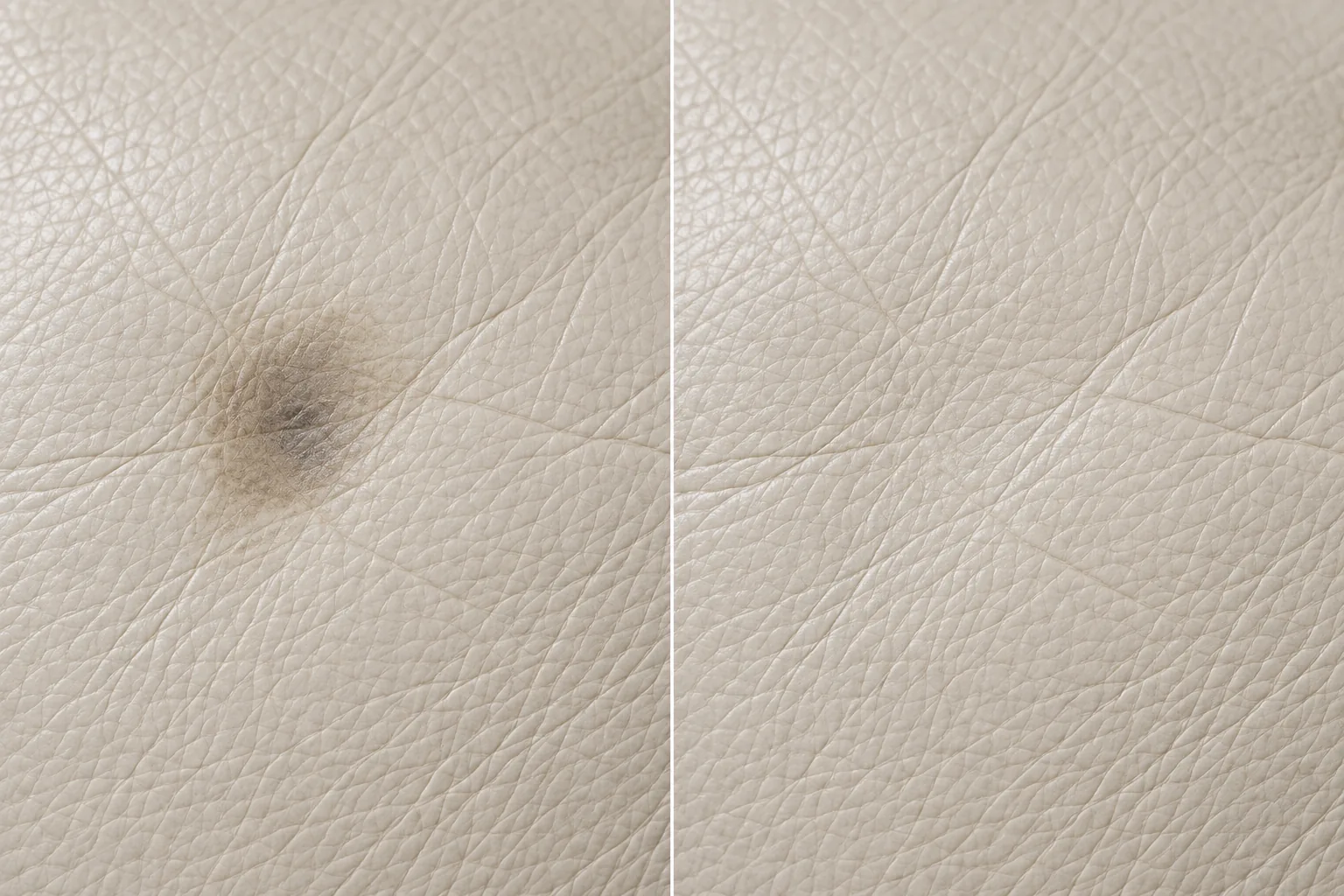
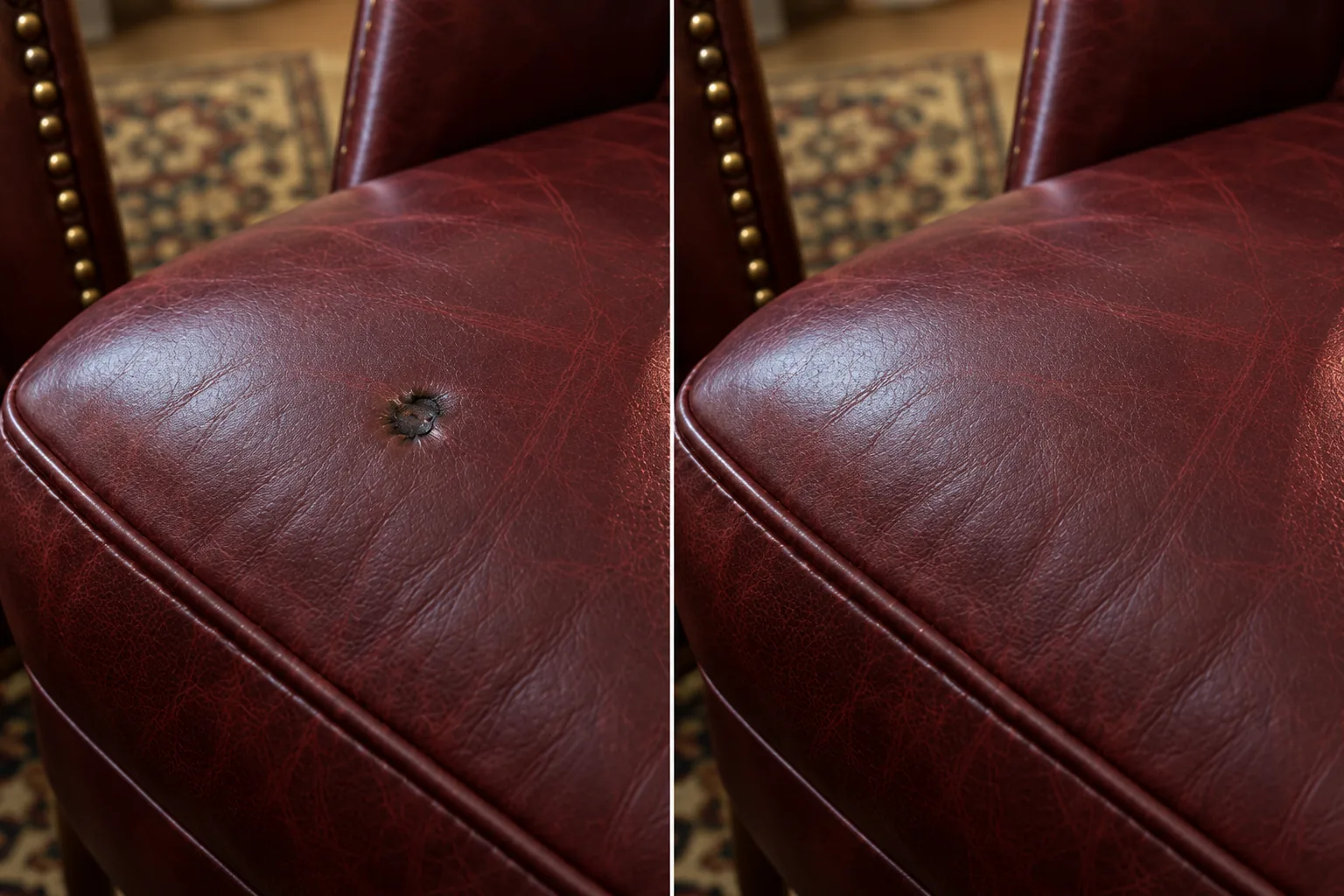
Burn mark or burn hole
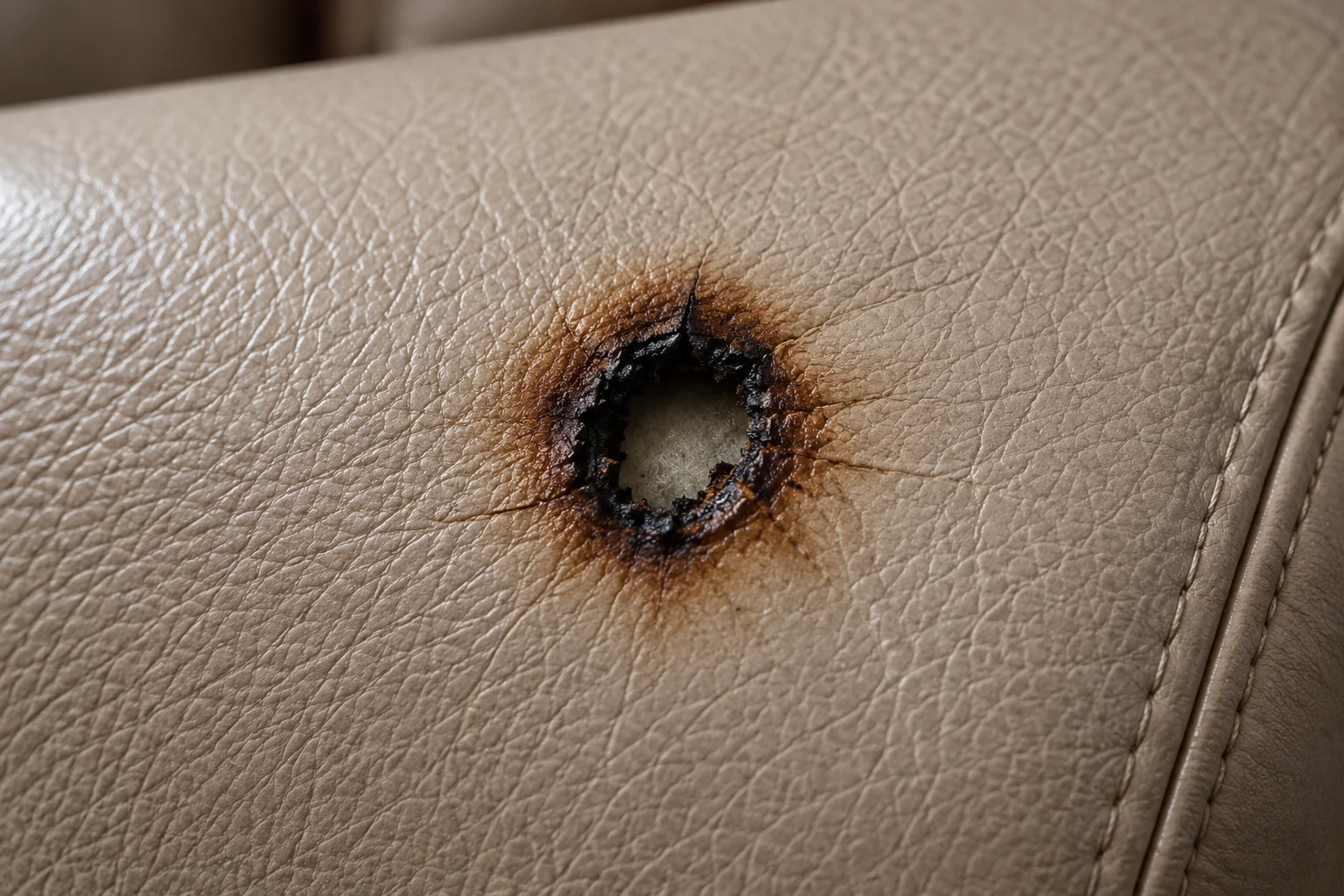
They photograph alike. Run a fingernail across it — if it catches an edge, material is gone.
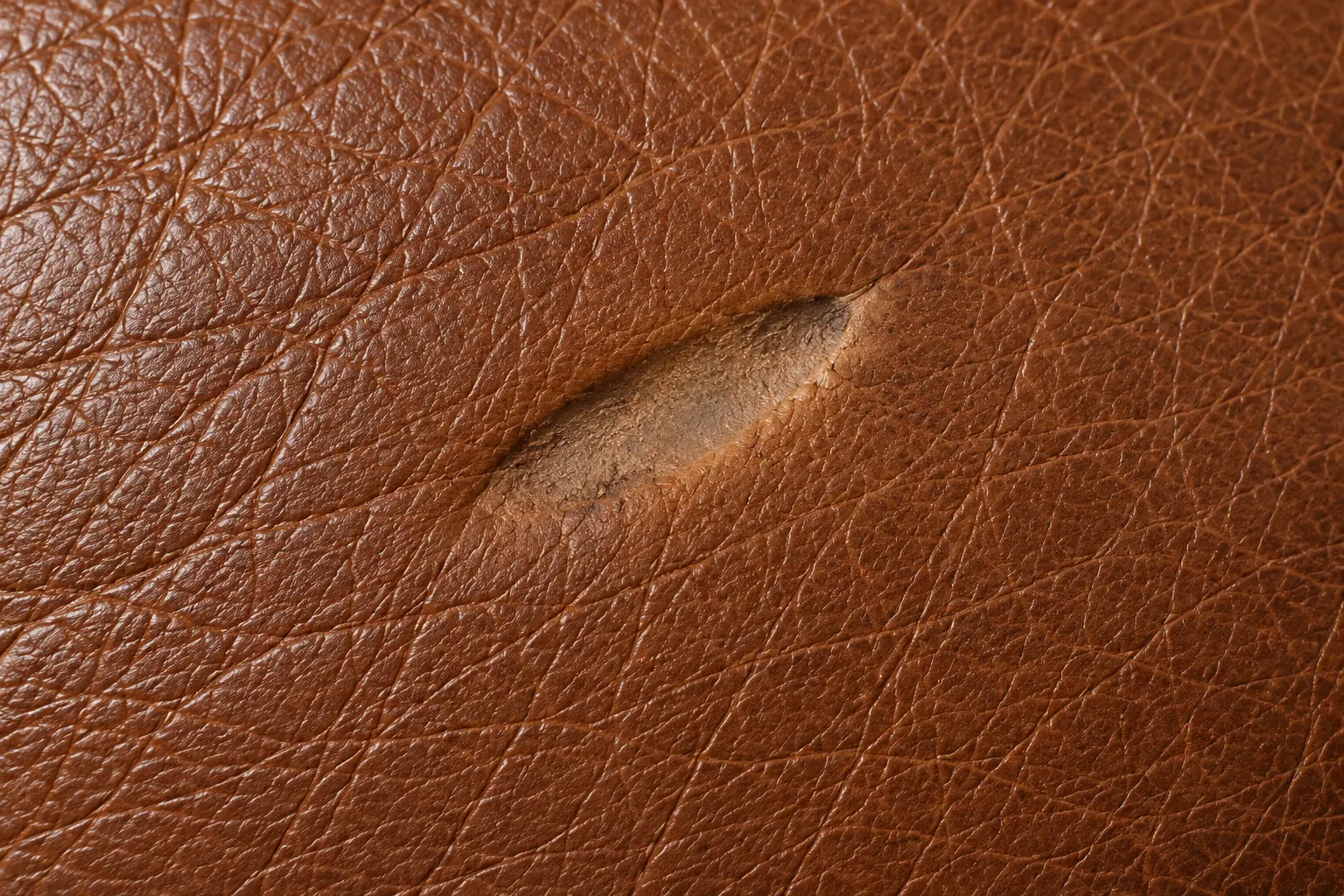
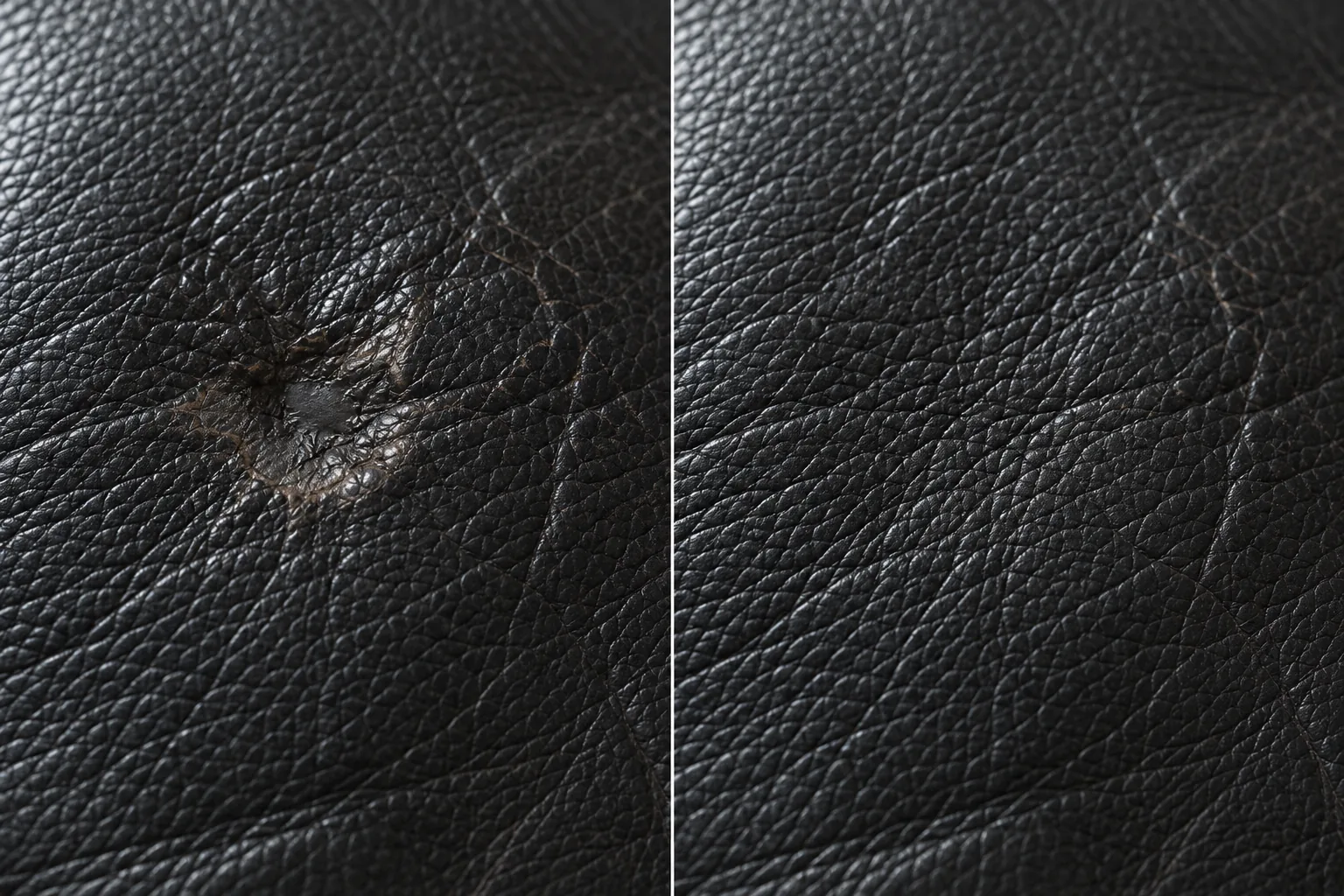
Burn mark
- The leather is still closed.
- Colour and sheen have changed.
- Texture flattened or glassy.
- Corrected in the finish.
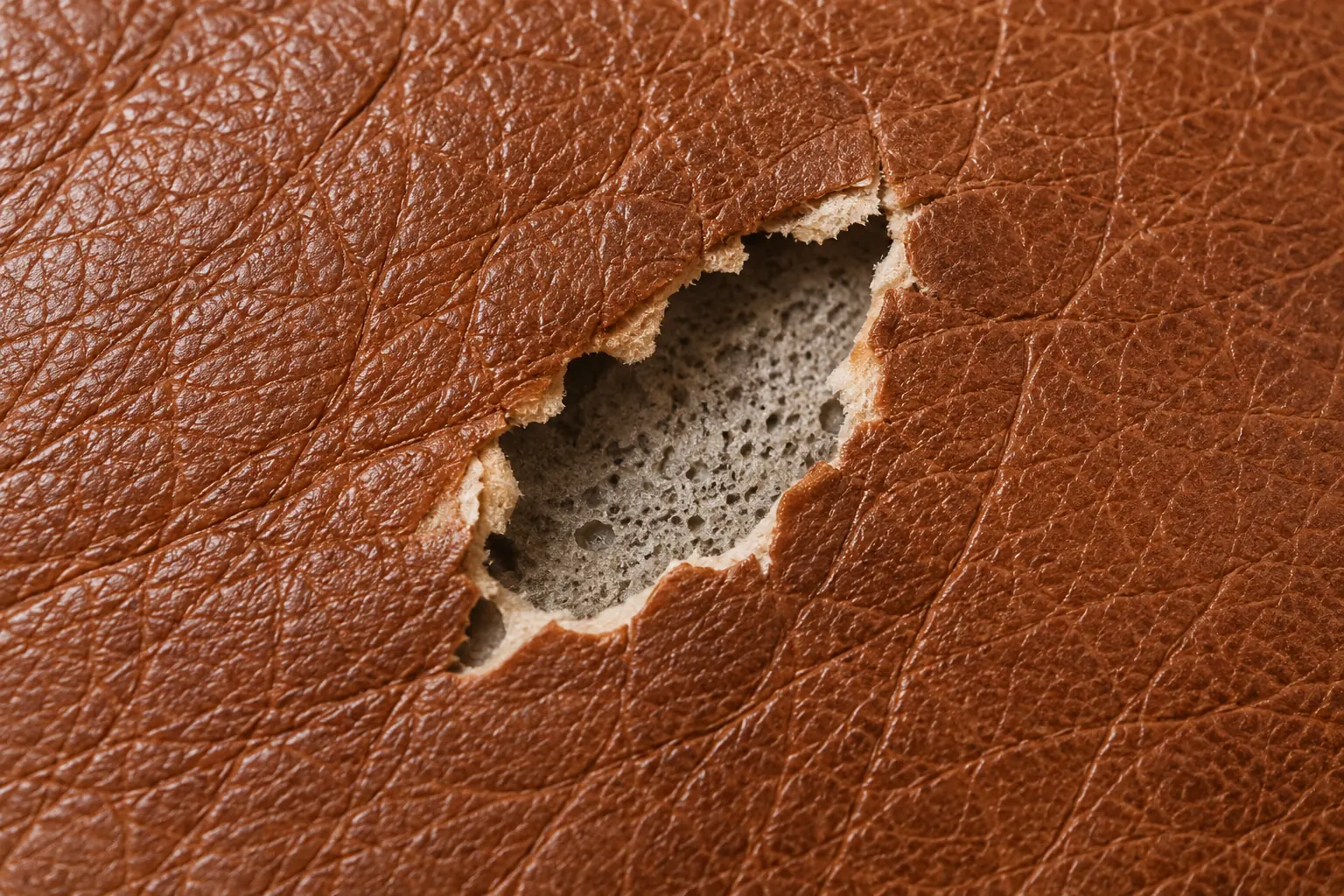
Burn hole
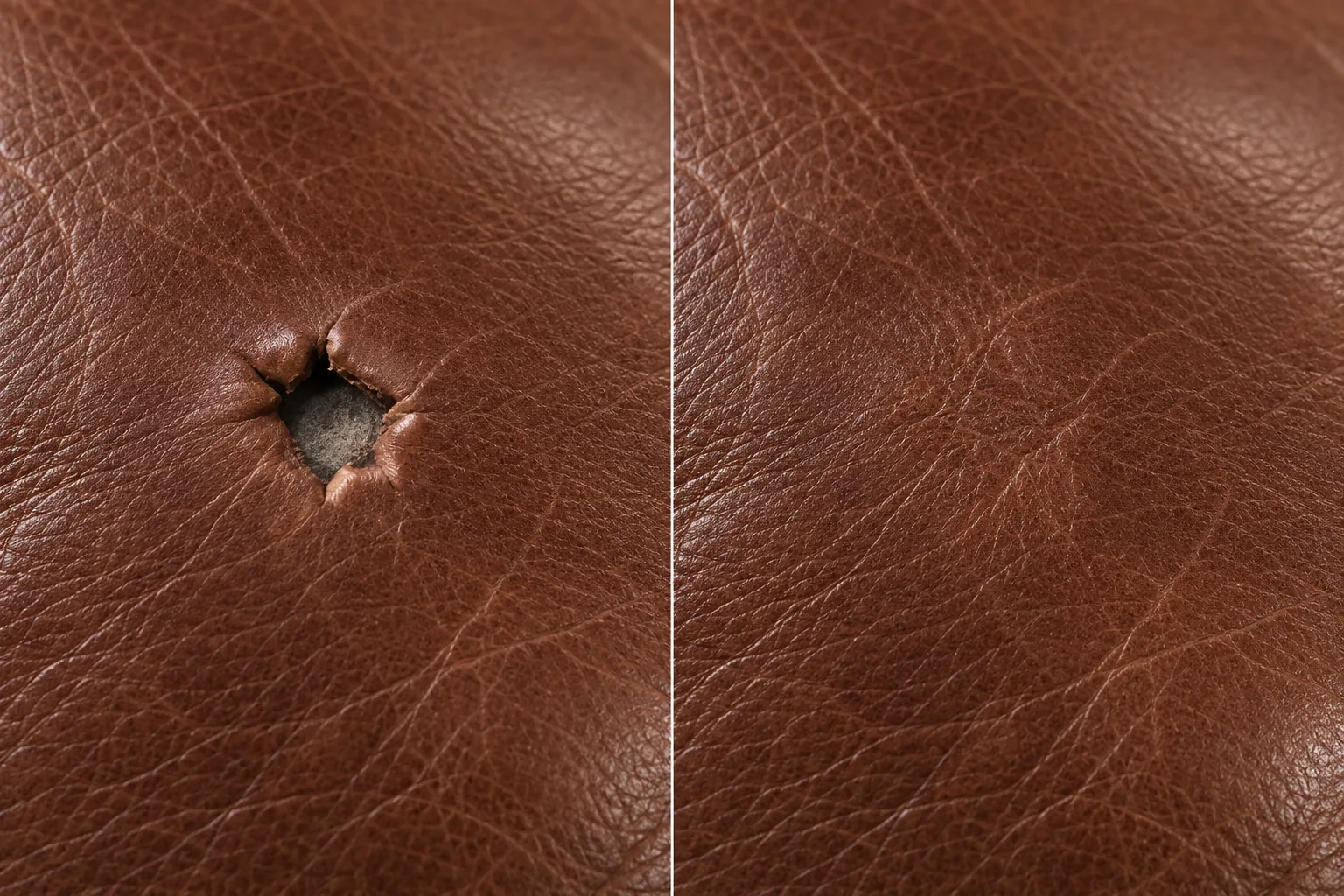
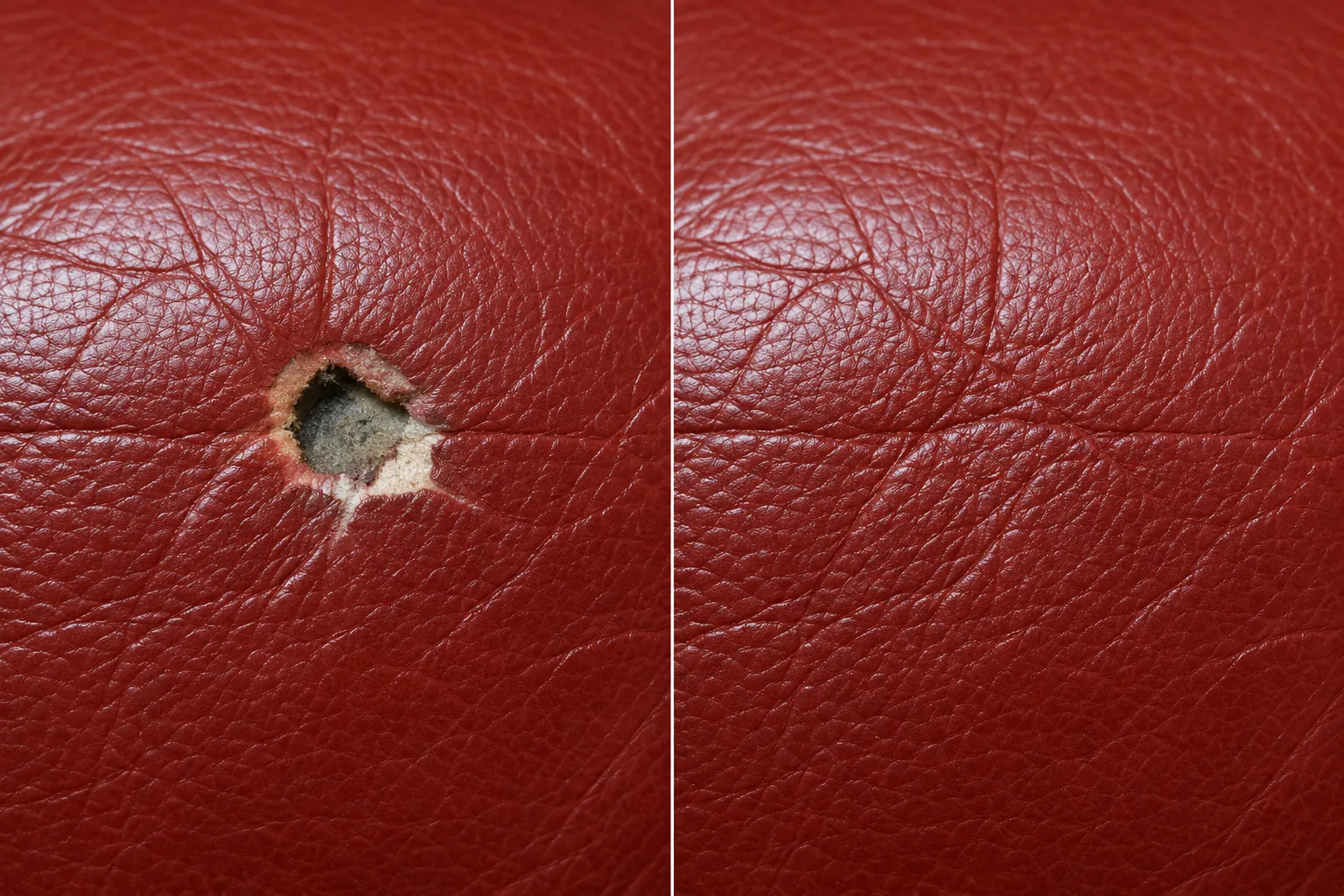
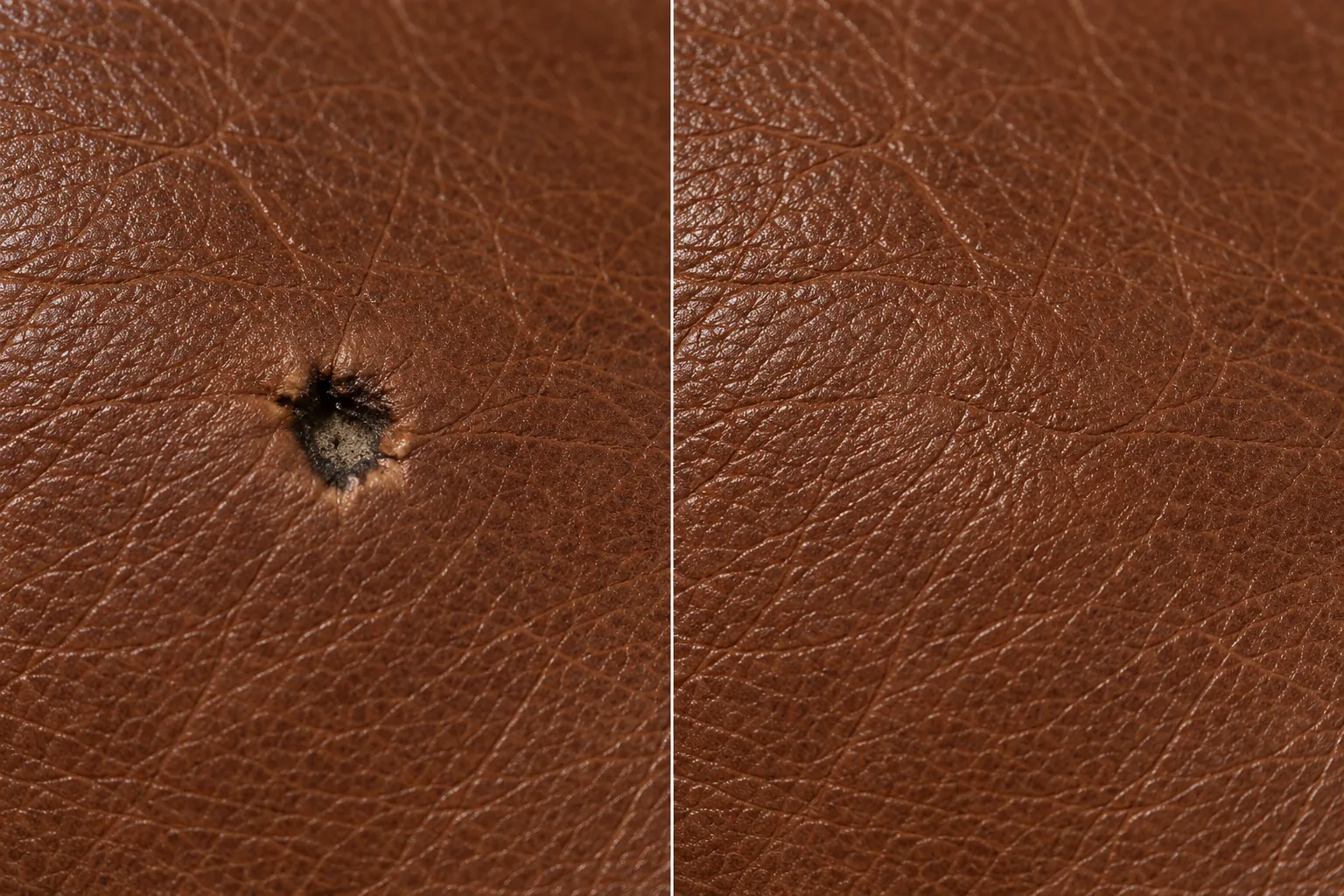
- Material is gone for good.
- Foam shows through.
- Needs a layer behind it.
- Rebuilt in layers, then grained.
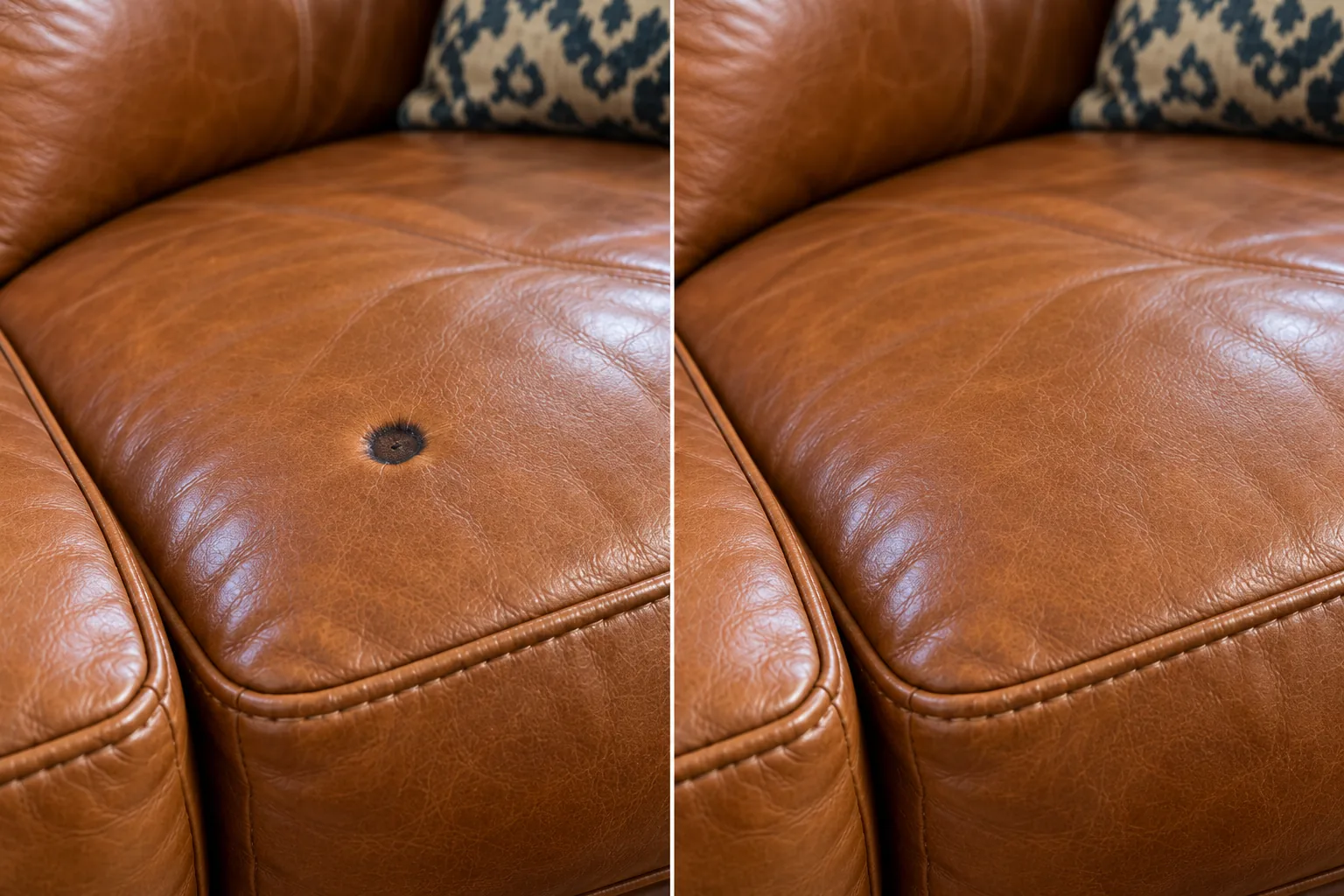
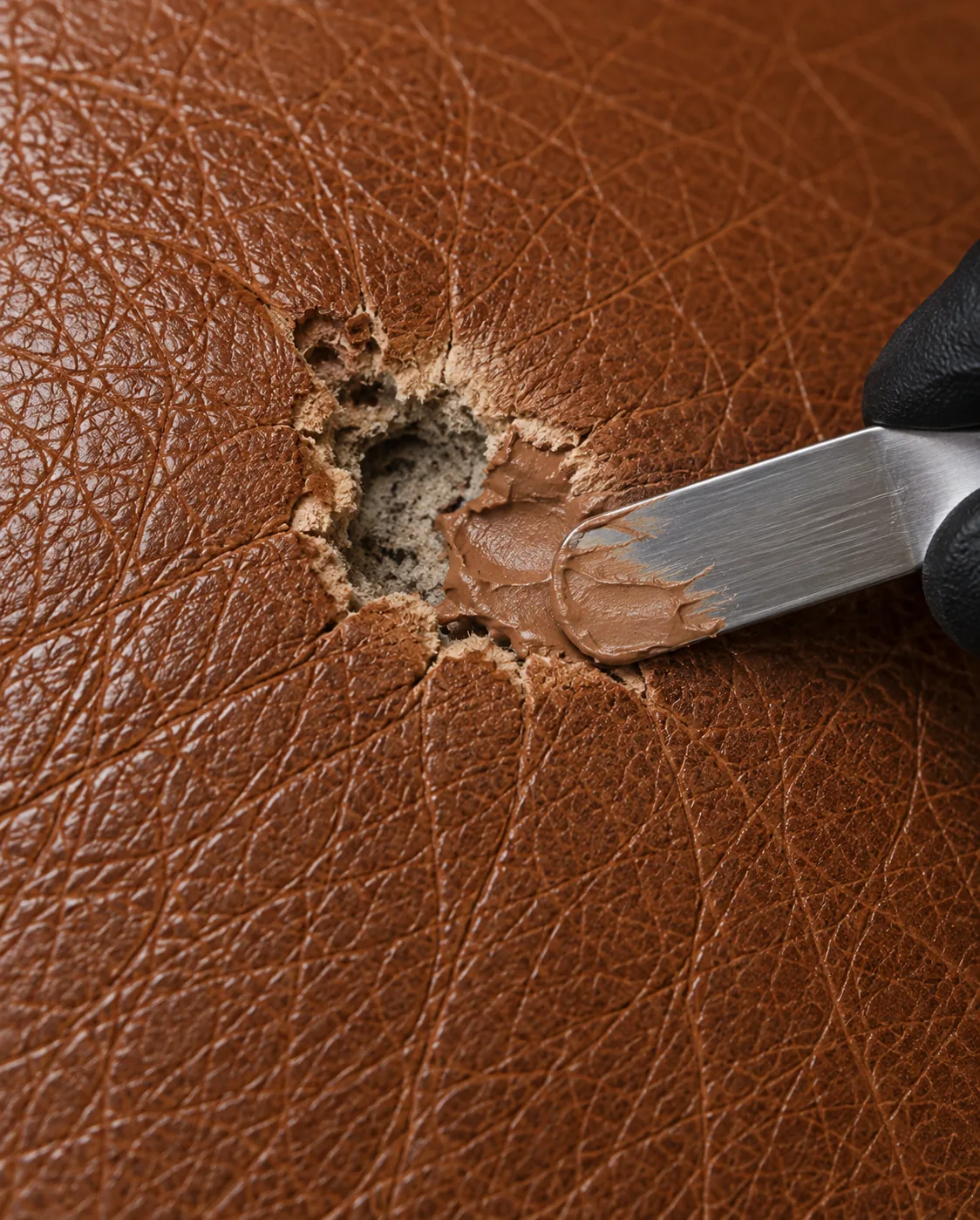
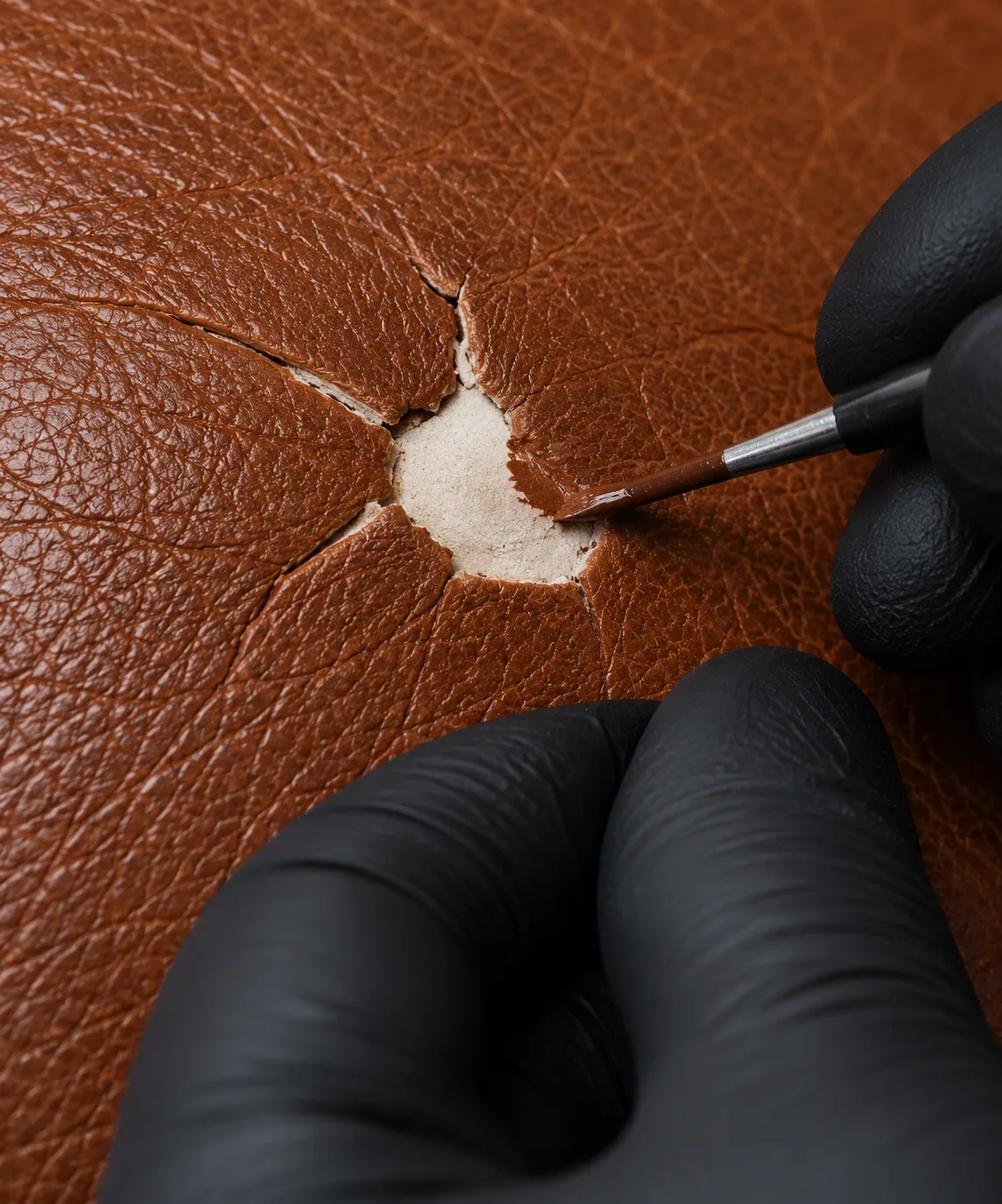
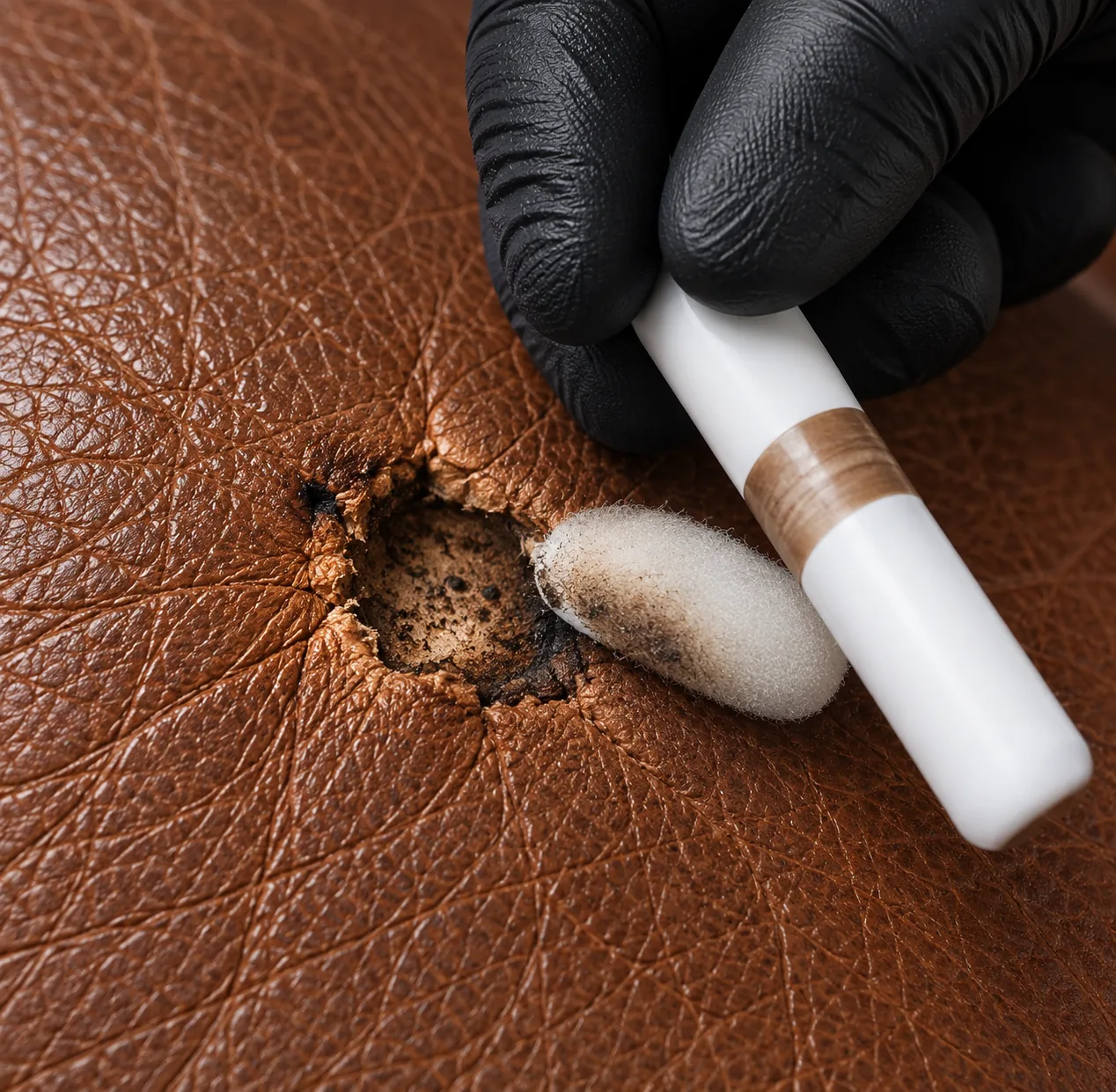
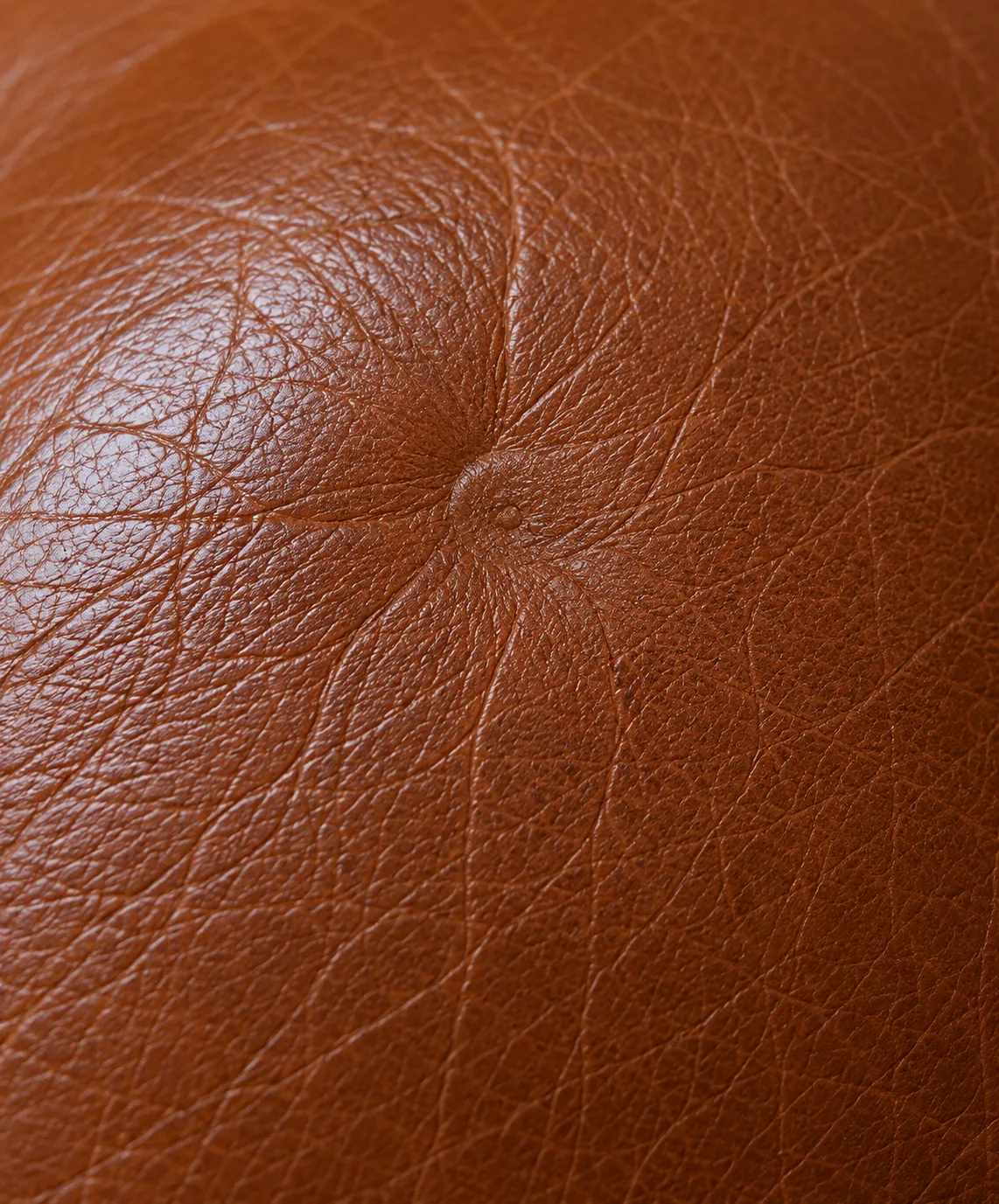
A cigarette burn in a seat cushion
One burn on a tan sofa seat, repaired in the apartment it stands in.
-
Step 1
Before
A round burn, scorched ring around it.
-
Step 2
Cut back
Dead fibre pared back to sound leather.
-
Step 3
Rebuild
Backing in, then filler in thin layers.
-
Step 4
Grain and colour
Grain pressed in, colour mixed to the panel.
-
Step 5
After
Sealed to the sheen beside it.
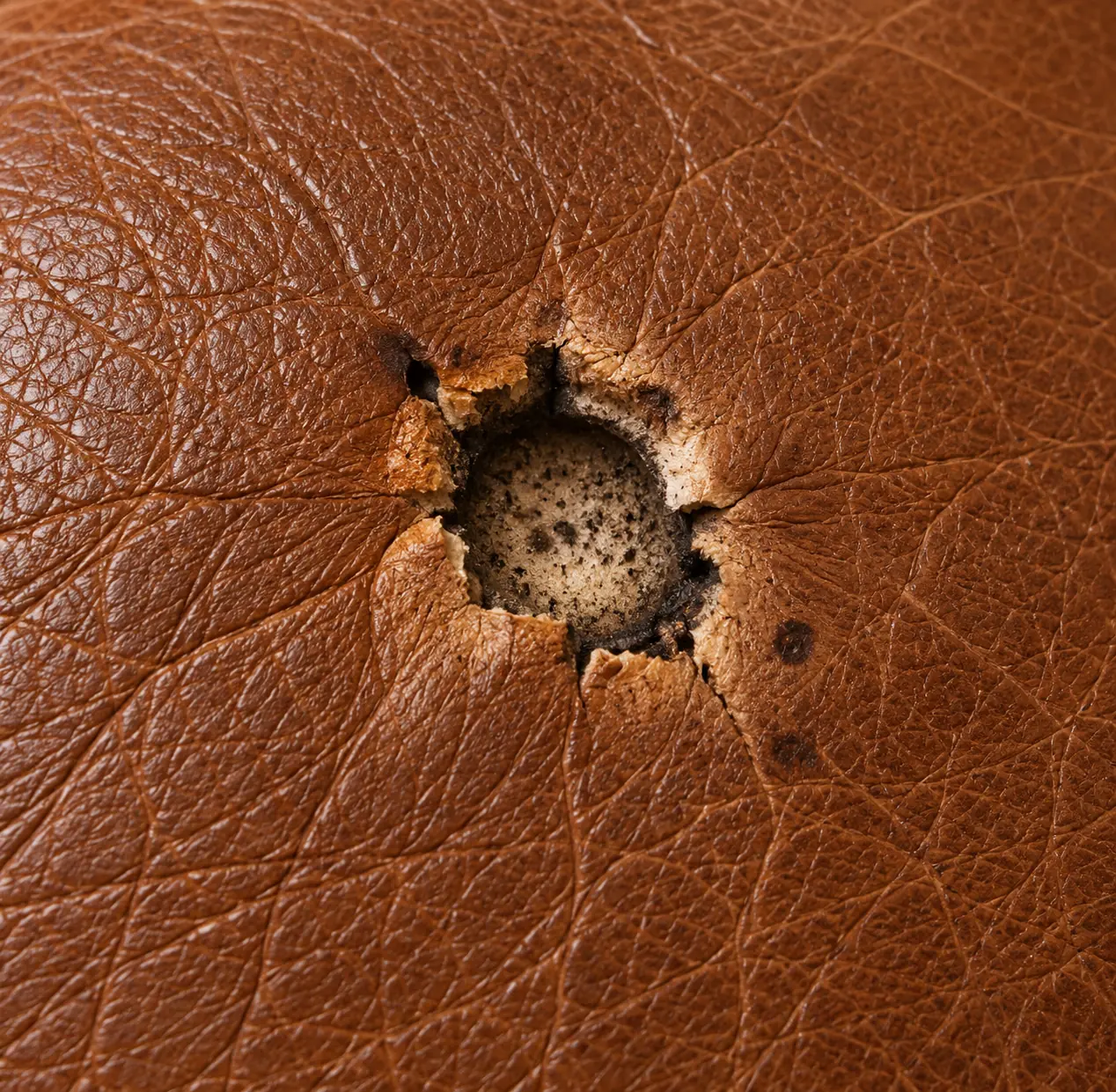
When we replace the panel instead
Filler needs sound leather to hold on to. Where the hide is cracking, or one seat carries burn after burn, leather burn repair stops being the right answer — a rebuilt surface just lifts at the next edge along. The panel is cut out instead and the colour matched across the piece.
It is a material question too: coated leather and vinyl rebuild well, aniline much less, and the materials guide tells them apart. Smoulder resistance belongs to the seat, not the cover — the federal standard tests the whole assembly, per the CPSC guidance on upholstered furniture.
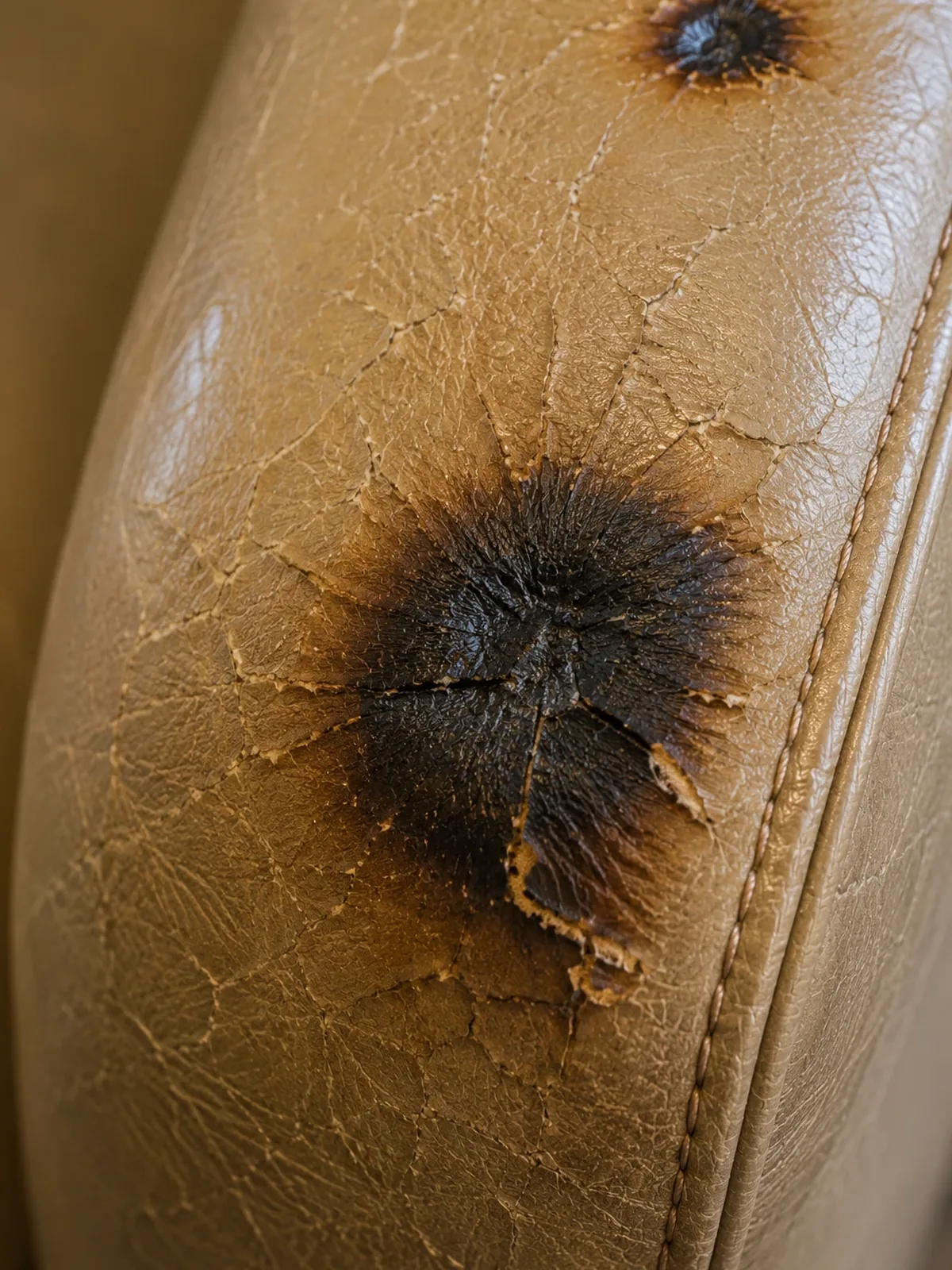
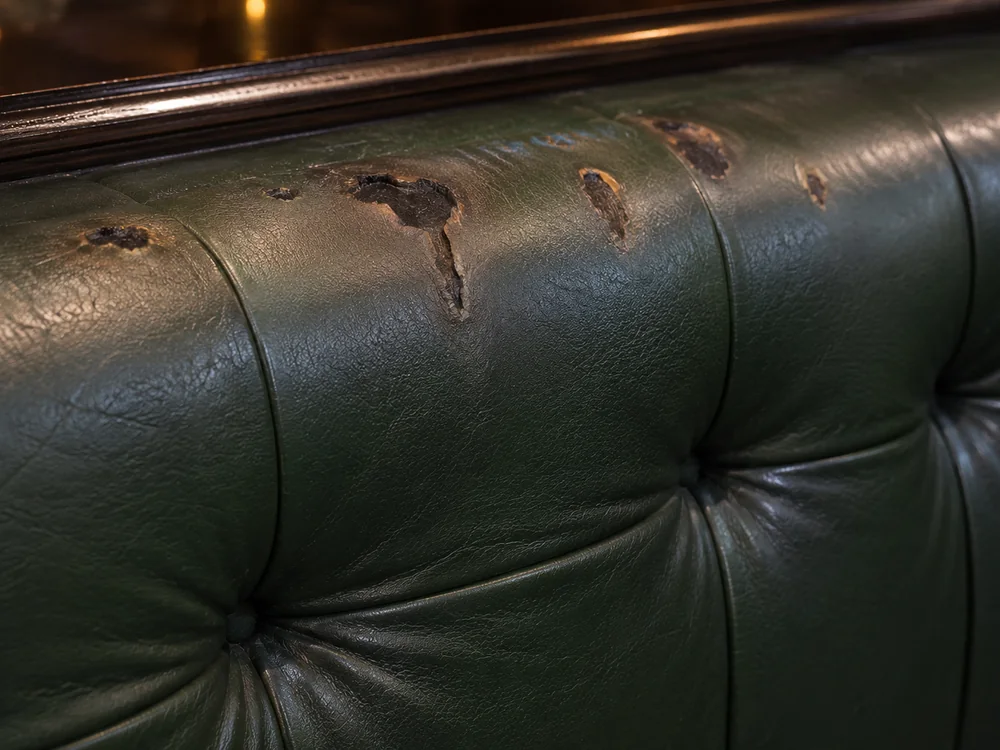
Burns before and after
Left is before, right is after leather burn repair.