
What Is Semi-Aniline Leather?
Semi-aniline leather is aniline-dyed hide with a thin finish sprayed over the top. Thin enough that the grain still shows, thick enough to even the color and buy you time on a spill.
How much finish is on the surface
Between Aniline and Pigmented — But Closer to Aniline
Every leather sits somewhere on one scale: how much finish is between your hand and the hide. Semi-aniline leather sits in the middle third.
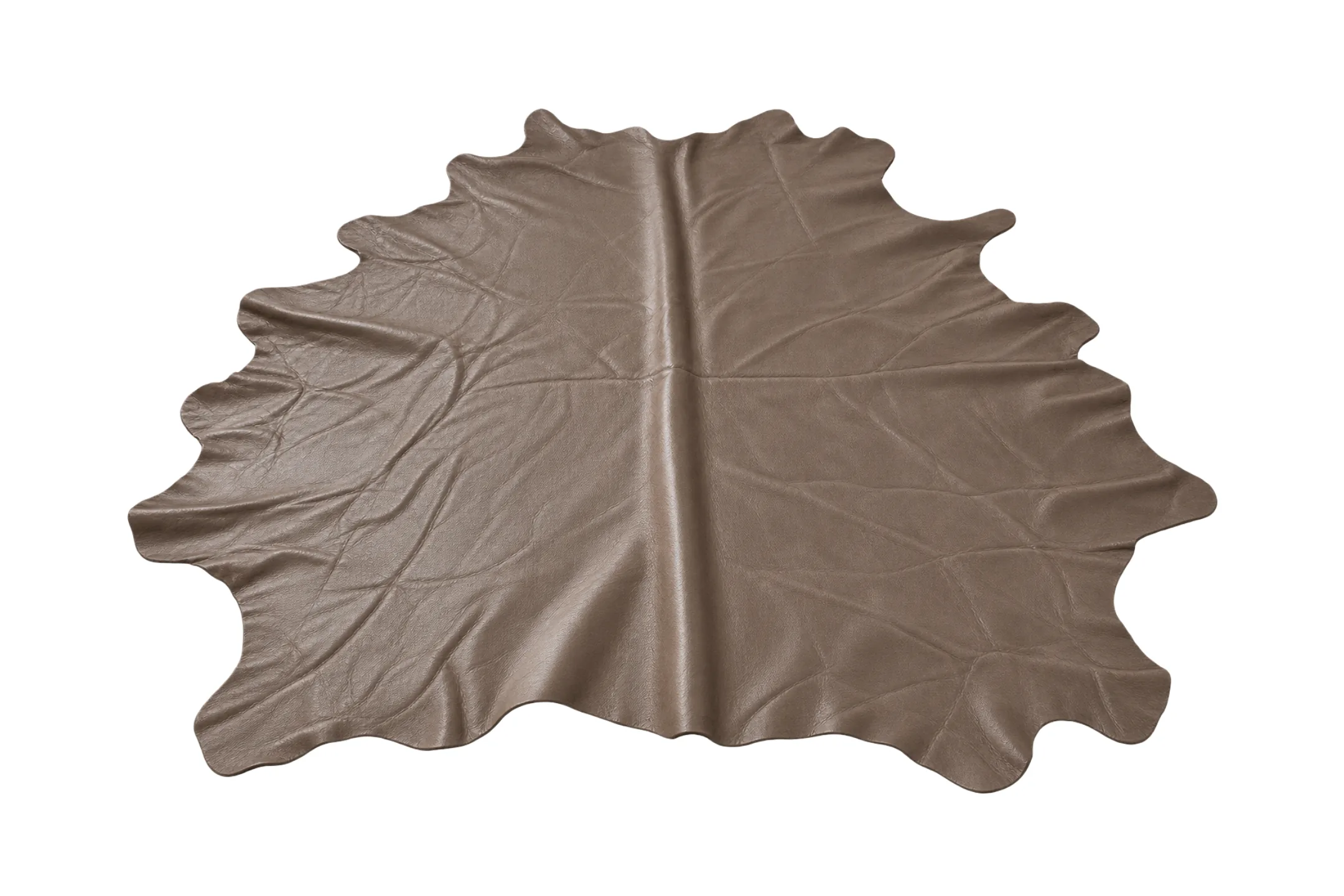
The light finish keeps what people buy leather for — grain, softness, warmth — while forgiving what aniline will not: a spilled glass, a sunny window, hair oil on the cushion.
Where it wears through, that patch starts absorbing like aniline leather while the panel beside it still repels. That unevenness is why worn semi-aniline leather looks blotchy rather than faded.
Watch the vocabulary. “Semi-aniline”, “protected aniline” and “nappa” are used loosely and none is a controlled term. Upholstery tanneries such as Elmo Leather publish the finish weight for each range, which is the number that actually decides how the hide behaves. Otherwise: look at the surface and test it.
Semi-Aniline Leather Colors
The same range as aniline, held far more predictably — the pigment in the finish evens out what the raw hide would show.
The dye underneath is transparent, so the hide’s own character still reads through the finish — that is the point of buying semi-aniline leather rather than pigmented. What the finish does is narrow the spread, not erase it. Two panels in the same named color can still sit a shade apart, and the difference grows as the finish wears unevenly. It is why a worn piece gets recolored translucently rather than painted back to a flat swatch.
Sheen Is What Gives a Bad Repair Away
Color can be matched by eye. On semi-aniline leather, sheen is the harder half — two panels can be the same color and still look different.
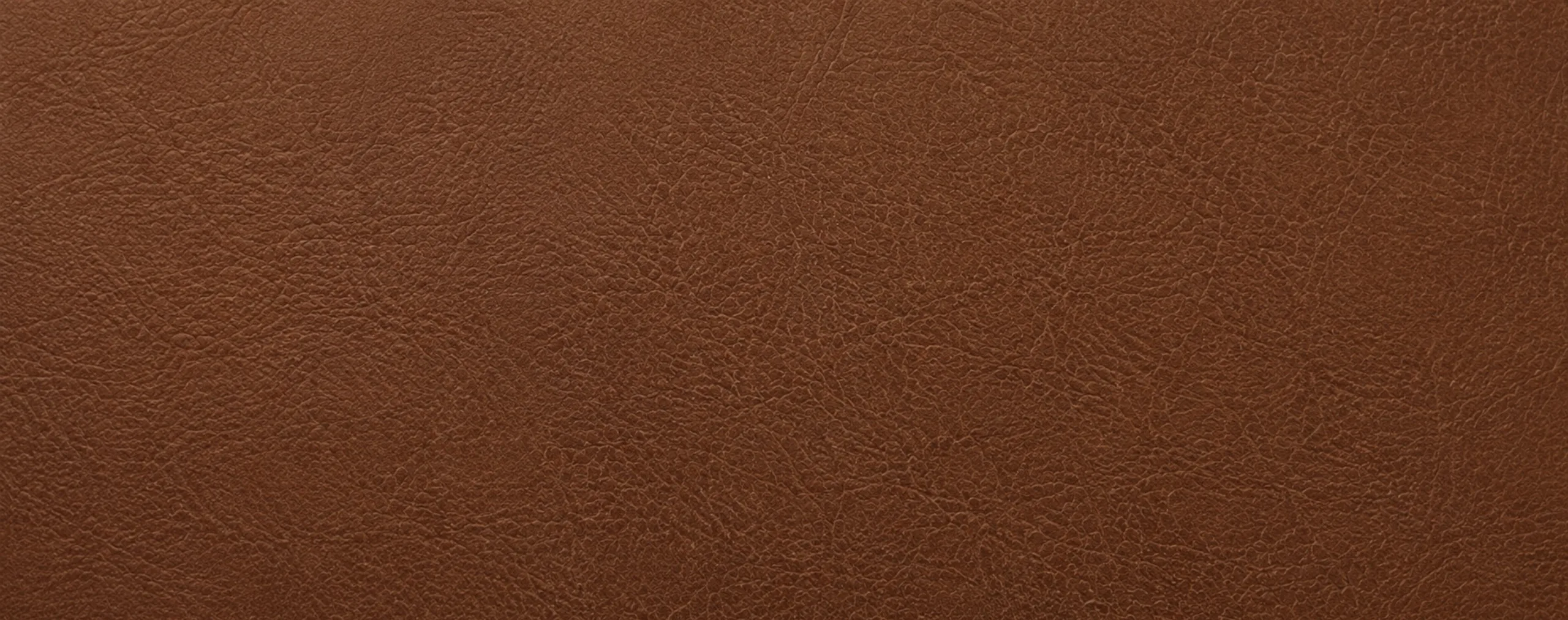
Matte
Softest lookVery little finish. Closest to full aniline, and shows body oils fastest.
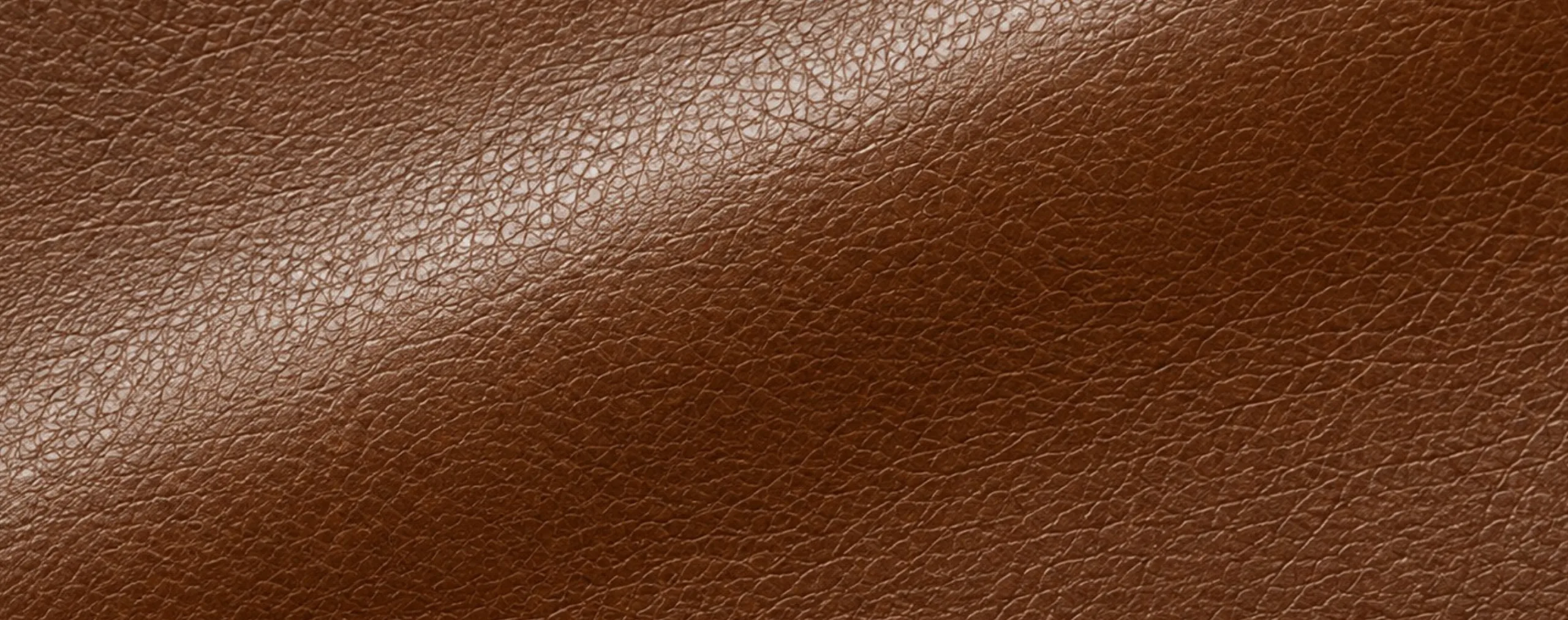
Satin
Most commonThe standard for upholstery: a low soft glow that follows the grain.
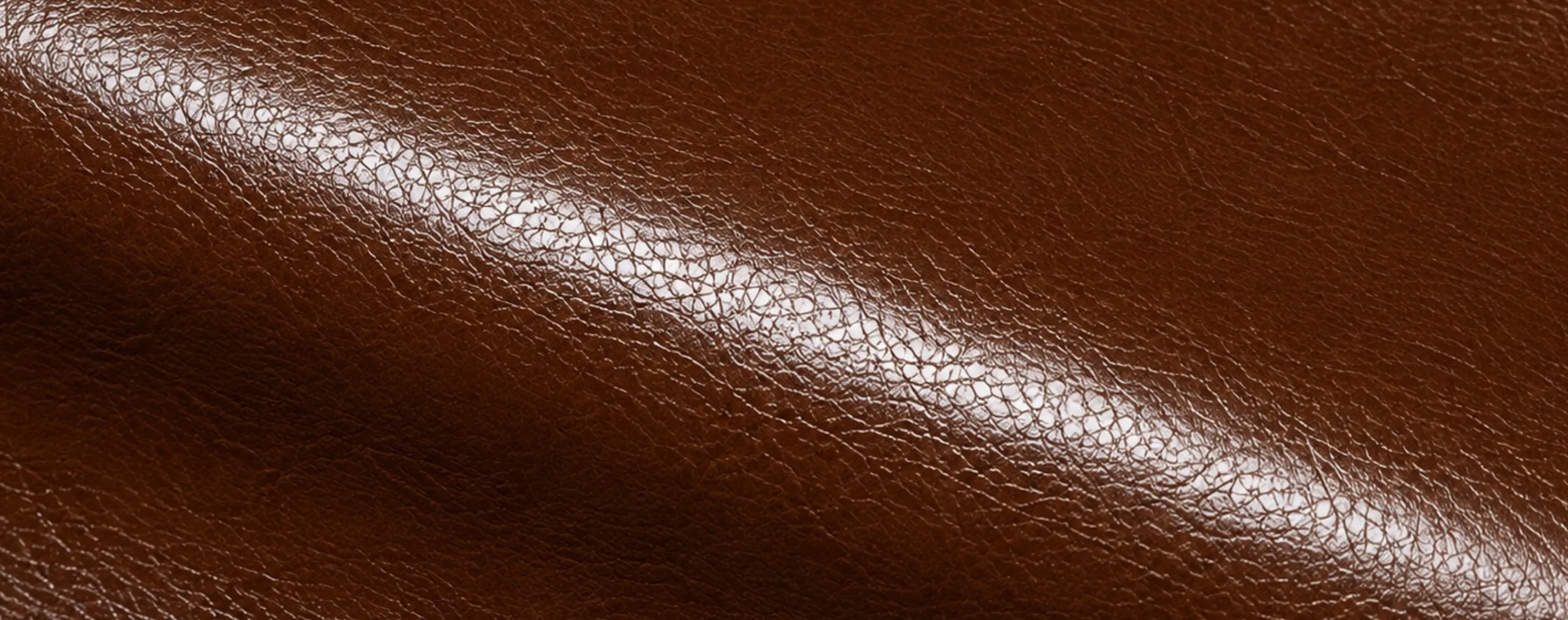
Gloss
Least forgivingMore sealer, more shine. Hides absorption, shows every scratch as a dull line.
What Sheen Looks Like on an Actual Sofa
The same reads on upholstery. Two are right; three are the ways sheen goes wrong — and none of them are color problems.
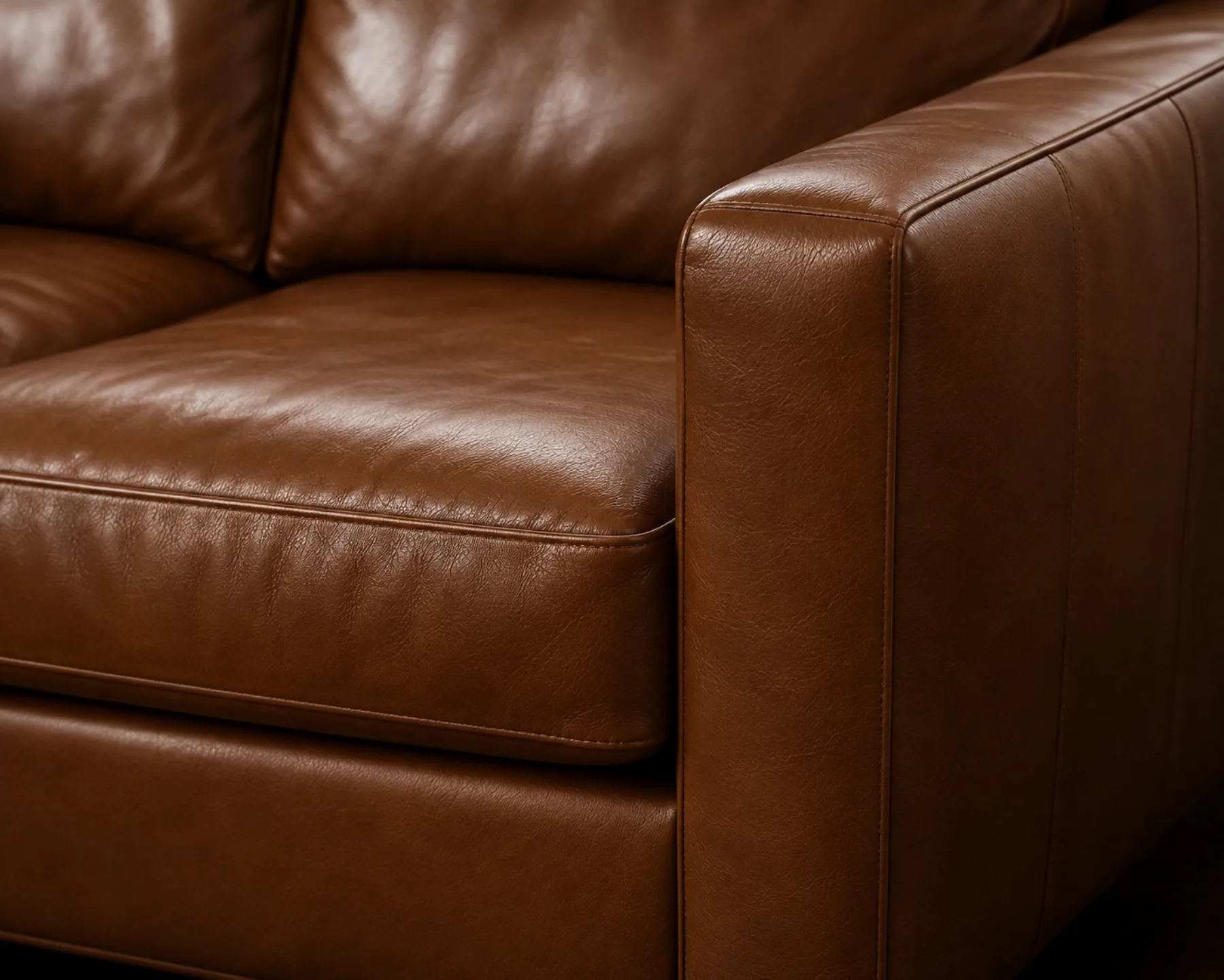 Correct
Even satin overall
One continuous soft highlight, no bright or dead spots.
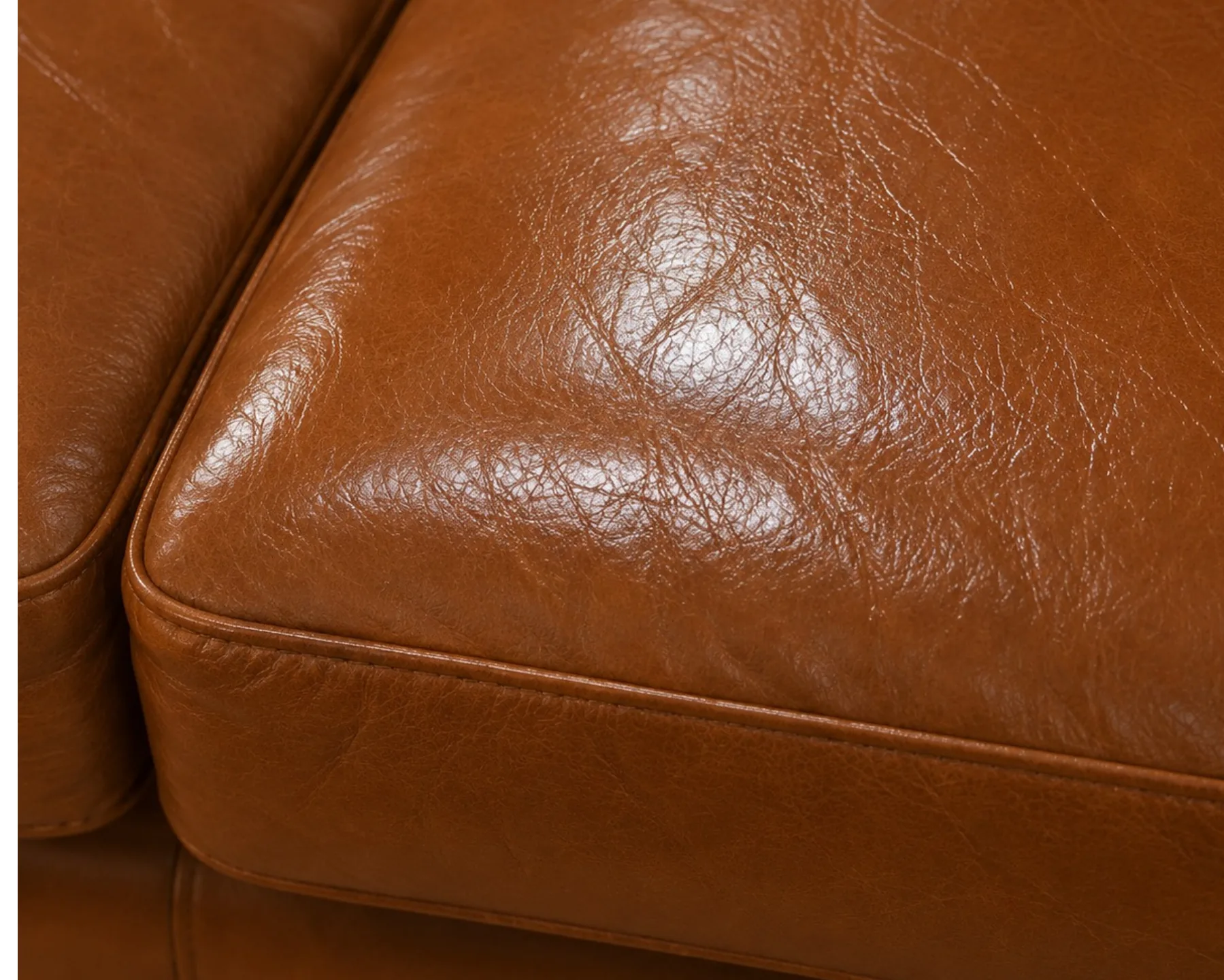 Wrong
WrongGlossy repair patch
The color can be perfect and this still fails: the topcoat was left shinier than the panel.
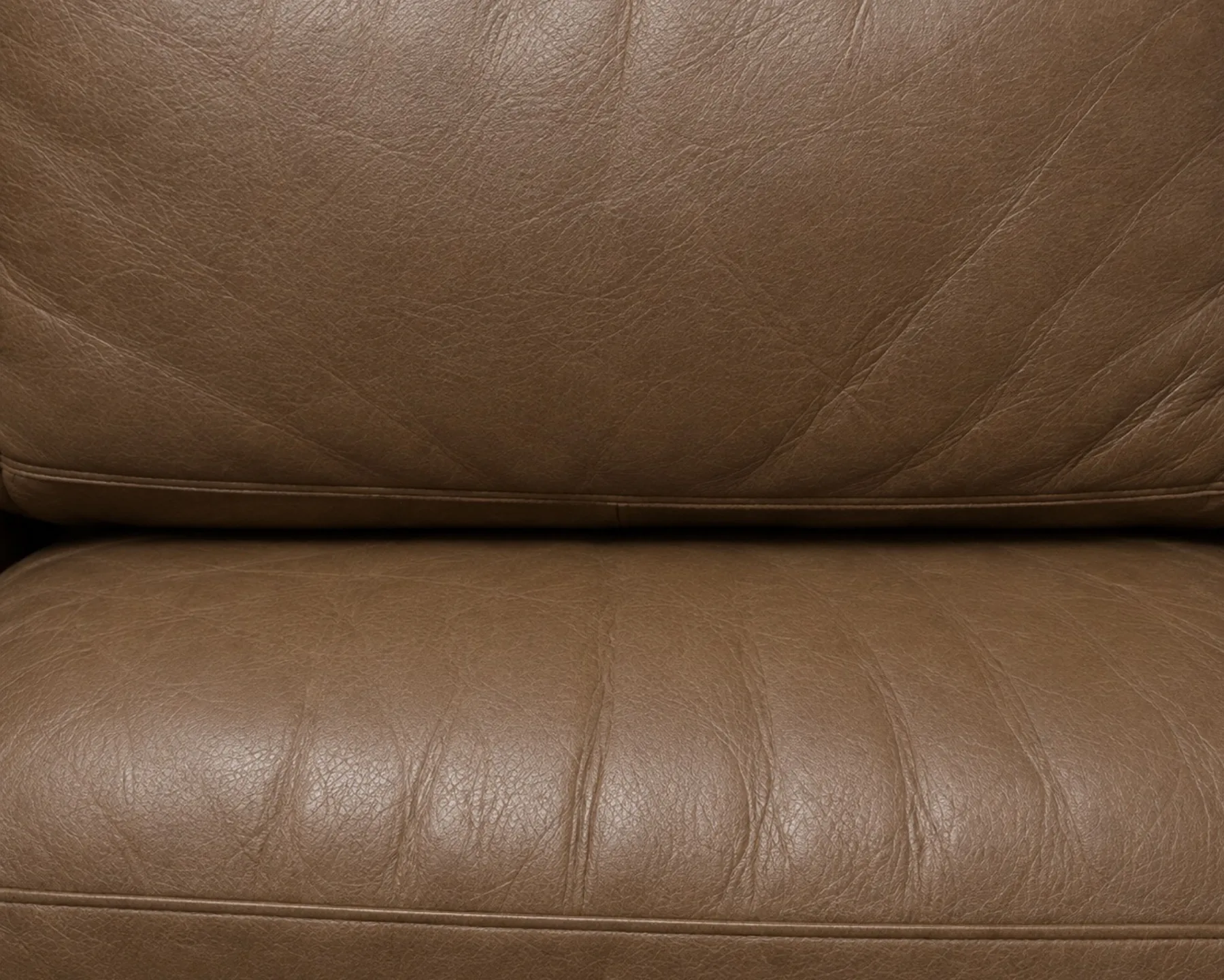 Wrong
WrongFlattened by body oils
Contact points go dull first. It reads as dirt; the finish has been softened.
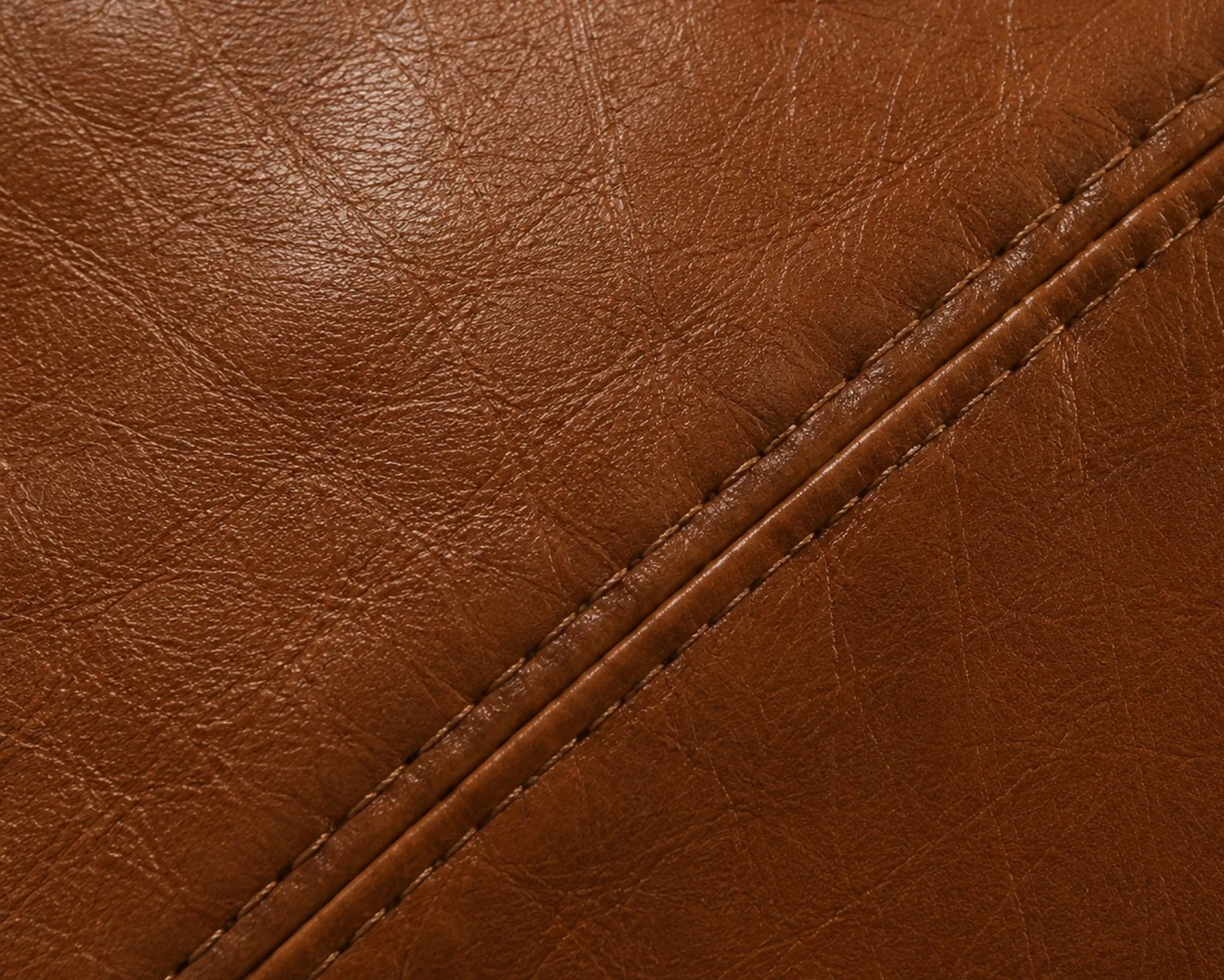 Wrong
WrongScratches break the reflection
Nothing is missing color. The highlight stops where the surface is cut.
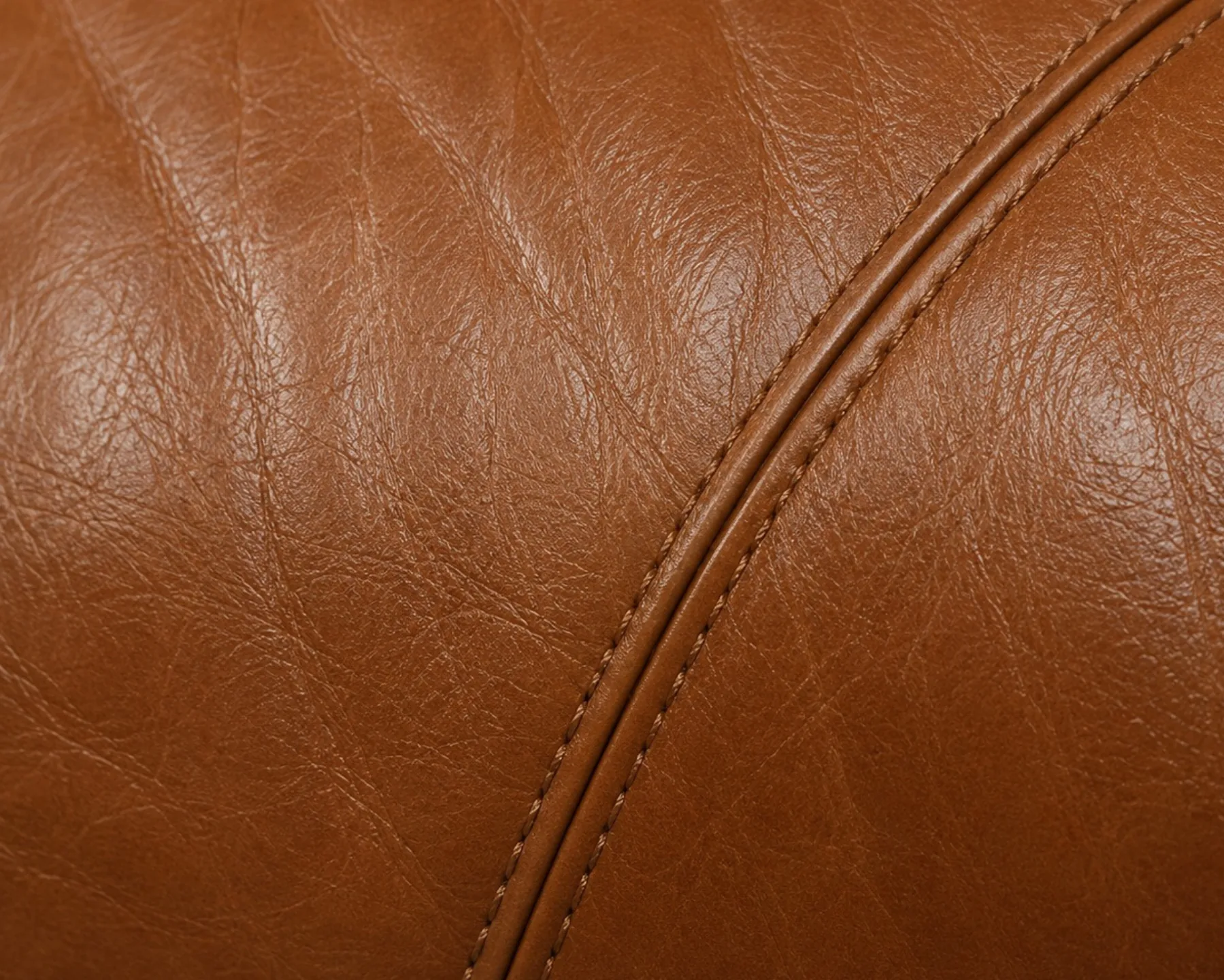 Correct
Correctly matched
The repair throws light back at the same rate as the panel it sits in.
The Drop Test, and Three Things to Look At
One drop of water separates the three leathers faster than any label. Semi-aniline leather resists, then it gives.
Step 1 · 0 seconds
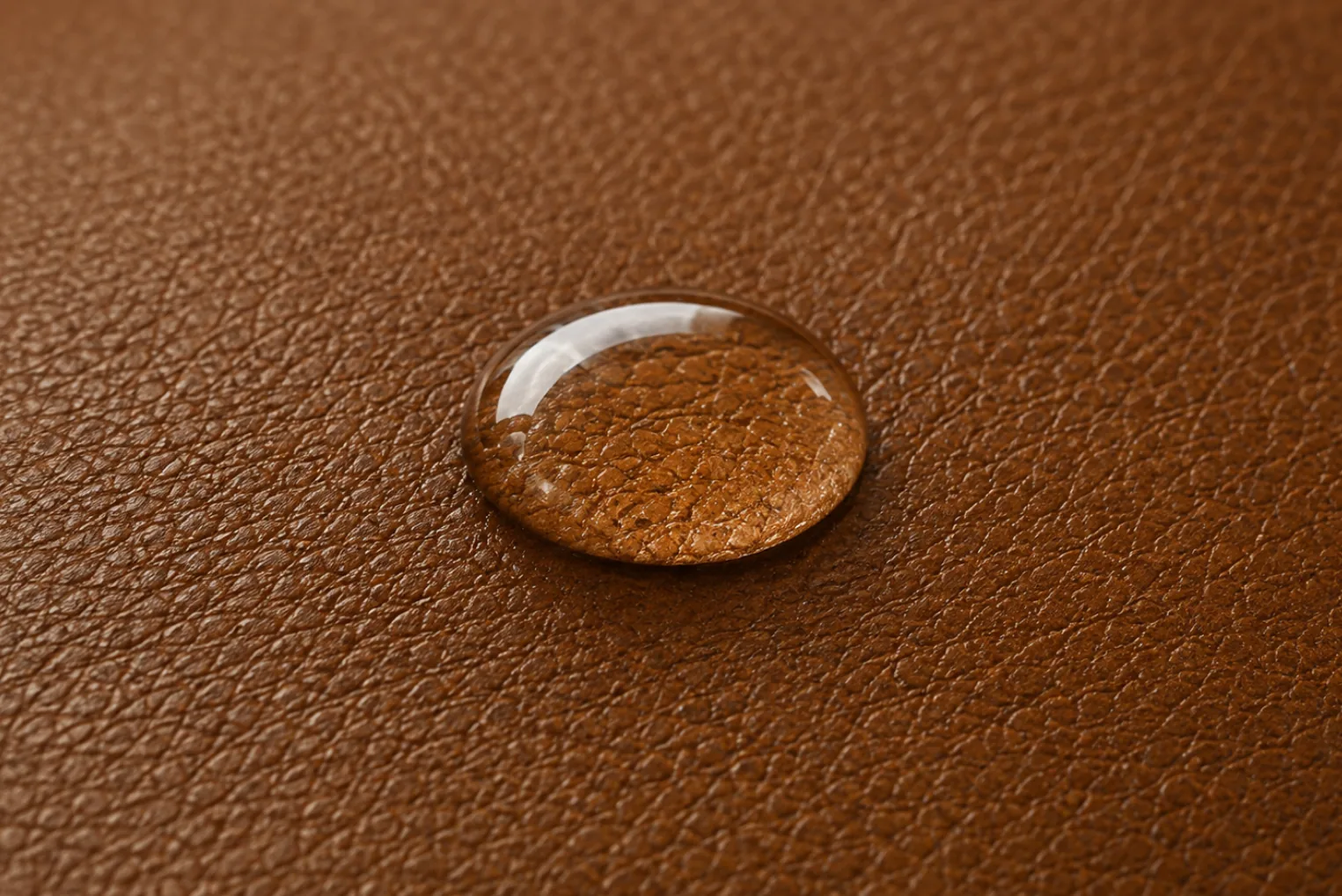
It beads
The finish holds it on the surface. So far it looks pigmented.
Step 2 · 30 seconds
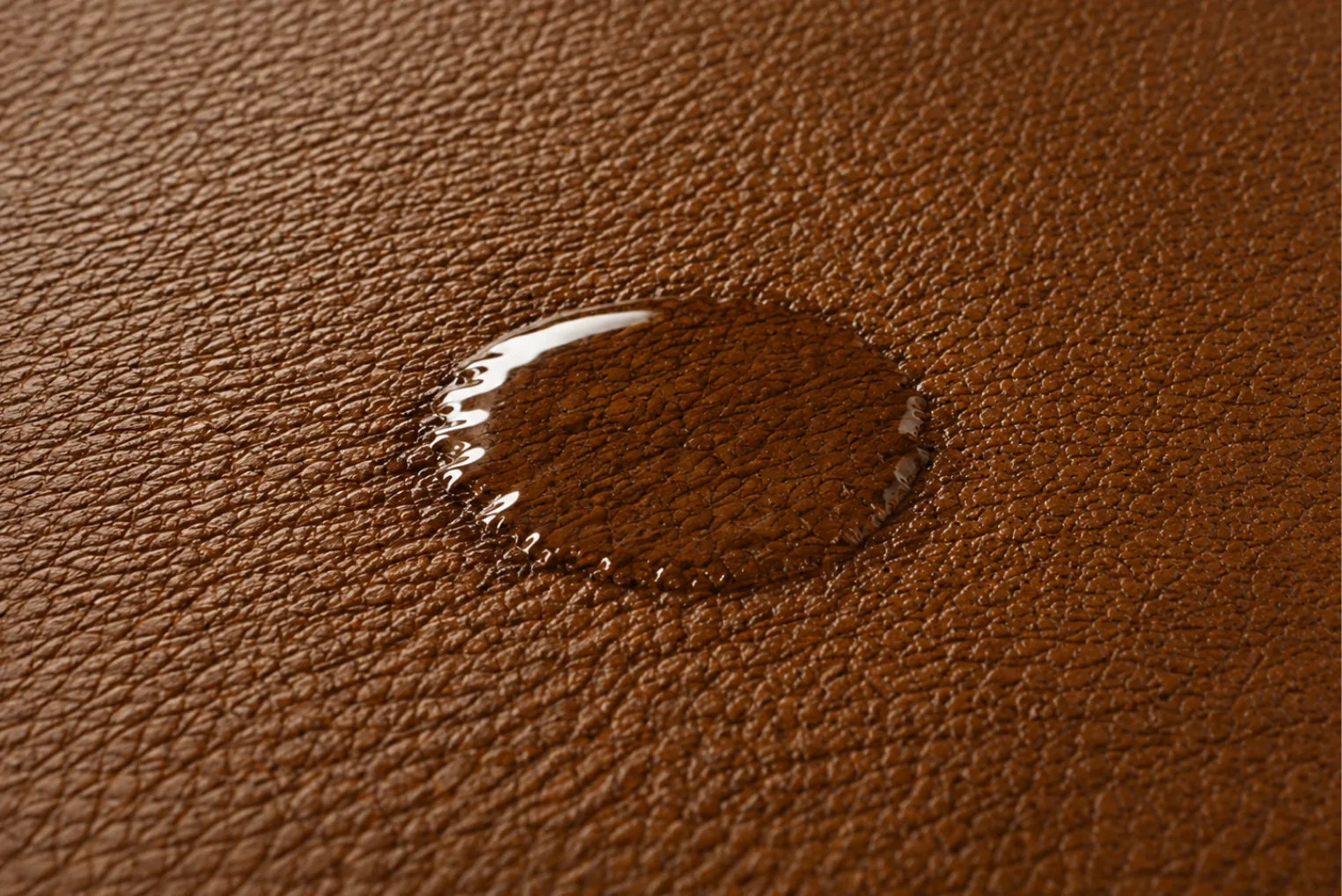
The edge darkens
Moisture creeps past the finish. Aniline would already be dark; pigmented, untouched.
Step 3 · Blot
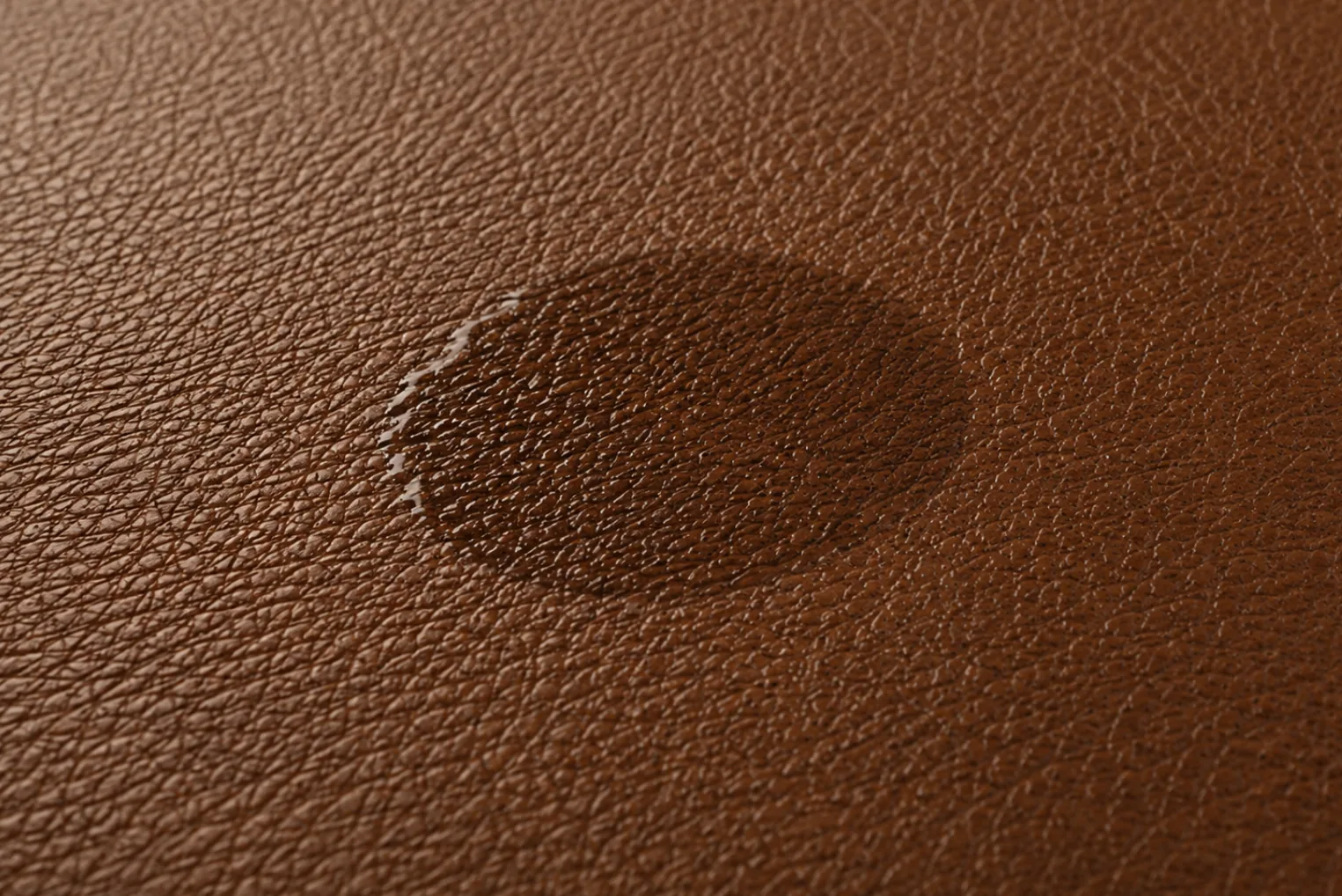
A faint mark that fades
A soft shadow that fades. Aniline leaves a ring; pigmented leaves nothing.
| Leather | First 30 seconds | After blotting |
|---|---|---|
| Aniline | Soaks in almost immediately and goes dark | A defined ring that can stay for days |
| Semi-aniline | Beads, then slowly darkens at the edge | A faint mark that fades as it dries |
| Pigmented | Beads and stays beaded — no change | Nothing |
CHECK 01
Even color, real grain
Panels match, but pores and grain still vary within a panel.
CHECK 02
A slight sheen
Tilt it to a window: a soft satin glow, not flat chalk and not a coated shine.
CHECK 03
A hint of film to the touch
Soft and warm, but slightly smoother than raw hide. Aniline feels like nothing is there.
Test under a cushion, never a visible panel, with clean water only. Or send daylight photos and we will tell you what you have.
The Finish Wears Off in a Predictable Order
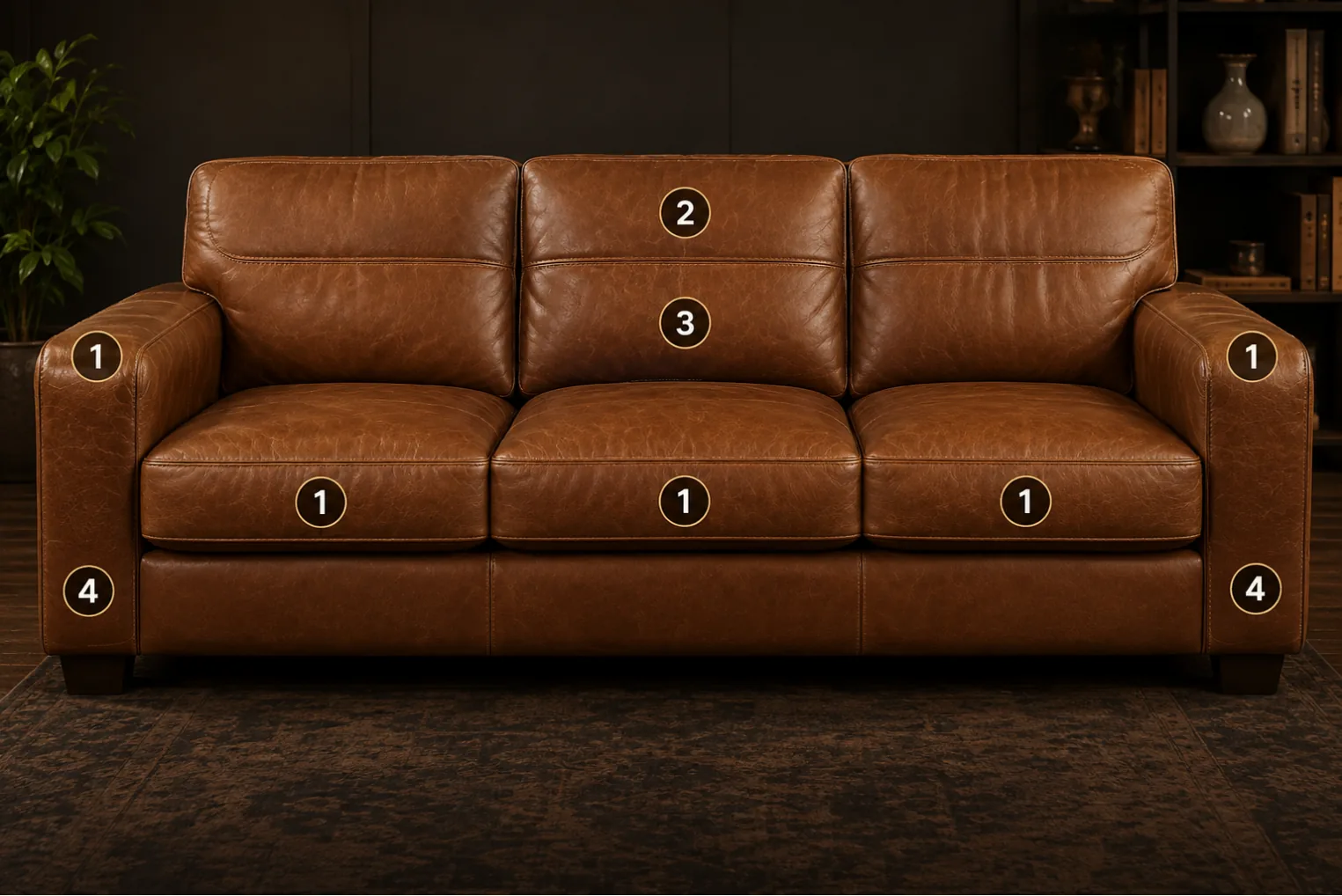
It fails where hands, heads and bodies touch, in roughly the same order on every semi-aniline leather sofa.
-
01
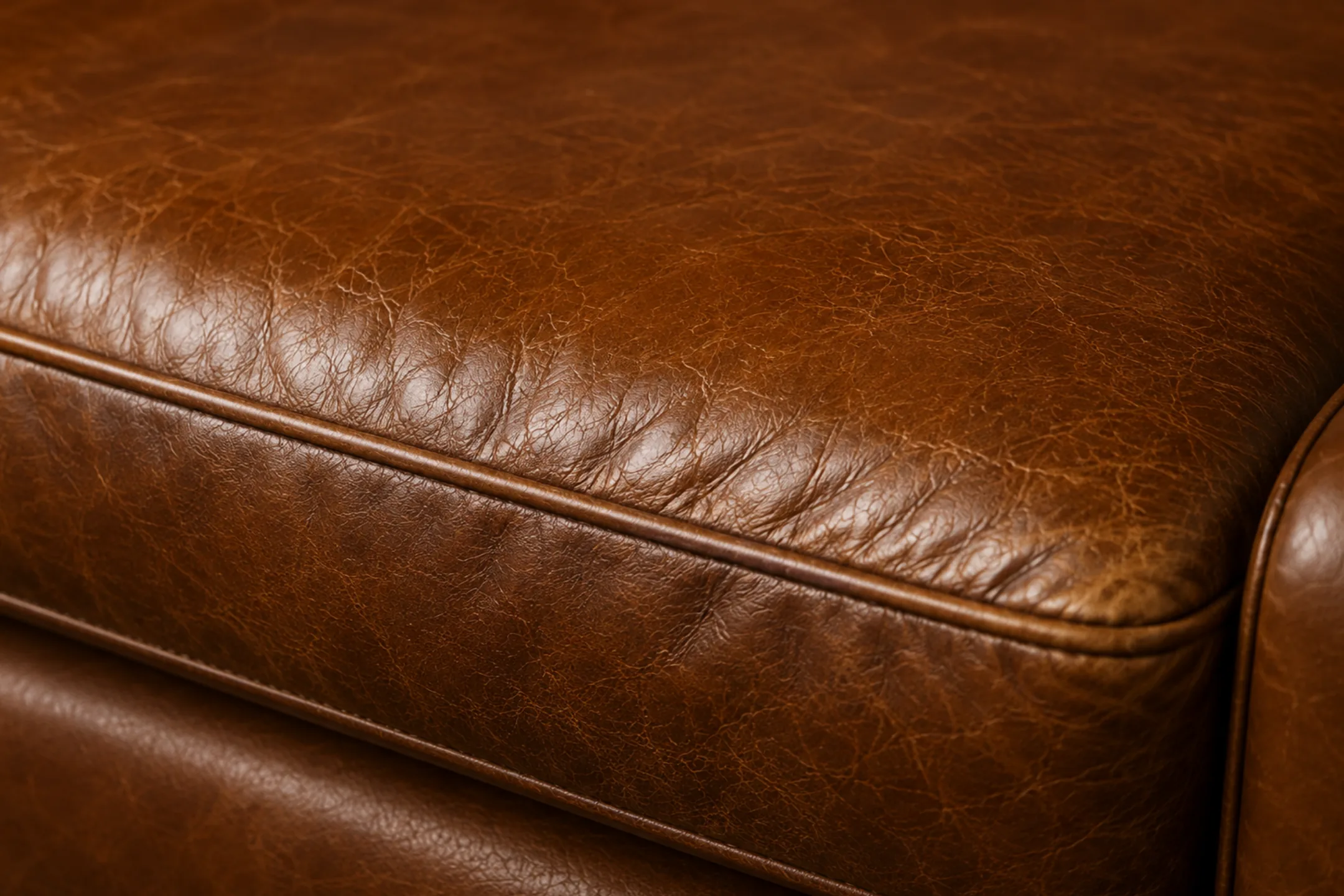
Seat front edge and arm tops
Every entry and exit drags the same two inches. The finish thins here first.
-
02
Headrest band
Oils sit on one strip for years. It saturates rather than abrades, and goes dark and shiny.
-
03
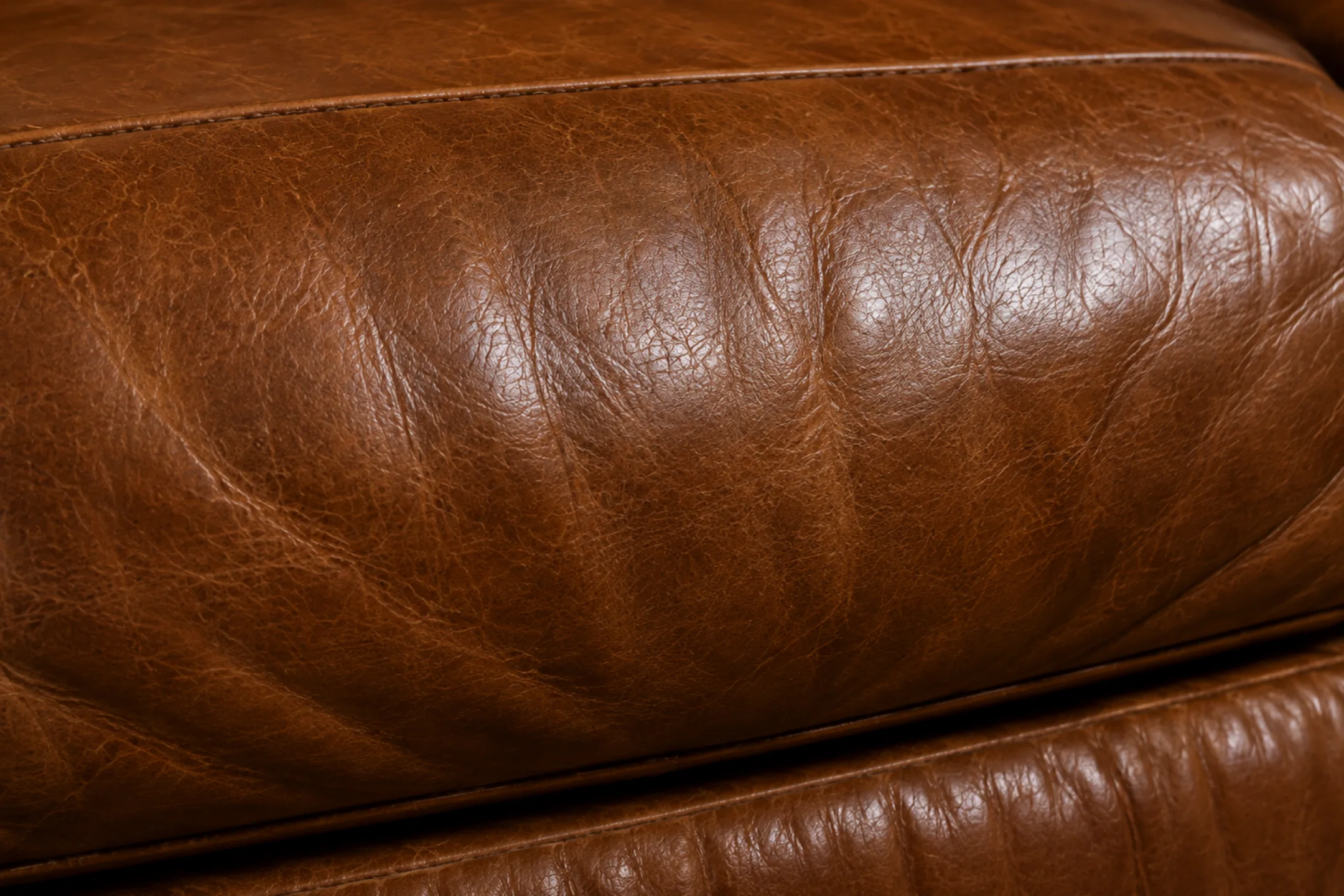
Seat centers
Pressure and flex, not abrasion. Shows as gradual dulling long before anything else.
-
04
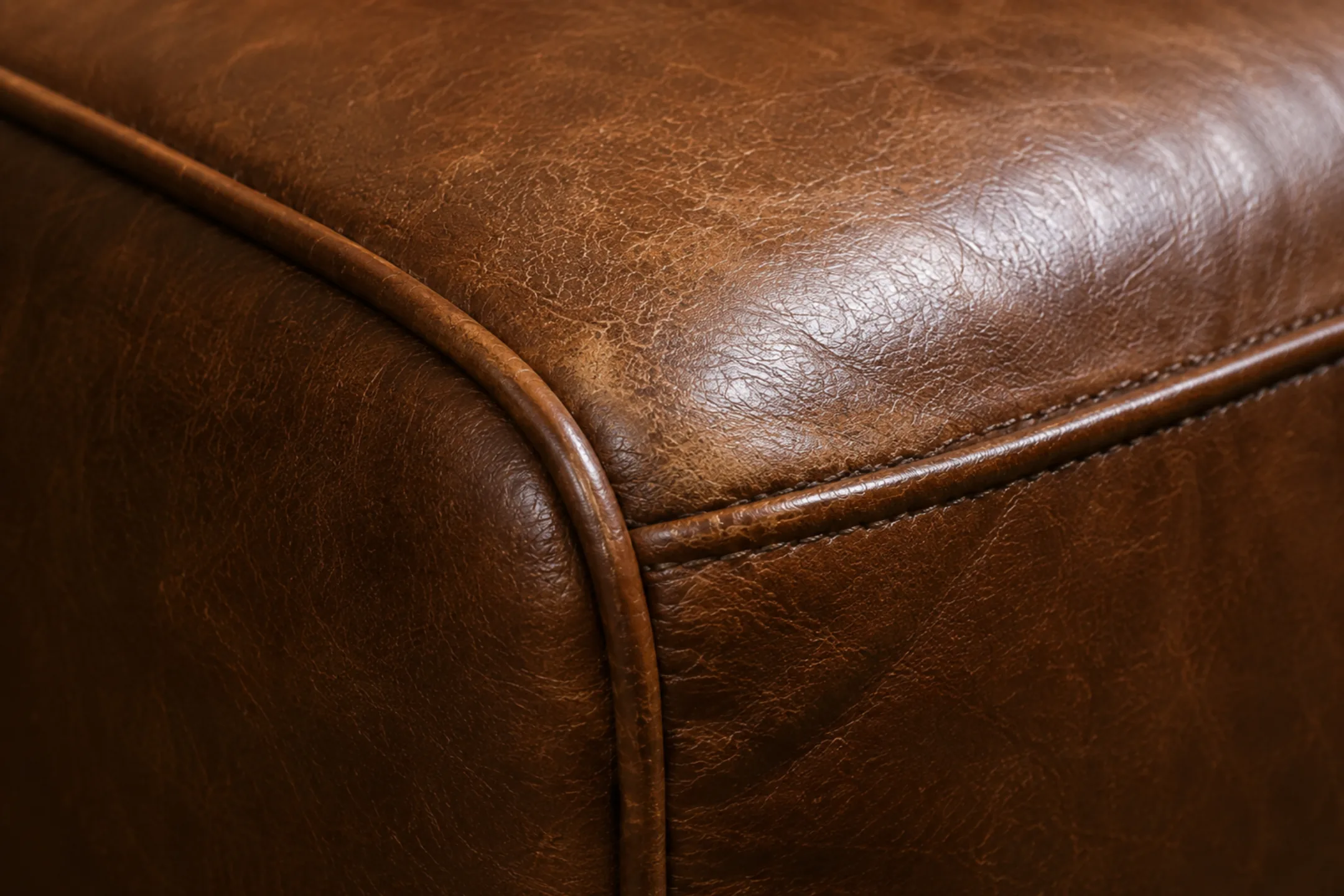
Outside back and sides
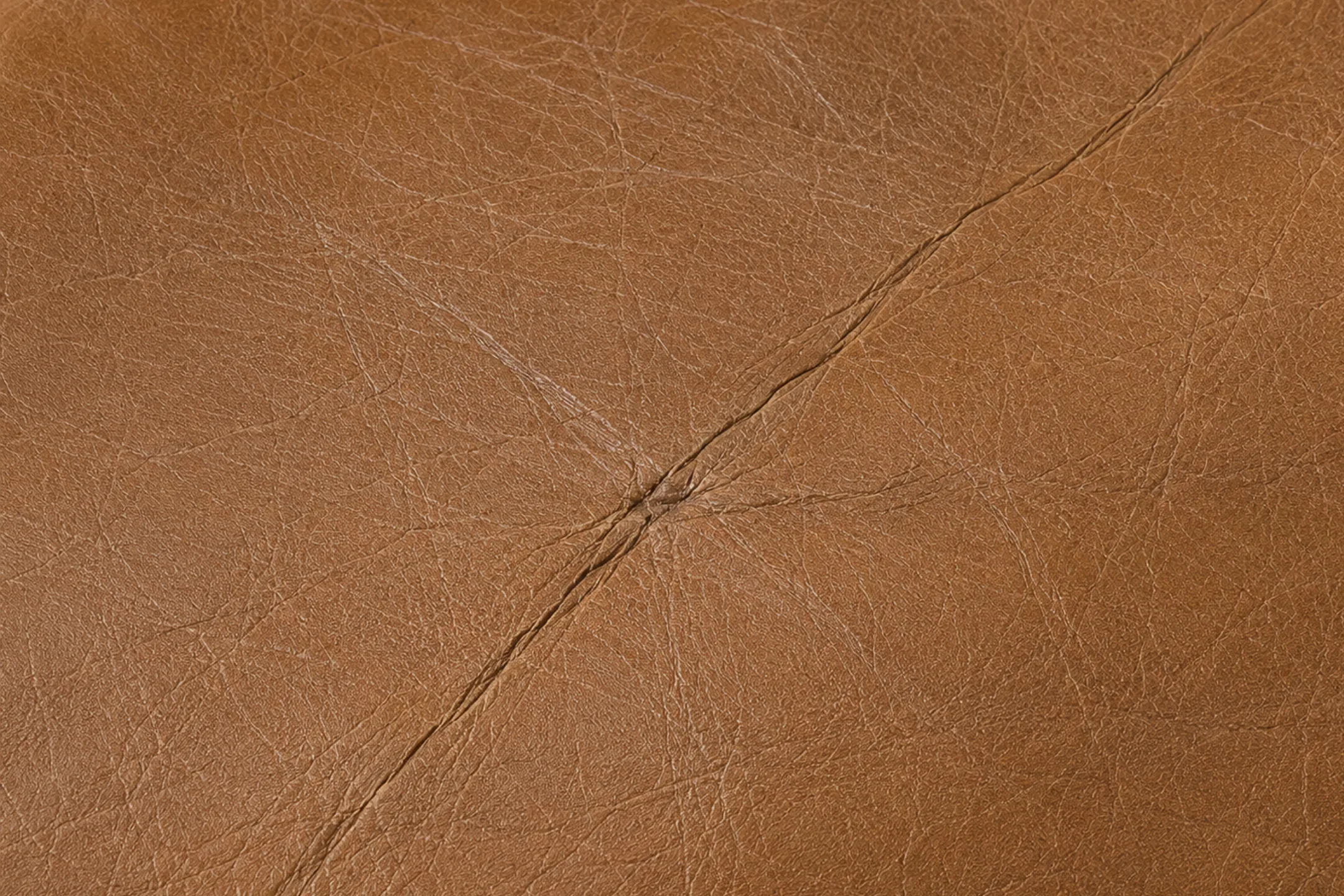
Barely touched, so they hold the original color and sheen. This is our reference.
Three of Those Zones, Up Close
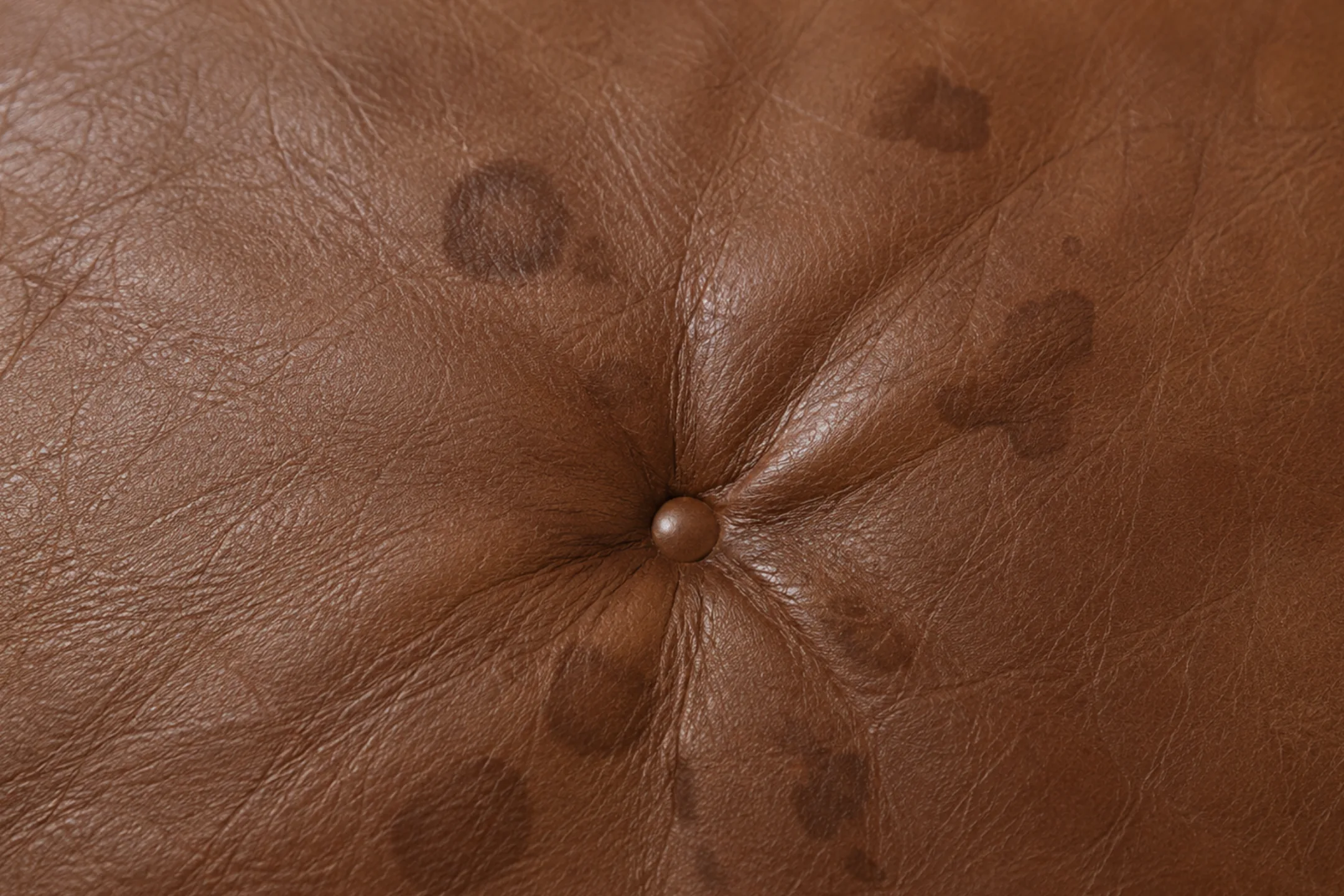
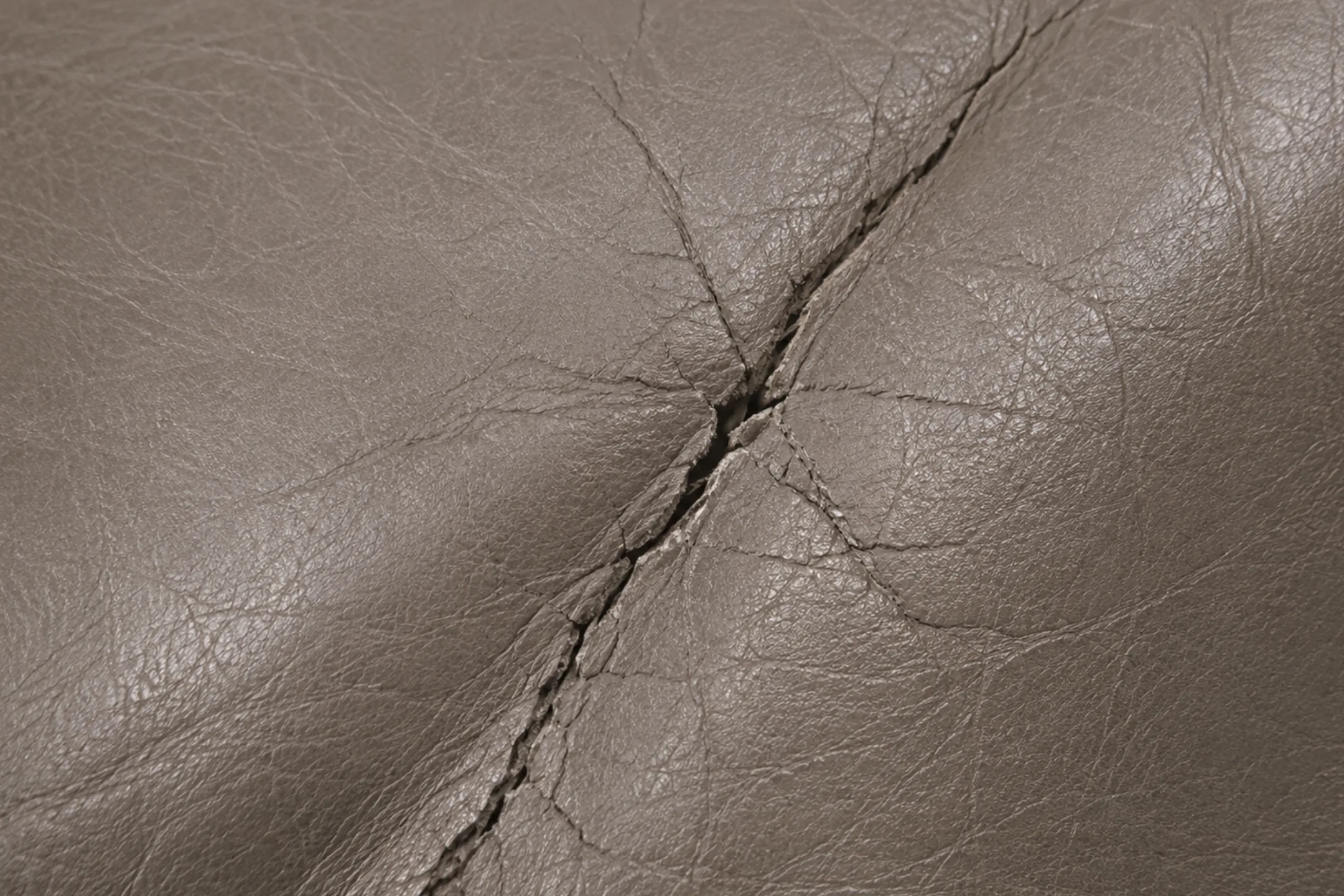
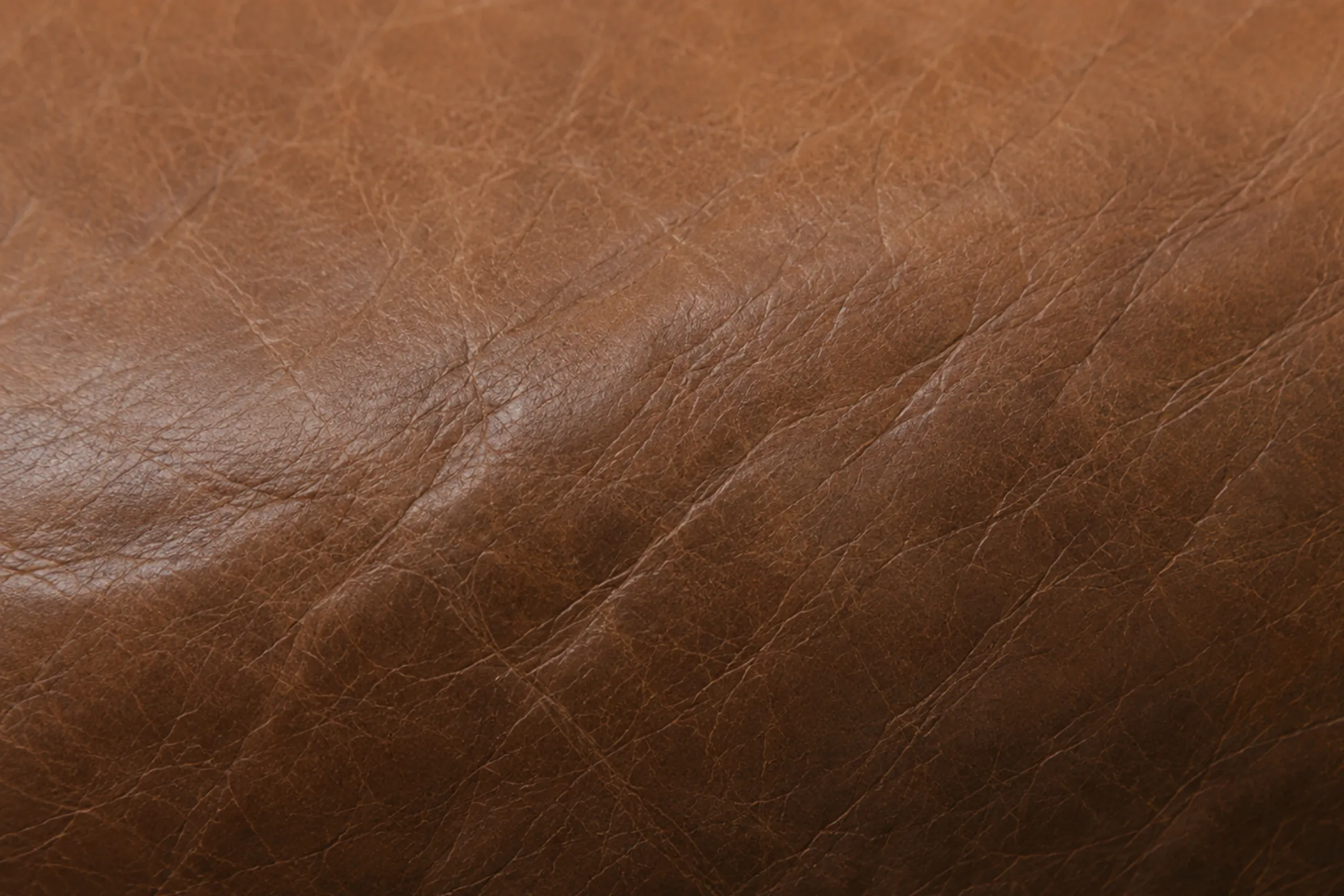
Two are damage, one is the control — and the two failures are opposites.
What You See, and What Has Actually Happened
The symptom and the cause are often two different layers. Reading it right decides an hour of work or a full refinish.
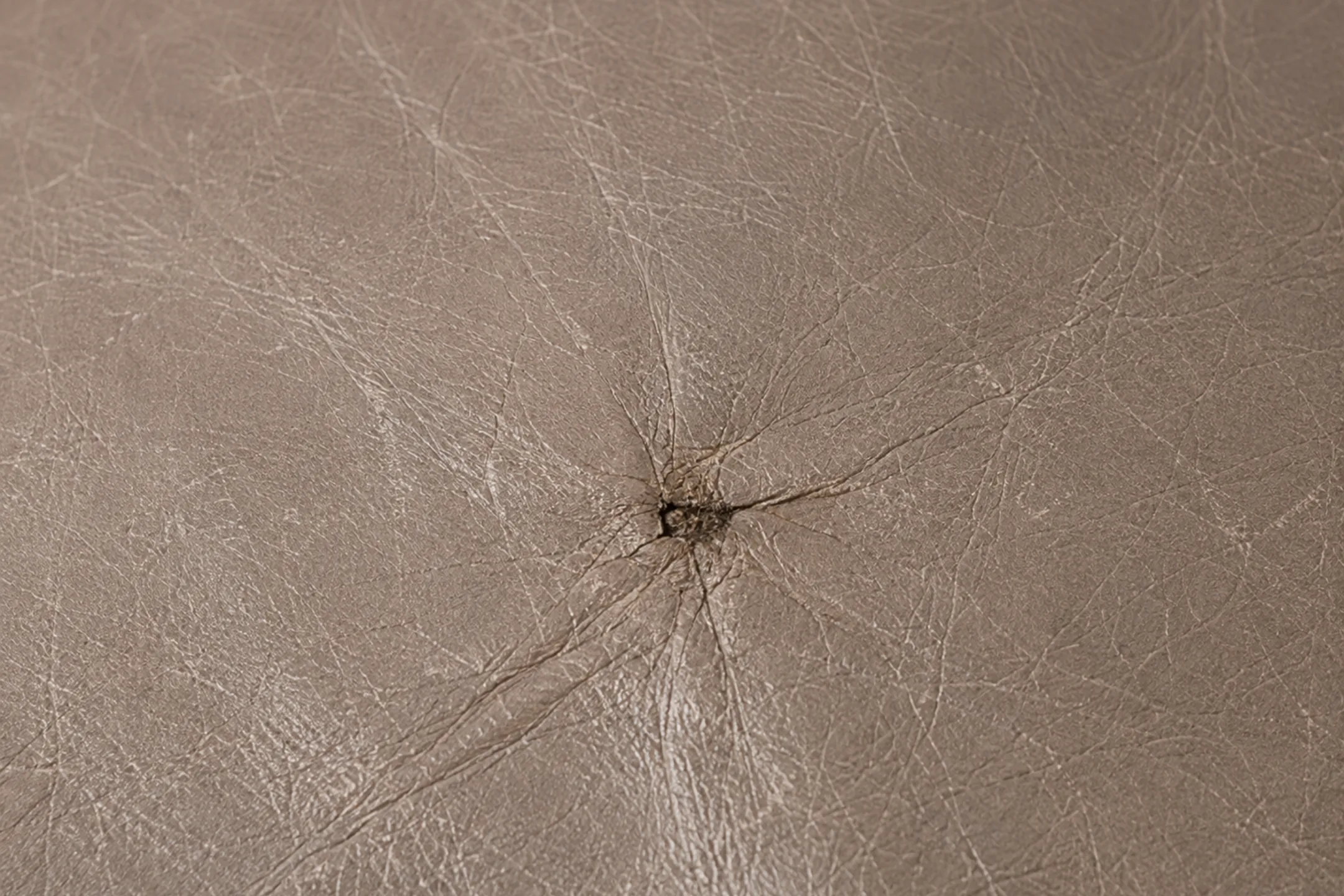
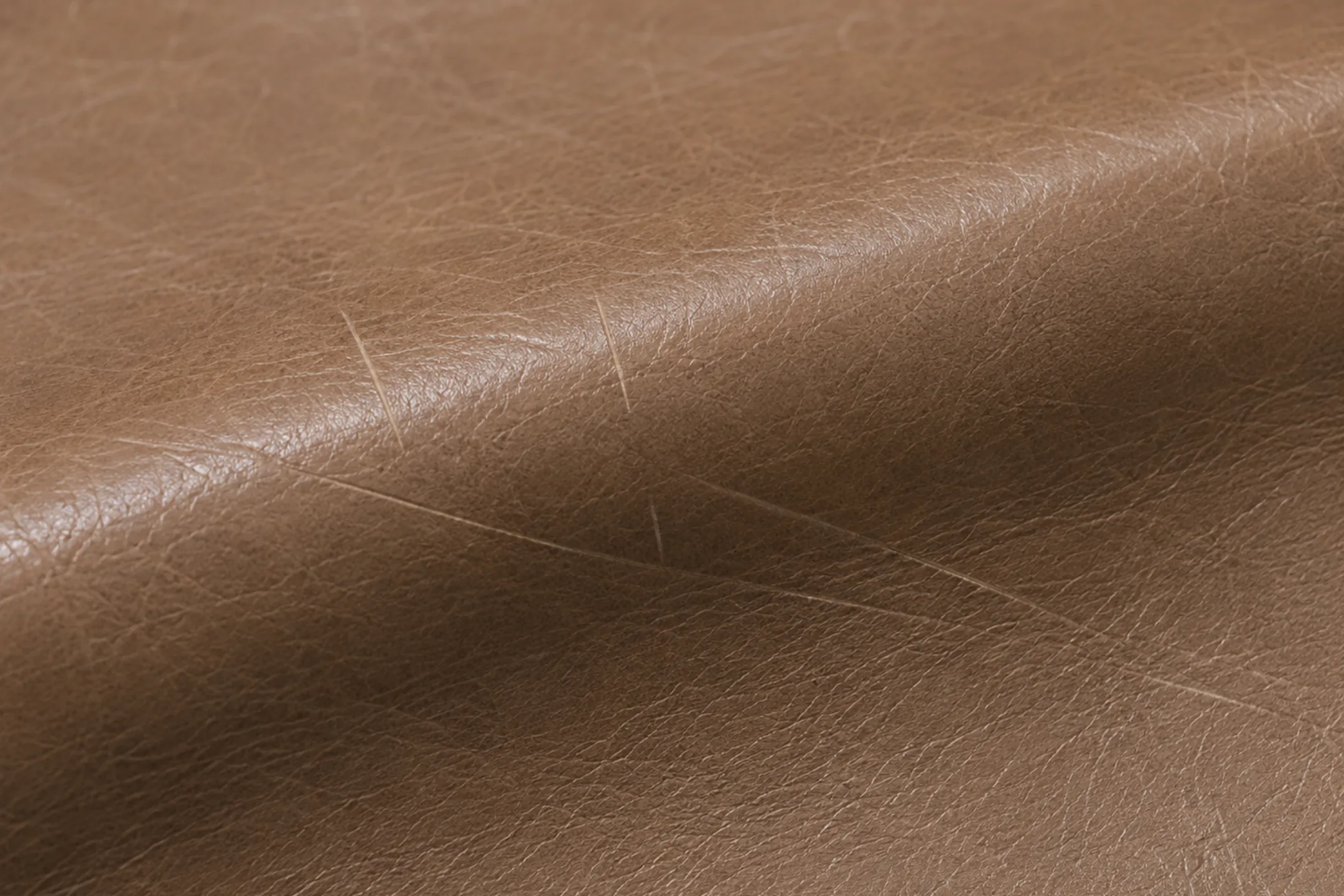
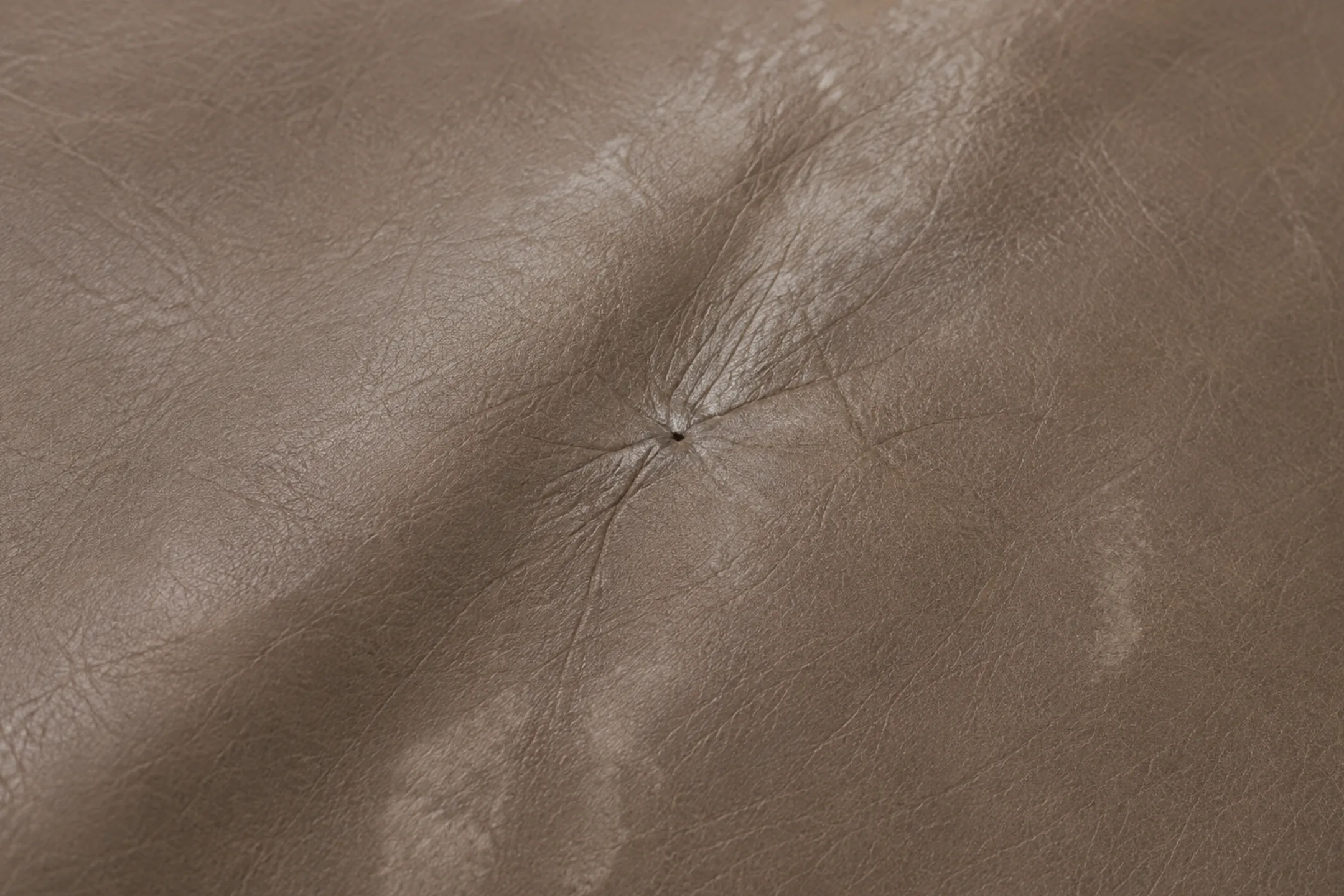
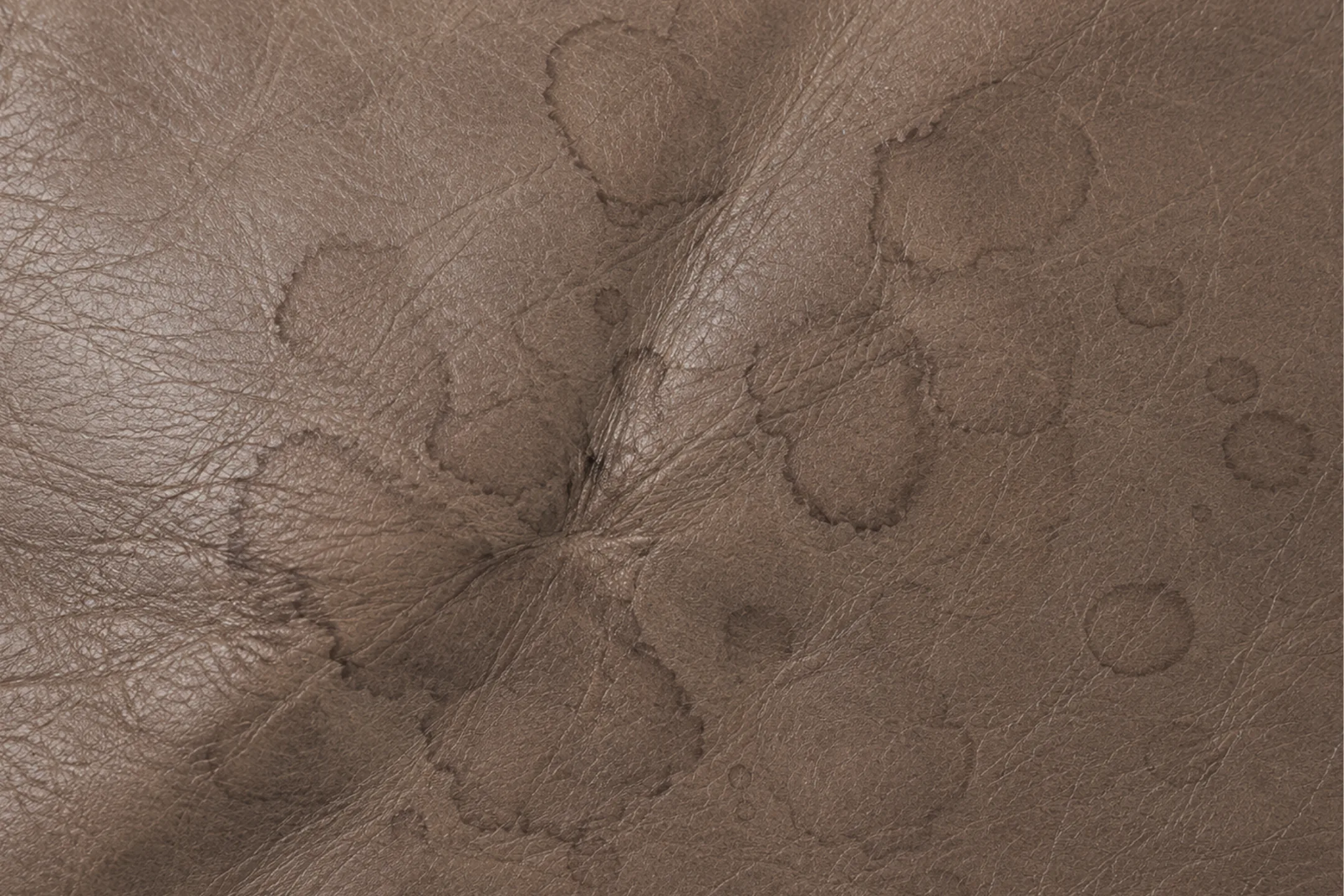
Dull patches on arm tops
The finish abraded away. The dye is usually fine, so only the sheen is missing.
Yes — re-sealA dark, shiny headrest
Oils went through the finish into the dye. Needs degreasing before any color work.
UsuallyLighter scuffs and scratch lines
The finish has been scored. Sitting on top, a scratch reads lighter, not darker.
YesColor loss along piping and edges
Finish and dye both worn at a flex point. Needs color put back, not just sealer.
Yes — recolorBlotchy, uneven tone across a panel
Protection is no longer even. Bare patches absorb and darken; finished ones do not.
YesFlaking or peeling film
A coating added later, failing over the original finish. It comes off first.
Yes — strip firstCracking along flex lines
The hide underneath has dried out. The finish is only where it shows.
Depends on depthSplits at seams and stress points
Structural, not cosmetic. Repair holds where the hide is sound; brittle panels get replaced.
Case by caseThe Same Stack, Rebuilt From the Bottom
Semi-aniline leather repair puts the layers back in the order the tannery built them.
Clean, degrease, and strip what has failed
Oils are pulled out and any failing coating removed. Nothing bonds to a contaminated surface.
Translucent color
Built in thin passes so the grain keeps showing. Opaque coverage matches the color and loses the leather.
Seal
A flexible clear coat rebuilds the protection that wore away.
Sheen match
The topcoat is adjusted until the repair throws light like an untouched panel.
Most work is partial: untouched panels still hold the original color and sheen, so only the worn zones get rebuilt. The stack we rebuild is the one the tannery laid down — the finishing stage audited under the Leather Working Group protocol.
Repair, Restoration or Reupholstery
Three different jobs. The answer turns on one question: is the damage in the finish, in the color, or in the hide?
Repair
One damaged spot, everything else right. Localized color and finish work, blended outward.
Learn more →Restoration
Dull, blotchy or oil-darkened panels, but the hide is sound. Clean, recolor, match the sheen.
Learn more →Reupholstery
Cracked through, split at the seams or brittle. New hides on a frame worth keeping.
Learn more →The Leathers It Gets Confused With
Semi-aniline leather is most often mistaken for these three.
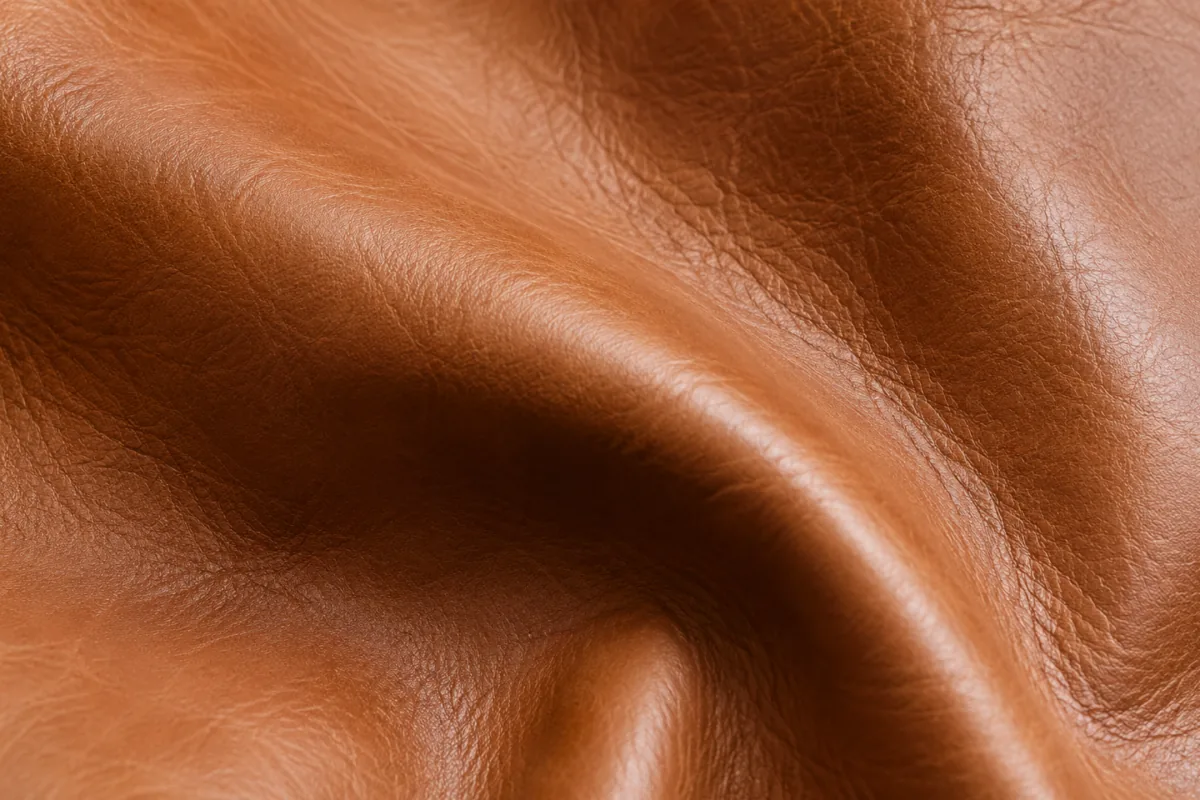 Aniline Leather
The same dye with no finish over it. Softer, and far less forgiving.
The tellA drop of water sinks in and darkens the spot in seconds. On this leather it beads first.
Compare
02
Aniline Leather
The same dye with no finish over it. Softer, and far less forgiving.
The tellA drop of water sinks in and darkens the spot in seconds. On this leather it beads first.
Compare
02
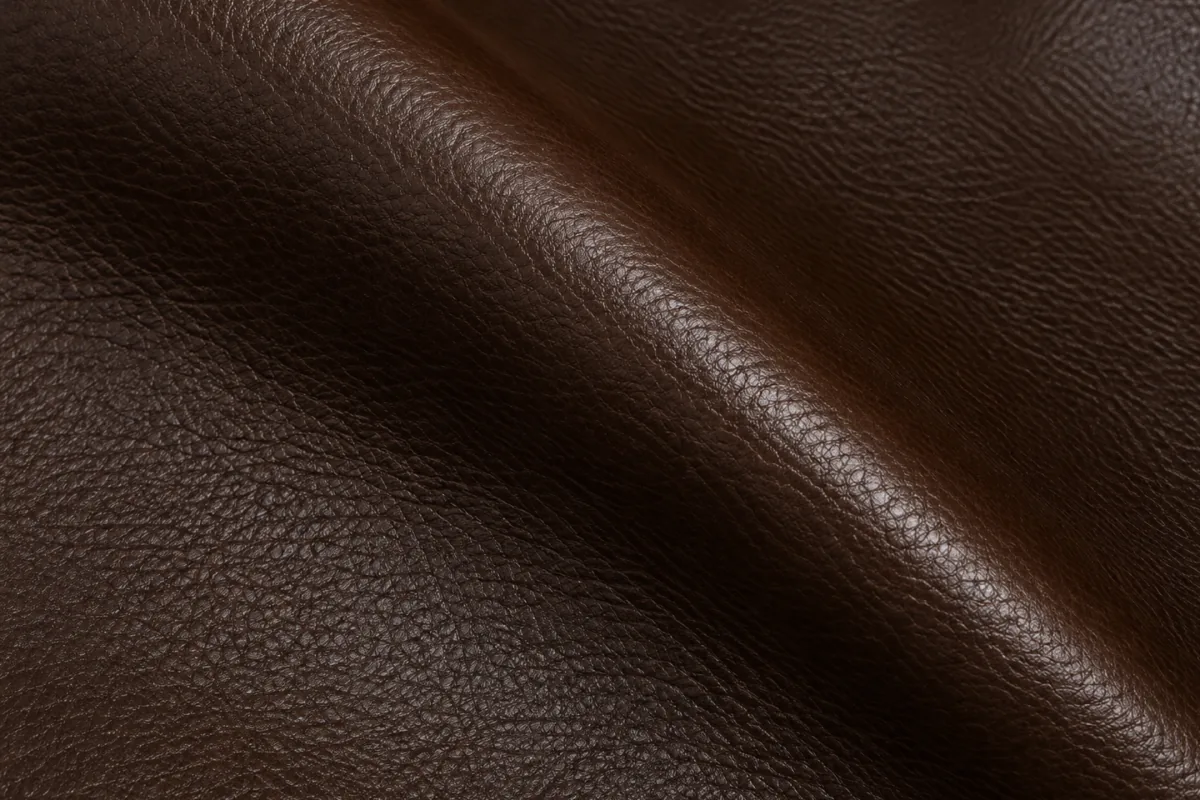 Pigmented Leather
A full opaque coating. Toughest of the three, and the easiest to clean.
The tellDead-uniform color with no scars or shading anywhere on the piece. The grain is embossed, not grown.
Compare
03
Pigmented Leather
A full opaque coating. Toughest of the three, and the easiest to clean.
The tellDead-uniform color with no scars or shading anywhere on the piece. The grain is embossed, not grown.
Compare
03
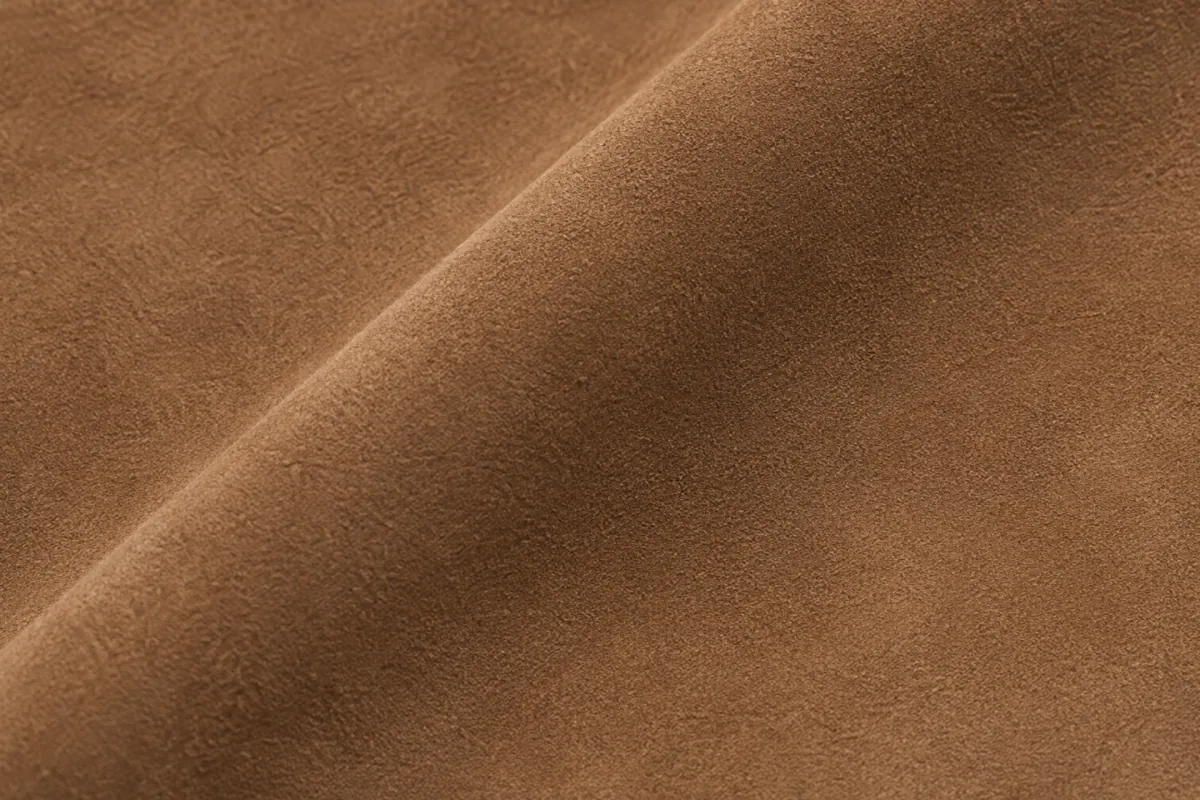 Nubuck
Sanded to a nap instead of finished. Never wipe it like finished leather.
The tellBrush a finger across it and the color changes direction, like velvet. Nothing coated does that.
Compare
Nubuck
Sanded to a nap instead of finished. Never wipe it like finished leather.
The tellBrush a finger across it and the color changes direction, like velvet. Nothing coated does that.
Compare
The materials guide compares every type side by side, including faux leather, bonded leather, suede and vinyl.
Semi-Aniline Leather Questions
What is semi-aniline leather?
Hide colored with transparent aniline dyes, then given a thin protective finish — a light pigment coat, a clear sealer, or both. Thin enough that the grain still shows, present enough to even out color and slow a spill.
How can I tell semi-aniline from pigmented leather?
Look at the grain and the sheen. Semi-aniline still shows natural grain variation through the finish and has a soft satin glow. Pigmented leather has a uniform printed-looking grain and a plastic-like surface. In a drop test, semi-aniline slowly darkens at the edge of the drop; pigmented does not change at all.
Can semi-aniline leather be restored?
Yes, and it responds well. Because a finish layer is part of the original construction, worn areas can be recolored translucently and re-sealed without changing the character of the leather. The hard part is not the color — it is matching the sheen so the repair does not read as a patch.
Do you repair semi-aniline leather in NYC?
Yes. We repair and restore semi-aniline leather furniture across New York City and New Jersey — on site where the piece can be worked in place, in the shop where it cannot. Send one photo of the worn area and one of an untouched panel and we will tell you which it is.
Send Us Two Photos and We Will Tell You What You Have
One photo of the worn area and one of an untouched panel, in daylight. We handle semi-aniline leather repair and restoration across NYC and New Jersey.
Or call (347) 310-7483