
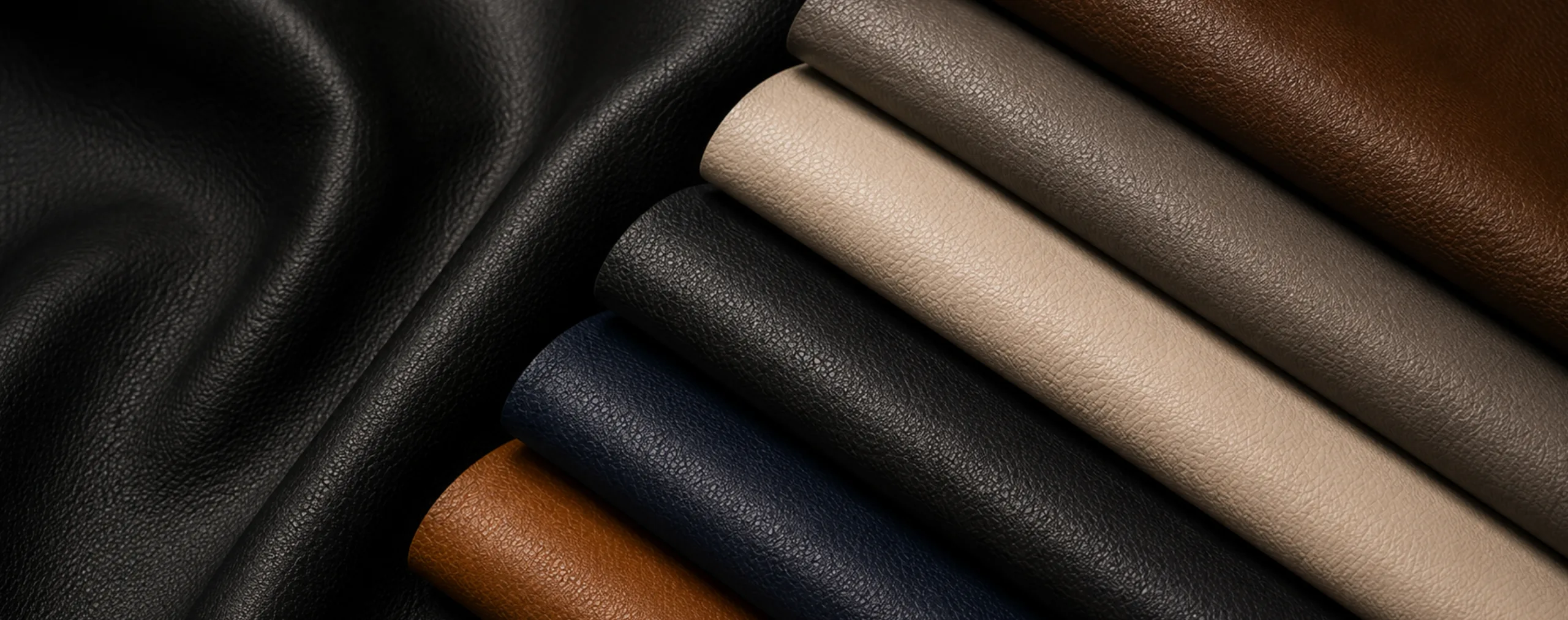
Faux Leather: What It Is and What It Is Not
There is no leather in it — and that one fact explains everything else
Faux leather repair is bounded by that fact — there is no hide to work back to. The coating is the product. It never conditions, never develops patina, and carries a service life that ends rather than matures.
You Have Probably Been Sold This Under a Different Name
Six labels, one construction: a polymer surface on textile — and one set of faux leather repair rules.
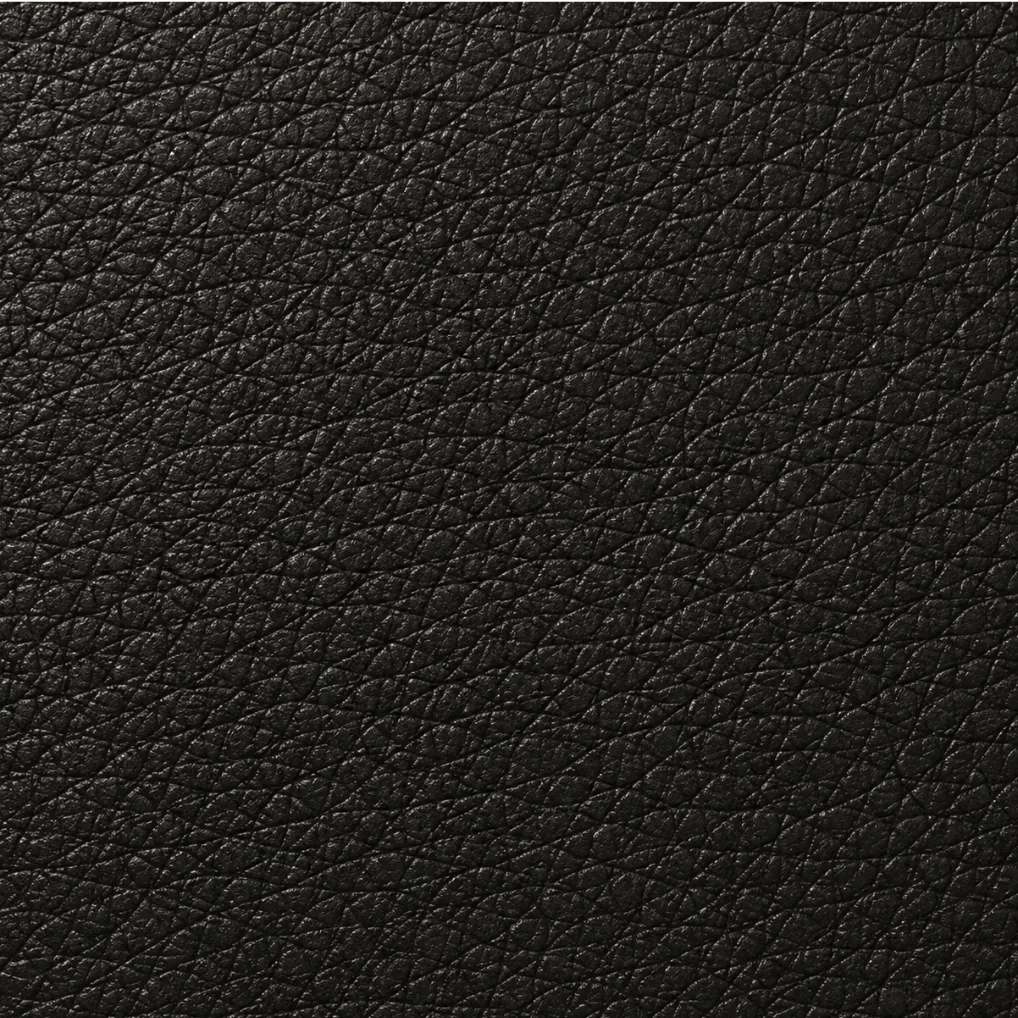
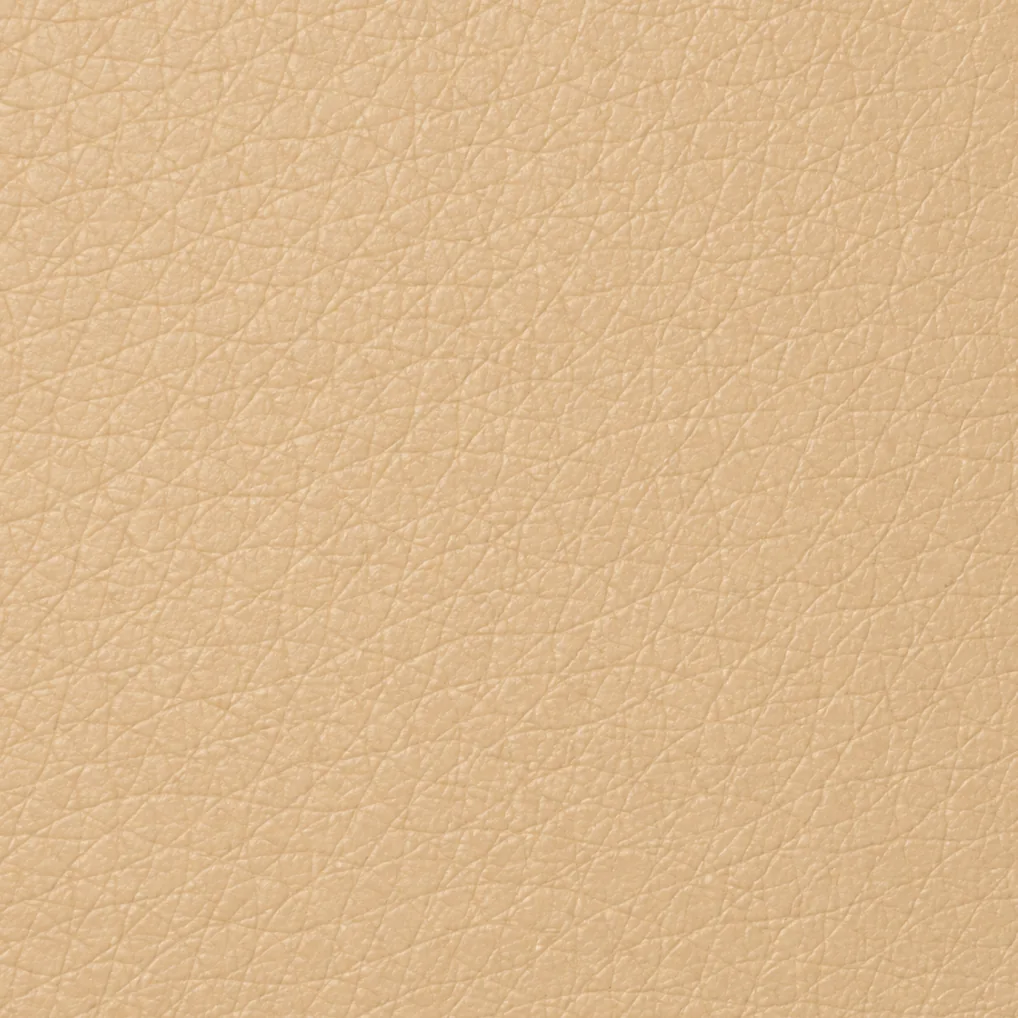
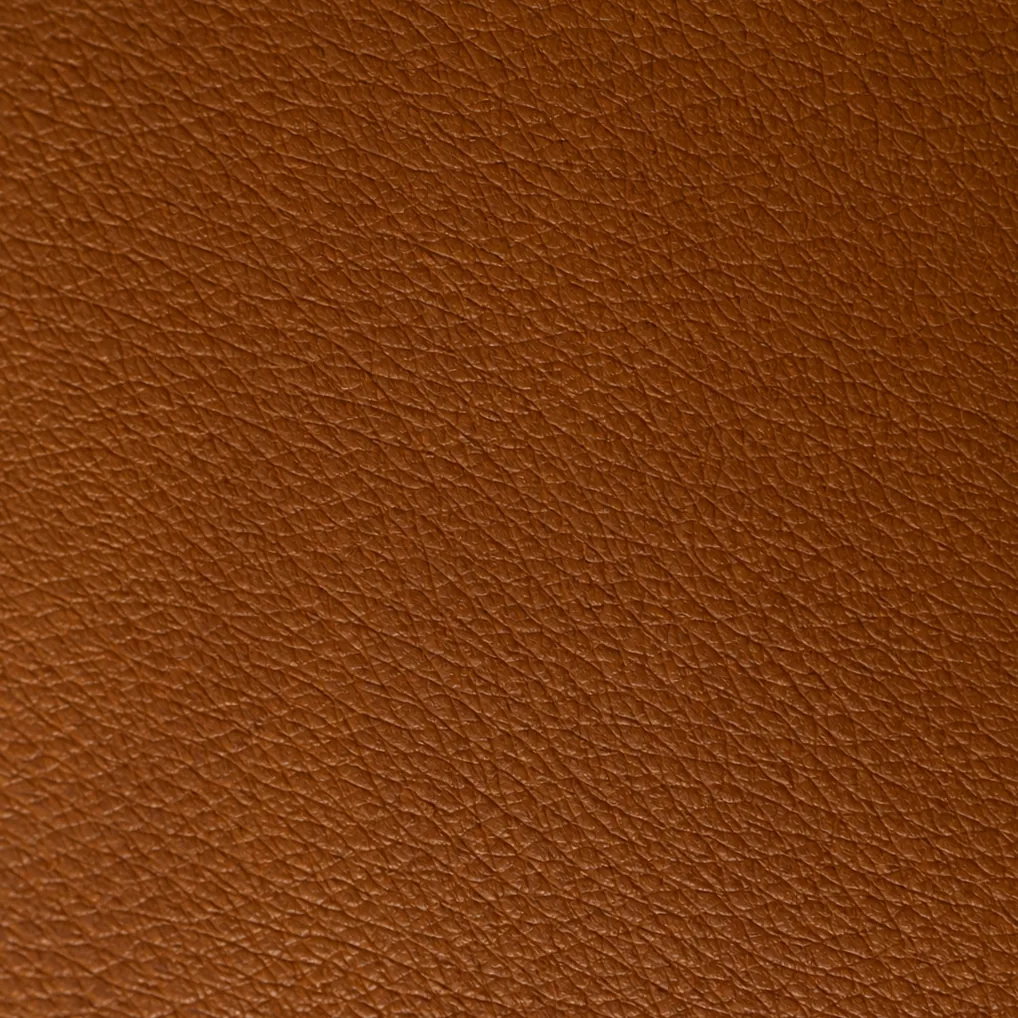

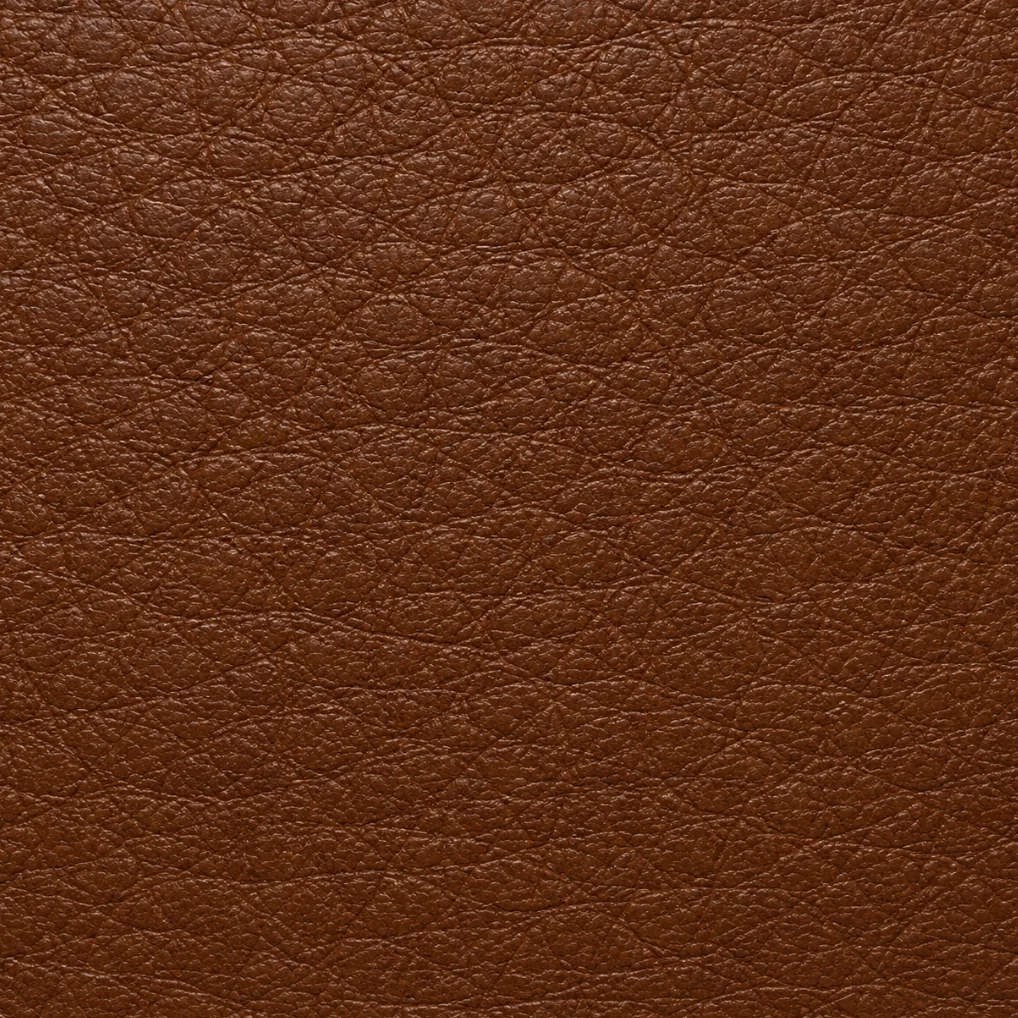
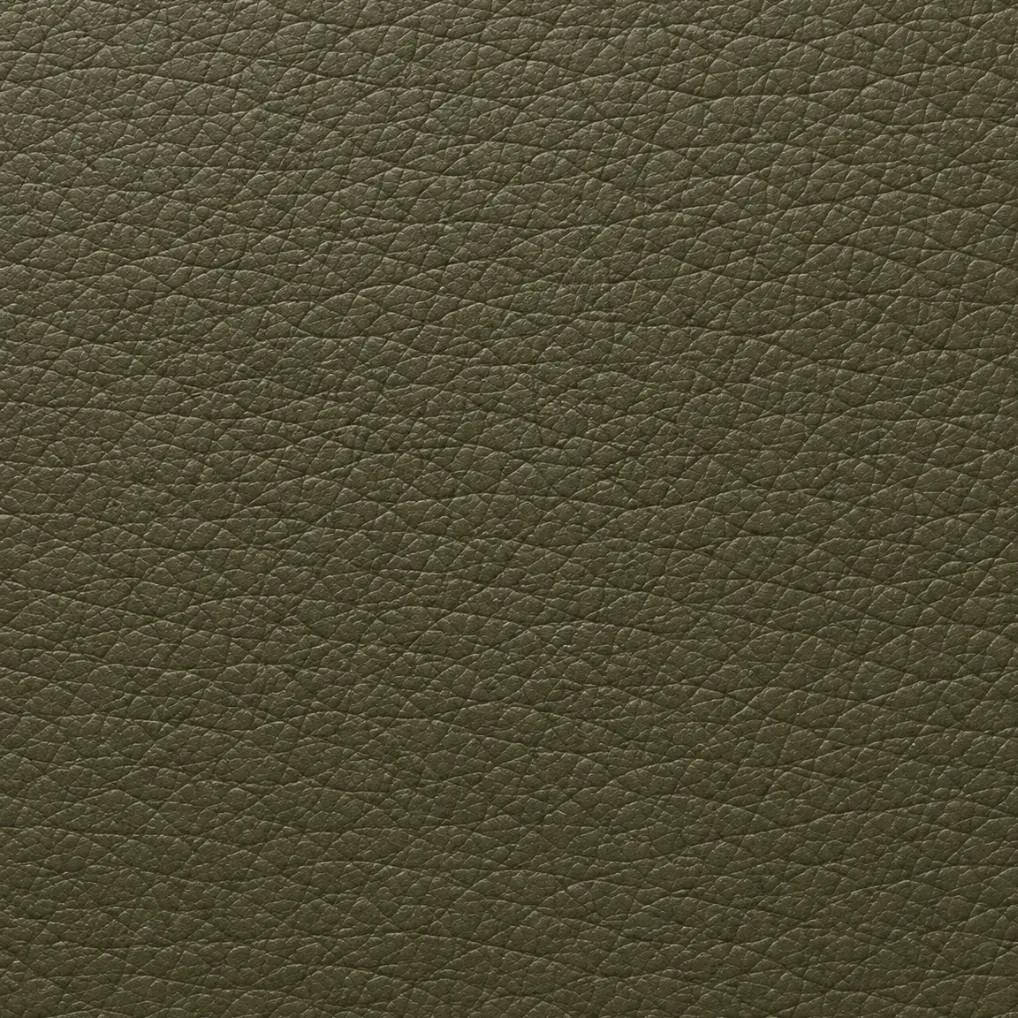
All eight are a coated textile. None contains hide. The label predicts nothing about how long the piece lasts.
The Federal Trade Commission’s leather guides call an unqualified “leather” claim deceptive — but furniture sits outside them, which is why showroom naming stays loose.
What Faux Leather Is Actually Made Of
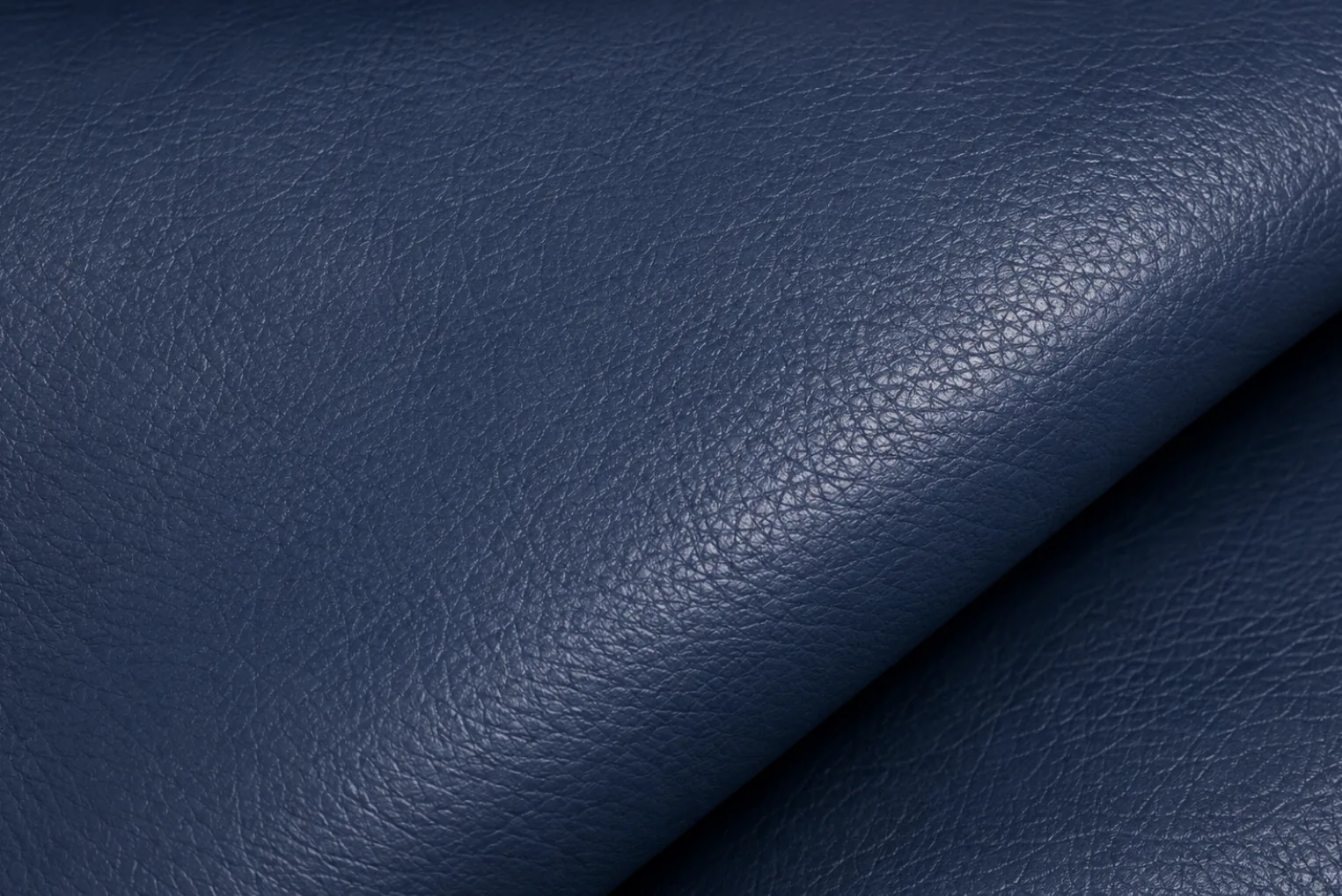
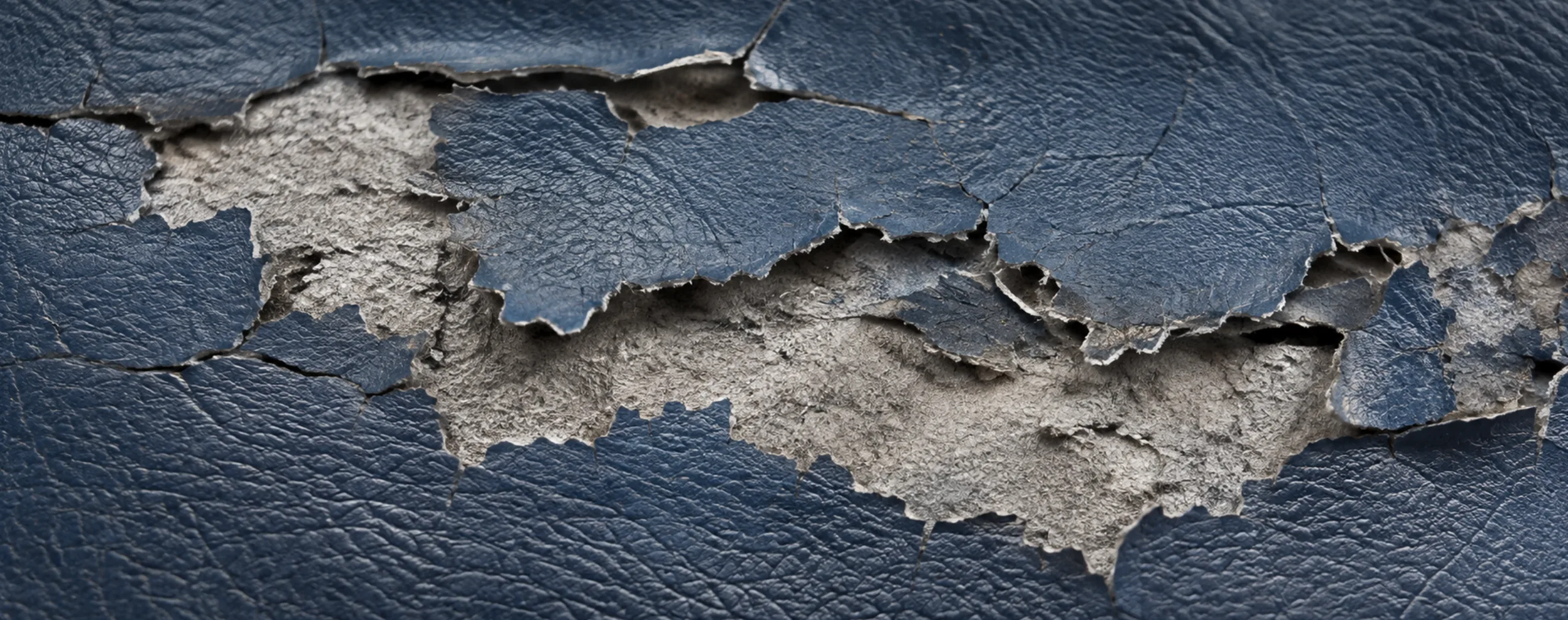
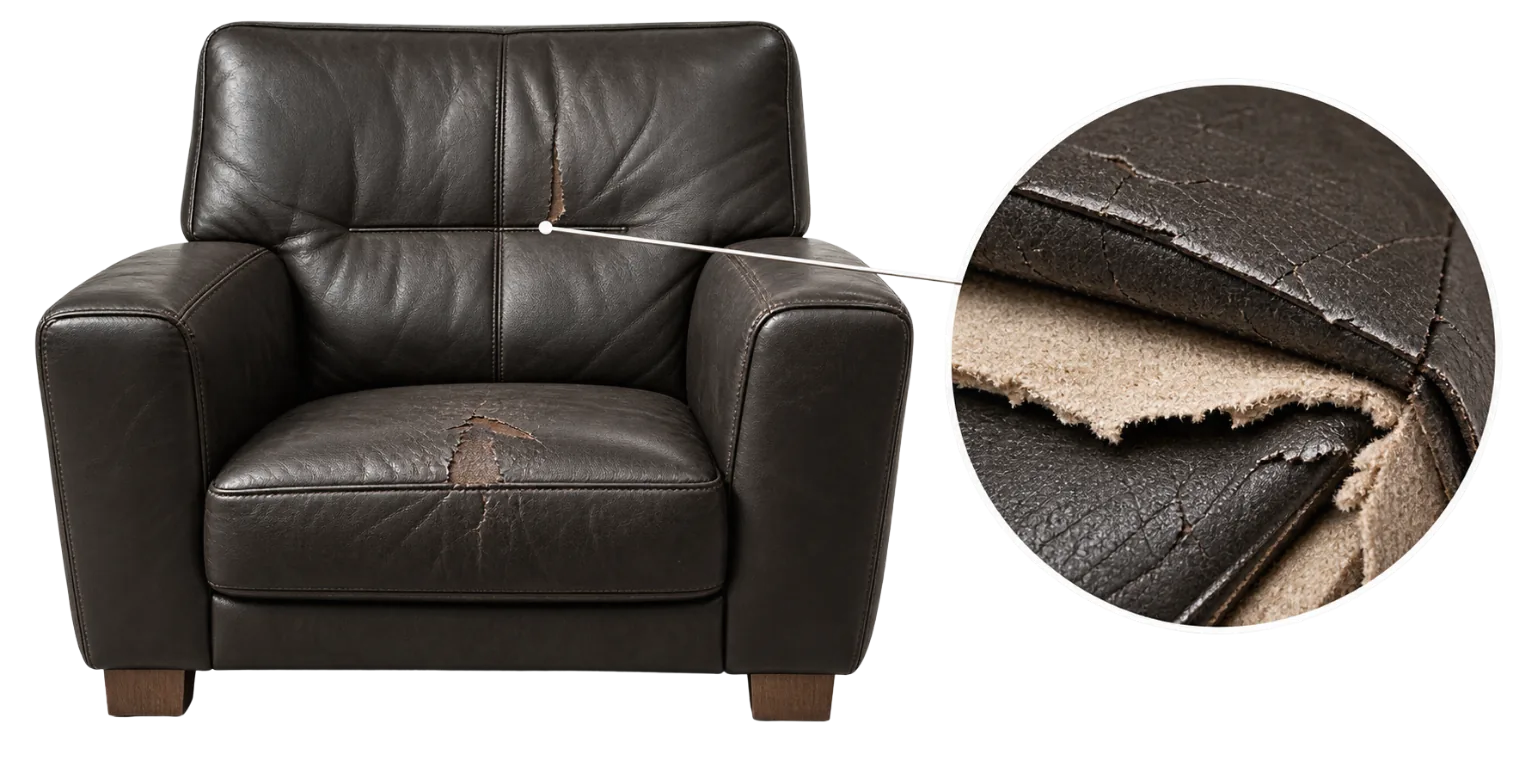
A liquid polymer is applied to one face of a manufactured textile and a grain is pressed in as it cures. Wear the skin off hide and there is still leather underneath; wear the skin off this and you reach woven fabric, which cannot be recoloured back. It is also why conditioner does nothing here — a cured polymer absorbs nothing.
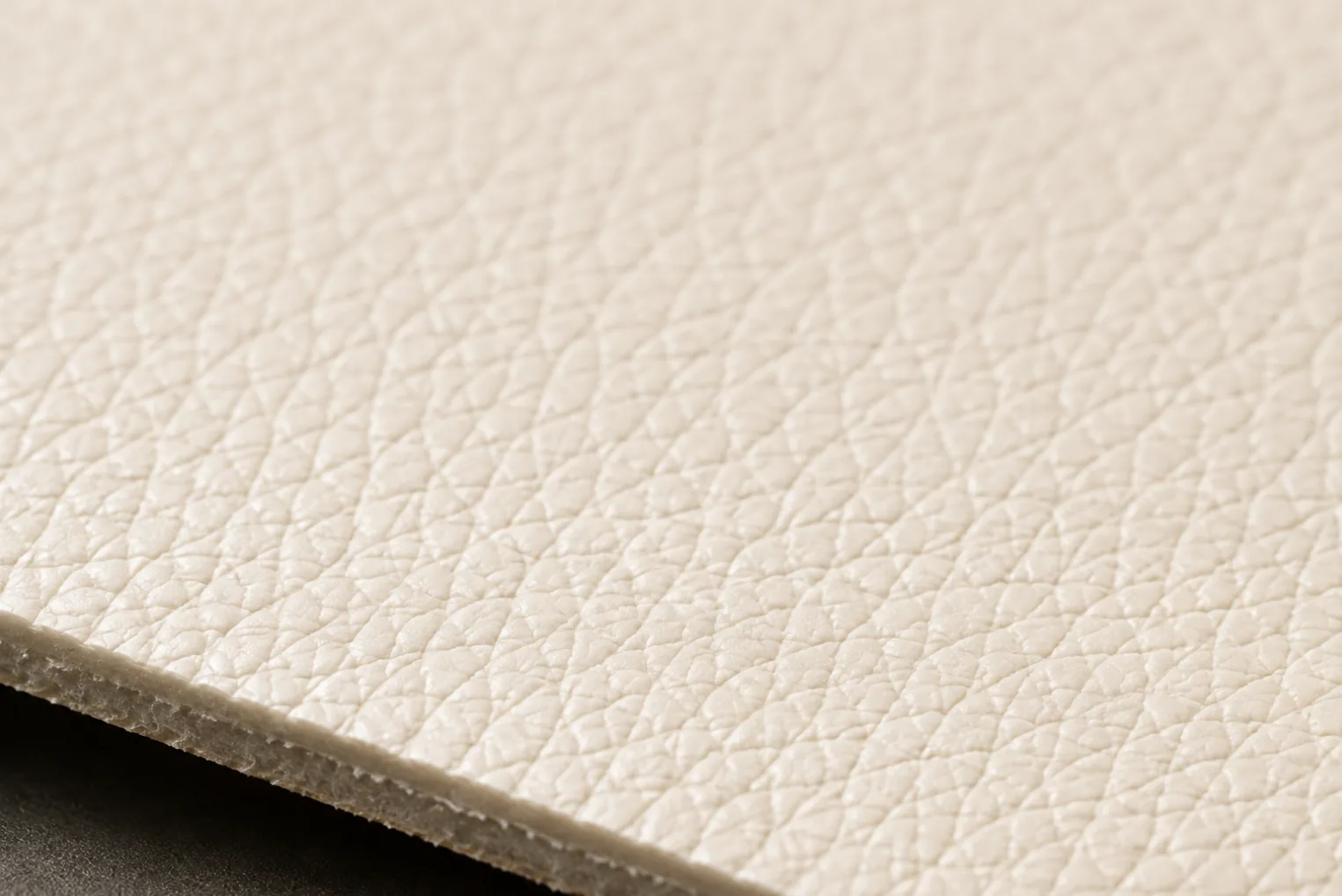
Top
Grain texture
Pressed in by a plate or roller, so the pattern repeats.
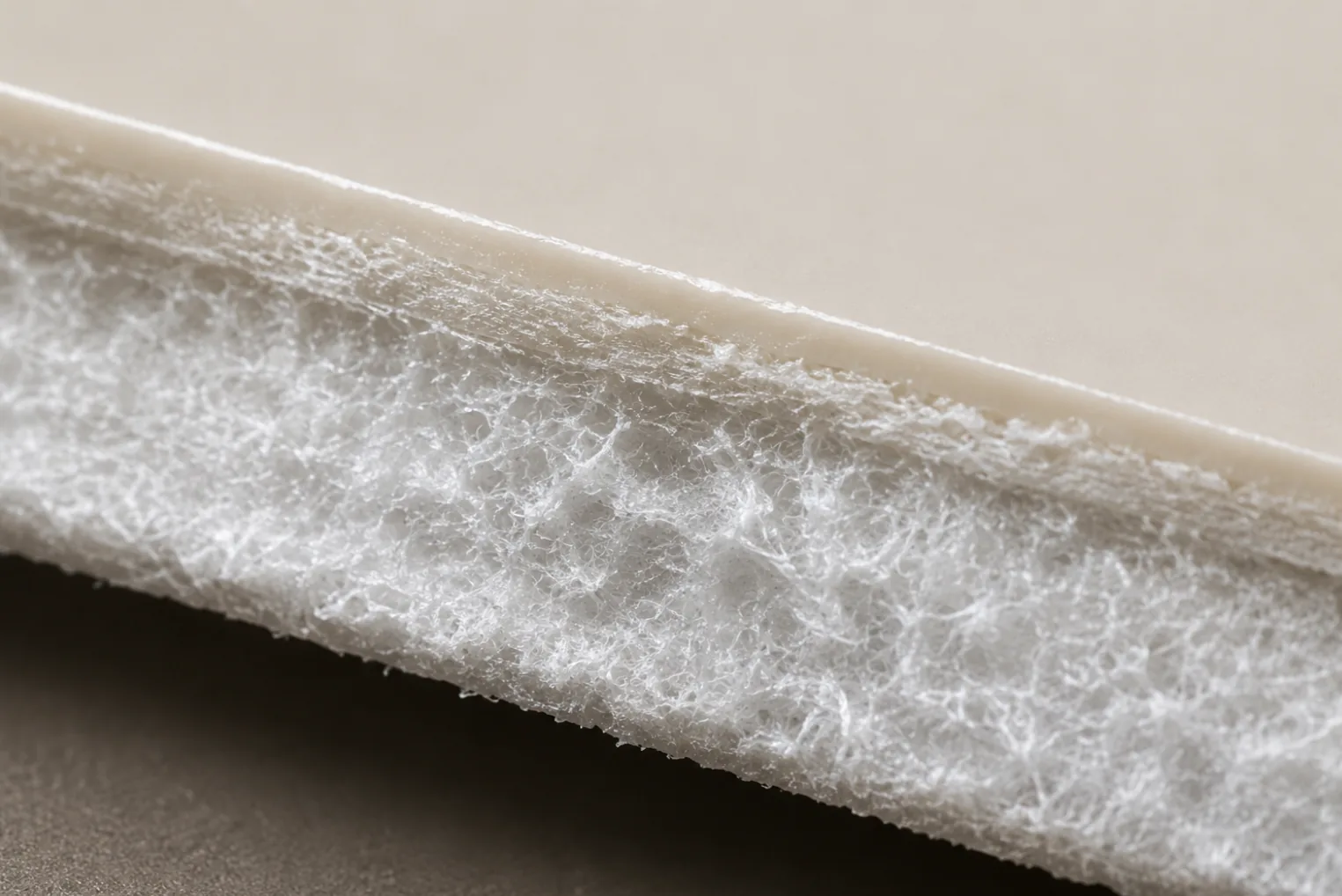
Layer 2
Polymer coating
Polyurethane or PVC — the entire wearing surface.
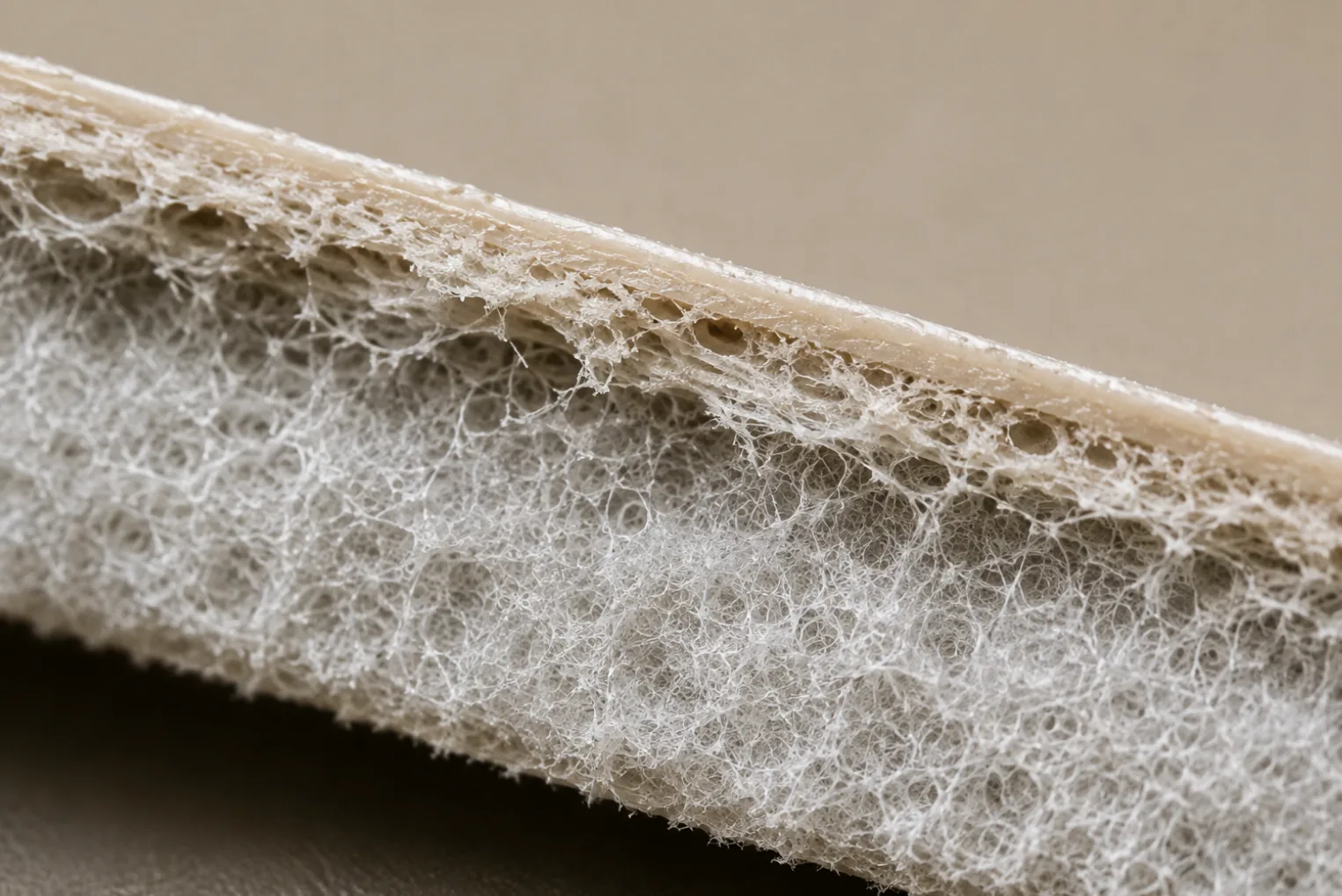
Layer 3
Adhesion layer
When faux leather flakes, this bond has let go.
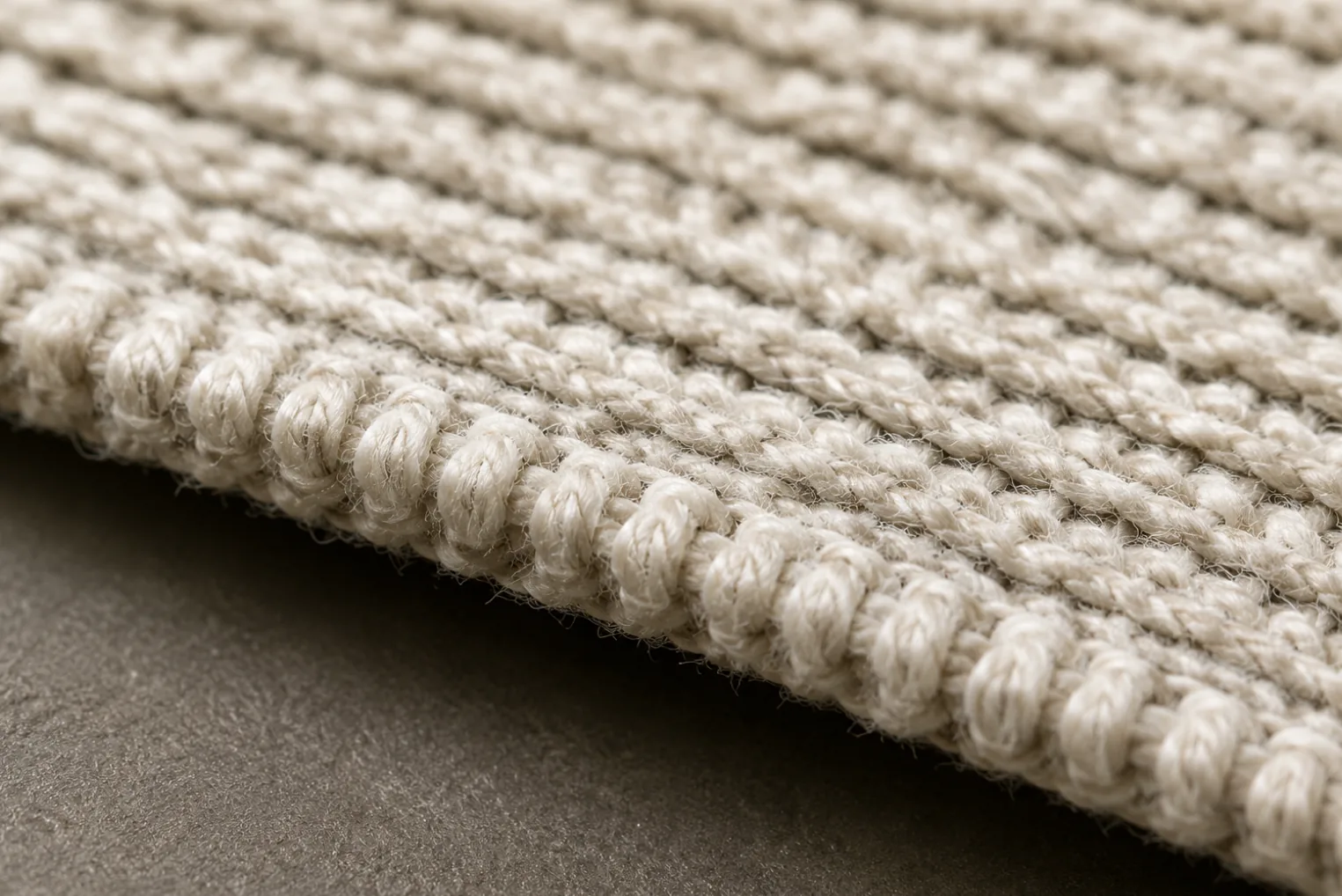
Base
Textile backing
Carries all the strength. Shows as cloth weave where the coating has gone.
PU or PVC — Not All Faux Leather Behaves the Same
Two coatings. They look alike in a showroom and age in opposite directions.
PU
Polyurethane coating
PVC
Vinyl coating
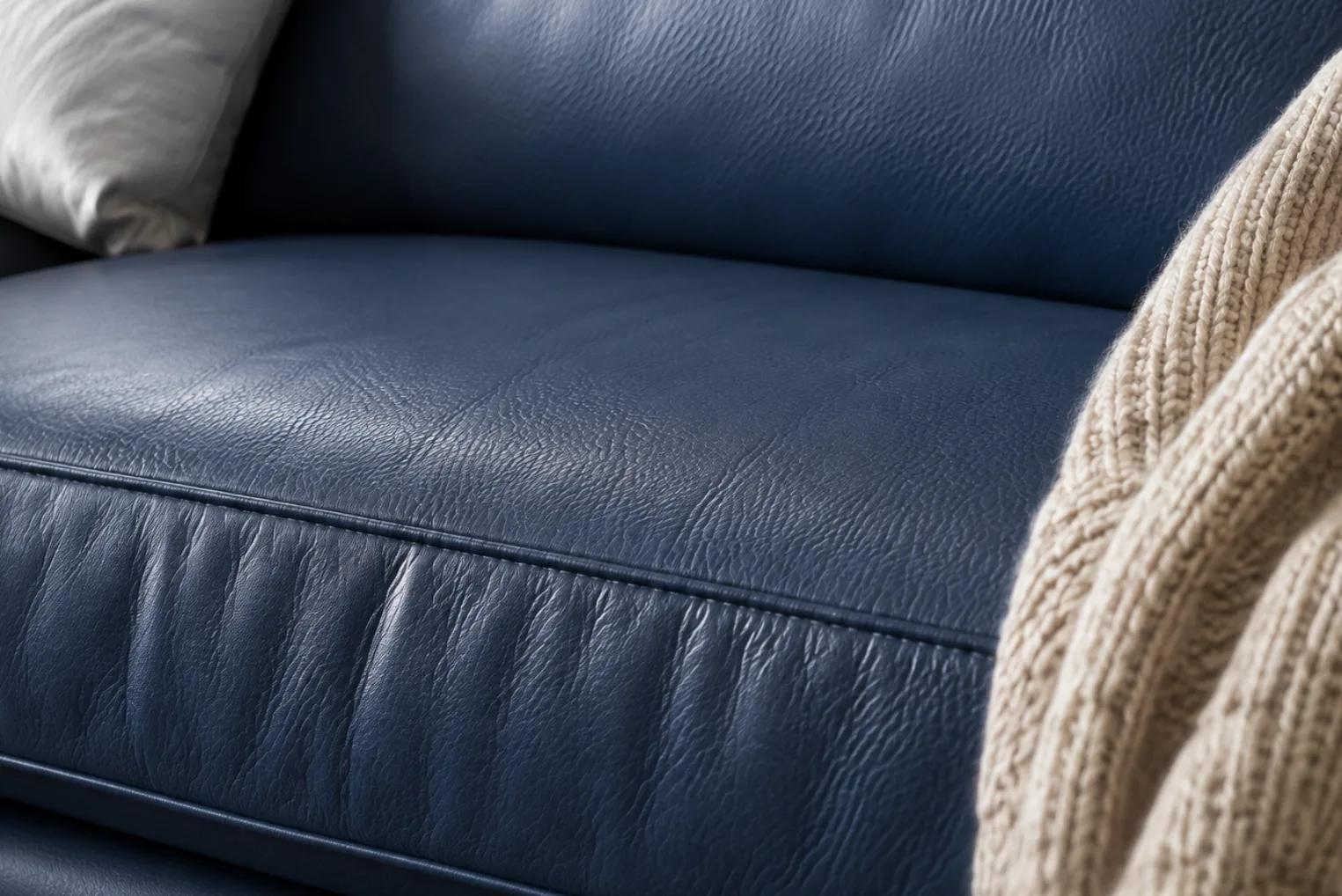
Soft, cloth-like
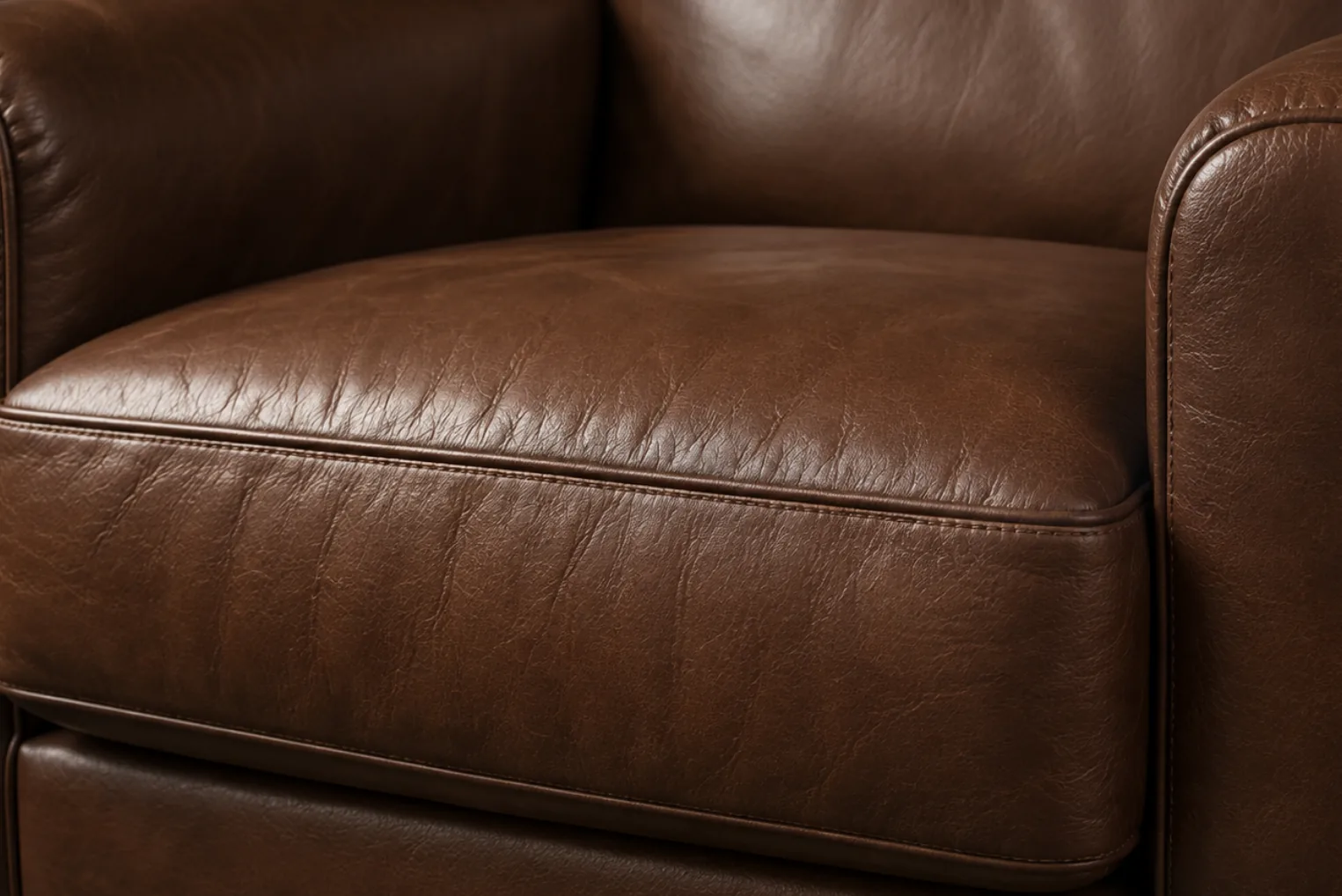
Firm, cool
Breathable
Sealed, sits warm
Good, marks easily
Highly wipeable
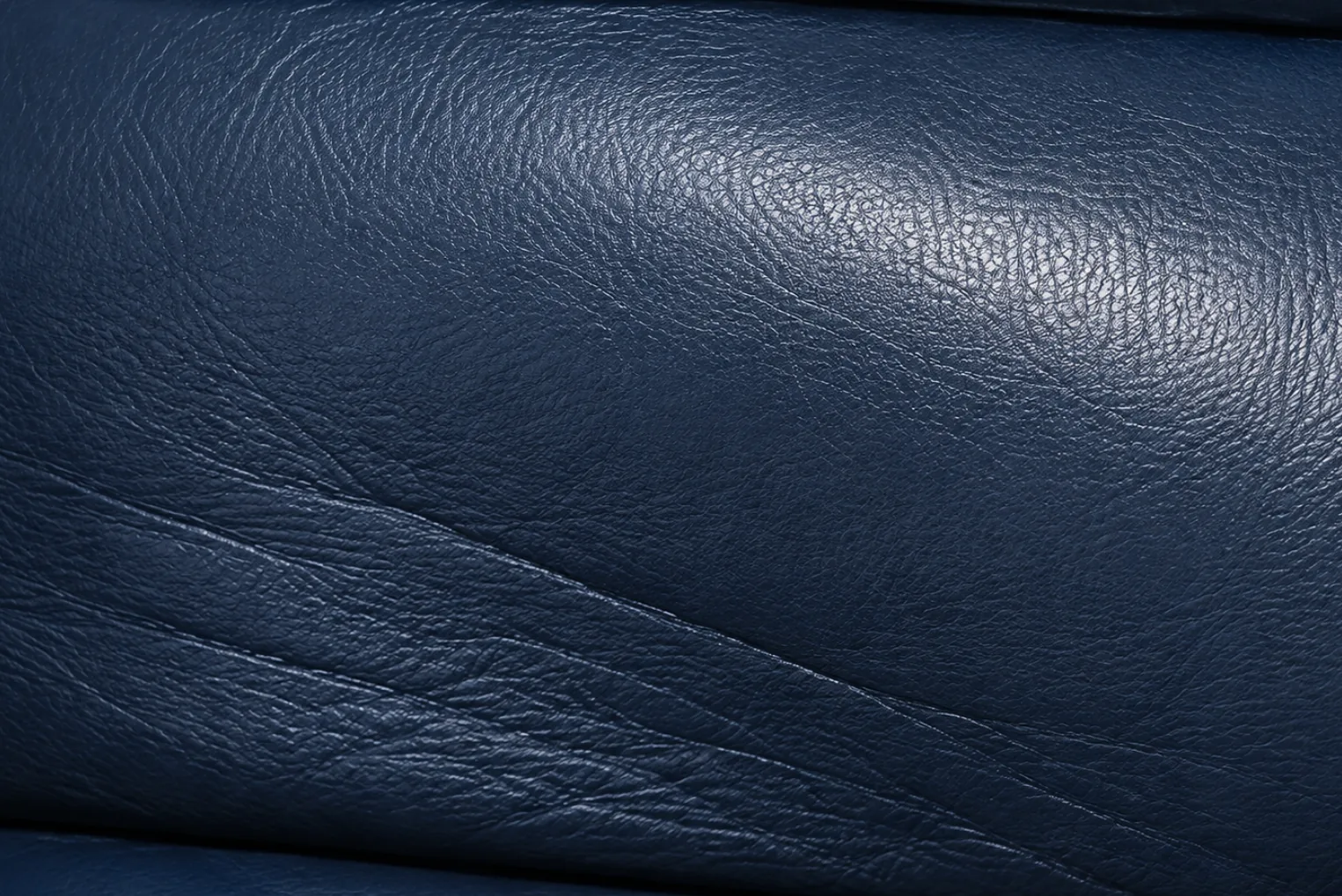
Moisture degrades it, even in storage
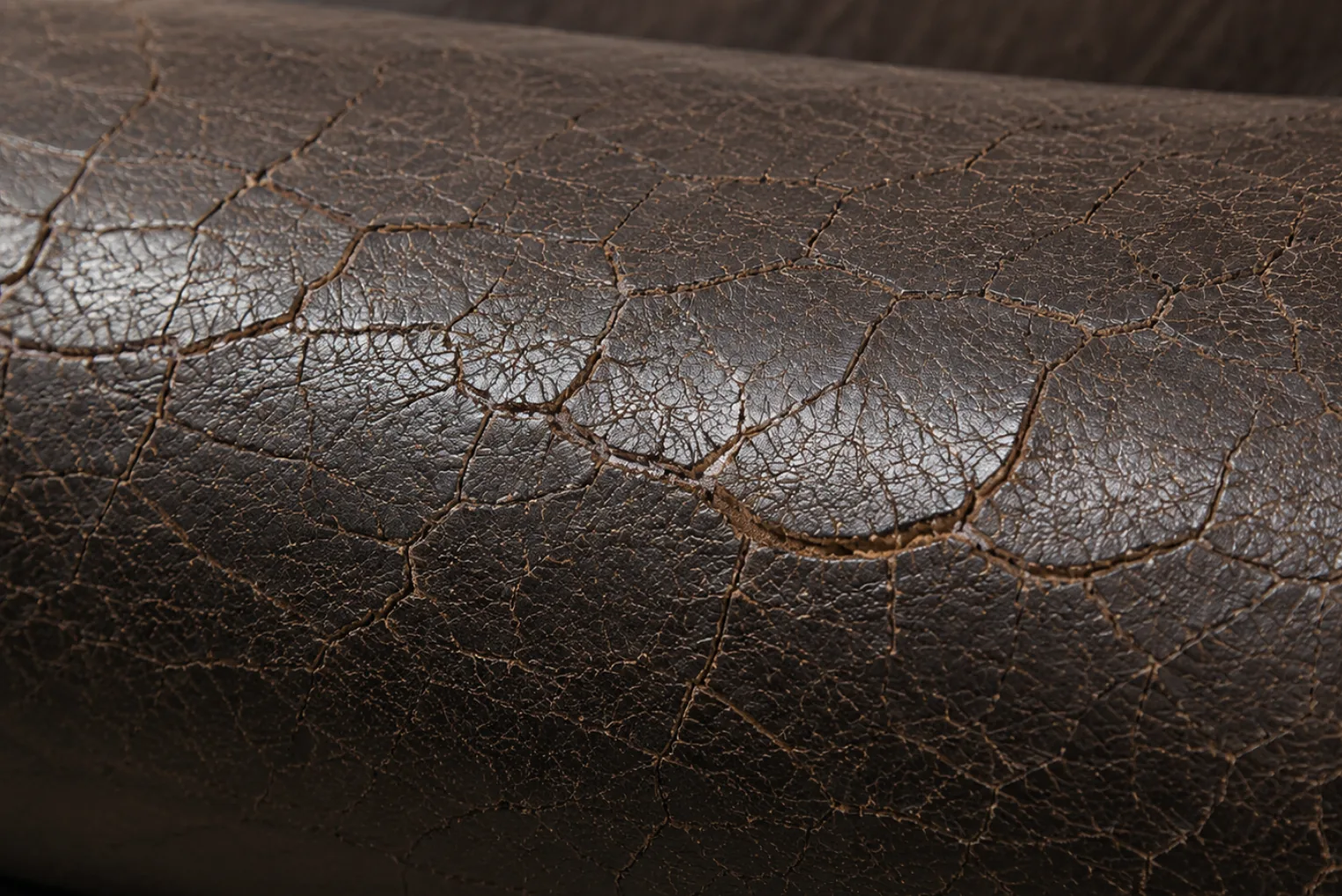
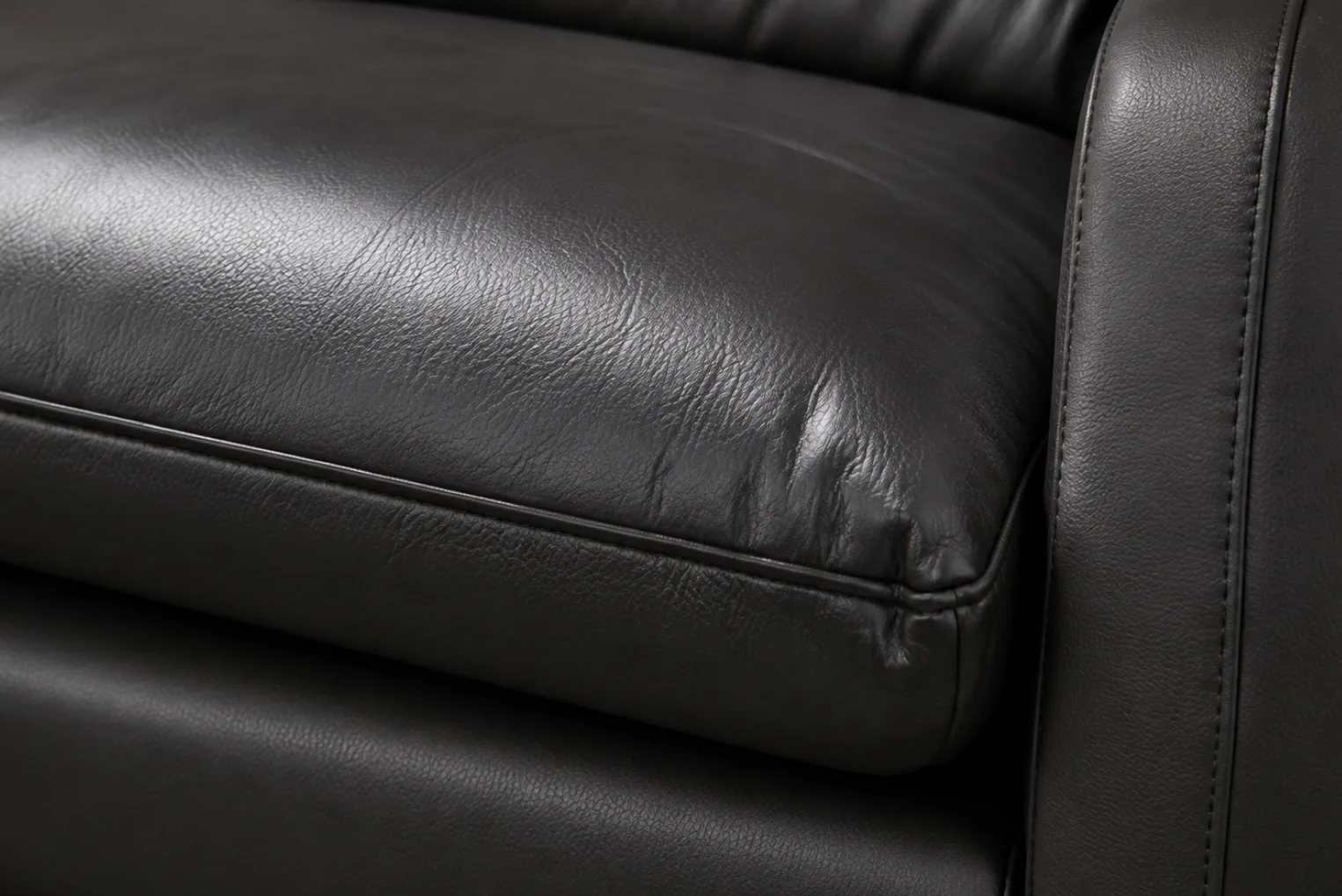
Plasticizers leave; it stiffens
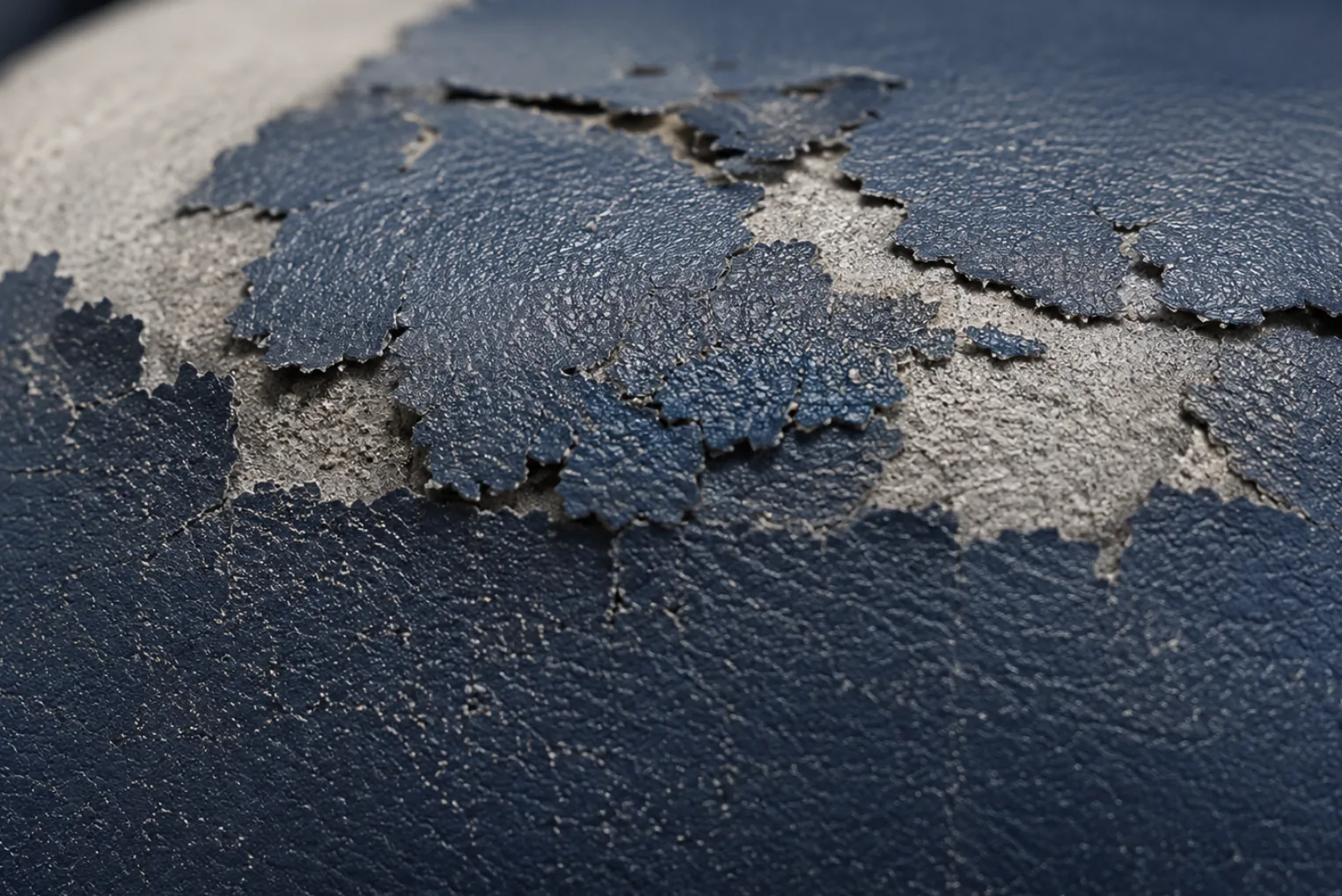
Flaking, peeling, tacky
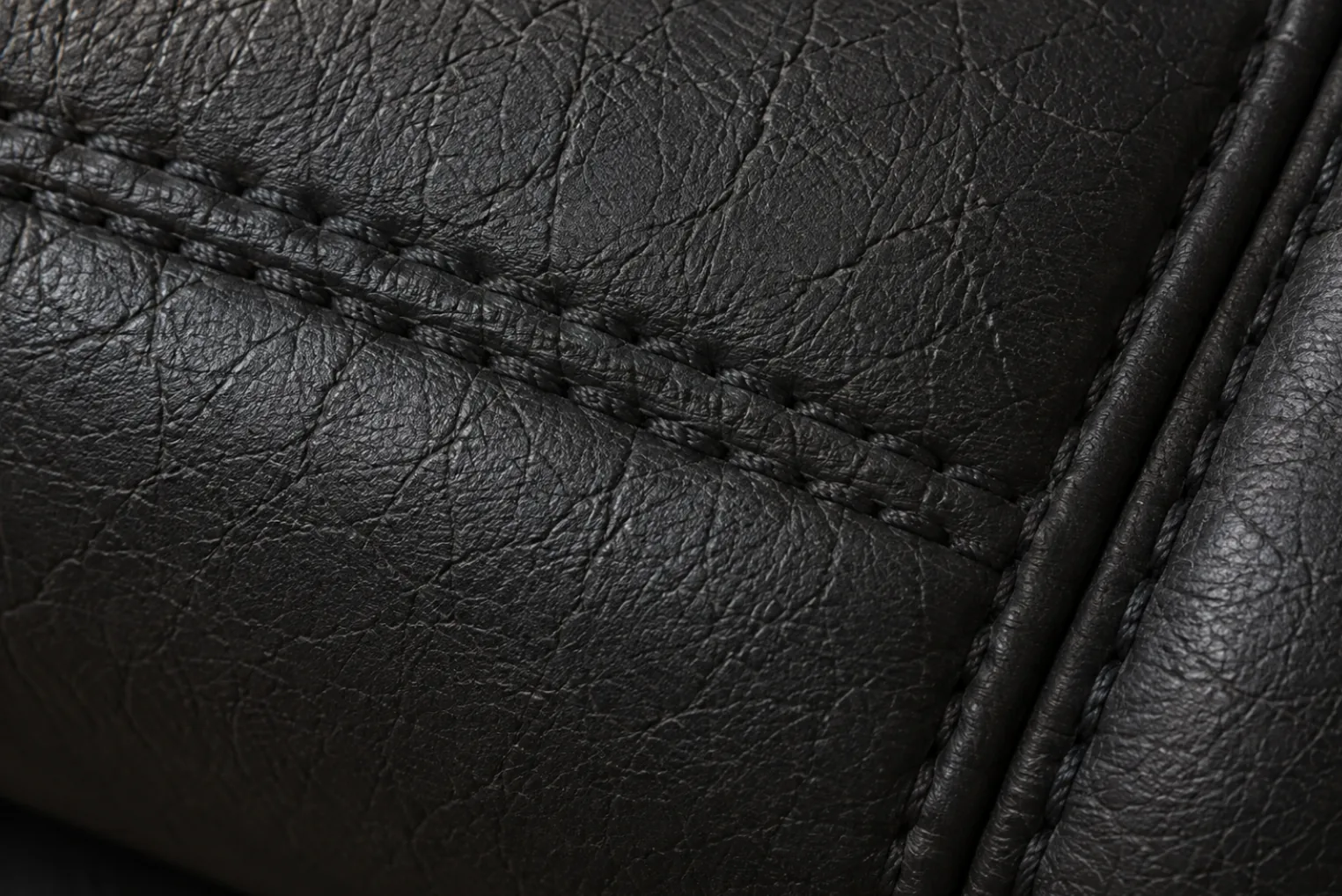
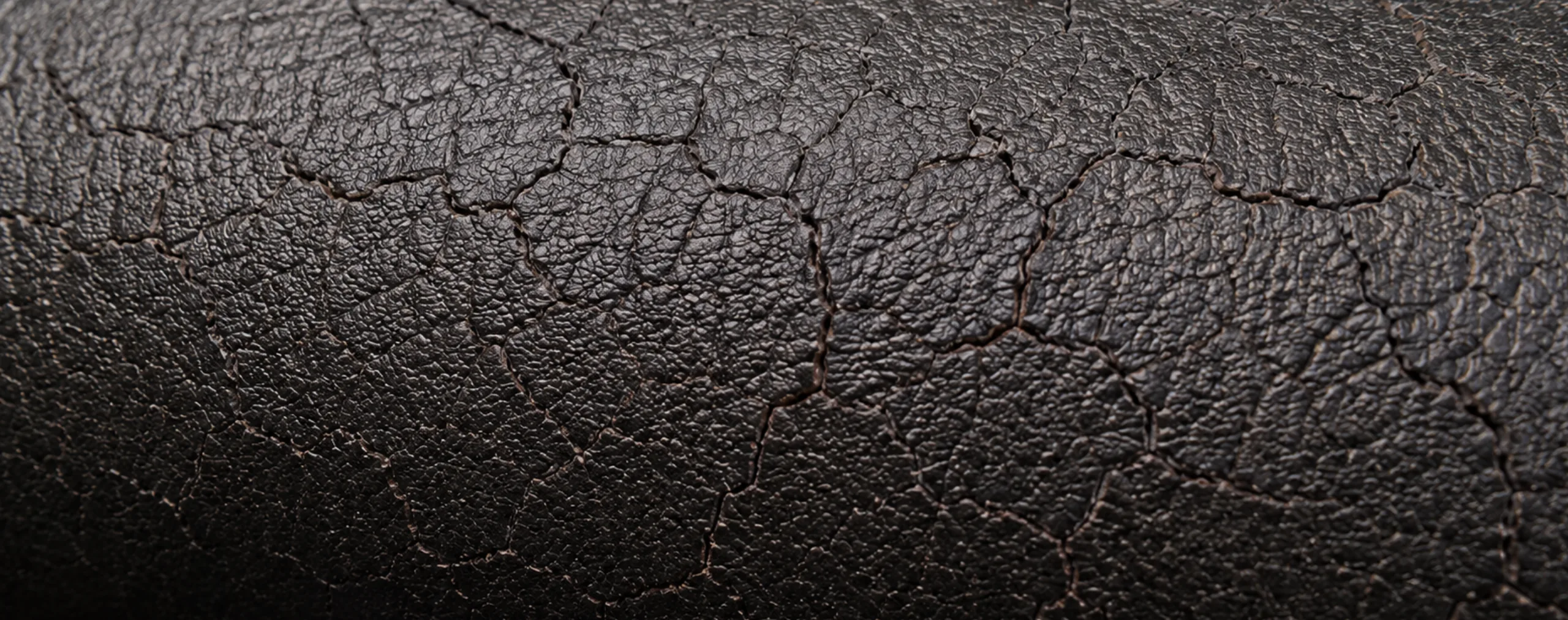
Hardening, then cracking
How to tell which you have: tacky is close to conclusive for PU — that is the polymer breaking down, not dirt. Hard and brittle, cracking along the folds, points to PVC. If yours has done neither, see which faux leather repair options apply.
Five Checks That Separate Faux From Real
On a hidden area — an underside, a back skirt. No tools, a few seconds. Identify it first; every faux leather repair decision follows from this.
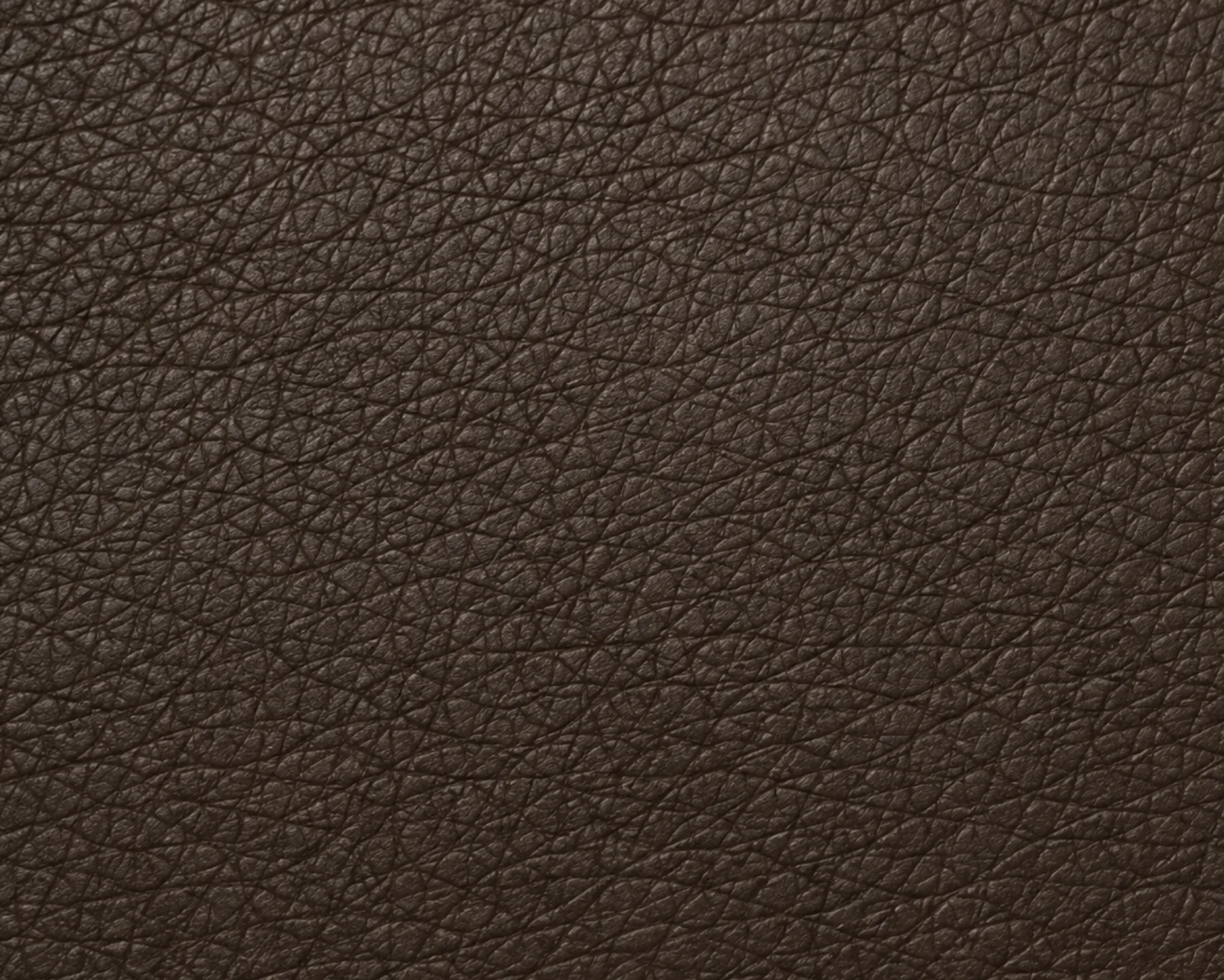
Grain repeat
A printing plate is only so large, so synthetic grain repeats exactly across a wide panel.
Repeats → faux
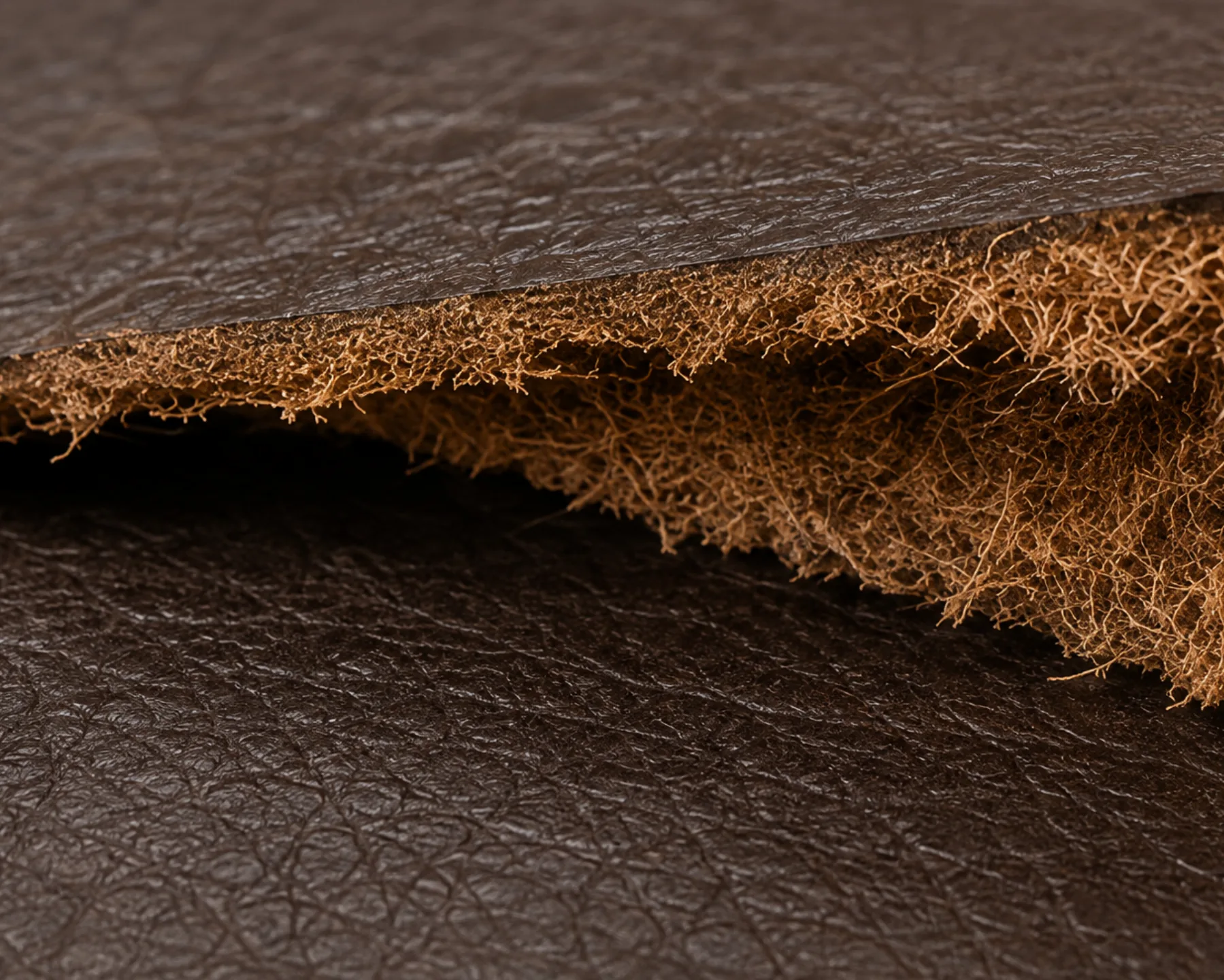
Cut or worn edge
Faux shows a clean cloth weave beneath a thin skin. Hide is fibrous, suede-like.
Woven backing → faux
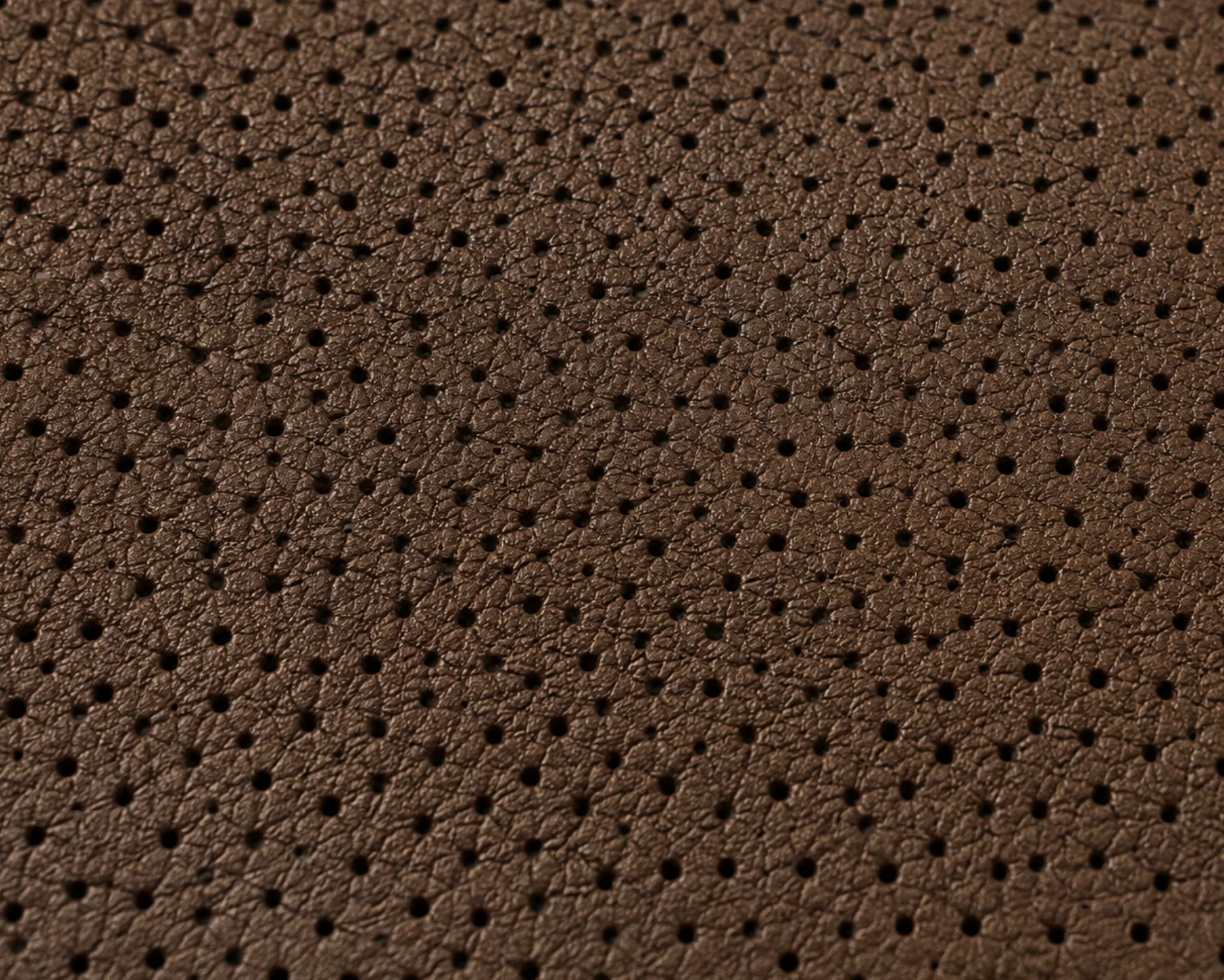
Pore consistency
Hide carries irregular pores, healed marks and tonal drift. Synthetics are uniform panel to panel.
Perfectly even → faux
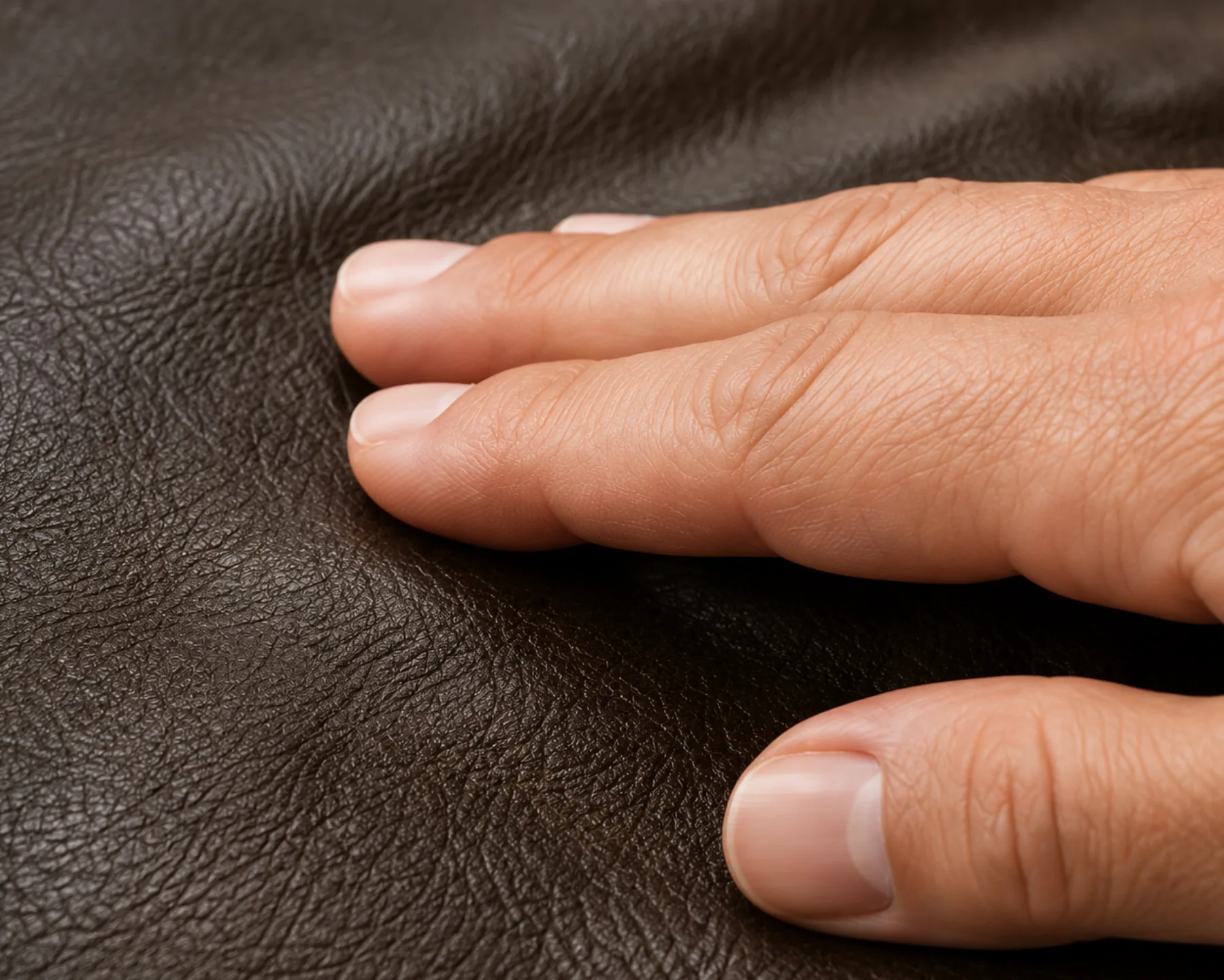
Warmth on contact
Rest a palm flat. Hide warms and adapts; sealed polymer holds the heat against you.
Clammy → faux
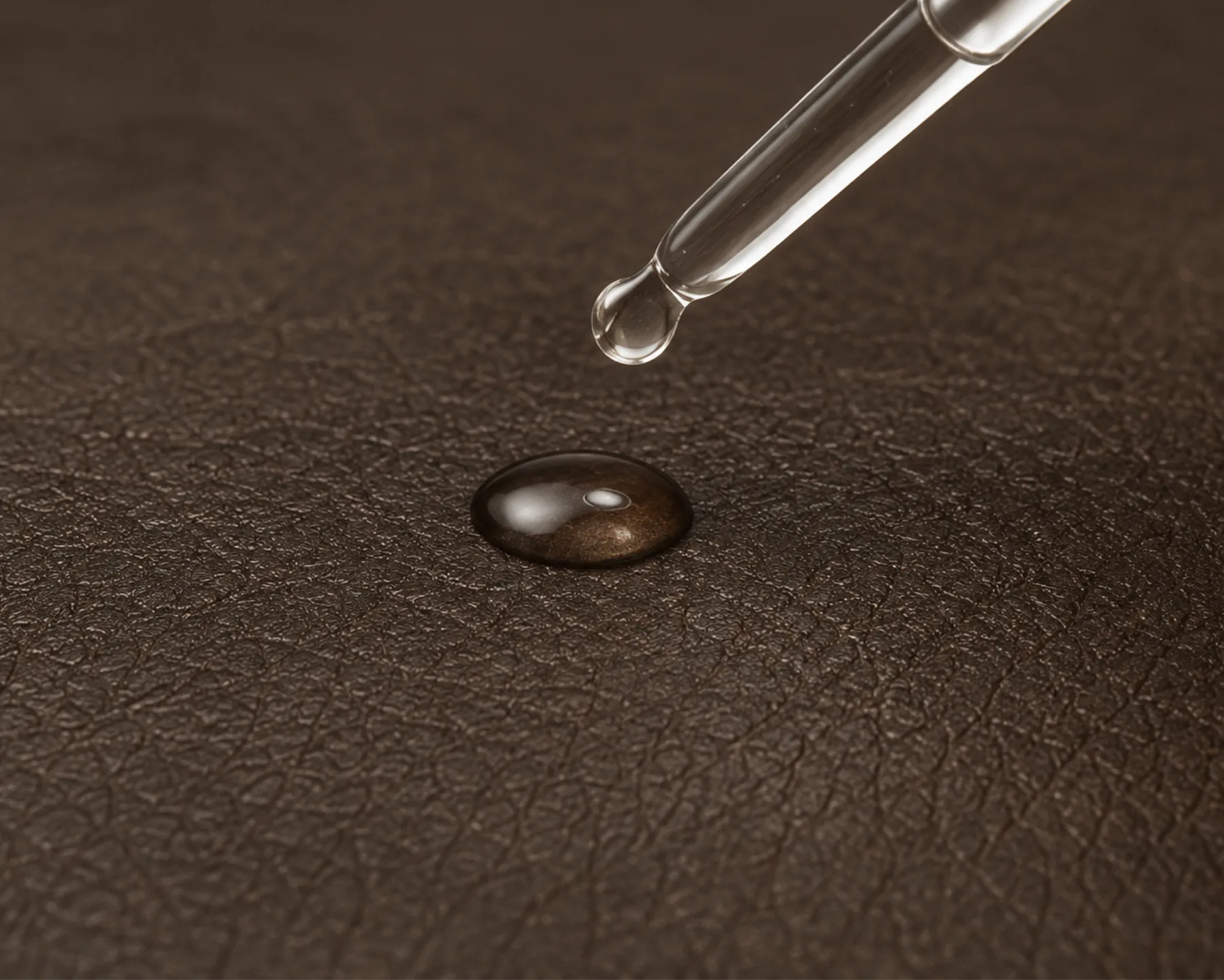
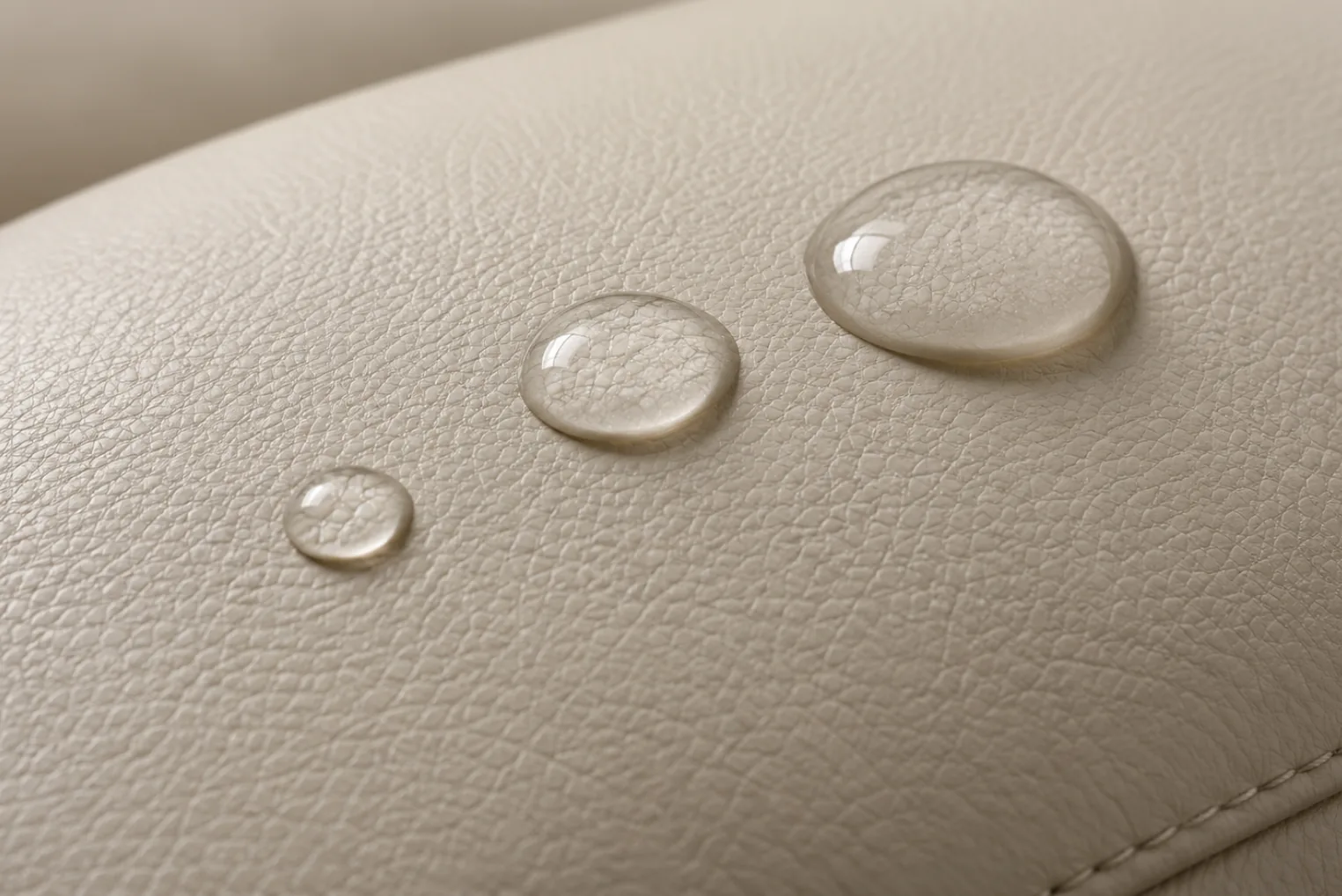
Water droplet
One drop on a hidden spot. It beads on a sealed coating. Unfinished leather darkens as it soaks in.
Beads and sits → faux
If the checks disagree, the piece may mix materials — synthetic on the outer backs, hide on the seats.
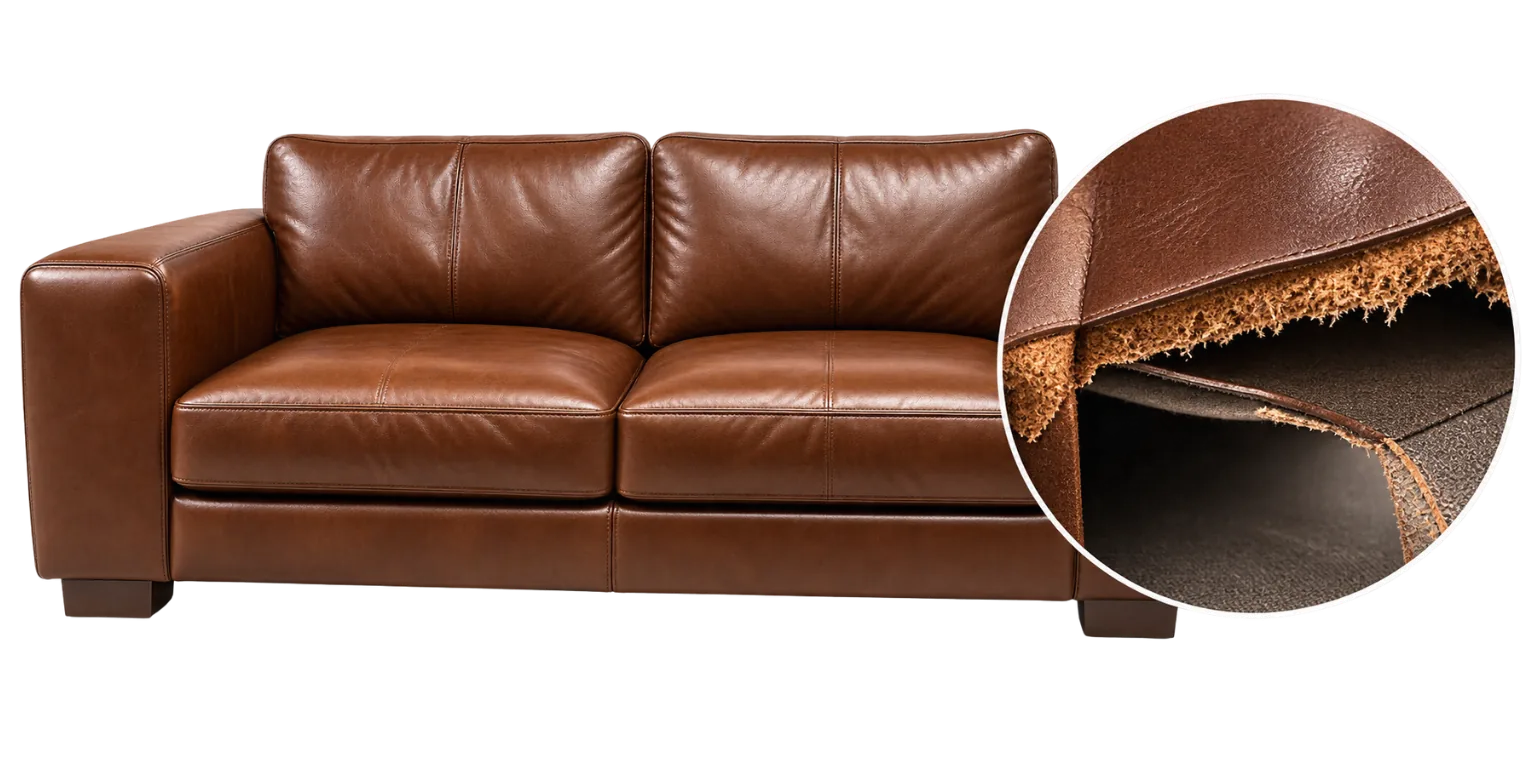
What Faux Leather Repair Can Actually Fix — and What It Cannot
Find your damage below. Faux leather repair helps with some of these and not with others.
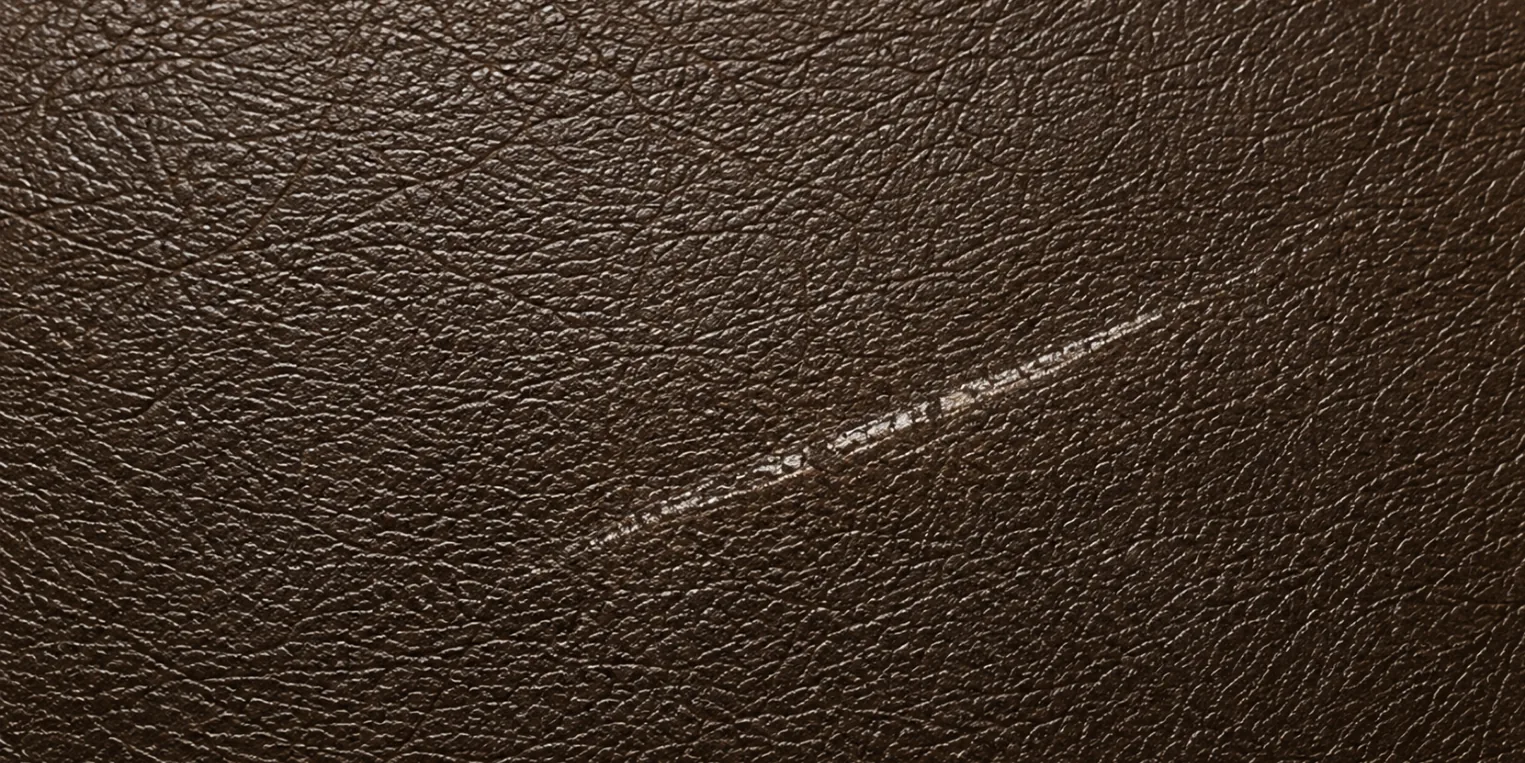
Surface scuff or scratch
The coating is marked but intact. Cleaning and local colour work usually helps.
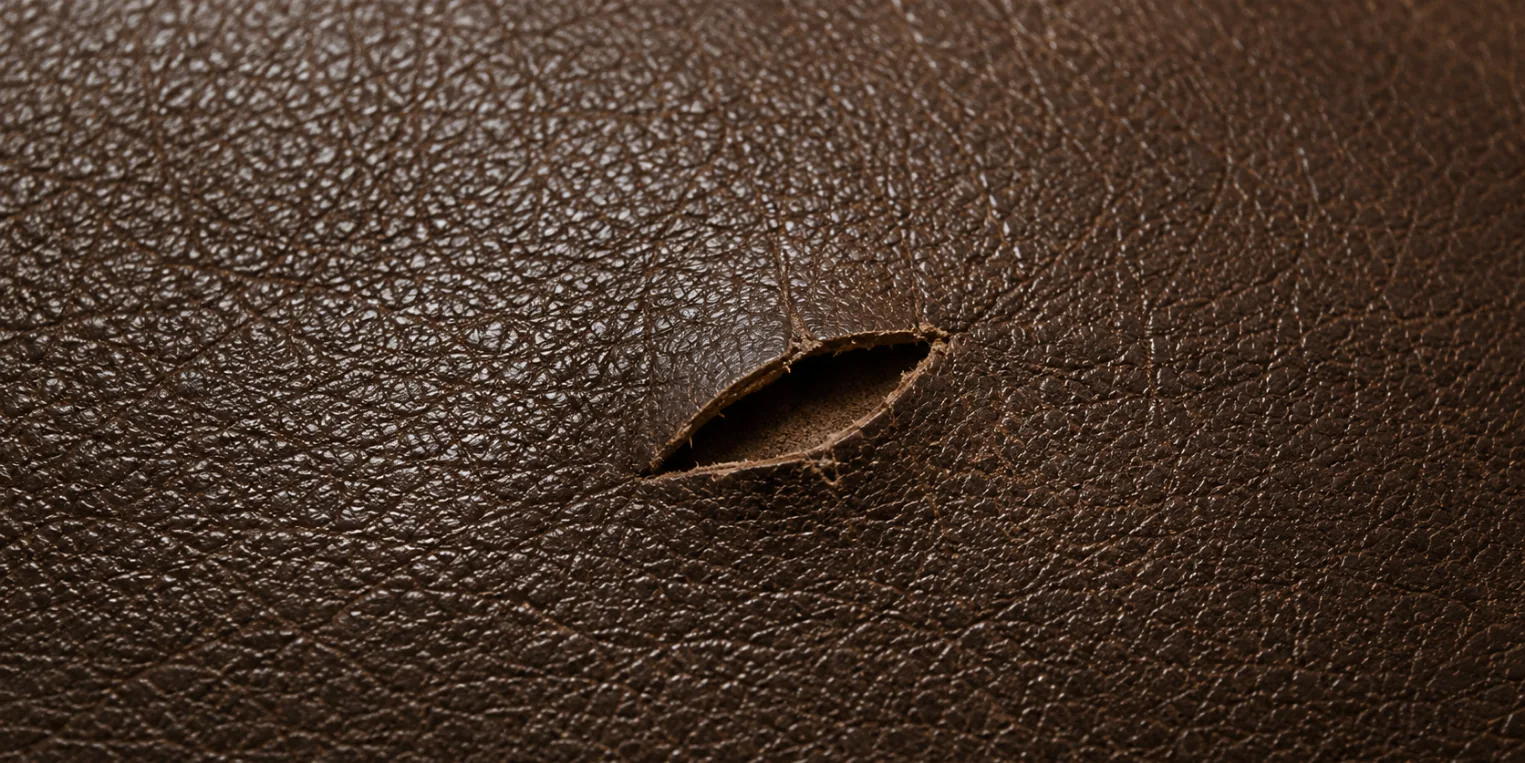
Small cut or puncture
Sub-patch, flexible filler, matched colour. Stable, visible up close.
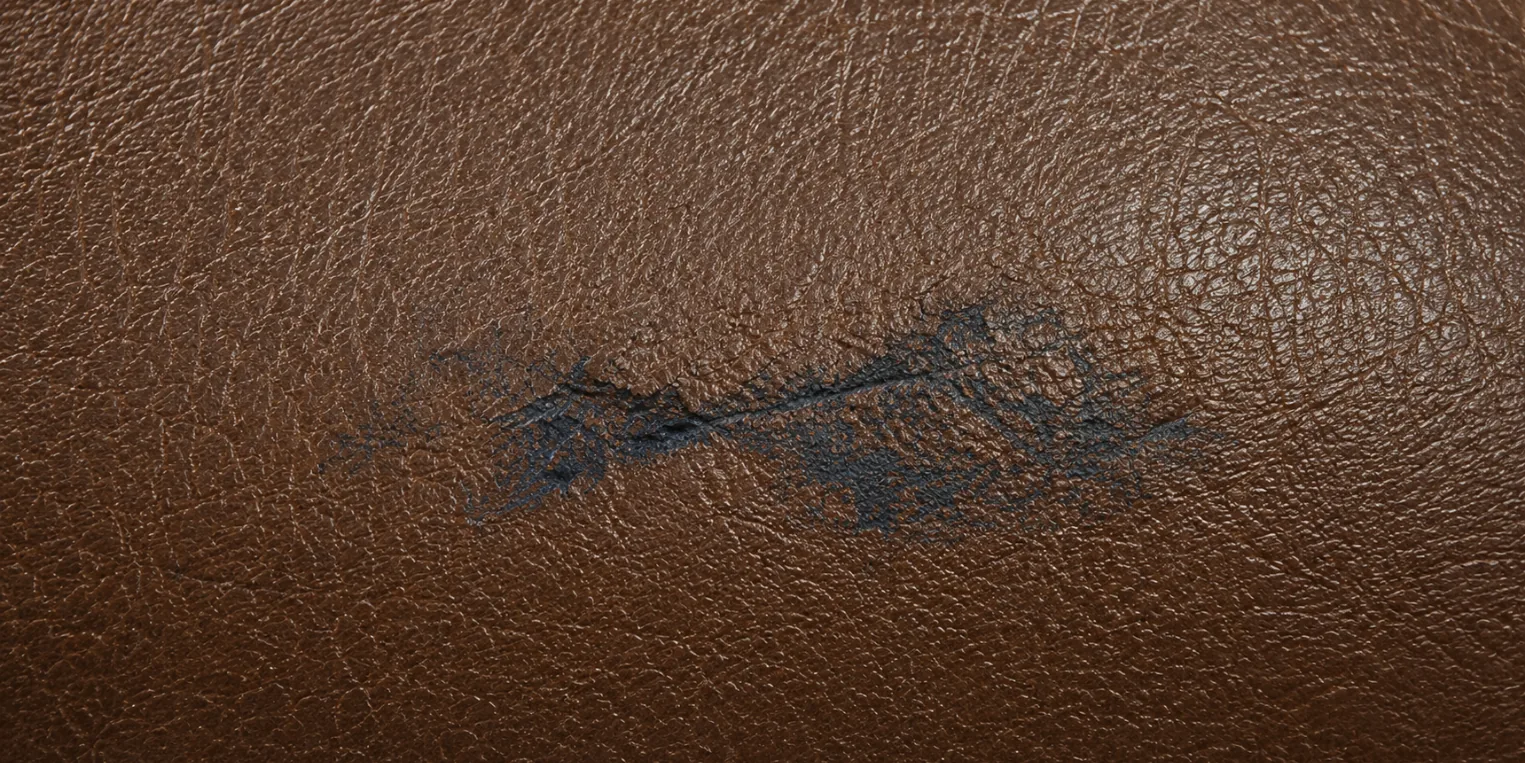
Colour transfer or a dye stain
Depends how far it has penetrated. Worth assessing, no promise in advance.
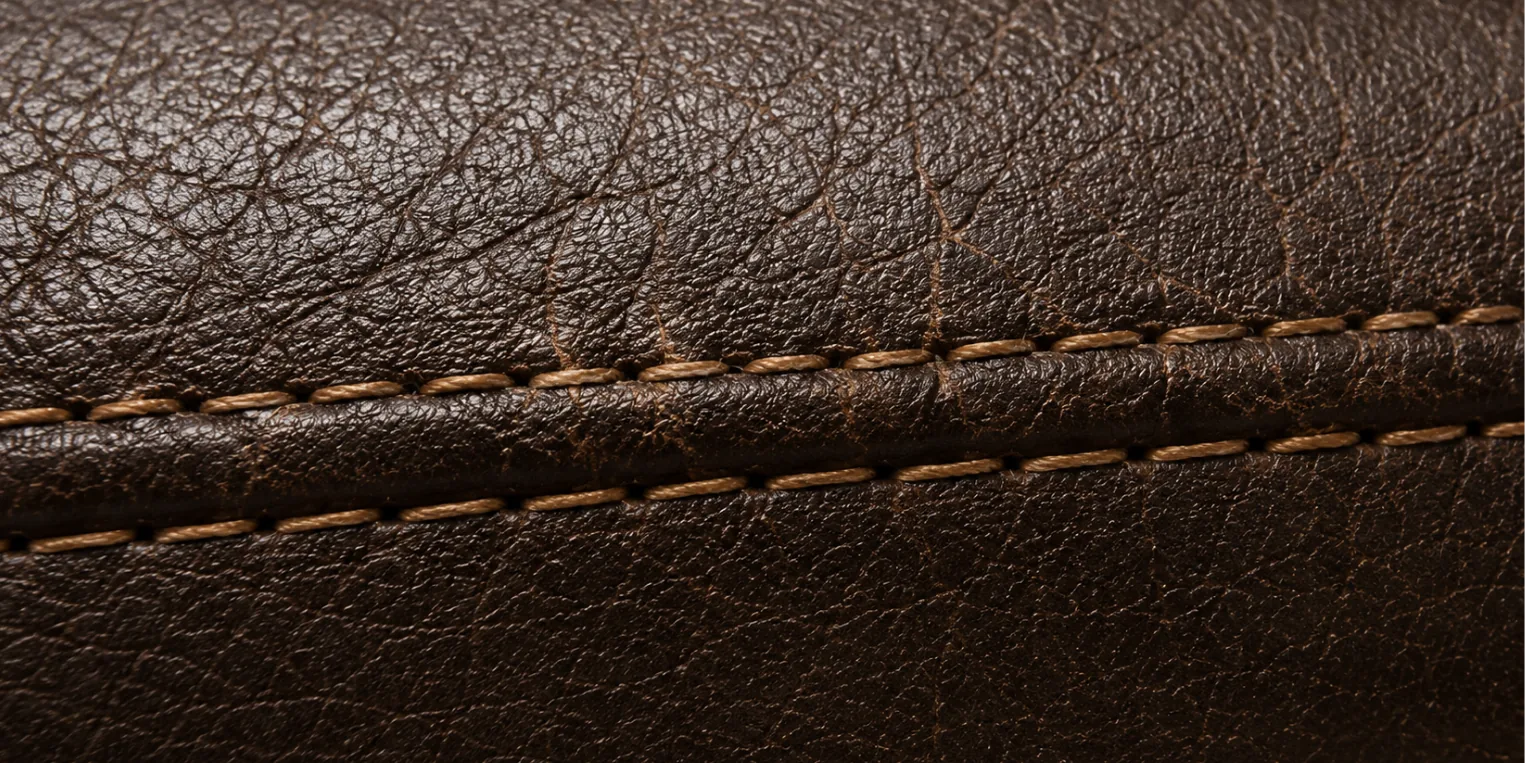
Cracking along one seam or fold
Stabilized if truly confined to one line. More often the first sign of wider fatigue.
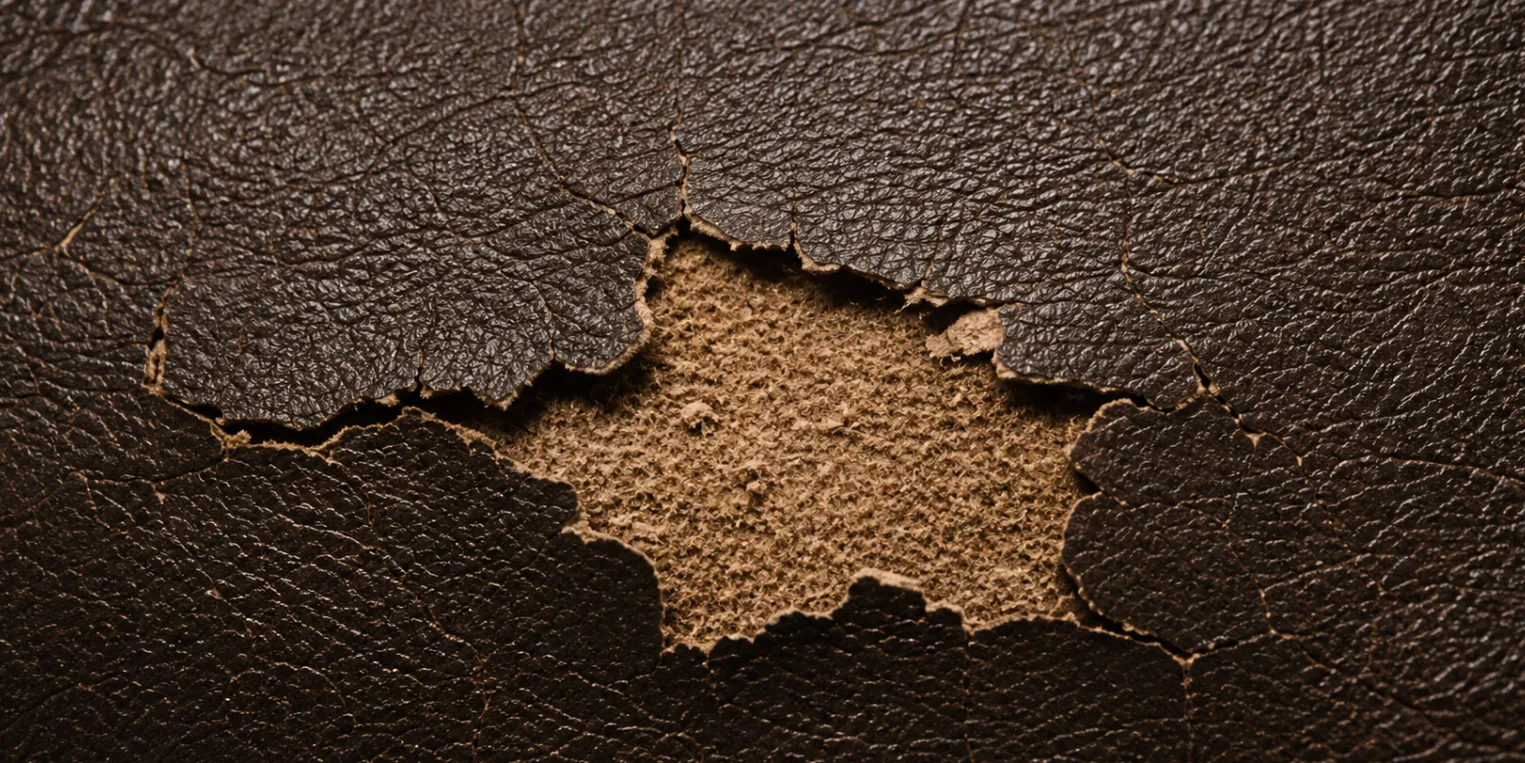
Flaking, peeling or bare backing
The coating is releasing from its backing. Nothing new bonds to a surface already letting go.
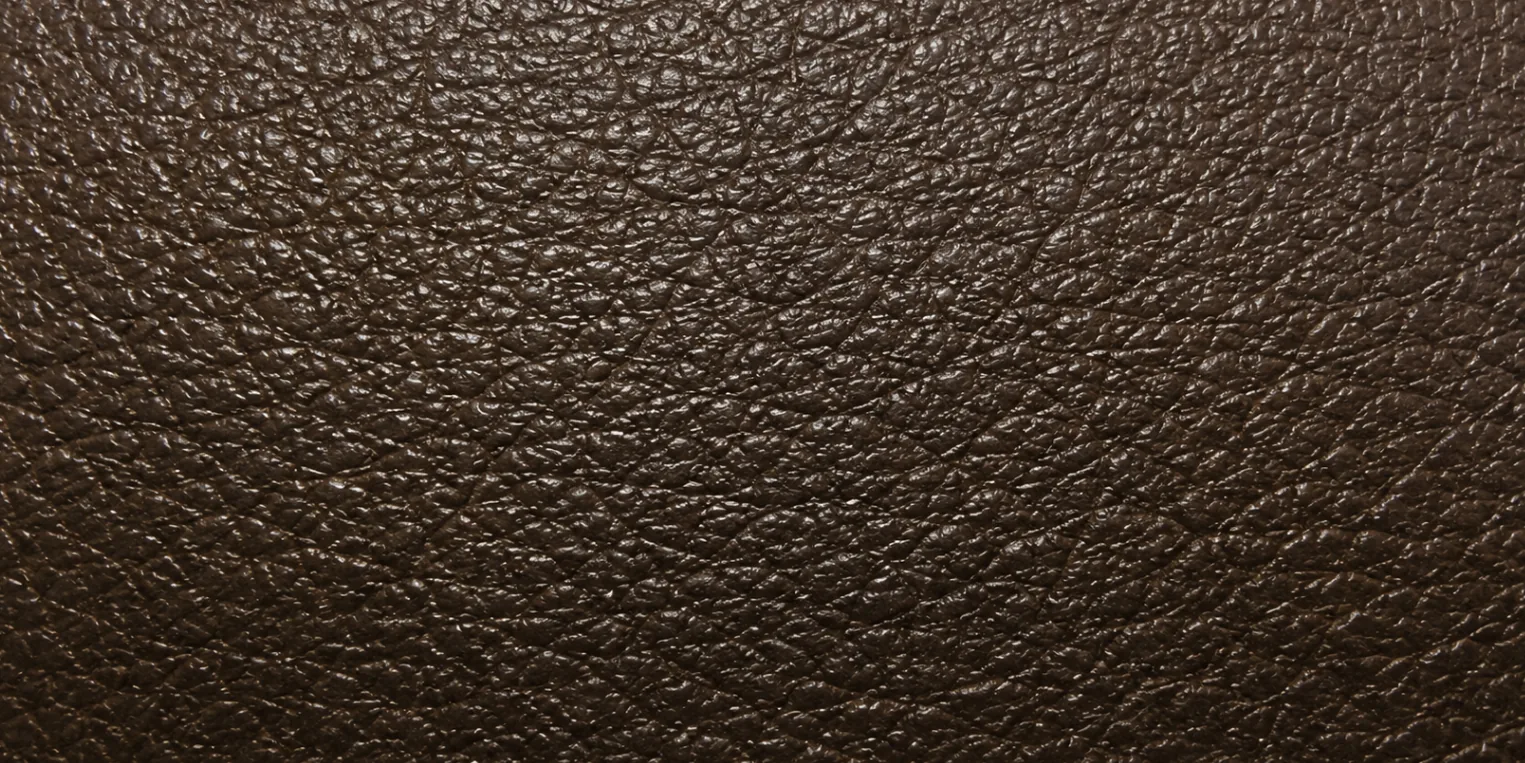
Tacky or sticky surface
The polymer is breaking down, not dirty. No cleaning reverses it.
Where the material has failed broadly, reupholstery or panel replacement beats repeated faux leather repair on a coating at the end of its life. A contract-grade synthetic from makers like Nassimi outlasts the panel it replaces.
If the Checks Did Not Match, Start Here Instead
The materials most often mistaken for faux leather, each with its own repair rules.
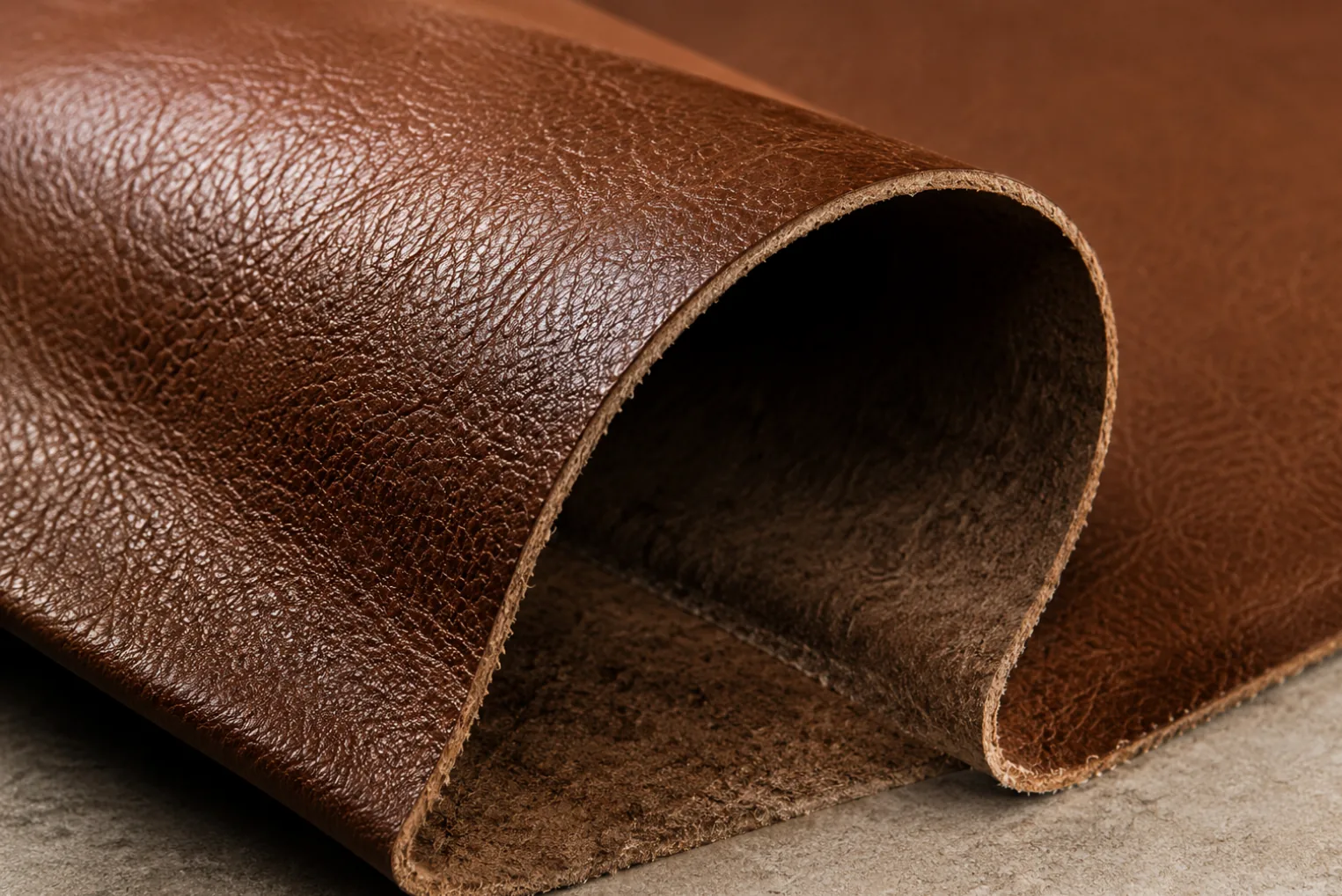
Contains leather
Bonded leather
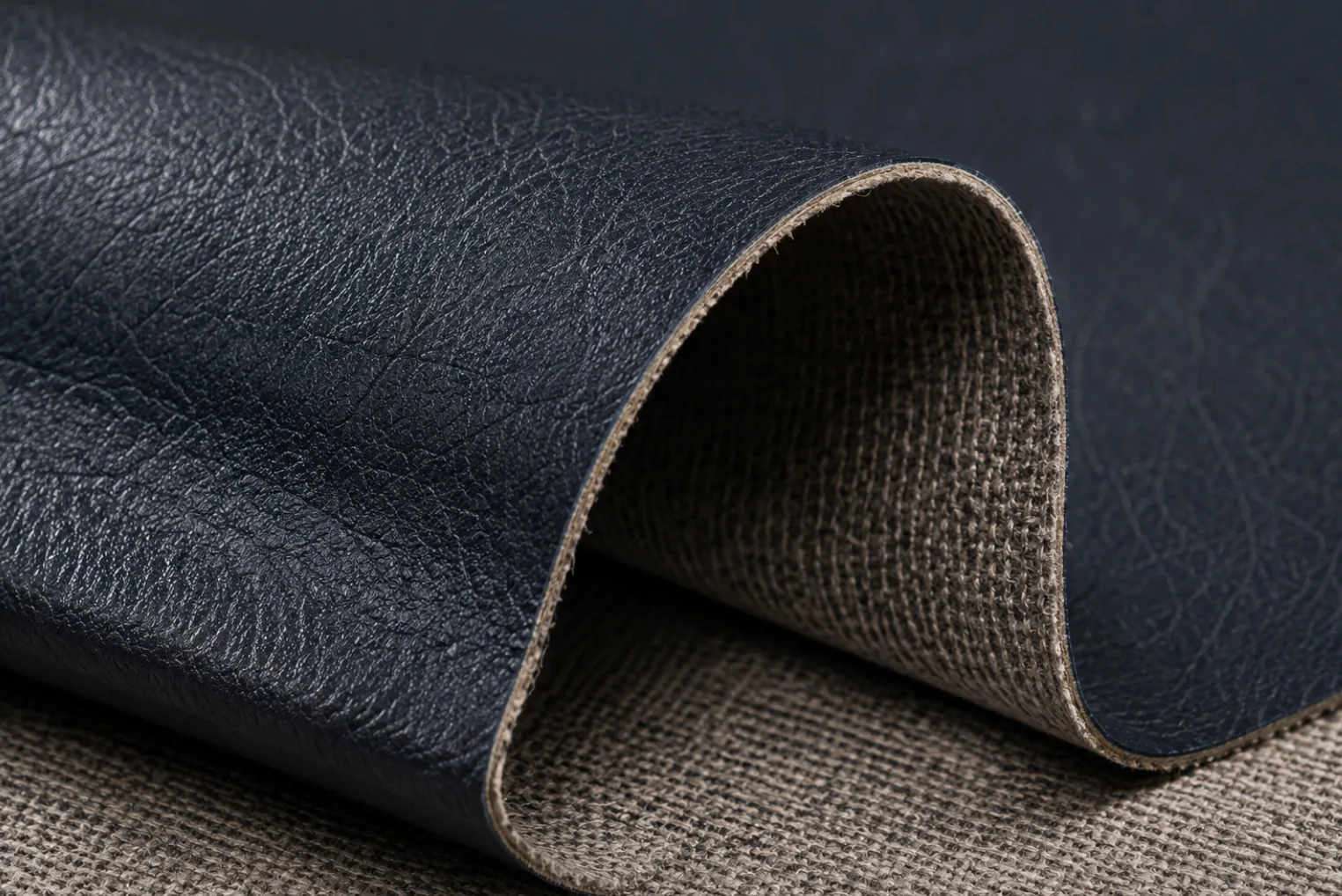
Leather fibres reconstituted into a sheet. Peels by separating between its own layers.
Bonded leather →
Synthetic
Vinyl
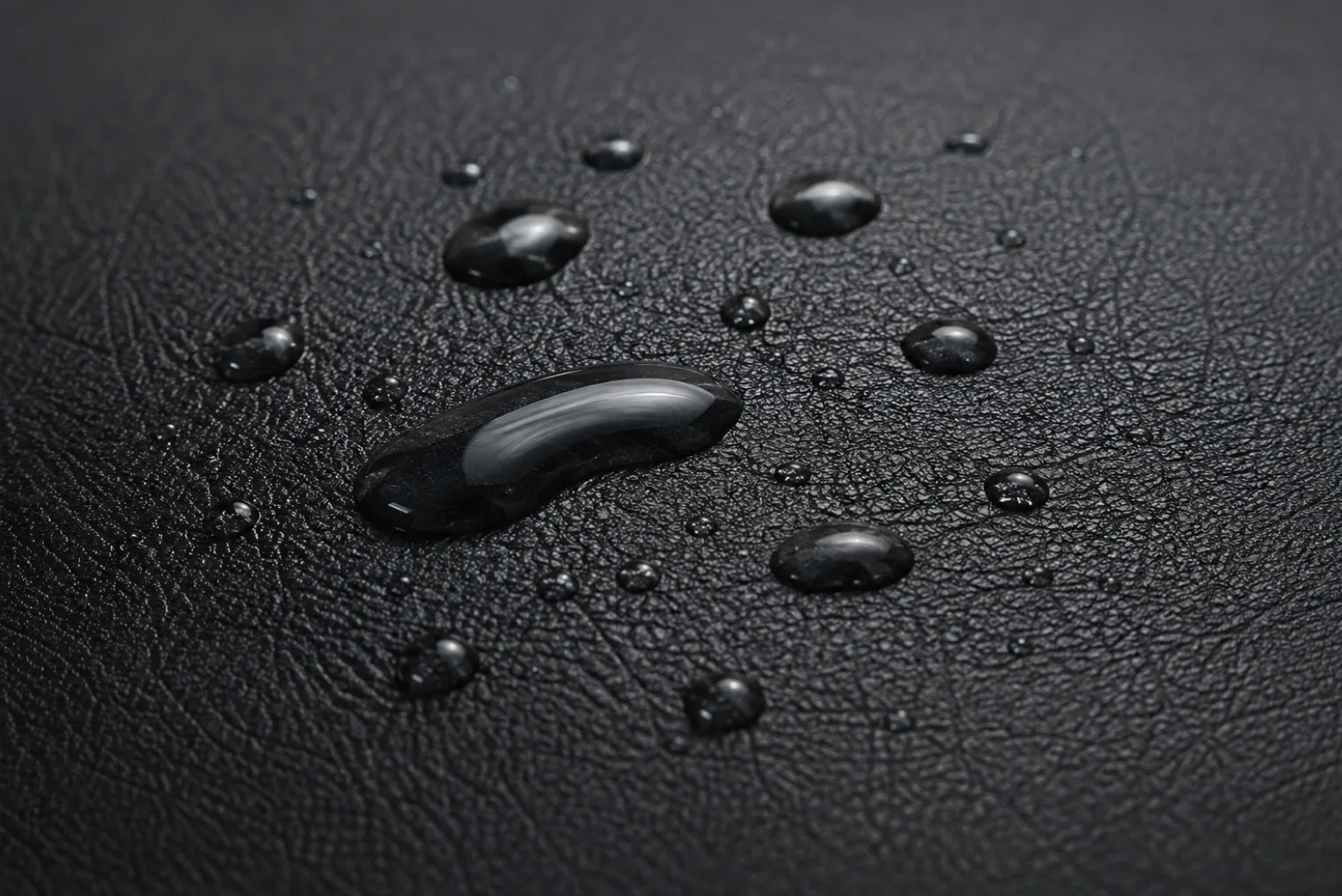
The PVC branch, common on residential seating and dining chairs.
Vinyl →
Contract grade
Commercial vinyl
Built for heavy use and repeated disinfecting, to a different durability standard.
Commercial vinyl →
Genuine hide
Pigmented leather
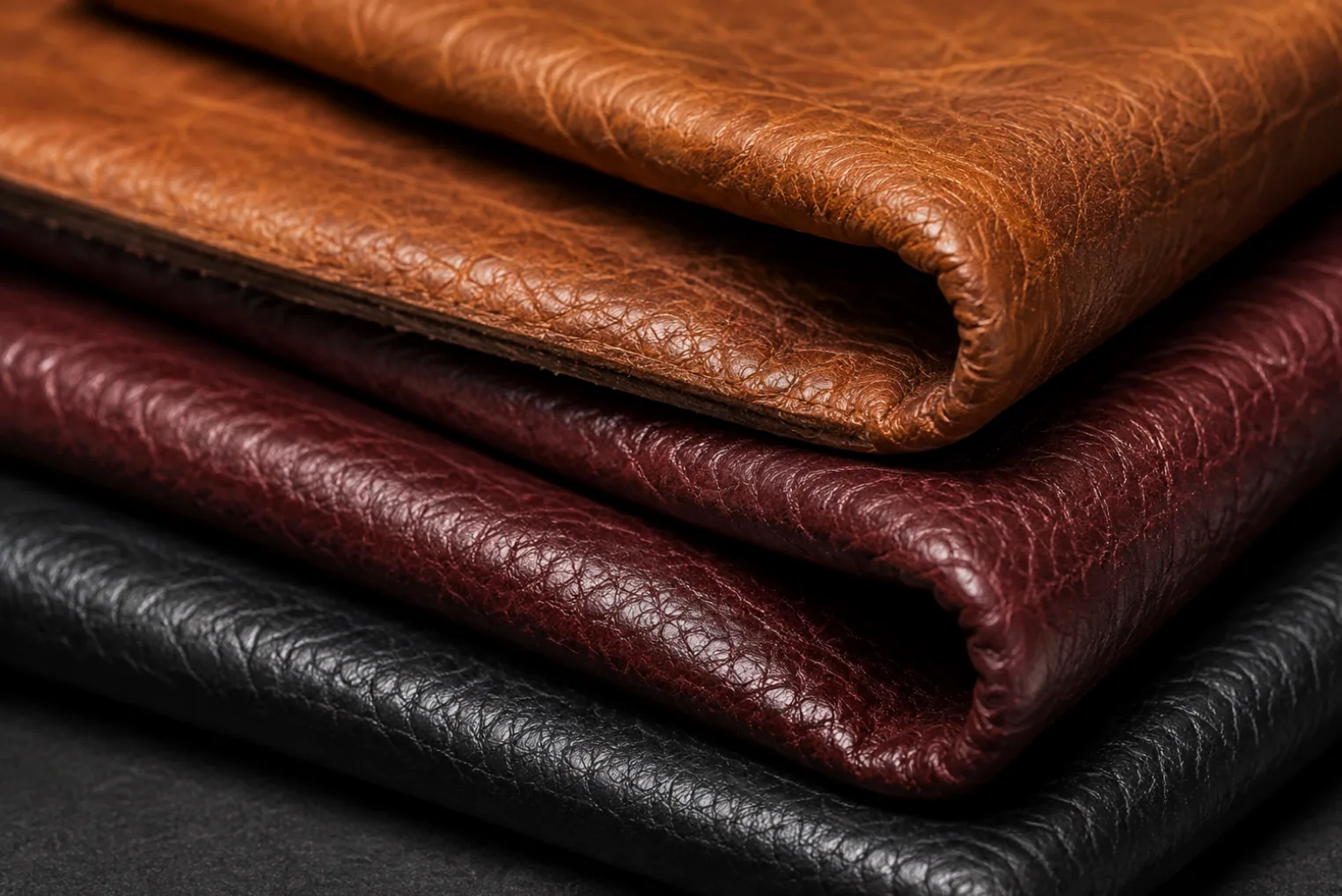
Uniform enough to look synthetic, but hide under a topcoat — and refinishable.
Pigmented leather →
Faux Leather Repair: Frequently Asked Questions
What is faux leather repair, and when is it worth doing?
Faux leather repair covers cleaning, colour work and localized patching where the surface is still sound around the damage. It stops working once the coating is cracking, flaking or turning tacky across a panel — at that point the material is failing as a system, not in one place.
Is faux leather real leather?
No. It contains no hide at all — it is a polymer coating on a fabric backing, with the grain printed or embossed into the surface.
Is vegan leather the same as faux leather?
In upholstery, yes. Vegan leather, PU leather, pleather, leatherette and synthetic leather all name the same thing: a polymer surface on a textile backing.
Is vinyl the same as faux leather?
Vinyl is one kind of faux leather rather than an alternative to it — the PVC branch, usually a heavier, more wipe-clean grade than the PU used on domestic furniture.
What is the difference between PU and PVC faux leather?
PU is softer and more cloth-like, and breaks down as moisture attacks the polymer. PVC is held flexible by plasticizers — more wipeable, but it stiffens as those plasticizers leave.
Why is my faux leather sofa peeling or flaking?
The polymer skin is the entire wearing surface, and it sits on fabric rather than hide. Once flexing, heat, body oils or age break it down, it lifts away and exposes the weave — and faux leather repair cannot re-bond a coating that is already releasing.
Why is my faux leather sticky or tacky?
The polyurethane layer itself is breaking down. It is not dirt, and no cleaning or faux leather repair reverses it.
Can faux leather be repaired?
Faux leather repair works on localized damage, which can often be improved. Widespread cracking, flaking or tackiness is the material failing as a system, and reupholstery or panel replacement is the honest answer.
Can you use leather conditioner on faux leather?
No. Conditioners are made to be absorbed by hide fibres, and have no part in faux leather repair. A polymer absorbs nothing, so the product sits on top, can leave a residue, and does nothing for the life of the material.
Is faux leather waterproof?
Water resistant, not waterproof. Spills wipe away, but moisture still reaches the backing through seams, stitch holes and any break in the surface. On PU it attacks the polymer itself, which is why a PU piece can degrade even in storage.
How long does faux leather last?
There is no single figure — it depends on the coating, how much the panel flexes, and how much heat, oil, sun and humidity it takes. Only the pattern is predictable: the surface wears out rather than developing patina.
Find Out What You Actually Have Before You Spend Anything
Send photographs of the surface, a worn area and any exposed edge. We will identify the material and tell you honestly whether faux leather repair is worth doing.
Or call (347) 310-7483- Free, with no obligation
- An honest answer, including “do not repair this”
- New York City & New Jersey