
Bonded Leather: What It Is, Why It Peels and What Can Be Repaired
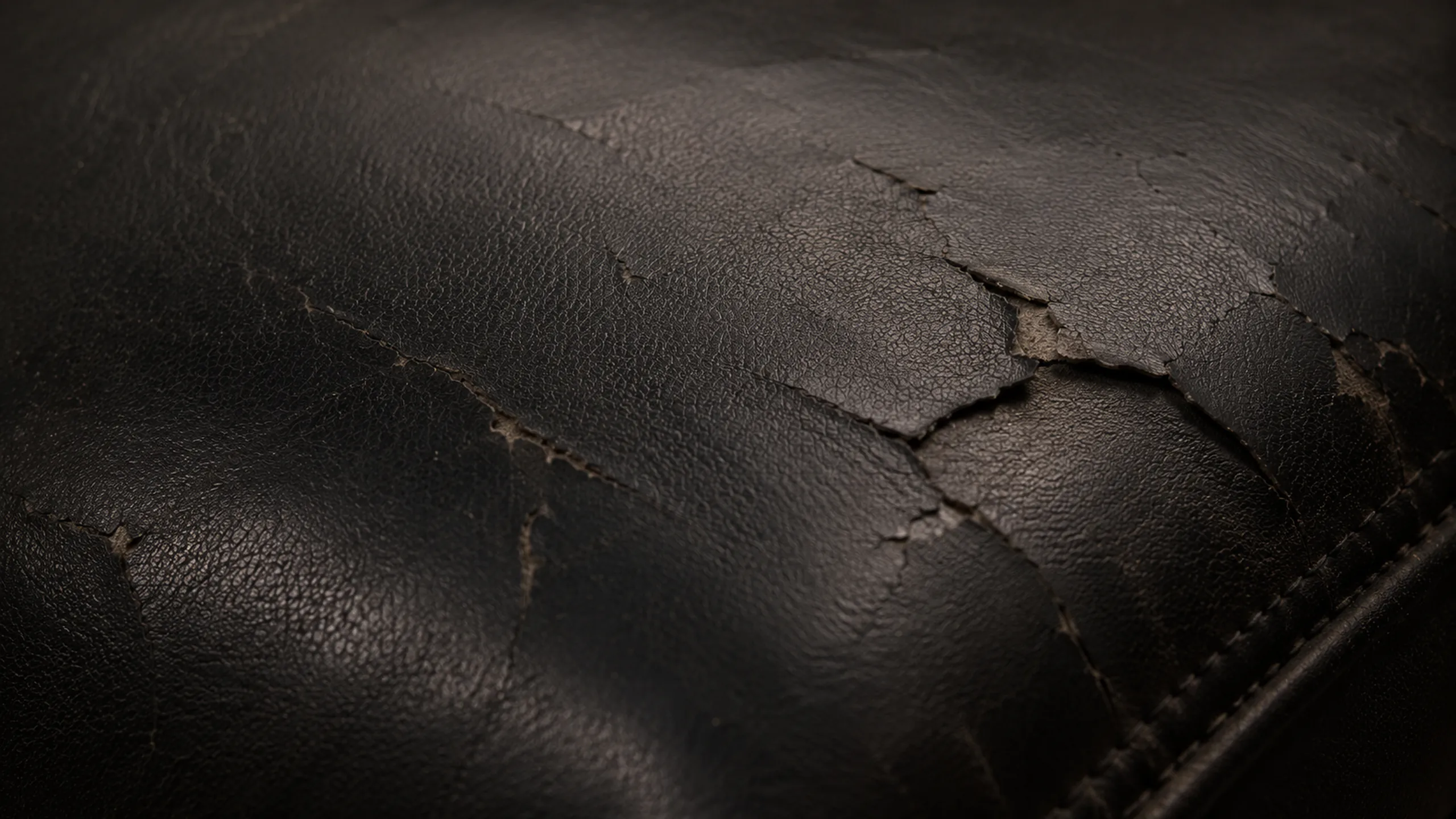
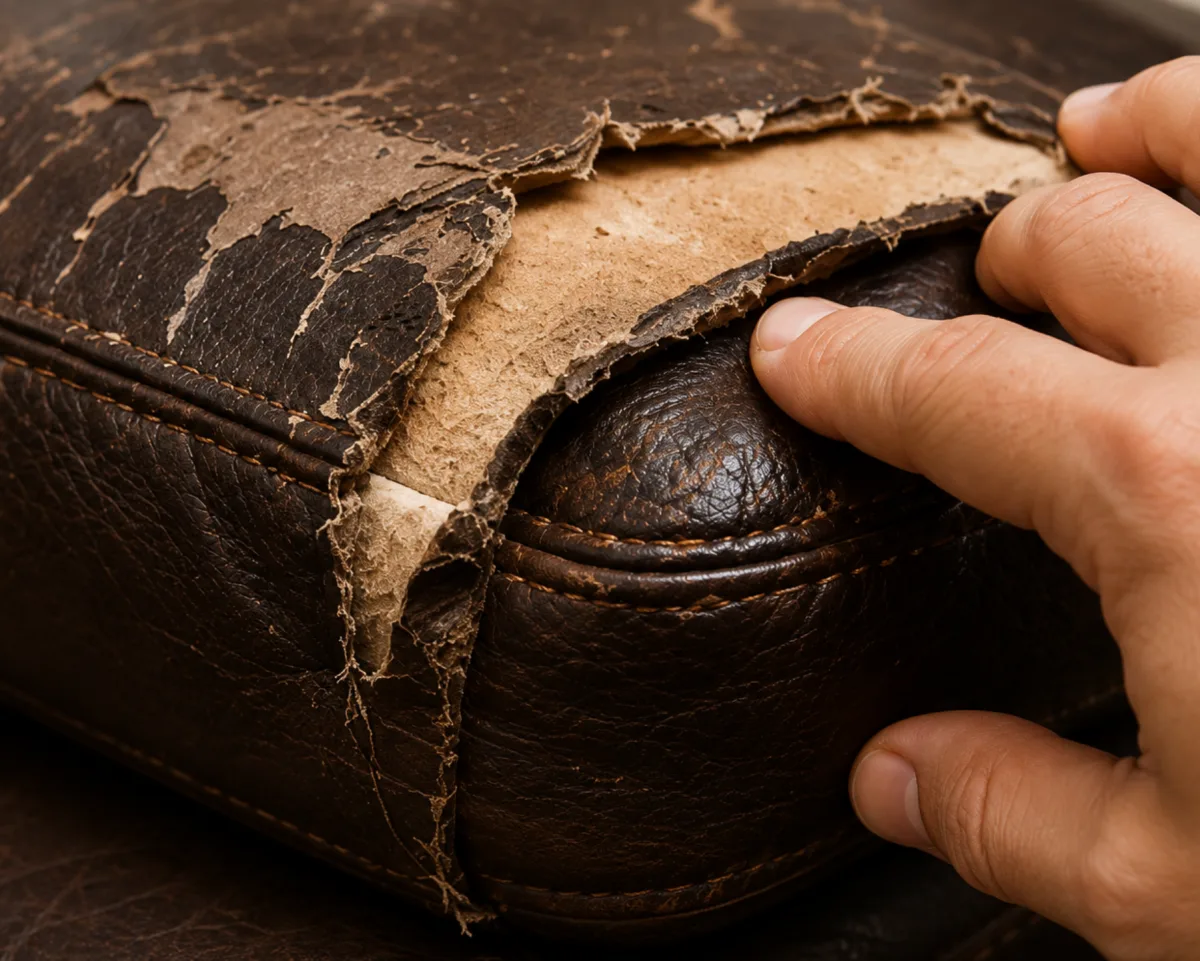
Bonded leather peeling is a construction failure, not worn-out leather. That decides whether a piece is repaired or reupholstered.
What Is Bonded Leather Made Of?
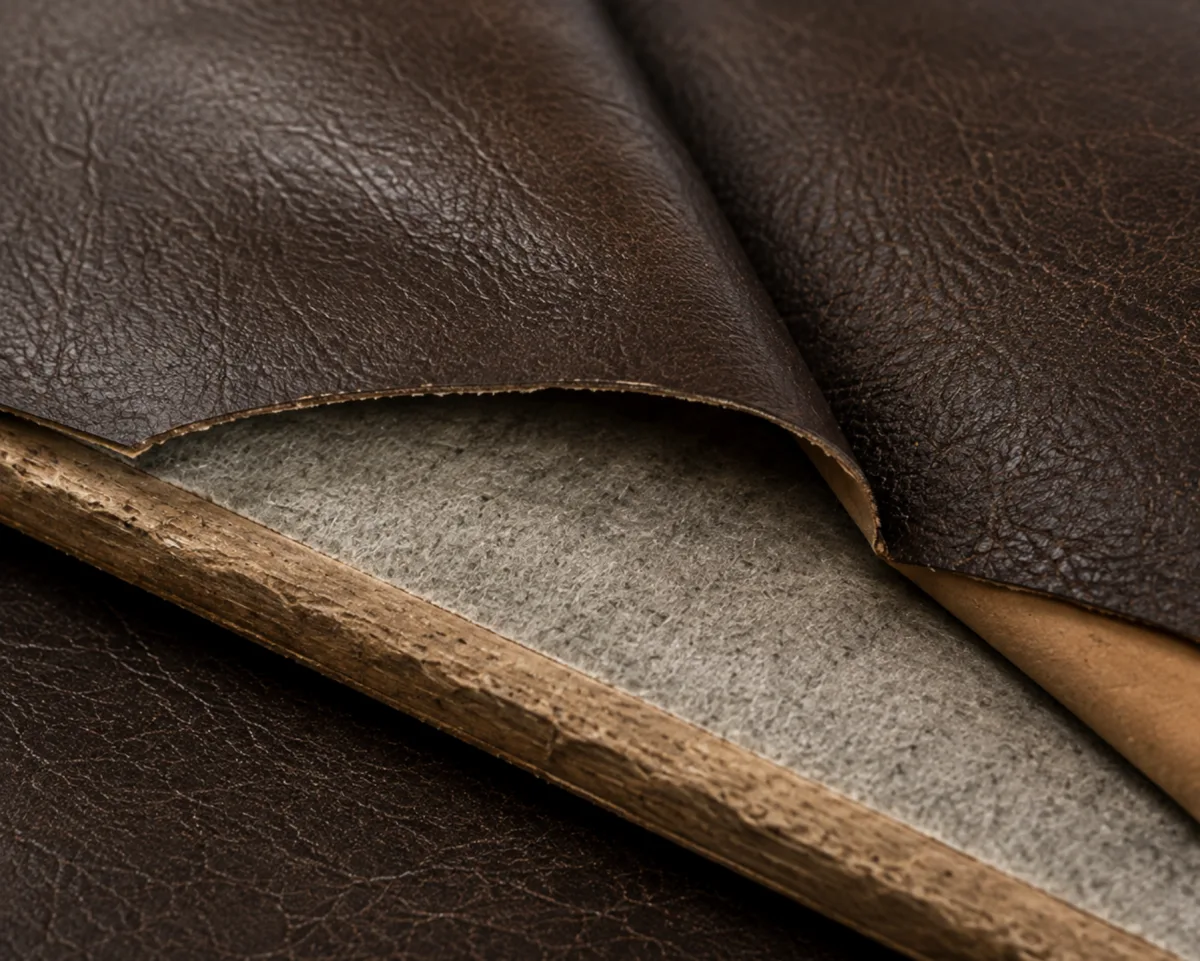
A hide is one continuous material. Bonded leather is assembled. Read the stack from the top down.
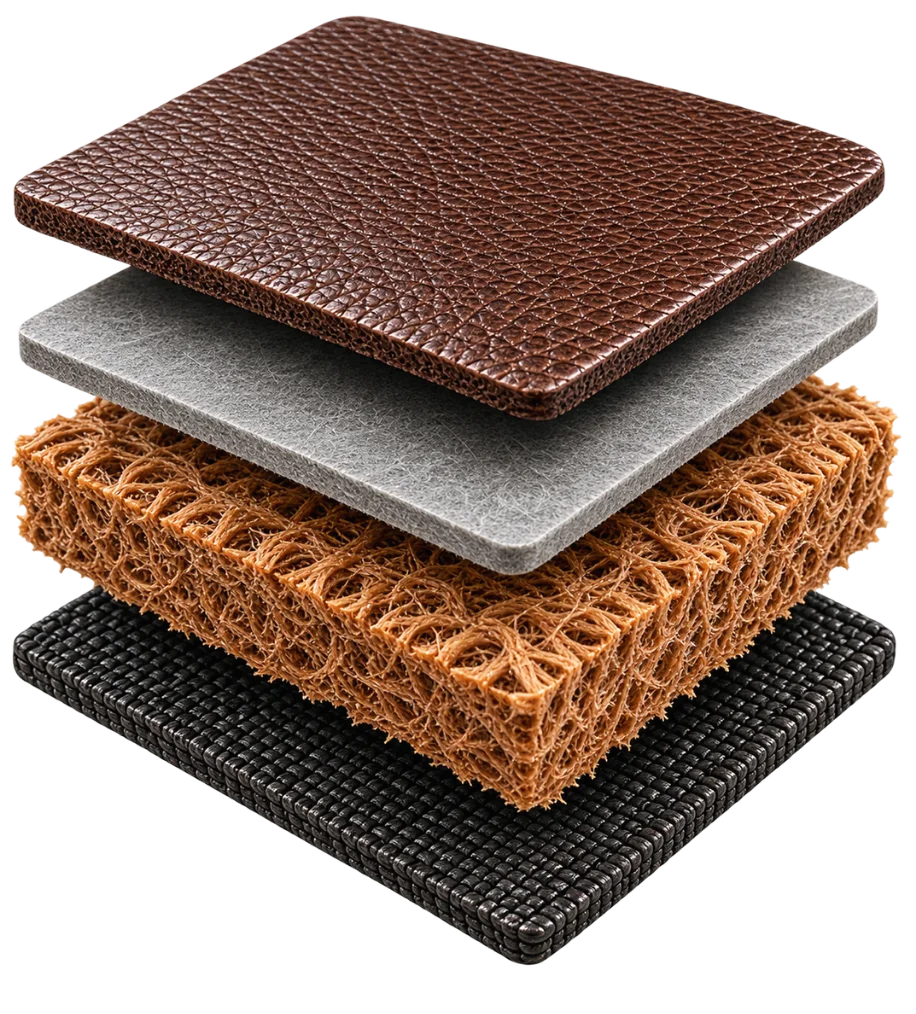
Protective / color finish
Carries the color and sheen. Thin, and dependent on everything below.
Polyurethane surface layer
Supplies the leather-like look and grain.
Bonded leather-fiber composite
Leather fibers held with binders. Reconstituted, not continuous.
Backing / substrate
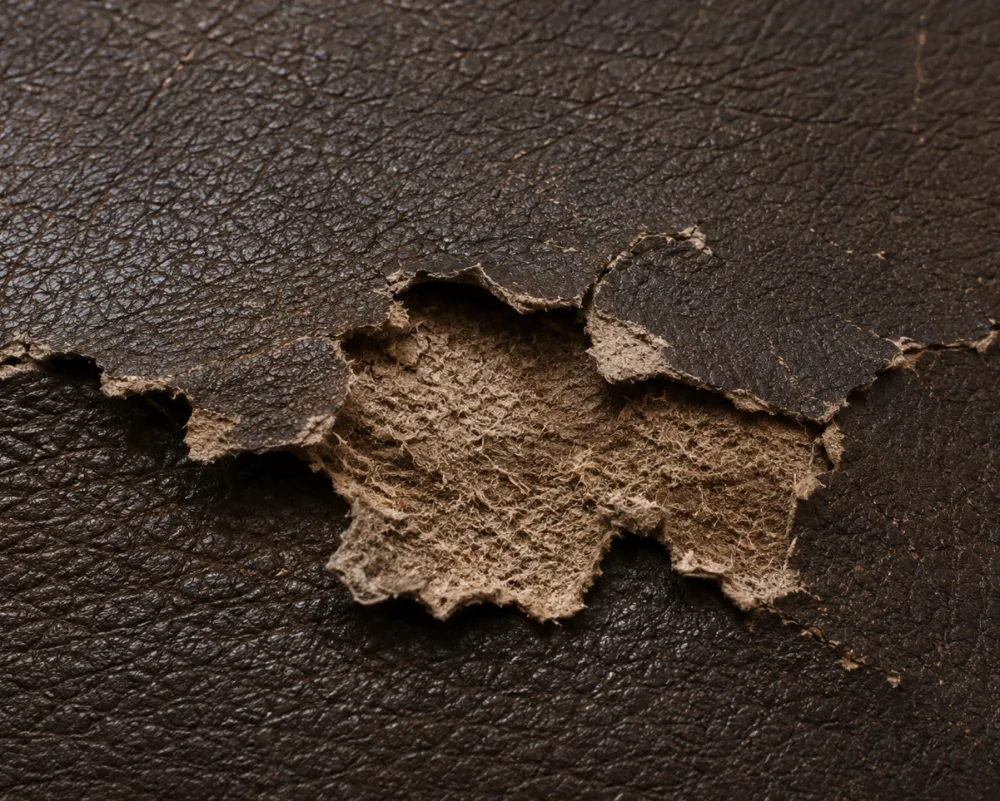
What shows once the top flakes away.
What you sit on is a coating, not exposed natural grain.
A bond between two materials can let go. A hide has no such bond — compare pigmented leather and aniline leather.Bonded Leather vs. Genuine Leather
Put the two cut edges side by side and the argument ends.
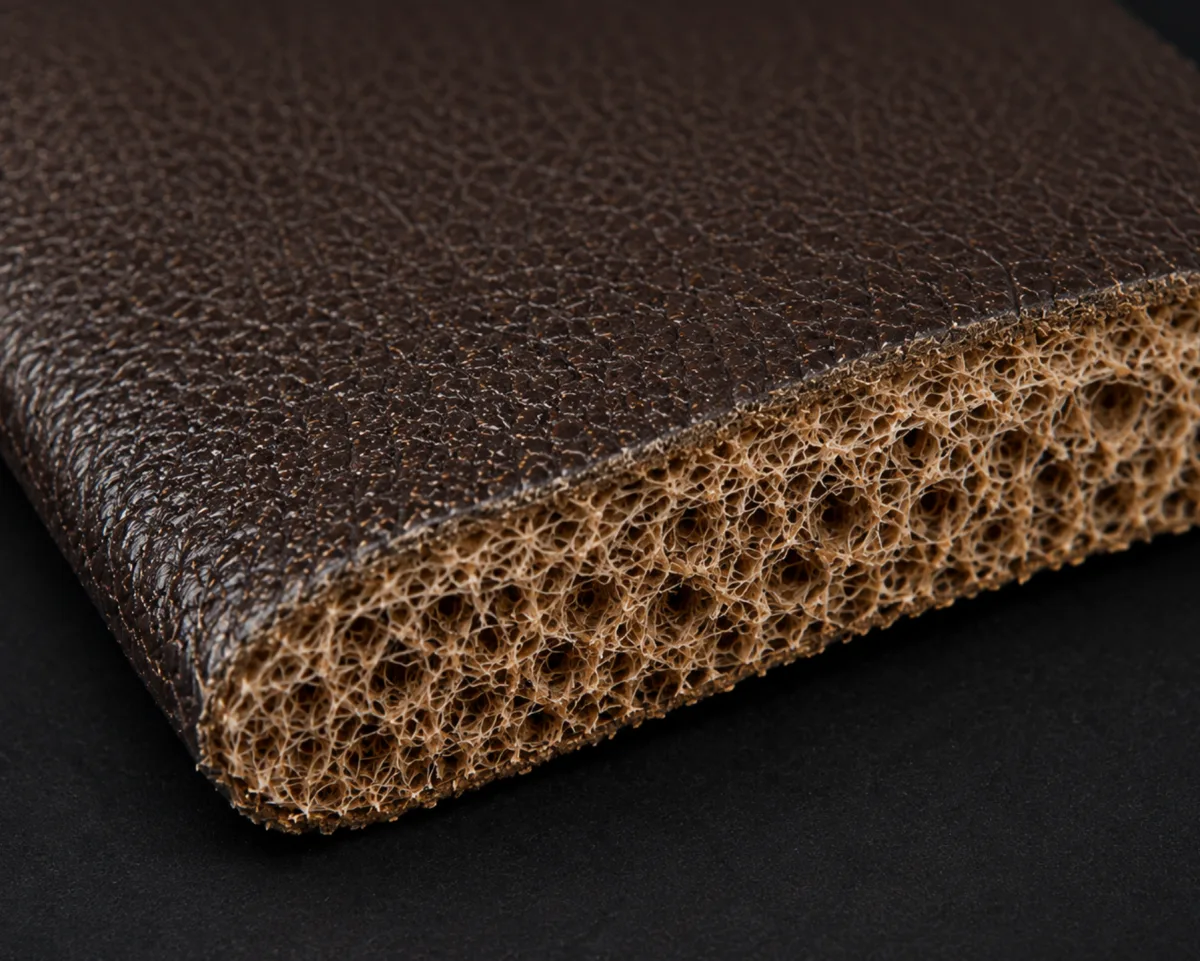
Genuine Leather
One interwoven fiber structure, full thickness. It ages within the hide.
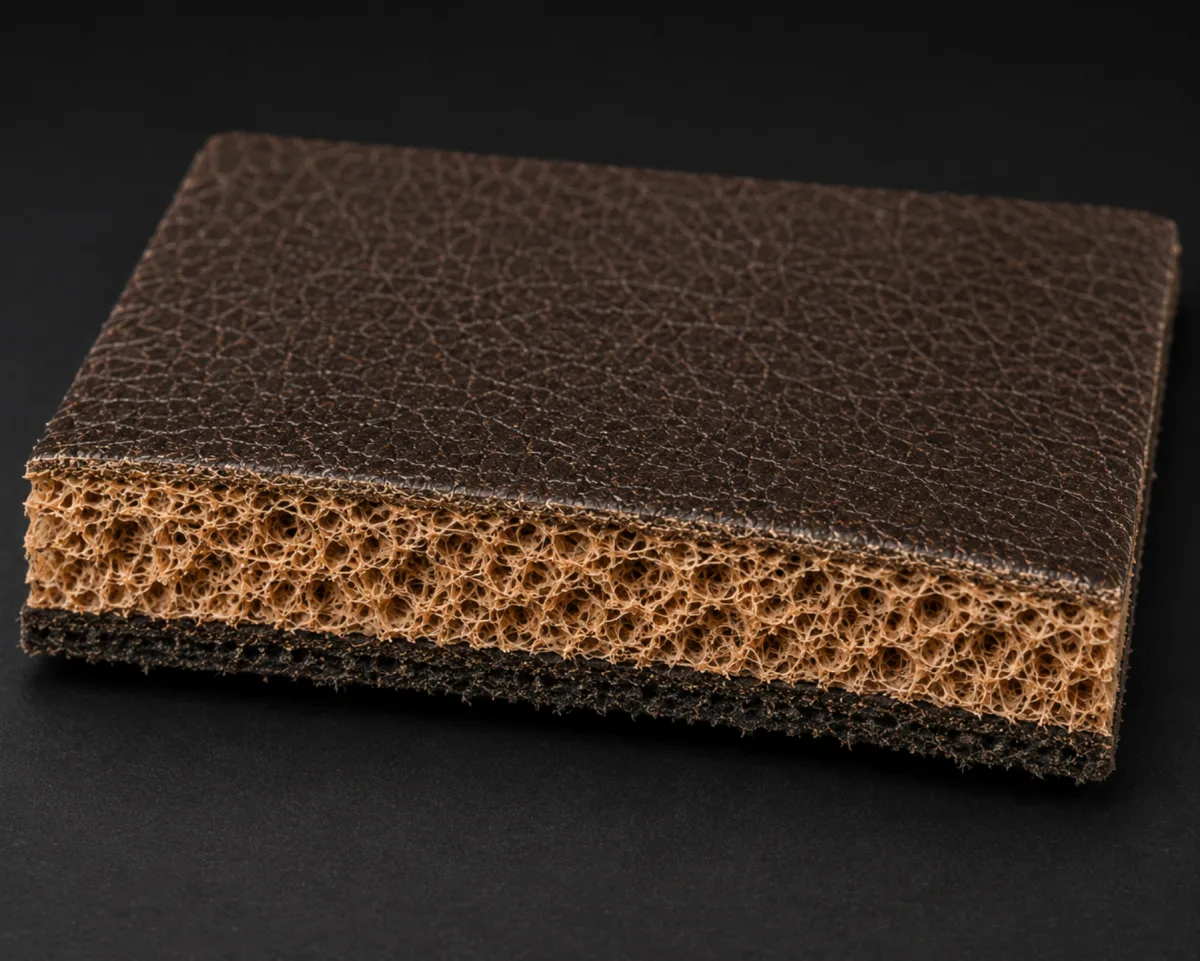
Bonded Leather
A surface film, a fiber composite, a backing. It ages between those layers.
A scuffed hide is a surface you can work on. A separating layer is a construction coming apart.
What Causes Bonded Leather Peeling?
Ordinary use causes it. The coating loses flexibility, loses its grip on the layer underneath, and the daily loads the furniture has always absorbed start taking the surface off.
What they produce, in sequence
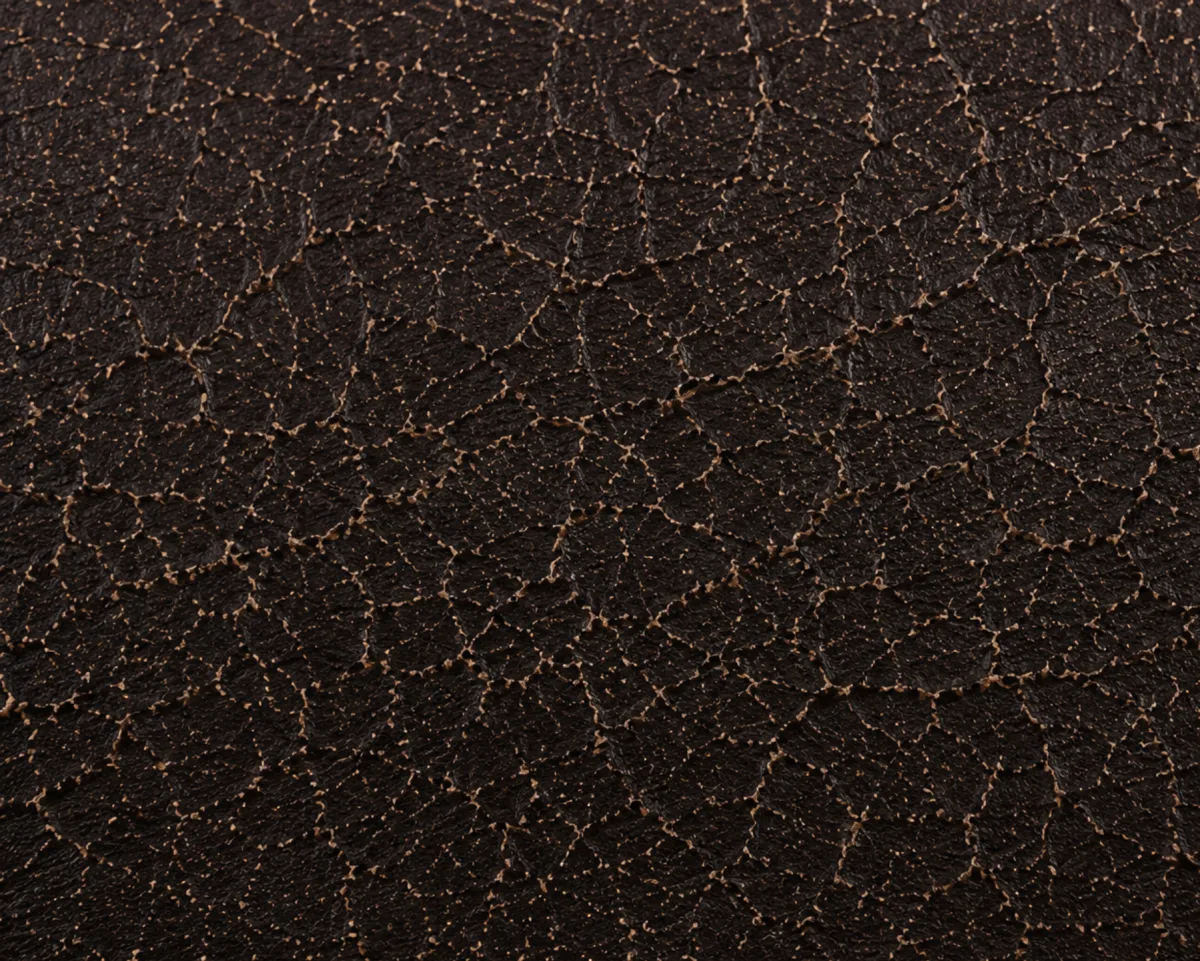
01
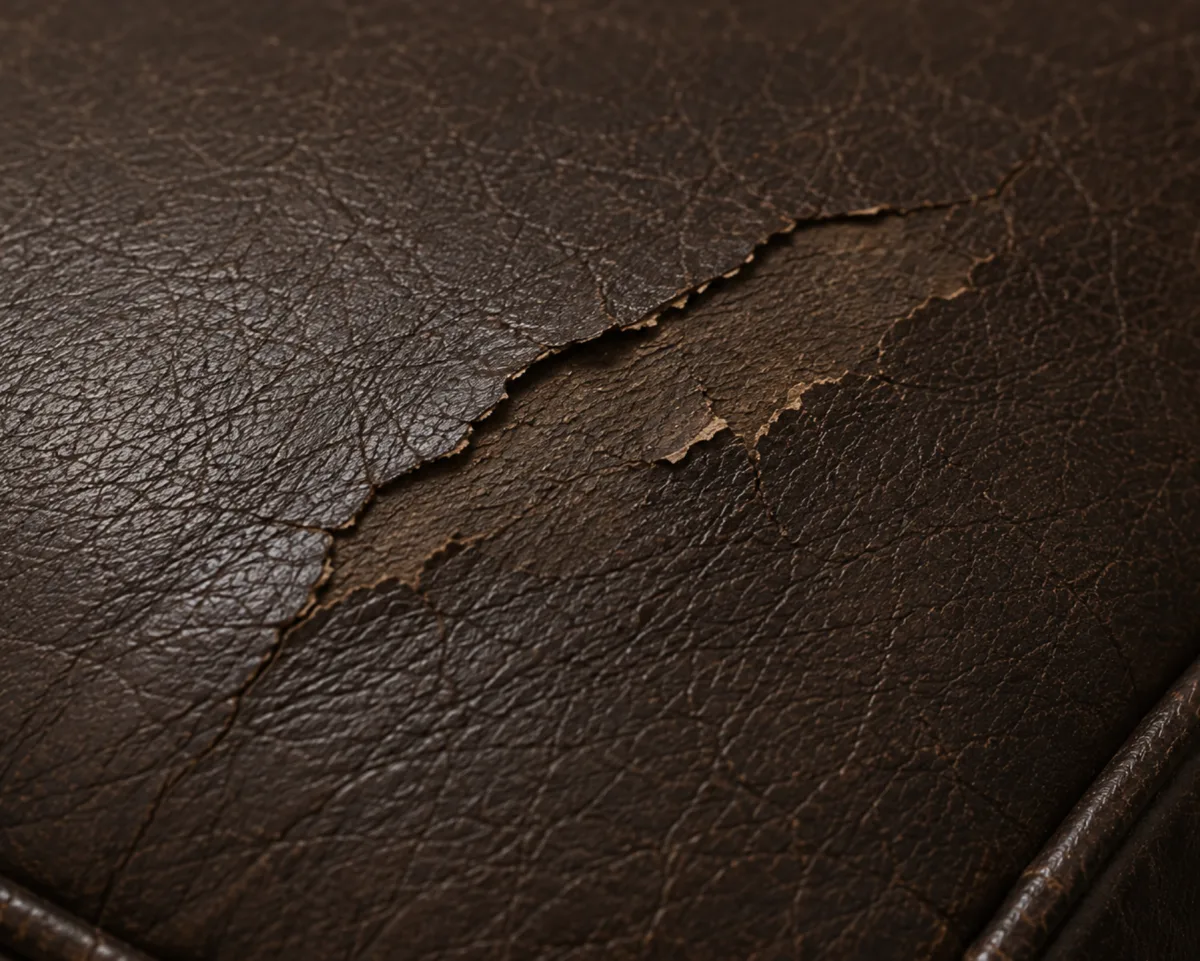
Micro-cracking
Early
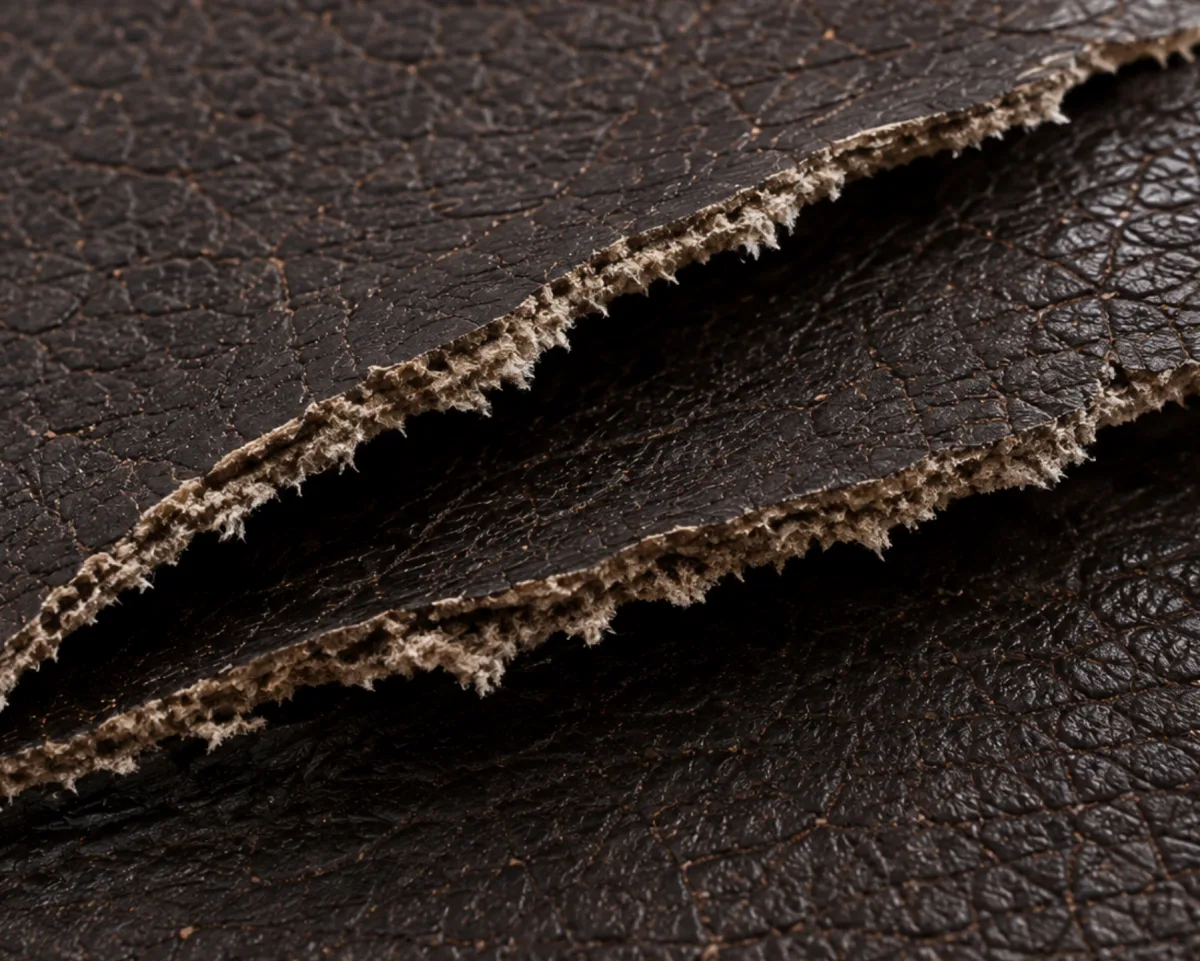
02
Surface lifting
Progressing
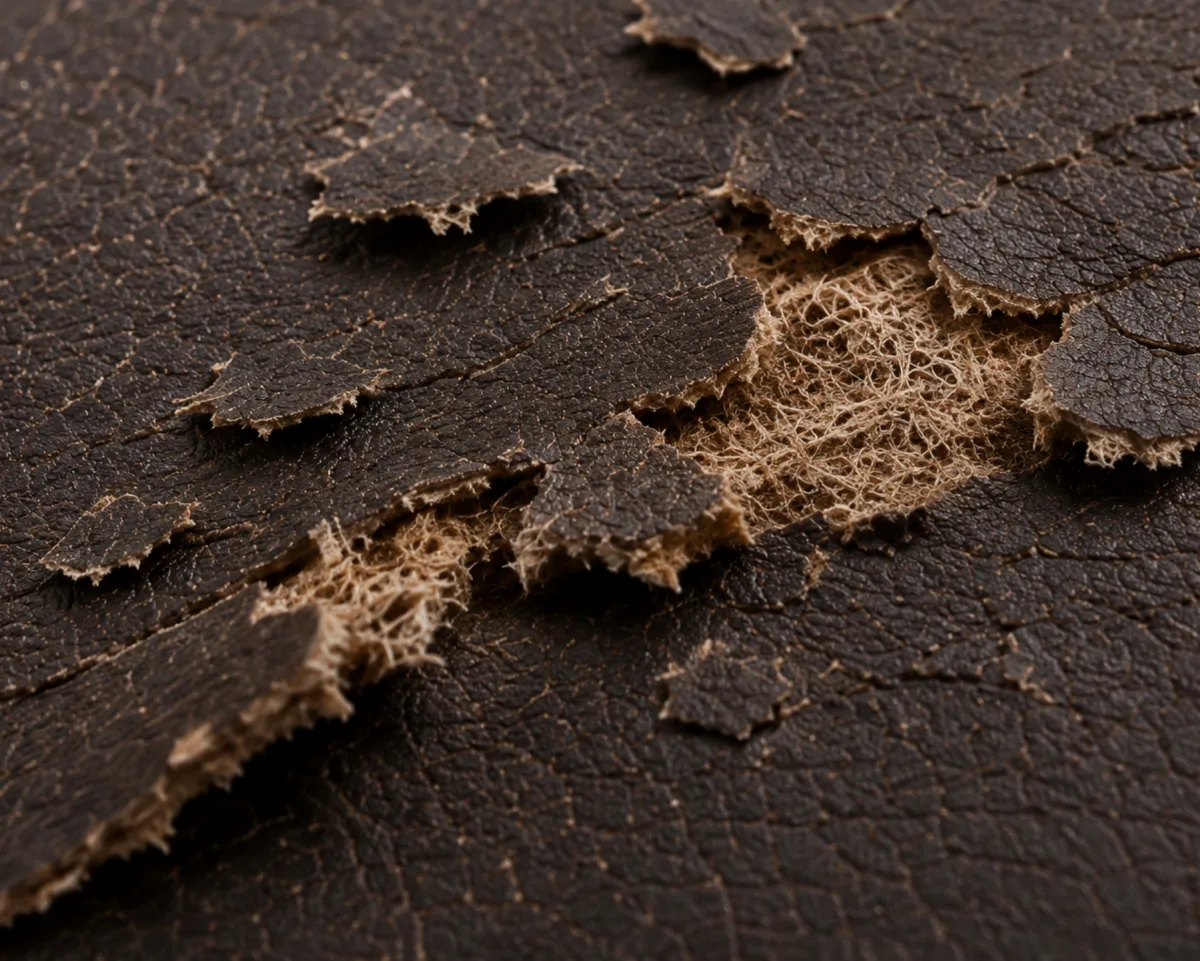
03
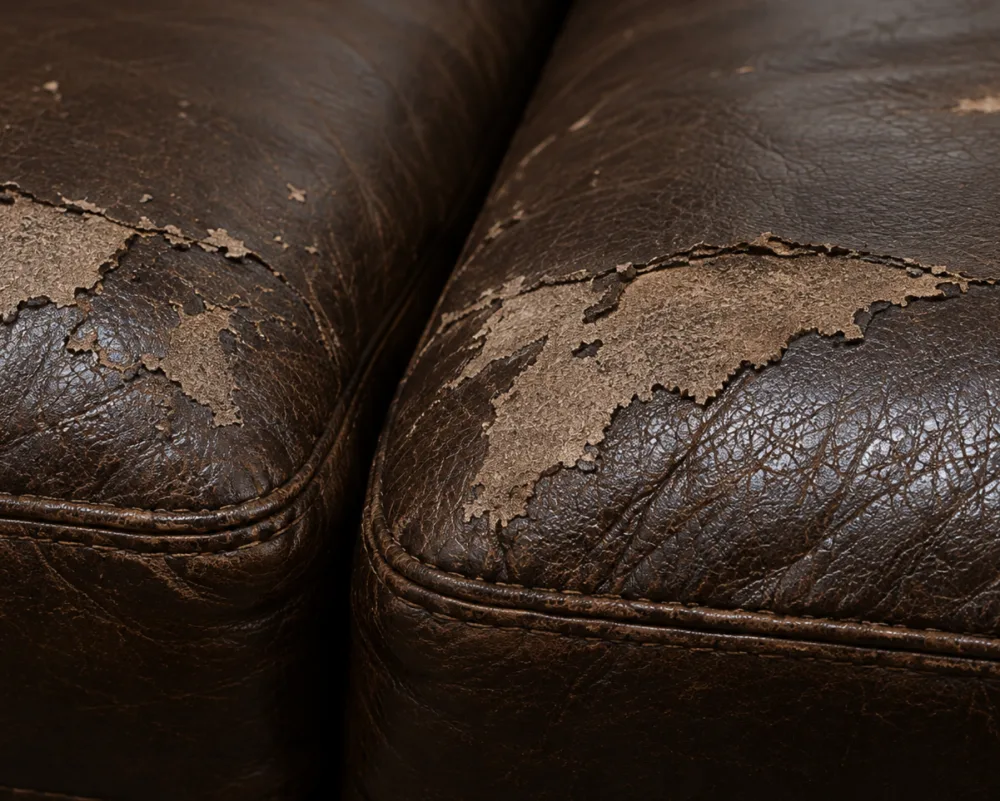
Flaking
Delaminating
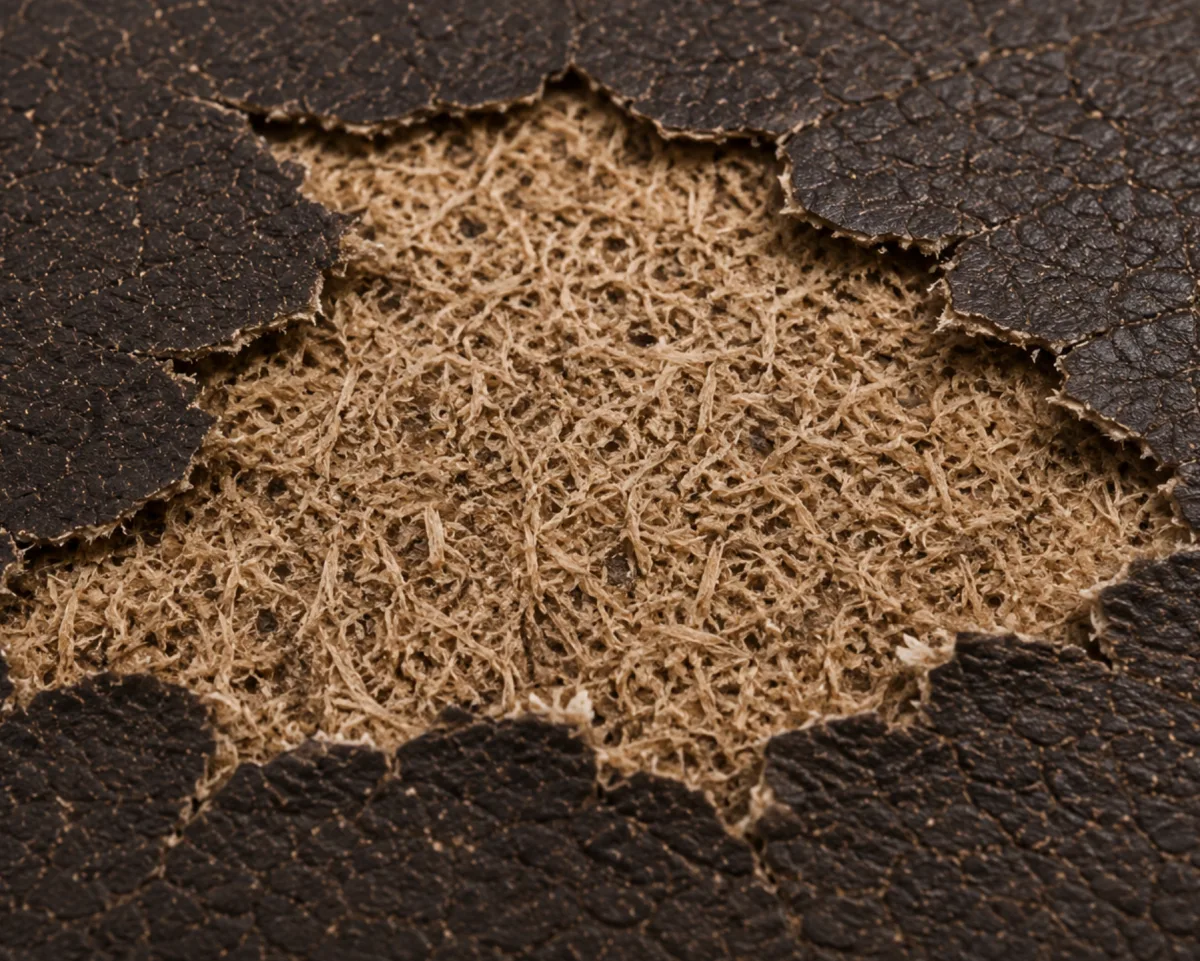
04
Backing exposed
Material failure
Note what is missing from that chain: an event. Stage one is invisible from standing height, which is why the peeling seems to start out of nowhere. Where a piece sits on this run is the most useful thing you can tell us.
Bonded Leather Peeling Does Not Start Everywhere at Once
It begins where the material is worked hardest, then spreads. Check these five places first.
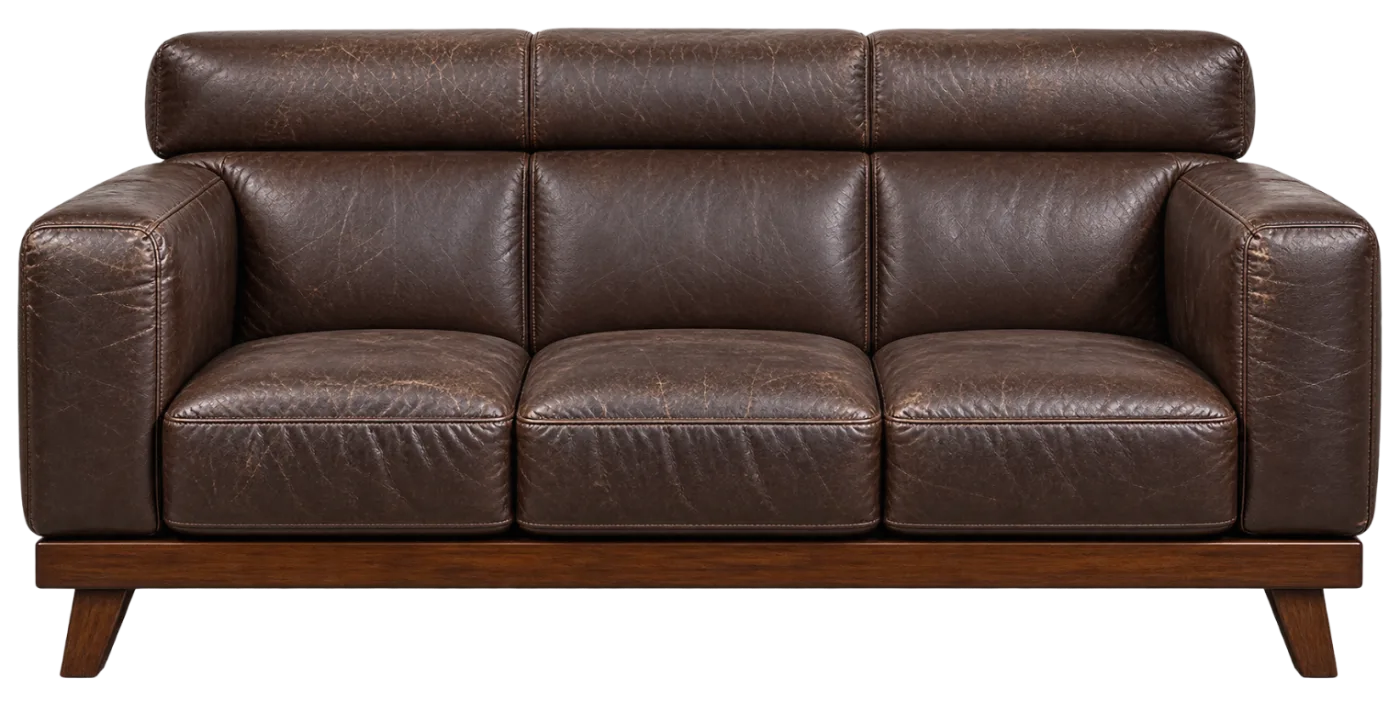
-

1
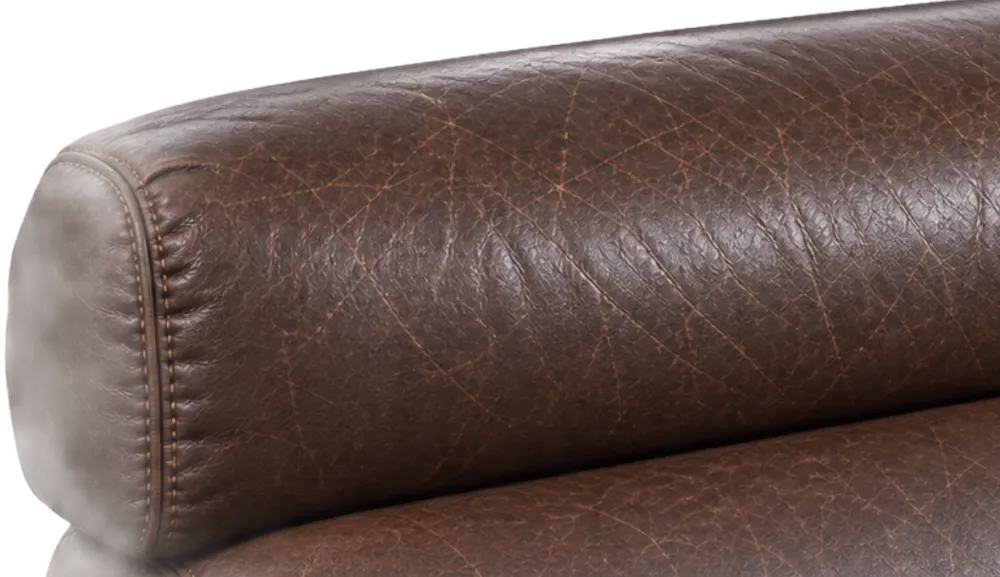
Headrests
Hair and body oils.
-
2
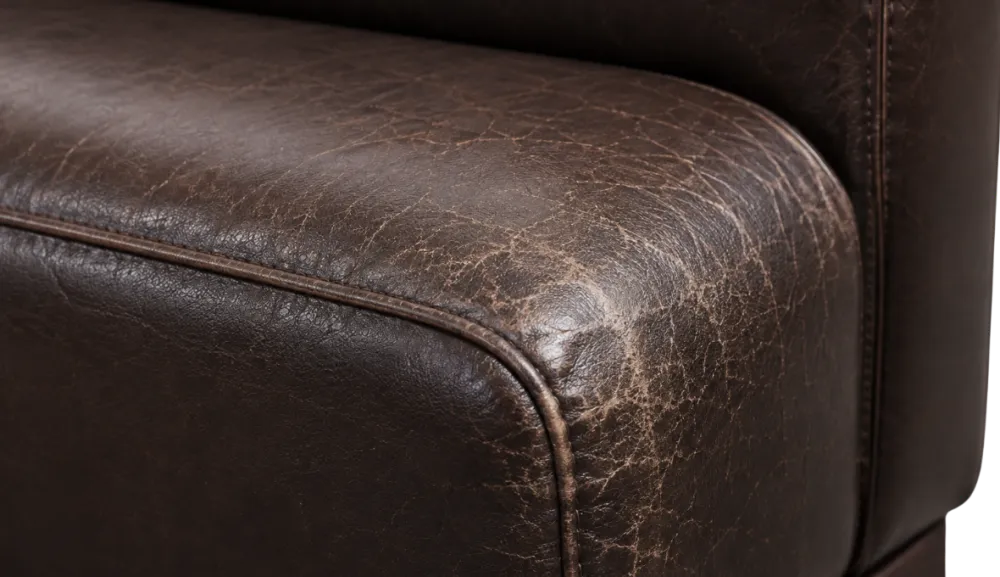
Armrests
Skin contact and rubbing.
-
3
Seat fronts
Compression and flexing.
-
4
Seat cushions
Movement and body heat.
-
5
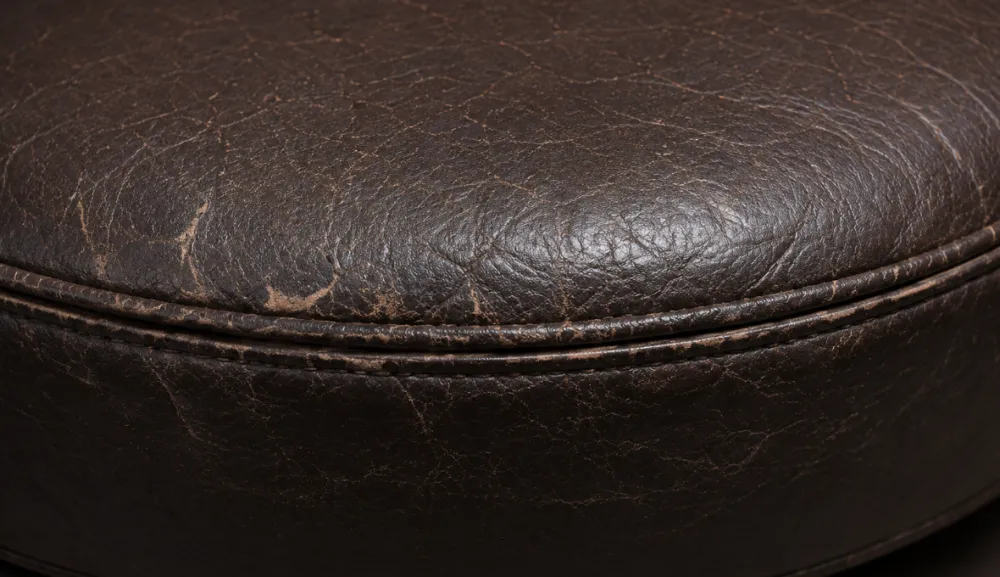
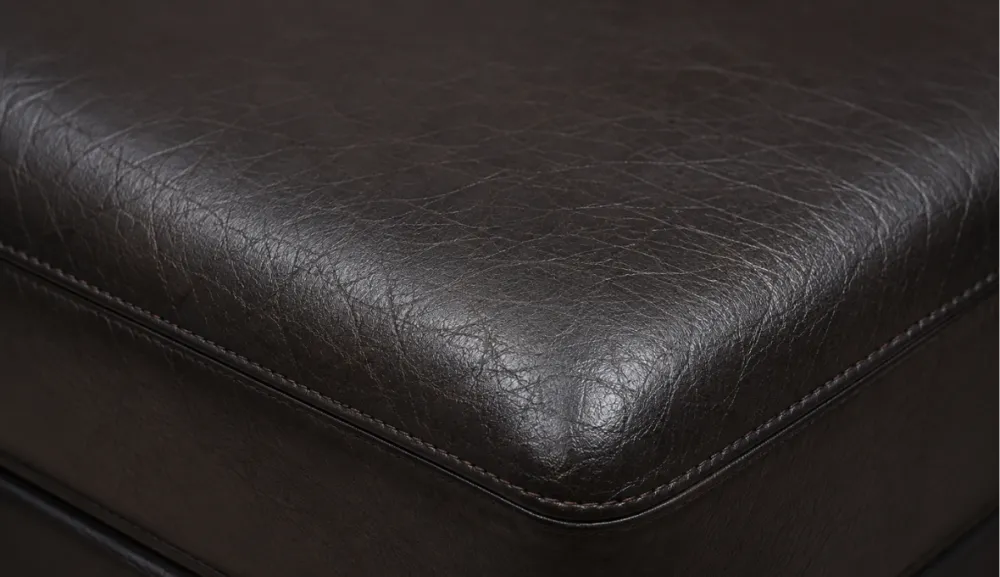
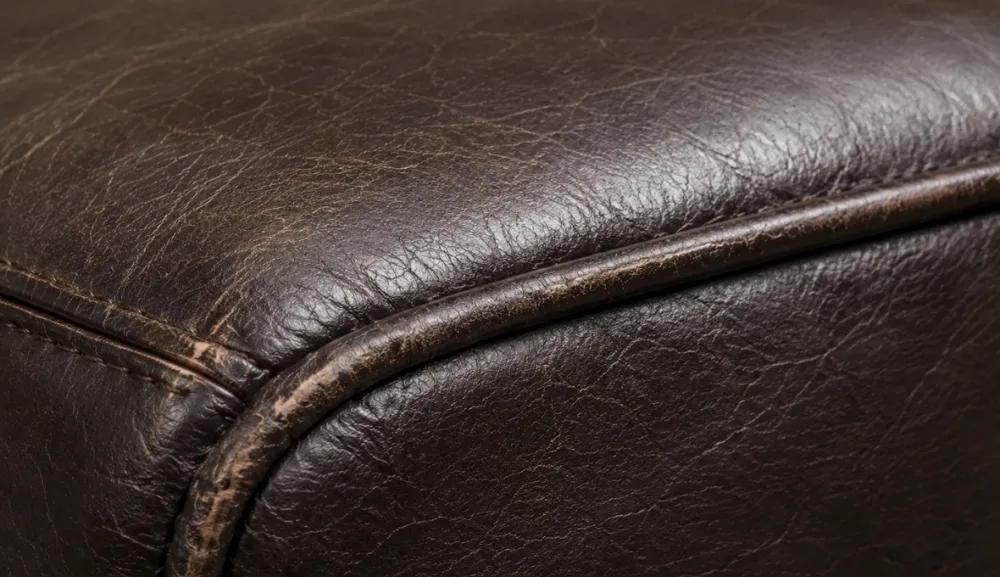
Seams & piping
Friction on a raised line.
Repair or Reupholstery? Find Your Condition
Not how ugly the damage is, but how much of the material is involved.
Lane A
Repair territory
-
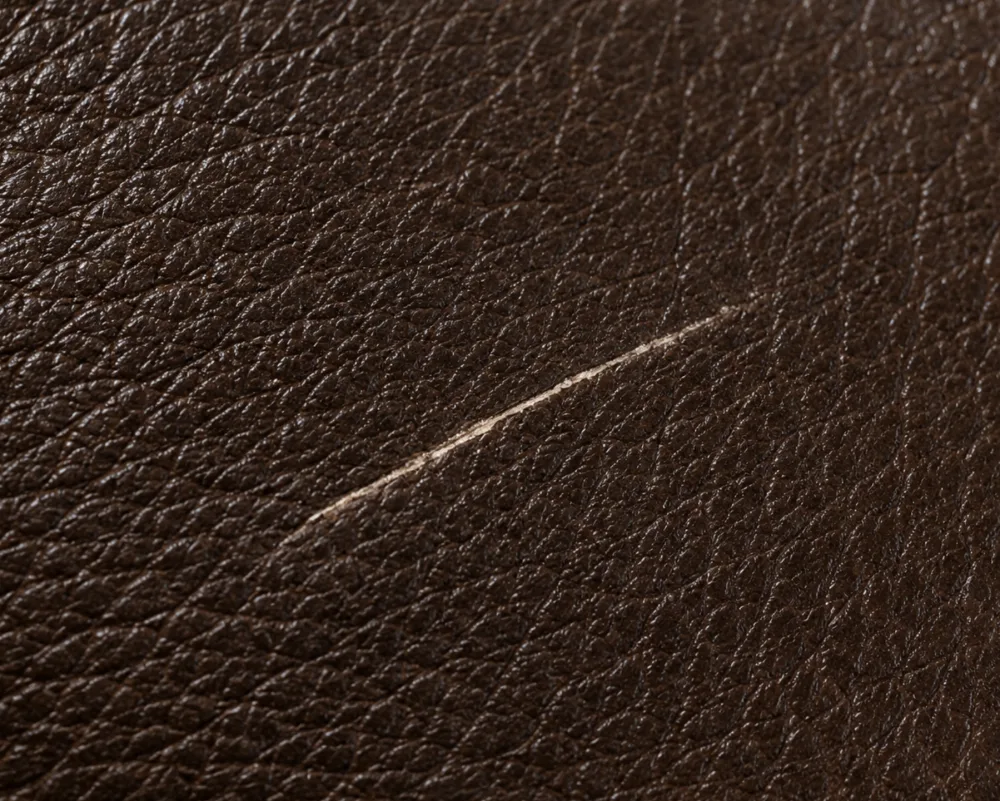
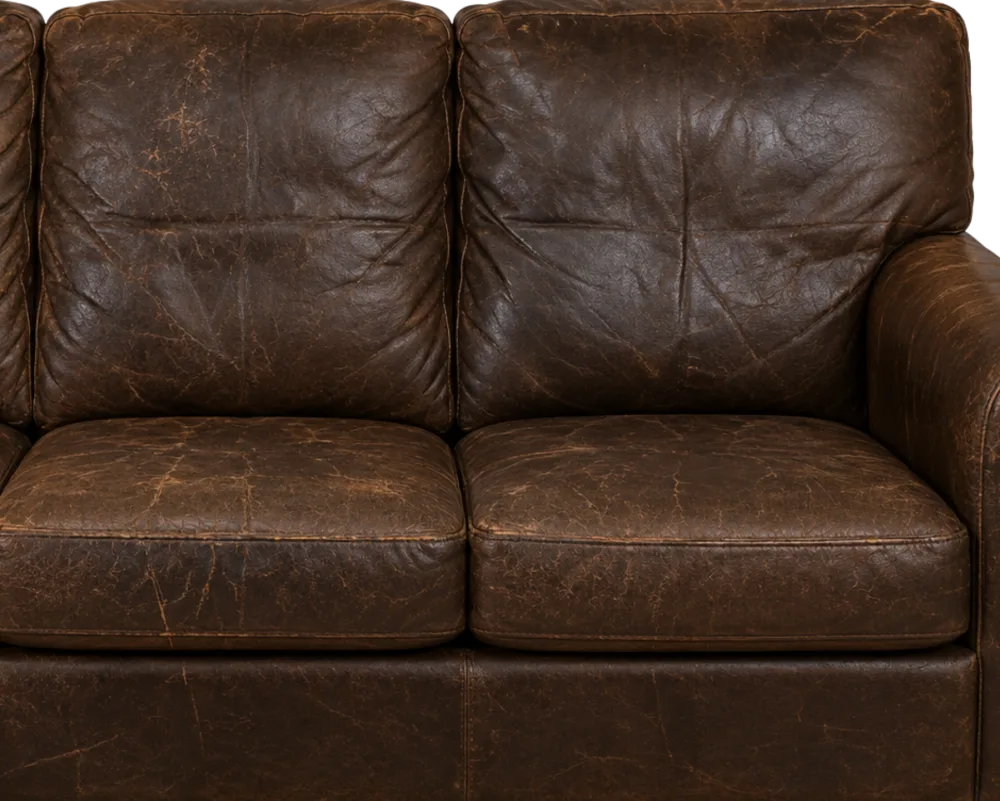
Small isolated scratch, surface still attached
Repair
-
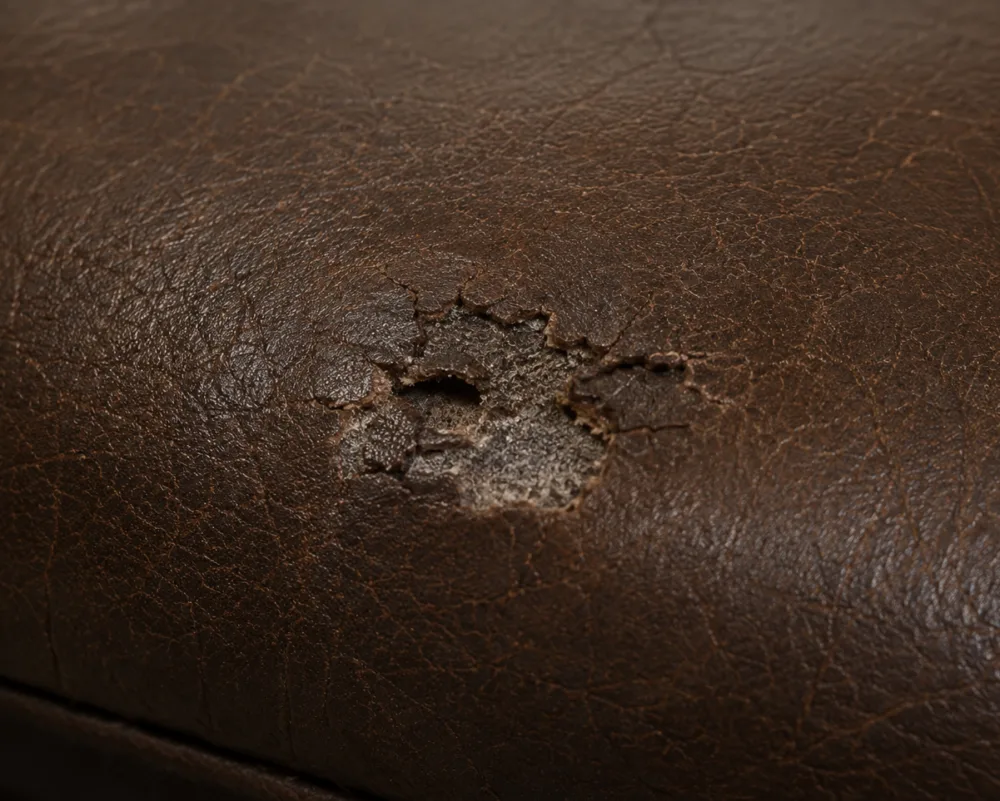
Small localized damaged area, not spreading
Evaluate
-
One failed panel, everything else sound
Panel swap
Lane B
Reupholstery territory
-
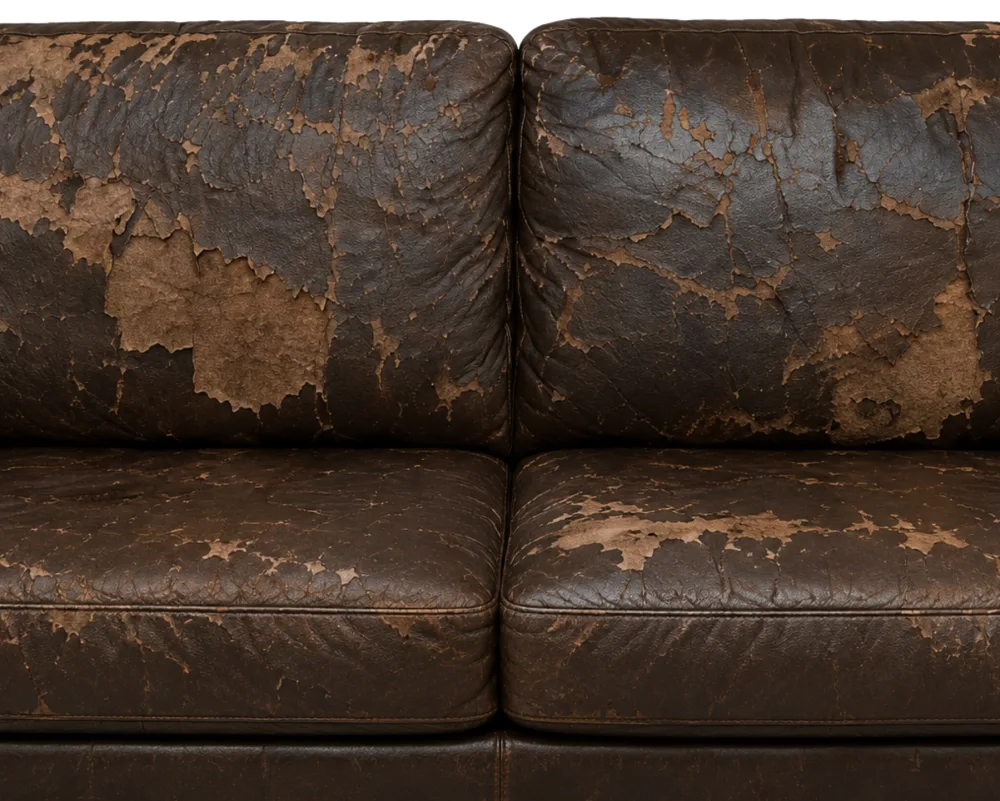
Multiple cushions peeling at once
Reupholster
-
Widespread flaking, backing showing through
Reupholster
-
Material failing throughout the whole piece
Full evaluation
Which Service You Actually Need
Four routes out of this page. Which applies depends on the assessment.
 01
Crack & Peeling Repair
Localized, stable damage with sound material around.
See the service
01
Crack & Peeling Repair
Localized, stable damage with sound material around.
See the service
 02
Color Restoration
Fading and color loss, surface still attached.
See the service
02
Color Restoration
Fading and color loss, surface still attached.
See the service
 03
Full Reupholstery
The durable answer to widespread delamination.
See the service
03
Full Reupholstery
The durable answer to widespread delamination.
See the service
 04
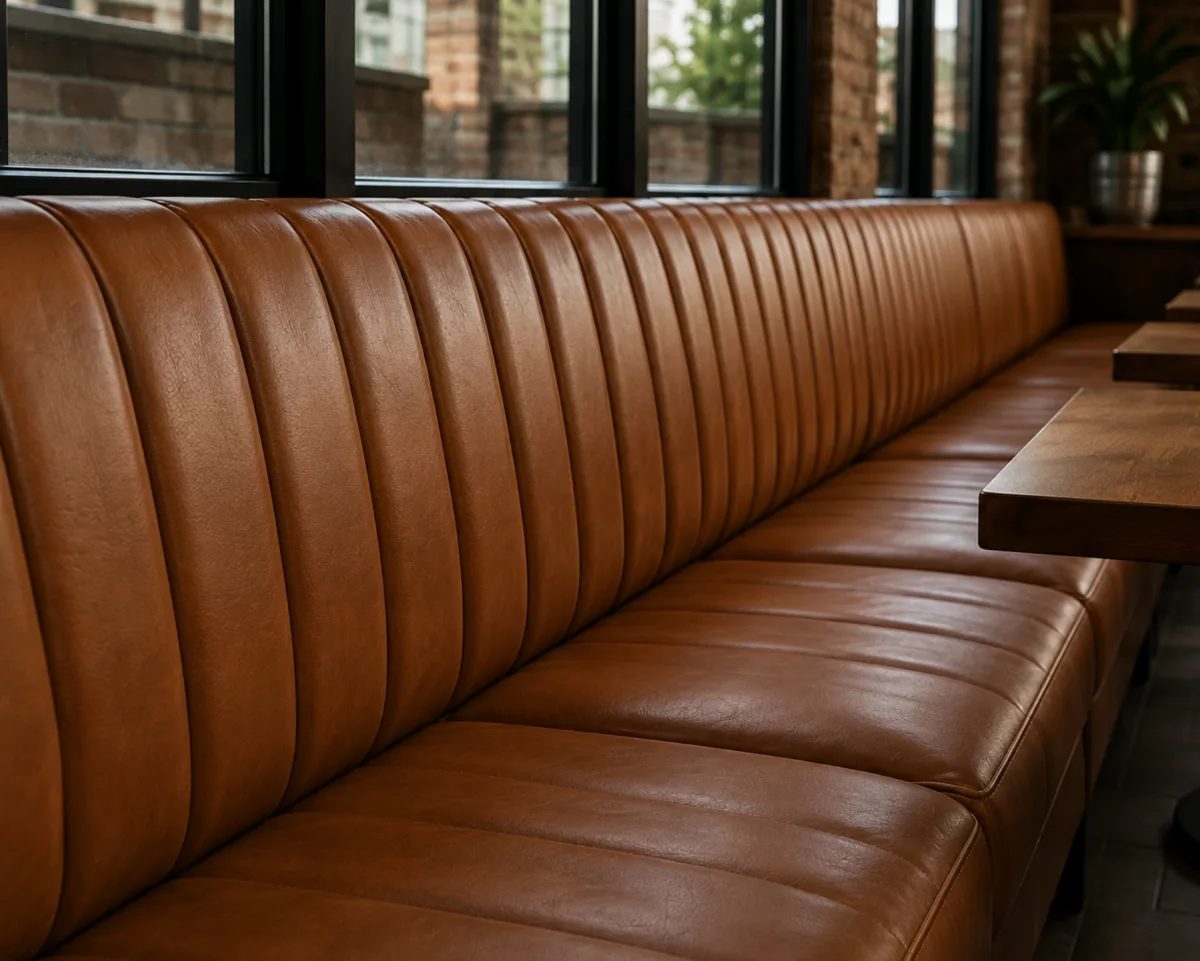
Commercial Reupholstery
Offices and hospitality, many pieces at once.
See the program
04
Commercial Reupholstery
Offices and hospitality, many pieces at once.
See the program
Identify the material before anyone treats it — the wrong route is the expensive one. Restoration trades work to published standards; the IICRC certifies against them.
Bonded Leather vs. Vinyl vs. PU Faux Leather
These three get called the same things in listings, in showrooms and in repair quotes — “faux leather,” “leatherette,” “pleather,” “bonded.” They are different constructions, and the difference matters once something has to be repaired or replaced.
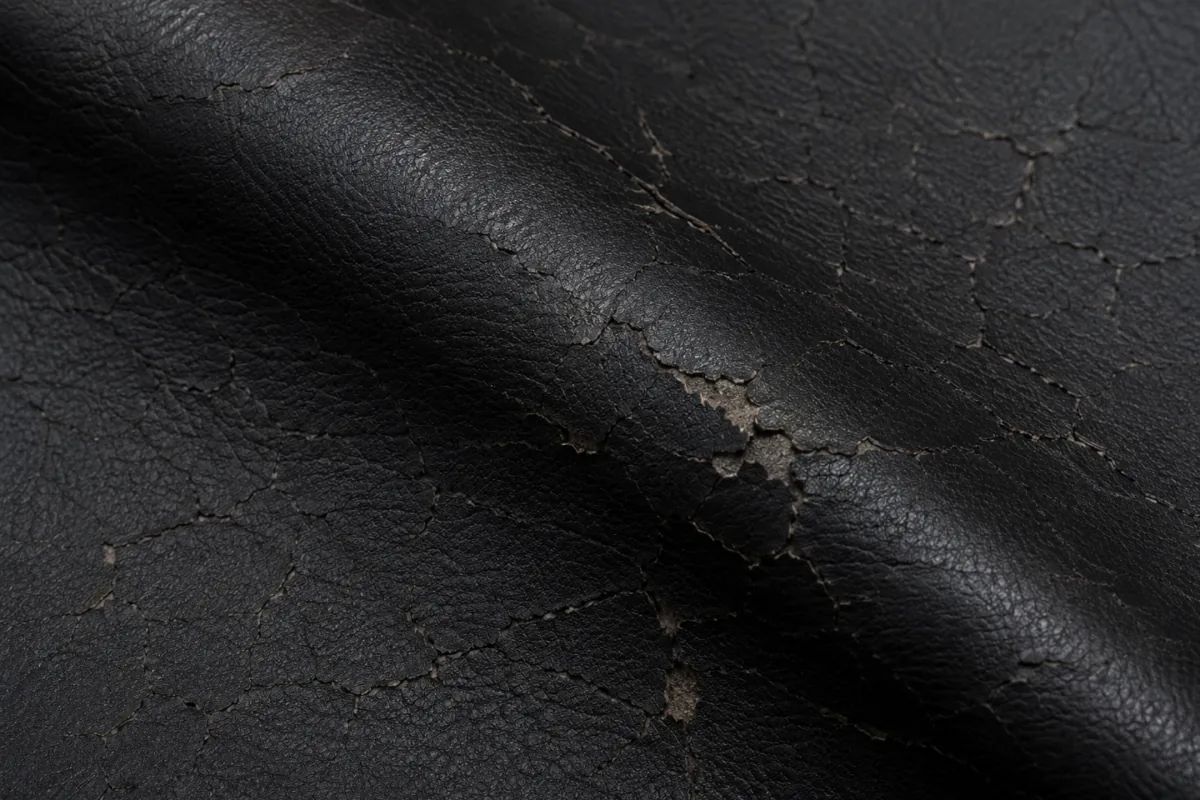
Bonded Leather
A manufactured surface built over a composite of processed leather fibers, on a backing. Assembled from separate materials.
- Sold as
- Bonded · blended · reconstituted
- Leather
- Yes — as fiber
- Fails by
- Layers separating
Construction
Color finish Polyurethane surface Leather-fiber composite Backing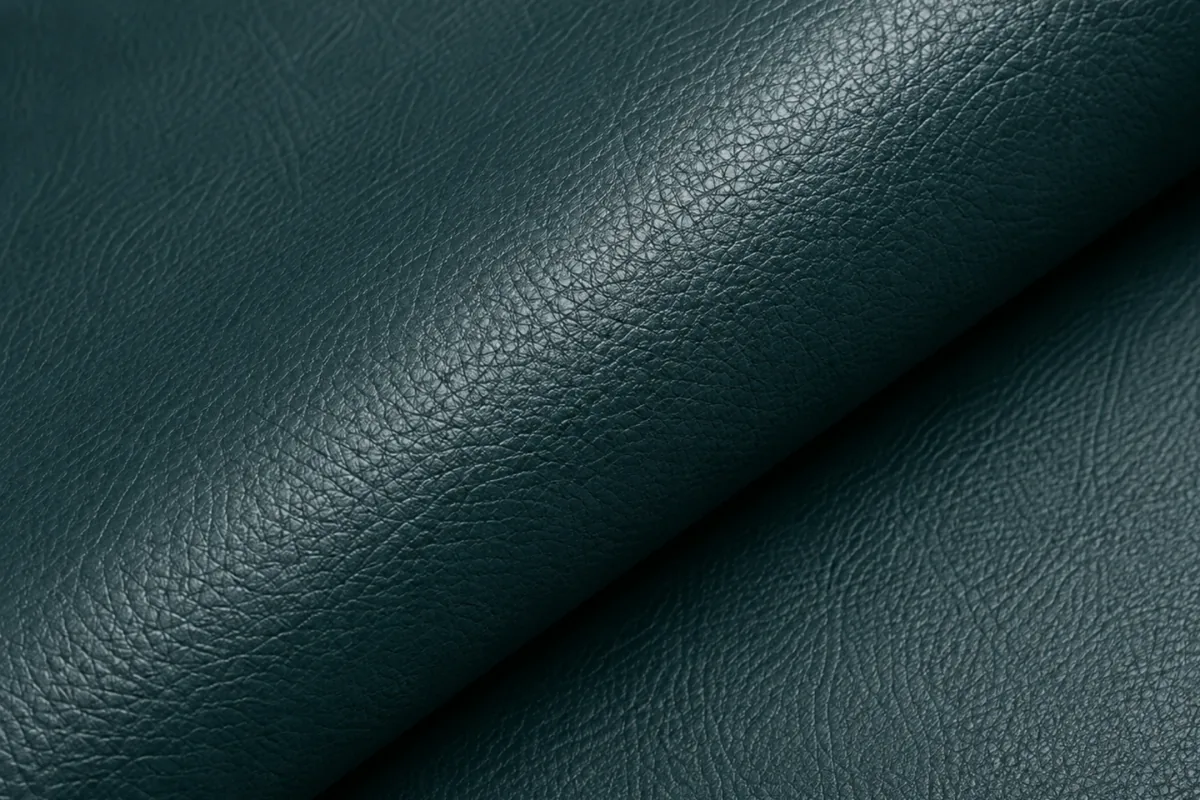
Vinyl / PVC
A vinyl surface system on a textile backing. Durable, wipeable, and the standard in commercial seating.
- Sold as
- Vinyl · leatherette · PVC
- Leather
- None
- Fails by
- Surface cracking, splitting
Construction
Vinyl surface system Textile backingNo leather layer
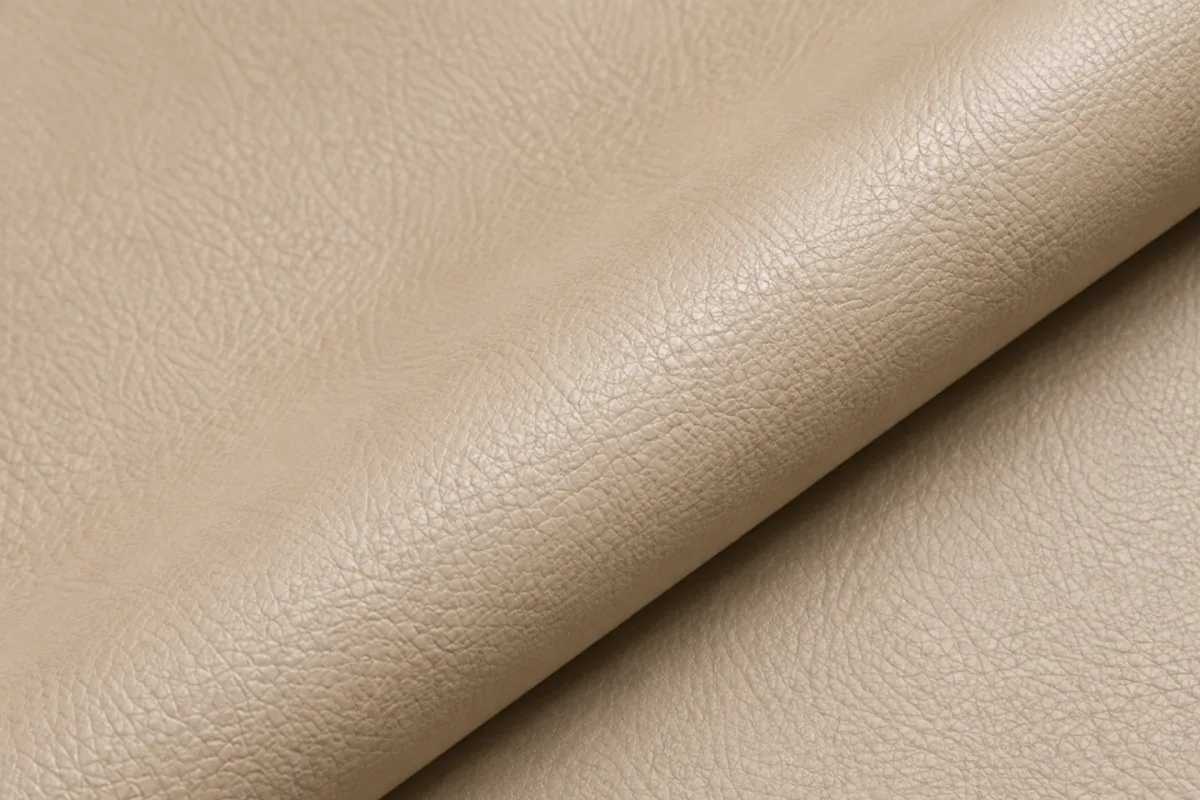
PU Faux Leather
A polyurethane surface on a textile base. Softer in hand than vinyl, and the closest visual match to real leather of the three.
- Sold as
- Faux leather · pleather · PU
- Leather
- None
- Fails by
- Surface cracking, flaking
Construction
Polyurethane surface Textile backingNo leather layer
Only one of these three has a leather layer — and it is still the one that comes apart. That is the trap in the name. “Contains real leather” is true of bonded leather and says nothing about how it will wear. Correct identification means examining the surface, the backing, a damaged edge and the cross-section — never a listing description. The other two have their own pages: vinyl and faux leather.
Bonded Leather Questions
What is bonded leather?
Bonded leather is an engineered upholstery material: processed leather fibers held with binders under a polyurethane film and a color coat, over a backing. It is a layered construction rather than a continuous hide, which is why it fails differently.
Is bonded leather real leather?
It contains real leather fibers, but it does not behave like a hide. The surface you sit on is a manufactured coating over a fiber composite. How such products may be described is governed by the FTC’s Leather Guides, which is why “contains leather” can be true and still tell you nothing about how the piece will wear.
Why is my bonded leather sofa peeling?
Bonded leather peeling is delamination — the surface layer loses its grip on the material beneath. Flexing, body heat, friction, oils and age produce micro-cracking, then lifting, then flaking. It starts where the piece is used most, so one cushion or armrest usually fails first; a seat that still looks fine is earlier in the same sequence, not a different material.
Can bonded leather peeling be repaired?
It depends how much of the material is failing. A small, stable area may take a localized repair. Once multiple cushions or panels are actively peeling, patching is not durable, and panel replacement or reupholstery makes more sense.
Can you paint or recolor over bonded leather peeling?
No. Color restoration corrects color; it cannot reconnect a layer already separating from its substrate. A coating never reaches the bond that let go — it rides on the loose layer and leaves with it.
Should I pull off the loose flaking pieces?
No. Pulling at loose coating enlarges the damaged area and removes material that was still attached. Leave it alone and send close-up photos plus one of the whole piece.
Peeling Does Not Always Mean the Piece Is Finished
Send photos. We tell you whether it is a repair, a panel swap or reupholstery — before anything is scheduled.