
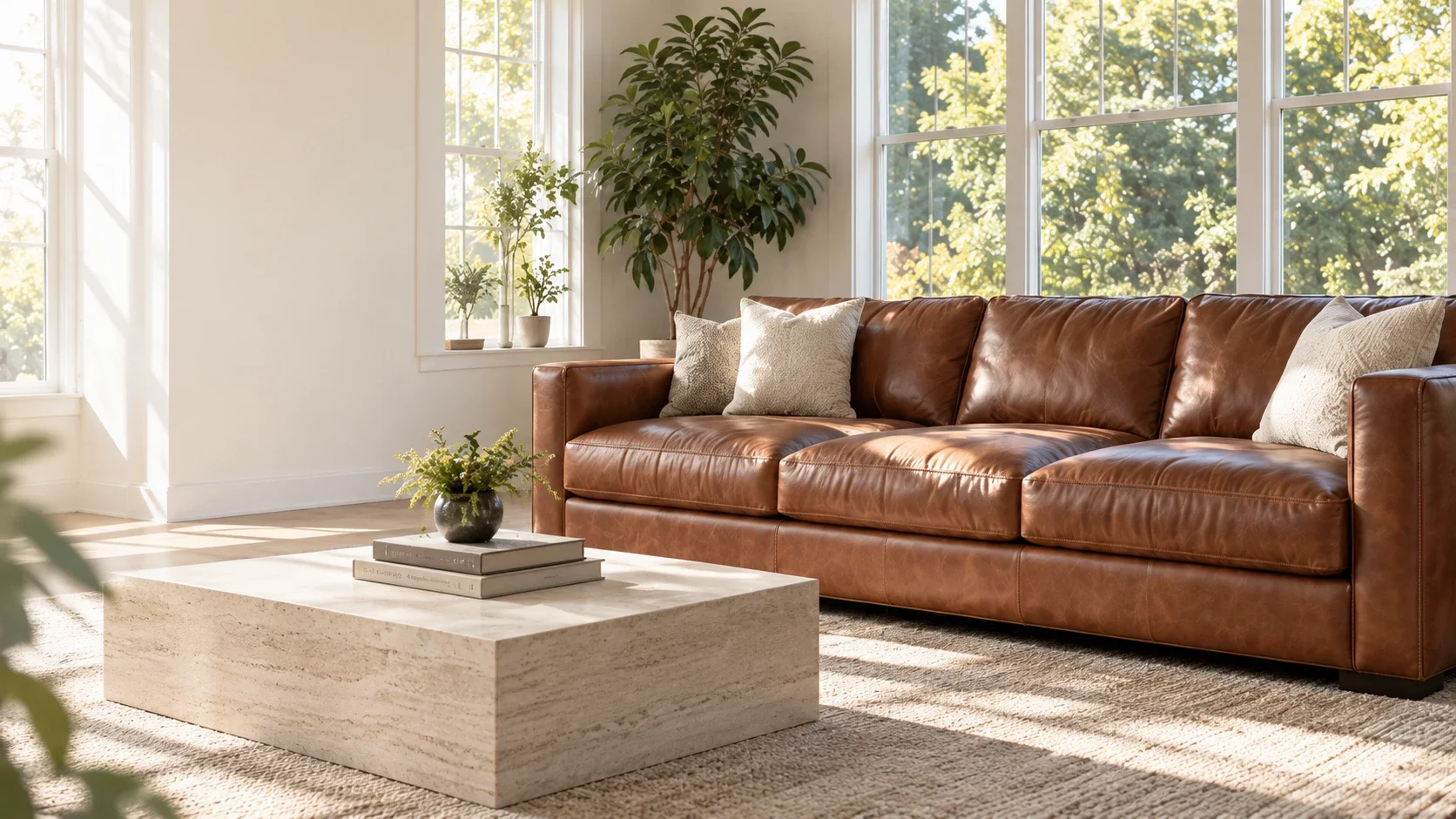
The Finish Wears Out So The Hide Does Not
Leather protection is a sacrificial layer. Spills, grit and sunlight land on it instead of the hide.
Keep The Leather You Love Looking Its Best
Leather protection keeps the surface looking the way it arrived.
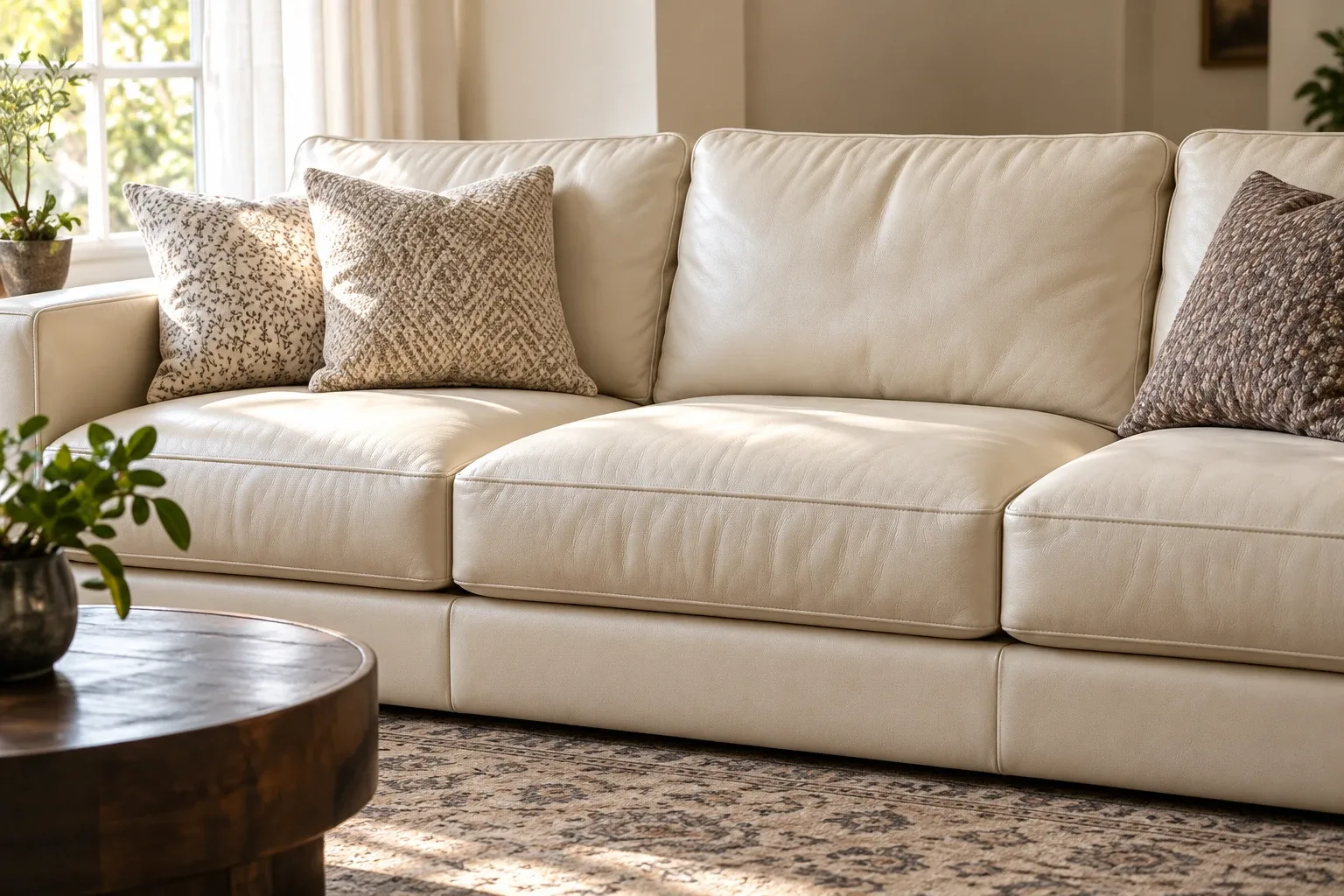
Everyday living, beautifully maintained.
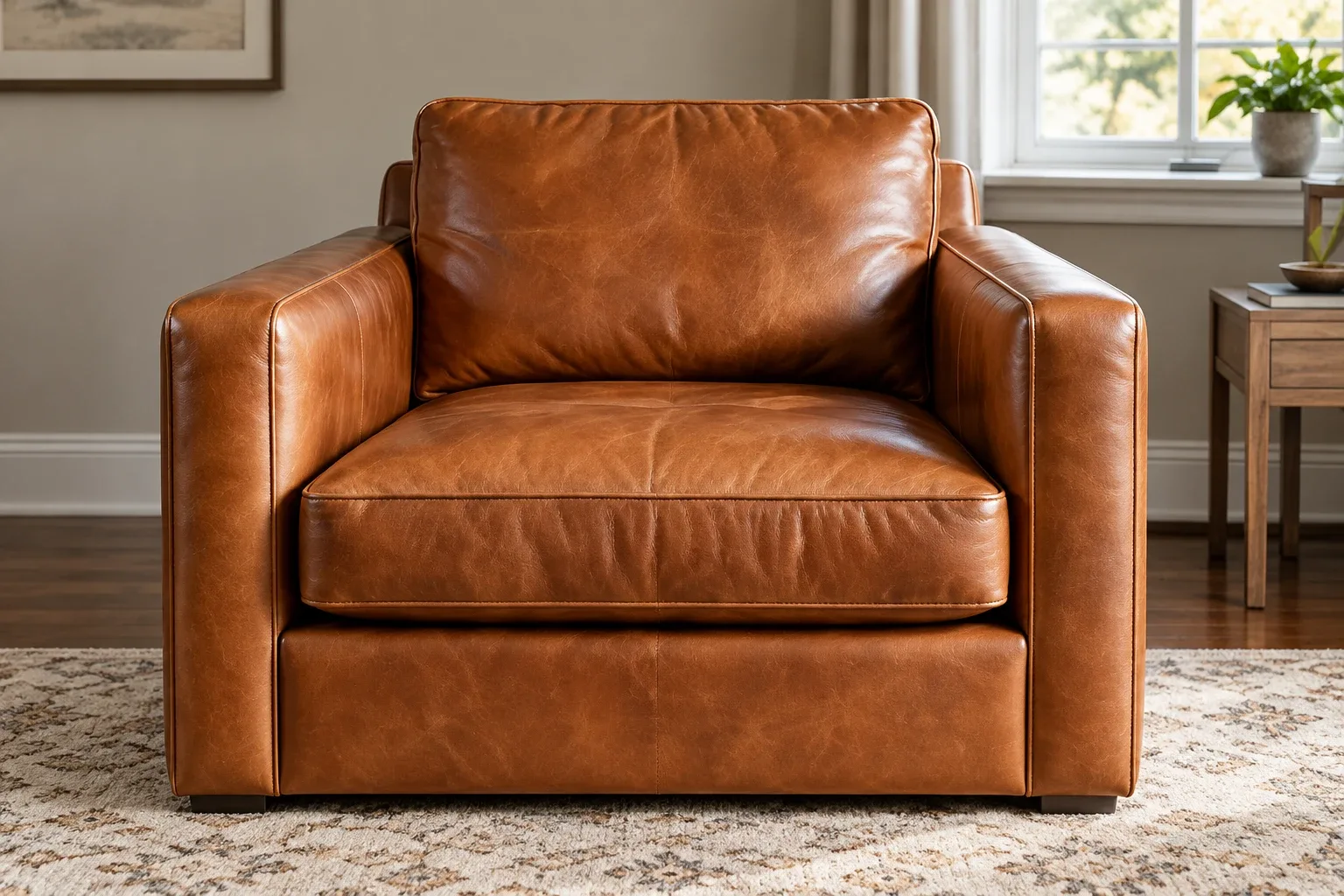
Timeless comfort, lasting looks.
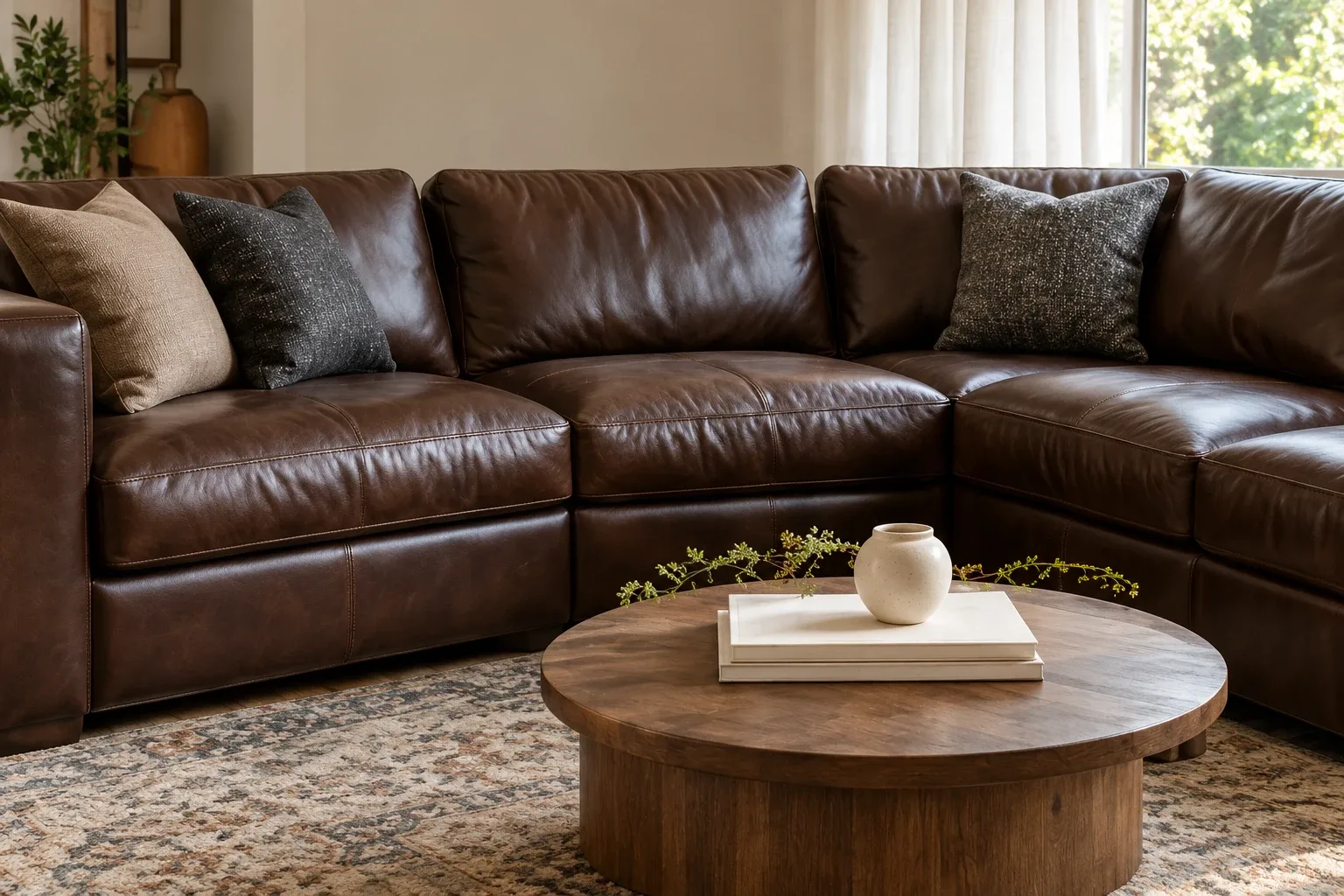
Where the family lands.
Put One Drop Of Water On It
One drop of water on a hidden panel tells you whether the leather protection is still working.
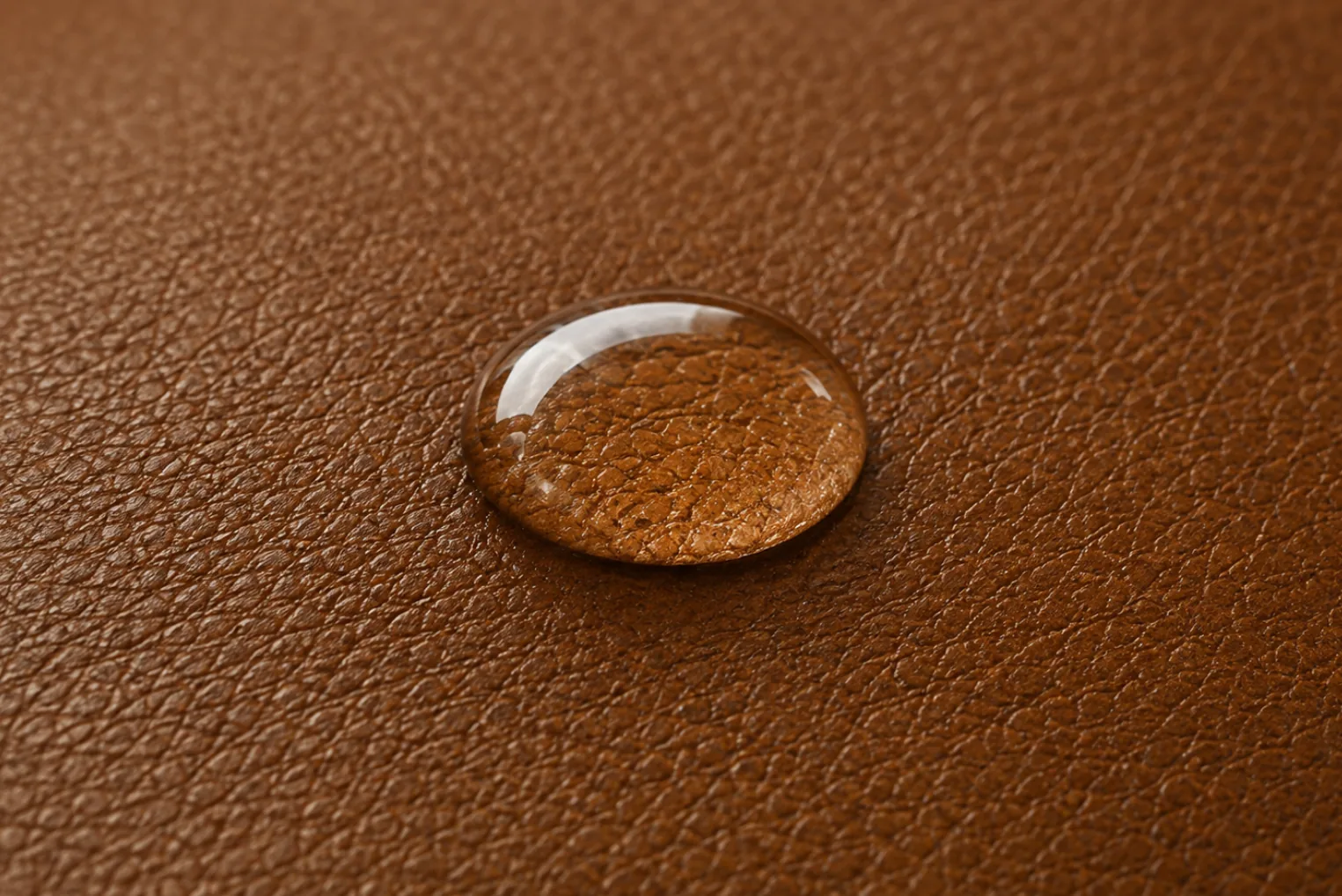
The drop stands proud with a clean edge. The coating is intact; leave it alone.
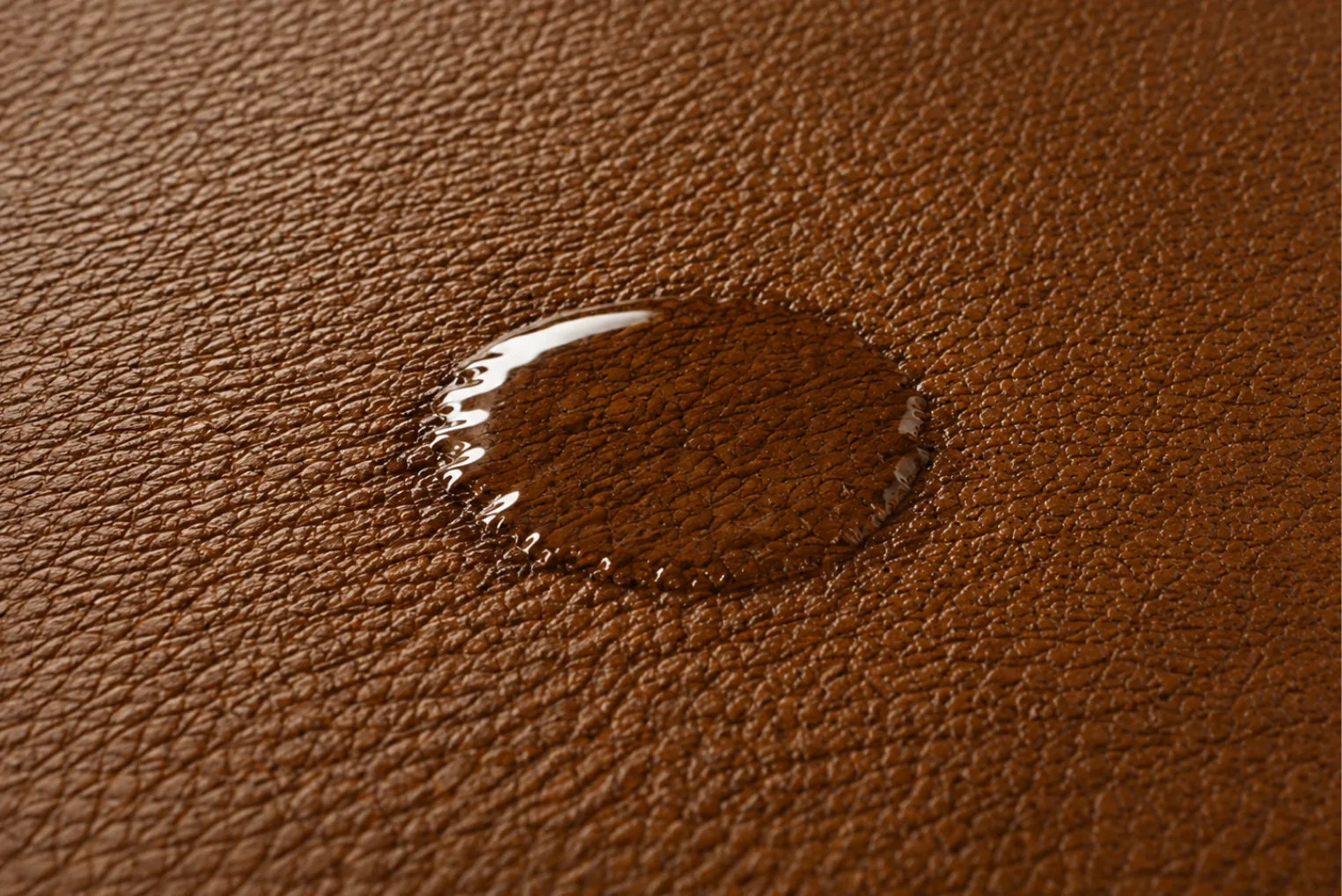
The edge has gone soft and the leather beneath is darkening. Worth renewing.
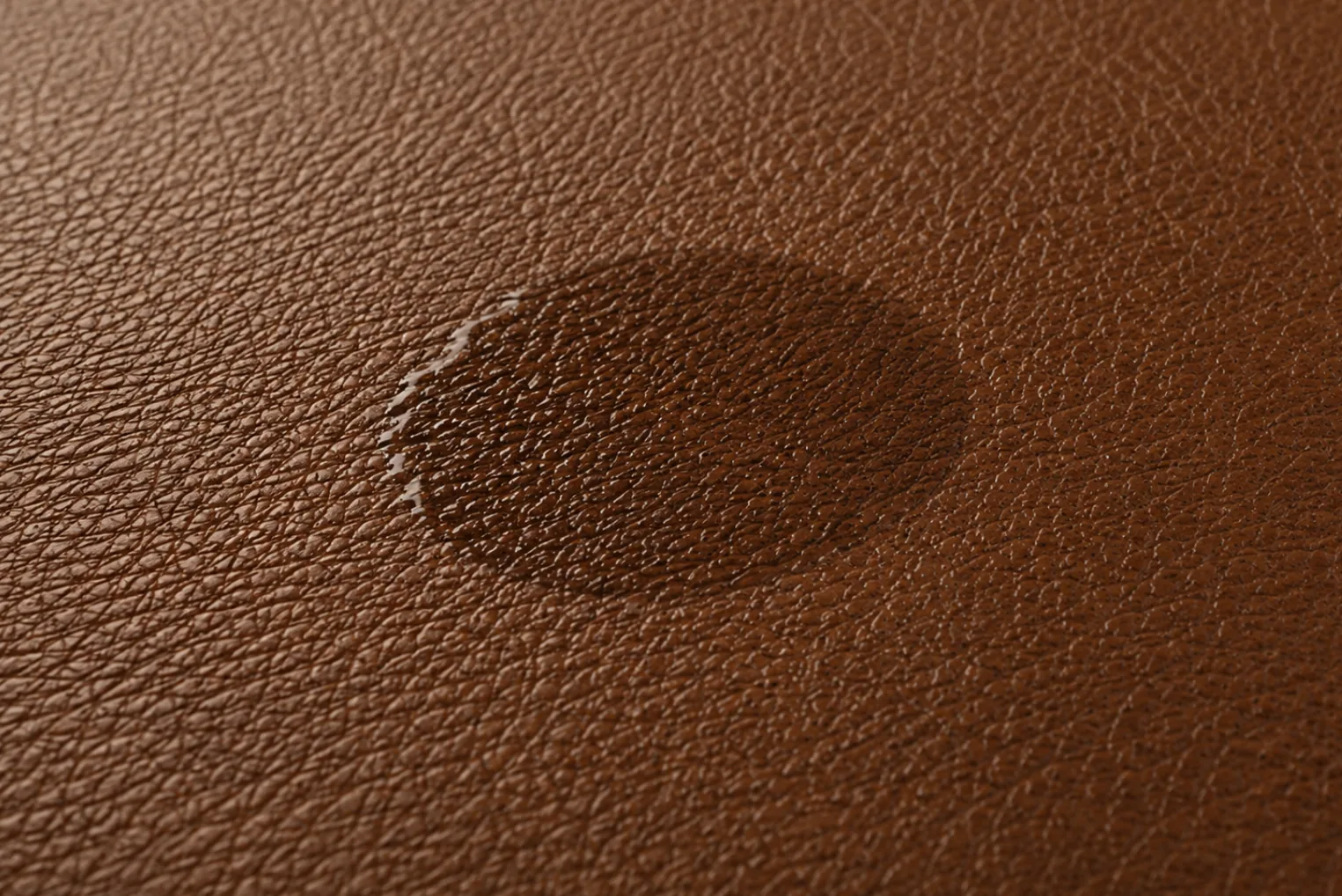
A dark patch and no drop left. Everything spilled reaches the hide.
Test the outside of an arm, never the seat you look at.
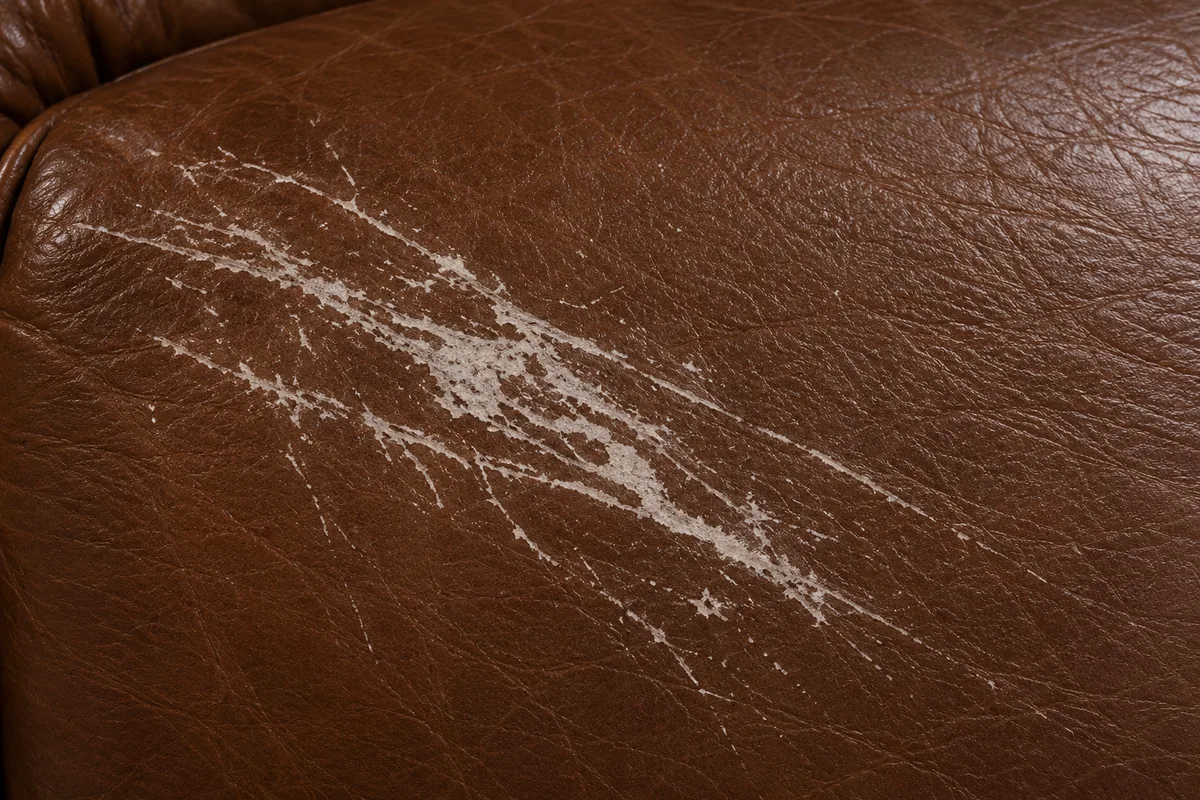
The Layer That Takes The Damage Instead
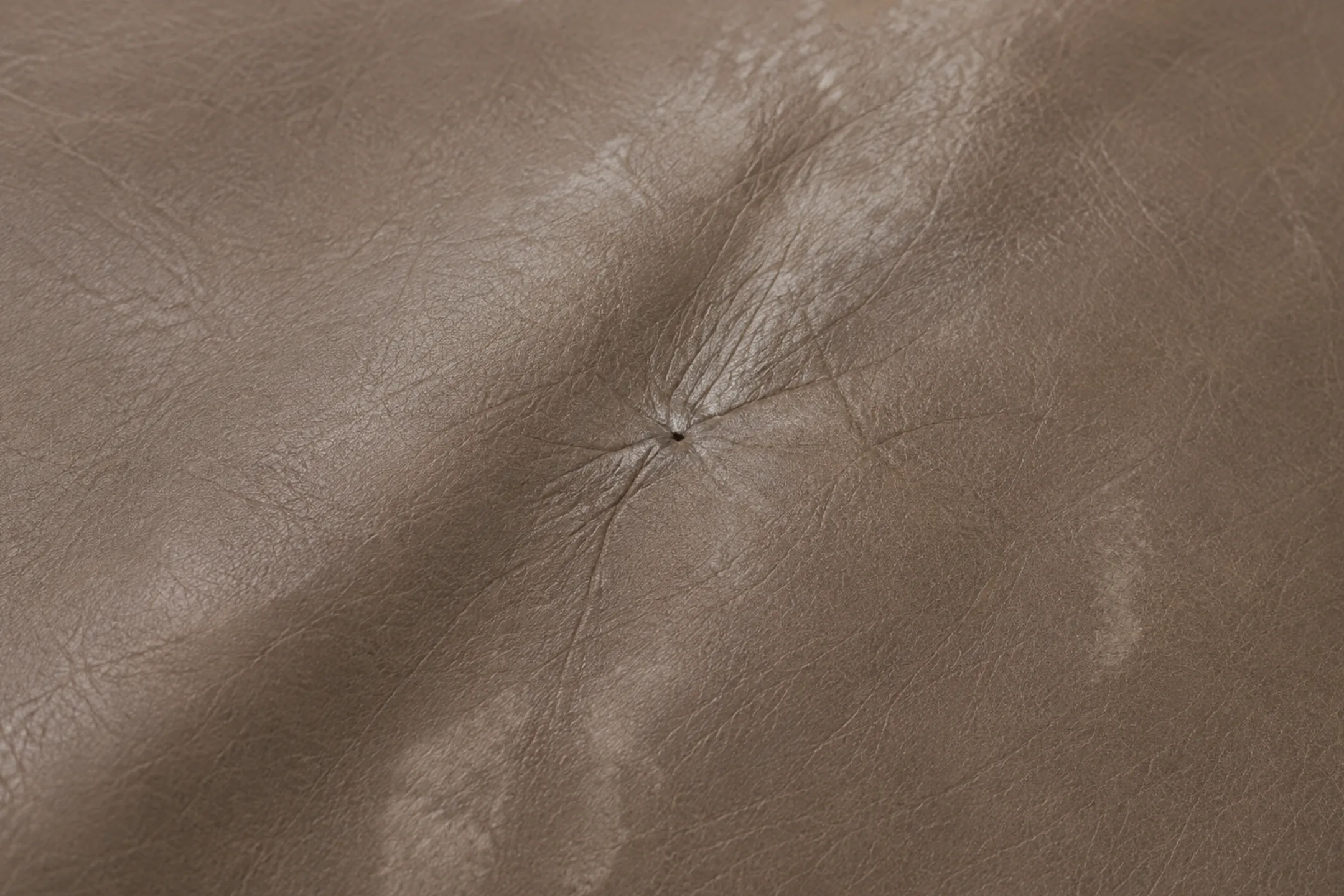
Most upholstery leather leaves the tannery with a clear coat over the colour. That coat is the leather protection you already paid for: a wearing surface, destroyed slowly so the hide is not.
The pale streak is a belt buckle dragged across an arm. The coating took the mark.
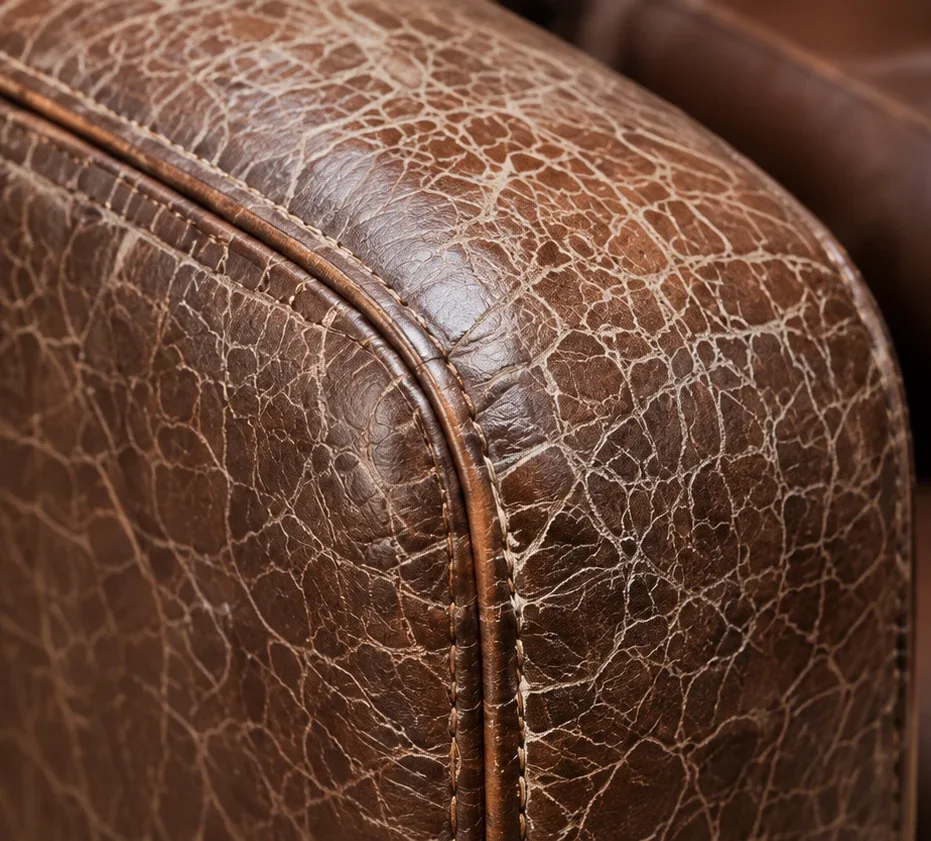
A worn coat is a surface repair; a worn hide is a reupholstery quote.
Protection Wears Off In An Order
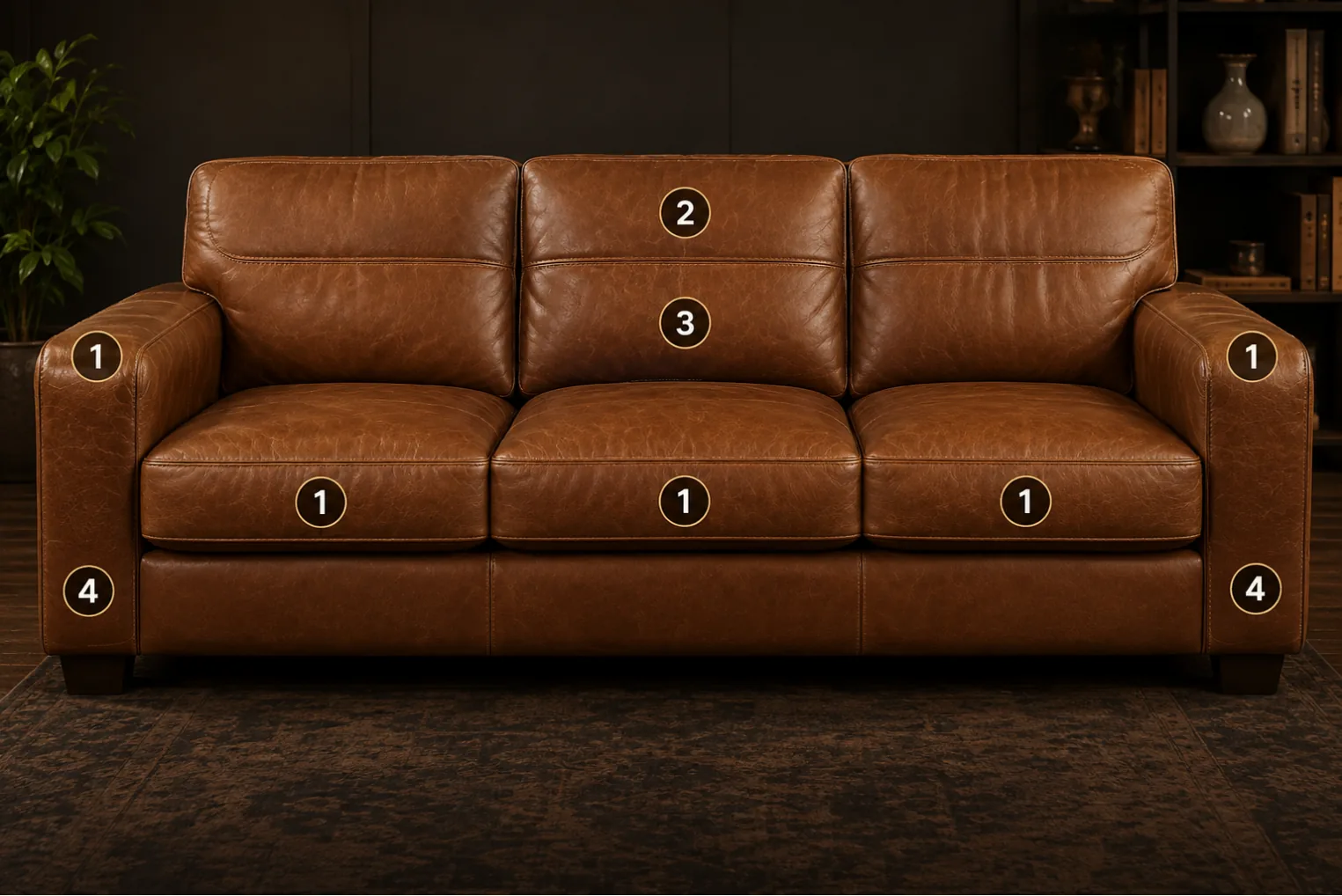
Leather protection fails where the body meets it. A sofa can look perfect from the doorway and be bare where you sit.
Weight and friction together. Always first.
Hair and scalp oils against one band every evening. Tacky before it goes thin.
Light contact, slow wear. Often sound when the seat beside it is bare.
Shoes, vacuum heads and pets. Abrasion rather than oil.
What A Topcoat Will Not Stop
Leather protection buys you the minutes it takes to reach a cloth. It is not a force field.
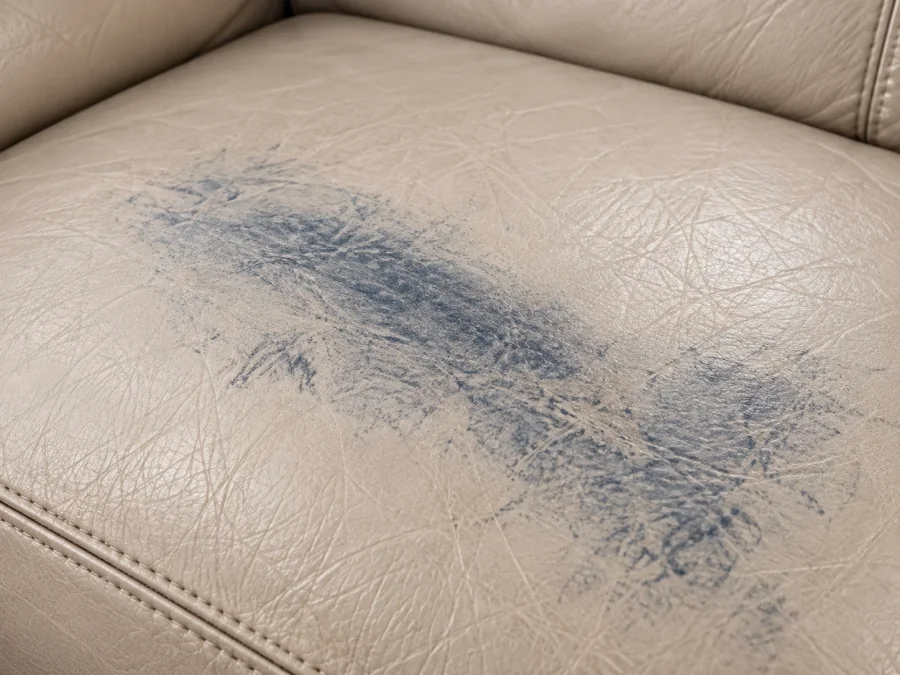
A slow transfer over months, not a spill. It goes through a thinning coat.
Pale leather and dark jeans beats most coatings. Dye transfer removal is its own job.
Solvent-carried under a pen tip. No protector stops it. Ink removal is separate.
Light goes straight through a clear coat. Blinds help; a coating does not. Faded leather repair
Every coating is a delay, not a seal. Given eight hours, wine finds a seam.
Claws, buckles and keys cut through microns of film. That is a structural repair.
Protection Starts With The Right Leather
Leather protection is not one product. We identify the finish and test on a hidden panel first.
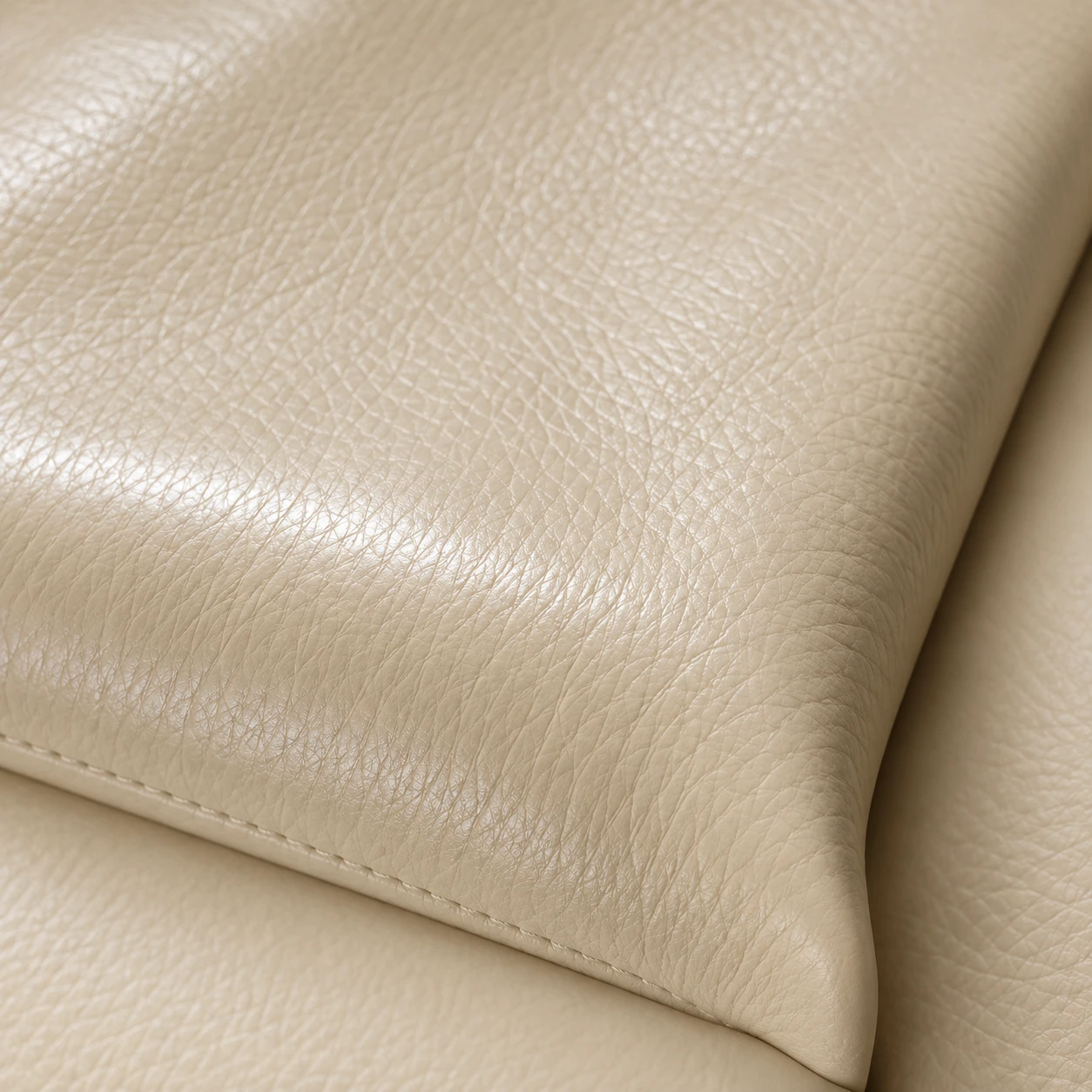
Colour under a clear coat. The most forgiving hide, where treatment lasts longest. About pigmented leather
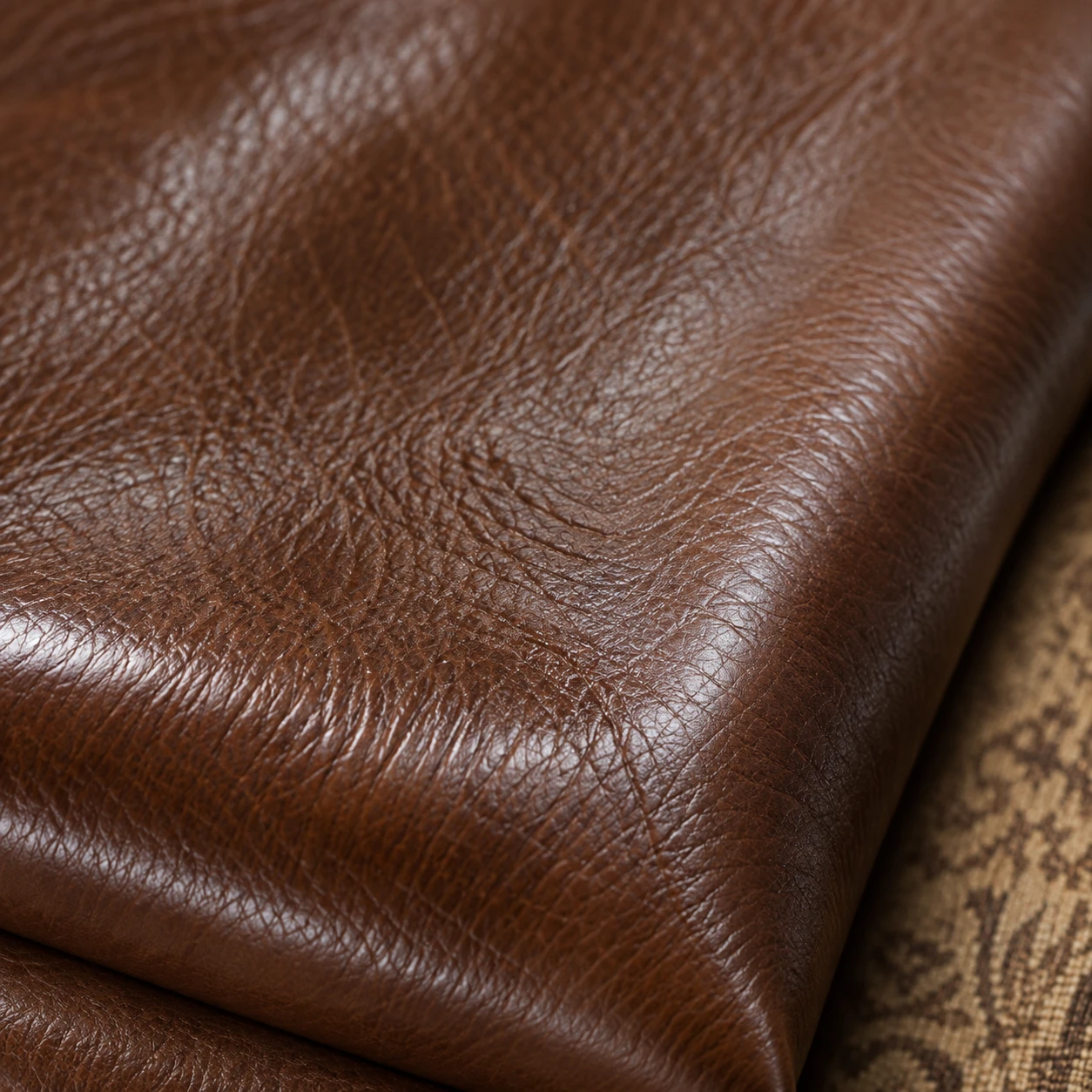
A thin finish over open grain, worn at the seat first. Treatment earns most here. About semi-aniline
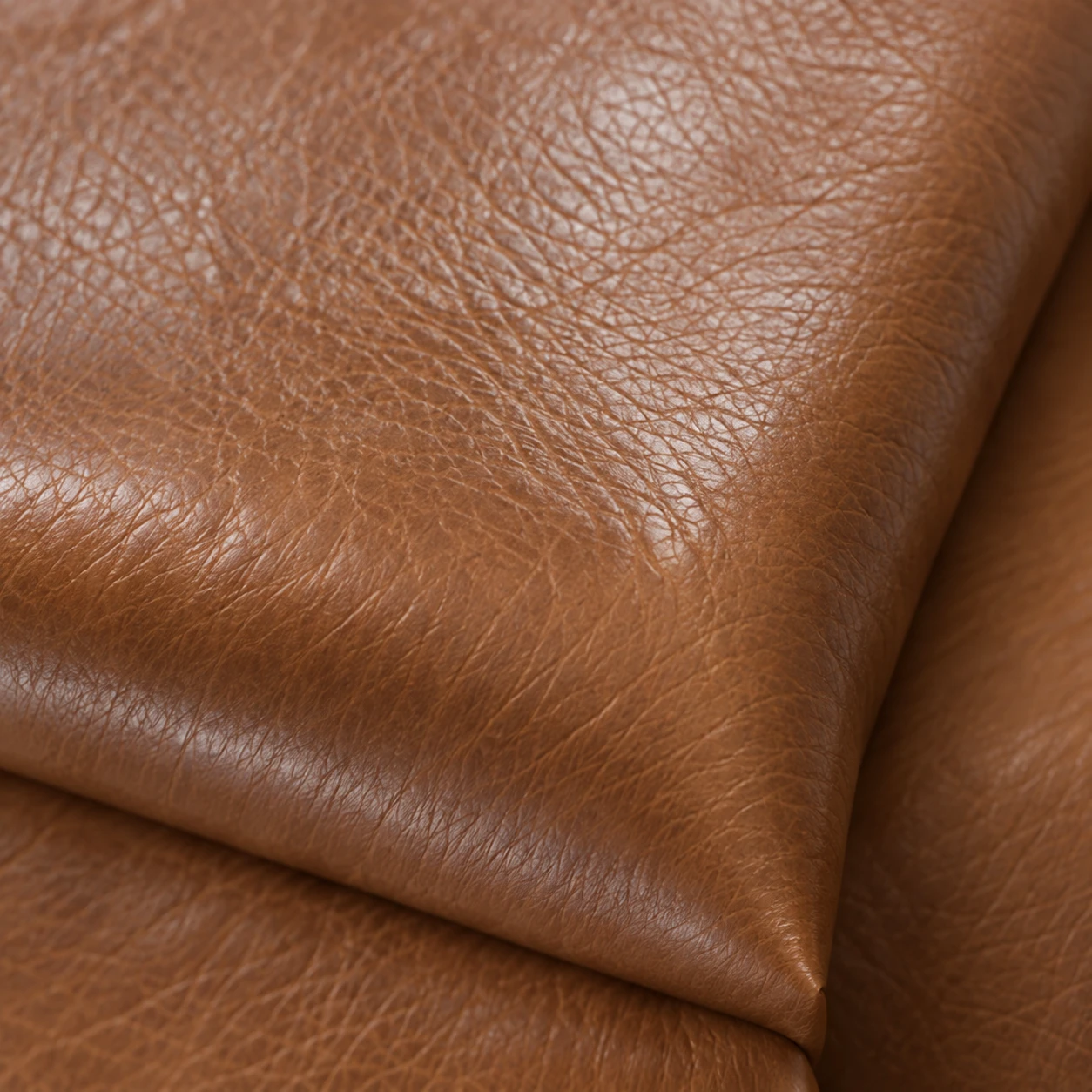
Dyed through with no topcoat. Nothing beads, everything marks. Breathable only. About aniline leather

A buffed nap with nothing sealing it. A film flattens the pile, so it takes a spray. About nubuck
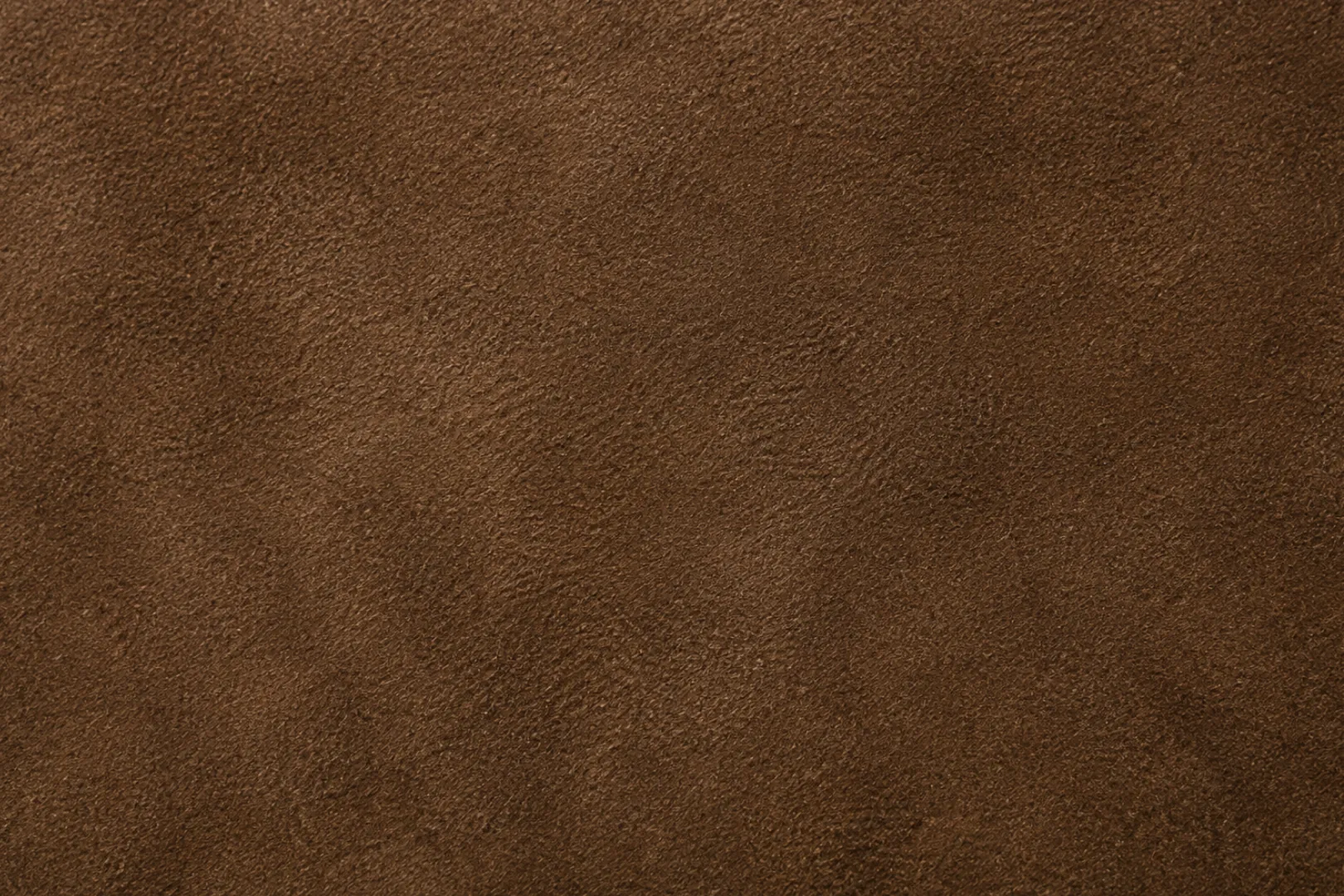
The split side of the hide, thirstier than nubuck. Breathable only, never a film. About suede
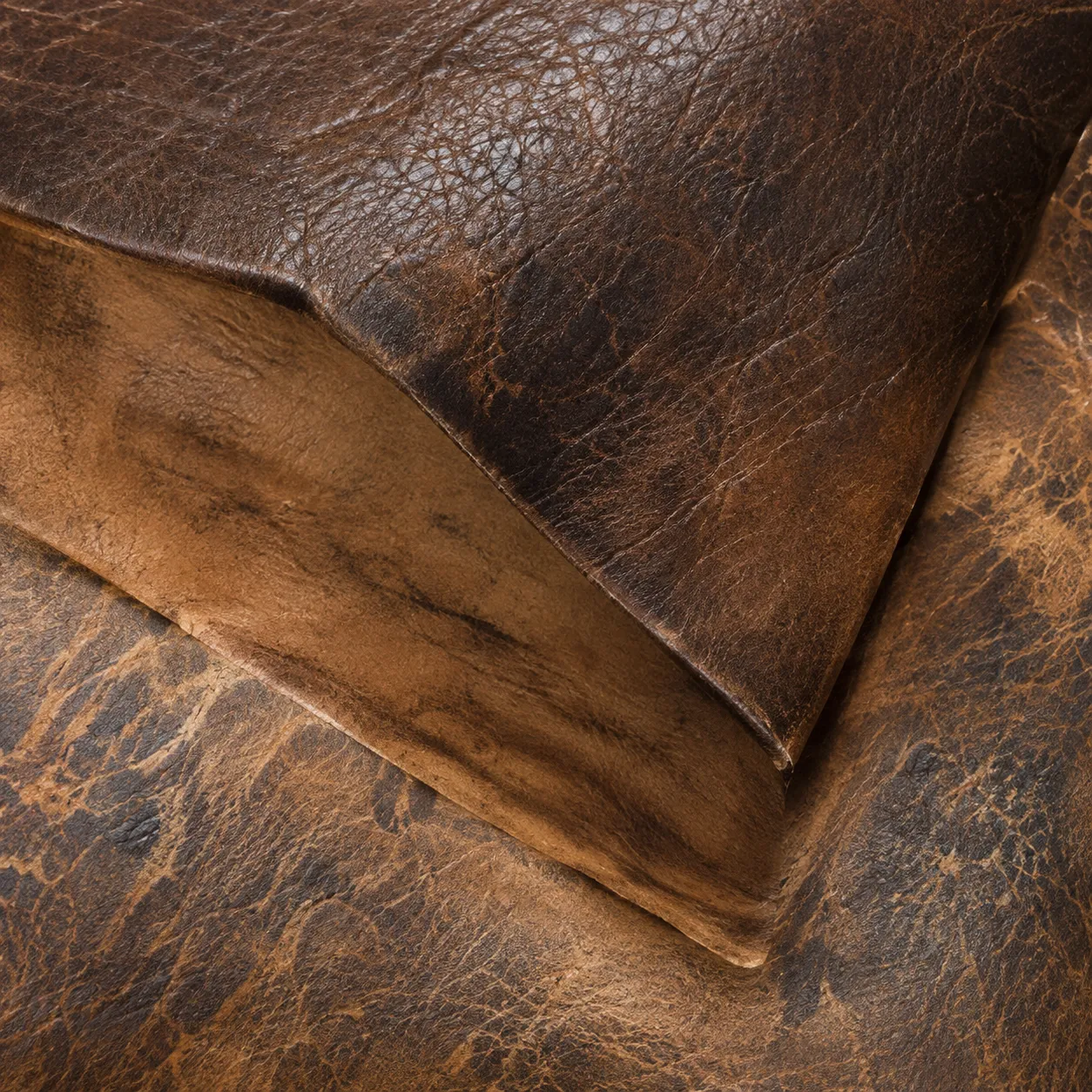
Pull-up, waxed and distressed hides are meant to mark as they age. We treat them lightly.
Clean First. Protect Second.
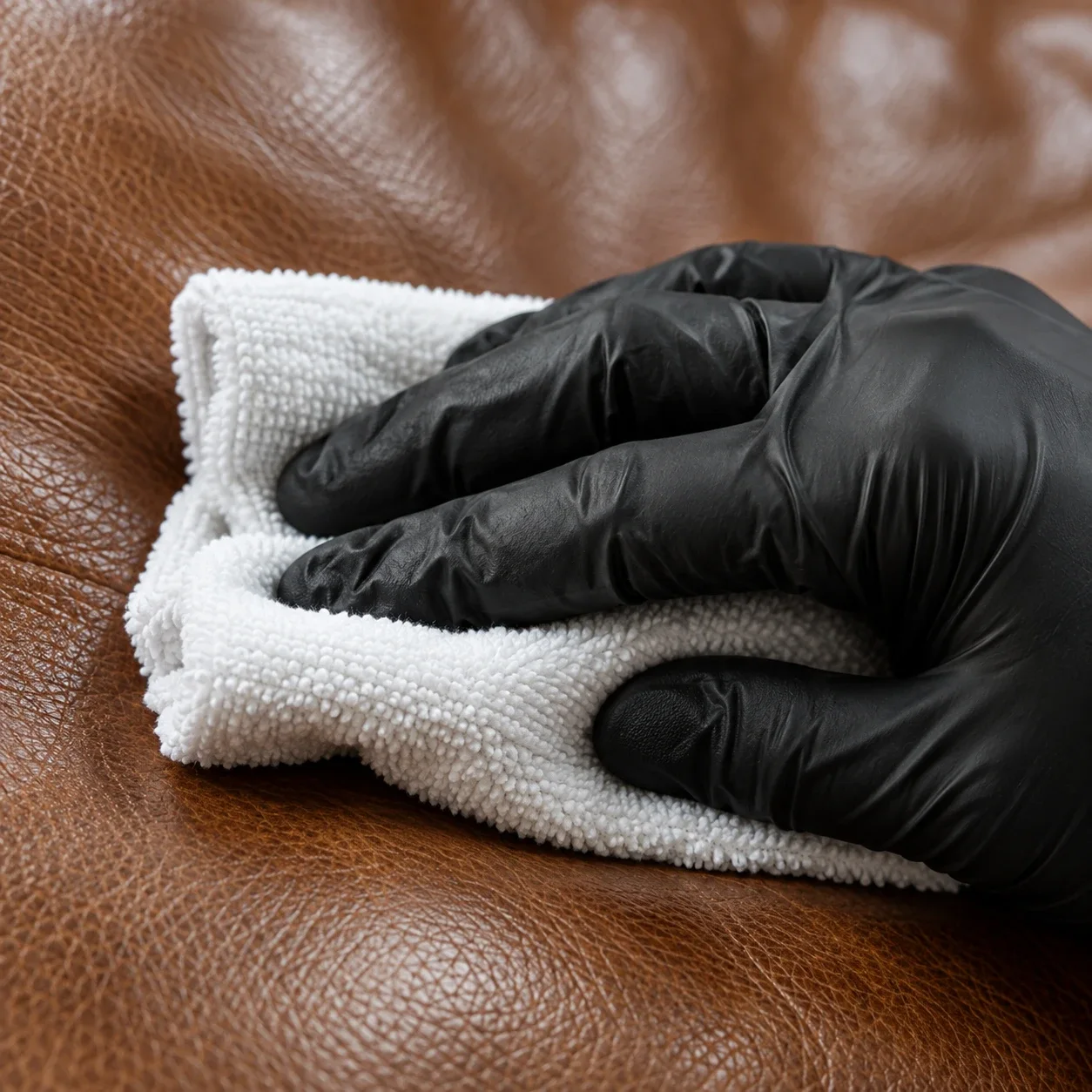
Leather protection is a two-part visit, in the order that works. Coat over grime and you seal it in.
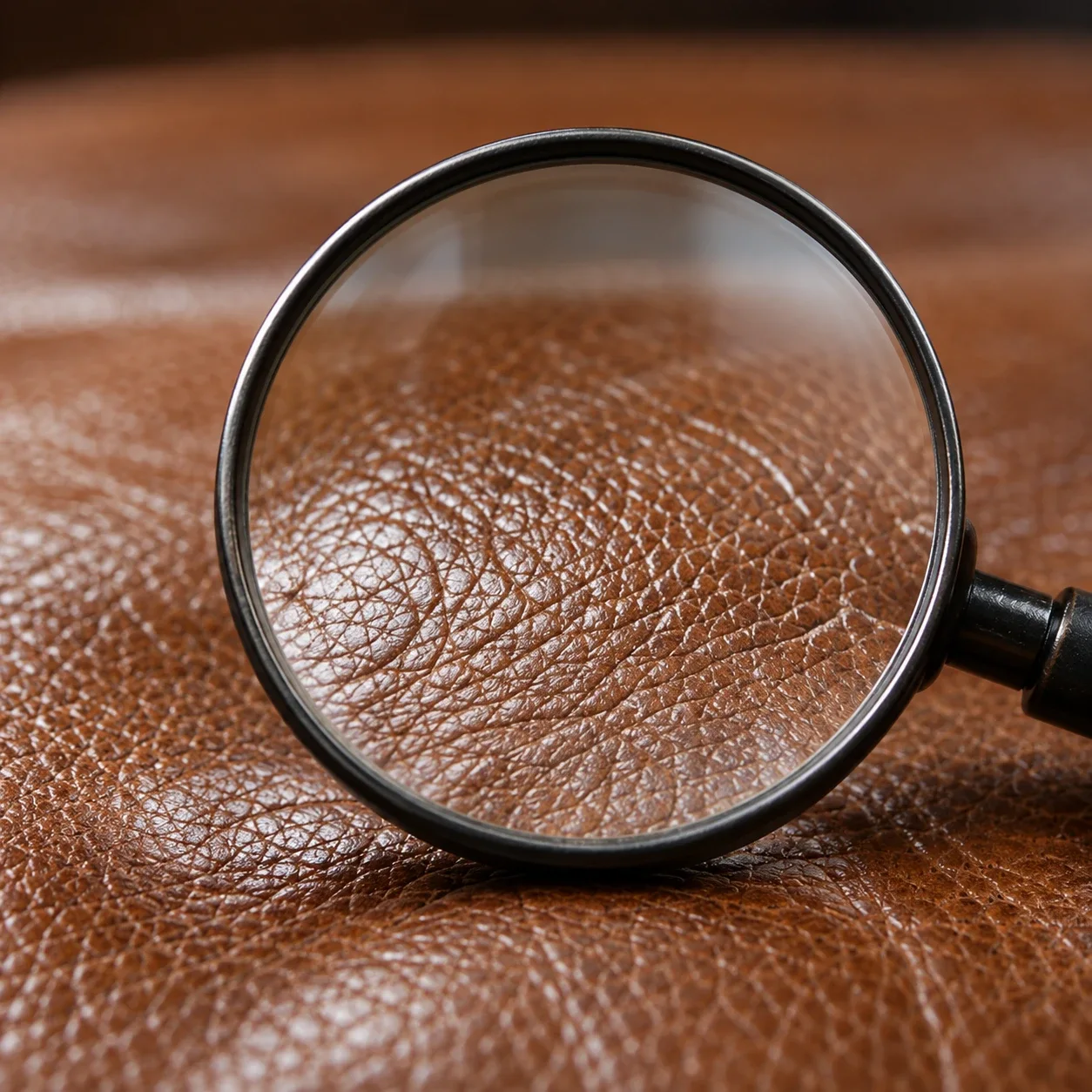
The drop test on a hidden panel, plus a look at the grain.
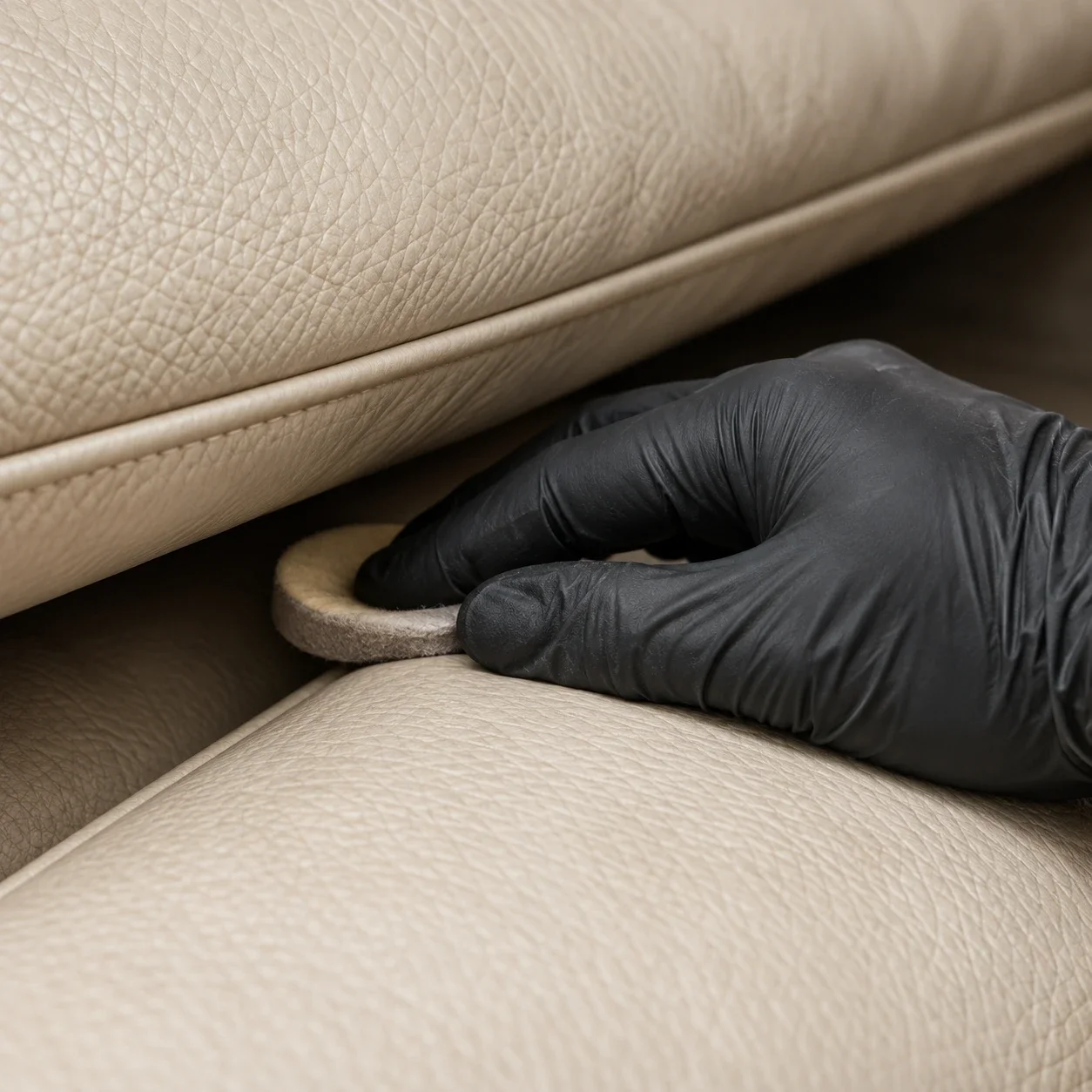
It goes somewhere nobody looks, so colour and sheen are proven first.
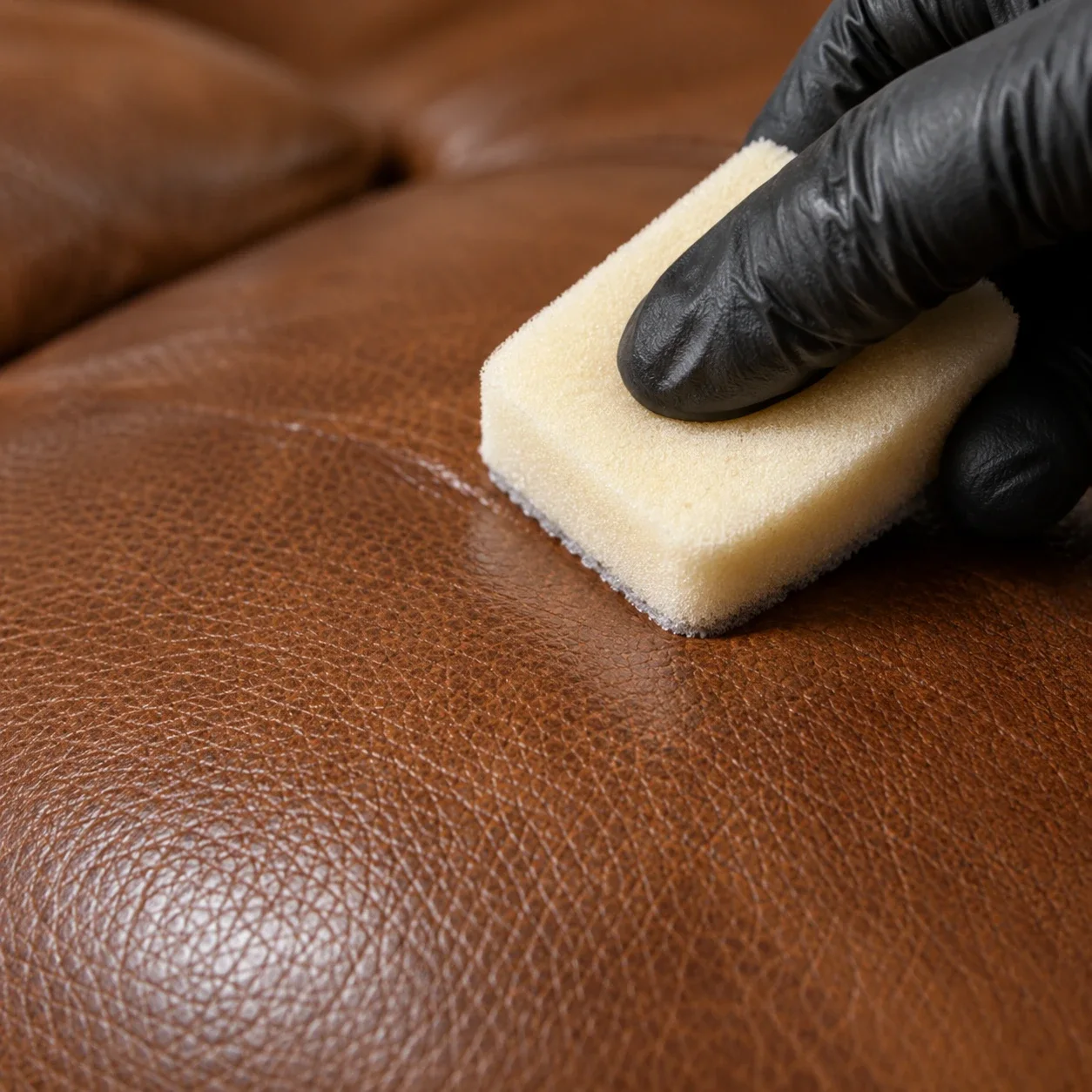
Thin passes, matched to the leather, sheen checked against an untouched panel.
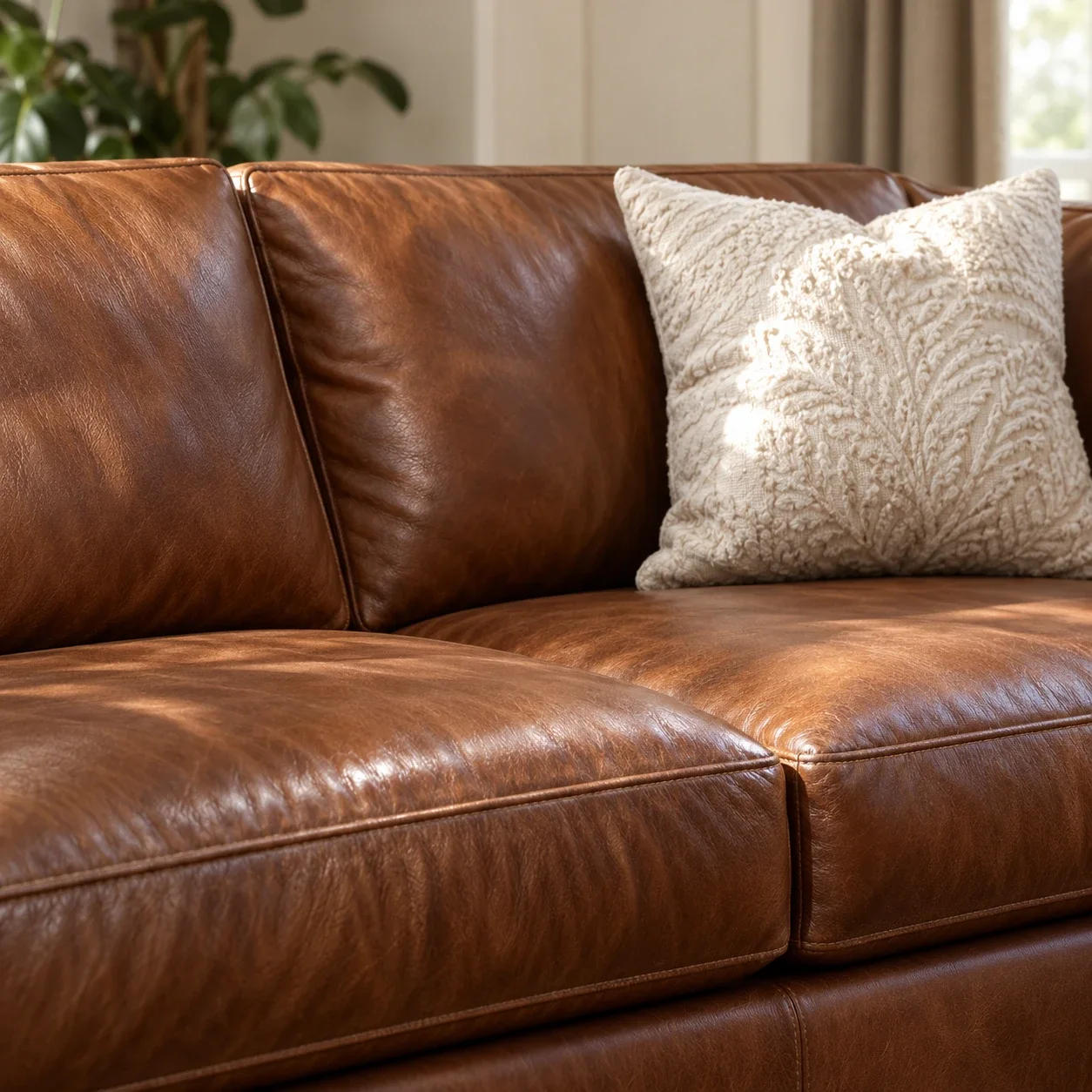
It hardens before the piece goes back into use. We say how long.
Where a hide is dry and stiff, conditioning comes first: feeding the hide and coating it are different jobs — see the Leather Conservation Centre.
Two Moments Worth Booking
Before the first winter and before anyone eats on it. The factory coat is at its thickest, so leather protection prevents rather than compensates.
After a clean, a colour restoration or a panel repair the surface is open and sound. Leather protection then keeps the repair looking new for longer.
There is no calendar for renewing it. The drop test decides, not the date. Buildings on a preventive maintenance schedule have this checked.
Invisible Care. A Natural Finish.
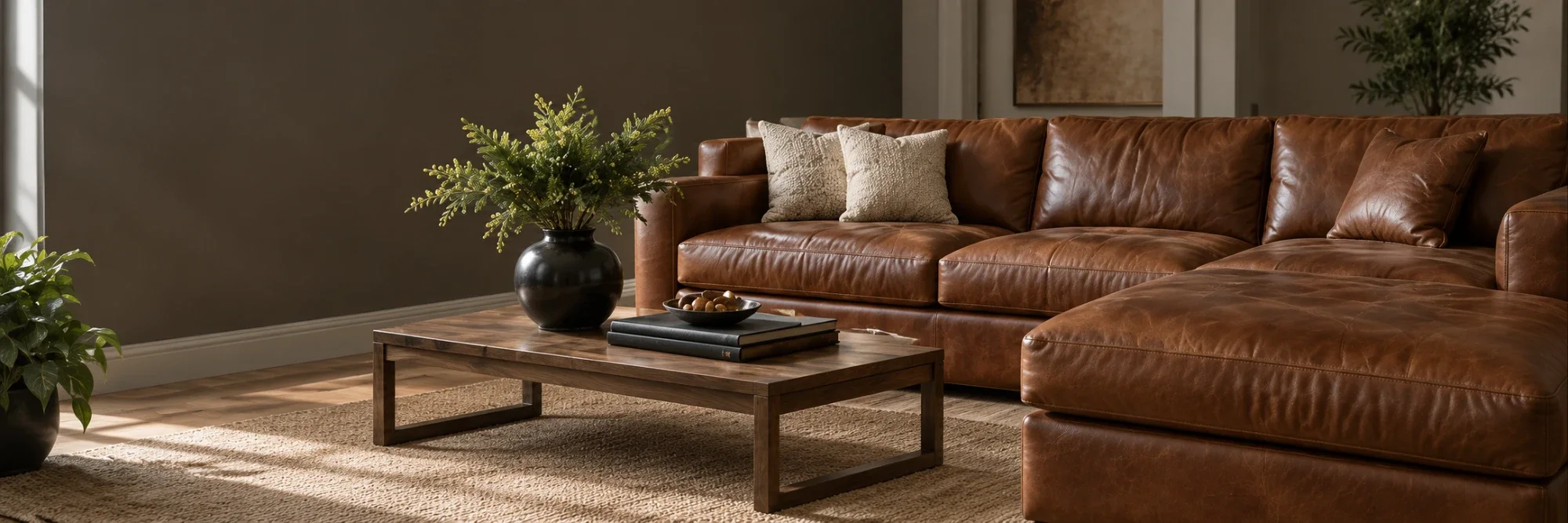
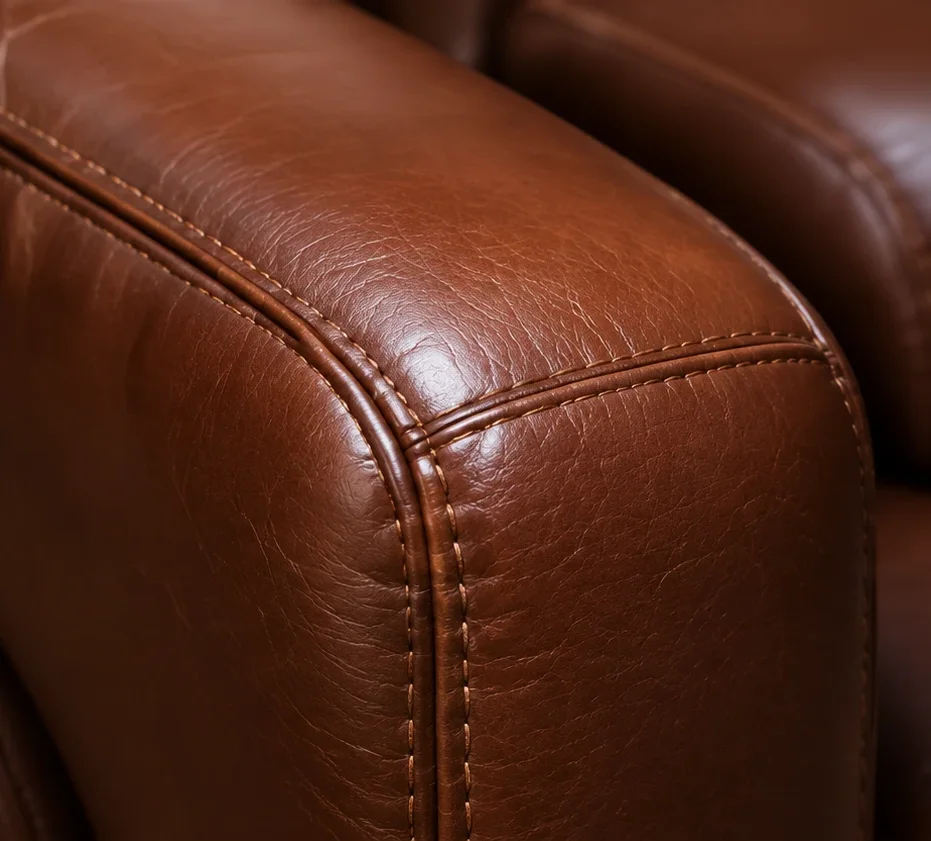
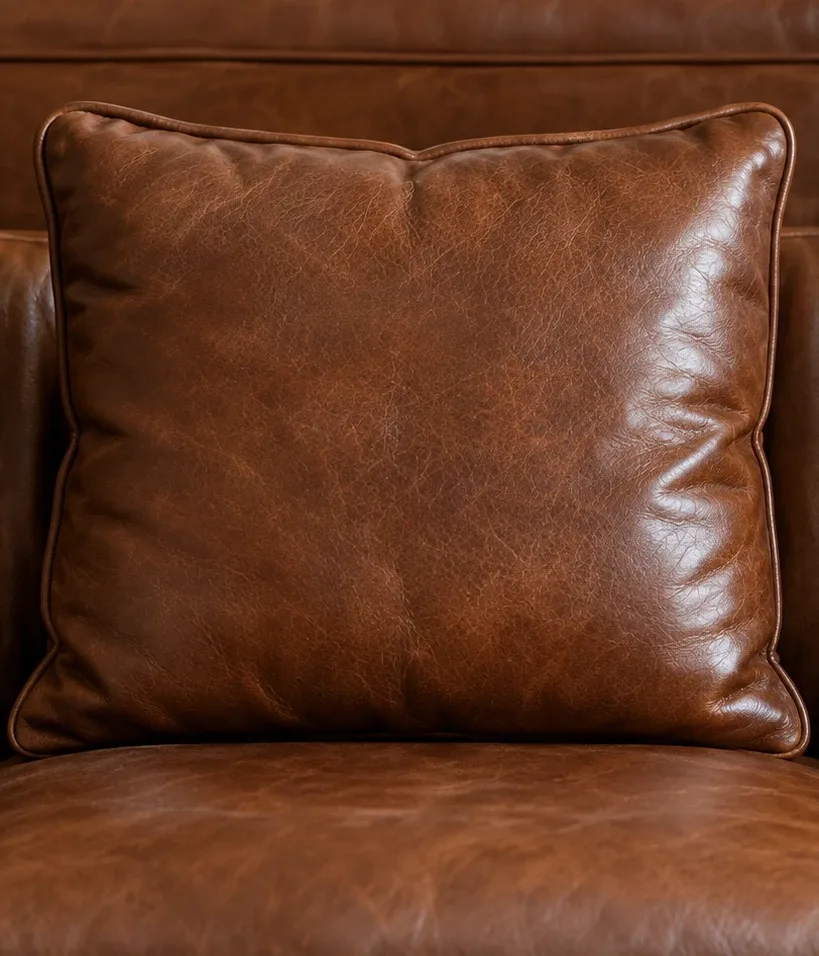
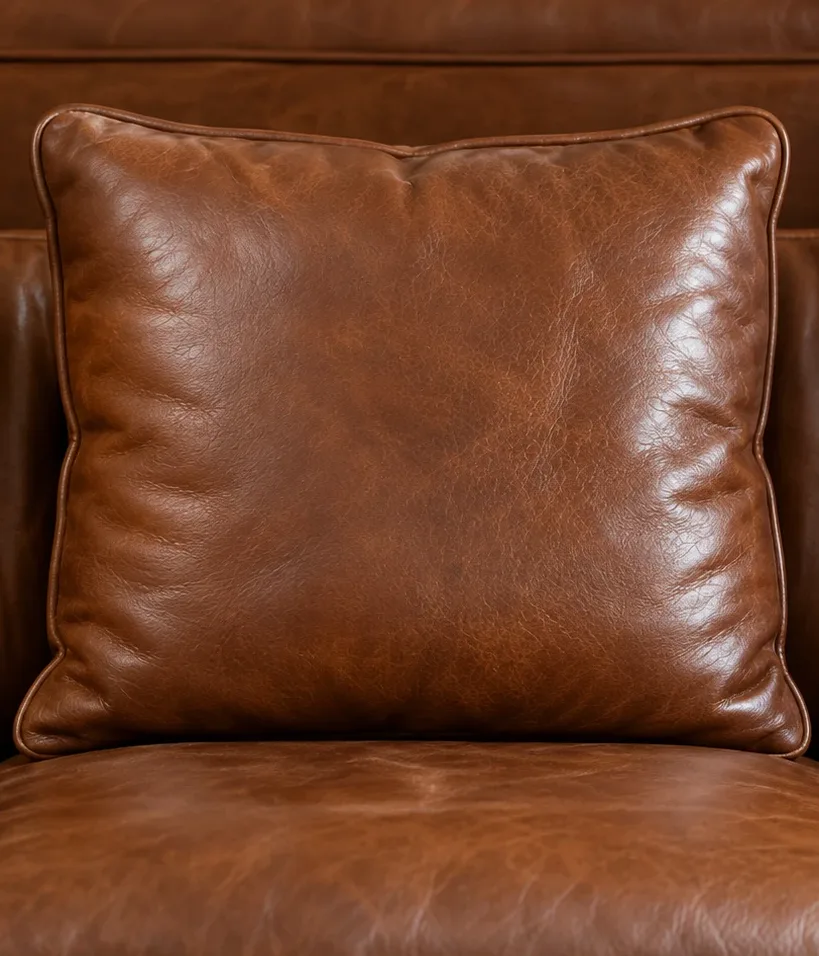
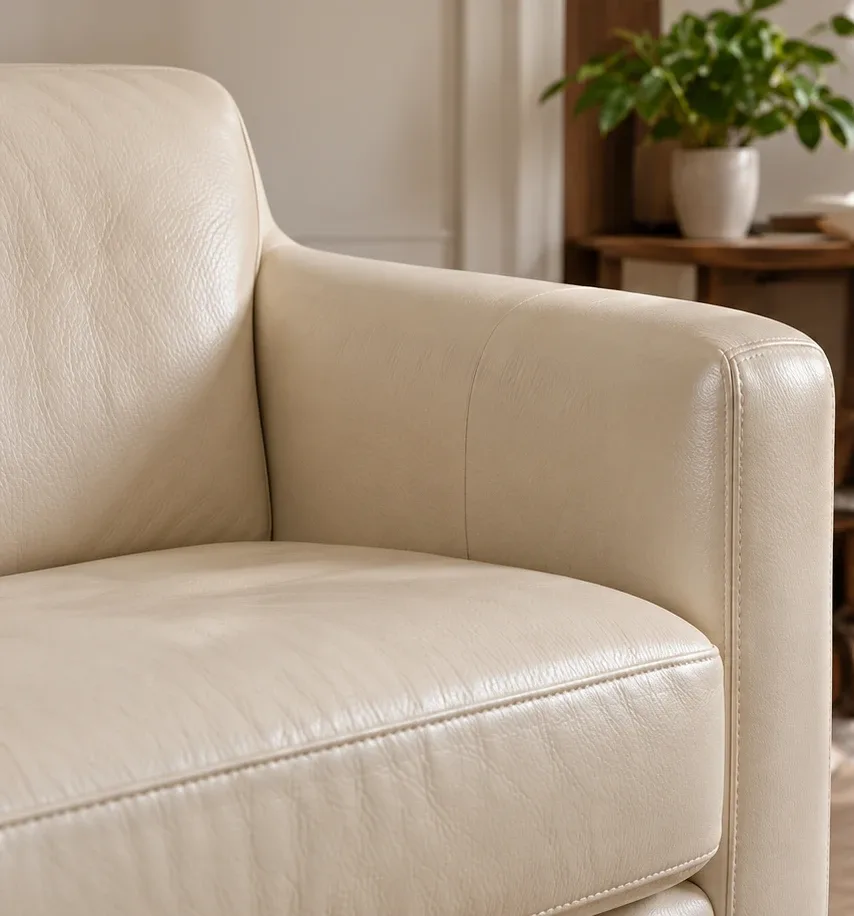
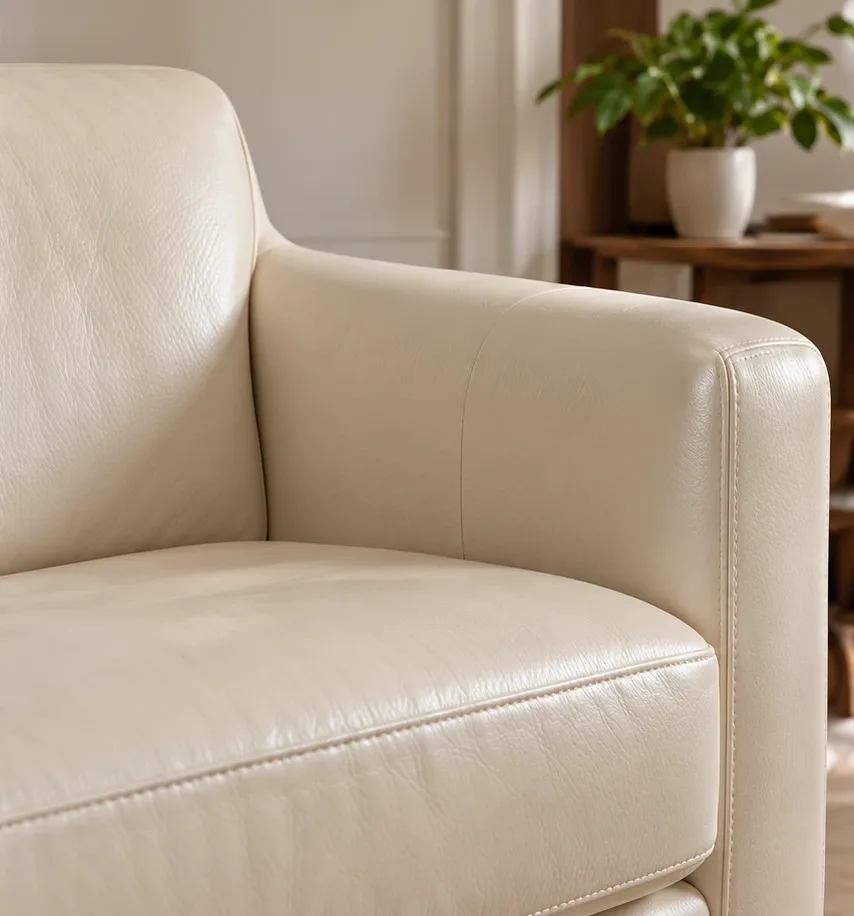
Done right, nothing looks treated. Leather protection leaves the hide its own colour, grain and sheen.
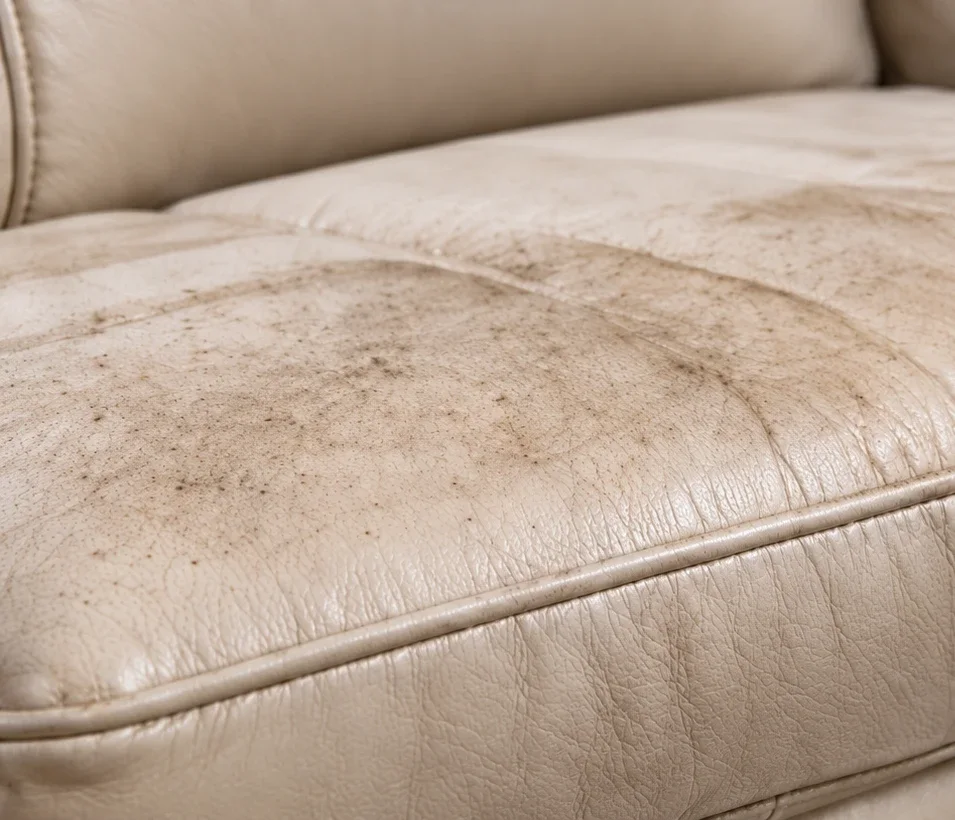
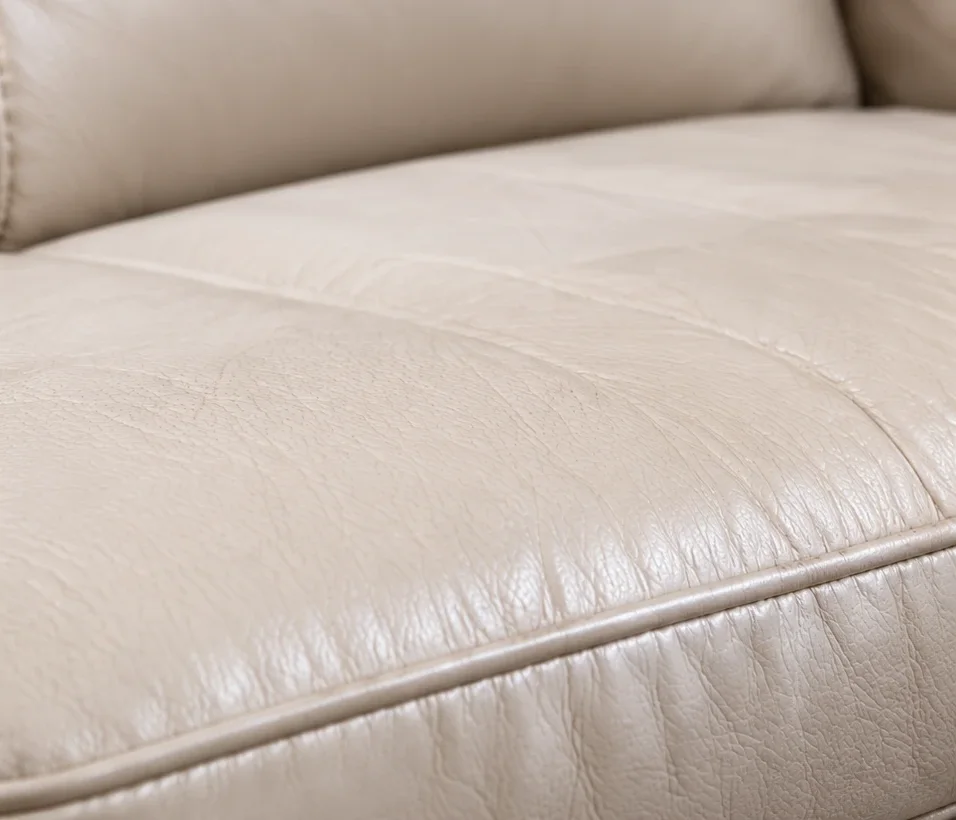
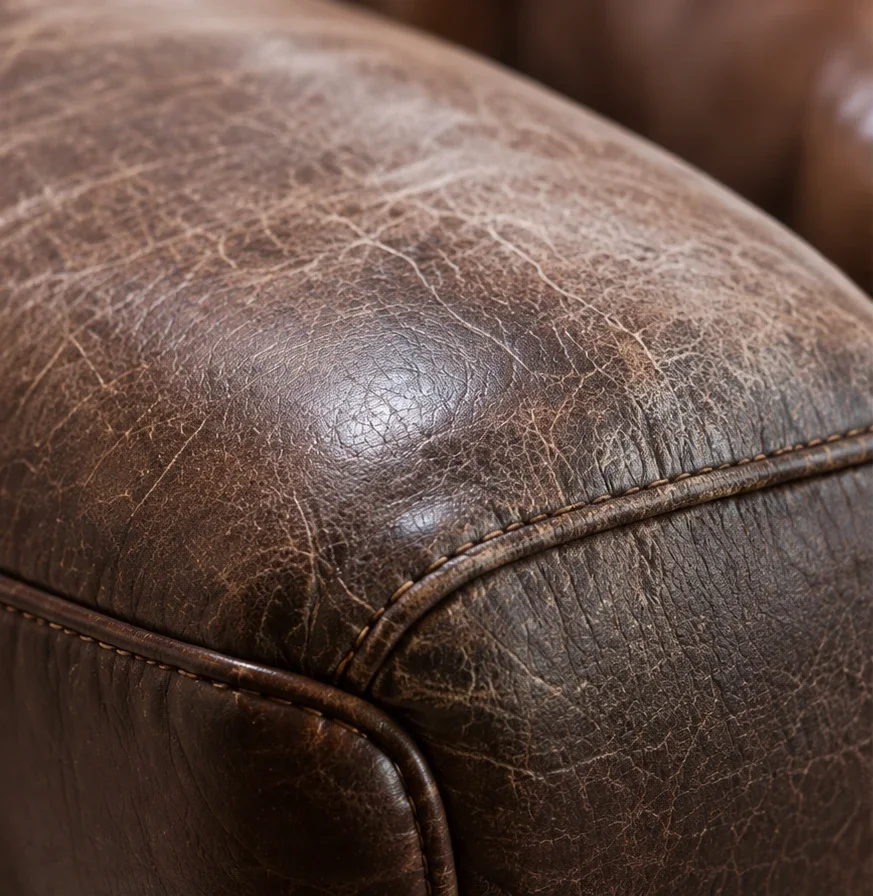
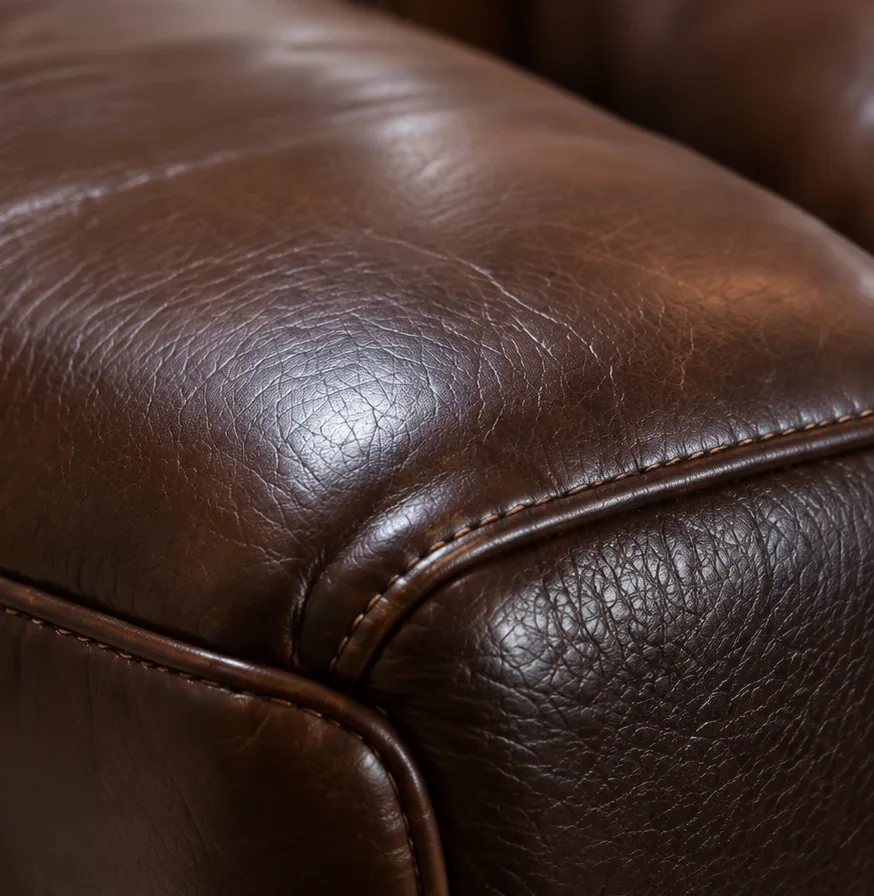
See The Finish, Not A Coating
The same leather, better prepared for everyday life.
What People Ask Before Booking
Does leather protection make a sofa waterproof?
No. It buys the minutes it takes to fetch a cloth. Wine left overnight still marks.
Can aniline leather be protected?
Yes, but carefully. Anything that beads water flattens the depth people buy aniline for, so we use a breathable treatment.
Will it change the colour or the sheen?
It should not. Thin coats matched to the finish, sheen checked against an untouched panel. A glossy hide has had too much.
How do I know when it has worn off?
Put one drop of water where it does not show. Beading means it is there, flattening means thinning, soaking in means nothing is left.
Do you have to clean it first?
Always. Leather protection over body oils and grime seals them in. The only way out is stripping the panel.
Is this worth doing on an old sofa?
Sometimes. On a dry, cracked or worn-through hide, colour and finish need rebuilding first.
Send Two Photos For A Leather Protection Quote
Tell us what the drop did and we can usually price it without visiting. We cover Manhattan, Brooklyn, Queens, the Bronx, Staten Island and northern New Jersey.
The whole piece from a few steps back, so we can see its size.
A close shot of the seat you use most, at an angle so the sheen shows.


Protect Your Favorite Place To Relax
Do the drop test tonight and send the photo. If the leather protection is sound we will say so and charge nothing.