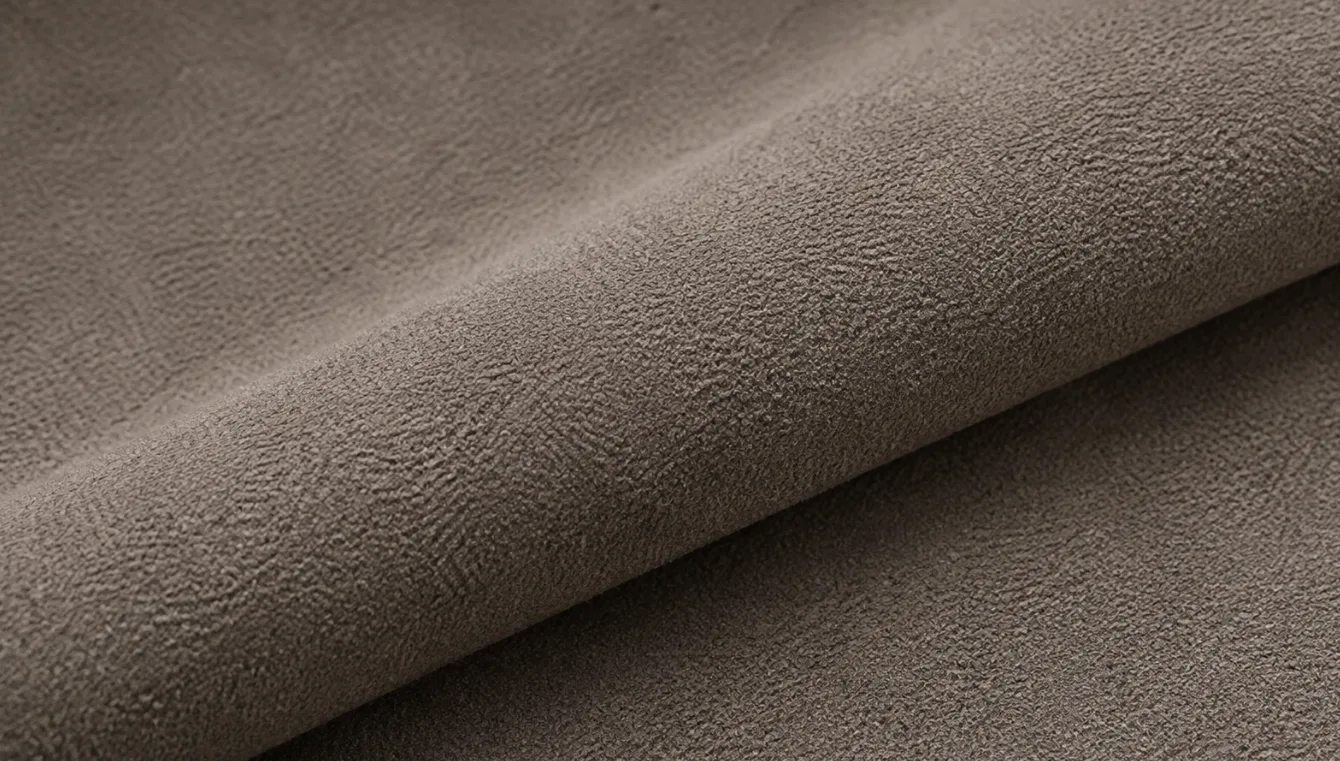
Suede

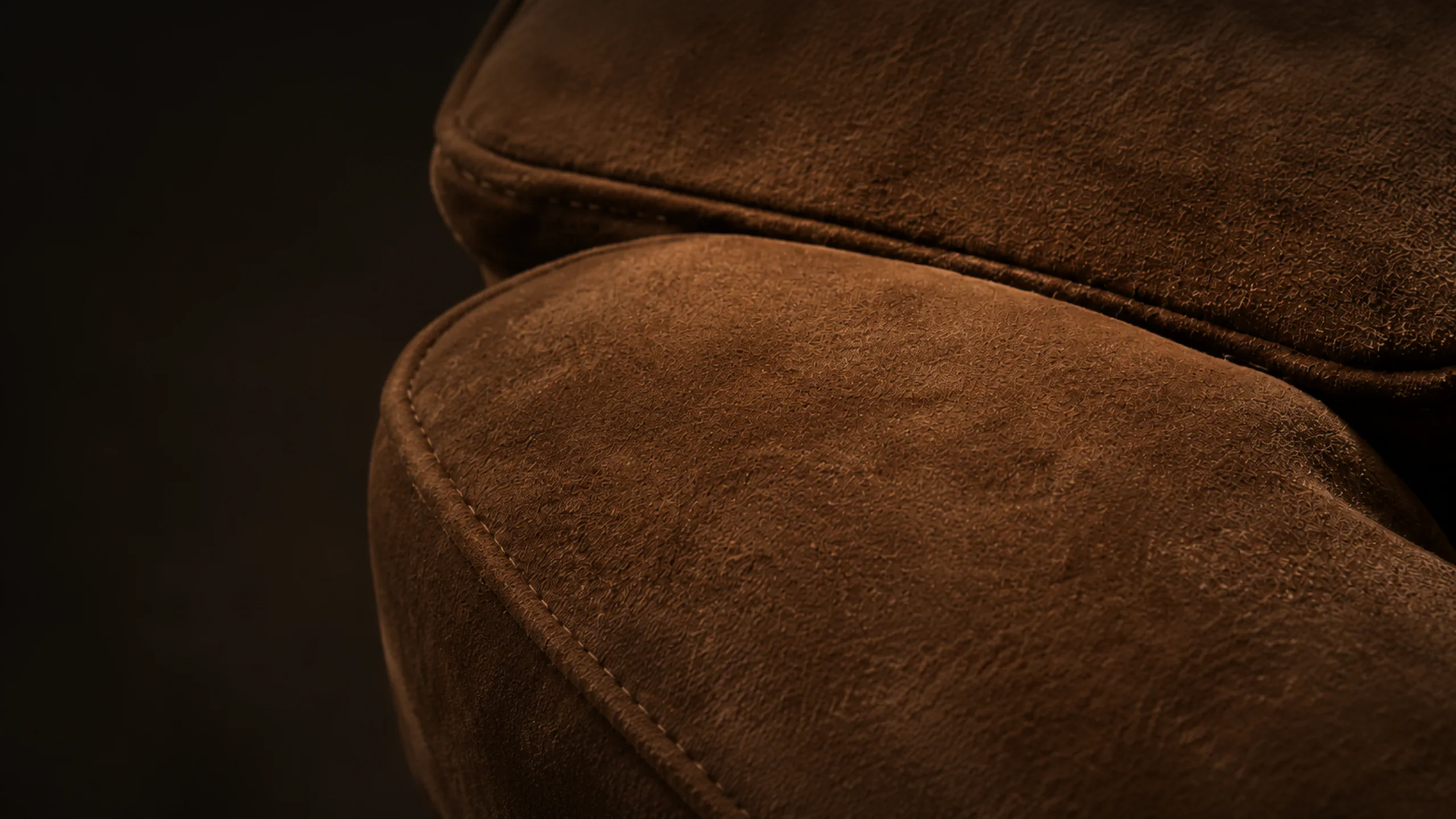
Suede furniture — close view of a brown suede sofa arm and seat cushion, the nap shading lighter and darker across the folds
Leather Types

Suede:Nothingbetween your hand
and the fibre

Cleaning, re-dyeing and reupholstery for suede furniture. NYC & New Jersey.

The Material

Suede Furniture at a Glance

Suede furniture is real leather with no grain layer and no finish. It is the inner split of a hide, brushed into a nap that absorbs on contact.
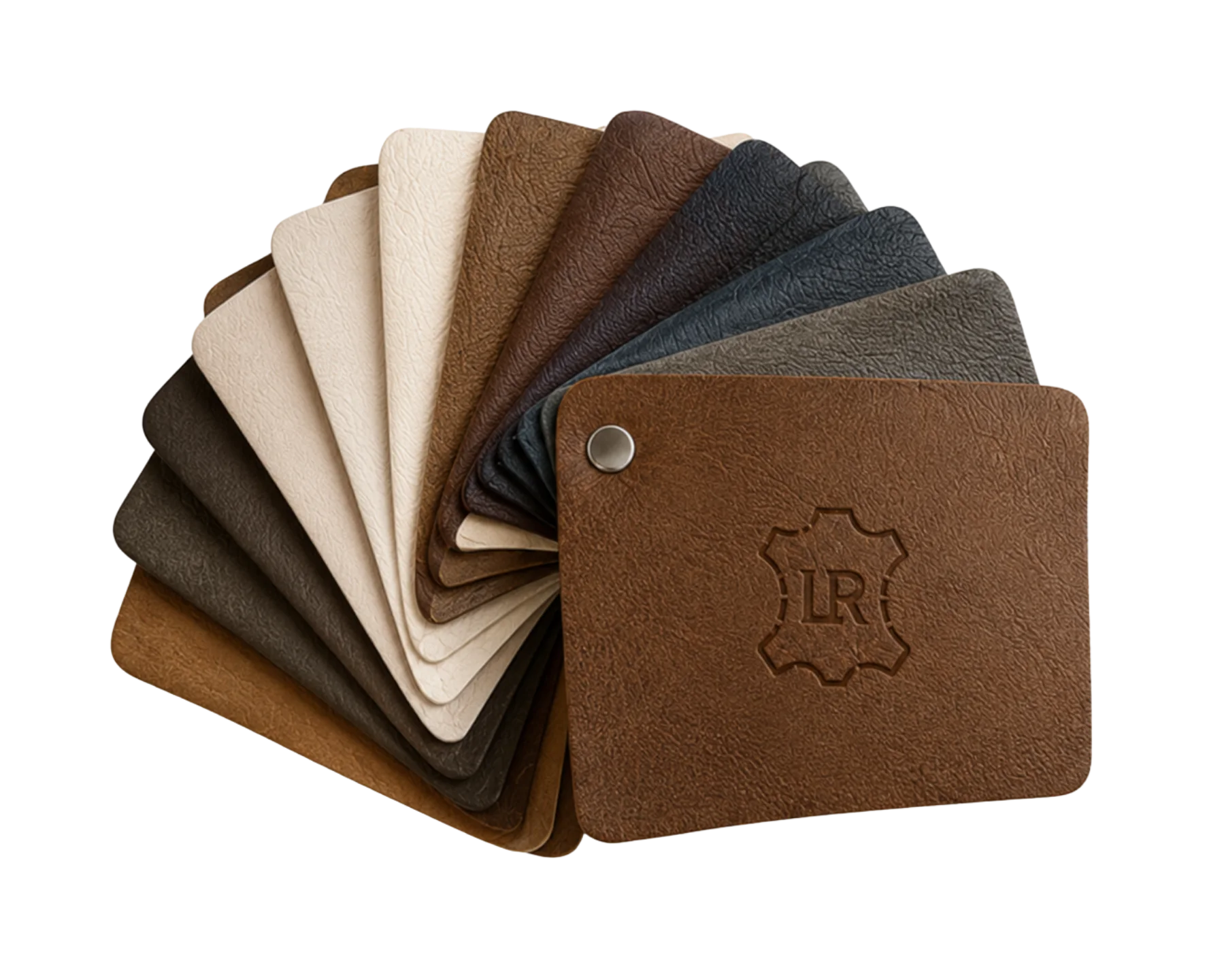
A fan of suede and leather sample swatches in cream, tan, chocolate, grey and black, the front tag embossed with the Leather Restore PRO hide mark
Dye goes into the fibre, not onto it. Matched against a physical swatch in your own light.
What Makes Suede Different

One Hide Goes In. Two Different Materials Come Out.

A hide too thick to upholster gets split. The top keeps the grain; the underside never was the outside of anything. Brush it and the fibre stands up.
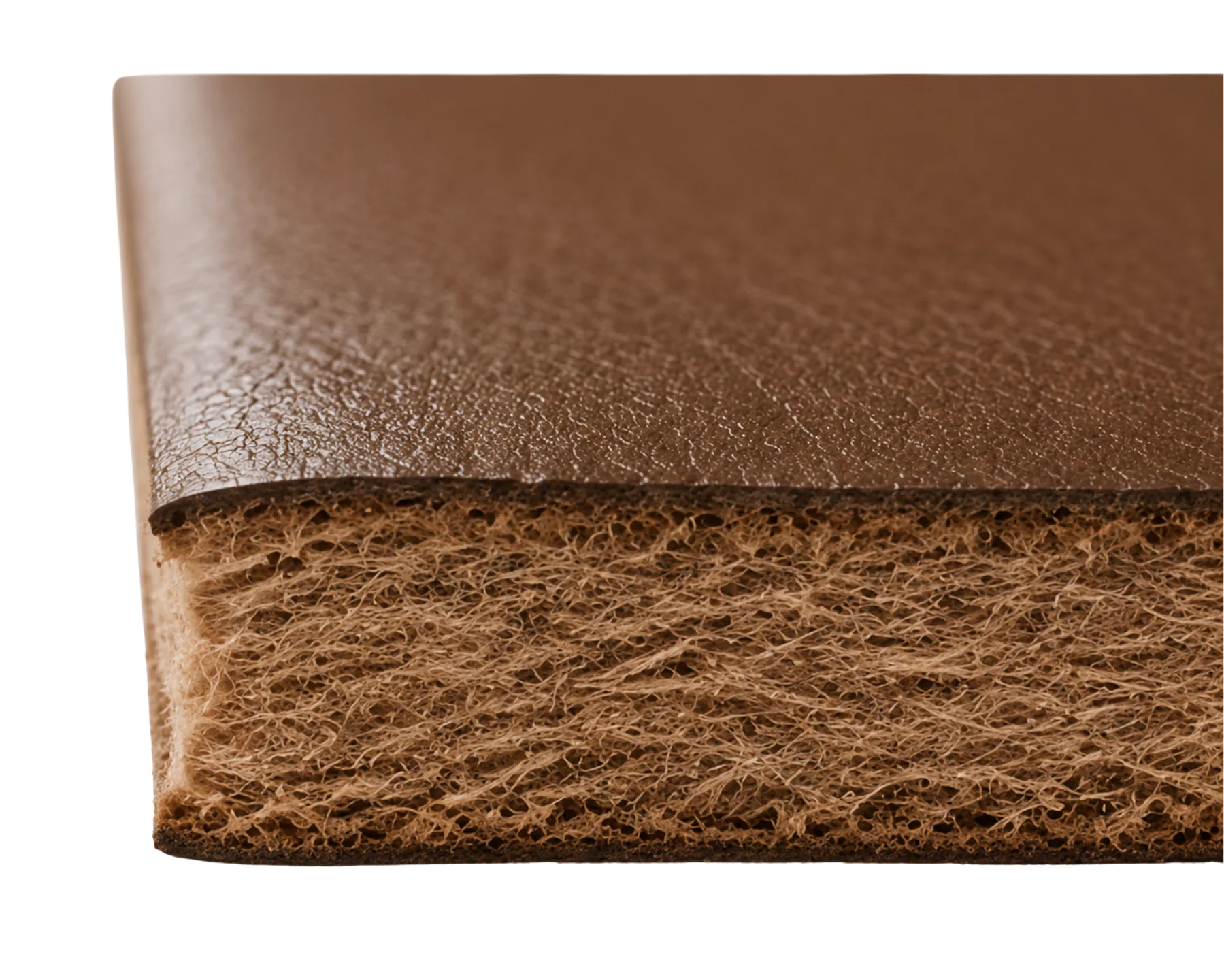
Cut edge of a full-thickness hide: a smooth pebbled grain layer on top sitting directly on a thick pale fibrous inner layer Grain layer The natural outside of the hide Inner split The inner fibrous layer, no grain
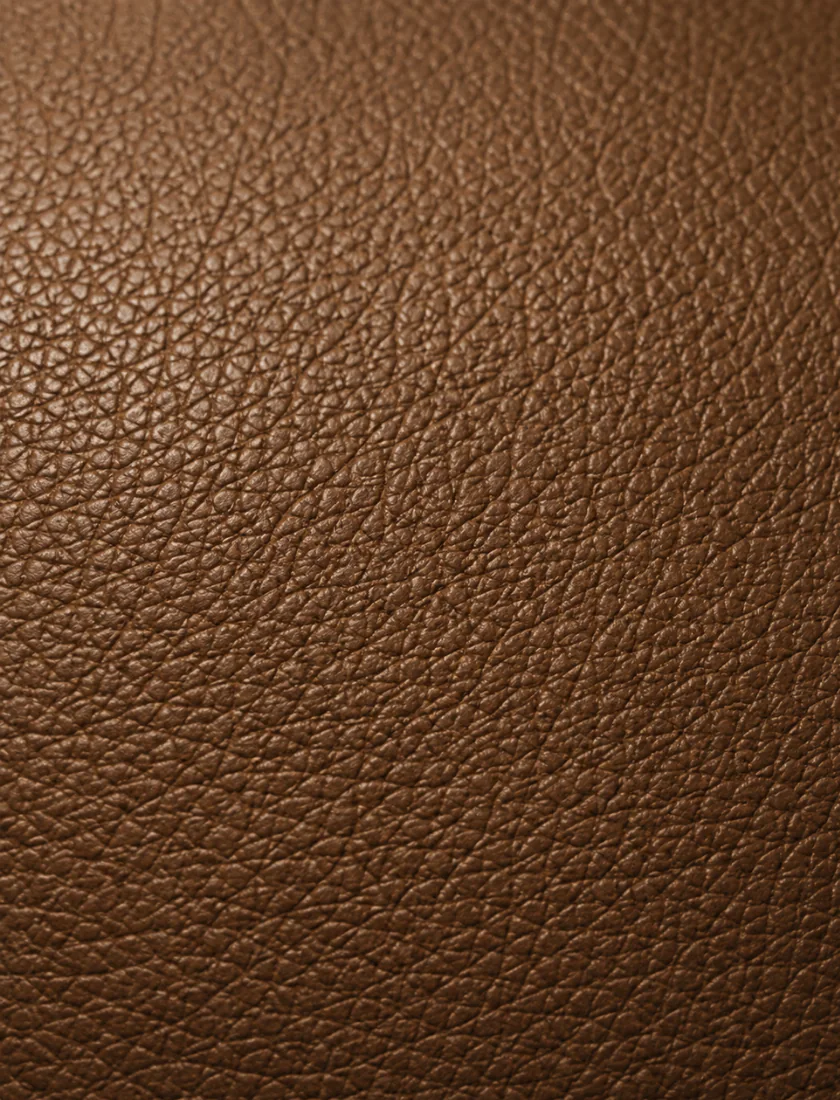
The input One full-thickness hide Two materials in one piece.
Macro of the grain side of a split hide, its natural pores visible across a smooth outer surface
Output A — the top split Grain leather Keeps the pores and the natural skin. Becomes aniline, semi-aniline or pigmented.
Macro of the inner split of a hide, openly fibrous with no pores and buffed into a nap
Output B — the inner split Suede — this page No grain, no pores. Buffed until the cut fibre rises into a nap.

Every other leather keeps its grain. Suede has none. Nubuck is the opposite trade.

Close Up, Under Good Light

Same hide, same dye, same magnification. Hold yours to a window.
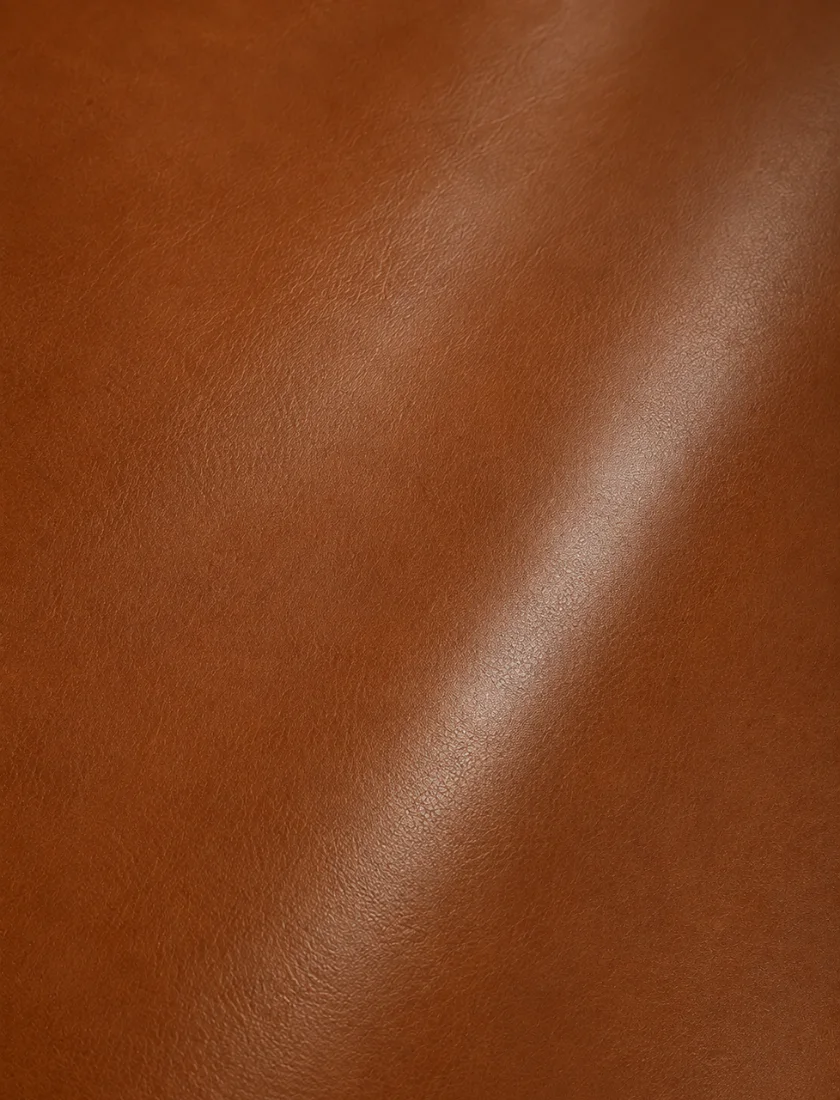
Macro of smooth finished leather, the natural surface grain and a soft sheen still visible
Smooth leather A surface, not a texture. No fingermark.
Macro of nubuck, the outer grain surface lightly sanded into a fine even nap
Nubuck A nap so short it looks like dust. Pores still findable.
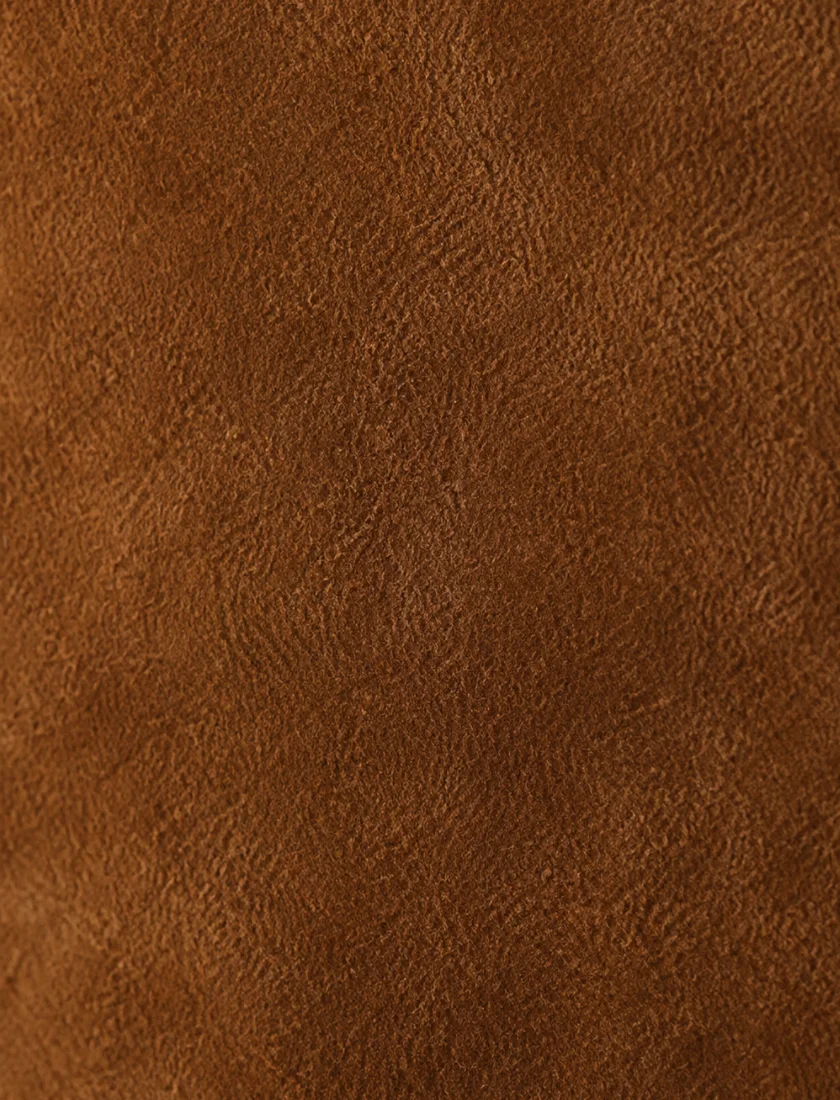
Macro of suede, the fibrous split surface raised into a deeper and more open nap
Suede · you are here Openly fibrous, with a direction: light one way, dark the other.
Genuine Suede or Microsuede

Most "Suede" Sofas Sold Today Are Not Suede

Microsuede, faux suede, Ultrasuede and Alcantara are polyester microfibre — fabric, not leather. Four checks, no tools.

01

Look at an edge, not the face

02

One drop of water, somewhere hidden
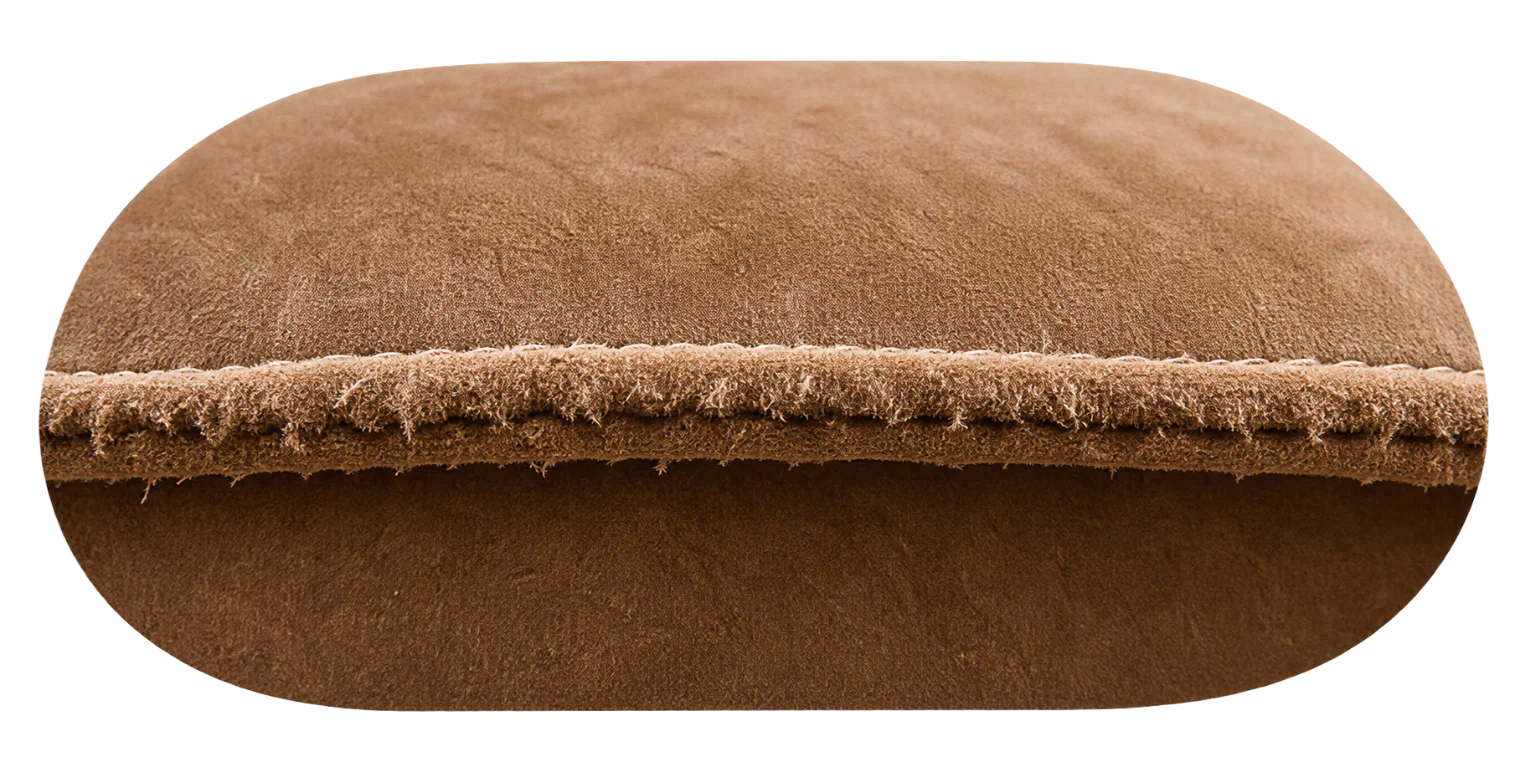
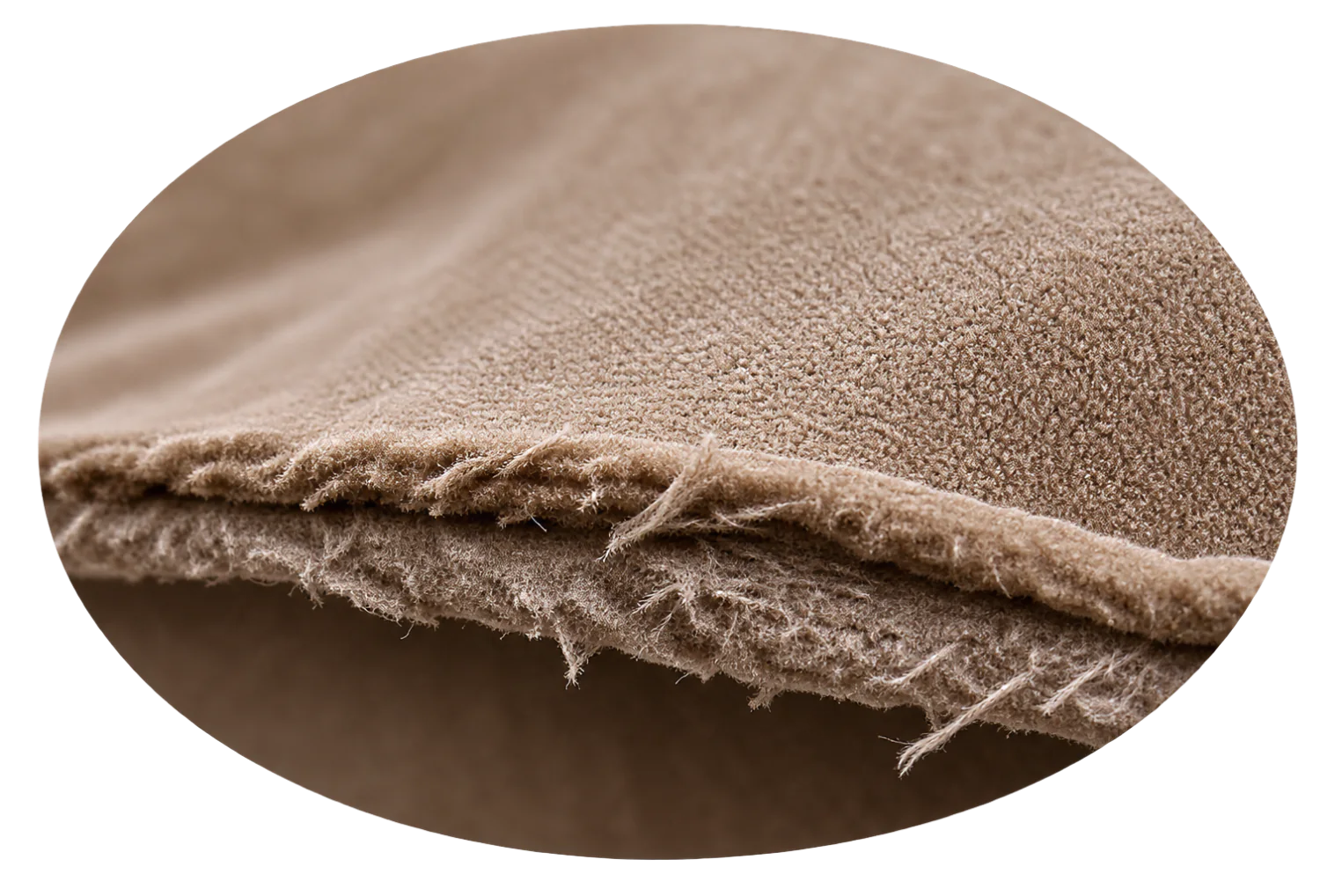
Cut edge of a suede panel: solid and slightly furry, the same fibre right through with nothing woven to unravel
Real suede Solid and furry right through. Nothing to unravel.
Cut edge of a microsuede panel: a woven scrim backing visible under the pile, already fraying into loose threads
Microsuede A woven or knit backing, fraying into threads.
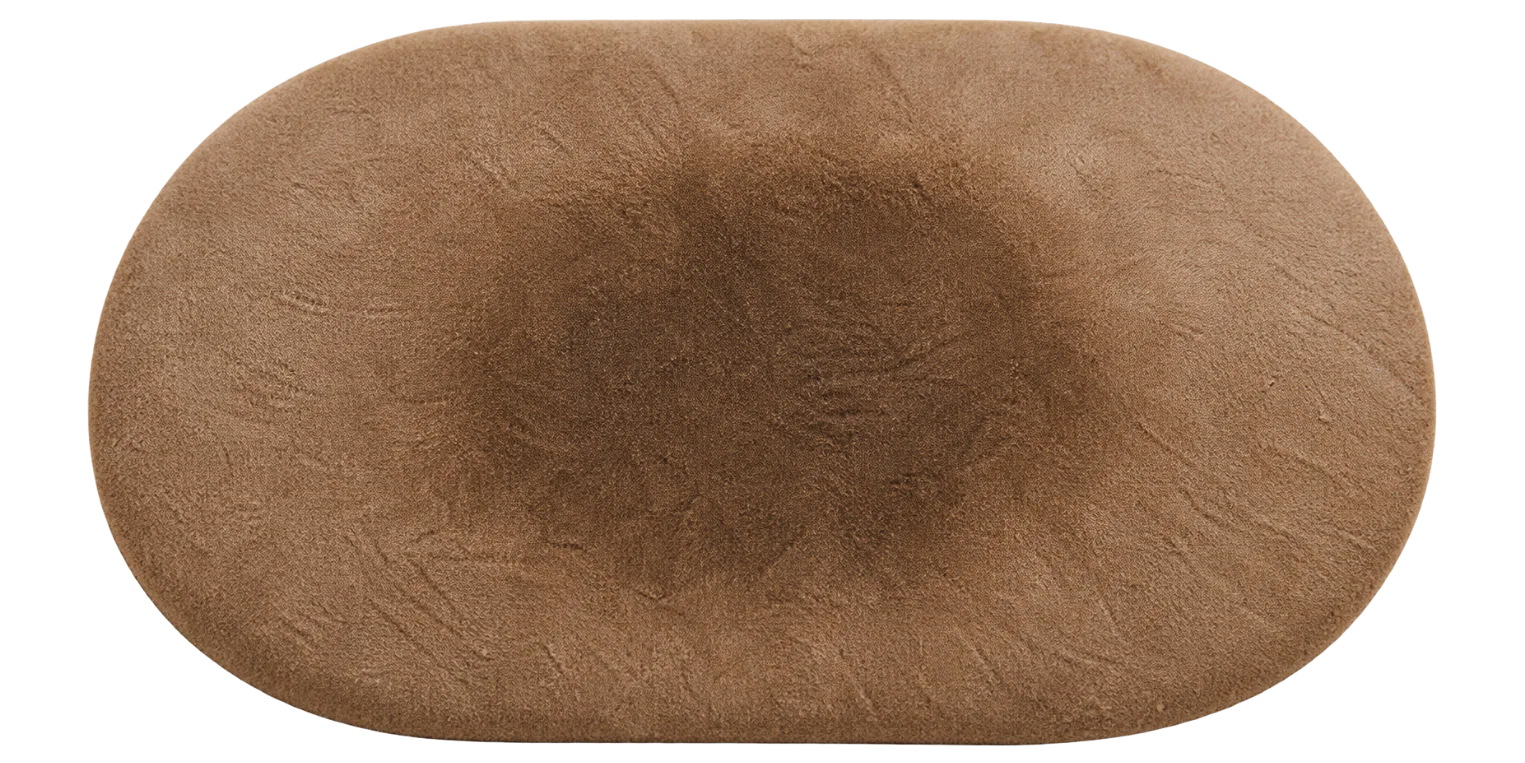
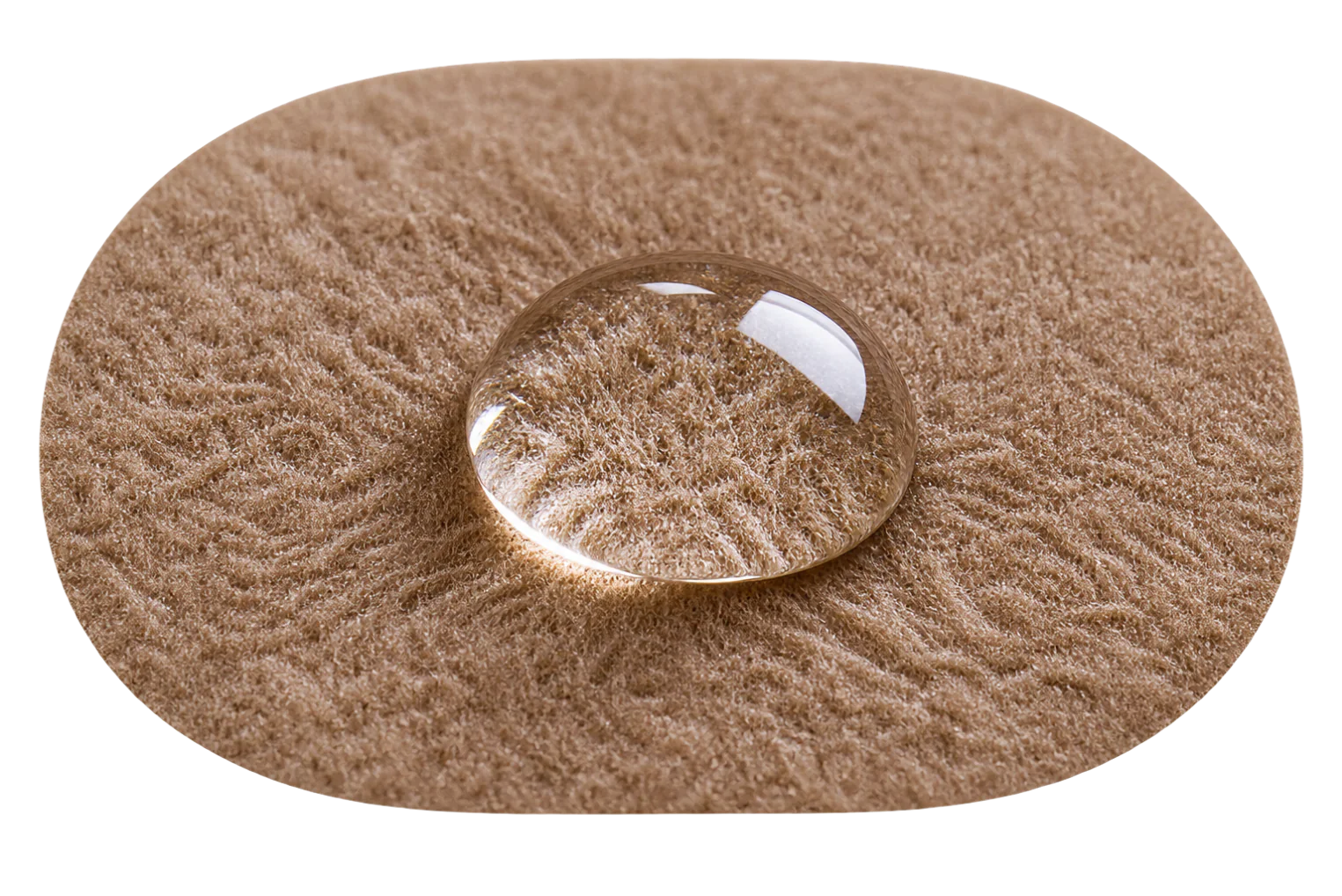
Water absorbed straight into suede, leaving a soft dark patch with no drop left on the surface
Real suede Gone on contact, leaving a spot that dries back lighter.
A drop of water still sitting whole on the surface after several seconds, none of it drawn into the fibre
Microsuede Beads for seconds, long enough to roll off.
03

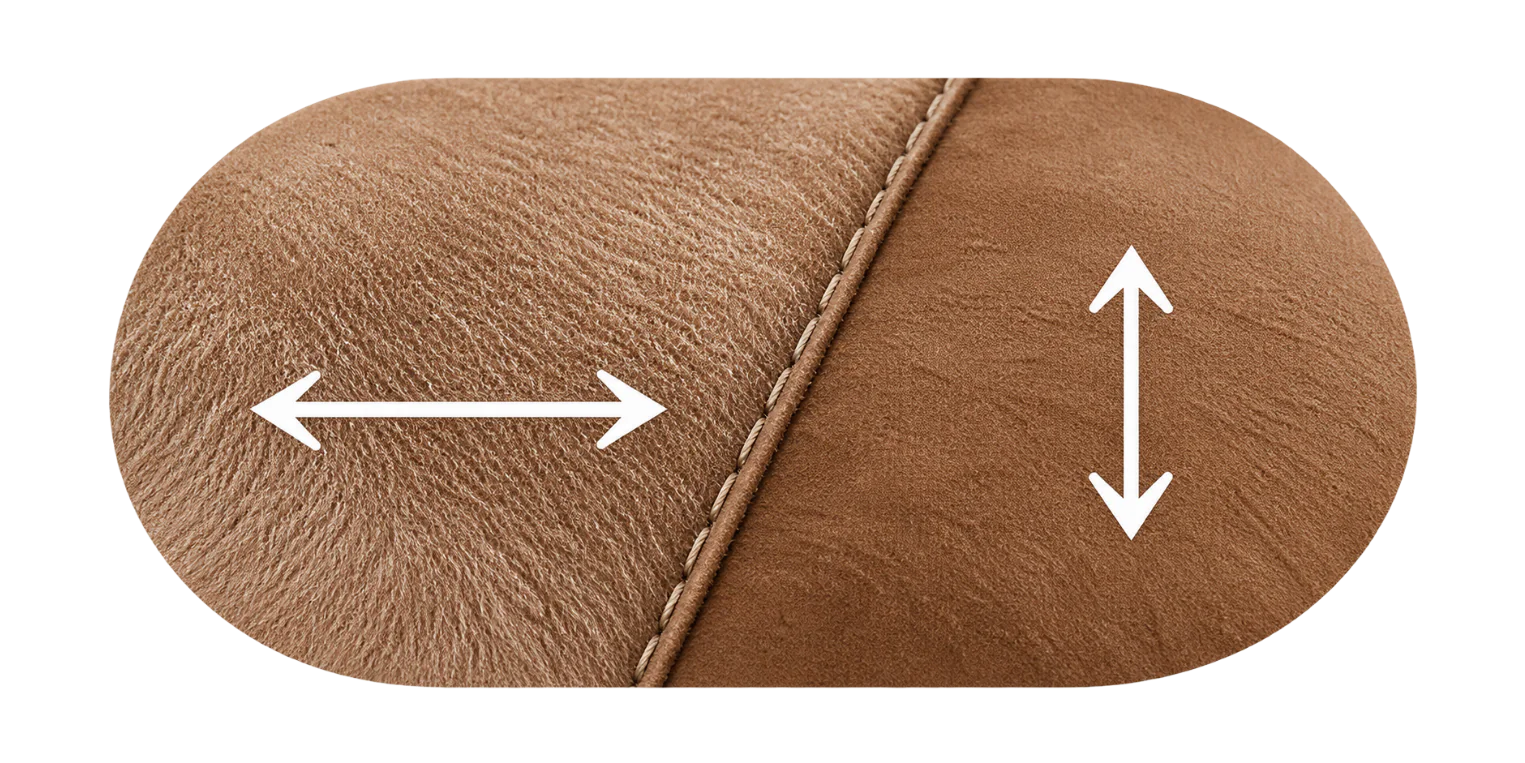
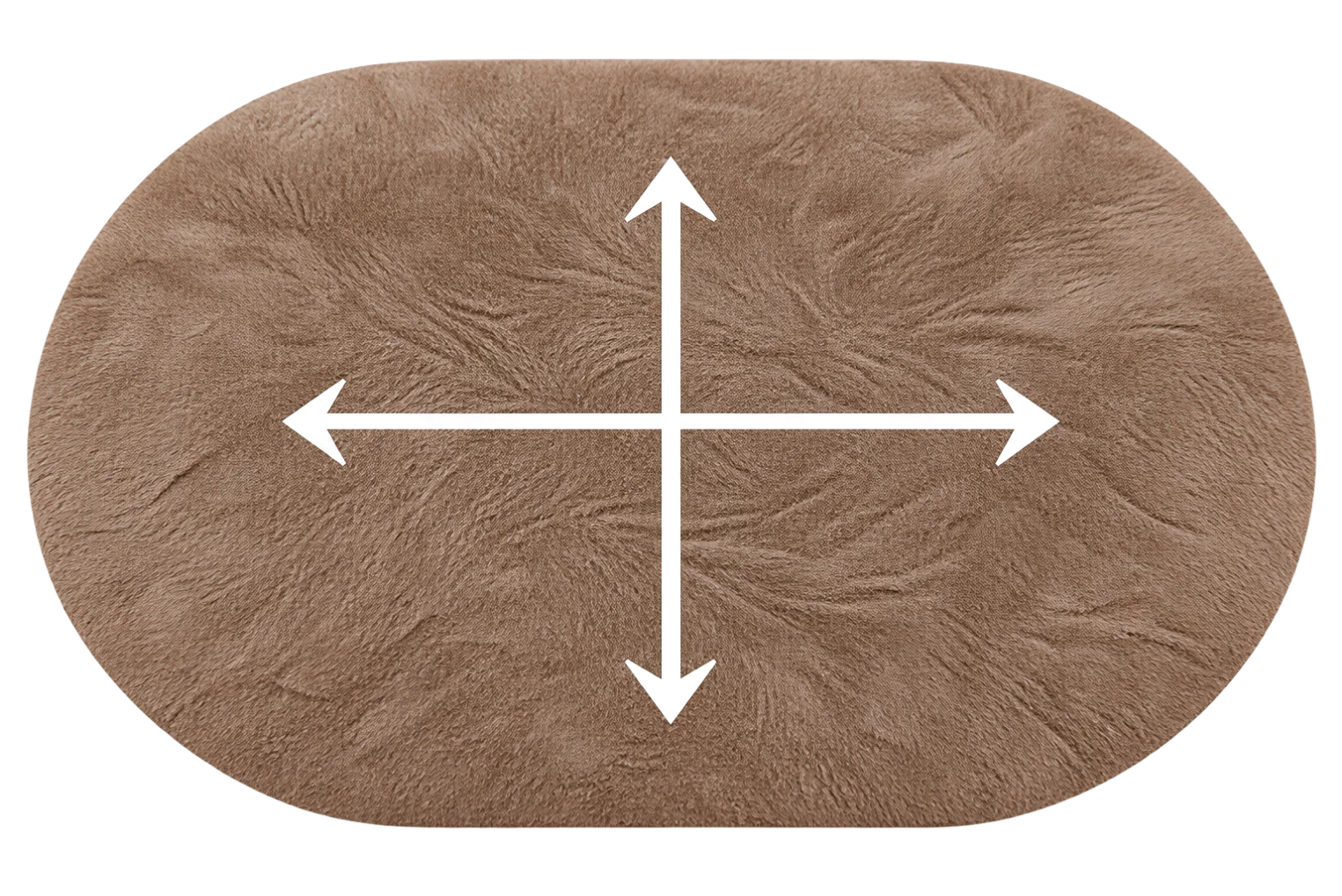
Pull it two ways

04

Count the seams on a big panel

Real suede pulled two ways: the half stretched across the hide reads paler than the half stretched along it, so one panel shows two different shades
Real suede Softer one way than the other. A hide is not uniform.
Microsuede pulled the same two ways, arrows marked across and along it: one even tone, with no difference between the directions
Microsuede Same give both ways, springy, snaps back.
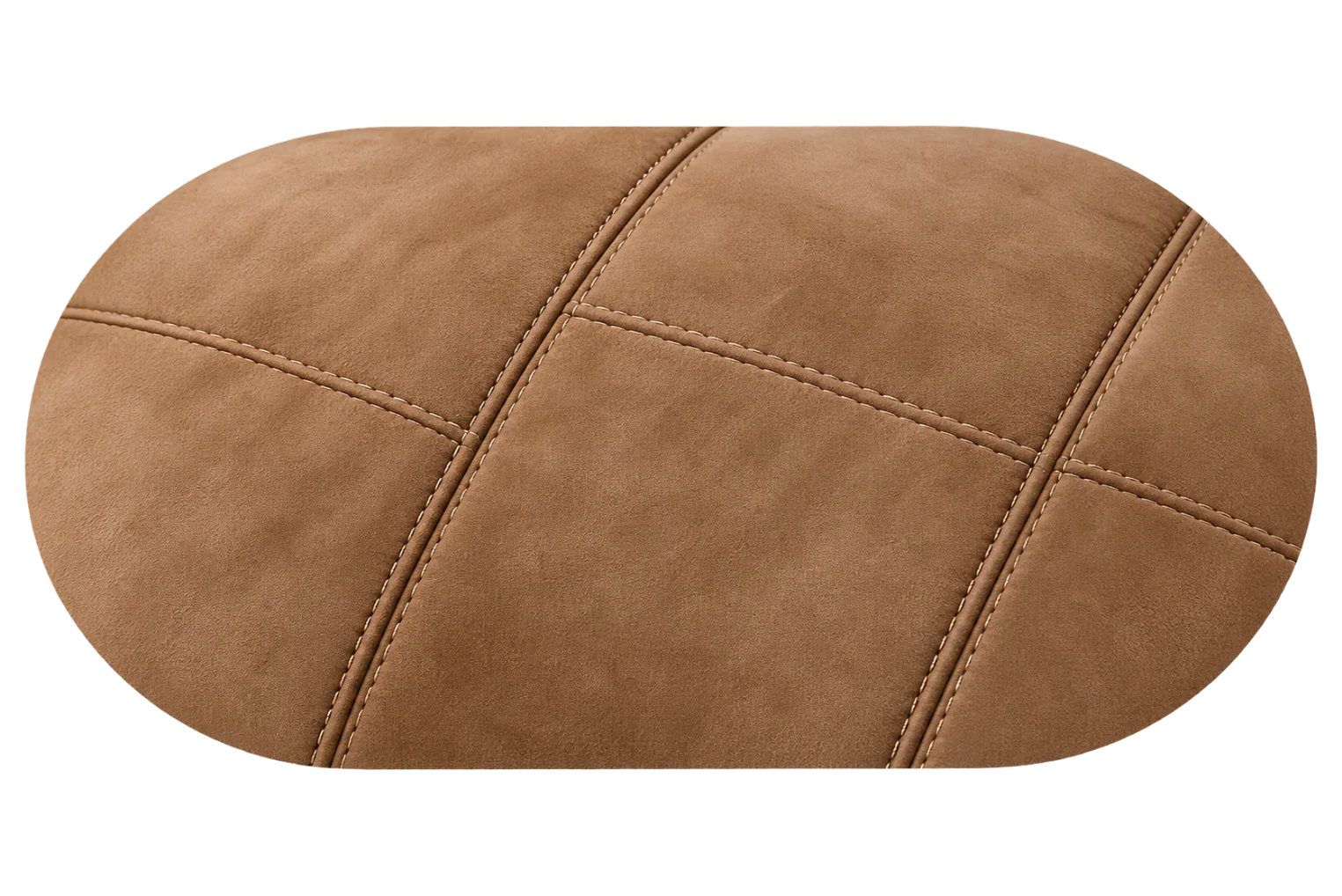
A suede seat back built from several stitched sections, because no hide is wide enough to cover it in one piece
Real suede Seamed — a hide is only so big. Panels differ in tone. Normal.
The same panel in microsuede: one unbroken surface of even colour, cut from a continuous roll
Microsuede One unbroken piece, perfectly even. It came off a roll.
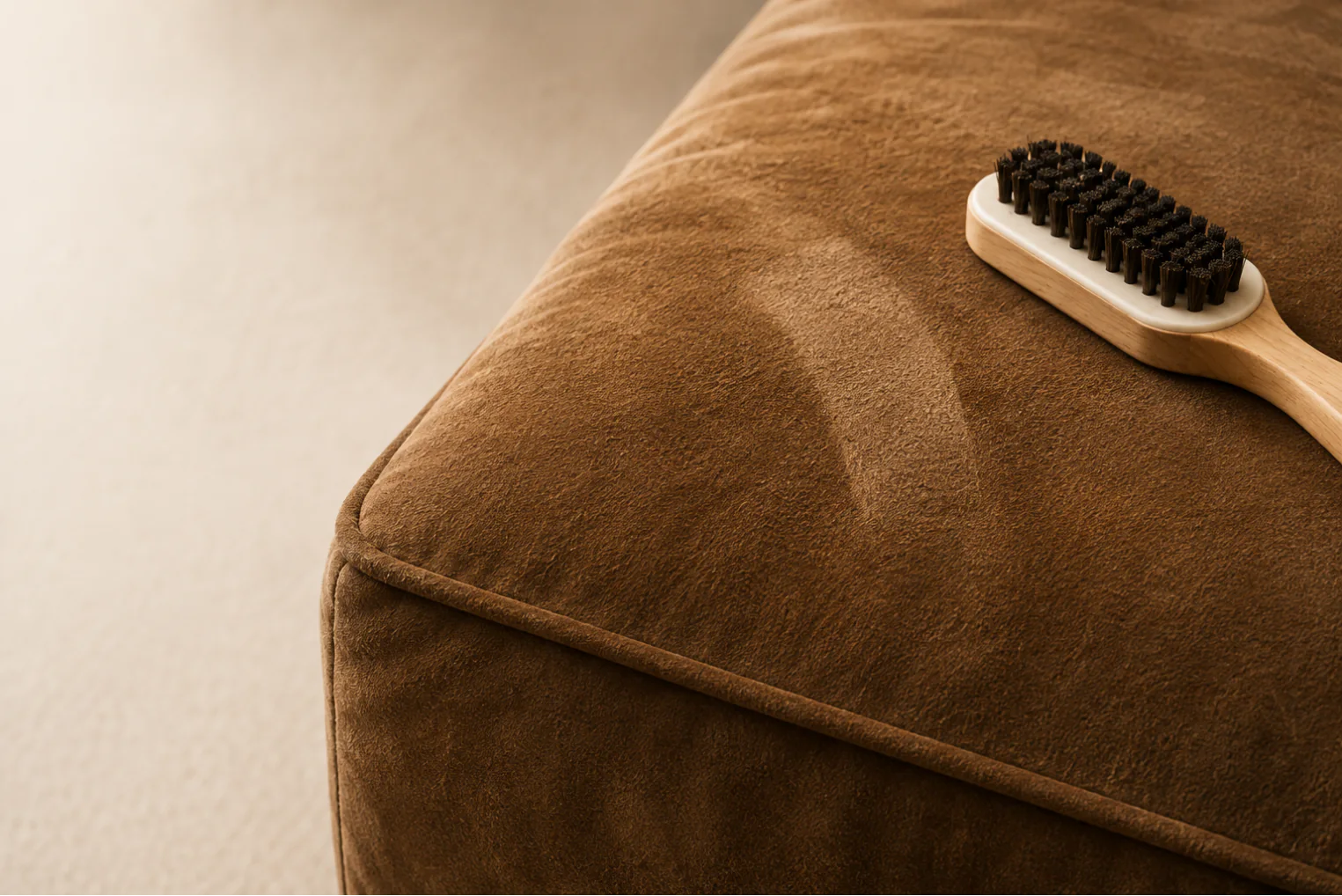
A brown suede cushion with a pale soft-edged patch across its top face and a suede brush lying beside it
Why Suede Shows Marks So Easily

Six Marks That Look Identical and Are Not

With no coating, each mark sits somewhere different in the fibre. Two of the six are not damage at all — and one is a job for spot cleaning, not re-dyeing.
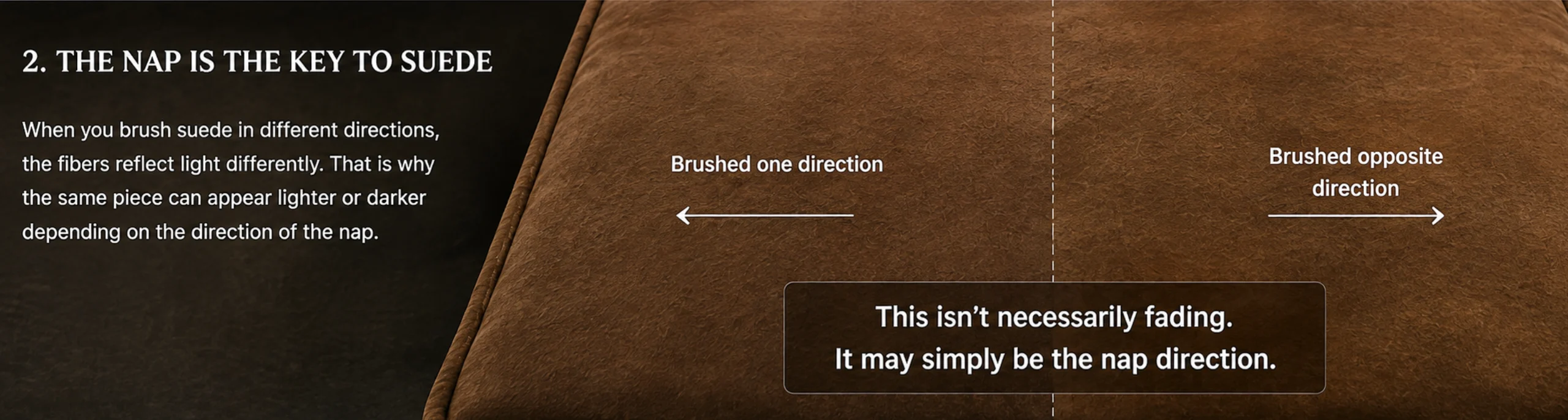
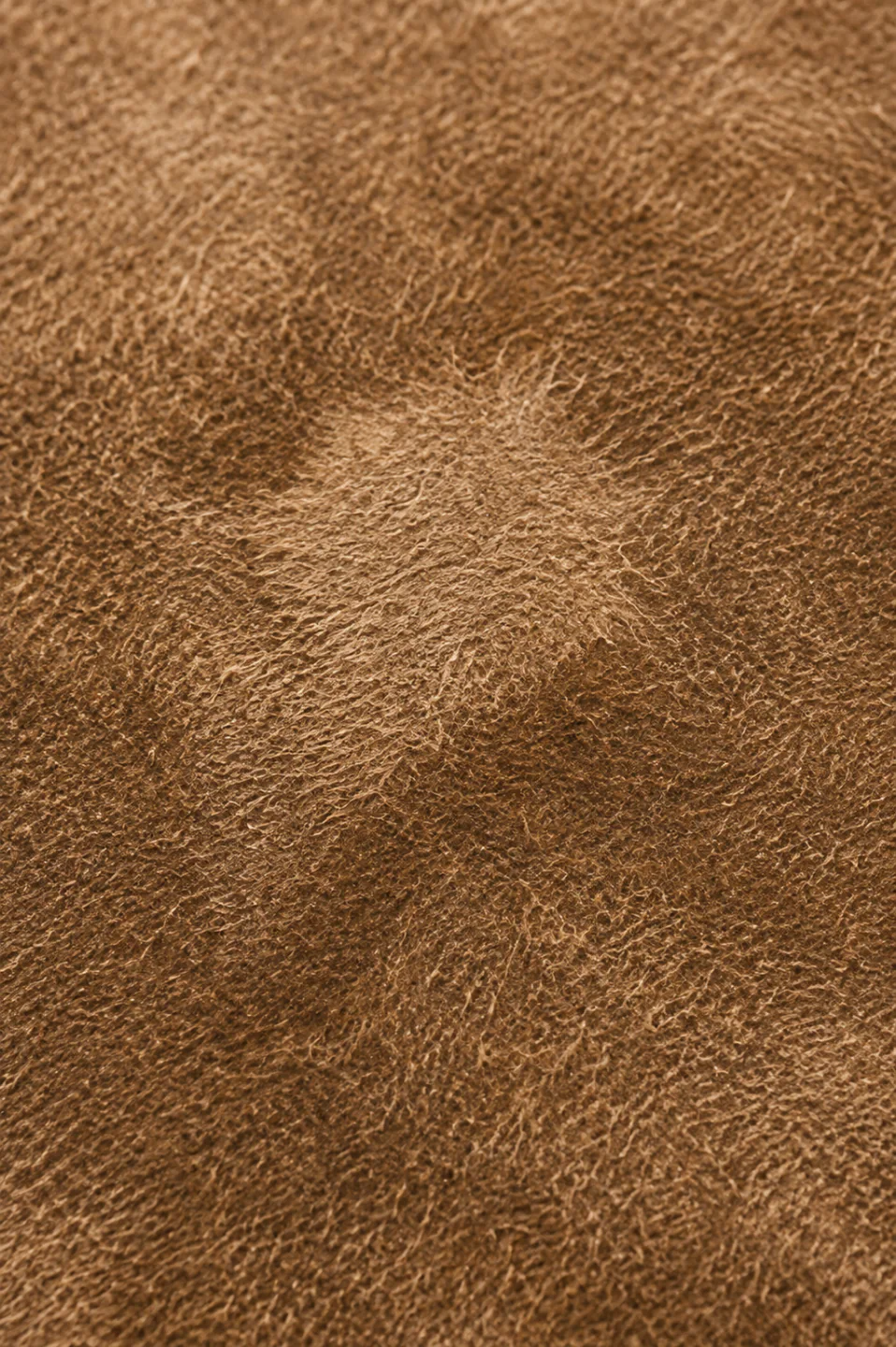
One suede seat cushion brushed two ways: the half brushed one direction reads light brown, the other half noticeably darker, split down the middle seam
Same cushion, one brush stroke apart Flat fibres read lighter, standing fibres read darker. The commonest reason a suede sofa looks patchy.
A pale patch on brown suede with a soft undefined edge, where the fibres have been pushed to lie a different way
01

Nap shift

Soft-edged, lighter or darker than the panel. Not soil. Brushes out.
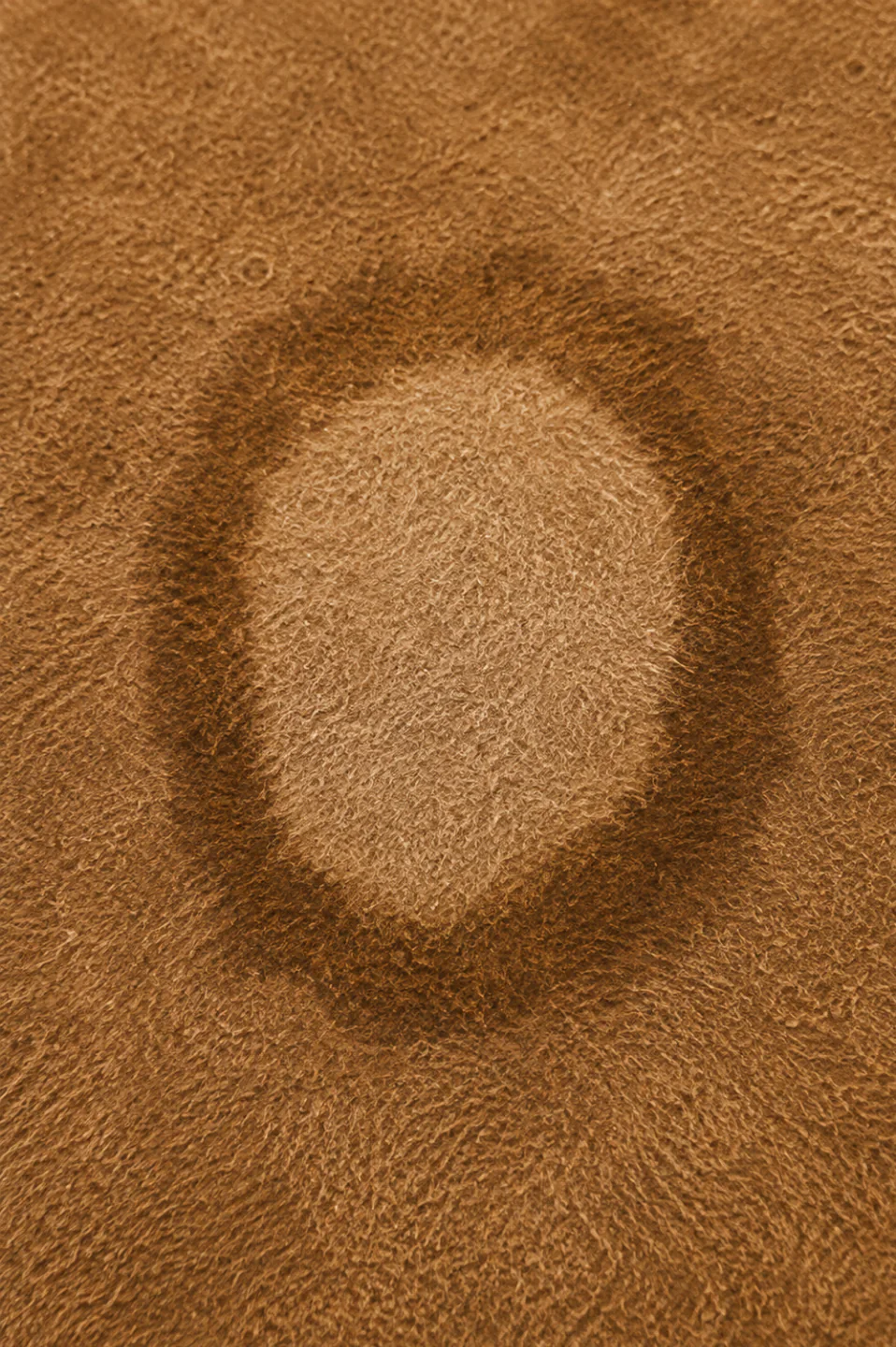
A dried water mark on suede: a pale centre ringed by a sharply darker border where the dye and dust were carried outward
02

Water shadow

A pale blotch with a darker ring. The ring is the damage, not the centre.
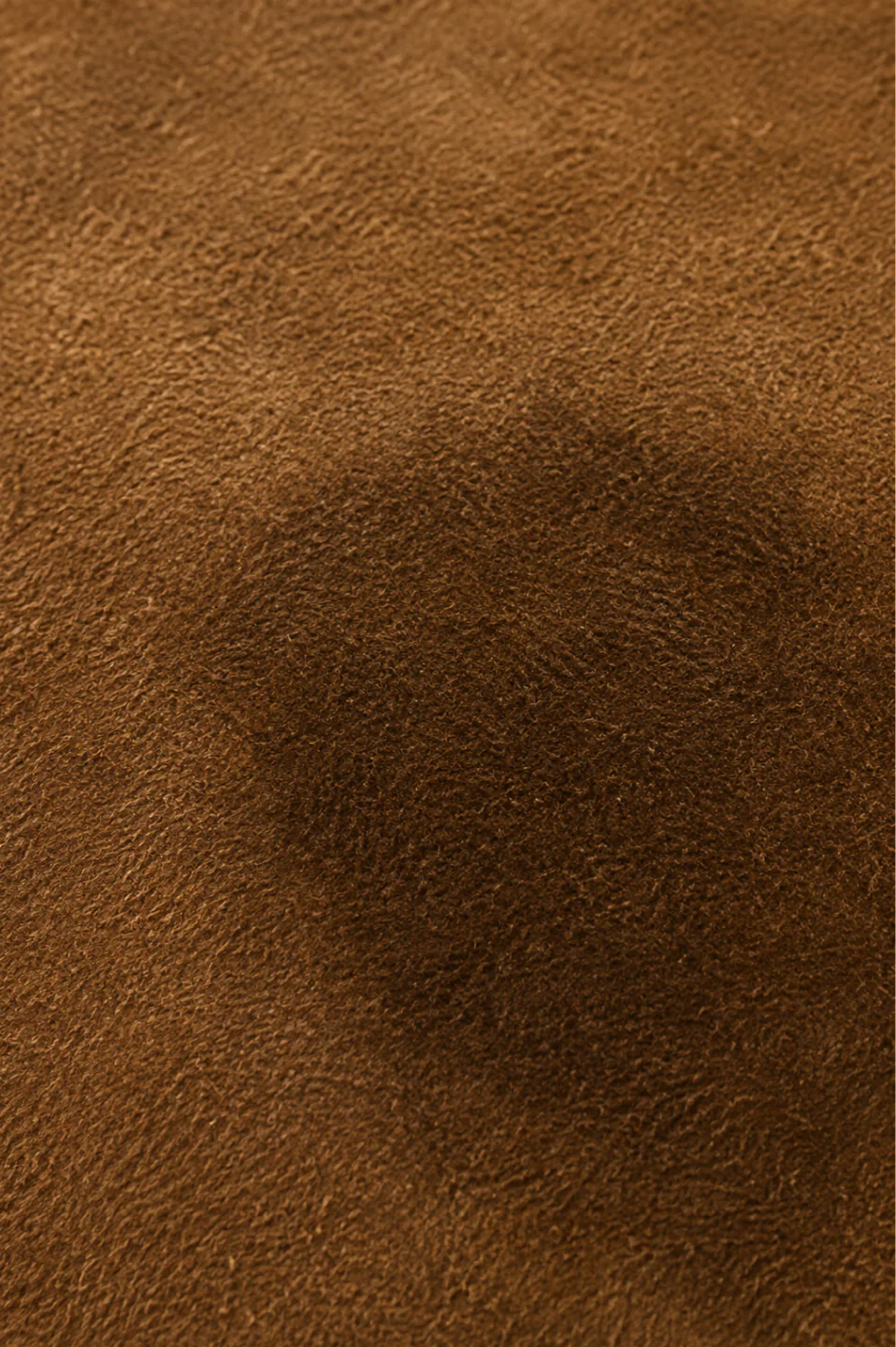
Body oil on suede: a broad darkened area that fades gradually into the surrounding panel with no boundary anywhere
03

Body oil

Even, edgeless darkening where people touch. Only noticed when a cushion is swapped.
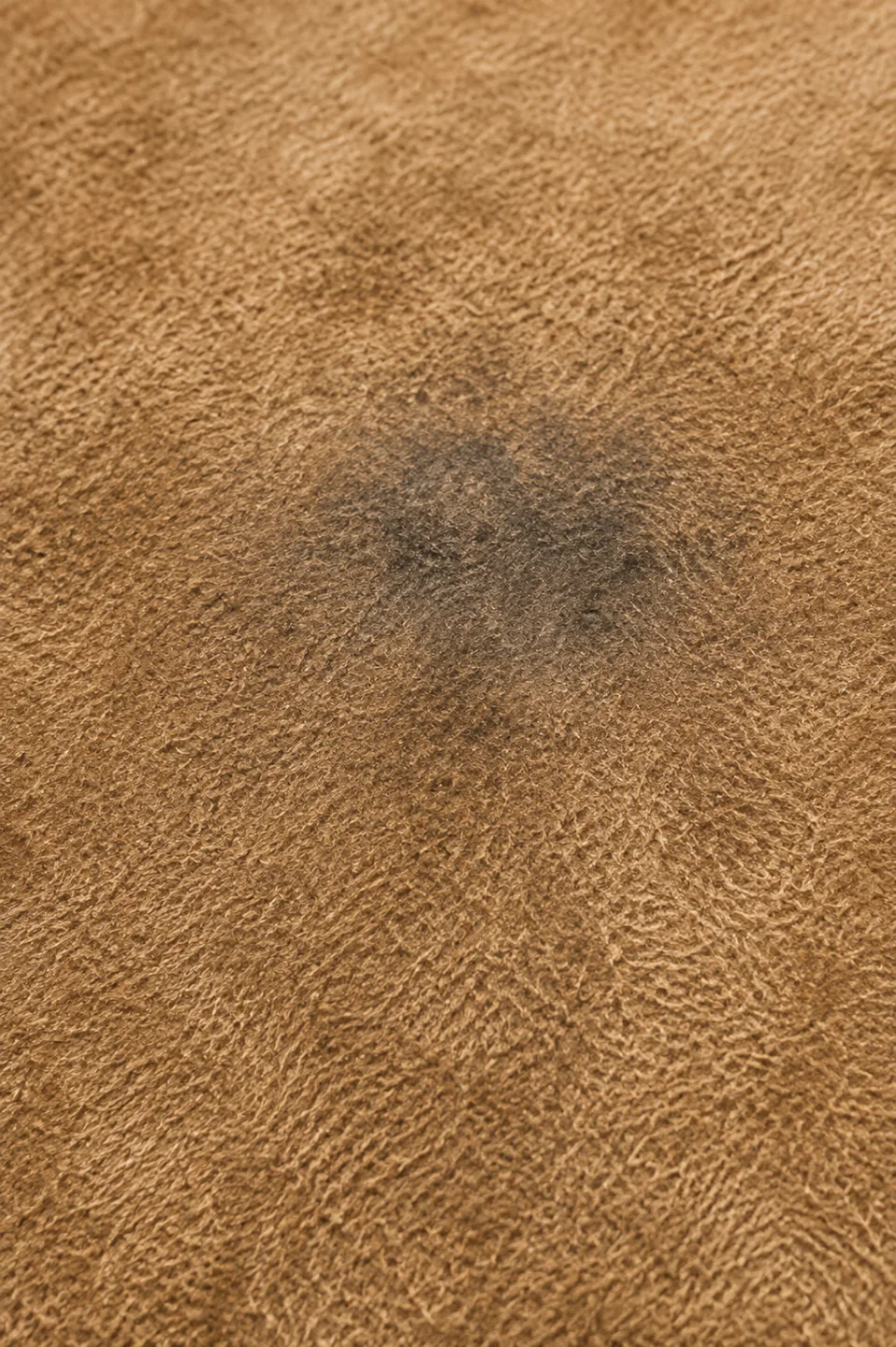
A grey-blue cast sitting in the nap of pale suede, colour that arrived from denim rather than from the hide
04

Dye transfer

A blue-grey cast from denim or a throw, lodged in the nap.
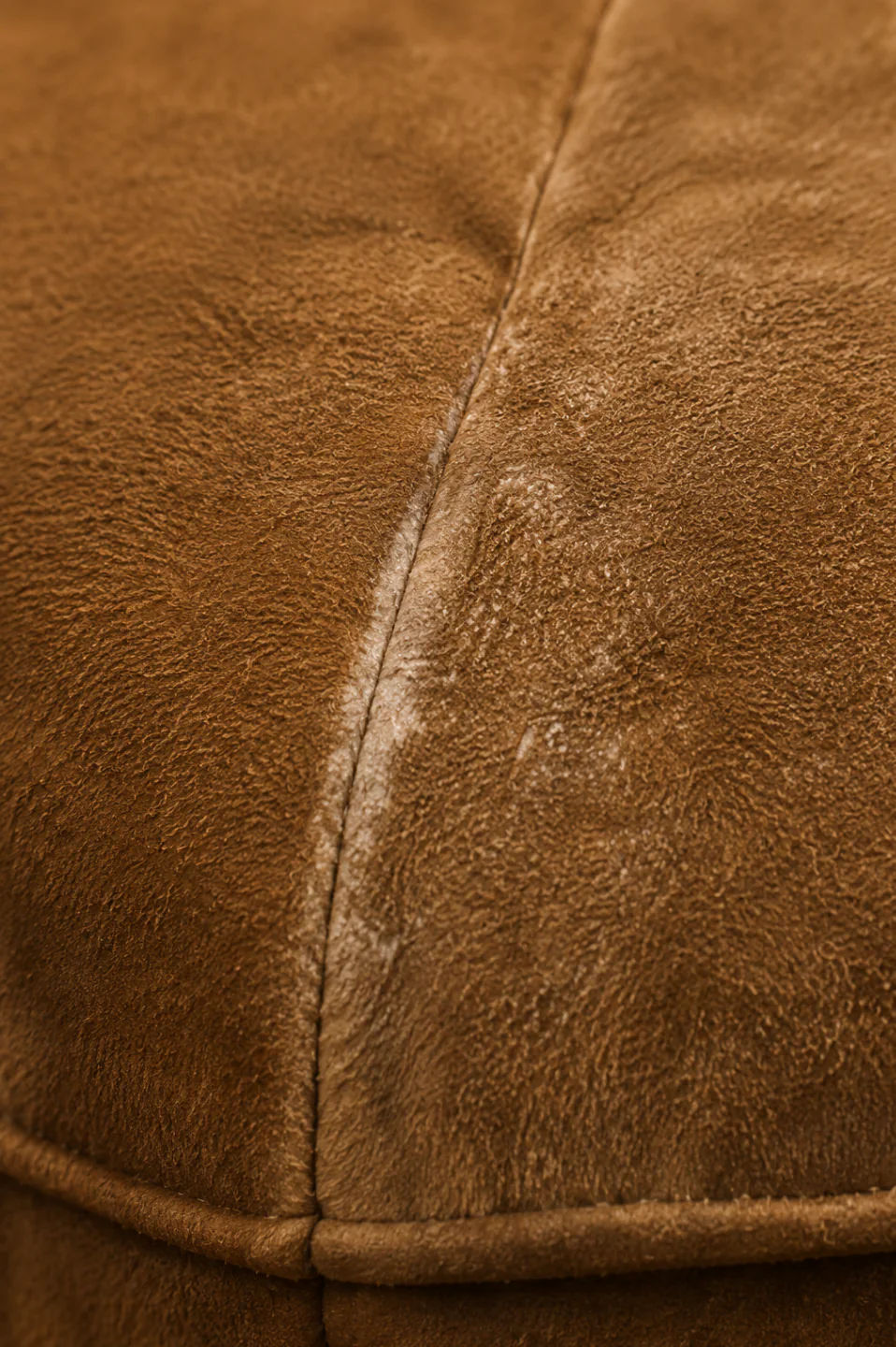
A piped suede seam rubbed smooth and shiny along its ridge, where the raised fibre has gone and the bare split is showing
05

Nap worn through

Smooth and shiny on a corner or piped edge. The fibre is gone. Not cleanable — that panel is a reupholstery job.
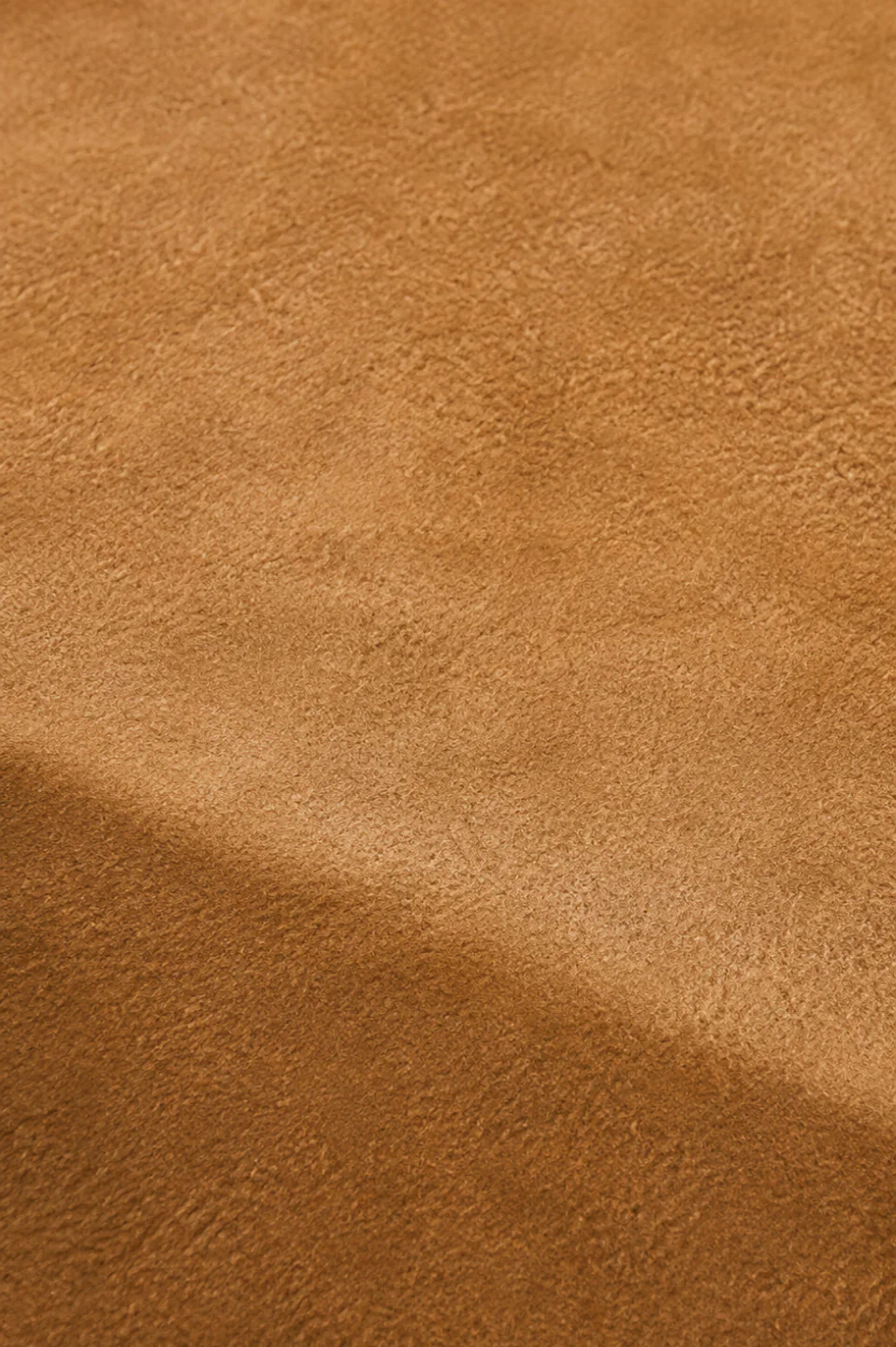
A suede panel faded flat and chalky above a crisp straight line, with the shaded original colour still full-strength below it
06

Sun fade

Flat and chalky, with a crisp line where a cushion shaded it. A re-dye, not a clean.

One household cleaner on all six leaves a seventh problem: a cleaned circle in an uncleaned panel. On suede furniture we work the whole panel to its seams. See stain and spot cleaning.
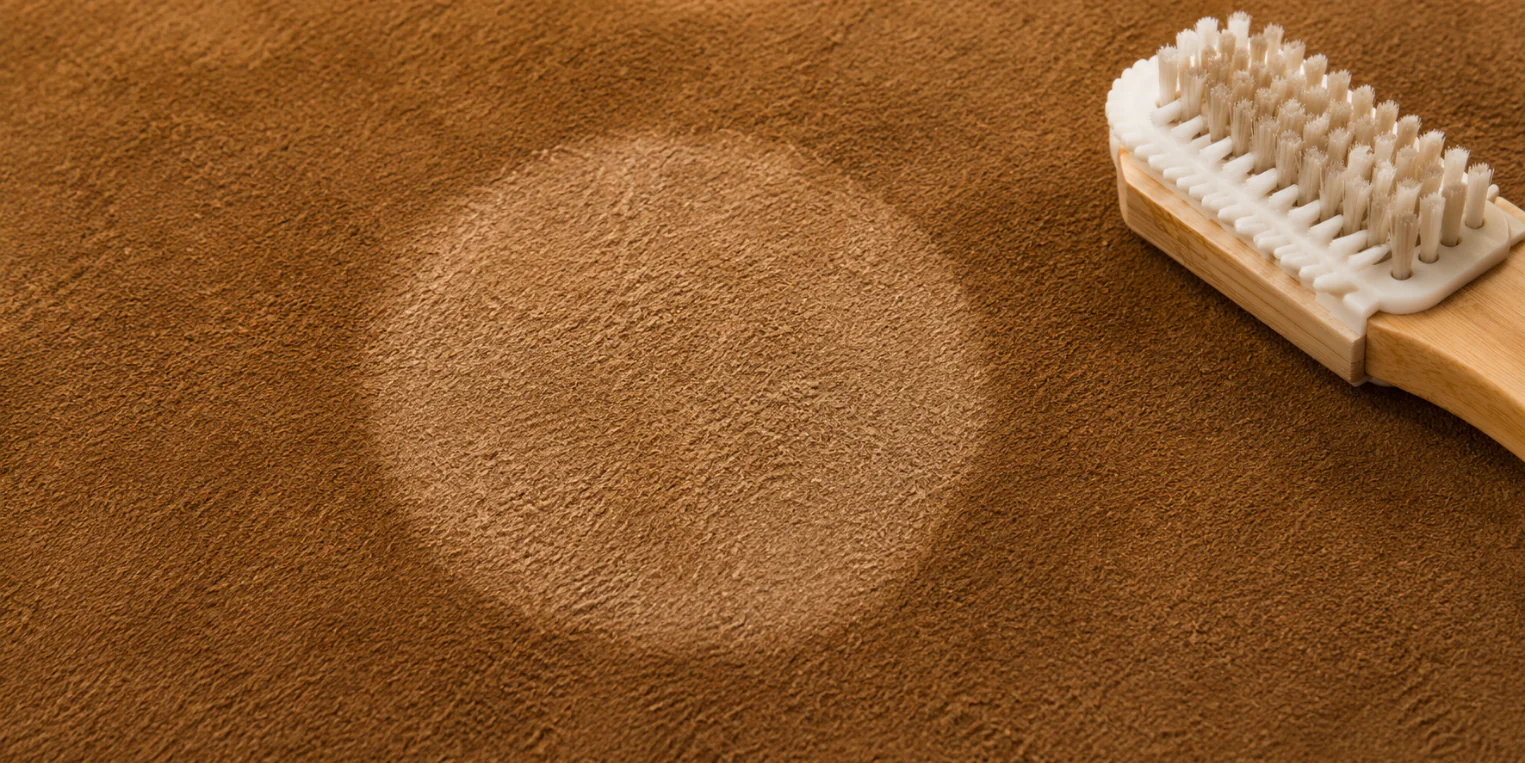
A pale cleaned circle in the middle of an otherwise untouched suede panel, with a brush beside it and a hard edge all the way round
The seventh problem
Where Suede Works Best

Suede Is a Specification Decision, Part by Part

Superb on some surfaces, a mistake eighteen inches away. Most suede furniture that fails early failed on one panel.
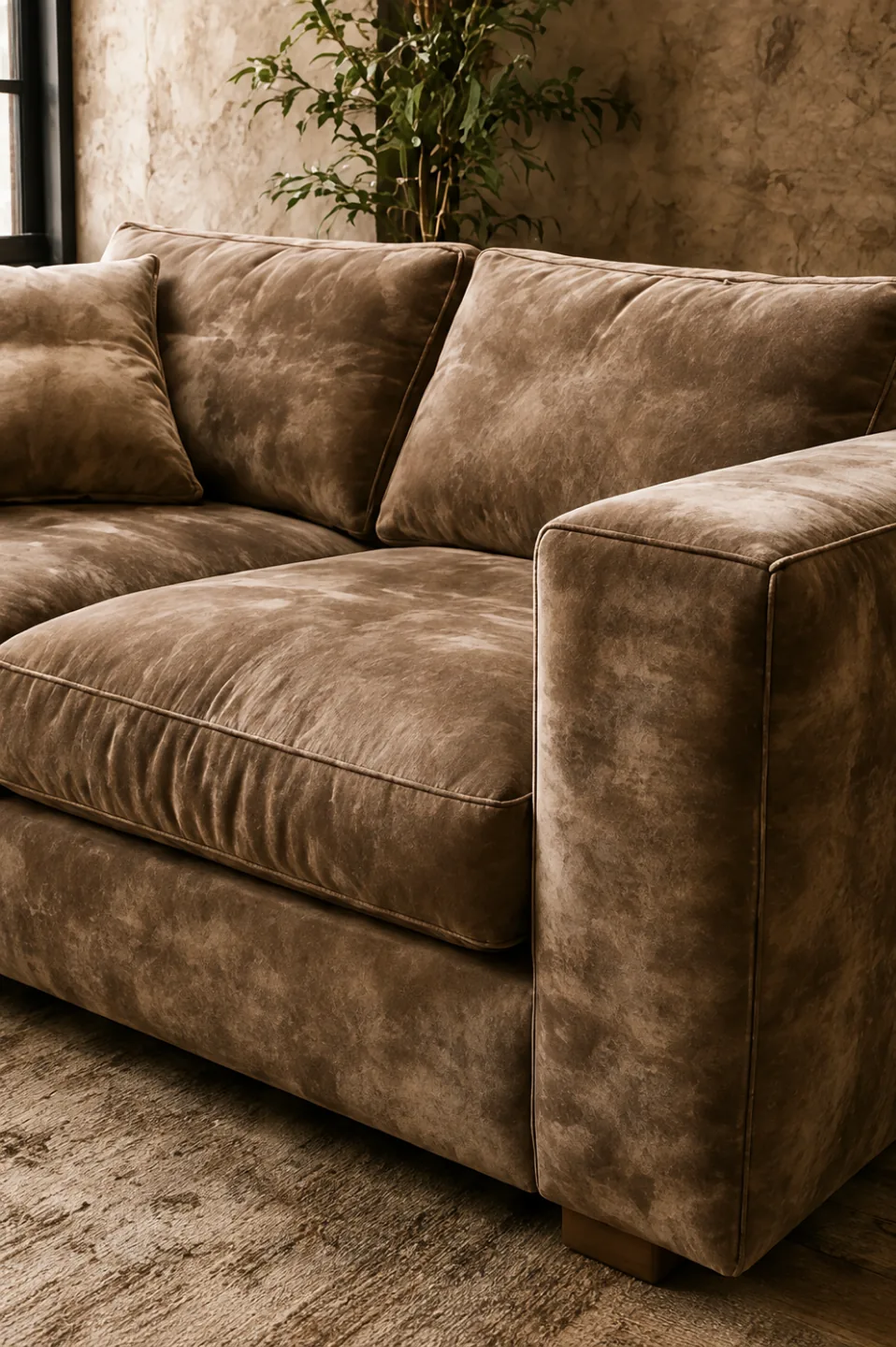
A brown suede sectional in a plastered living room, the seat and back cushions shading lighter and darker across the nap
At home One household, low traffic. Suede survives everywhere here except seat decks and arm tops — exactly where most sofas use it.
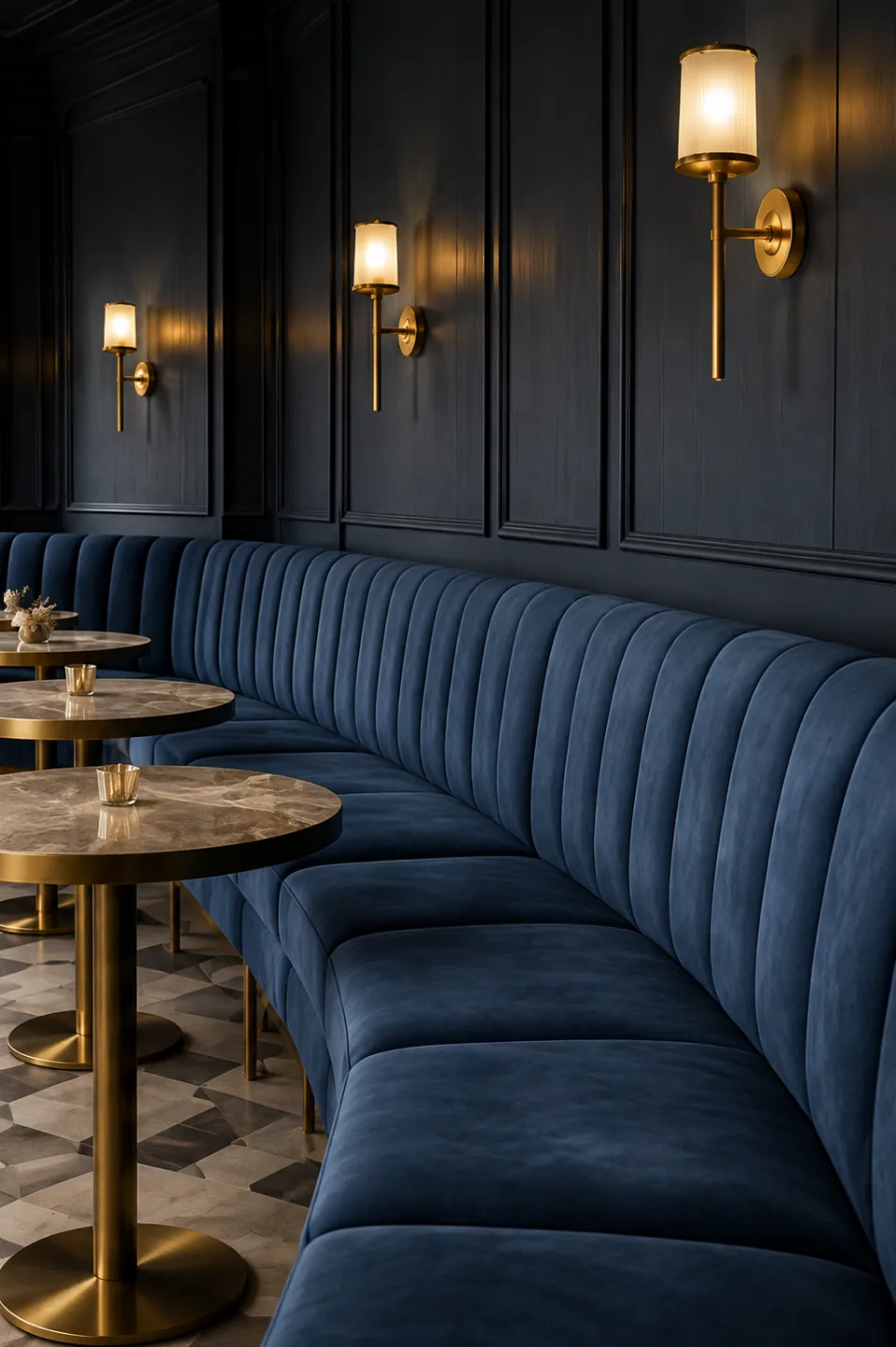
A channelled blue suede banquette running along a dark panelled bar wall under brass sconces
In a venue Channelled backs and banquette uprights take suede well. Seats do not. Plan a cleaning cycle, not a replacement.
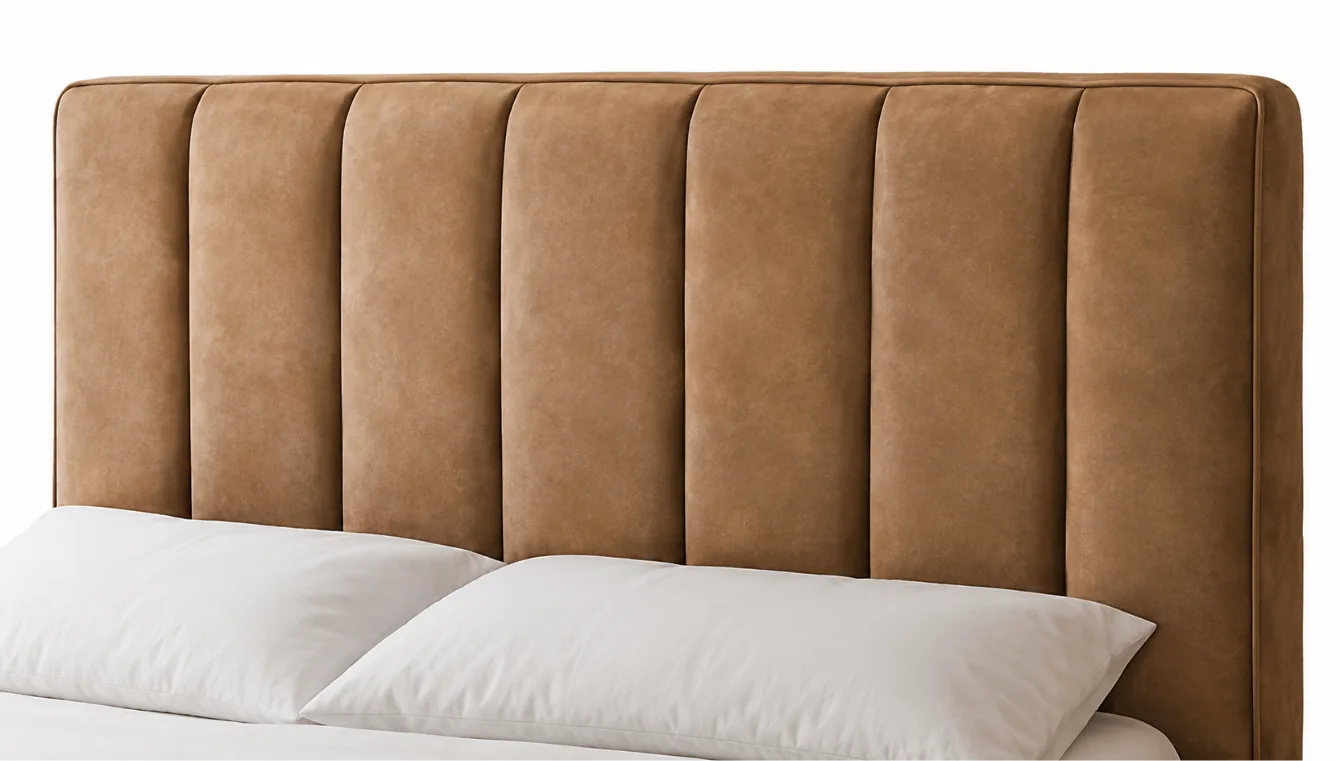
A suede headboard in fluted vertical panels above white pillows, with no contact surface at all
Excellent

Headboards & wall panels

No abrasion, no body oil.

Instead Nothing. Its best use in a room.
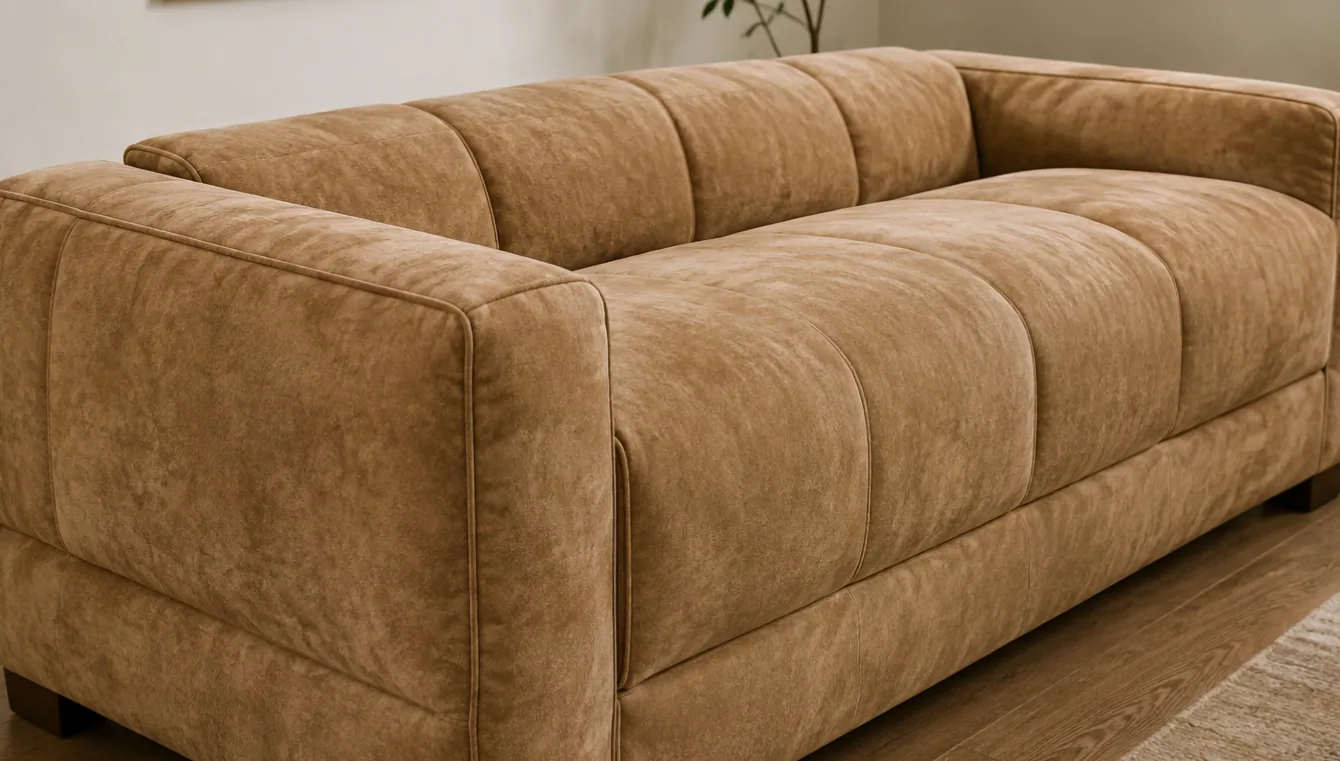
The outside back and side of a suede sofa seen from behind, the largest surface on the piece and rarely touched
Excellent

Outside backs & sides

Vertical and rarely touched.

Instead Nothing.
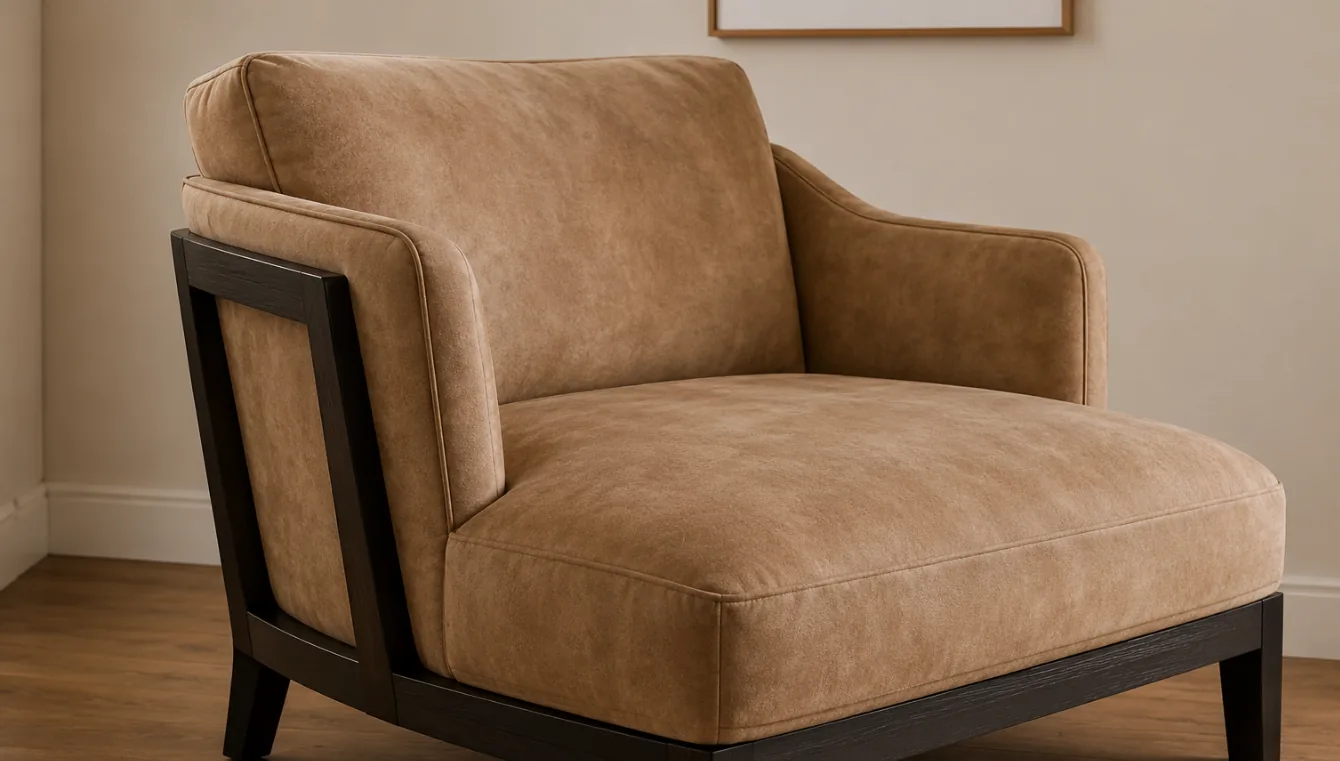
A suede armchair with a dark timber frame, its inside back taking only light intermittent contact
Good

Chair backs & inside backs

Light contact. Shine takes years.

Instead Nothing, if the seat differs.
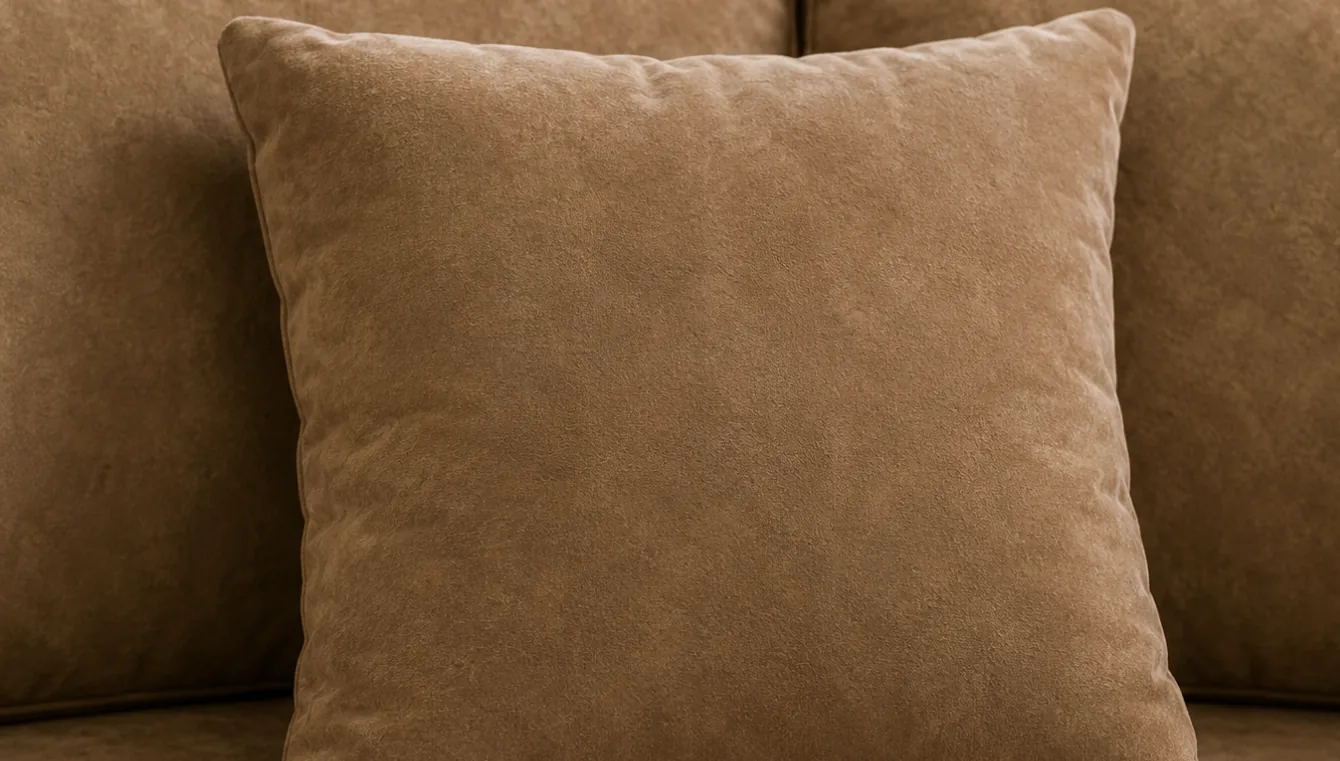
A square suede throw cushion resting against a suede sofa back, handled often but easy to rotate
Workable

Throw cushions & bolsters

Handled often, easy to rotate.

Instead Suede front, grain-leather back.
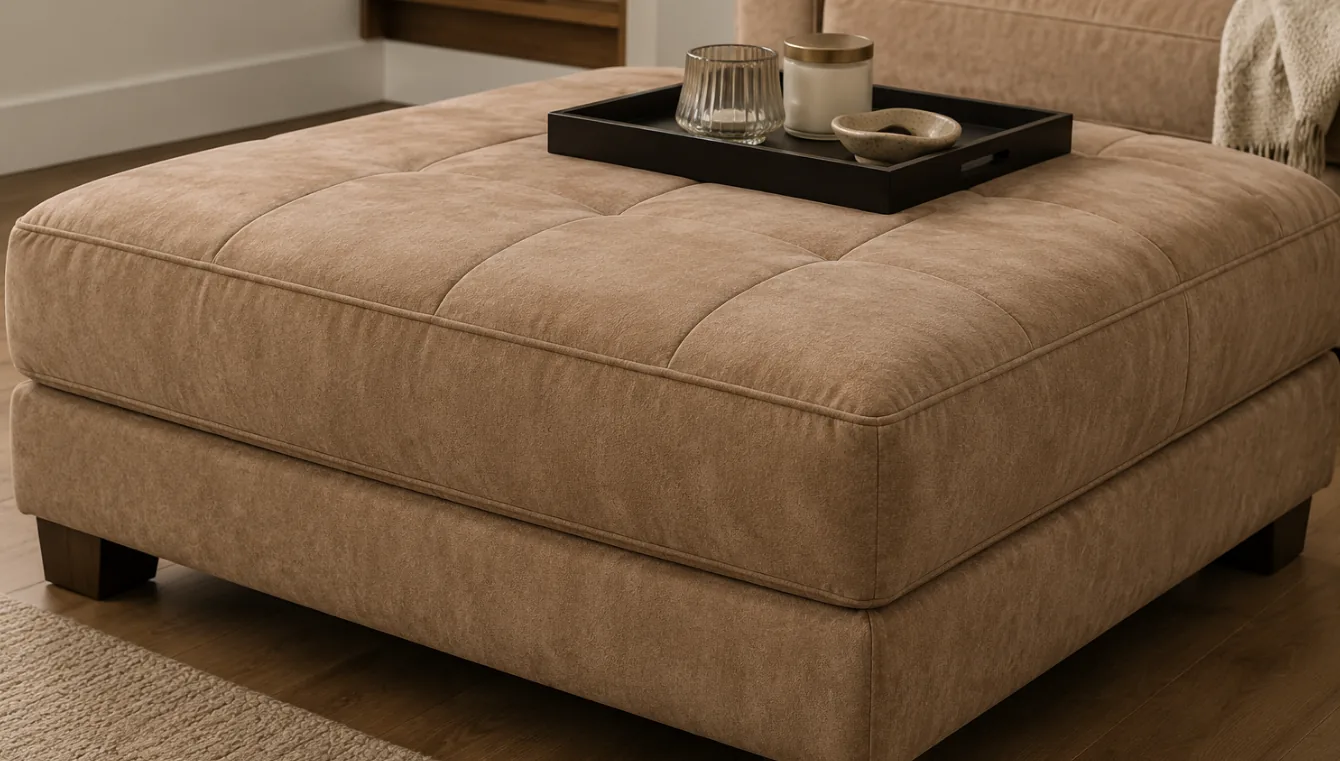
A large suede ottoman with a tray of glassware set on top of it, being used as a table
Depends

Ottomans & benches

Fine until feet and drinks arrive.

Instead Pigmented leather if it is used as a table.
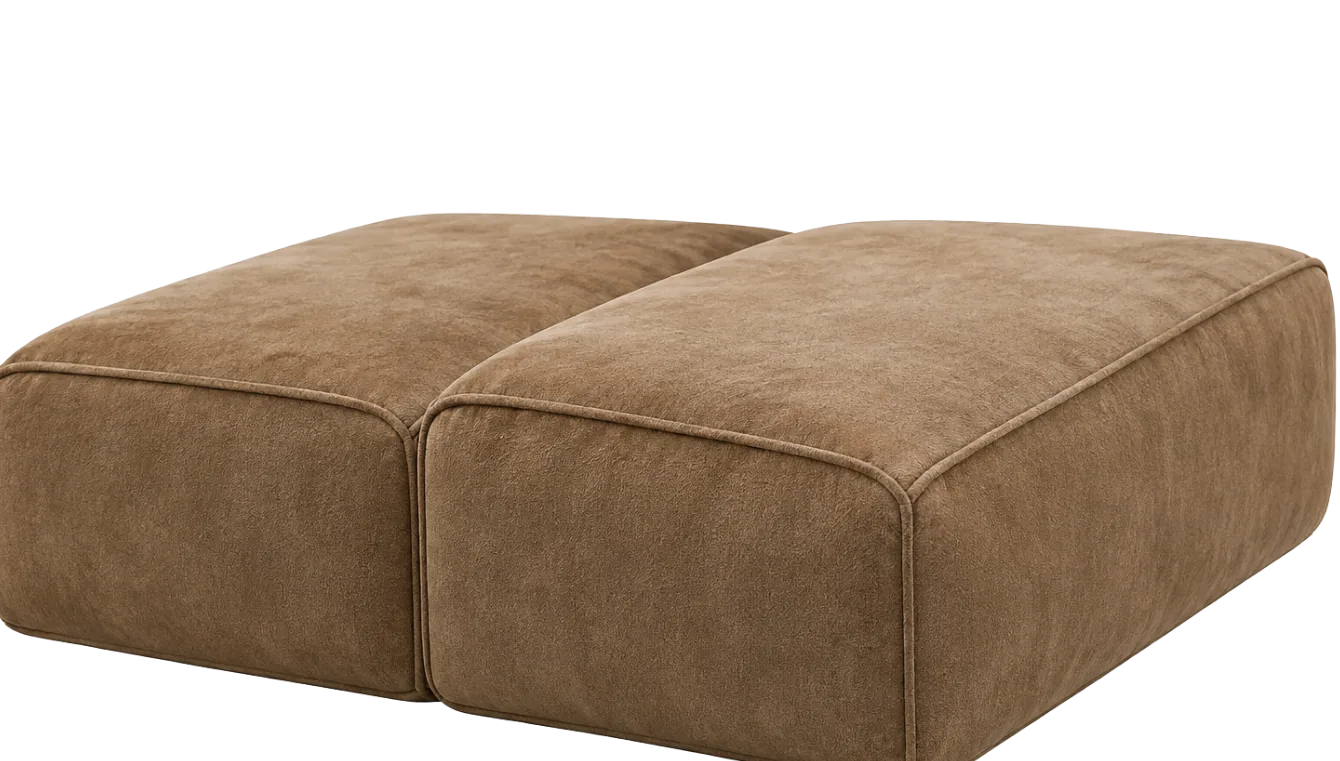
Two suede seat cushions on a sofa deck, the surface that takes constant pressure and body oil
Avoid

Sofa seat decks

Pressure plus oil. The nap mats into permanent shine.

Instead Pigmented or semi-aniline on the seat.
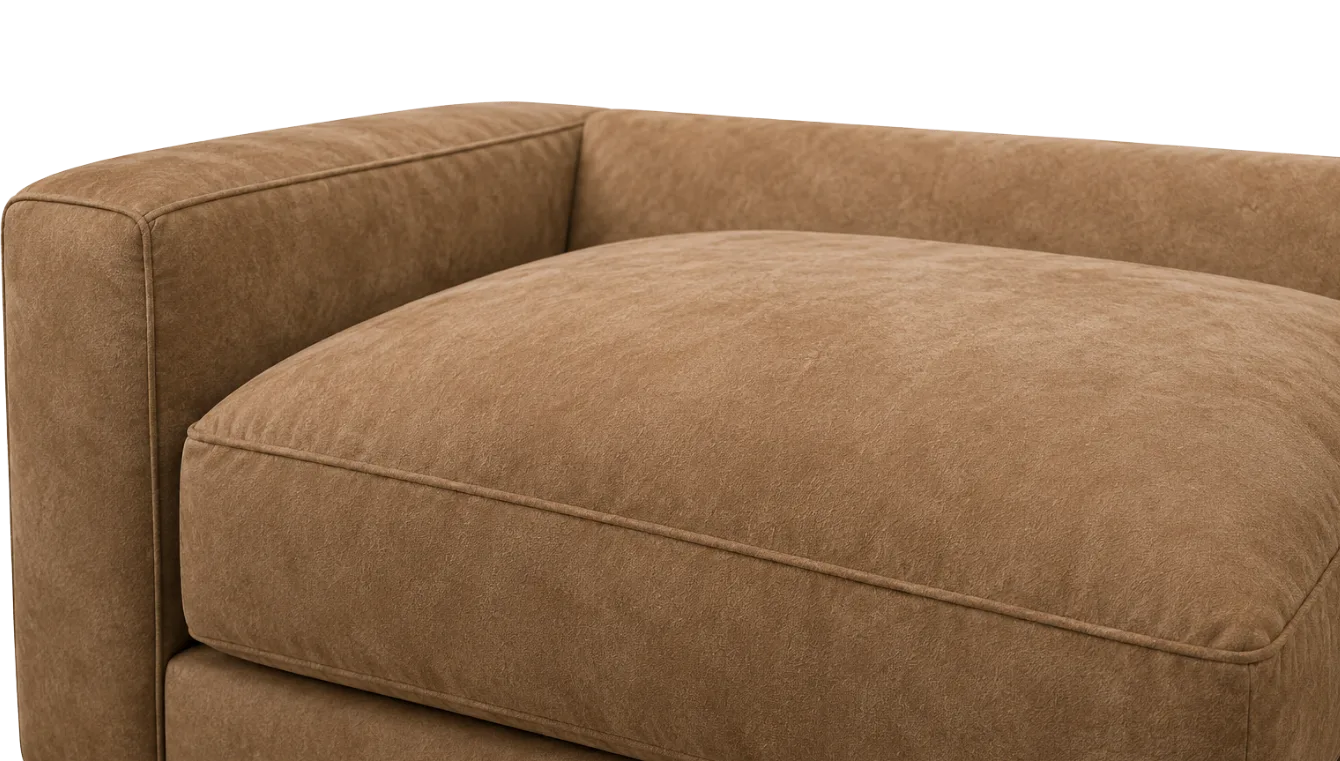
The top of a suede sofa arm, the highest-contact point on the piece and the first place shine appears
Avoid

Arm tops

The highest-oil contact point on a sofa.

Instead Grain leather arms, suede panels beside them.
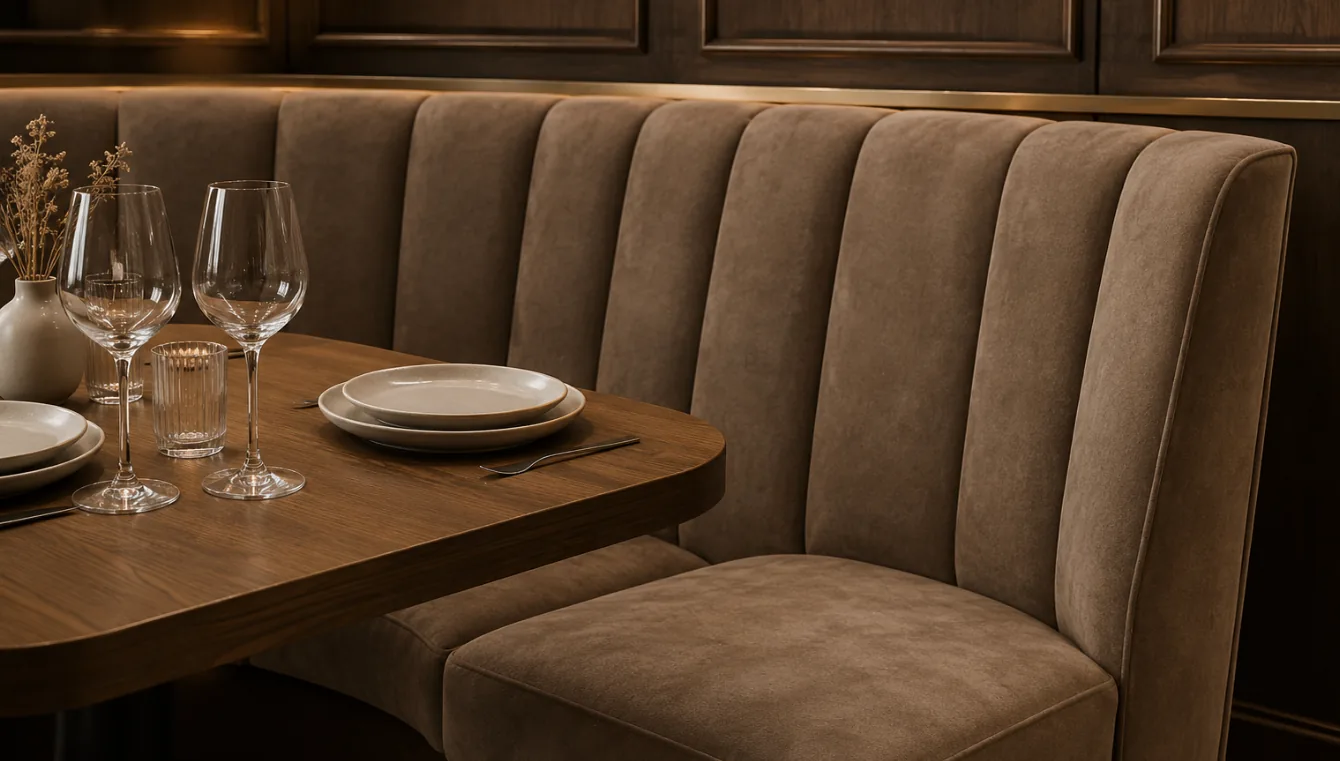
A fluted suede banquette at a restaurant table laid with plates and wine glasses
Avoid

Dining, bar & restaurant seats

Food, drink and sliding. Nothing survives a service.

Instead Performance fabric or pigmented leather.

The mix is the answer: suede where it is seen, something harder where it is used. Commissioning a piece? Talk to the workshop first.

Suede Care, Simple Rules

Two Short Lists Will Keep Suede Furniture Alive for Years

Most suede furniture we are asked to rescue was recoverable until someone applied something. Nothing stands between the product and the fibre.
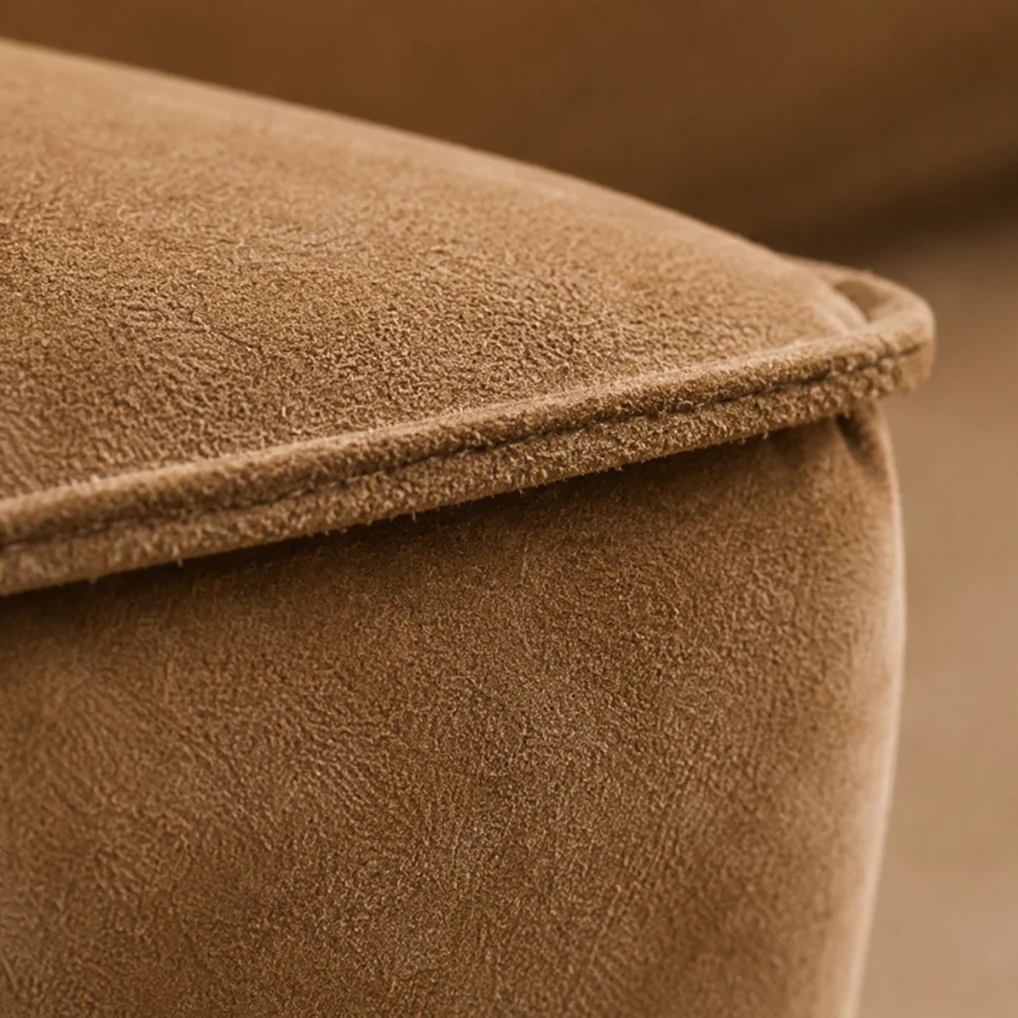
Macro of a piped suede cushion edge, the raised fibre still standing along the welt
Brush here first Piped edges go bald before any flat panel. Weekly brushing along the welt is most of the maintenance suede furniture needs.
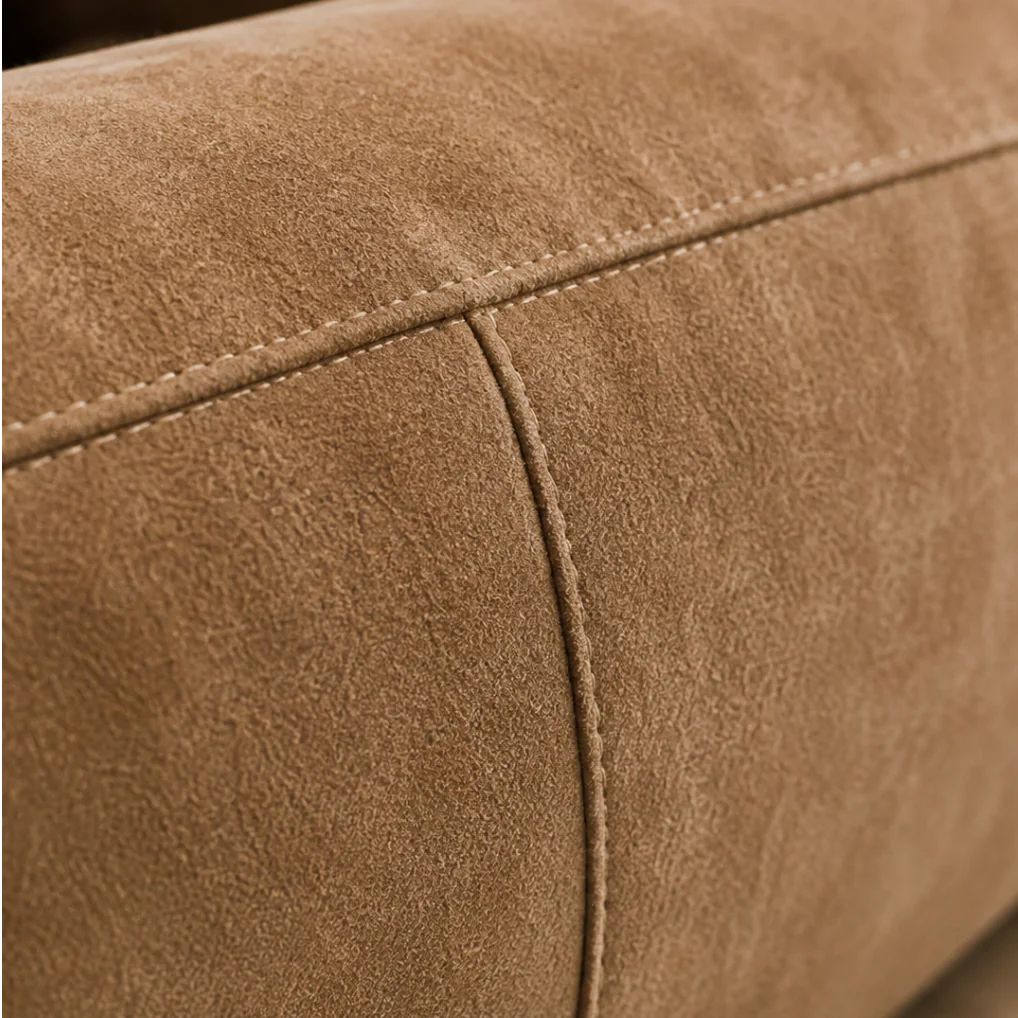
Macro of a suede cushion corner where two stitched seams cross, the nap darker in the fold
Never wet here Corners hold body oil and drink anything sprayed on. A damp cloth leaves a ring you will see in a year.

Do this

  • Brush weekly, one direction
  • Vacuum with a soft brush head, never a beater bar
  • Blot straight down with a dry cloth, then stop
  • Keep it out of direct sun
  • Photograph it new — our colour reference

Never this

  • Never wipe damp, or spray anything on
  • Never use conditioner, cream, balm or oil
  • Never use a magic eraser or abrasive pad
  • Never dry it with a hairdryer or heater
  • Never scrub one spot — you get a clean circle

Suede does not want to be conditioned. With no topcoat to hold it, conditioner sinks in and darkens permanently. Our conditioning service is for the other materials.

What It Is Called on the Tag

Nine Names for Four Different Materials

Names we find on tags that customers read as "suede". Hide or synthetic is the only distinction that matters.
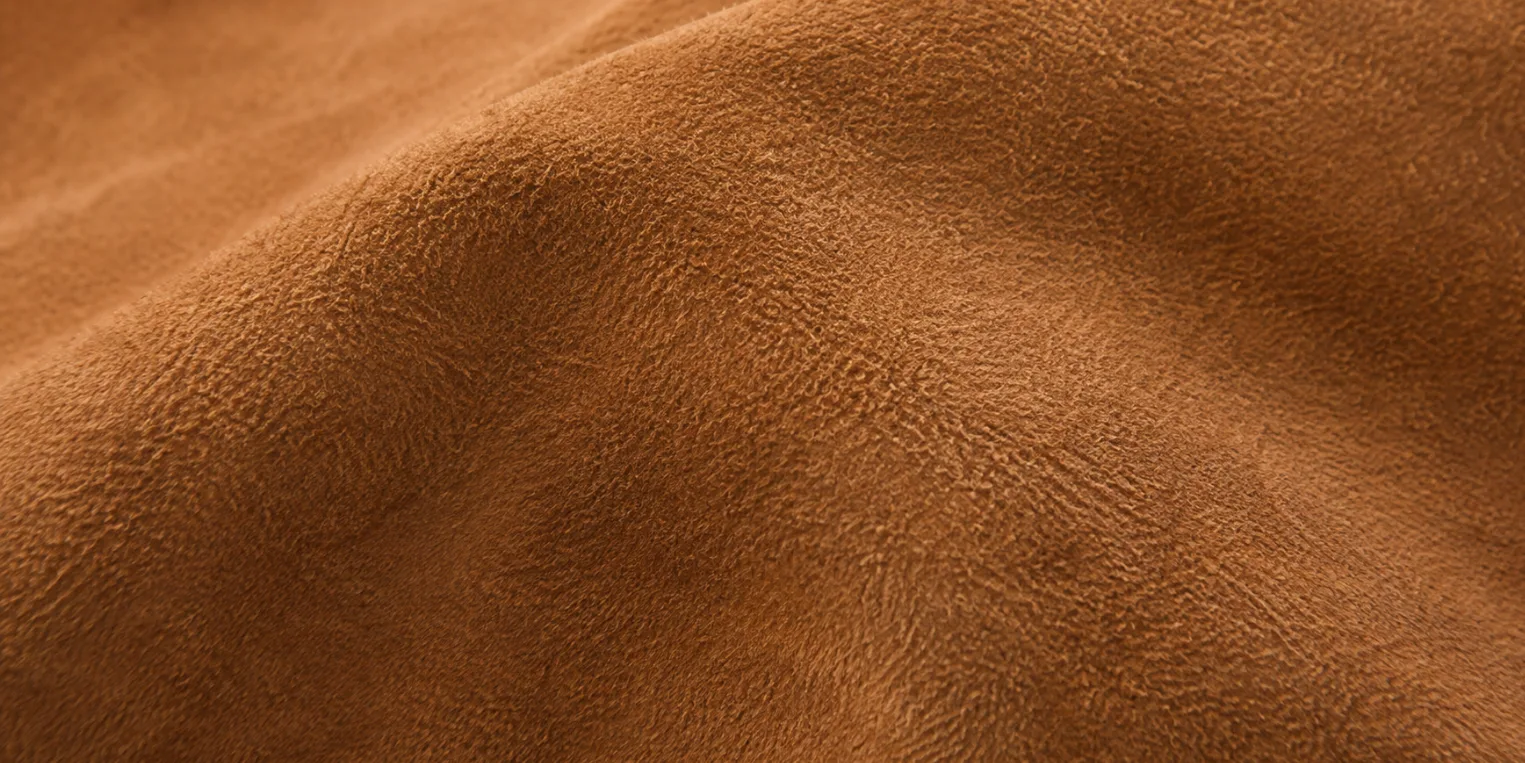
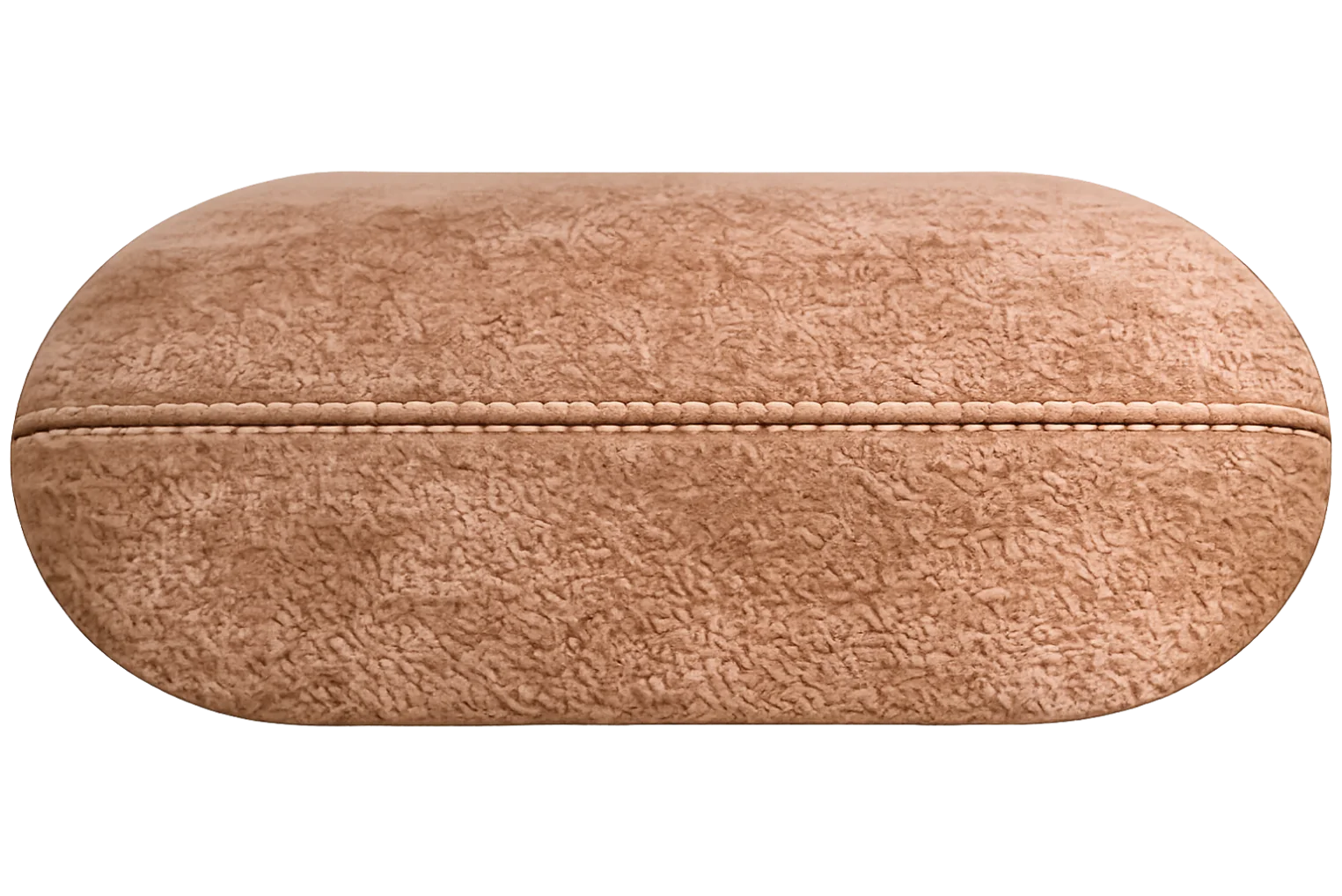
Macro of real suede: a warm tan inner split brushed to a deep, uneven nap with no grain pattern anywhere on it

Suede

Real leather

The inner split of a hide, brushed to a nap.
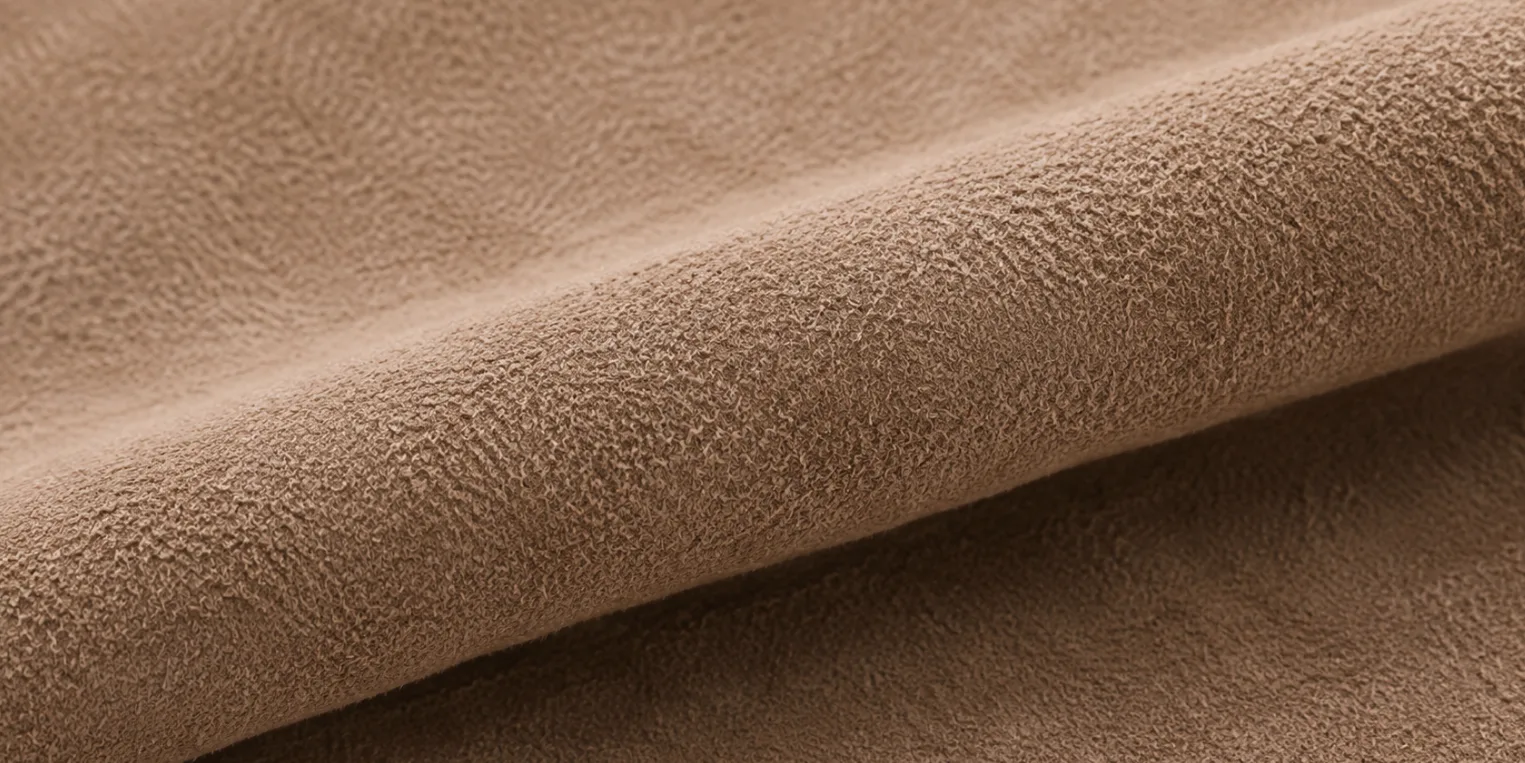
Macro of pale taupe split suede folded over itself, the nap catching light differently on each side of the fold

Split suede

Real leather

The same thing, named literally — all furniture suede is split leather.
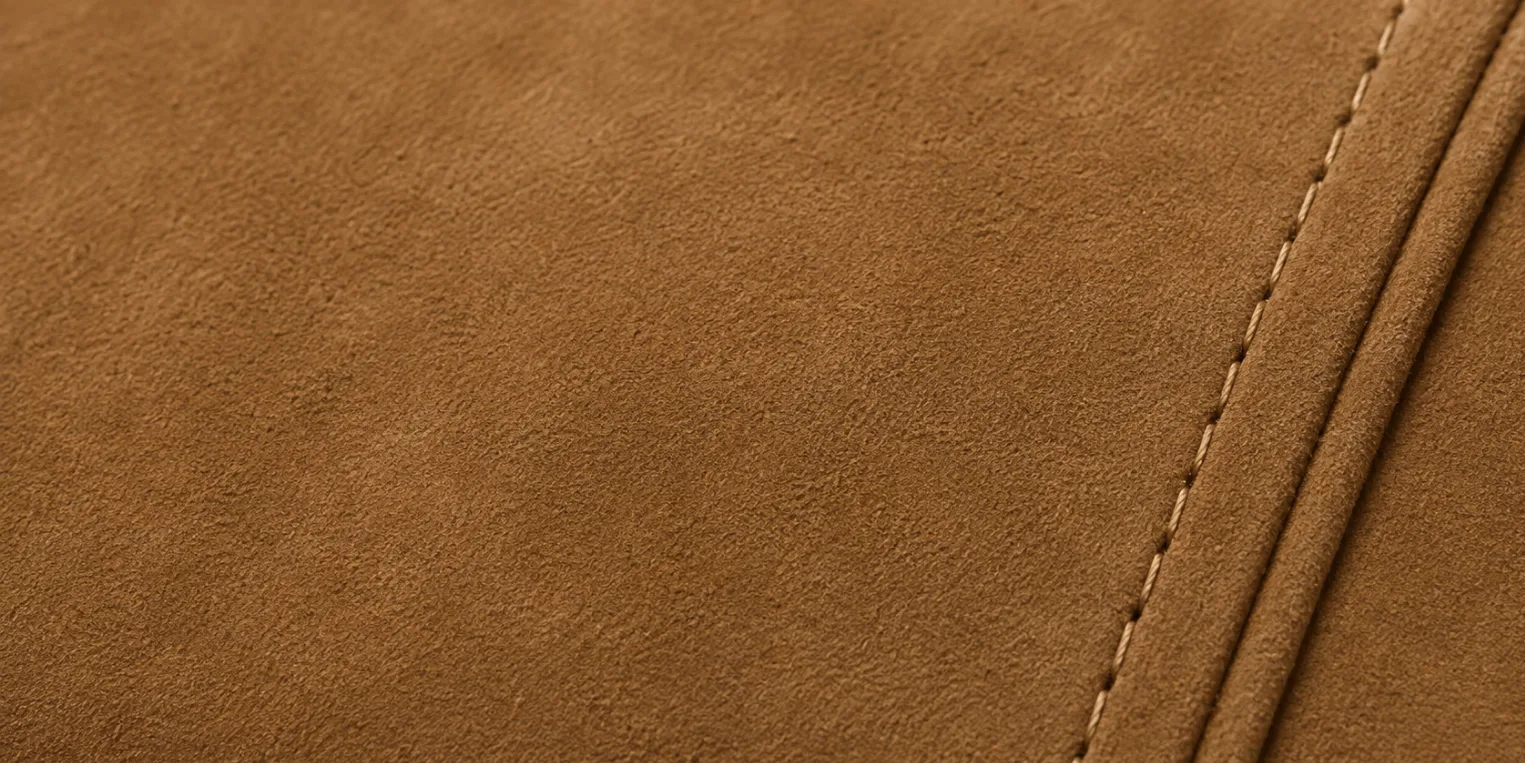
Macro of nubuck: the outer grain face sanded to a short, tight, even nap in warm tan, with two stitched seams running down the right side

Nubuck

Real leather

A grain hide sanded on its outer face. Shorter, denser nap. See nubuck.
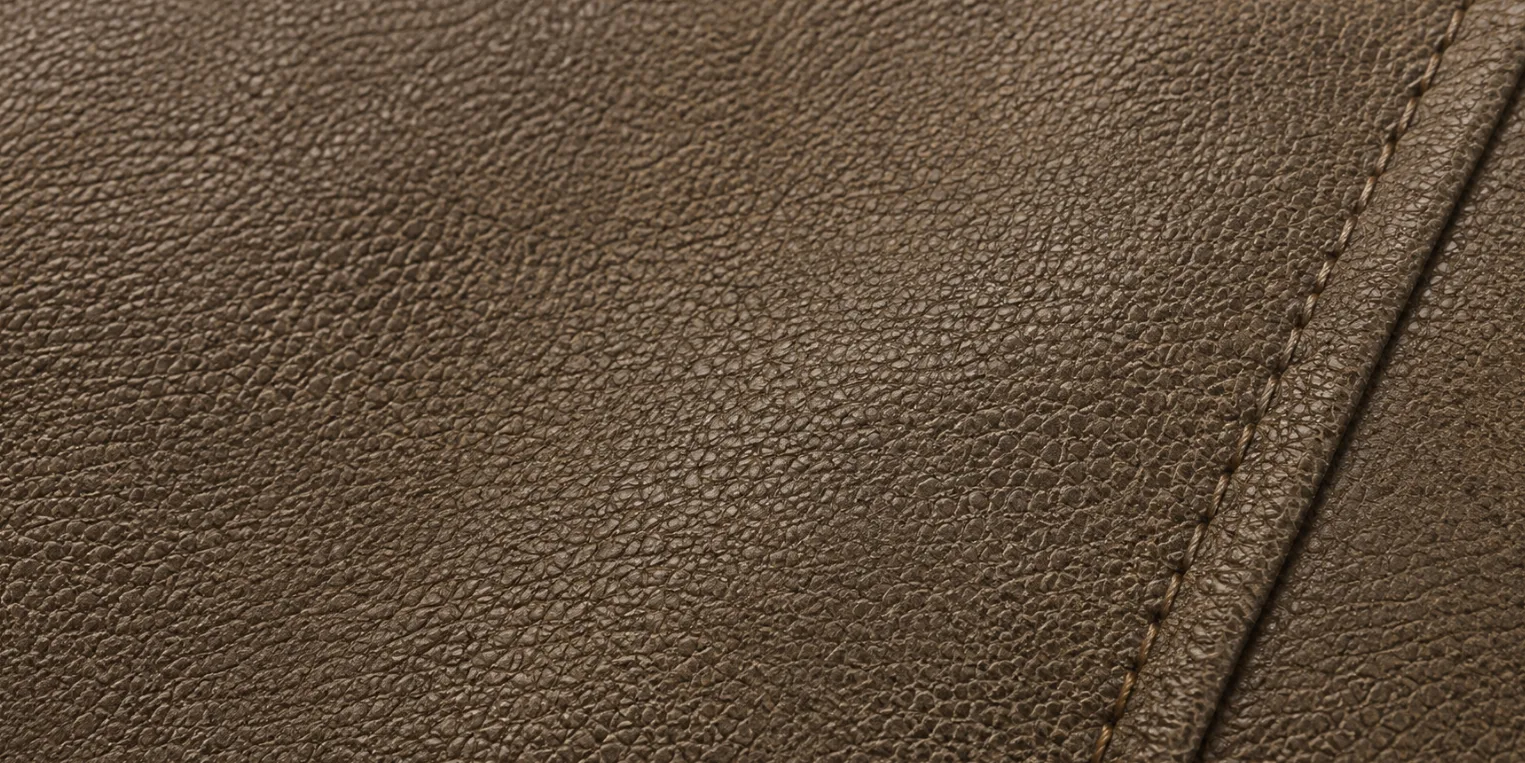
Macro of sueded leather: a grain hide brushed only lightly, so its pebbled grain pattern still reads clearly under a soft matte surface beside a stitched seam

Sueded / brushed leather

Real leather

Vague trade term. Check an edge.

Macro of greige polyester microsuede, the nap uniform and cloth-like with a soft fabric drape rather than a hide fold

Microsuede / microfibre

Synthetic

Polyester brushed to imitate suede. The commonest thing sold as "suede furniture".
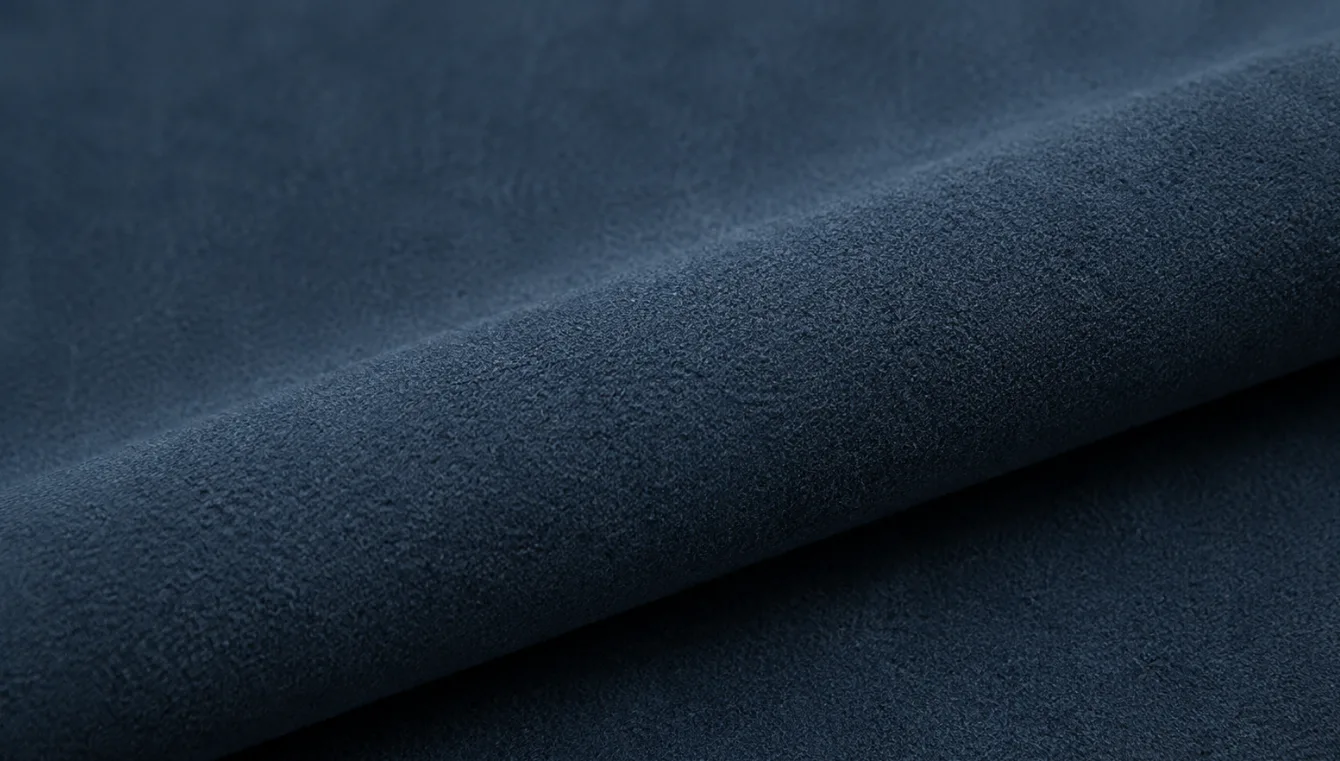
Macro of navy Ultrasuede microfibre, a dense even pile with the flat colour of a dyed cloth

Ultrasuede

Synthetic

A trademark, not a material — Toray's polyester microfibre. Cleaned with fabric methods.
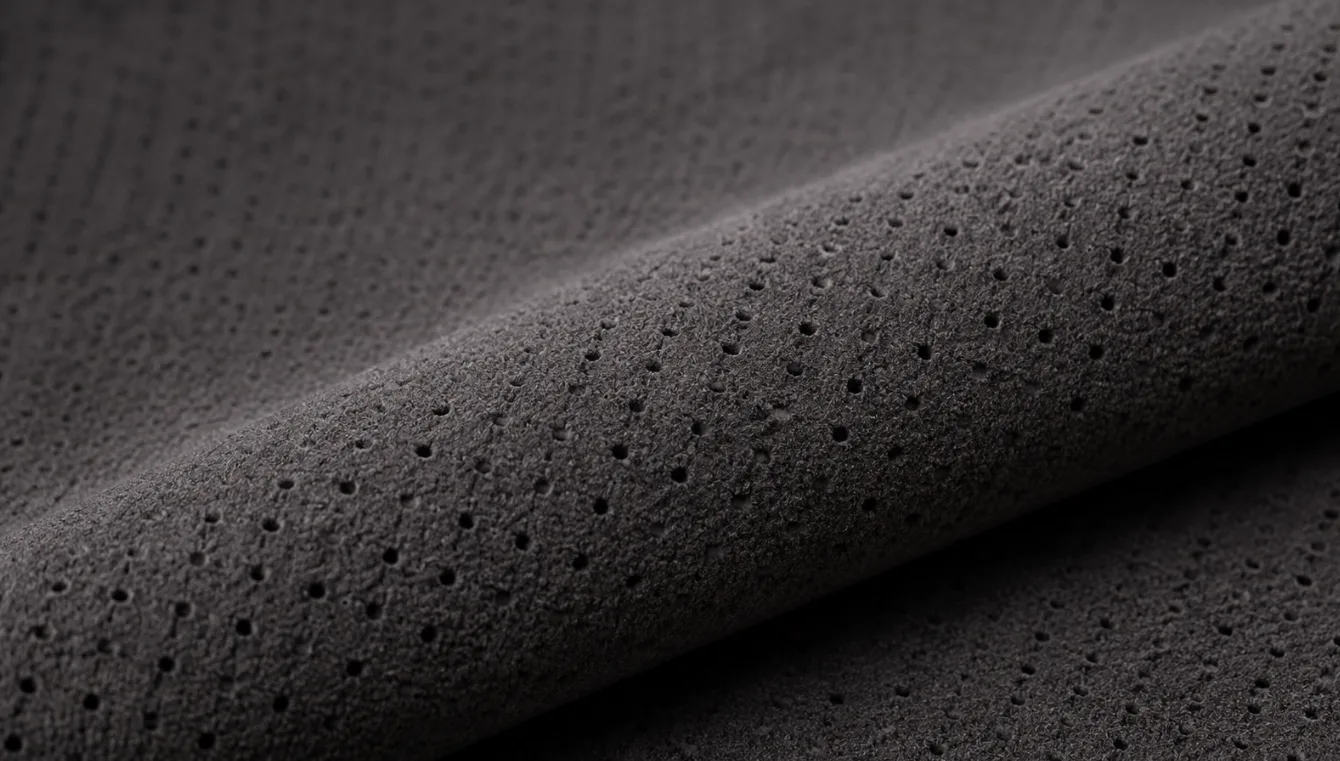
Macro of grey Alcantara perforated with a regular grid of ventilation holes, the way it is specified in car interiors

Alcantara

Synthetic

Branded microfibre from car interiors, made by Alcantara S.p.A. Not suede.
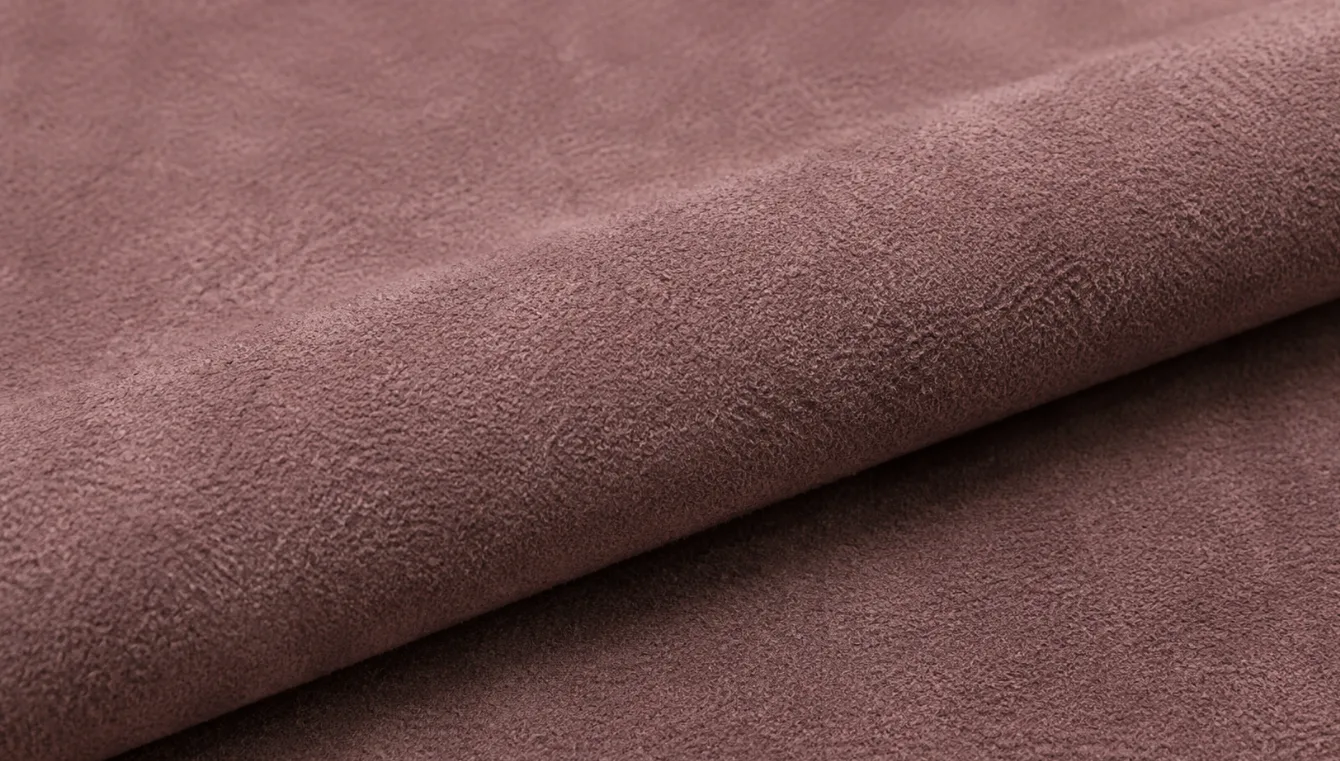
Macro of dusty pink faux suede, the brushed polyester face creasing in soft folds over a knit backing

Faux suede / suedette

Synthetic

Knit backing, brushed polyester face. Same family as faux leather.
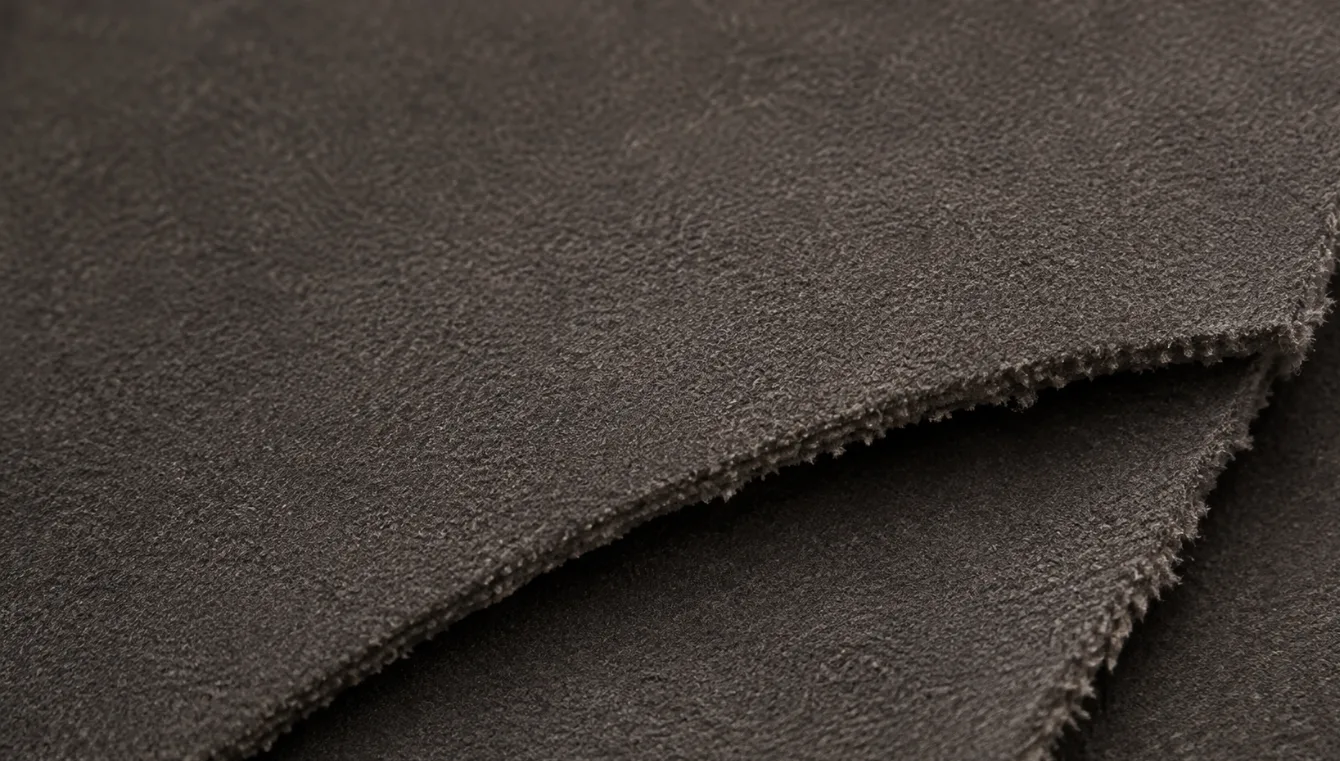
Macro of bonded suede folded to expose its cut edge, where the brushed face separates from the fabric backing underneath

Bonded suede

Mostly synthetic

Leather fibre glued to a backing. Delaminates like bonded leather.

Replacement hide is chosen in person, not off a photograph — at a Manhattan counter, matching nap length and direction against your panel in daylight.

Common Questions

Suede Questions

Is suede real leather?

Yes — genuine leather, simply a different layer of the hide. But much of what is sold as suede furniture is microsuede: polyester, not leather. Check the back for an irregular hide edge and a fibrous reverse.

Can suede furniture be cleaned?

Yes, but dry and mechanically. Soil sits between the fibres, not on a film, so it is vacuumed and brushed out, degreased, and the nap lifted again. At home on suede furniture: vacuum, brush one direction, stop there.

Can suede be restored or re-dyed?

Yes, and done properly it stays suede: dye is airbrushed into the fibre rather than forming a film, then the nap is lifted. Nap worn through, deep oil saturation and suede already sealed with a coating are reupholstery conversations.

What is the difference between suede and microsuede?

Not grade — leather against plastic. Microsuede, also sold as faux suede, Ultrasuede or Alcantara, is polyester. It comes on rolls, stretches both ways and beads a water drop. Real suede comes as hides, gives more one way, and absorbs the drop on contact.

Is suede a good choice for a sofa?

Excellent on vertical, low-contact surfaces — headboards, wall panels, outside backs, chair backs. Poor on seat decks, arm tops and dining seats, which mat the nap into permanent shine. On suede furniture in daily use, suede on the back with a harder seat beats suede throughout.
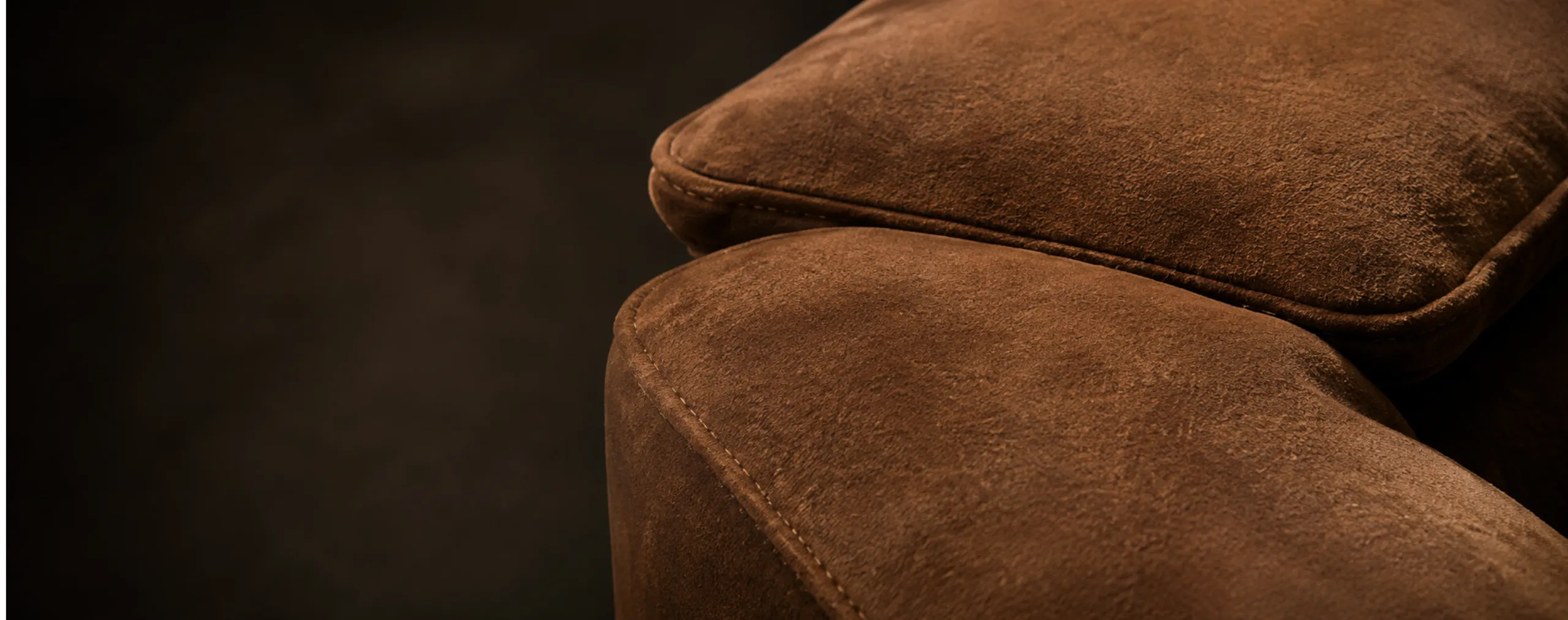
The arm and seat cushion of a tan suede sofa lit from one side against a dark room, the nap reading light on the roll and dark in the fold
Your Suede Has a History

We Try to Preserve It, Not Erase It

Send two photographs, the whole piece and the worst area, and we will tell you what we can reach. Cleaning, re-dyeing and reupholstery in-house, with pickup and delivery across New York City and New Jersey.

Or talk it through — (347) 310-7483 · New York City & New Jersey

Scroll to Top