
Furniture repair pickup and delivery
Out and back
Furniture repair pickup and delivery is the exception on a commercial job, not the default. Almost all commercial leather furniture in New York is repaired where it stands — and when a piece does travel, the collection is run as a chain of custody.

In short
Commercial pickup and delivery for leather furniture repair in New York.
Leather Restore PRO collects leather sofas, booths, chairs and loose seating from businesses across the five New York City boroughs, repairs them at our workshop, and returns them to the room they came from. Long Island and northern New Jersey are served on site instead.
Collection is part of a repair project, not a service sold on its own. Most commercial leather furniture is repaired on site; a piece is only collected when frame, foam or full recover work makes that impossible.
- Service
- Pickup and delivery for commercial furniture repair, restoration, reupholstery and maintenance — wrapping, collection, transport, workshop work and return.
- Service area
- Collection runs across all five New York City boroughs — Manhattan, Brooklyn, Queens, the Bronx and Staten Island. Long Island and northern New Jersey are served on site.
- When a piece travels
- Only for a broken frame, foam cut to a new pattern, or a full recover. Colour, cracking, tears and seam repairs are done in the room.
- Cost
- Included in the project quote. Heavy or awkward collections are a separate written line, quoted before the project starts and never added afterwards.
- Building access
- A certificate of insurance is filed with building management before a loading dock or freight elevator is booked.
- Who it is for
- Materials
-
Every upholstery material we repair travels the same way. Bonded and faux leather are assessed before collection, as they often cannot be repaired at all.
Leather types
Leather grades
Other upholstery materials
The test
Does this piece have to leave at all?Answered in the room, before a date is offered.
Every request for furniture pickup for repair gets the same first question — not when can you collect, but whether the piece needs to travel at all. Moving it costs a freight window, costs you the seating, and adds two journeys where the damage risk is highest.

Lane 01 · Stays No collection
Repaired where it stands.
Surface work does not need a bench. It needs access, ventilation and an empty room — which is a scheduling problem, not a transport one.
- —
Colour loss, fading and dye transfer
- —
Cracking and peeling topcoat
- —
Seam splits and open stitching
- —
Tears, holes, punctures and burns
- —
Scuffs, scratches and worn arm caps
- —
Single panel replacement
- —
Built-in banquettes, fixed booths, bar fronts — joinery, never collected
A built-in run is screwed to the wall or the floor. Removing it means a carpenter before a technician ever touches leather, so it is worked on in place as a rule.
Lane 02 · Travels Collection justified
Three reasons to move it.
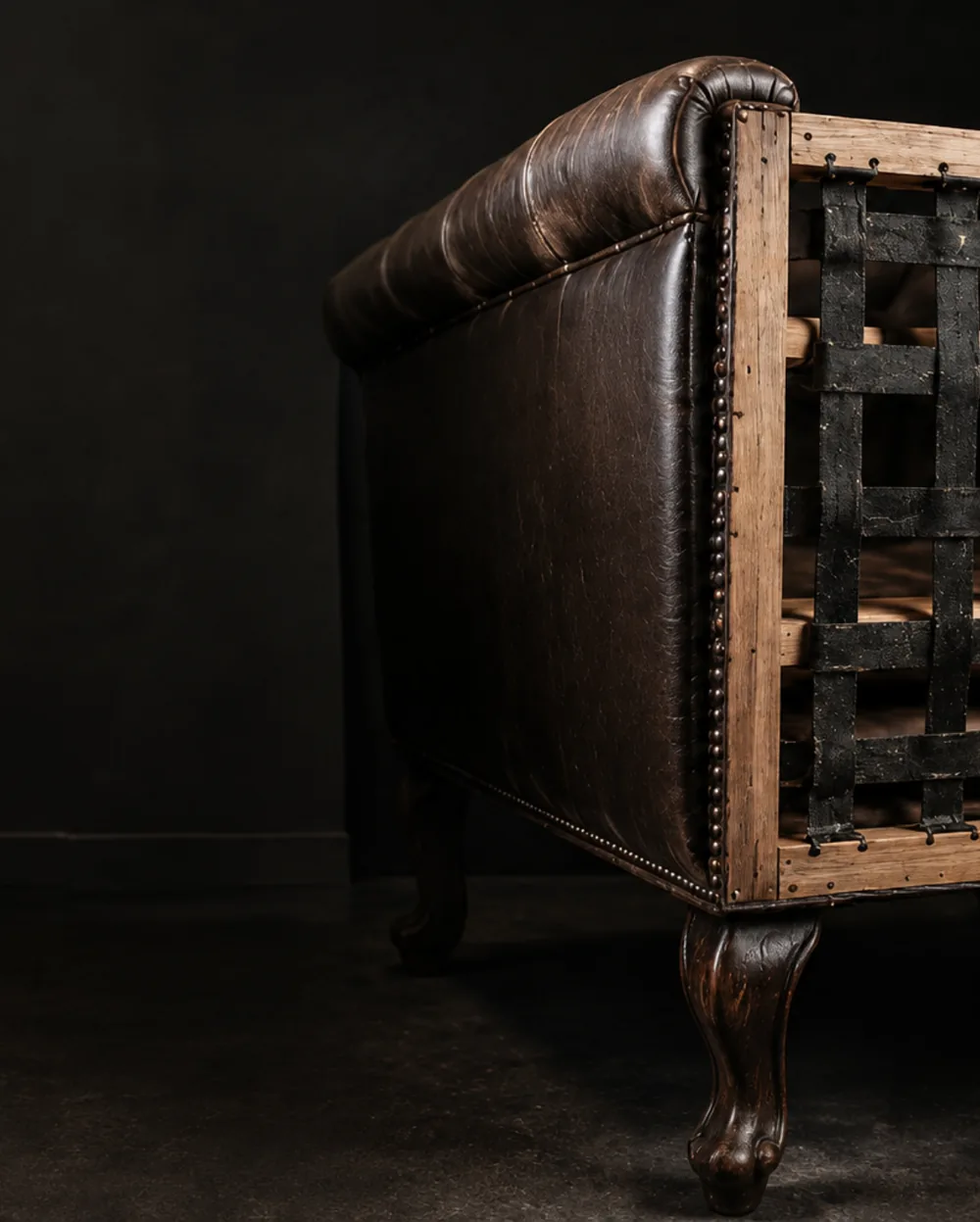
Each one needs the piece stripped, inverted or clamped for longer than a work window allows. That is bench work, and a bench does not travel.
- 01
A broken or racked frame — joints have to be opened, re-glued and held under clamps until the adhesive is fully cured
- 02
Foam cut to a new pattern — covers off, template drawn, cut on a table, and the seat rebuilt to the original profile
- 03
A full recover — the piece is stripped to the frame, so it is effectively dismantled for the duration
- 04
Anything already off the floor — a piece in storage or a spare set held for rotation is collected there, and never occupies a trading room at all
Sofa pickup and delivery repair for a private home follows the same test: if it can be done in your living room, it is.
The hold-back
What we will not collect.Said now, rather than on the day.
A capability is only worth anything if its edges are honest. These four come up often enough to state plainly, each with what happens instead.
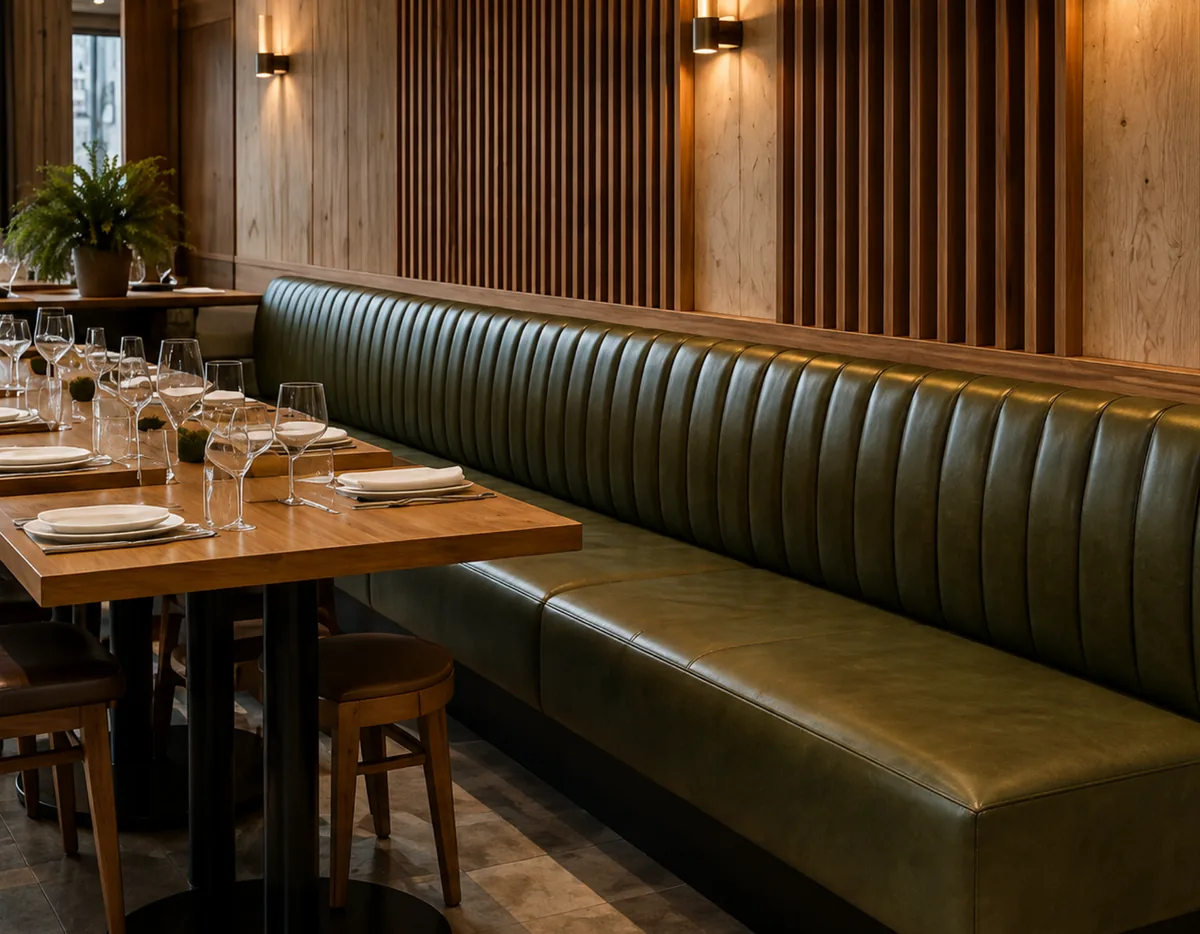
01Built-in and fixed seating
Banquette runs, fixed booths and bar fronts are joinery. Cutting one out to move it costs more than the repair and rarely goes back the same.
InsteadRepaired in place, scheduled into your closed hours. On-site repairs and overnight service exist for exactly this.
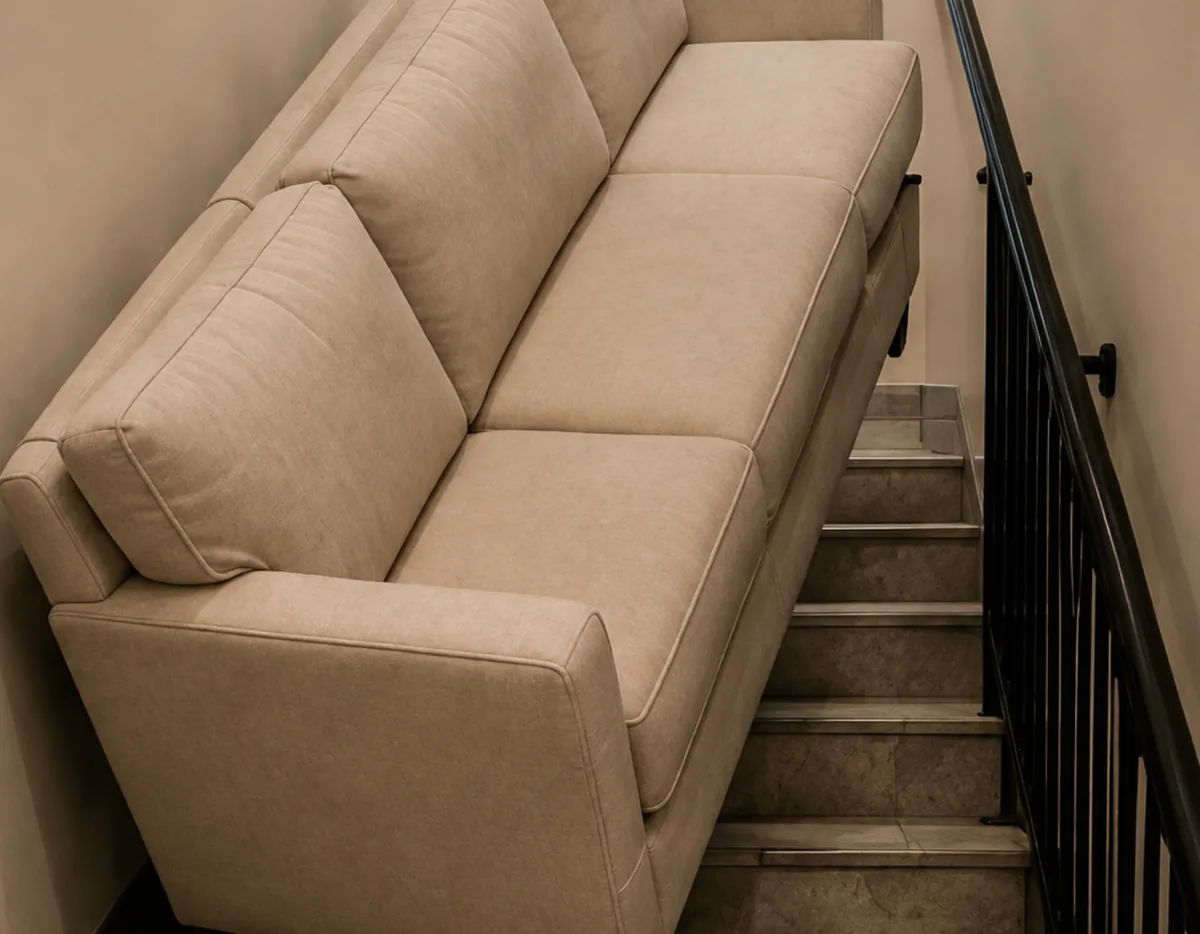
02Anything that cannot make the route
Some pieces were built in the room, or arrived before a wall did. If it will not clear the door, the stair turn or the lift car diagonal, it is not going anywhere.
InsteadThe work is re-planned as in-place repair, or the piece is partially dismantled in the room where its construction genuinely allows it.
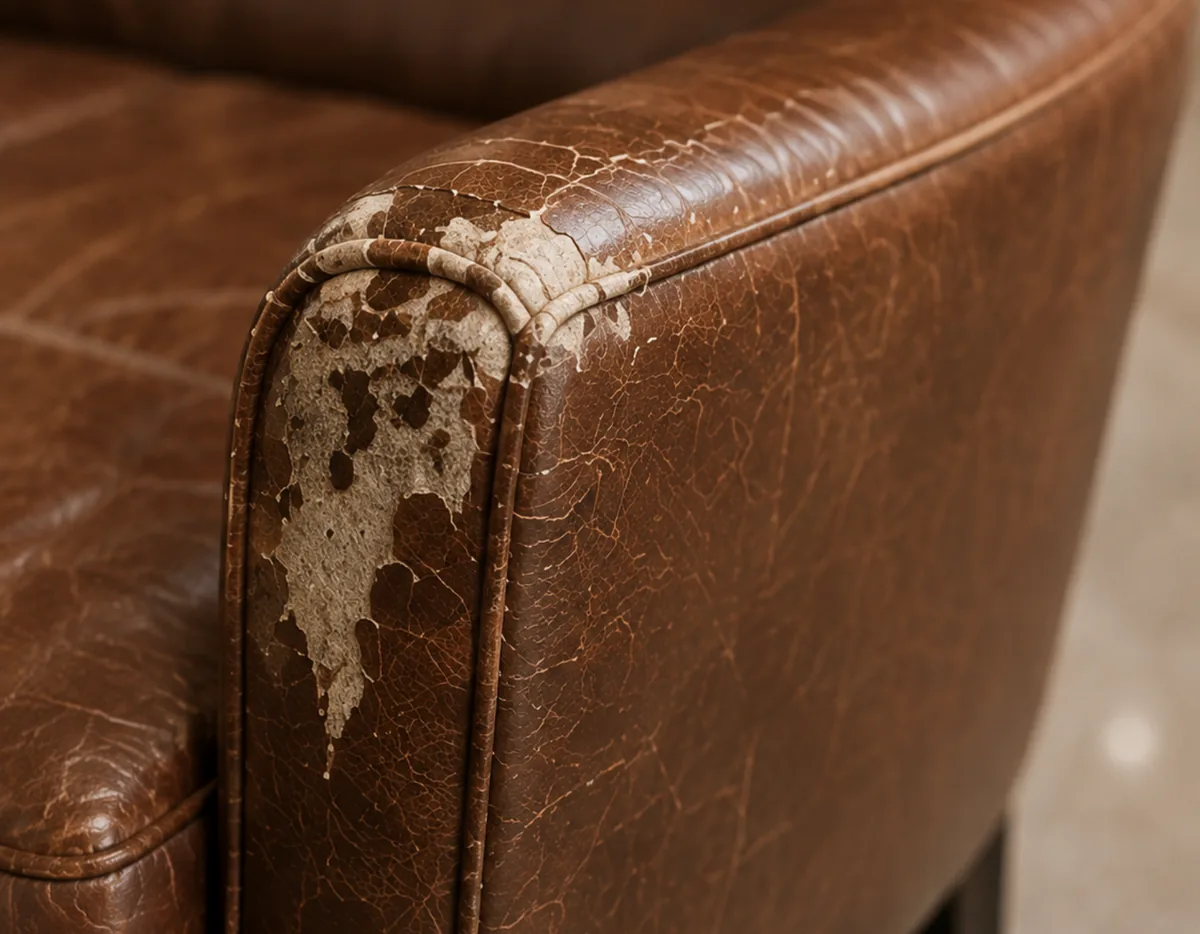
03Delaminating bonded or faux leather
Once a bonded surface is sheeting off its backing, there is nothing left to repair or recoat. Collecting it to prove that on a bench wastes your window.
InsteadIdentified at survey and quoted as a recover in a real material. See bonded leather for how to tell.
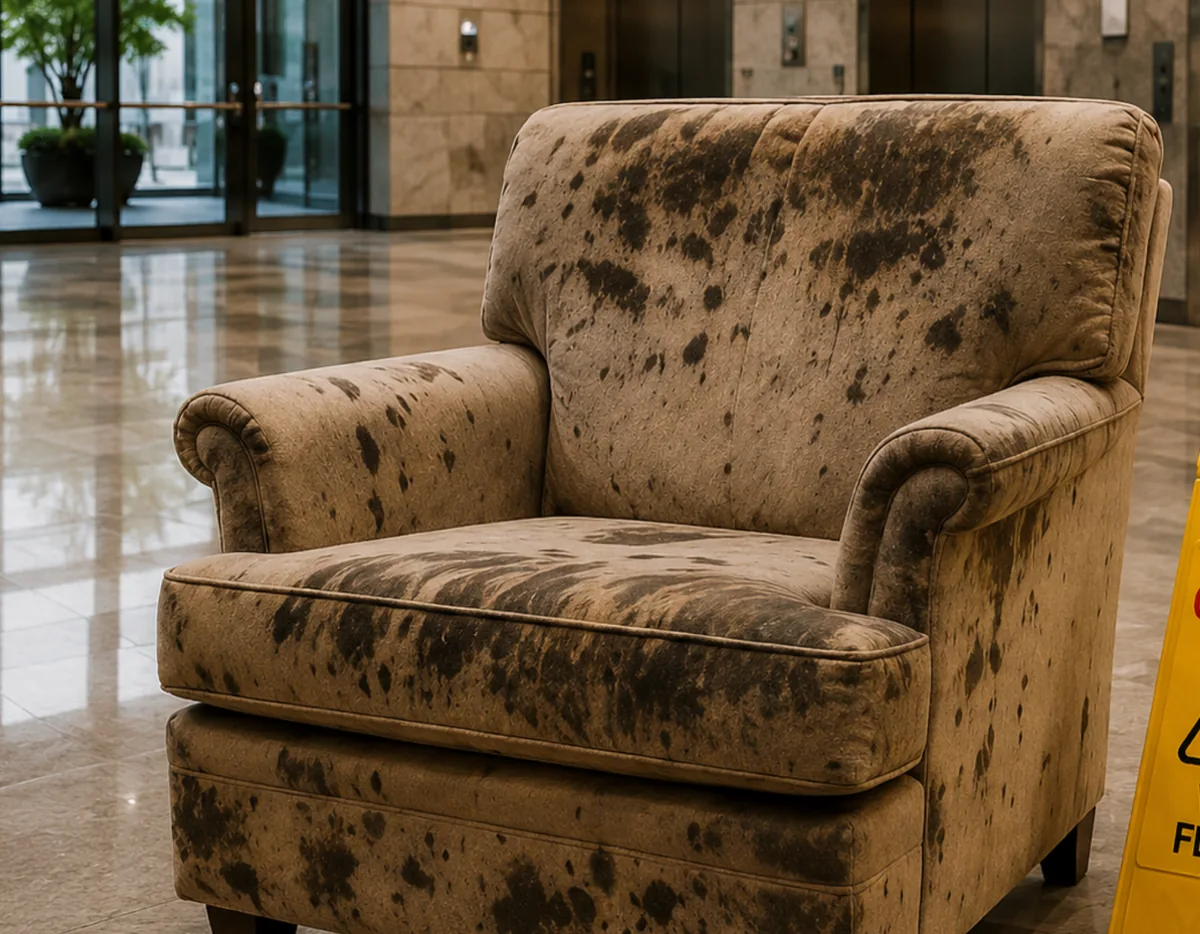
04Contaminated pieces
Active mould, flood contamination or biohazard is a remediation job, not an upholstery one, and it does not come into a shop where other clients' furniture is open on the bench.
InsteadAssessed on site and referred. Once remediation is complete, the piece is reassessed on its own merits.

Coverage
Where we collect from.
Collection runs across all five boroughs. What changes between them is the timing, not the service: Manhattan is planned around freight windows and kerb access, the outer boroughs around your own operating hours.
Long Island and northern New Jersey are served on site — the technician comes to the room rather than the piece coming to the workshop.





Custody
Six stages, and a record at every one.We collect and return your furniture against a document, not a promise.
Furniture leaves the room in someone else's hands, which is the part clients are actually nervous about. The answer is not reassurance — it is a paper trail that exists before the piece moves and gets checked when it comes back.
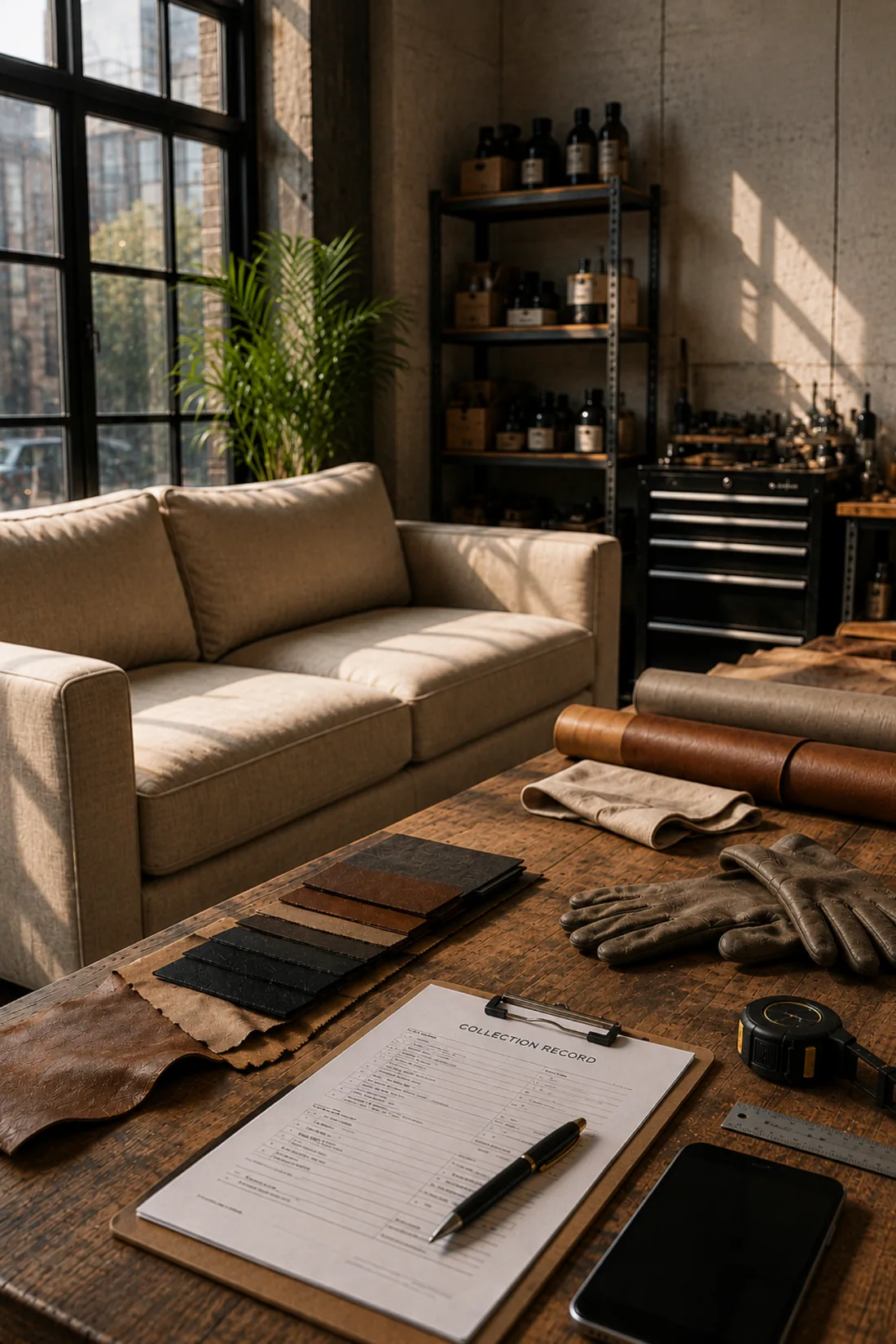
Survey in the room
A technician grades the piece where it stands and applies the test above. Dimensions are taken, the frame is checked, and the route out is walked — doorway, corridor, lift car, dock. A piece that cannot physically leave through its own door is found out here, not on collection day.
Piece, materials and grade
Measured route and access constraints
Condition record
Every face of the piece is photographed before anything is wrapped — including the marks that were already there. Existing damage that is out of scope is captured deliberately, because unrecorded wear is what turns into an argument at handback.
Photographs, panel by panel
Pre-existing damage, in and out of scope
Wrap and lift
The piece is packed in the room, outside-in, by the crew that will carry it. Cushions come off and travel labelled. Floors, thresholds and the lift interior are protected on the way out, and the protection comes back off behind us.
Cushion and component labelling
Protection in place before the lift
Dock and transit
Collection runs inside the freight window the building granted, through the dock or service entrance named on the booking. The piece travels in a covered vehicle, strapped upright against padded rails — never stacked, and never left on a vehicle overnight.
Booked window, dock or entrance used
Certificate of insurance already on file
Bench work
At the shop the piece can be stripped, inverted, clamped and left to cure on its own timetable instead of being rushed around your trading day. That is the entire reason it was worth moving.
Work performed against the written scope
Material and colour used, for the next repair
Return and reinstall
The piece comes back to the room it left, is unwrapped there, set in position, and walked with you against the condition photographs. Packing materials leave with us. Sign-off happens with the room back in service, not with a sofa sitting in a corridor.
Handback walk against the photographs
Sign-off, then the invoice — in that order
The pack
Five layers, outside-in.Nothing that touches the hide is allowed to seal it.
Most transit damage to leather is not impact. It is a corner catching a doorframe, or a plastic wrap laid straight onto the hide for two days in a warm vehicle. The pack is built to answer both.
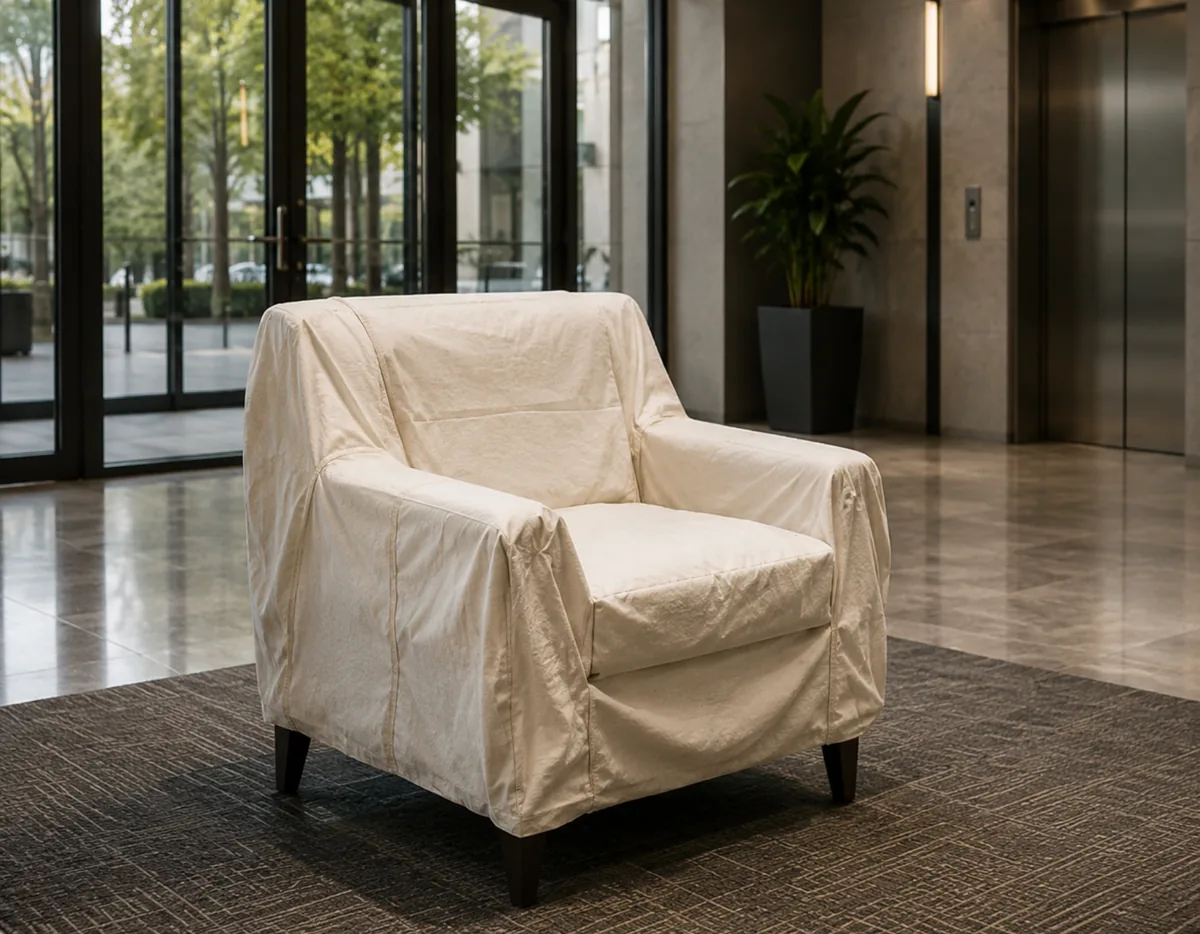
Breathable cover
Against the leather, a cloth layer. Plastic on bare hide traps moisture and can bloom the finish before the van has left the block.
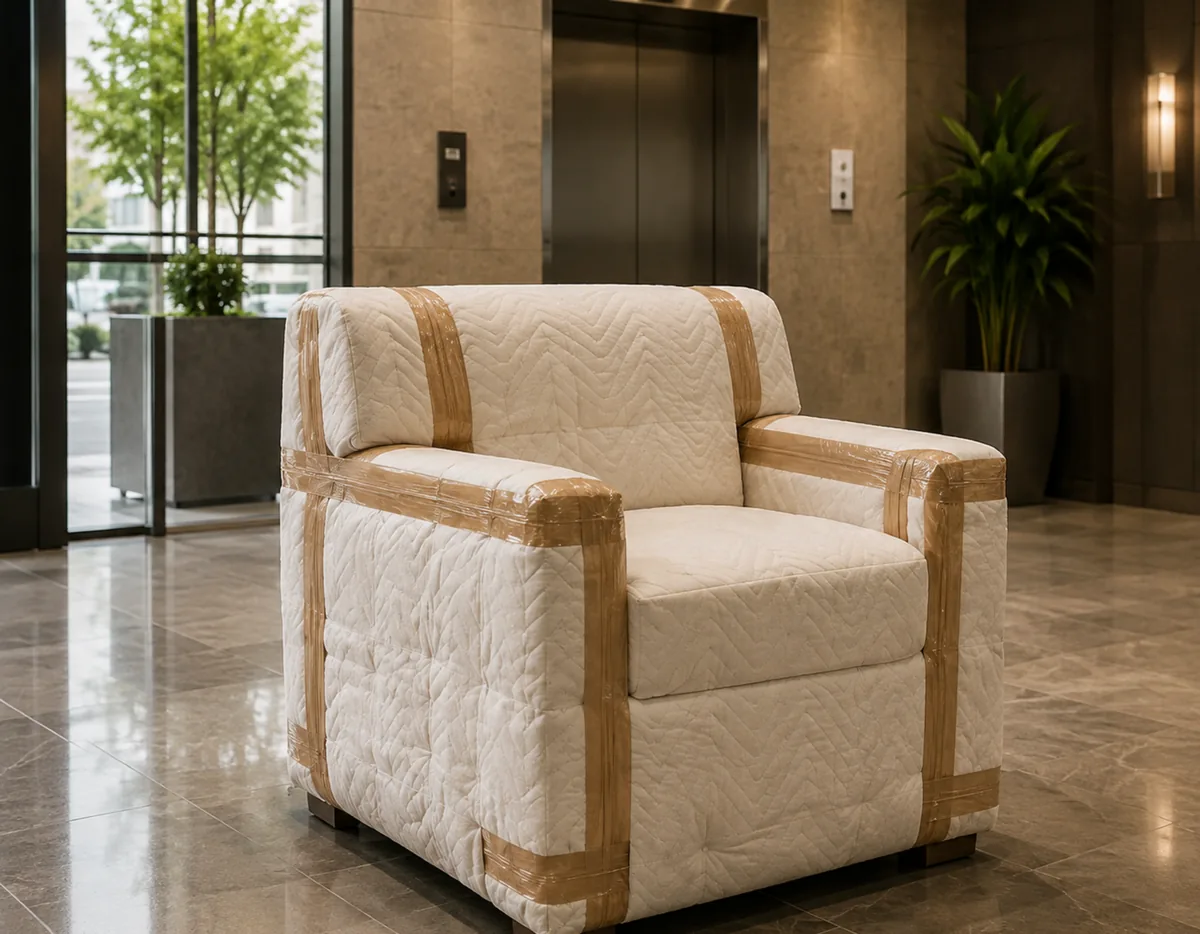
Corners and arms
Rigid protection over the parts that meet every doorframe, lift car and stair turn. These are the points that actually get hit.
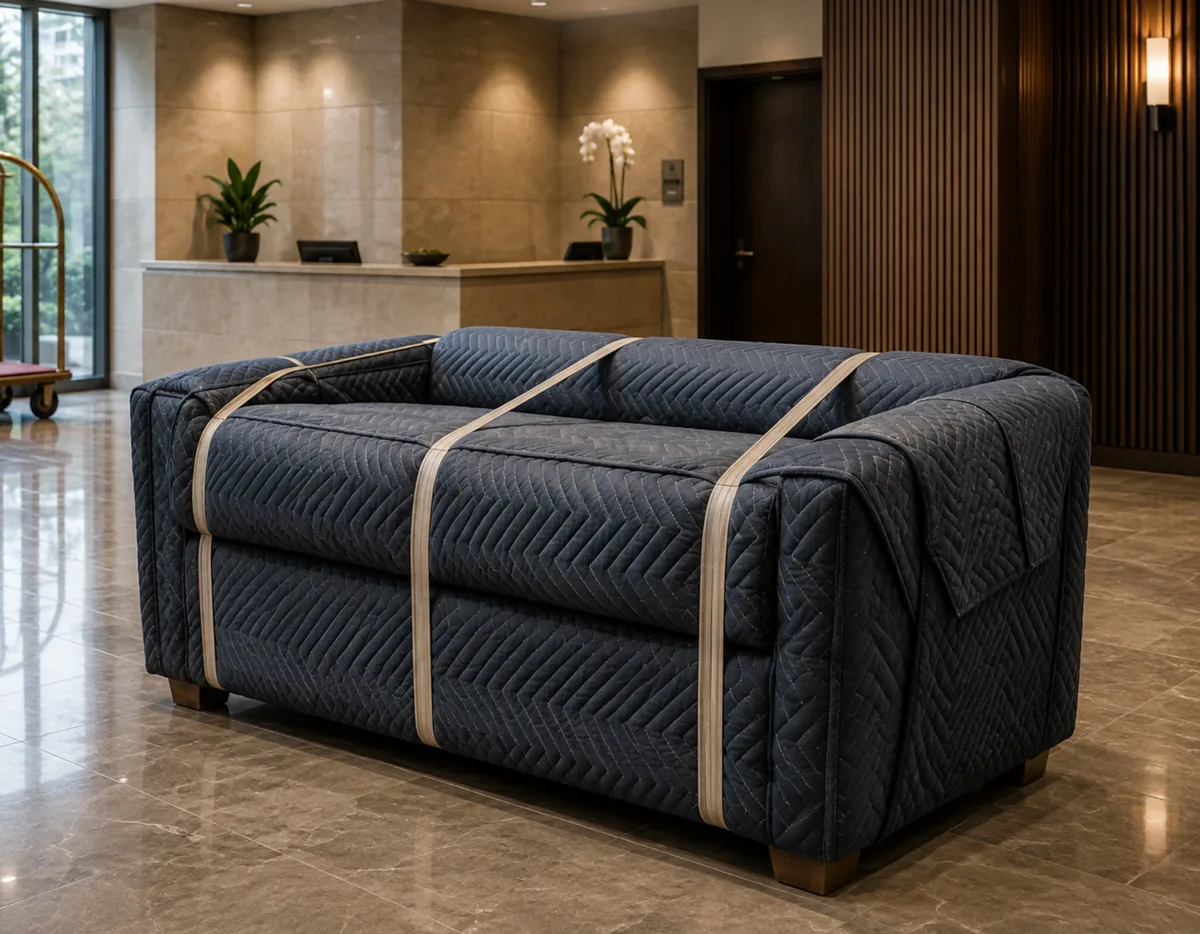
Moving blankets
The body of the piece is padded out so nothing bears on a single edge, and so the straps that hold it never press into upholstery.
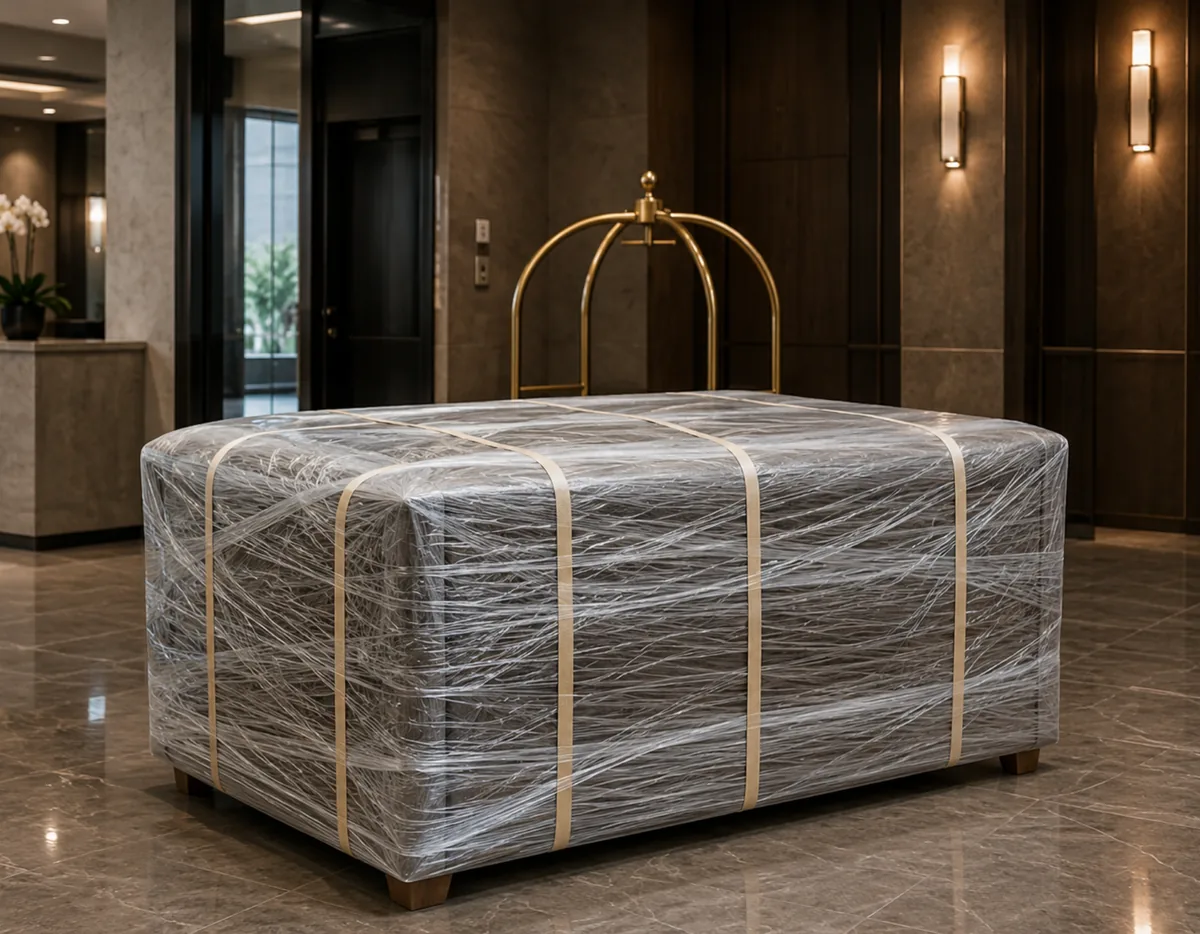
The seal
A stretch layer holds the blankets on and keeps rain, dust and lift grime out. It only ever touches the blanket — never the material underneath.
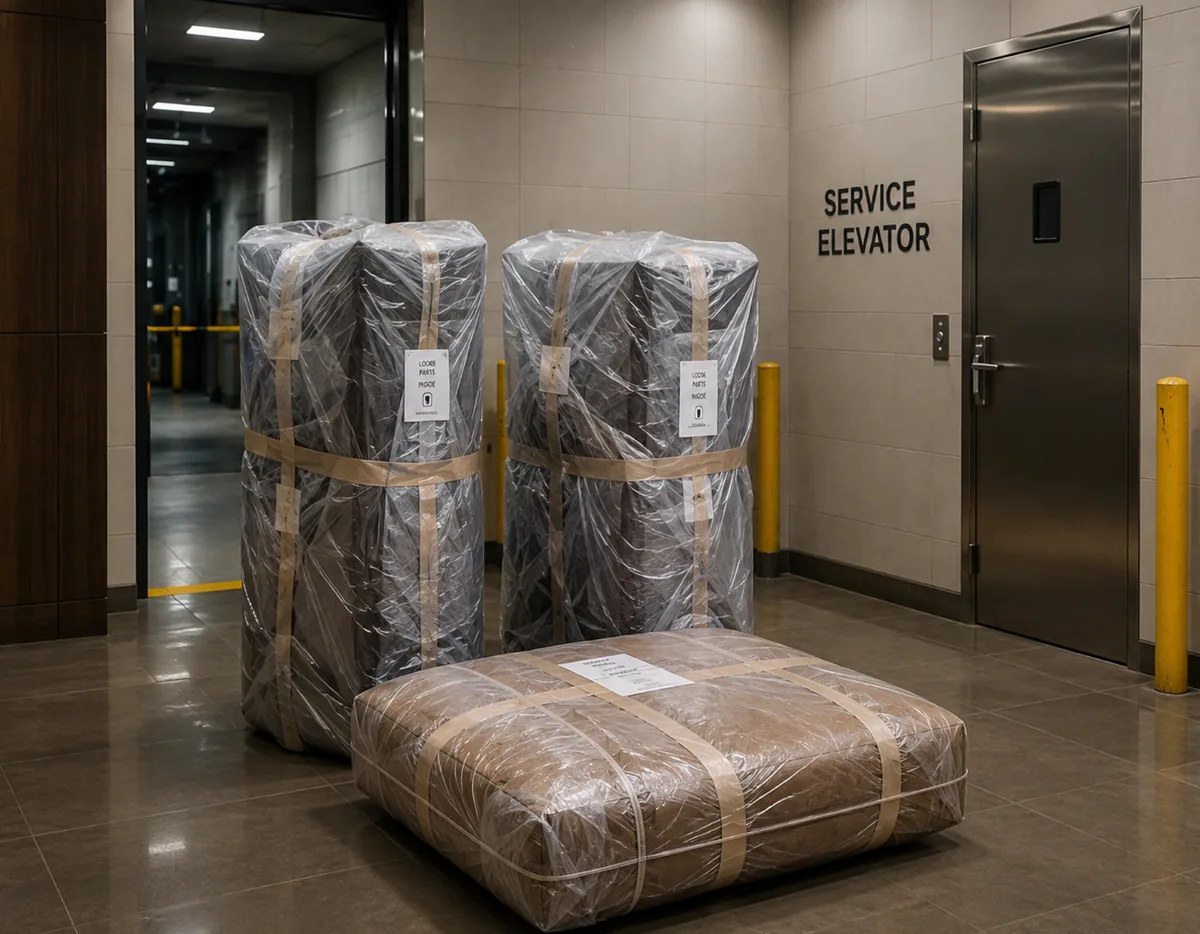
Loose parts, labelled
Cushions, legs and hardware travel separately and labelled to the piece. Cushions wear into their own seat — swapping them shows.
Why we pack in the roomA piece handed over at a dock has already been dragged down a corridor by somebody with no reason to care about the arm caps. Our crew wraps it where it stands and carries it out themselves, which is also why the on-site and collection crews are the same people.
What comes back with usEvery blanket, board and offcut leaves when the piece is returned. A collection that ends with your porter clearing our packaging out of a service corridor is a collection done badly.
The building
The furniture is the easy part.Getting a vehicle to the door is what actually decides the date.
In a managed New York building nobody collects anything until the building says so. Every one of these is settled while the scope is still being written, because each of them can move a collection date on its own.
- Certificate of insurance on fileNamed to the correct entities and accepted by the managing agent. In most buildings a freight window cannot even be requested without it. Before booking
- Vendor statusOnboarding, W-9 and any procurement portal the property runs. A first collection from a new building is usually waiting on this, not on us. Before booking
- The freight windowDock, service entrance or freight elevator, booked for a stated span. Some buildings release windows only outside trading hours; some release them weeks out. Scheduling
- The lift car and the routeA sofa that fits a doorway does not necessarily fit a lift car diagonal. Measured at survey — a piece that will not go is caught then, not on the day. At survey
- Protection of common areasFloors, thresholds, corridor corners and the lift interior are covered before anything moves, and cleared behind us. On the day
- Street and dock accessIn Manhattan this is the real constraint: kerb space, loading zones and how far the piece has to be carried before it reaches the vehicle. On the day
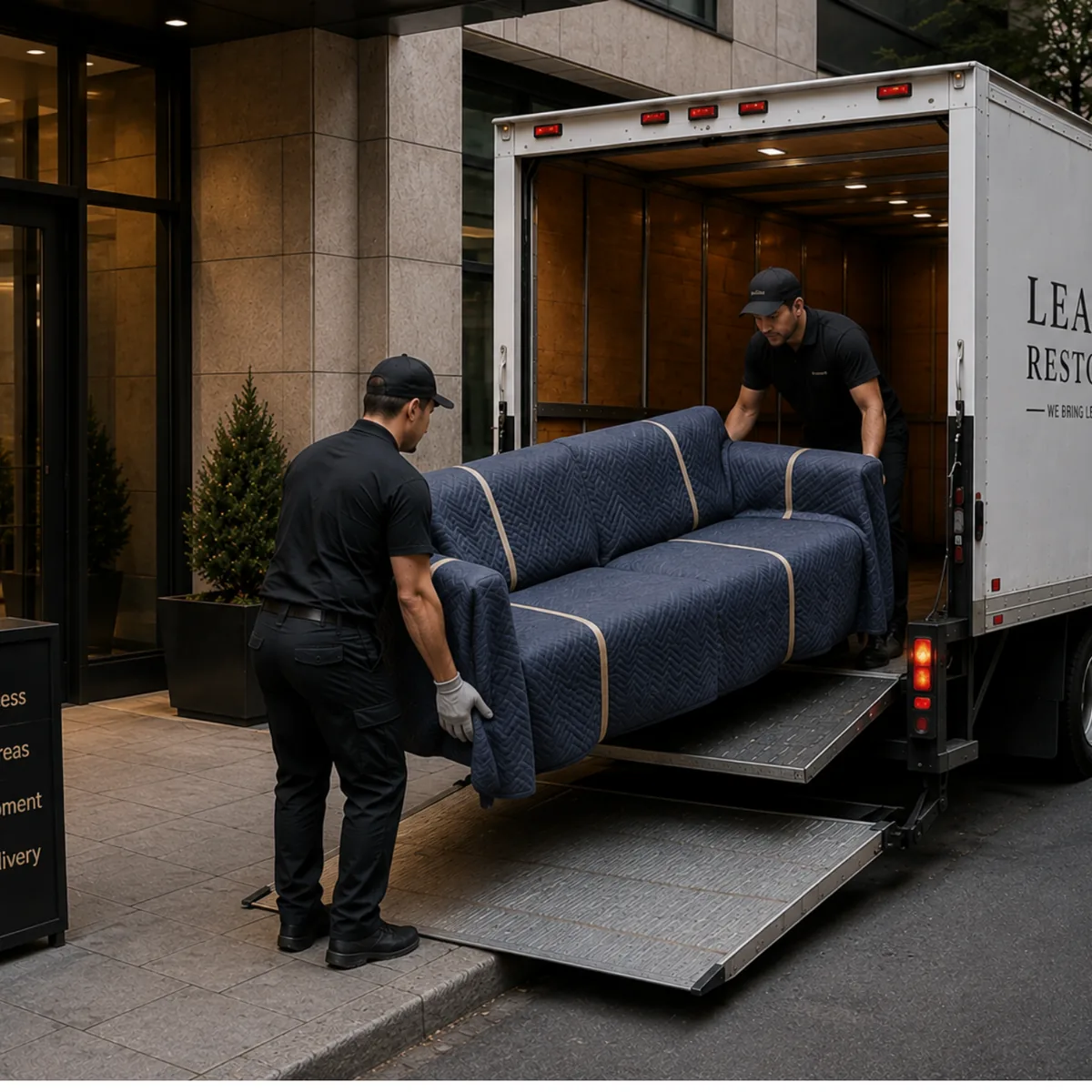
A collection date is a building's decision as much as ours. The paperwork below is handled by us and filed on your behalf — you should not be chasing a certificate to get your own furniture repaired.
Next to this
Collection is one capability of nine.On most jobs, the other eight are the ones doing the work.
Questions
Pickup and delivery, answered.
How does furniture repair pickup and delivery work?
Furniture repair pickup and delivery starts with a survey in the room, not on the phone: a technician grades the piece, confirms it genuinely needs a bench, measures the route out and photographs its condition. It is then wrapped, carried out through the dock or service entrance inside the window the building granted, worked on at the shop, and returned to the same spot and walked against the photographs before sign-off. Most commercial work never reaches that point — it is done in place.
Do you offer commercial pickup and delivery for leather furniture repair in New York?
Yes. Leather Restore PRO runs commercial pickup and delivery for leather furniture repair across all five New York City boroughs. We collect leather sofas, booths, banquette seating, dining chairs and loose seating from restaurants, hotels, offices, private clubs, healthcare sites and managed buildings, wrap and remove them through the building's own loading dock or service entrance inside a booked window, complete the frame, foam or recover work at our workshop, and reinstall each piece where it stood. Most commercial leather repairs — colour loss, cracking, tears, burns and seam splits — are finished on site instead, so a collection is only arranged when the work genuinely cannot be done in your building.
Which pieces actually have to leave the building?
Three kinds of work justify moving furniture: a broken or racked frame that has to be dismantled and re-glued under clamps, foam that has to be cut to a new pattern with the covers off, and a full recover. Everything else — colour loss, cracking, seam splits, tears, burns, scuffs and single-panel replacement — is done where the furniture stands. Built-in banquettes, fixed booths and bar fronts are joinery and are never collected.
Do you collect from the loading dock or from the room itself?
From the room. The piece is wrapped where it stands and carried out by our own crew, because a piece handed over at a dock has already been dragged through a corridor by someone with no reason to care about the arm caps. We book the dock, the freight elevator or the service entrance under the building's rules and work inside that window.
How is the furniture protected in transit?
Outside-in: a breathable cover against the leather so nothing traps moisture, corner and arm protection over the parts that catch every doorway, moving blankets over the whole body, then a stretch seal that holds the blankets on without ever touching the hide. Loose cushions travel separately and labelled. In the vehicle the piece is strapped upright against padded rails, not stacked.
Do you need a certificate of insurance before collection?
In most managed buildings, yes — the certificate has to be on file with the managing agent, naming the right entities, before a freight window can be booked at all. It is the single most common reason a collection date slips, so it is filed while the scope is still being written rather than the morning of the pickup.
Is there an extra charge for pickup and delivery?
Most collections are covered by the project quote. A heavy or awkward one — a sectional, a piece that has to be dismantled to clear the route, a walk-up with no service lift, or a long carry to wherever a vehicle can legally stand — is quoted as a separate line item on the same written quote, and it is agreed before the project starts. Nothing to do with transport is ever added after the work. All of it is established at the survey, which is why the survey happens before a date or a price is offered.
How long is a piece away from the room?
It is set by the work, not by the transport. A frame repair waits on adhesive cure. Foam waits on nothing but is quick. A full recover waits on the material arriving, and if the leather or vinyl has to be ordered in to match, that lead time is the schedule. The written scope states the window before anything is collected, and phased projects are sequenced so the room keeps trading throughout.
Can you take a whole room at once?
We would rather not, and usually do not have to. A room is collected a section at a time so seating capacity never drops below what the day needs, with each phase returned before the next is lifted. On larger volumes that phasing is written into the project schedule from the start.
Do you offer pickup and delivery for homes as well as businesses?
Yes. A sofa collected from an apartment is handled the same way as one collected from a hotel lobby — surveyed, photographed, wrapped and returned to the same room. The difference is paperwork rather than care: a residential collection rarely needs a certificate on file, while a managed building always does.
Where do you collect from?
Collection runs across all five New York City boroughs — Manhattan, Brooklyn, Queens, the Bronx and Staten Island. Manhattan collections are planned around freight windows and street access; outer-borough collections are usually planned around your own operating hours instead. Long Island and northern New Jersey are served on site: a technician works in the room rather than the piece travelling to the workshop.

Start with the survey
Book the assessment, not the van.We will tell you if the piece never needed to leave.
A technician walks the inventory, grades each piece and states plainly which items can be handled in place and which are worth collecting. The scope, the window and the phasing are written before anything is lifted.
Or call (347) 310-7483 · Serving New York City, Long Island and New Jersey