
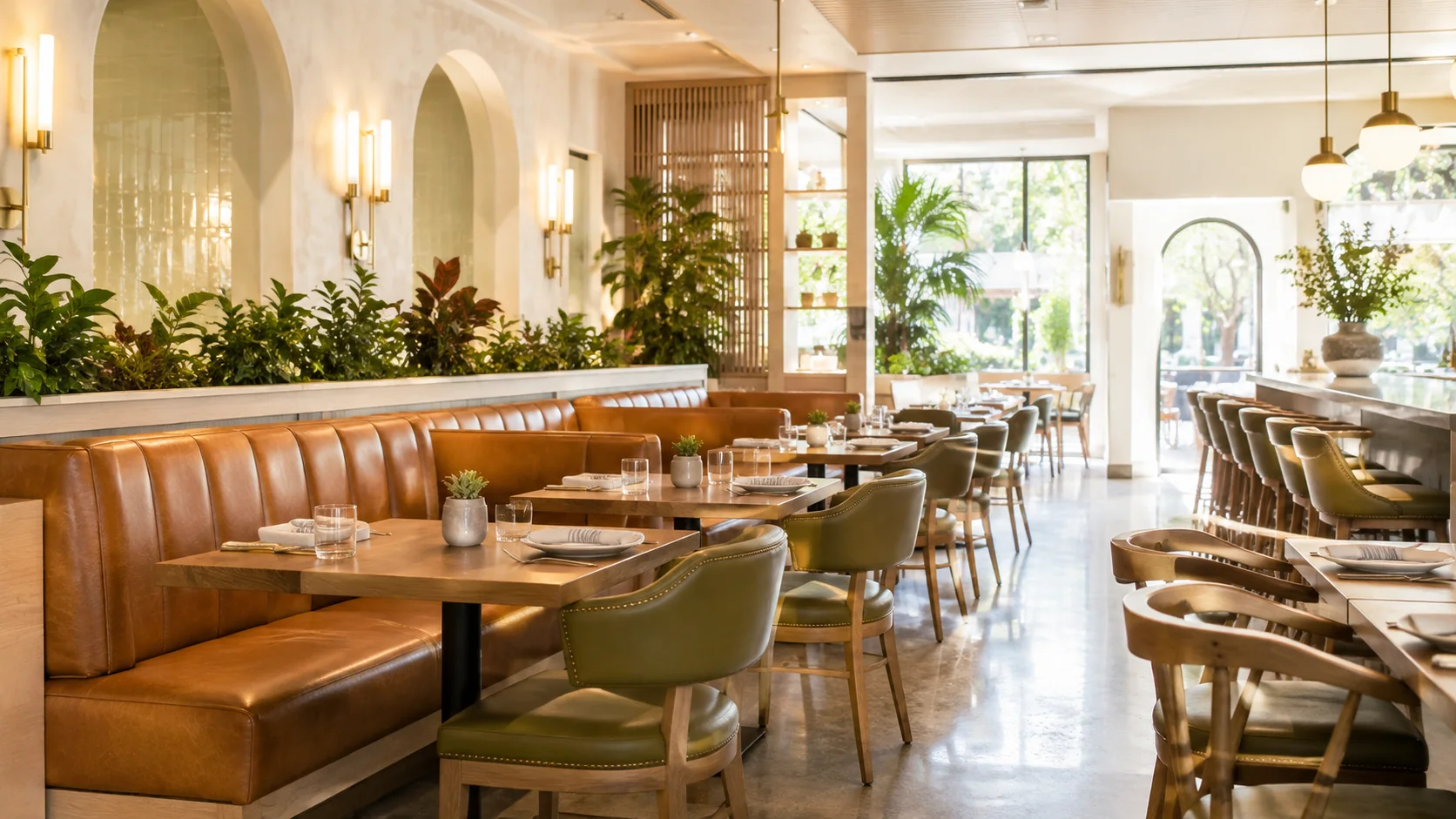
Fixed Seating Is Recovered Where It Stands
Banquette reupholstery NYC — the run is bolted to the room, so the work comes to it. Stripped, re-foamed and re-covered bay by bay through the night, and the room opens on time.
A run is not one seat. It is a row of bays on a shared carcass.
Banquette reupholstery NYC is quoted, ordered and fitted by the bay — the length between two dividers, or between a divider and a return. Five parts make one up, and each fails on its own clock.
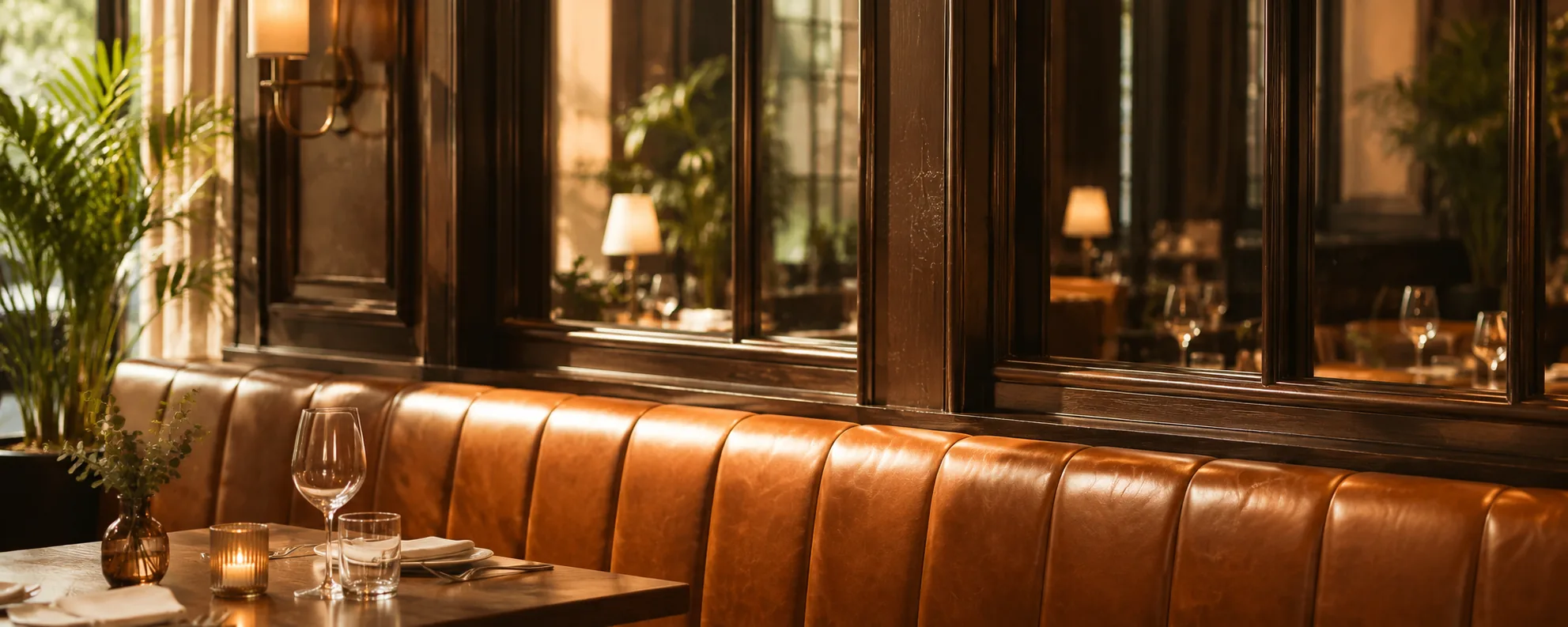
Seat deck
The horizontal platform. Takes the weight and the sliding, and wears out first.
Back panel
Channelled, buttoned or flat. Usually lifts off the carcass for the strip.
Top roll
The rolled edge at the top of the back, polished bare where guests lean.
End panel
The upholstered return closing a run or a divider. Takes trolley and bag damage.
Kickboard
The recessed base at floor level. Timber, and usually refinished rather than covered.
Fixed seating wears in six places, and never evenly.
Guests get in and out sideways, so a banquette never wears like a chair. Banquette reupholstery NYC starts by finding which of the six has gone, because that decides whether you need a recover or only a booth and banquette repair.
- 01Seat nose
Crushed at the slide-out corner, where every guest pivots on the same six inches.
- 02Top roll
Thinned and shiny along the lean line, often before the seat looks tired at all.
- 03Deck foam
Flattened in the bays nearest the aisle and the door — the ones turned most.
- 04Channel seams
Opening along the flute lines, where the stitching carries the pull of the fill.
- 05End panel
Scuffed and cut low down by trolleys, high chairs and bags parked against it.
- 06Kickboard
Heel-marked and chipped at the floor, the one part that is refinished, not recovered.
How the run is built decides how the night is planned.
Three shapes cover most dining rooms, and each changes how banquette reupholstery NYC is sequenced: what can be lifted out, what has to be stripped in place, and how much of the room stays sellable while we work.
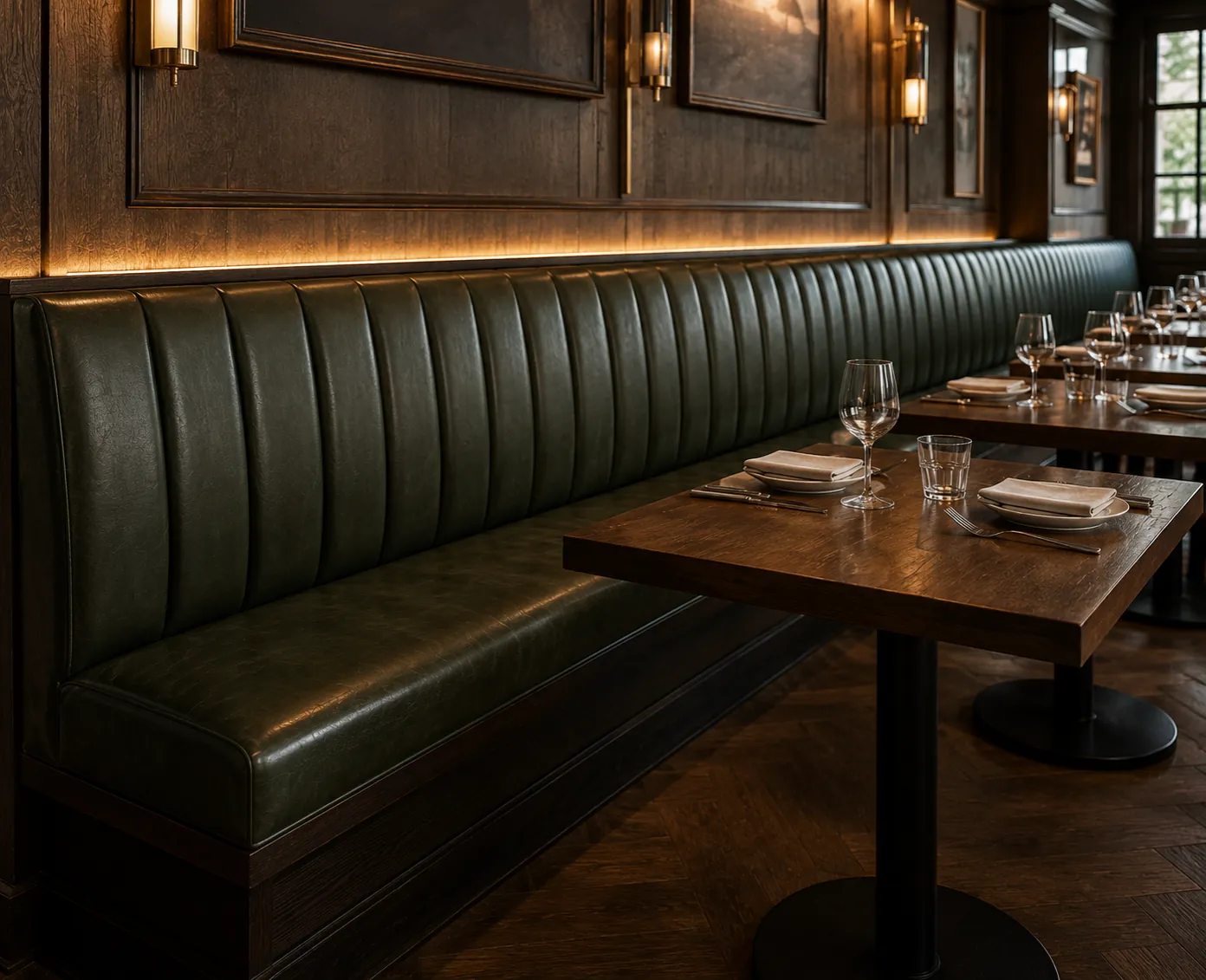
Wall runs
One long carcass fixed to the wall, divided into bays by the tables in front of it. Back panels usually unscrew, so they go to the van, get re-covered on a bench and come back — while the decks are stripped in position.
The craft point is alignment: on a channelled run the flutes have to line up bay to bay, or the eye reads the join from across the room.
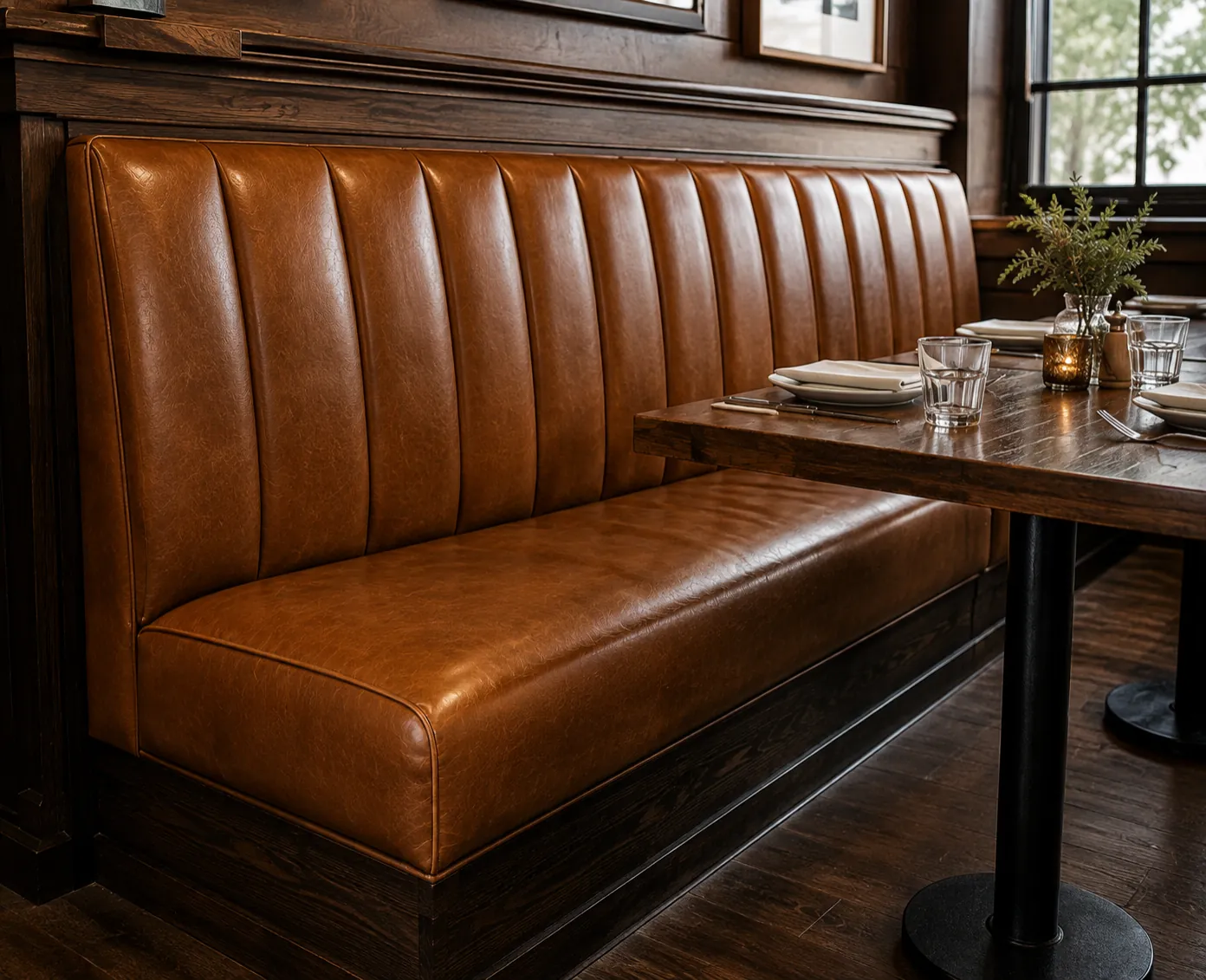
Booths, freestanding and back-to-back
A booth is a closed box on a plinth, so both faces of a back-to-back pair have to be done together — you cannot recover one side and leave the other reading as the old colour.
The upside is that a booth is self-contained. A pair can be finished and handed back while the next pair is still open, which is how a large room gets phased.
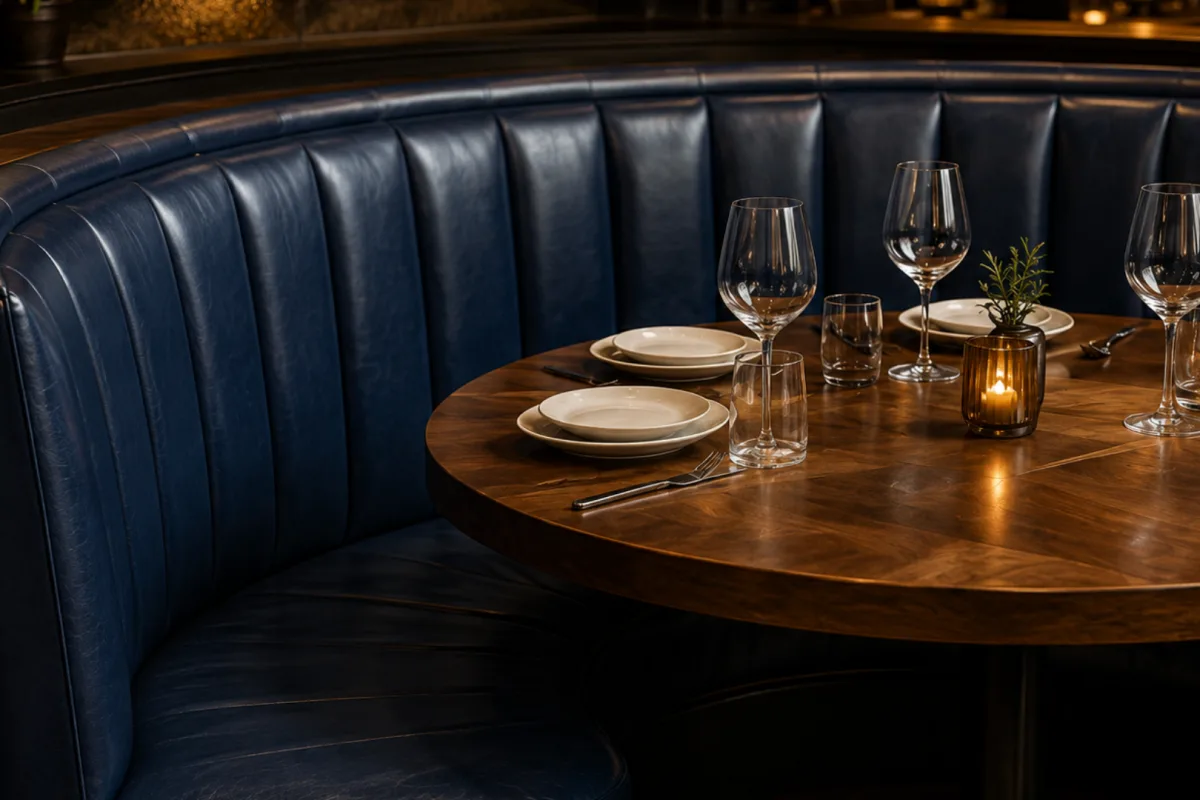
Curved booths and corner returns
The slowest work on any run. A curve is cut on the radius, not on the flat, so panels are templated on site against the actual sweep rather than measured — a corner that is a degree out shows as a pucker.
Curves are stripped and re-covered in place. Nothing about a radius survives being taken apart and moved.
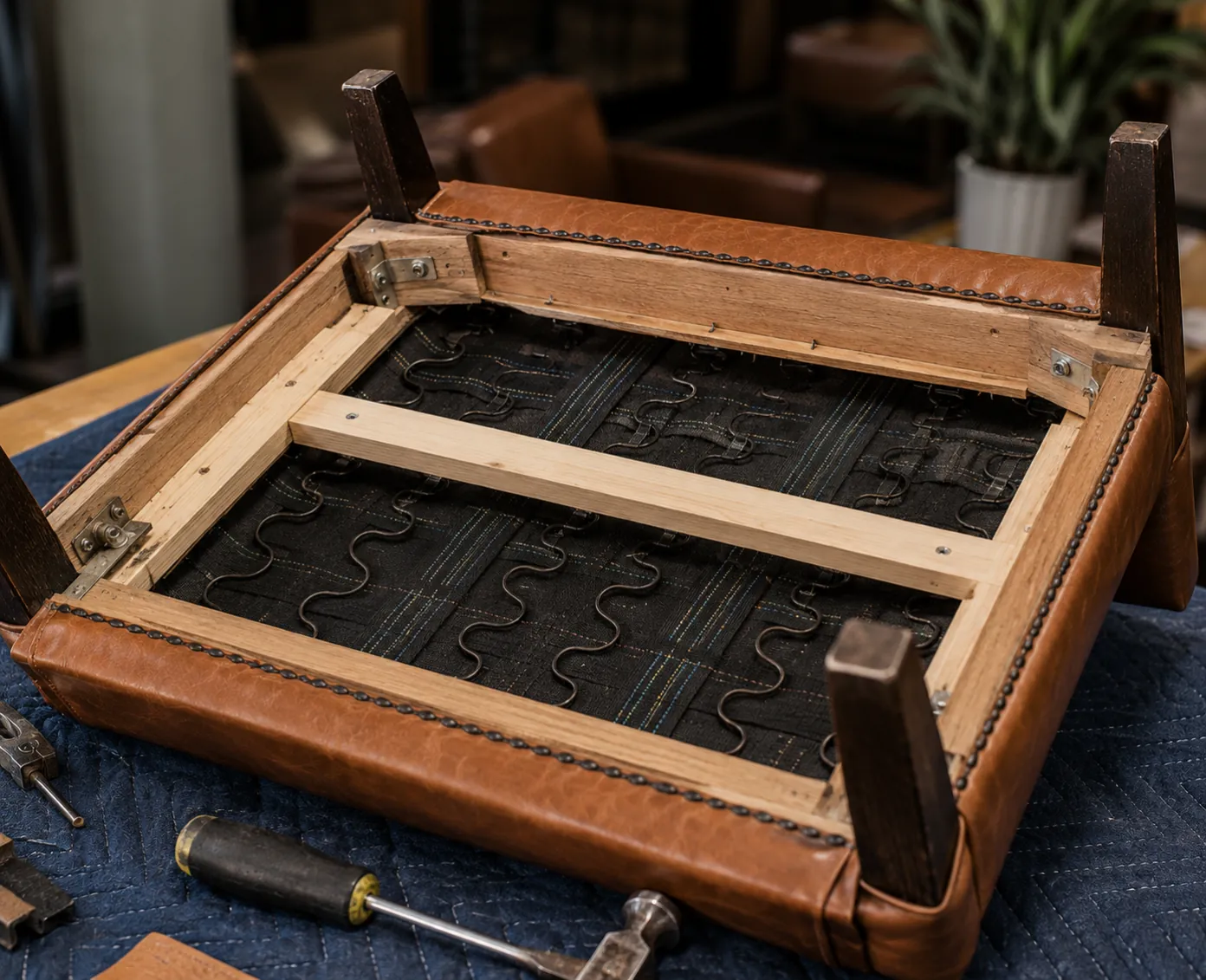
The carcass stays. Everything softer than it goes.
Banquette reupholstery NYC is not replacement. The timber box you paid a joiner to build stays bolted to the room, and the layers that actually failed are taken off it and rebuilt.
Stays
- Timber carcass and plinth
- Wall and floor fixings
- Kickboard, refinished in place
- Springs and webbing, where sound
Goes
- The old cover, and every staple
- Compressed deck and back foam
- Perished wadding and lining
- Webbing that has stretched out
One wall run, worked bay by bay after the last cover.
Templating, cutting and sewing are finished before we arrive, so nothing is being decided at two in the morning. See overnight service for how the window is agreed, and on-site work for what a crew brings in.
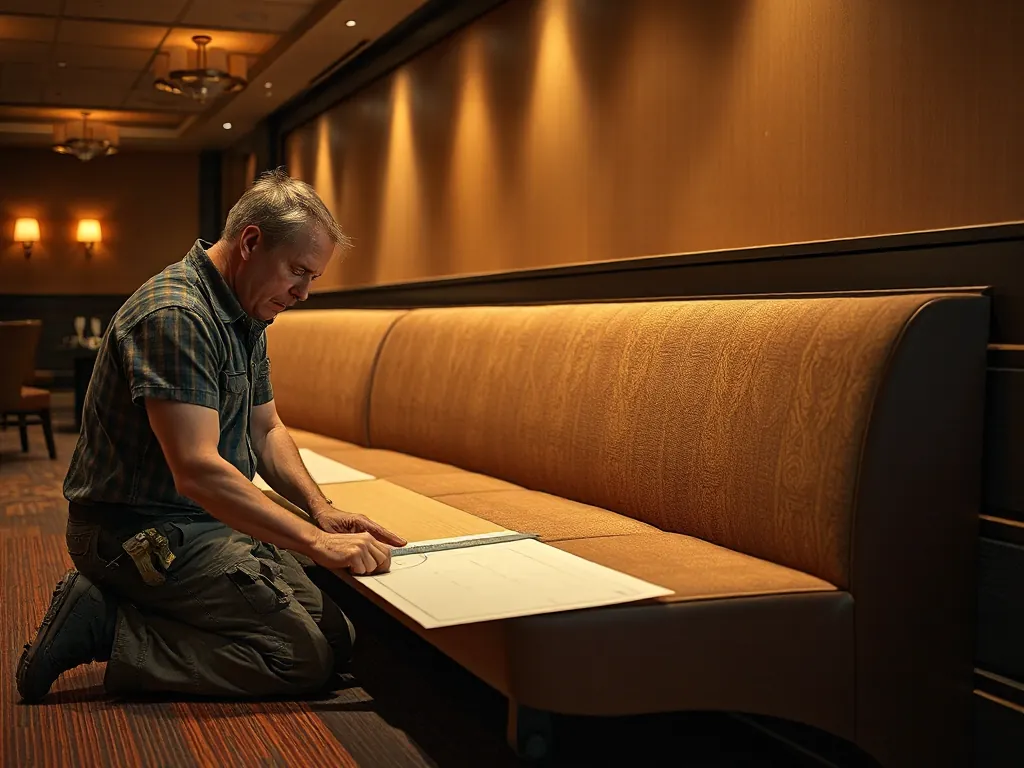
Survey and template
Bays are numbered and patterns are lifted off your own panels weeks ahead, so the material is signed off long before a crew is booked.
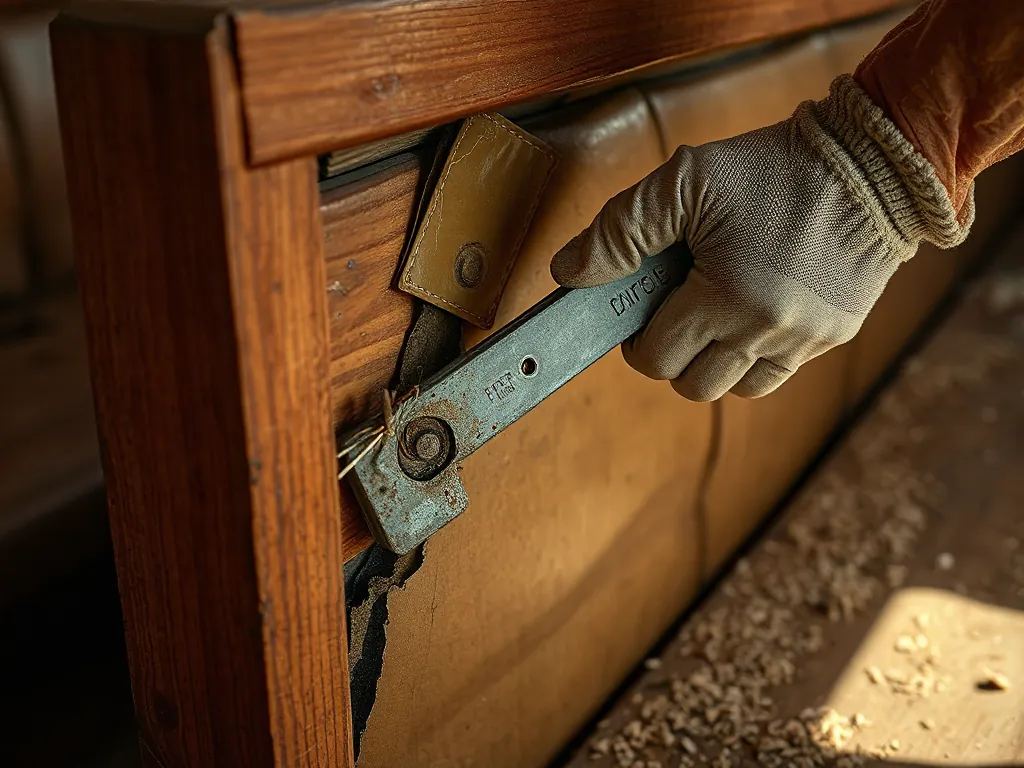
Strip to the carcass
Tables come clear, panels lift off, covers and staples come out. The timber box stays bolted to the room; the deck and back are re-foamed on the spot, firmer below than behind.
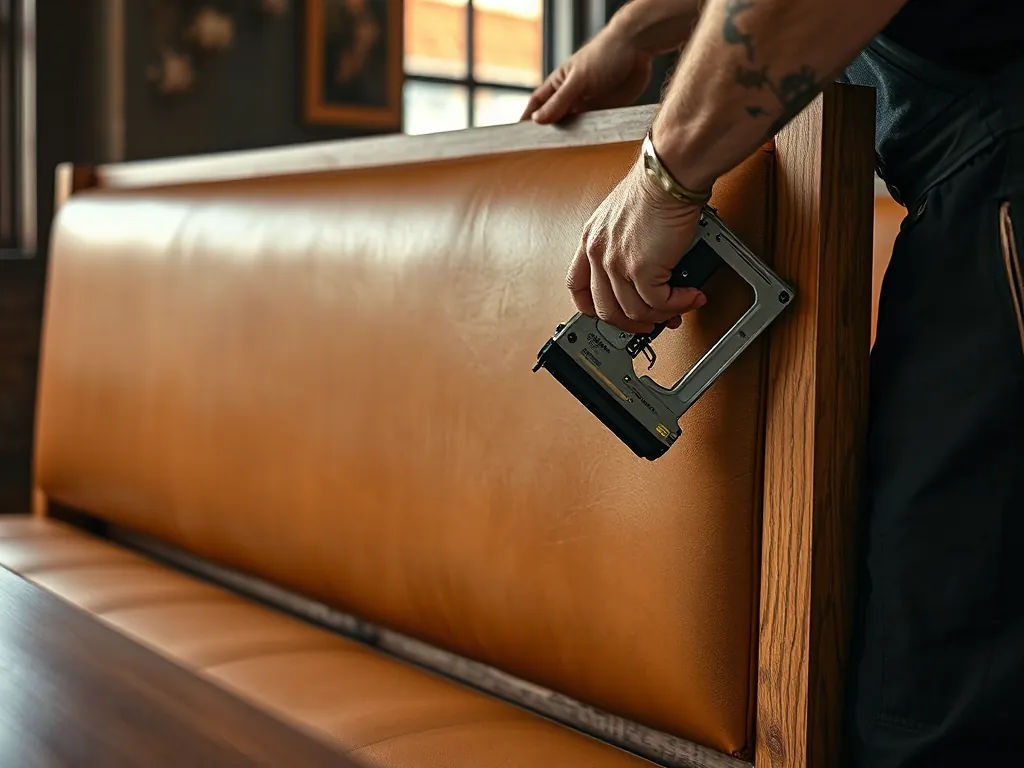
Pull and staple the cover
New panels are stretched and stapled onto the same structure, channels aligned along the run so the flutes read straight from across the room.
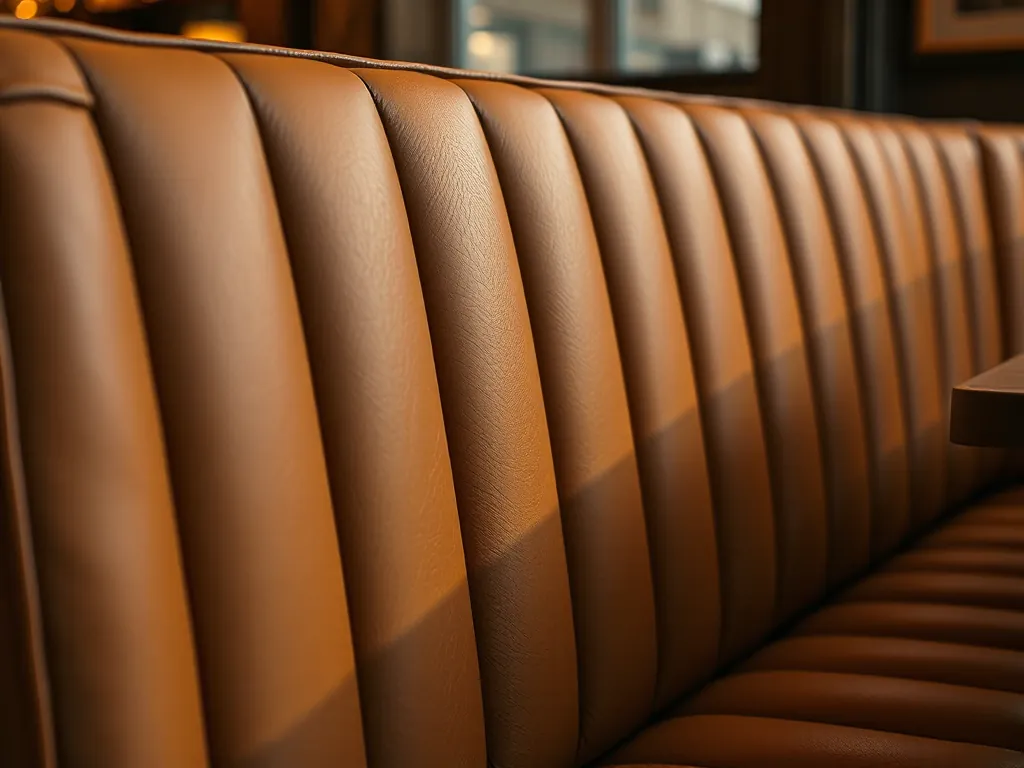
Reset before service
Kickboard touched in, tables squared back, waste out through the service door. The run is handed back before the first cover.
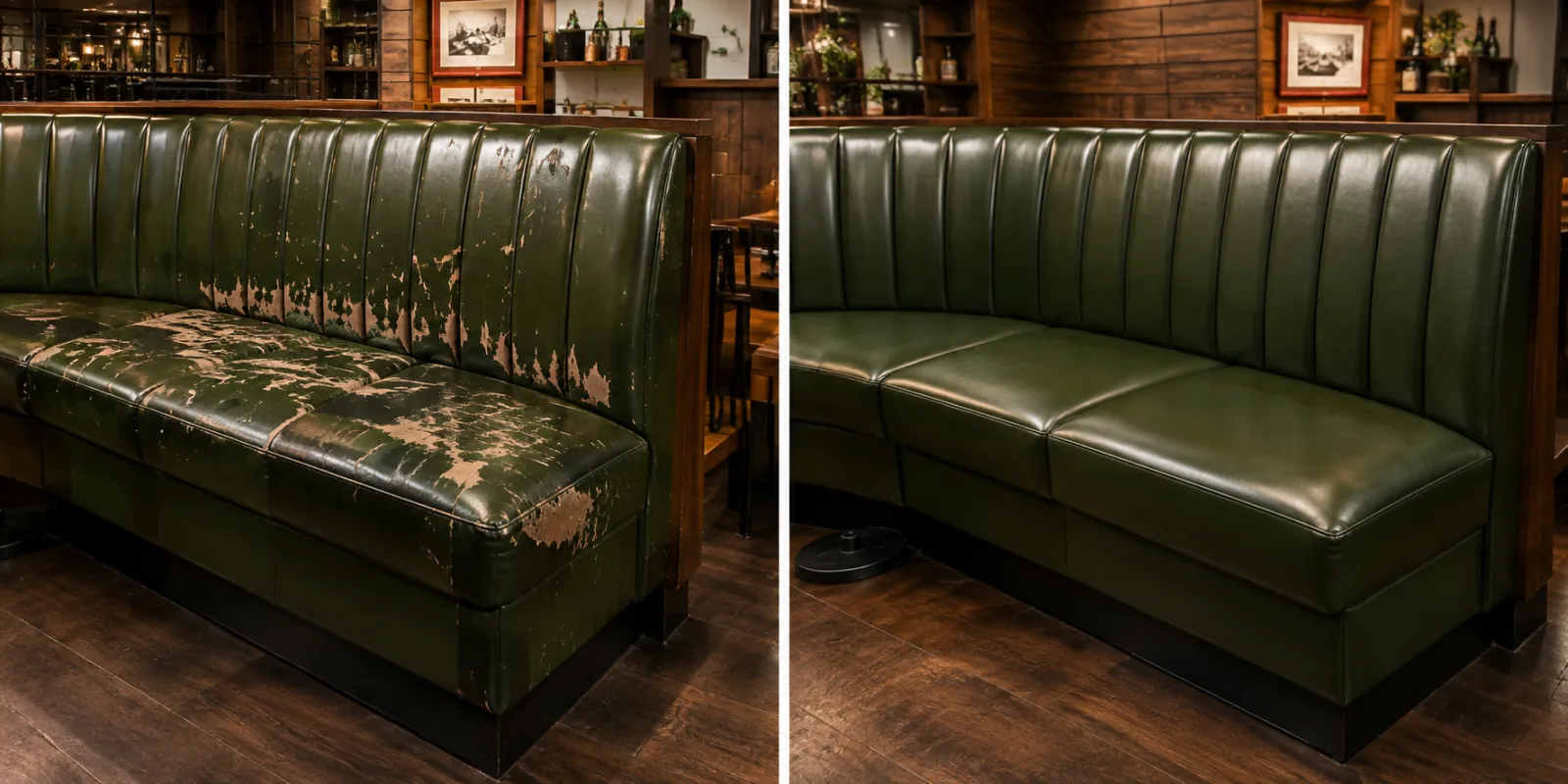
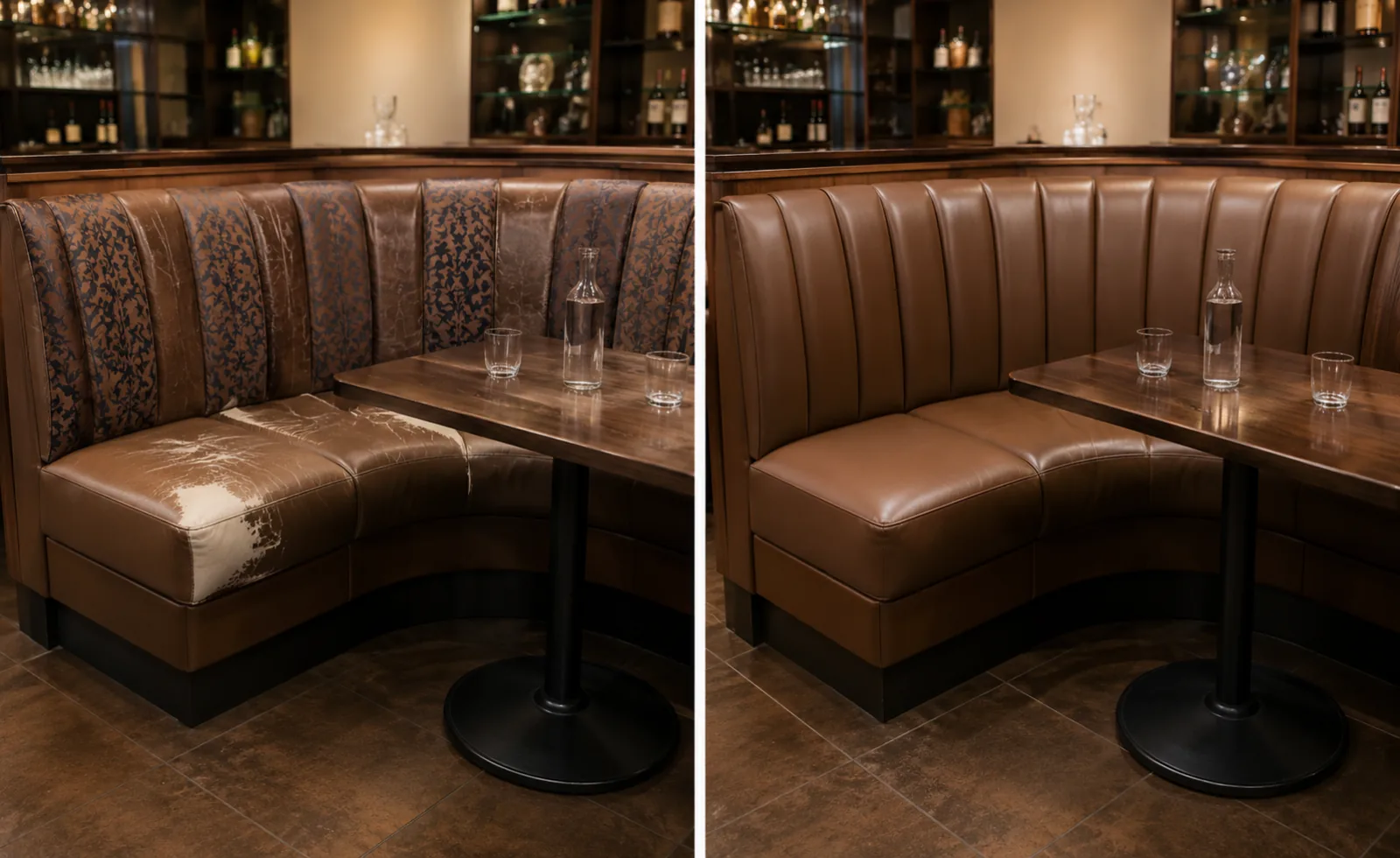
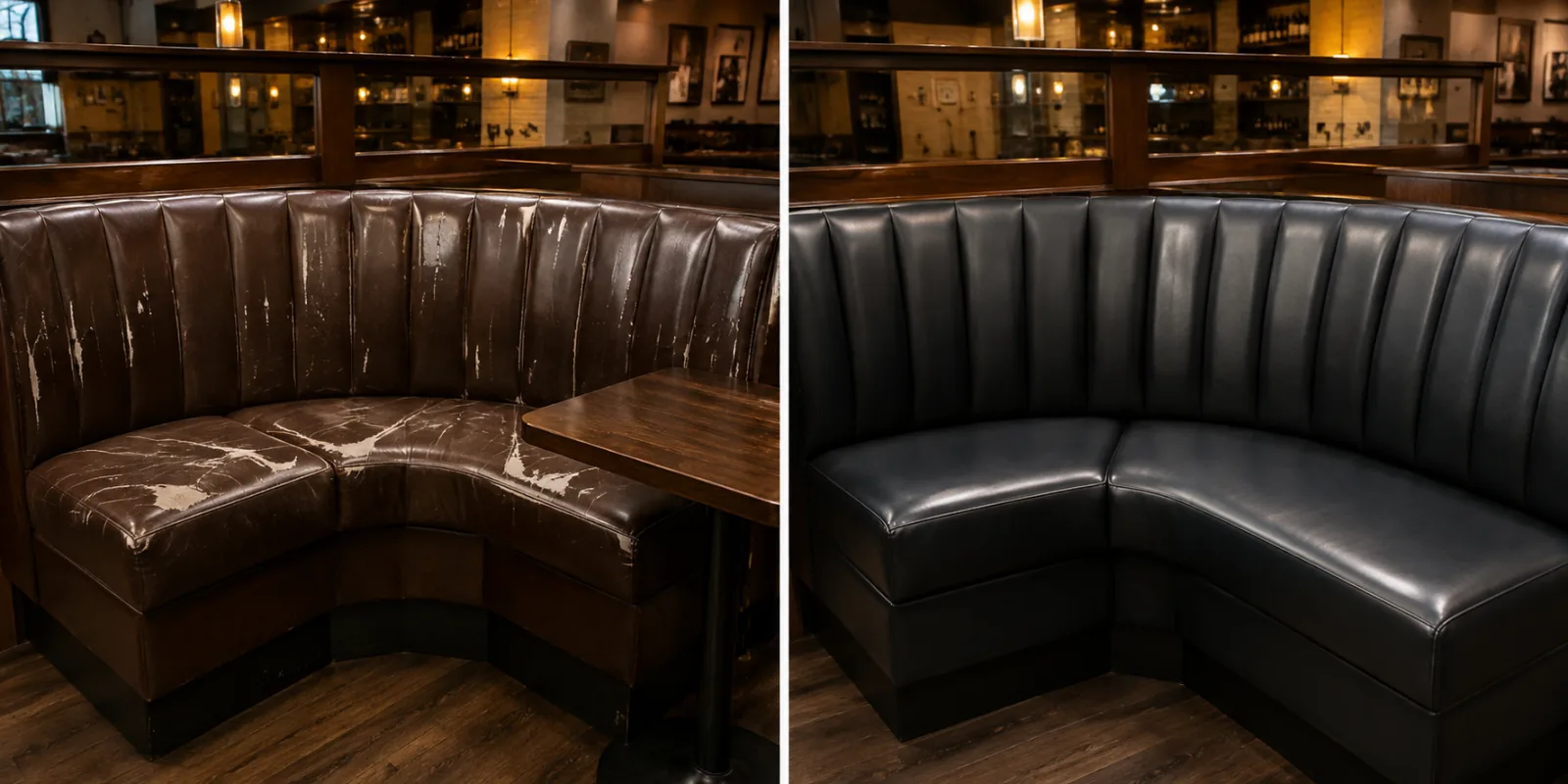
The same carcass, one night apart.
Left is the run as we found it. Right is the same run, in the same room, before the next service. Nothing was taken out and nothing was replaced in timber — only the cover and the foam changed.
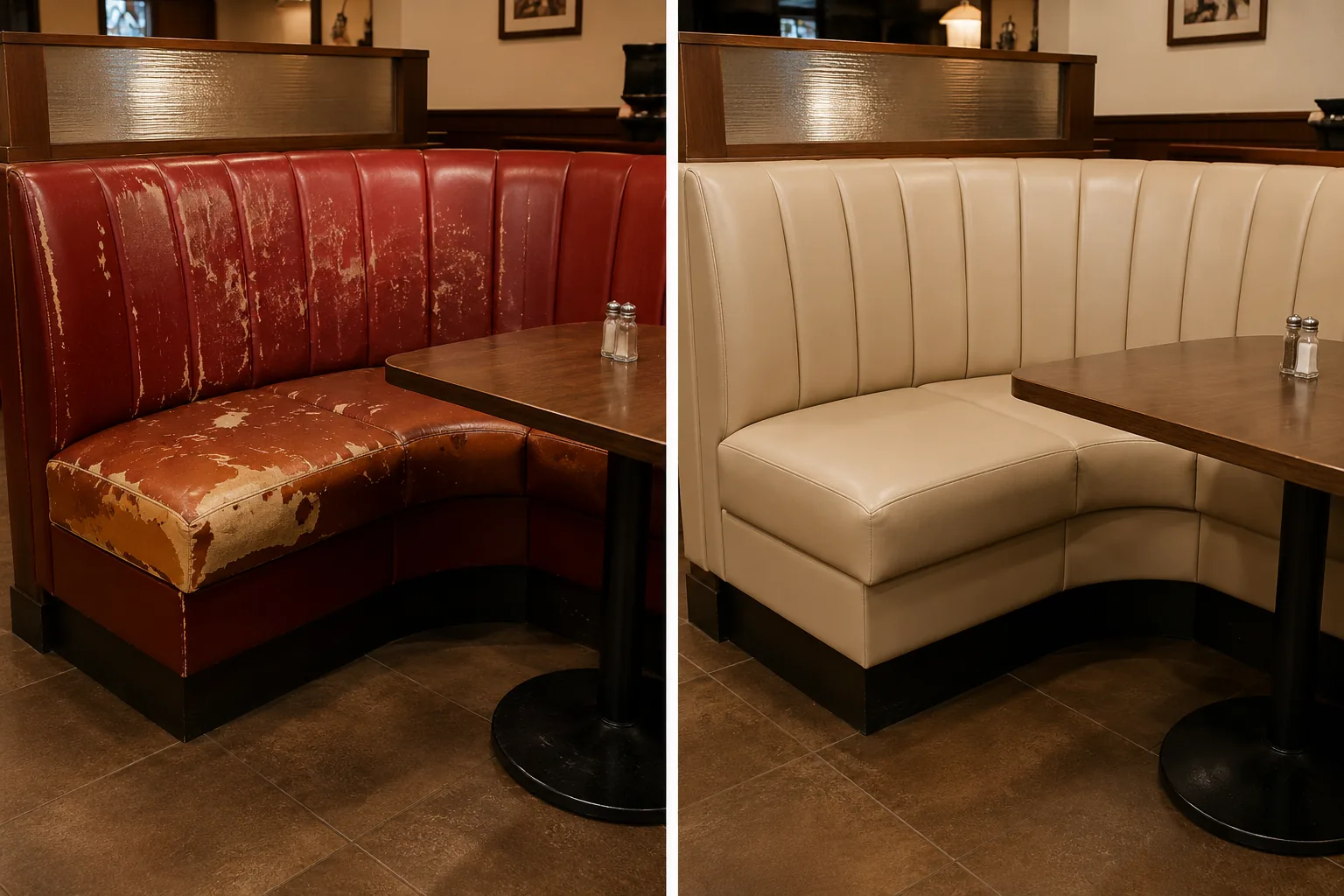
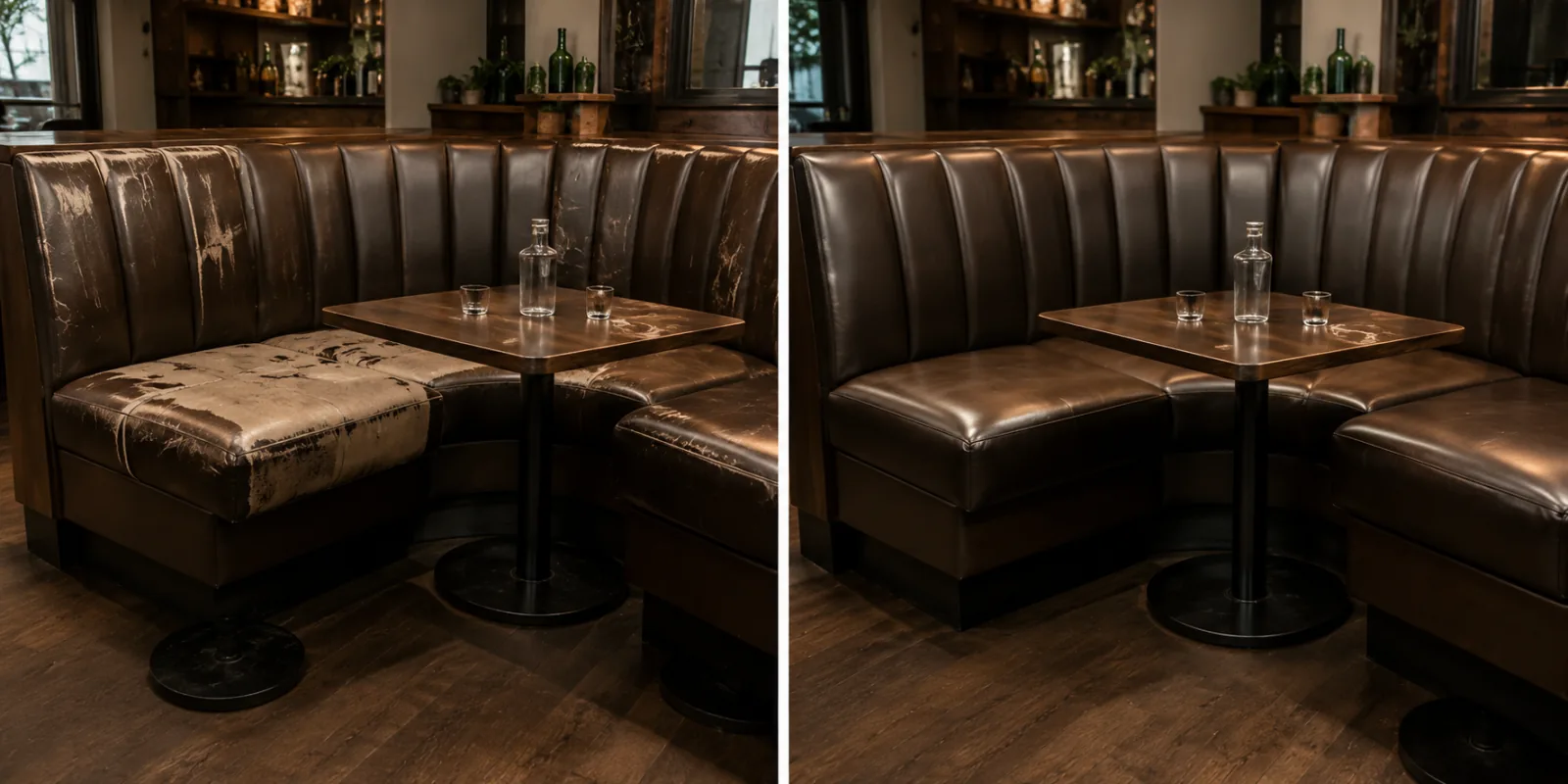
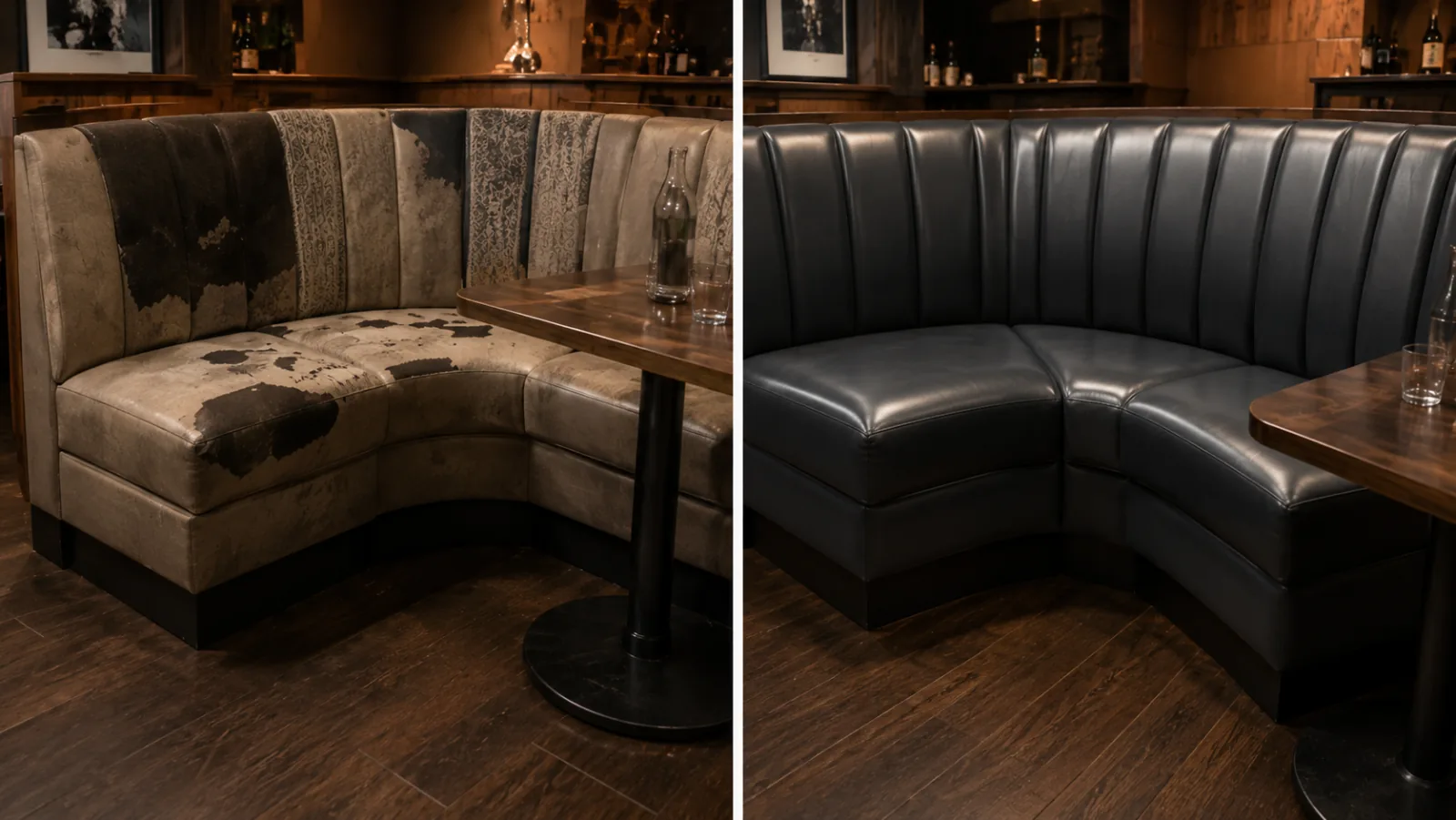
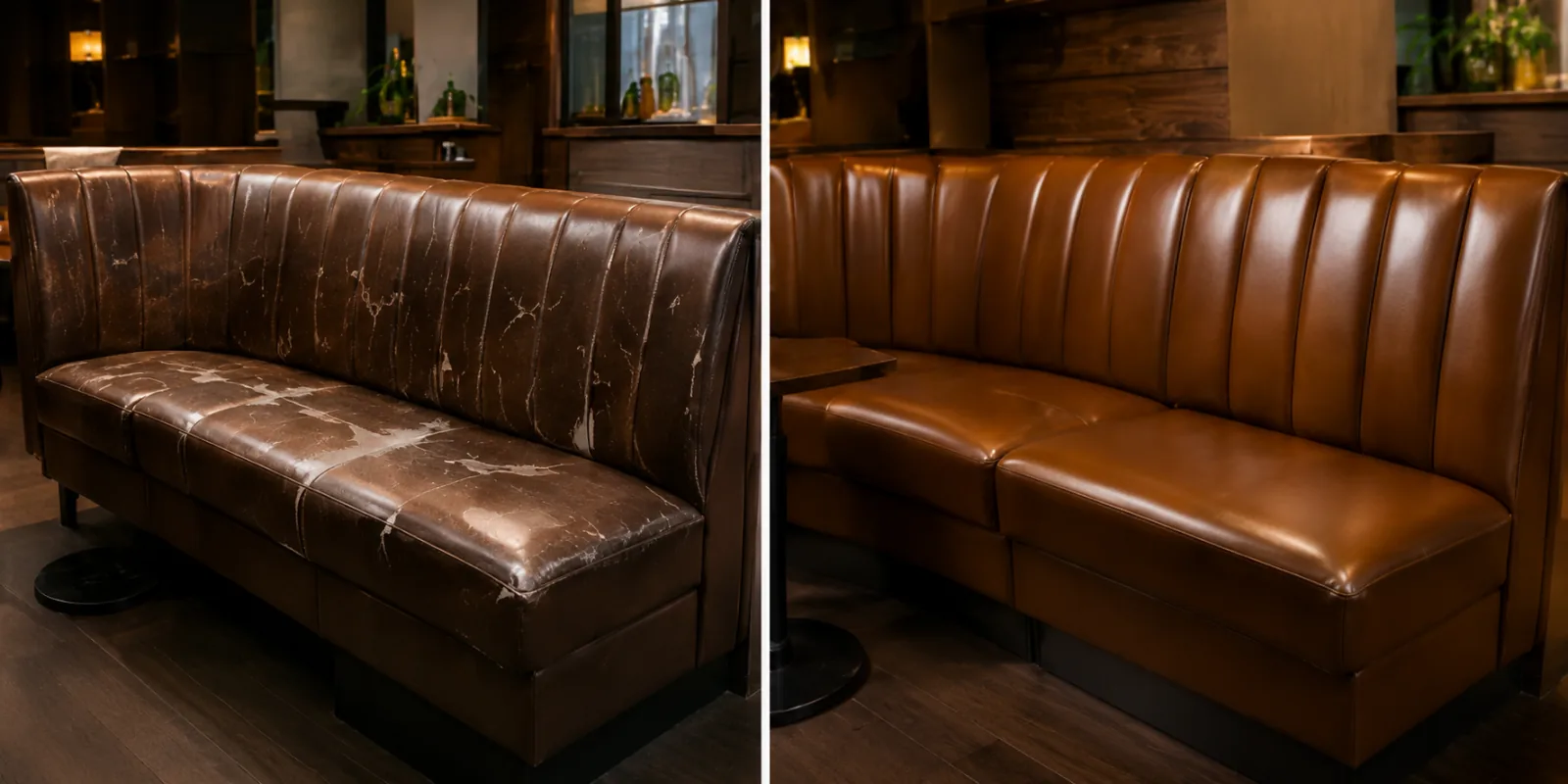
Two honest answers, and they suit different rooms.
Banquette reupholstery NYC takes a sideways load a chair never sees, so the backing matters more than the face. Runs are specified out of contract books — makers like Spradling for vinyl, Townsend for hide. If some bays are being kept, read material matching before you choose.

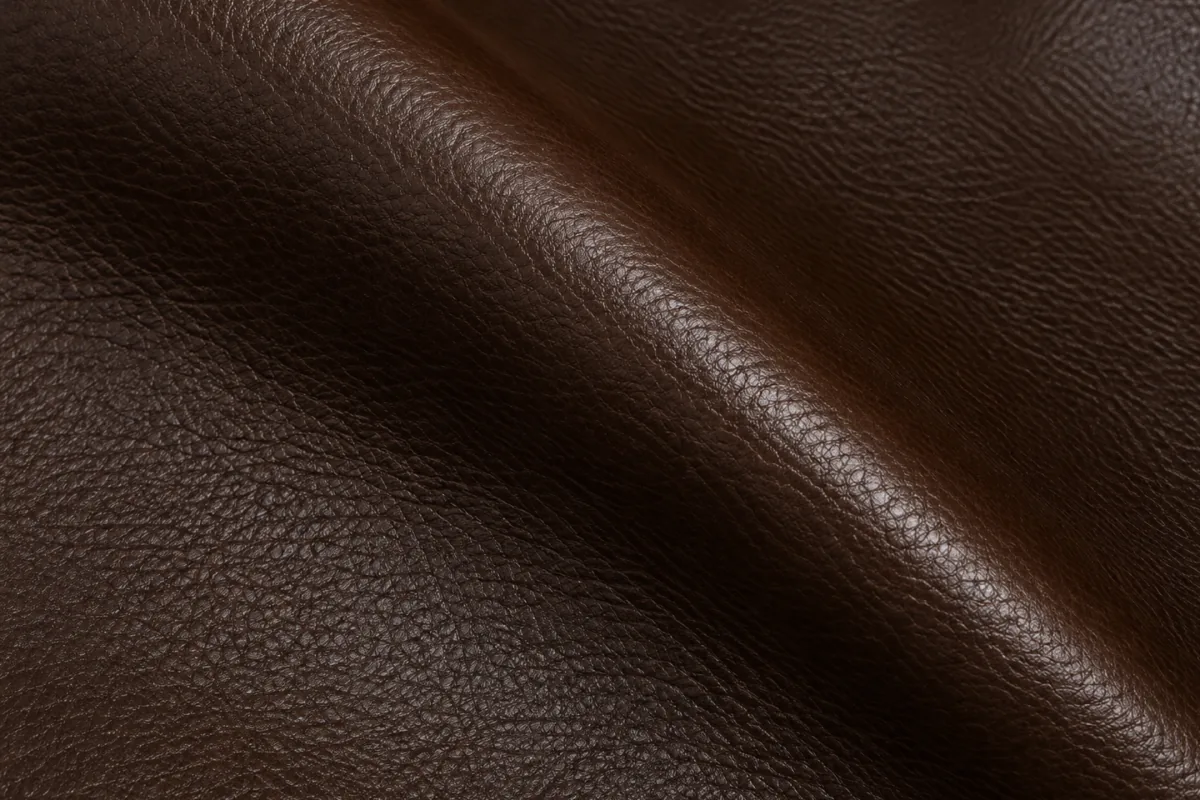
- Under load
- Woven backing takes the shuffle in and out without the face lifting off it.
- Takes it too, and softens rather than stretches — but needs a heavier hide on a deck.
- Cleaning
- Wiped down by your own team, nightly, with no regime to teach.
- Wants a conditioning pass on a schedule, or the top roll goes dry where backs lean.
- Repair later
- Patched or panel-swapped bay by bay, so one bad bay is not a whole run.
- Recoloured and filled in place, which hides wear better than vinyl ever will.
- Belongs in
- High-turn dining rooms, diners, cafeterias, anything doing three sittings.
- Bar banquettes, private dining, hotel lobbies — rooms where the seating is the pitch.
If it can be picked up, it belongs on another page.
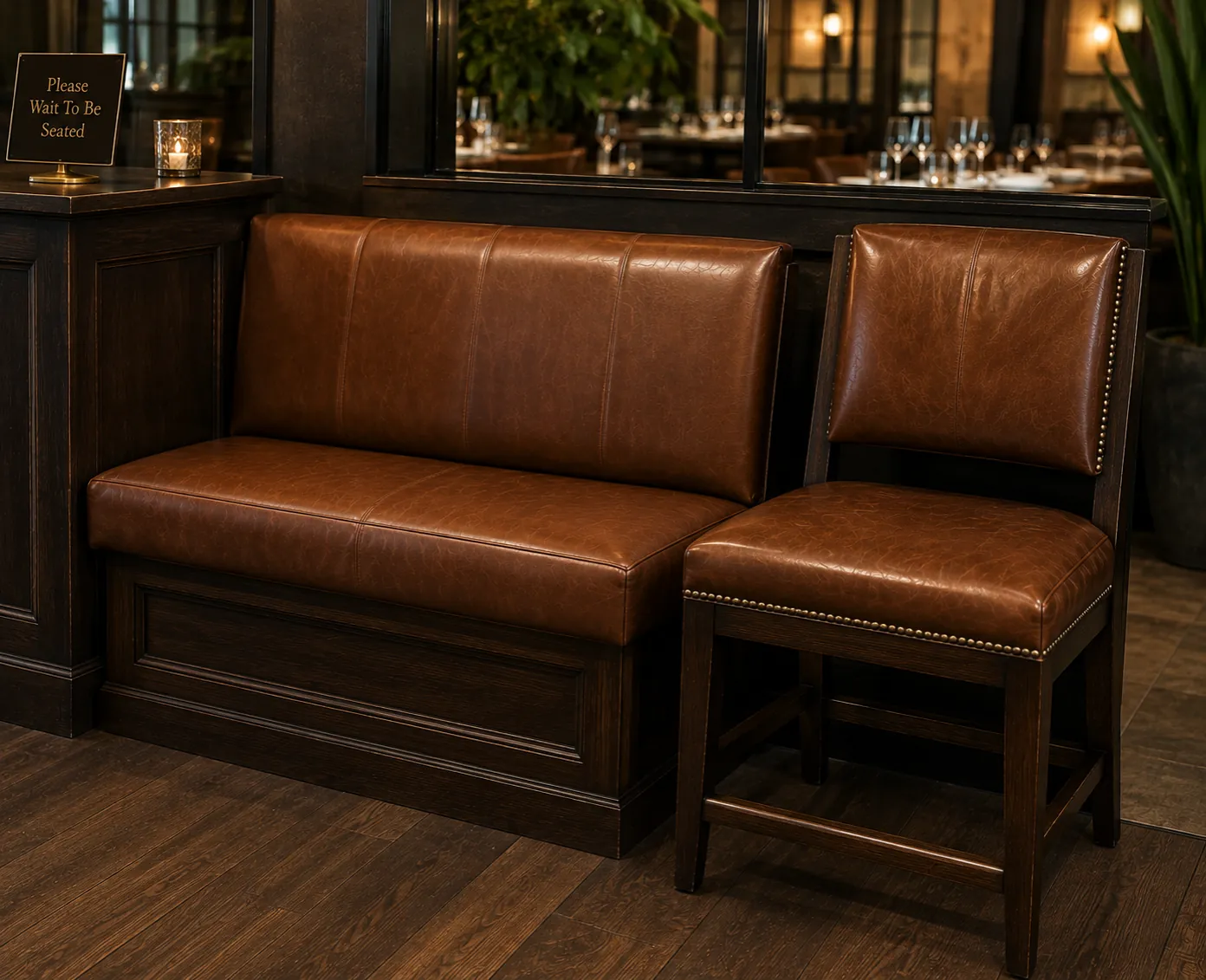
- Loose chairs and stool pads
Unscrewed and recovered on a bench in your own room — chair and seating reupholstery.
- One split, one seam, one burn
A recover is the wrong tool for a single fault — booth and banquette repair.
- Loose cushions on a sound run
Foam and covers only, carcass untouched — custom banquette cushions.
- Foam gone, cover still good
Deck rebuilt without new material — foam replacement.
Banquette reupholstery NYC is ordered by the room.
Nobody recovers one bay. A refit takes the wall, the booths and the stools together so the colour lands in one night.
- A room at a time. Every fixed run, plus the loose seating that has to match it, planned as one job — bulk projects.
- A group at a time. Repeat specifications across several sites, held so later venues still match — large-volume reupholstery.
- Through your designer. Specification, sampling and fitting run under a trade account — trade programs.
- Paperwork first. Certificates issued to the landlord or building before a crew is booked in — COI and insurance.
What operators ask before they book the night.
What does banquette reupholstery NYC involve?
Do you have to close the restaurant to reupholster a banquette run?
Can you match new bays to the ones we are keeping?
Should a restaurant banquette be recovered in vinyl or leather?
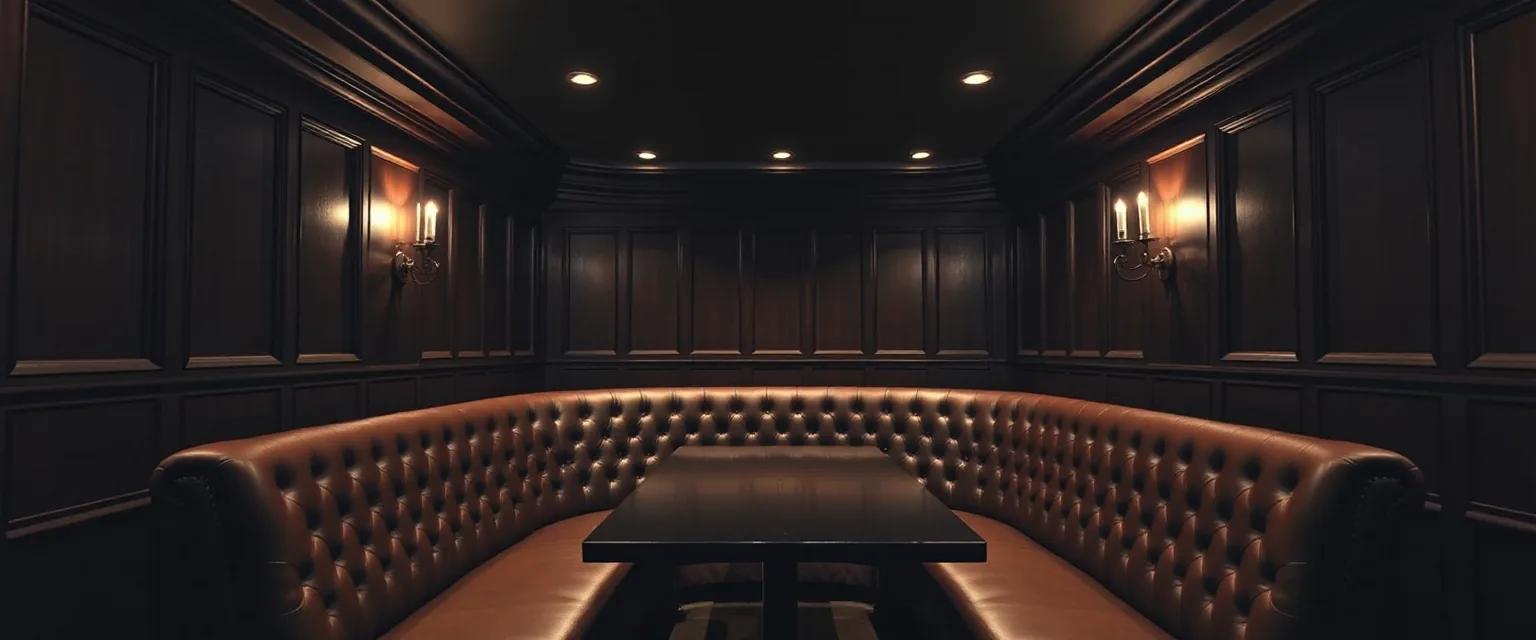
Send us the run.
Two photographs price most banquette reupholstery NYC jobs: the wall end to end, and one bay close up. Add the length in feet and that is enough to quote it and to say how many nights it takes.