
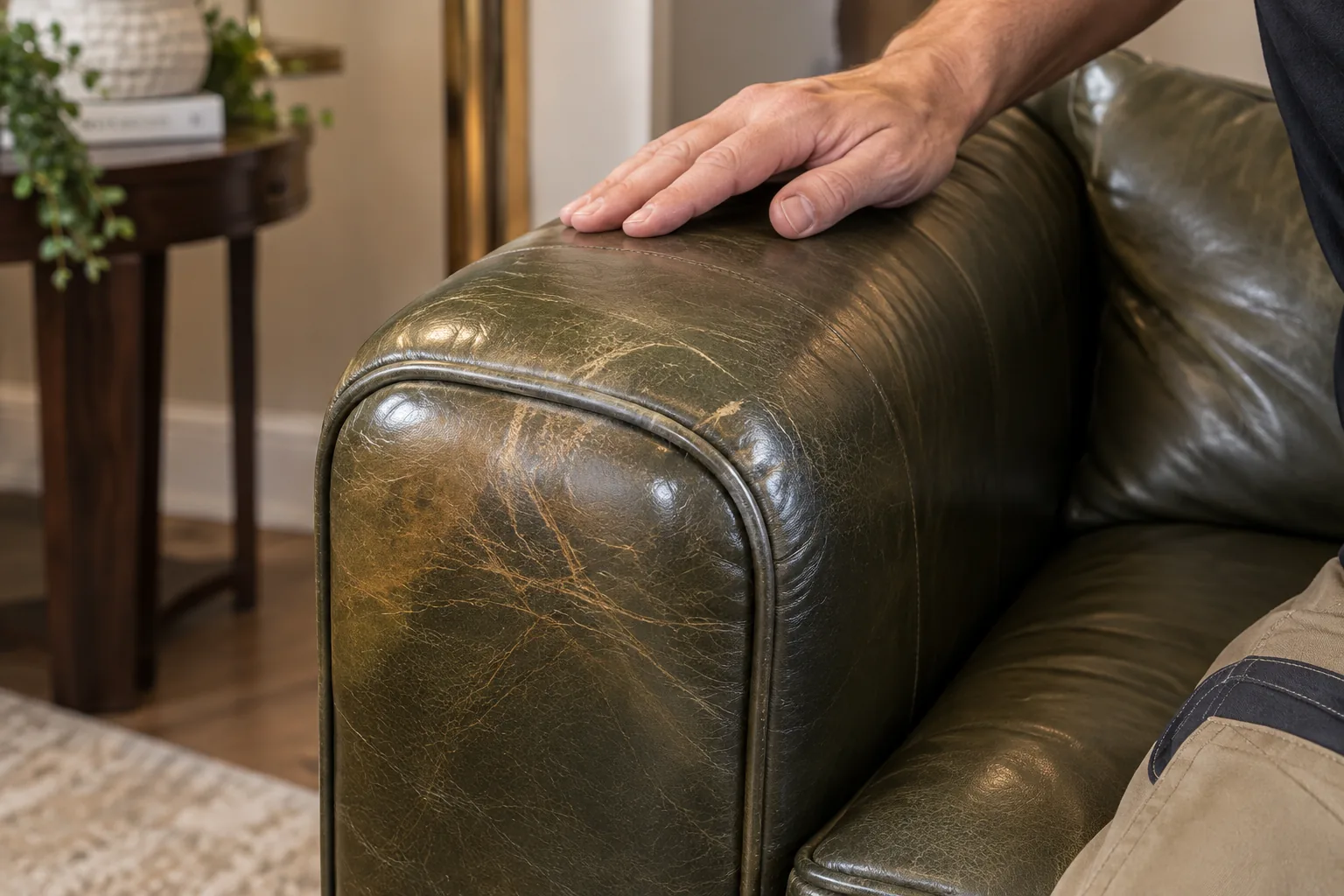
What happened to your armrest?
Six things go wrong on an arm, and which one it is decides everything that follows — a refinish, a stitch line, new filling or a replacement panel.
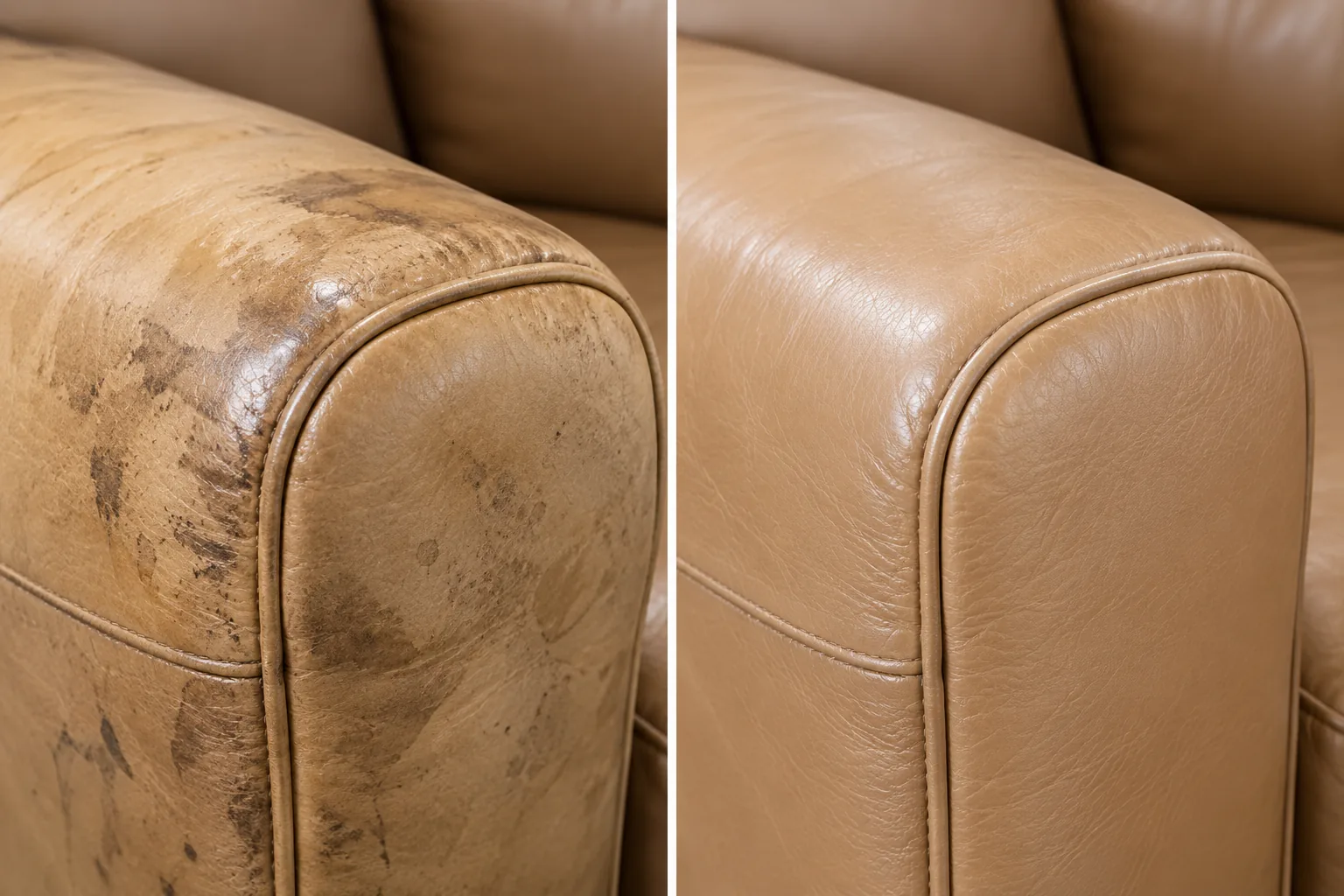
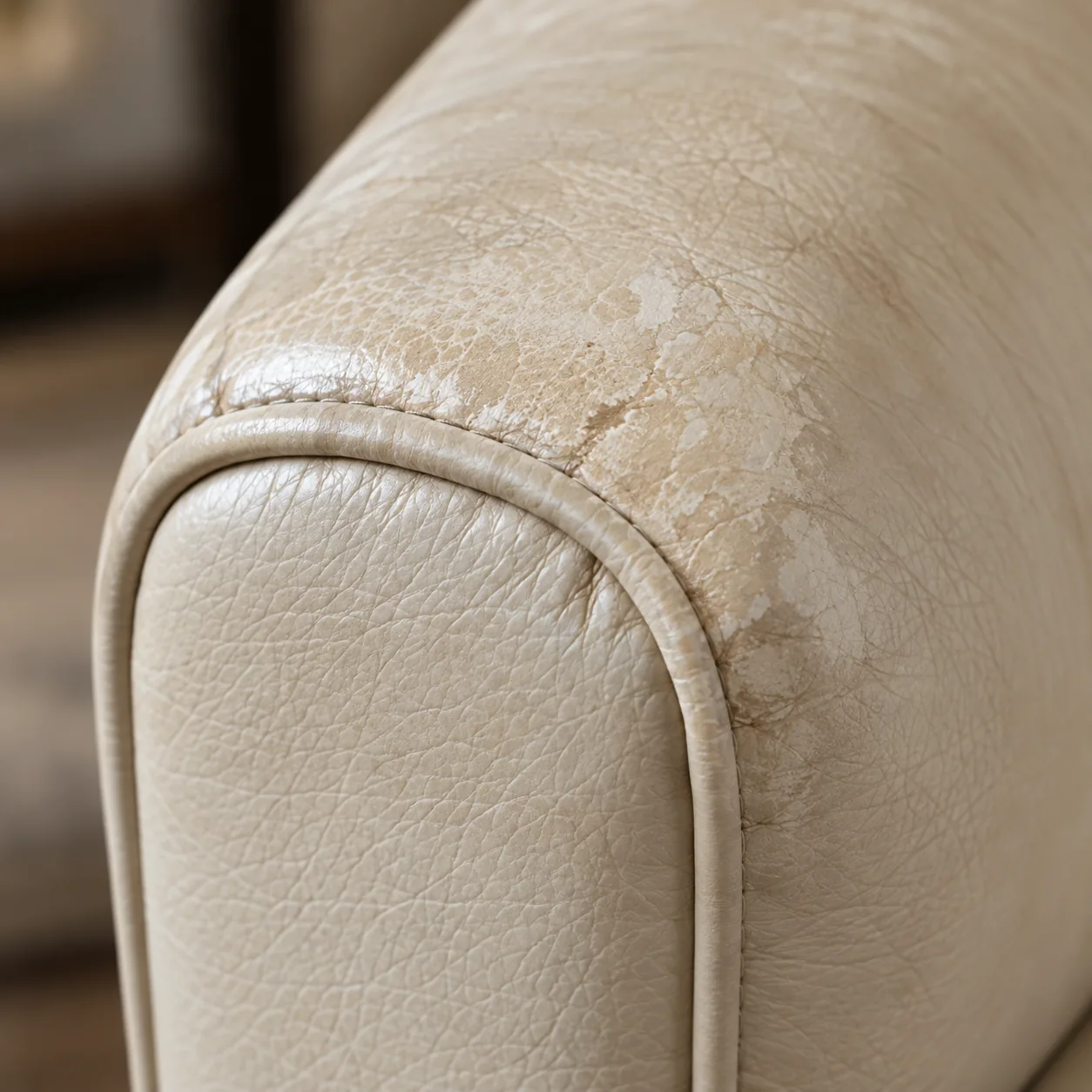 Surface wear
Color loss and shiny patches from regular use.
Surface wear
Color loss and shiny patches from regular use.
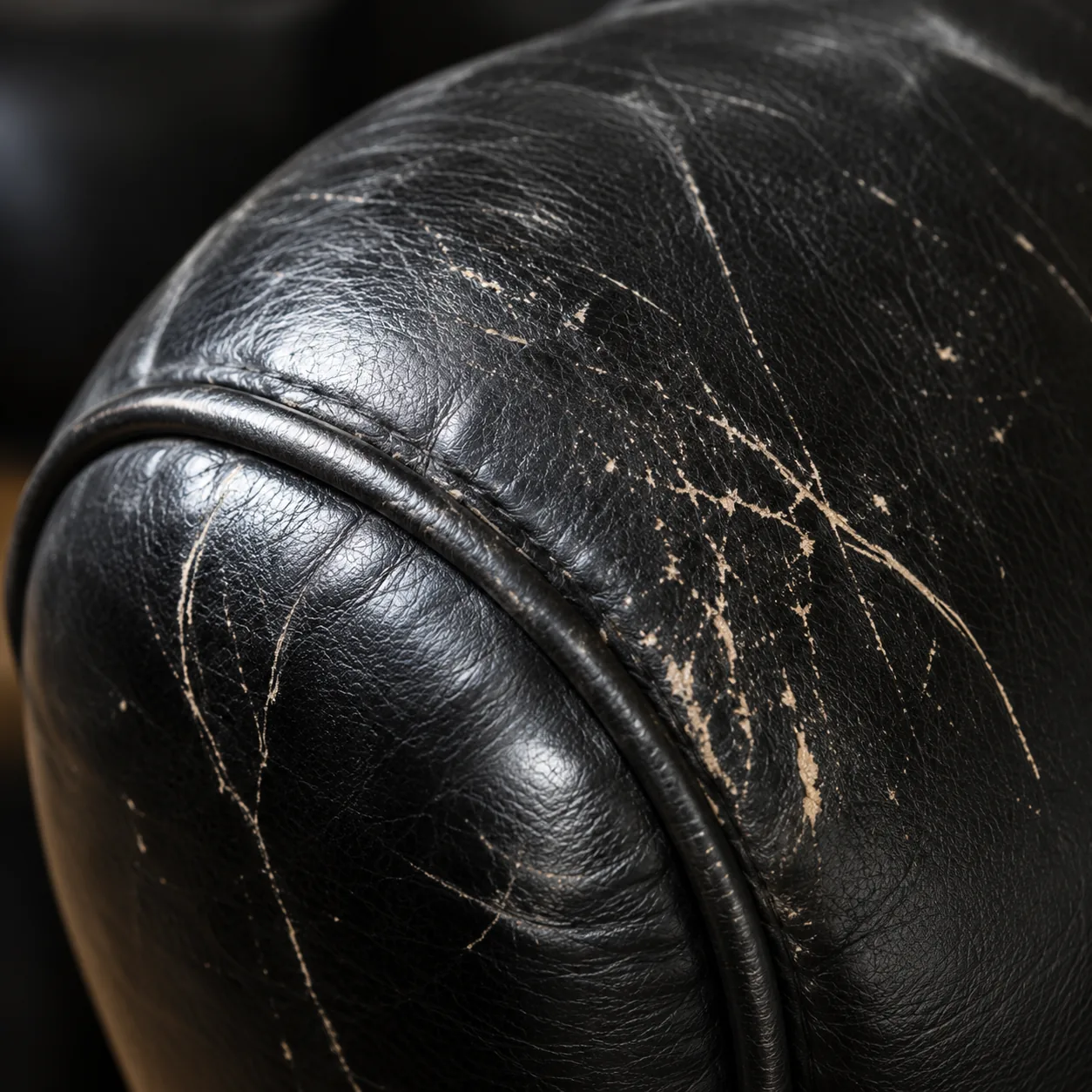 Cat scratches
Light to moderate claw marks on the surface.
Cat scratches
Light to moderate claw marks on the surface.
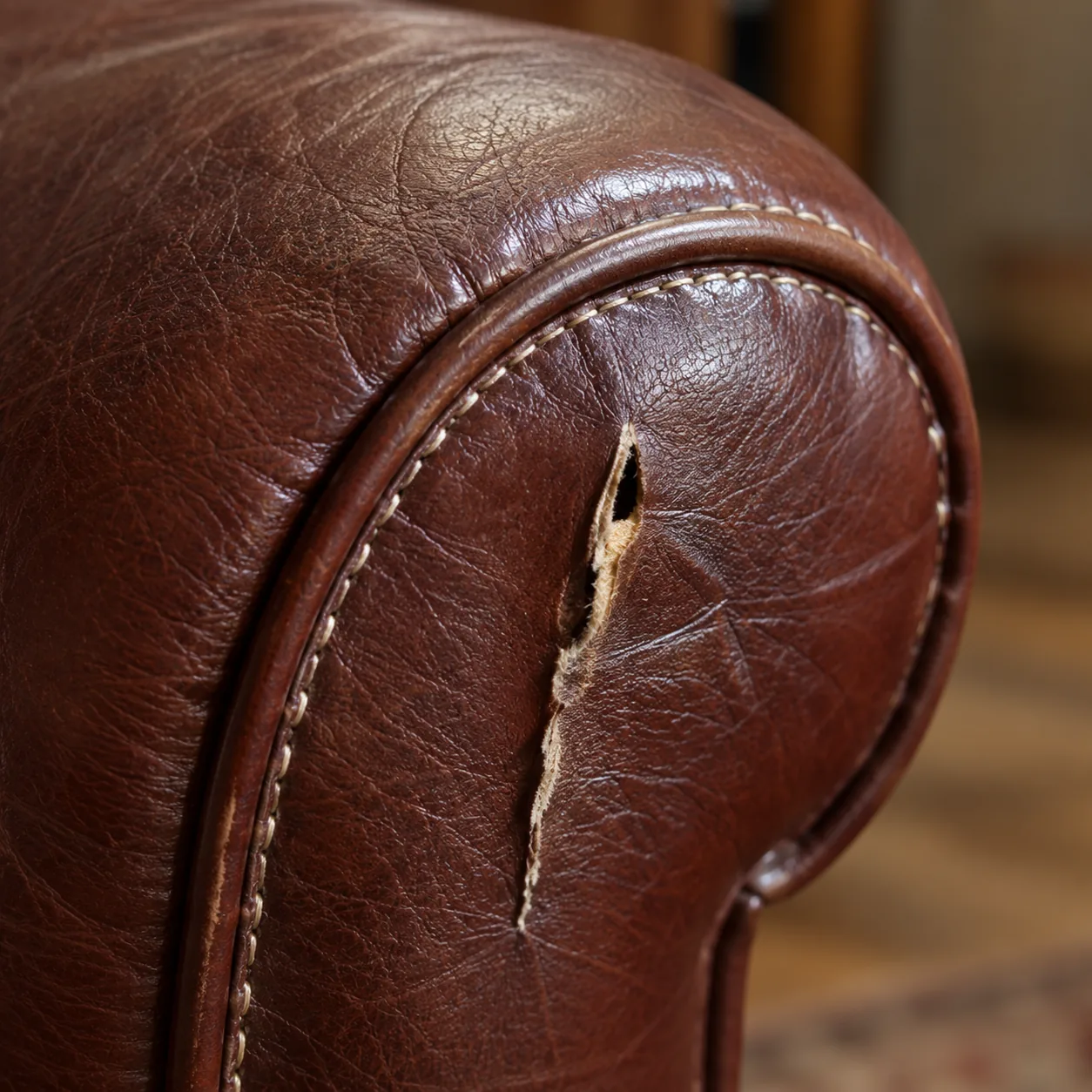 Small tear
A cut or split in the leather.
Small tear
A cut or split in the leather.
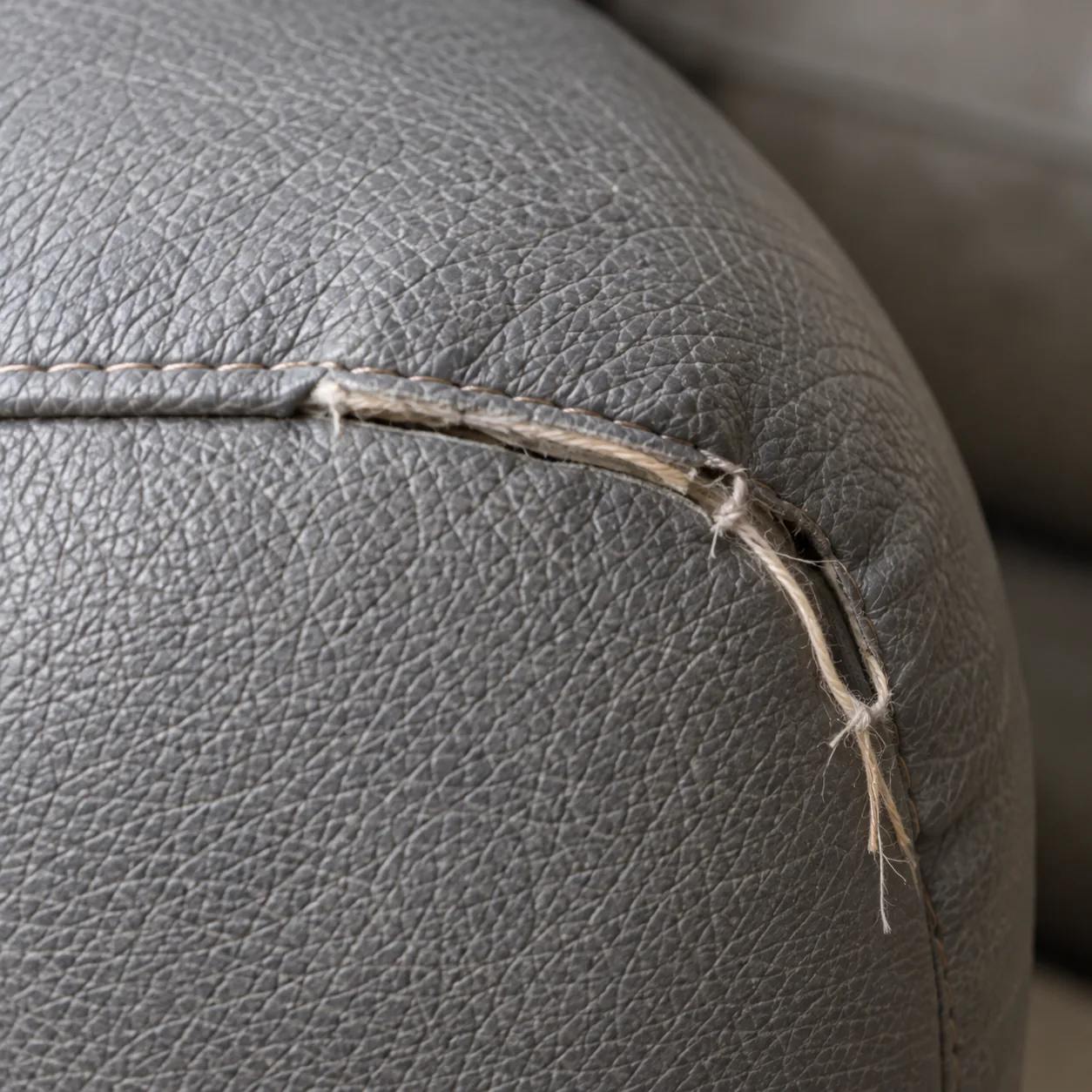 Open seam
Stitches have come apart.
Open seam
Stitches have come apart.
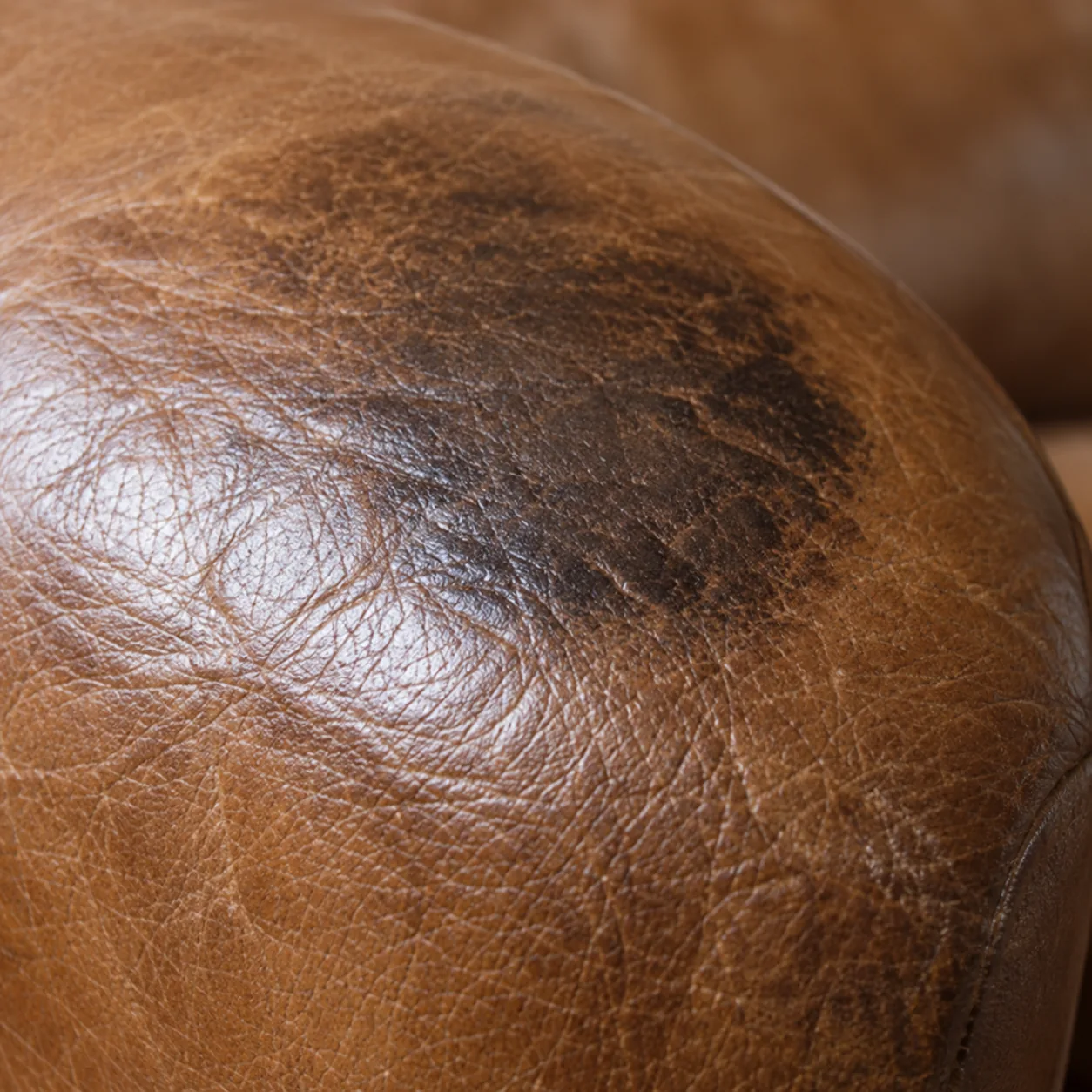 Dark body oils
Discoloration from natural oils and long-term use.
Dark body oils
Discoloration from natural oils and long-term use.
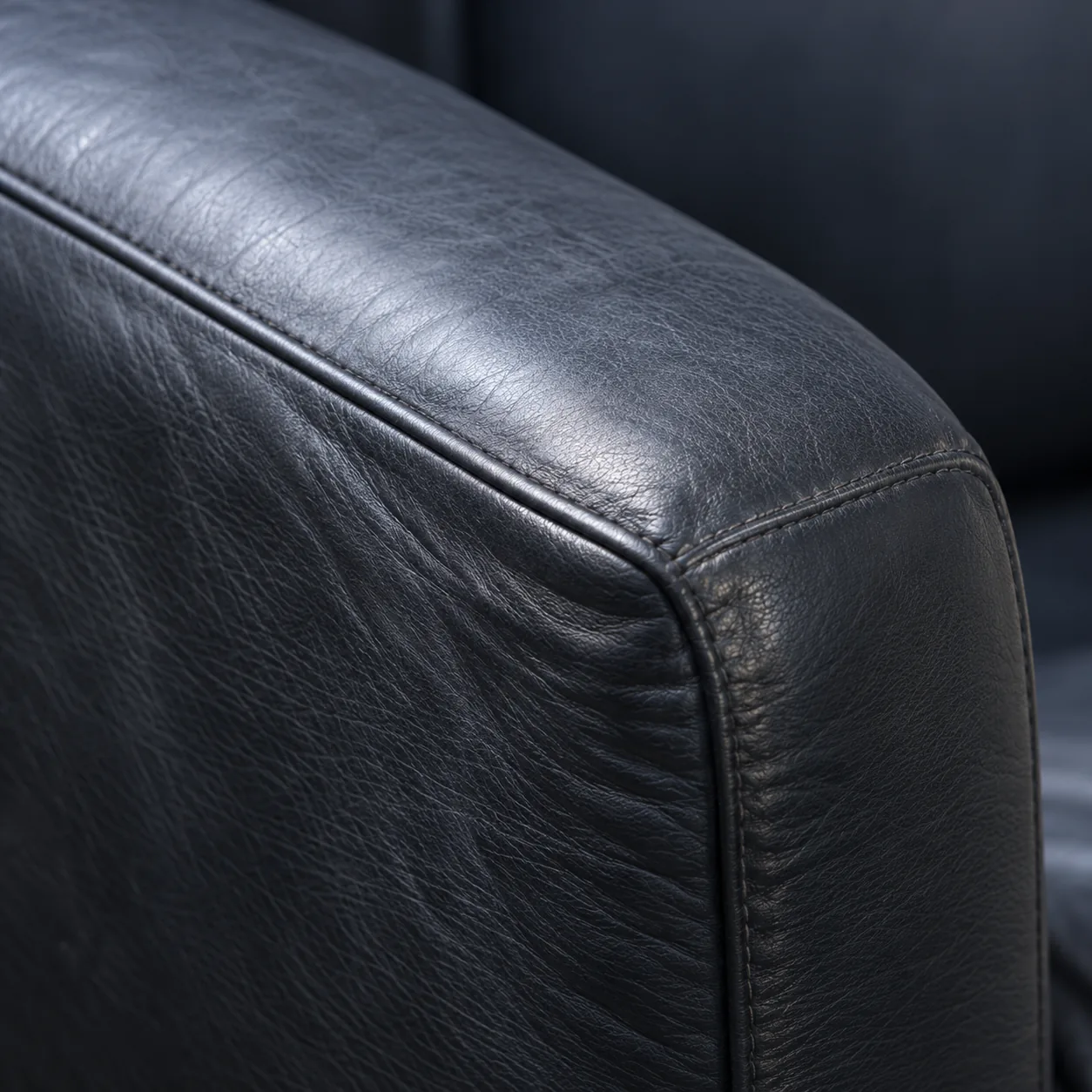 Compressed padding
Surface intact but the padding has lost its shape.
Compressed padding
Surface intact but the padding has lost its shape.
An armrest is three things stacked together
Leather, thread and filling fail in different ways and on different timescales. Naming the one that has gone is the whole diagnosis.
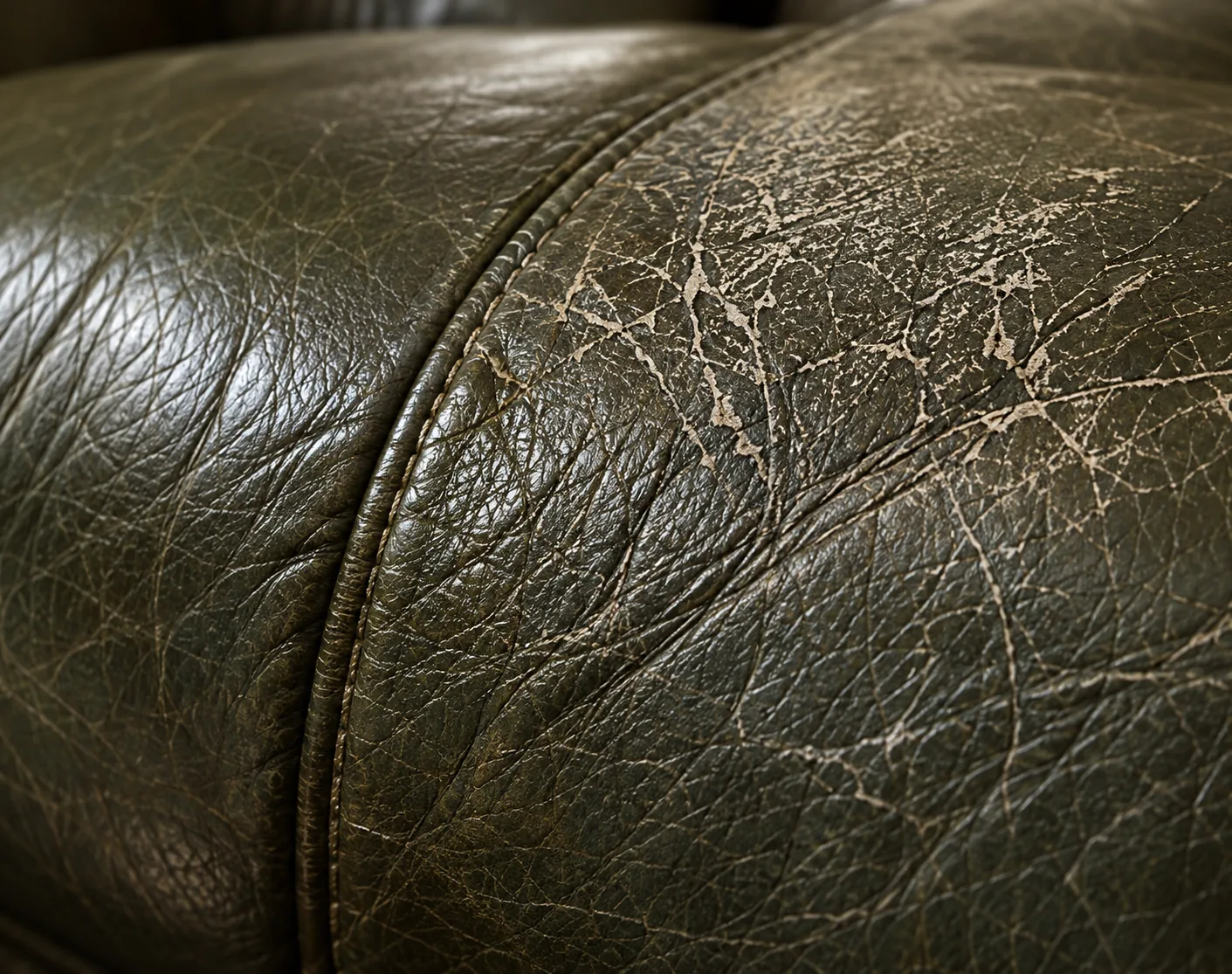
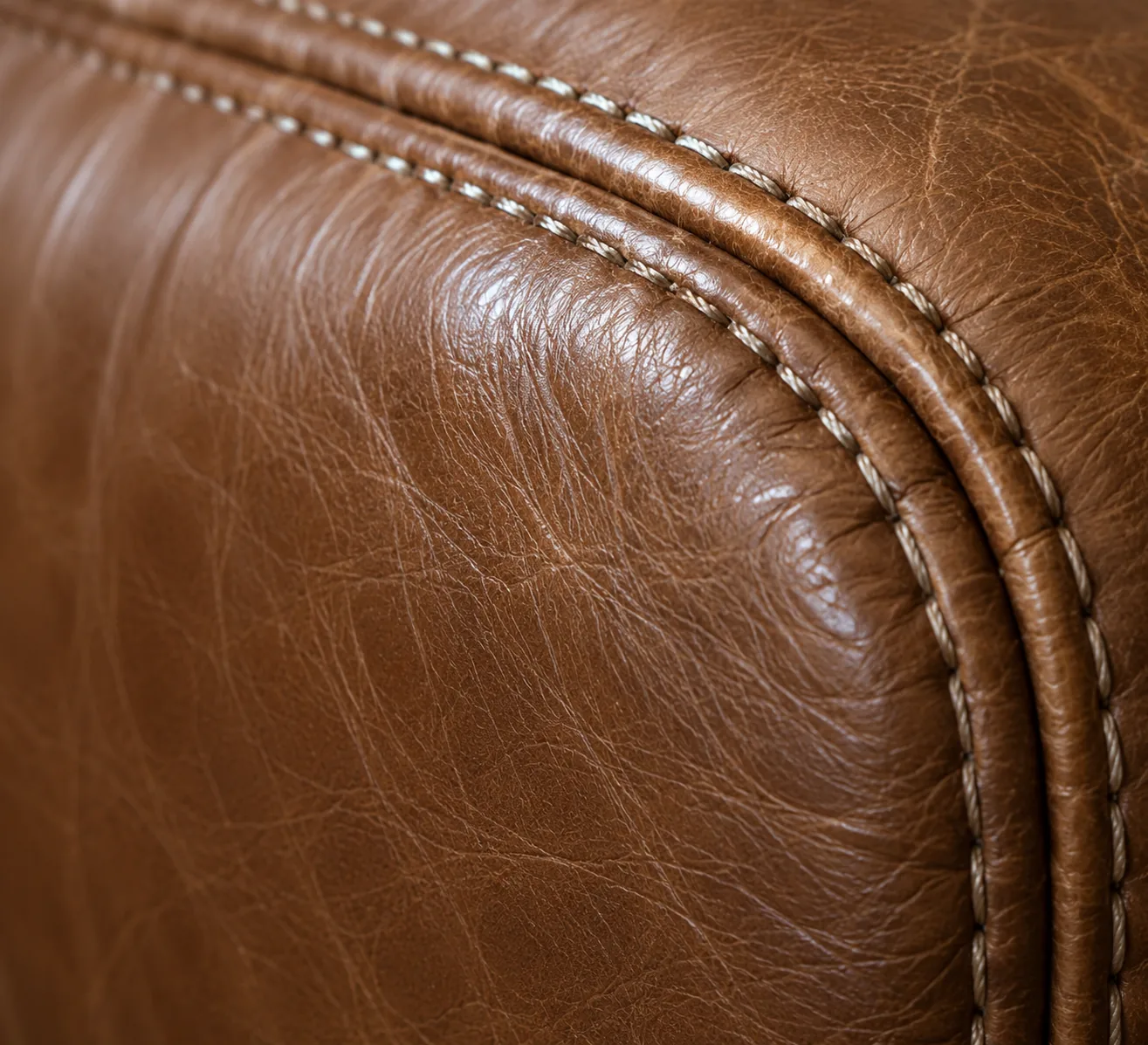
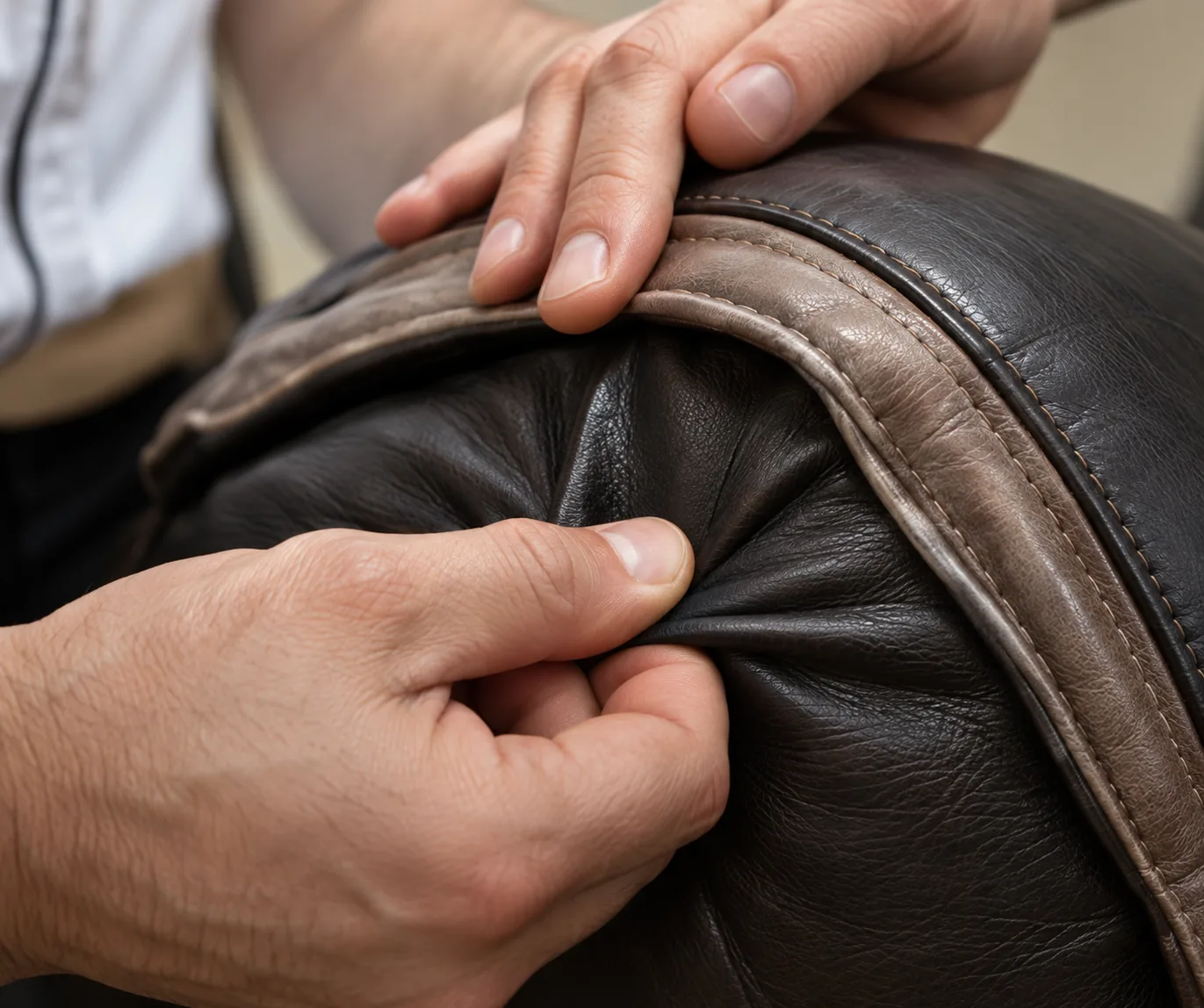
The right repair depends on which part has failed.
A worn surface on sound padding is a finishing job. Sound leather over collapsed filling is an upholstery job, and the new filling is specified by density the way foam makers like Carpenter grade it. The two are priced and scheduled differently, so we look before we quote.
One armrest. Several possible solutions.
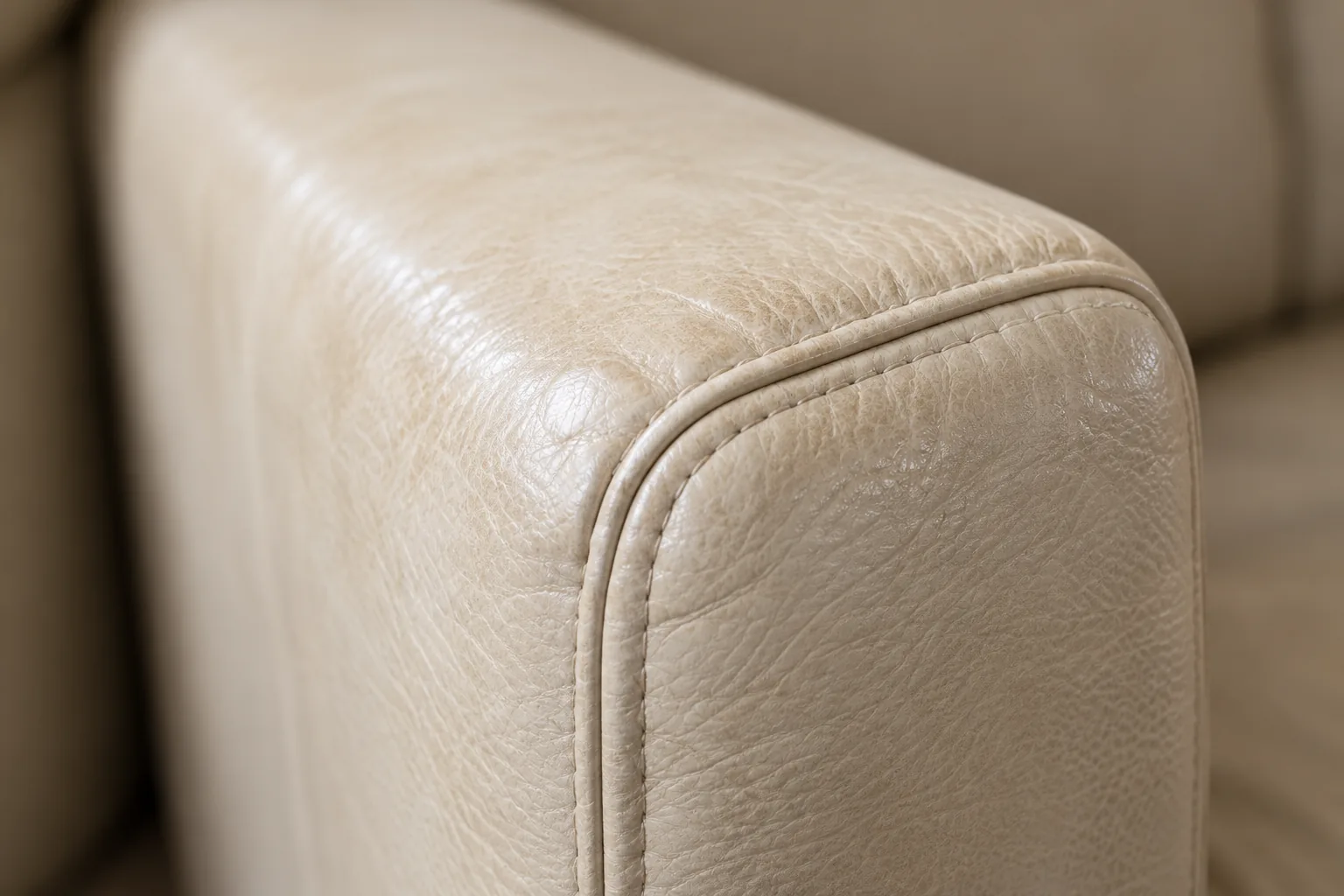 Localized repair
For surface wear, small scratches or minor tears.
Localized repair
For surface wear, small scratches or minor tears.
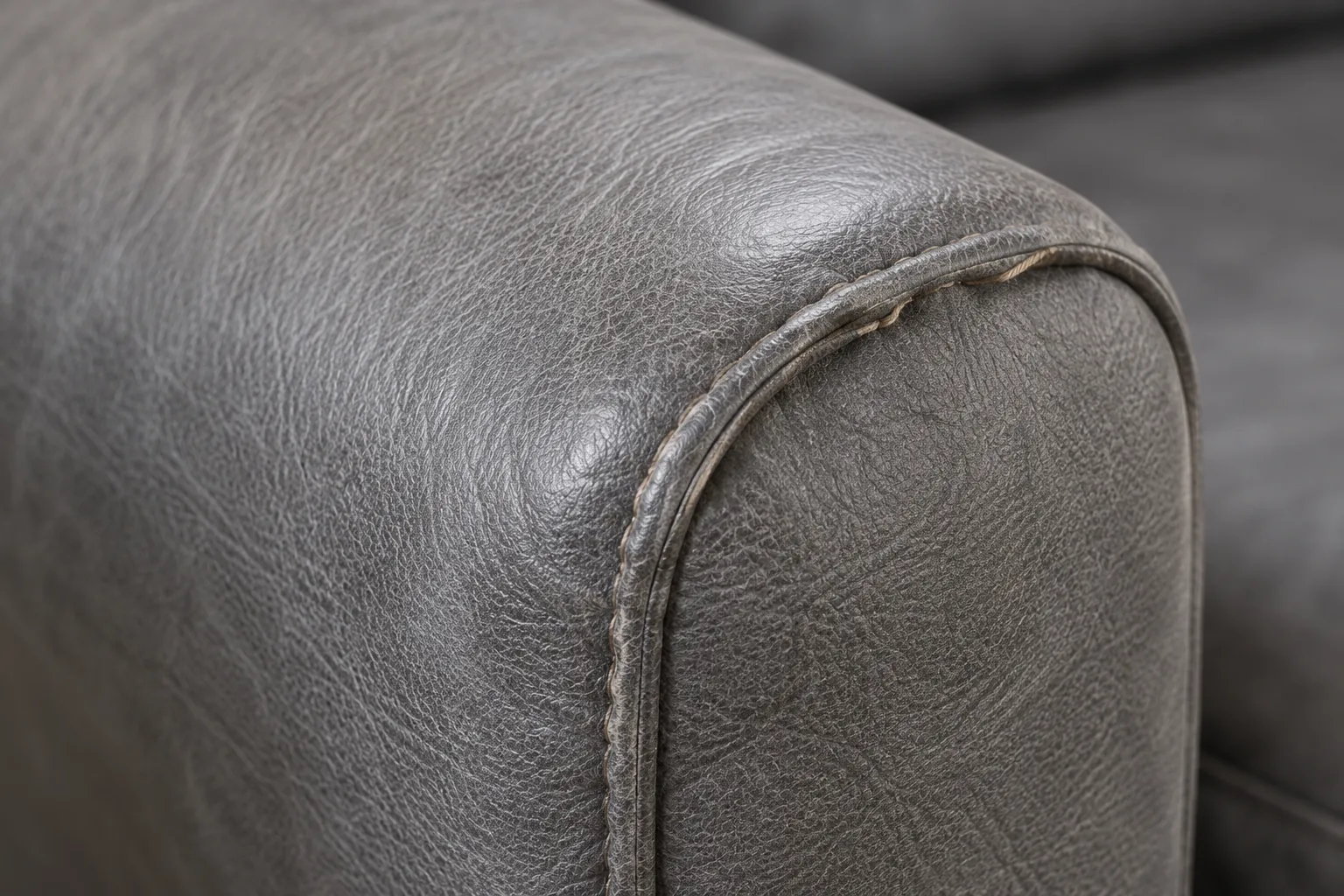 Restitching and padding work
For open seams or compressed padding.
Restitching and padding work
For open seams or compressed padding.
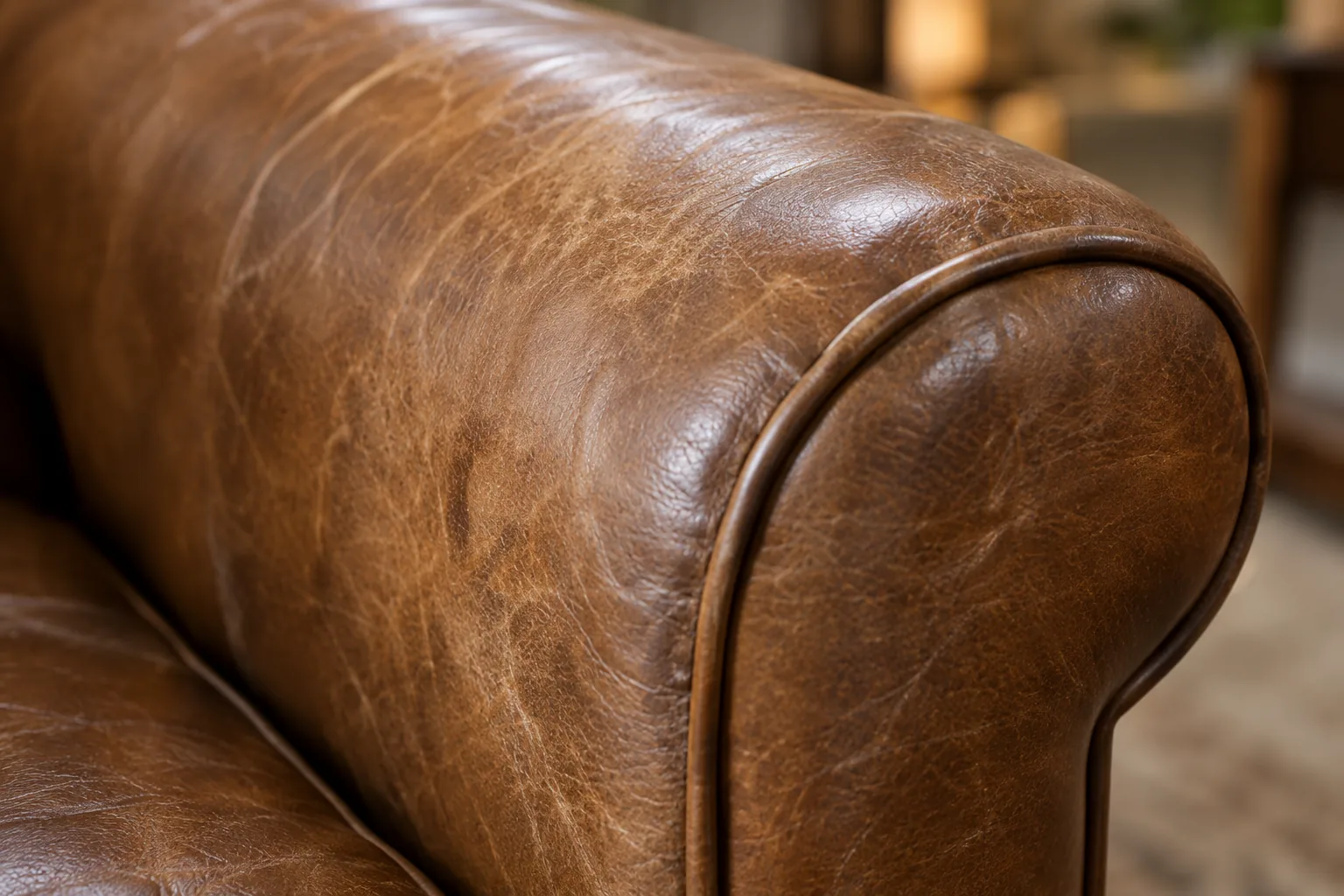 Arm panel replacement
For more extensive damage to a section of the armrest.
Arm panel replacement
For more extensive damage to a section of the armrest.
Can it be repaired in your home?
Some repairs can be completed on site. Cover removal or panel replacement may require workshop work — and on a sectional that is often the only part that has to travel.
 In your home
Color work, scratch repair, most seam repairs and light filling — done where the sofa stands.
In your home
Color work, scratch repair, most seam repairs and light filling — done where the sofa stands.
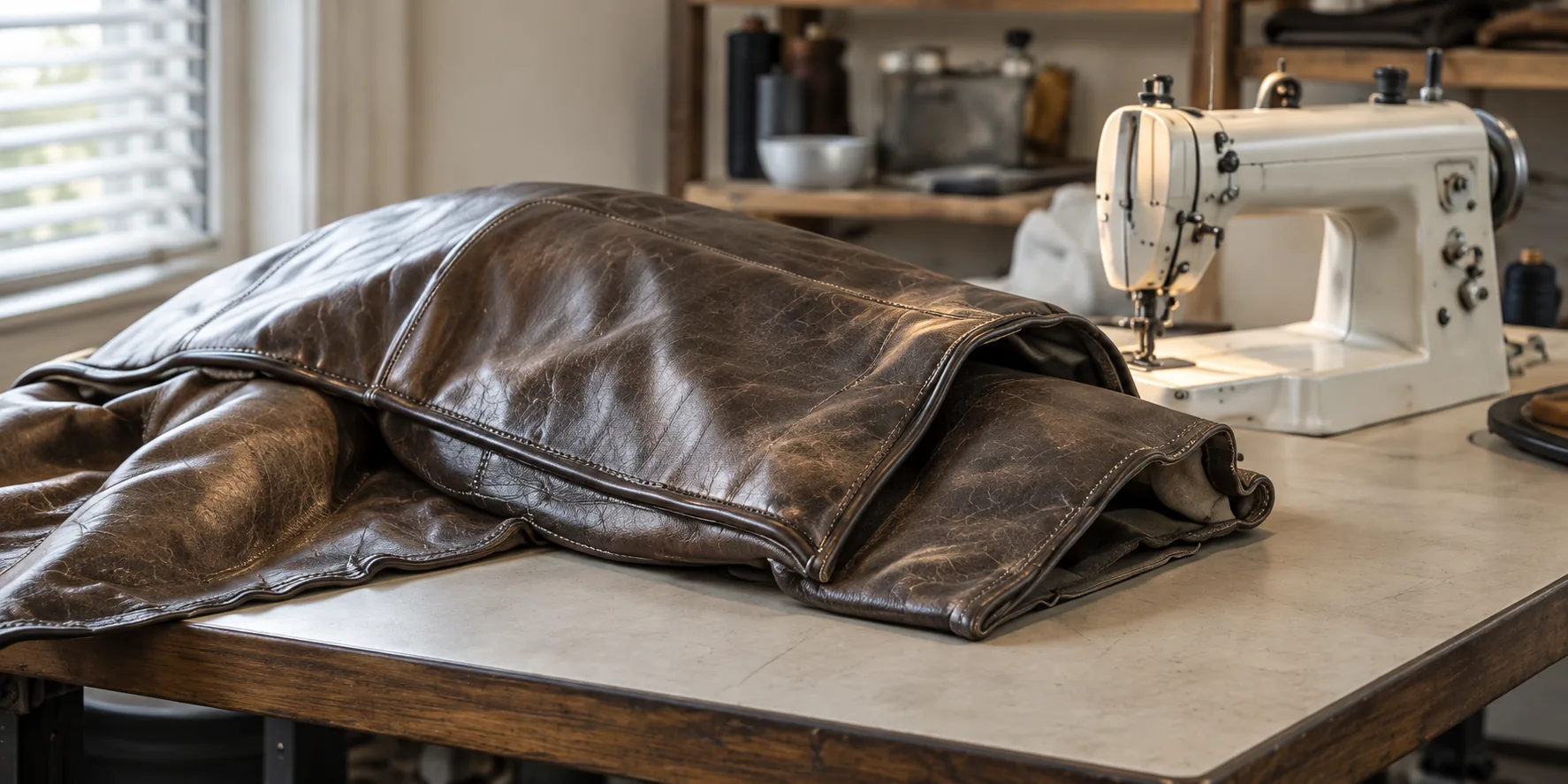 In the workshop
Cover removal, new panels and rebuilt filling need a table and a machine.
In the workshop
Cover removal, new panels and rebuilt filling need a table and a machine.
A closer look at the process.
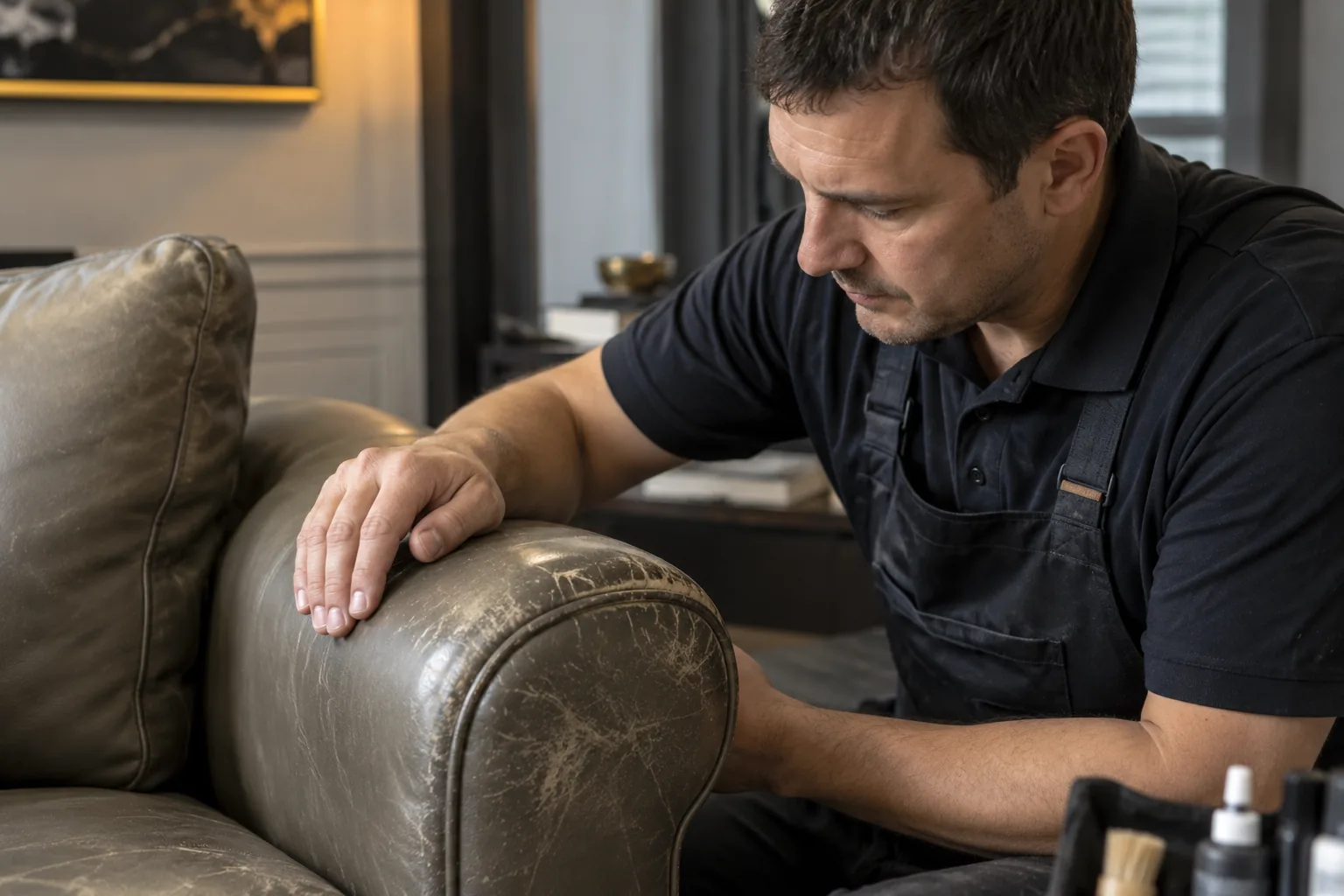 01
Inspect damage
We examine the armrest and identify the issue.
01
Inspect damage
We examine the armrest and identify the issue.
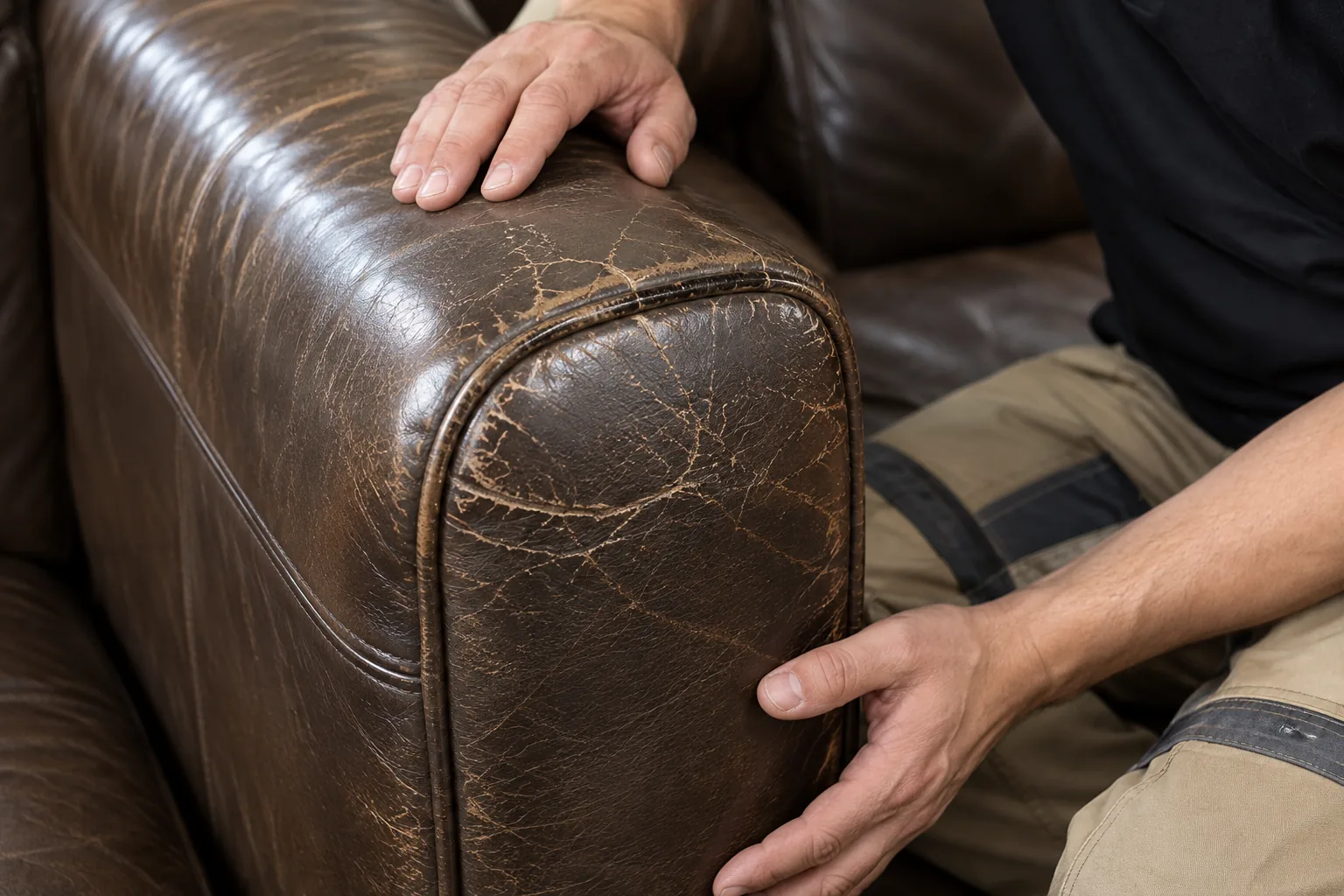 02
Check access
We confirm what can be done on site.
02
Check access
We confirm what can be done on site.
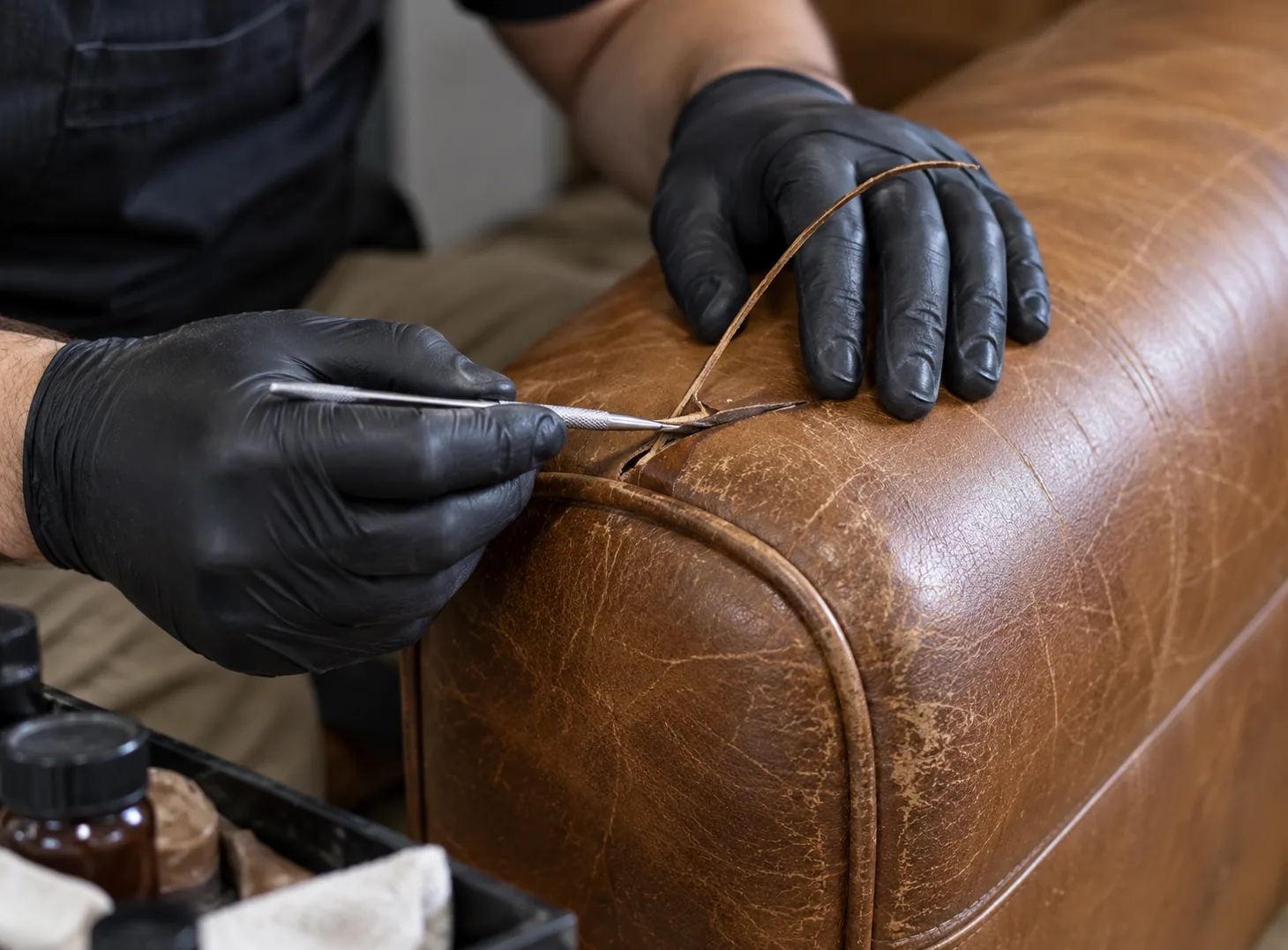 03
Repair or replace
We carry out the appropriate repair.
03
Repair or replace
We carry out the appropriate repair.
 04
Review the finish
We check the result and overall appearance.
04
Review the finish
We check the result and overall appearance.
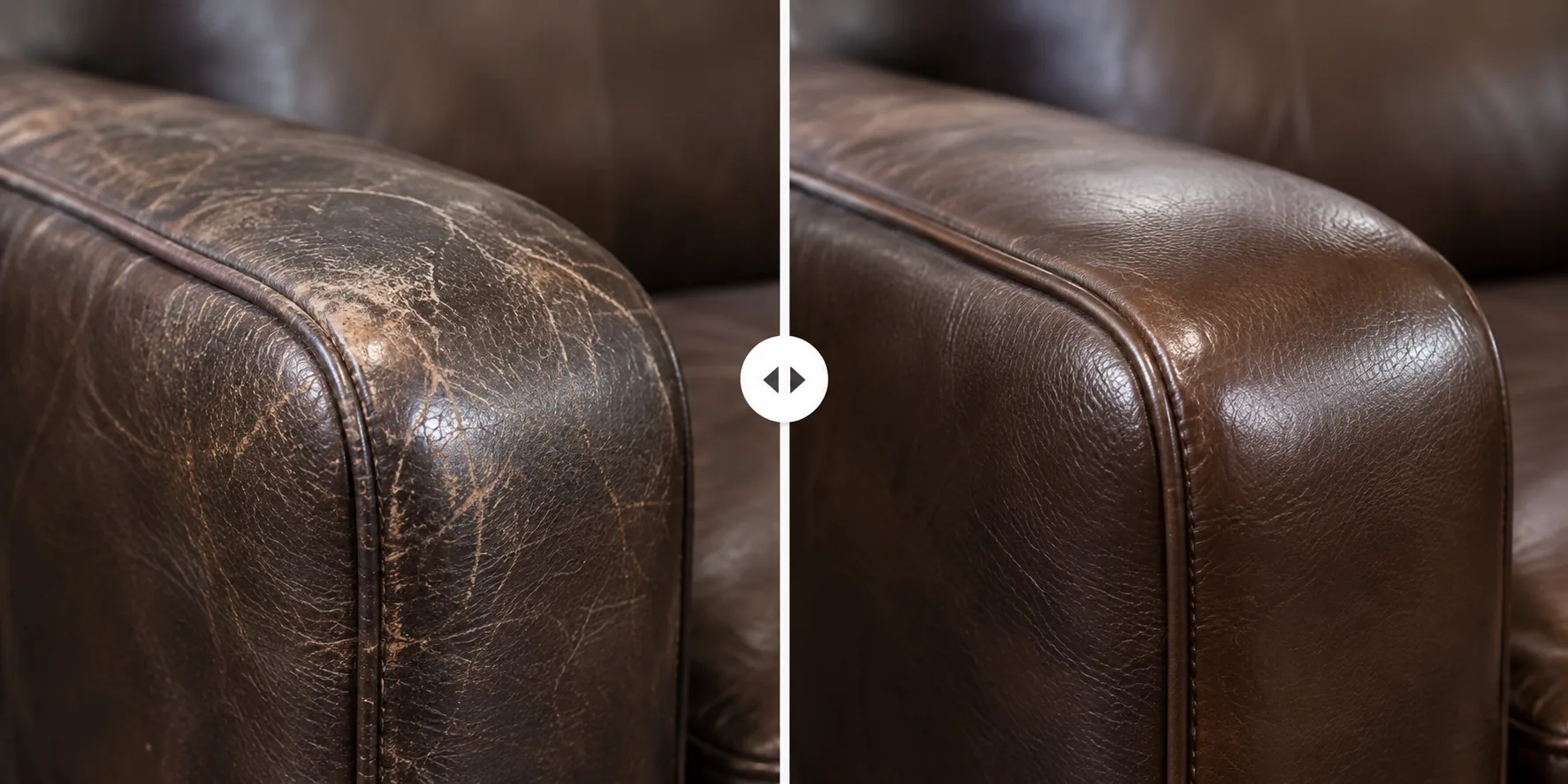
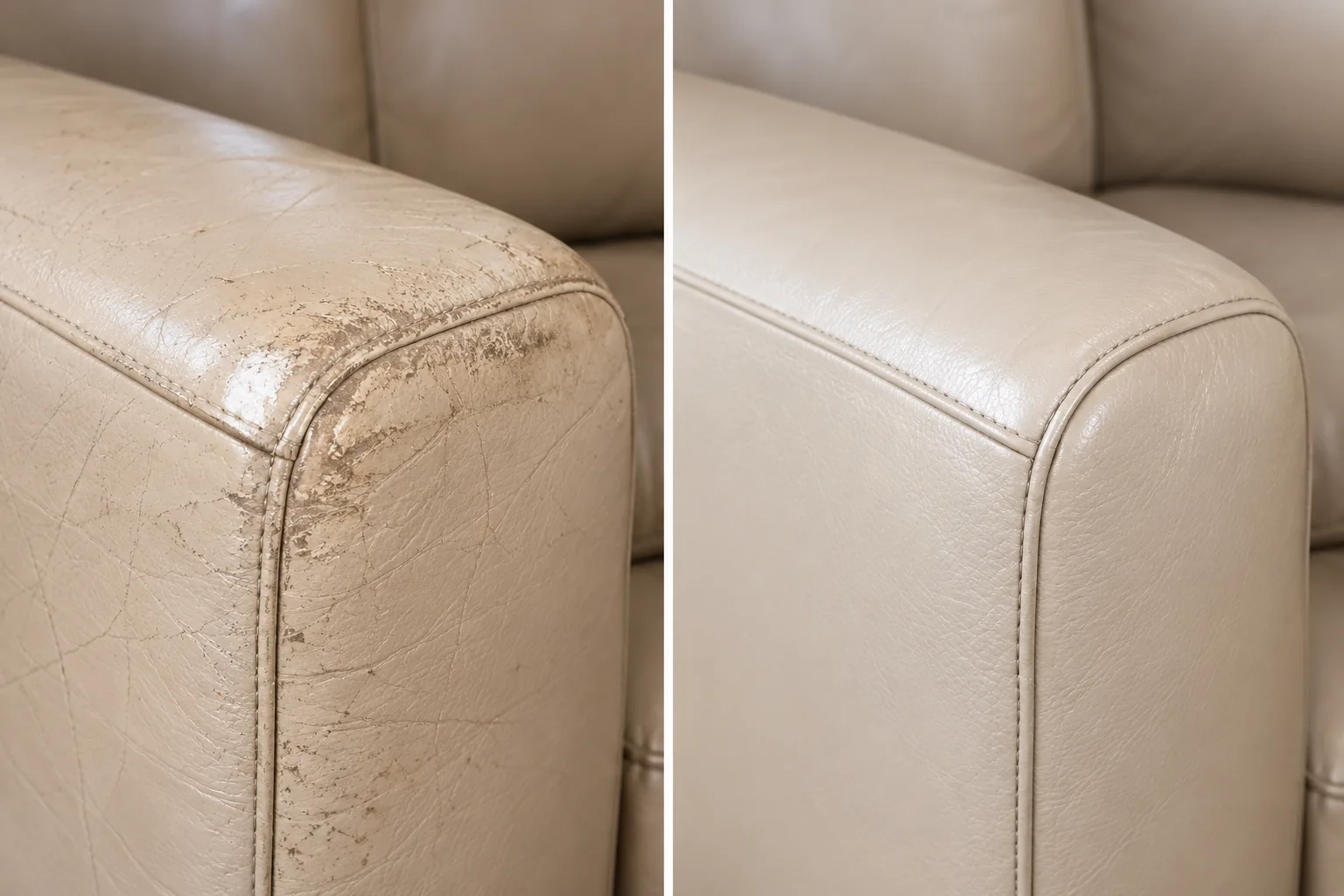
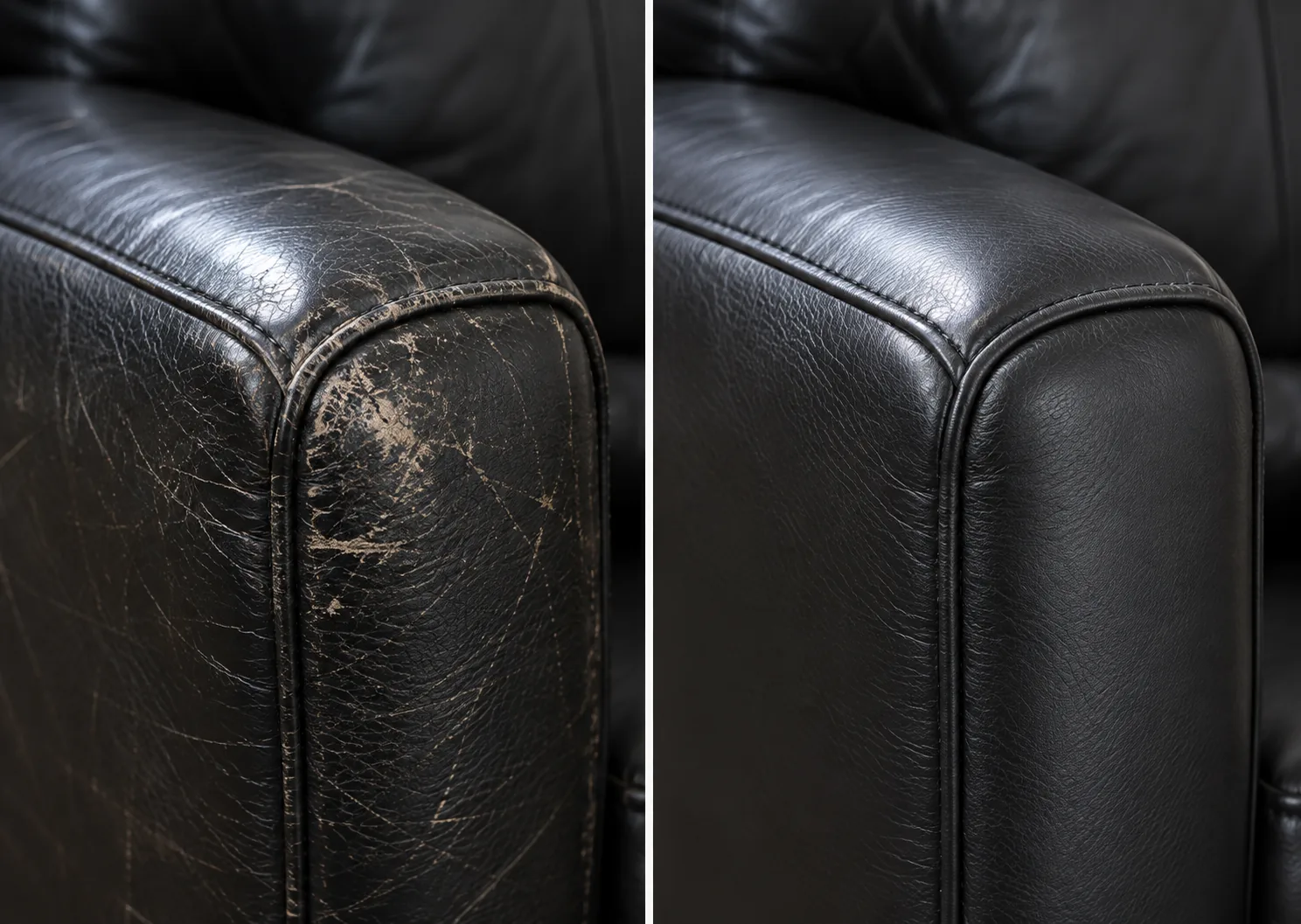
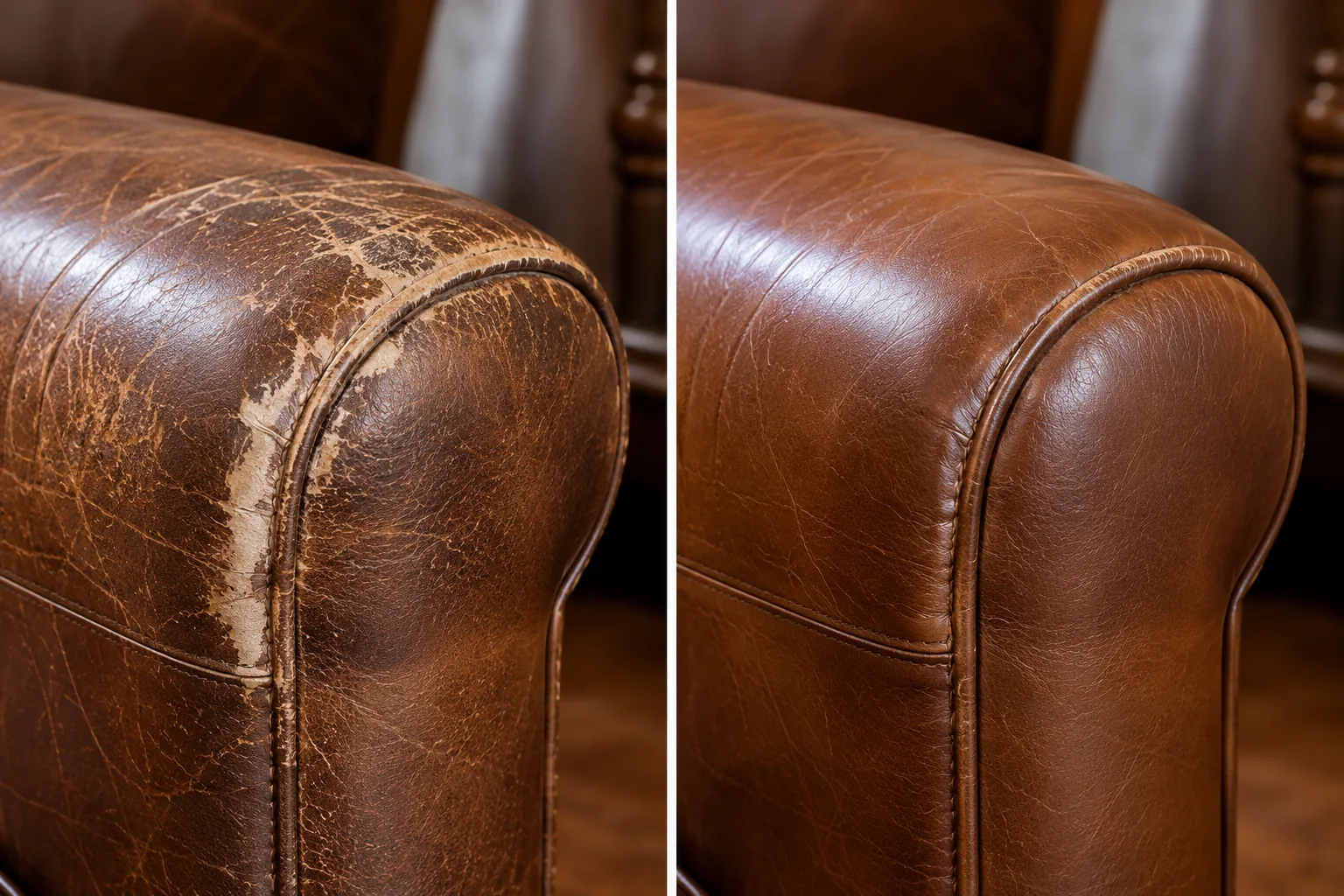
Explore the repair possibilities
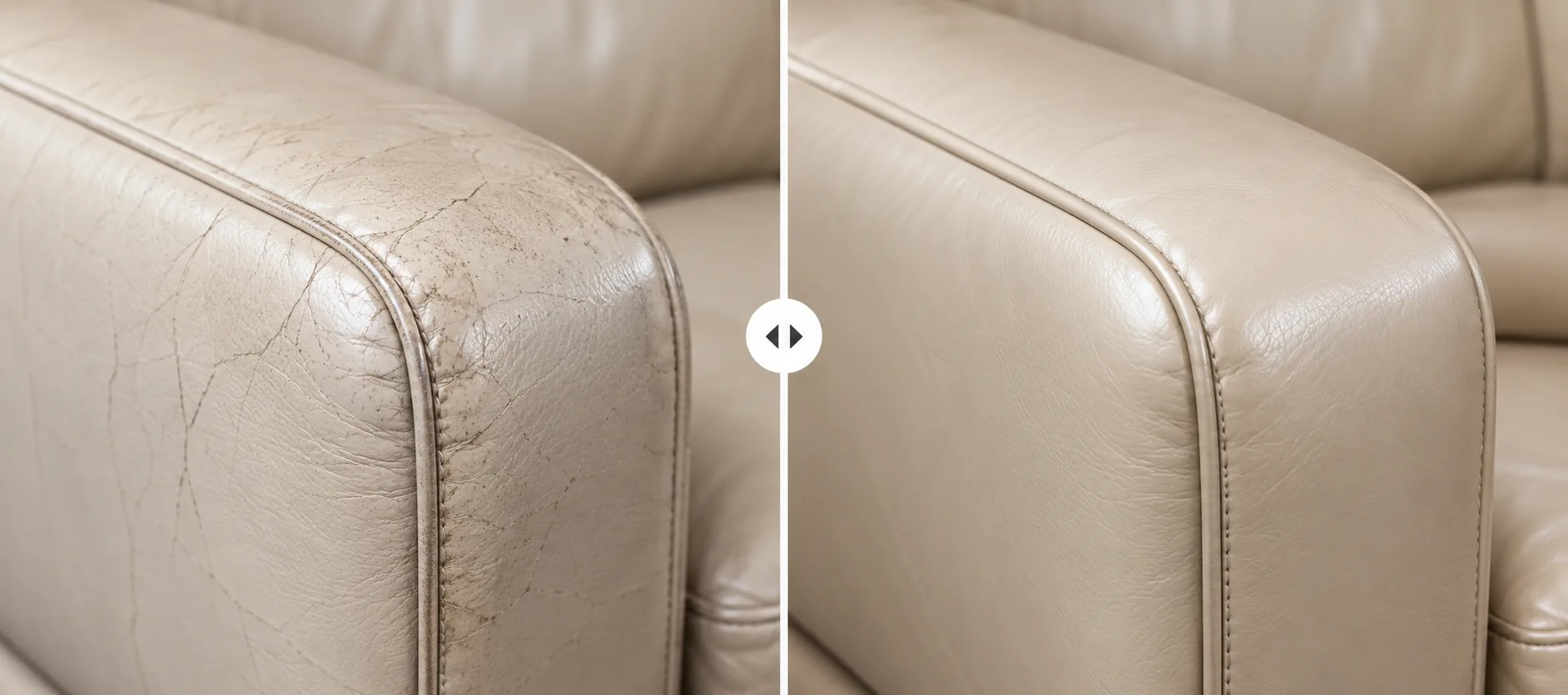
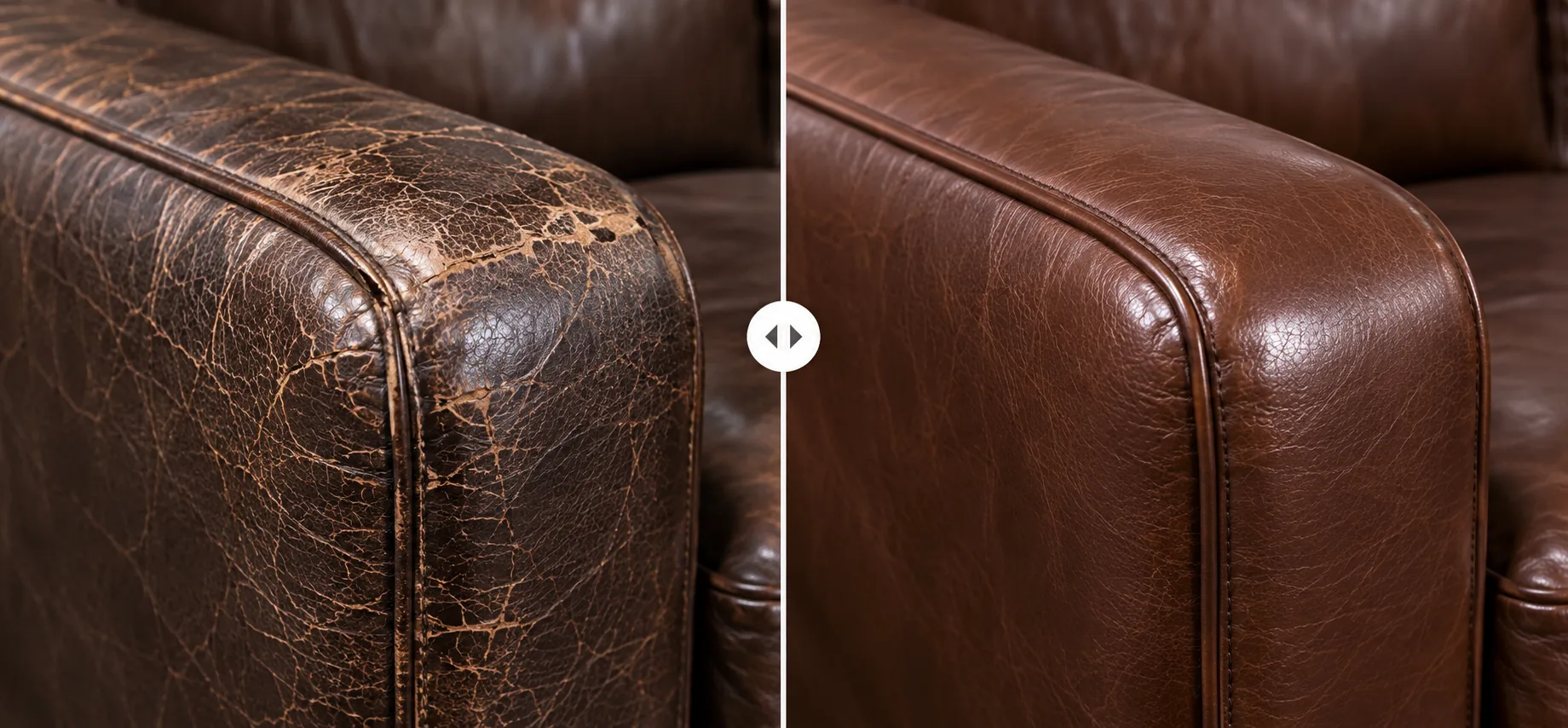
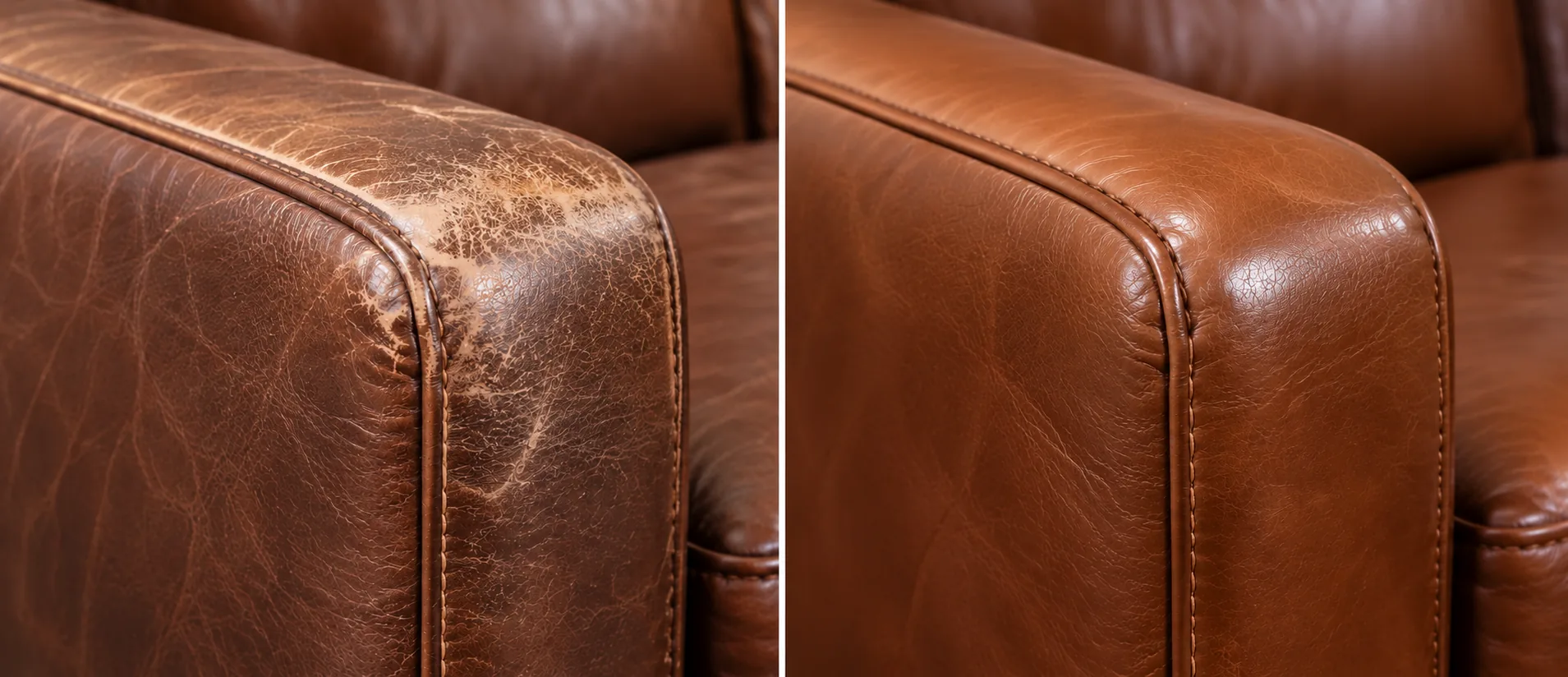
Illustrative before-and-after examples. More of the real thing sits on the before and after gallery.
 BeforeAfter
 BeforeAfter
 BeforeAfter
 BeforeAfter
 BeforeAfter
 BeforeAfter
 BeforeAfter
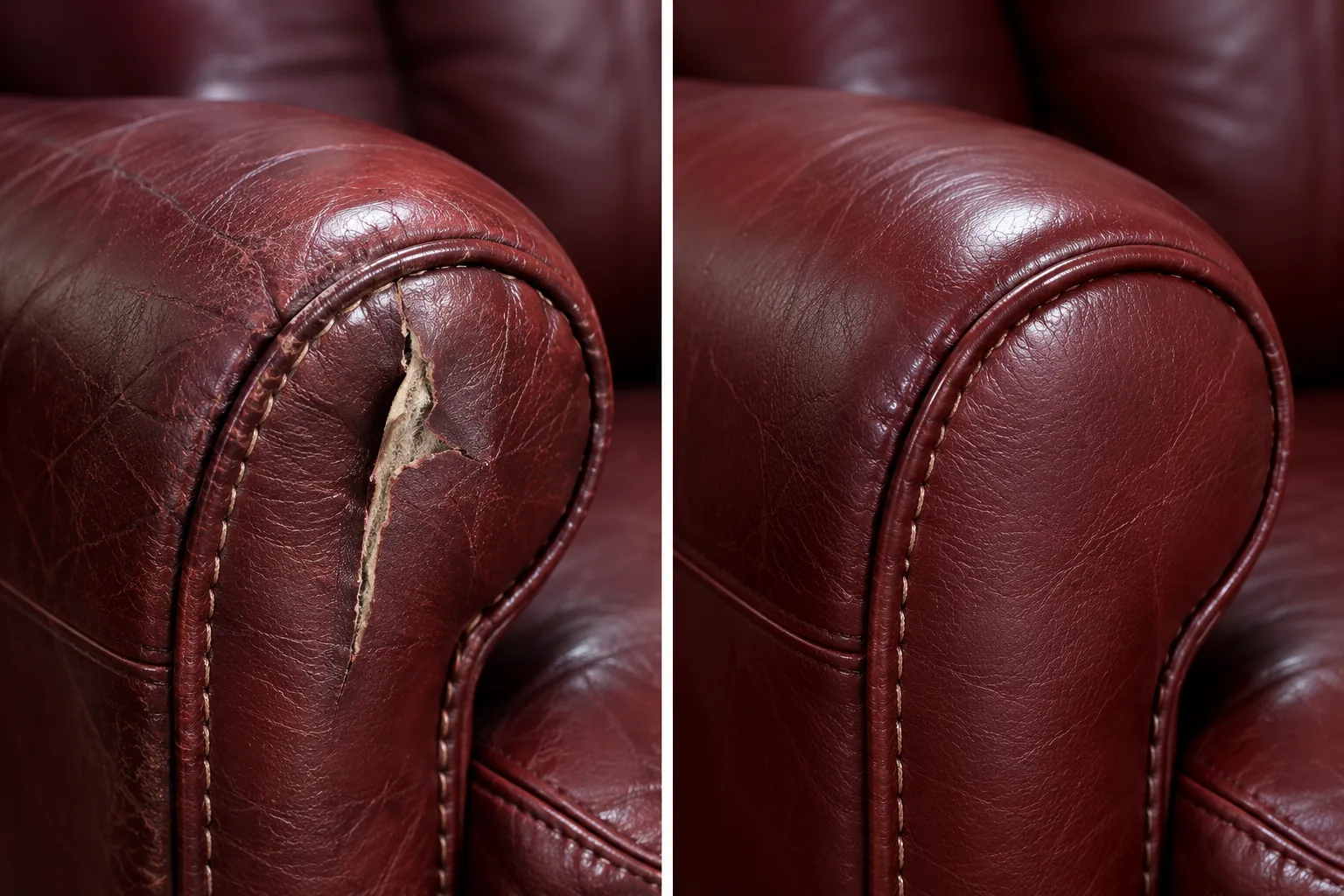 BeforeAfter
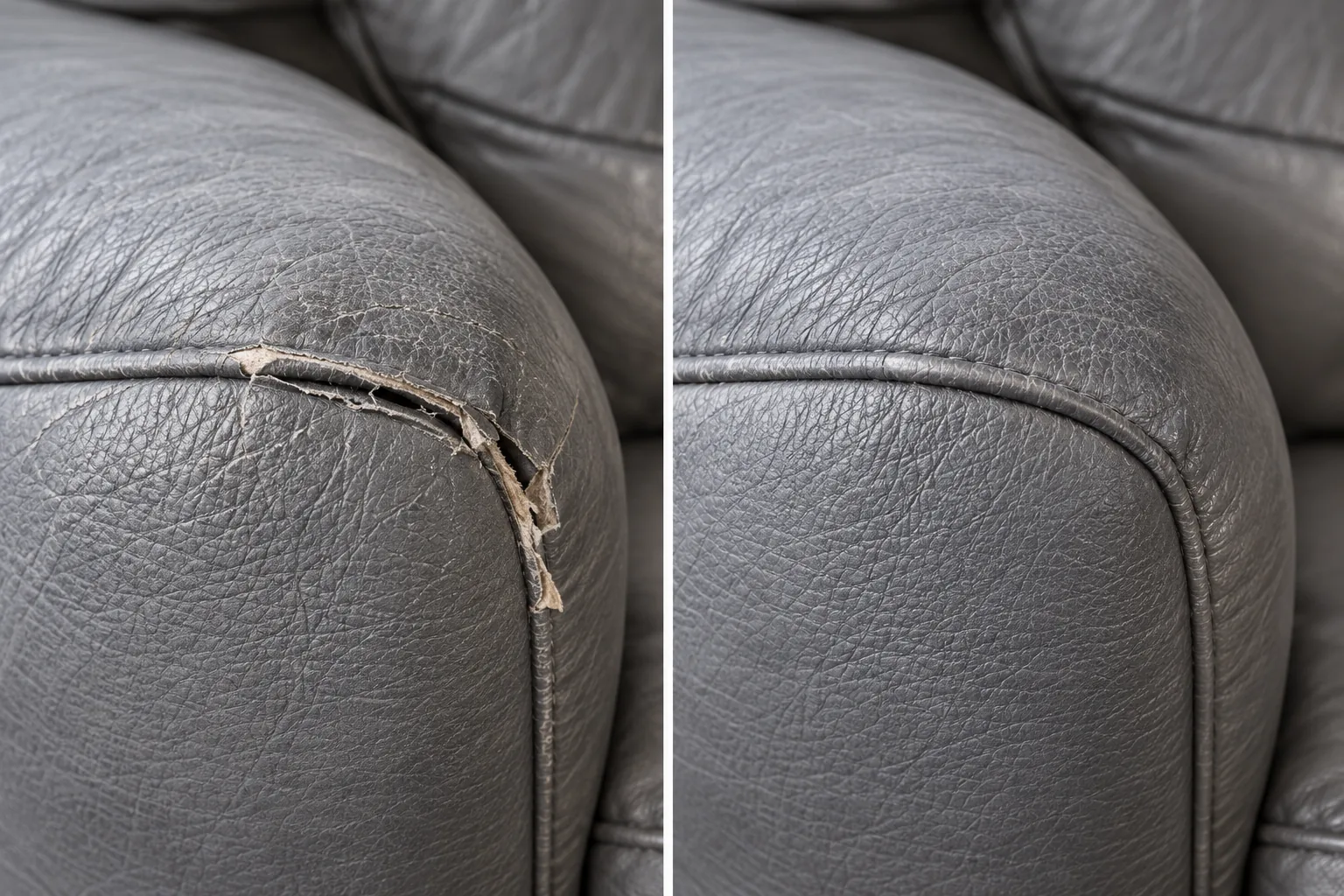 BeforeAfter
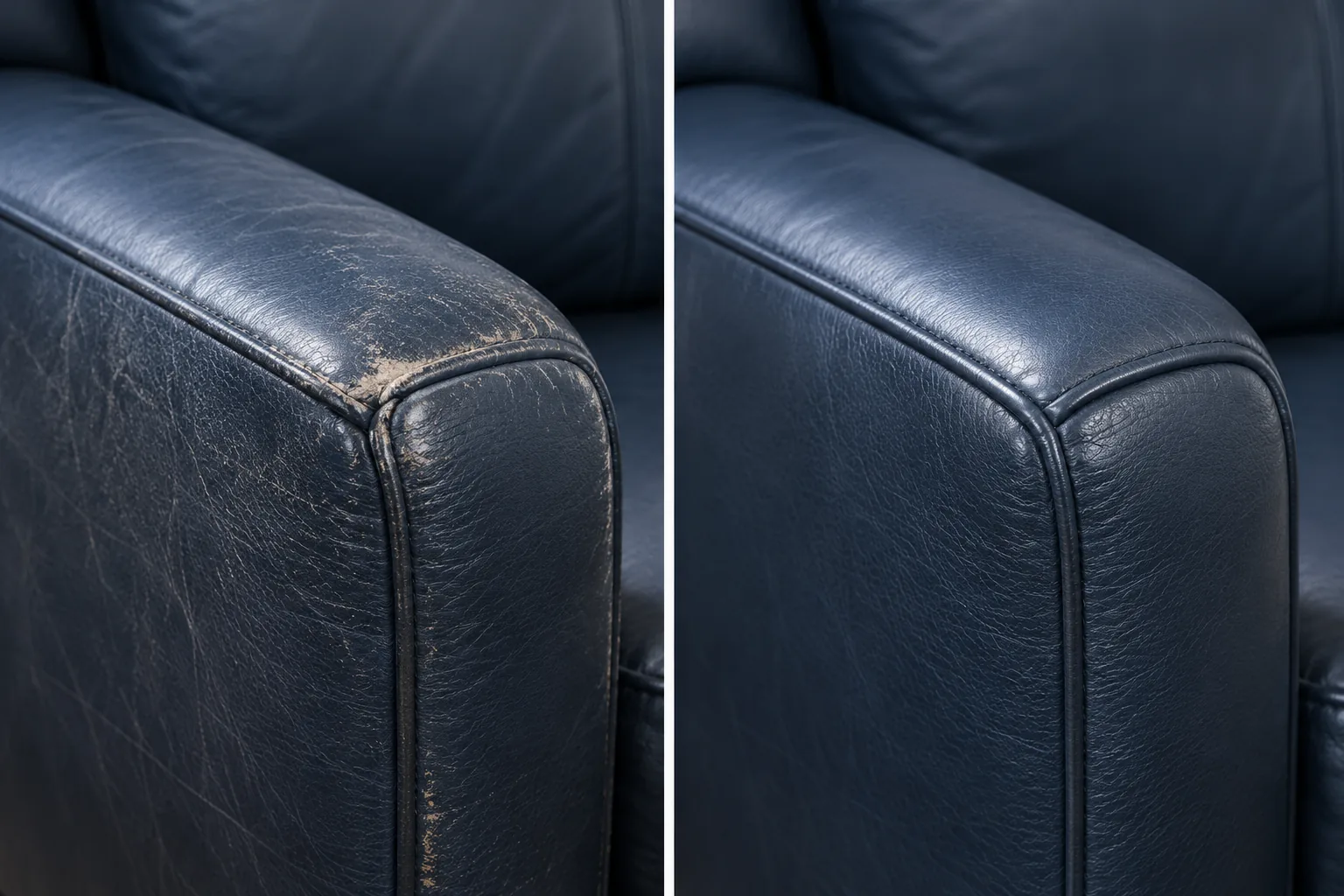 BeforeAfter
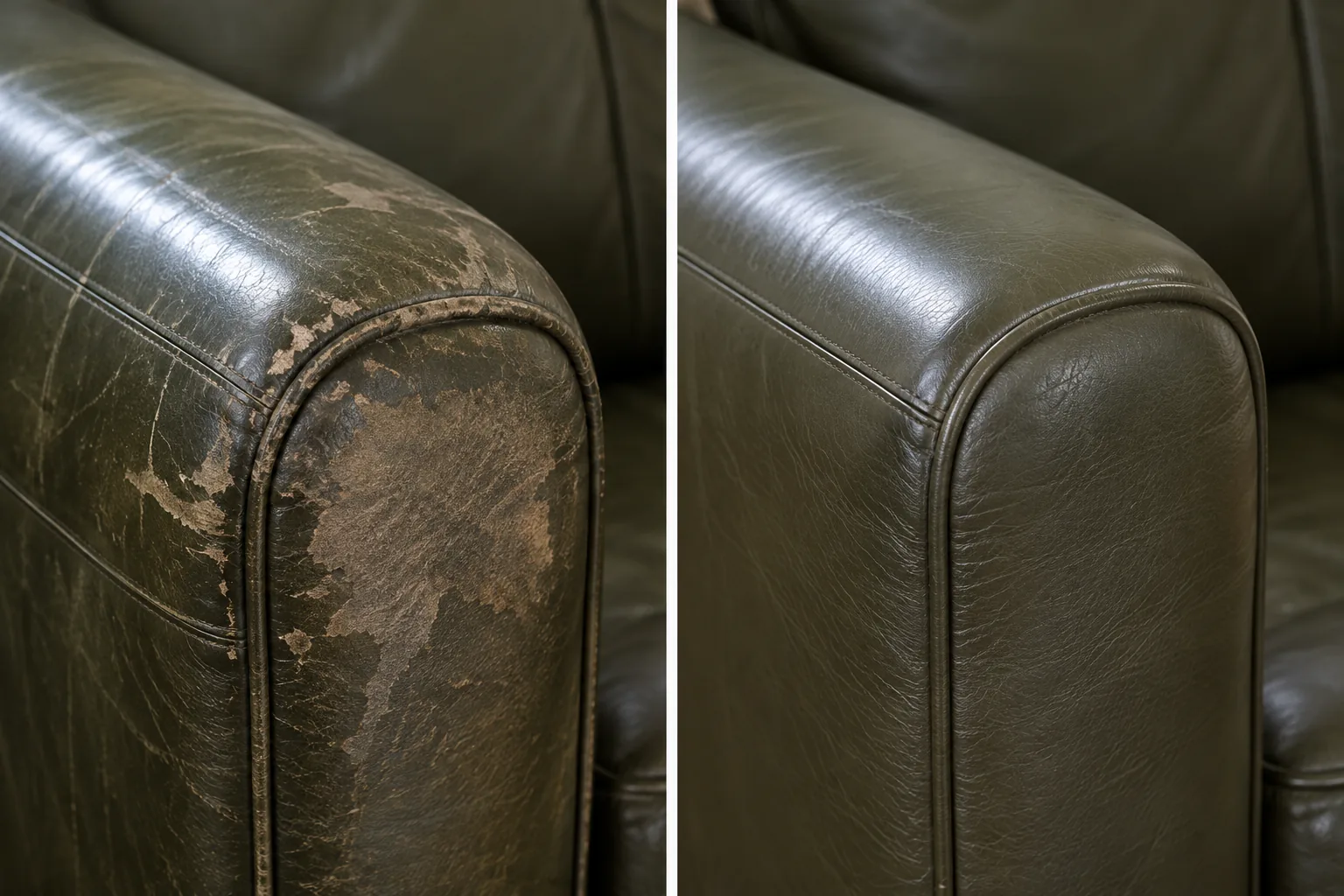 BeforeAfter
 BeforeAfter
Armrest shapes we work around.
The profile decides how the cover comes off and how a new panel has to be cut. A rolled arm and a track arm are not the same job.
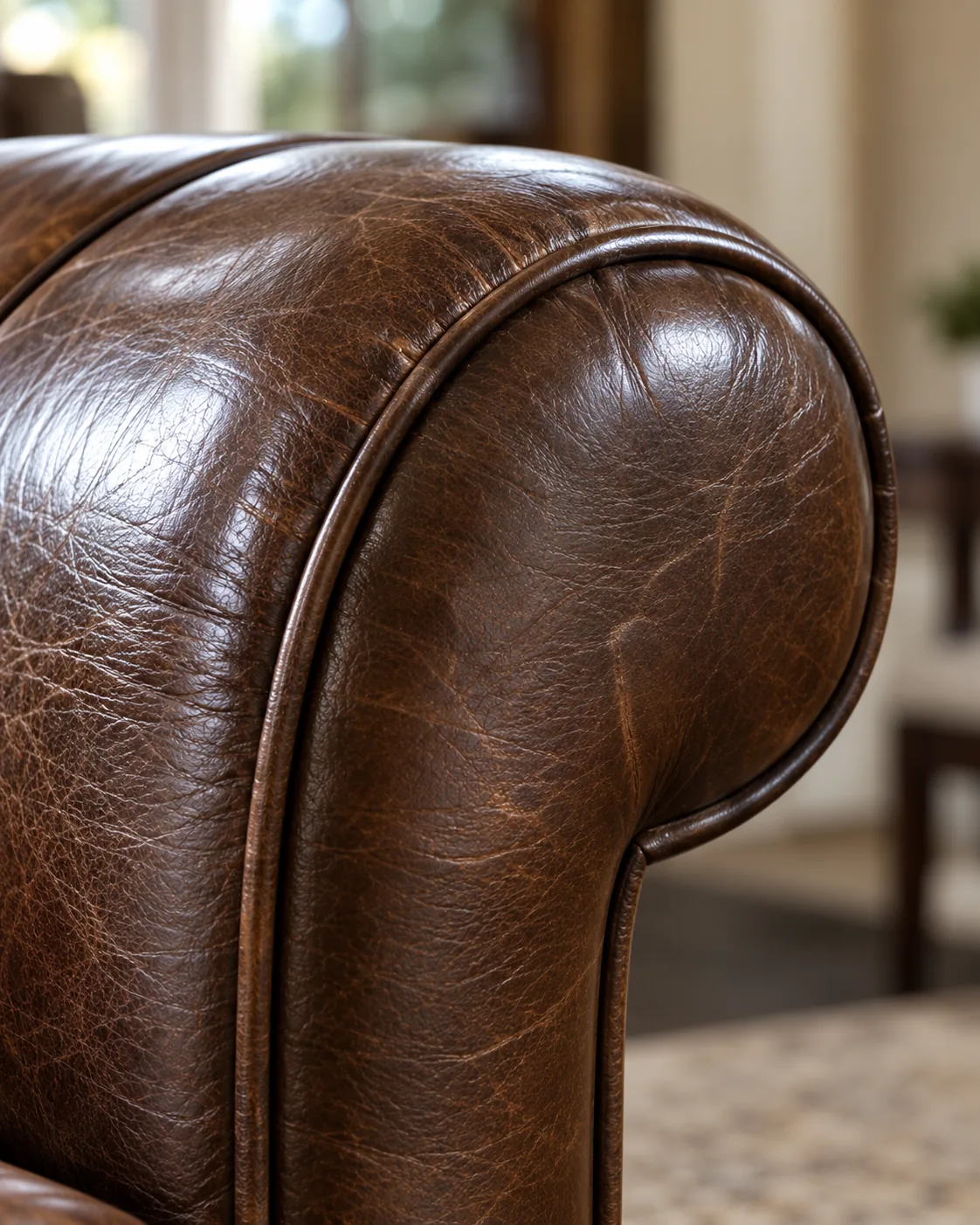 Rolled arm
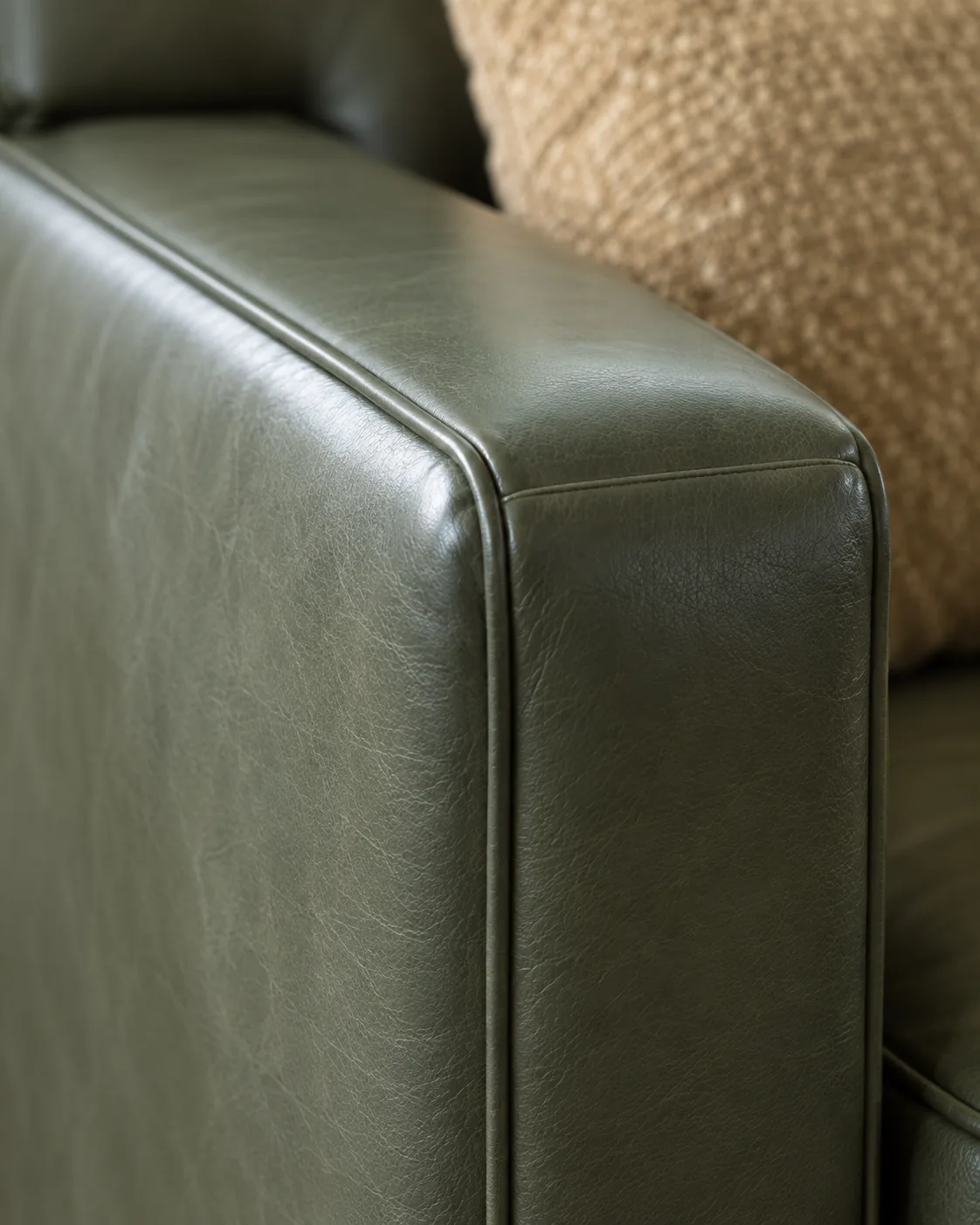 Track arm
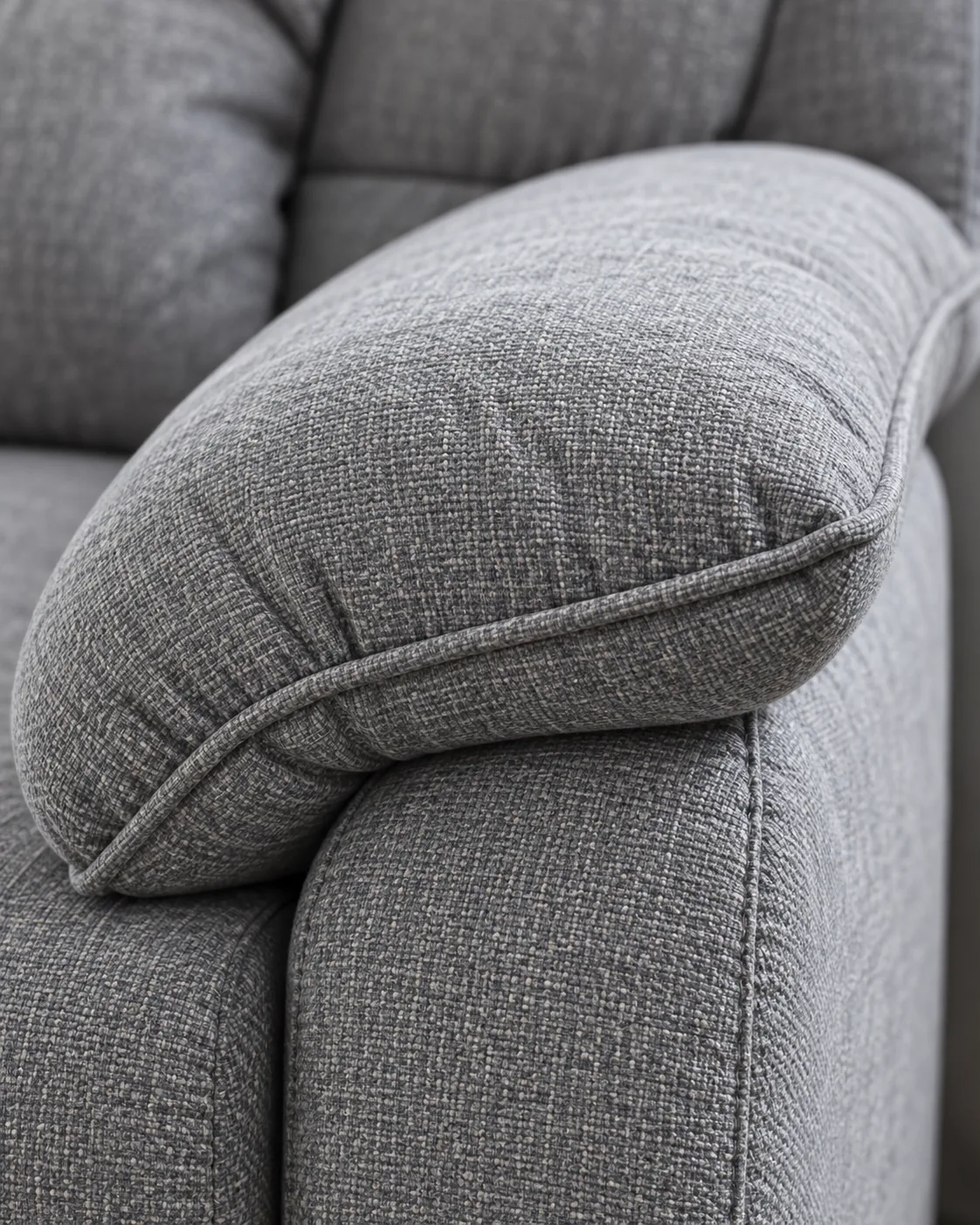 Pillow-top arm
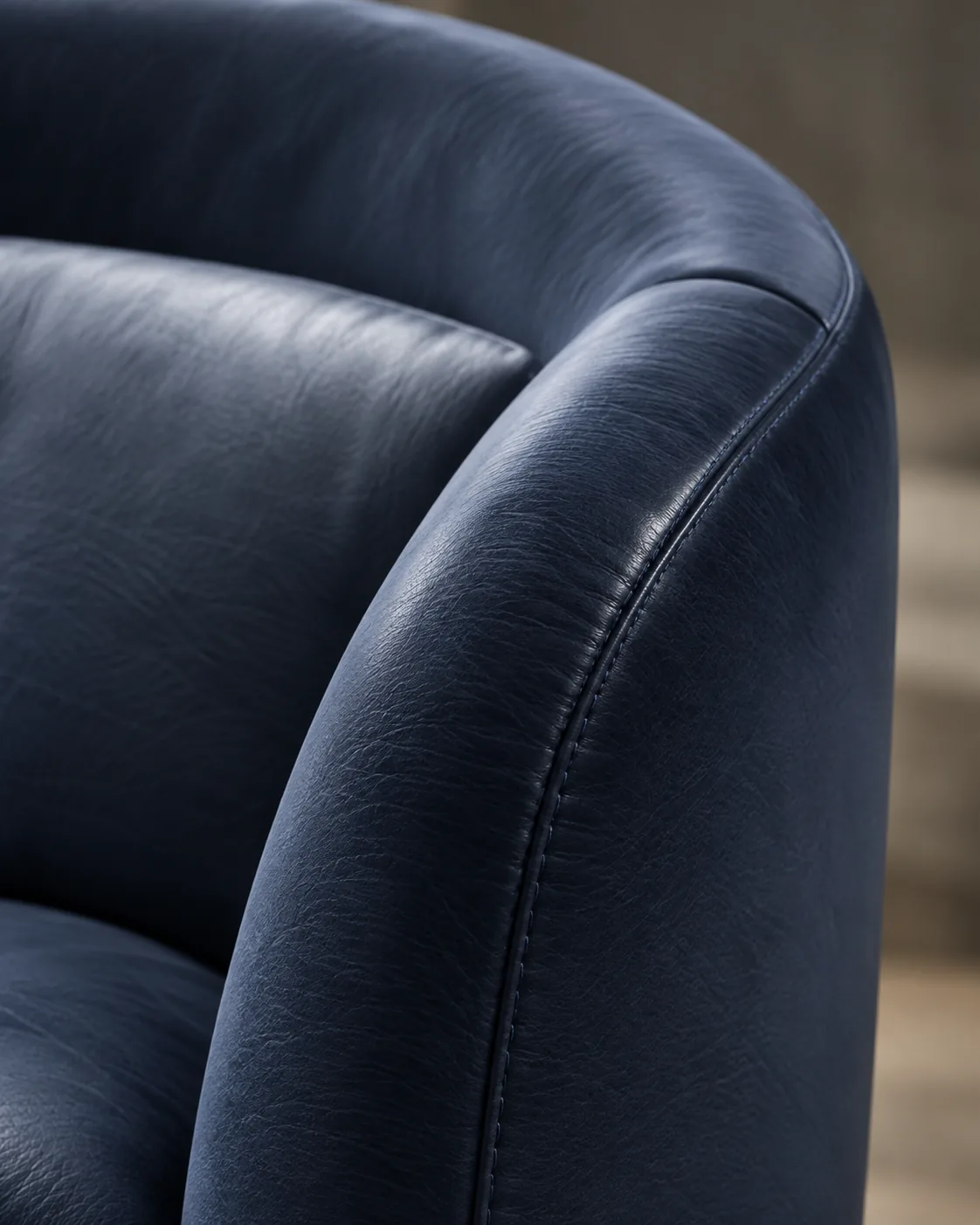 Curved arm
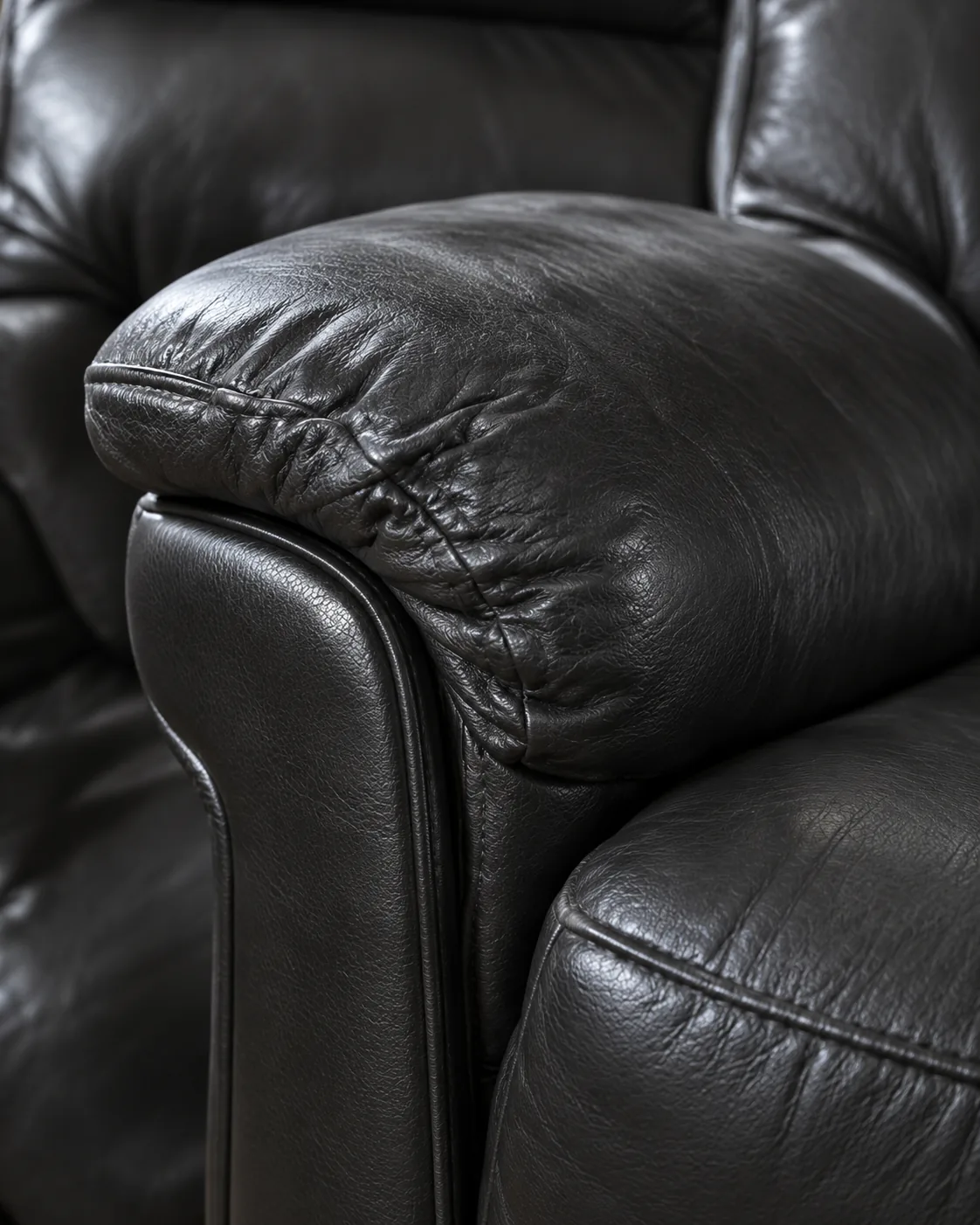 Recliner arm
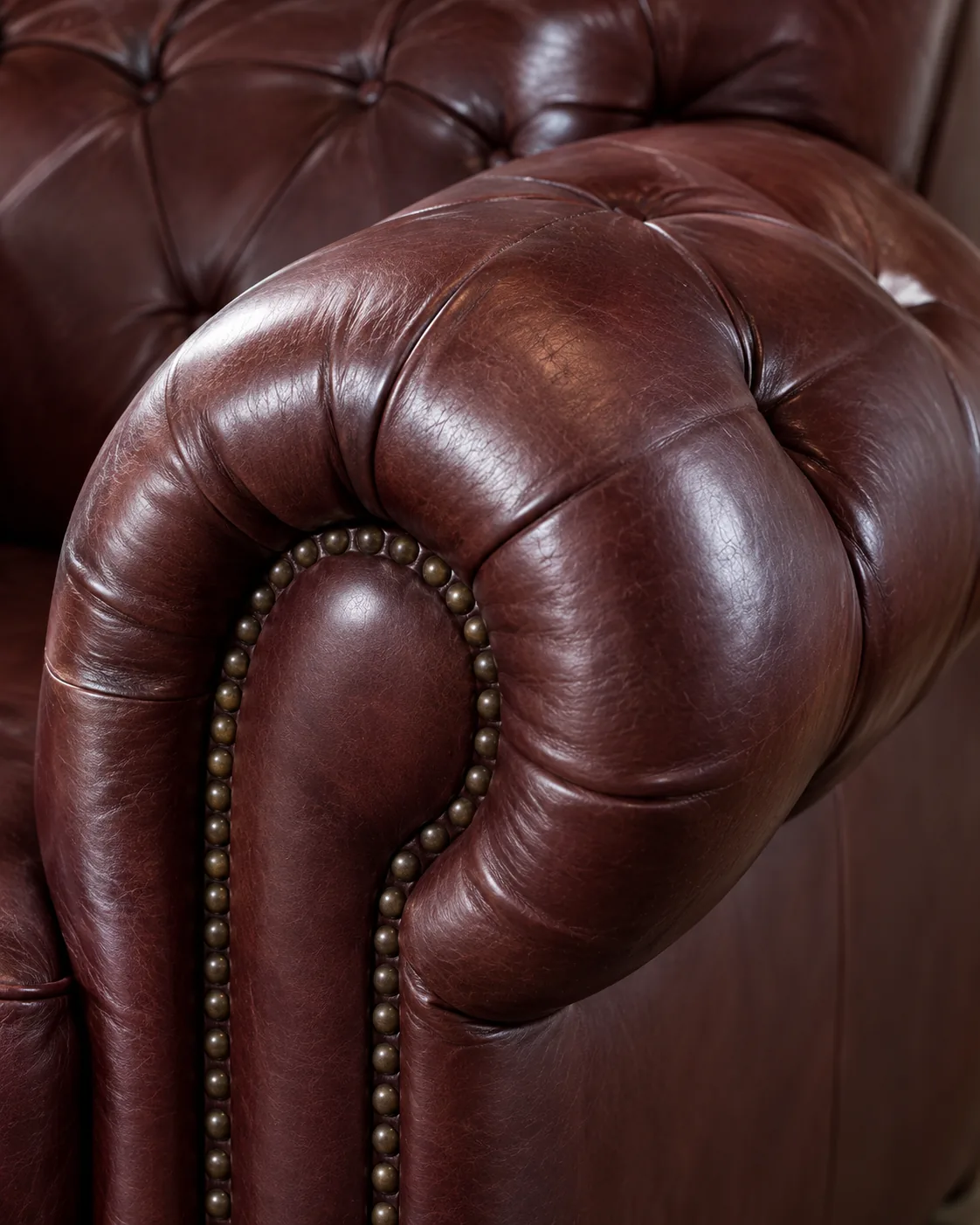 Tufted arm
Real repairs – different styles, different materials
The same six failures turn up on sofas, recliners, office chairs and booths. The material underneath is what changes the method.
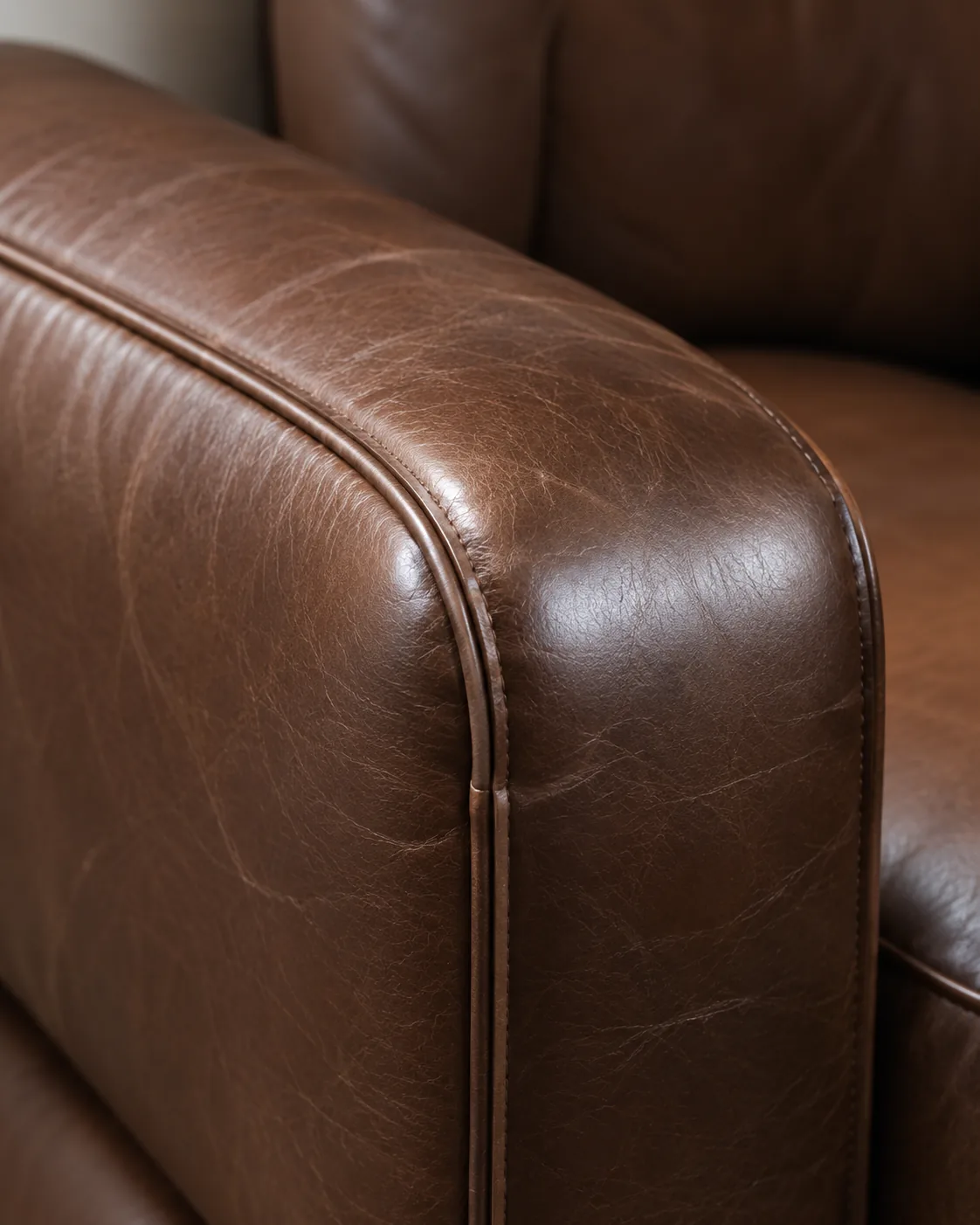
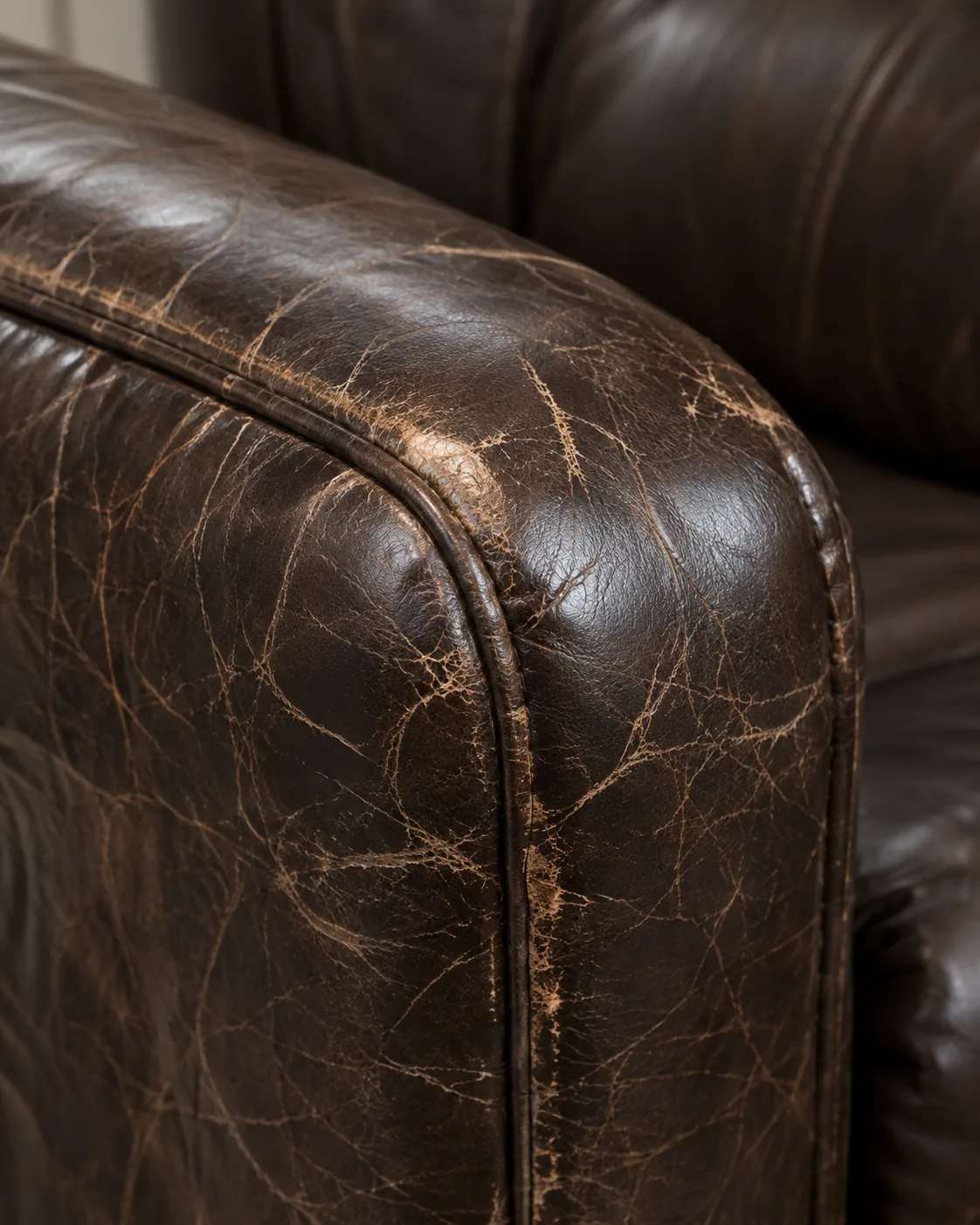
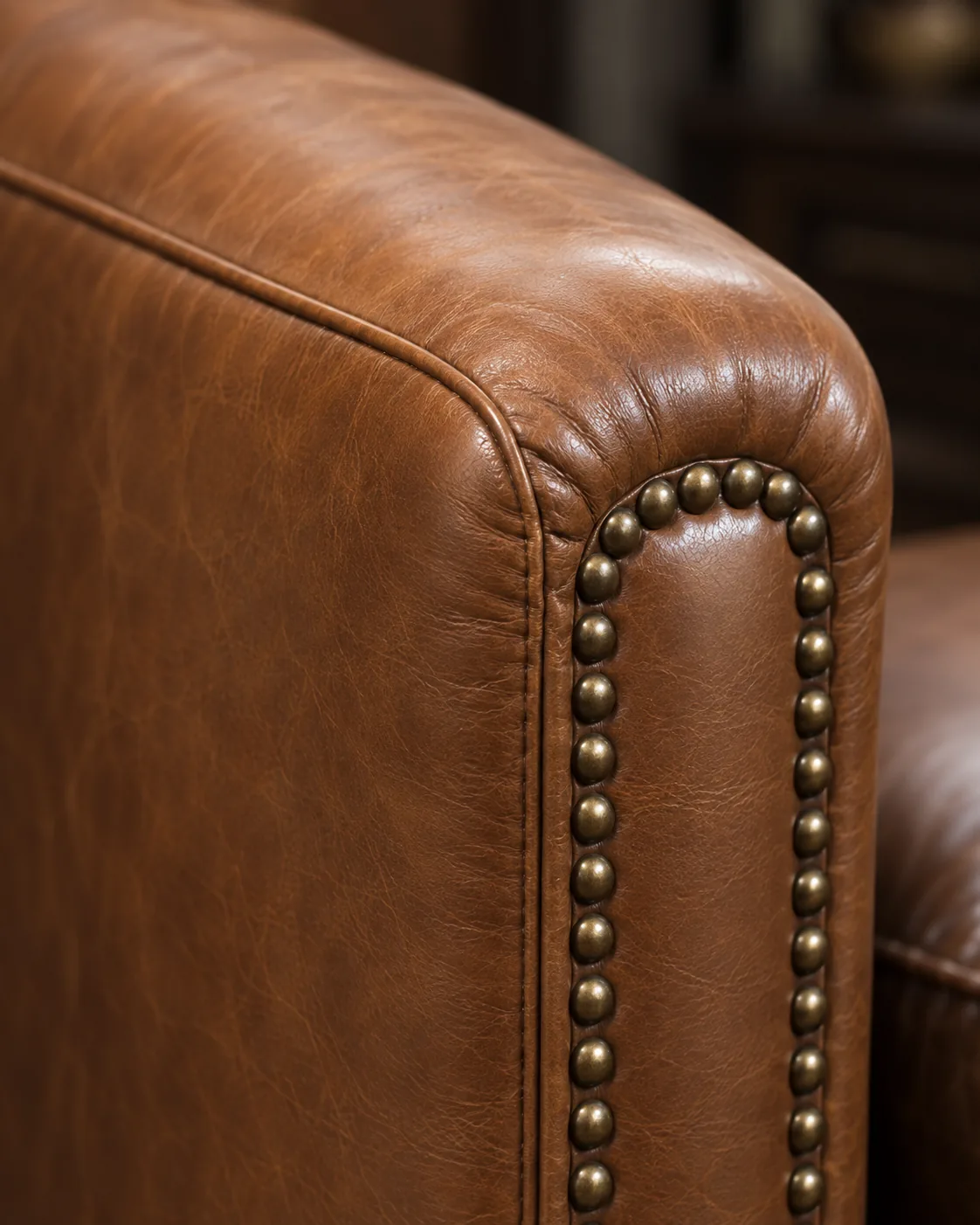
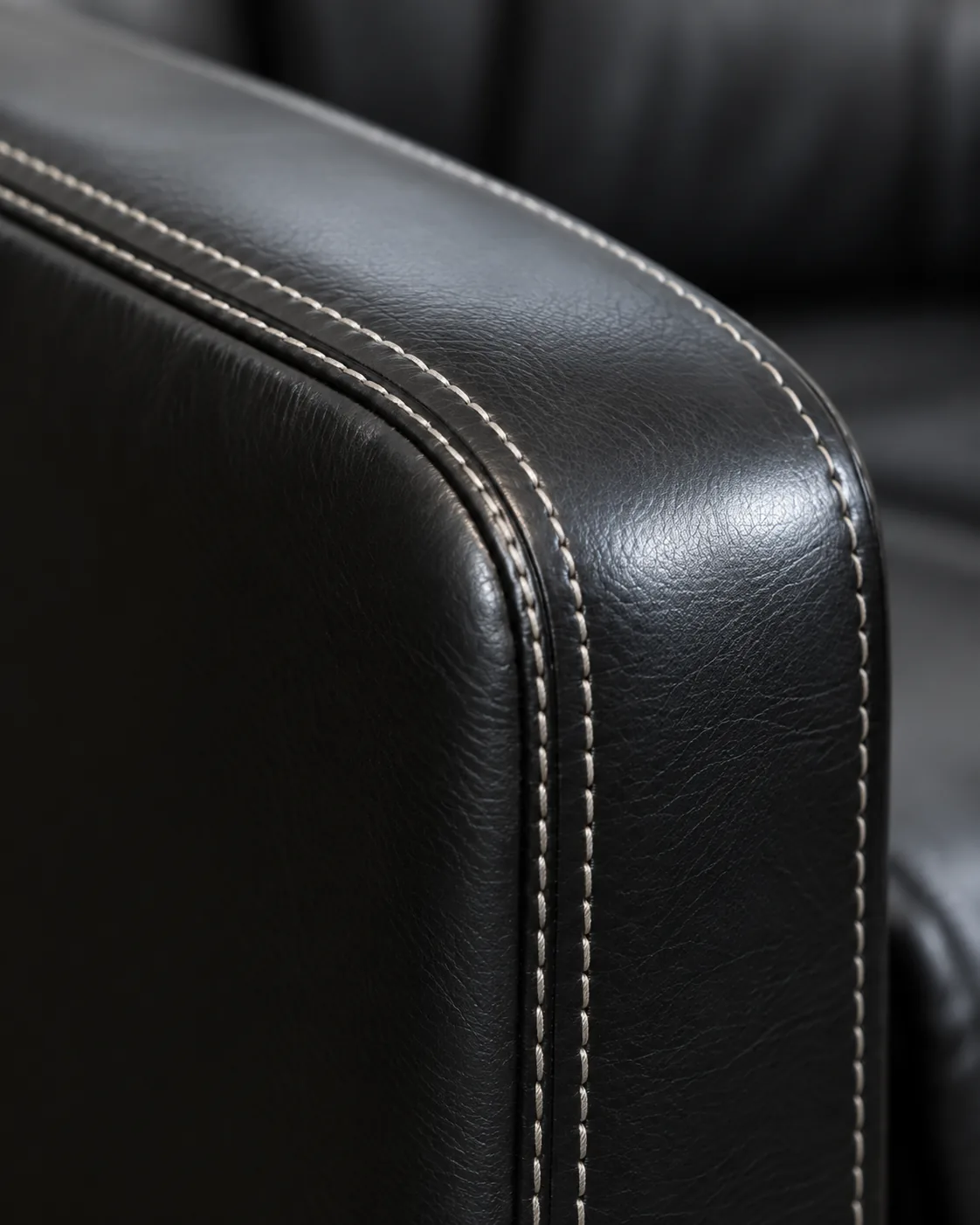
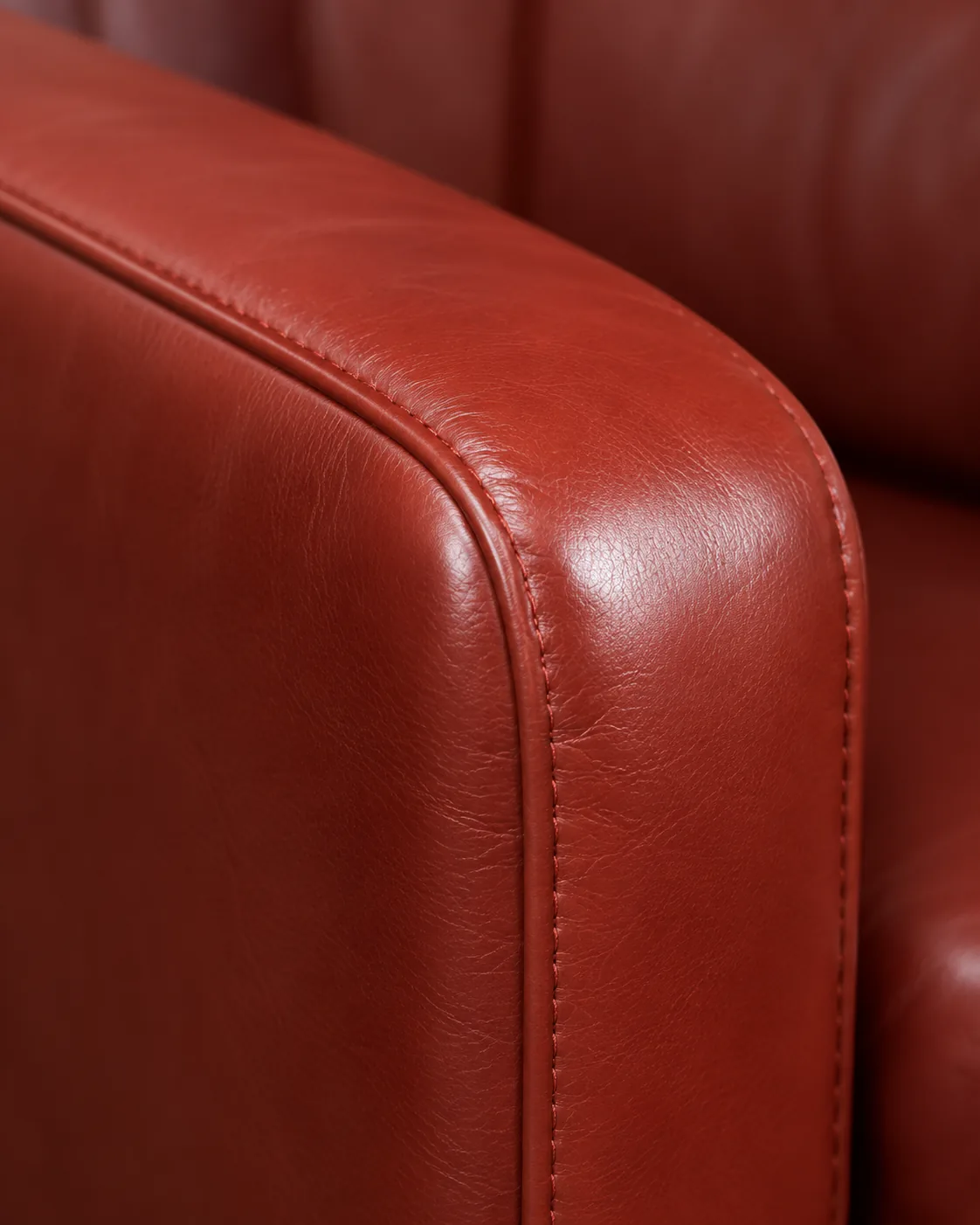
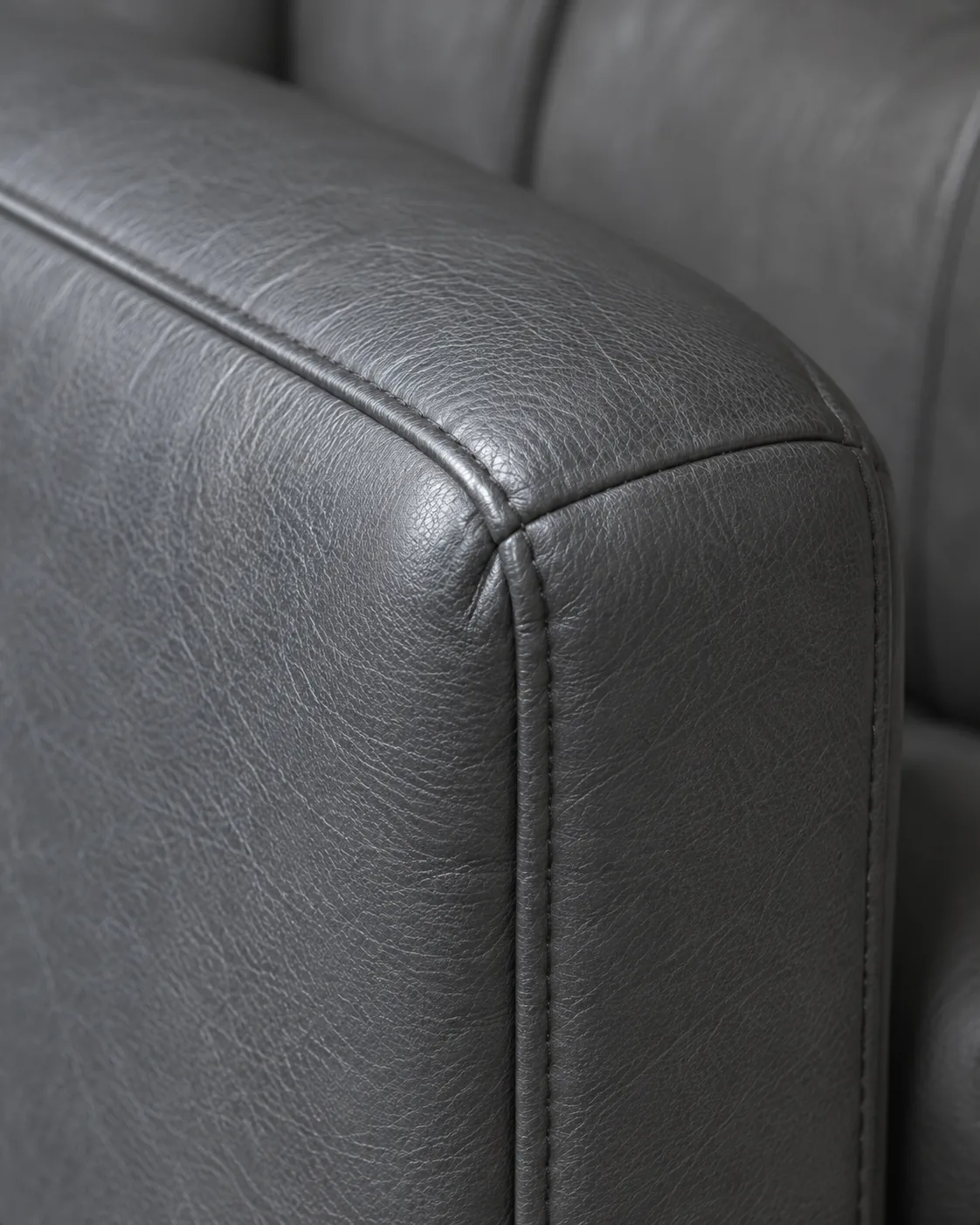
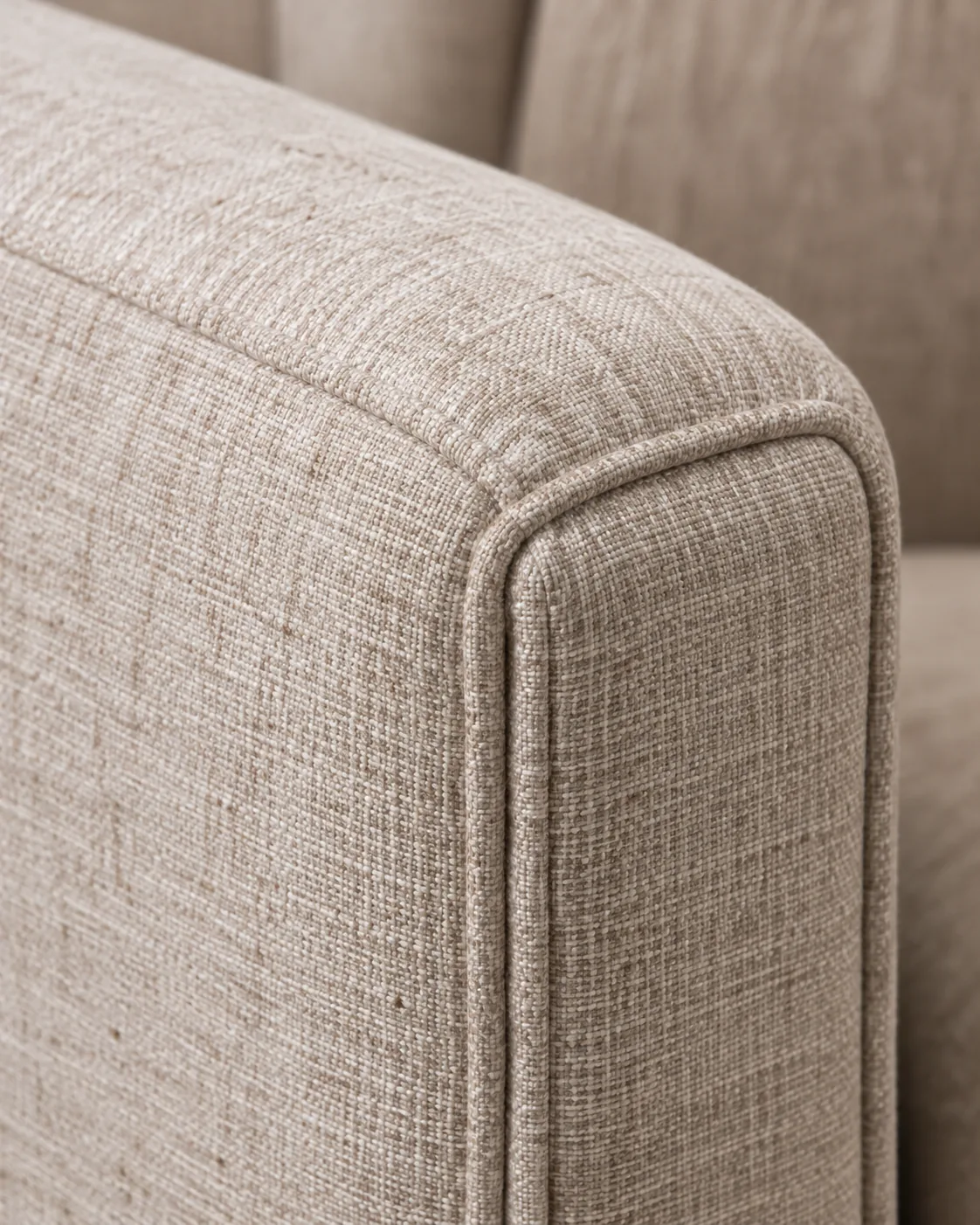
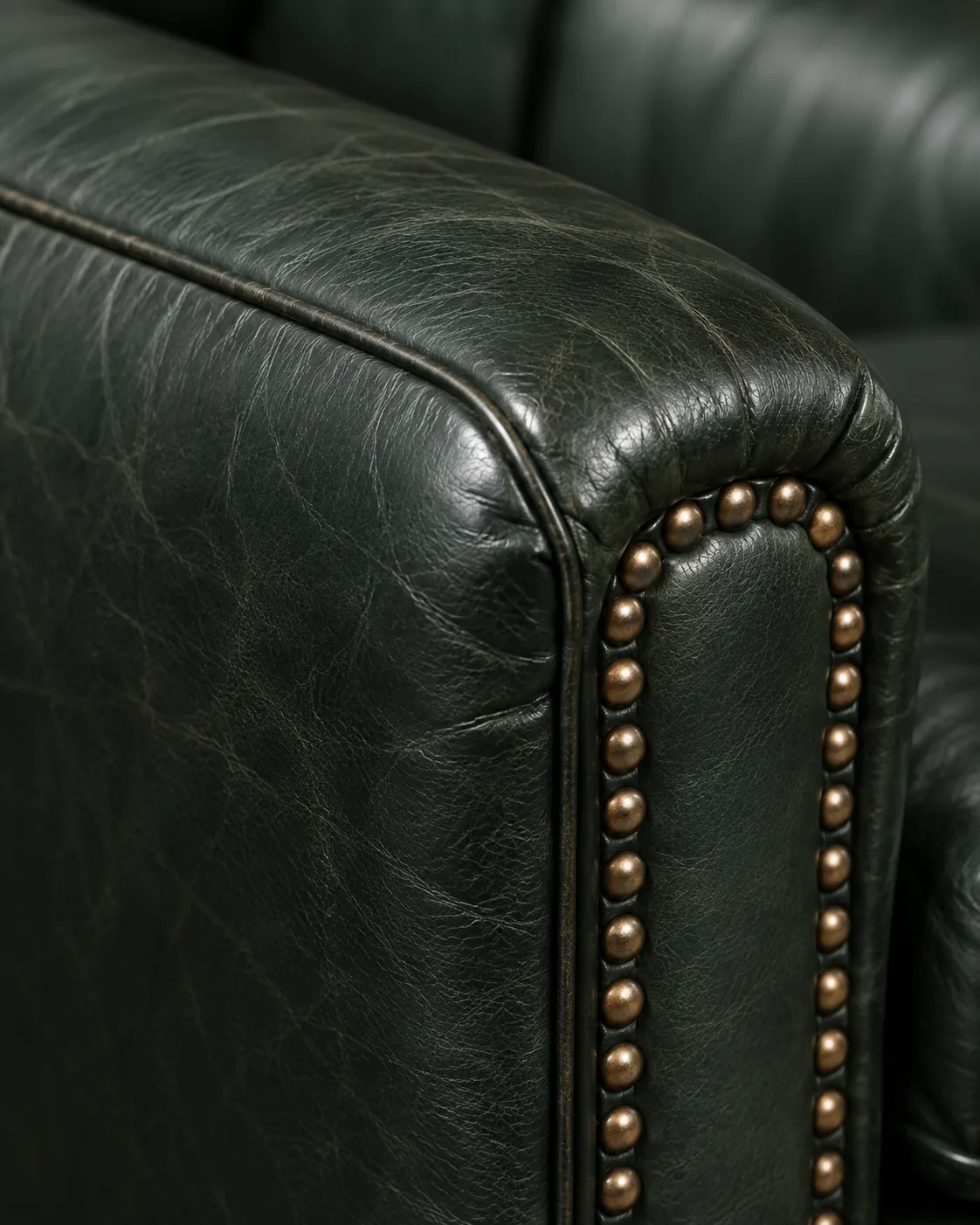
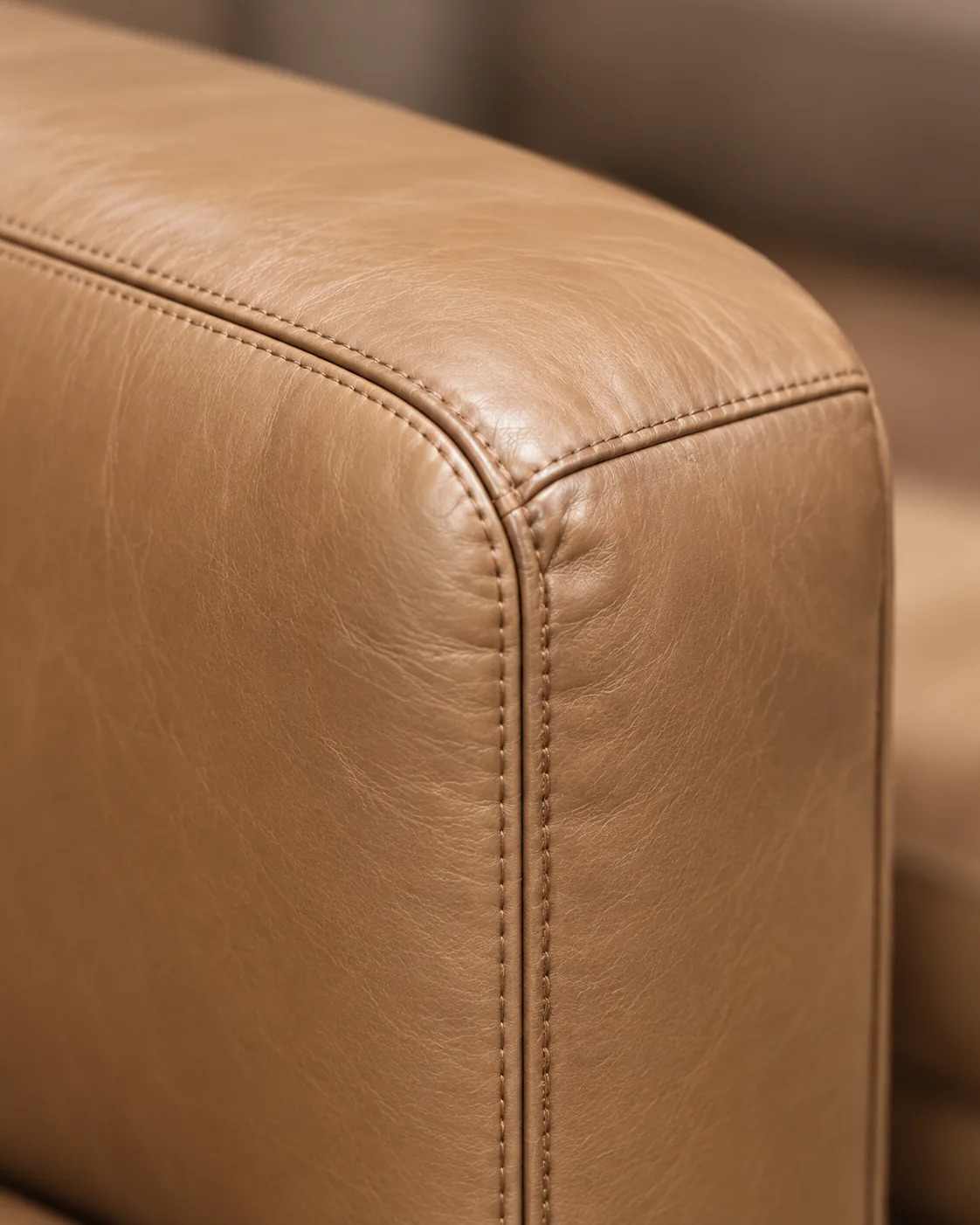
Keeping both arms visually balanced.

We assess color, grain, sheen and surrounding wear before recommending the scope. Repair one arm and the other becomes the reference — which is why color restoration is often quoted across both.
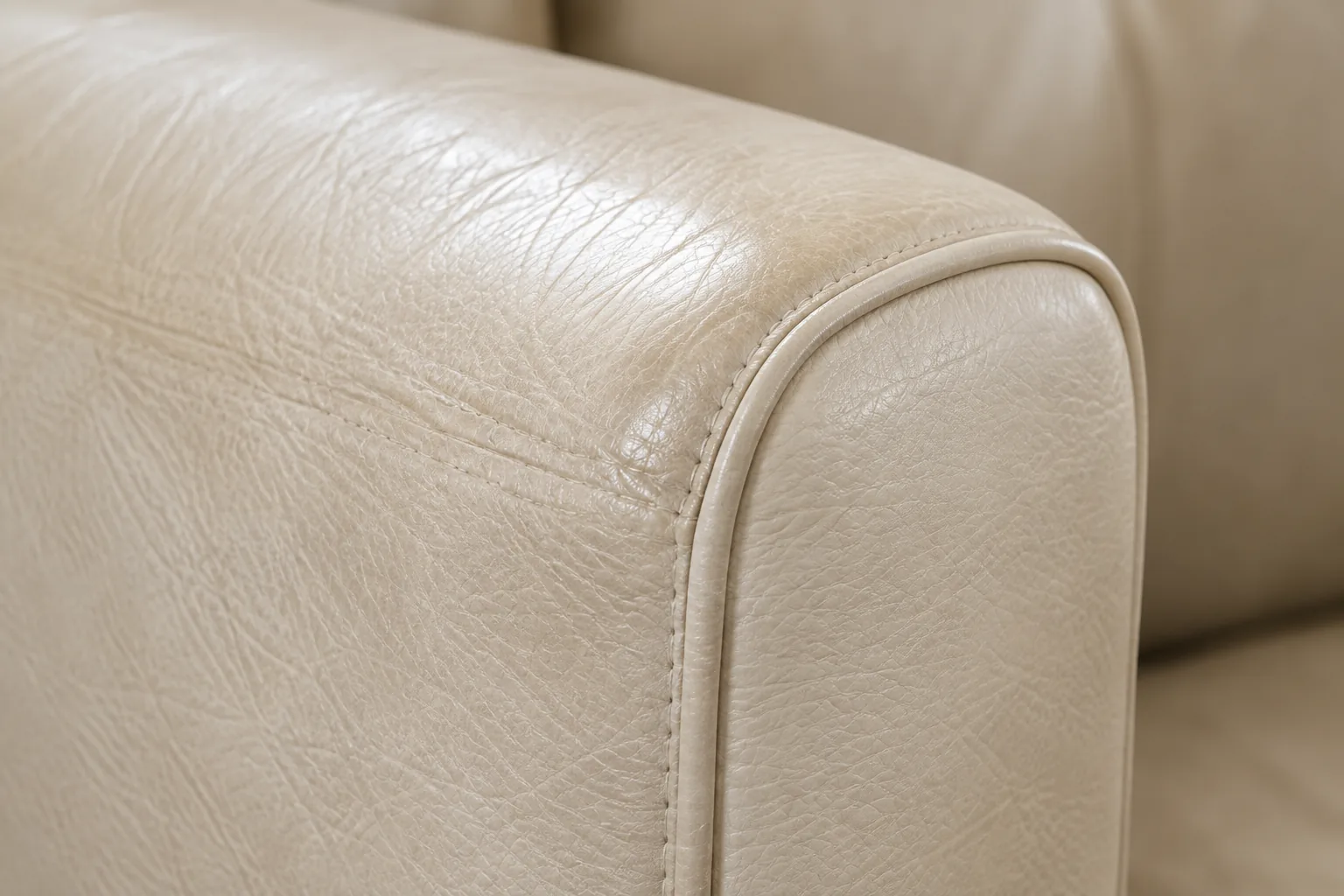






Asked about armrests
What does leather armrest repair involve?
Can you repair only one armrest?
Does the sofa have to leave the house?
Will the repaired arm match the rest of the sofa?
The padding has gone flat but the leather is fine. Is that repairable?

If the damage runs past the arm
An arm rarely fails on its own. When the same wear shows on the seat and the back, the sensible job is a wider one.
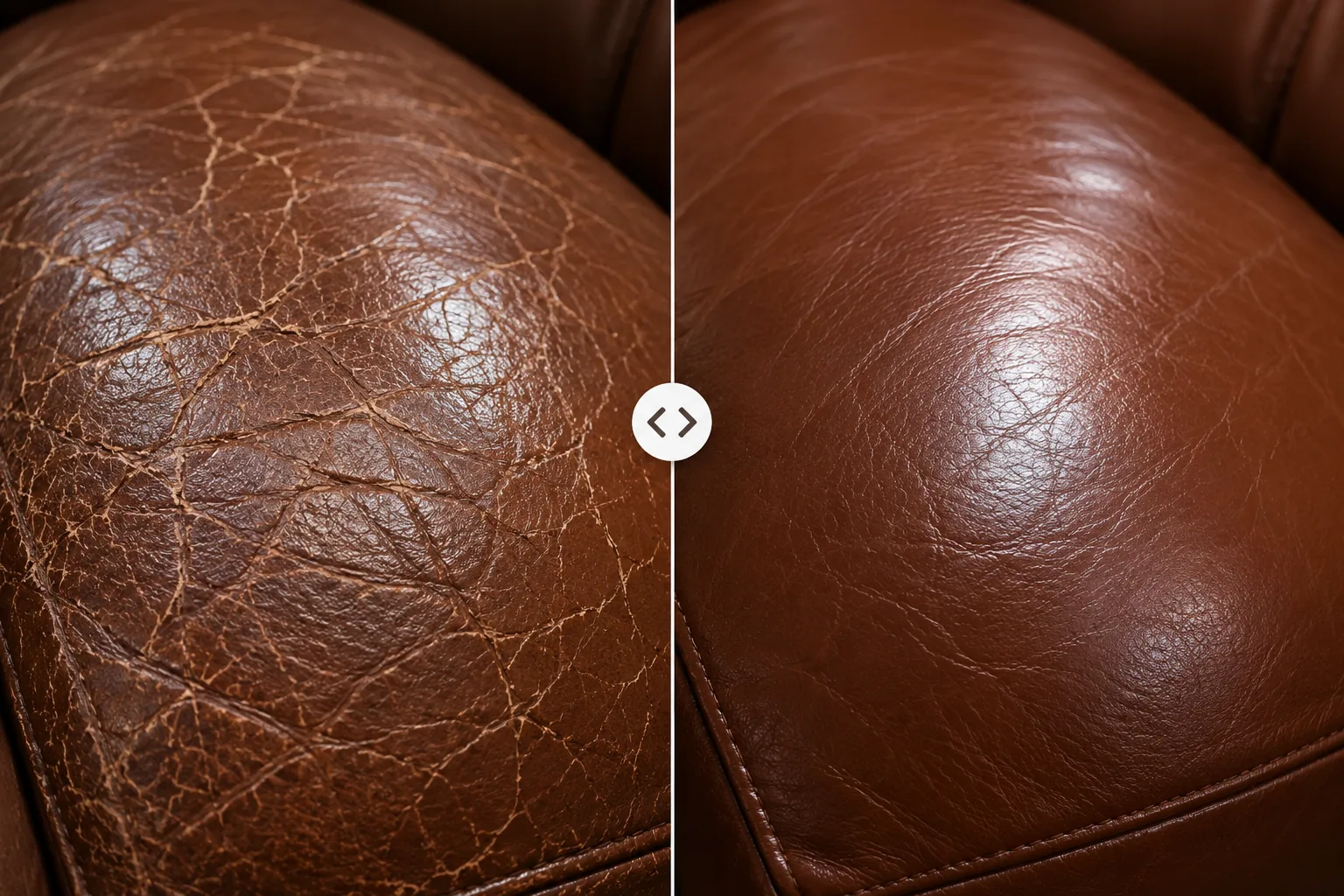 Cracking across the whole hide
The arm is only where you noticed it first. When the seat is crazing the same way, it is one job.
Cracking across the whole hide
The arm is only where you noticed it first. When the seat is crazing the same way, it is one job.
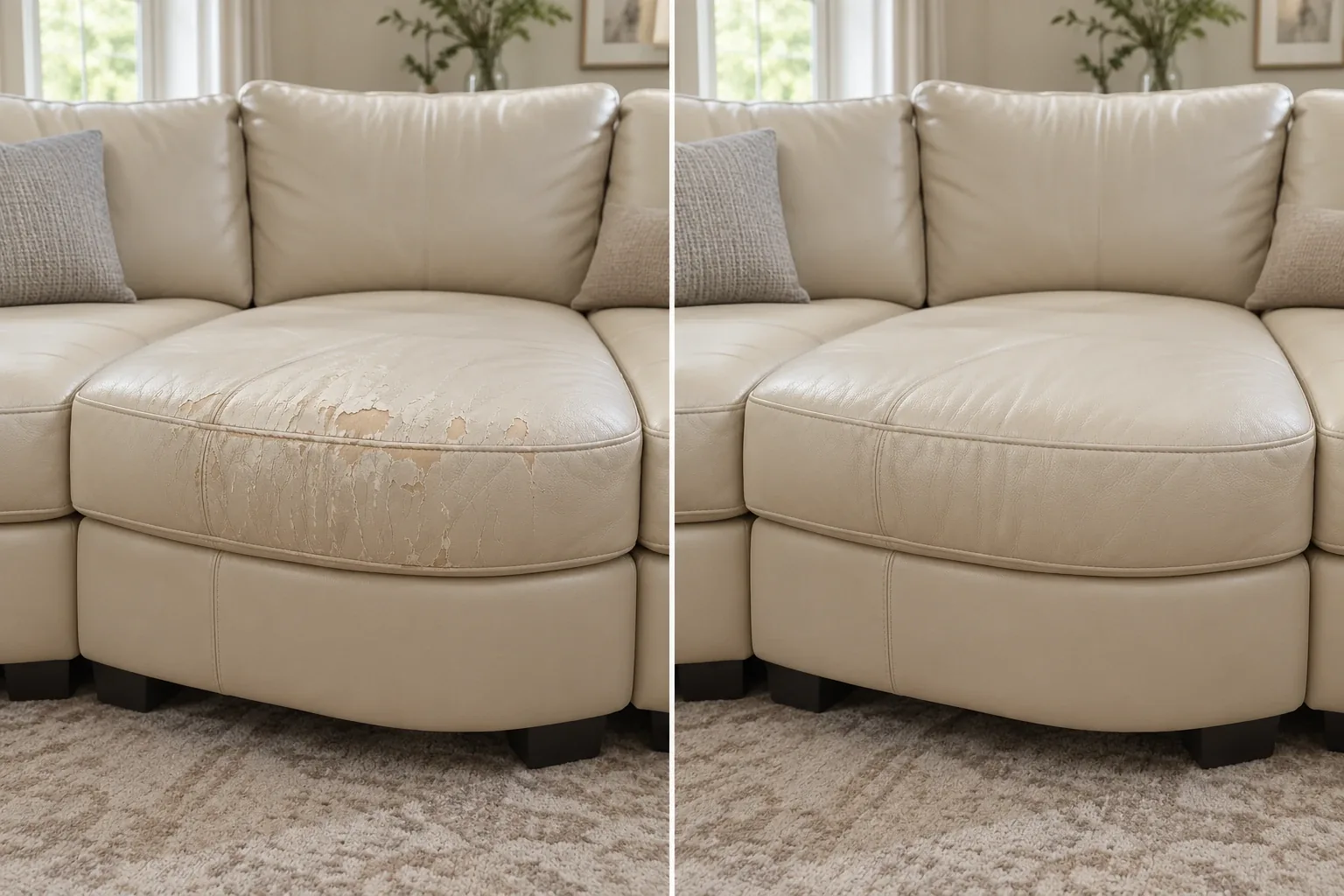 Finish lifting and peeling
Bonded and heavily corrected hides shed their coating in sheets rather than cracking.
Finish lifting and peeling
Bonded and heavily corrected hides shed their coating in sheets rather than cracking.
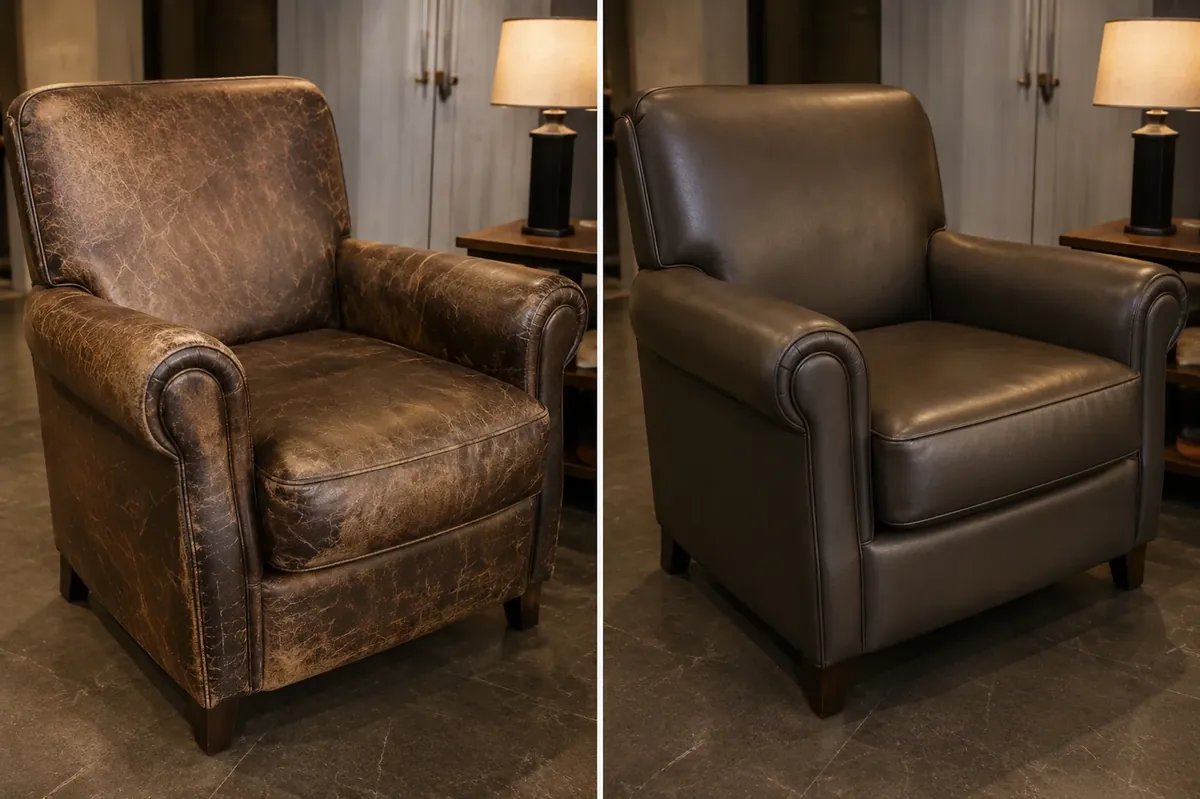 Color gone across the piece
One recolored arm beside five faded panels reads worse than the wear did. Color is quoted across the whole frame.
Color gone across the piece
One recolored arm beside five faded panels reads worse than the wear did. Color is quoted across the whole frame.
One photograph usually settles it
Shoot the arm straight on in daylight, then a close view of the damage. That is enough to tell whether it is a finish job, a seam job or a new panel — and whether we can do it in your home. We cover leather armrest repair across New York City, Long Island and New Jersey, and you can also contact us directly.