
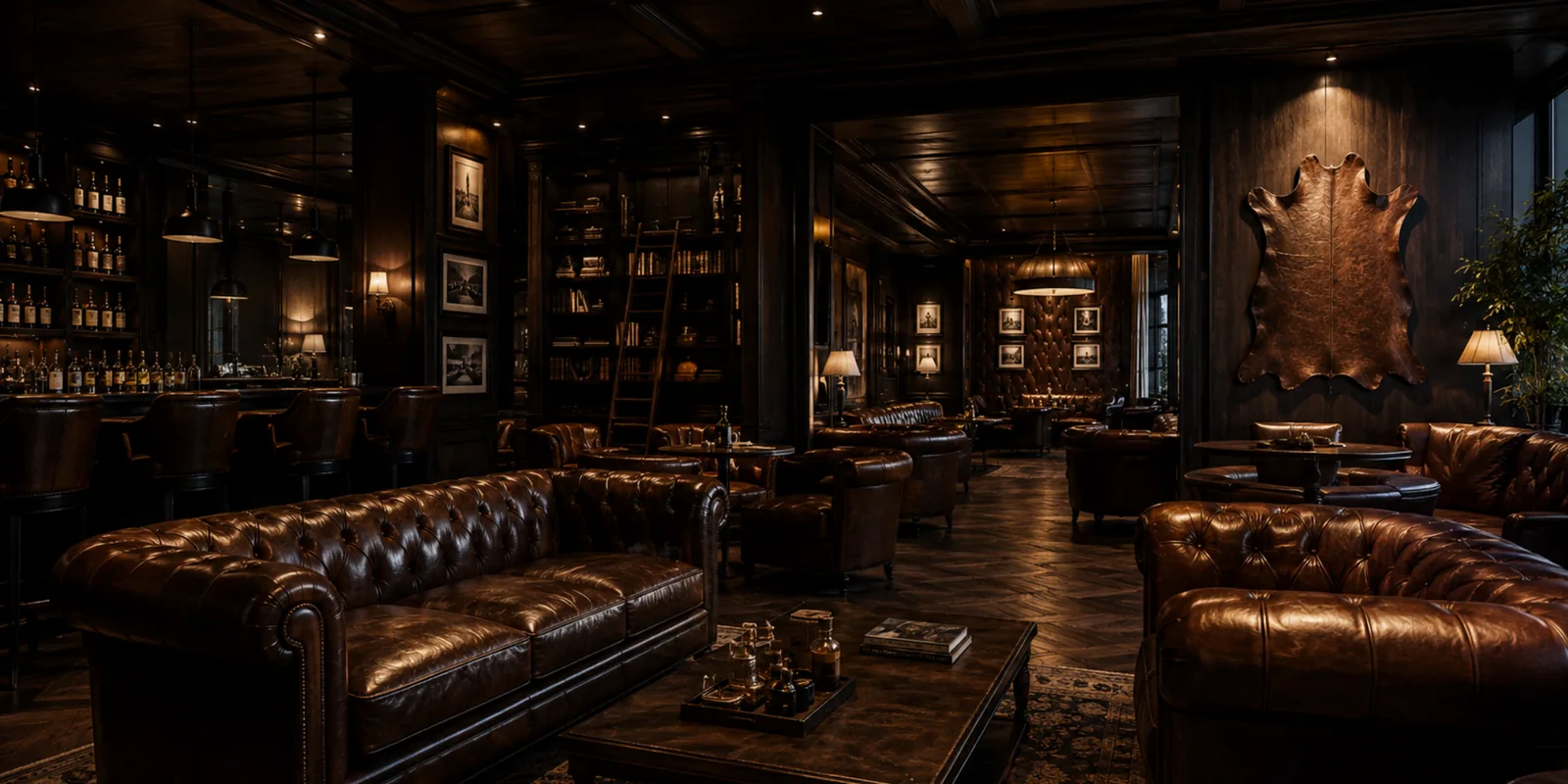
On-site leather furniture repair
We Bring the Workshop to You
We do on-site leather furniture repair inside your building. We work across New York City, Long Island and New Jersey.

The verdict
What can genuinely be fixed where it stands.
This is how a technician scopes on-site leather furniture repair, in the room, before any work starts. It covers commercial leather and vinyl seating: booths, banquette runs, bar stools, dining chairs, office seating, lounge chairs and sofas.
| Damage | Verdict | Why |
|---|---|---|
| Colour loss, fading and worn contact areas | In place | Pigment is mixed against the piece in your own light and built back in thin coats. It needs the panel it has to match, not a bench. |
| Cracking and peeling on a finished hide | In place | The failed finish is taken back, the surface stabilised and the colour re-established. The hide underneath is usually sound. |
| Scuffs, scratches and heel marks | In place | Surface work on the panel that took the damage. On a banquette front, the most common commercial repair there is. |
| Tears, cuts and punctures | In place | A sub-patch goes in behind the hide, the gap is filled flexible and the colour is carried across the join. |
| Cigarette burns and heat marks | In place | The charred material is cut out and rebuilt in layers. Small, contained, entirely a hand repair. |
| Split seams and failed stitching | In place | Restitched by hand through the original holes, wherever the material either side still holds thread. |
| Ink, dye transfer and set-in stains | In place | Drawn out where the finish allows it, re-pigmented where it does not. Denim transfer on a pale seat is the usual one. |
| A single failed panel on a booth or banquette | In place | The panel is replaced with matched material and blended to the run beside it. The joinery stays bolted to the floor. |
| Scratched, chipped or worn wood arms, legs and trim | In place | Filled, re-grained and re-finished on the piece. Table edges and bar fronts the same way. |
| Flattened or bottomed-out loose seat foam | In place | Where a cushion has a zip or a removable cover, the core is replaced in the room. |
| Loose, rocking or squeaking chair frames | In place, staged | Re-glued and clamped where it stands, but glue has to cure. The chair is out of service between visits, not the room. |
| Recolouring a whole run of seating | In place, staged | Bay by bay across consecutive closed periods, so the floor is never fully out of service. Only the schedule is split. |
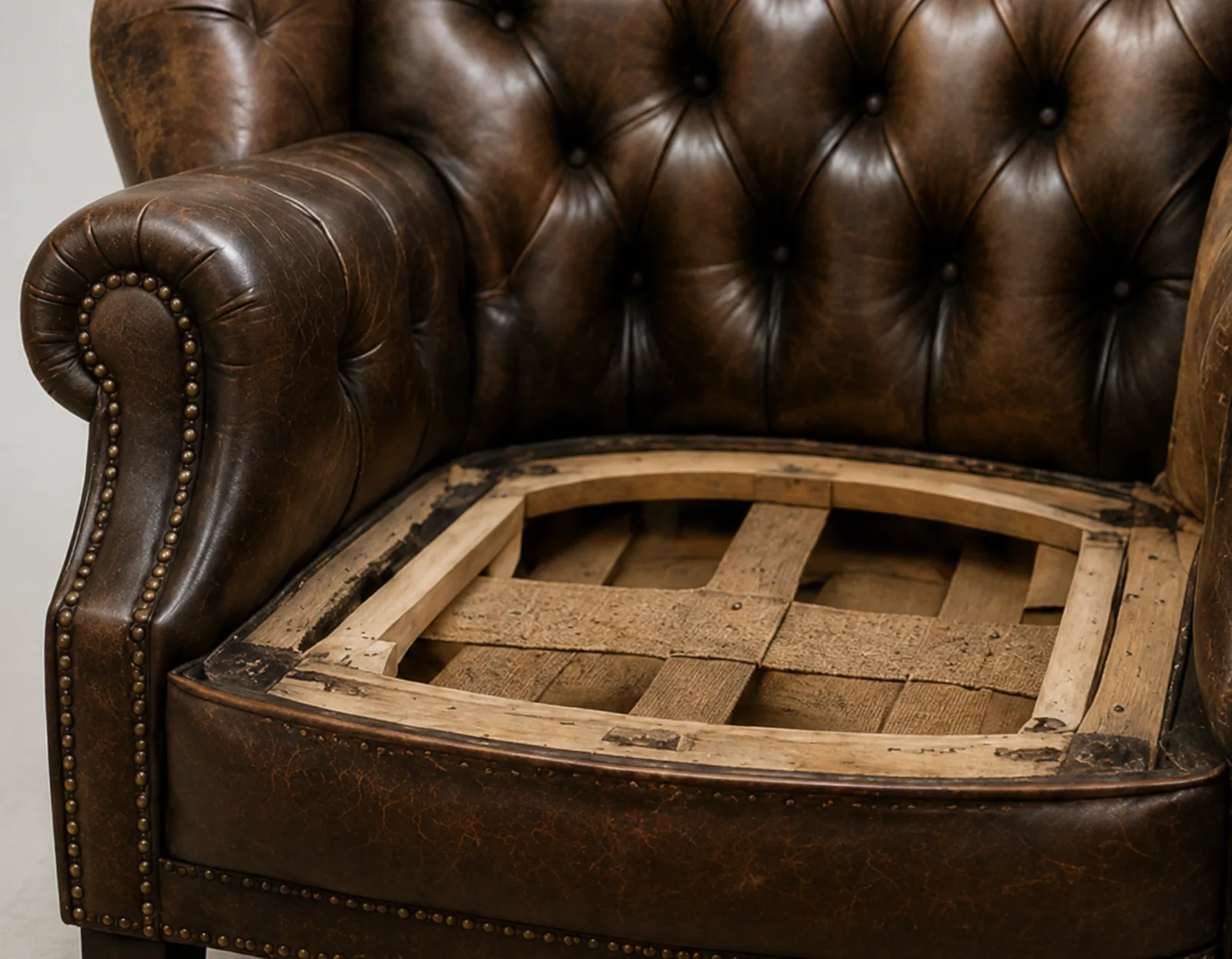
| A full recover of a loose chair or sofa | Partial leave | The frame stays in your room. Cushions and covers go out to be cut and sewn, then come back and are fitted on the frame on site. |
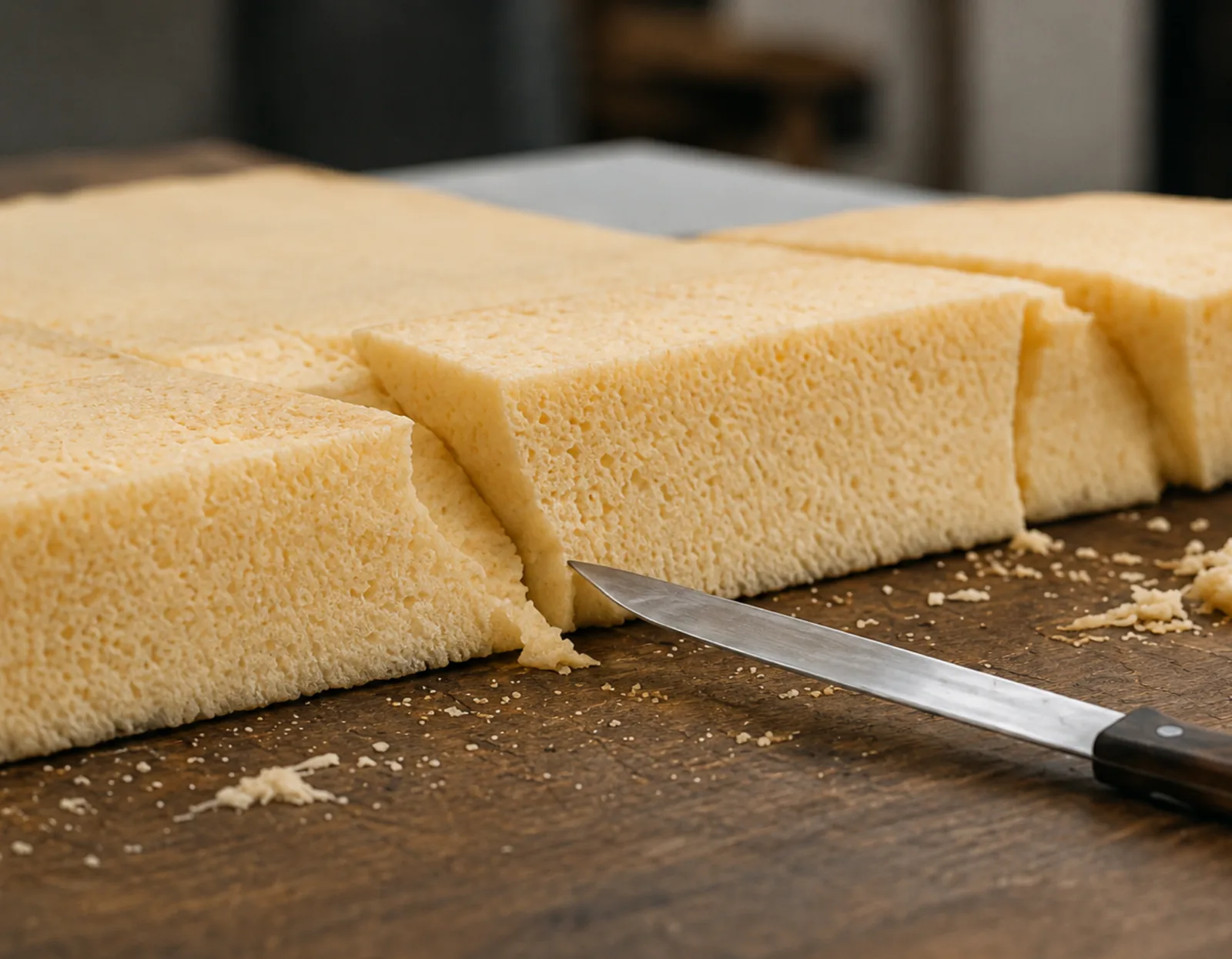
| Foam cut to a new pattern | Has to leave | New cores cut to a template, covers off, are shop work. Swapping an existing core is not. |
| A broken or racked frame | Has to leave | A frame that has to be dismantled, re-squared and clamped cannot be done in a dining room overnight. |
| Delaminating bonded or faux leather | Has to leave | Nothing repairs a surface separating from its backing across a whole panel. It is a recover, not a repair, on any bonded or faux material. |
Every row above that stays in place is carried out under our commercial leather repair, vinyl repair, colour restoration and wood repair services. Anything that leaves, whole or in part, is why pickup and delivery exists, and where it stops routes each of them.
The cases
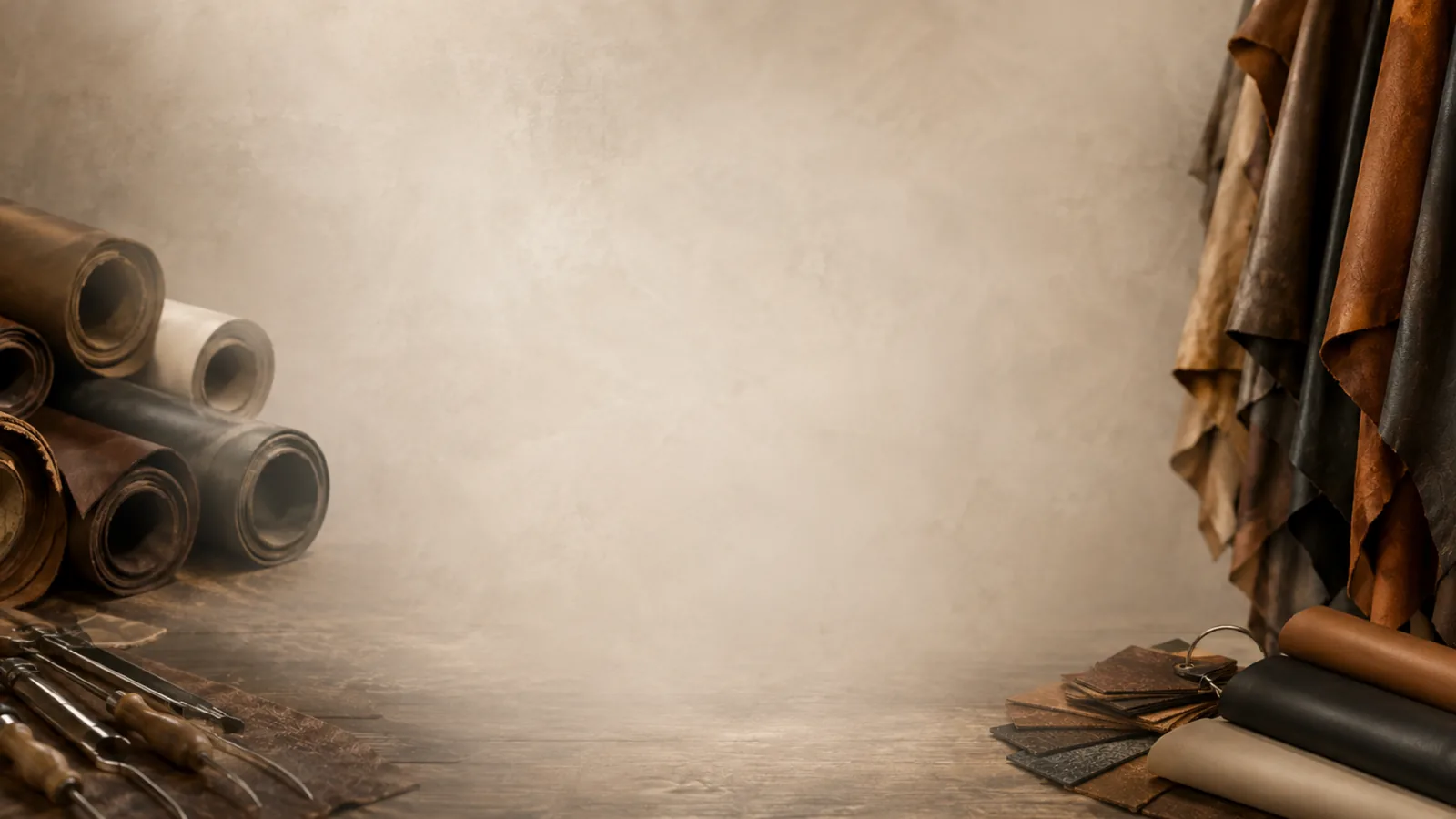
The workshop arrives in cases. Carried in through a service door by hand, with no dock booking.
Mobile leather repair only works if the kit is small enough to walk into a working building. Four cases cover almost every commercial job.
The colour bench
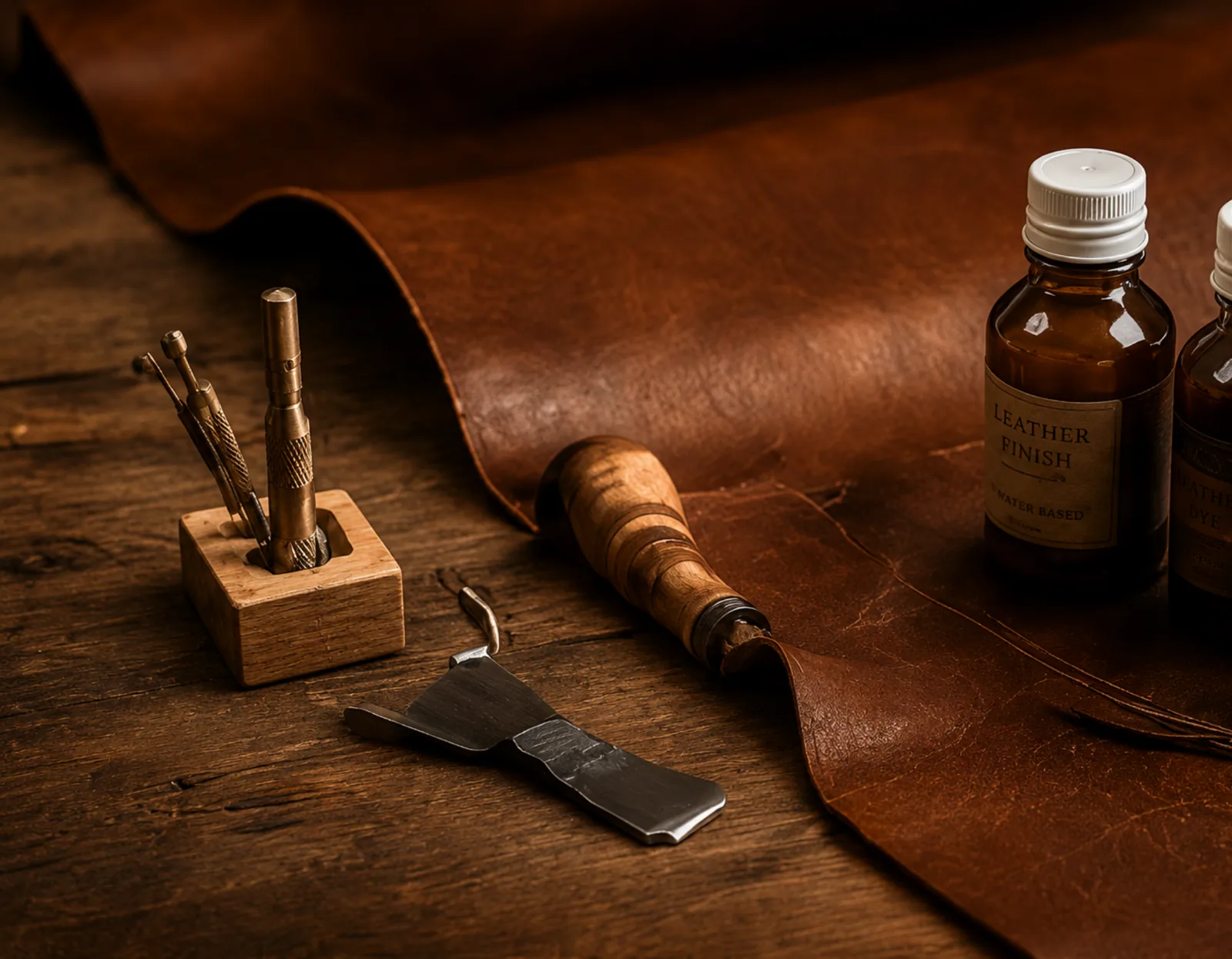
Pigments, binders, coats and a scale, plus a daylight-balanced lamp. Colour is mixed against your furniture, beside the panel it has to sit next to, which is why custom colour matching is better done on site than at a shop.
Matched stock
Hide, vinyl and backing pulled to the grain, weight and finish of the piece before the visit is scheduled. We buy hides in person at Manhattan leather houses, among them Global Leathers and District Leather Supply. Material matching happens ahead of the appointment, never on the night.
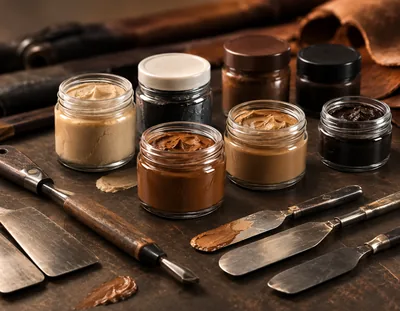
Fills, sub-patches and grain plates
A tear is carried by material worked in behind it rather than by filler on top, then the original grain is pressed back in. That is the difference between a repair that lasts and one that reopens along the same line.
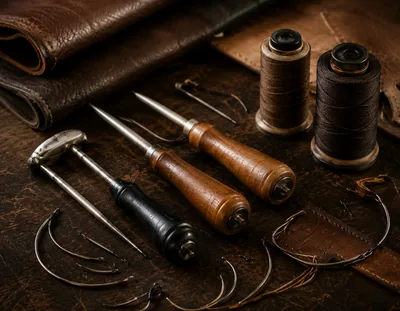
A hand-stitching set
Awls, curved needles and bonded thread matched to the original. A split seam on a fixed banquette is restitched through the existing holes, on the frame, without a machine anywhere near it.
Open flame, stripping chemicals, and anything needing your power isolated or your ventilation shut down. A hand-held touch-up gun does come in, masked to the panel it is working on. If a repair needs more spraying than that, the piece has to leave the building, and you are told at the assessment in writing.

The footprint
We take one section, not the room. How much of a trading floor an on-site repair actually occupies.
The most common objection to furniture repair at your location is that it will take the space over. It does not. A visit occupies the piece being worked on and the standing room behind it, and that envelope is set out before anything is opened.
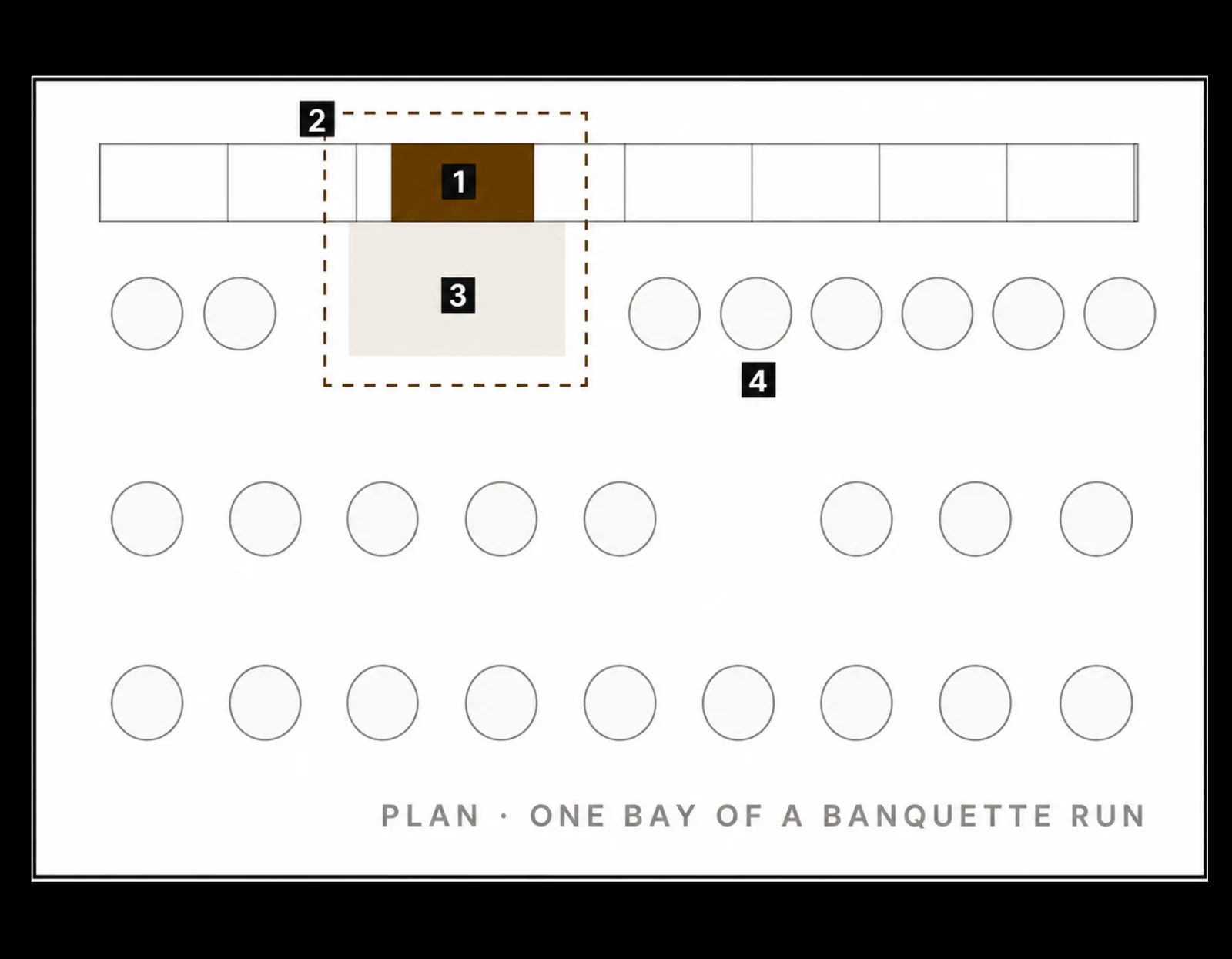
-
1
The piece under repair One bay of the banquette run, or one chair. It is worked on, finished and handed back before the next one is started.
-
2
The working envelope The technician’s standing room and the case layout. It is marked out before anything is opened and it does not creep outwards during the visit.
-
3
Protected floor Board and sheeting over your finish, wall to seat front. Down first, up last, and the section left exactly as it was found.
-
4
The rest of the room Still set, still laid up, still trading. Nothing is stacked in it and no table loses its cover.
On a run of a dozen bays that means a dozen short, self-contained pieces of work rather than one long shutdown — and it is why a floor can be recoloured end to end without ever being closed. How those visits are spread across your week is off-hours service; when they run through the night to a fixed handback, it is overnight service.
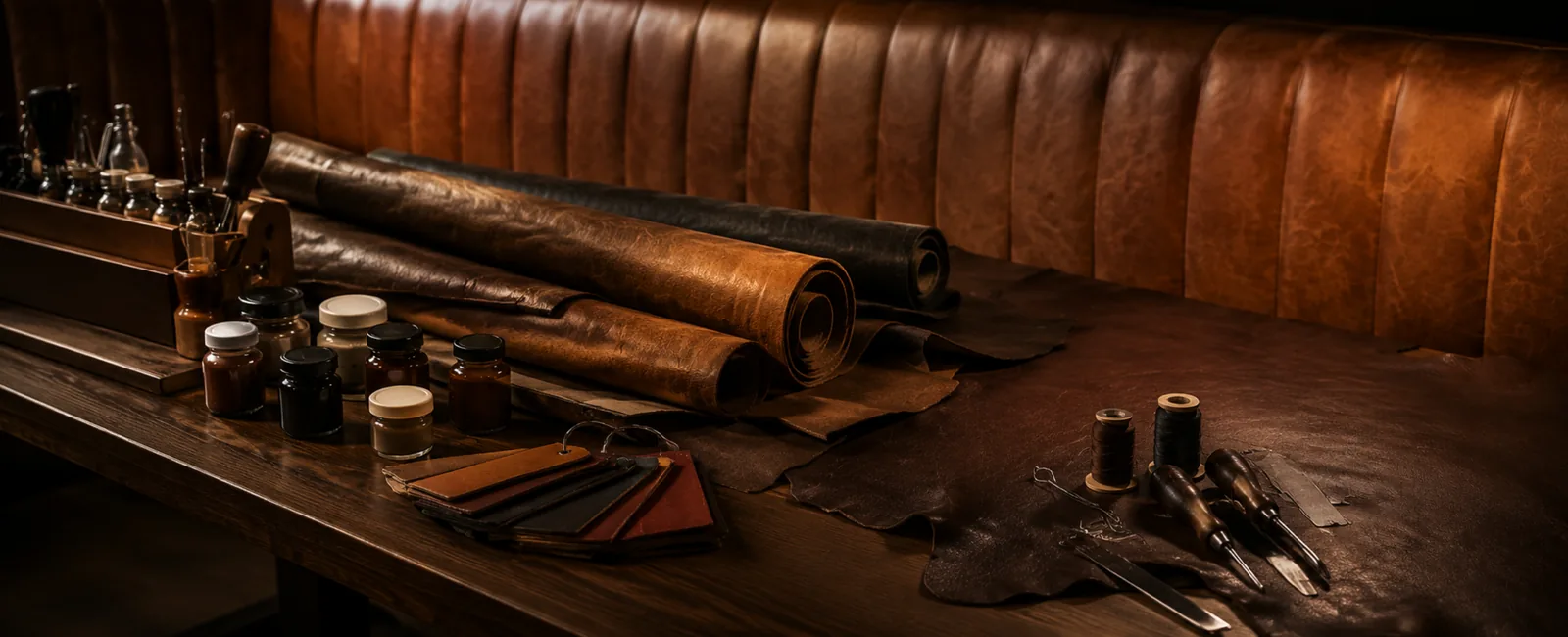

What we need from you
Four things, and only one of them is yours to solve. The other three we carry a fallback for, because buildings rarely have all of it.
01 Power
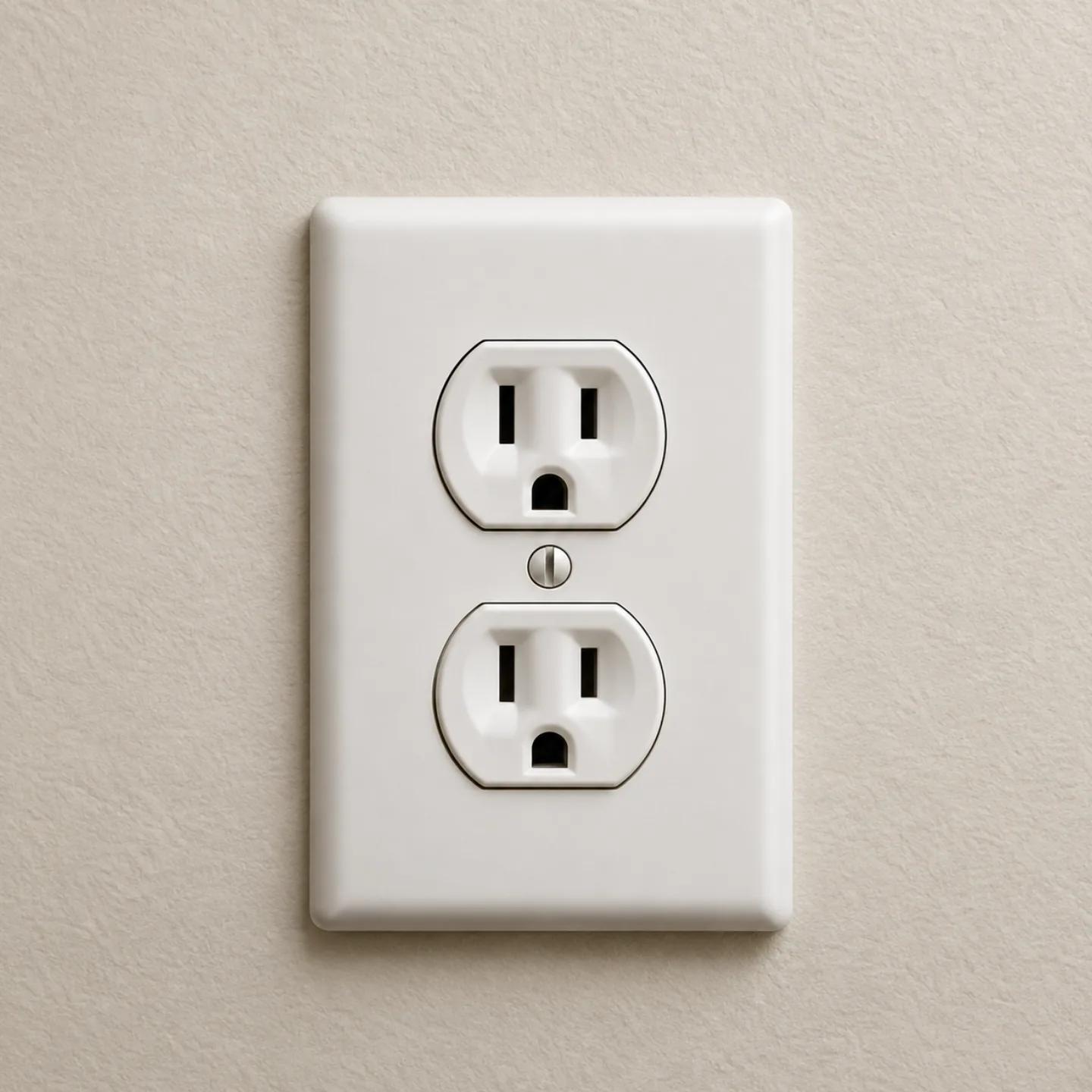
One standard outlet within reach of the piece. Nothing on this job draws heavily, and nothing shares a circuit with anything of yours that matters.
02 Air

A door, a window or a vent that is running. Ordinary air movement, not a ventilation strategy.
03 A way in
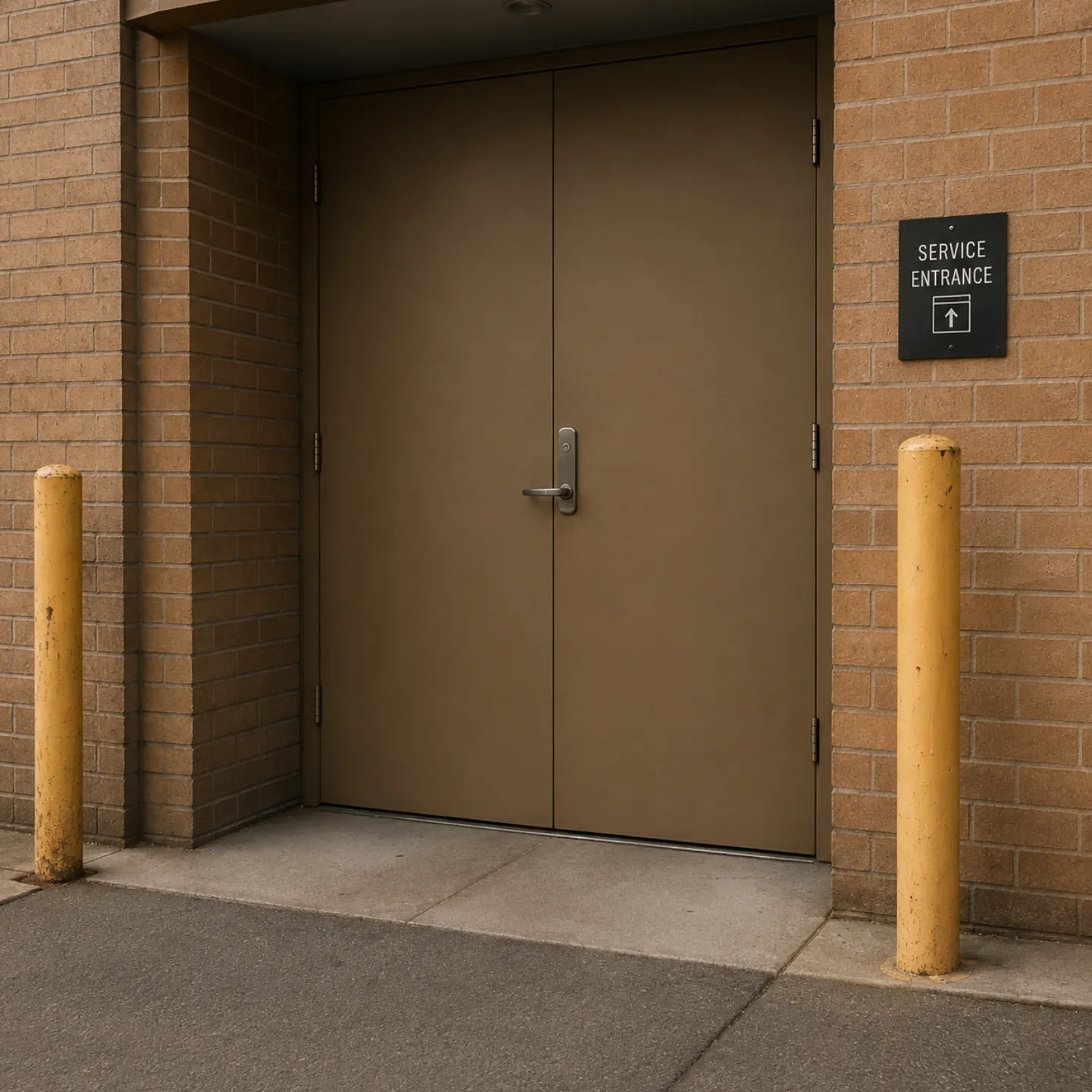
A service door, a corridor and a lift that one person carrying two cases can use. That is the whole access requirement.
04 A clear section
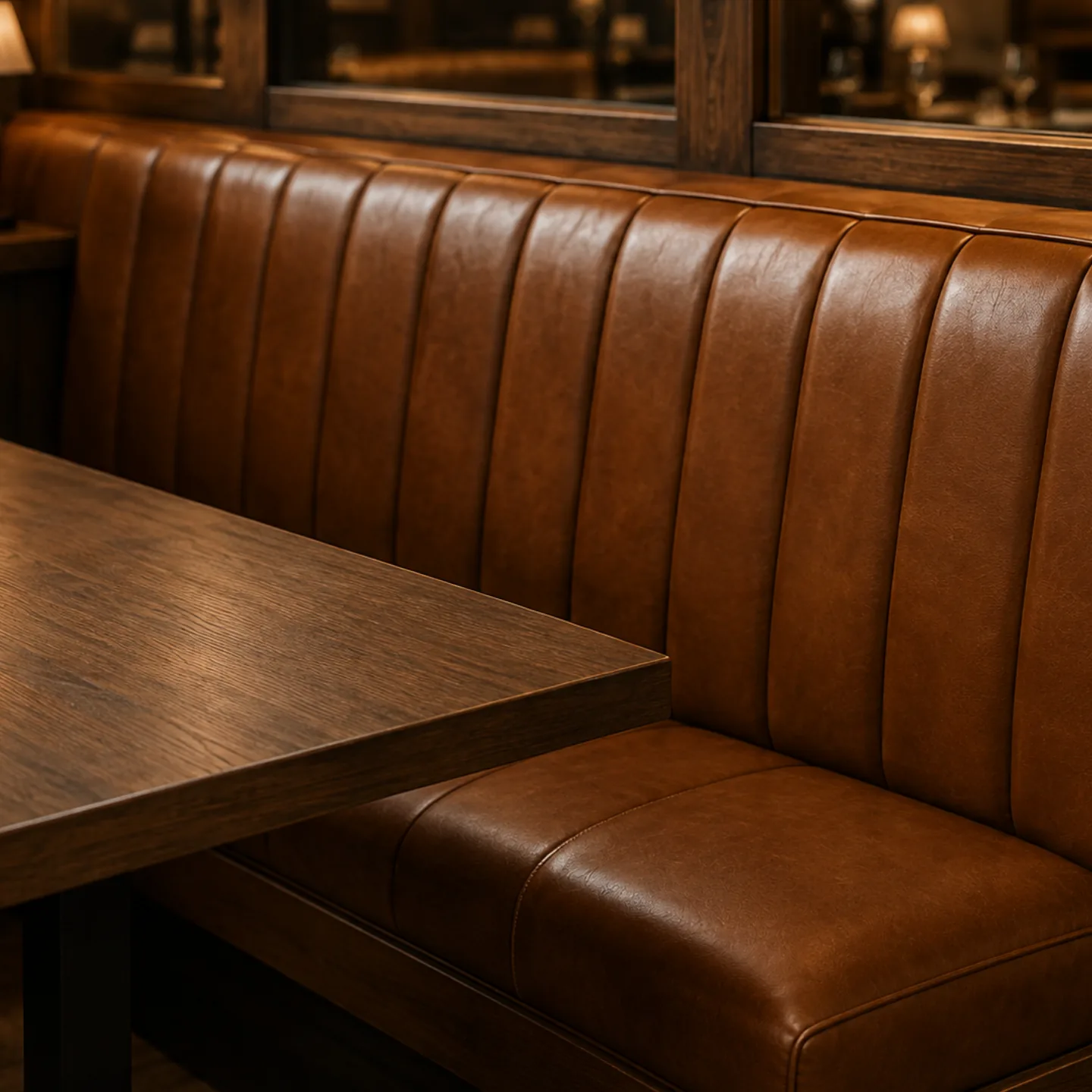
The bay being worked on, emptied. Settings off the table, loose furniture pulled back, and the floor in front of the seat free.

None of this is a condition of quoting. It is written down because the fastest way to lose an hour of a closed-hours visit is to arrive and find the section still laid up. Most managed New York buildings also want a certificate of insurance before anyone is admitted; we file that in advance under COI and insurance.
Back in service
The furniture is handed back in four states, not one. And the technician tells you which one you are in before leaving the building.
01
Work complete
The repair is finished and nothing of ours is left in the room.
Not seatable yet · nothing left in the room
02
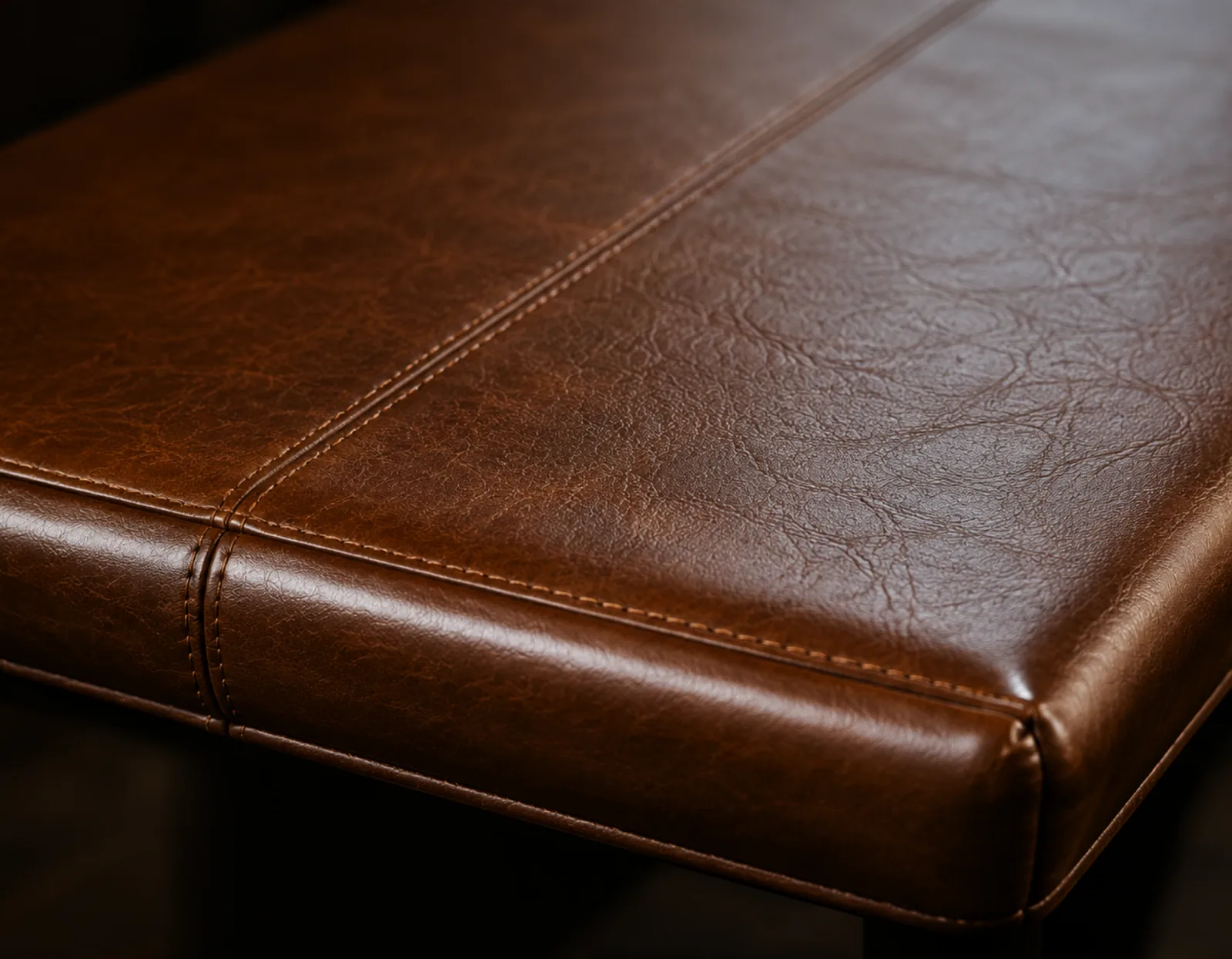
Surface set
The finish no longer marks on contact. Cushions go back and the table can be laid up.
Not seatable yet · the section can be dressed
03
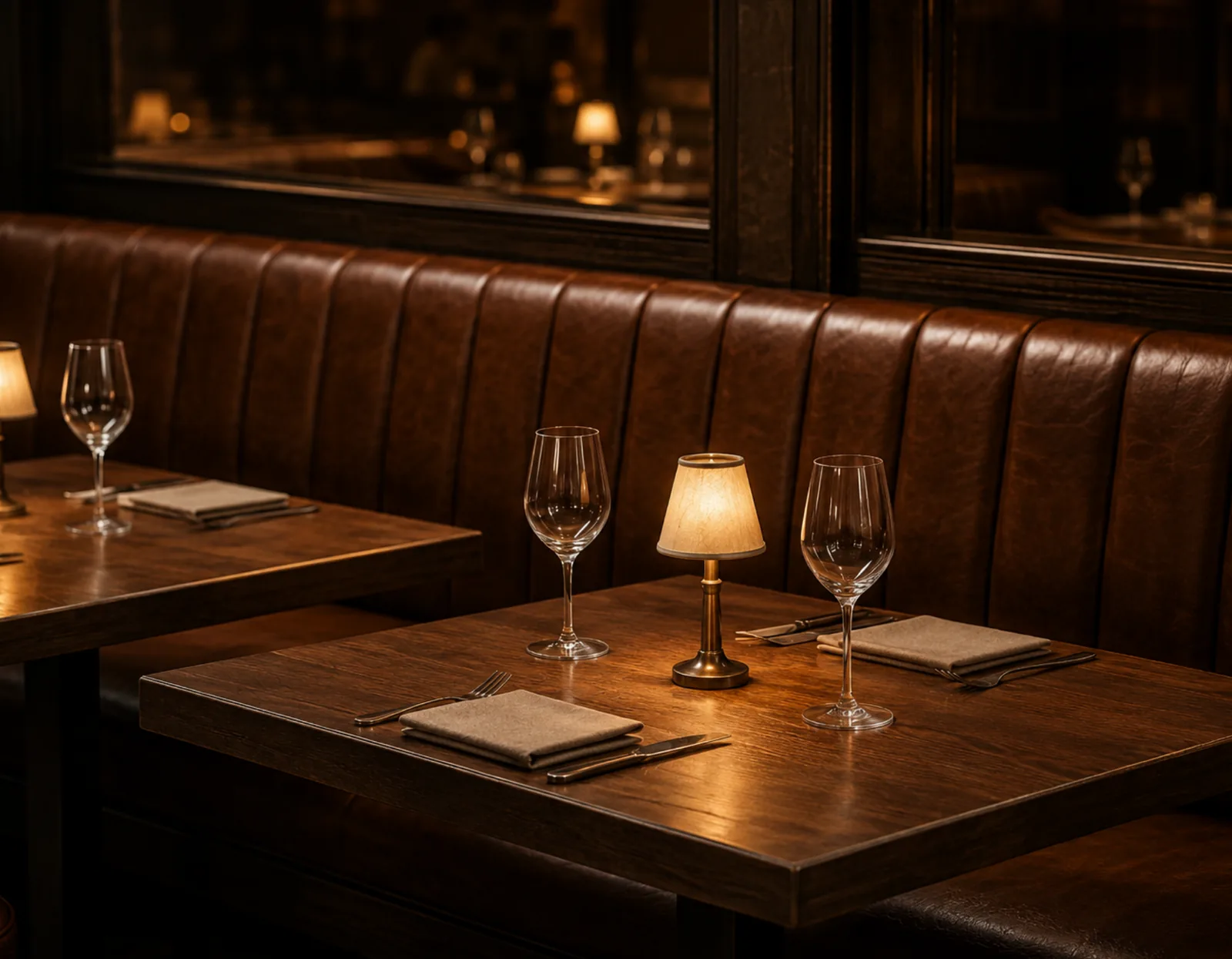
Back in service
Guests can sit on it. On colour work this state decides whether you open on time, so we schedule the visit backwards from your opening.
Seatable · your opening is scheduled against this
04
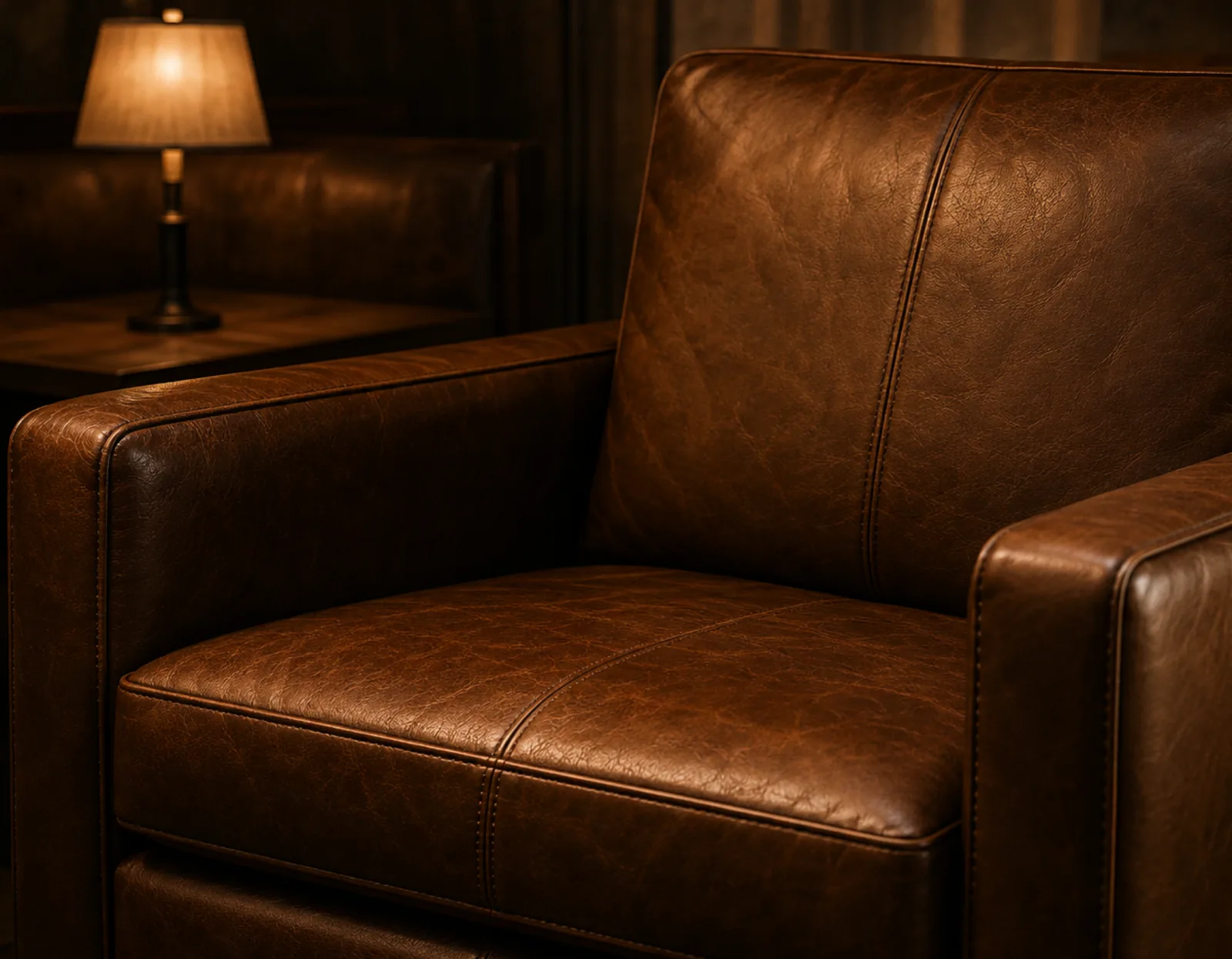
Fully cured
The finish hardens fully over the following days while the furniture is already in use. Nothing is required from you.
Seatable throughout · ordinary use is all it needs
 Why there are no hours here
The repair, the material and the room decide how long each state takes. A restitched seam is back in service the moment the work is done; a banquette run taken back to bare and recoloured is not. You get the actual figure in writing at the assessment, before a date is agreed. A published turnaround would be a guess about a room nobody has seen.
Where it stops
Four jobs that cannot be finished in your building alone. Named here, with the route out of each one, so none of it is discovered on the night.
These four are the reason pickup and delivery exists. On a commercial job they are the exception — on-site leather furniture repair covers everything else.
A full recover
The frame never leaves your room. We take the cushions and covers to be cut and sewn on a bench, then bring them back and fit them on site. Only the sewing needs a shop.
Foam cut to a new pattern
Cutting new cores to a template means covers off, dust and a bench. Swapping an existing core out of a zipped cushion is a different job and stays on site.
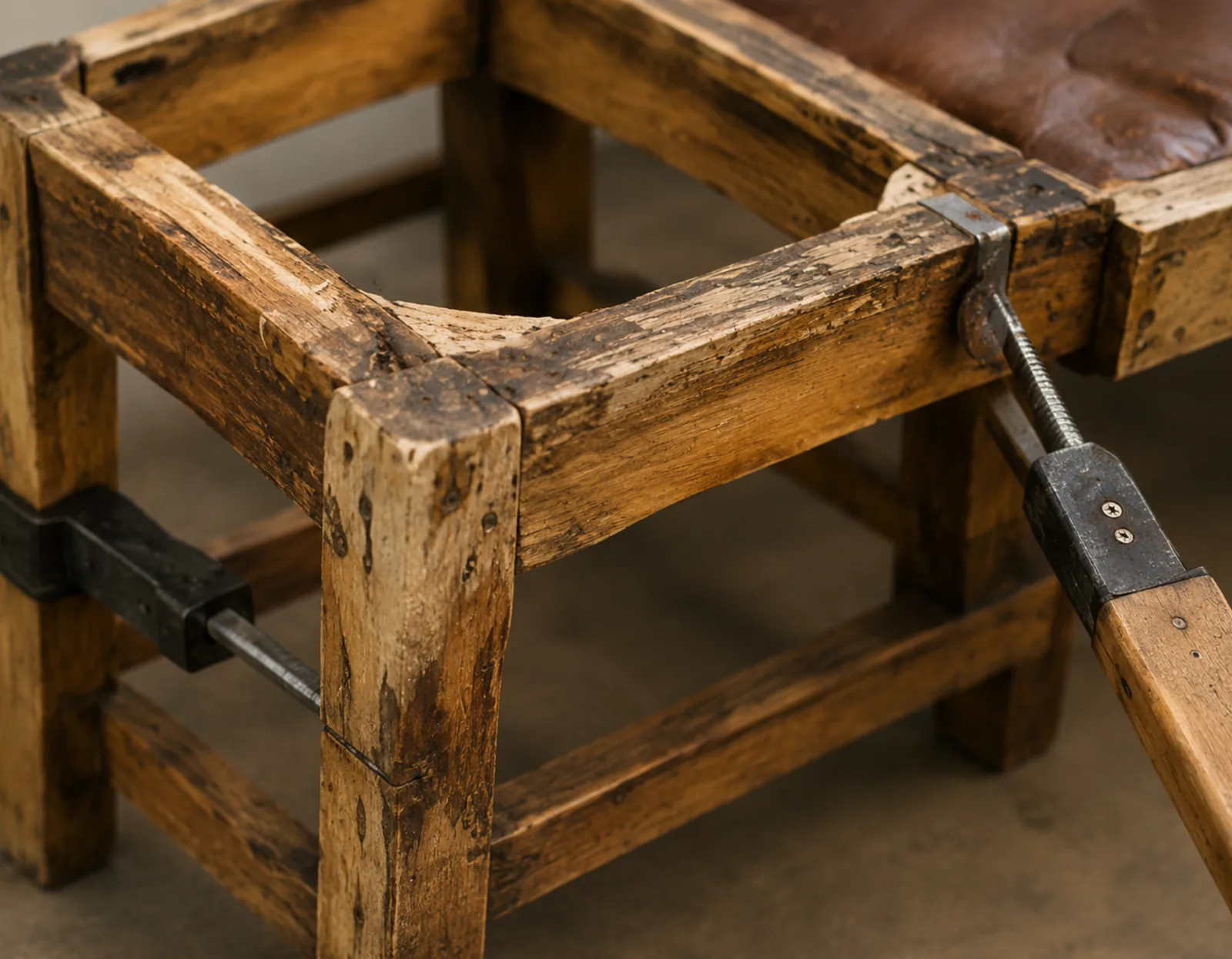
A broken or racked frame
A frame that has to be dismantled, re-squared and held under clamps while the glue cures will not clear a room that opens in the morning. A single loose joint will: we re-glue it where it stands and the chair sits out for a day.
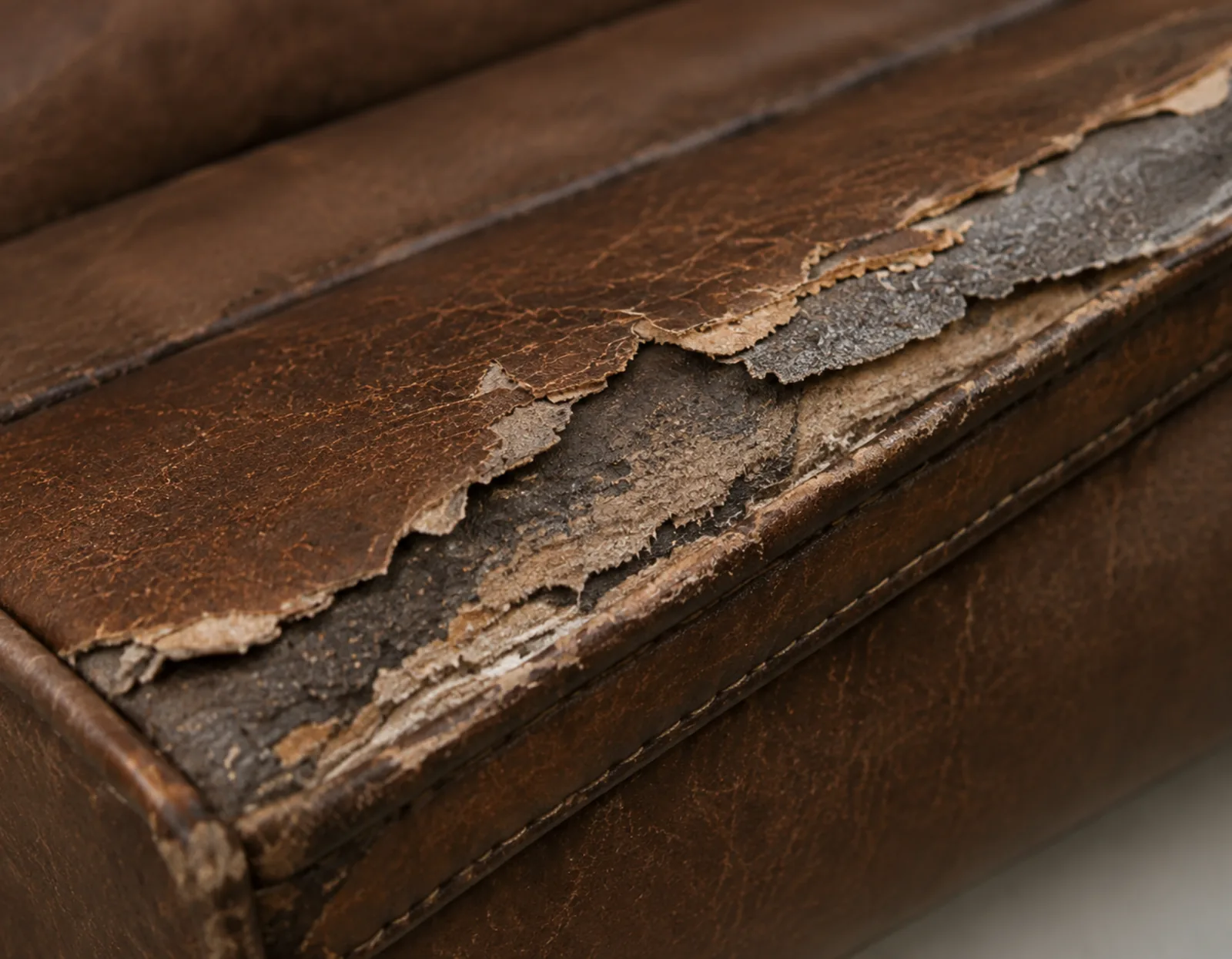
Delaminating bonded or faux leather
Nothing repairs a surface that is separating from its backing across a whole panel, on site or anywhere else. It is a recover, and we say so at the assessment rather than sell a patch that lifts again within a season.
Next to this
On-site is one capability of nine. On most commercial jobs, four or five of them are running at once.
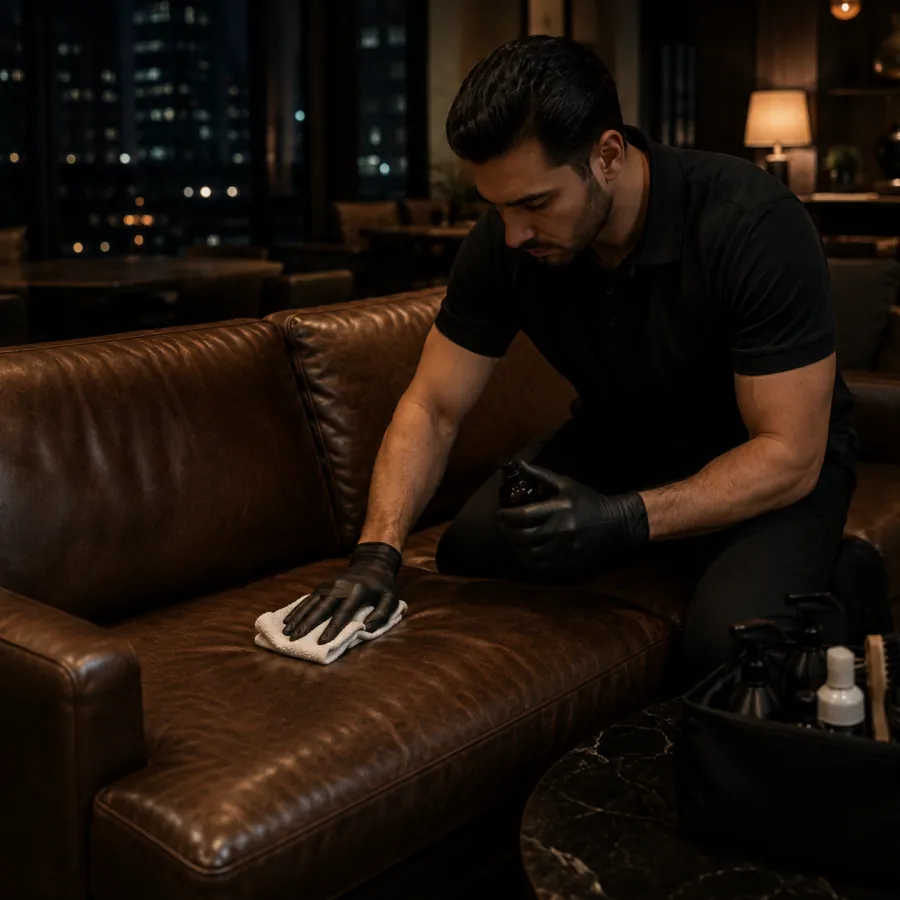 Access
Overnight service
The closed-hours crew, and furniture handed back before the doors open.
Access
Overnight service
The closed-hours crew, and furniture handed back before the doors open.
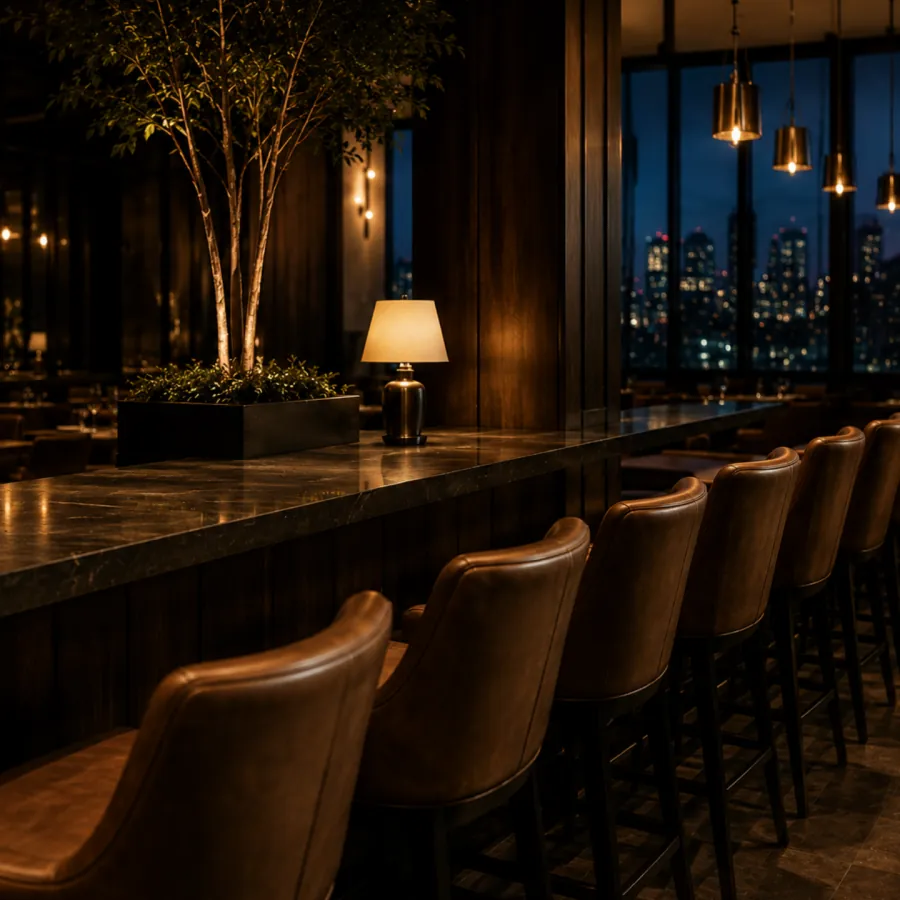 Access
Off-hours service
Scheduling around occupancy — early mornings, late evenings, weekends.
Access
Off-hours service
Scheduling around occupancy — early mornings, late evenings, weekends.
 Access
Pickup & delivery
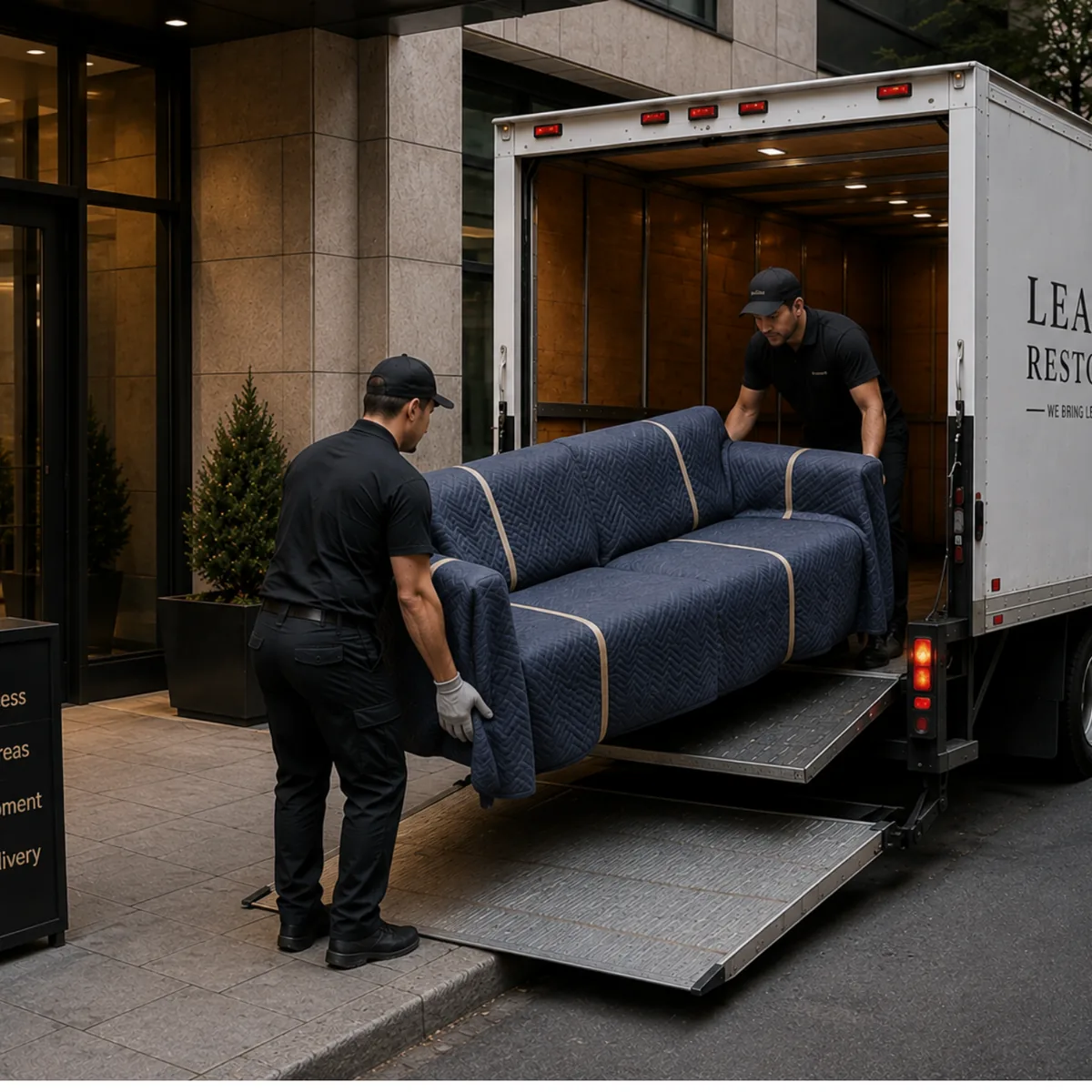
For the four jobs above that genuinely have to leave the building.
Access
Pickup & delivery
For the four jobs above that genuinely have to leave the building.
 Match
Custom color matching
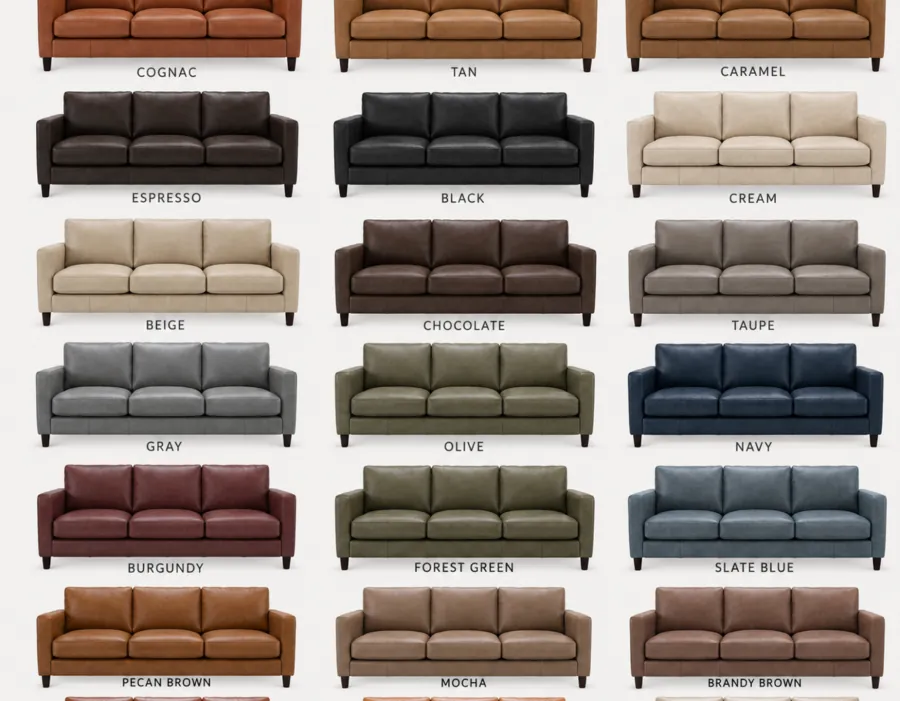
Colour mixed to the piece as it is today, not as it left the factory.
Match
Custom color matching
Colour mixed to the piece as it is today, not as it left the factory.
 Match
Material matching
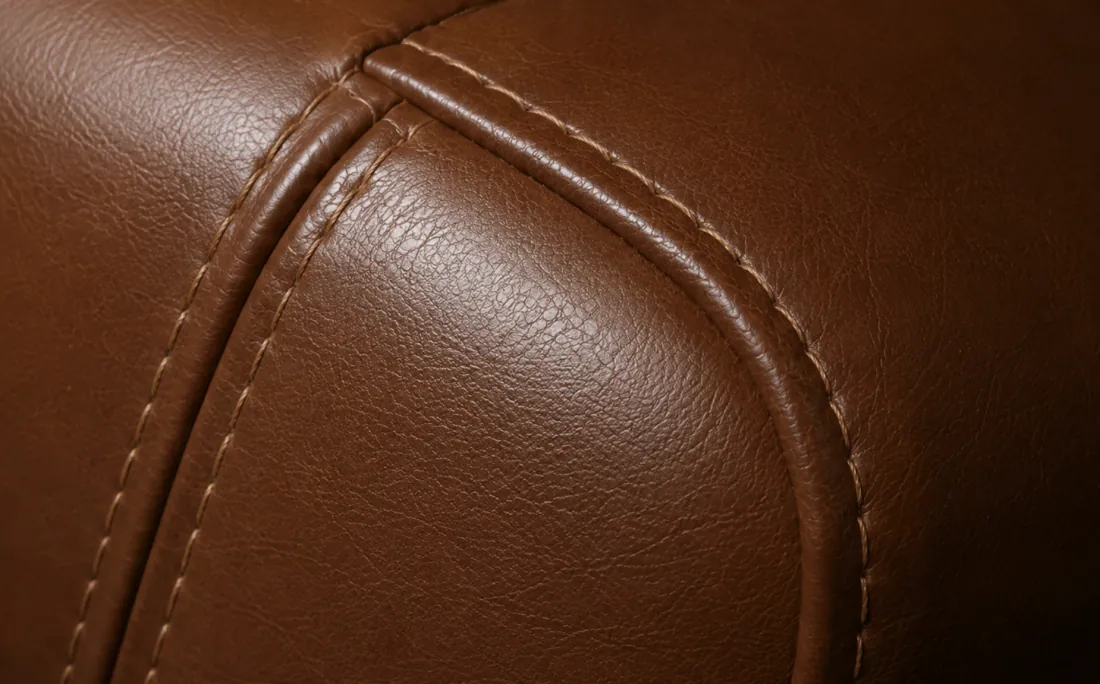
Grain, weight, temper and finish sourced before the visit is booked.
Match
Material matching
Grain, weight, temper and finish sourced before the visit is booked.
 Admission
COI & insurance
The certificate that actually grants access to a managed building.
Admission
COI & insurance
The certificate that actually grants access to a managed building.
How the nine are sequenced on a live project — assessment, scope, schedule, phasing and sign-off — is project process.
All nine capabilitiesQuestions
On-site repair, answered.
01What is on-site leather furniture repair?
On-site leather furniture repair is repair work carried out in your building, on the furniture where it stands, instead of collecting it and taking it away to a workshop. A technician brings the colour bench, matched leather and vinyl, fills, adhesives and stitching tools into the room in cases, works inside one protected section of floor, and leaves with nothing but the tools. On commercial leather and vinyl seating it covers colour loss, cracking, peeling, tears, cuts, burns, scuffs, split seams, stains and single failed panels — which is the large majority of what actually goes wrong in a restaurant, hotel, office or private club.
02Do you repair commercial leather furniture on site in New York City and New Jersey?
Yes. Leather Restore PRO carries out on-site leather furniture repair across all five New York City boroughs, Long Island and northern New Jersey. We repair leather and vinyl booths, banquette runs, bar stools, dining chairs, office and boardroom seating, lounge chairs and sofas in restaurants, hotels, offices, private clubs, healthcare sites and managed buildings — in the room, in your closed hours, with the rest of the floor still set and still trading. Where a building requires it, a certificate of insurance is filed with the managing agent before the first visit.
03What can actually be repaired without taking the furniture away?
Colour loss and fading, cracking and peeling on a finished hide, scuffs, scratches and heel marks, tears, cuts and punctures, cigarette burns and heat marks, split seams and failed stitching, ink and dye transfer, set-in stains, and a single failed panel on a booth or banquette.
Flattened loose foam and a loose or squeaking chair frame are also done in place, though glue has to be clamped and left, so those run across more than one visit.
Four jobs need a shop. On a full recover the frame stays in your room and only the cushions and covers go out to be sewn, then we fit them on site. Foam cut to a new pattern, a broken or racked frame that has to be dismantled, and delaminating bonded or faux leather leave the building outright.
04Will the room have to close while you work?
No. The work occupies one section at a time — the piece under repair, the standing room a technician needs behind it, and a protected patch of floor. The rest of the room stays set. On a banquette run we take one bay, finish it, hand it back and move to the next, so a floor is never fully out of service. Most commercial visits are scheduled into closed hours in any case, which is why on-site leather furniture repair rarely costs a room any trading time at all.
05Is on-site repair cheaper than sending the furniture out?
Usually, and not mainly because of the transport. Working in place removes the collection, the return, the storage while a piece sits on a bench, and the loan furniture you would carry in the meantime. On-site leather furniture repair is priced on the damage, the material and the number of pieces, not on where the work is carried out. You get all of it in writing from the assessment, and nothing to do with access or scheduling is added afterwards.
Start in the room
Show us the room. The verdict on whether it can be done in place takes one visit — and it is the visit everything else gets written from.
Tell us what the furniture is, when the room is empty and what the building asks of a vendor. On-site leather furniture repair across NYC, Long Island and New Jersey runs on those three answers, and the verdict is written from what a technician sees in the room rather than from a photograph.
Or call (347) 310-7483 — emergencies are handled under emergency repairs.