
Mending prop and set pieces that have to photograph
Room light forgives. Studio light does not.
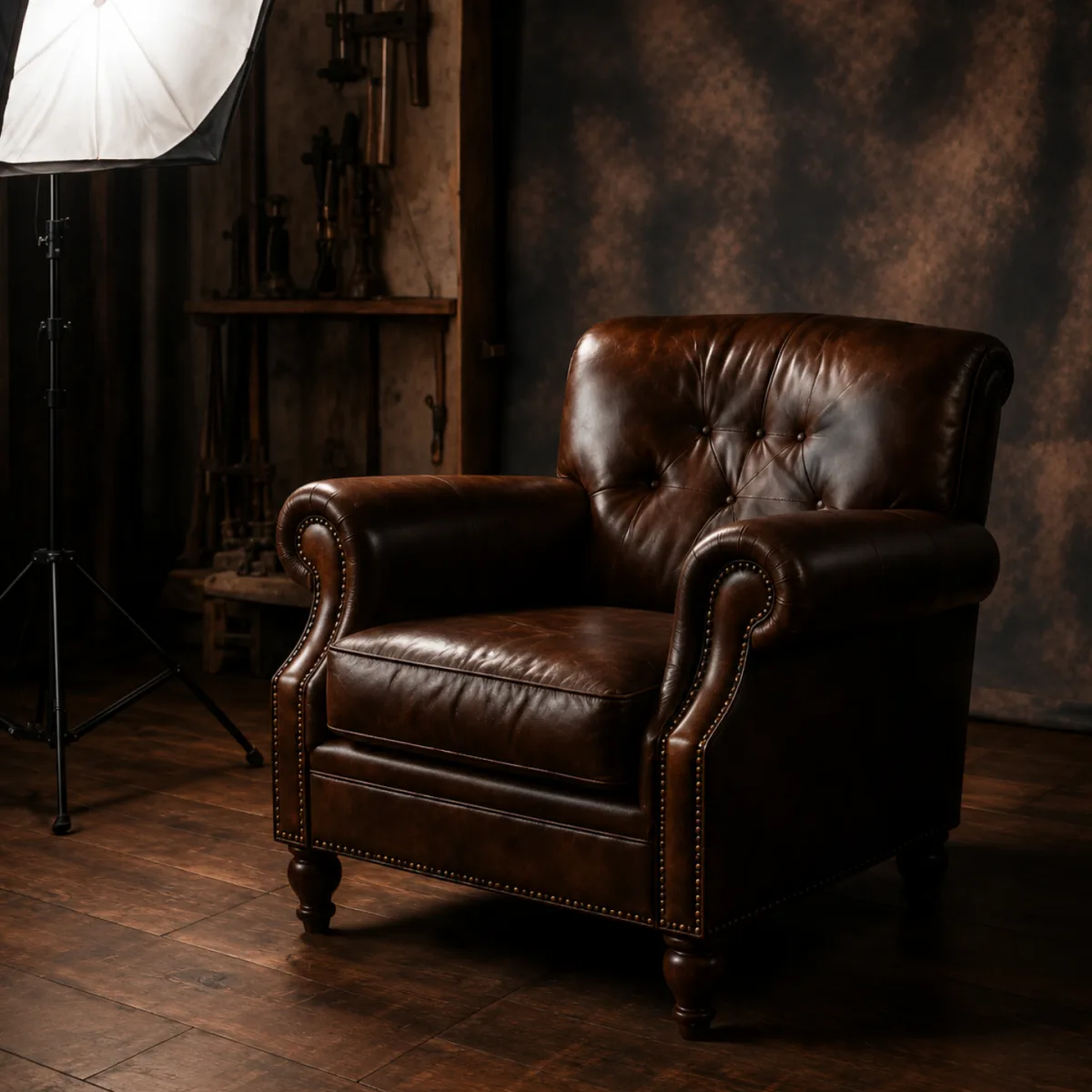
Photography studio furniture repair in NYC. Leather props and set pieces mended to hold up under a key light, where sheen gives a repair away long before colour does.
What a set does that a room never does
Three reasons a mend that passed in the workshop shows on set.
None of the three is the colour.
01
The light arrives from one side.
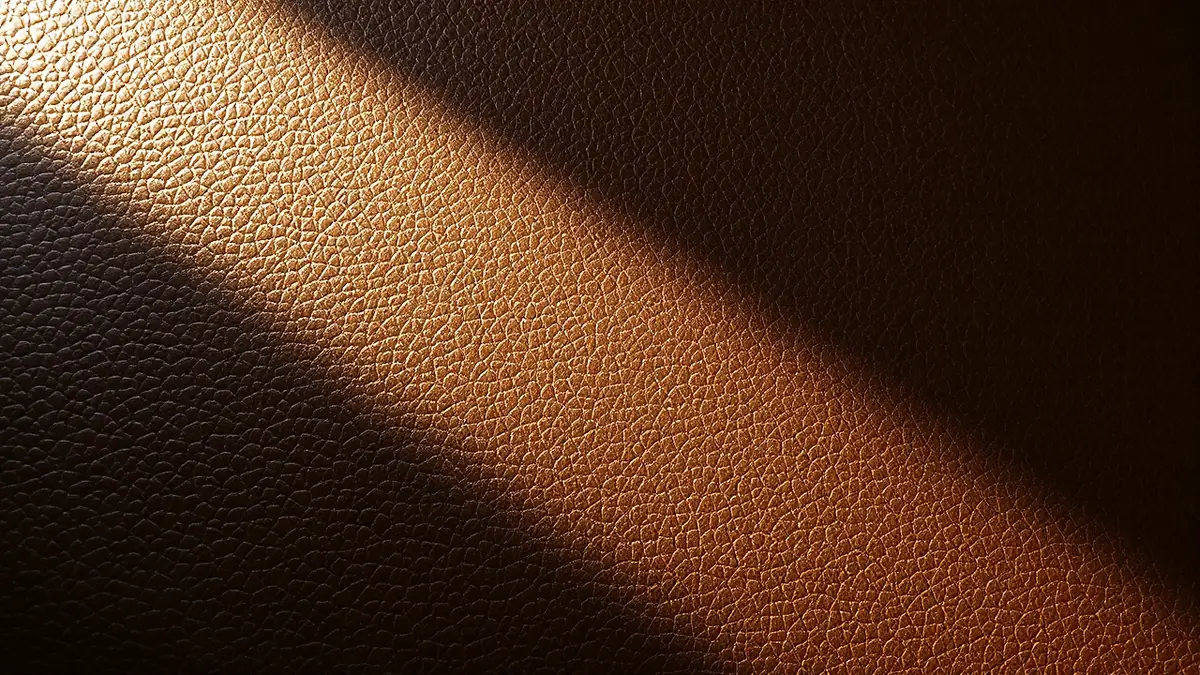
A room lights a surface from everywhere at once and forgives what it finds. A key light comes in at an angle and skims along the surface instead, so every change in texture casts its own small shadow. That is raking light, and conservators light a painting that way on purpose, because a narrow-angle source brings out surface irregularity that even illumination conceals.
02
The light is a different colour.
A match made under one source is not guaranteed to hold under the next. Two surfaces can agree under a warm workshop lamp and separate under a daylight-balanced strobe; the colour trade calls that a metameric pair. Which light the match was made under matters as much as how close it looked.
03
The frame gets held.
Nobody studies the arm of a chair in a living room. A still gets opened at full size and a take gets scrubbed a frame at a time. Whatever survives a glance still has to survive that.
An unfinished hide is the harder case: there is no topcoat to set the sheen with. On aniline leather the sheen is the surface of the hide itself, so it is worked back rather than chosen.
One piece, from the dock back to the shelf
The mend is checked under the light it has to survive.
Three moves, and the last one happens on a backdrop rather than on a bench.
Light it from the side before quoting it
A mark that vanishes under a flat overhead lamp is the one that turns up on the day. So a hard light goes across the piece at a low angle before anything is priced, and what it finds is what gets quoted.
Set the surface, the colour and the sheen separately
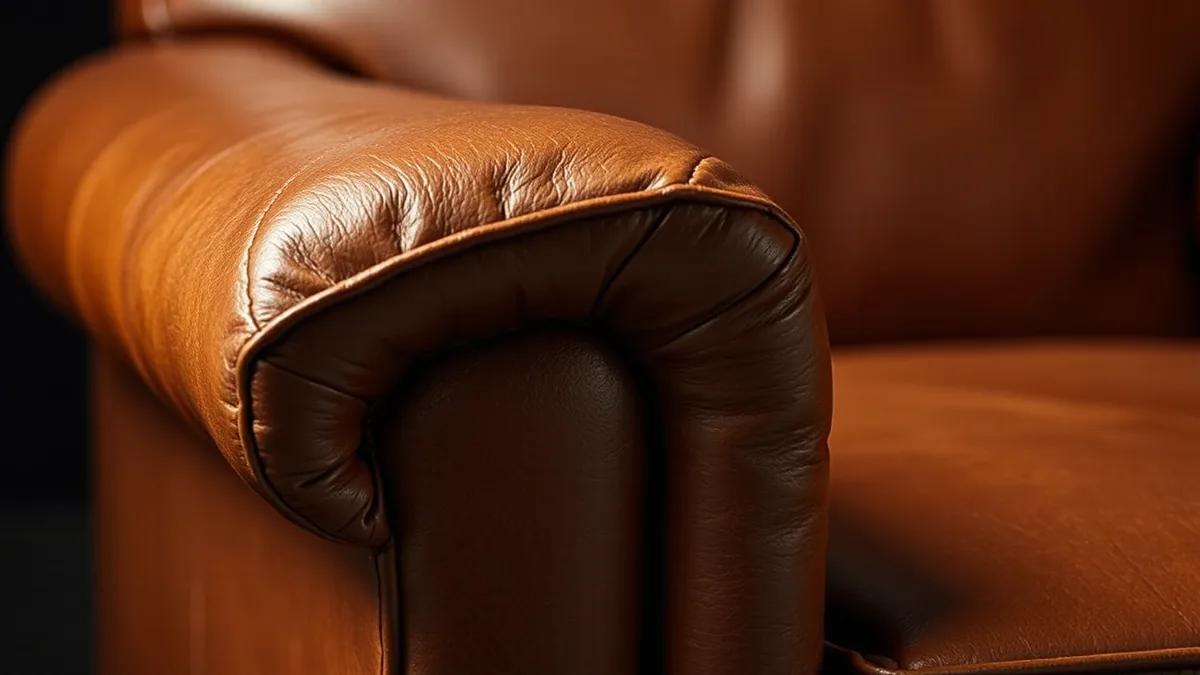
Filling and colouring gets a patch that matches on a colour chart. Sheen is its own decision and it is the one that gives a repair away. Topcoats come in fixed grades, and makers like Leather World Technologies blend between them for a hide that falls between two, so on pigmented leather the sheen is chosen to match the panel rather than left to whatever the tin supplies.
Look at it on the sweep, not on the bench
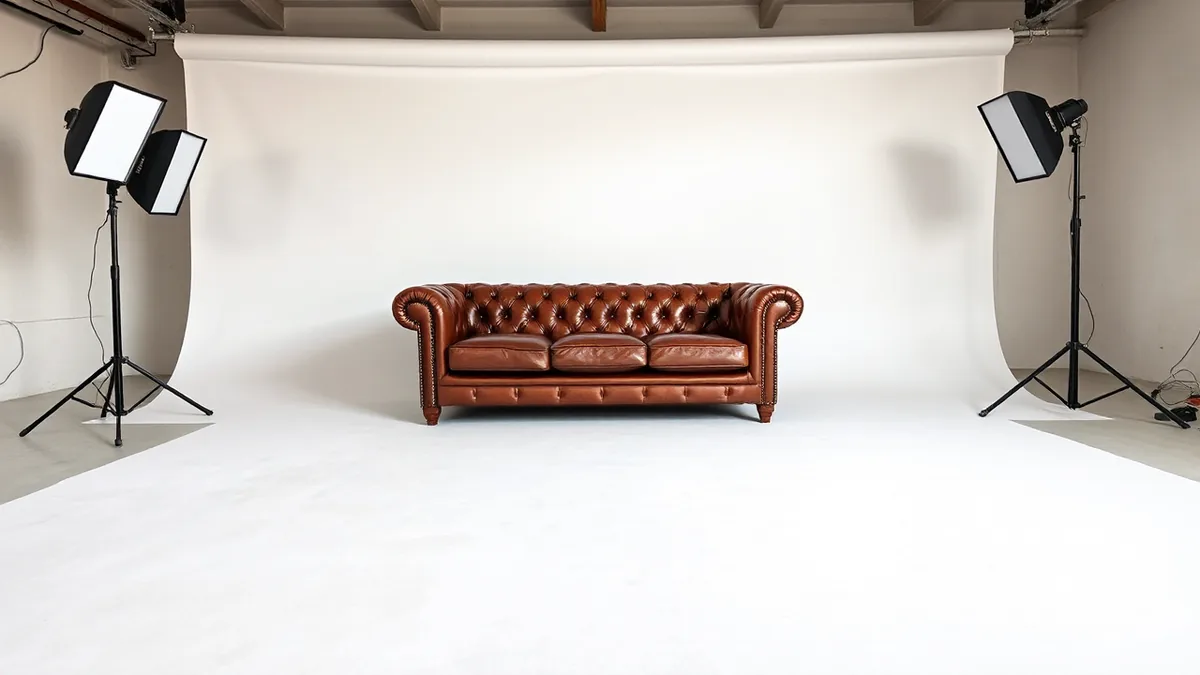
Before it goes back the piece is stood on a backdrop under studio lighting, at the distance a camera would sit and with the key light where a key light goes. A bench lamp is not that, and a piece passed under one has been checked against the wrong light.
Rental stock rarely arrives one piece at a time. Several from the same set are worked as a run, so they agree with each other as well as with themselves, which is how several pieces at once is normally handled.
Before a piece leaves the prop house
Questions from rental houses and set decorators.
We matched a repair ourselves and it looked fine until we shot it. What happened?
Usually one of two things, and neither of them is the colour. The first is sheen: the mended area returns light differently from the leather around it, which is easy to miss under a ceiling light and hard to miss under a key light coming in from the side. The second is that the match was made under one light and the shot was made under another, and a pair that agrees under a warm lamp can come apart under a daylight-balanced strobe. Both are fixable. Both are also why we bring a raking light across a piece before quoting it rather than after.
Does the whole piece have to be redone to put one corner right?
Usually not, but the work is rarely as small as the damage. Colour can be brought in tight around a scuff; sheen cannot, because a topcoat that stops in the middle of a panel leaves an edge that a directional light finds immediately. So a mend on the corner of an arm tends to be taken out to the seams of that arm and no further. That is a much smaller job than recovering the piece, and it is the step that stops the repair reading as a patch.
The piece is booked out next month. When should we send it?
As soon as you know the date it has to be back in the catalogue. We plan to that date rather than to a queue, so the useful thing to tell us is the booking, not how urgent it feels. A piece sitting in a workshop is a piece not out on a job, which is the real cost of a scuff on an arm and the reason a small mend is worth doing between bookings rather than at the end of a season.
Before the next shoot day
Send a photograph taken with the light to one side.
One picture lit from the side tells us more than a folder of straight-on ones, because it is the one that shows what a key light will show. Or call (347) 310-7483.