
After the Repair
Workmanship Warranty
Our leather repair warranty covers the work we carried out, in the area we carried it out, for the period written on your estimate. This page sets out what that covers, what it does not, and how to make a claim.
Last updated 10 September 2026
Scope
The warranty follows the repair, not the furniture
This is the one thing worth reading twice, because almost every disagreement about cover starts here.
A leather repair warranty is attached to work, not to an object.
If we recoloured one cushion, the cover is on that cushion. If we restitched a seam, it is on that seam. The rest of the piece carries on ageing exactly the way it was already ageing, and nothing we sign makes it new again.
So this is not a condition guarantee for a sofa. It is our undertaking that the work we did will hold, and that if it does not hold for a reason that belongs to us, we will come back and deal with it.
Everything below follows from that. What is covered is the set of ways our own work can fail. What is not covered is everything that happens to leather we never touched.
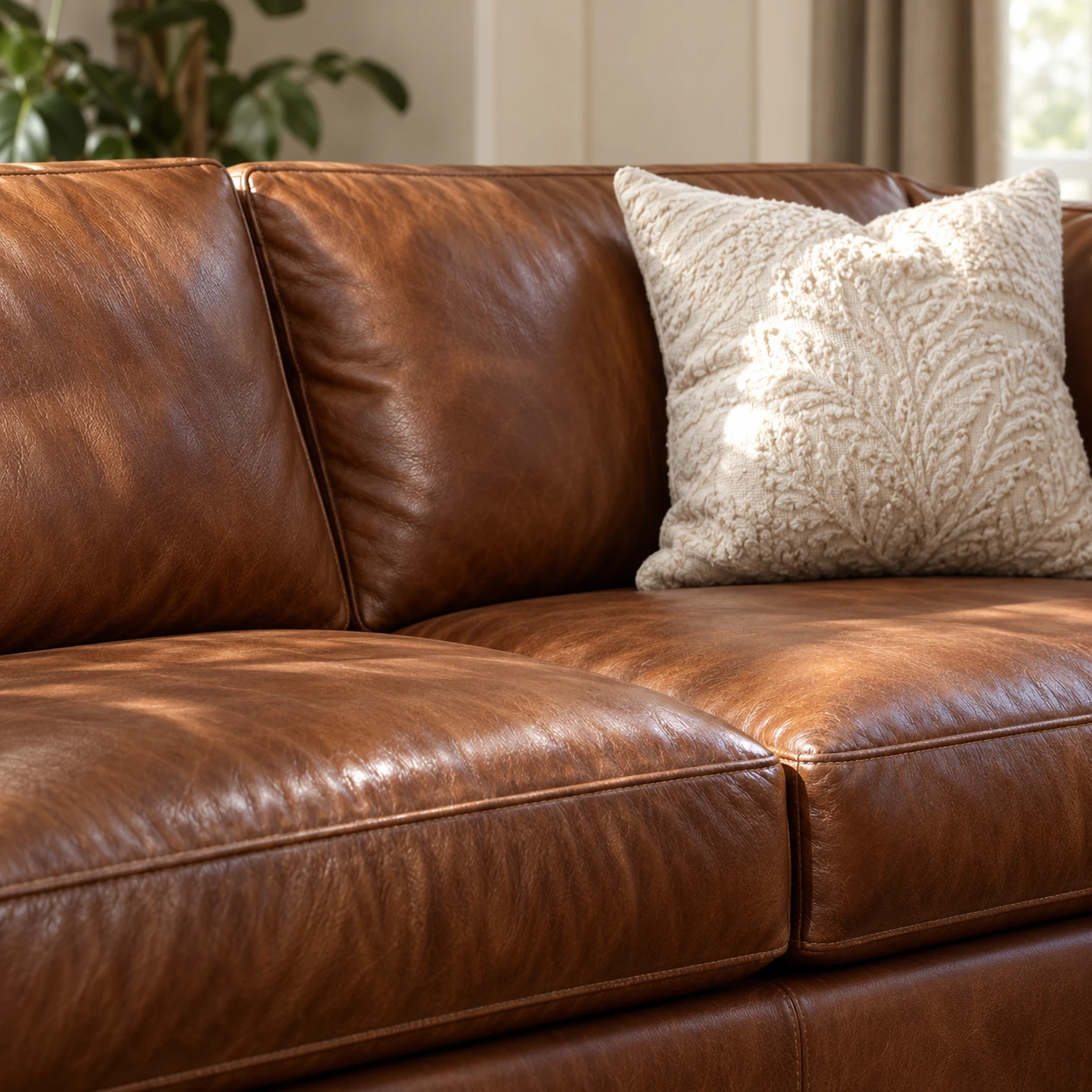
Cover
What is covered and what is not
The two lists that come with your estimate, published in full so there is nothing about the leather repair warranty to discover later.
Covered
- Adhesion failure in the repaired area — filler or finish lifting
- Color instability on the repaired area under normal indoor use
- Stitching we replaced coming undone
- Panels or cushions we fitted failing at our seams or our joins
Not covered
- New scratches, tears, stains or pet damage after the repair
- Damage caused by harsh cleaning products or unapproved conditioners
- Normal wear outside the repaired area
- Pre-existing structural or material deterioration we did not treat
- Failure of untreated bonded or faux leather surrounding a repair
- Improper use, or not following the curing instructions you were given
Bonded and faux leather are called out separately because they fail as a material rather than as a finish. If yours is either, we will have told you before starting — see bonded leather and faux leather.
Term
When cover starts and how long it runs
We do not publish one figure for every job, and the reason is worth explaining.
A full panel replacement and a scuff blended into a twenty-year-old aniline sofa are not the same undertaking, and it would be dishonest to put the same number on both. So the term for your leather repair warranty is set against the work actually being done and written on the estimate you approve. You have it in writing before you commit to anything.
If you cannot find your estimate, we still hold it. Call us with the address the work was done at and roughly when, and we will look it up.
Claims
How to make a claim
Four things, and the first two are photographs. Most claims are settled from the pictures alone.
Photograph the affected area in daylight
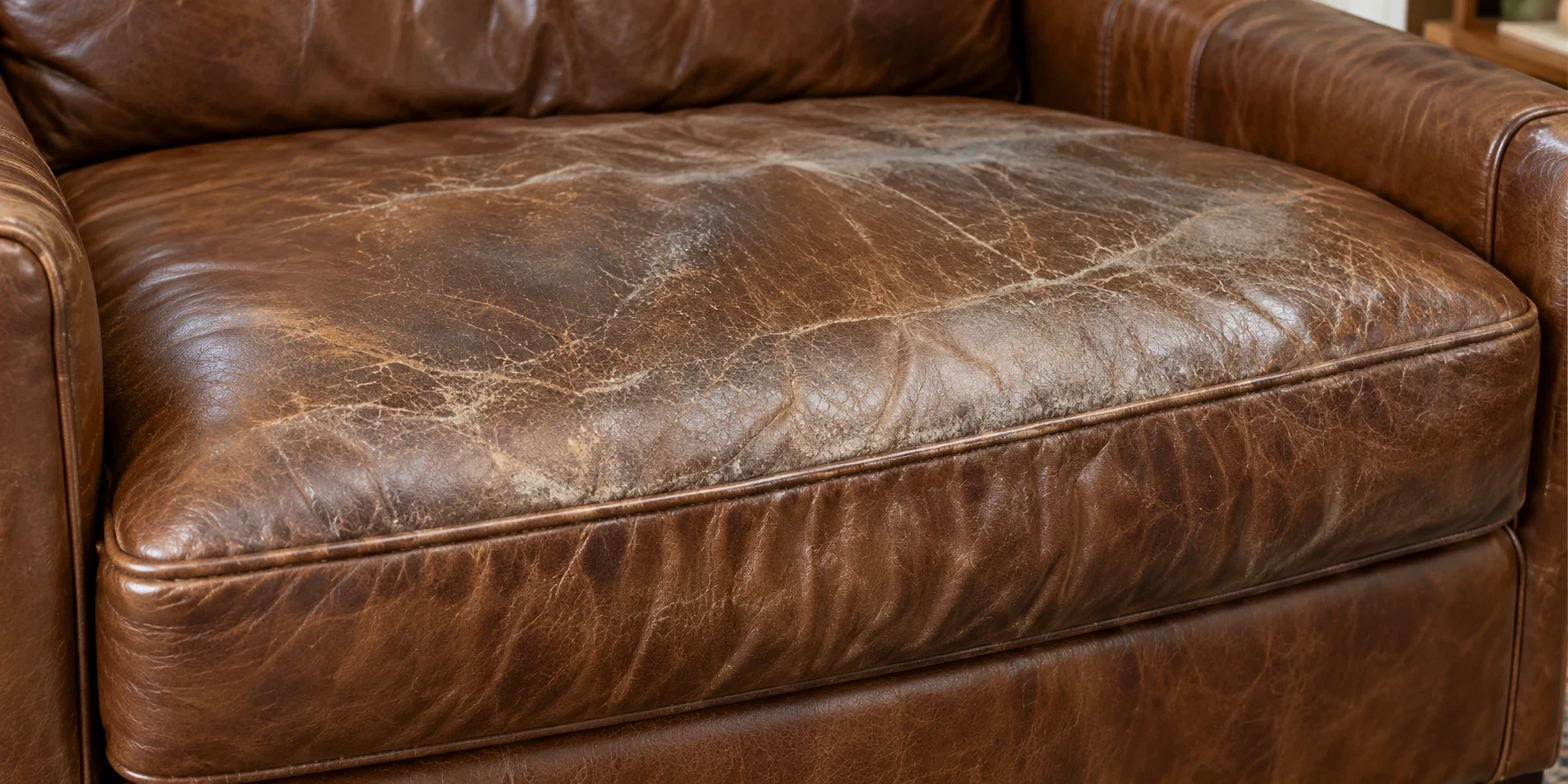
Close enough to see the surface, not so close that the panel becomes unrecognisable. Daylight, not a lamp — artificial light shifts color and color is usually the thing in question.
Photograph the whole piece
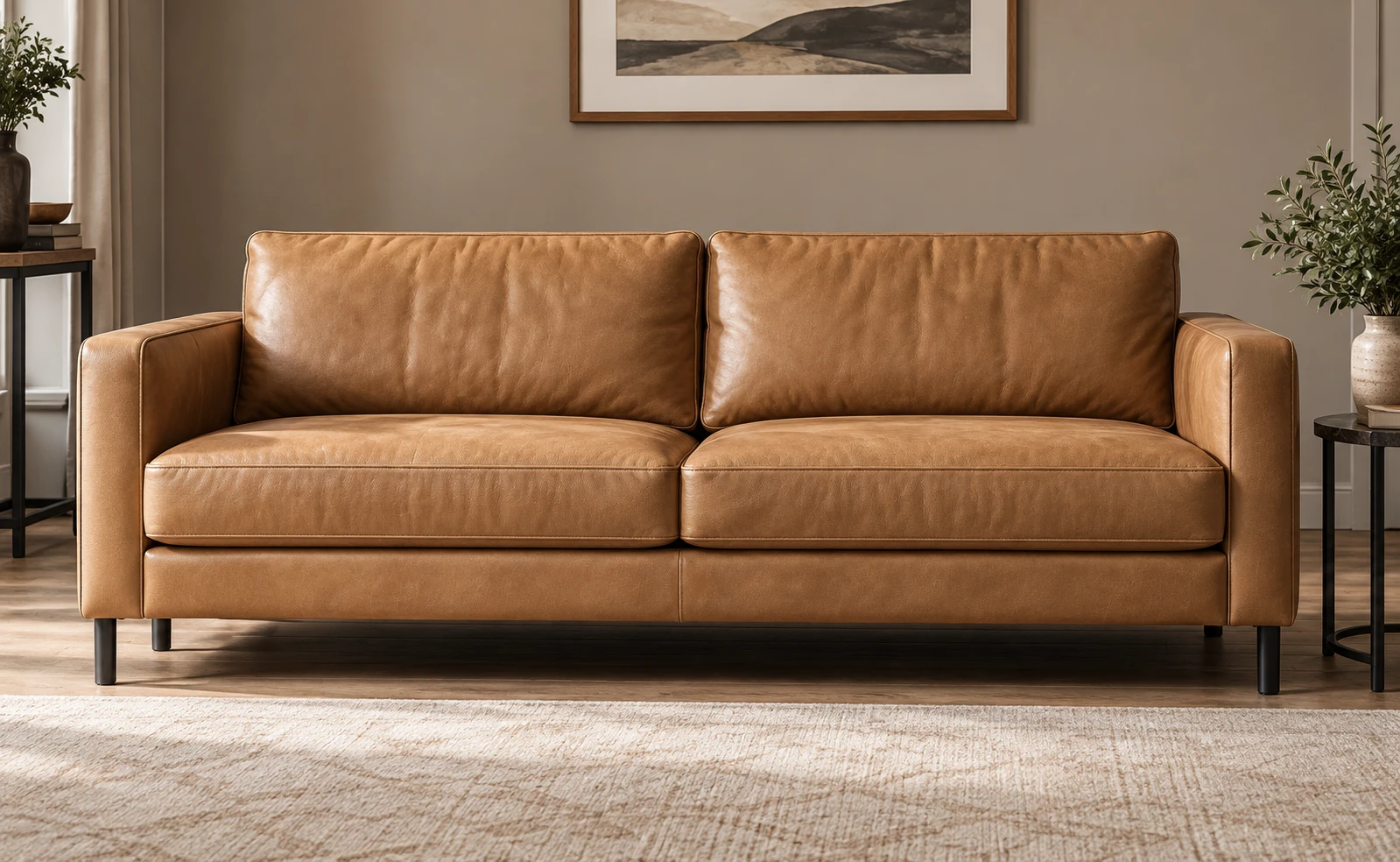
Square on, from far enough back to see all of it. We need the repaired area in the context of everything around it to judge whether it has moved or the rest has.
Tell us the date of the original repair
With the estimate or invoice number if you still have it. If you do not, the address and the approximate month are enough for us to find it.
Send it and we will come back to you
Text the photographs to 347-310-7483 or use the contact form. There is more on photographing leather in the Help Center.
Assessment
We look at it before we decide anything
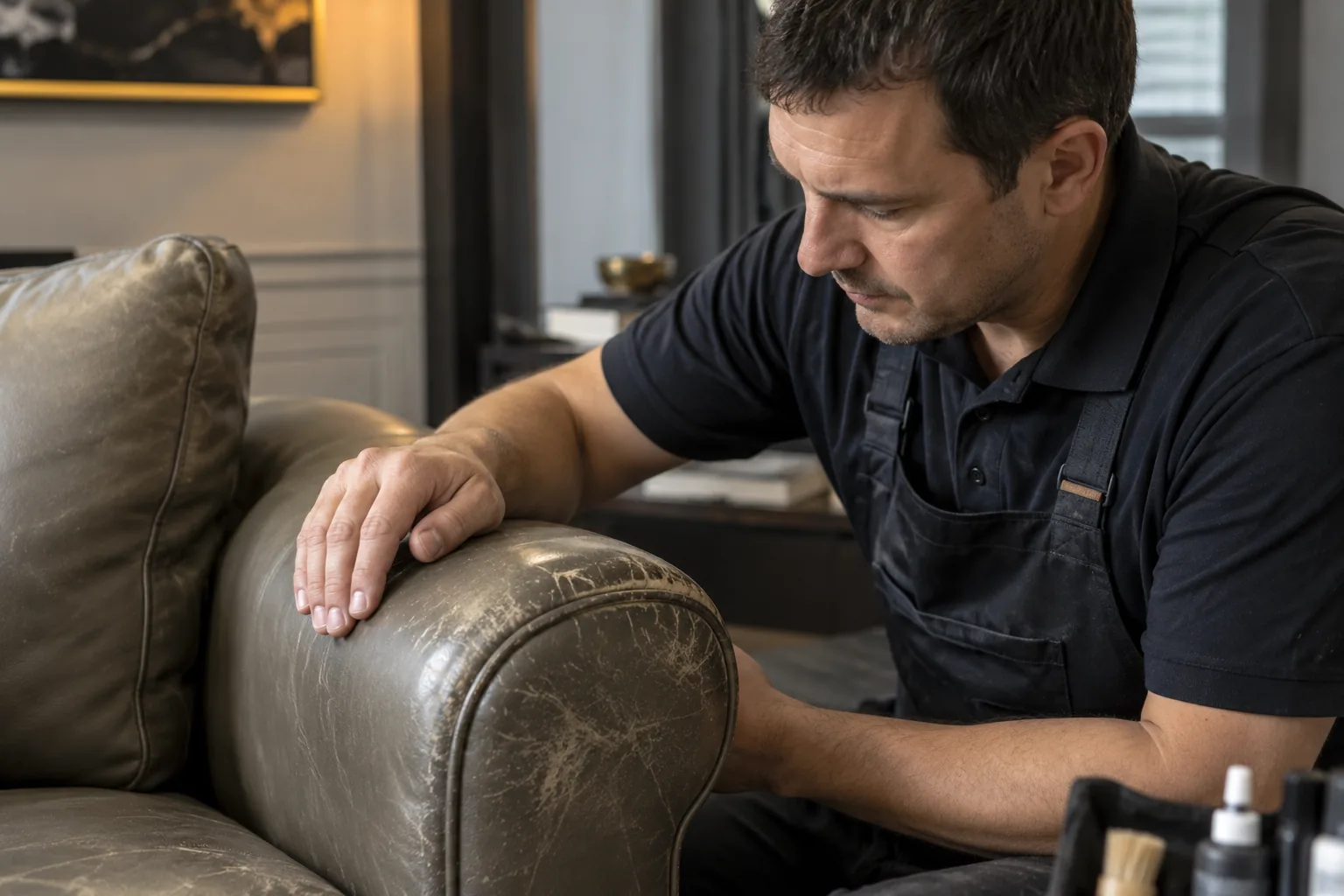
Nobody is told yes or no from a description. The piece gets seen first, in the room, in daylight.
A finish that is lifting and a finish that has been scoured with a household cleaner look similar in a photograph and are not remotely the same thing underneath. So we arrange to look at it, and we look at the whole piece rather than only the square you have photographed.
Then you get one of three answers, with the reason for it.
We redo the work
Where the repair itself failed, we put it right at no charge to you.
We adjust it
Where the repair has moved but the piece around it is sound, we bring it back into line.
We tell you it is not a warranty matter
And we say why, in writing, then quote it as new work so you can decide.
Conditions
What keeps the cover in place
Four conditions, all of them things that would damage the repair whether or not there were a leather repair warranty attached.
Let it cure before normal use
A new finish is not fully hardened when we leave. The curing time for your job is on the paperwork, and using the piece early is the most common way a good repair is spoiled.
Clean it the way we told you
Household sprays, solvents and supermarket wipes strip a topcoat. If you want a product, ask us or start with leather cleaning.
Keep it off heat and out of direct sun
A repaired panel in a south window will move color faster than the rest of the piece. Protection and conditioning both help.
Do not have the same area reworked elsewhere
Once another finish goes over ours we can no longer tell whose work failed, and the cover on that area ends.
Manufacturer Cover
Ours and the maker’s are two different things
If your furniture is still young, read this before you book anybody, including us.
Most manufacturer warranties end the moment somebody outside their network works on the piece. If yours is still inside its period, go to the retailer first. You would far rather have a replacement panel from them than an invoice from us, and we will tell you so.
Where the set is out of warranty, or where the fault is plainly handling damage rather than a defect, we will say that too and quote the work. What we ask is that you ask us before anything is touched — once a repair has been made, a manufacturer claim on that component is usually finished, and our leather repair warranty is not a substitute for one.
Questions
What we are asked about cover
Seven questions that come up on almost every job.
Does the warranty cover my whole sofa?
No. The leather repair warranty covers the area we repaired and the work we did there. The rest of the piece is not part of it, and a repair does not reset the age or condition of leather we never touched.
How long does the leather repair warranty last?
The period is written on your estimate and agreed before work starts. It varies with the work, because a full panel replacement and a blended scuff are not comparable jobs.
When does cover start?
On the day the work is completed, not the day you paid or the day we first came out to look.
What do I need to make a claim?
Photographs of the affected area in daylight, a photograph of the whole piece, and the date of the original repair. If you cannot find your paperwork we can look the job up.
Does having a repair done void my manufacturer’s warranty?
It can. Most manufacturer warranties end once someone outside their network works on the piece, so if the furniture is still inside its warranty period, go to the retailer first.
The color has shifted since the repair. Is that covered?
Color instability on the repaired area under normal indoor use is covered. Fading across a whole piece sitting in direct sun is not, because that is the leather ageing rather than our work failing.
Do you warrant work on bonded or faux leather?
We warrant our own repair on it, but not the untreated material around that repair. Bonded and faux surfaces fail as a material, and no repair stops the rest of the panel delaminating.
Not Sure
If you are not certain it is a warranty matter, ask anyway
Send the photographs and the date of the repair, and we will tell you whether the leather repair warranty covers it. We would rather look at something that turns out to be ordinary wear than have you live with a repair you think has failed.