
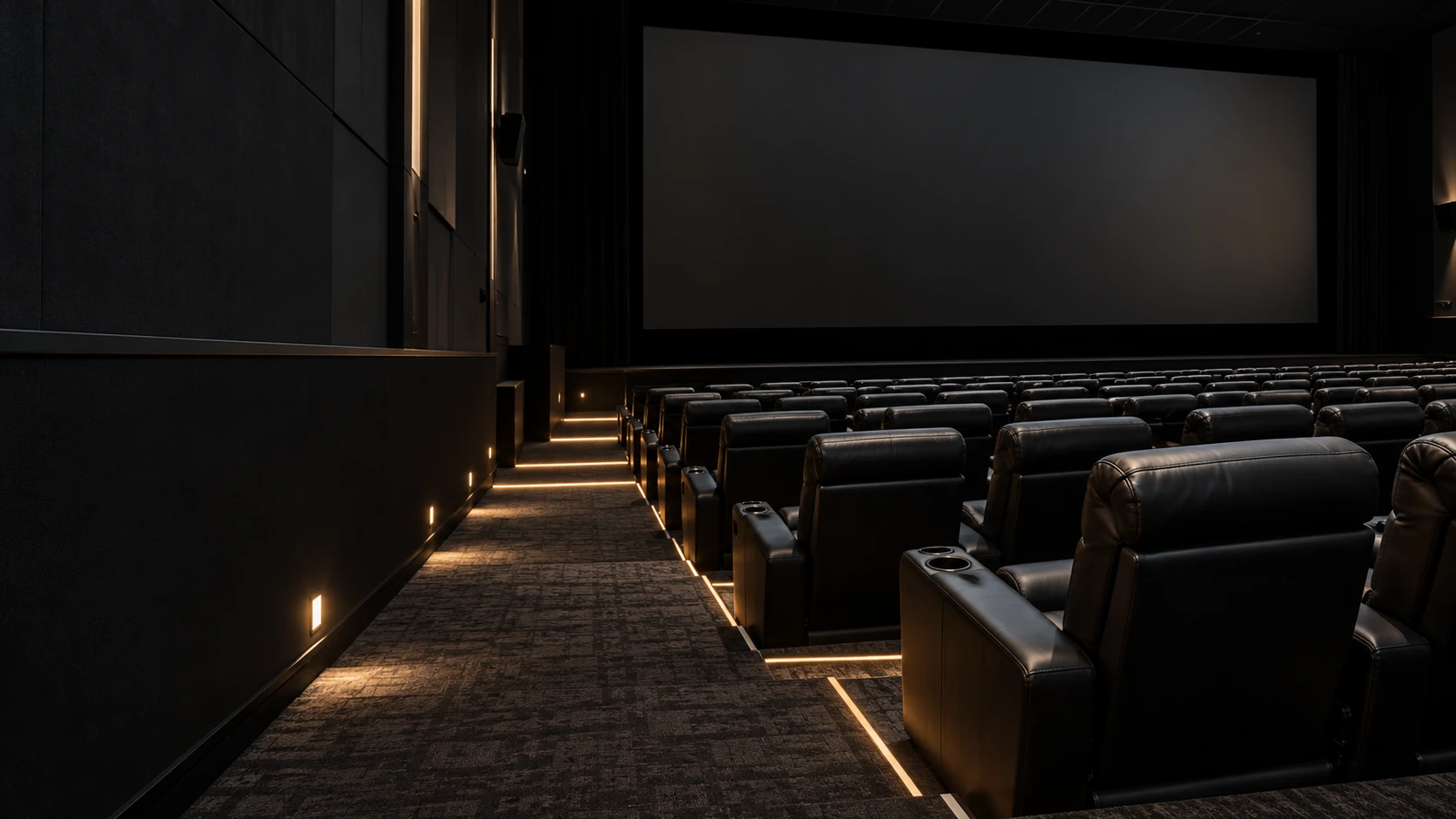
A recliner is three shapes wearing one cover.
Movie theater seat reupholstery in New York: cinema recliners recovered a screen at a time, with covers cut to fit the seat upright, reclined and with the legrest out.
Every position puts the strain somewhere else
A fixed house seat wears in one place. A recliner wears in three, because the cover is stretched over a different shape each time. That is why movie theater seat reupholstery is patterned from the seat in motion rather than from the seat at rest — the opposite of the way fixed theater seating or a home theater recliner is cut.

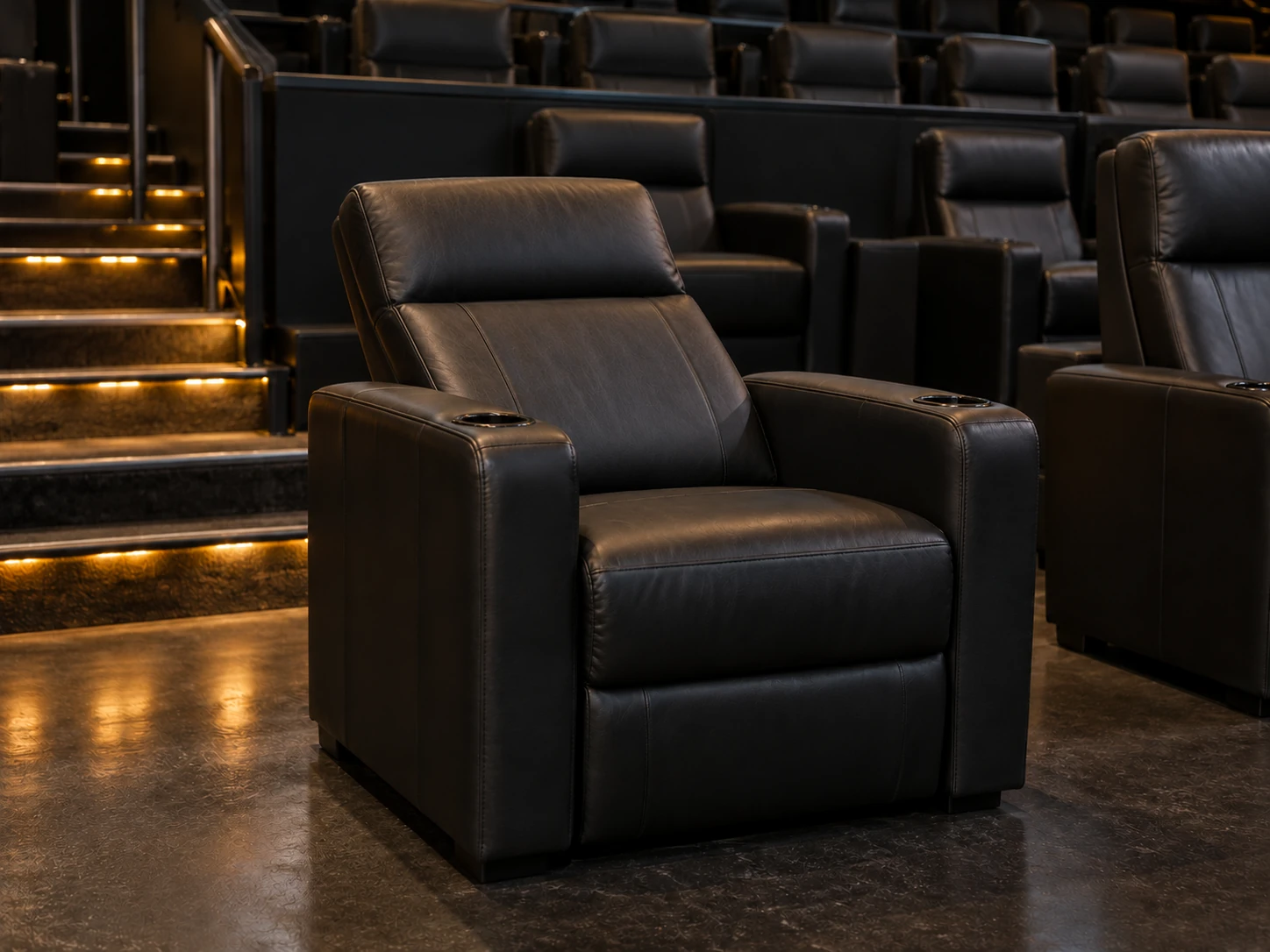
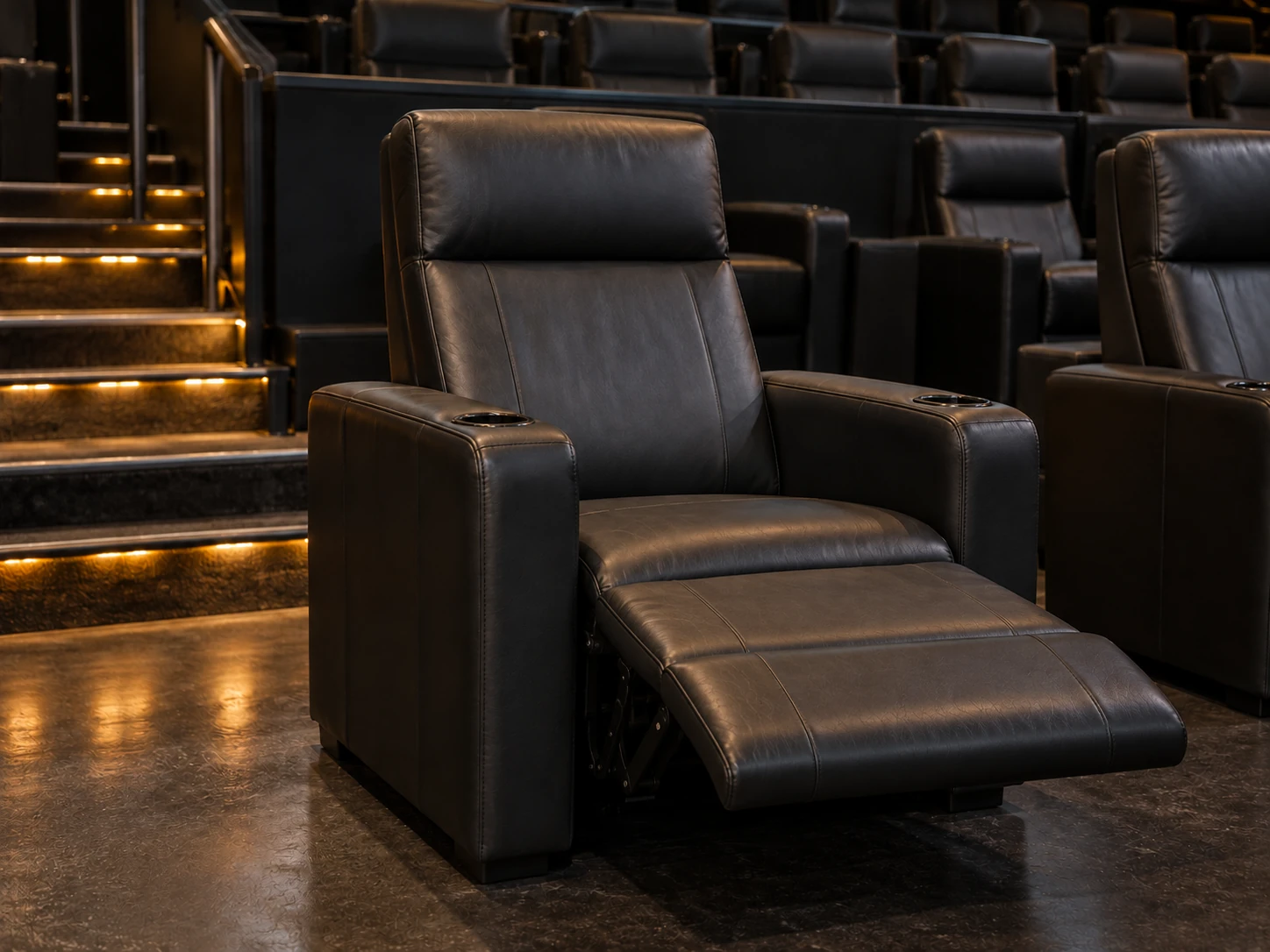
Four places the cloth moves every show
Every movie theater seat reupholstery quote starts by measuring these four points. If a cover is going to fail early, it fails at one of them.


Four kinds of screen, one kind of seat
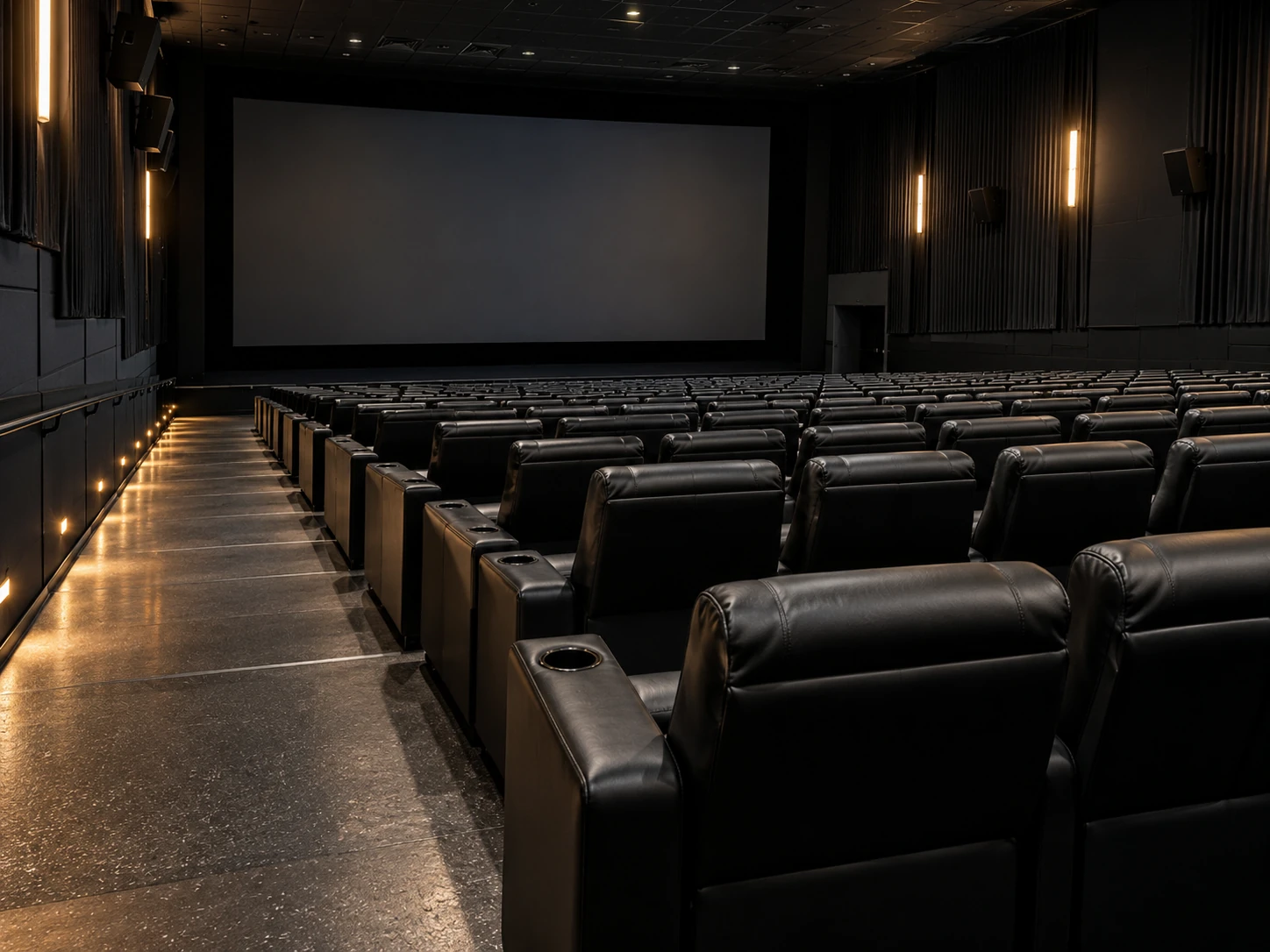
Multiplex, arthouse, dine-in and private screening rooms all run recliners now — the recline refit the exhibition industry, represented by Cinema United, spent the last decade on. All of them are quoted per seat off a walk of the screen, and larger counts run as a bulk project.


Ten faults, and most of them start at a moving edge
A single fault is usually a panel repair. When a screen shows five or six of these across the rows, recovering the set costs less than chasing them one at a time.

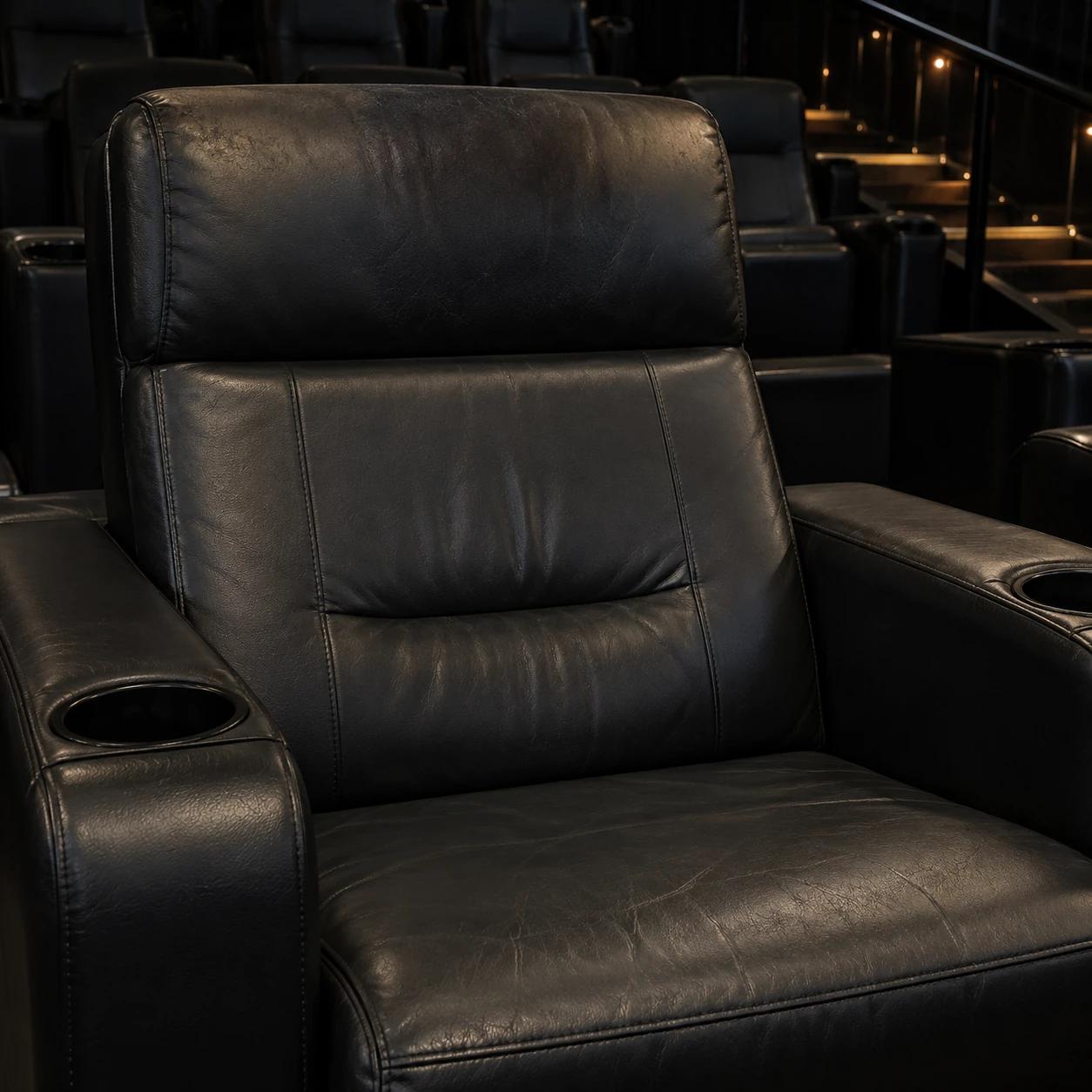
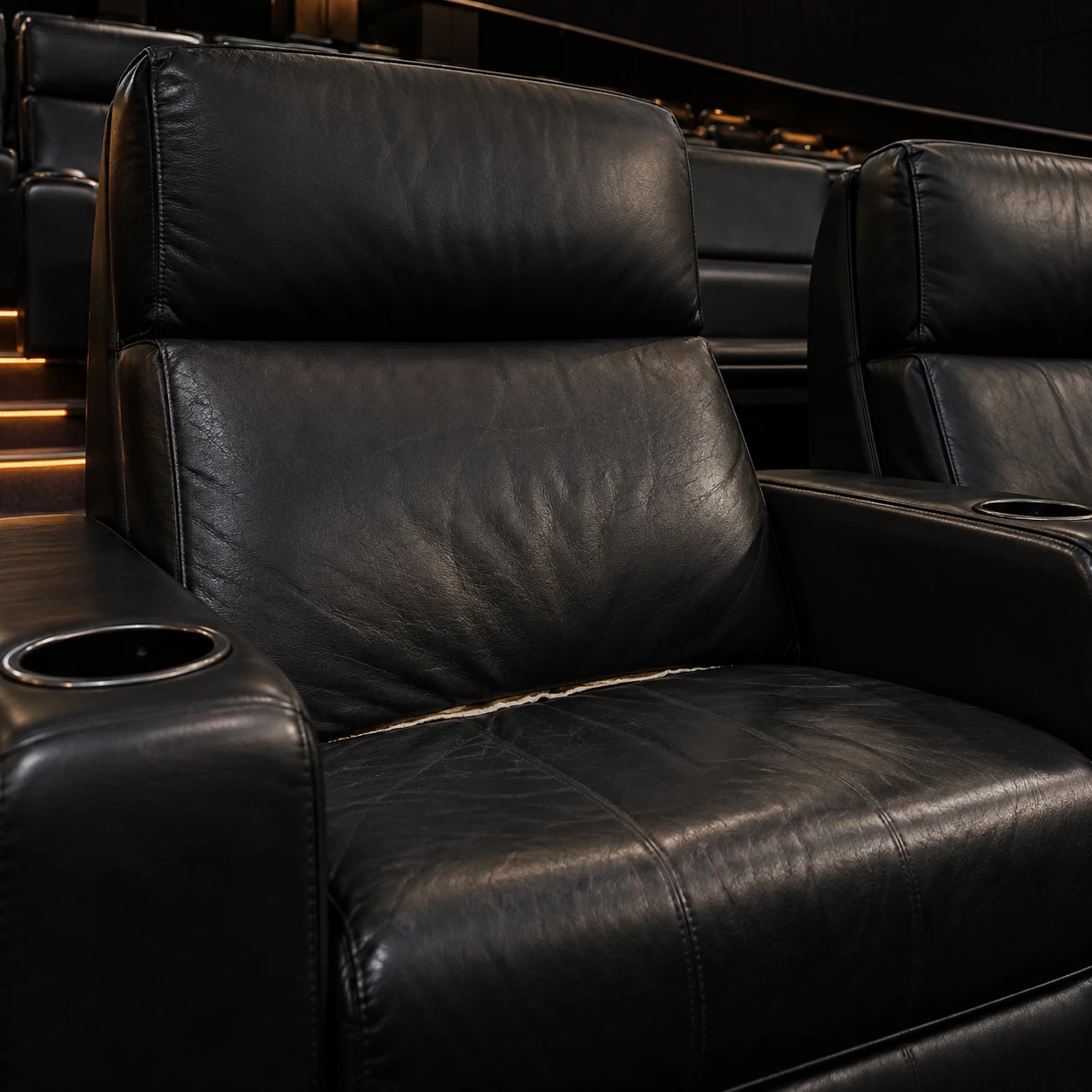


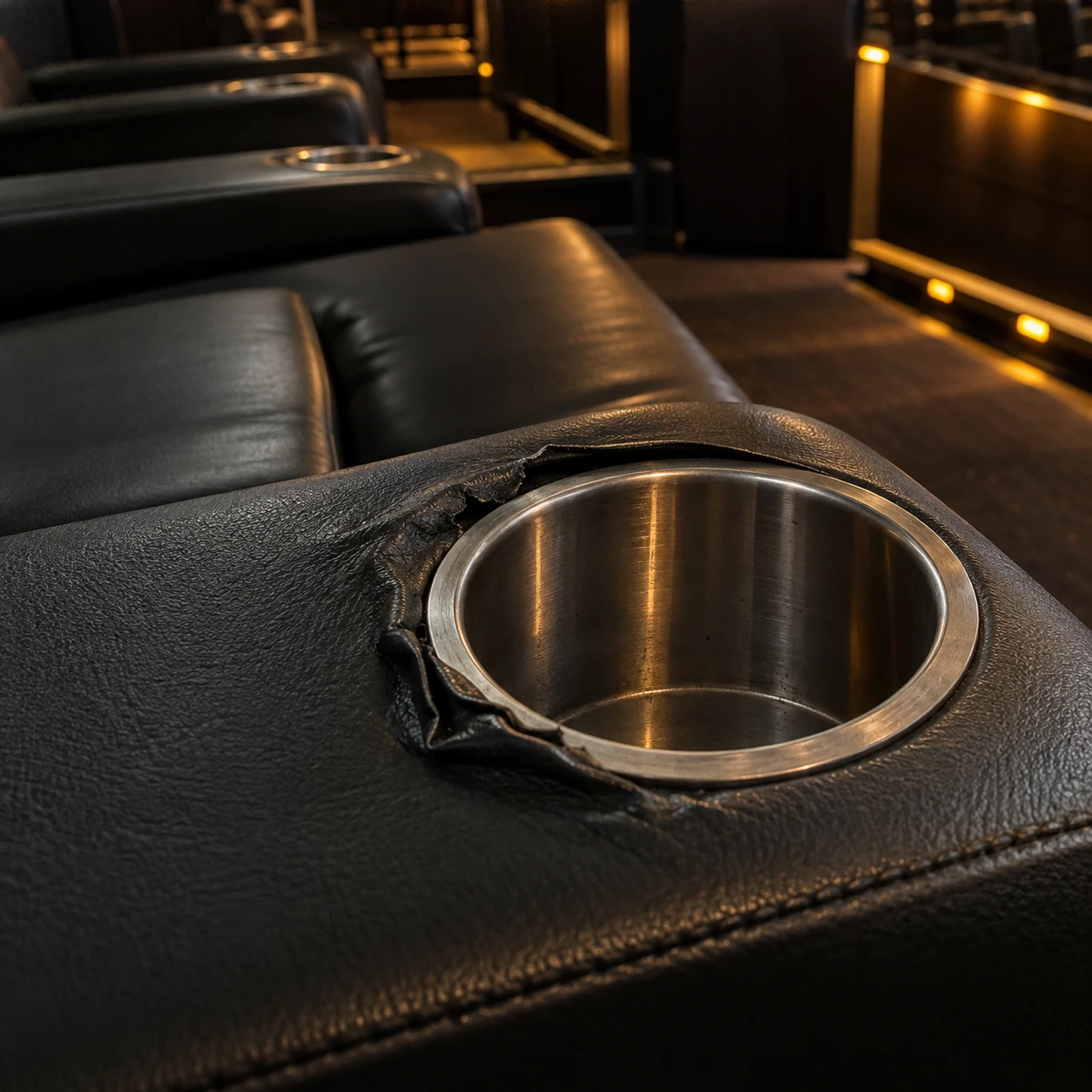


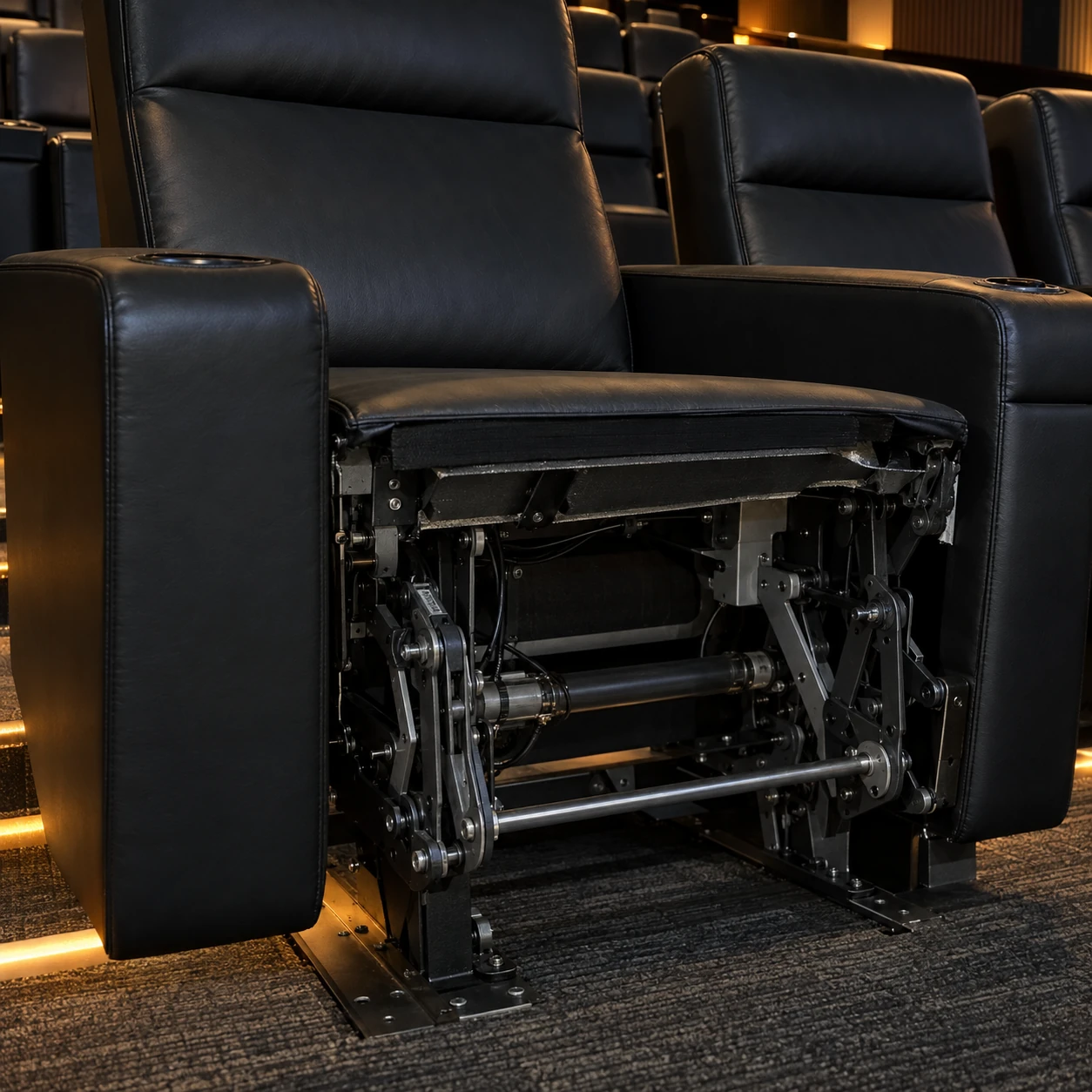
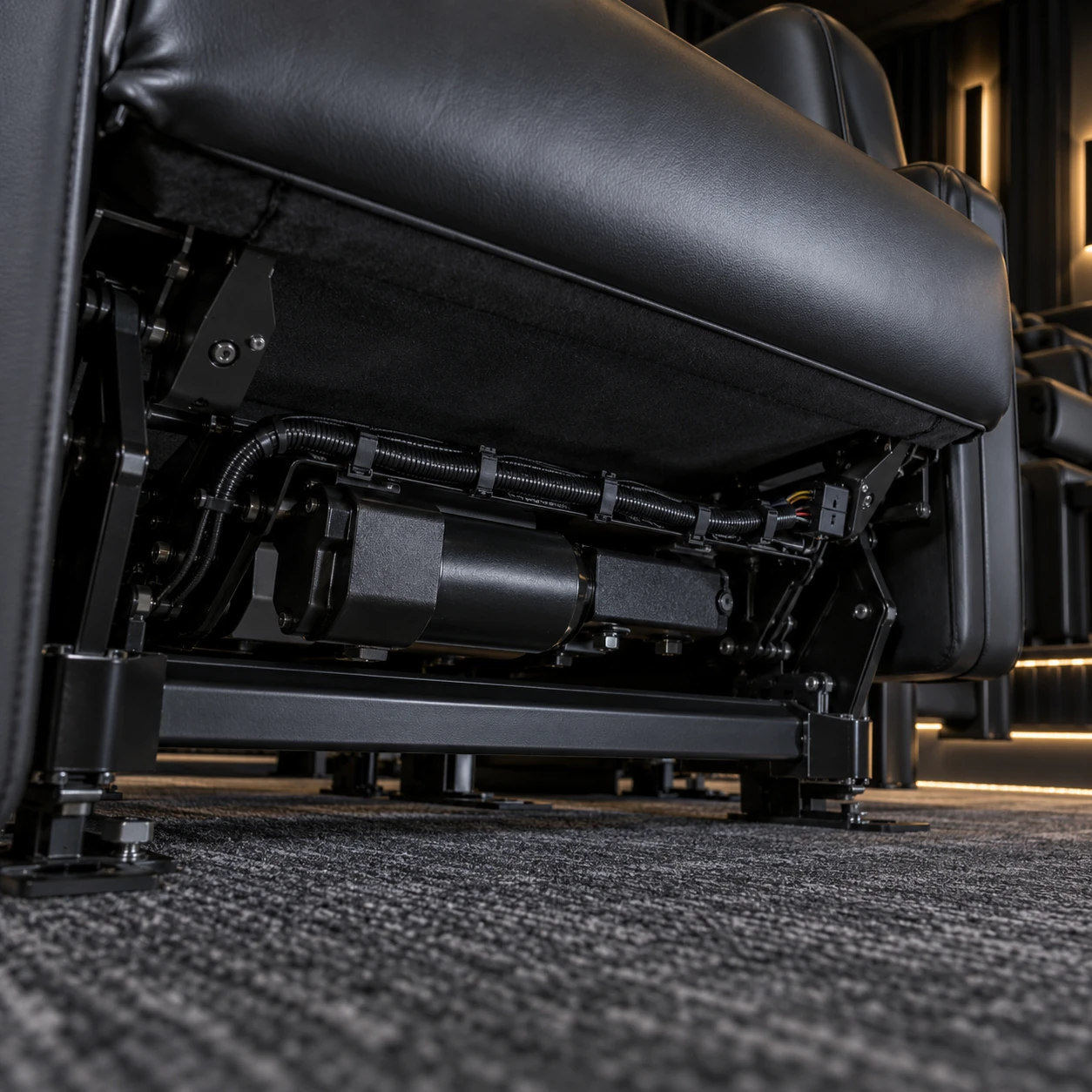
The mechanism is not ours. The cover is.
Movie theater seat reupholstery stops at the soft build-up. Frames, mechanisms, motors and wiring stay exactly as they are — the same boundary we hold on every fixed seating job.

Cover chosen for the way the seat moves
A cloth that behaves on a static chair can crack on a break line inside a year, so every movie theater seat reupholstery sample is flexed before it is specified, and recorded the way all our material matching is.


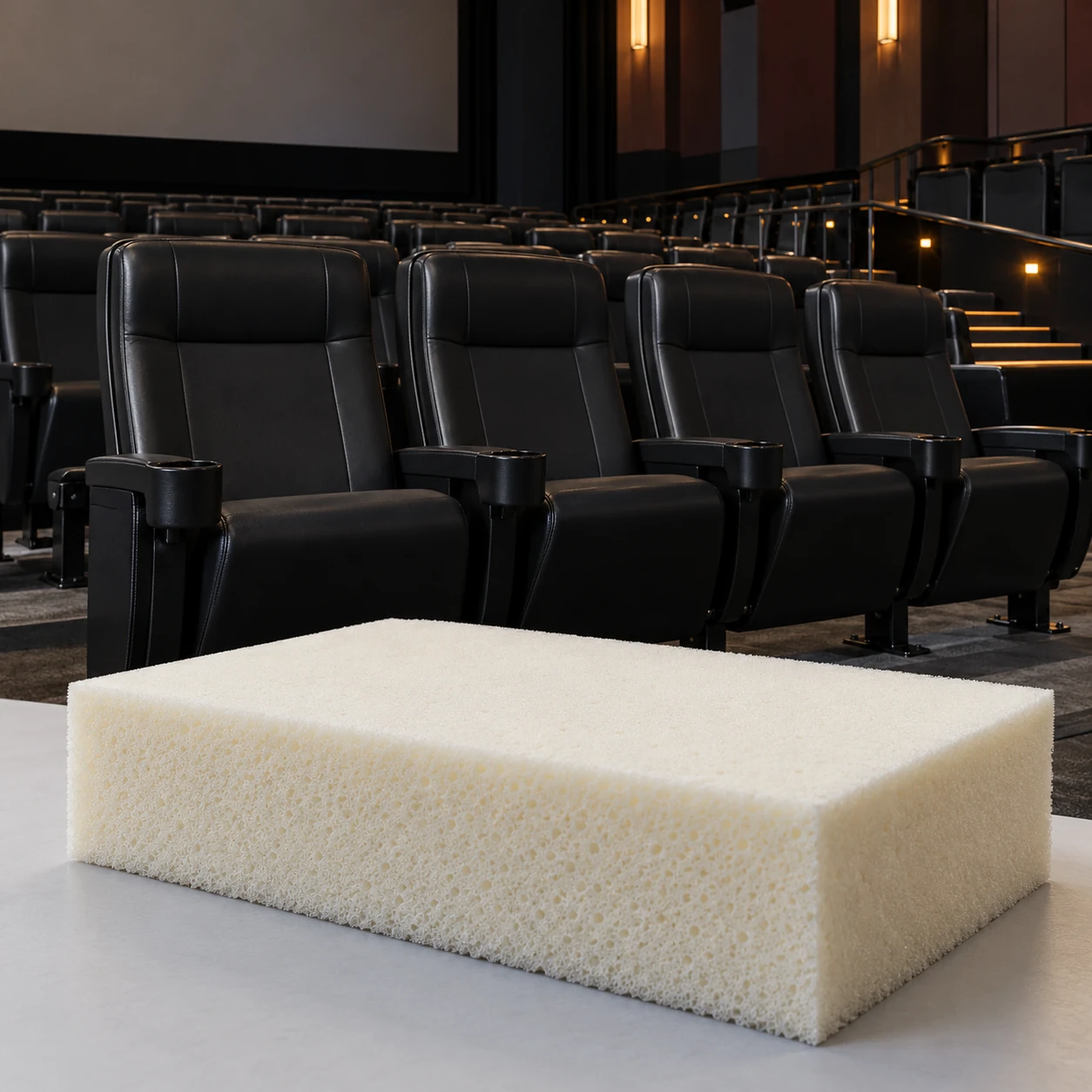

Off the floor, rebuilt, back in its own number
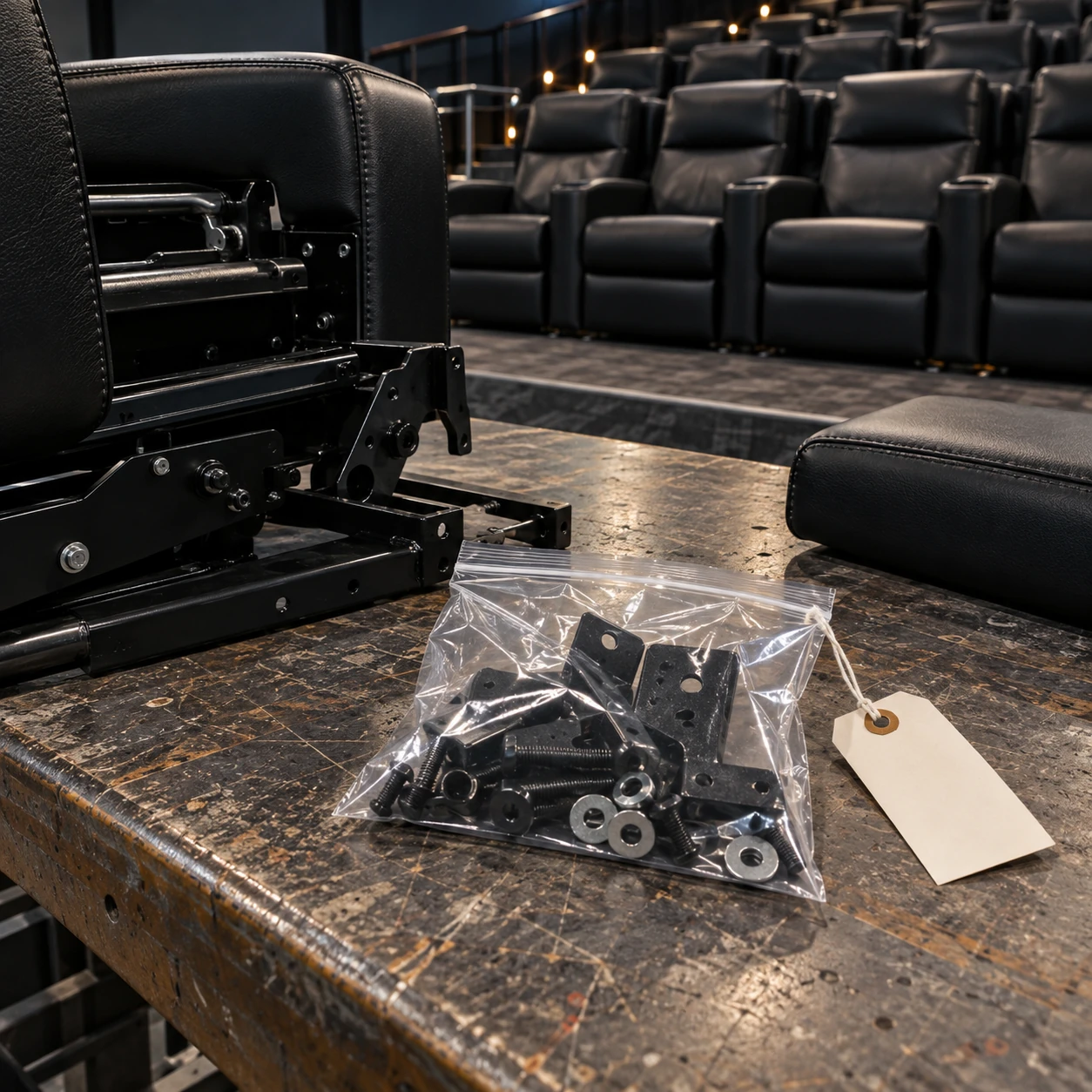
Movie theater seat reupholstery runs in six moves, and seats are tagged before anything is unbolted. Most of it happens on overnight calls, or under a service contract, while the rest of the building trades.


The fit is checked open, not closed
A cover that looks right upright can bind at full recline. Every seat is cycled through all three positions before it goes back on the floor, and again once it is bolted down — the sign-off step in our project process.
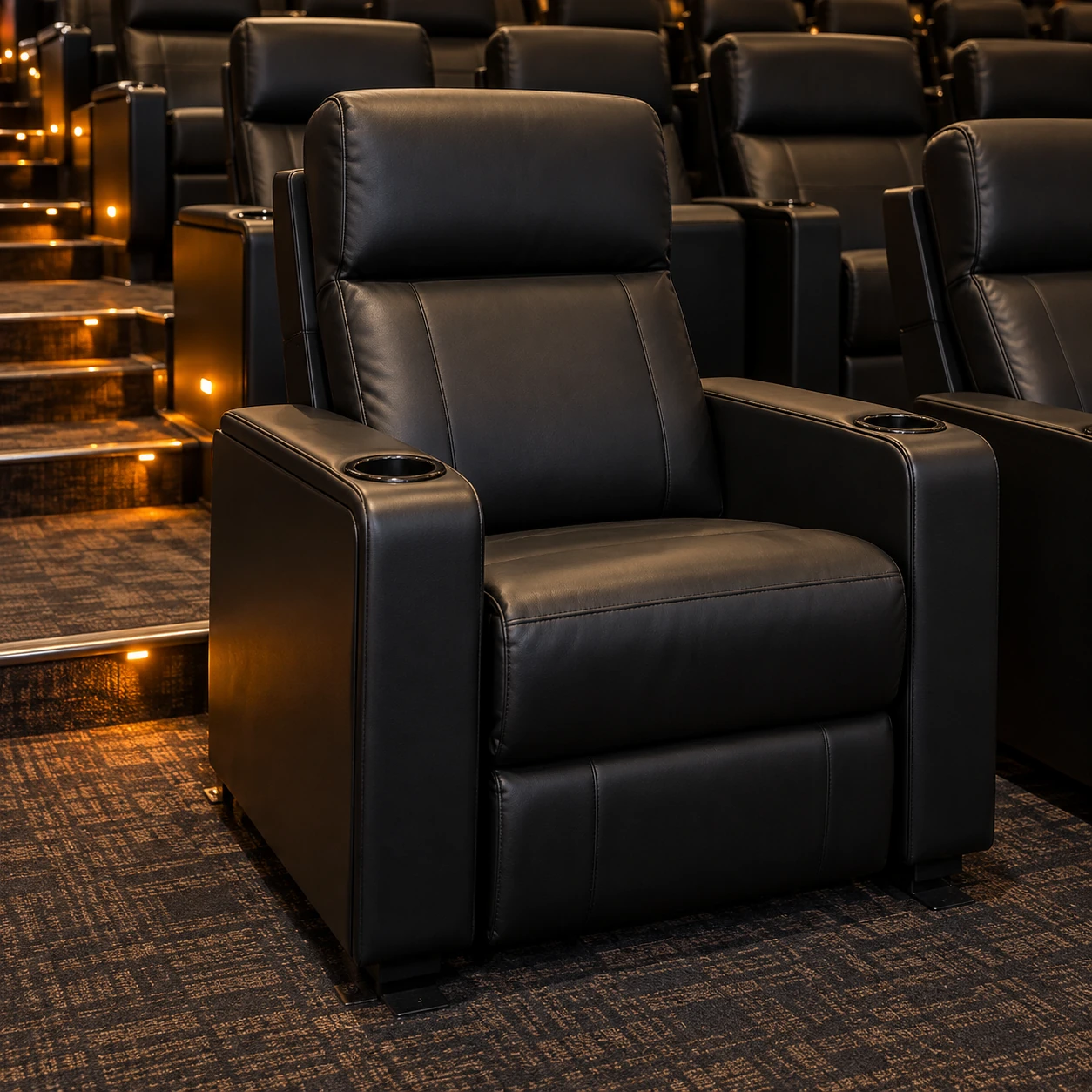


Three seats, photographed the same way twice
Each pair is one seat before and after, in the same position and the same light. More of them on the before and after page.
 Before
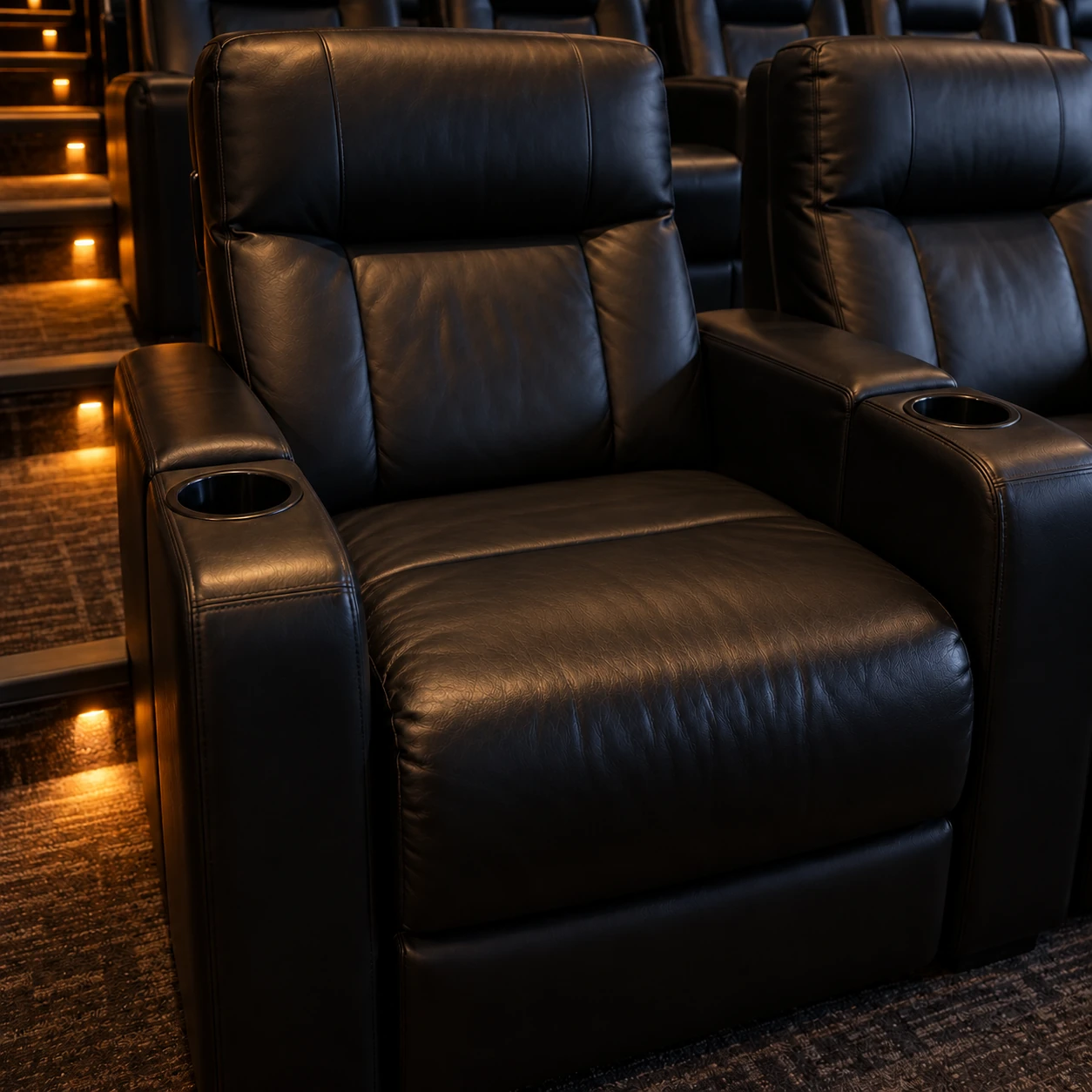 After
After Before
 After
After Before
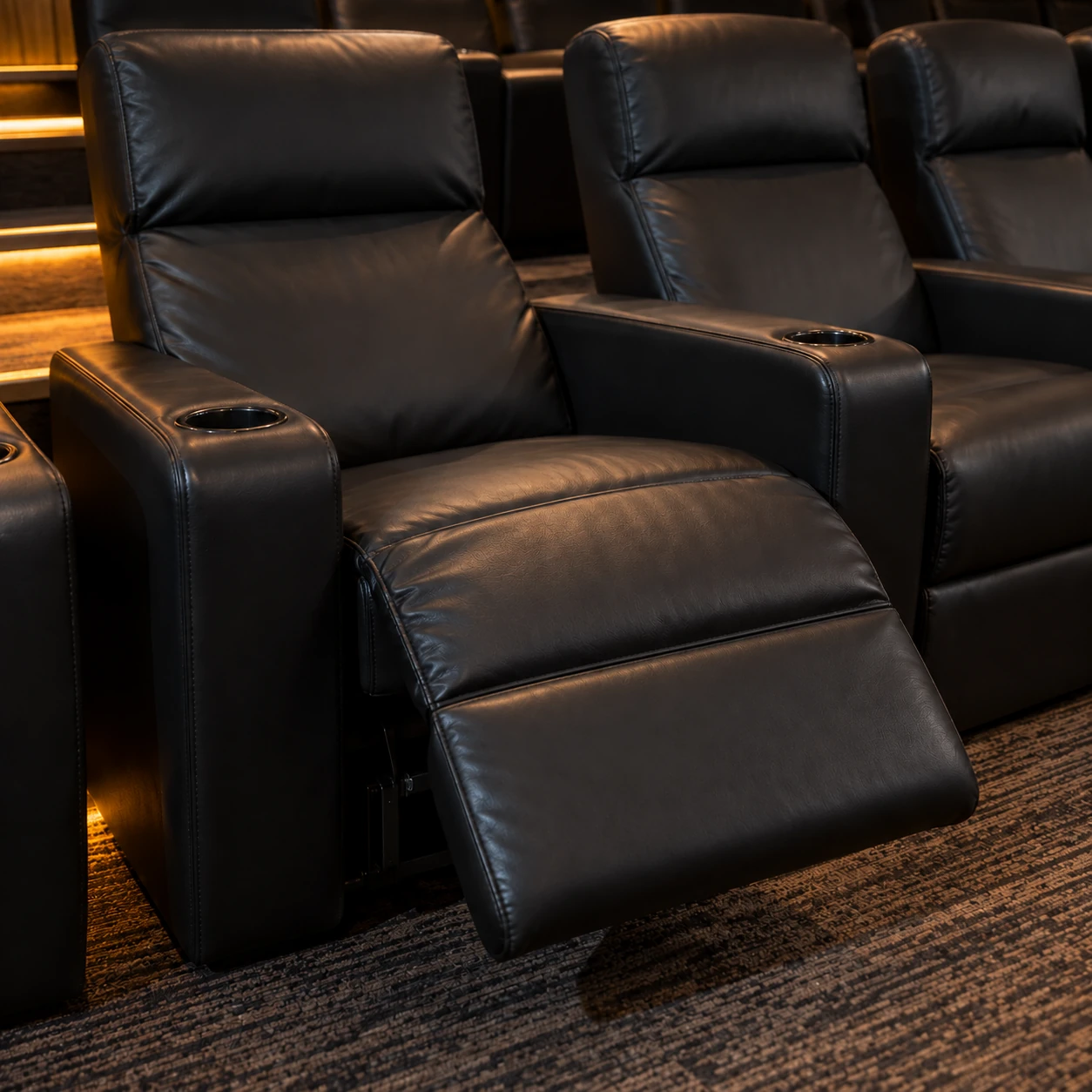 After
AfterThree houses, three windows
Three movie theater seat reupholstery programmes, each recovered as a set so the screen reads as one house rather than as two generations of seat. The same approach we take to an event venue or a lounge.


What cinema operators ask us
Ask about one screen before you ask about the building, or start with a free estimate. Call (347) 310-7483.
How is movie theater seat reupholstery different from a fixed theater seat?
A cinema seat moves. The cover has to fit upright, reclined and with the legrest out, and the panels that travel over the break line take strain a fixed seat never sees. We cut for the seat in every position, not for the one it happens to be in on the bench.
Do you touch the recline mechanism or the motor?
No. Frames, mechanisms, motors and wiring stay as they are and stay yours. Only the soft build-up comes off. If a mechanism is failing we tell you, but that is the manufacturer's part, not ours.
Can you work around showtimes?
Yes. An auditorium comes out of service between programmes or overnight, and the rest of the building keeps selling. Most houses release one screen at a time.
Will a recovered seat match the ones we keep?
Covers are cut from one batch per house and checked against a seat from your own auditorium under its own lights. Where an exact match is not possible we say so before anything is cut.
Do you do one seat, or only whole screens?
Both. A single damaged panel is usually a repair rather than a recover. A screen that is wearing evenly is recovered as one set so the house reads as one house.
How long does a screen take?
A small screening room is a night or two. A full multiplex auditorium is planned as a programme against your quietest week and quoted per seat.

Tell us which house comes out first.
One walk of a screen gives you a seat-by-seat list, a price per seat for movie theater seat reupholstery, and the number of nights it takes. Then you decide the order the screens come out in.