
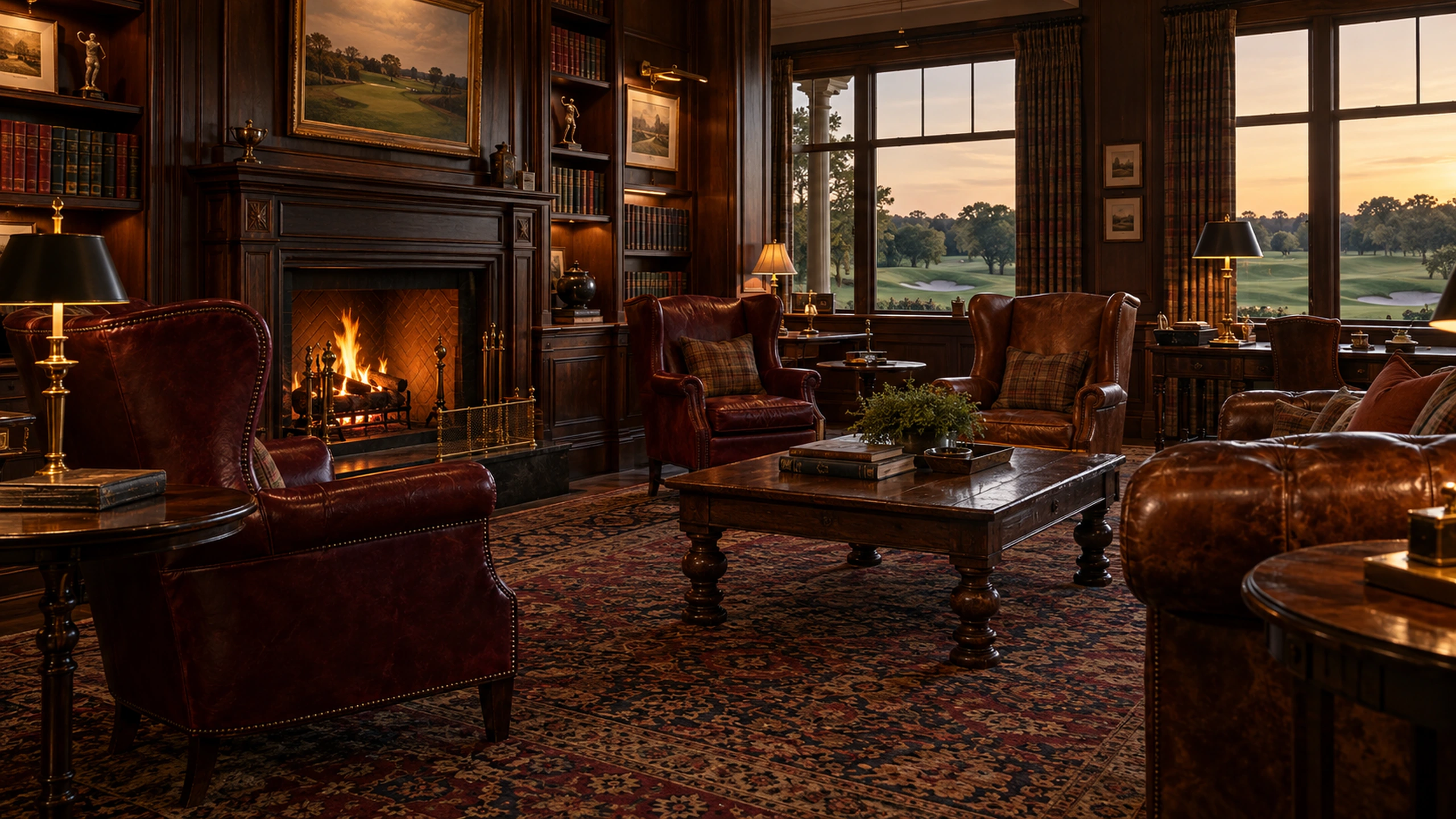
The repair has to match the wear, not the original.
Club furniture has been darkening in the same rooms for decades. A patch finished like the day it arrived stands out more than the damage did.
Five faults, and none of them need a new chair.
Country club furniture repair is nearly always one of these, on a frame that will outlast everyone in the room.
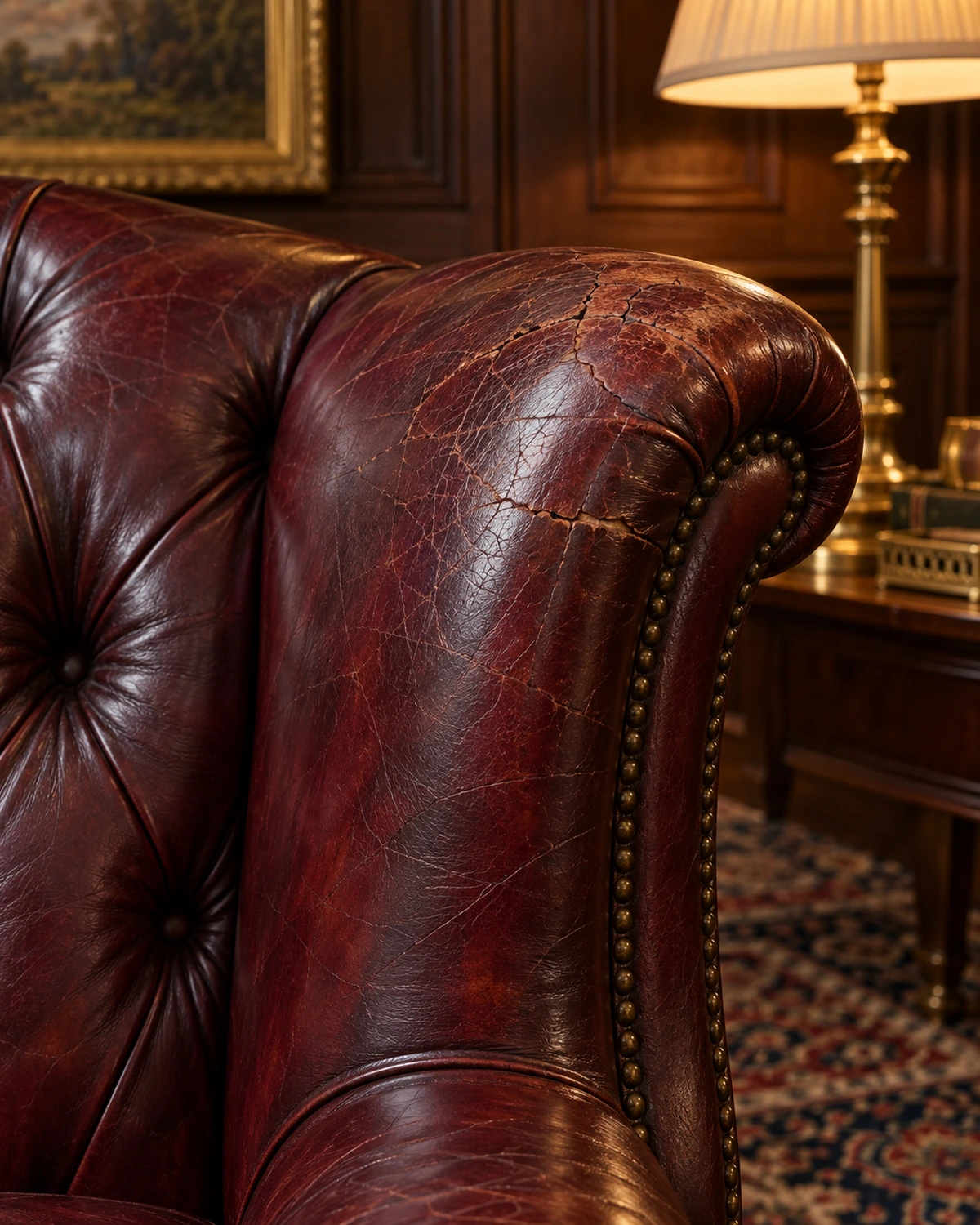
The arm crown
Cracks open where hands land, on the roll everyone grips.
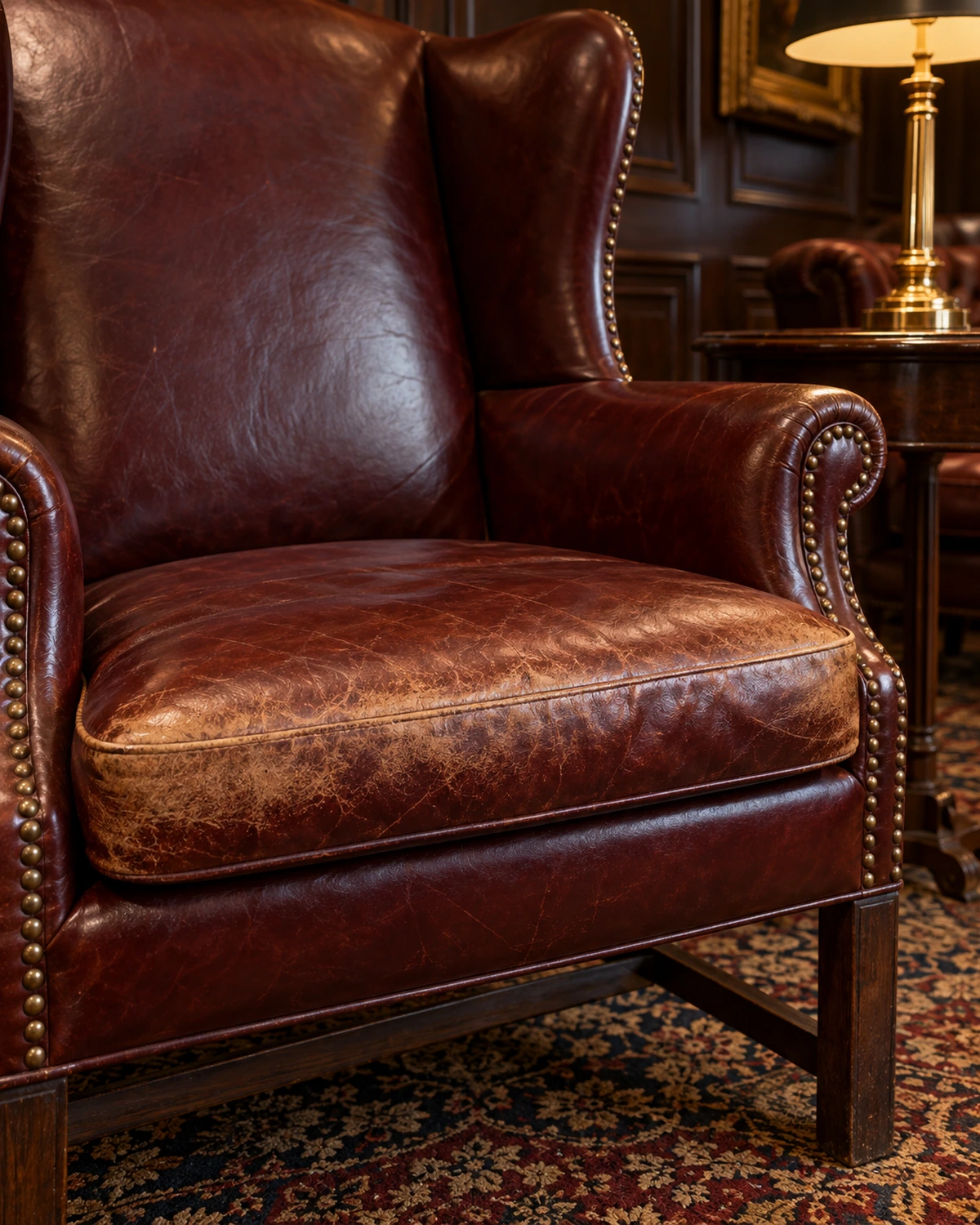
The seat front
Pale where members slide forward to stand.
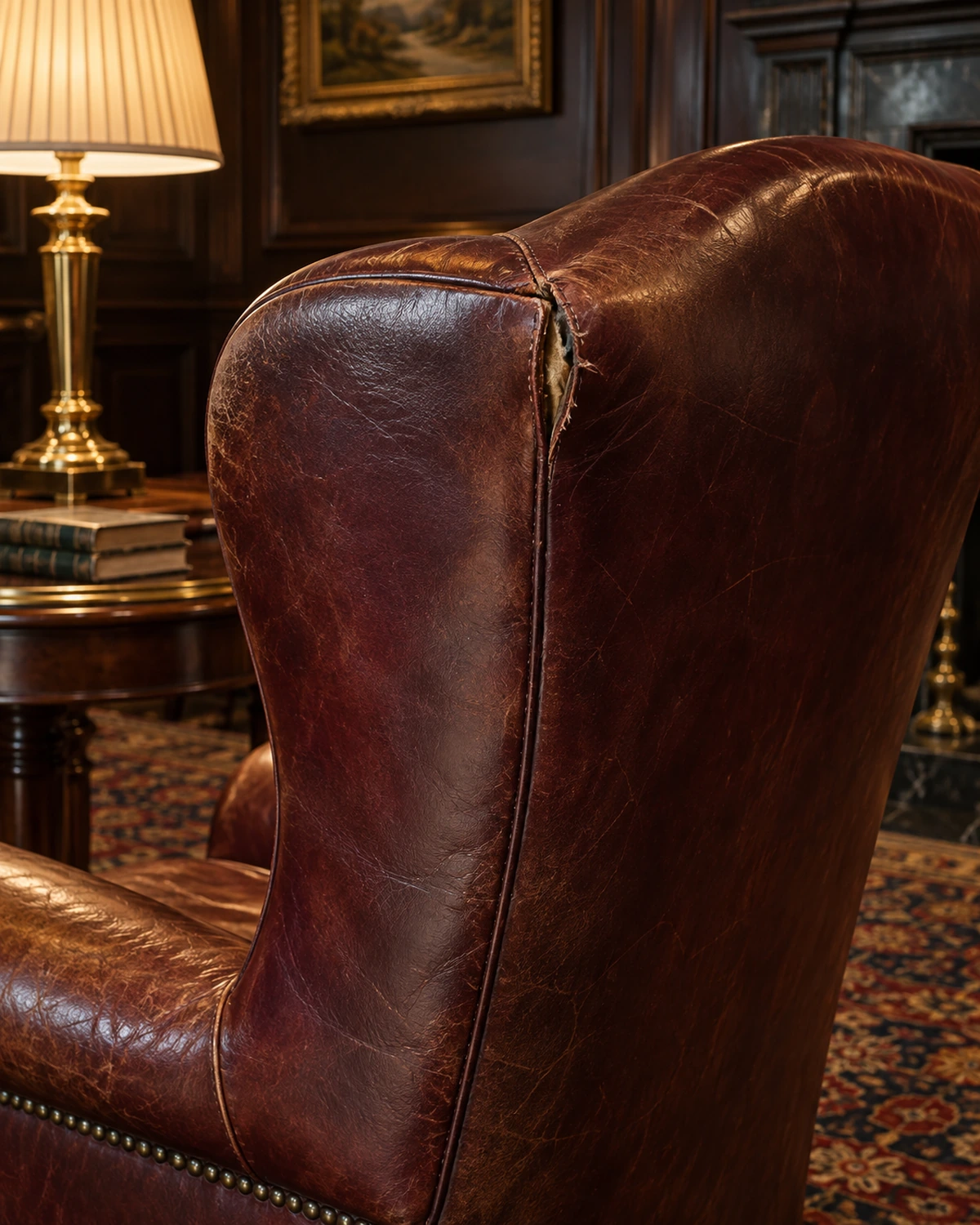
The back seam
Opens under years of leaning, usually at one end first.
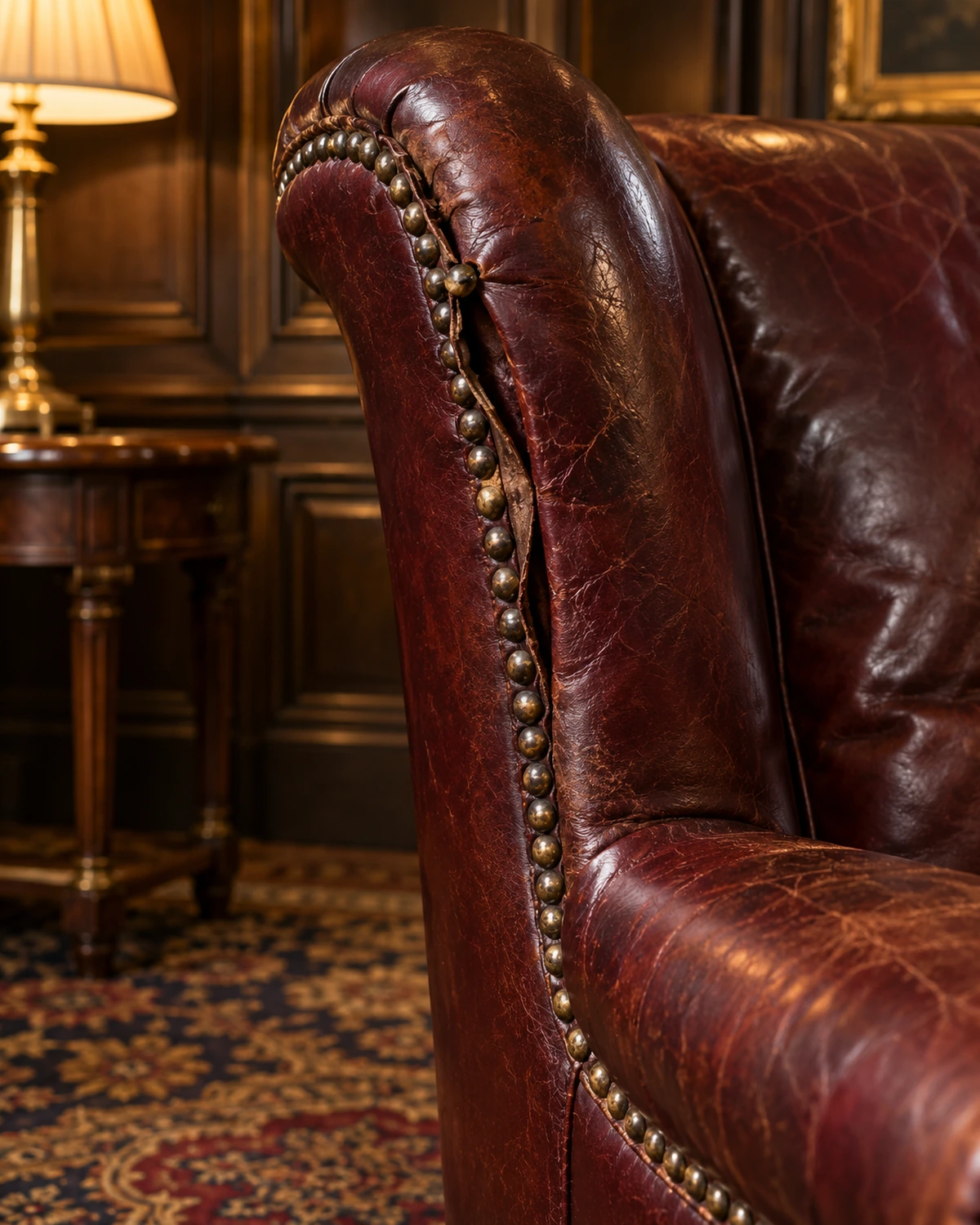
The nailhead line
Tacks work loose and the leather lifts behind them.
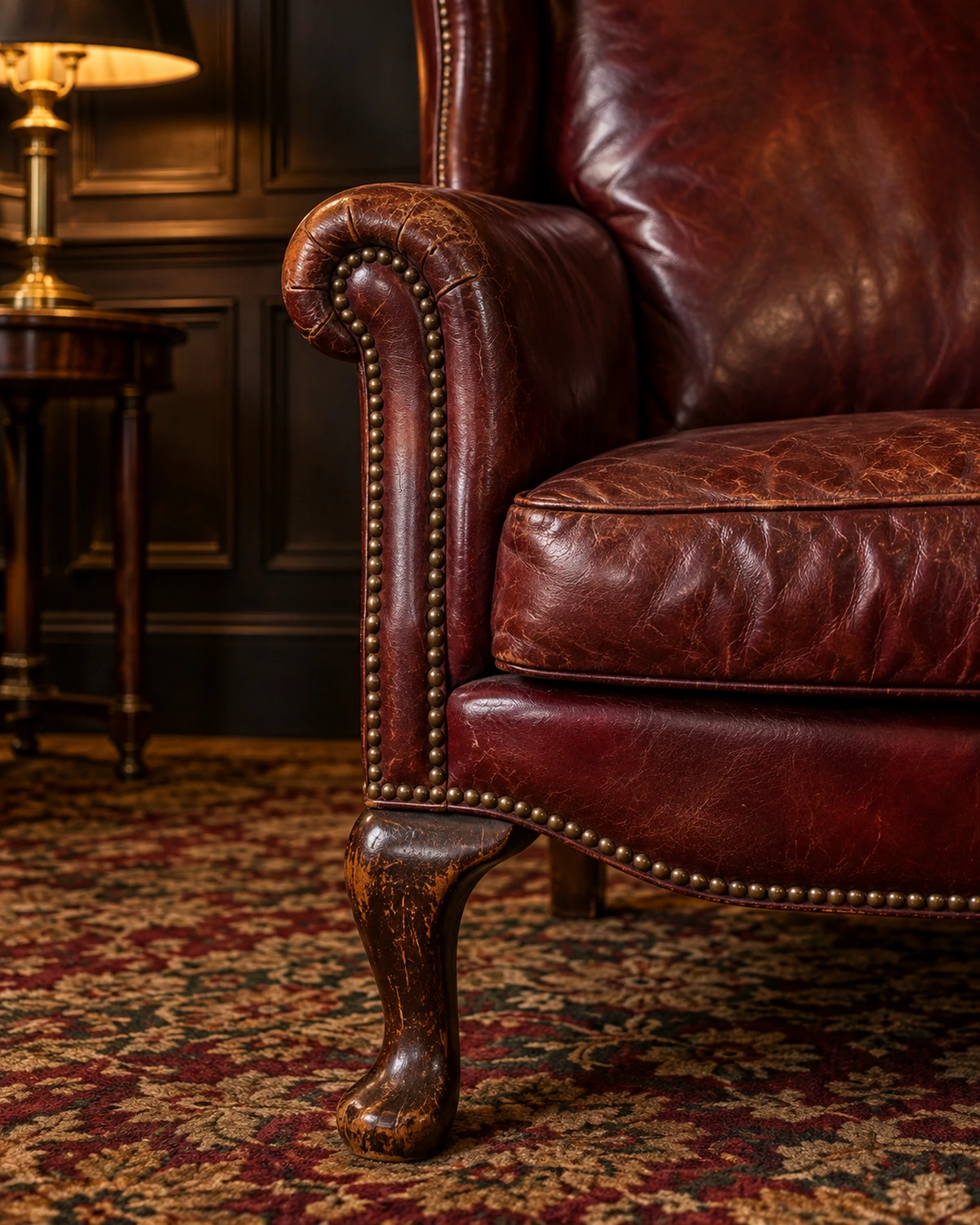
The show wood
Legs and arm caps scuffed by vacuums and shoes.
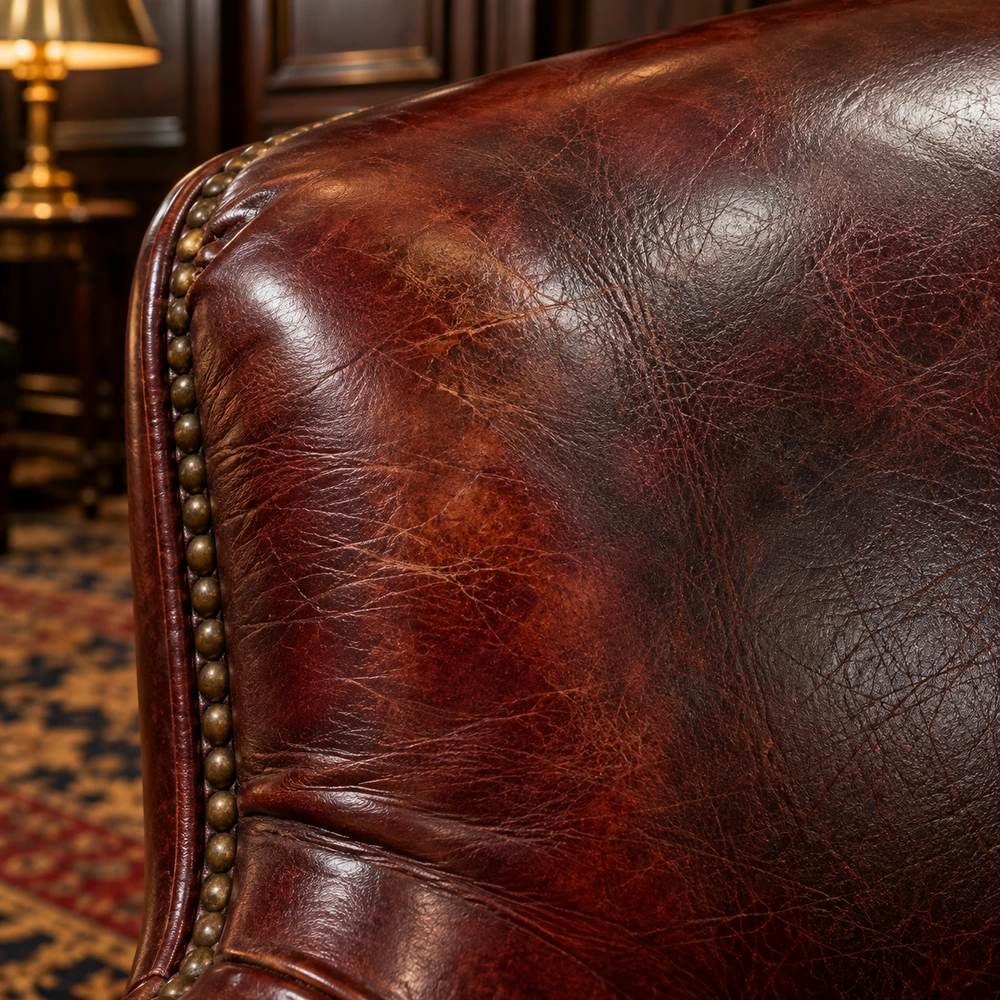

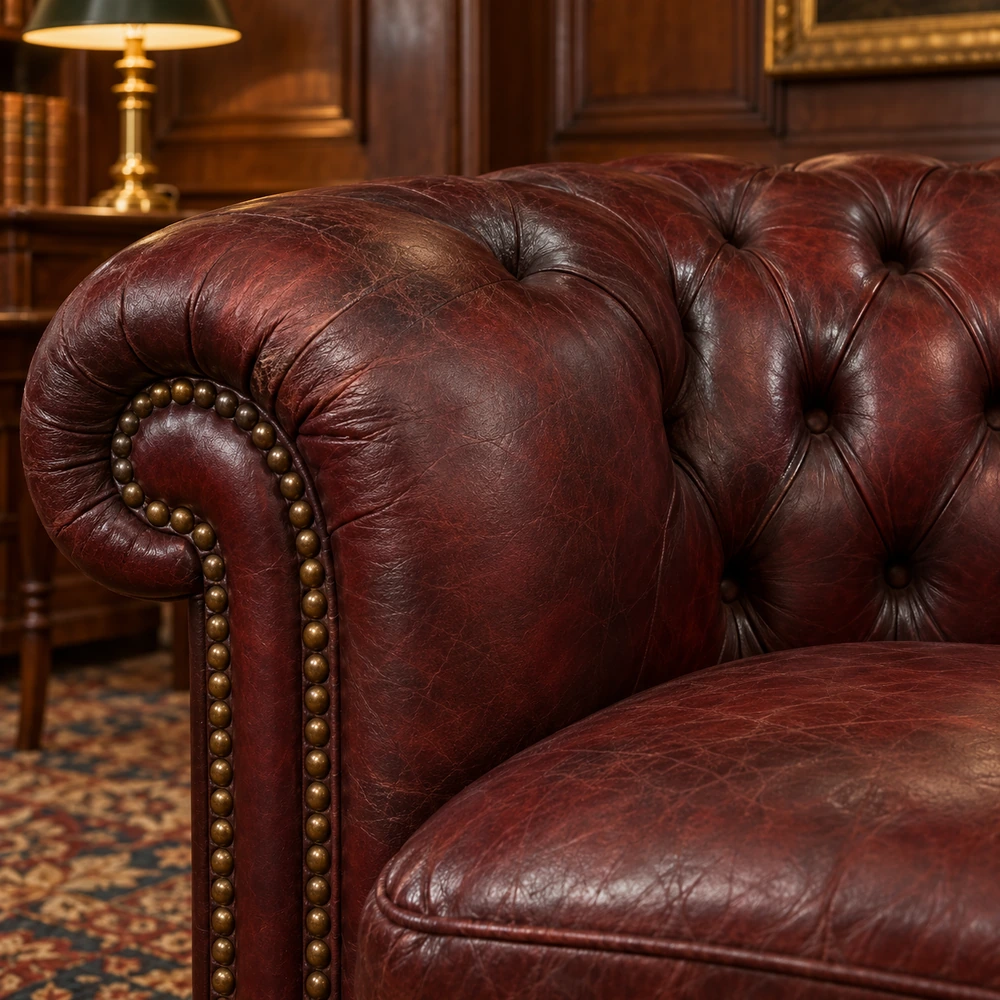
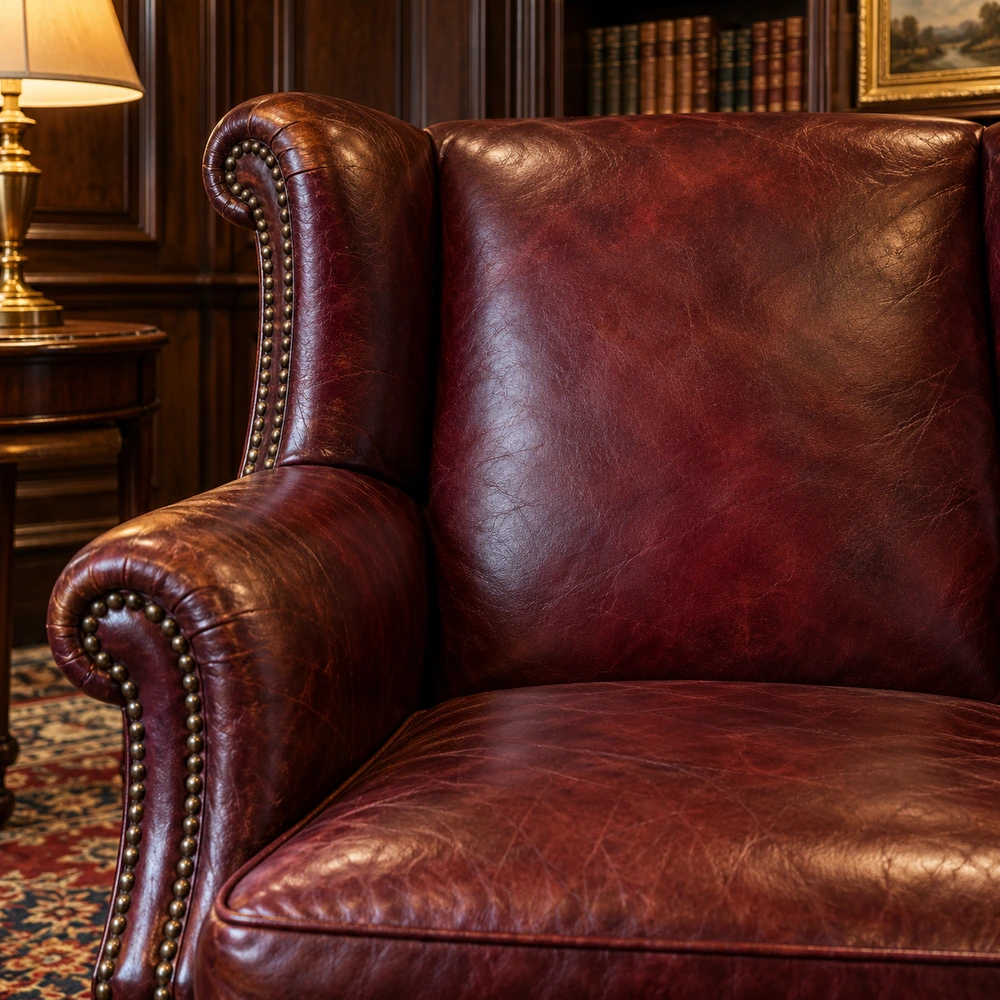
An old chair is not one color.
A club chair that has sat by the same window for years carries several tones in a single panel, and a sheen that has gone flat where people touch it.
- Color is built in layers, with the variation left in, not sprayed flat
- Sheen is knocked back to the level of the surface beside it
- The edge of the repair is feathered into the panel, never stopped at a line
- Match is read in the room's own light, and checked from where members sit
Where a whole piece has gone dull, that is restoration rather than repair.
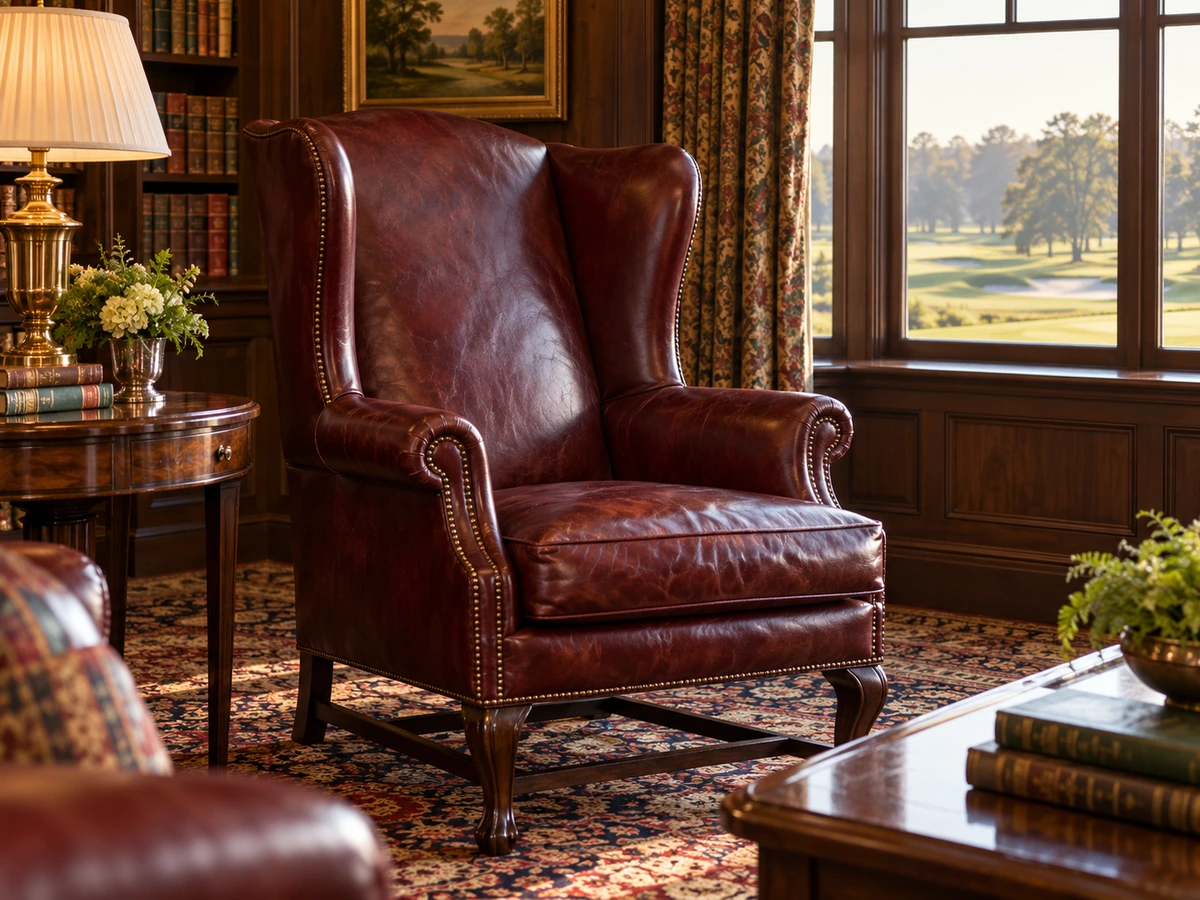
A wingback back in the reading room by morning.
The arm had cracked through along the crown. The rest of the chair was exactly as members like it.
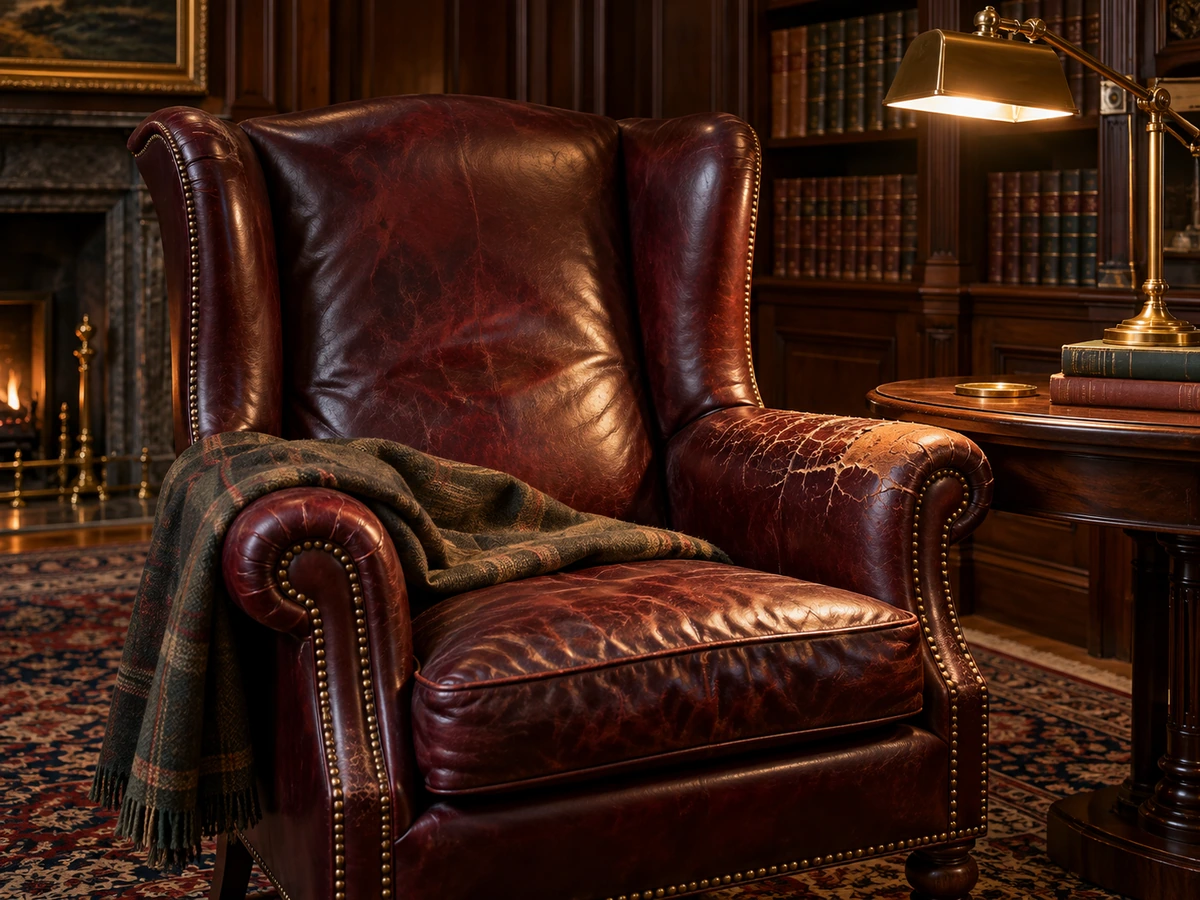
Read the chair before touching it
Tones noted along the arm, back and seat, and the sheen checked where hands have polished it.
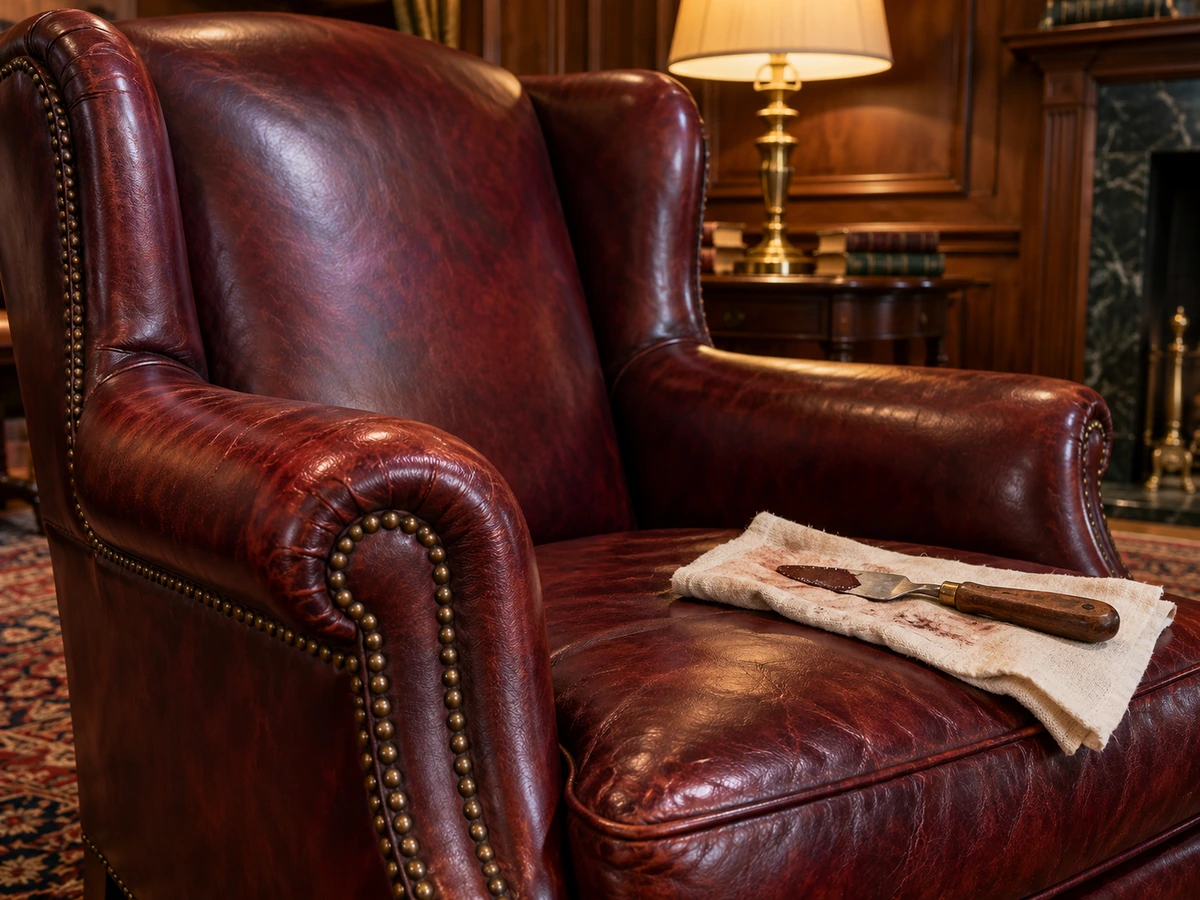
Clean, then fill and grain
Cracks are filled flexible and grained to the surrounding hide, so the texture carries through.
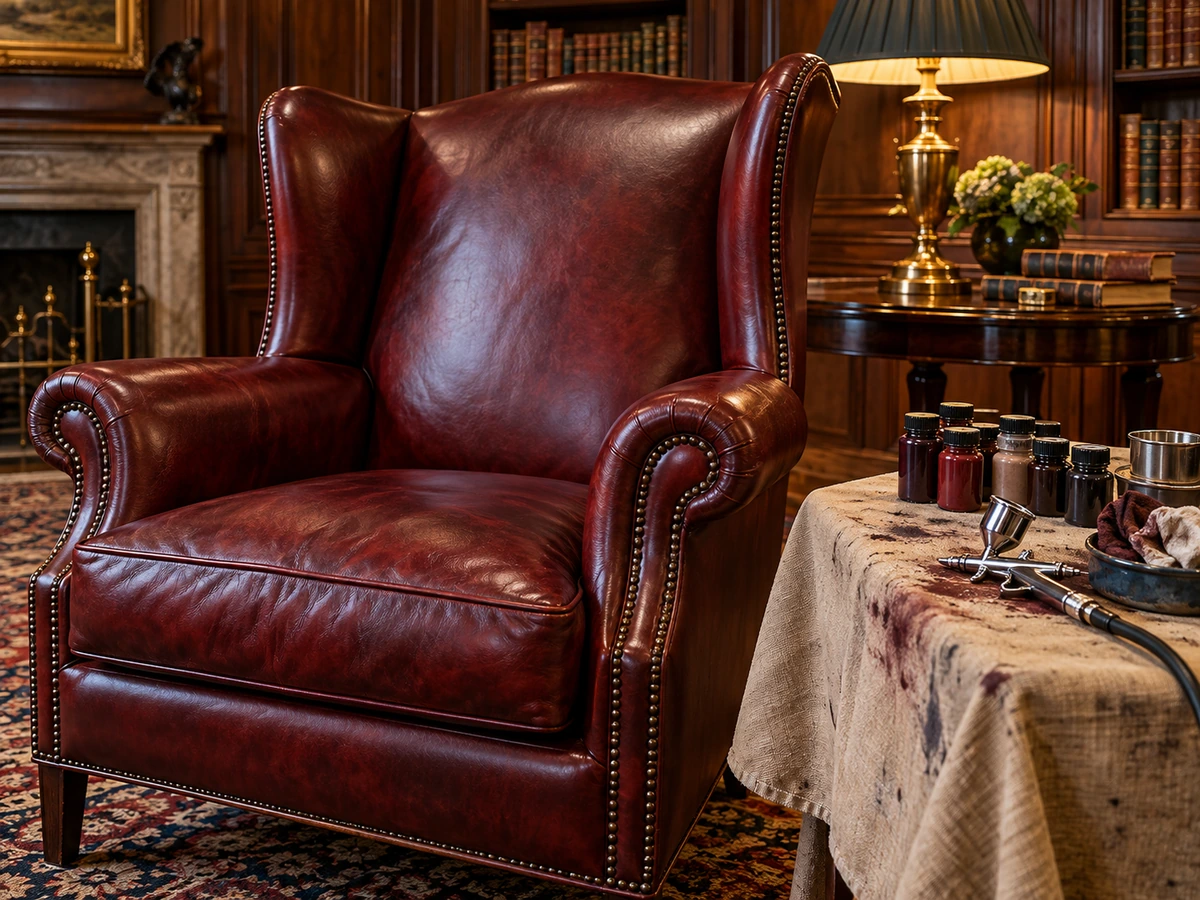
Build the color, keep the variation
Several tones, layered until the repair reads as part of the same aged panel. See color restoration.
Seal, cure, and put it back
Sealed to the sheen of the panel beside it, cured overnight and returned to the same spot.
Visits run through off-hours service and on-site repairs, with a certificate of insurance sent to the club first.
What gets worked where it stands.
| Piece | Usual fault | Worked where | Back in use |
|---|---|---|---|
| Club chairs and wingbacks | Arm crowns, seat fronts | In the room, after hours | Once the finish cures |
| Dining and card chairs | Seat wear, loose nailheads | Seats off, worked on a covered table | Same night |
| Bar stools | Seat edges, footrail scuffing | At the bar, after last call | Same night |
| Locker room benches | Abraded tops, split corners | In place, early morning | Same morning |
| Banquettes | Piping and seam splits | In place; fixed to the wall | Before the next service |
Matched to the chair, not to a swatch.
More in the before and after gallery.
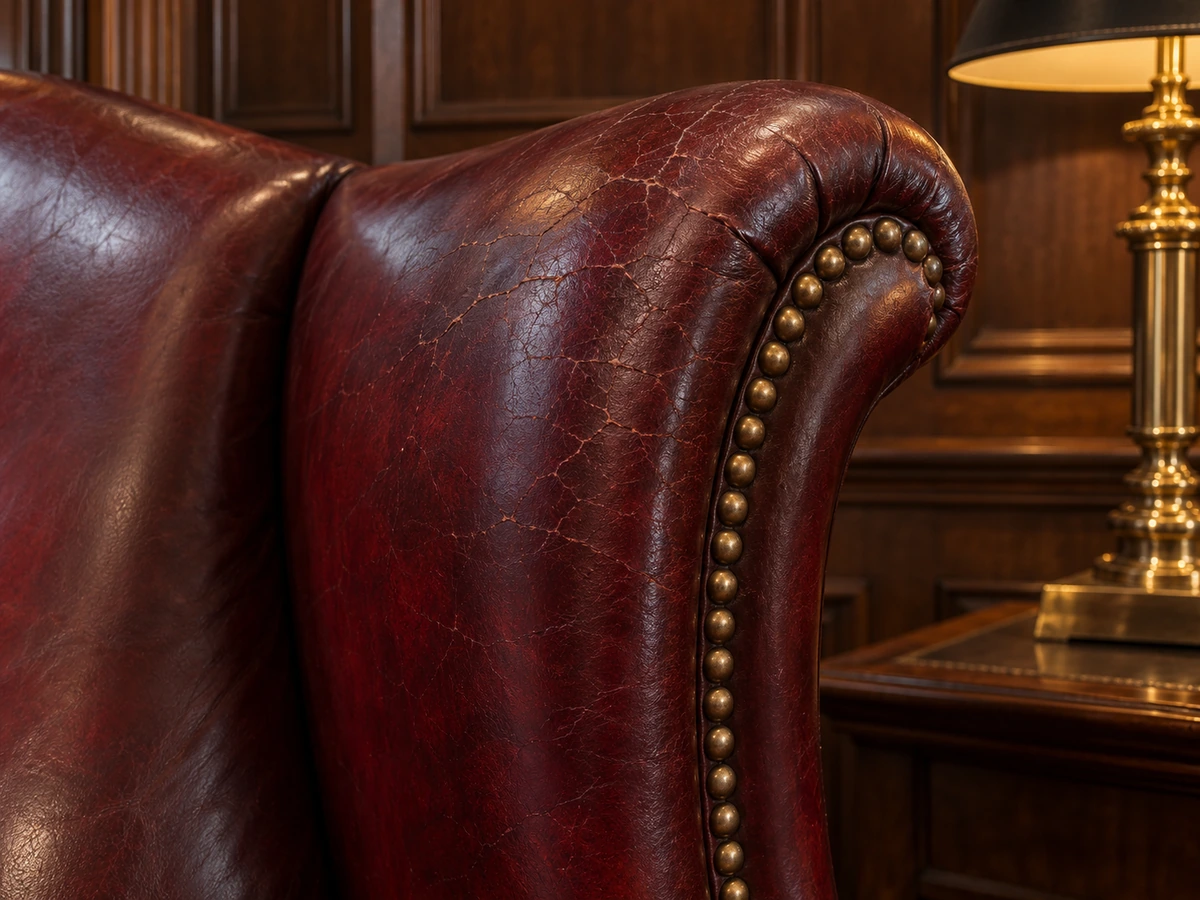
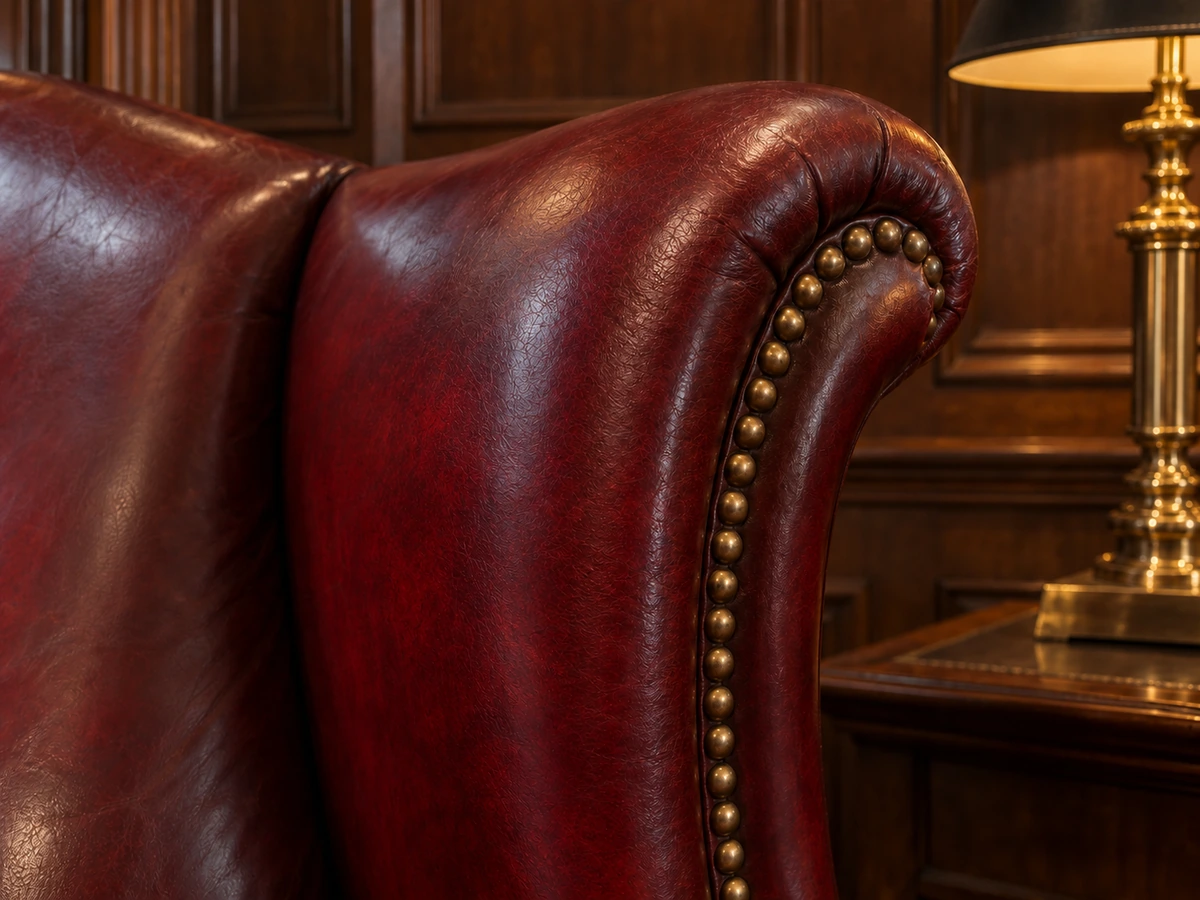
Wingback arm. Filled, grained and colored in layers, with the old tone left visible.


Bar stool seat. Rebuilt and matched to the stools either side of it.
We say so before quoting it.
Around the clubhouse.
Country club furniture repair sits under the private and country clubs hub, which covers the whole building room by room, the way club managers plan a clubhouse budget.
Repairs we make
Materials and venues
Where we work
What clubs ask first.
Will the repair look newer than the rest of the chair?
It should not. The color is built to the aged surface around it and the sheen is knocked back to match, because a bright patch stands out more than the damage did.
What does country club furniture repair usually involve?
Cracked arm crowns, worn seat fronts, split seams, loose nailhead trim and scuffed frames, repaired on the piece without stripping the whole chair.
Does the chair leave the clubhouse?
Rarely. Most repairs are done in the room after hours. Only work that needs sewing or a frame repair goes to the shop.
How long before members can sit in it?
Once the finish has cured, usually the same night. We schedule around the club calendar so a room is never short of seating at service.
When is a chair past repairing?
When the hide has gone brittle across whole panels or the frame is loose. We say so on the walkthrough and quote restoration or reupholstery instead.
Send the damage and the whole chair.
Two photos in daylight tell us whether country club furniture repair will disappear into the piece, or whether the room is due for something more. Or book a walkthrough.