

The repair has to fit between two screenings.
A blocked seat costs a ticket every show. So the work is sorted by what fits in a turnaround and what waits for the last screening, and the auditorium is never closed for a day.
What fits in a turnaround, and what waits.
Every movie theater seat repair is sorted into one of these before we quote, so nothing ever holds up a screening.

Done in the gap
- Small tears and punctures closed and sealed
- Seam splits restitched or bonded
- Cupholder surrounds and arm pads swapped
- Scuffs and marks recolored on the spot

Waits for the dark hours
- Panel replacement on seat, back or footrest
- Foam replaced where the seat has bottomed out
- Whole rows done as a block, in one pass
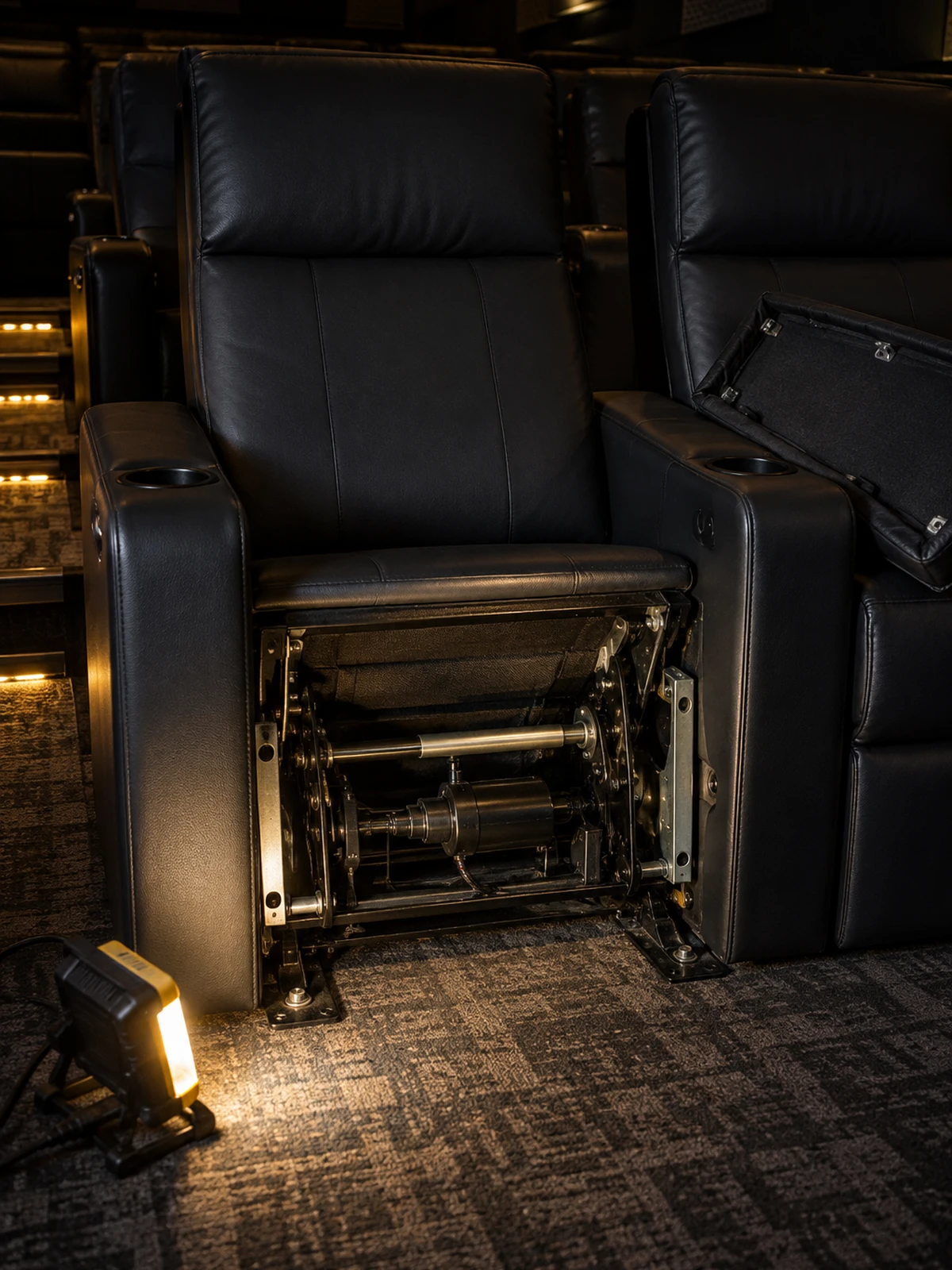
- Anything that needs the recliner opened up
Only the damaged panel comes off.
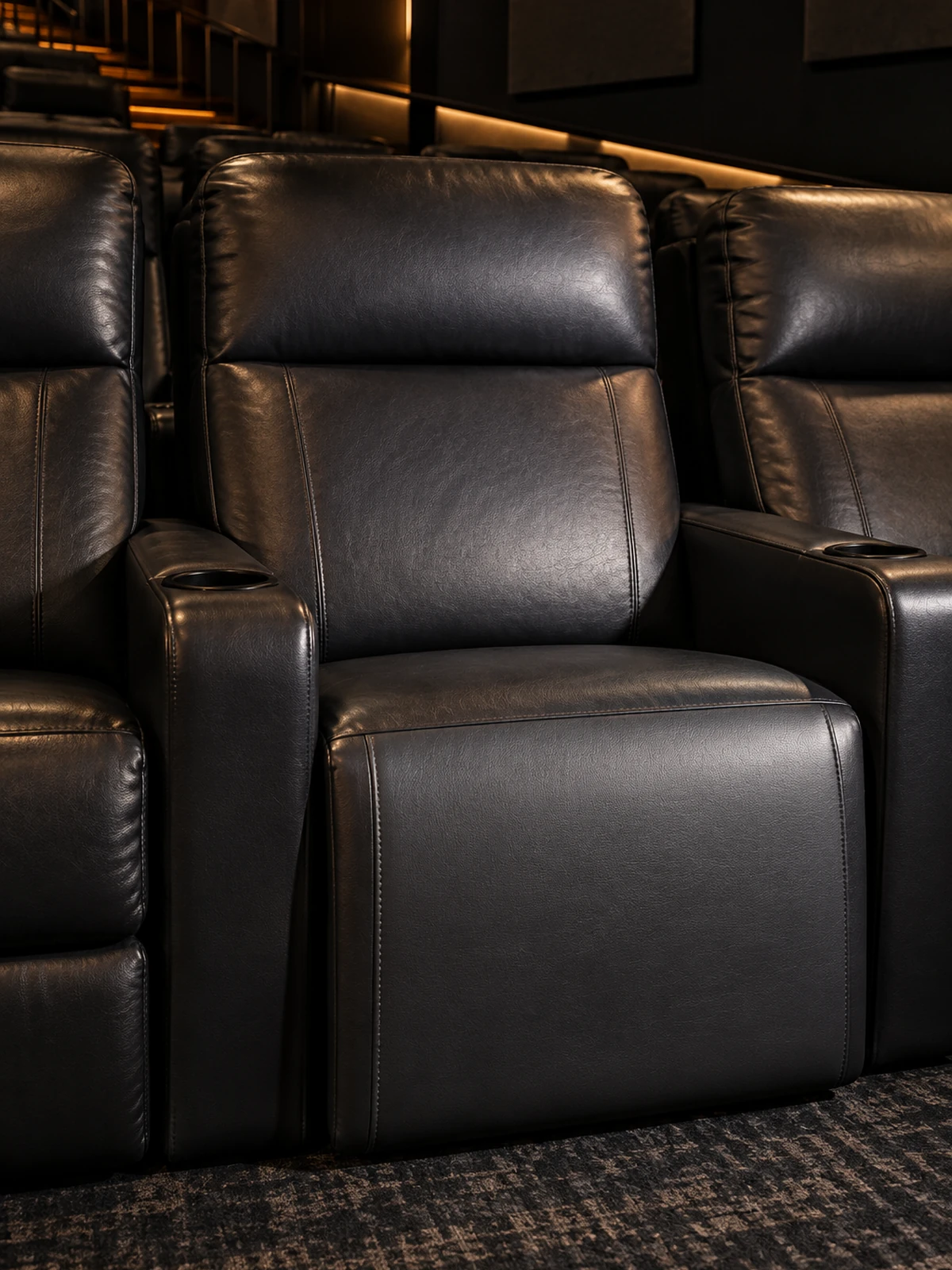
Recliner covers from makers like VIP Luxury Seating are built in sections, which is why one bad panel does not mean recovering the seat.

Footrest front
Scuffed by shoes every show, and gouged where something sharp landed.

Seat nose
Takes the weight of everyone sliding in and out in the dark.
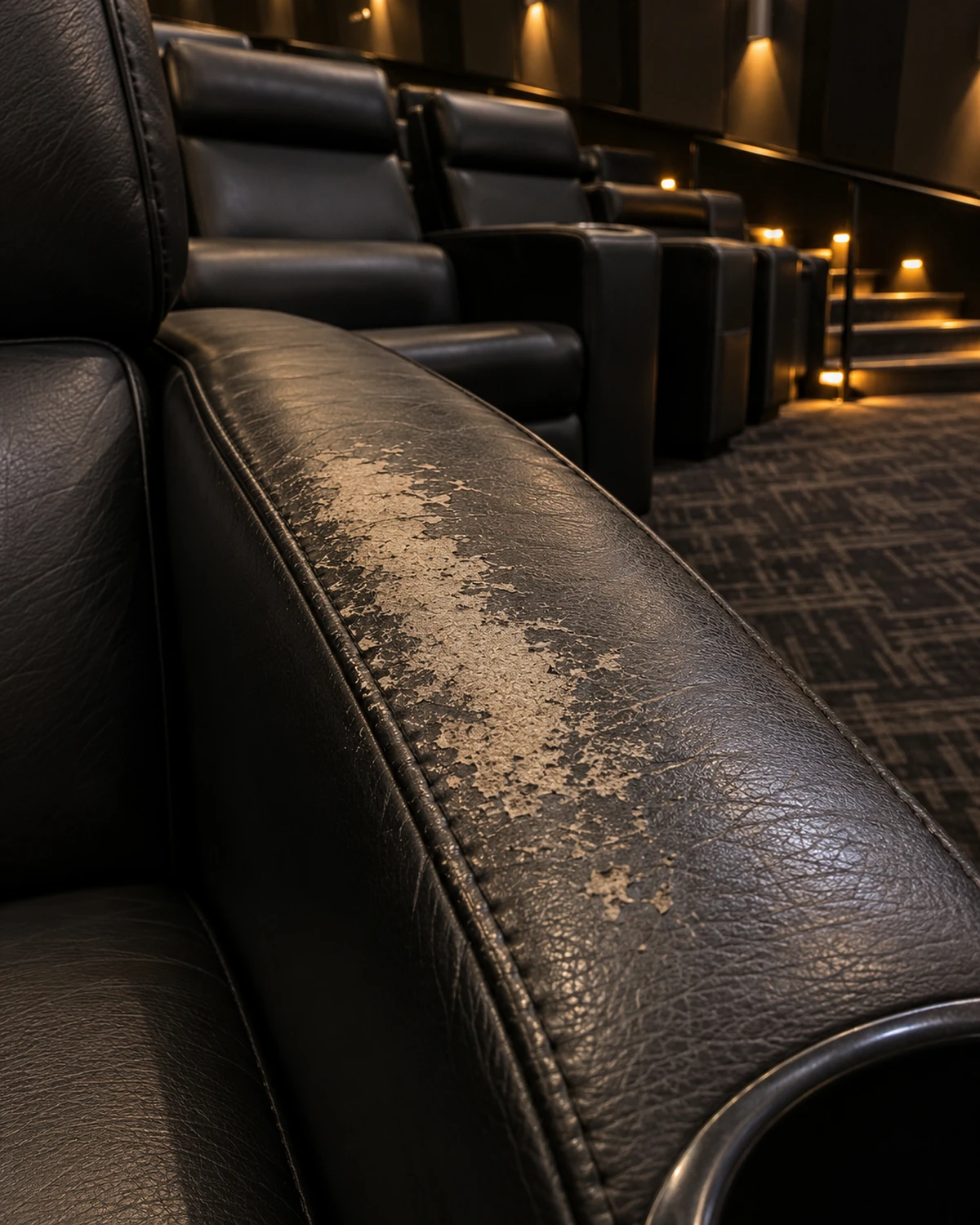
Arm pads
Two hours of forearms per show, every show.

Cupholder surround
Sticky drinks, dropped cups and the occasional cut from a key.
Blocked seats back on sale by the first matinee.
A dozen seats blocked across one screen: torn footrests, two flat cushions, and a row of scuffed backs.
- 01
Work from your seating plan
The blocked seat numbers come from the box office, not from a walk-round guess.

- 02
Triage in the aisle
Each seat sorted into turnaround work or after-hours work before anything opens.
- 03
Panels off
Damaged panels released from the frame; the recline hardware stays where it is.
- 04
Repair, match, refit
New or repaired panels matched to the seats either side, then fitted back the same night.
- 05
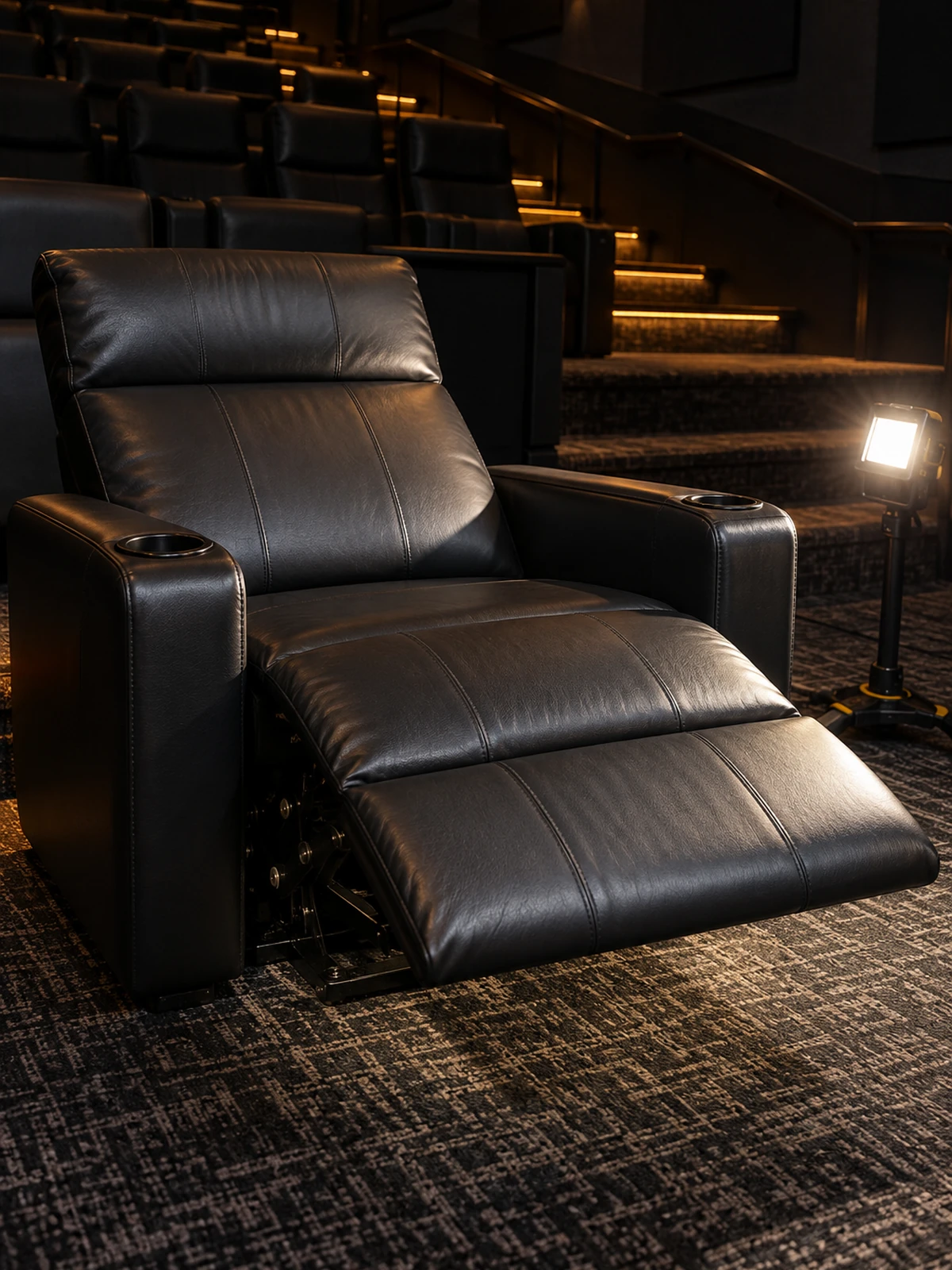
Cycle and hand back
Every seat run through its full recline, then the list of seats goes back on sale.


Visits run through off-hours service and on-site repairs, with a certificate of insurance to the operator before the first visit.
The cover is ours. The motor is not.
Movie theater seat repair covers the cover and what is under it. The recline hardware belongs to whoever services it.
| Part | Usual fault | Window | Whose job |
|---|---|---|---|
| Seat and back panels | Tears, splits, worn noses | Turnaround if small, otherwise after hours | Ours |
| Footrest panels | Scuffs and kicks from the row behind | After hours | Ours |
| Arm pads and cupholder surrounds | Worn through, cut, sticky damage | Turnaround | Ours |
| Foam and padding | Bottomed out under the seat nose | After hours | Ours |
| Motors, switches, linkages | Recliner will not travel or hold | Their call | Your seating service company |
One seat, back on sale.
More in the before and after gallery.


Torn seat panel. Closed, grained and recolored to the seats either side, refitted the same night.


Arm pad and cupholder. Rebuilt in a turnaround, with the seat back in the next show.
Three other ways this gets handled.
Around the building.
Movie theater seat repair sits on the entertainment venues hub, beside theater, studio and venue work.
The work itself
Seating and materials
Where we work
Questions about one seat, not a whole house.
Can seats be repaired without closing the auditorium?
Small faults are done in a turnaround between screenings. Panel replacement and foam work wait for the last show, when the auditorium is dark anyway.
Do you have to recover the whole seat?
No. Recliner covers are built in panels, so the damaged panel comes off on its own and the rest of the seat is untouched.
Do you repair the recline mechanism?
No. Motors, switches and linkages go to your seating service company. We repair the upholstery and refit it around their hardware.
How do you know which seats to fix?
Send the seat numbers your staff have blocked from sale. We work to your seating plan and hand back a list of seats that can be sold again.
Will one repaired seat match the row?
The panel is matched to the seats either side in color, grain and sheen, and tested under house lighting before it goes back into service.
Tell us where on the seat the damage is.
Seat numbers and one photo per fault is enough to sort movie theater seat repair into turnaround work and after-hours work, and to price it. Or book an assessment for a whole screen.