

A Patch Nobody Can Find
Bus seat repair for NYC fleets: slashes, burns and split seams mended on the seat, matched to your own pattern.
Five Kinds of Damage
Nearly every bus seat repair call is one of these. Each one is mended a different way, and none of them needs the seat recovered.
 01
01 02
02 03
03 04
04 05
05Four Things We Match
A mend is judged from a seat away, not under a lamp. These are the four things that decide whether anyone sees it.

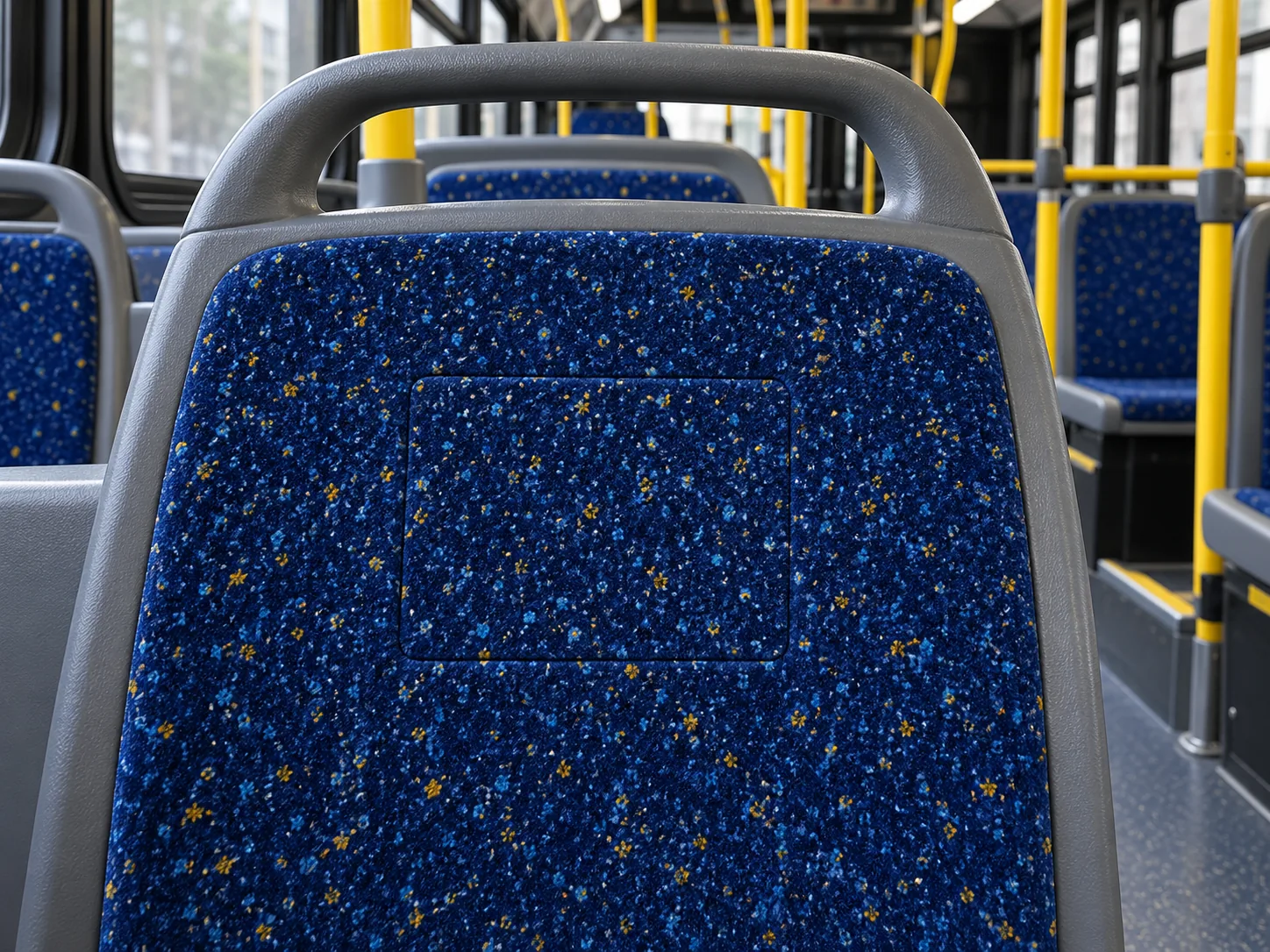


Three Times We Say No
A repair that will not hold costs you twice. If we see any of these, we say so before the work starts.
 The cover is brittleA patch needs sound material either side of it. When the vinyl crumbles at the edge of the damage, the seat wants a new cover. Bus seat reupholstery.
 The foam has goneIf the seat sits flat, the cover is not the problem. New foam goes in first, or the repair sinks with it. Foam replacement.
 It crosses a seamDamage that runs over a sewn line has to be re-sewn, not filled. That is a panel job rather than a patch. Panel replacement.
How the Mend Is Made
A single bus seat repair, start to finish, with the seat still bolted in the bus.
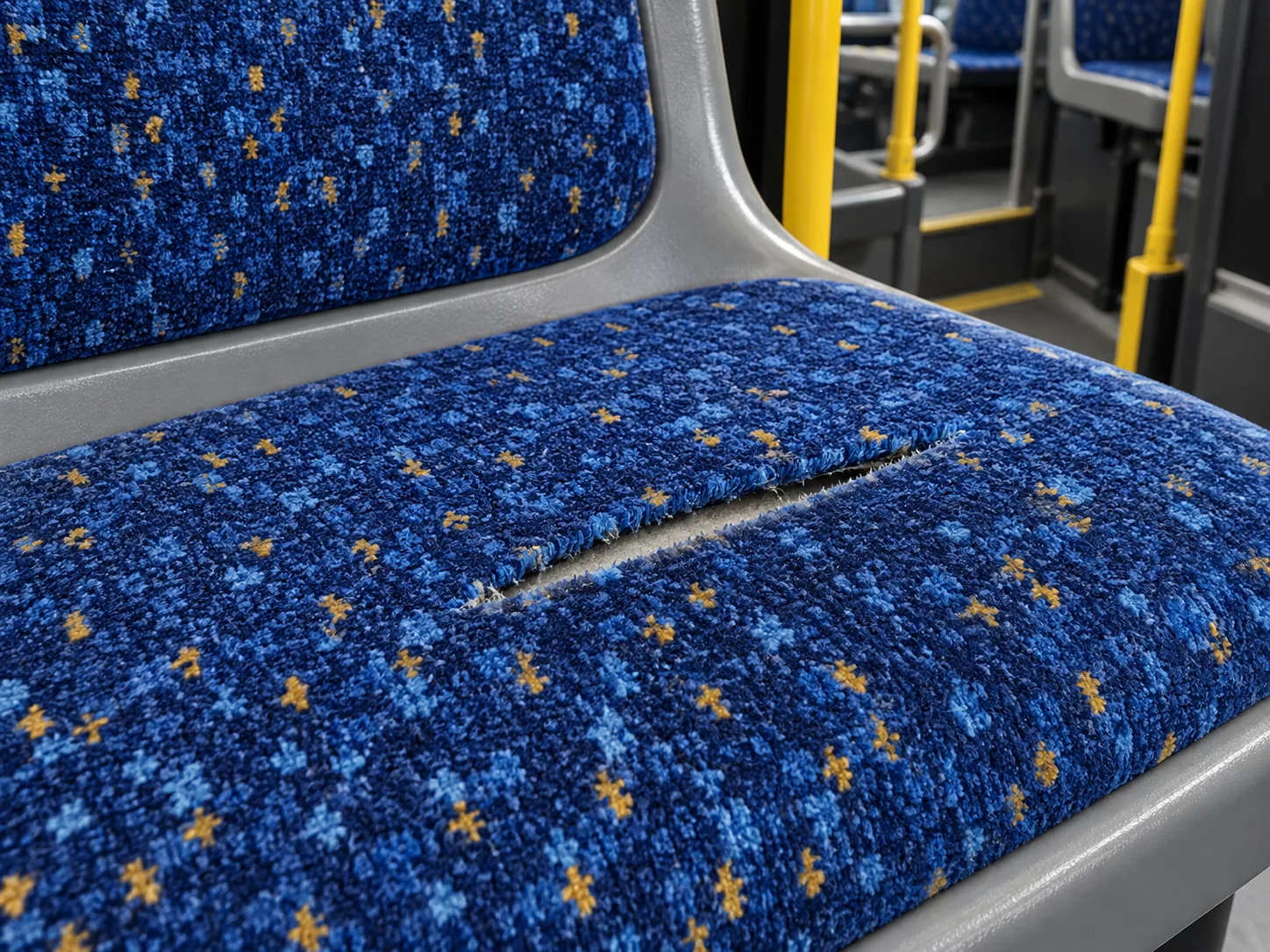
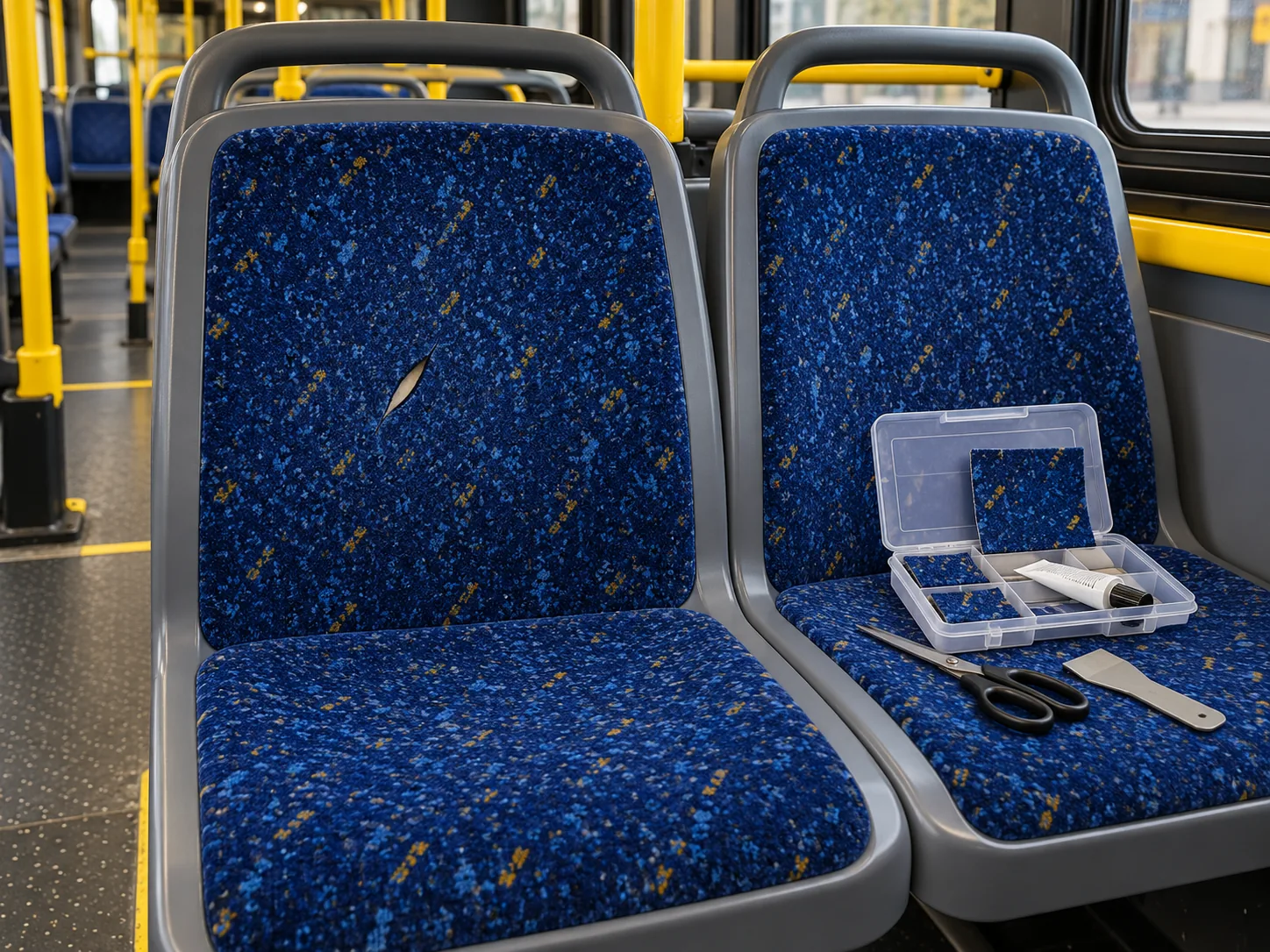
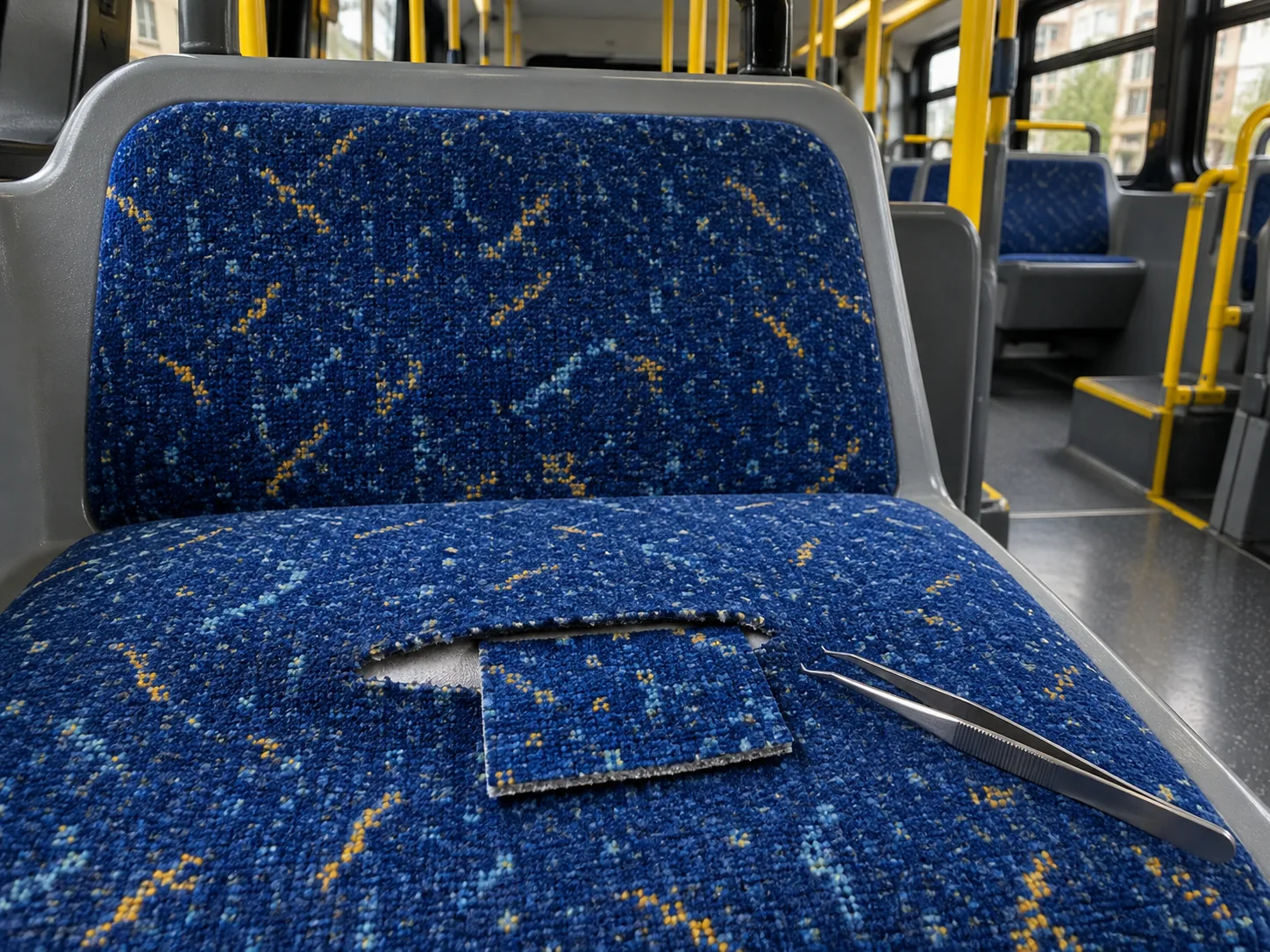

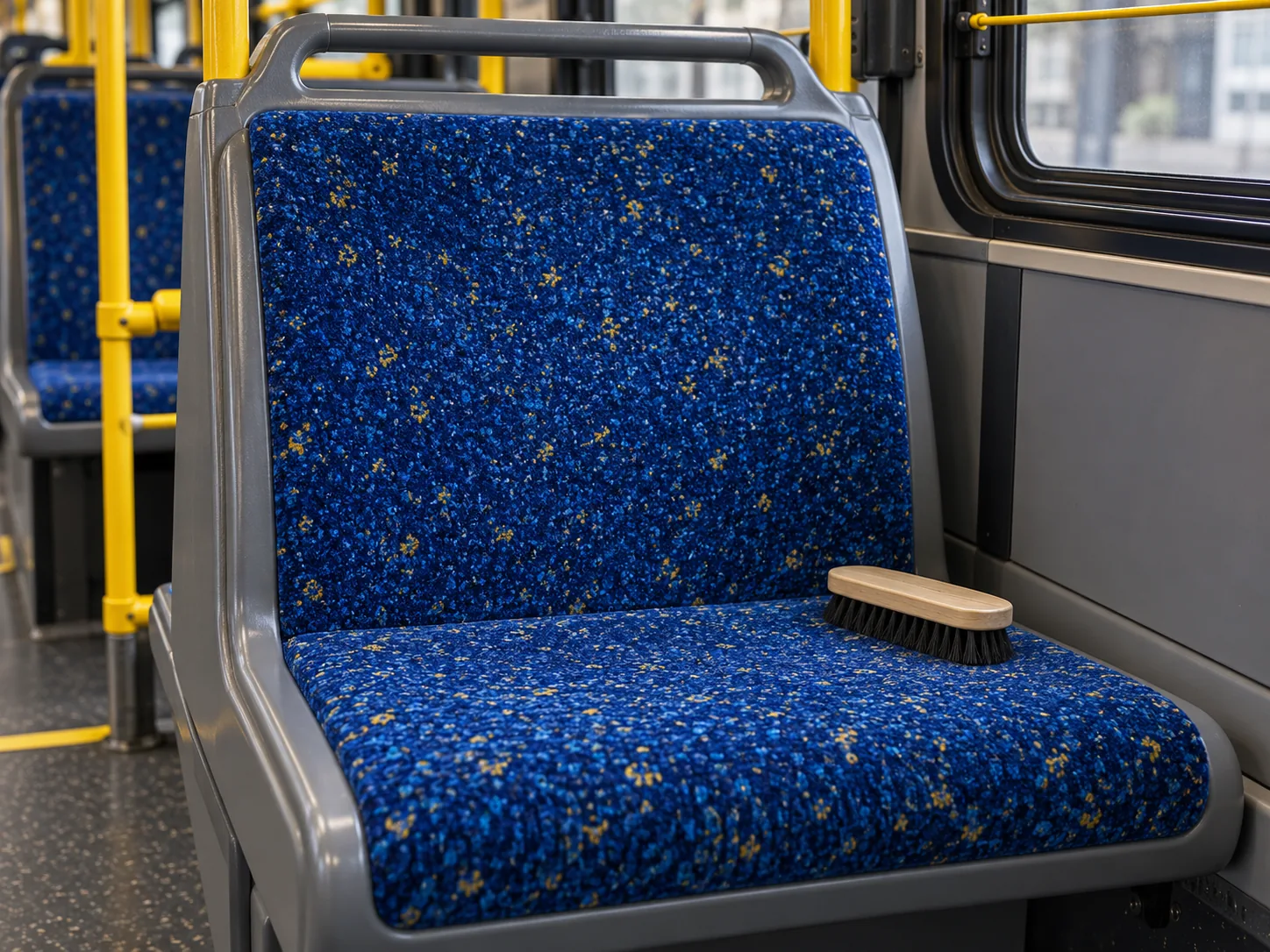
Same Cover, Mended
Two seats kept in service. More in the before and after gallery.
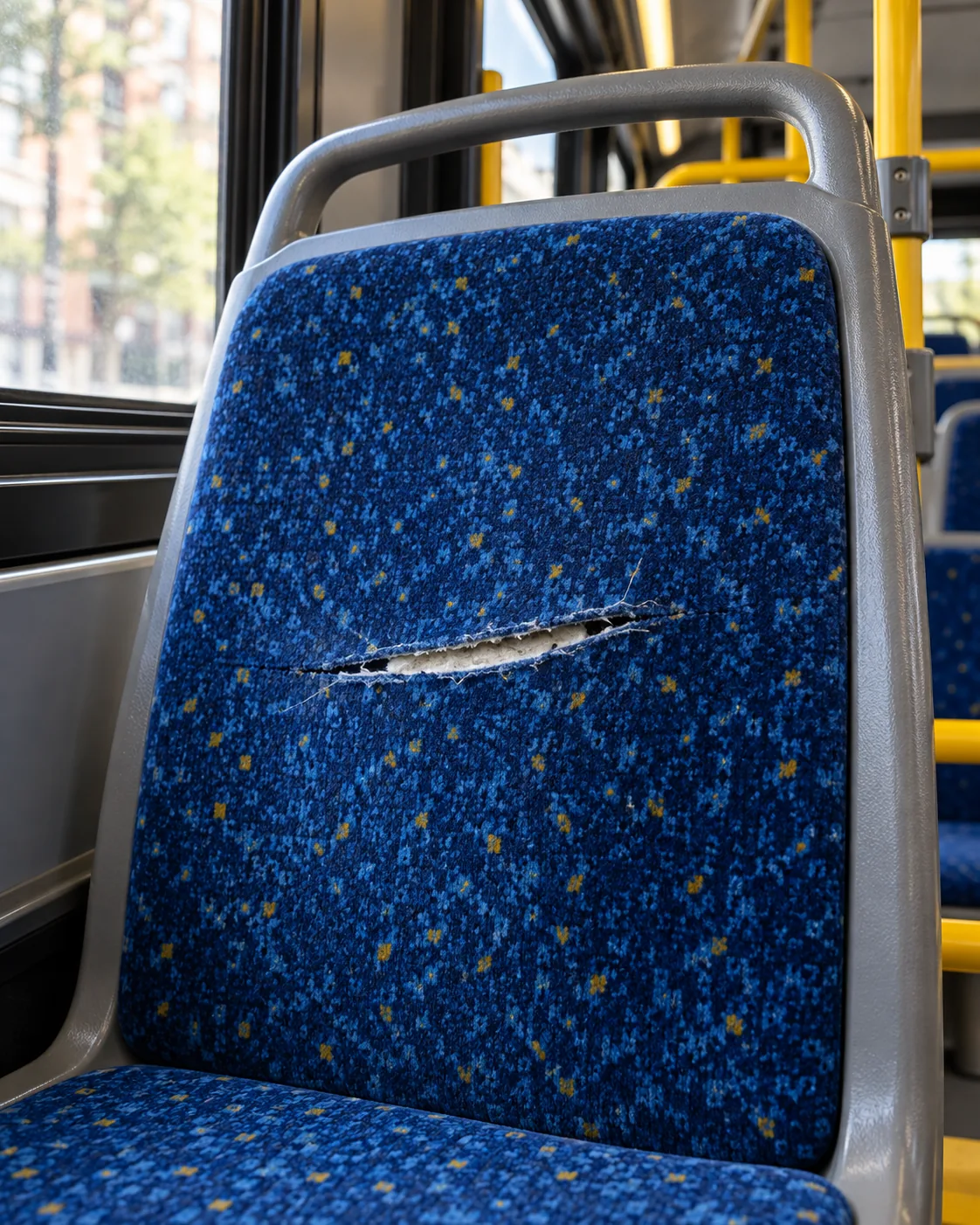 Before
 After
AfterSlashed seat back. A straight slash across the moquette. Patched from behind and blended into the pattern.
 Before
 After
AfterBurned cushion. A burn hole with hard edges. Trimmed, backed, filled and textured.
A Kit, Not a Truck
Everything a seat repair needs fits in a case that comes down the aisle with us.

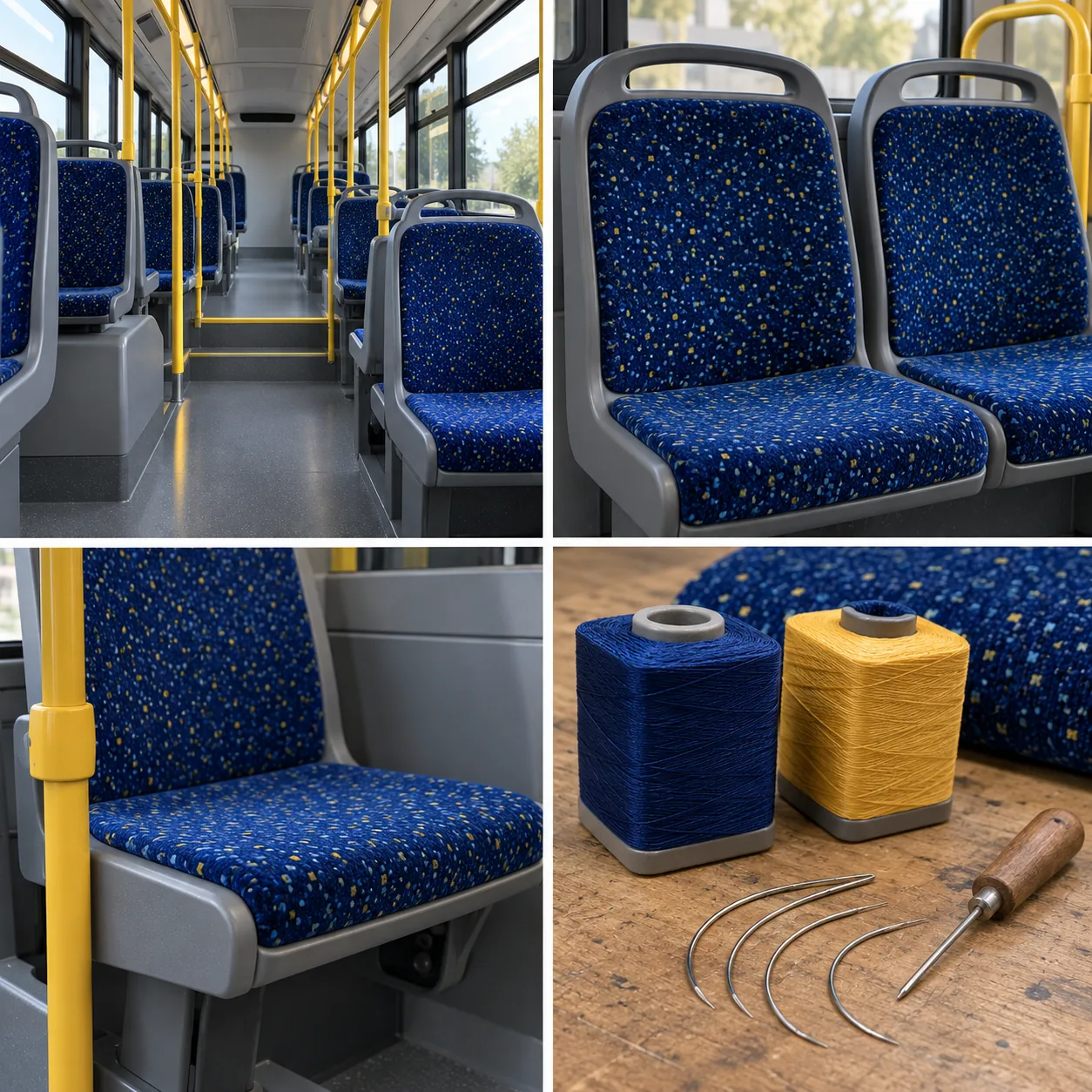


The Bus Stays on the Road
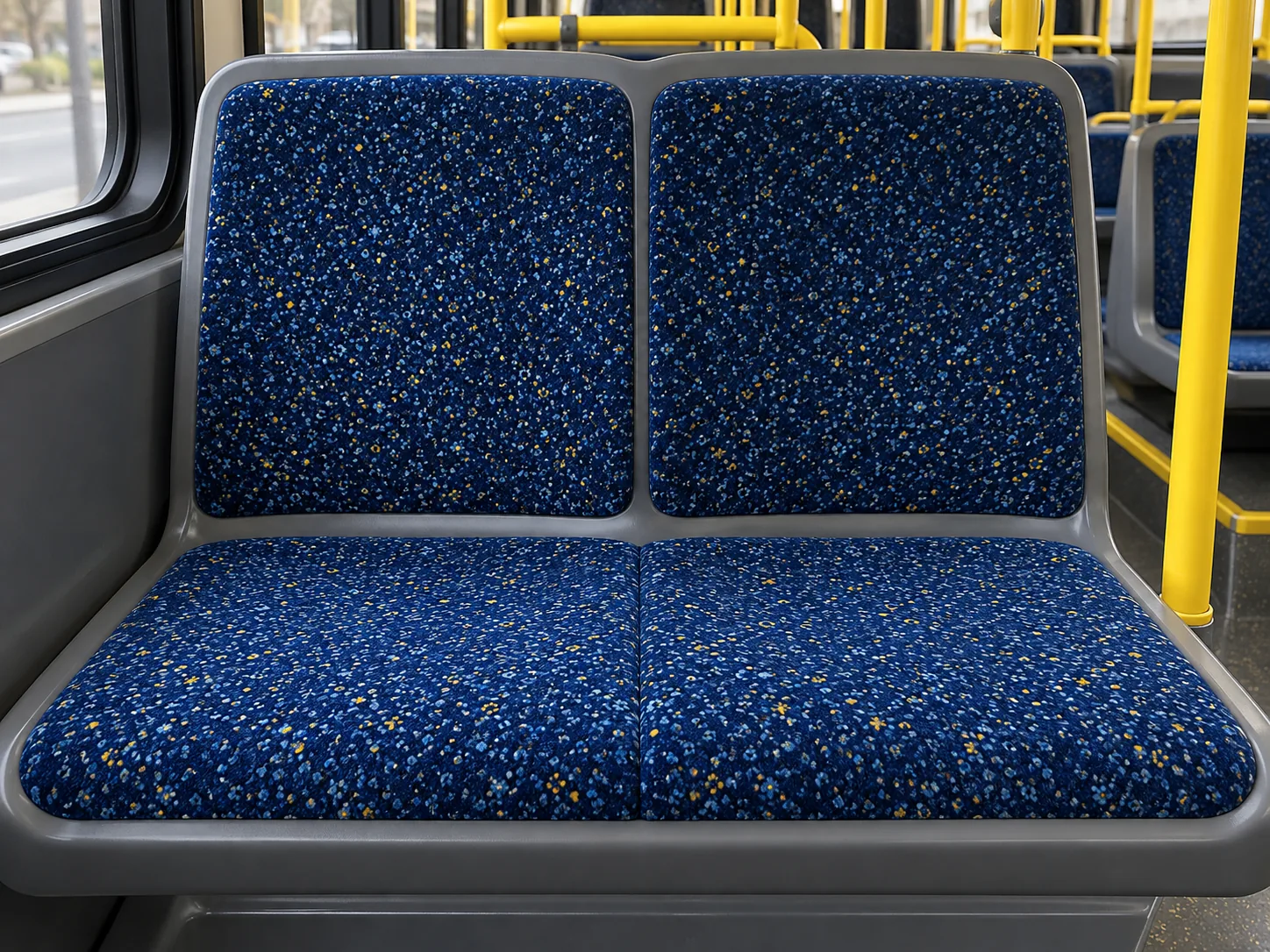
Bus seat repair is the option that does not take a vehicle out of the roster.
- No pad comes out. Repairs happen on the mounted seat, so nothing is stripped from the bus.
- Several seats in a visit. We work down the bus seat by seat. See fleet work.
- Between runs or overnight. Whichever suits the schedule. See overnight service.
Bus seat repair questions
What does bus seat repair cost?
Bus seat repair is quoted per seat after we see the damage, in person or from photos. A slash, a burn and a split seam are different jobs. We do not quote off a list. Start with a free estimate.
Will the repair show?
Not if the material is sound and the pattern is matched. On moquette the repeat is lined up and the pile brushed back; on vinyl the fill is grained and the color blended past the edge.
Can you match our seat fabric?
Yes. We cut patches from the same moquette or vinyl the fleet uses, and keep the stock for the next call. See material matching.
Does the bus have to leave the depot?
No. Bus seat repair is done on the vehicle, with the pads still on their mounts.
When is a repair the wrong call?
When the cover is brittle, the foam has collapsed, or the damage crosses a seam. See bus seat reupholstery.
Do you handle scratched plastic panels too?
Yes — etched tags on seat backs and side panels are polished or refinished in the same visit. See commercial repair.

Send the Tear
One close photo of the damage and one of the whole seat. That tells us whether it is a patch or a new cover.
Call 347-310-7483