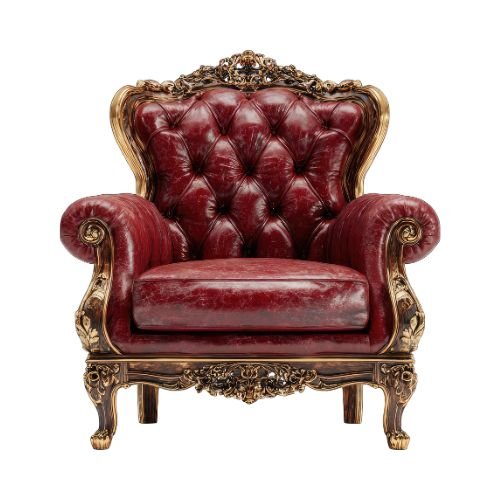
Leather Tear Repair
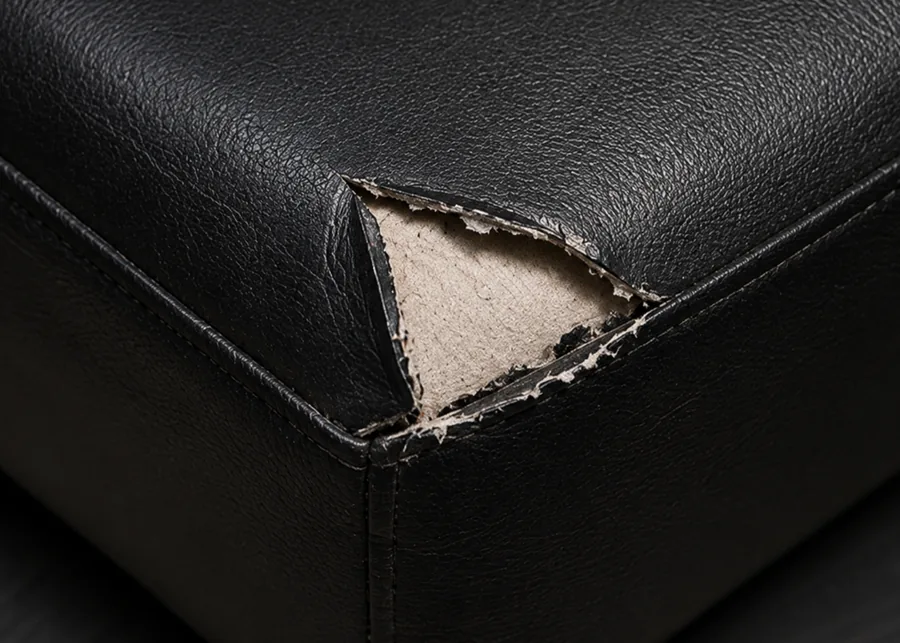
A tear goes through the hide, so it cannot be filled from the front. Leather tear repair starts underneath the opening — and that is what decides whether it stays closed.
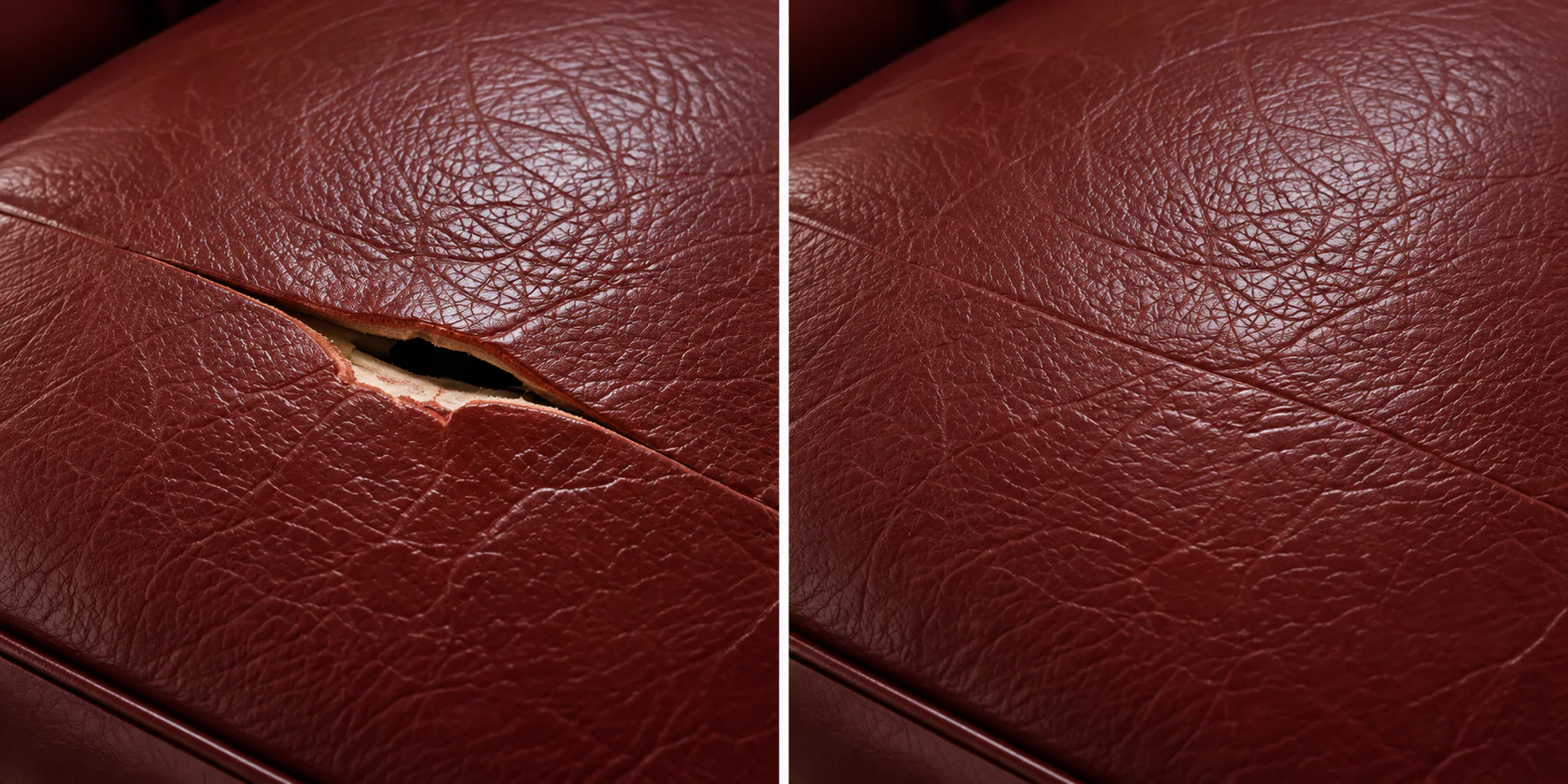
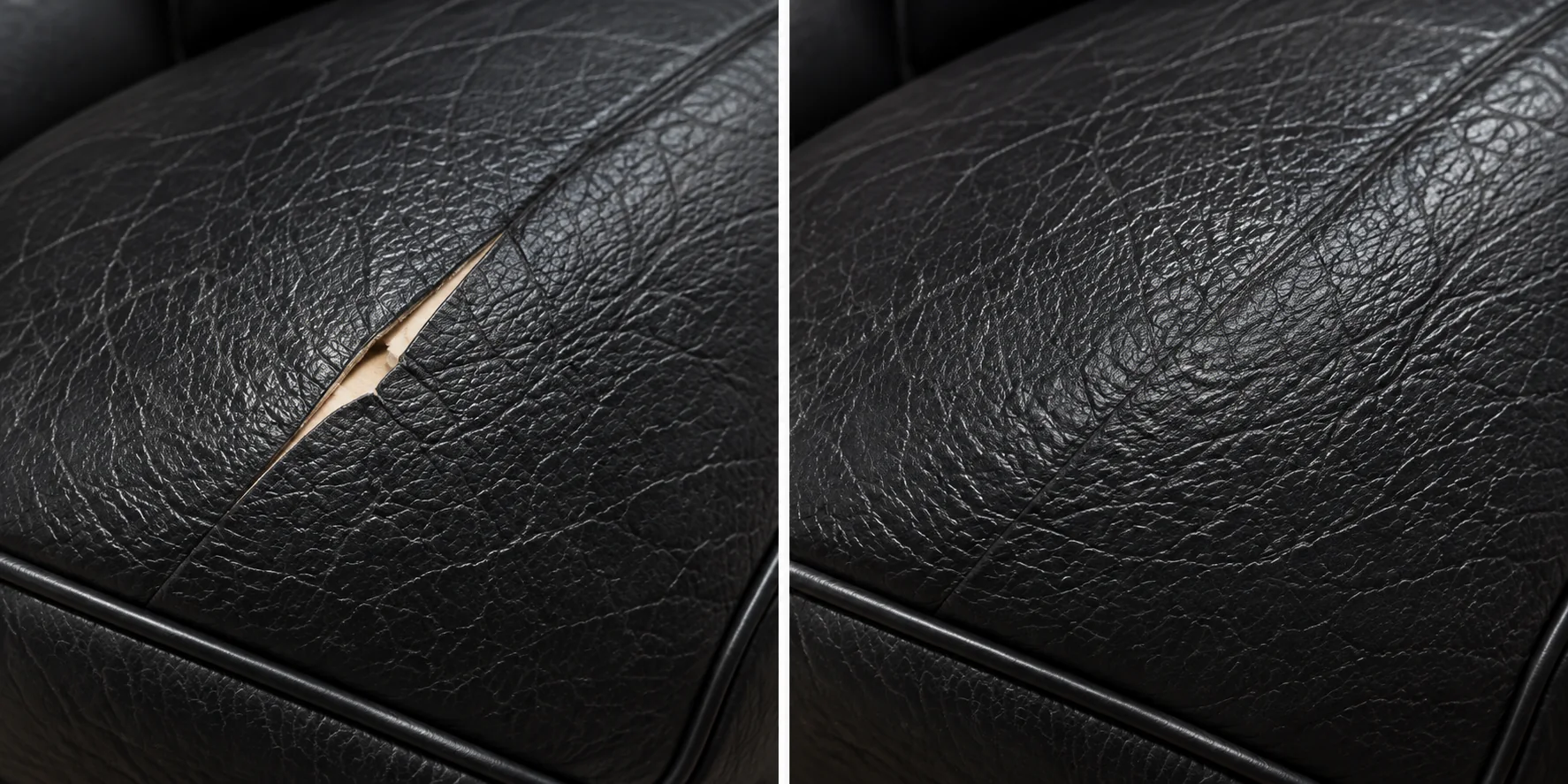
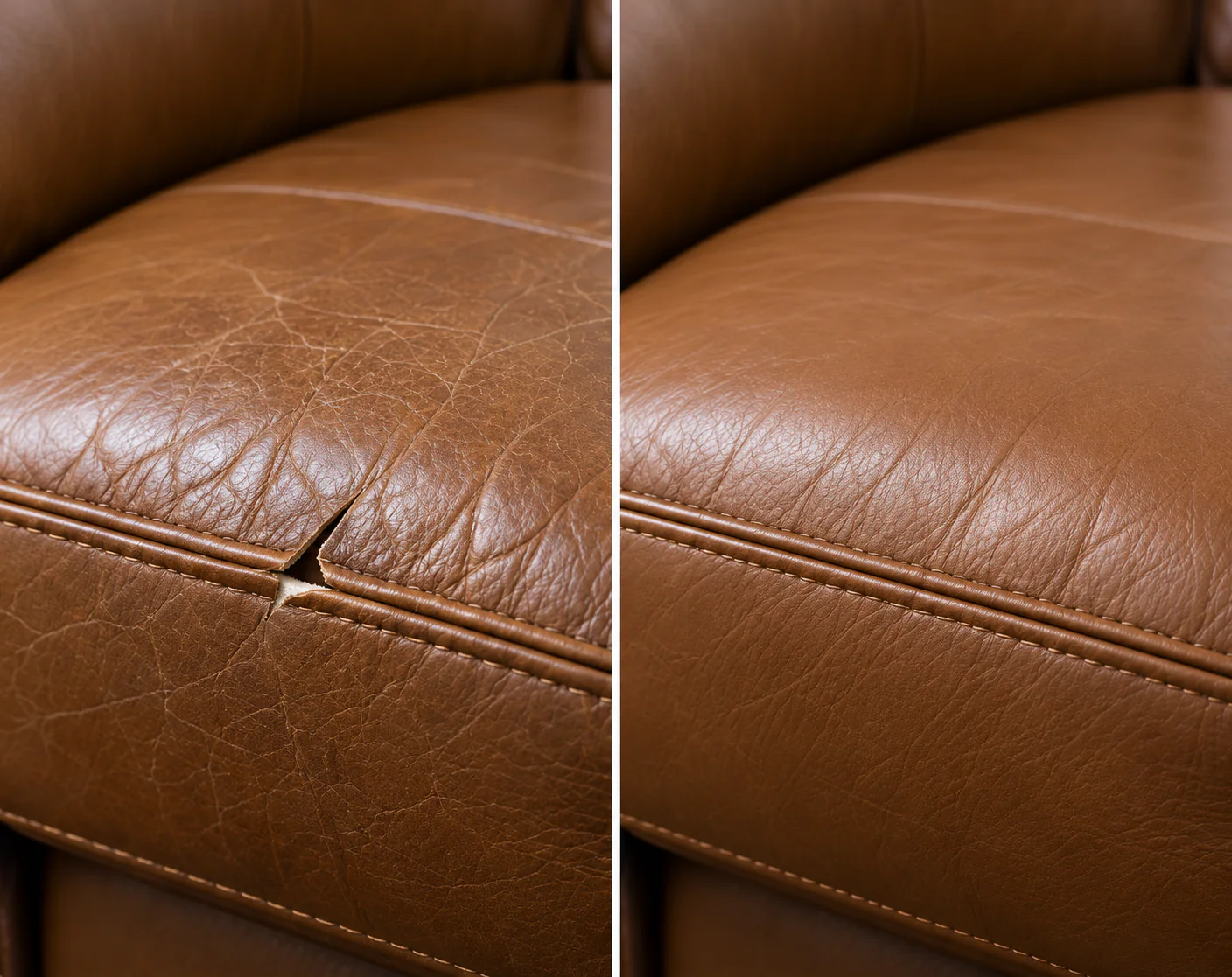
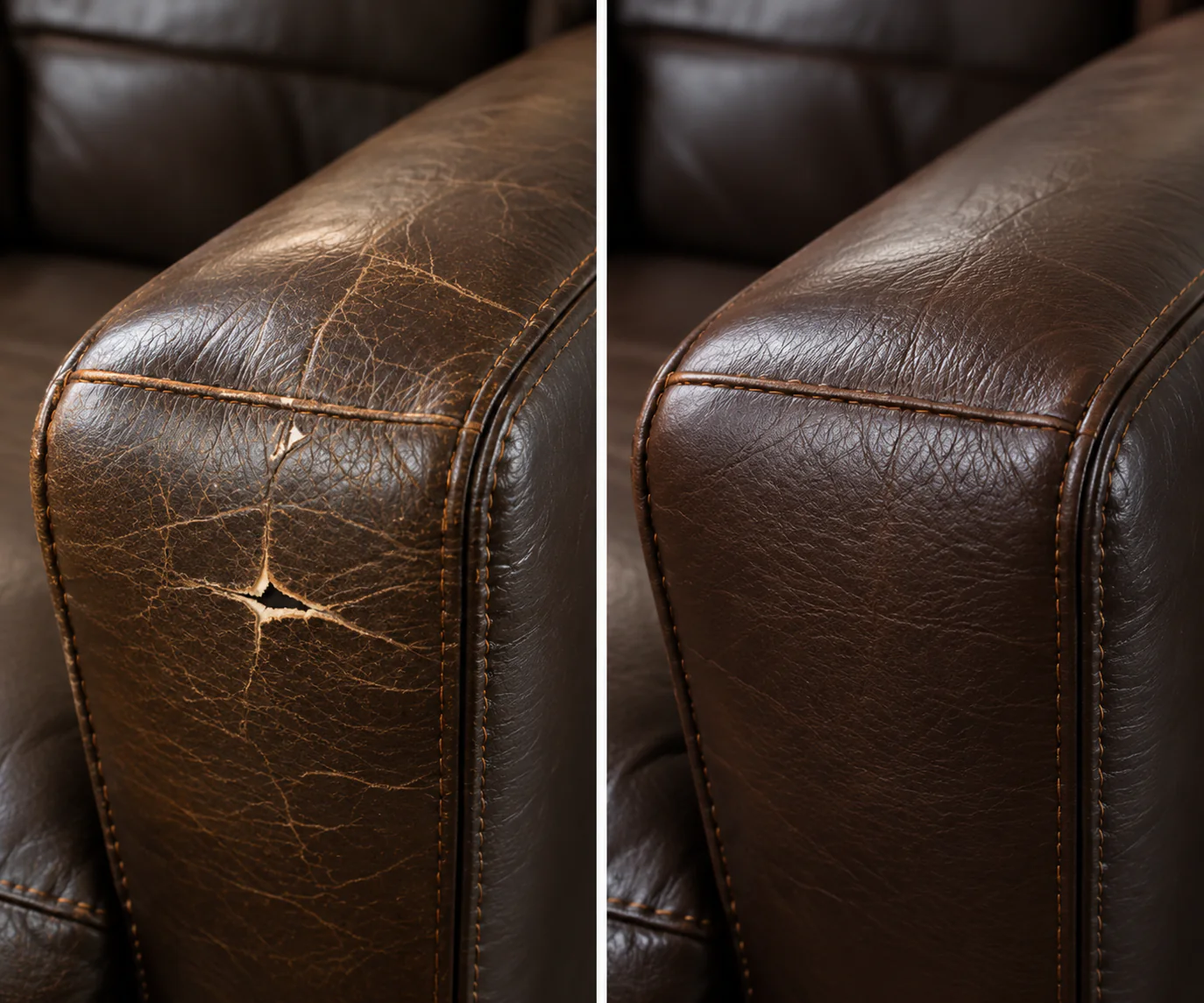
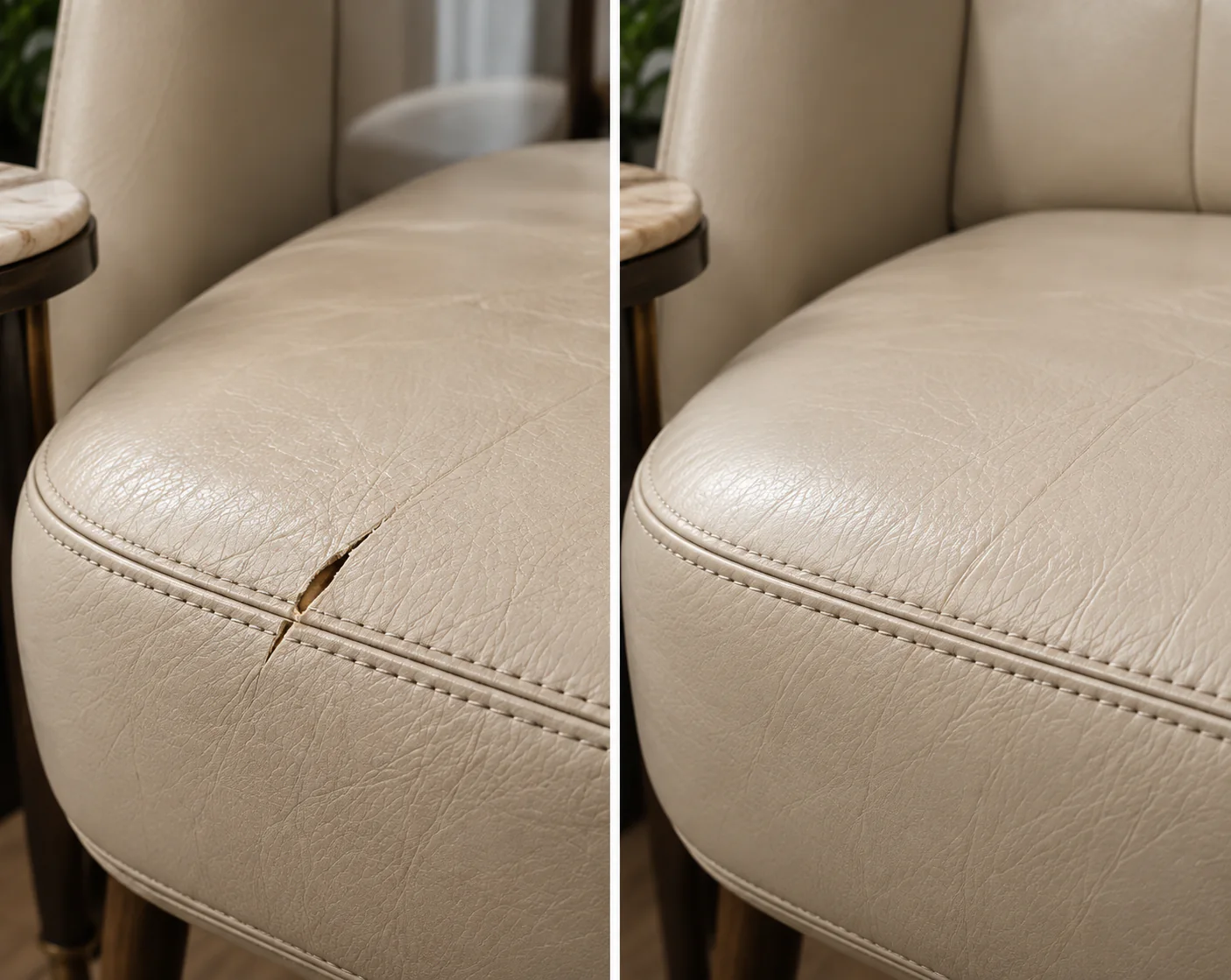
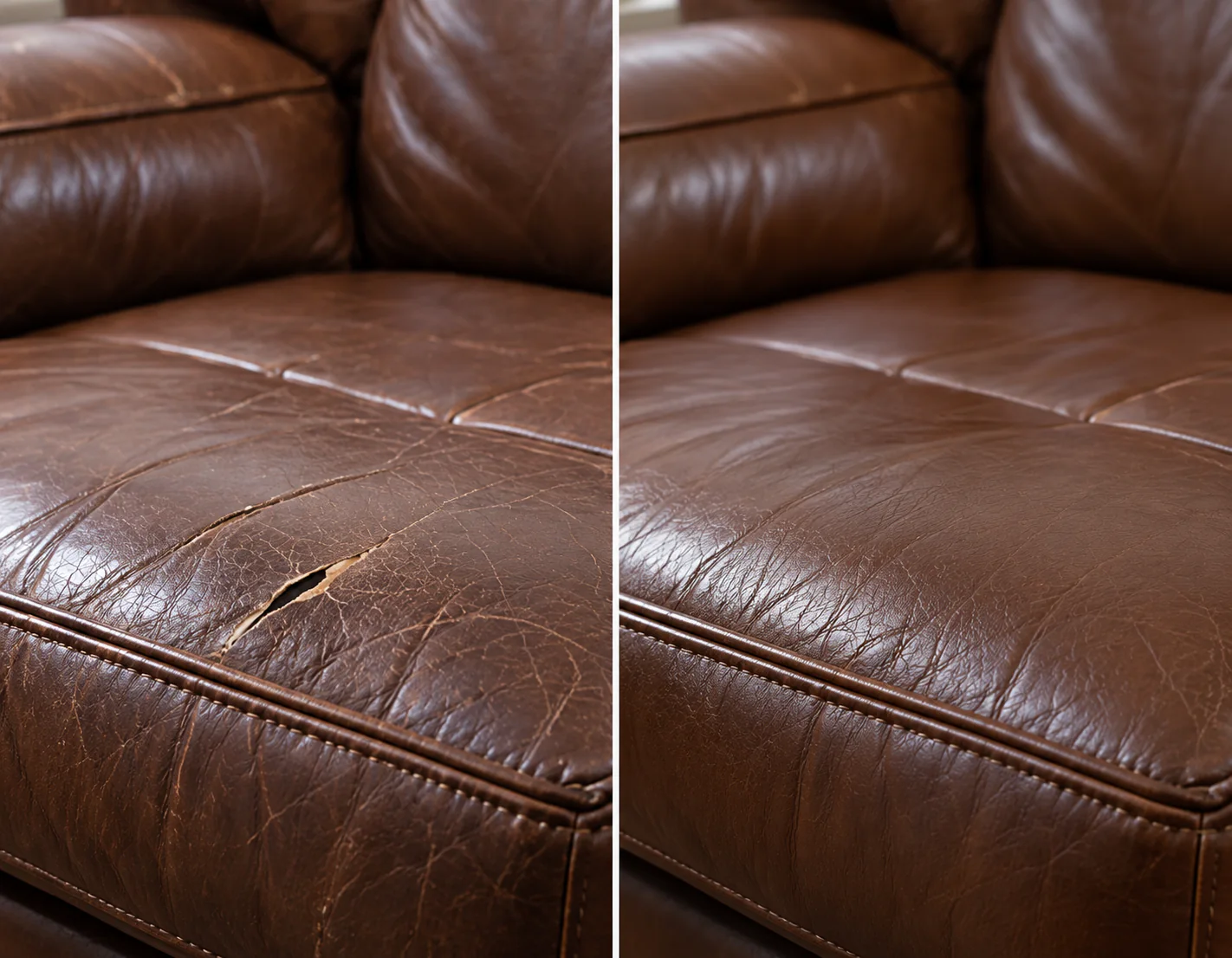
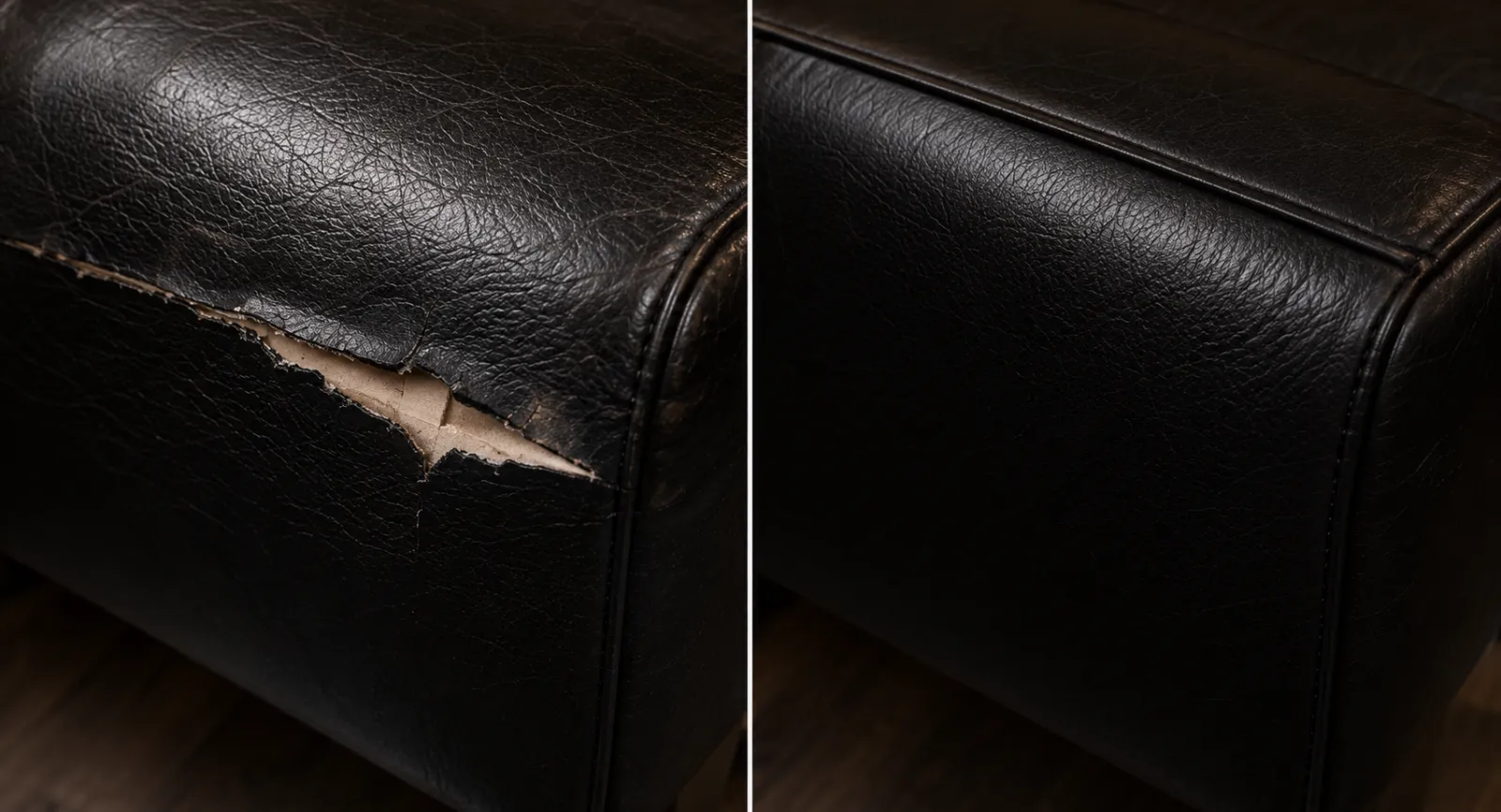
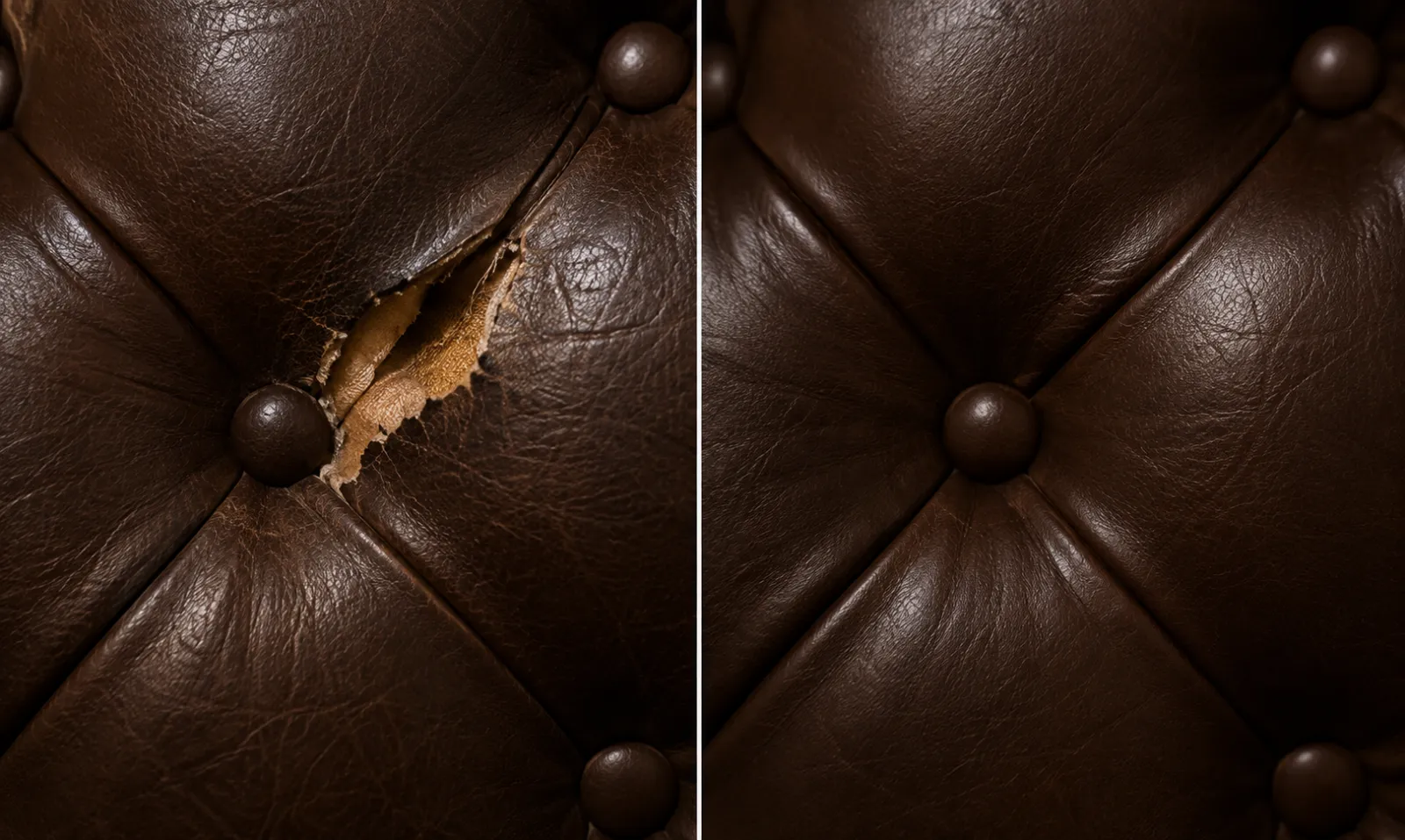
The same repair, in five different leathers
Colour, grain and sheen are matched to the panel the opening sits in.
Leather does not knit back together
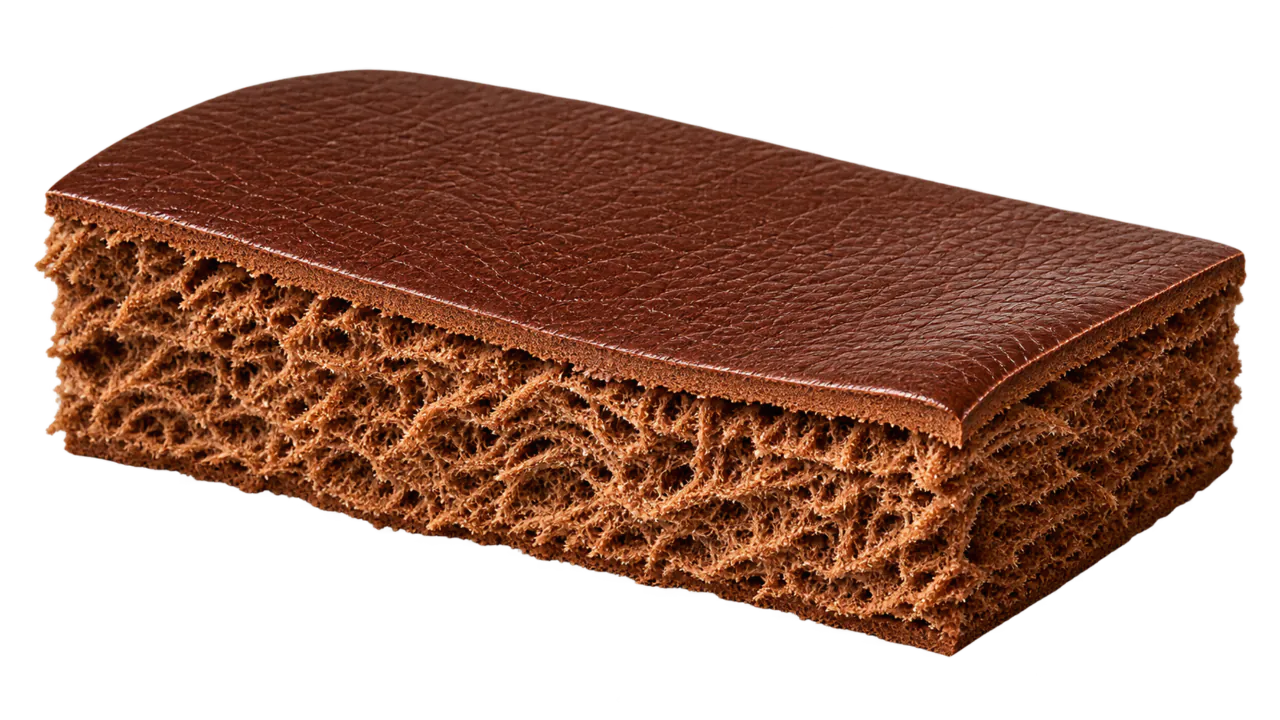
A hide is a felted mat of fibres, not a film. Scuffing and scratching damage the finish on top of it. A tear parts the mat itself, and those edges will not rejoin.
So leather tear repair never starts with colour. It starts with getting material behind the opening. Everything after that is finishing work on a join already carrying the load.
Not all of them are the same repair
People call all four a tear, or a rip. The difference decides whether anything has to be bridged.
A blade, and nothing missing
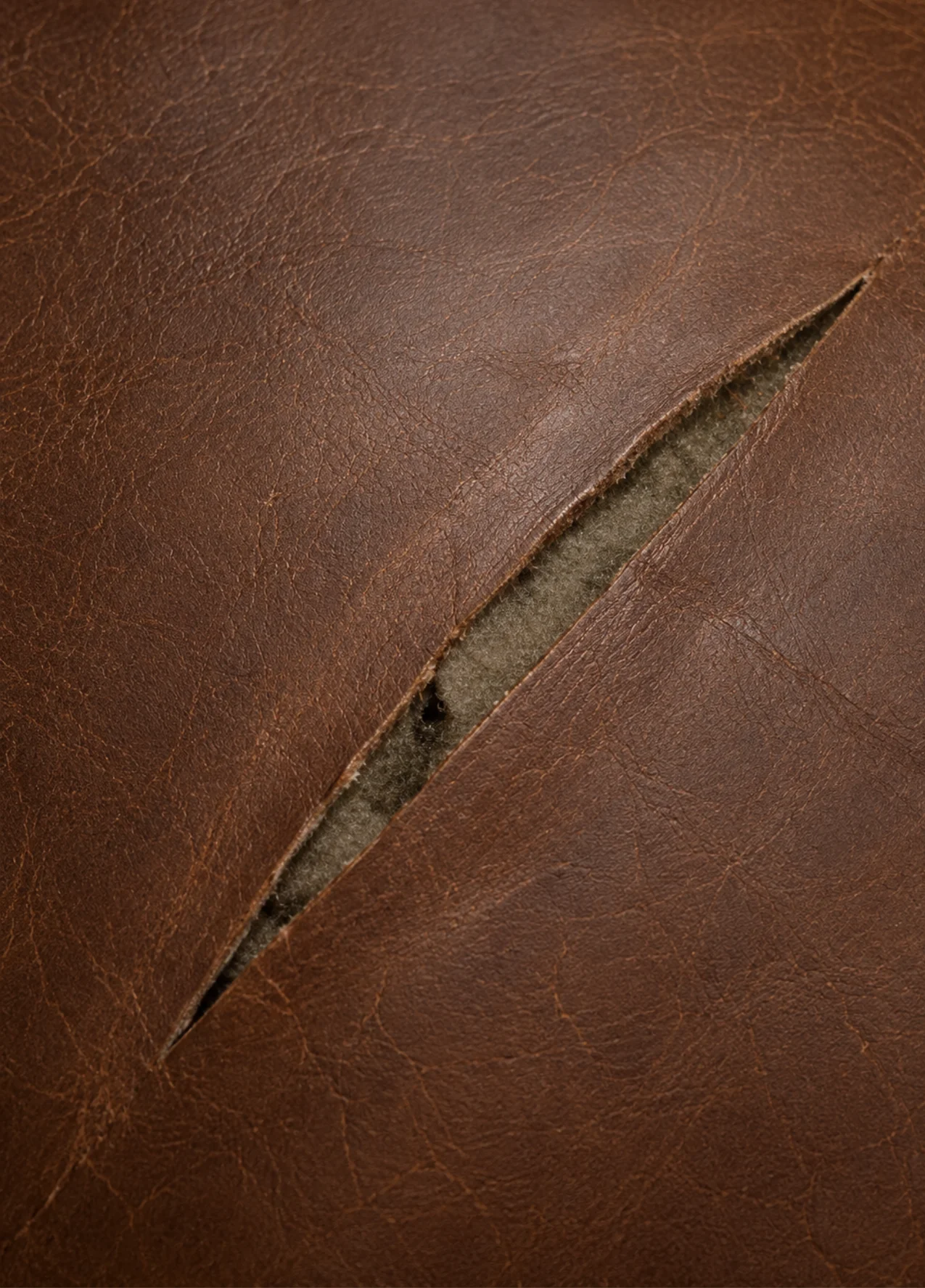
Straight edges that still meet. Nothing was lost, so the sides are drawn together over a backing — of the four, this is the one that disappears.
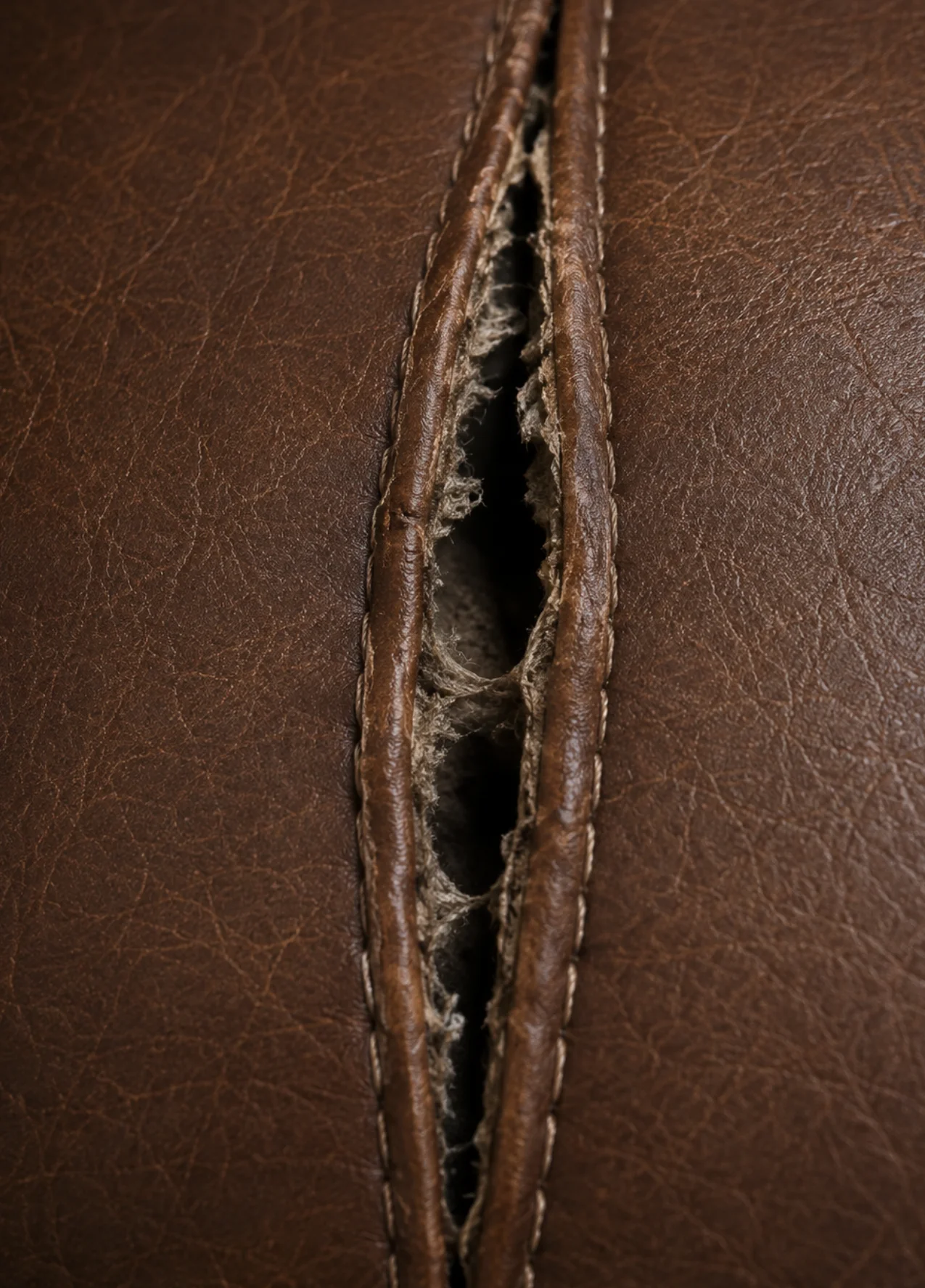
The thread failed, not the leather
The panels either side are sound. They are re-joined along the line they were cut for: stitched where a needle reaches, bonded where it cannot.
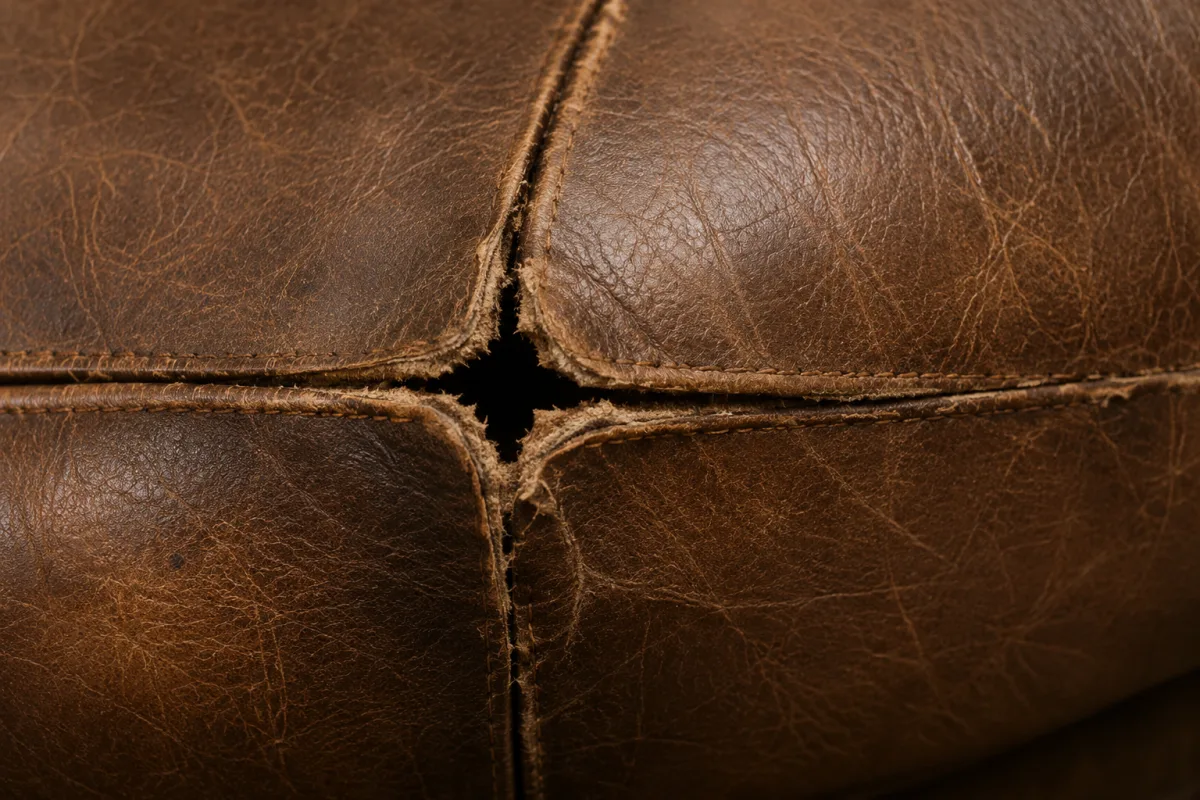
Something took material with it
Not enough leather is left to pull together, so the hole is bridged and the grain rebuilt across it.
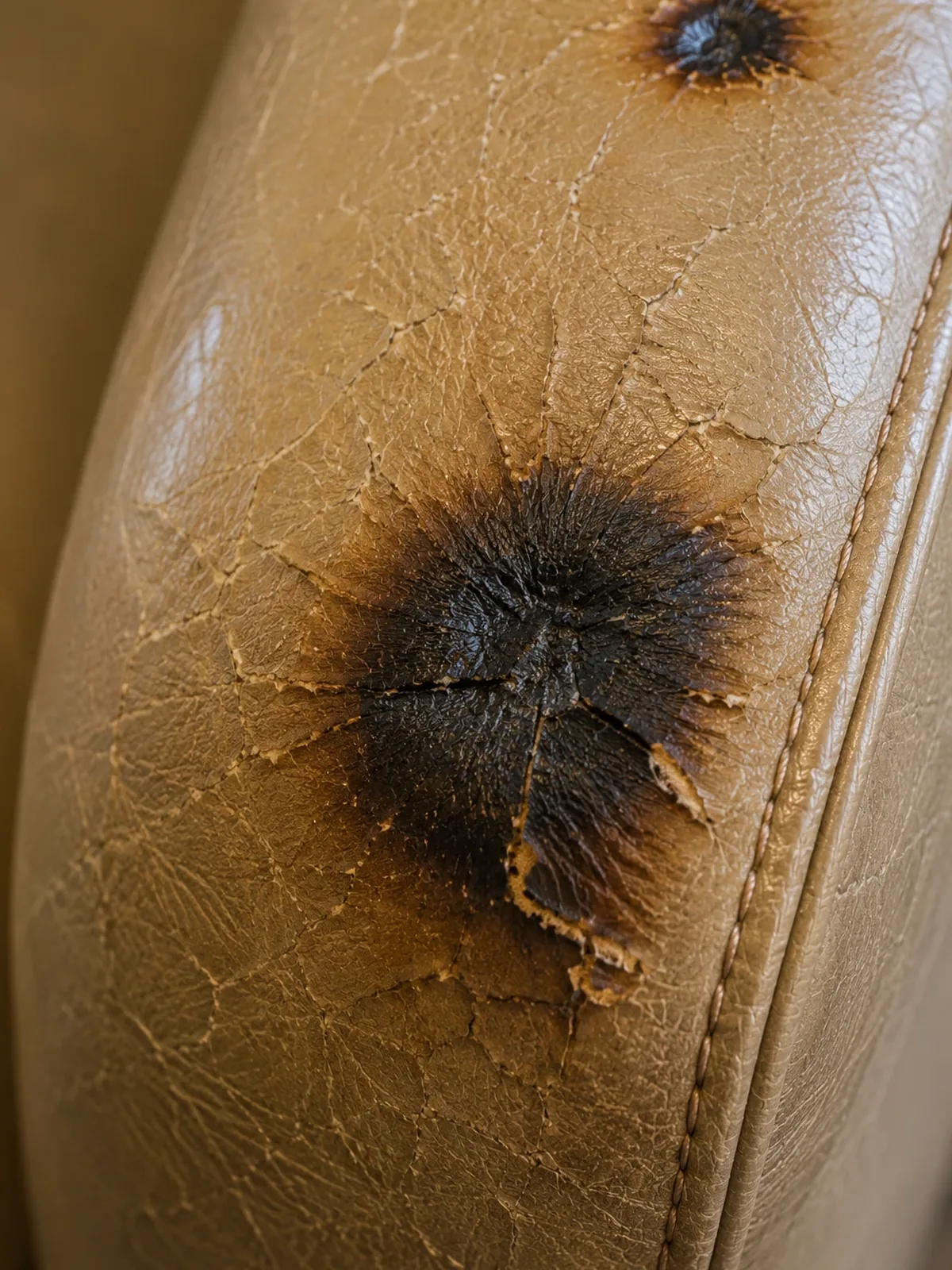
The rim has been cooked hard
Heat shrinks and stiffens the edge. A burn has its scorched rim cut back to sound leather first, or the repair sits on a brittle ring.
A tear beside a button, start to finish
A deep-buttoned seat back, opened along a flex line. Most leather tear repair runs like this, in the room.
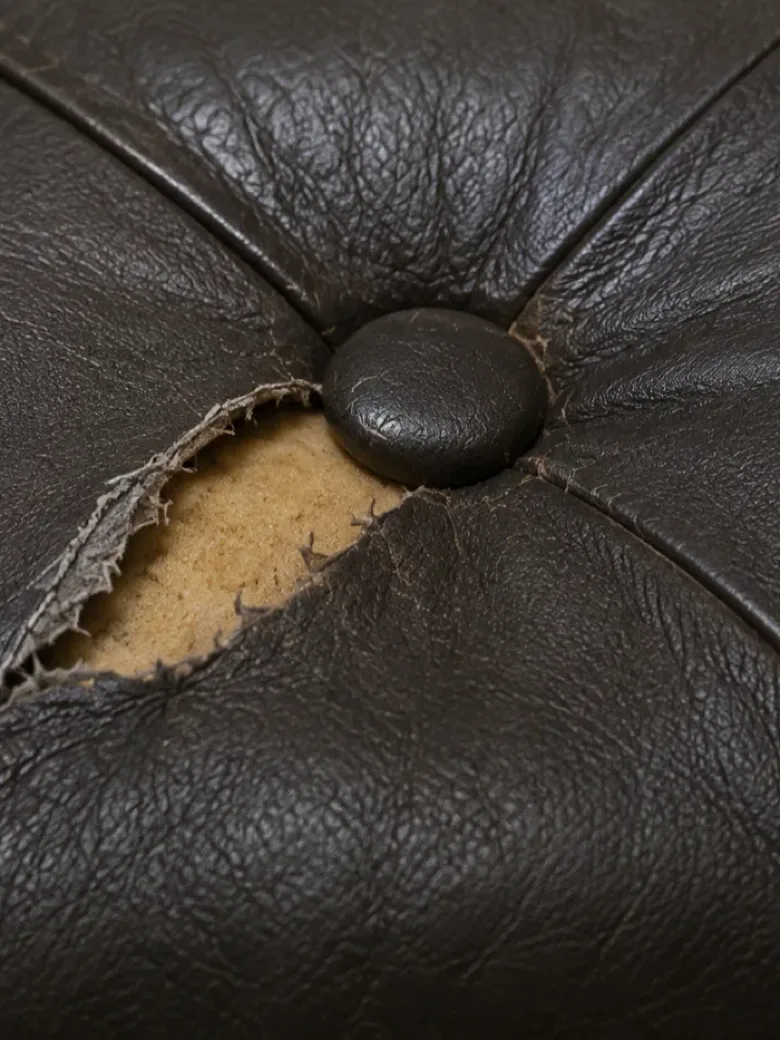
Read the opening
Missing material or brittle edges decide whether it closes or has to be bridged.
Support it from behind
Backing goes in through the opening and is bonded under both edges.
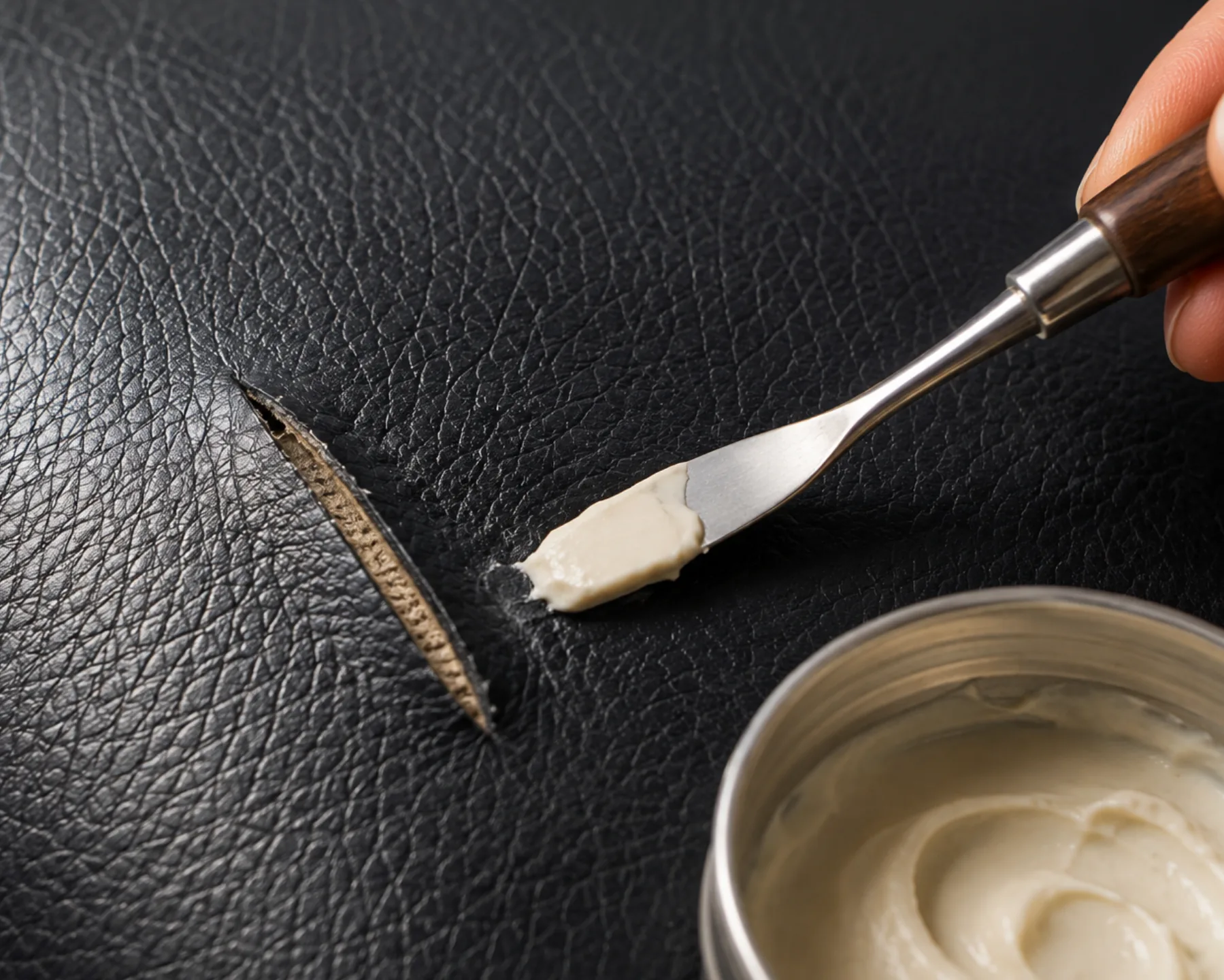
Build and grain the surface
Flexible filler in thin passes, then the panel's own grain pressed back in.
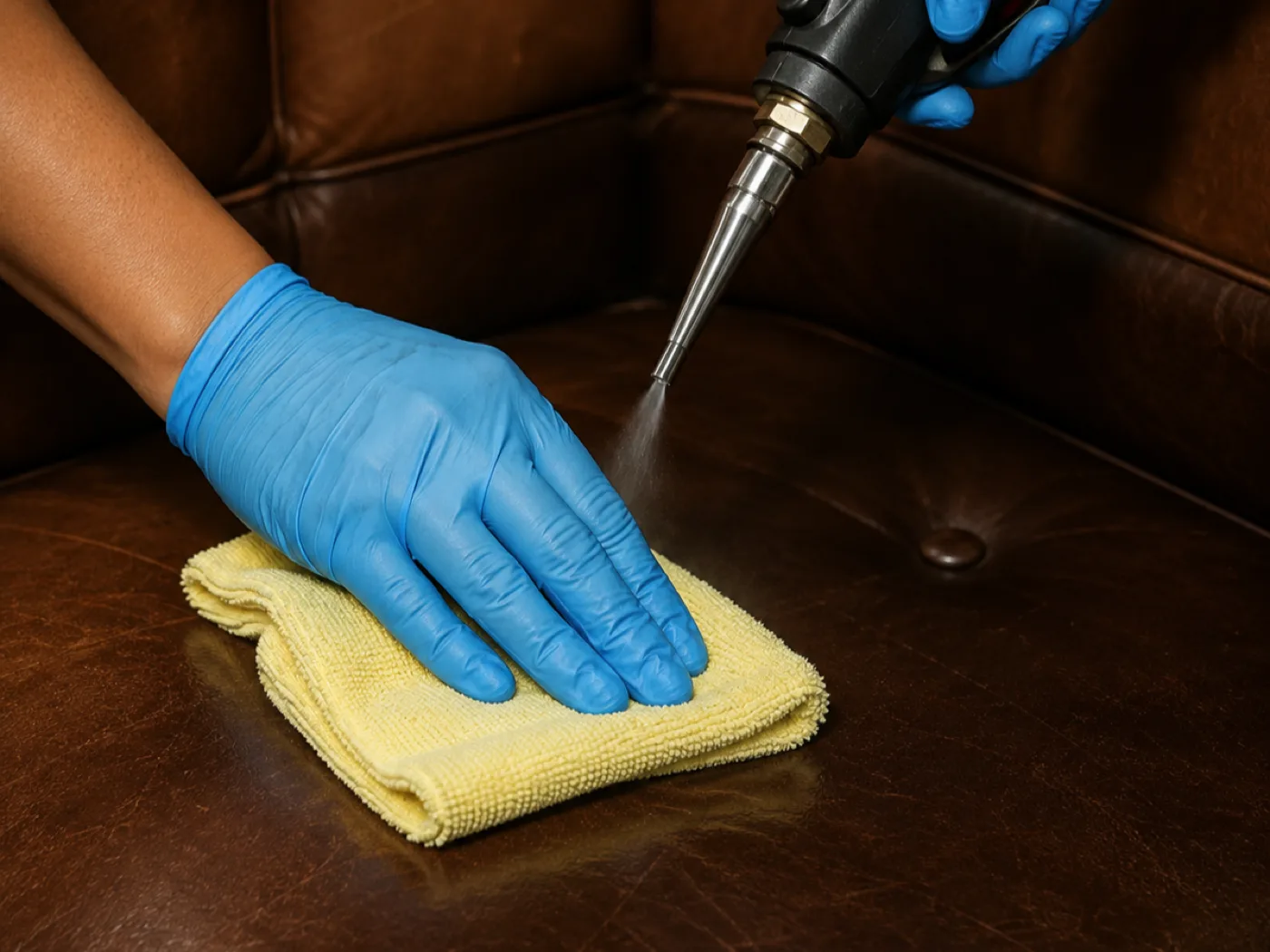
Colour, then seal
Matched to the piece as it has aged, then sealed at the sheen around it.
Not everything torn should be repaired
The question is rarely how long the tear is, but whether the leather around it can still hold a join. Leather tear repair is one of three answers, and we will tell you which.
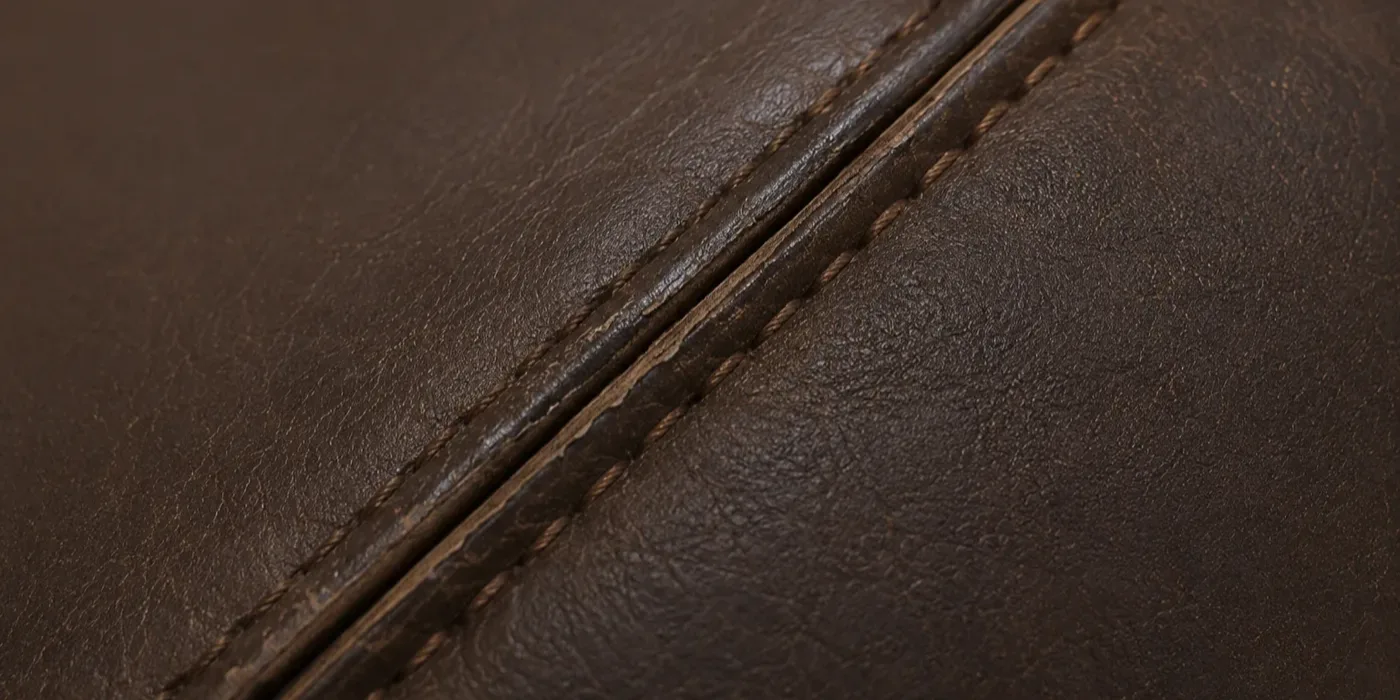 Repaired in place
Sound leather around a single opening. Backed, built, grained and matched where the piece stands, booths included.
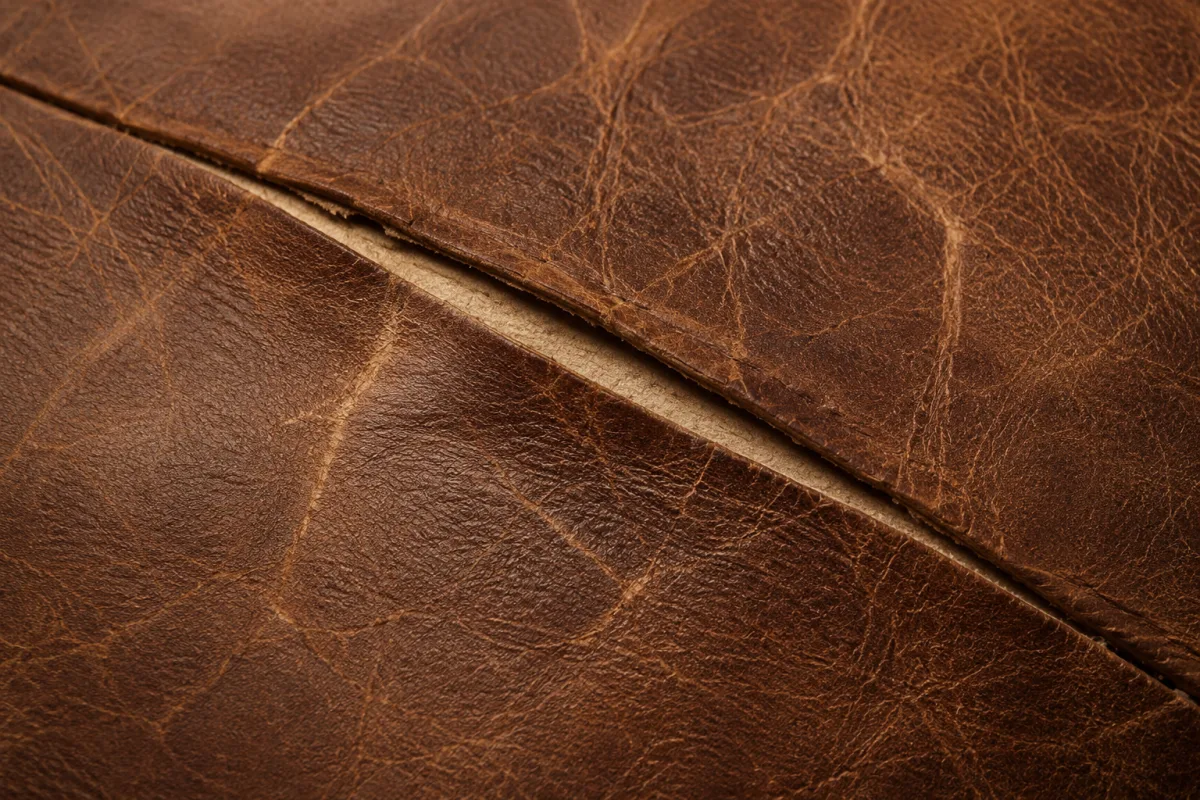 Panel replaced
A split running the length of a panel, or several openings on one face. The panel comes out and a new one goes in to the original pattern.
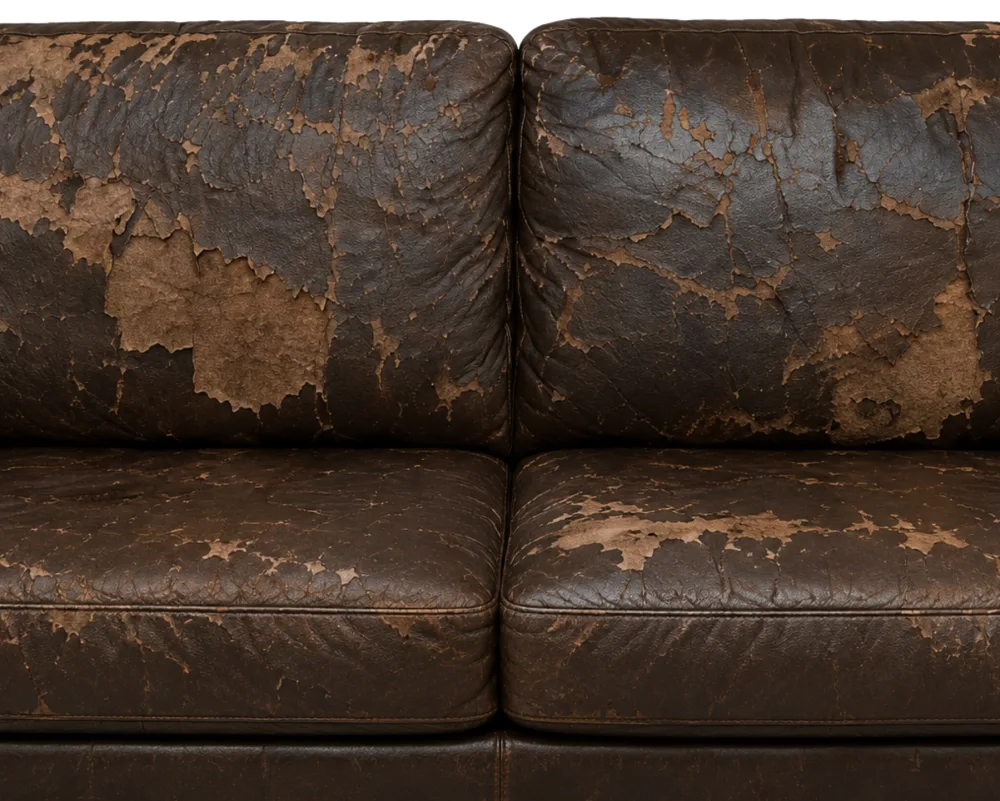 Reupholstered
When the hide has gone dry and brittle across the piece, a repair holds and the leather beside it opens next. That is a reupholstery job, and we will say so.
Runs of matching seating are quoted together — see bulk projects.
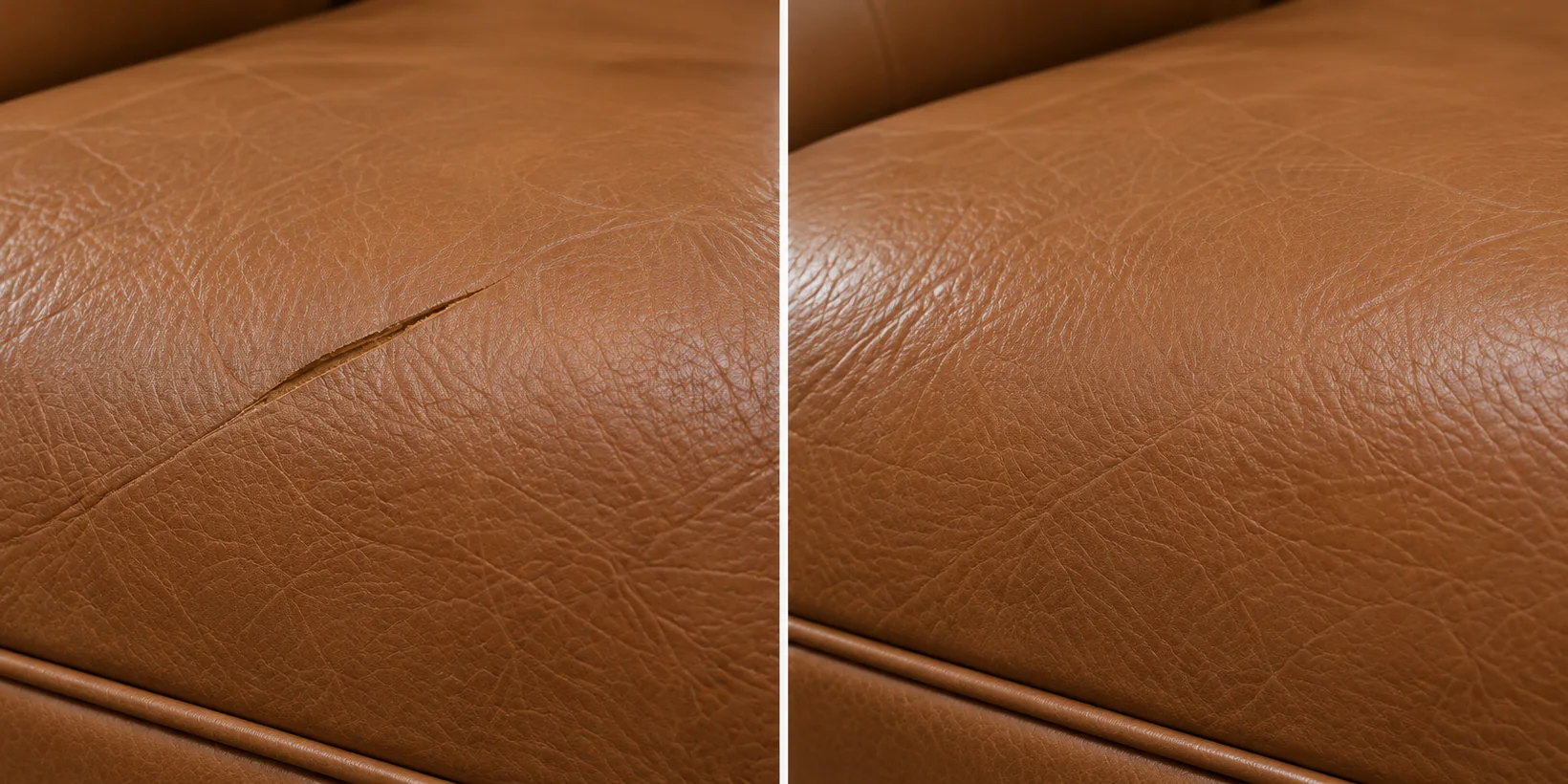
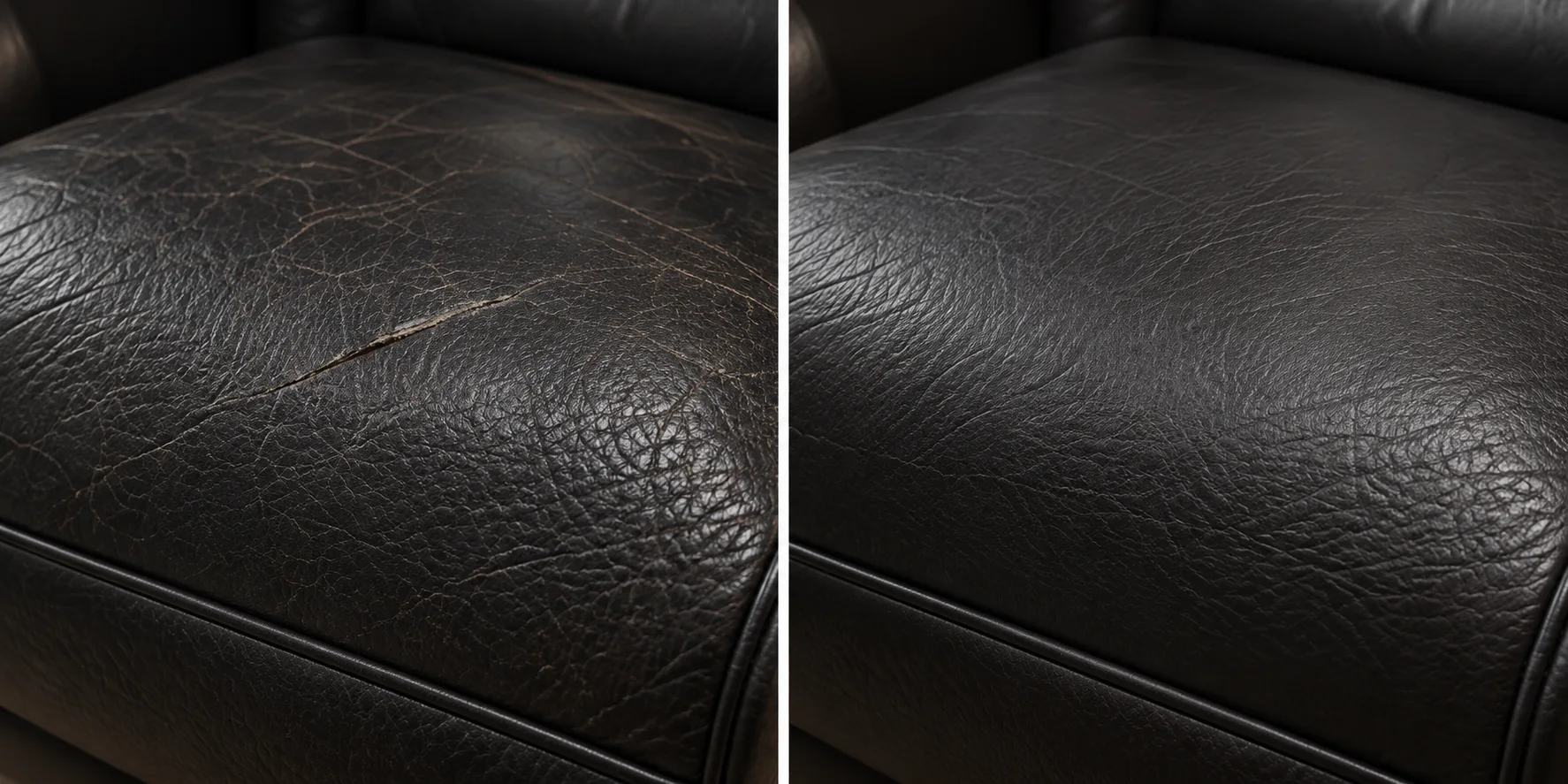
What a closed tear looks like
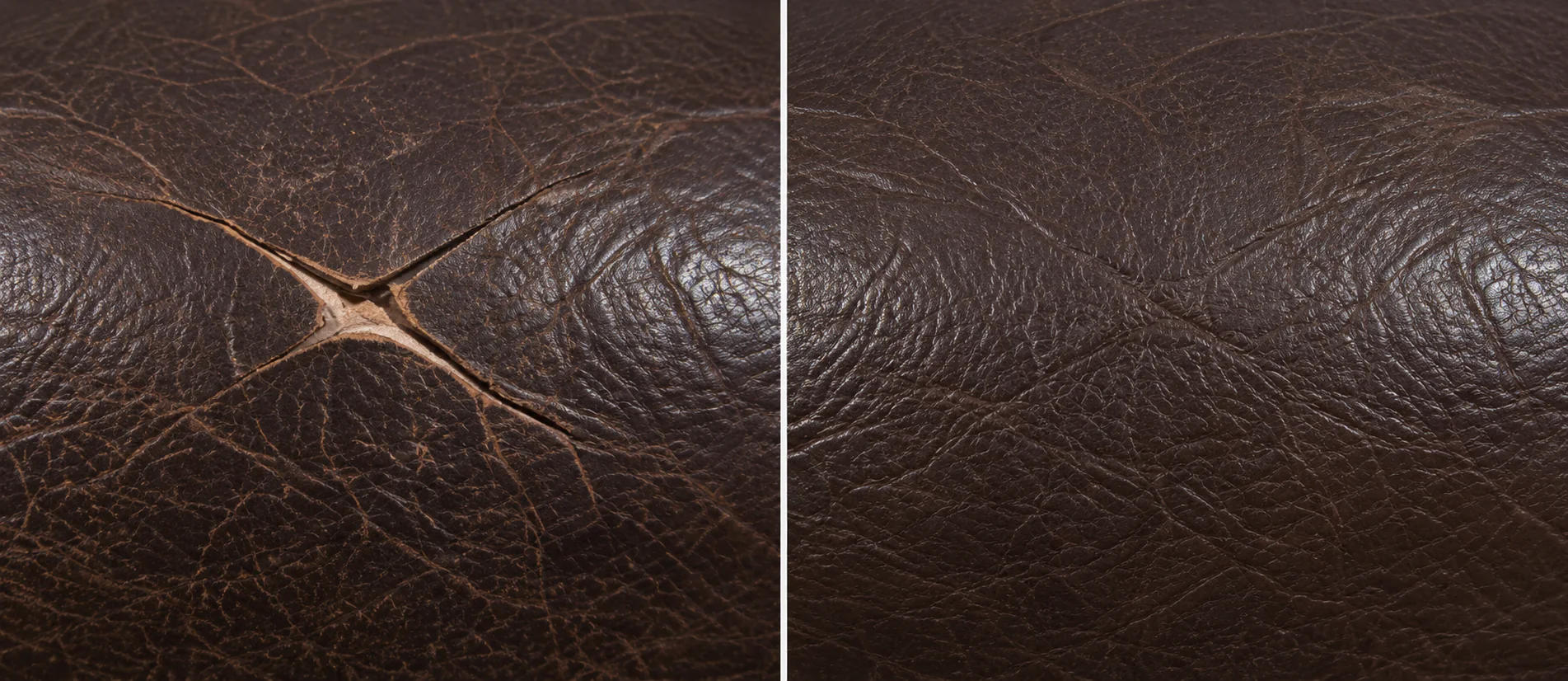
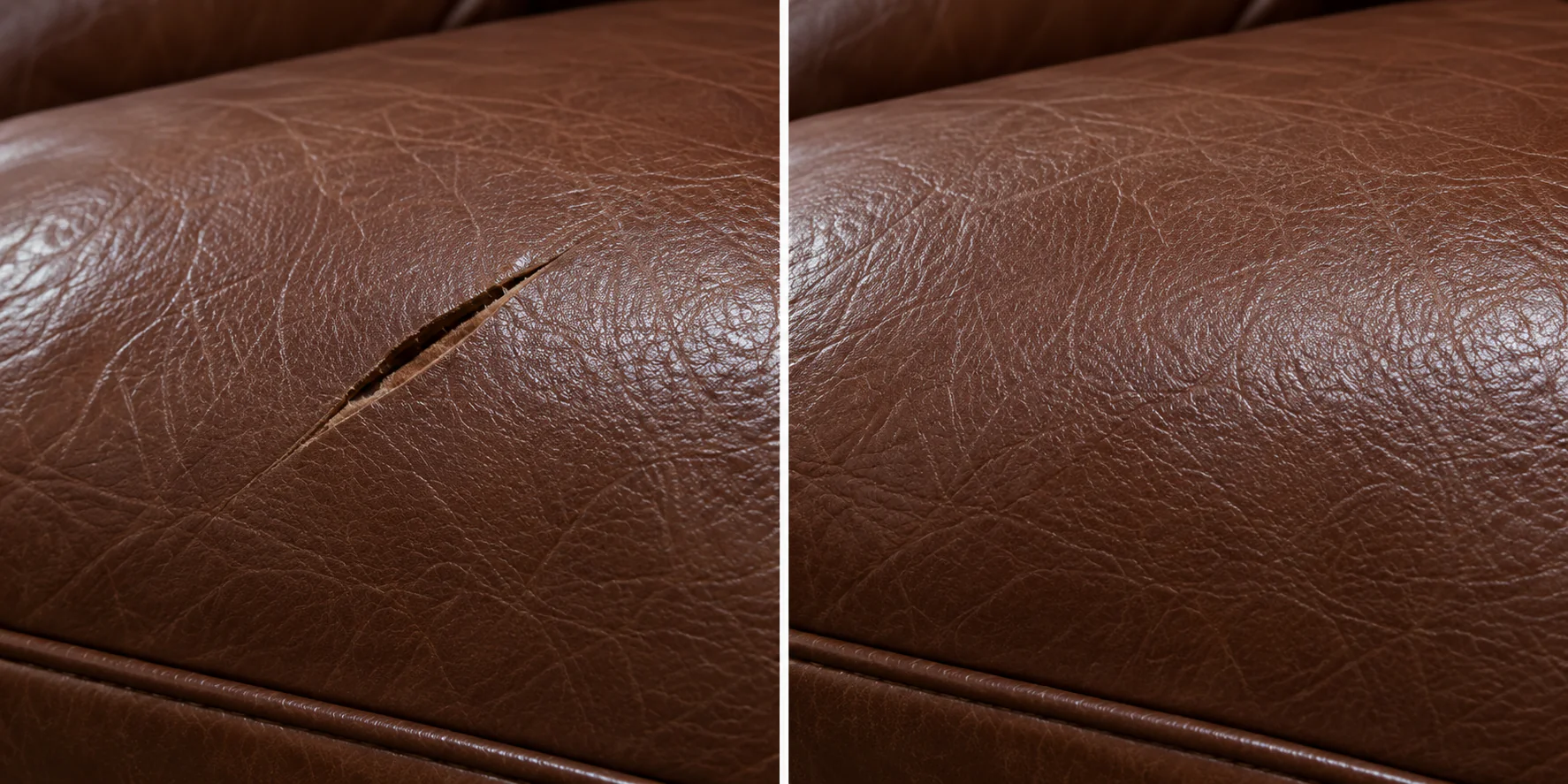
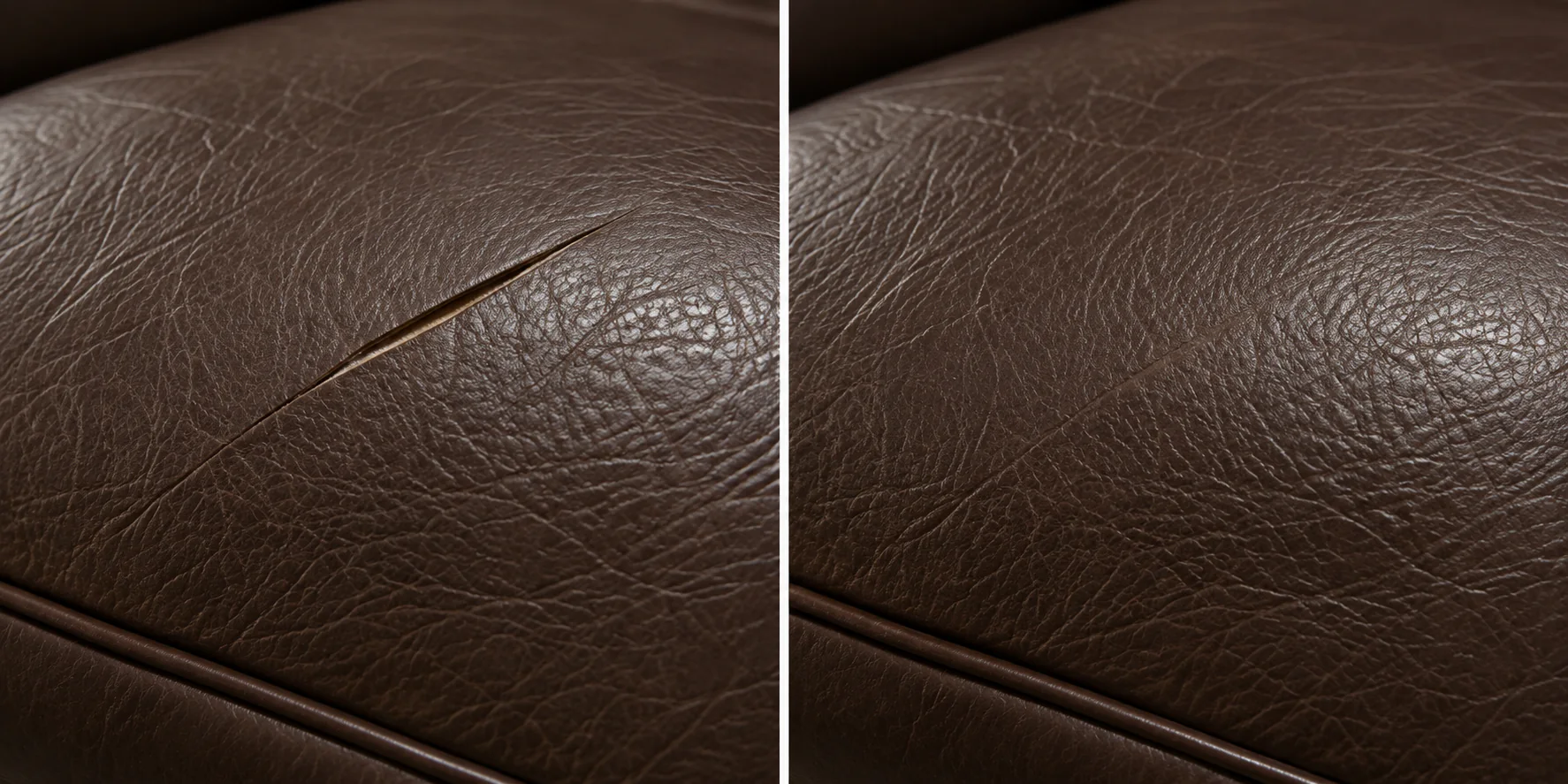
Same crop, same light. The test is whether you can find the line without being told where it was.
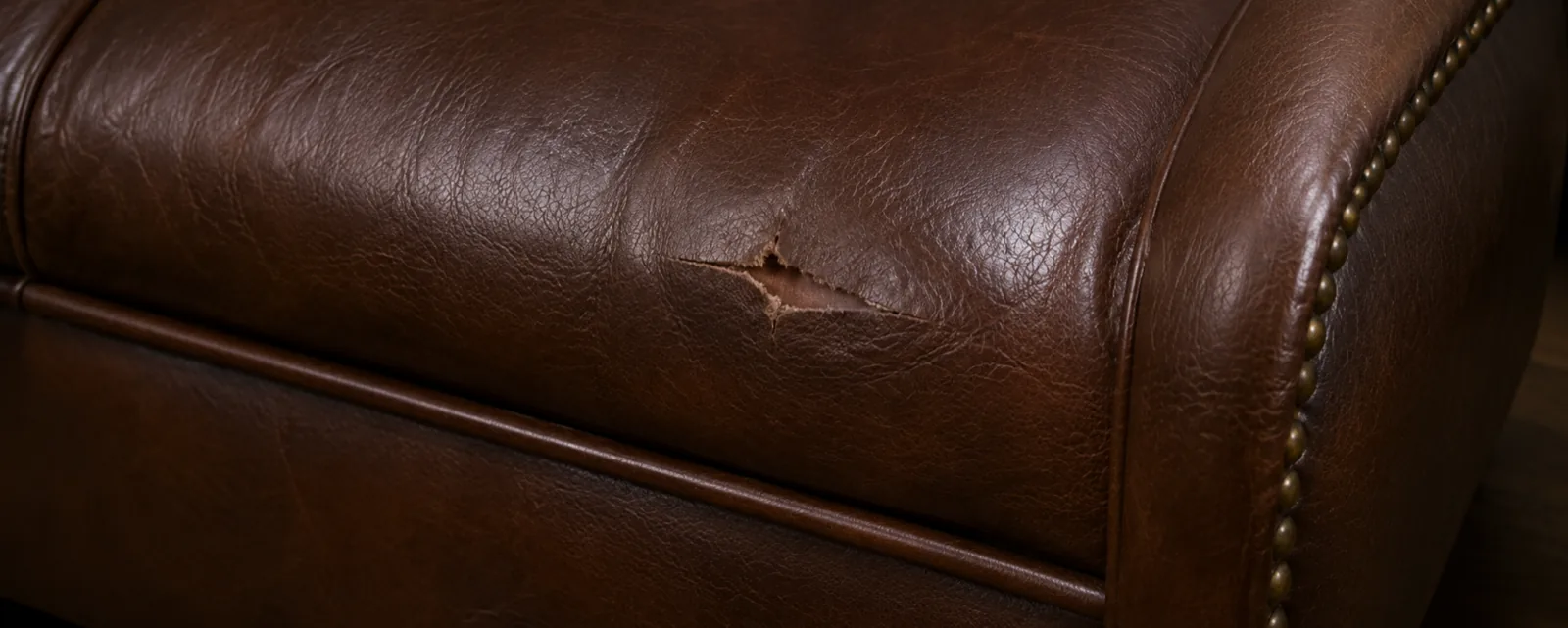 Before
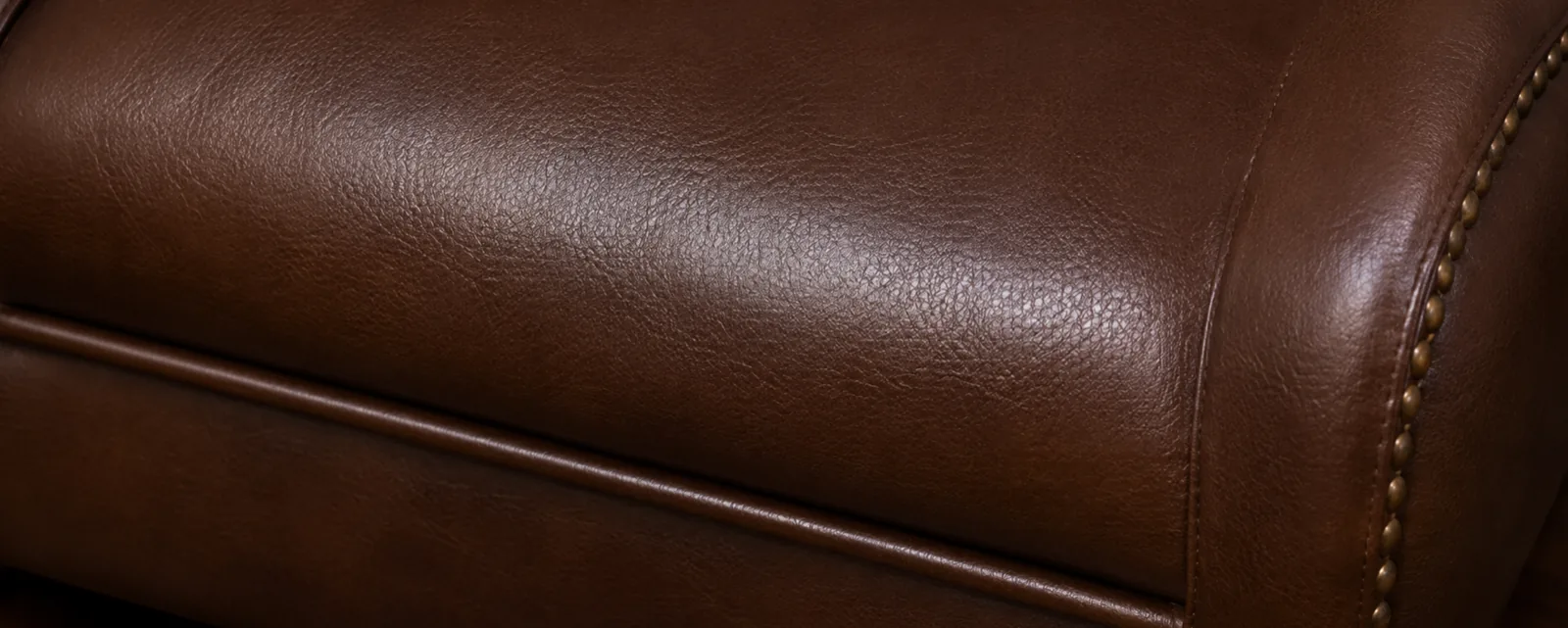 After
After