NYC, the five boroughs & New Jersey

Marks That Won't Wipe Off

Body oil, ink, wine, water rings, dye off a pair of jeans. Leather stain removal in your own home — we draw the mark out, then put the colour and the sheen back so the panel reads whole again.

What lands on leather

Types of leather stains we treat

The substance decides how leather stain removal starts. Depth decides how long it takes.

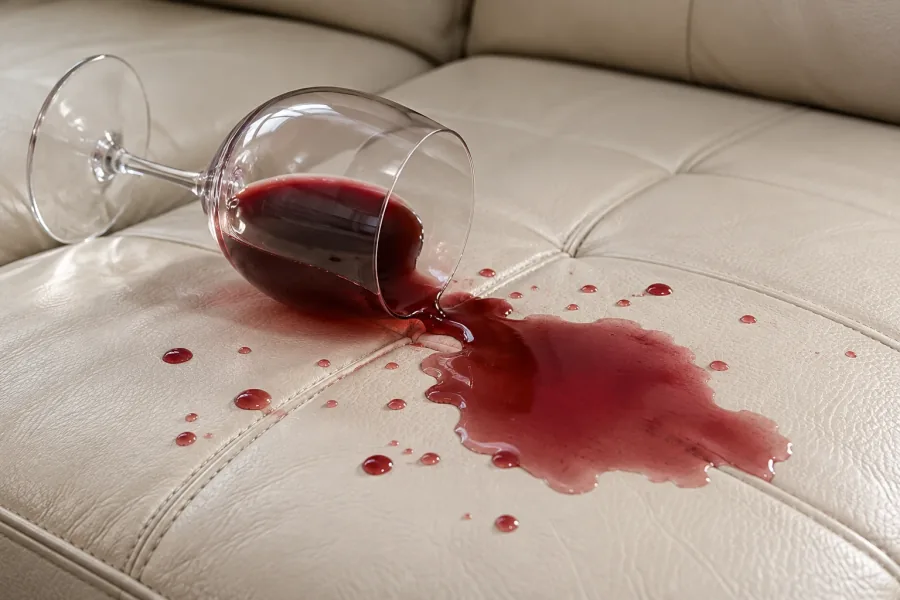
  • Red wine spilled from a tipped glass across a cream leather sofa seat

    Food & Drink

    Sugar and tannin set like a dye as they dry.

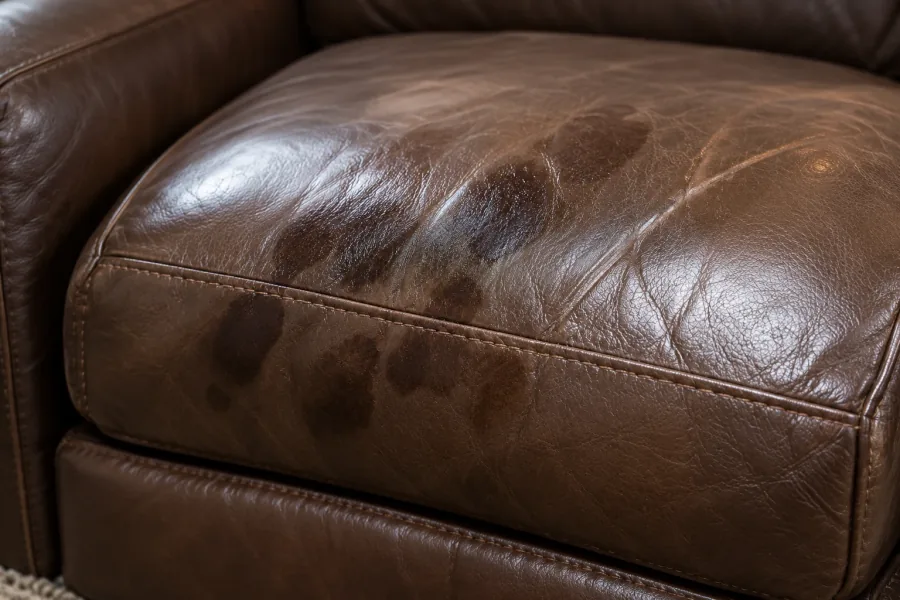
  • Dark patches of body oil worn into a brown leather seat cushion

    Body Oils

    Headrests and arm tops. The most common job here.

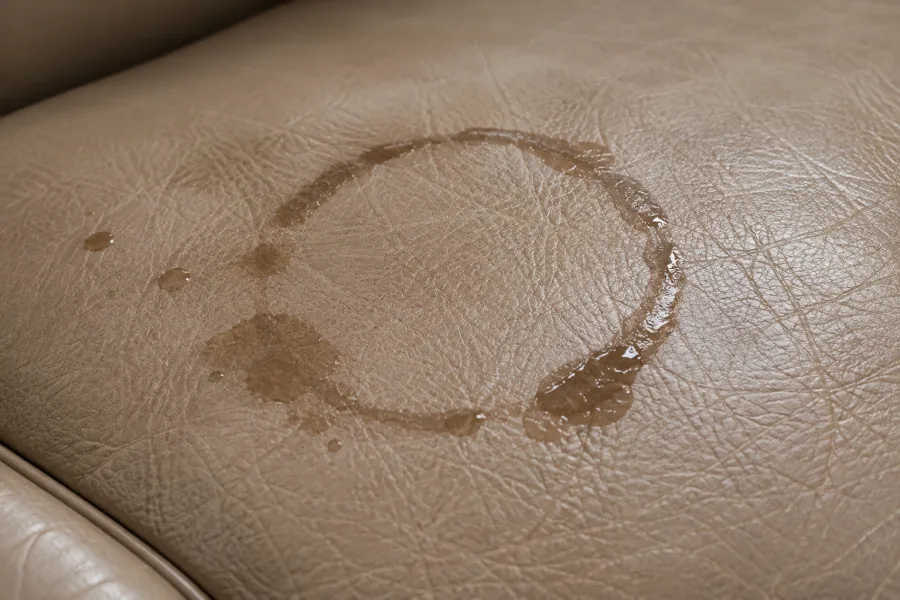
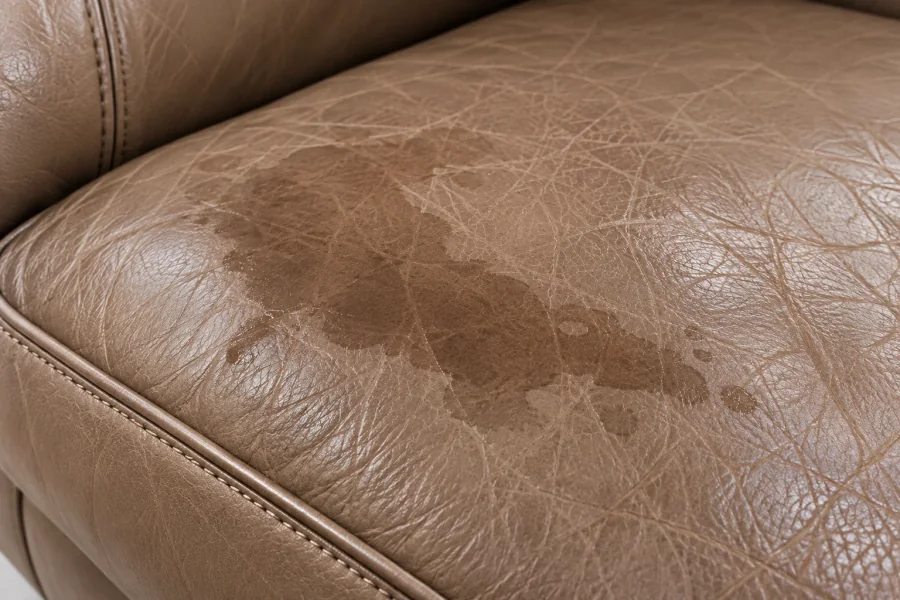
  • A dried water ring left on a tan leather seat

    Water Marks

    Not dirt. Minerals left behind in a ring.

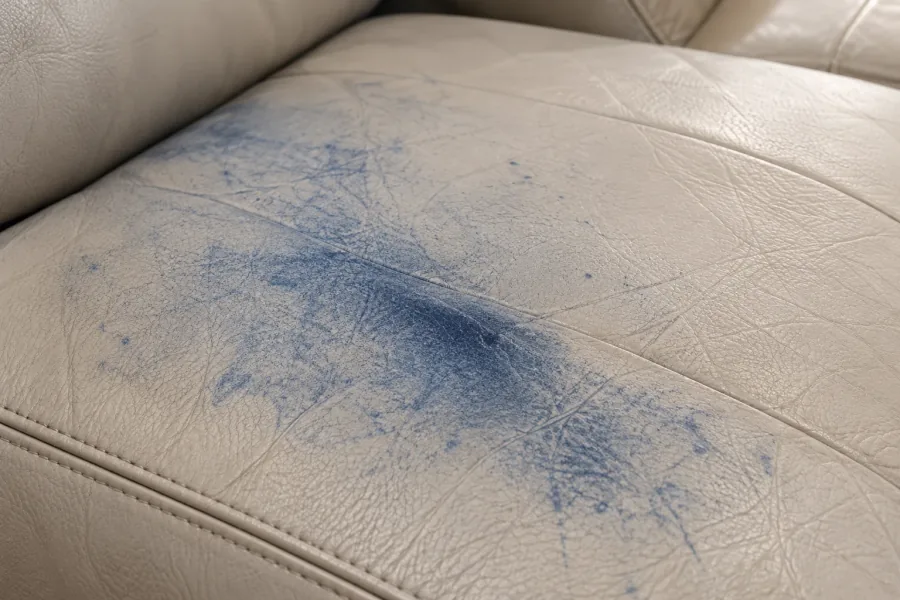
  • Blue denim dye transferred onto a pale grey leather seat cushion

    Dye Transfer

    Indigo off dark jeans. Sits on top, not in.

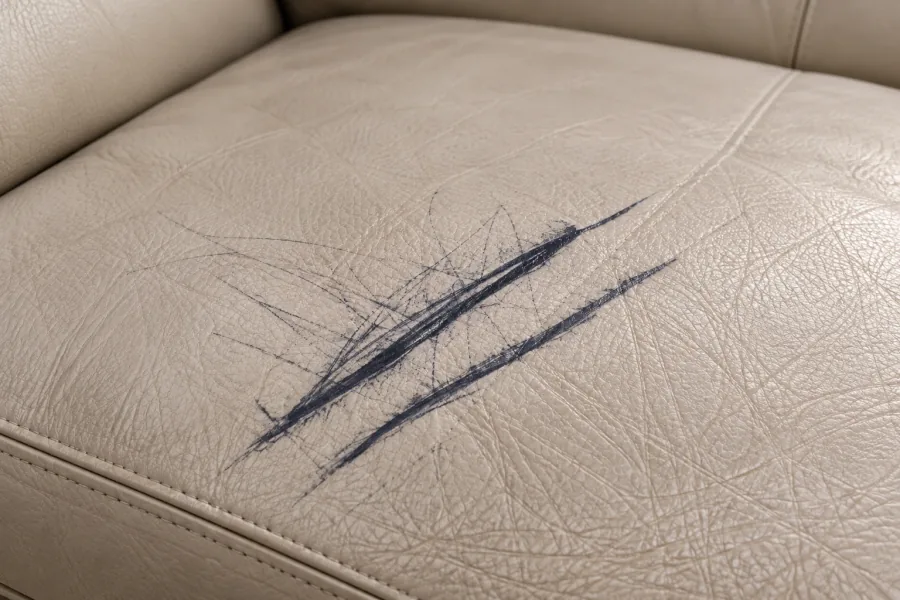
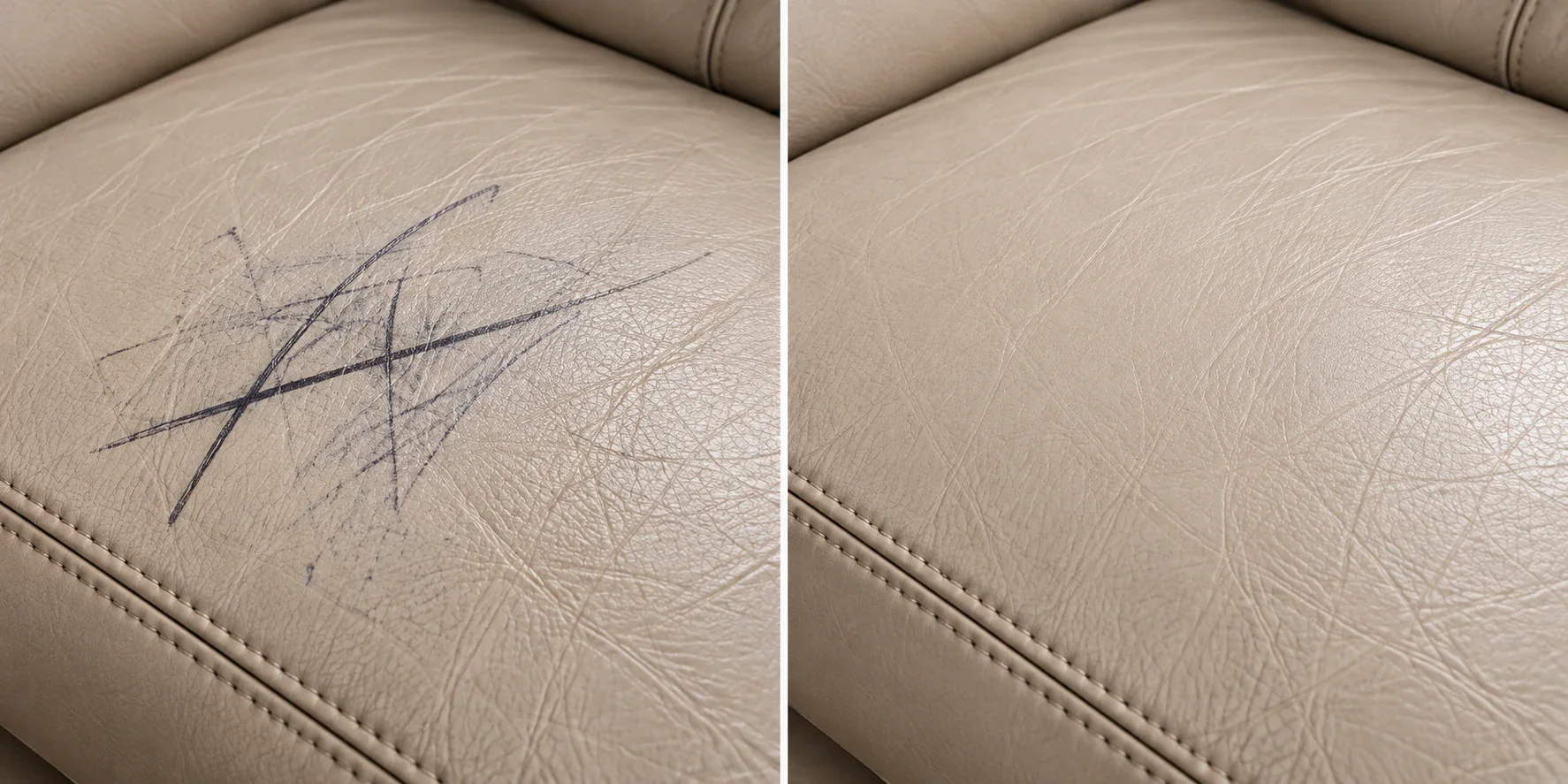
  • Dark blue ballpoint pen marks scribbled across a beige leather cushion

    Ink Stains

    Ballpoint, marker, newsprint. Usually in the coating.

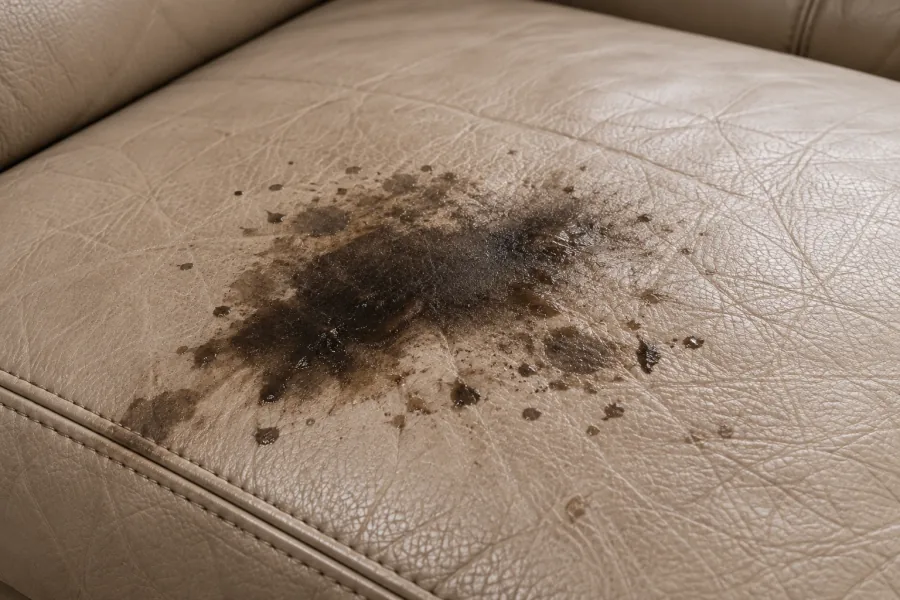
  • Dark grease and oil splatter across a beige leather seat

    Grease / Oil

    Wicks along the fibre. Drawn back out slowly.

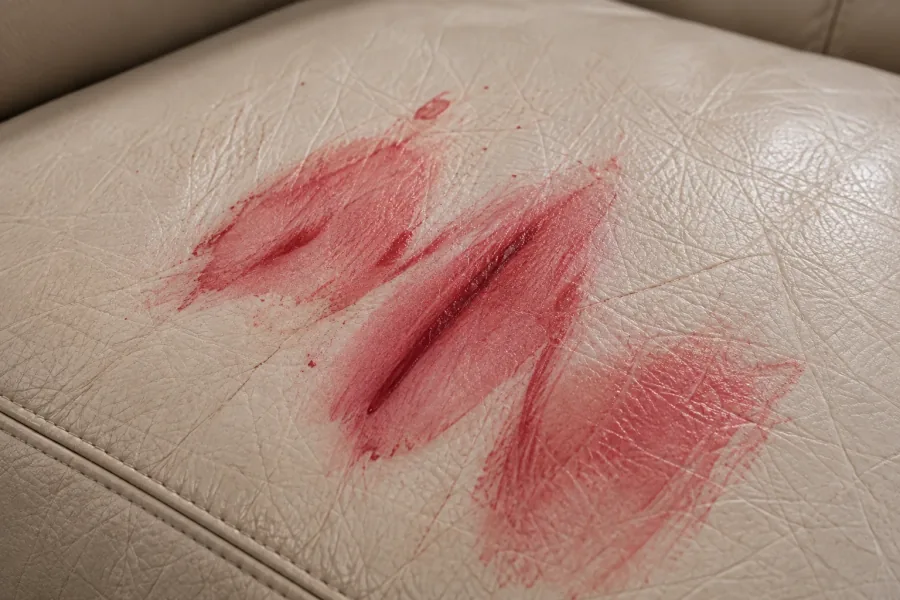
  • Pink lipstick smeared into a cream leather seat cushion

    Makeup & Cosmetics

    Pigment carried in oil. Comes away in two stages.

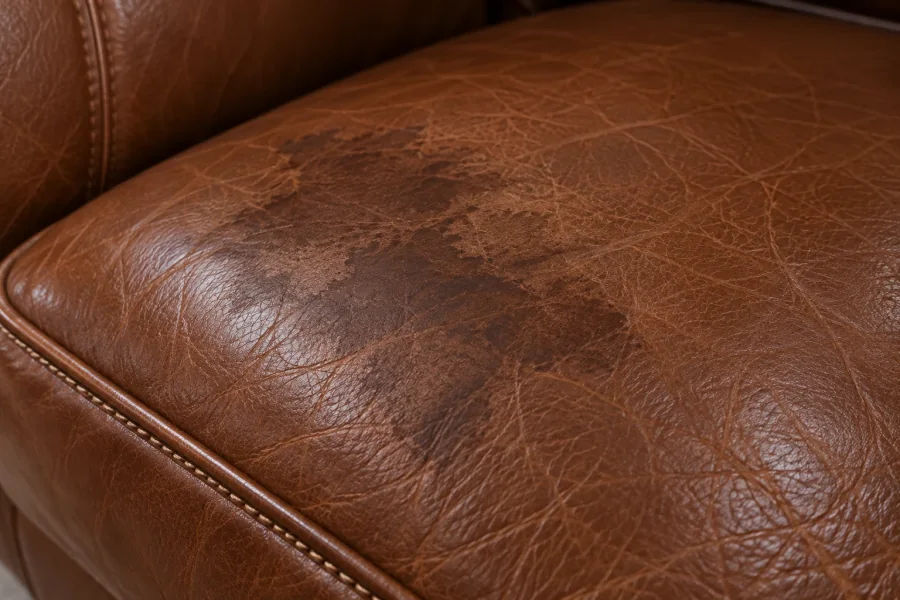
  • A dark blotchy stain of unknown origin on a tan leather seat cushion

    Unknown Stains

    Years of hands and soil. We identify it first.
Which problem you actually have

Something was added, or something was taken away

Both look the same from the doorway. They are opposite jobs, and leather stain removal only answers one.
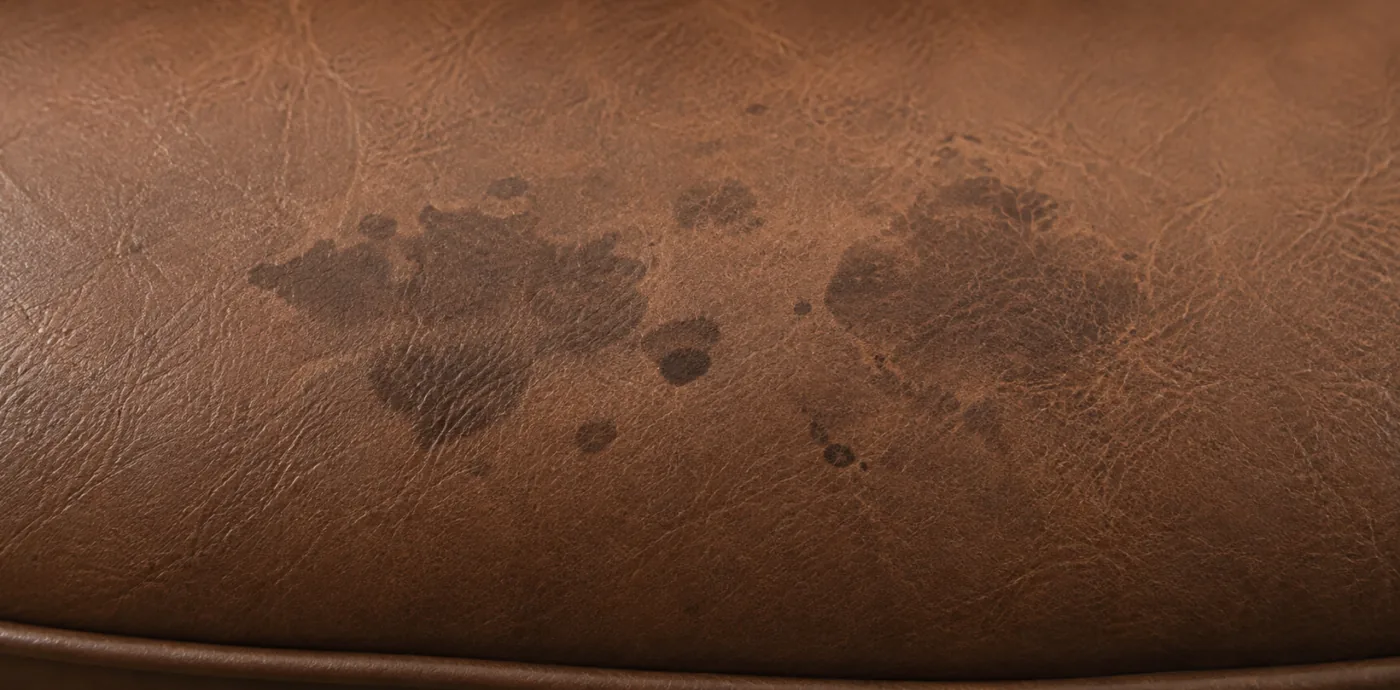
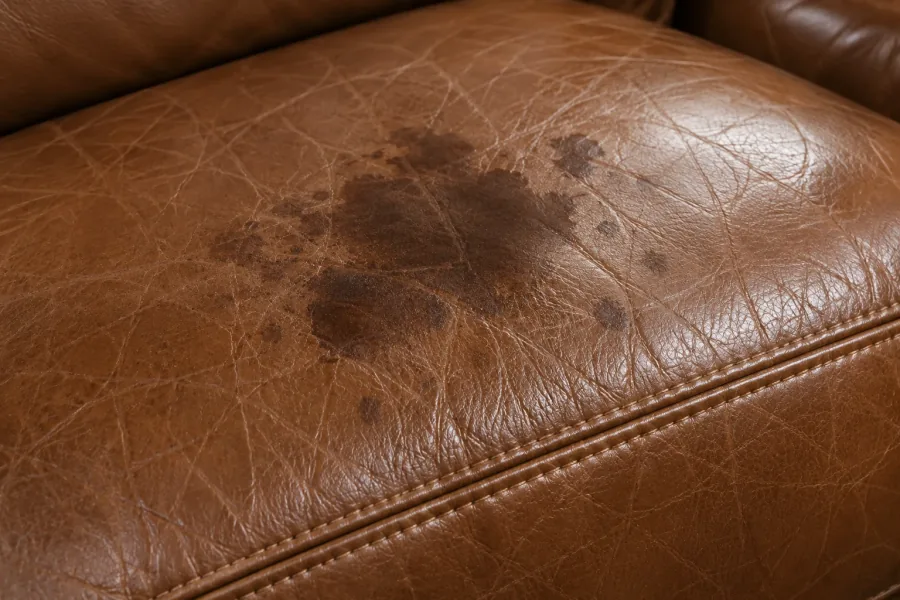
Dark blotchy stains on a brown leather seat cushion
Added

A substance is sitting in the leather

Oil, ink, food, drink, sweat. Darker than the leather around it.

The work is removal, then rebuilding the finish it took.
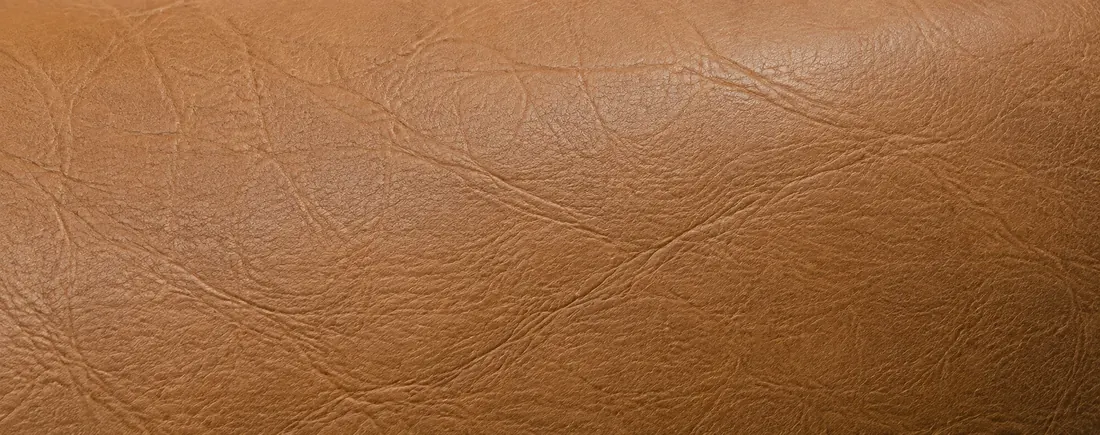
Tan leather panel with colour faded pale and flat across the centre
Taken away

The colour has been lifted out

Bleach, sanitiser, an over-strong cleaner, sun. The mark is lighter, and cleaning will not bring it back.

That is colour restoration. Pigment needs replacing, not lifting.

Up close, at the surface

Not every mark is a stain

Five different things that look identical from standing height. Which one it is decides whether leather stain removal is the right service.

  • Close-up of dried spotting sitting on the finish of a tan leather cushion

    Surface contamination

    Still sitting on the finish. Comes away with cleaning.

  • Close-up of a dark stain absorbed into a brown leather seat cushion

    Absorbed stain

    Into the hide. Drawn out over several passes.

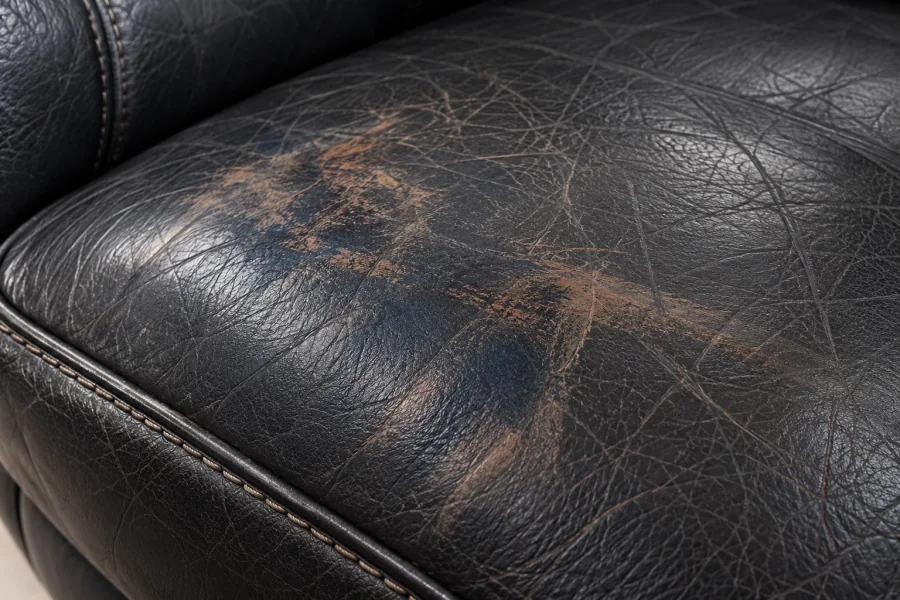
  • Close-up of brown dye transferred onto a black leather seat cushion

    Dye transfer

    Colour off denim, a bag, a throw.

  • Close-up of a pale water mark and tide line on a taupe leather cushion

    Water mark

    A tide line left where the water dried.

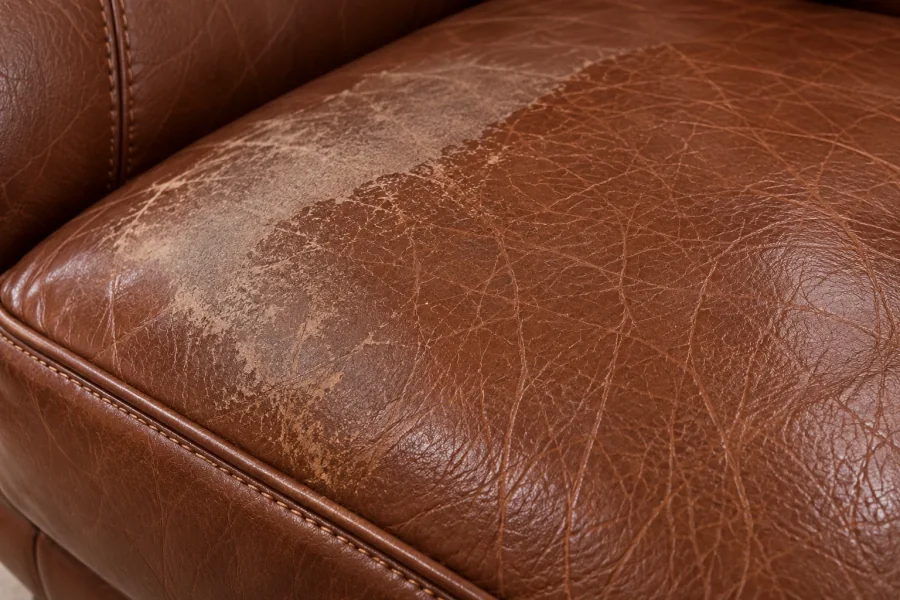
  • Close-up of a worn stripe where colour has come off a brown leather cushion

    Finish loss

    Nothing added. Pigment gone, and put back.
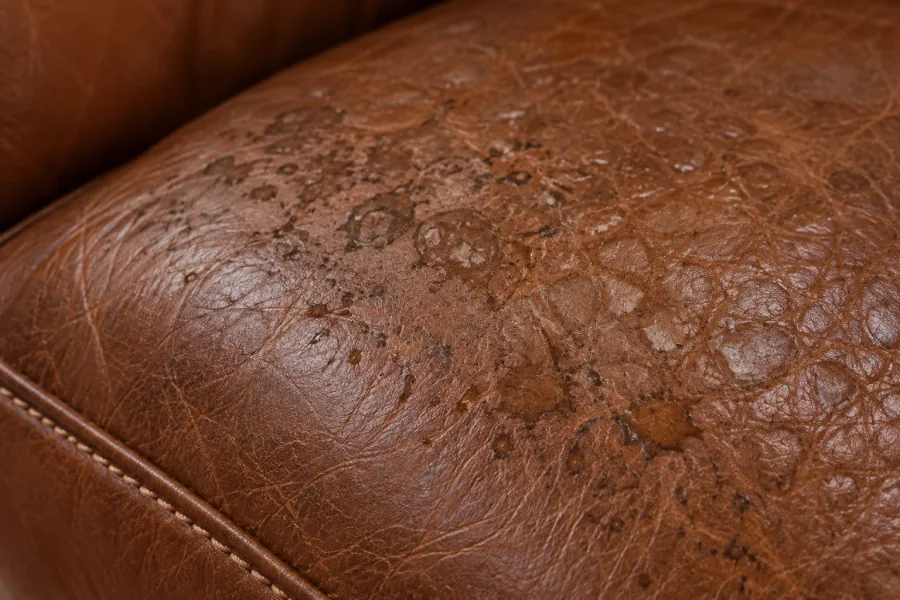
Leather with no finish on it

Stains on aniline leather

Dyed through, sealed with nothing. The hide drinks a spill in minutes, so leather stain removal here is slower and gentler.
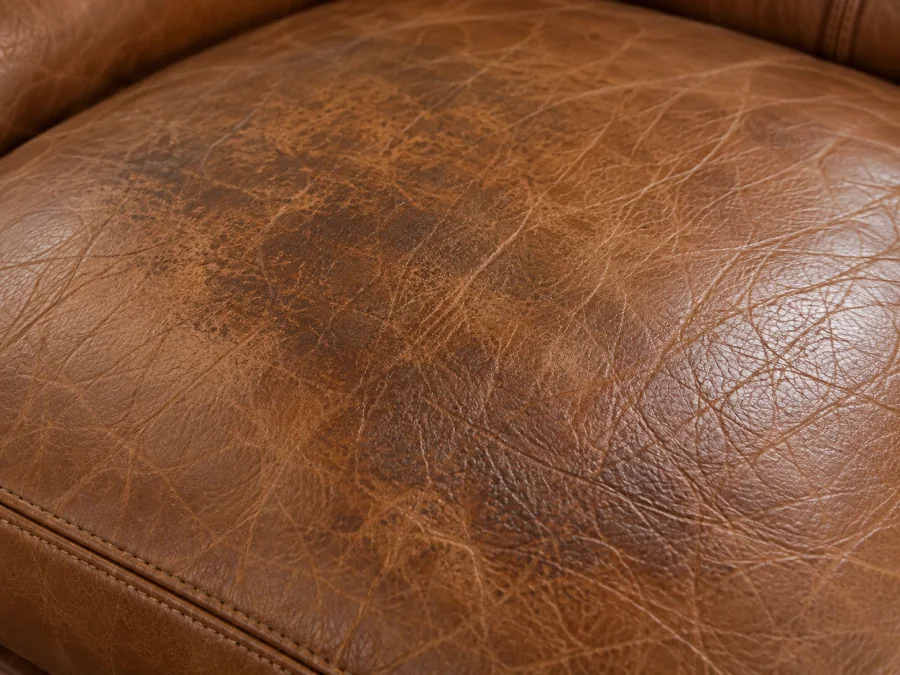
Darkened patch of body oil on the headrest of a tan aniline leather sofa

Body oil darkening

Headrests go first. Darkens from the inside out.
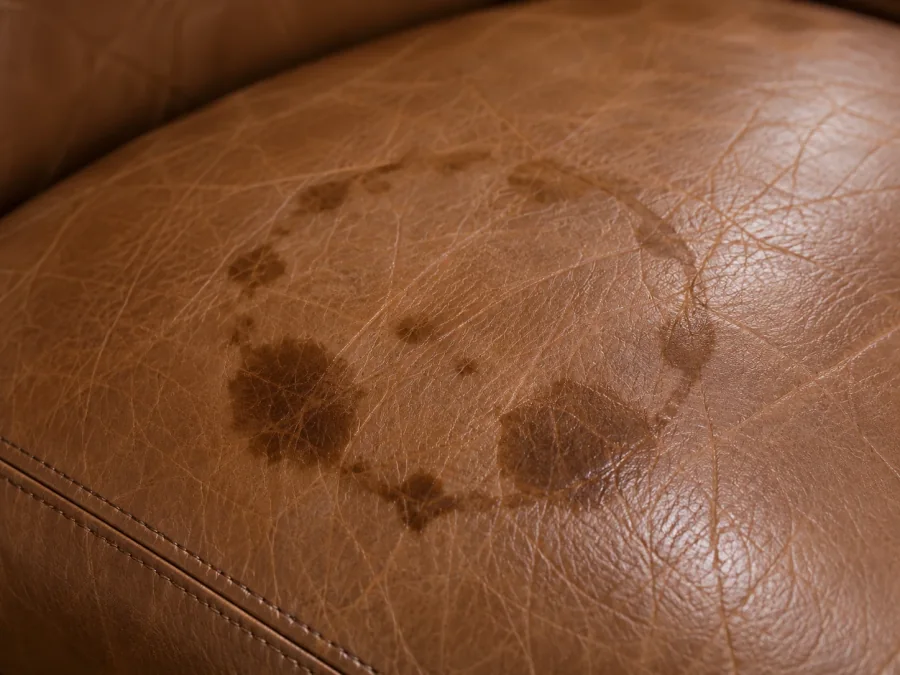
Ring-shaped water mark dried into a tan aniline leather cushion

Water marks

Dust and loose dye left at the edge as it dries.
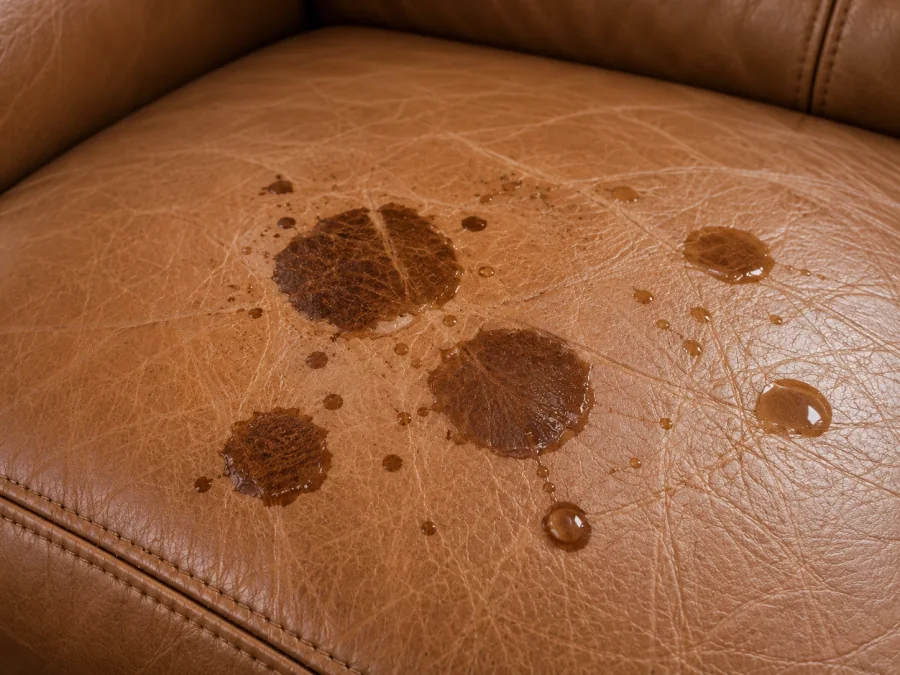
Coffee droplets soaking into the seat of a tan aniline leather sofa

Food & drink stains

Absorbed in minutes. Tannin sets as a second dye.
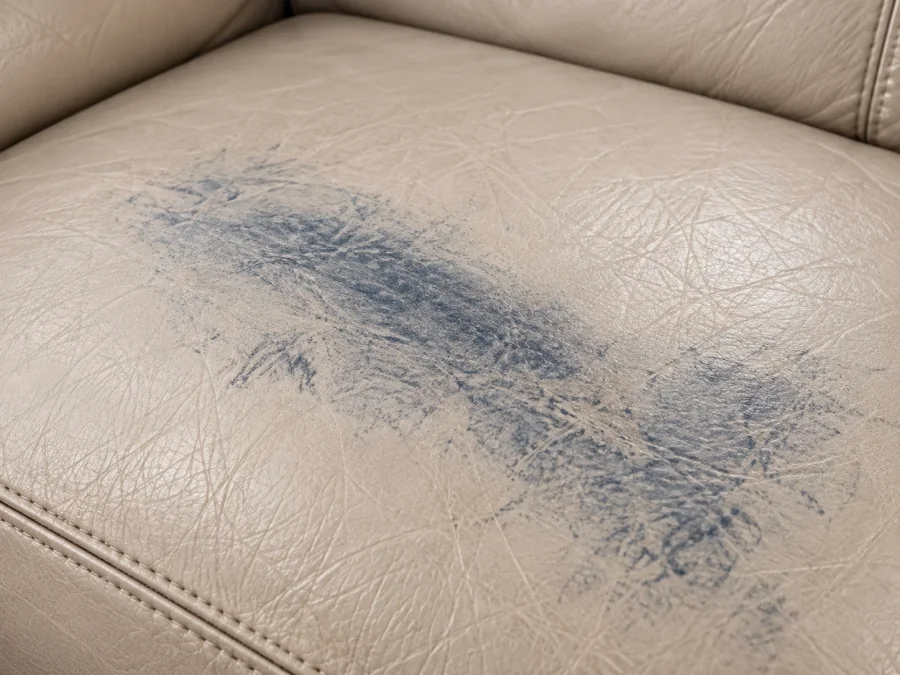
Blue indigo dye transferred from denim onto pale aniline leather

Dye transfer

Moves off new denim under body weight. No spill needed.
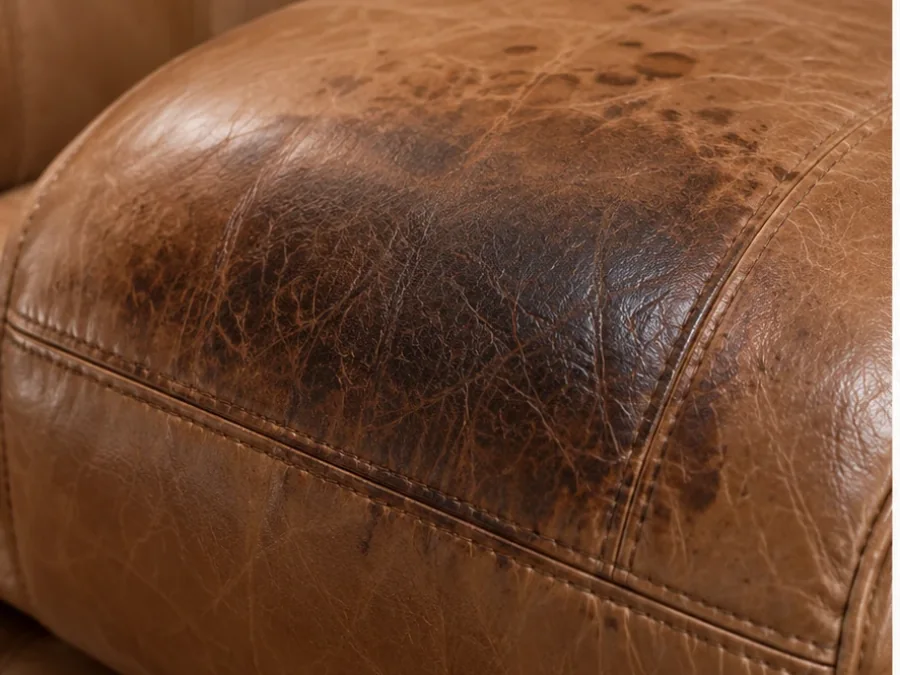
Aniline leather seat shaded unevenly by years of handling and body oil

Uneven patina

Not damage. Even it out, never strip it back.

How far in it went

The substance stopped at one of three places

Depth decides whether the job takes twenty minutes or three passes. We work it out on site.
01
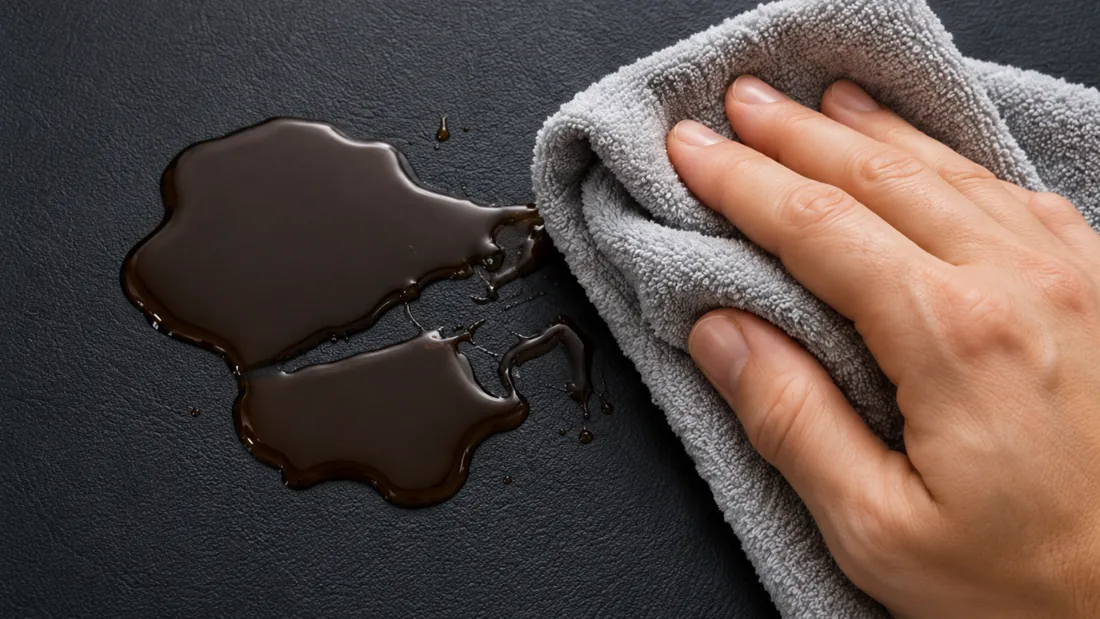
A dark liquid spill being lifted off a black leather surface with a cloth

On top of the finish

It beaded and sat there. Lifts with a pH-neutral cleaner, no colour work.

Lifts clean
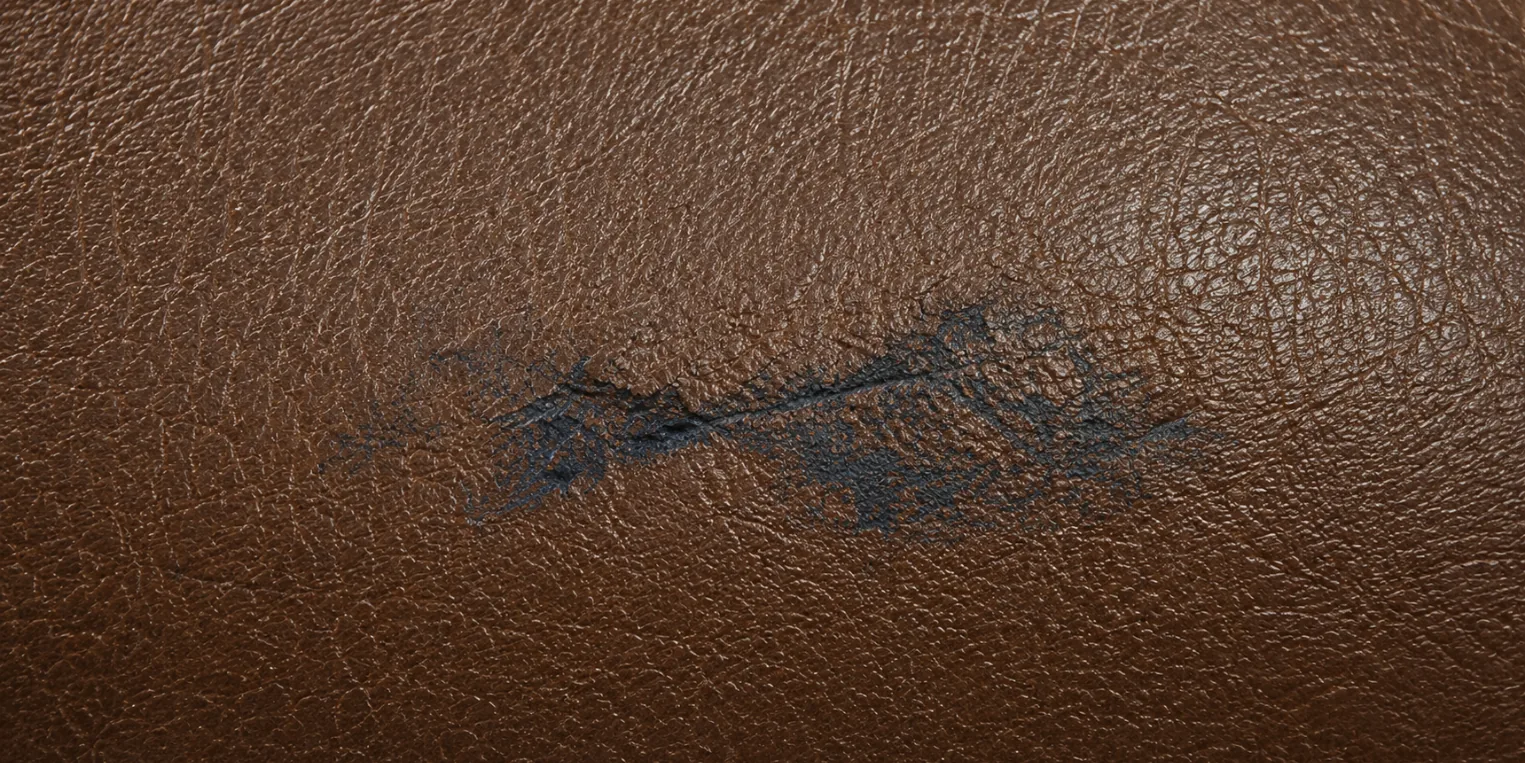
02
Dark blue ink bonded into the finish of a brown leather panel

Into the finish

Ballpoint, indigo or wine on a pigmented panel. Bonded to the coating, never into the hide. We lift that coating locally and rebuild it.

Lifts, then needs re-finishing
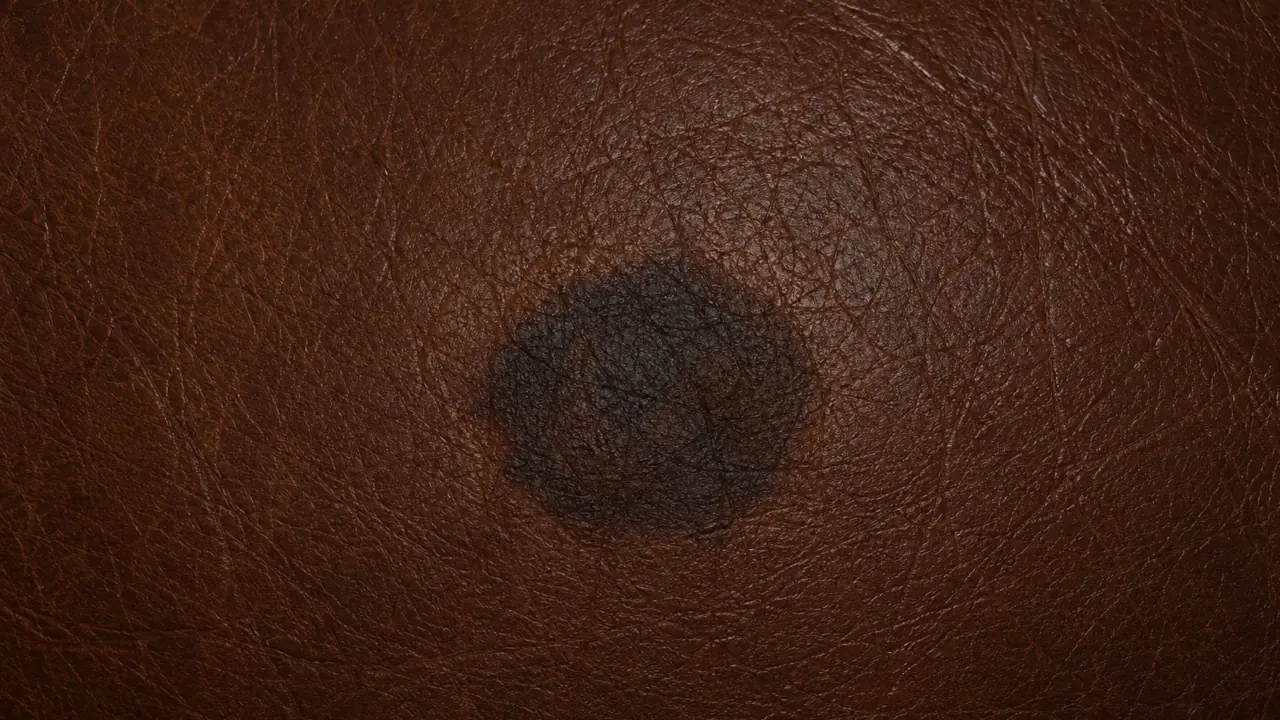
03
A dark oil saturation blot soaked into brown leather

Into the hide

Oil or ink on aniline, suede or nubuck. No finish, so it went straight in. Drawn back out over repeated light passes, with a ceiling agreed before we start.

Drawn out over several passes
Why waiting costs you

A stain is the one kind of damage that keeps moving

A scratch is the same size next year. A stain is not. The same spill is three different leather stain removal jobs depending on when you call.
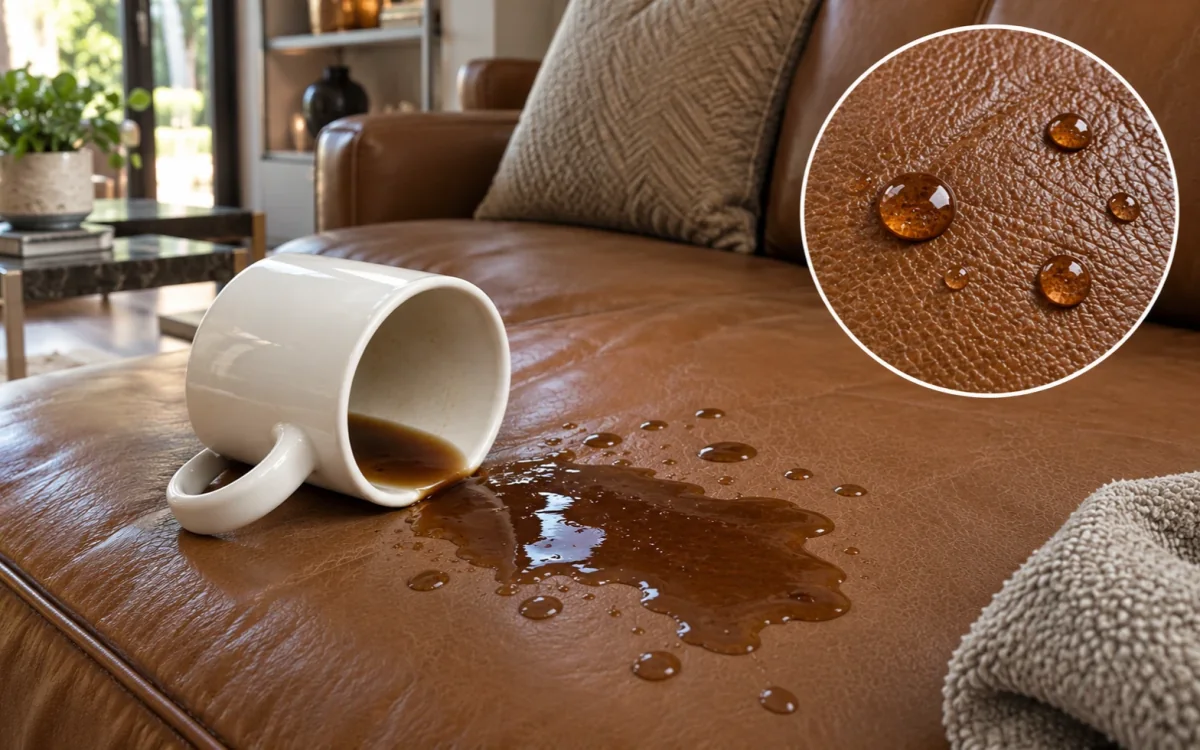
Coffee spilled from a tipped mug beading on the surface of a tan leather sofa
First hour

Still on the surface

Blot, never rub. Press with a dry cloth and lift. On coated leather that often ends it.
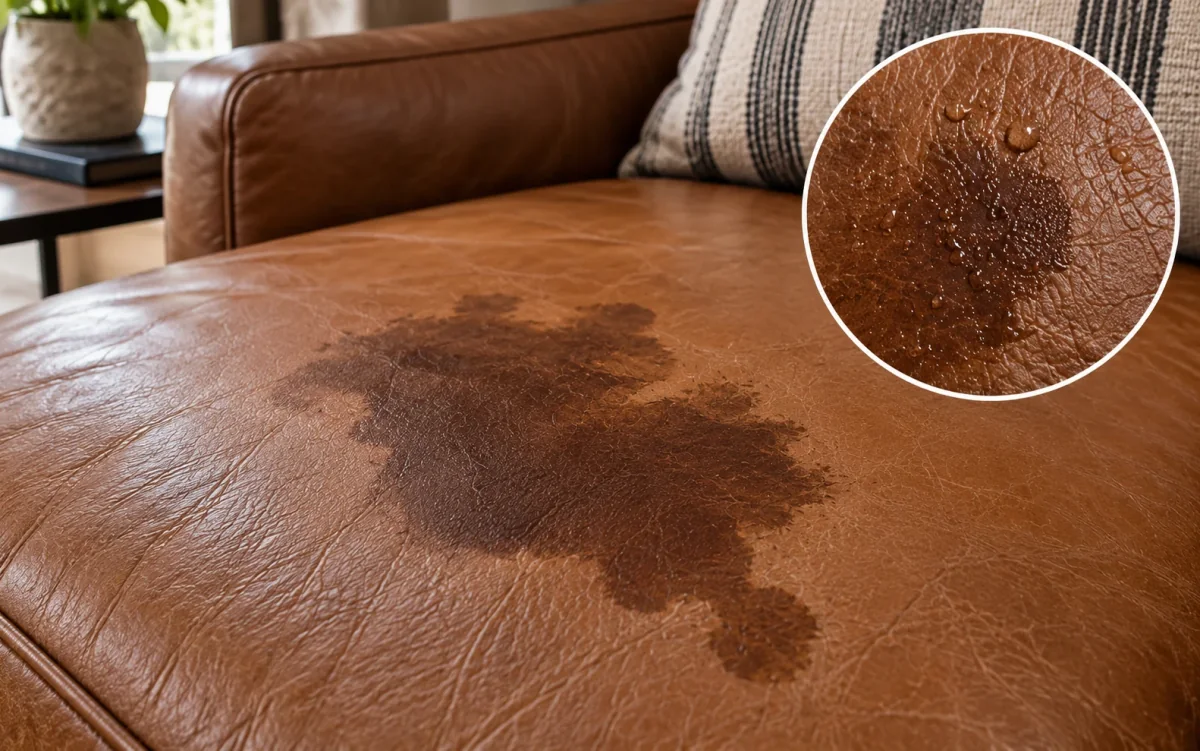
A dried coffee stain spread wide across a tan leather seat cushion
First week

Wicking outward

It has travelled along the fibre, so we treat wider than the mark. Still very recoverable.
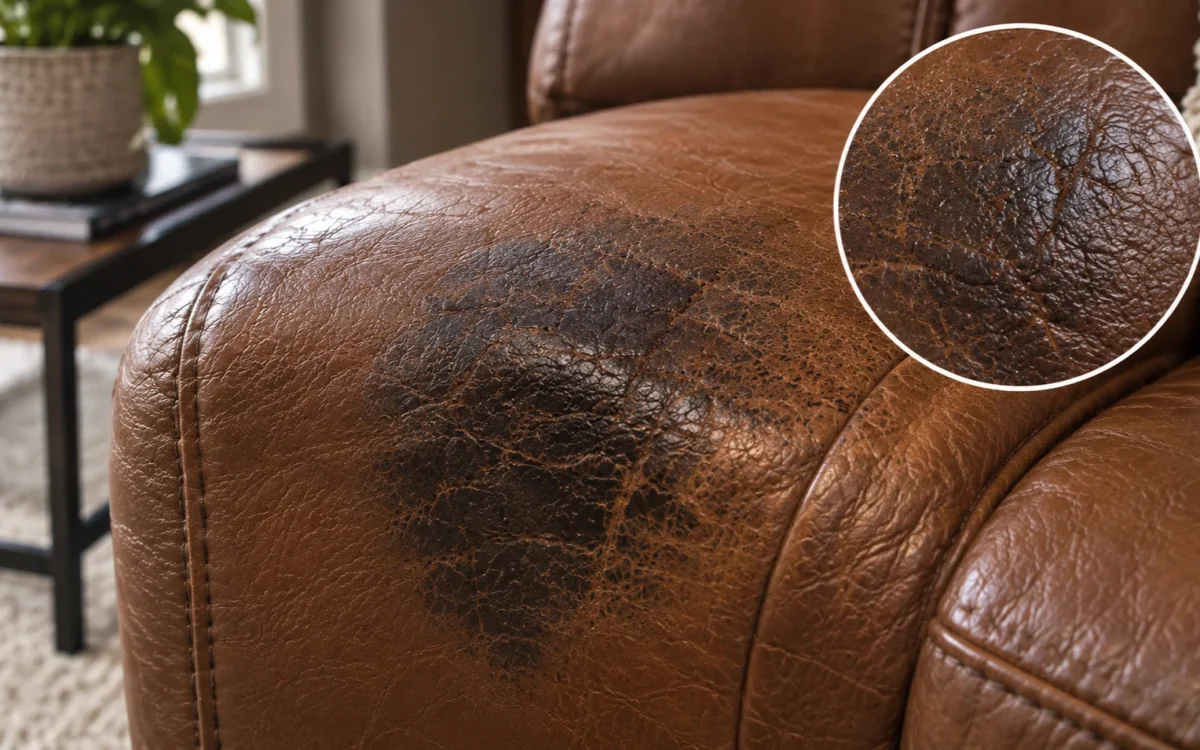
An old darkened stain oxidised into the arm of a brown leather sofa
Months on

Oxidised and set

Darkened, and softening the finish from underneath. Re-pigmenting usually follows.

Before you called us

What the internet told you to try, and what it did

A real share of our leather stain removal jobs are repairs to the attempt, not the stain. None are stupid ideas — they are built for hard surfaces or fabric.

Melamine foam ("magic eraser")
A fine abrasive. Takes the pigment with the stain and leaves a dull pale patch. The most common damage we correct.
Baby wipes
Fine once. Weekly, they leave surfactant that keeps pulling soil back, and the seat goes tacky.
Rubbing alcohol or hairspray on ink
Dissolves ink and finish at the same rate, then spreads it. A dot becomes a halo with the middle stripped.
Vinegar and water
Too acidic for a near-neutral surface. Dries the hide and shifts the colour warmer, which shows on greys.
Saddle soap
Built for thick tack leather, not a thin modern topcoat. It softens the finish and leaves a residue.
A hairdryer or a hot lamp on a wet patch
Dries the fibre far too fast and stiffens it, and sets the dissolved stain in place.

Already tried one? Say so — it changes the starting method. On gentle, reversible treatment the Canadian Conservation Institute's notes say what we do.

How we work

Our leather stain repair process

Eight steps, in order. Steps five to eight only happen if the stain took finish with it.
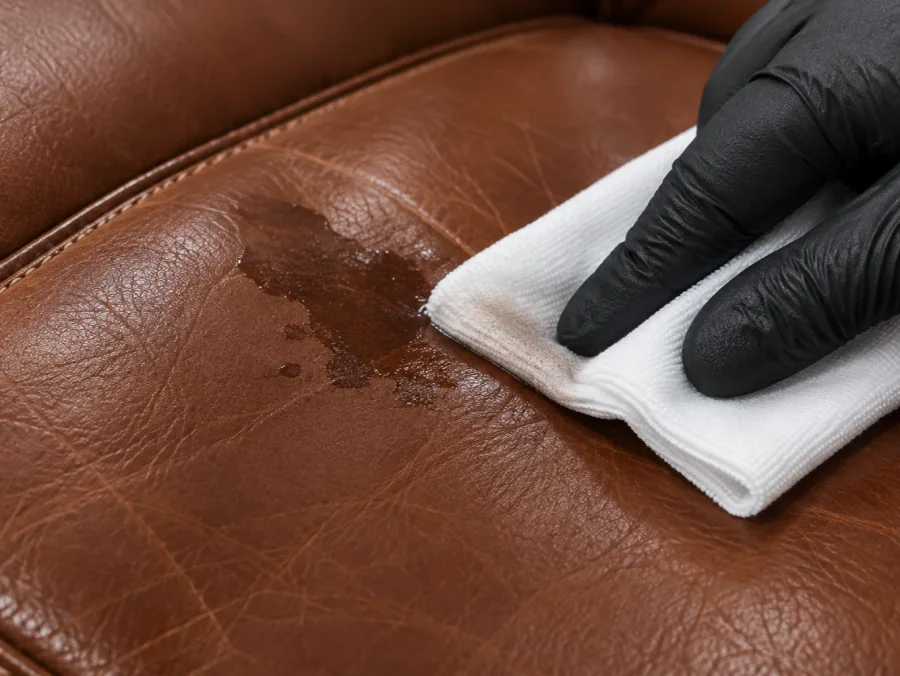
01 Gloved hand assessing a fresh spill on a brown leather cushion

Inspect

Identify the leather type and what the stain is.
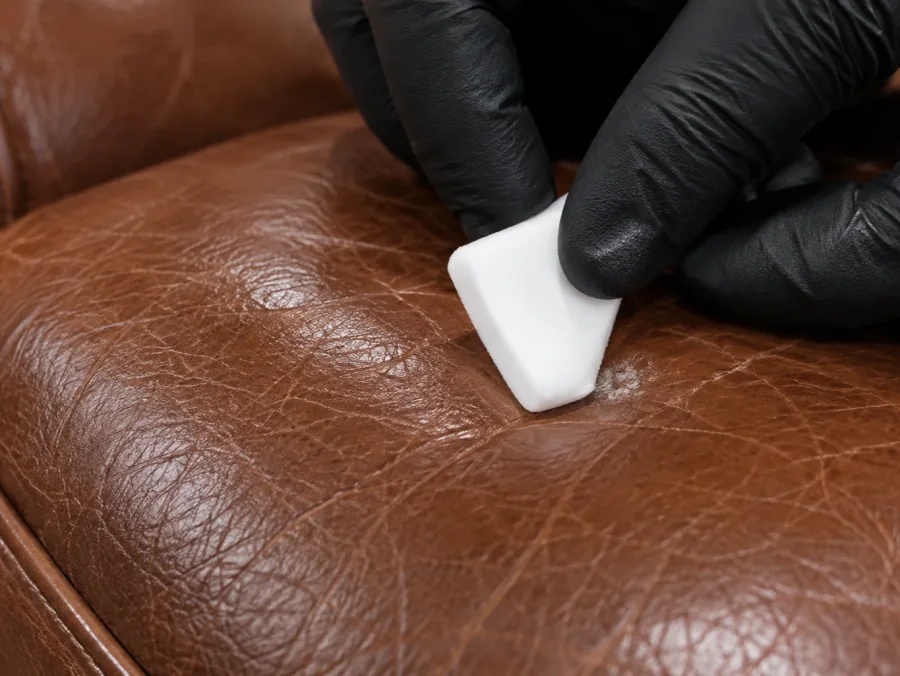
02 Small test patch being worked on a hidden area of brown leather

Test

Prove the method on a hidden edge first.
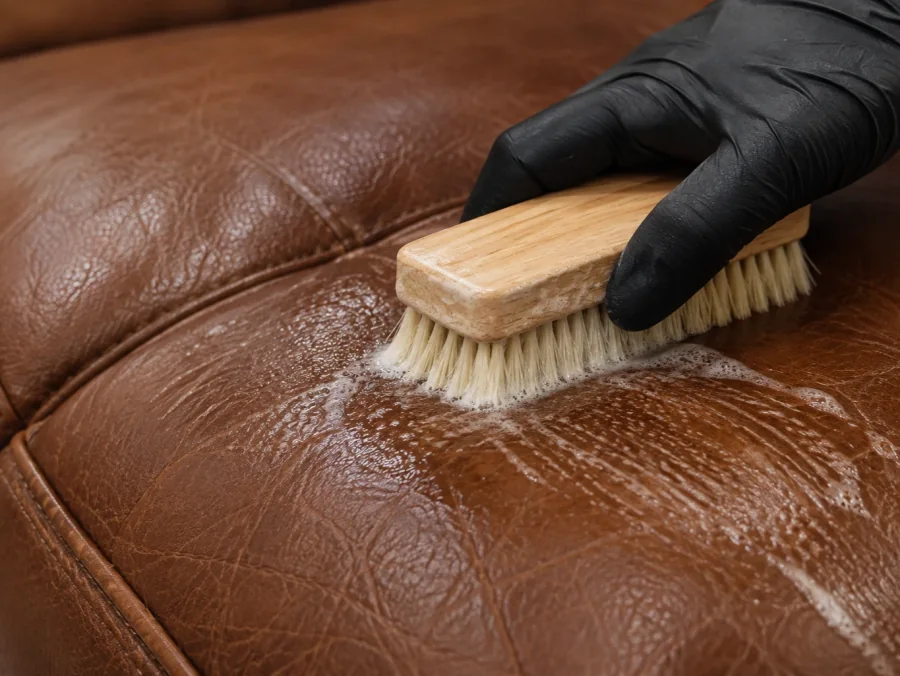
03 Soft brush working a leather-safe foam across a brown seat cushion

Clean

Lift the surface soil so only the stain is left.
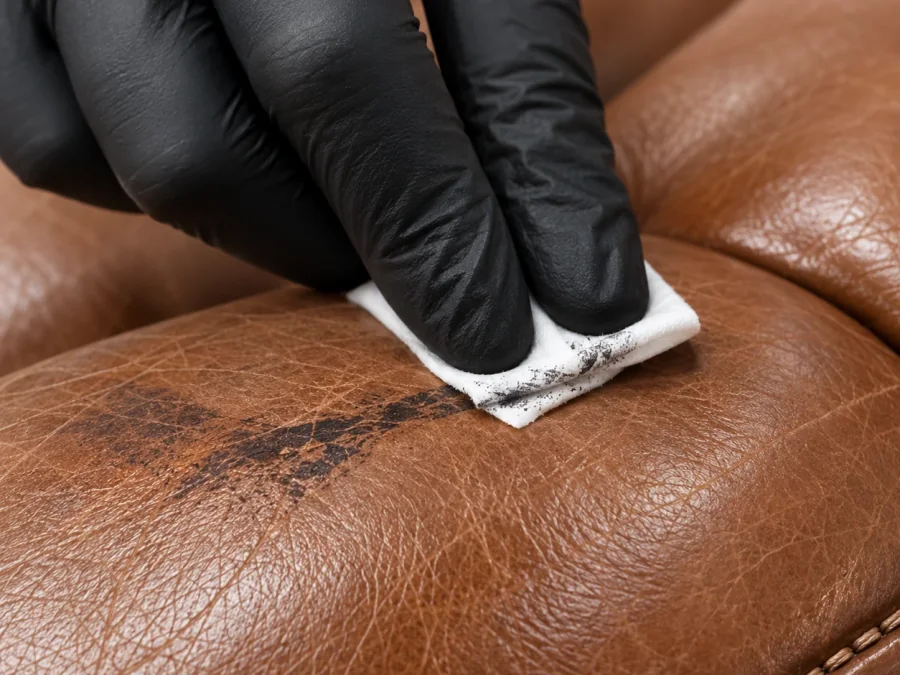
04 Dark stain being drawn out of brown leather onto a white pad

Treat

Draw the stain out in short passes, outside in.
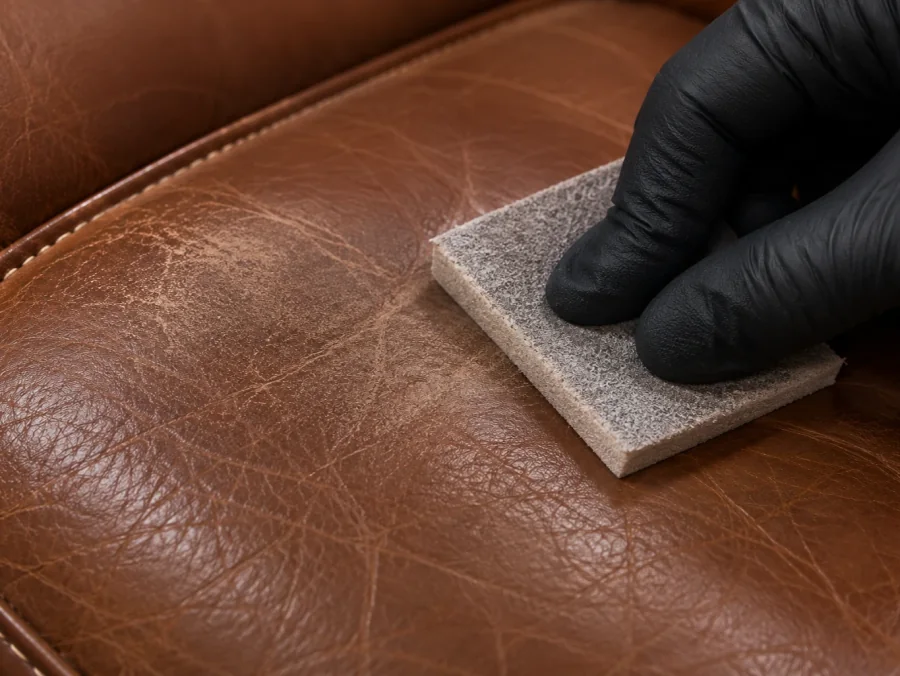
05 Abrasive pad keying a brown leather panel before refinishing

Prepare

Key and degrease the area so colour will hold.
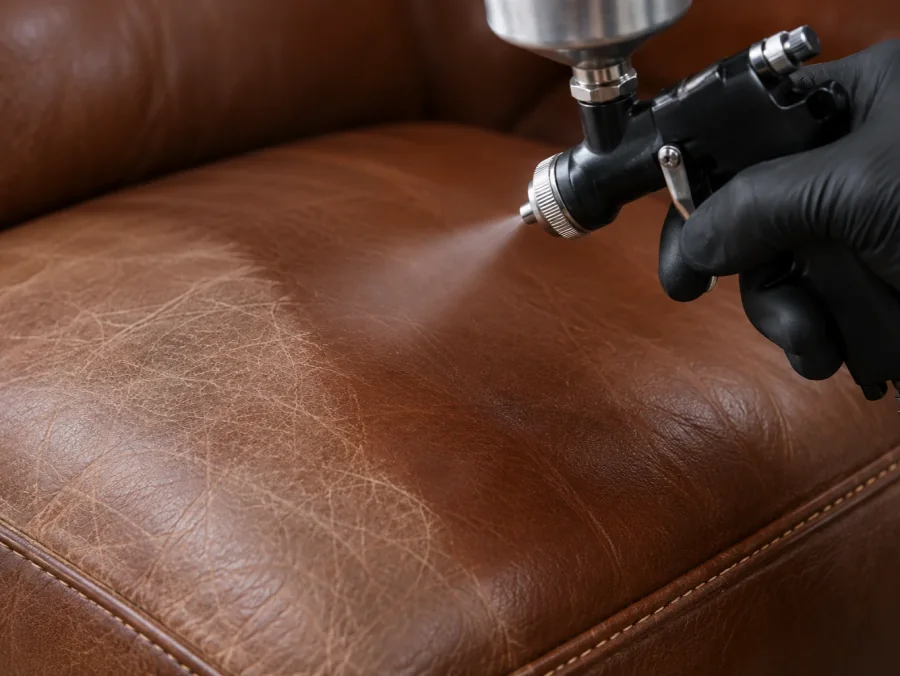
06 Spray gun laying matched pigment onto a brown leather seat

Colour correct

Pigment matched wet, built in thin coats.
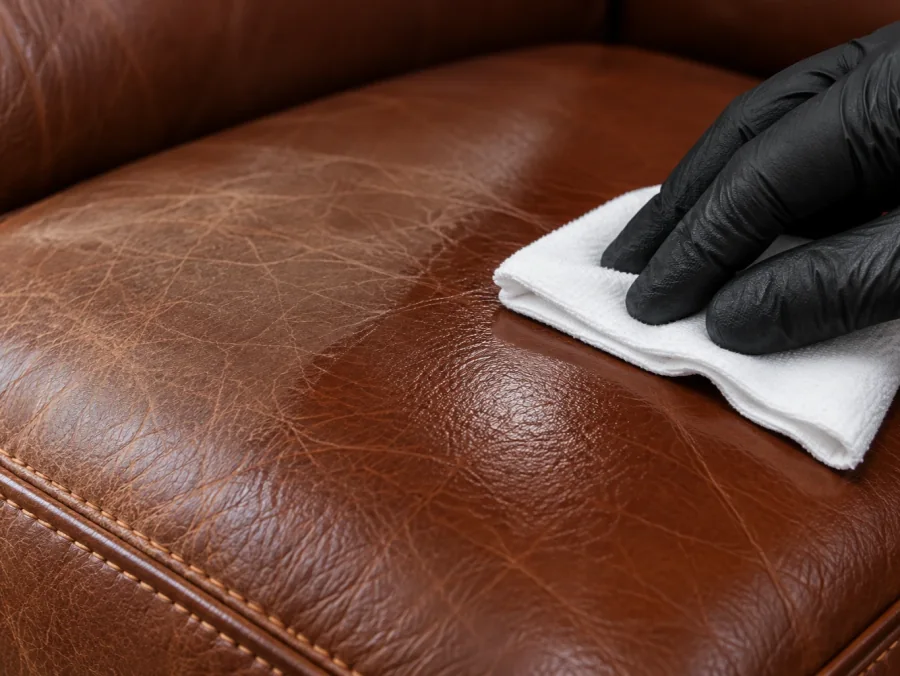
07 Protective topcoat being worked into a repaired brown leather panel

Refinish

A protective topcoat back over the repair.
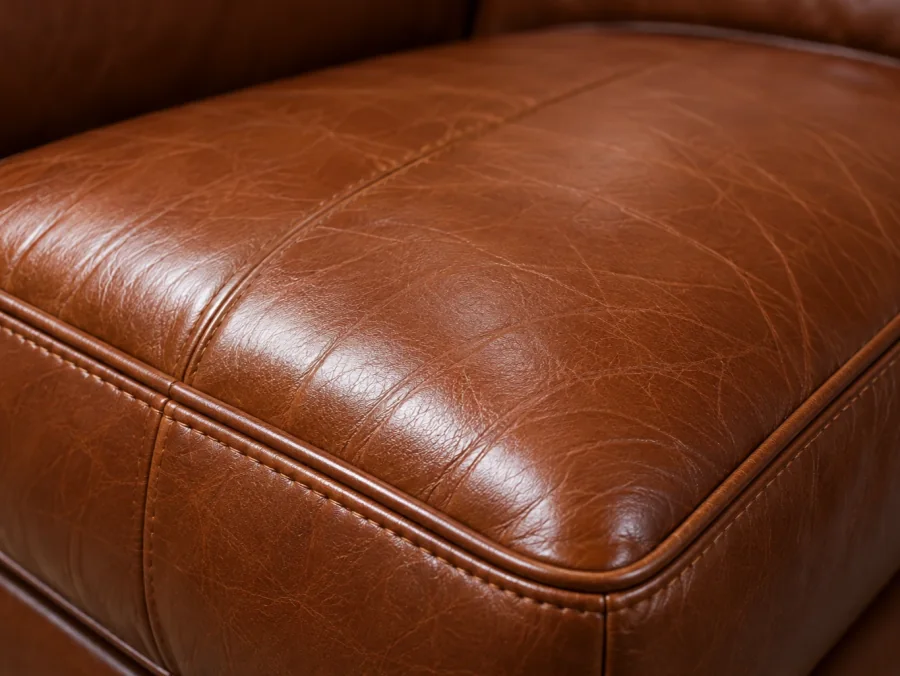
08 Brown leather cushion with even colour and sheen after stain repair

Final result

Even colour, even sheen, no visible edge.

A worked example

Ballpoint on a cream seat cushion

A pen left under a throw on a cream sectional, found a week later. Three moves, one visit.
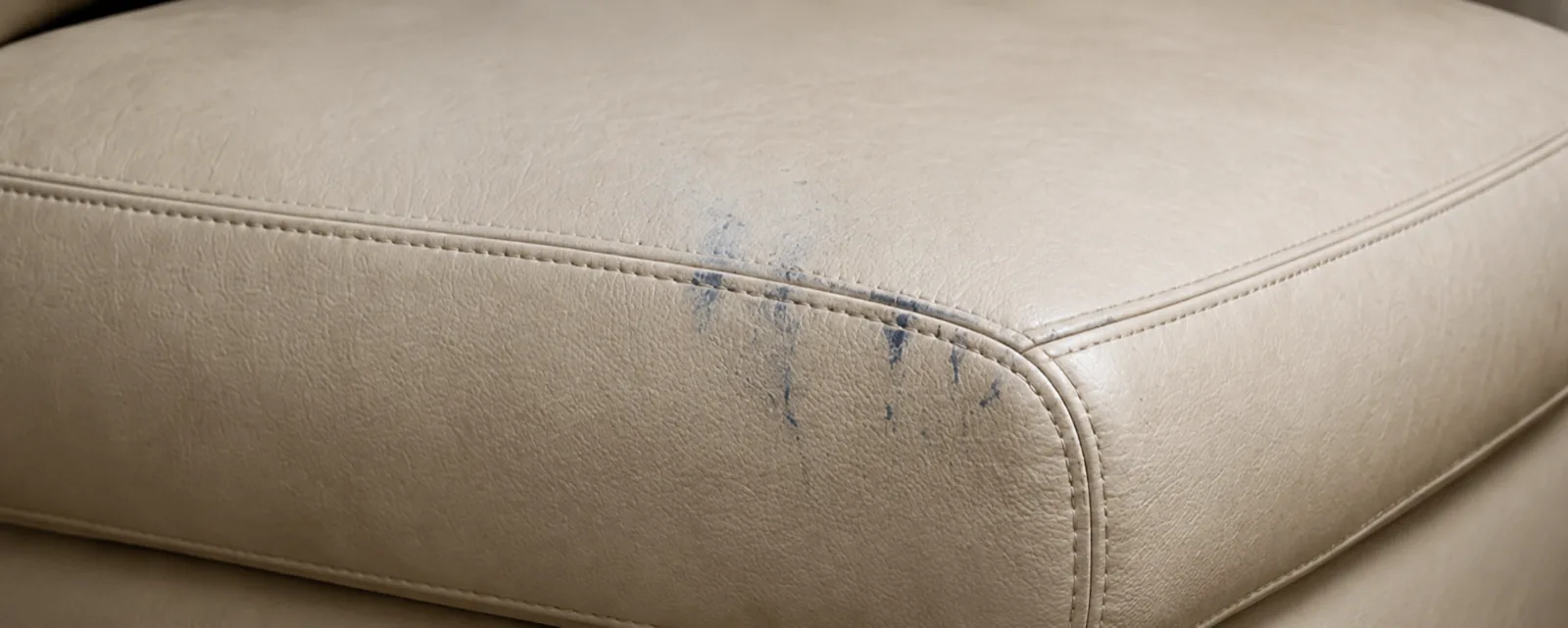
Blue ballpoint ink marks across the front edge of a cream leather cushion Move one

Test where it stopped

A damp swab on a hidden edge lifted no colour. Coated panel, ink in the coating — method set in two minutes.
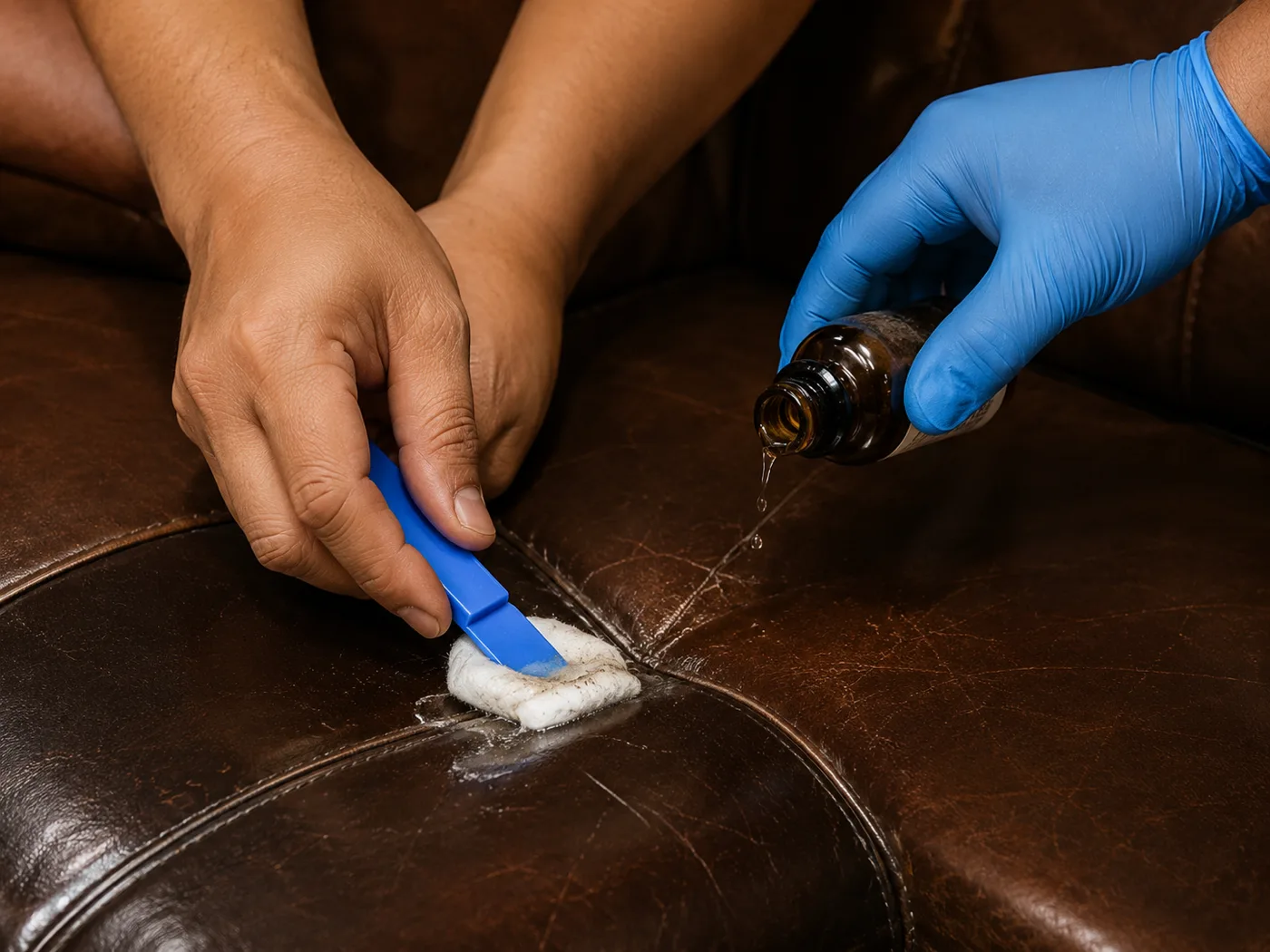
Gloved hands lifting a stain from leather with solvent and a wadding pad Move two

Lift it in short passes

Solvent on a wadding pad, outside in, short passes. Stopped the moment the swab came up clean.
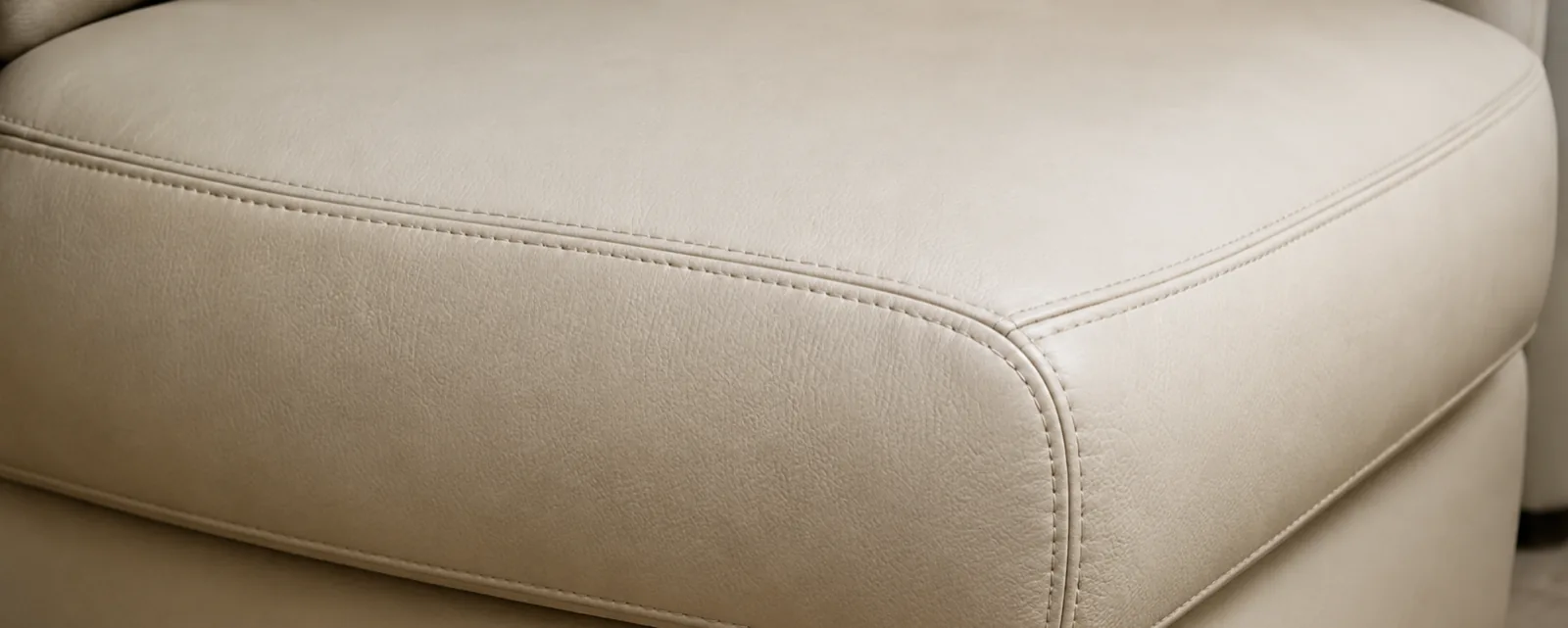
The same cream leather cushion with the ink gone and the colour matched back Move three

Put the finish back

Removal took topcoat with it. Colour matched wet and taken out to the seam, never faded off mid-panel.

Corrected panels

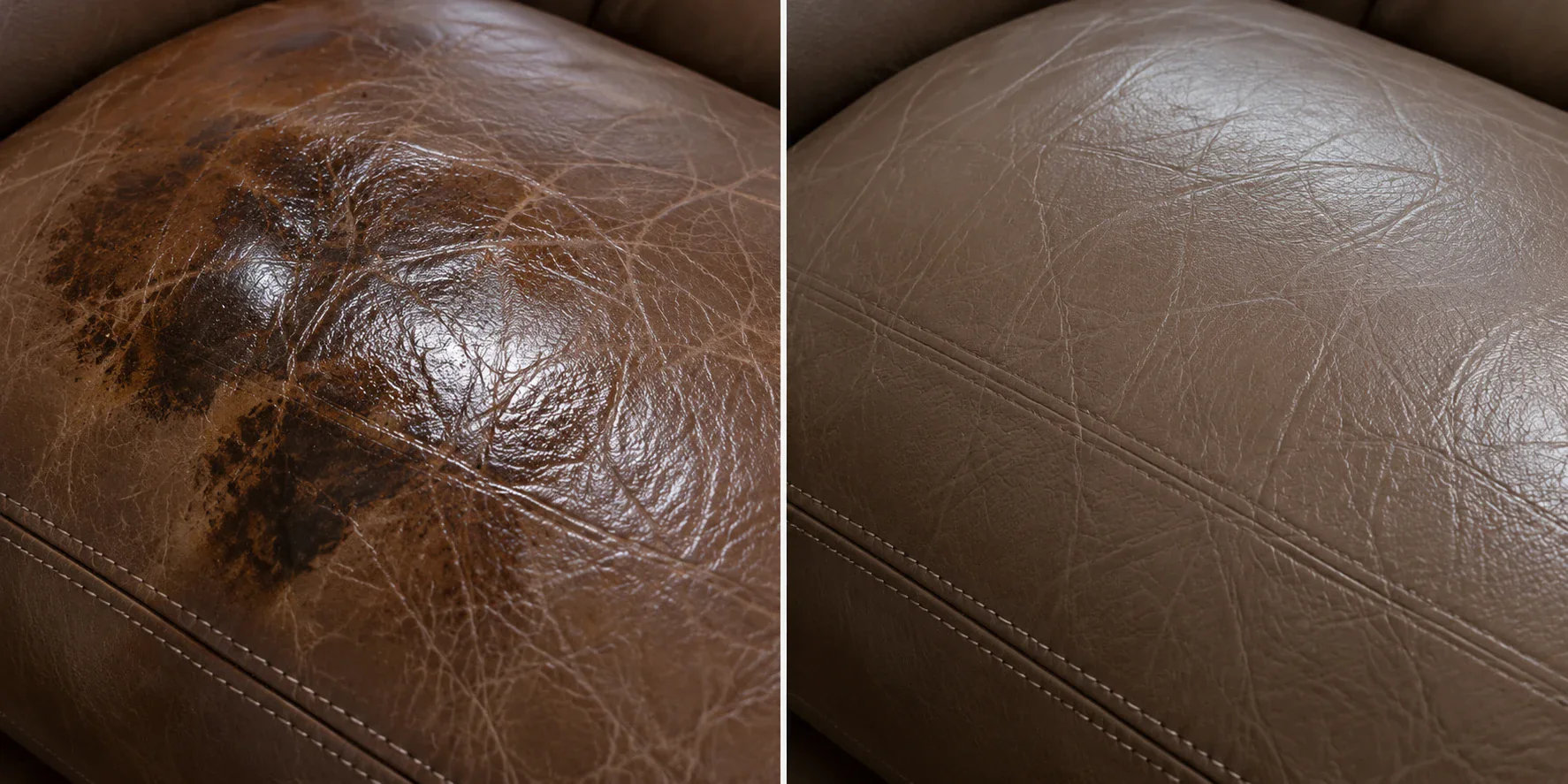
Cleaned, then coloured back

Cleaning was only half of each of these. On its own it leaves a pale, flat area where the mark was.
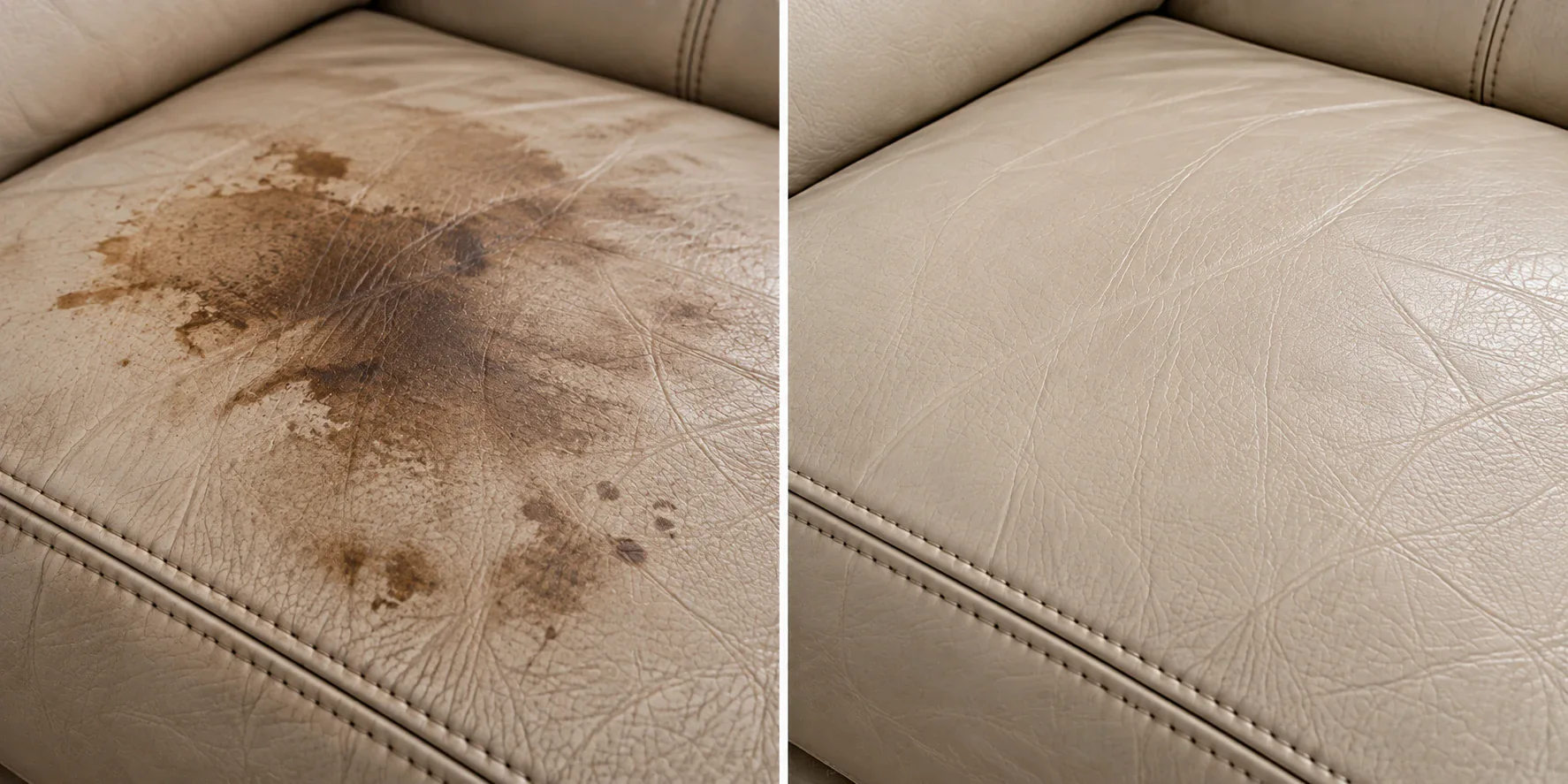
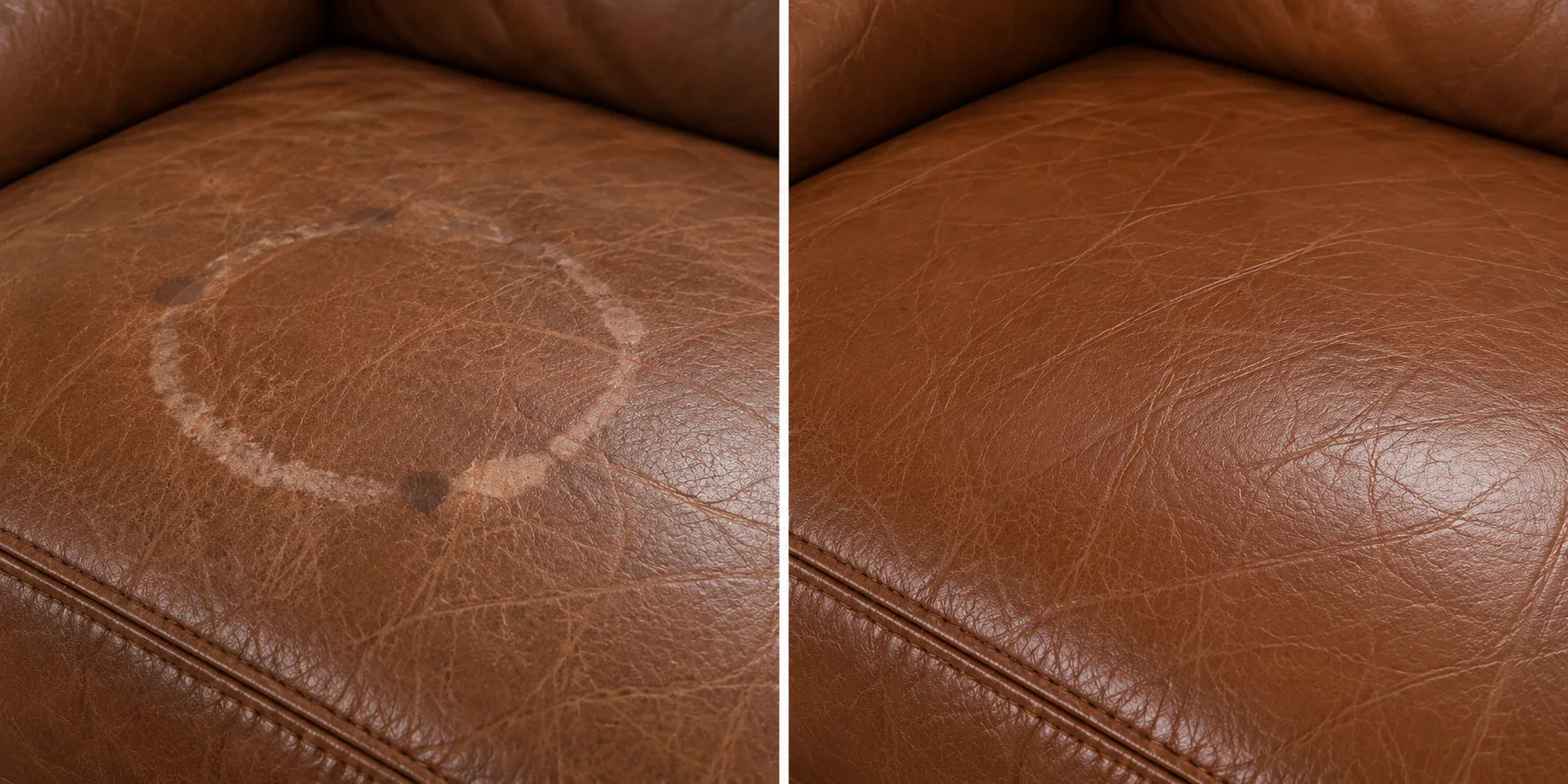
Cream leather seat with a dried brown food stain, shown before and after stain removal
Cream seat — a food spill that had spread past its visible edge. Drawn out, then re-pigmented.
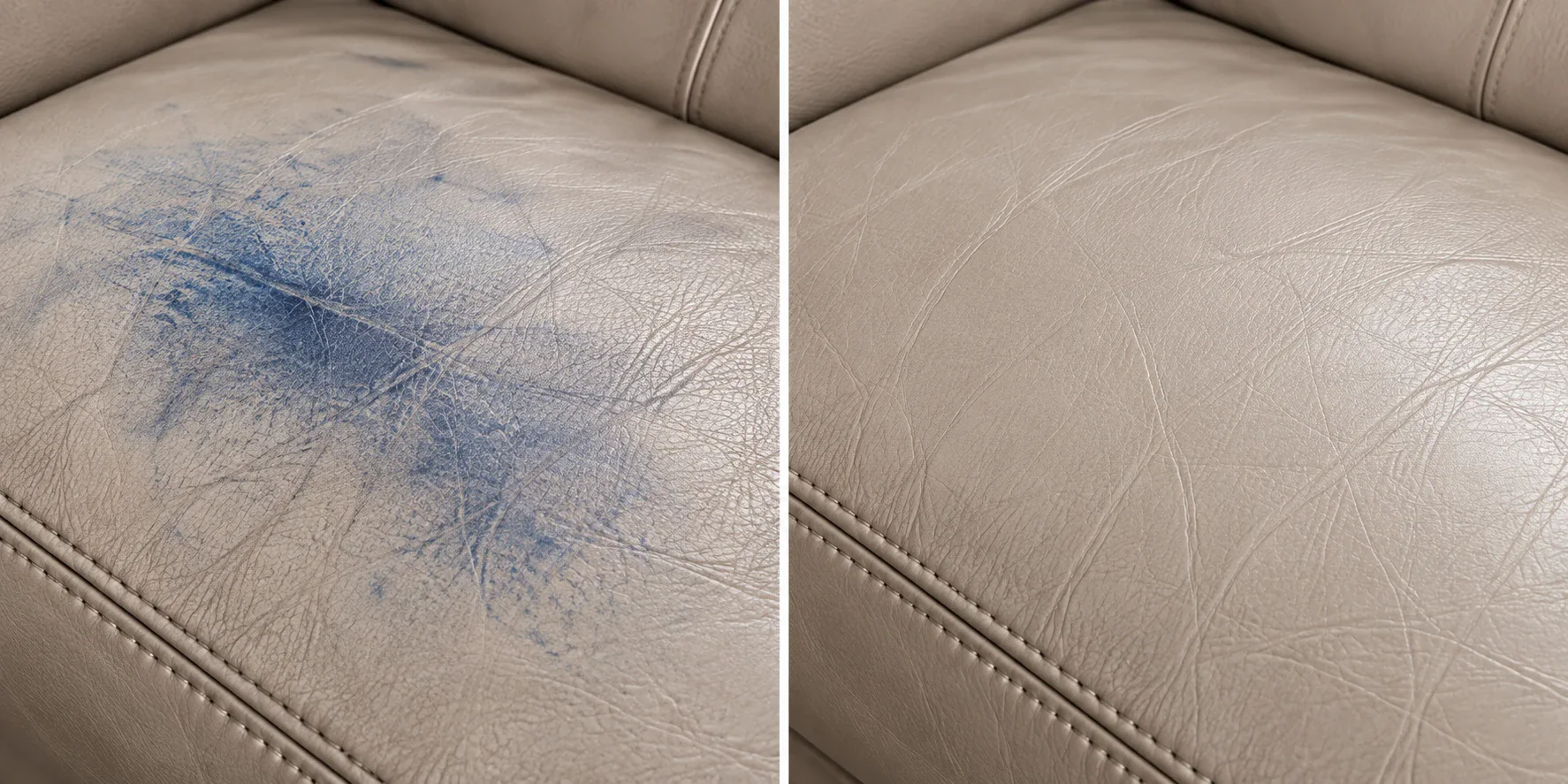
Grey leather cushion with blue denim dye transfer, shown before and after stain removal
Grey cushion — indigo off denim. Surface transfer, so no colour work underneath.
Brown leather seat with a dark grease stain, shown before and after stain removal
Brown seat — grease down in the fibre. Absorbed out, then the sheen matched back.
Tan leather seat with a dried water ring, shown before and after stain removal
Tan seat — a water ring with a dark tide edge. Cleared by treating the whole panel evenly.
Beige leather cushion covered in ballpoint pen marks, shown before and after stain removal
Beige cushion — ballpoint in the coating, not the hide. Lifted locally and rebuilt.

Illustrative pairs. More work on the before and after page.

What it costs

Stain removal pricing

Leather stain removal is priced by the item, how deep the stain went, and how much has to be re-finished afterwards.

Sofa, one to three seats from$450–650
Single recliner or chair from$250
Car seat or interior spot from$225

Large sections, several stains, or a delicate finish such as aniline are quoted individually. Send photos and you get a figure, not a range.

Questions we get

Leather stain removal, answered plainly

Can stains be removed from leather?
Most of them. What decides it is where the stain stopped: on the finish, in the finish, or down in the hide. The first two lift; the third is drawn out over repeat passes, sometimes only partly.
How do you get an old stain out of a leather sofa?
Slowly. An old stain has spread sideways, so the visible edge is smaller than the real one. We draw it out in repeated light passes, then re-pigment if the leather is left uneven.
Does leather stain removal work on grease and body oil?
Yes, and it is our most common job. Oil sits in the fibre, so it is absorbed out rather than wiped off. Headrests usually need the finish rebuilt afterwards.
Can you remove ink from leather?
On pigmented and semi-aniline leather, usually — the ink sits in the coating, which we lift locally and rebuild. On uncoated aniline the ink is in the hide and full removal is not honest to promise. We tell you which you have first.
Will the cleaned patch end up lighter than the rest of the sofa?
It will if the job stops at cleaning. Removing a stain takes some finish with it, so colour and gloss are matched back afterwards, worked out to a seam.
Is a water ring on leather permanent?
No. A ring is not dirt — it is minerals and soil carried outward and left at the edge. It clears by treating the whole panel evenly, not by scrubbing the line.
Can you remove stains from white or cream leather?
Yes, and pale leather is often easier than it looks. Much of what shows on cream is dye transfer sitting on the surface, not damage underneath.
Do you have to take the furniture away?
No. Stain work is done in your home or office, and no cushions leave with us.
Should I try a leather stain remover from the shop first?
A mild one on a fresh spill is fine. Strong removers and household shortcuts strip pigment with the stain and turn a mark into a pale patch — a harder repair than the stain was.
How do I stop it happening again?
A protective topcoat plus conditioning once or twice a year. It will not make leather spill-proof, but it buys you the hour that decides whether a spill is a wipe or a callout.
Send it over

One clear photo is usually enough to tell you where it stopped

Shoot it square on, light from the side. Tell us when it happened and what has been used on it.

  • Manhattan, Brooklyn, Queens, the Bronx, Staten Island, Long Island and northern New Jersey
  • Work carried out in your home or office — nothing is taken away
  • Lighter or darker than the leather? Say which. It changes the job entirely
  • Related: scuff repair, scratch repair, crack and peel repair
Scroll to Top