
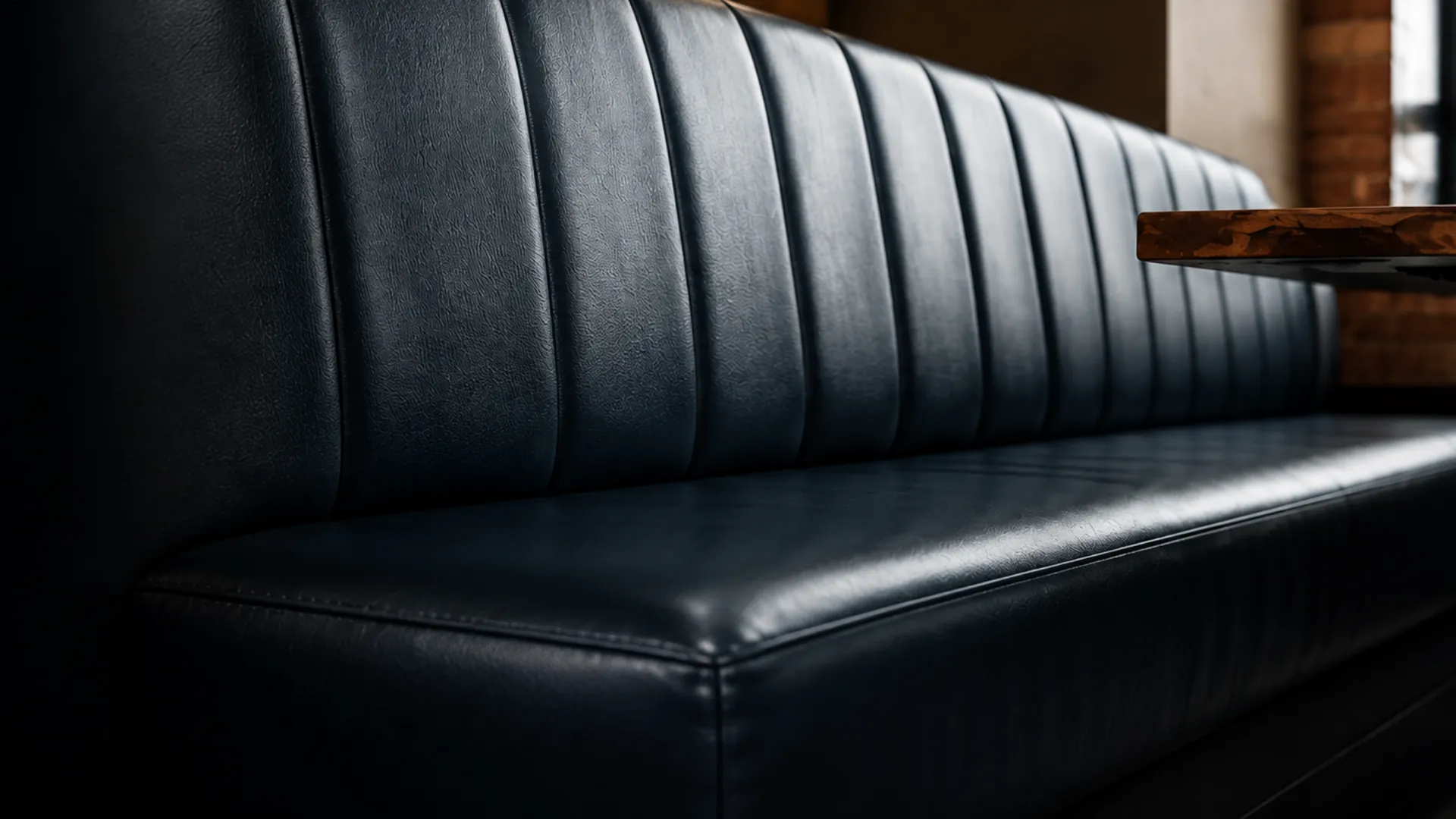
Vinyl Upholstery: A Tough, Wipe-Clean Surface With Two Hard Limits
Vinyl vs leather is not a ranking. Vinyl upholstery is not a hide at all — it is a coloured film bonded to a fabric backing.
Vinyl at a Glance
Vinyl upholstery is a coloured plastic film bonded to a fabric backing — two layers, not one grown material. The grain was embossed by a roller; it did not grow there. Nothing soaks in, so vinyl really can be wiped — and the film can harden or let go of its backing. One is repairable. One is not.
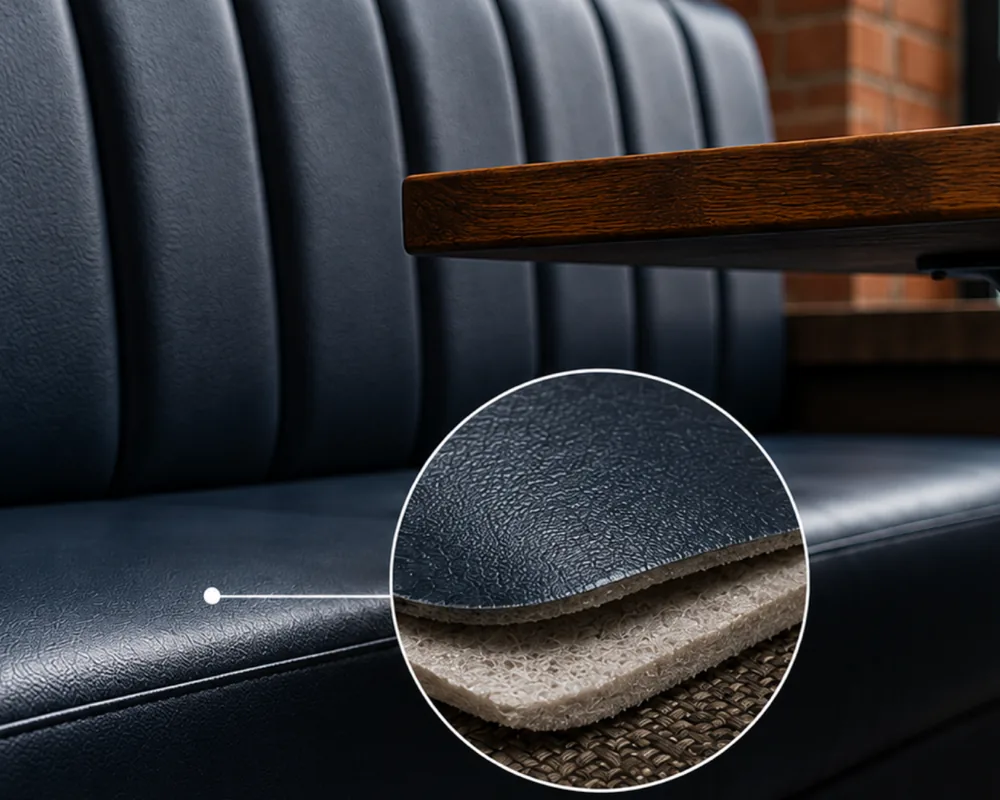
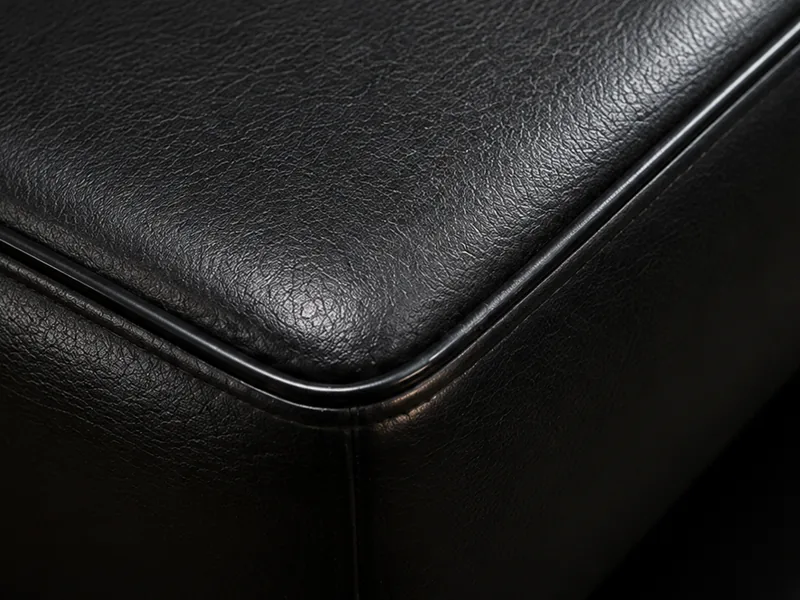
The grain repeats. That repeat is the roller — and it is why a replaced panel matches its neighbours exactly.
-
 Surface
 - A closed, continuous PVC film with the grain embossed into it. Nothing is porous.
-
Feel
- Cool to first touch, then warms. Slick, with an even sheen across the panel.
-
Spills
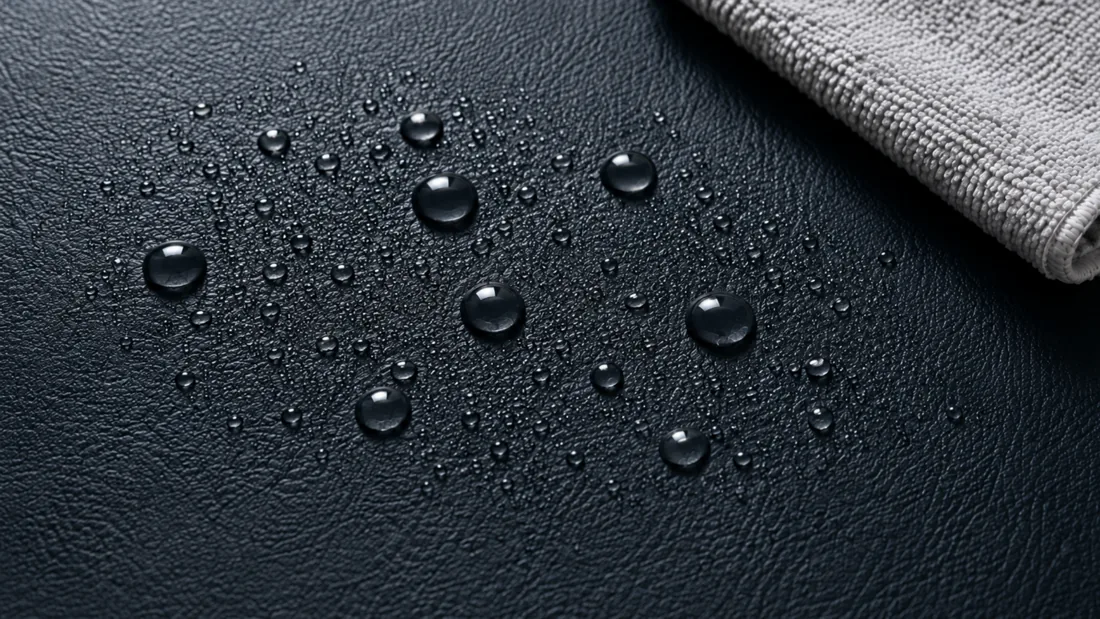
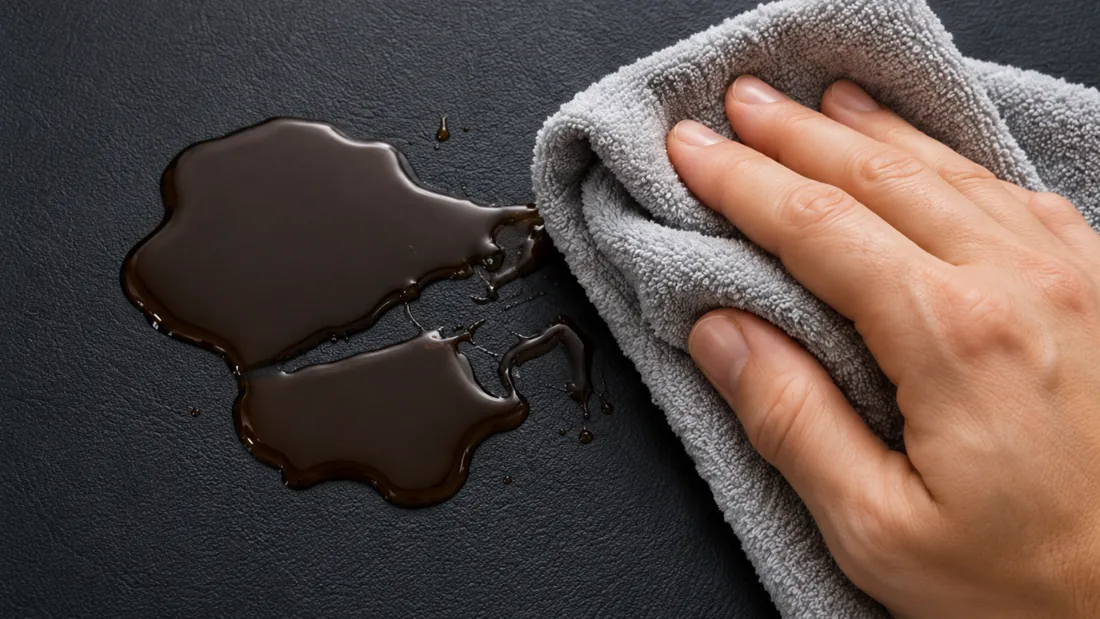
- Nothing absorbs. A spill sits there until it is wiped, however long that takes.
-
Restoration approach
- Rebuild and re-grain local damage; replace hardened panels. Never condition it.
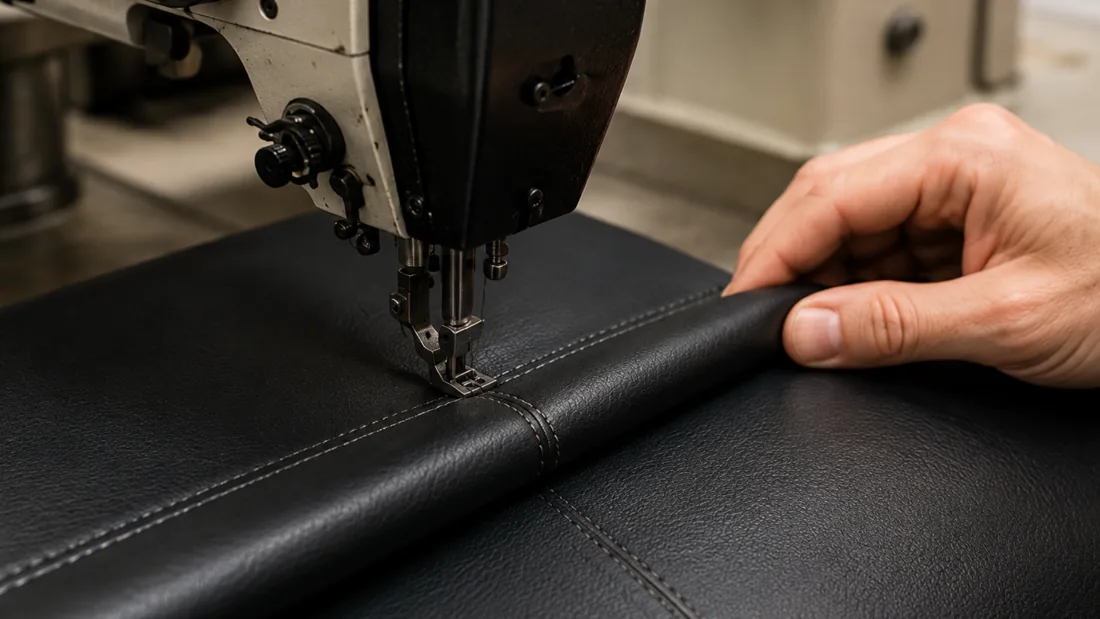
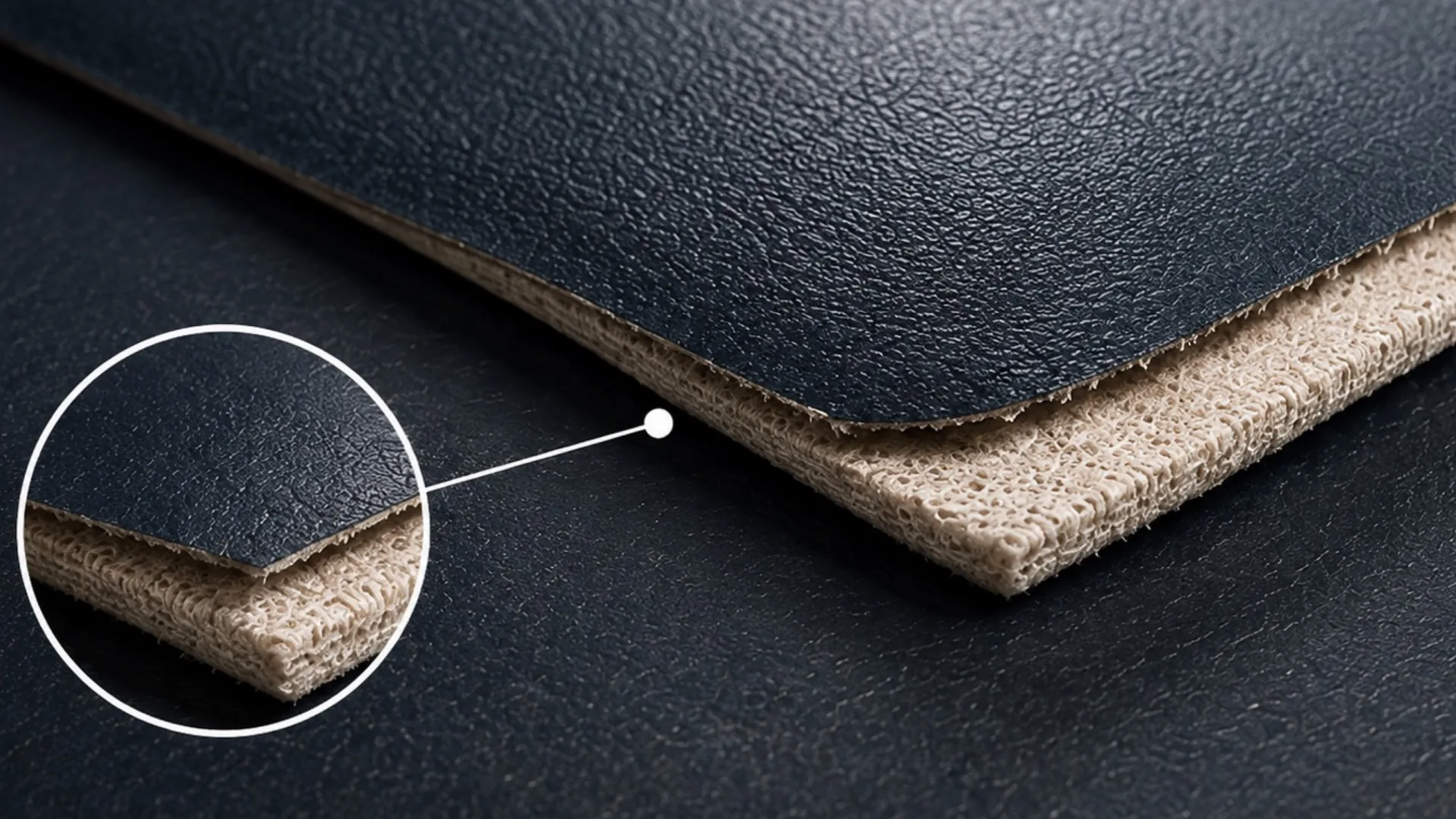
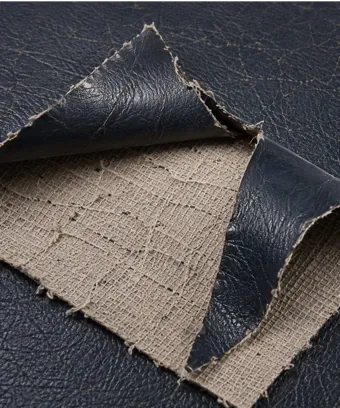
A cut edge is the whole argument: skin on top, fabric underneath, a bond line between. On leather that boundary does not exist.
Vinyl is right where a surface has to survive cleaning, wrong where a piece is meant to last thirty years. It comes from mills rather than tanneries — makers like Naugahyde and Ultrafabrics. On a sofa already in your home, how the film has aged matters more than the spec sheet.
Vinyl vs Leather: Turn the Cushion Over
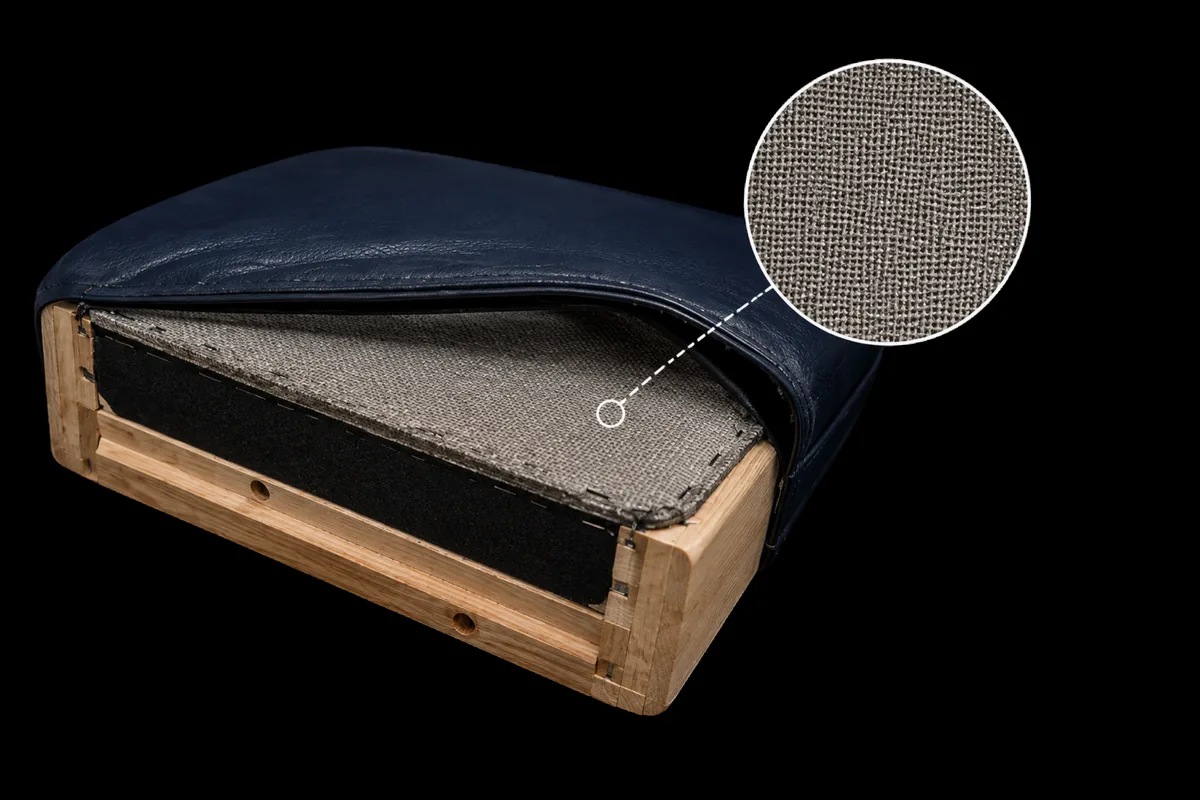
Vinyl vs leather is settled on the back, not the face. Manufacturers work hard on the face; almost nobody disguises the reverse.
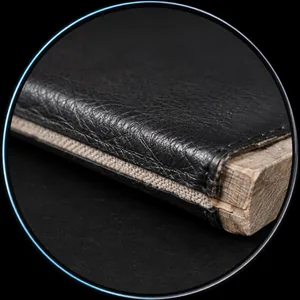 The edge
Cut vinyl shows two layers and will not fray. A hide's edge is one
continuous material.
The edge
Cut vinyl shows two layers and will not fray. A hide's edge is one
continuous material.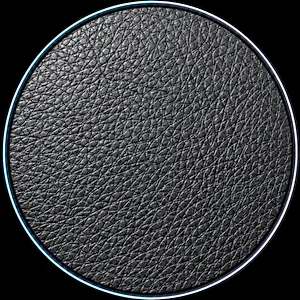 The repeat
If the same pores come round again, a roller embossed them. Natural
grain never repeats.
The repeat
If the same pores come round again, a roller embossed them. Natural
grain never repeats.The photograph above is the back of a vinyl.
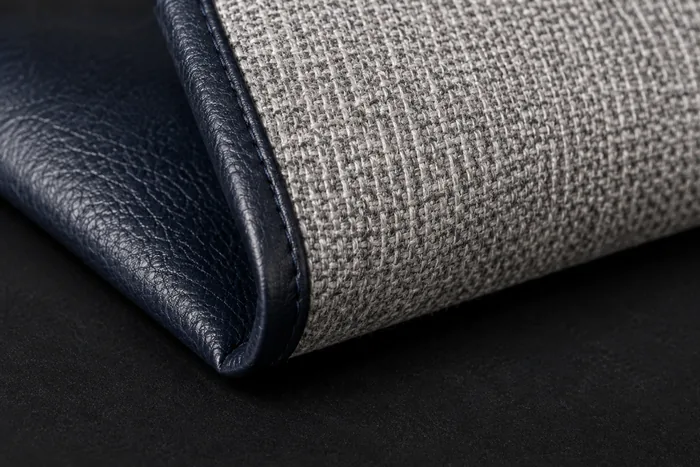 Knit or woven fabric backing with a visible grid.
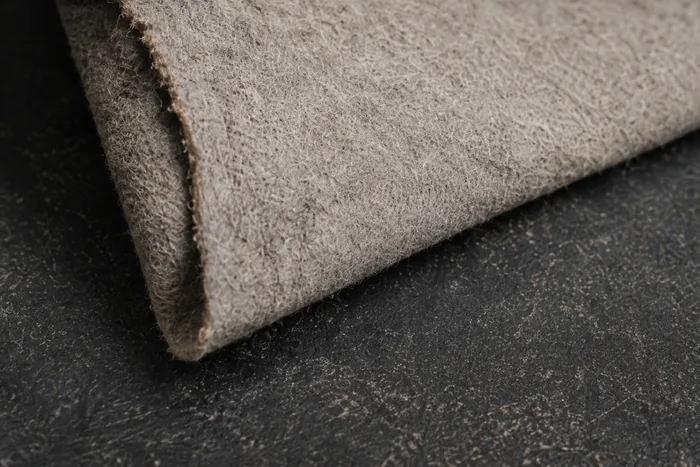 Fibrous, slightly furry underside with no pattern.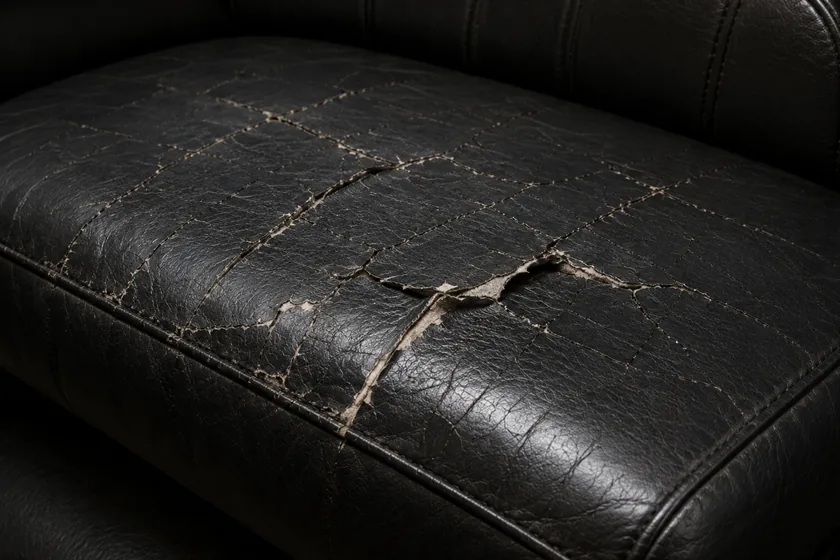
Vinyl Only Breaks Two Ways
Vinyl vs leather diverges hardest here: vinyl has two failures, and they lead to opposite answers.
-
Split seam
-
Cut
-
Puncture
-
Rubbed through
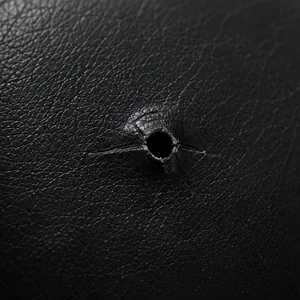
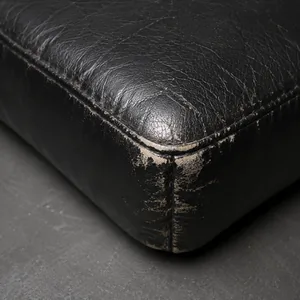
Something Opened the Film — But the Film Is Still Good
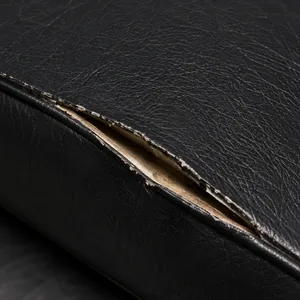
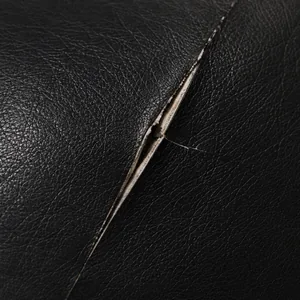
A split seam, a cut, a burn, a corner rubbed through. The damage is local and the material around it is still soft.
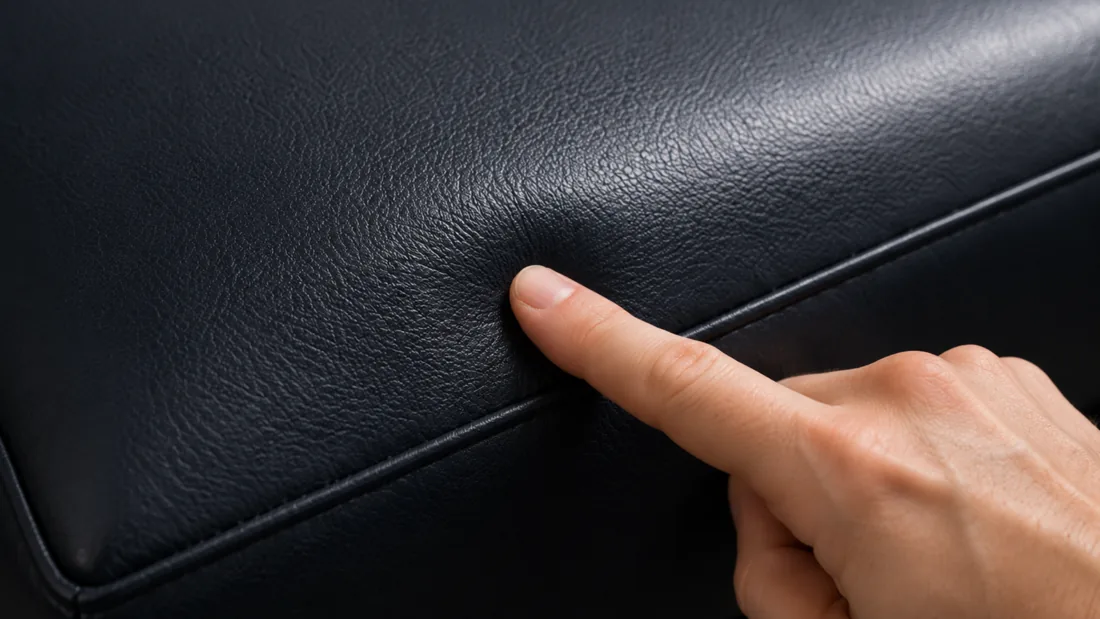
- Press a hand's width away: it still gives and springs back.
- Flex the panel across the damage and no new cracks appear.
-
Seat front
-
Arm top
-
Fold behind cushion
-
Delamination
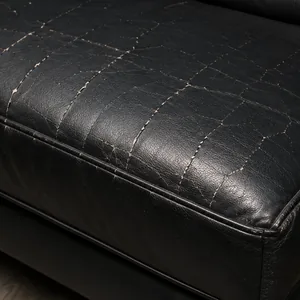
The Film Has Lost What Made It Flexible
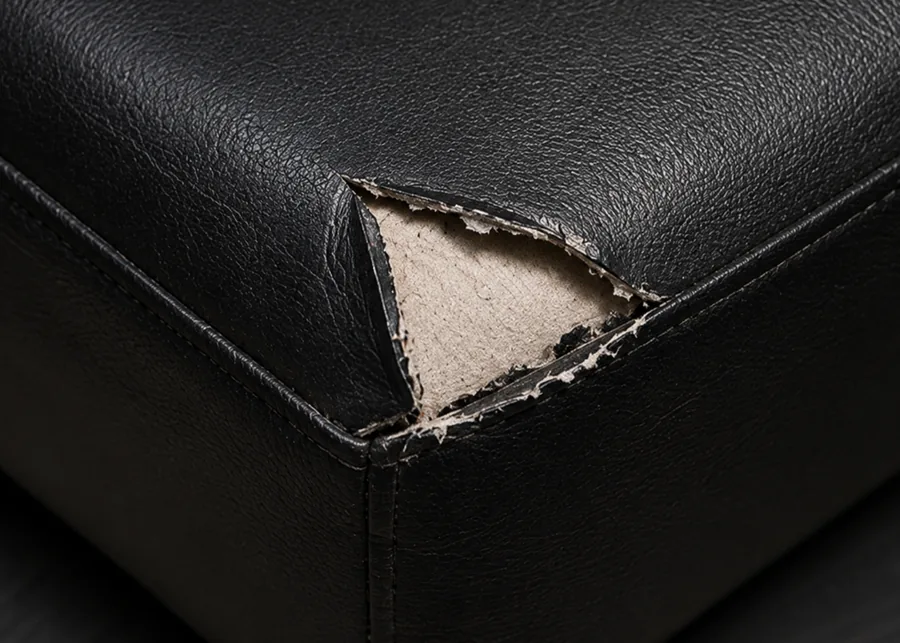
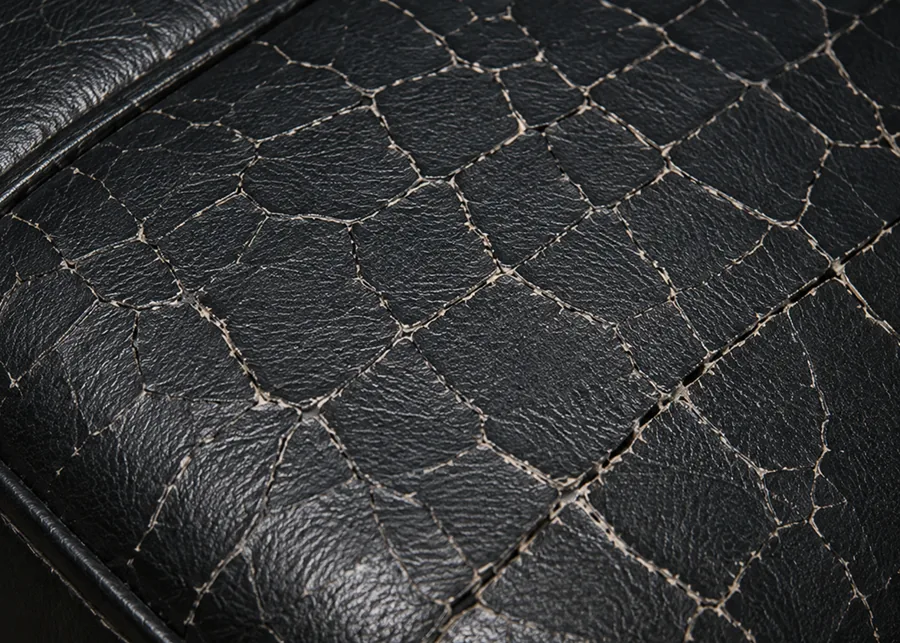
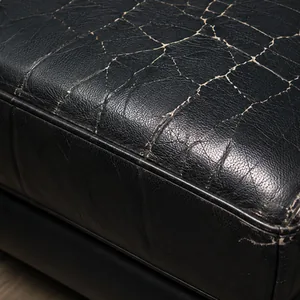
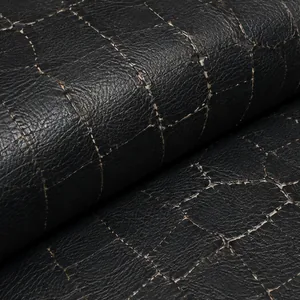
Plasticiser is what makes rigid PVC soft enough to sit on. Heat, body oil and harsh cleaning make it migrate out; the film hardens, then splits where it flexes.
- It feels board-like well away from any visible damage.
- The cracking is a network, not a line, and flexing lifts fresh flakes.
The One Material You Really Can Just Wipe
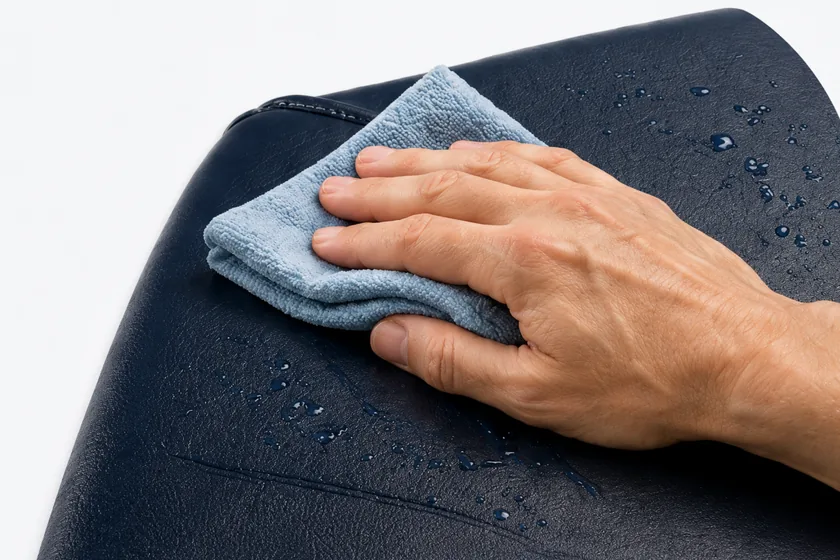
Cleaning is where vinyl vs leather stops being close. Vinyl is easy — and the things that destroy it are all sold as cleaning products.
Four Things That Will Handle Almost Anything
-
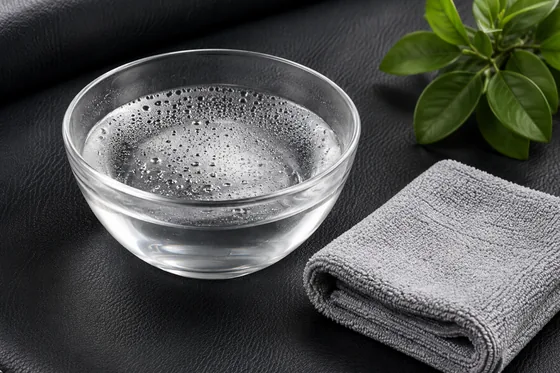
A soft cloth, warm water and pH-neutral soap.
The whole routine.
-
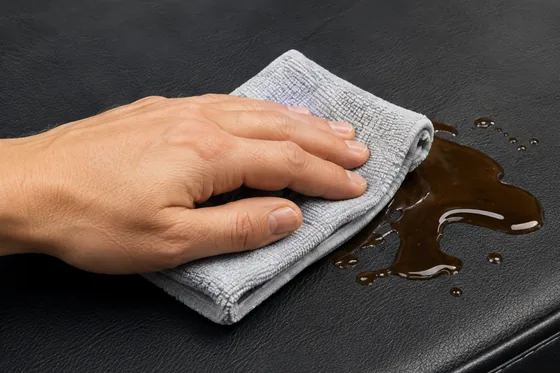
Wiping spills when you see them.
Nothing soaks in, so there is no race.
-
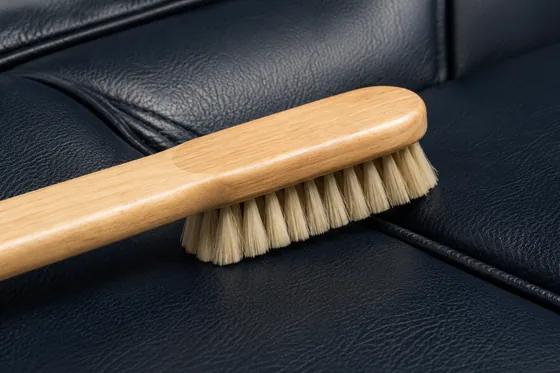
A soft brush along seams and piping,
where soil actually accumulates.
-
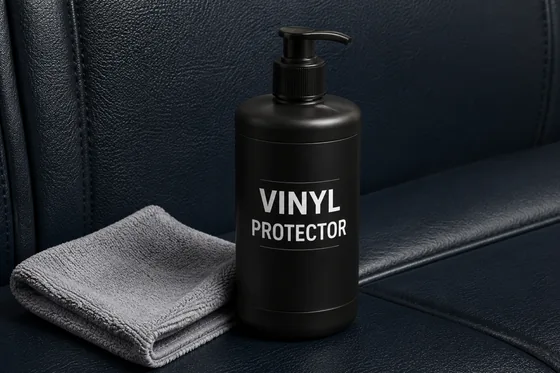
A vinyl protectant, if you want one —
matte, not glossy, thinly applied.
Ink, denim dye and sunscreen stain the film rather than sit on it. Ask about those rather than escalating to something stronger.
The Four Products That End Vinyl Early
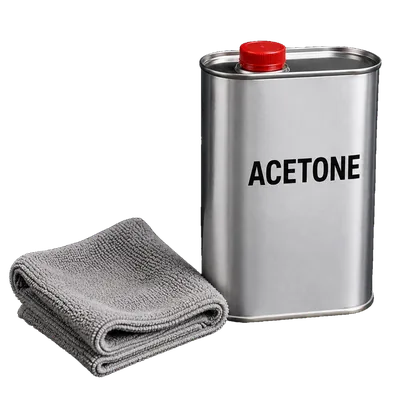 Solvents, acetone and nail-polish remover
These dissolve the surface. The mark comes off and takes the grain with it,
leaving a sunken patch forever.
Solvents, acetone and nail-polish remover
These dissolve the surface. The mark comes off and takes the grain with it,
leaving a sunken patch forever.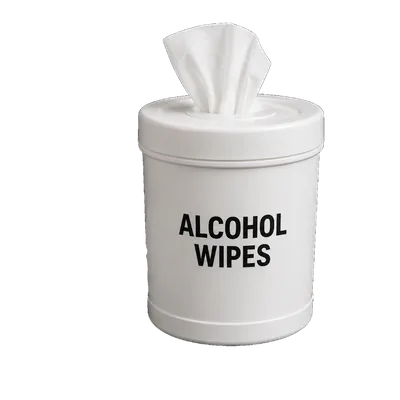 Alcohol wipes and alcohol-based sprays
Alcohol pulls plasticiser out of PVC. One wipe does nothing visible; a wipe a
day for two years is the commonest cause of early cracking we see.
Alcohol wipes and alcohol-based sprays
Alcohol pulls plasticiser out of PVC. One wipe does nothing visible; a wipe a
day for two years is the commonest cause of early cracking we see.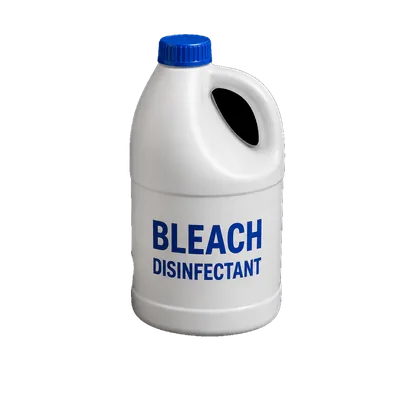 Bleach and strong disinfectants
They lift colour out and embrittle the film. A piece disinfected on a
schedule needs a vinyl built for it.
Bleach and strong disinfectants
They lift colour out and embrittle the film. A piece disinfected on a
schedule needs a vinyl built for it.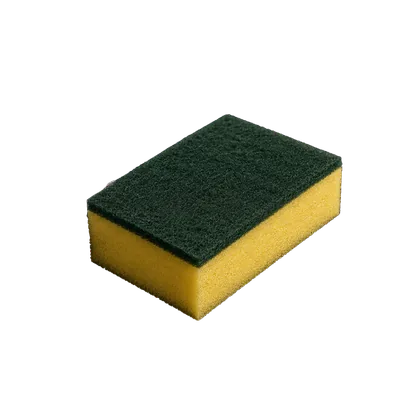 Scouring pads, melamine foam and abrasive creams
Both are abrasives. Either lifts the mark by removing film, flattening the
emboss into a permanent dull patch.
Scouring pads, melamine foam and abrasive creams
Both are abrasives. Either lifts the mark by removing film, flattening the
emboss into a permanent dull patch.Four Materials People Confuse With This One
These get called the same things in listings. Each sits somewhere different on vinyl vs leather, and each repairs differently.
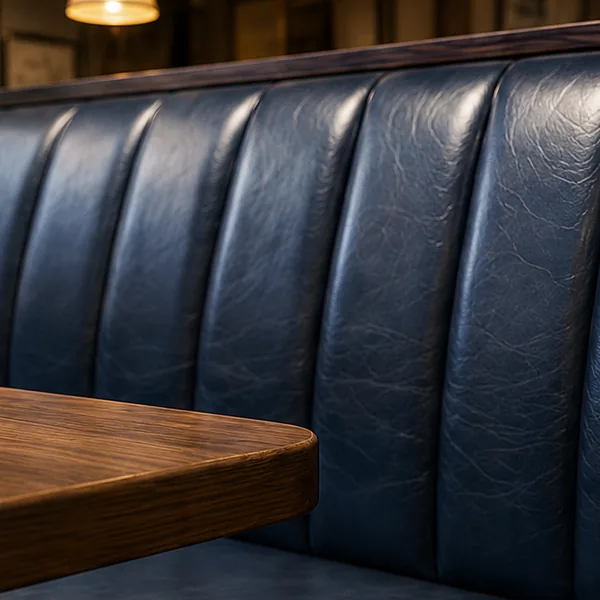
Commercial Vinyl
The same chemistry, specified for a cleaning rota. Abrasion grading and disinfectant tolerance live here.
Read the commercial vinyl guide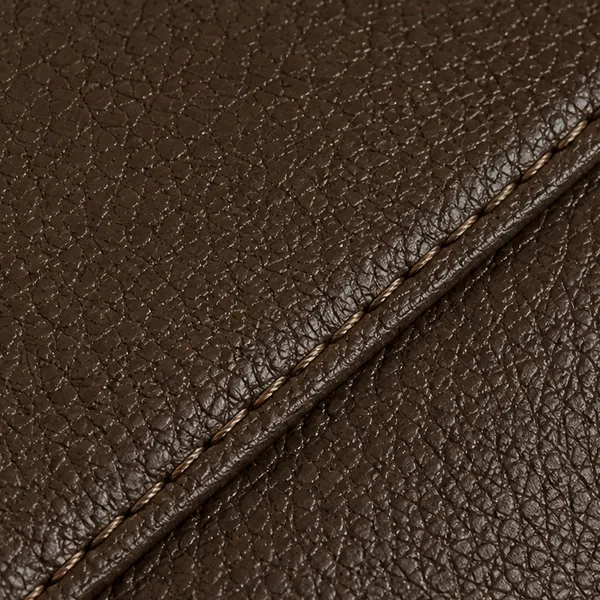
Faux Leather
The umbrella term. PU, pleather and vegan sit under it, and only some are vinyl at all.
Untangle the faux leather names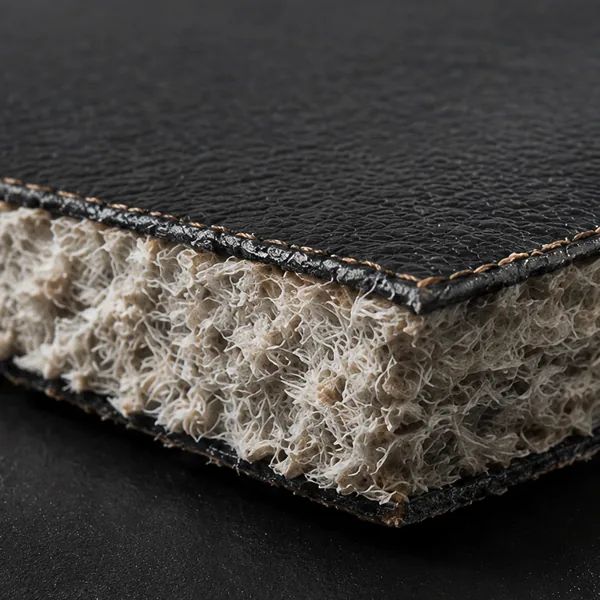
Bonded Leather
Leather fibre pressed into a sheet and coated. Sold as leather, fails like the coating it really is.
See how bonded leather behaves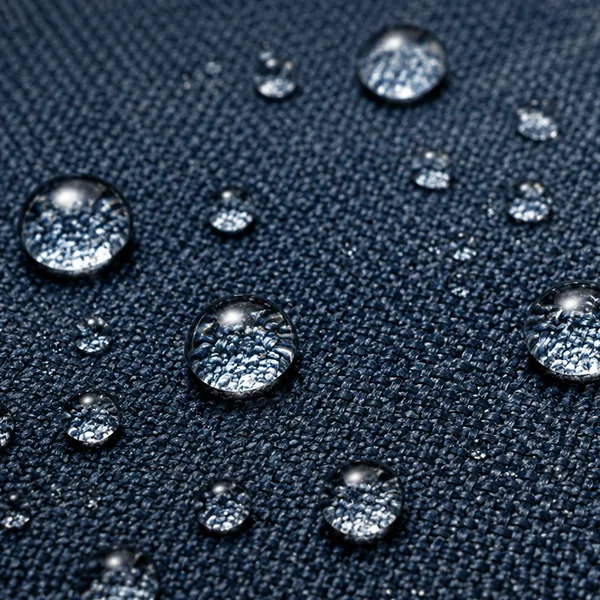
Performance Fabric
The usual alternative when vinyl feels too much like plastic. Cleanable, breathable, not a film.
Compare performance fabricIf vinyl vs leather resolved to leather, start with pigmented leather — the one vinyl is mistaken for — or the full materials index.
Vinyl Questions
The three we are asked most.
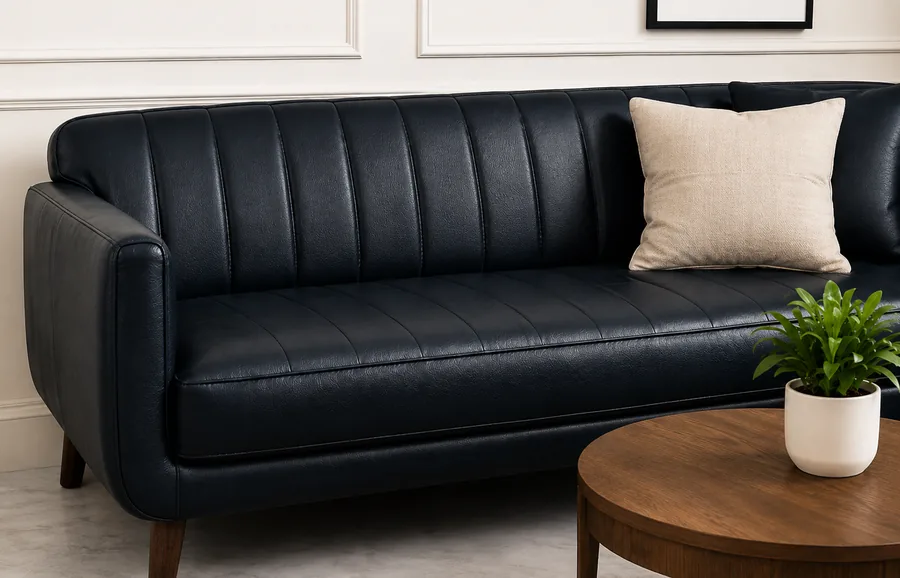
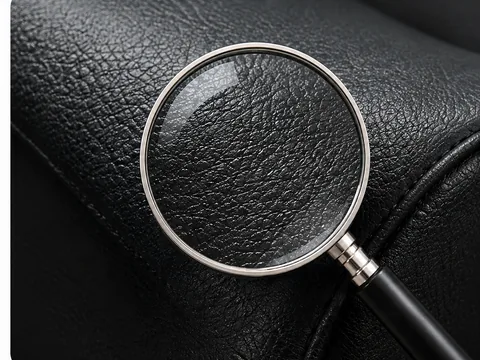
Is vinyl upholstery real leather?
No. Vinyl contains no hide at all. It is a plasticised PVC film bonded to a knit or woven fabric backing, with the grain embossed into the film and the colour mixed into it. Vinyl vs leather is a difference of kind, not of grade, which is why it behaves differently: it wipes clean, it never needs feeding, and it fails by hardening or delaminating rather than by drying out.
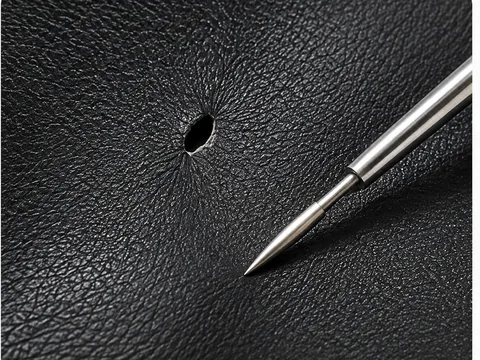
Can vinyl furniture be repaired?
Discrete damage on sound vinyl upholstery repairs very well. A split seam, a puncture or a cigarette burn is a local repair: the area is rebuilt, re-grained against the surrounding pattern and colour-matched. Because vinyl's colour is uniform rather than a variable hide dye, a matched repair can be harder to find than the same repair on leather. What does not repair is a panel that has already hardened and cracked across its flex lines.
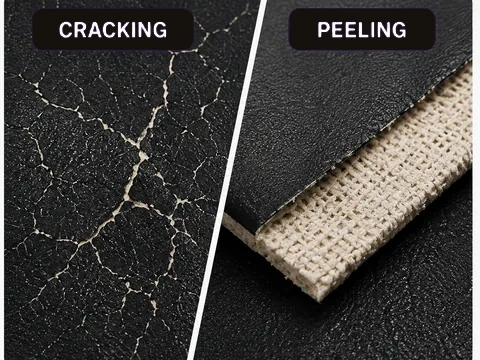
Why is my vinyl couch cracking and peeling?
Two different failures with two different answers. Cracking is plasticiser loss: the softener migrates out of the PVC film over years of heat, sunlight and body oil, the film goes hard, and it splits where it flexes most. Peeling is delamination: the bond between film and backing has let go, so the surface lifts away in sheets. Cracking is a replacement conversation. Peeling confined to an edge can sometimes be re-bonded; once it has spread across a seating surface it is also a replacement.
Find Out Which of the Two You Have
Vinyl vs leather is the easy part. Plenty of vinyl gets thrown away with a repairable tear in it, and plenty gets expensively repaired when the film was already finished. Repair, panel replacement, colour restoration and full vinyl reupholstery are all done in-house, for homes and businesses across NYC and New Jersey.
Or talk it through — (347) 310-7483 · New York City & New Jersey