Faded Leather Sofa Repair

Home/Services/Faded Leather Sofa Repair
Color Restoration — NYC, The Five Boroughs & New Jersey

Bring The Color Back, Keep The Sofa

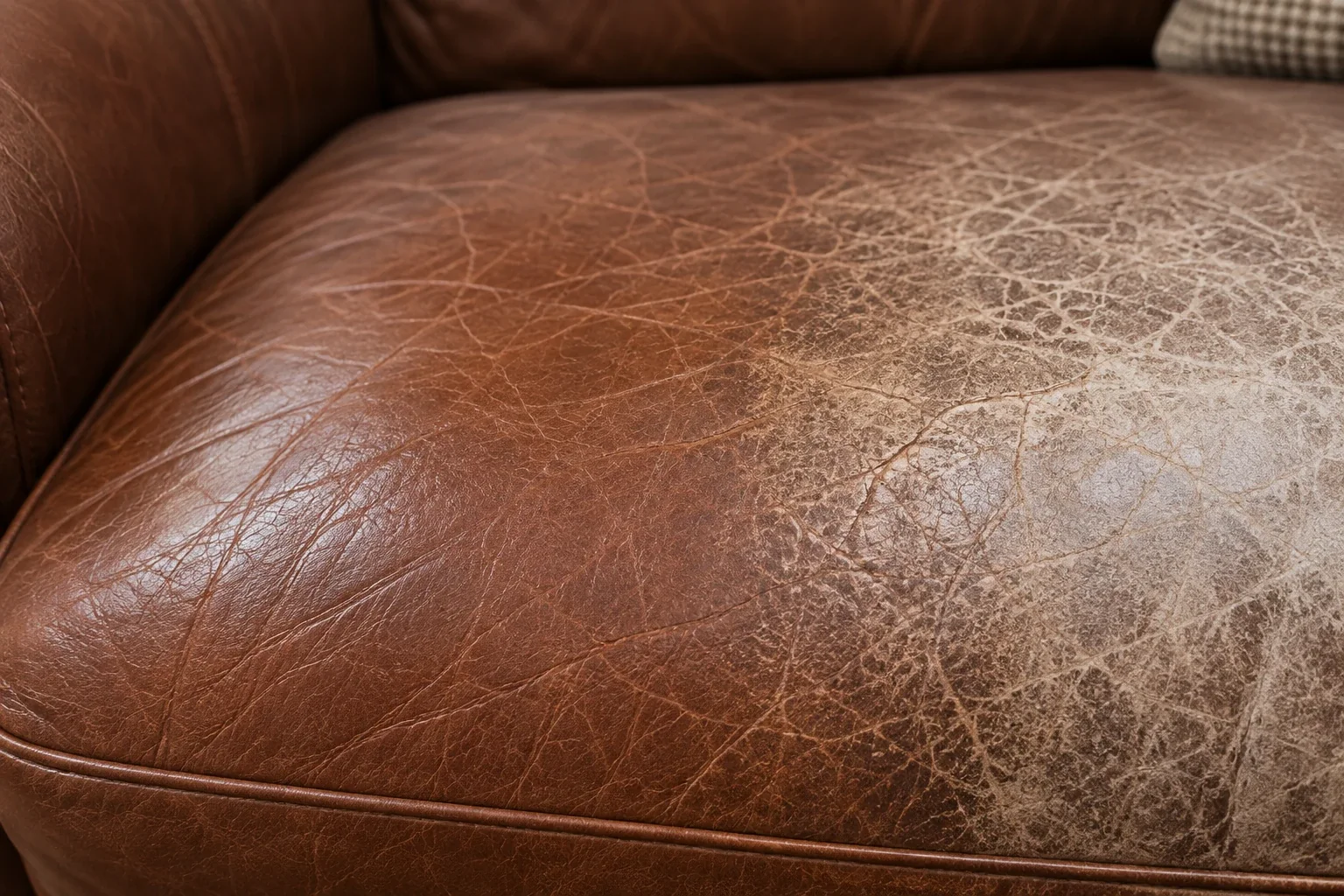
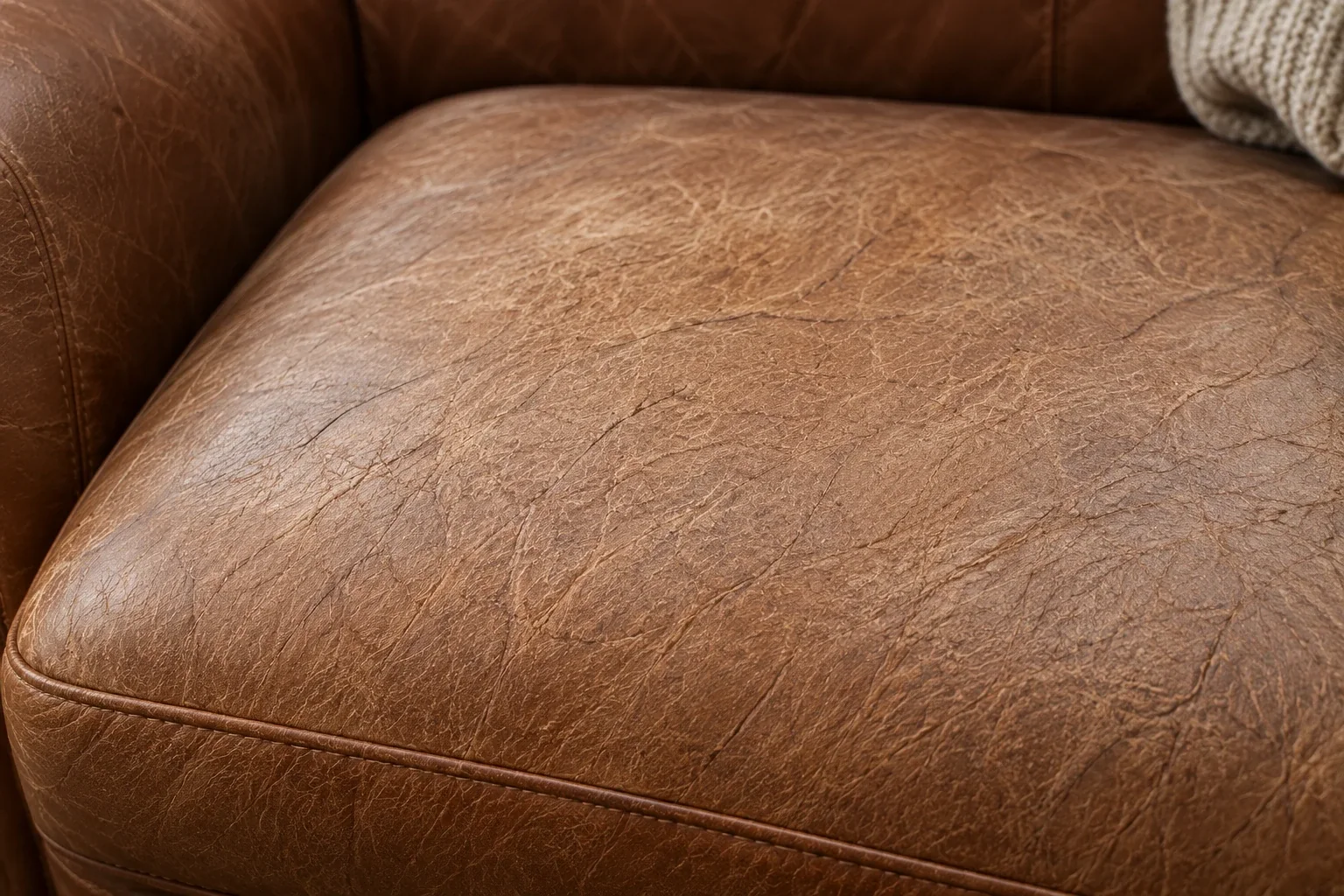
Fading is a change in the color layer, not a failure of the leather. When the hide underneath is sound, the color is matched and rebuilt on the piece you already own. That is what faded leather sofa repair is, and it is not reupholstery.

What Fading Looks Like

Does your sofa look like one of these?

Fading never arrives evenly. It shows first where the light or the use is heaviest, which is why one part of the sofa looks wrong while the rest still looks fine.
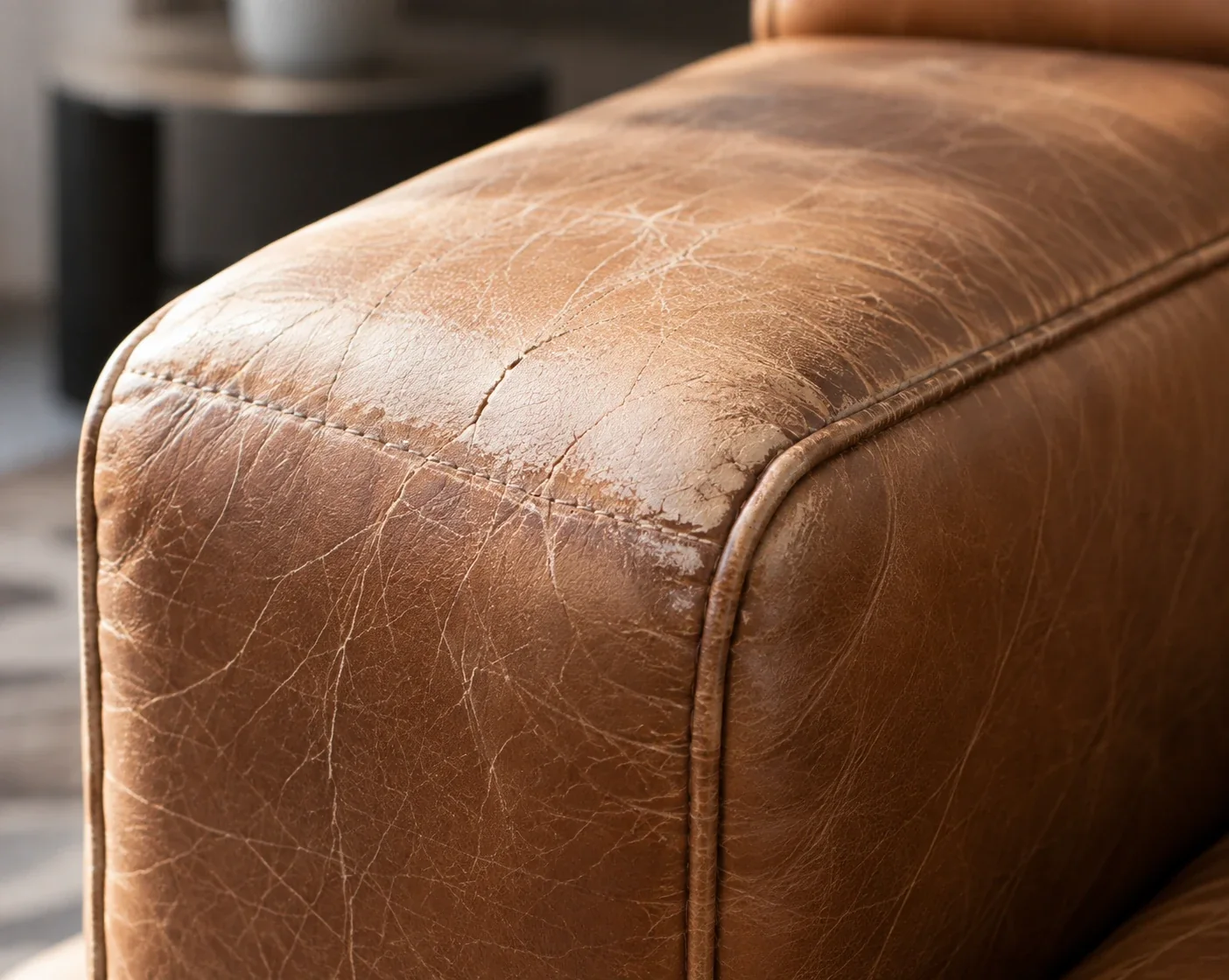
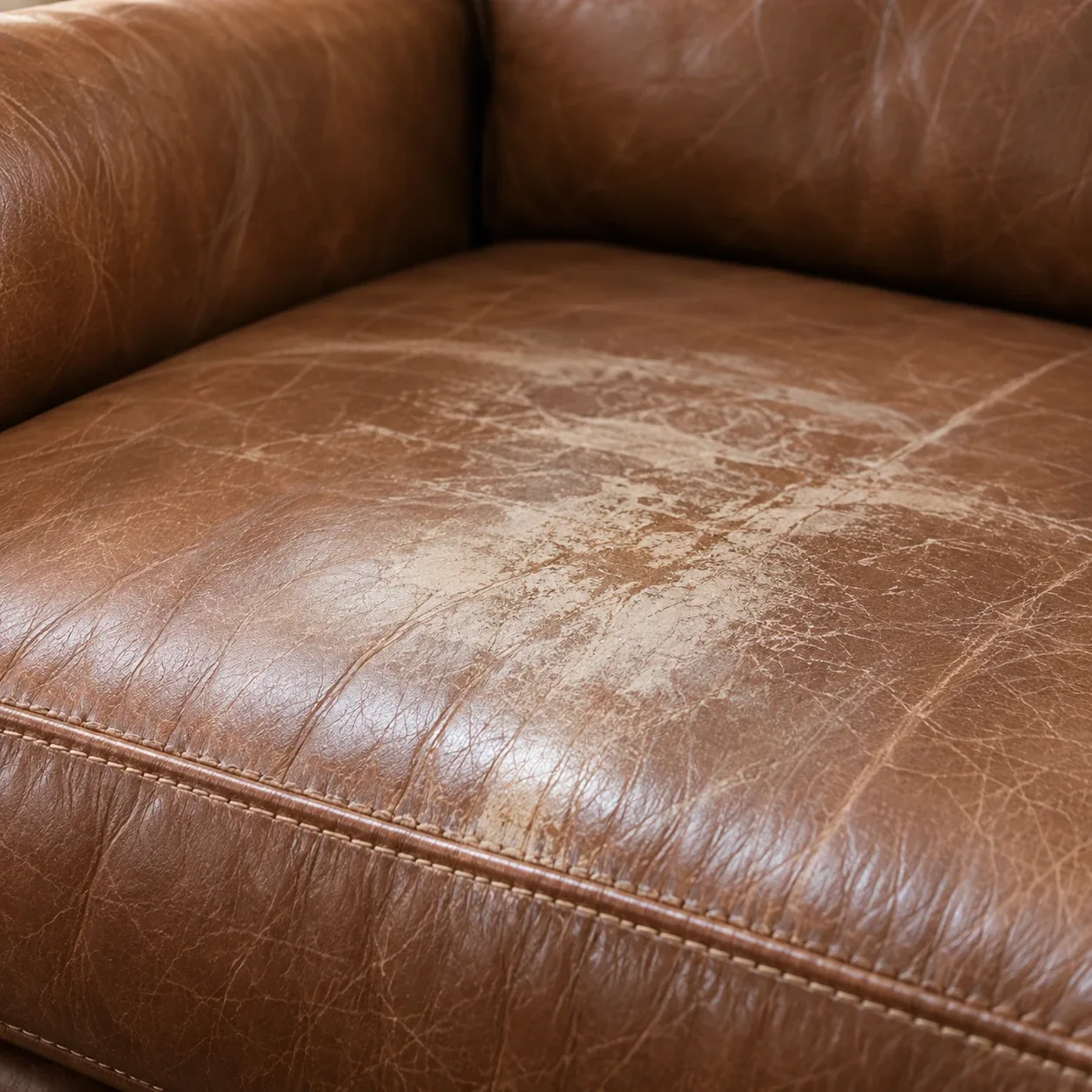
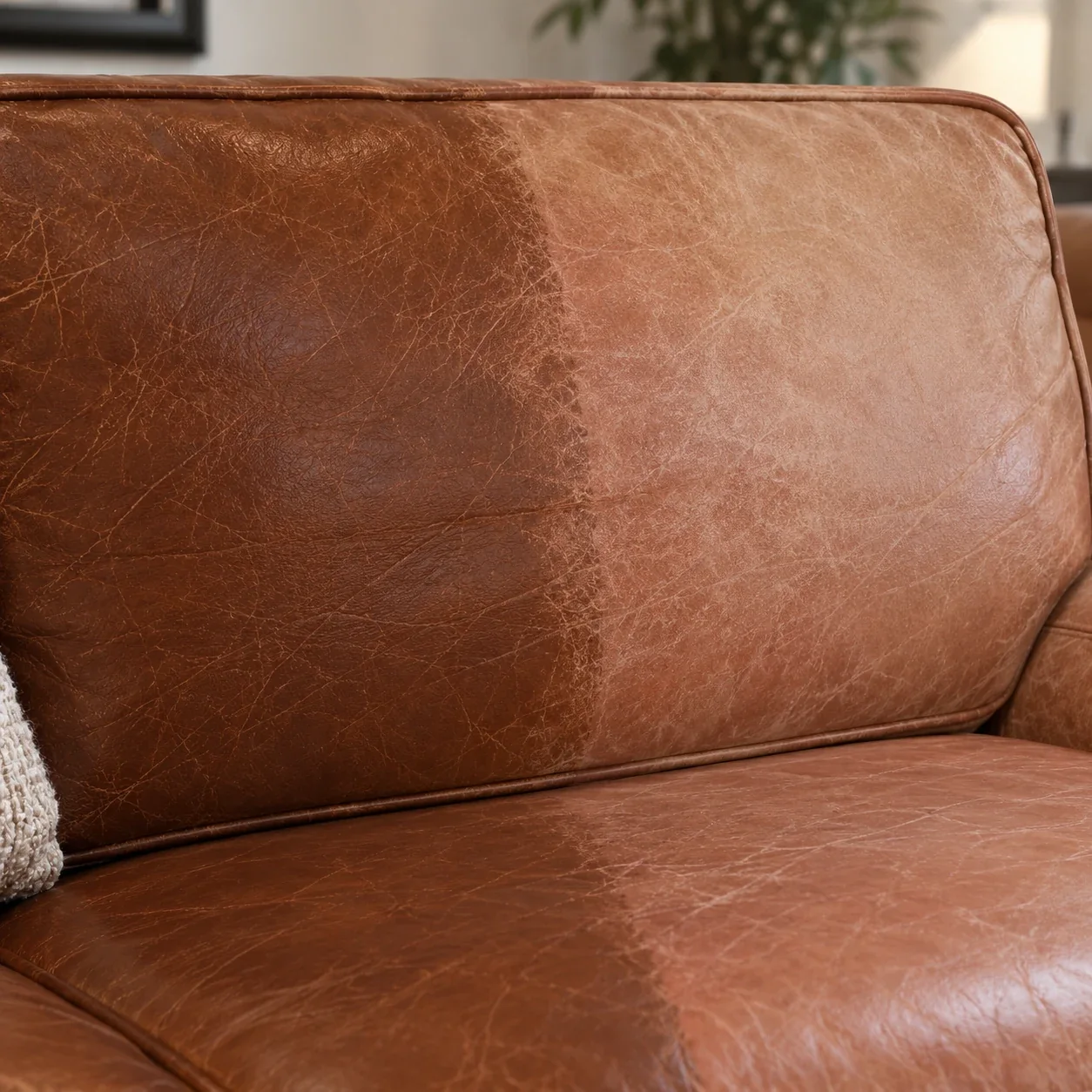
Faded leather sofa repair: the window-facing end has gone noticeably paler than the far end
Sun fading
The end nearest the window has drifted lighter than the rest.
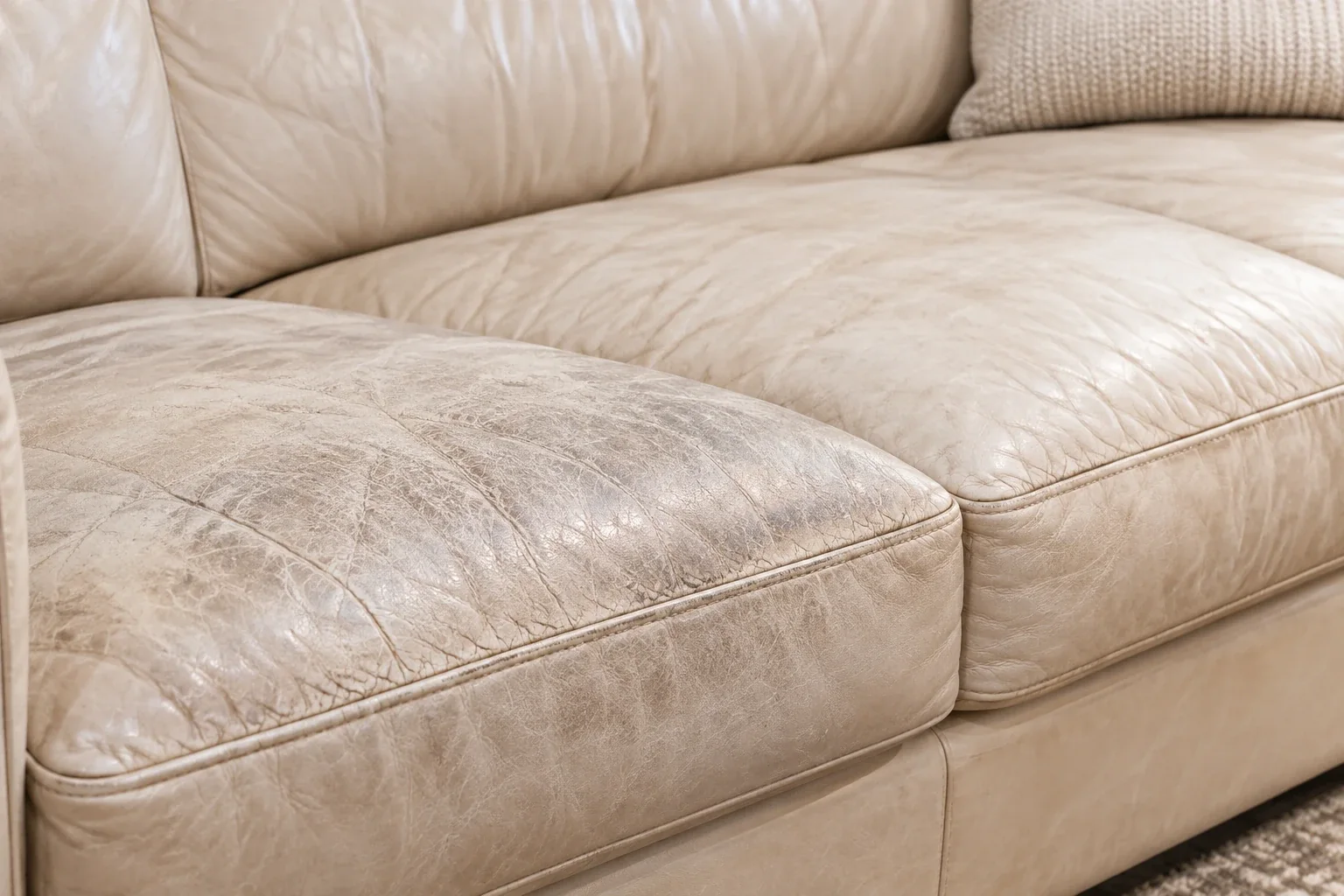
Sofa seat cushion whose center has lost color while the edges stay dark
Seat fading
The cushions you sit in have gone pale in the middle, dark at the edges.
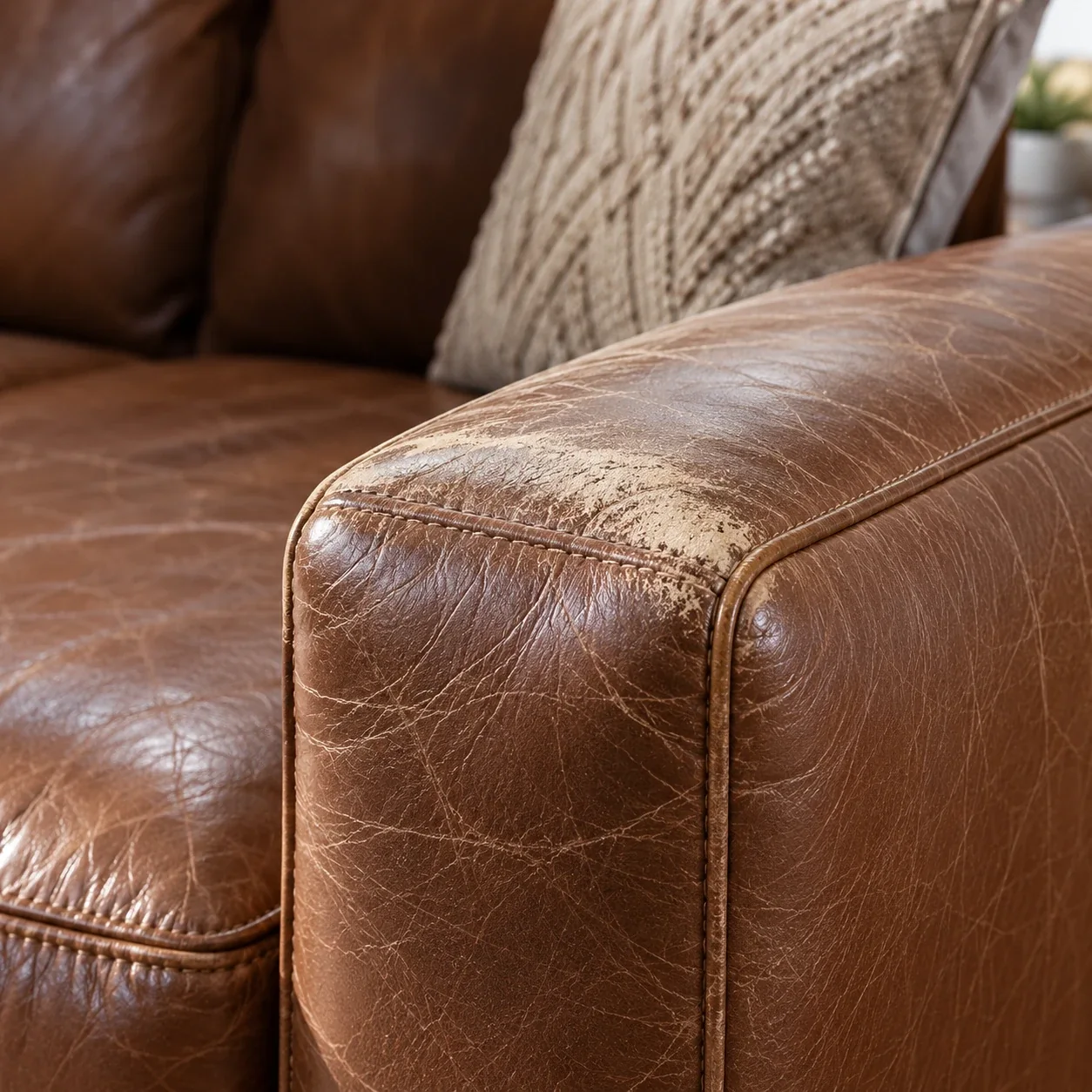
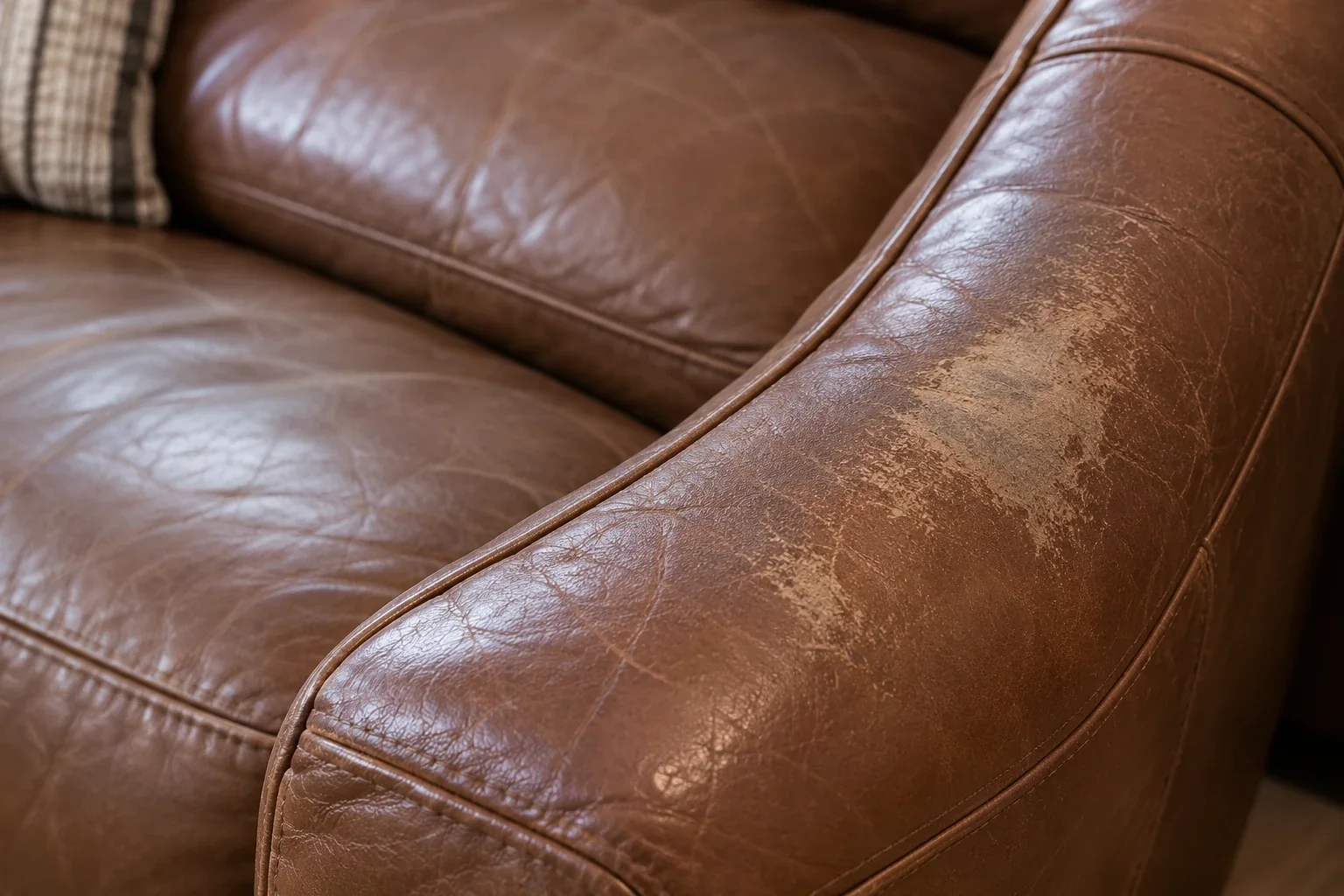
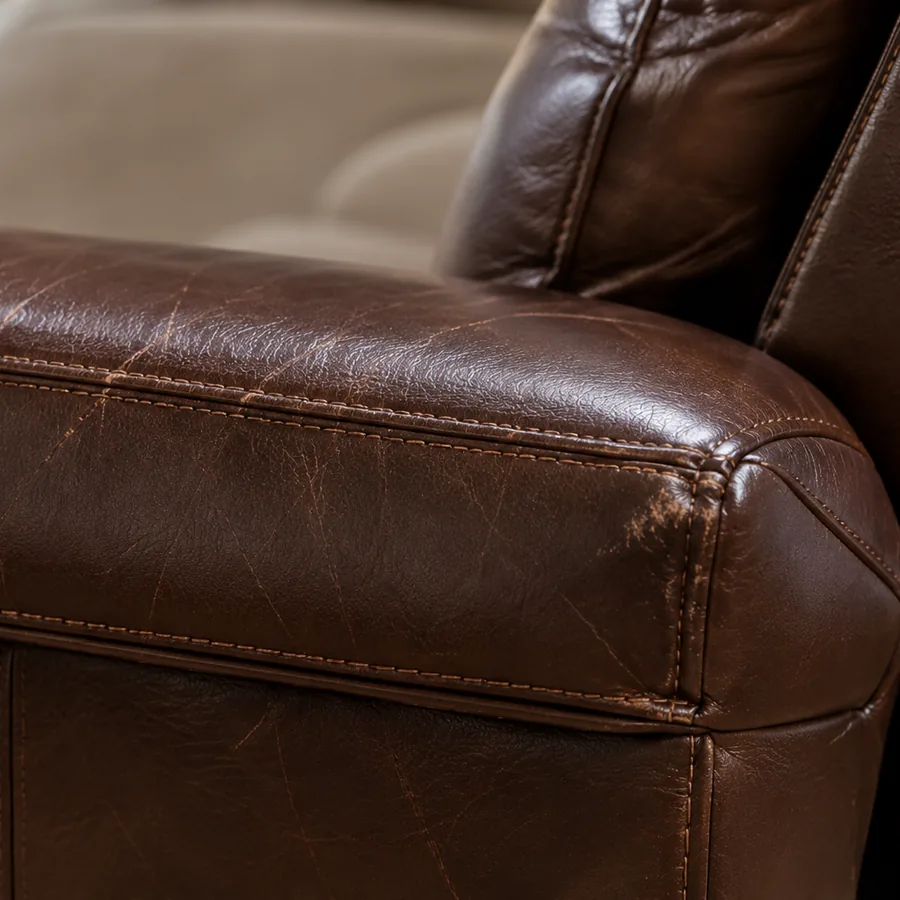
Leather sofa armrest with a pale worn top surface above a darker side panel
Armrest fading
The top of the arm is lighter than the panel below it, where nothing touches.
Band of lighter leather across a sofa back where heads rest against it
Headrest fading
A band across the back at head height reads lighter than the leather around it.
Leather sofa panel that no longer matches the tone of the panel beside it
Uneven color
Panel to panel the tone no longer matches, so it reads patchy rather than faded.
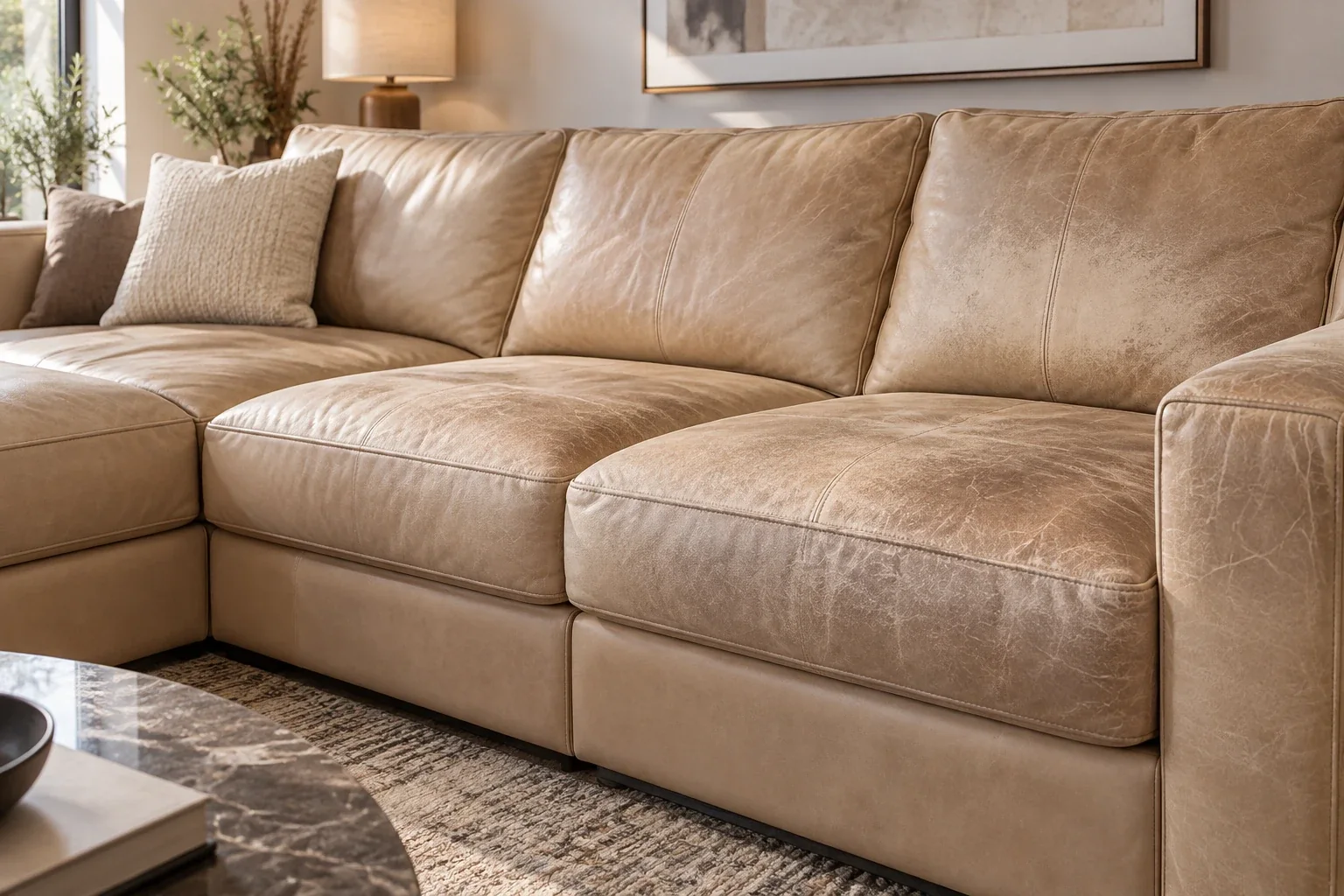
Pale washed-out leather sofa that has lifted well above its original brown
Washed-out leather
The color reads chalky and thin, as though it were rinsed out of the hide.
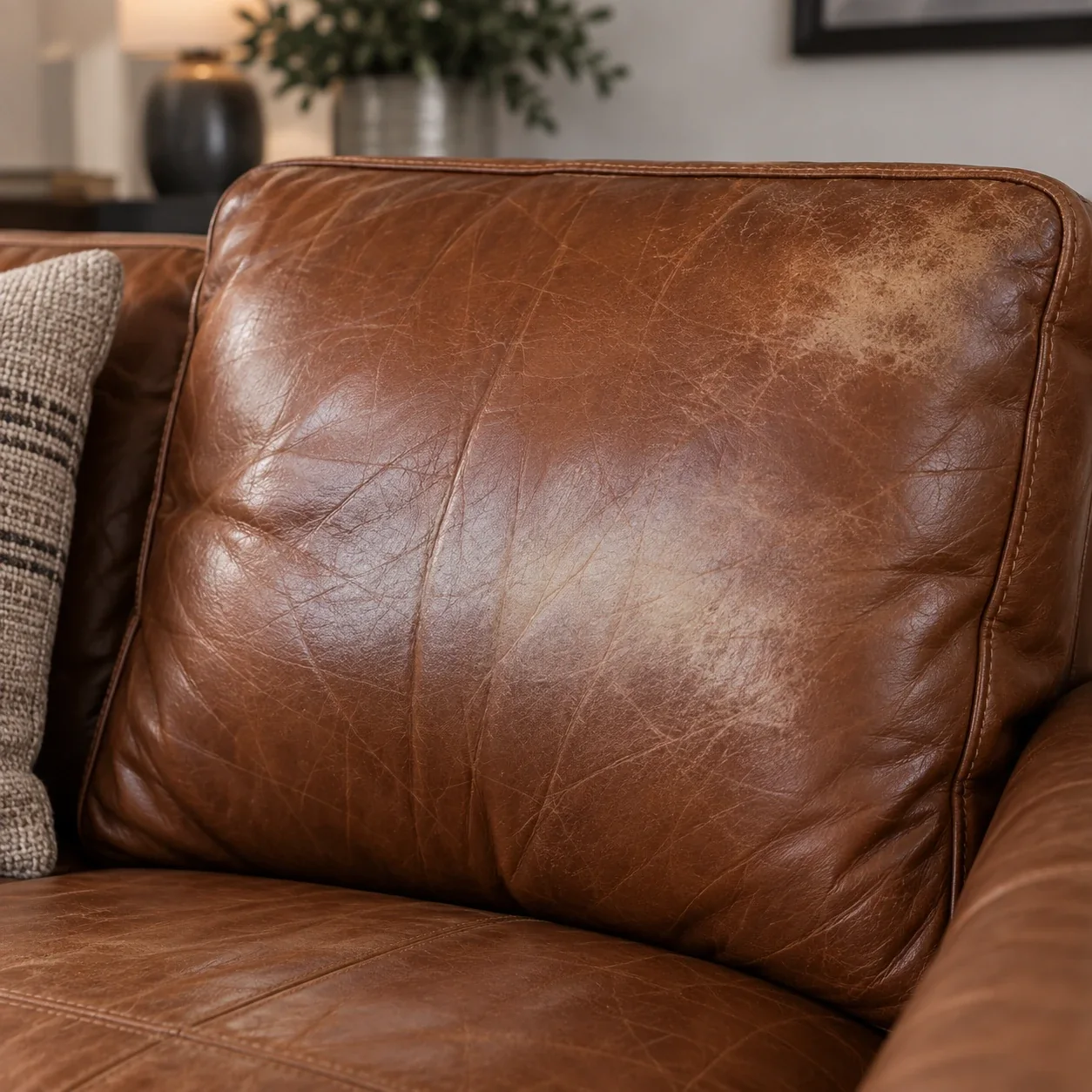
Leather sofa with one concentrated area of lost color surrounded by darker leather
Localized color loss
One patch has given up its color while everything around it held.
Whole leather sofa looking washed out and lighter than its original color
Overall fading
Nothing stands out because the whole piece lifted a shade or two together.
Read It Correctly First

Not every color change is fading

Four problems look alike in a photograph and need four different answers. Direction is the tell: fading goes lighter, contamination goes darker.
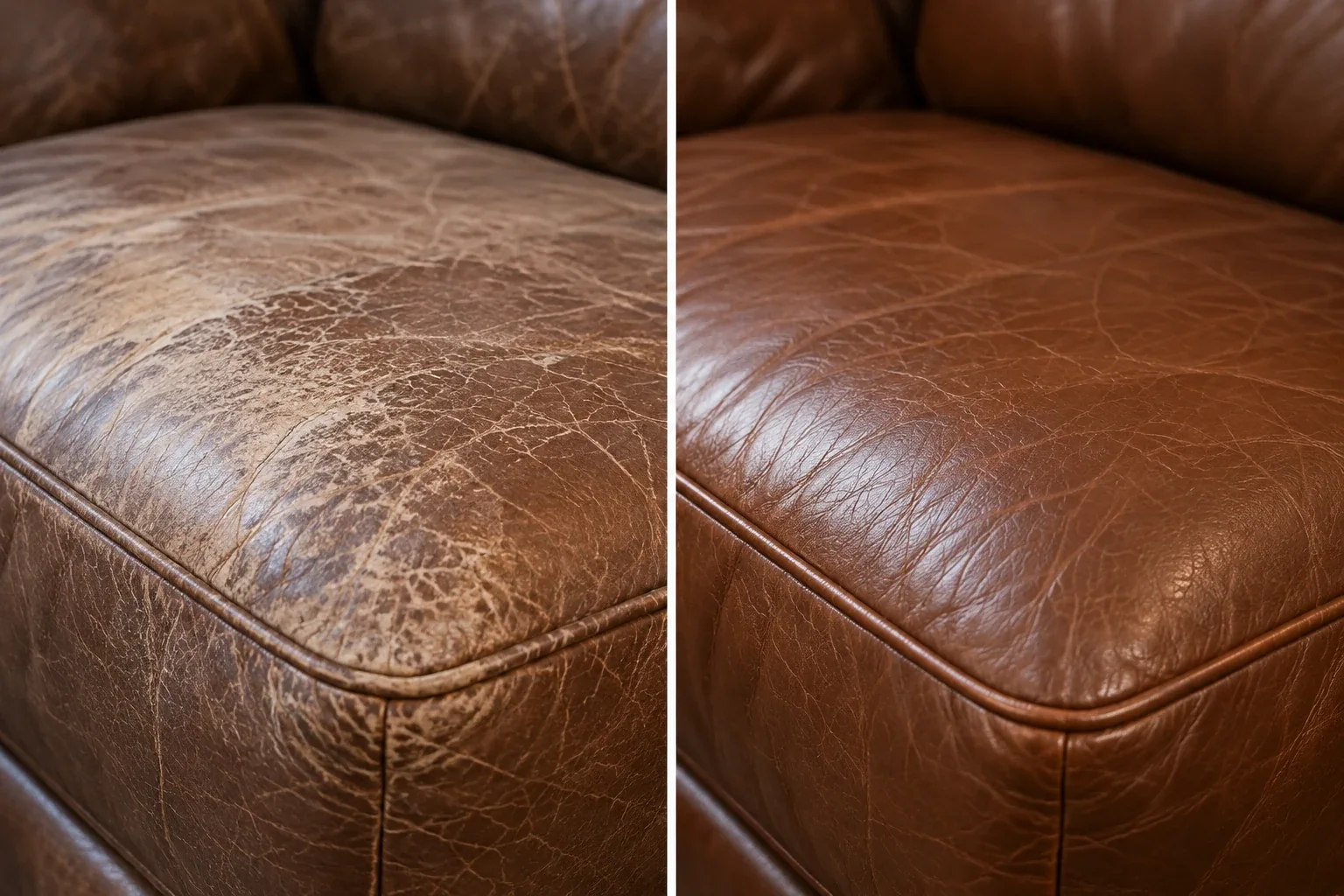
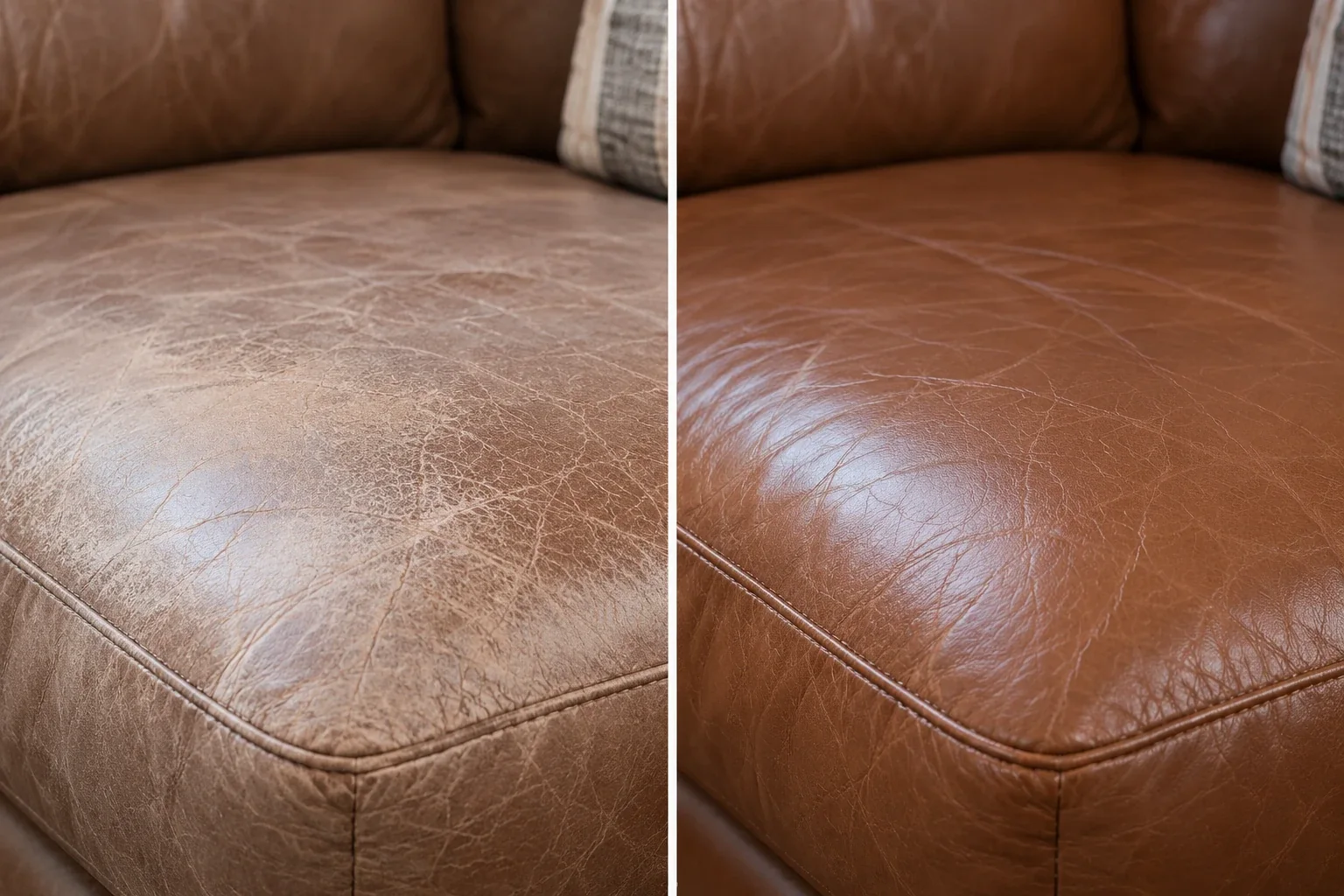
Macro view of leather that has lightened and lost depth of color
Goes Lighter
Fading
The color layer has lost strength, usually from light and time. The surface is still smooth.
Front edge of a leather seat where friction has worn the color away
Rubbed Off
Wear
Friction has taken the finish off a contact edge. It stops exactly where the rubbing stops.
Darkened patch on a leather sofa headrest caused by body oils
Goes Darker
Body oils
Head and hand contact drives oil into the leather. This one darkens, so it is never fading.
Irregular stain mark discoloring one area of a leather seat
One Area Only
Staining
Something spilled or transferred onto the surface. The edge of the mark has a shape to it.

Not sure which one you have? Send a photo and we will tell you which of the four it is before quoting.

Why One End Looks Wrong

Sunlight does not hit the whole sofa equally

A sofa beside a window is really three sofas. Each zone takes a different daily dose of light, and after a few years they no longer match.
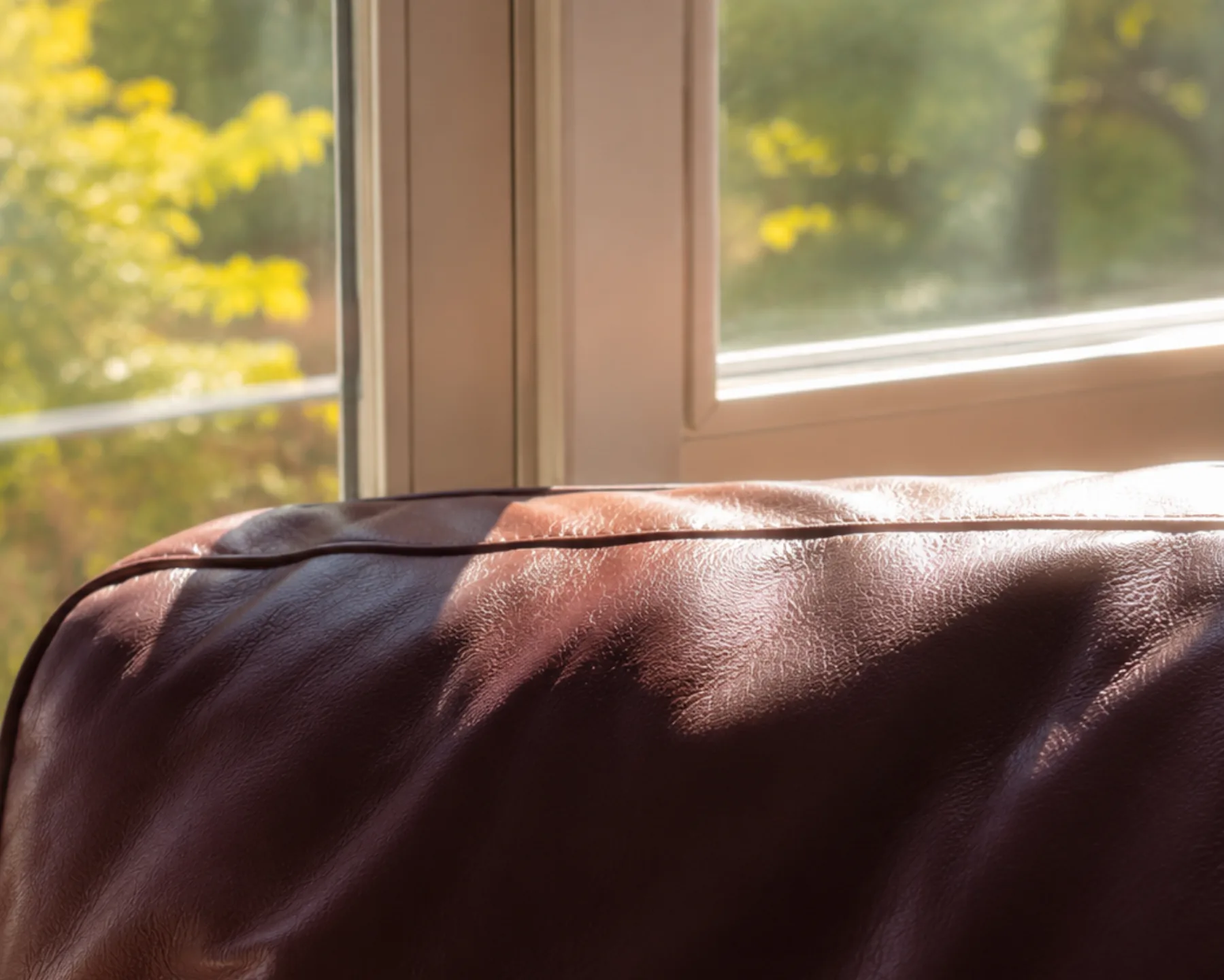
Upholstered seating beside a large window with daylight falling unevenly across it
Zone 01
Direct sun
Hours of unfiltered daylight. The color lifts here first and furthest.
Zone 02
Partial sun
Light for part of the day only. Fades slower, which is what creates the gradient.
Zone 03
Protected
The back, the shaded end, the leather under the cushions. Still the original color.
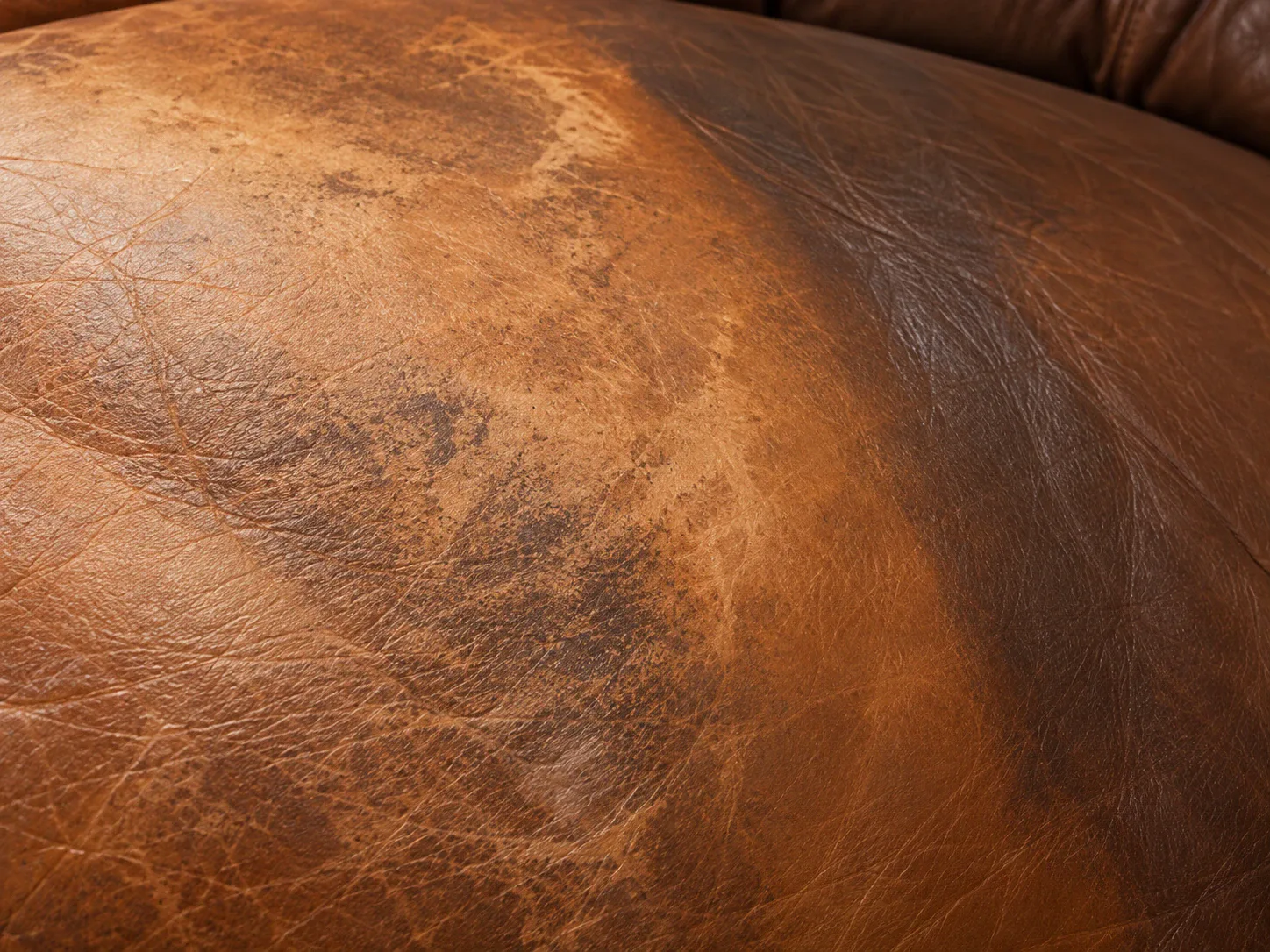
Close view of leather from the sun-facing end of a sofa, pale and low in color

Sun-facing end — how far the color has travelled.
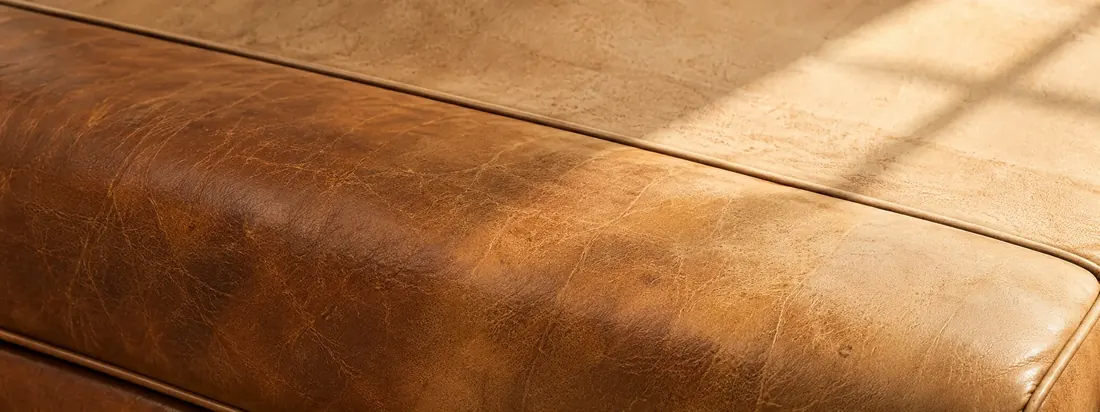
Leather bench crossed by a sunlight line, deep color in shade and pale where the light falls

Middle of the piece — part way between the two.
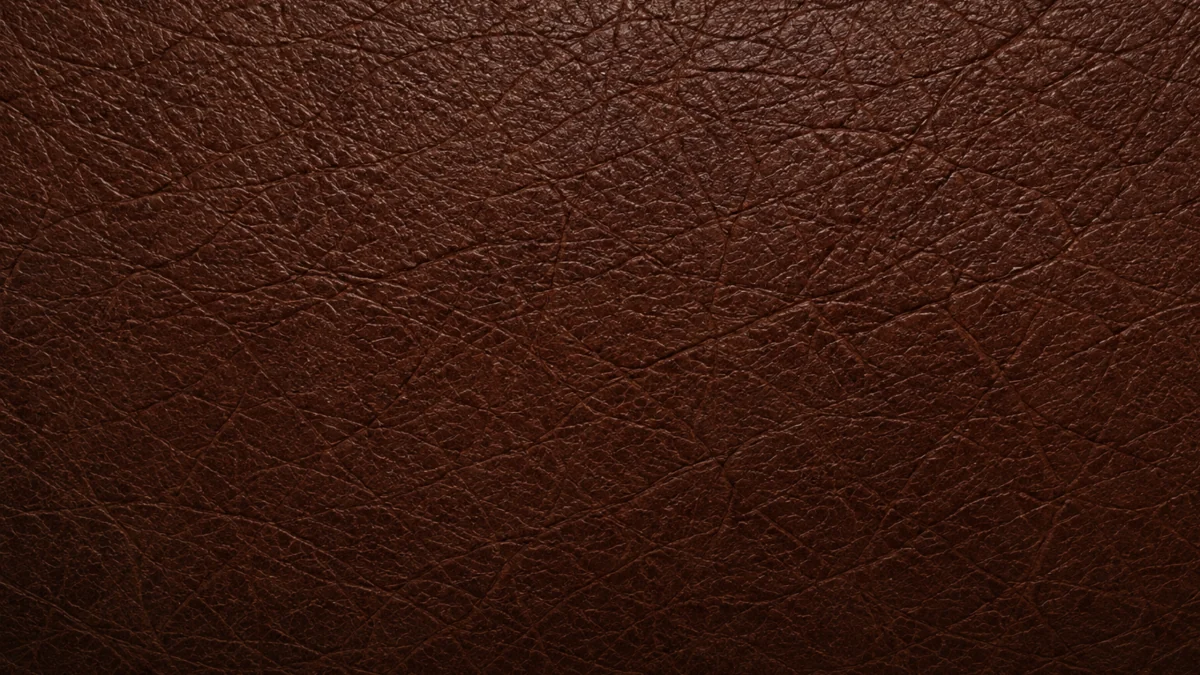
Close view of protected leather from the shaded end of a sofa, still deep in color

Shaded end — what the whole sofa is supposed to look like.

Finding The Target Color

The original color is still on your sofa

We do not guess, and we do not pick the nearest brown off a chart. Every sofa keeps a few square inches that light never reached. Those are what we match to.
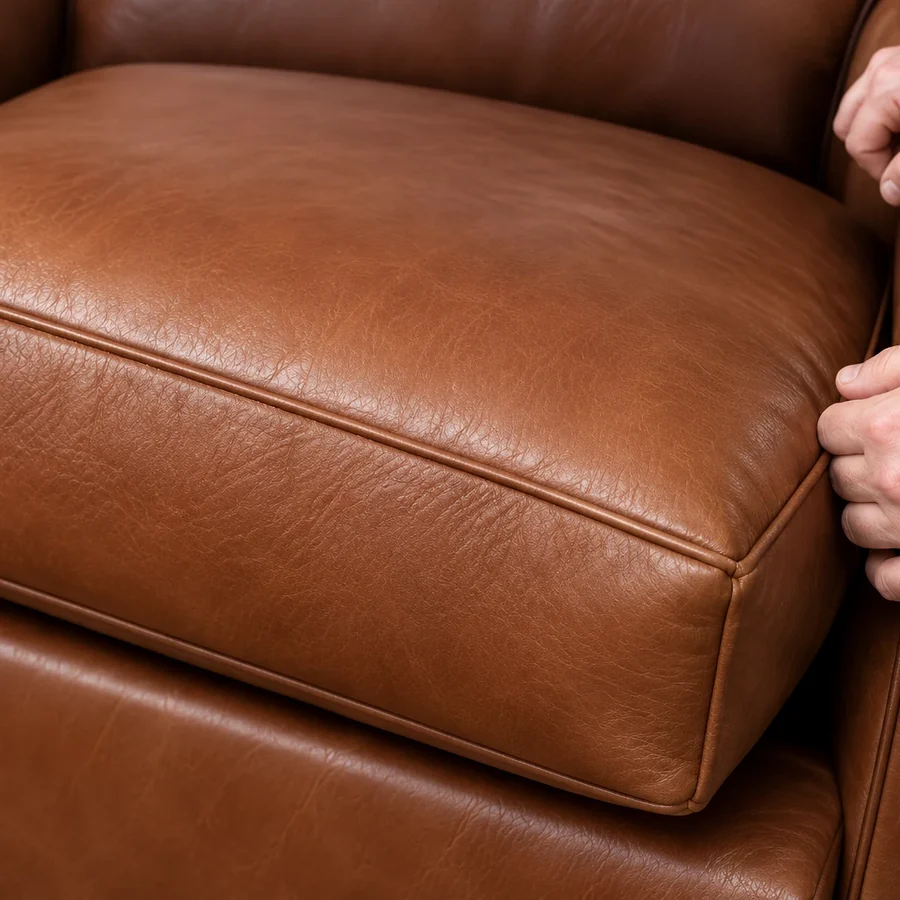
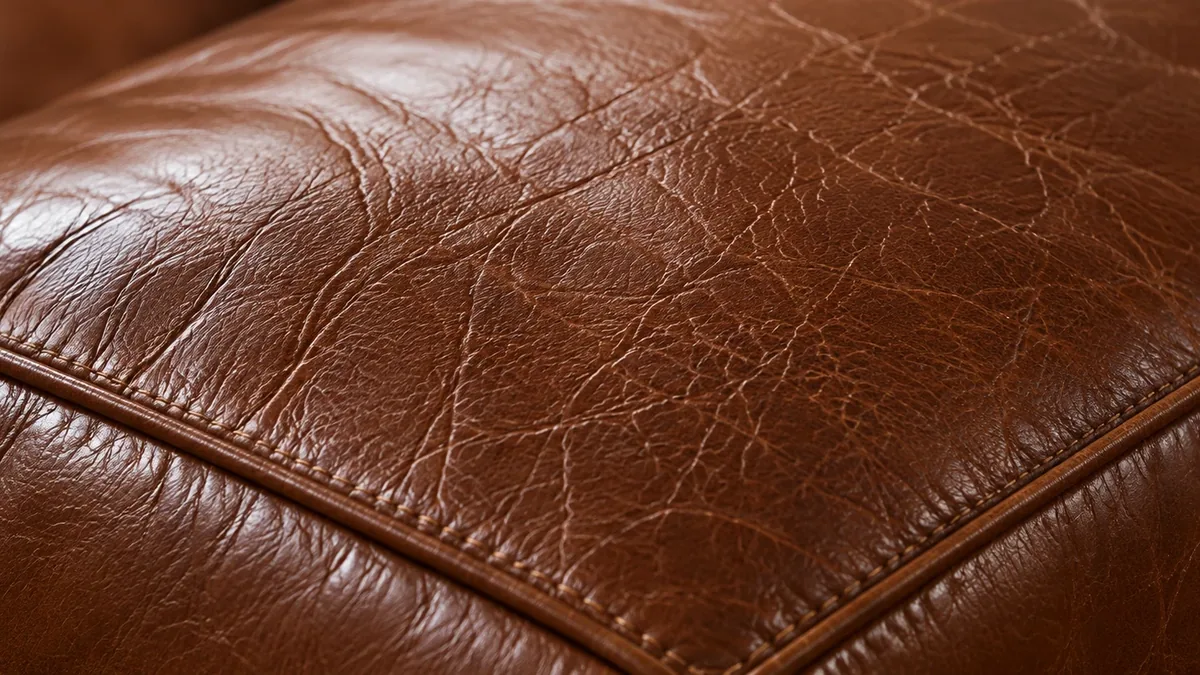
Seat cushion lifted away from a leather sofa to reach the deck beneath
01
Under the cushion
In the dark since the sofa was delivered.
Deep original color held in the crevice where two leather sofa cushions meet
02
Between the cushions
Keeps its tone even when the cushion faces have gone pale.
Back corner panel of a leather sofa still carrying its original deep color
03
The back panel
Against a wall, untouched, usually the truest reference on the piece.
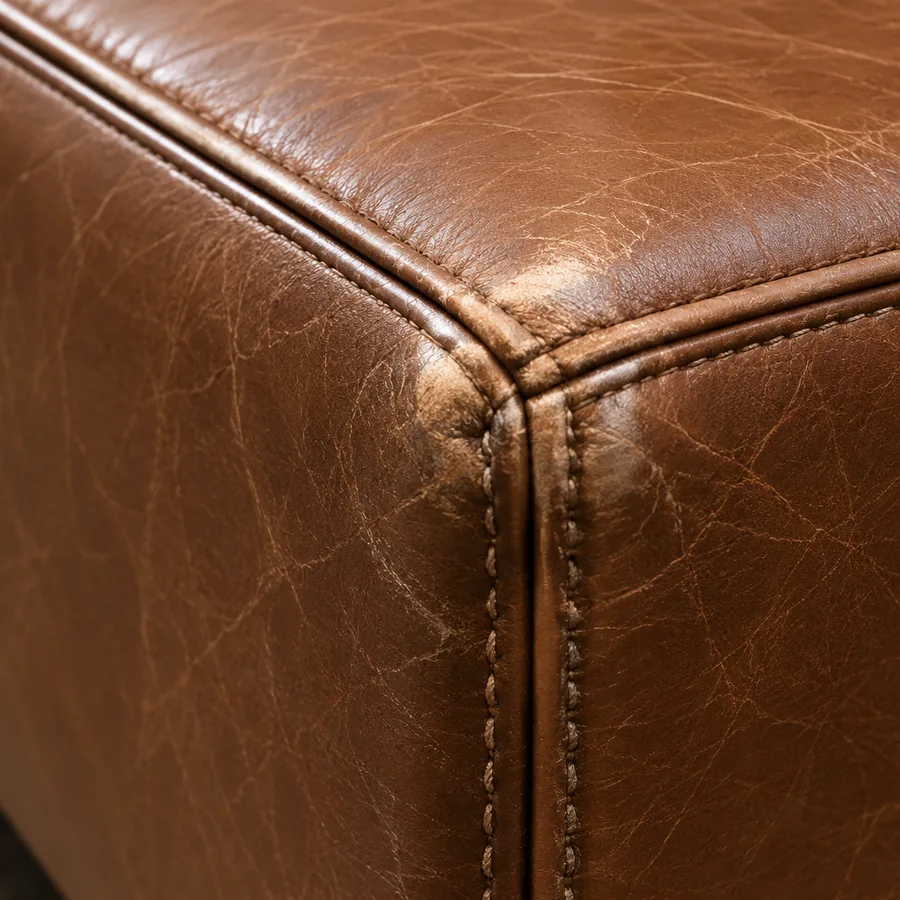
Piping and welt seam on a leather sofa, with the shadow line beside it still dark
04
Under the piping
The shadow line where welt meets panel changes last.
Faded surface Protected original Matched color
How Far It Has Gone

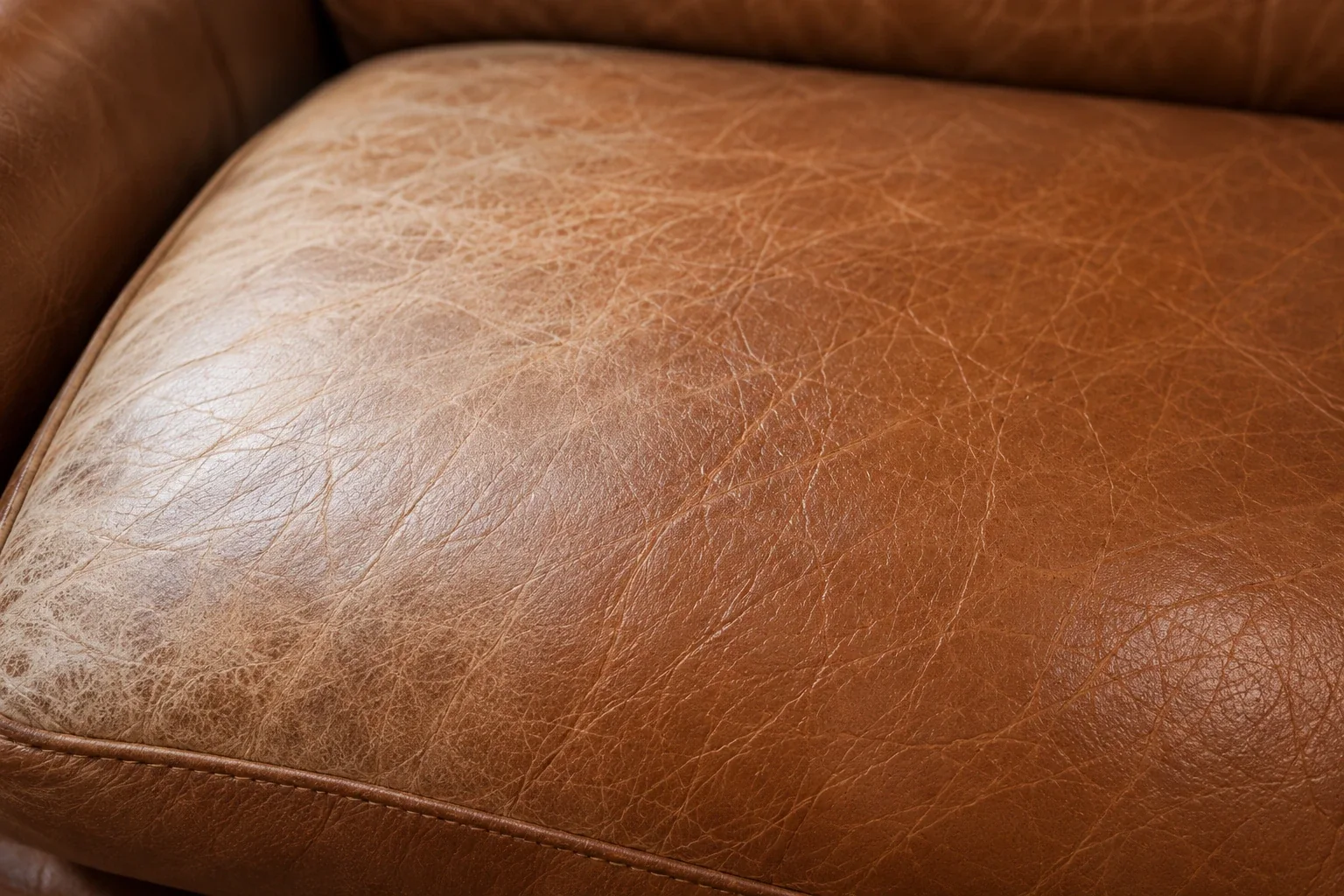
Four degrees of fading, four different jobs

The first three are ordinary color work; the fourth is a different conversation. Where your sofa sits on this ladder decides the faded leather sofa repair more than the color does.
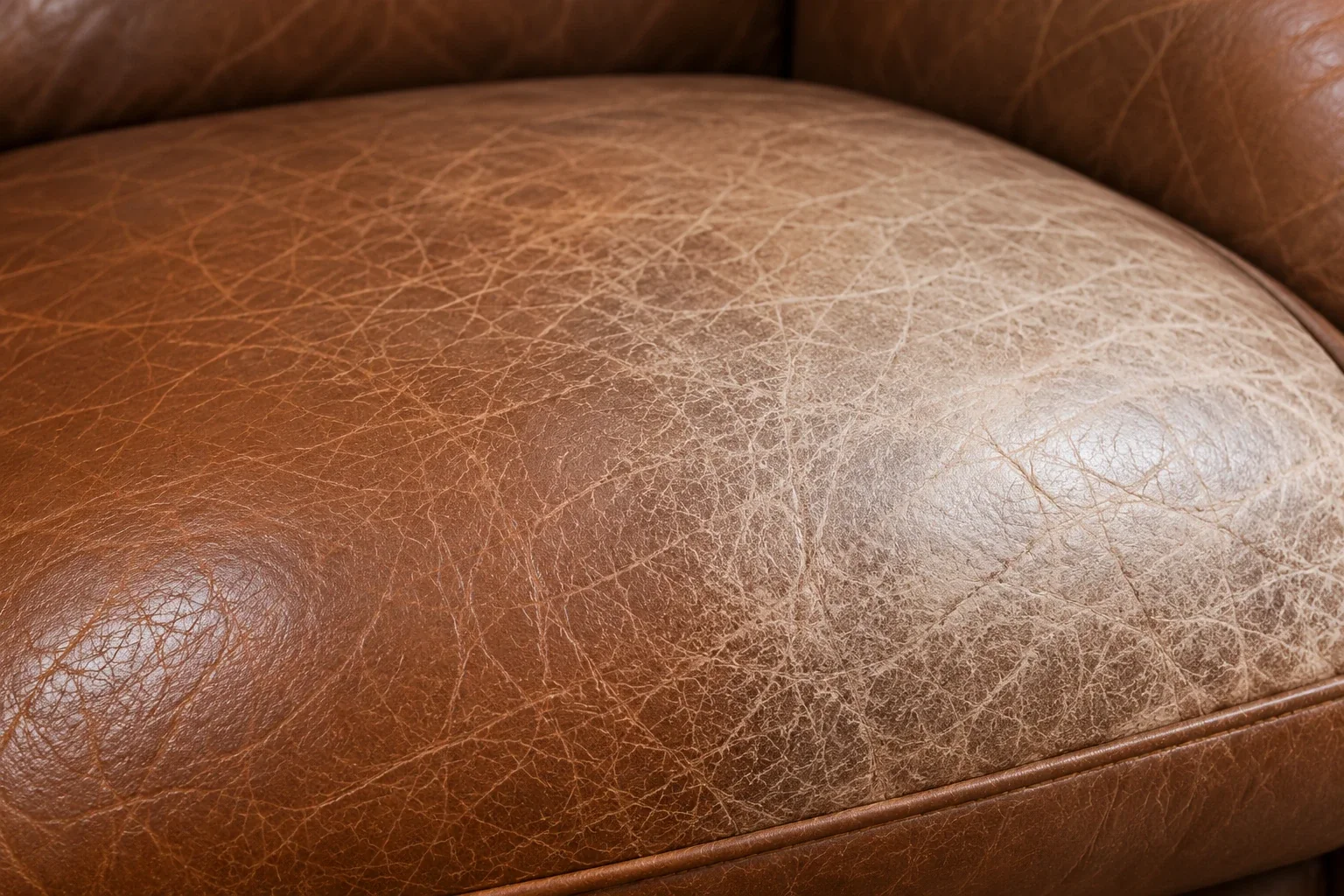
Leather with slight loss of richness, only visible next to a protected area
01
Light fading
Visible only beside a protected area. Depth has gone, color has not.
Straightforward. Often the smallest job on this page.
Leather showing a clear tone difference between exposed and protected areas
02
Moderate fading
A clear difference between exposed and protected areas that visitors see too.
The most common case, and the one that responds best.
Heavily faded leather that has become significantly lighter and uneven
03
Heavy fading
Much lighter and uneven. The original color is hard to read from the surface alone.
Restorable, but usually the whole piece rather than a panel.
Badly faded leather whose surface has also started to break down
04
Fading plus material failure
Cracking or splitting alongside the color loss. The material is going, not just the finish.
Color alone will not fix it. See the routing below.
Where We Work On A Sofa

Restore what has faded, leave what is still right

Rarely a reason to recolor a whole sofa when three panels are the problem. We work to the area that has moved and blend it into the leather around it.
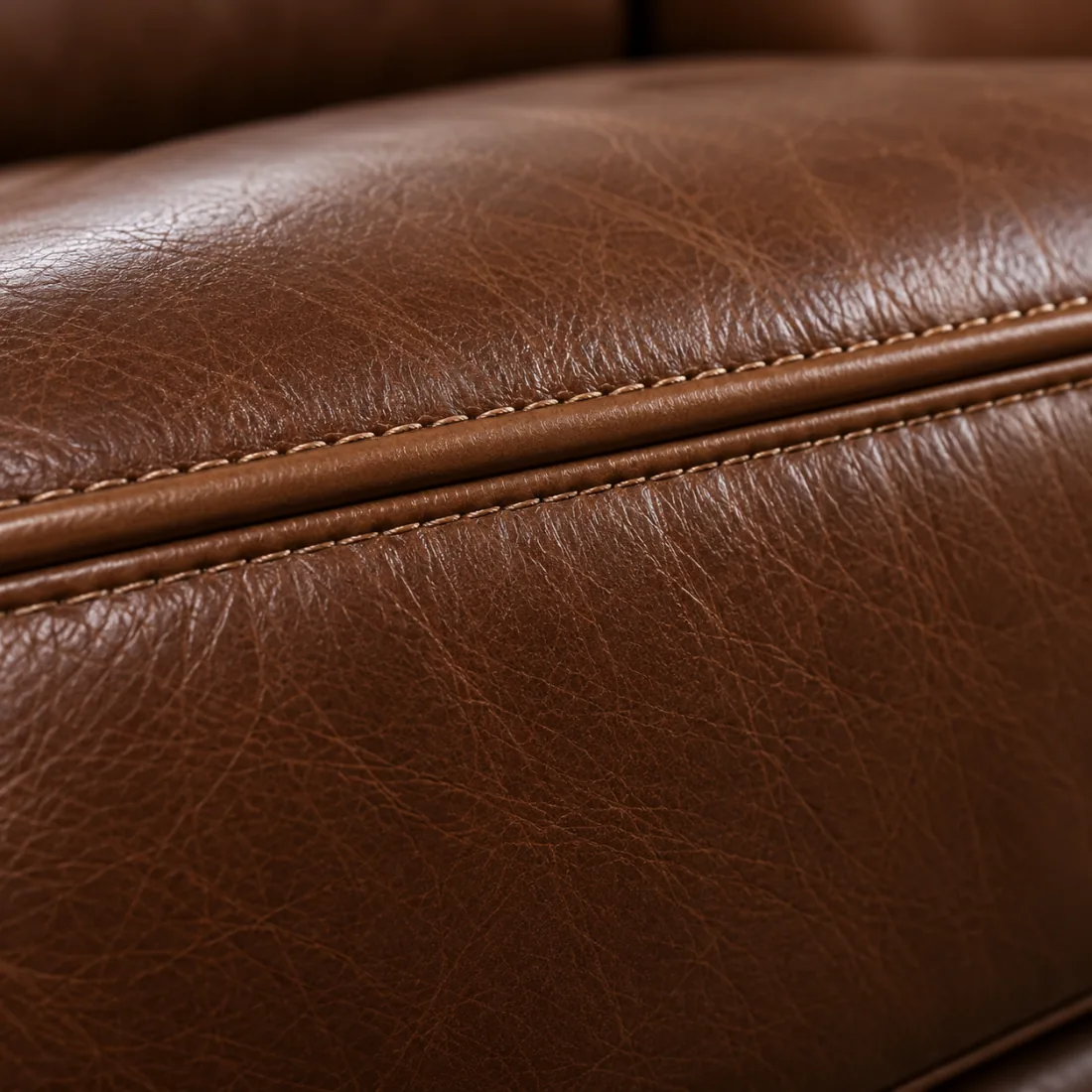
Crown of a leather sofa seat cushion, the area that fades first from use
Seat cushions
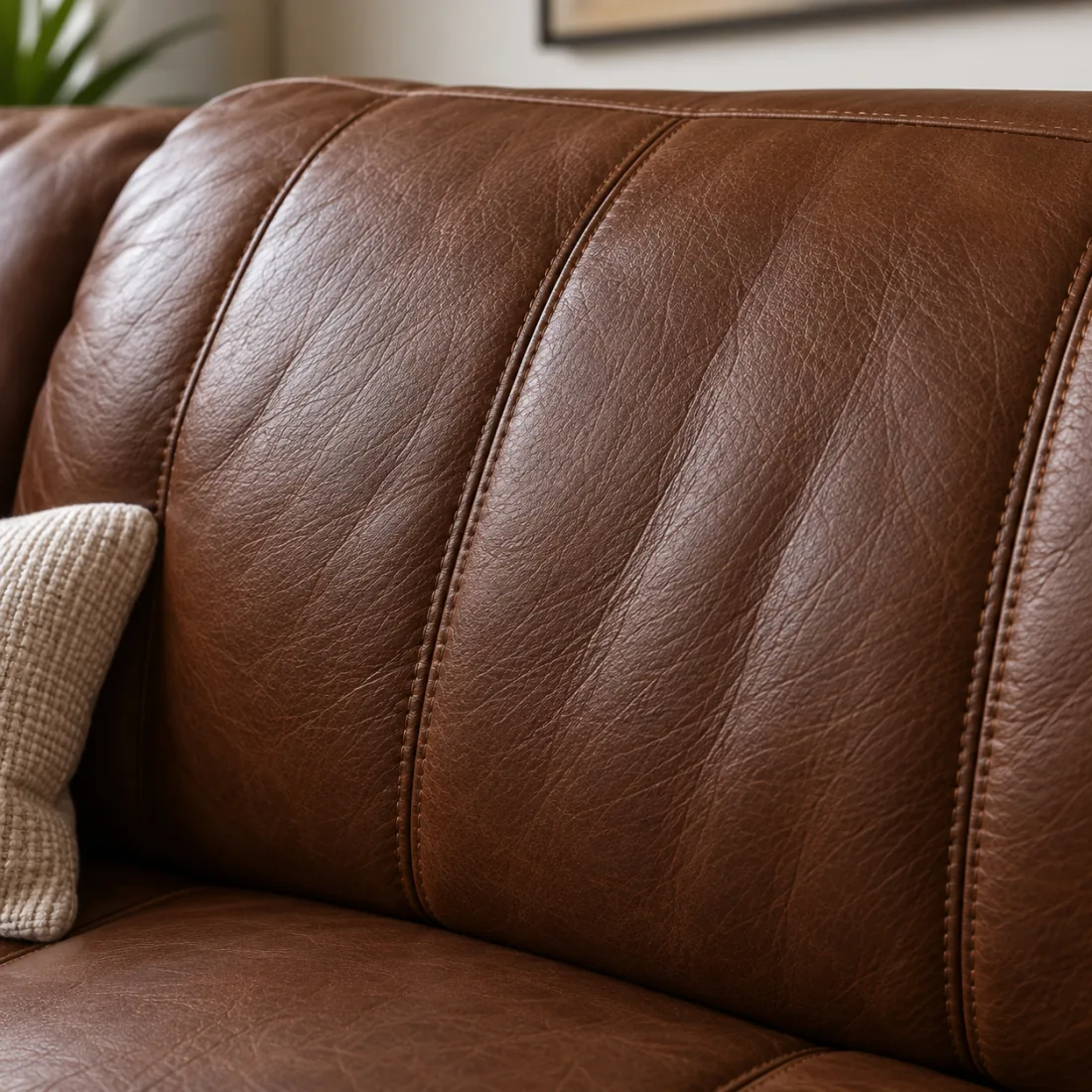
Channelled back cushions of a brown leather sofa
Back cushions
Armrest of a leather sofa where hands and sleeves make contact
Armrests
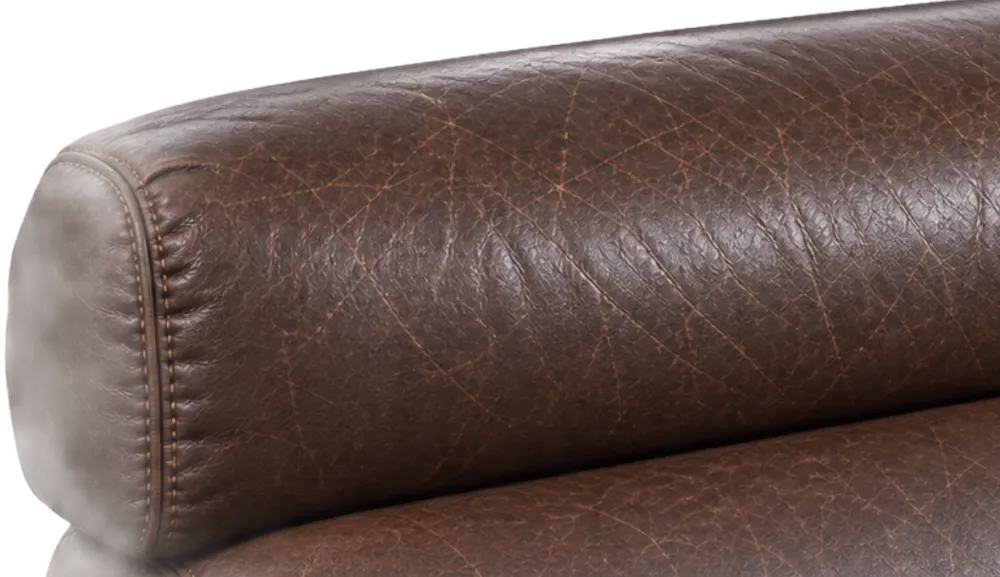
Headrest roll along the top of a brown leather sofa back
Headrests
Front nosing edge of a leather sofa seat
Front nosing
Outside side panel of a leather sofa
Side panels
The Most Common Wrong Turn

Fading, wear or dryness?

They look alike from across the room and they are not the same problem. Conditioner fixes exactly one of the three.
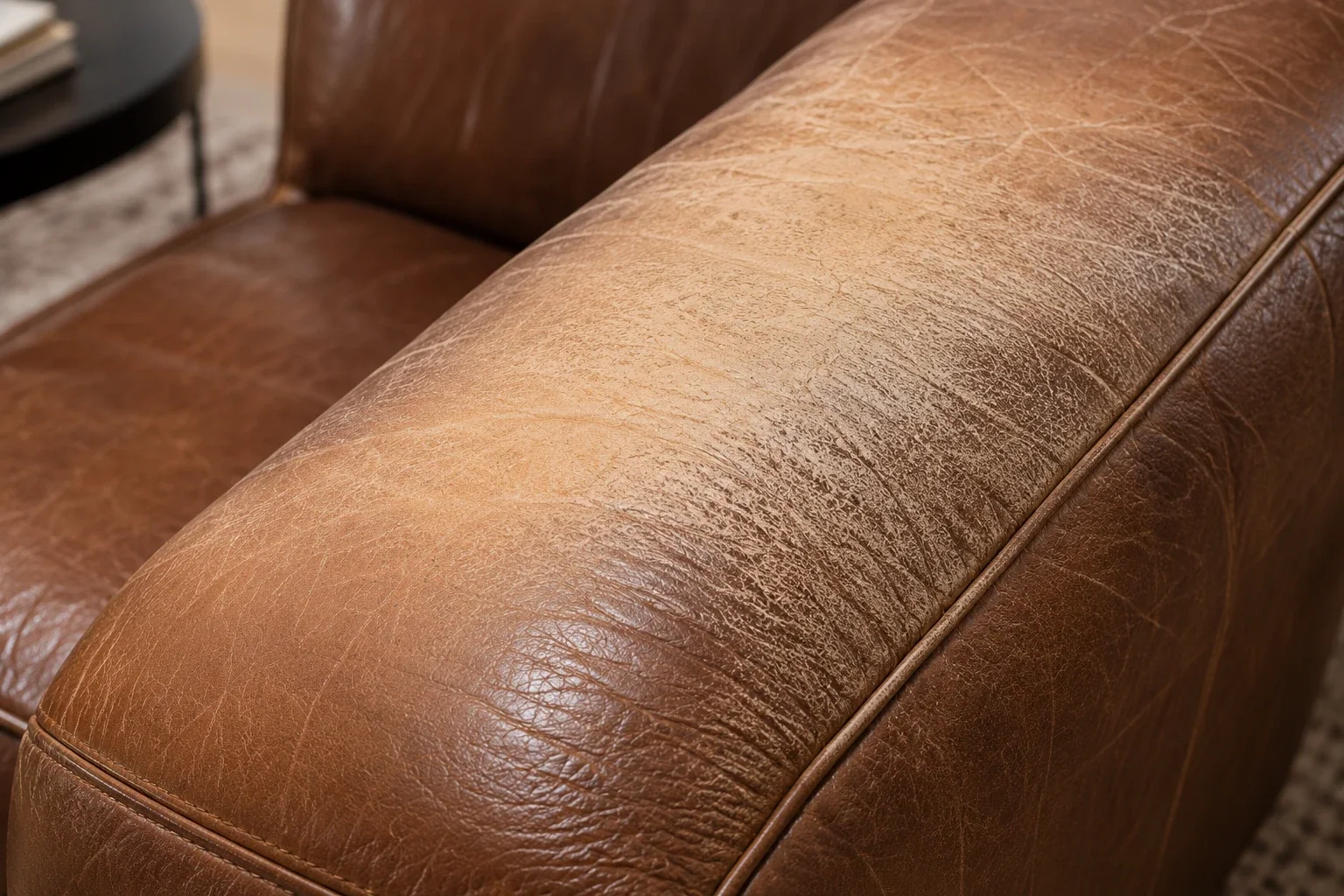
Leather sofa arm that has lost color from sunlight while the hide stays intact
Pigment Has Gone
Color fading
Sunlight and time lift the color out. The hide is fine, the tone is lighter or uneven, and it has to be color restored.
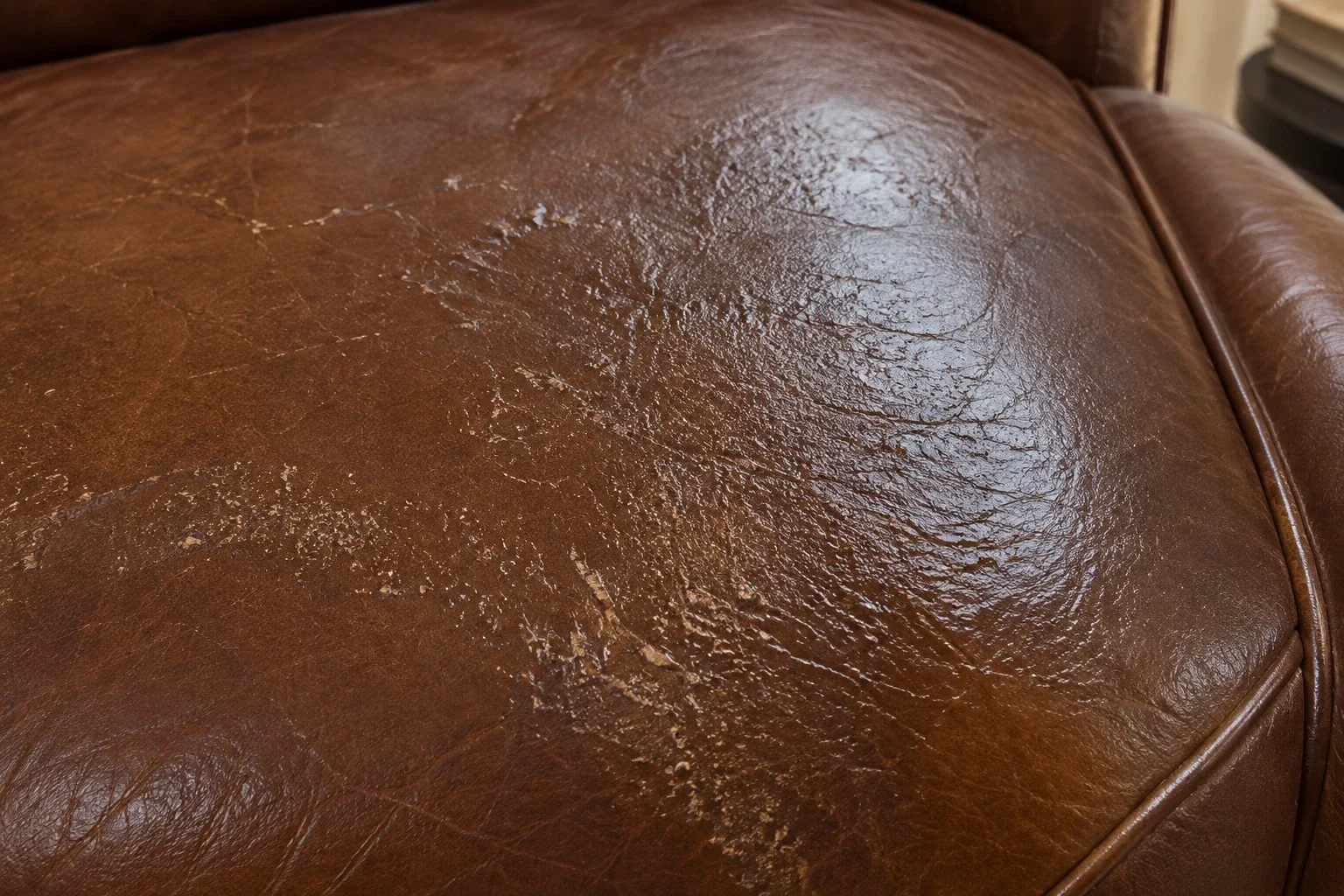
Shiny worn patch on a leather seat where friction has polished the finish
Finish Is Polished
Finish wear
Friction in the high-use spots leaves the color patchy or glossy. The leather underneath is undamaged, so the finish is what gets rebuilt.
Dry matte leather cushion with the correct color but no depth or sheen
Color Is Present
Dryness
The tone is correct, the hide just looks thirsty. This is the one leather conditioning solves — and it never replaces lost color.
When Fading Is Not Alone

Color work does not fix a failing surface

Fading often turns up next to cracking: the same sun that lifted the color dried the hide. What is underneath decides the order of the work.

Faded leather with a smooth intact surface and no cracking
Fading only
Surface smooth and sound. Nothing to repair before the color goes on.
Color restoration
Fine network of micro-cracks across a faded leather surface
Fading with micro-cracking
A fine craze in the finish. The surface is stabilized first, then colored.
Crack repair
Deep cracks opening through a dried and faded leather panel
Fading with deep cracking
Cracks through the finish into the hide. Repair comes first, sometimes replacement instead.
Reupholstery
Leather Type Changes The Answer

Aniline does not fade the way pigmented does

The finish decides how fading looks and how far a faded leather sofa repair can take it back. Coated leathers hold a rebuilt color easily; dyed-through leathers need their natural variation respected.
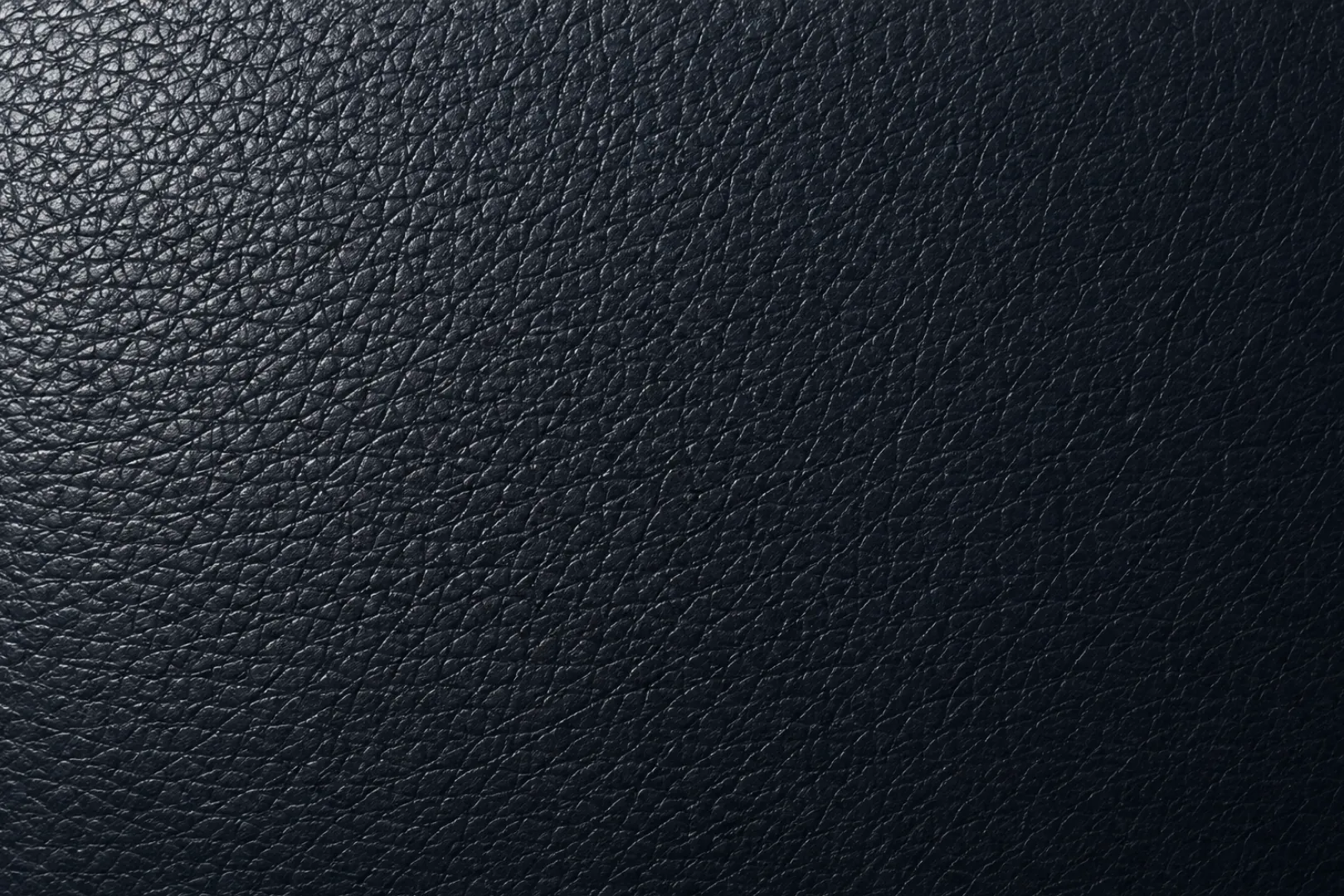
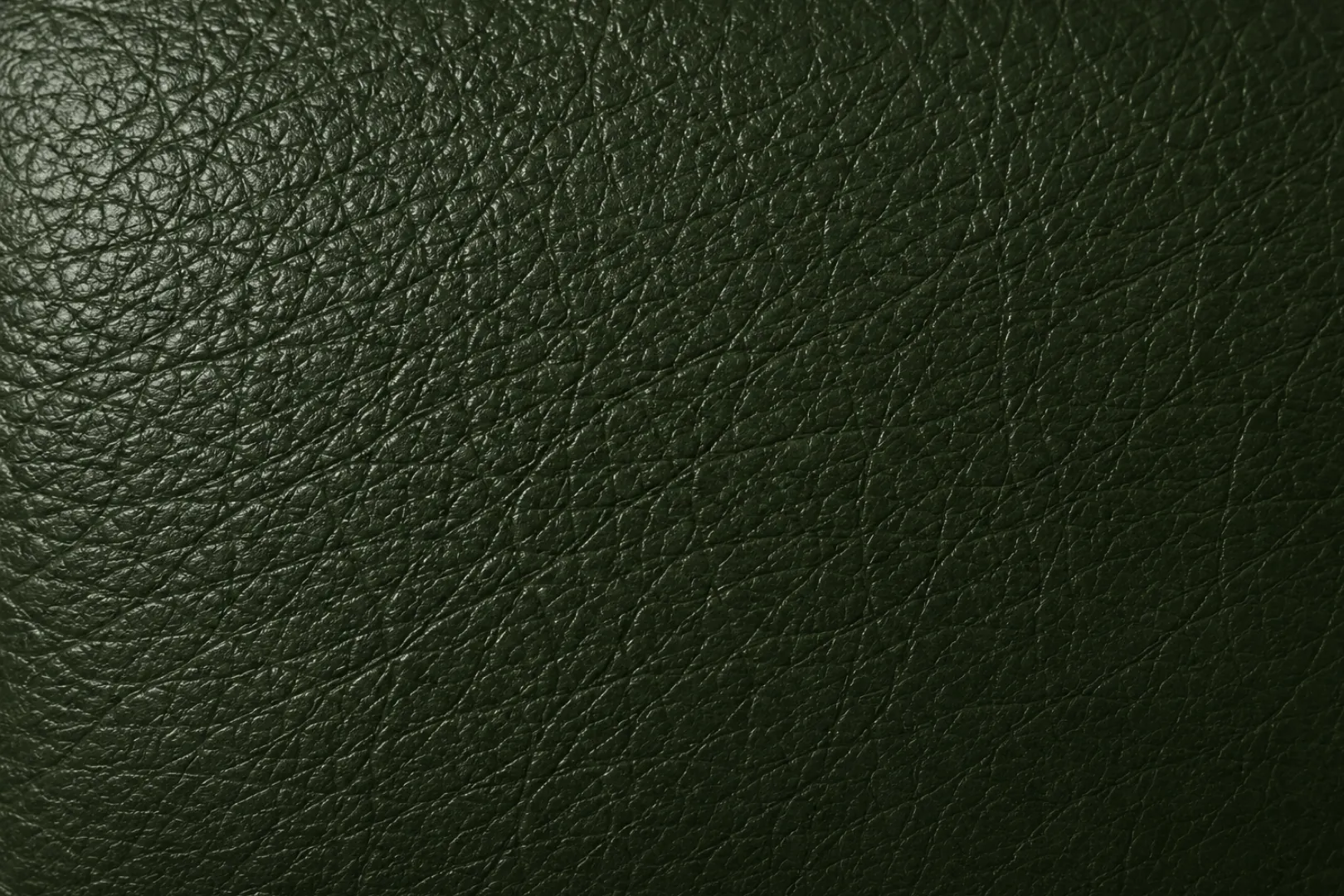
Pigmented leather swatch with an even coated surface
A color coat sits on the surface. The most forgiving leather to restore.
Semi-aniline leather swatch with a light protective coat over visible grain
A light coat over natural grain. Matching has to keep the grain readable.
Aniline leather swatch showing transparent dye and natural tone variation
Dyed through and transparent. Fades in tone, and must not be flattened by an opaque coat.
Full grain leather macro showing the untouched natural grain surface
Full grain
Natural character and patina. The goal is depth restored, not a new-looking hide.
Fan of colored pigmented leather swatches used for matching
Matching across all of them
Hue, depth and sheen are matched to your piece. How the color is mixed.
Finished Work

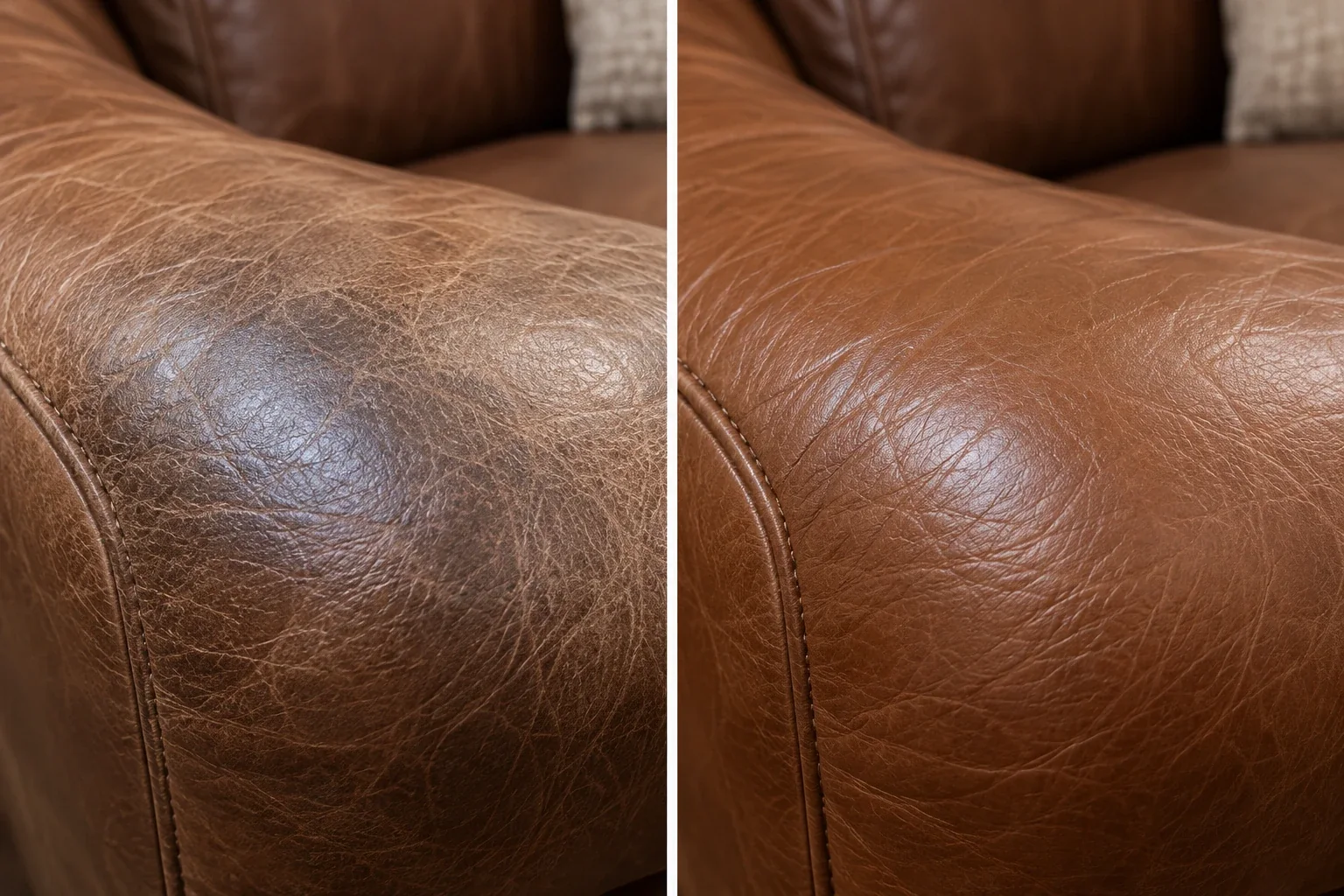
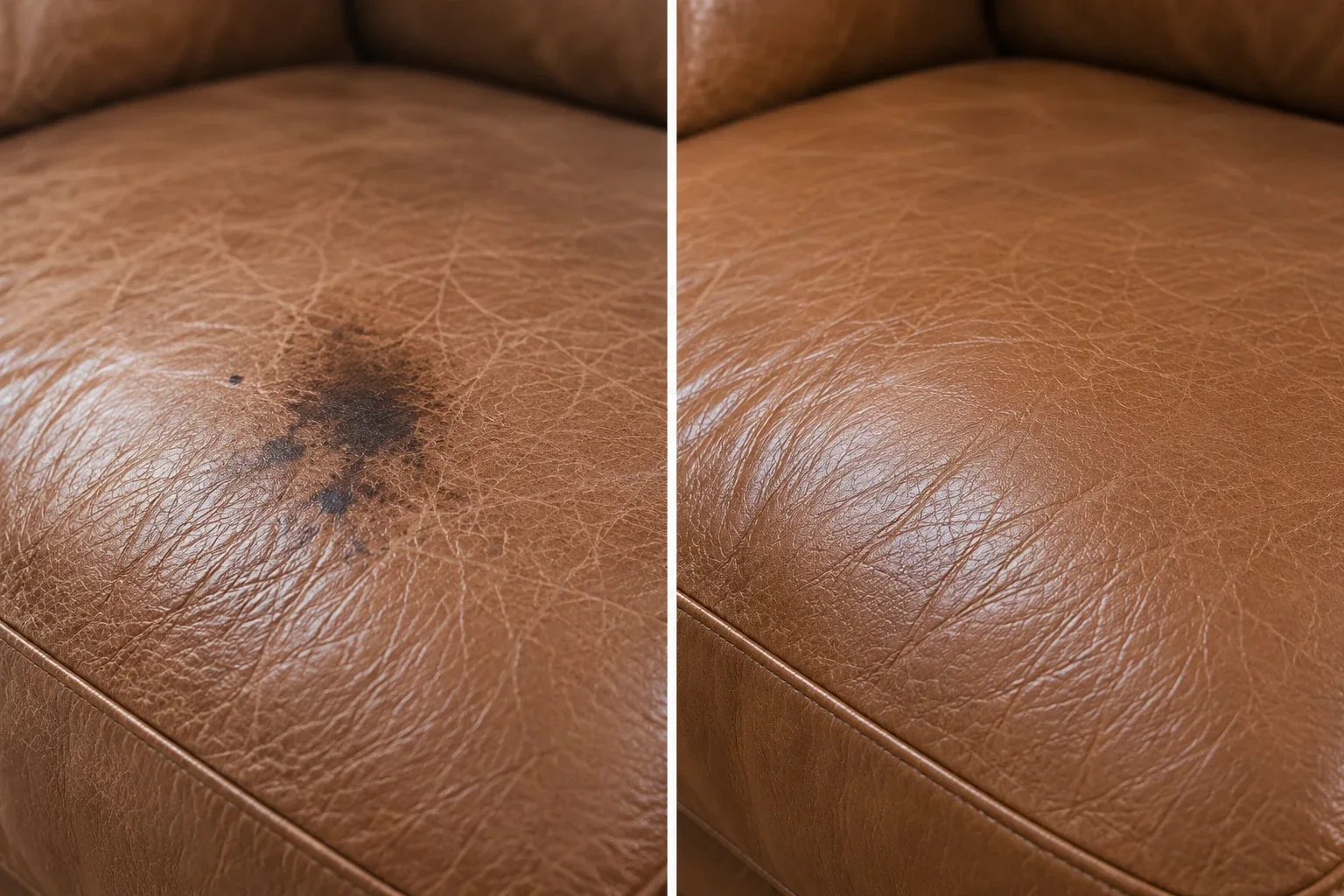
Same sofa, color back where it was

Every piece below is the customer's own leather. Nothing was recovered or replaced — this is faded leather sofa repair carried out on the surface that was already there.
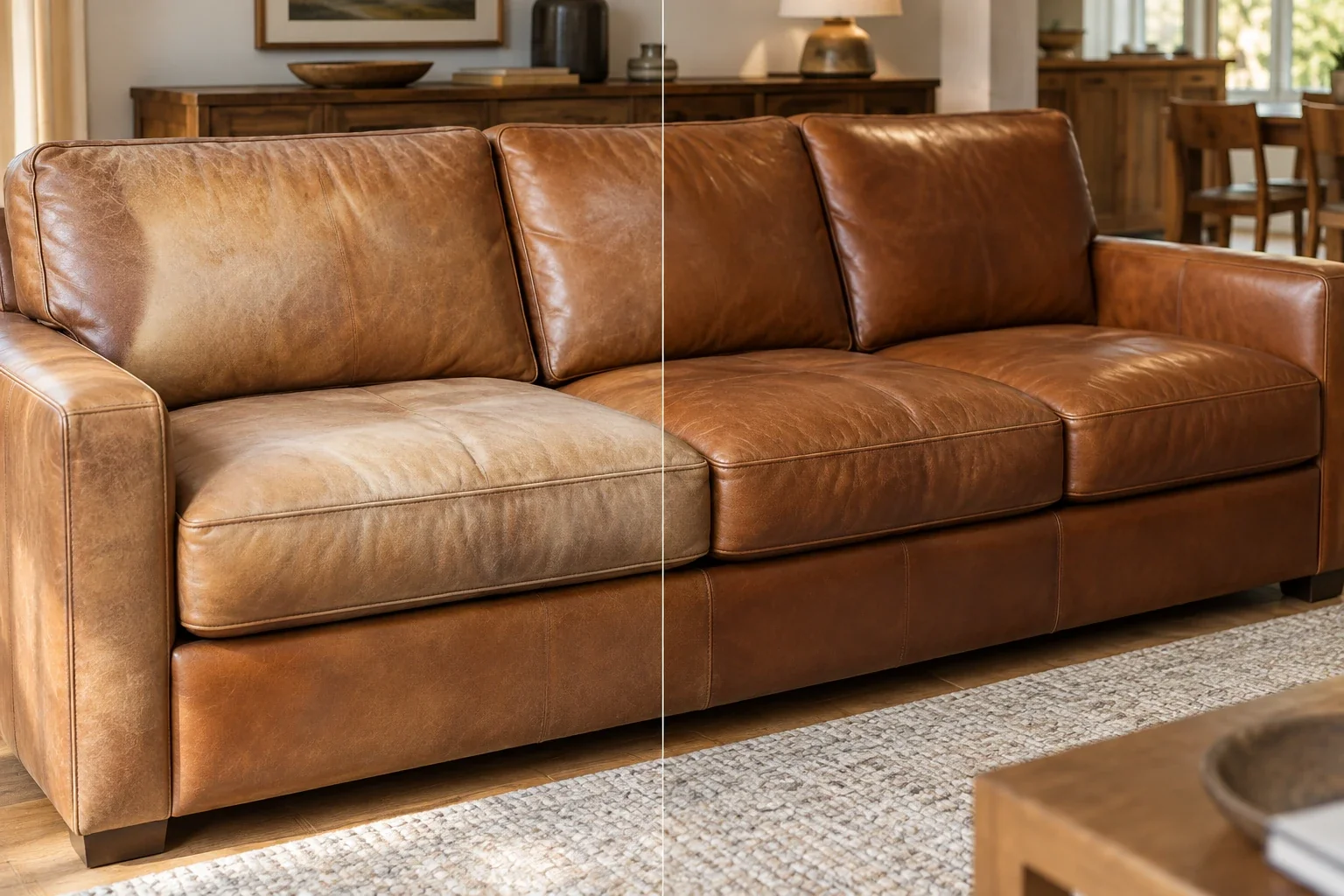
Cognac sofa before and after color restoration, the pale seat and back brought back to full cognac

Cognac sofa — pale seat and back matched back in.
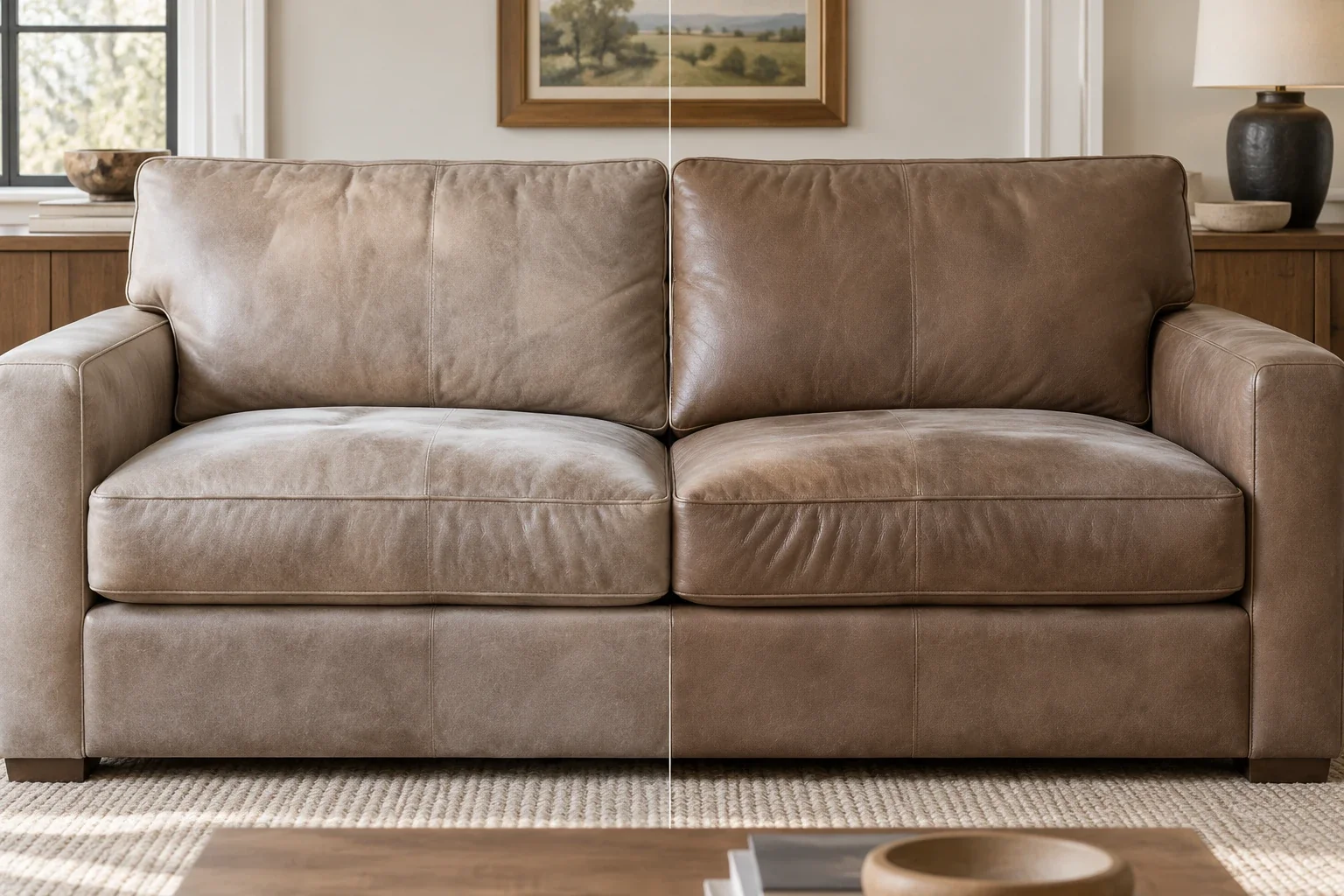
Taupe leather sofa before and after color restoration to an even warm tone

Taupe sofa — chalky, washed tone rebuilt.
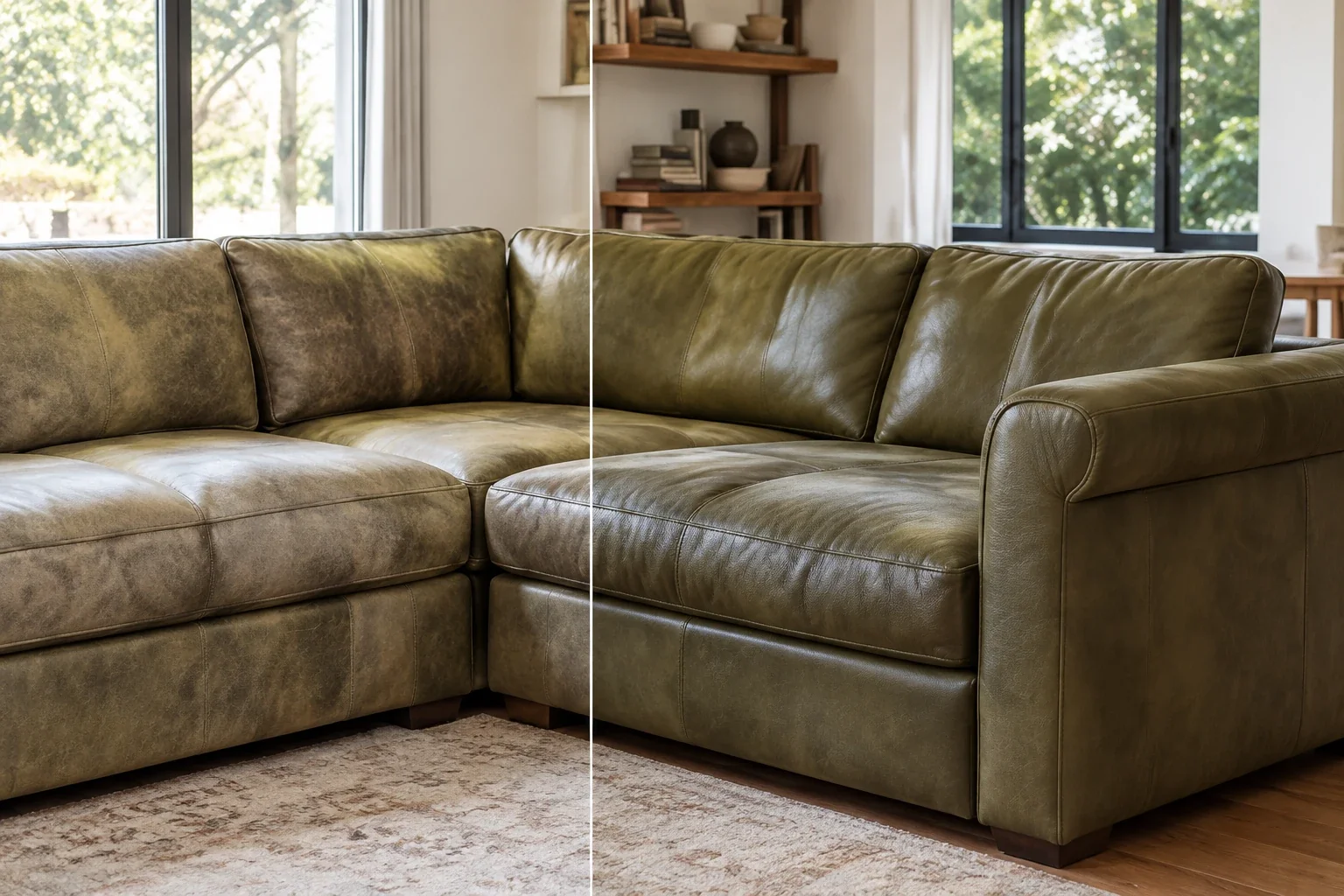
Olive leather sectional corner before and after color restoration

Olive sectional — blotchy corner evened out.
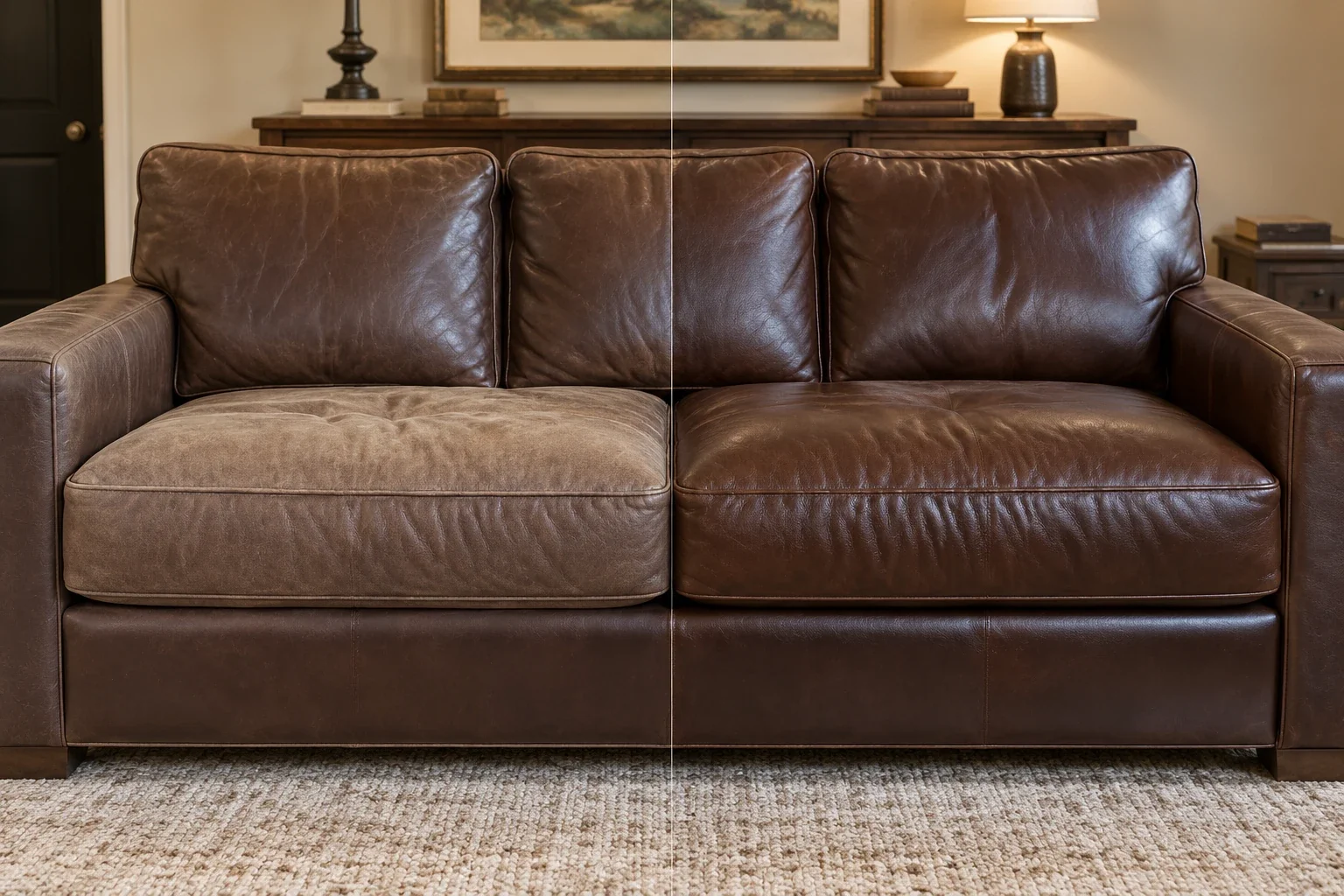
Dark brown leather sofa before and after color restoration of a faded seat cushion

Dark brown sofa — one bleached cushion re-matched.
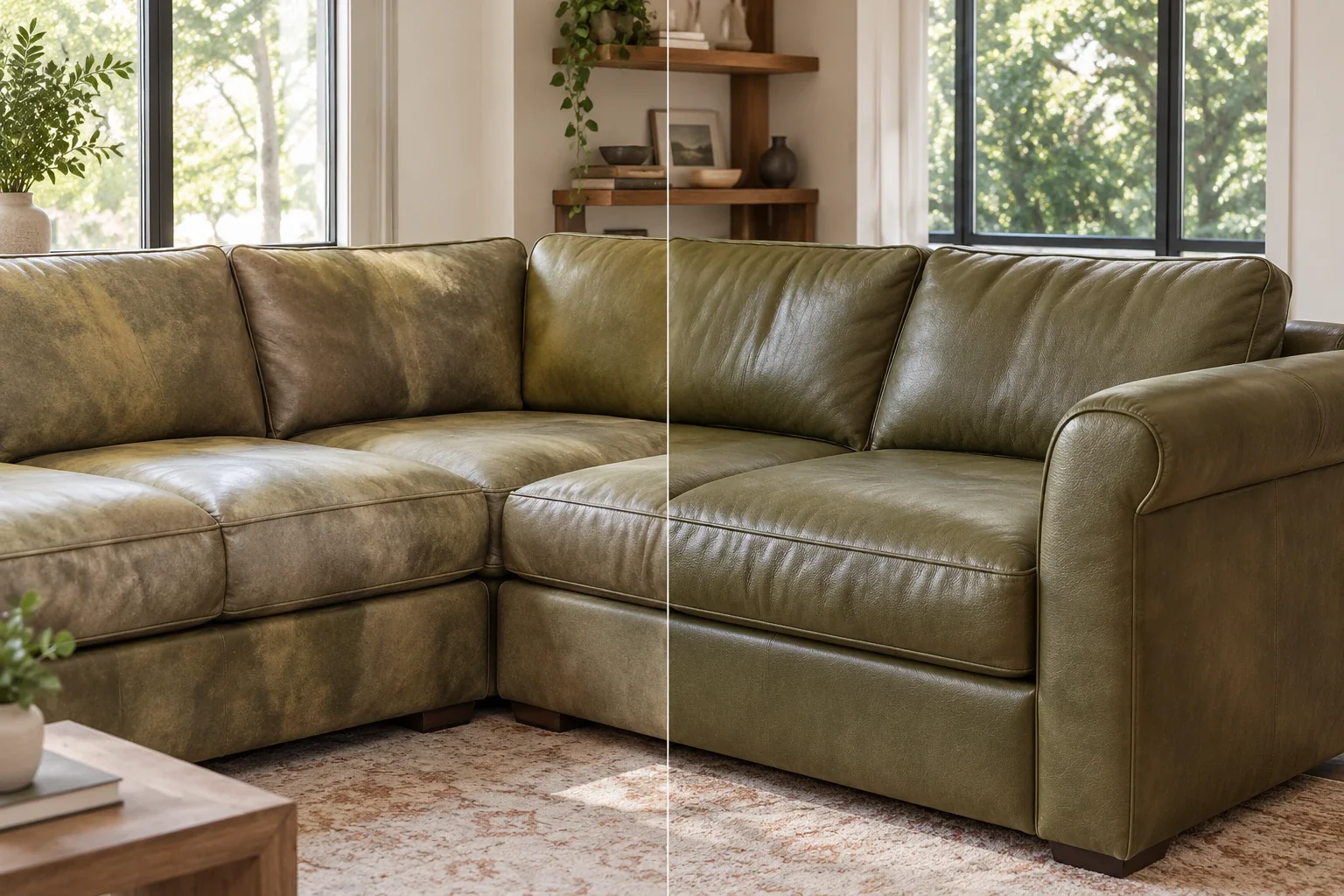
Olive leather sectional before and after color restoration across the back cushions

Olive sectional — sun-struck backs corrected.
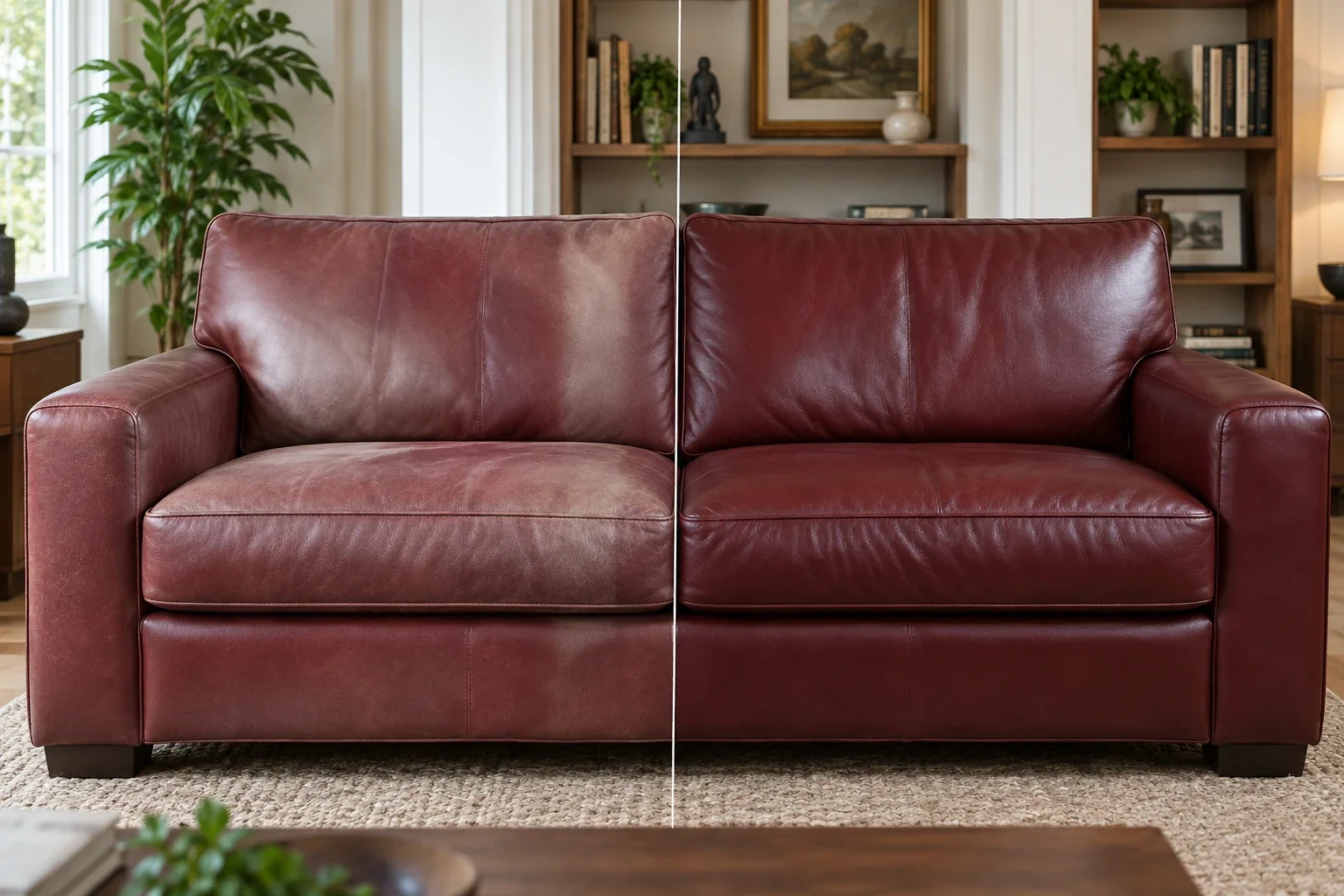
Burgundy leather sofa before and after color restoration of a faded back panel

Burgundy sofa — faded back panel restored.
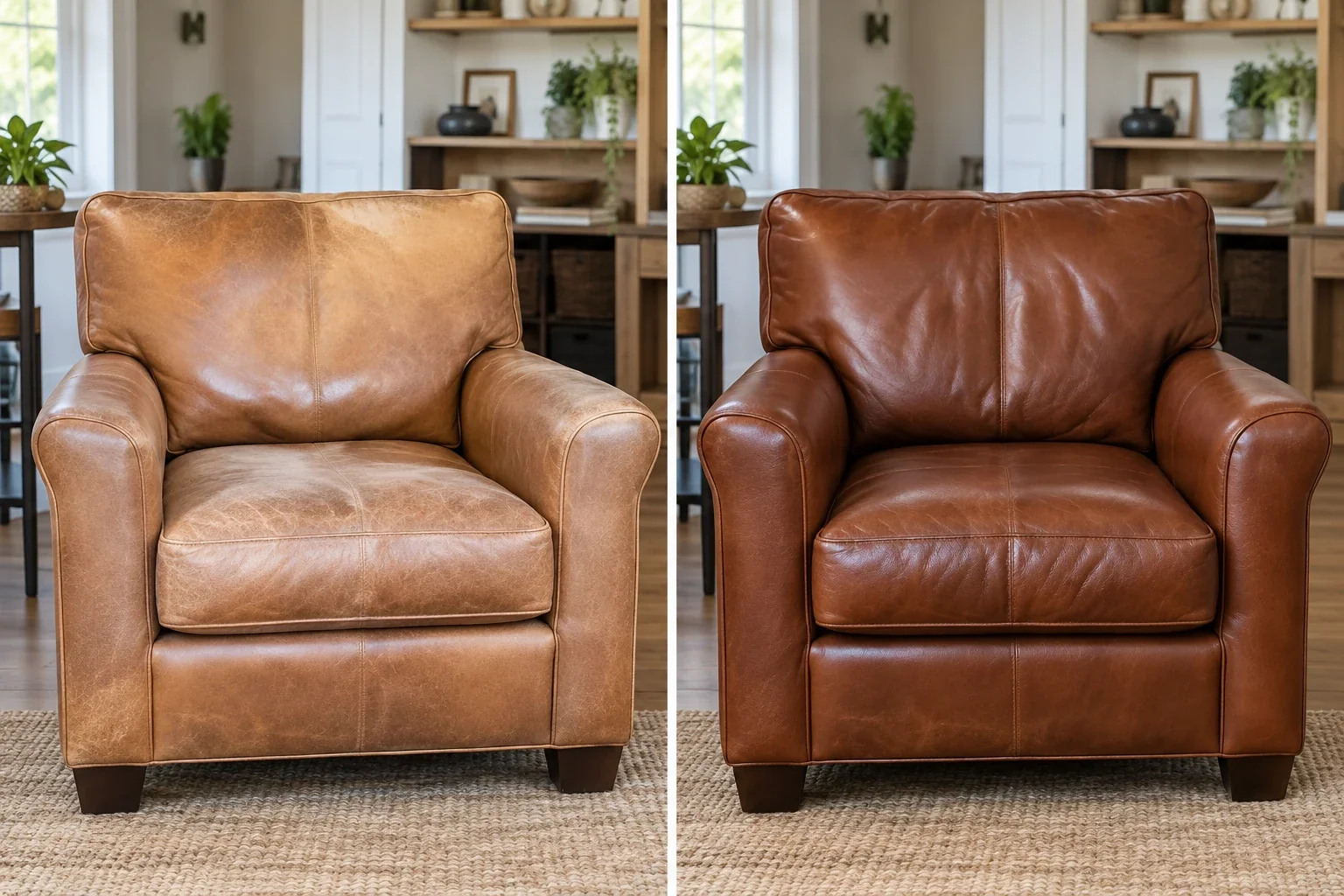
Tan leather armchair before and after color restoration to a deeper even brown

Tan armchair — depth returned, texture kept.
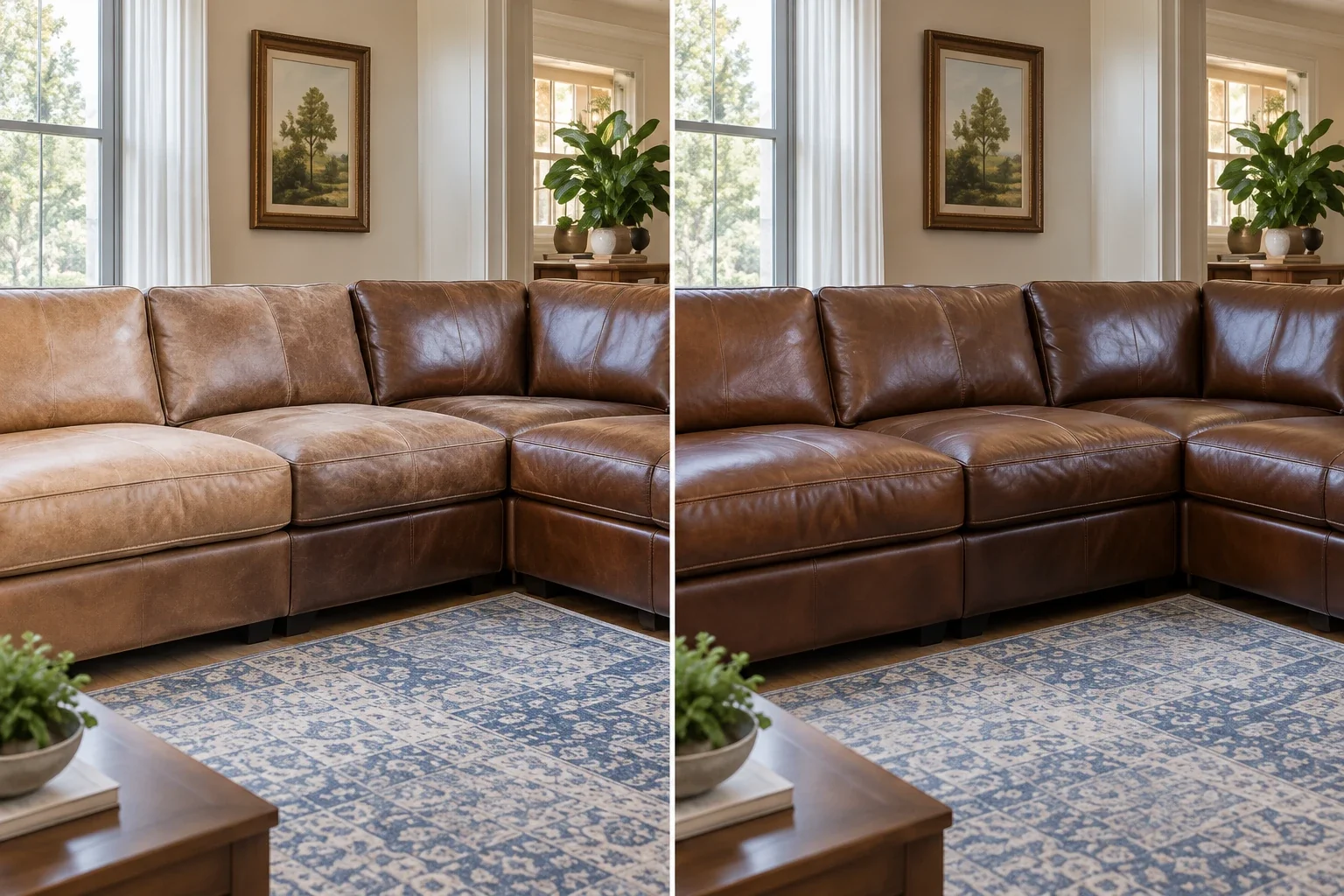
Brown leather sectional before and after color restoration of the sun-faded end

Brown sectional — light end brought level.
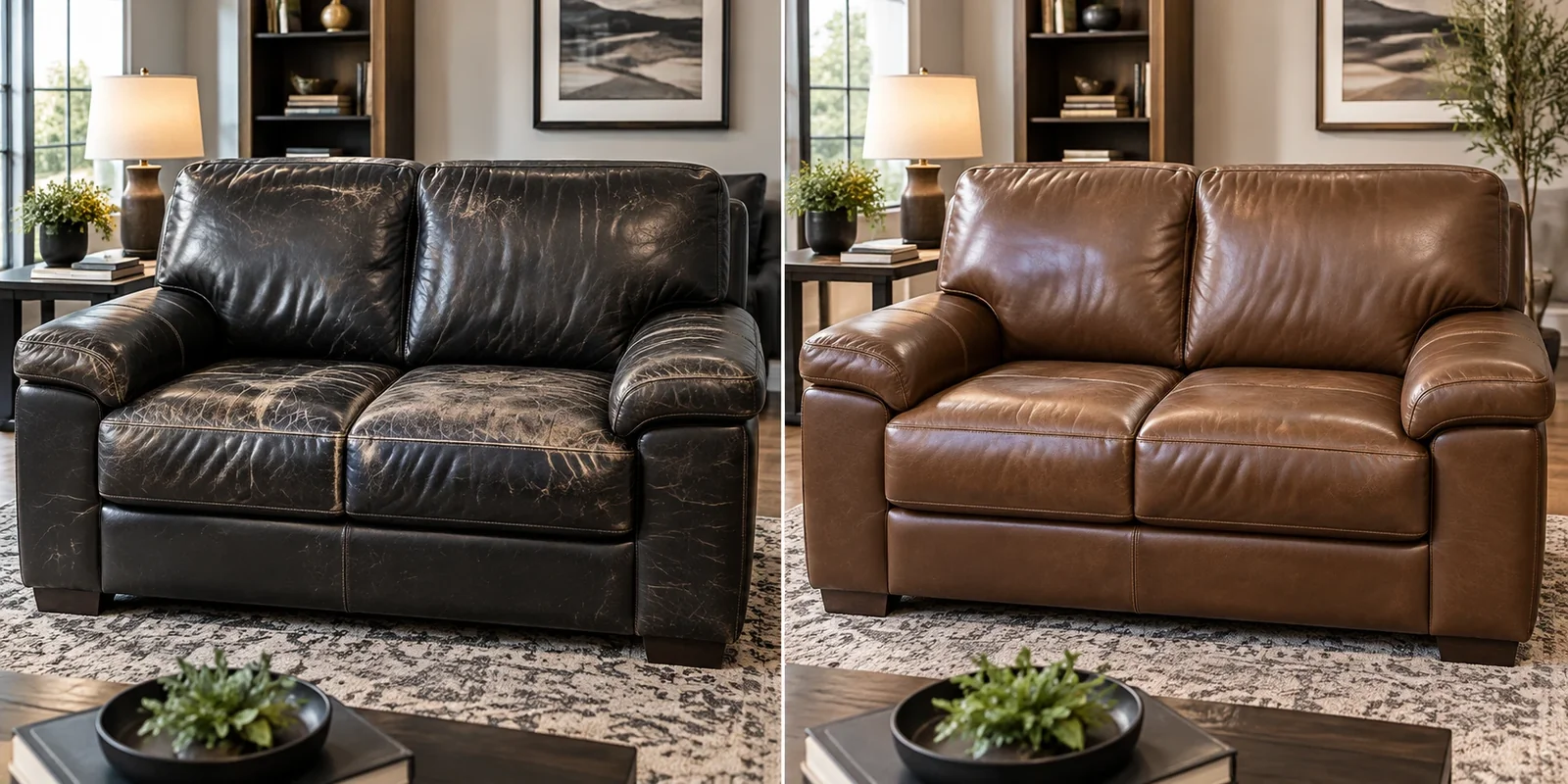
Black leather loveseat before and after recoloring to a warm brown

Black loveseat — recolored to brown outright.
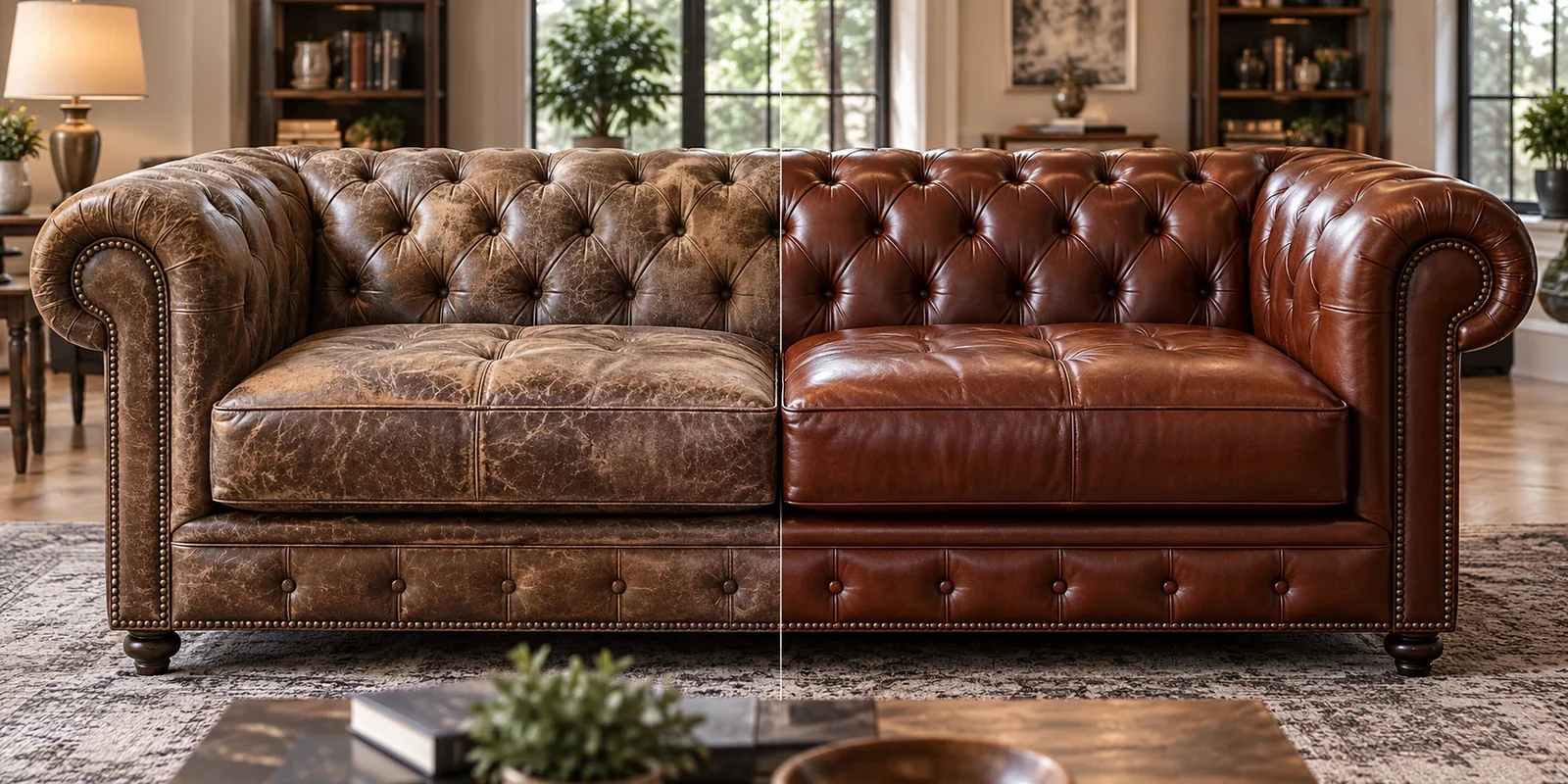
Tufted leather Chesterfield before and after color restoration to a rich chestnut

Chesterfield — every button and roll recolored.
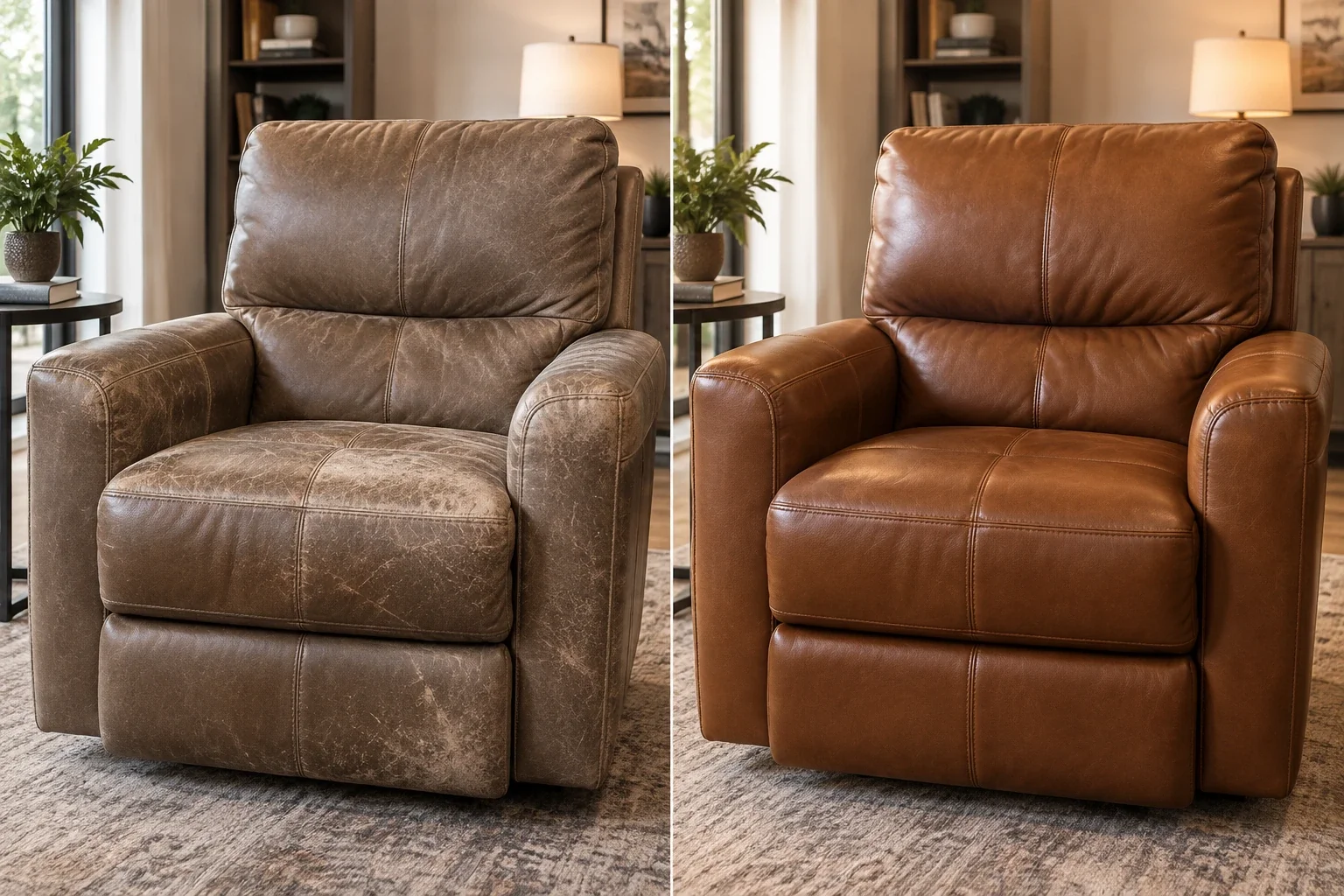
Worn taupe leather recliner before and after color restoration to a warm tan

Recliner — the seat that takes the most use.
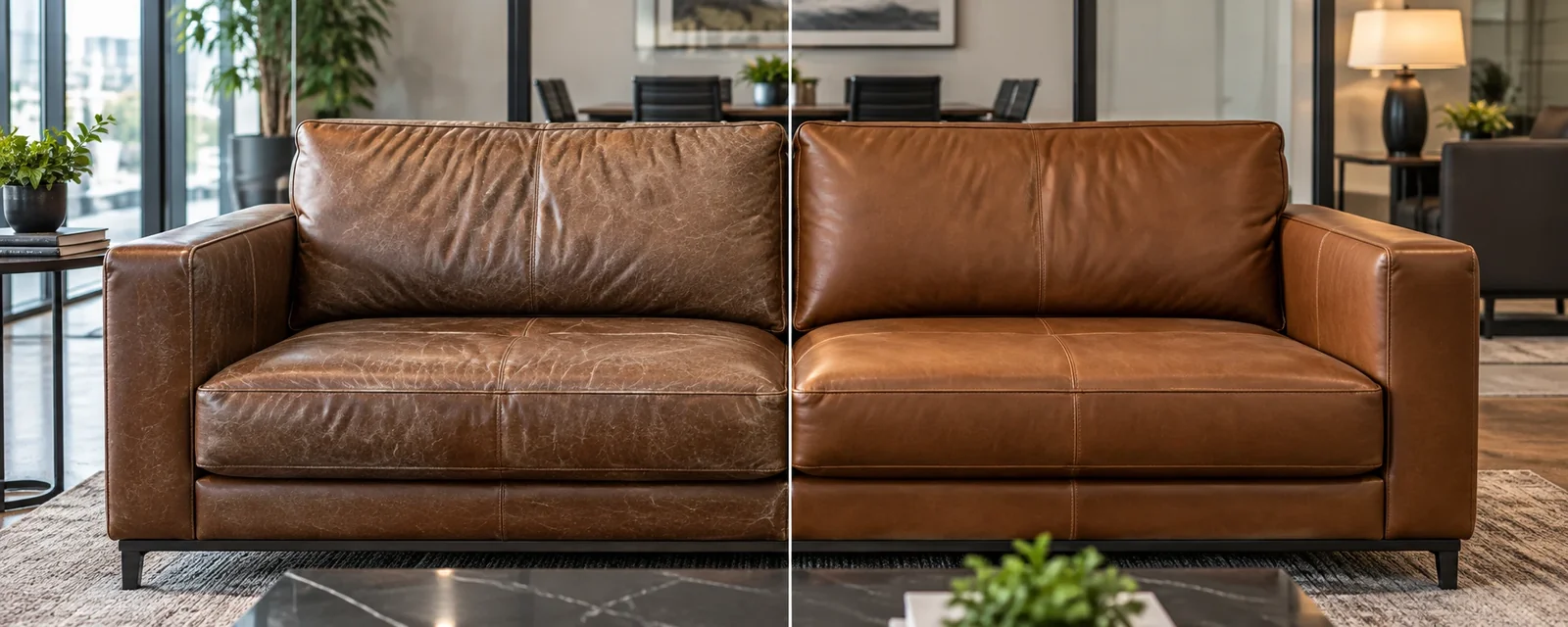
Modern brown leather sofa before and after color restoration in an office lounge

Office lounge sofa — done overnight, on site.

Asked Before You Book

Faded leather sofa repair, answered

Can a faded leather sofa be restored without reupholstering it?
Usually yes. Fading is a change in the color layer, not a failure of the hide. If the leather underneath is still supple and the seams and panels are intact, the color is rebuilt on the surface and reupholstery is not needed.
Why has my leather sofa faded on one side only?
Because daylight does not reach the whole piece equally. The end nearest the window takes hours of direct sun daily while the far end sits in shade, so the two drift apart over years. It is the most common pattern we see and the easiest to correct, because the shaded end still carries the original color to match to.
Can you restore just one faded cushion?
Often, yes. If one seat has lost color and the rest of the set is still right, we restore that cushion and blend it into the panels around it. Where the whole front is drifting, we take the run of cushions together so the result reads as a set rather than a patch.
Will conditioner bring faded color back?
No. Conditioner replaces oils and makes dry leather look richer for a while, which is why it seems to work at first. It cannot put back color that is no longer there. If the leather is dry but the color is intact, conditioning is the right service; if the color has lightened, it needs rebuilding.
Can sun-faded aniline leather be repaired?
Yes, but differently. Aniline is dyed through rather than coated, so its color is transparent and varies across the hide. Restoring it means rebuilding tone while keeping that variation. Treated like pigmented leather it goes flat and loses the character that made it worth buying.
Can black leather that has gone grey be restored?
Yes, and it is one of the more dramatic results. Black hides nothing: the seat centers turn chalky grey while the piping and sides stay black. Rebuilding the depth across the whole surface removes the grey cast, and the contrast at the edges goes with it.
Can faded leather sofa repair be done in my home?
Much of it can. Faded leather sofa repair on an otherwise sound piece is regularly done on site across New York City and northern New Jersey, which avoids moving a large sofa twice. Whether a job suits on-site work depends on the leather, the area and the ventilation the room allows, so we confirm from photos first.
What photos do you need to quote faded leather sofa repair?
Three: the whole sofa from a few steps back, a close shot of the faded area, and one frame showing a faded area and a protected area together, such as the seat beside the panel under the cushion. That last one is the most useful photo you can send, because it shows what the color is supposed to be.
1
Send Photos

Photograph the faded part next to a part that is still right

That one frame answers most of a faded leather sofa repair quote on its own. We serve Manhattan, Brooklyn, Queens, the Bronx, Staten Island, Long Island and northern New Jersey.

  • The whole sofa, from a few steps back.
  • A close shot of the faded area.
  • Faded and protected leather together in one frame.
  • Anything you know about the leather or the maker.
Scroll to Top