
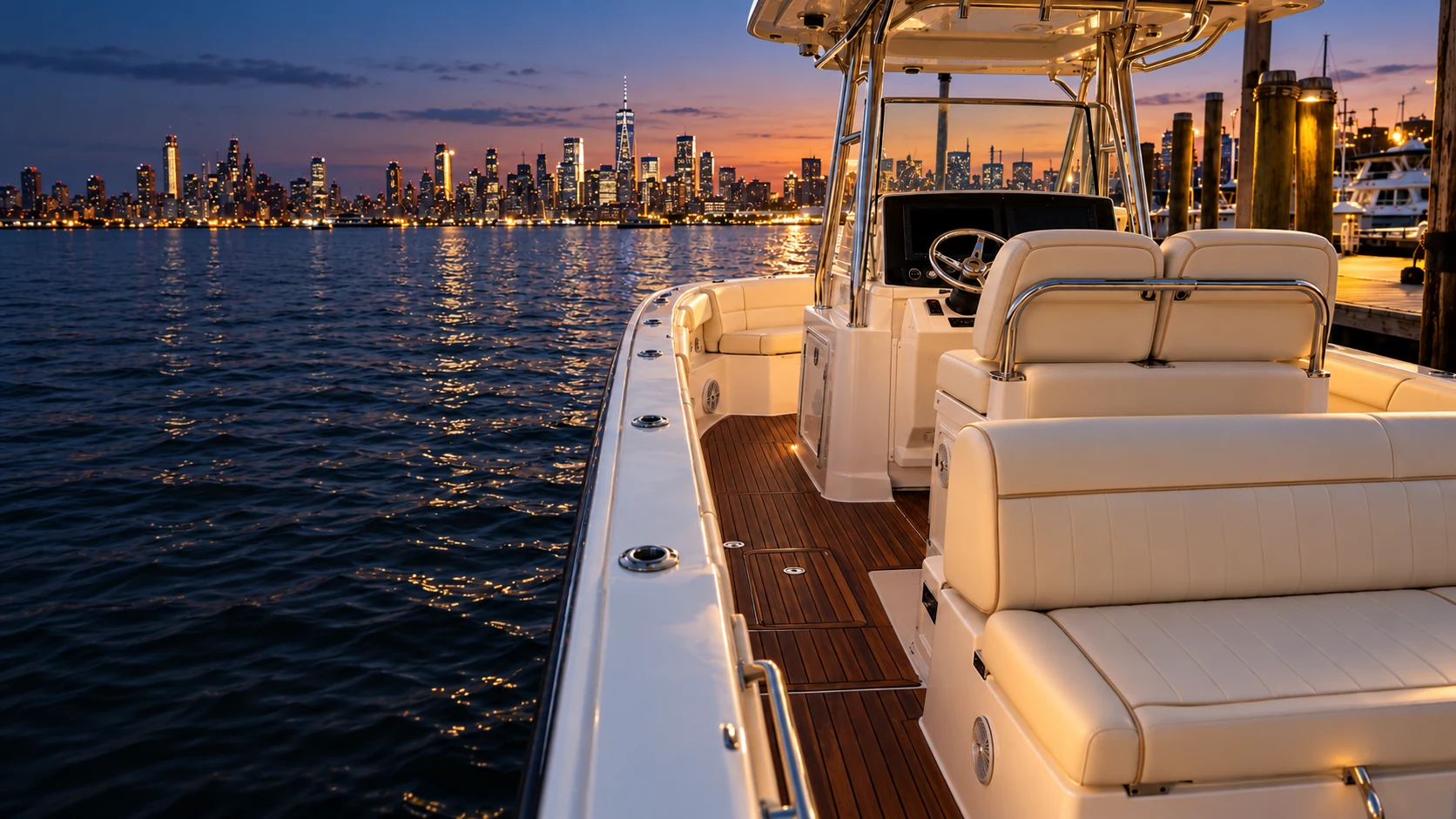
Nothing aboard a boat is square.
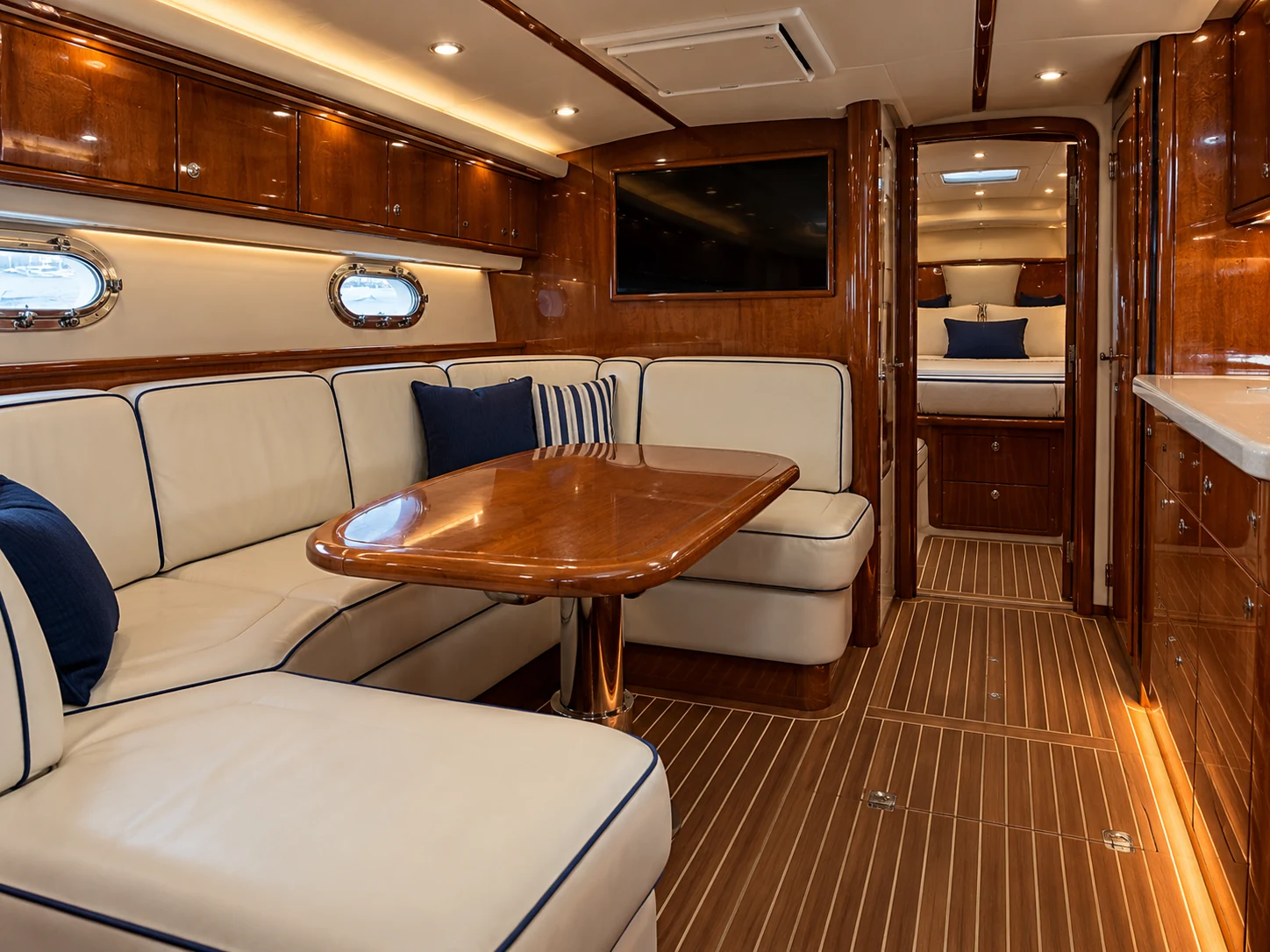
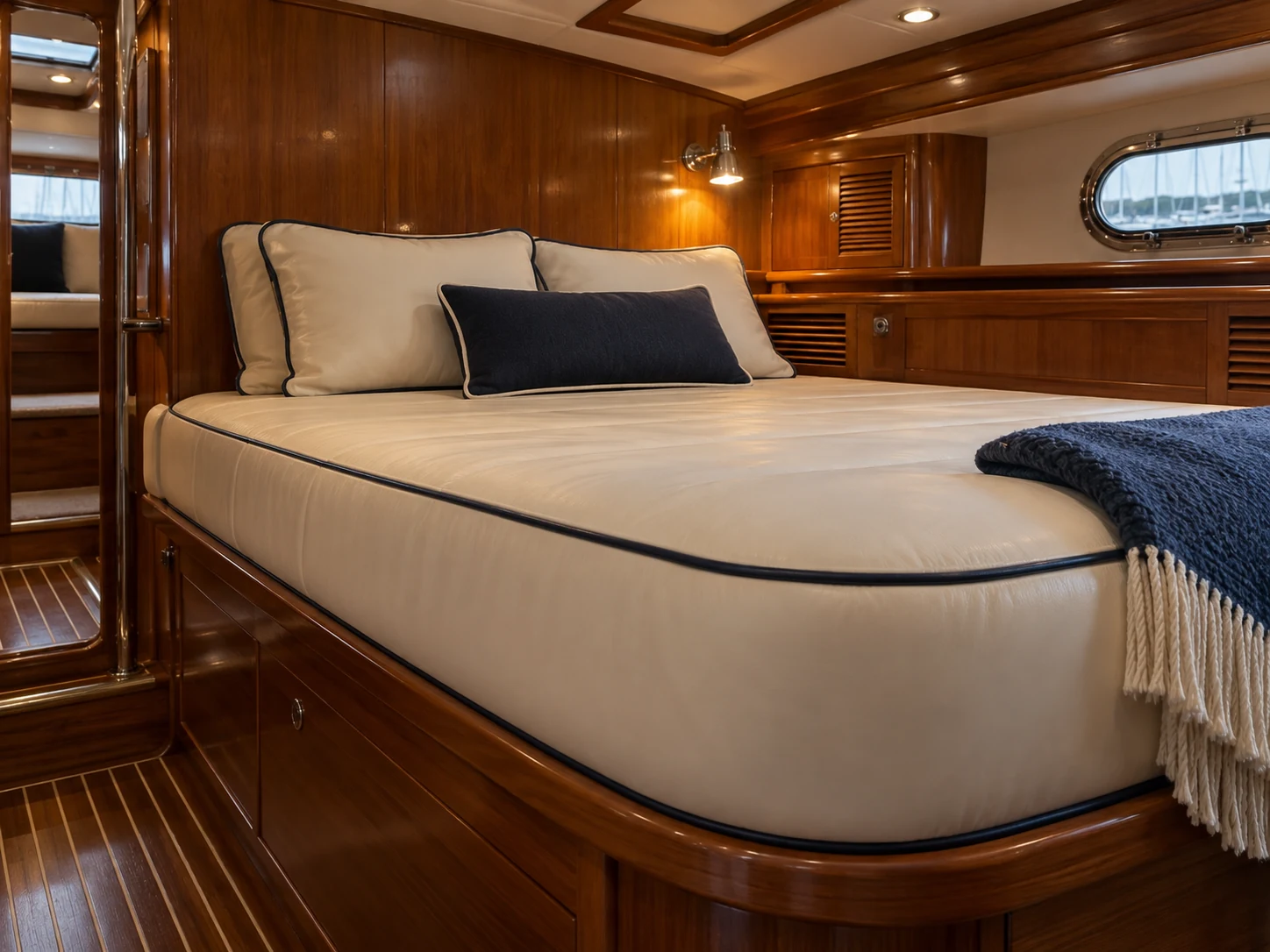
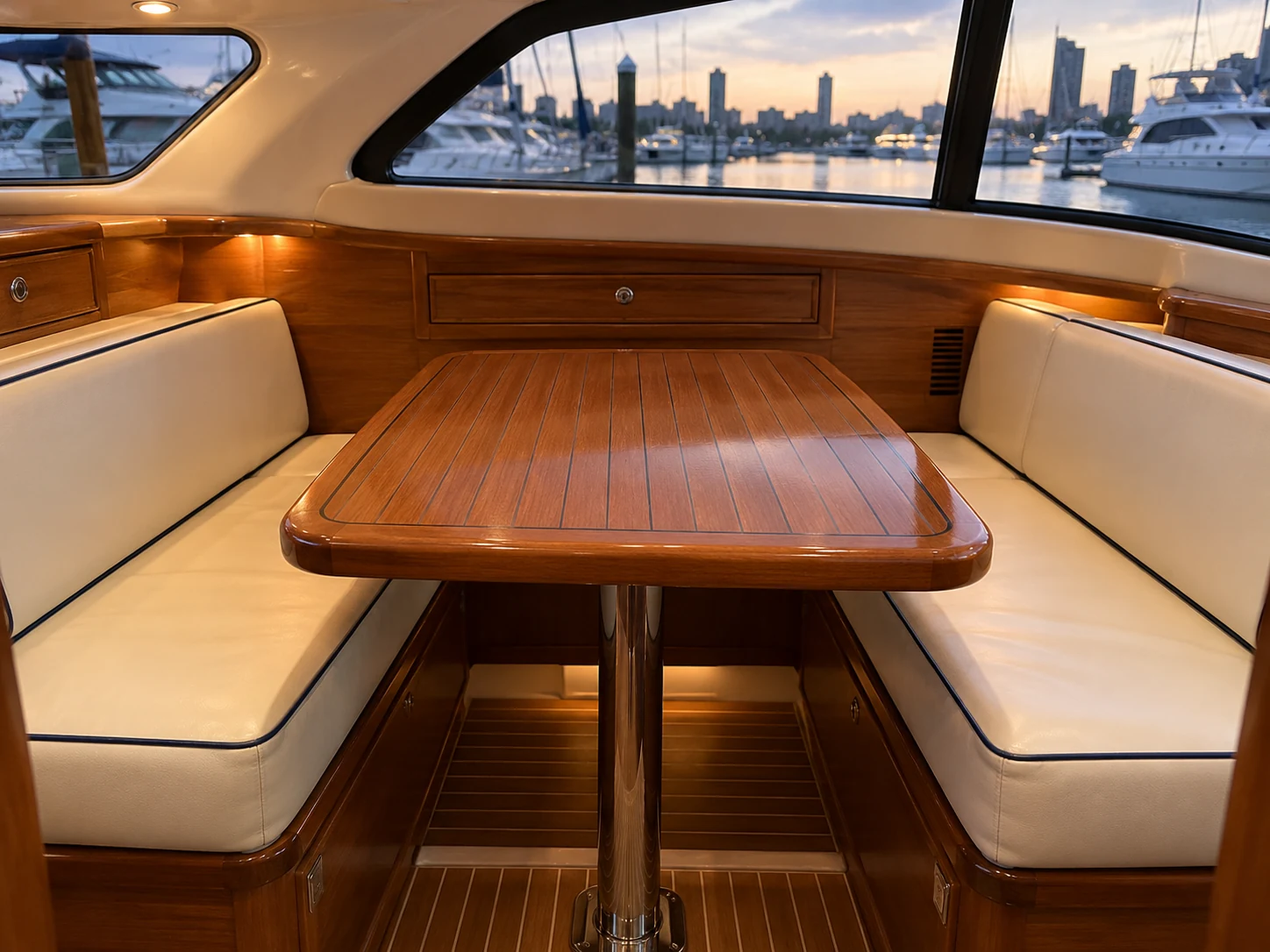
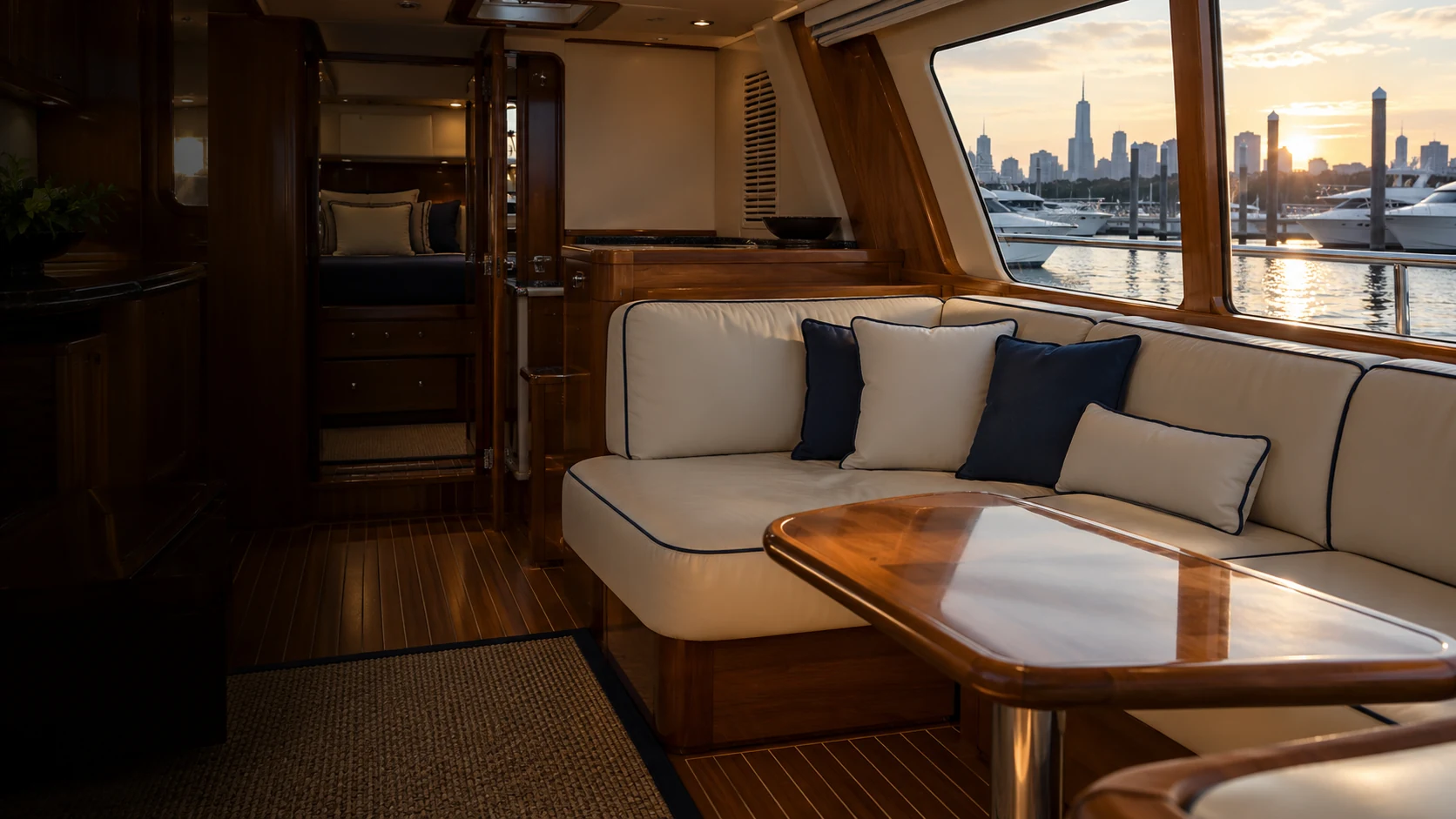
Yacht upholstery for New York and tri-state vessels: saloons, staterooms, dinettes and cockpits, patterned off your hull at the slip and rebuilt to the spec each piece actually lives in.
Every piece is a one-off, whether you wanted one or not
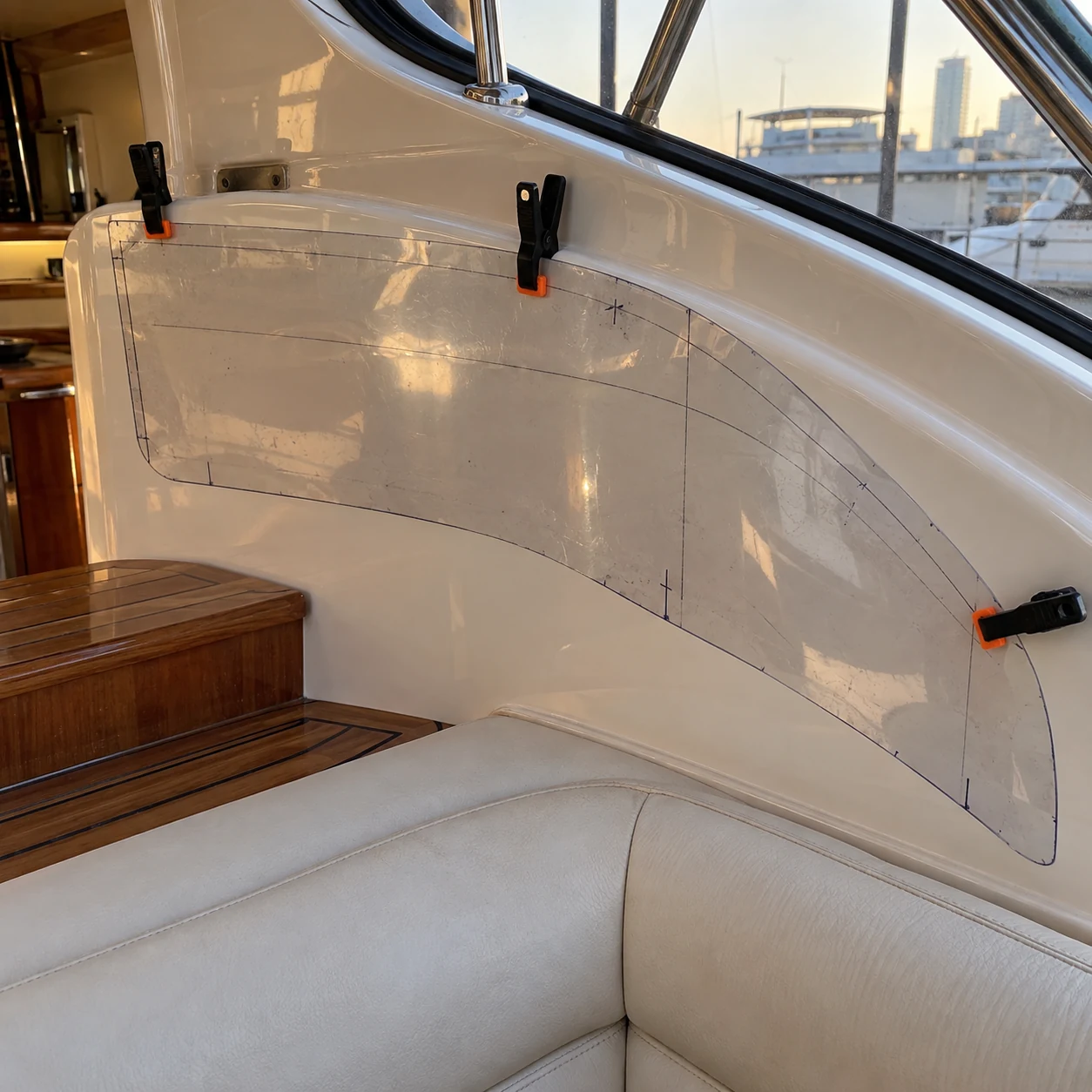
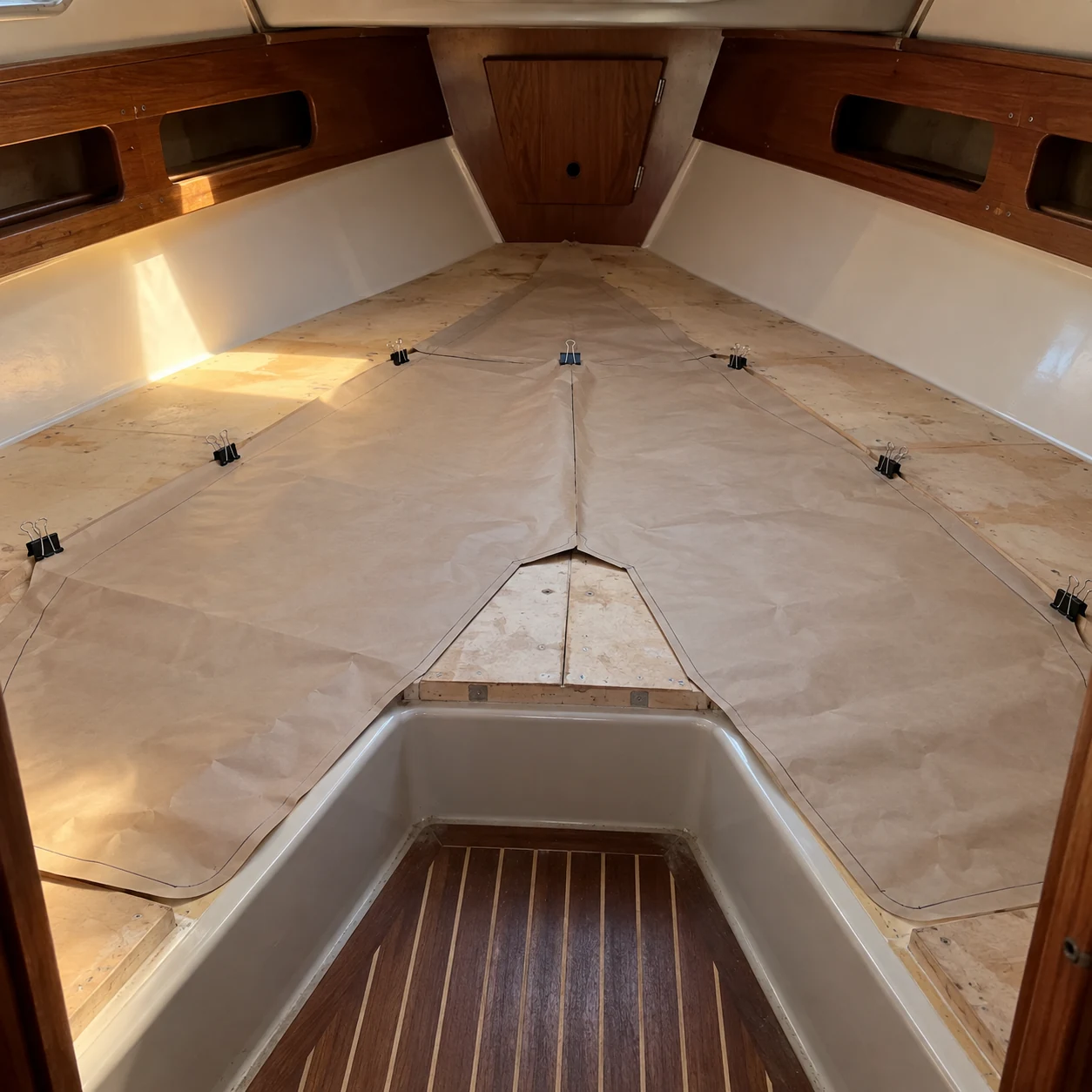
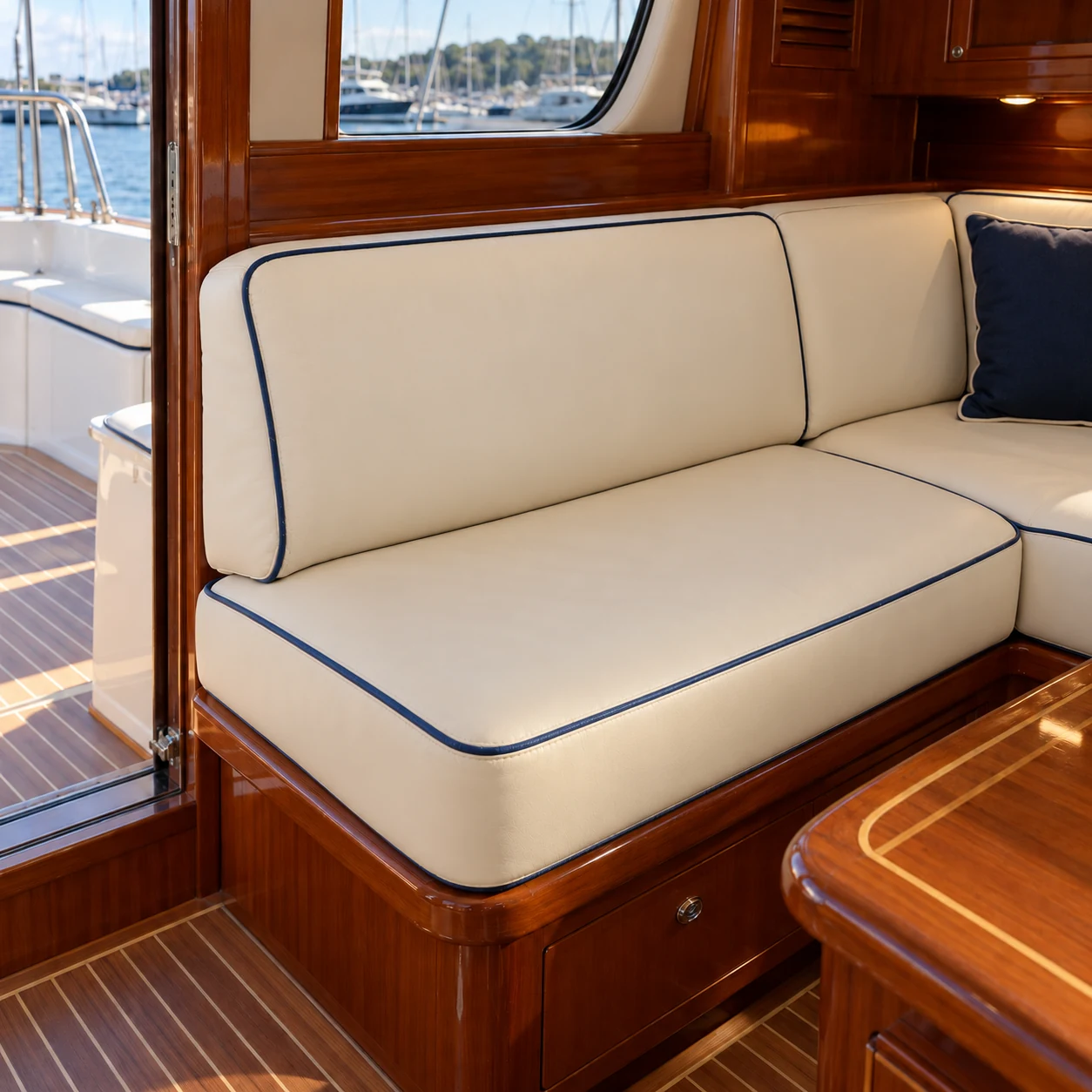
A hull is a curve in three directions at once, so the furniture inside it cannot be rectangular. That is the whole difficulty of yacht upholstery, and the reason a pattern has to be taken off the boat rather than written down. It is the same trade as boat upholstery, worked to a finer standard below deck.
Below deck and above deck are different trades
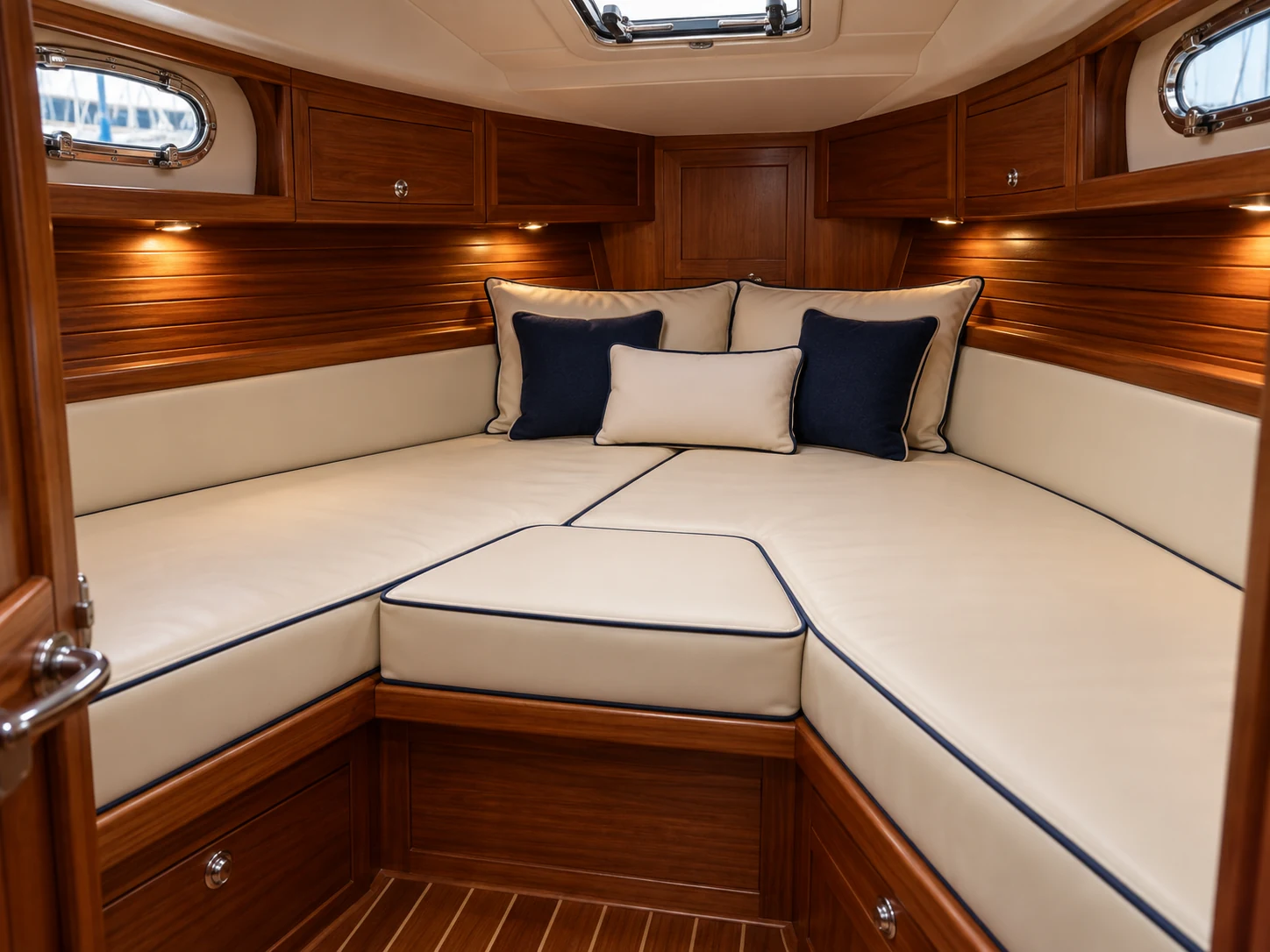
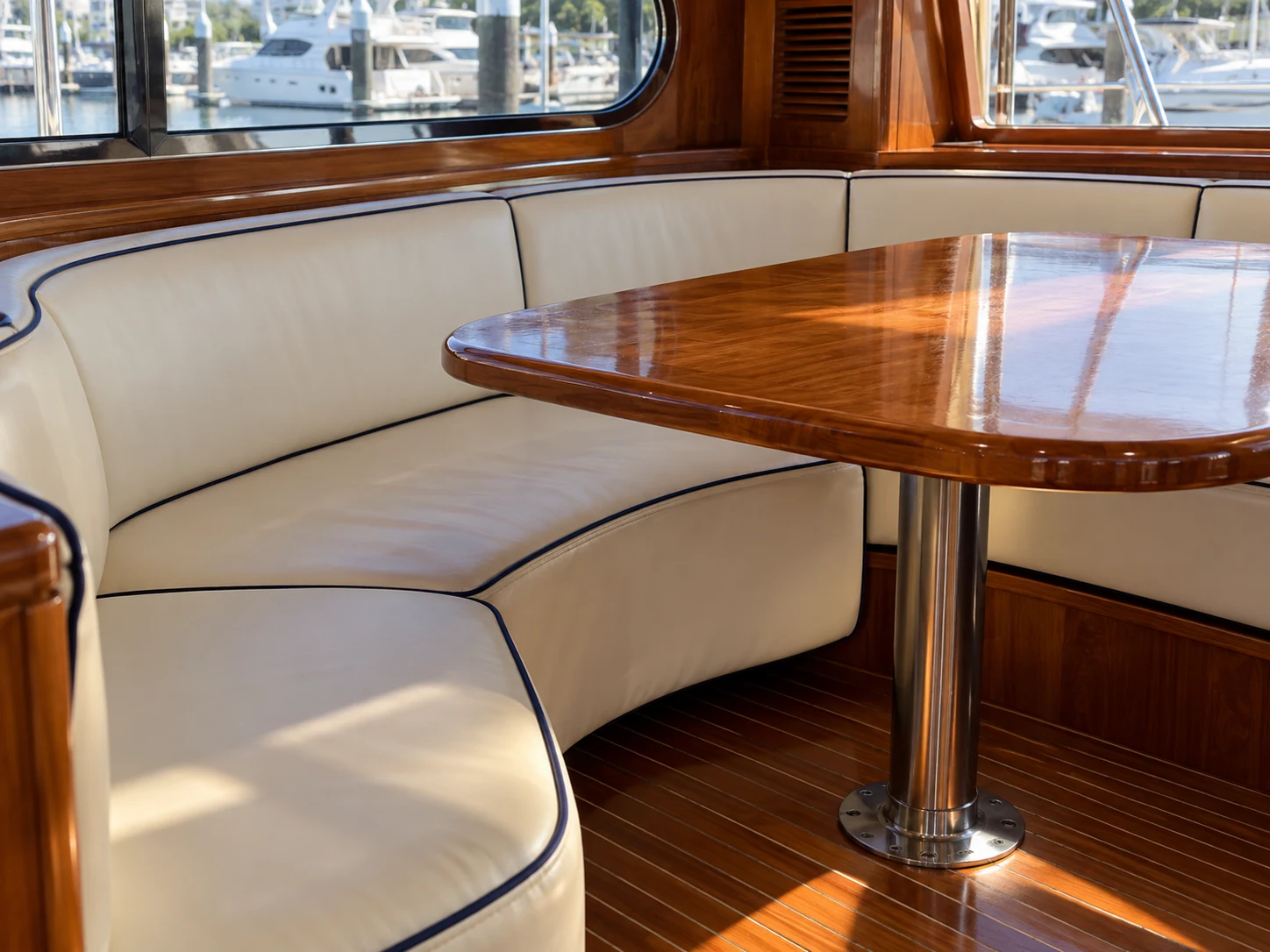
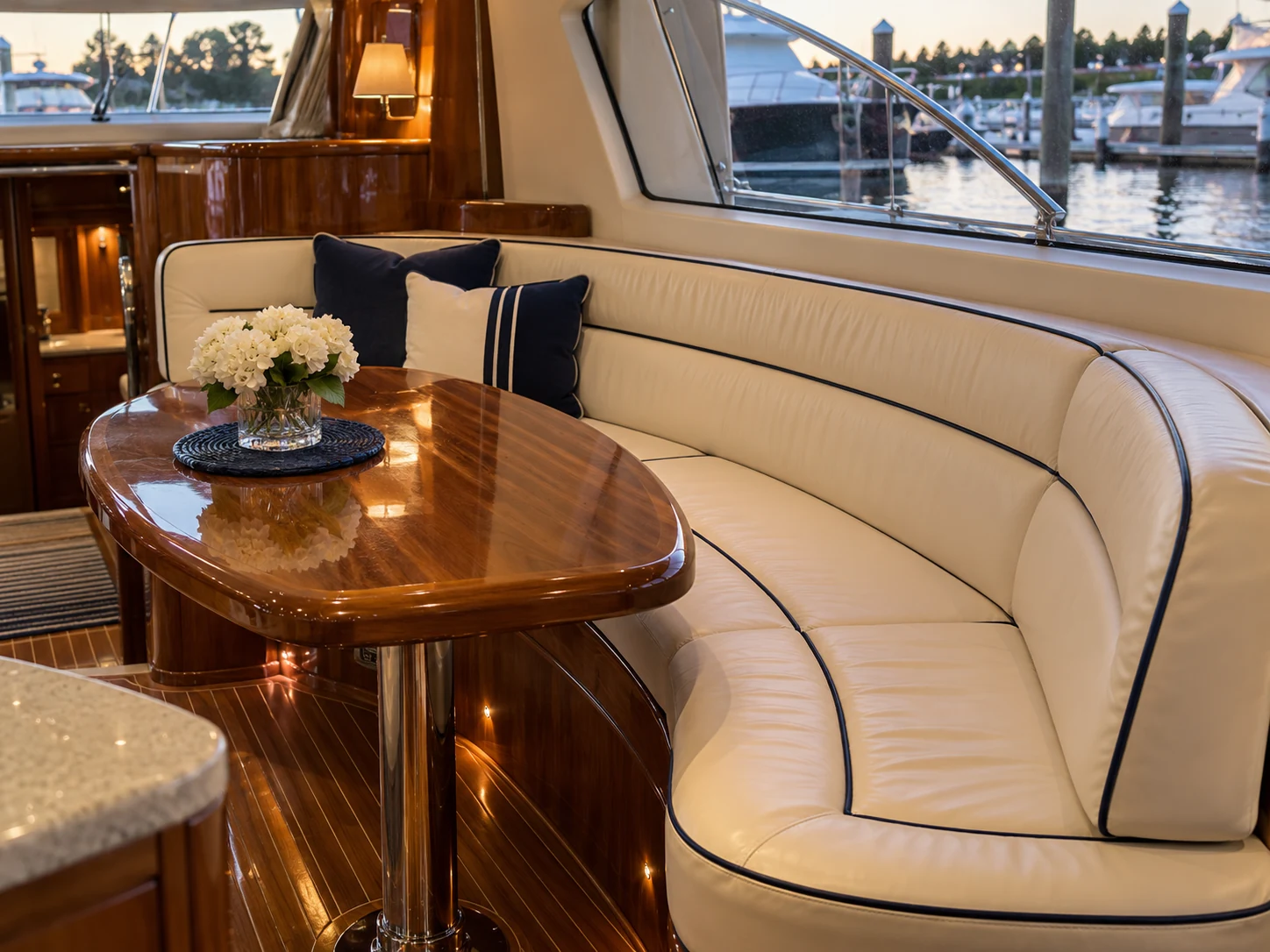
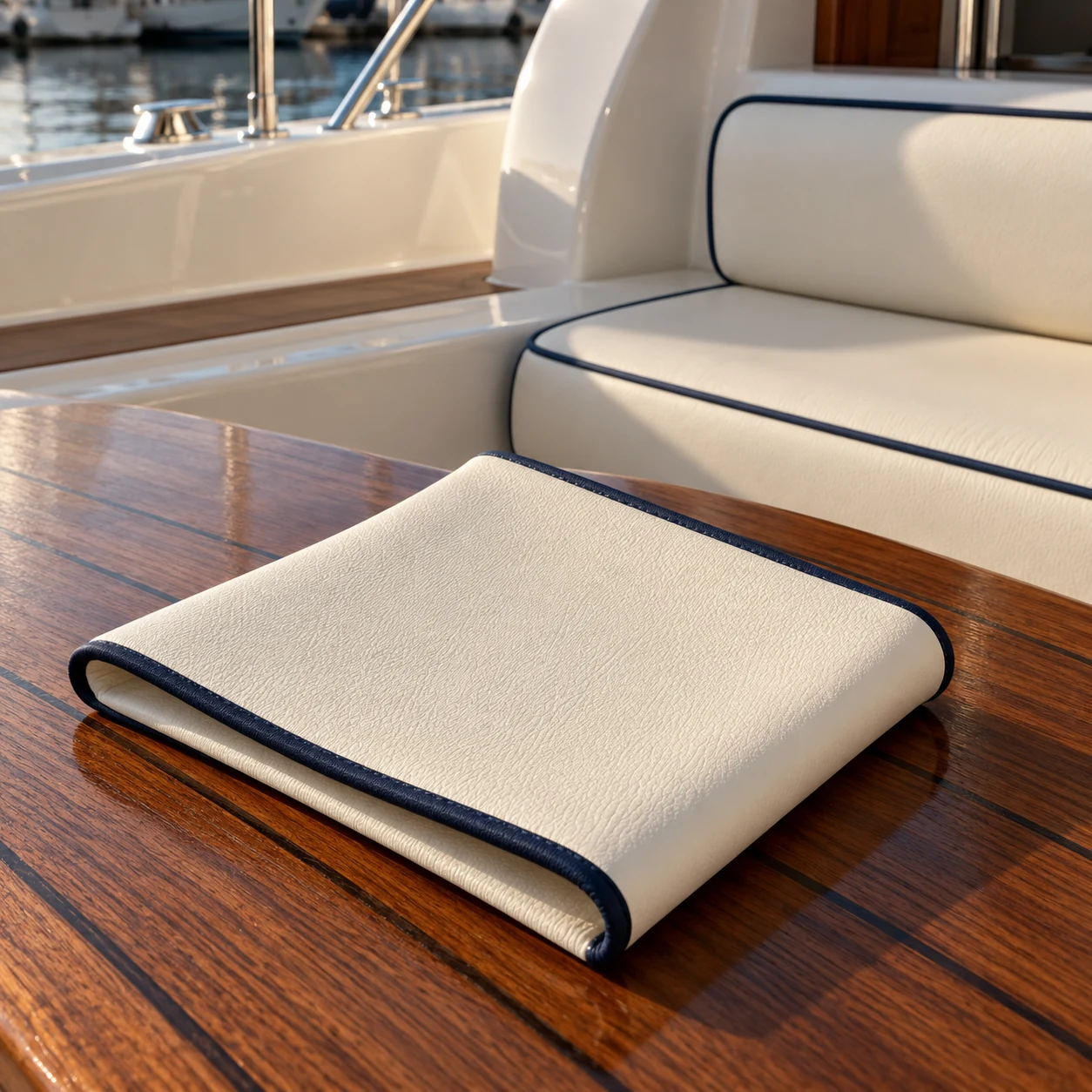
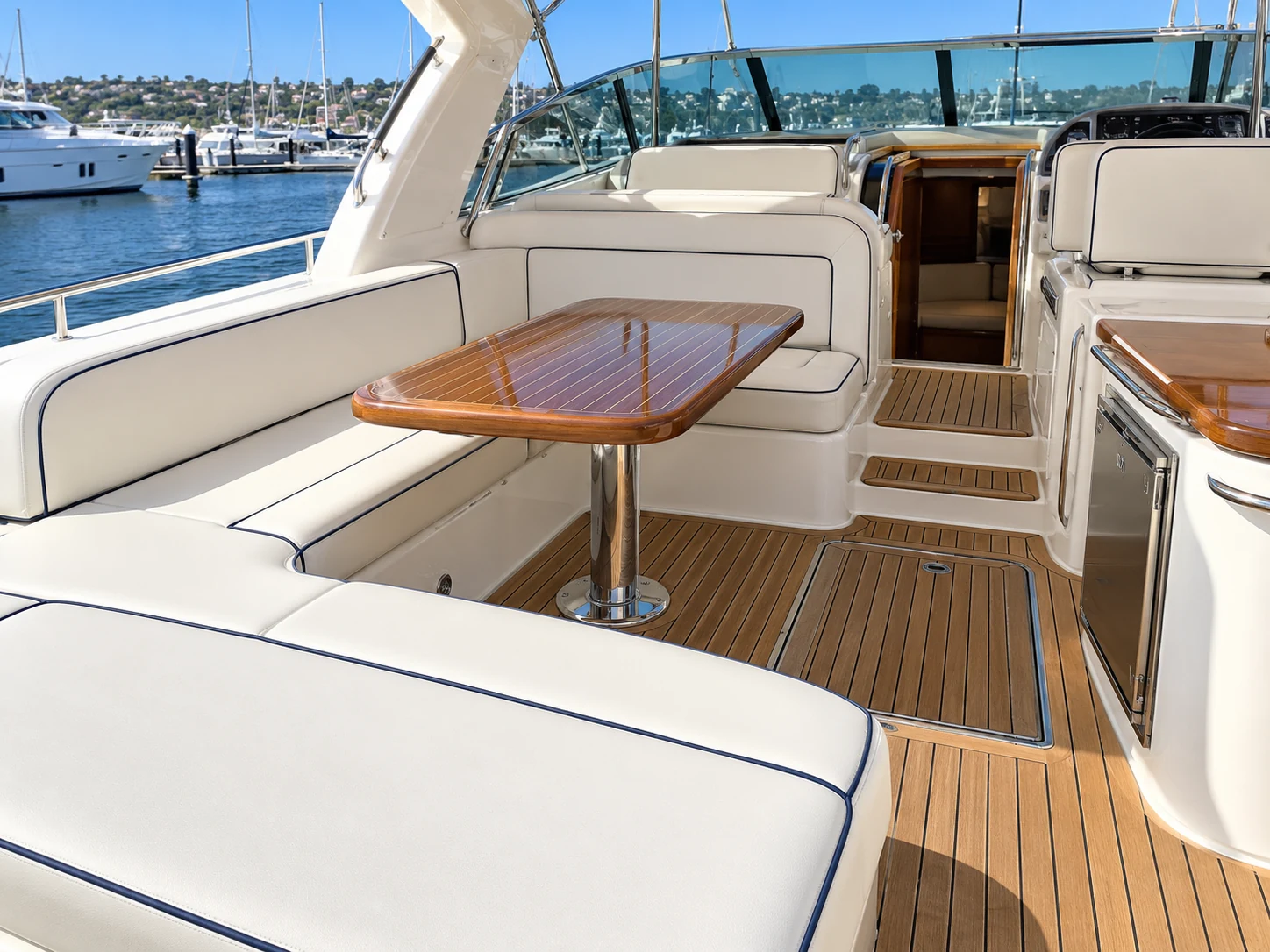
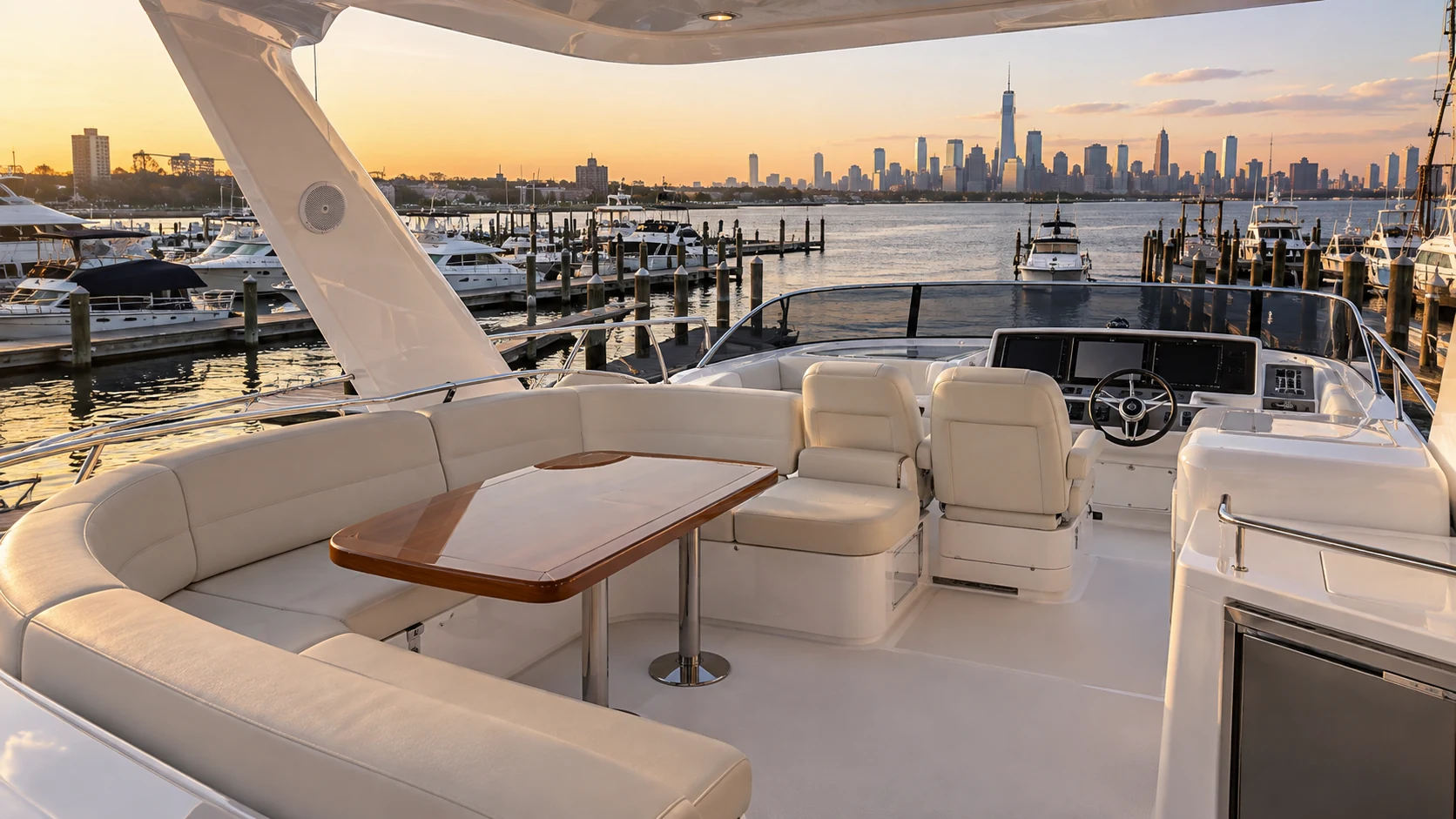
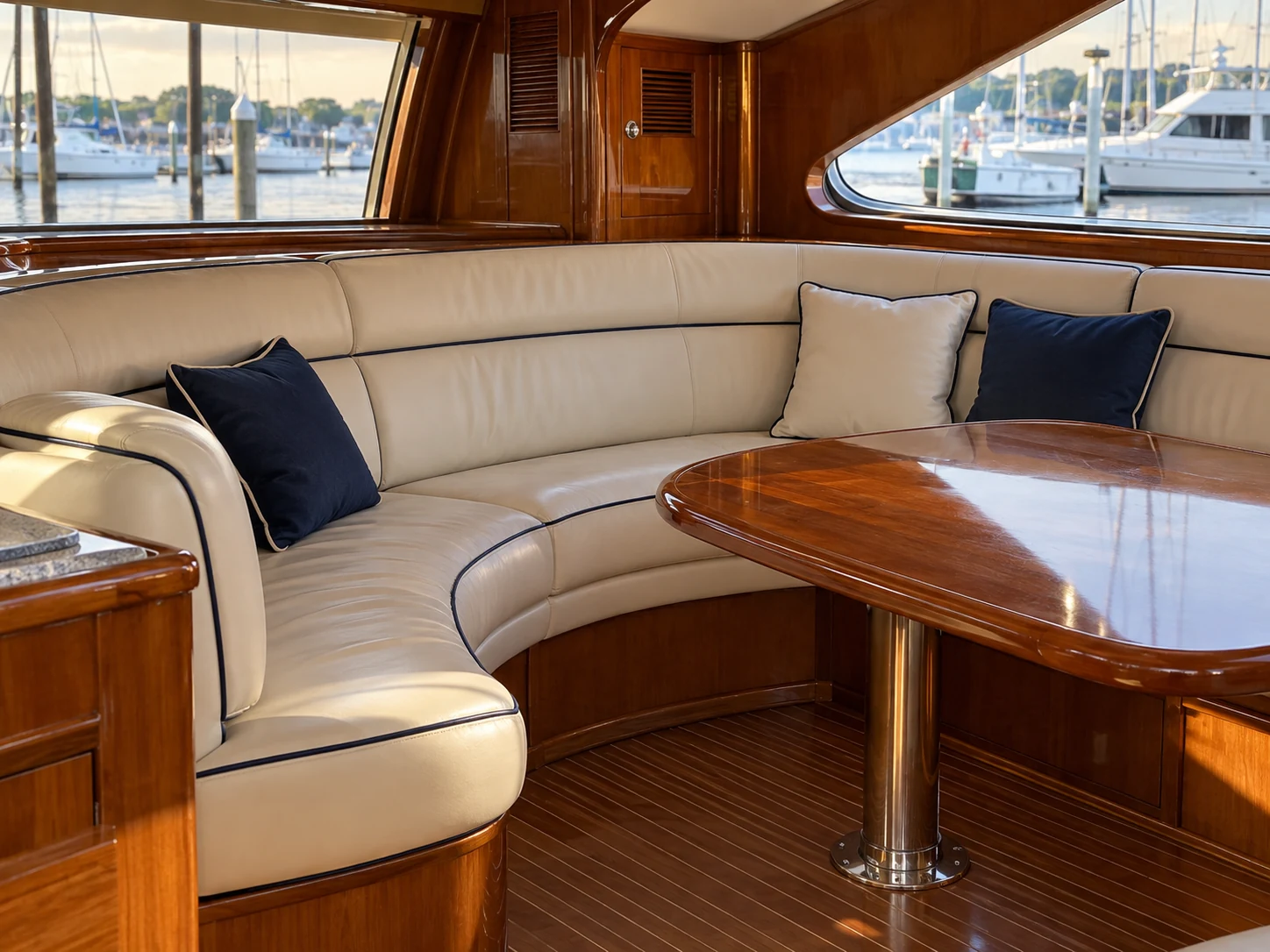
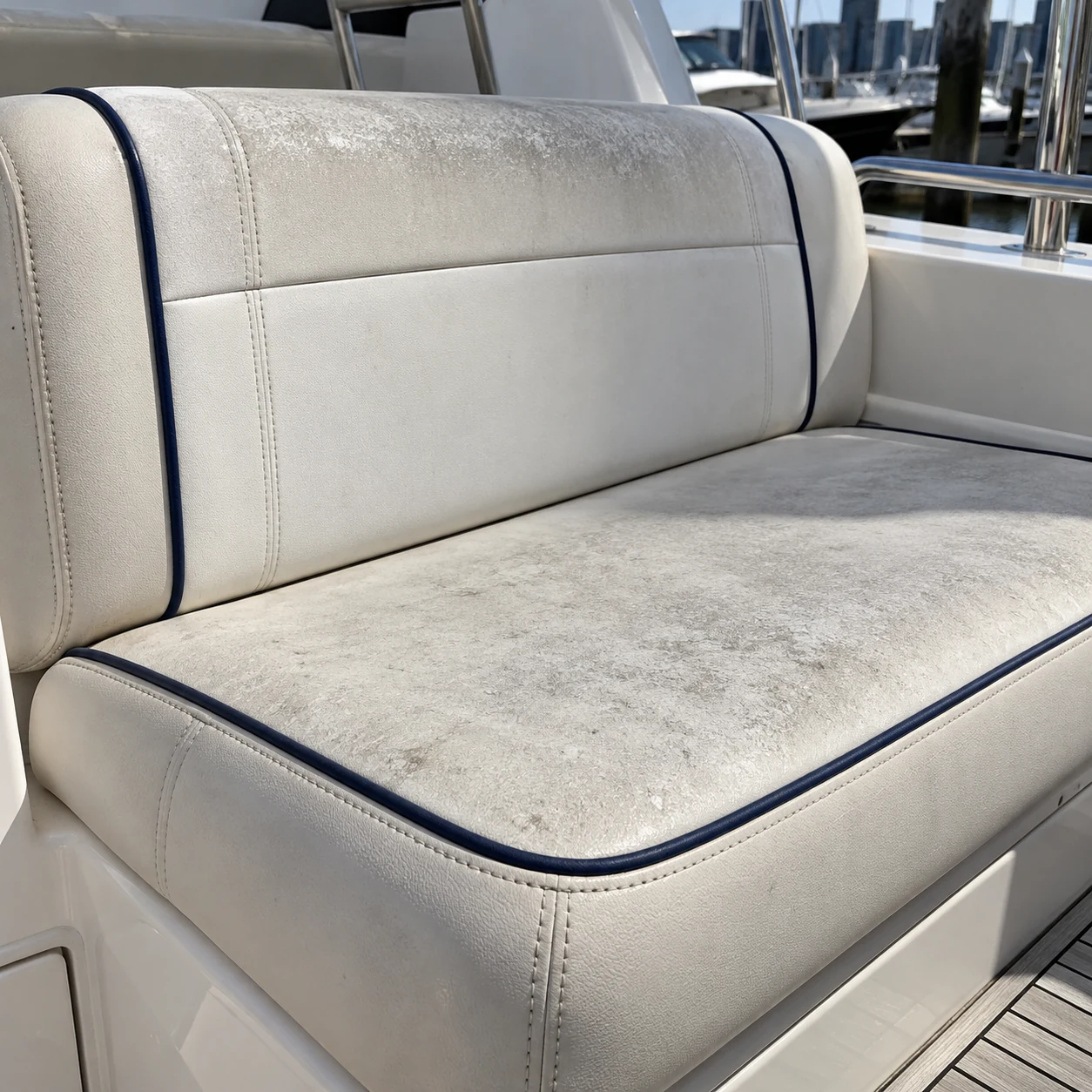
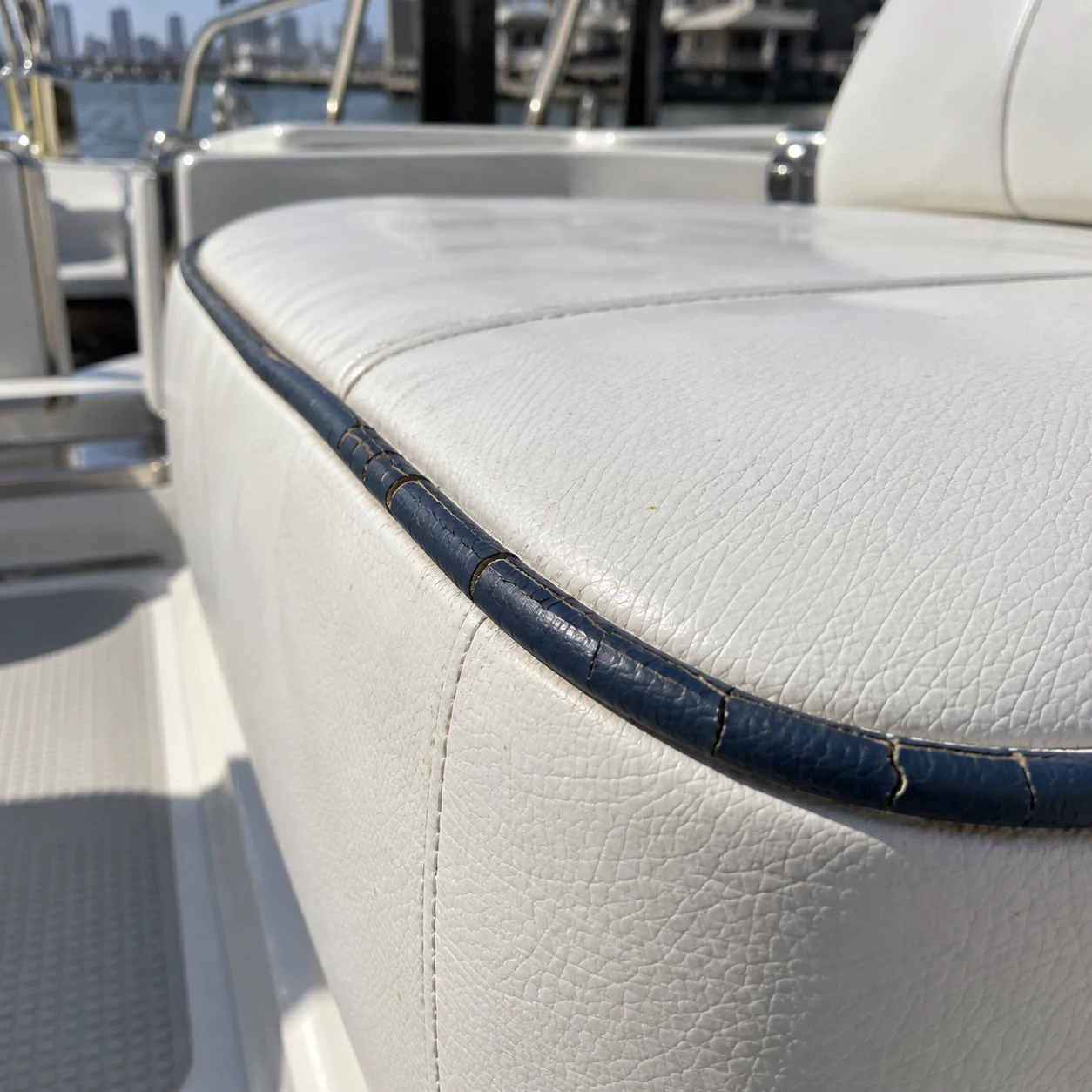
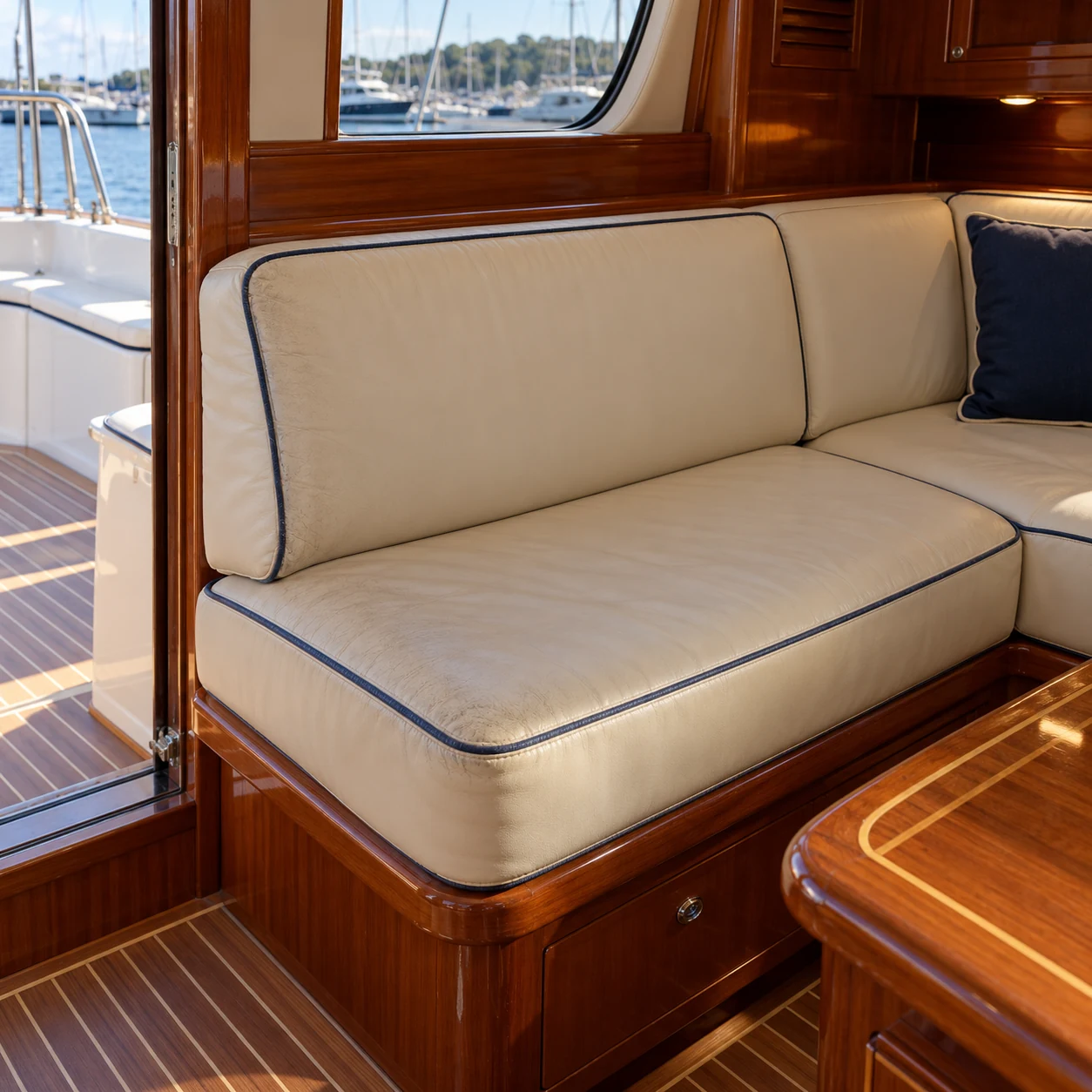
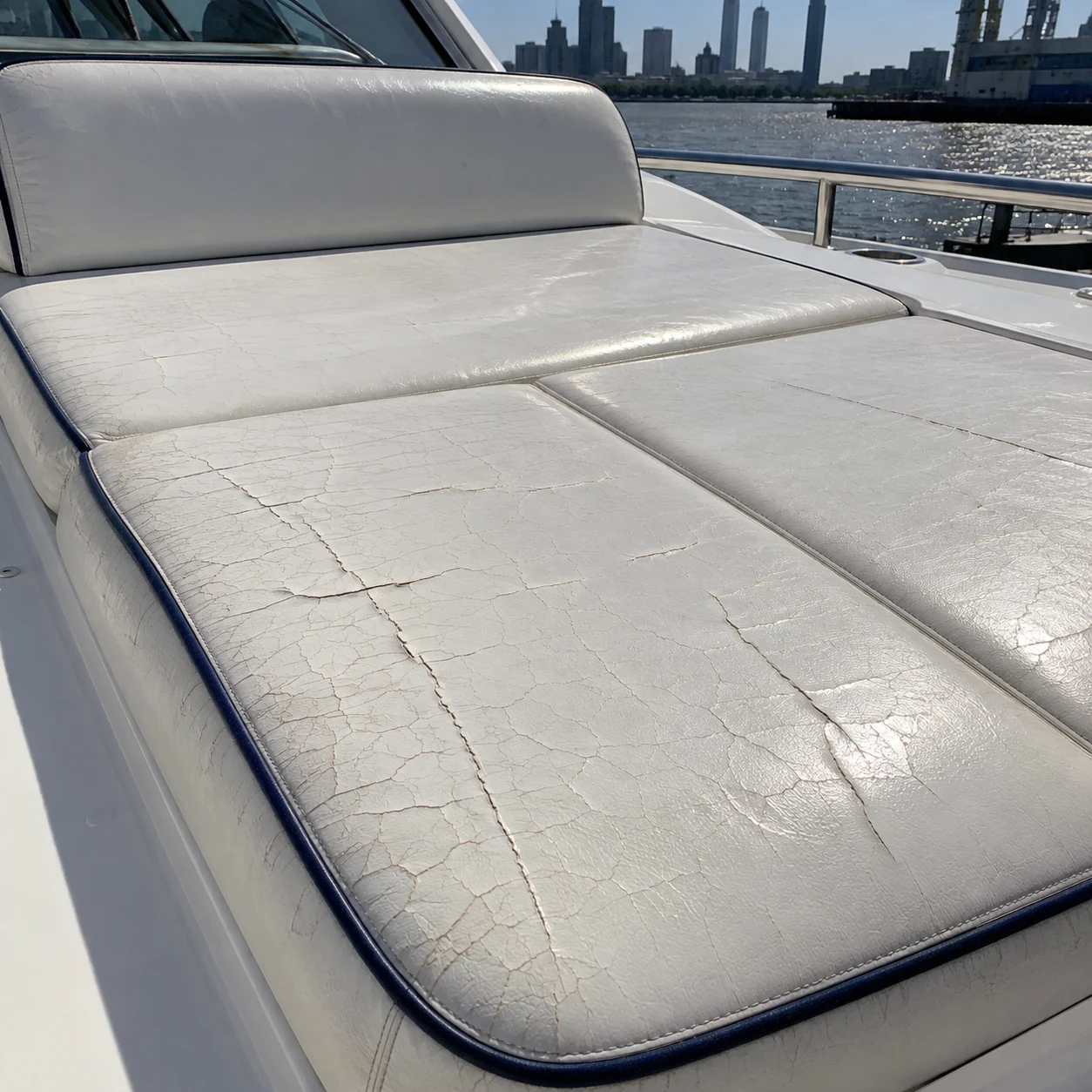
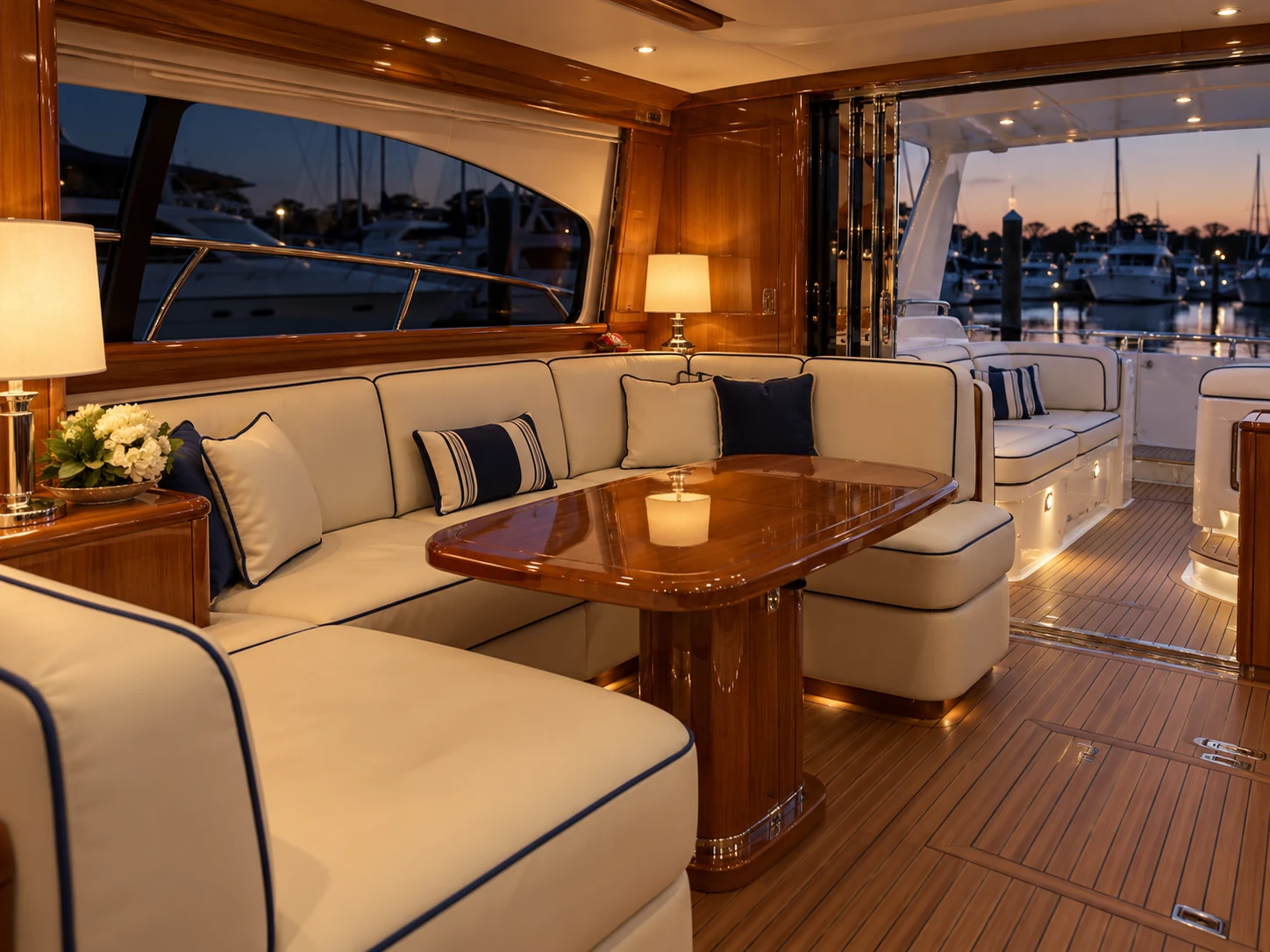
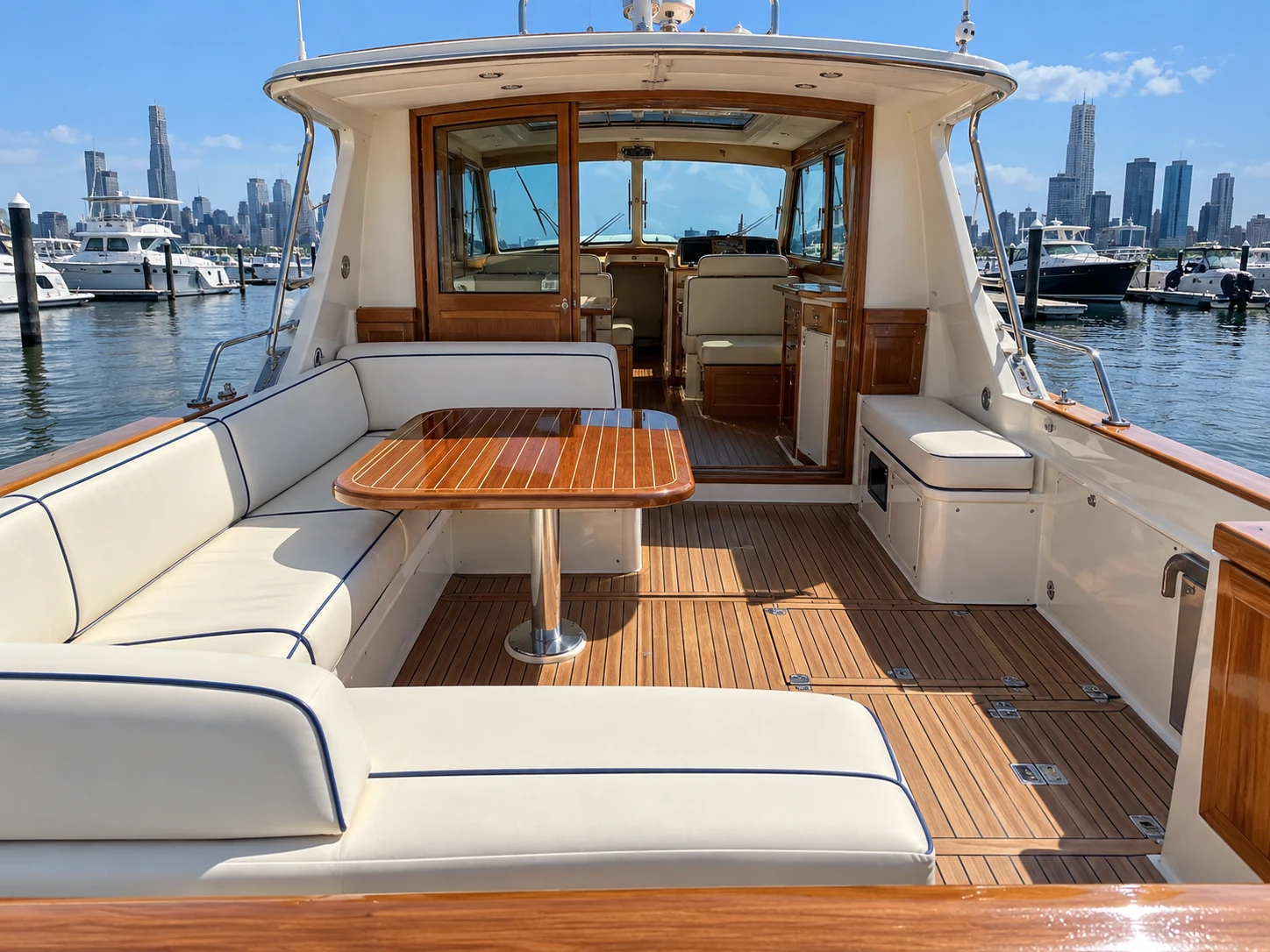
The saloon is a room. The cockpit is outdoors in salt and full sun. Specifying one cover for both is how a boat ends up with a cracked cockpit and an over-built saloon. We spec them separately — leather below, vinyl above — then match them to each other.
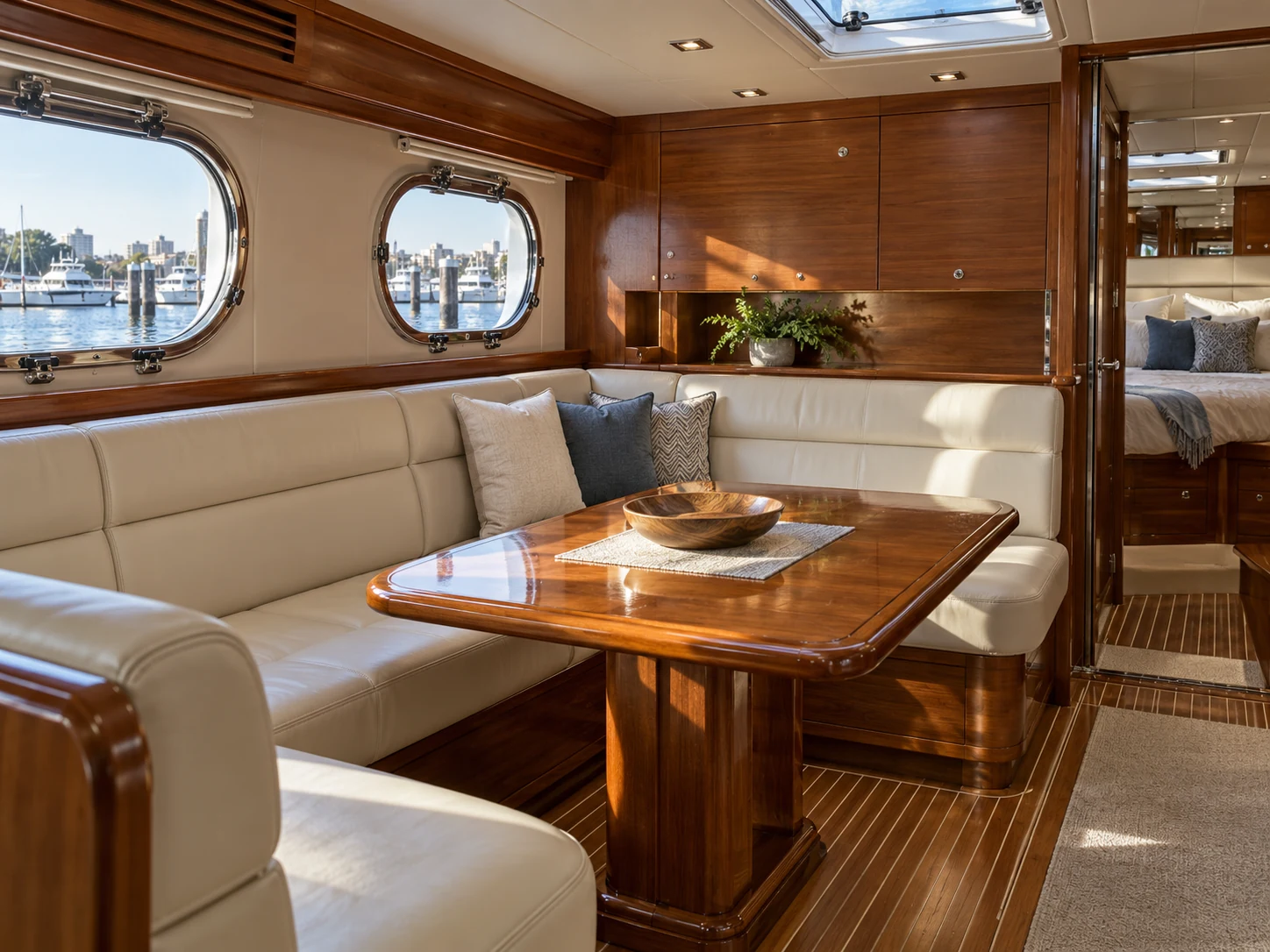
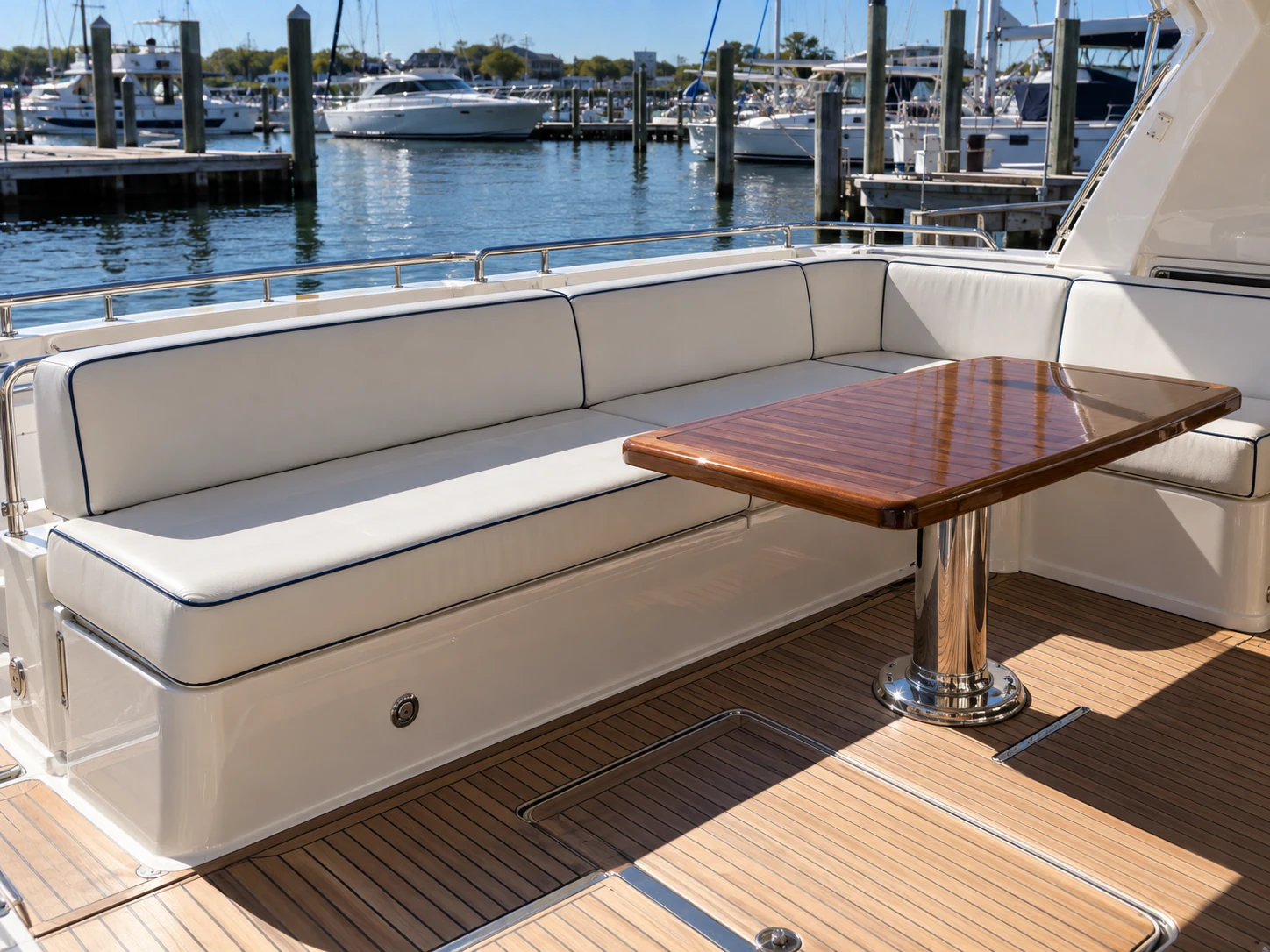
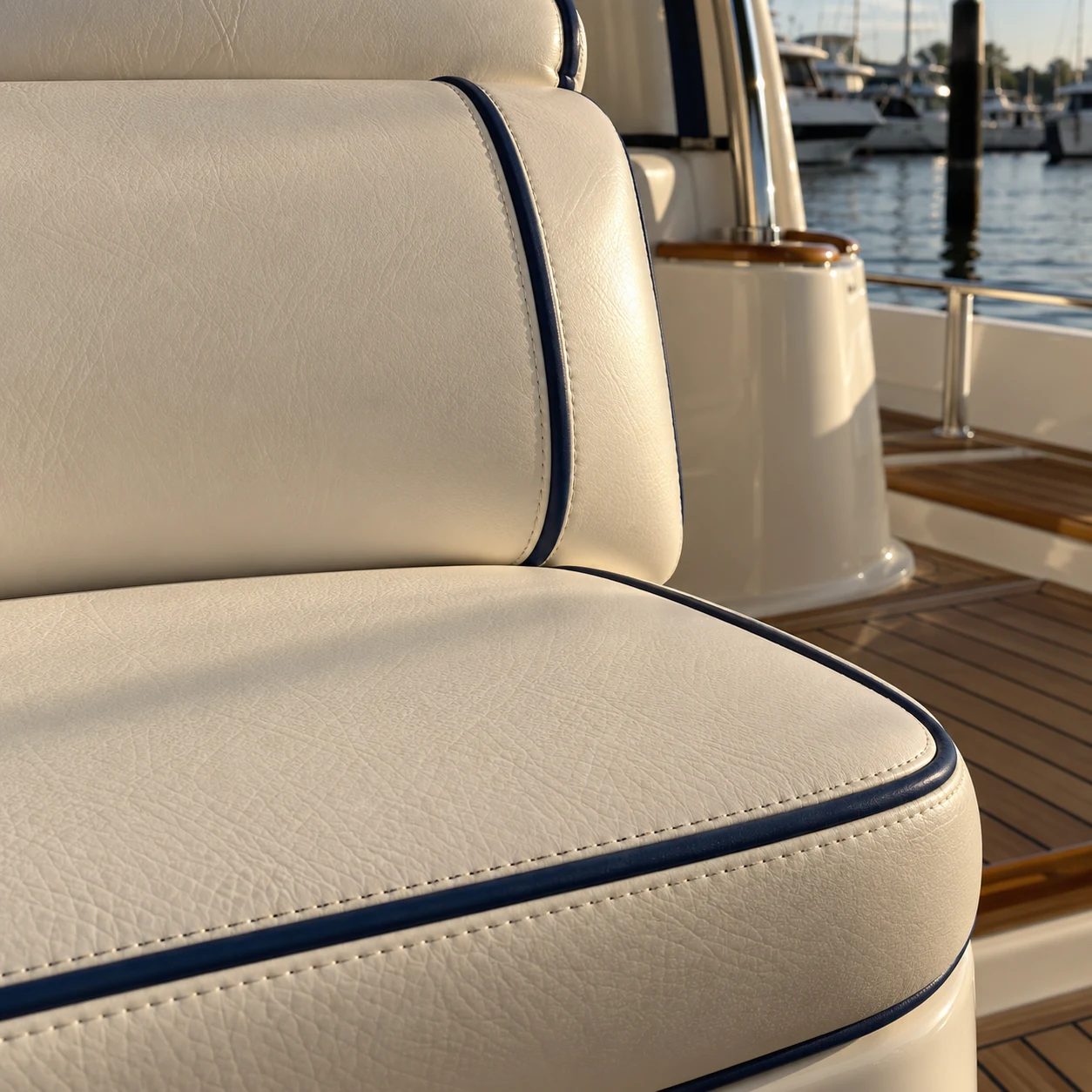
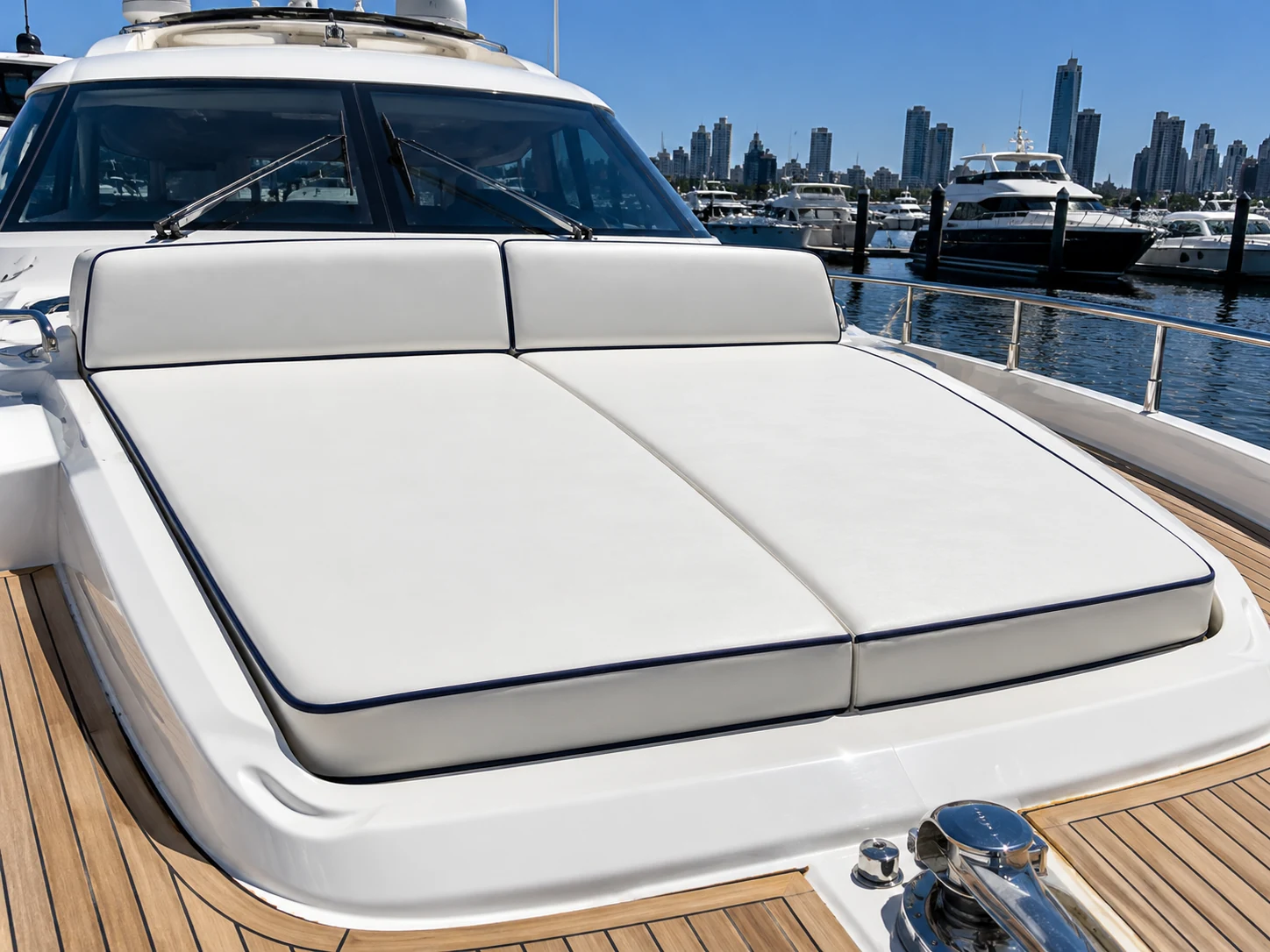
Six areas aboard, quoted piece by piece
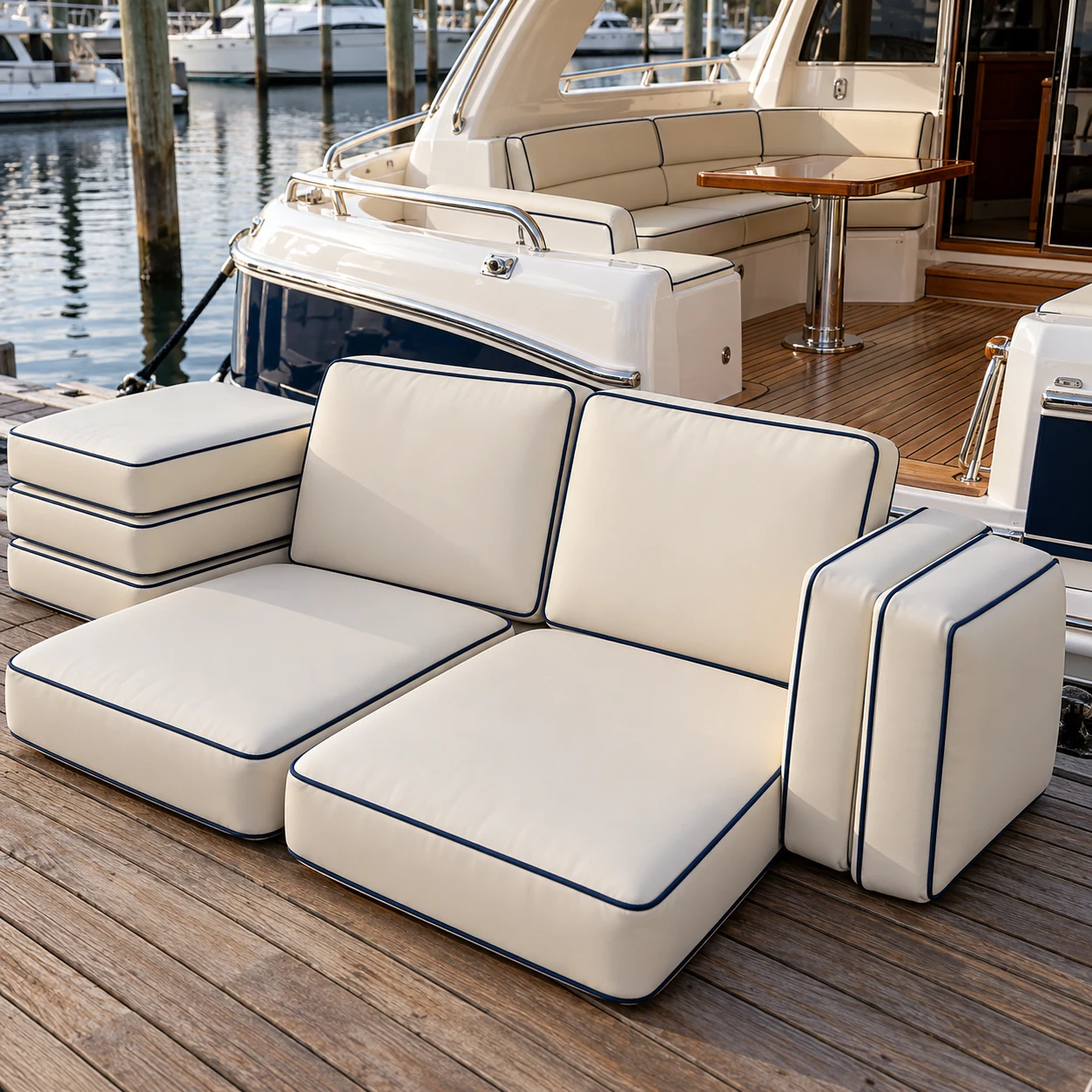
Most owners buy yacht upholstery one area at a time and add the rest across seasons. Everything is recorded so the second season matches the first, the way any documented project runs.
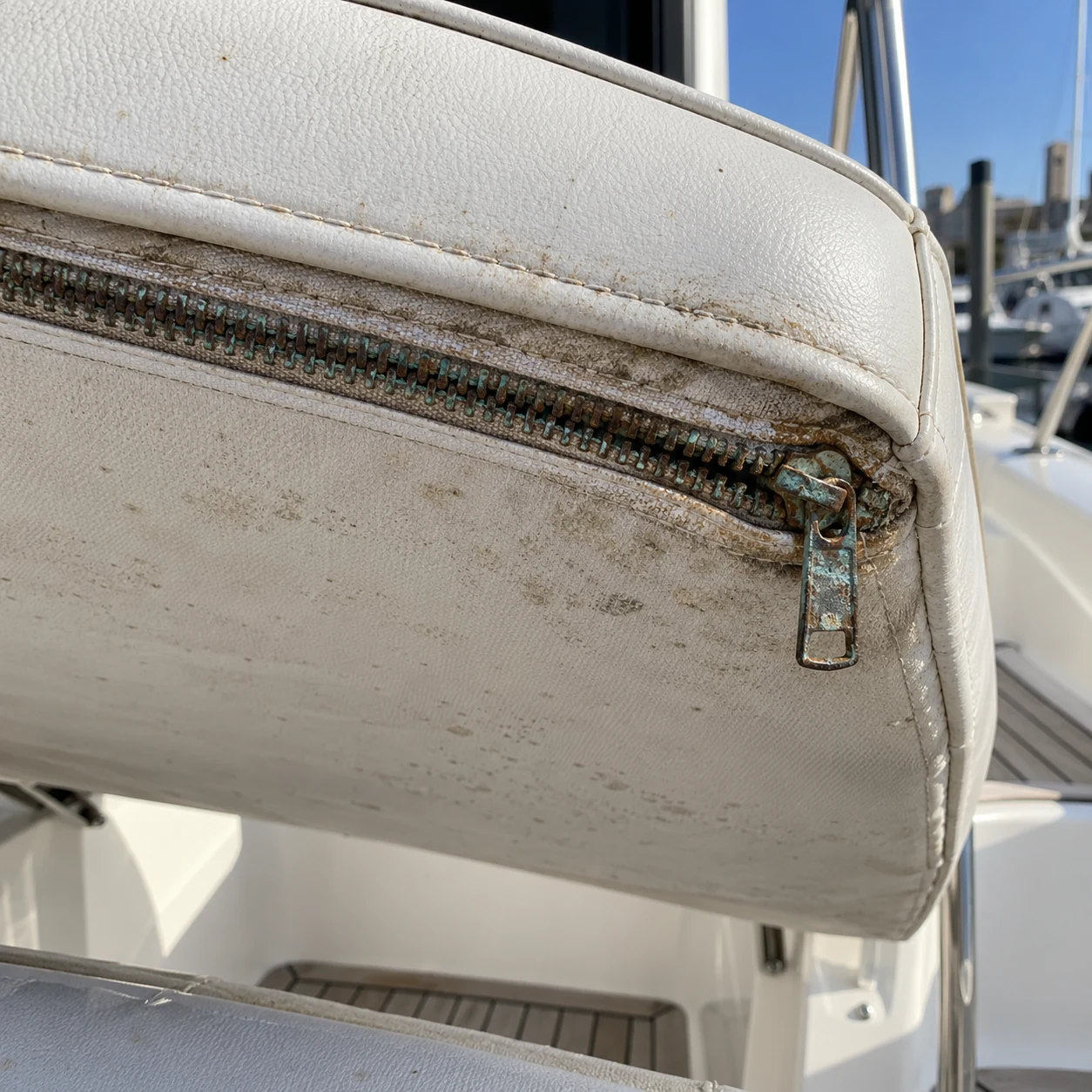
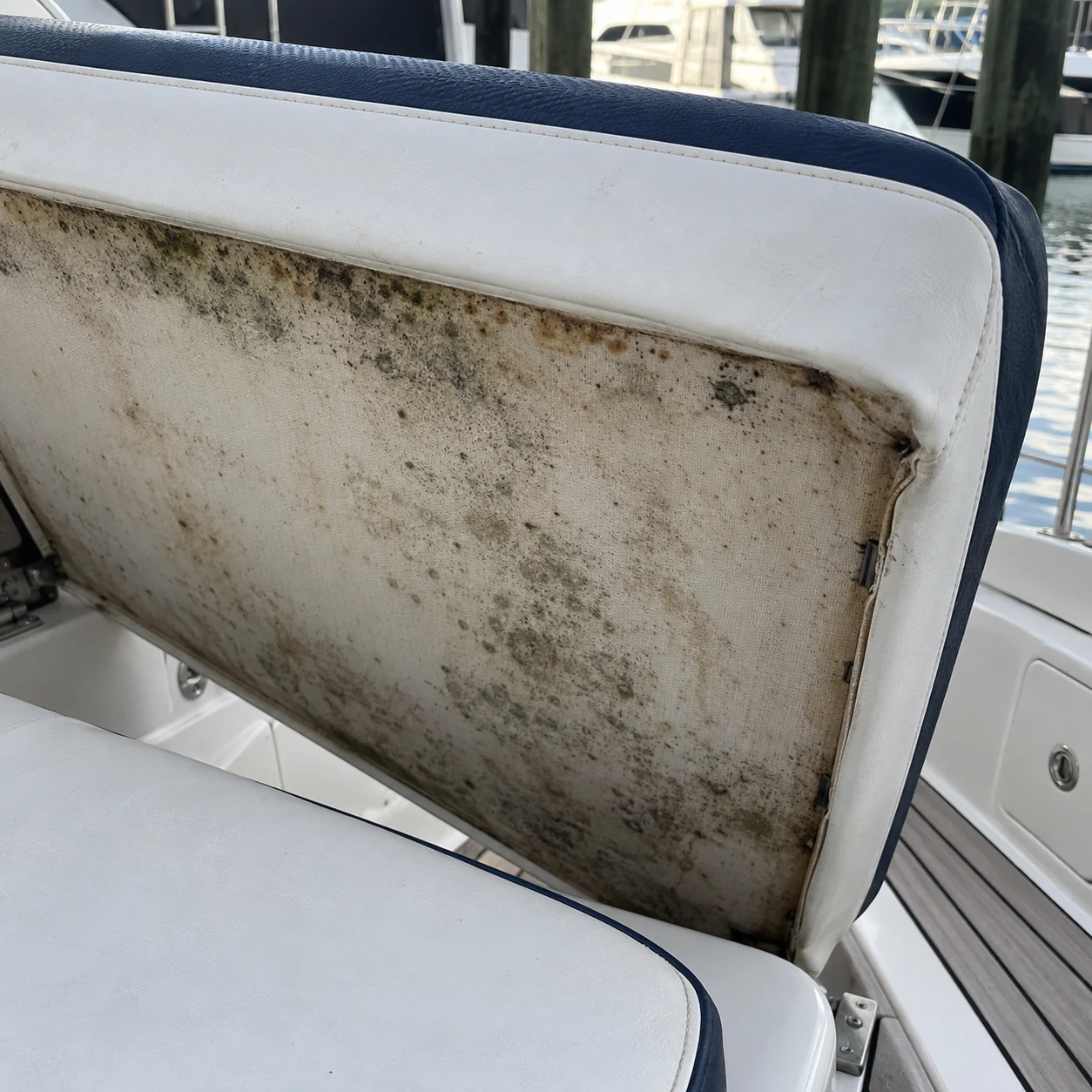
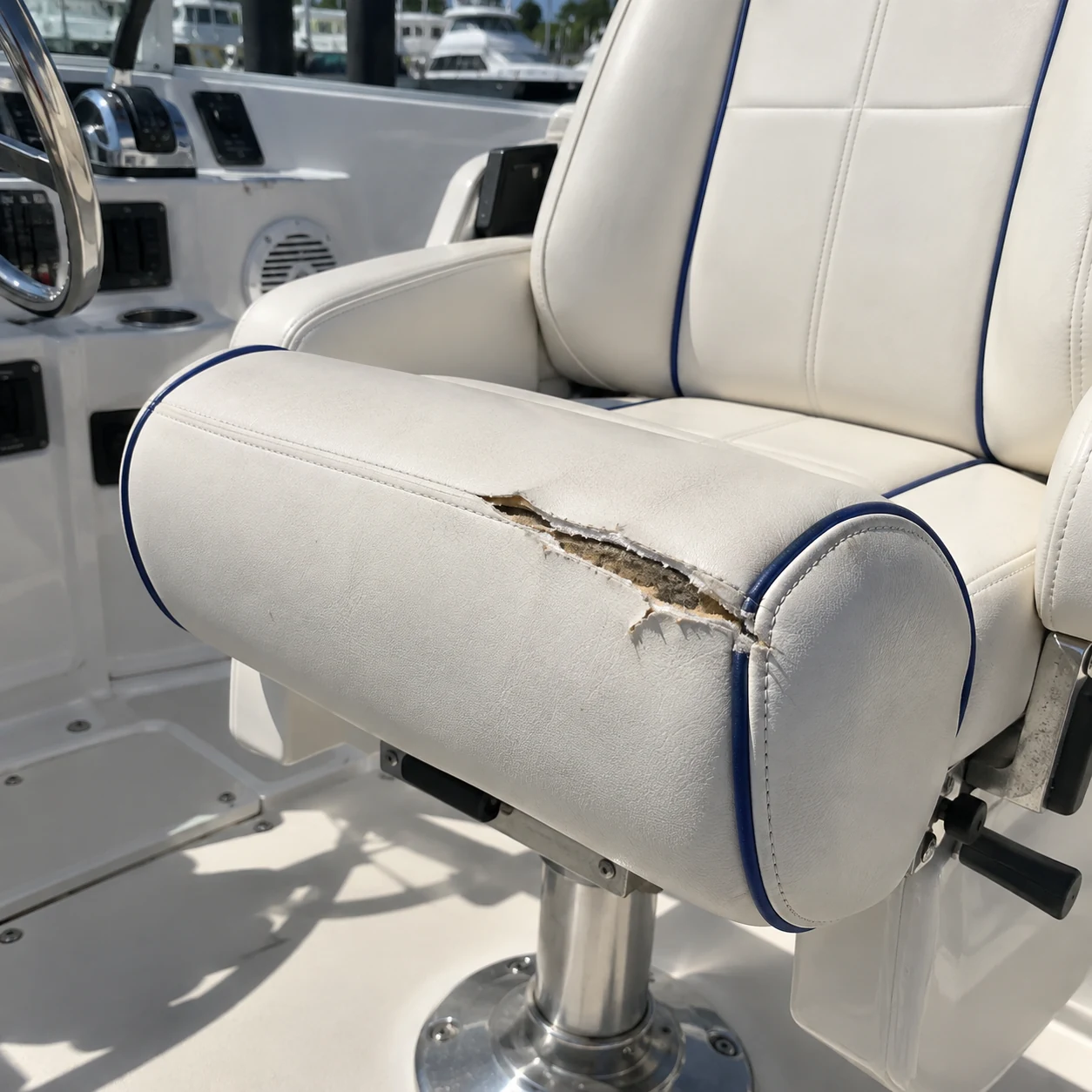
Nine faults, in the order a season produces them
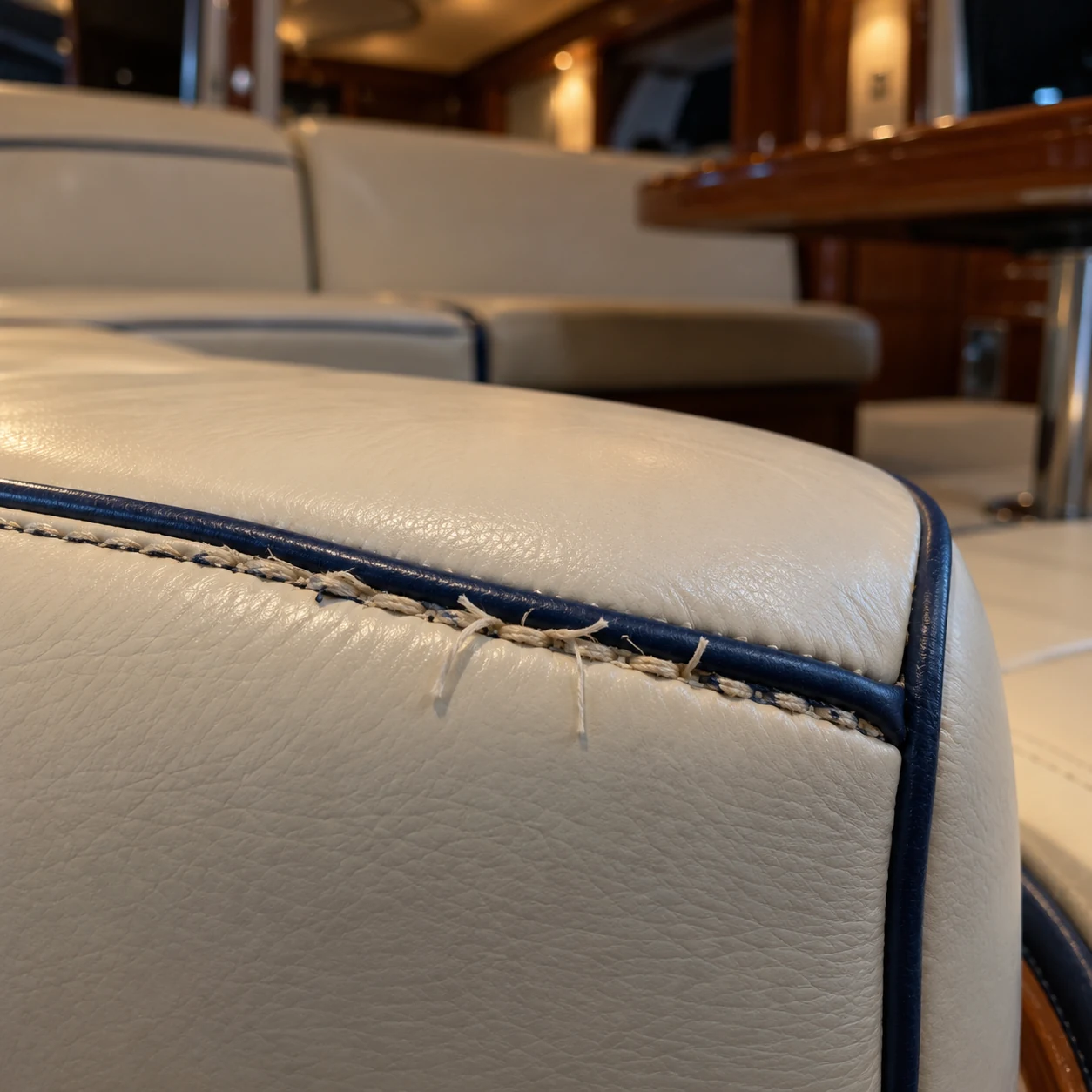
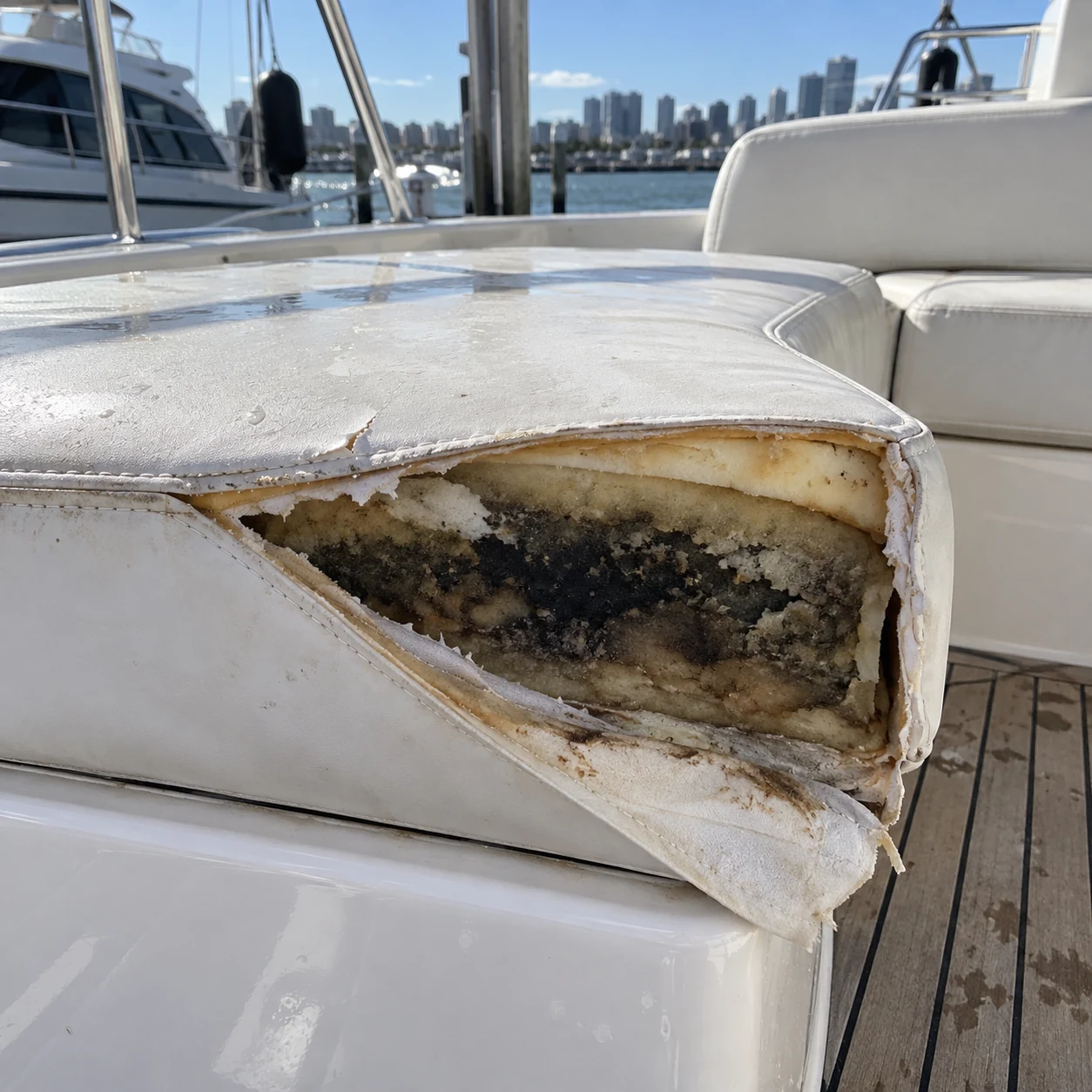
Most of these start invisibly. By the time a cover looks bad the foam under it has usually gone too, which is why no yacht upholstery quote leaves here before we have opened one cushion.
The template is the drawing
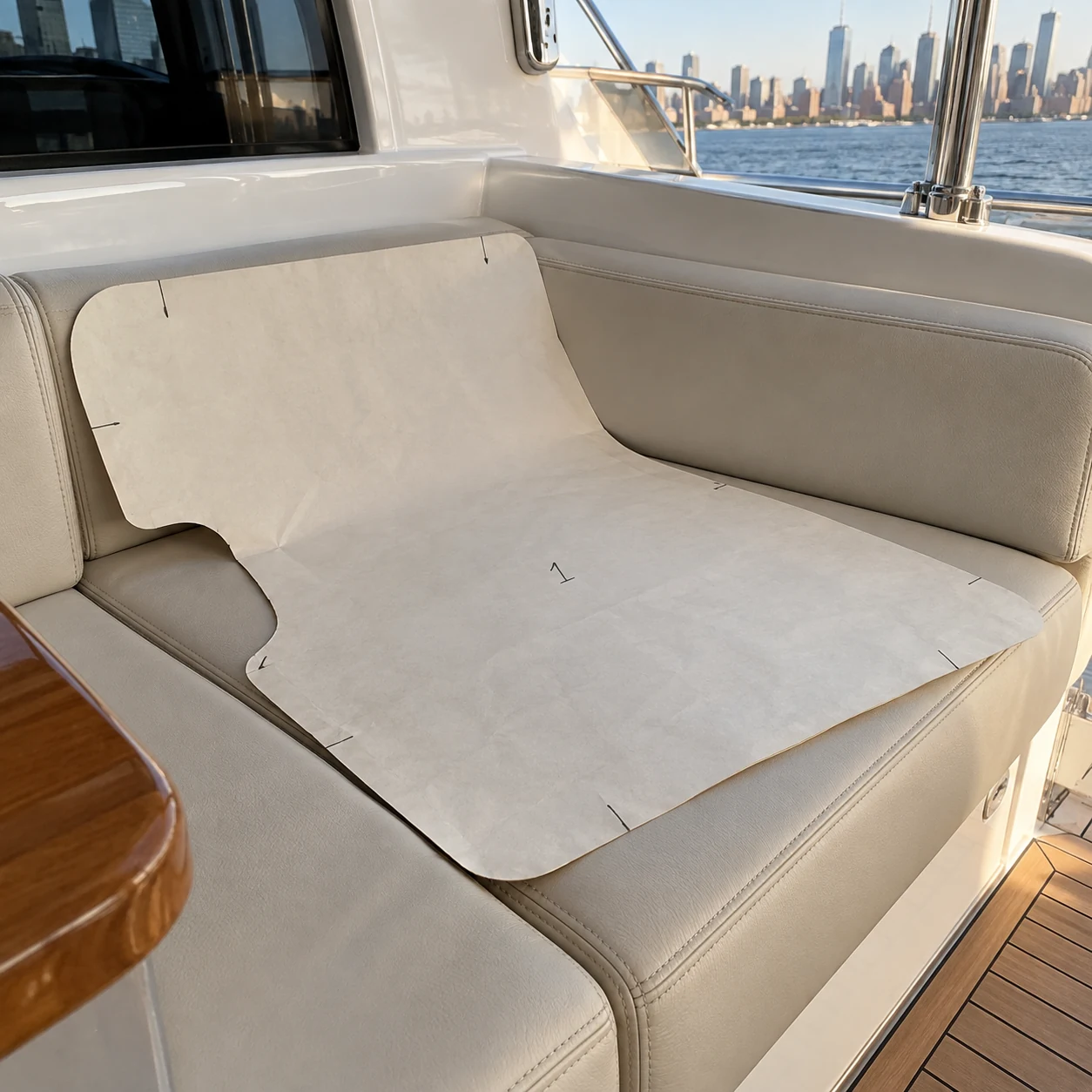
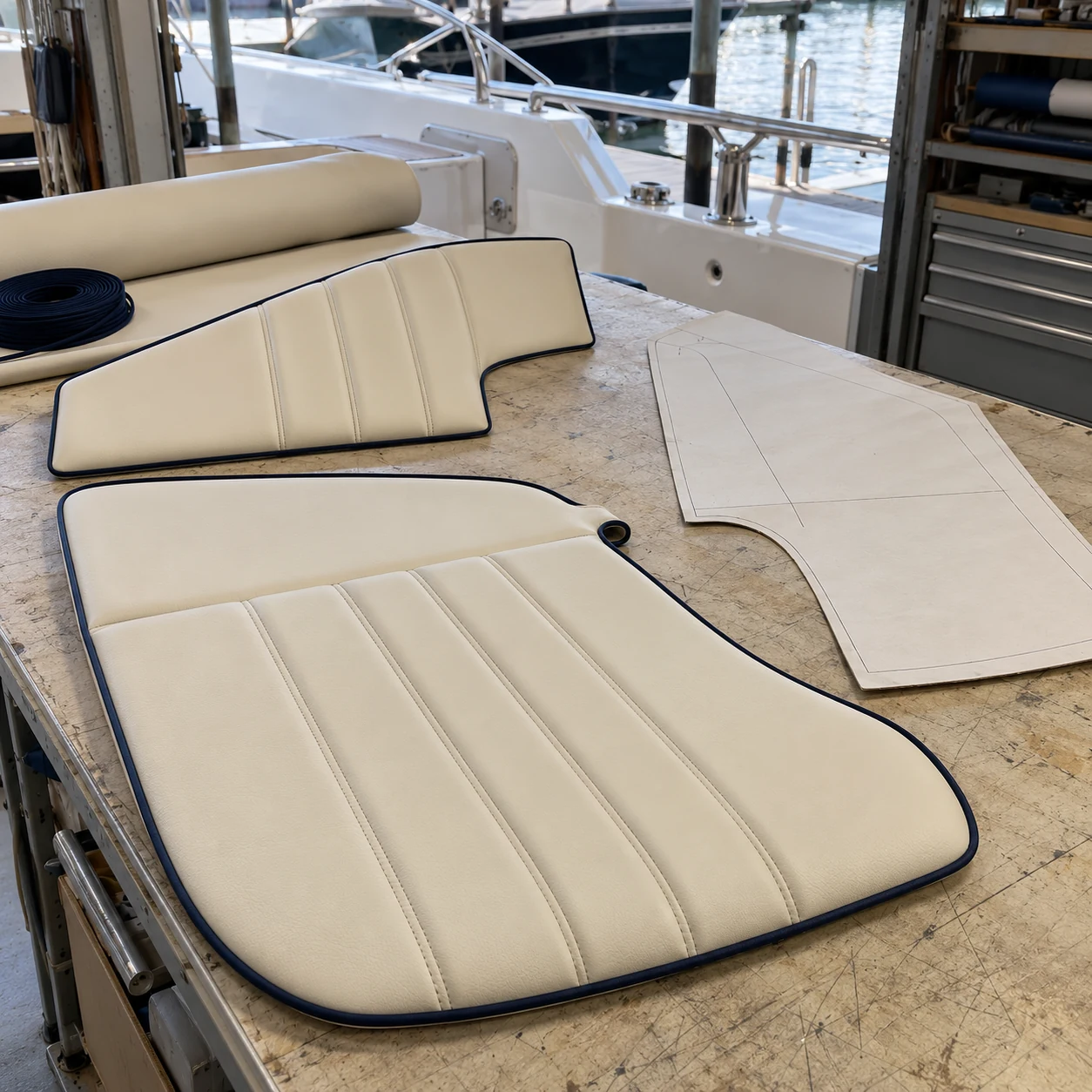
Nothing is patterned from a sketch or a measurement. A physical template comes off your boat, gets numbered, and is checked back against the space before a panel is cut. The standards behind this work are set by the American Boat and Yacht Council.
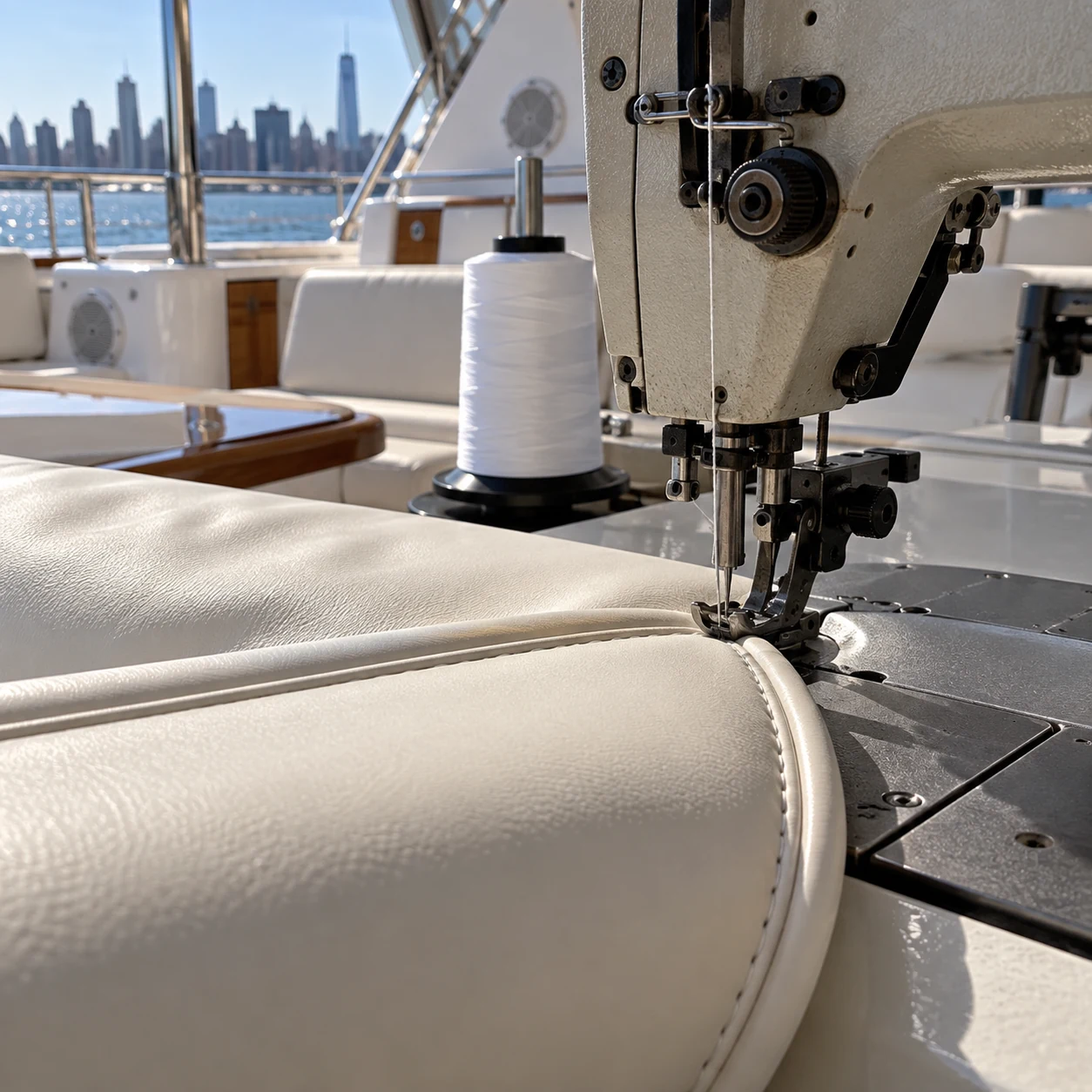
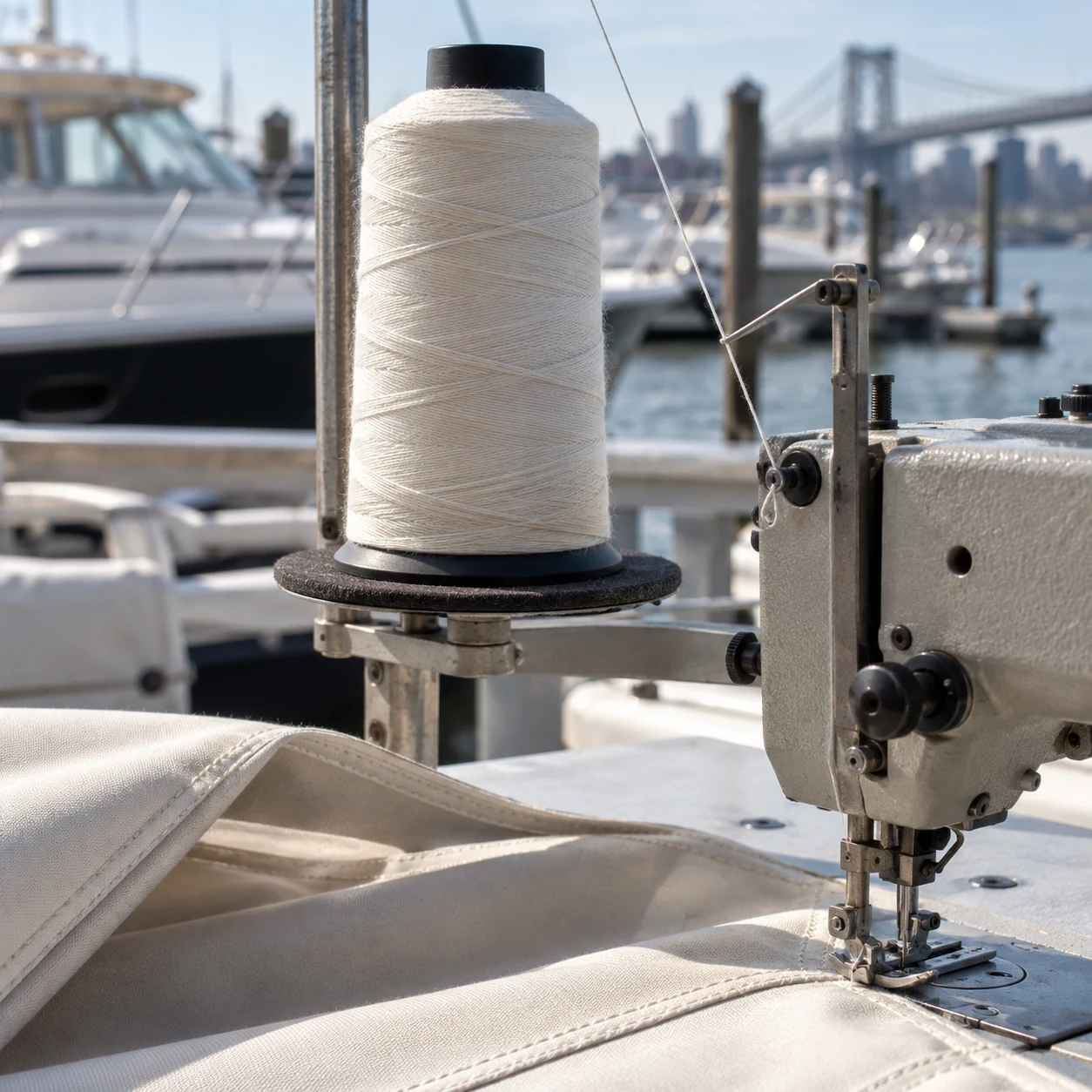
Four things that earn their place aboard
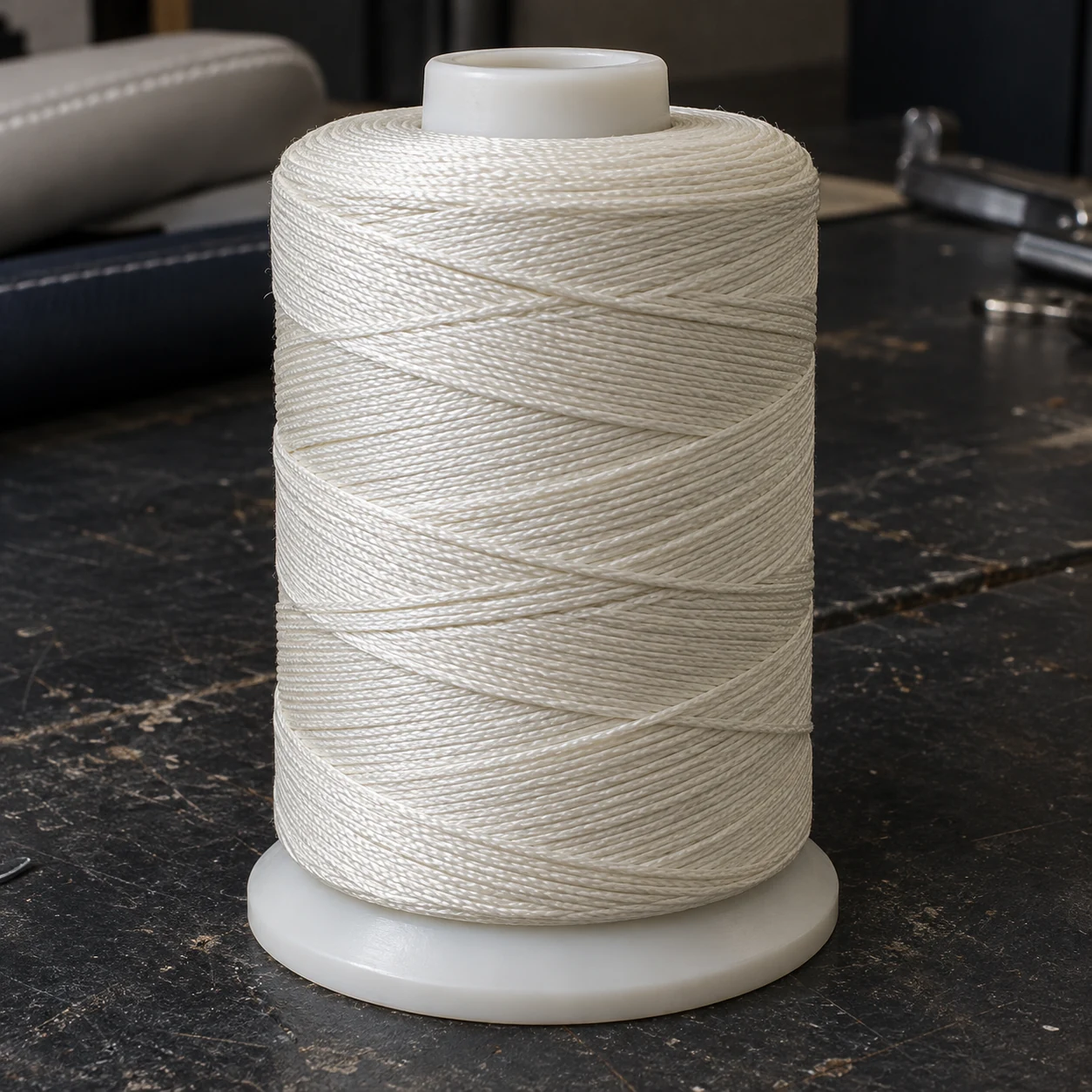
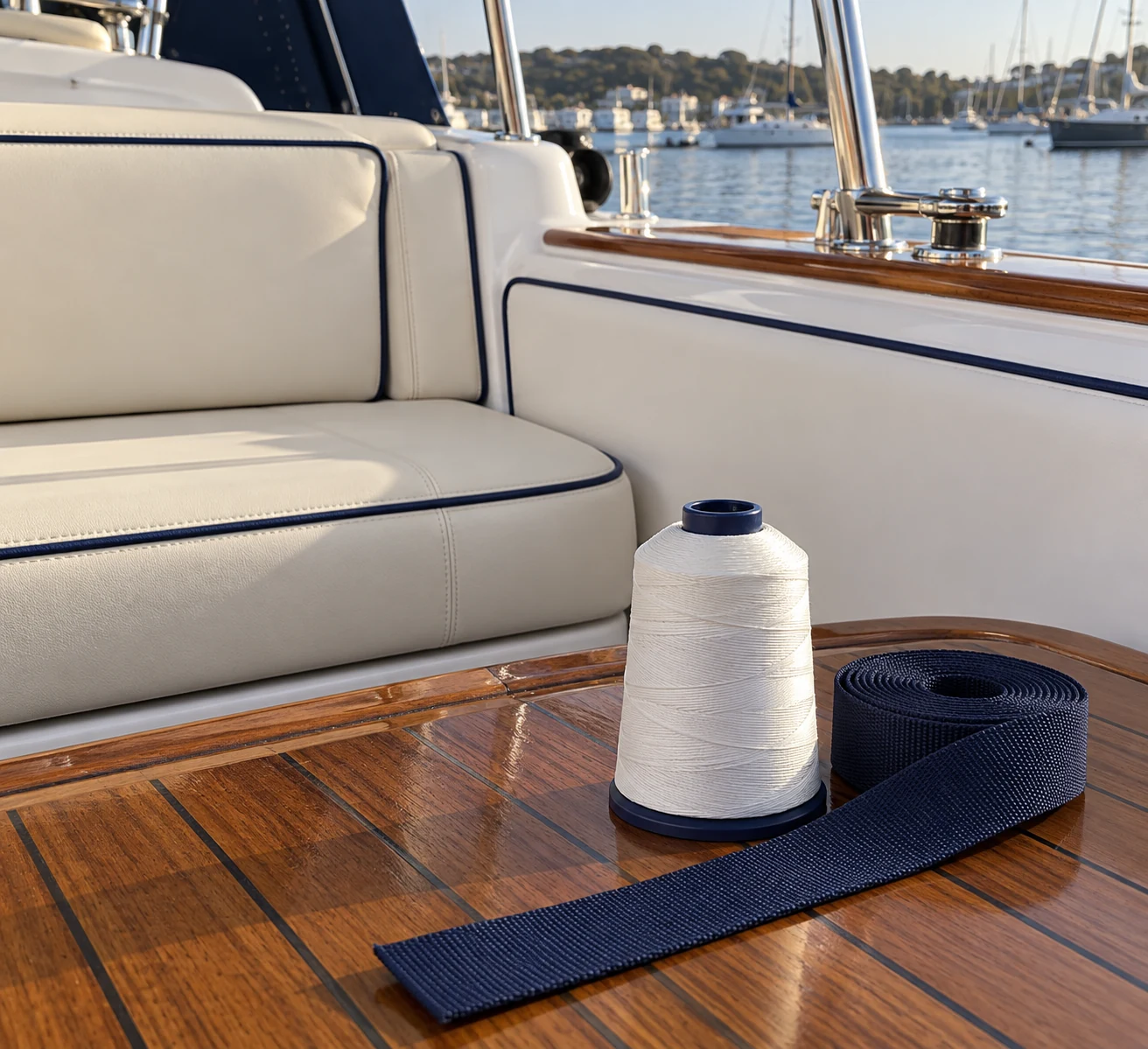
Yacht upholstery lives or dies on these five. Each is specified for where it sits on the boat, and samples come to the slip so you see them in the light they will live in, recorded the way all our material matching is.
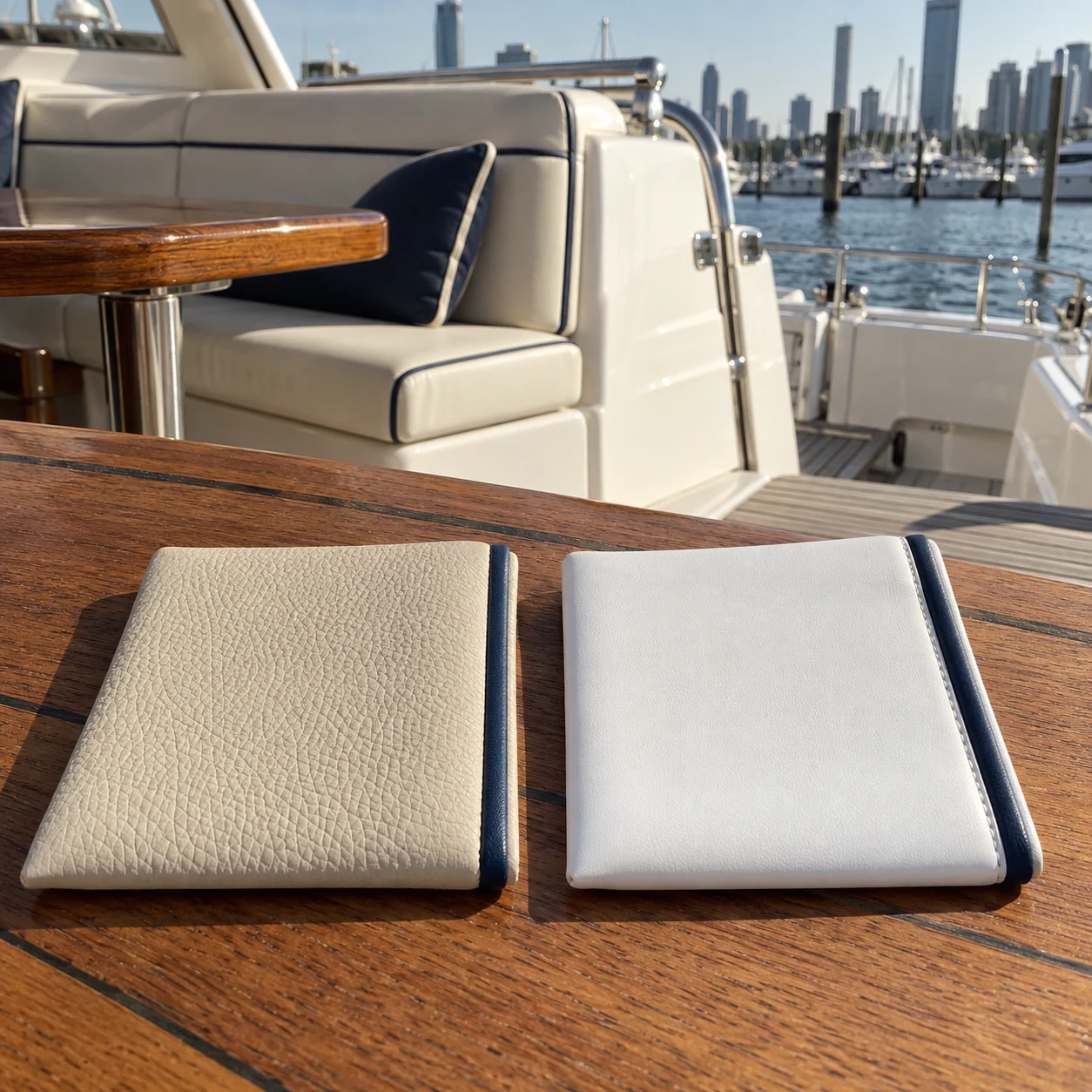
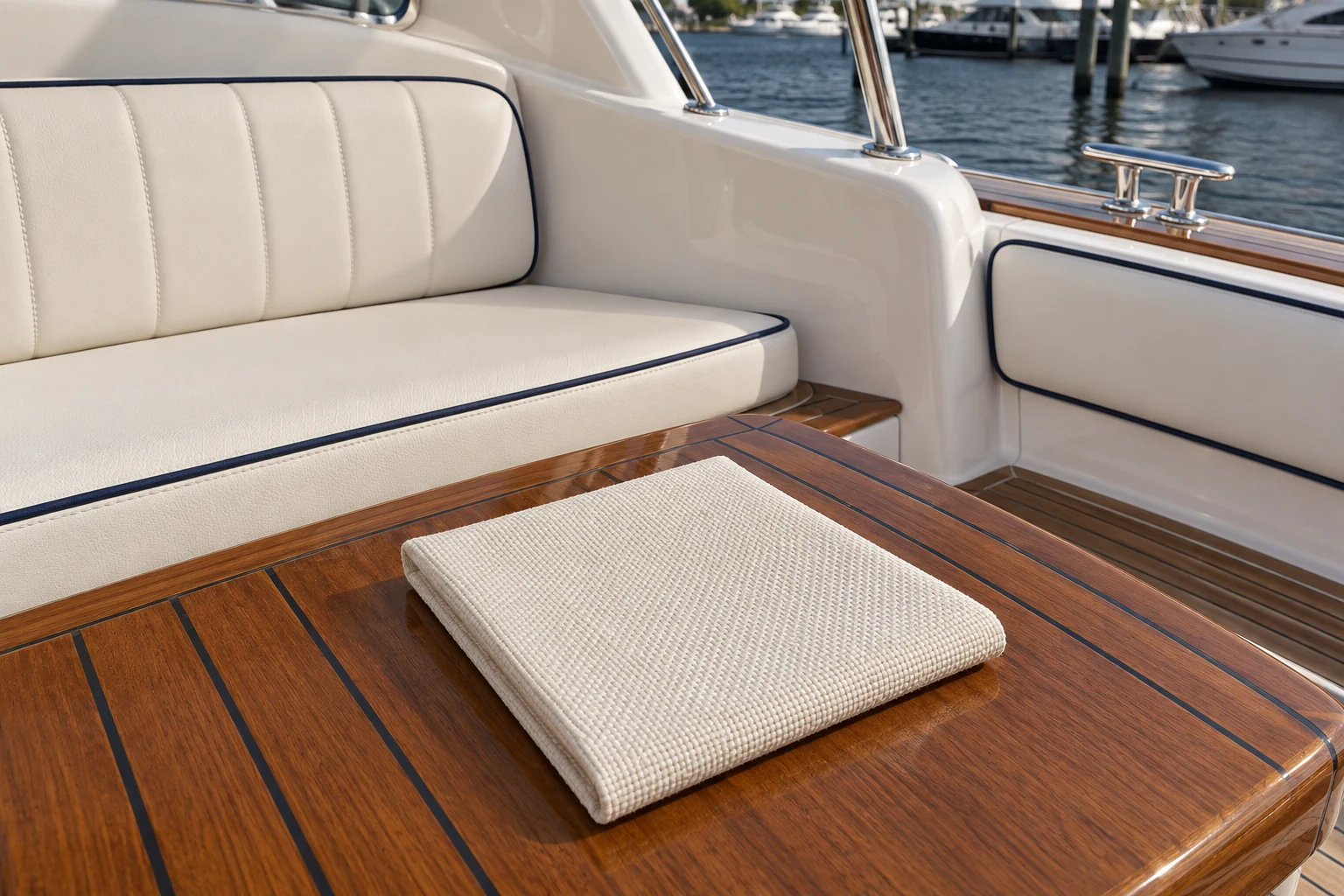
The vessel stays in the water
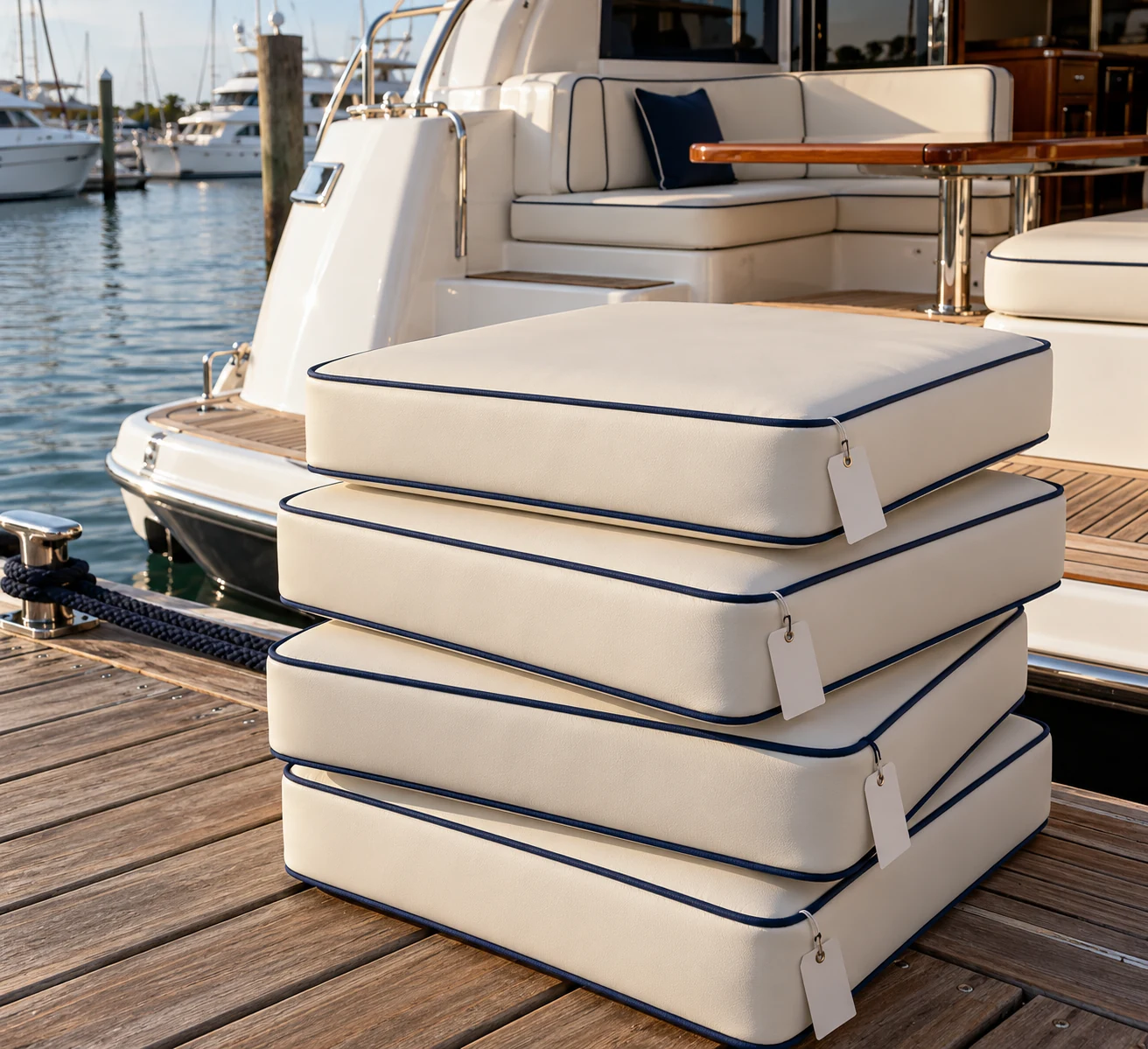
Loose pieces leave and come back on our own pickup and delivery; fixed work is done aboard as an on-site repair. Nothing is hauled and nothing is stored ashore longer than the build takes. Winter layup is when a whole interior fits, and it can run under a service agreement season to season.
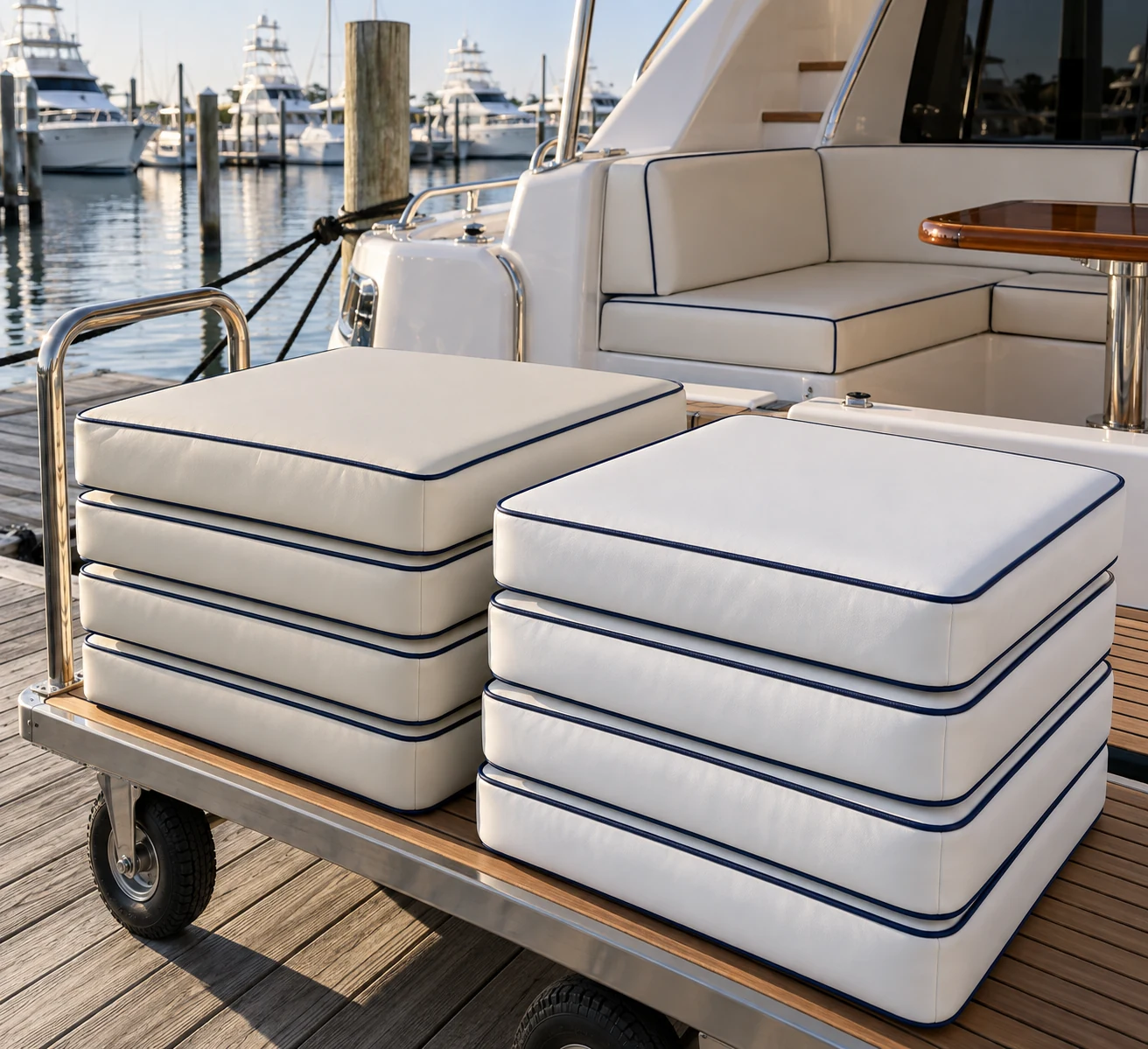
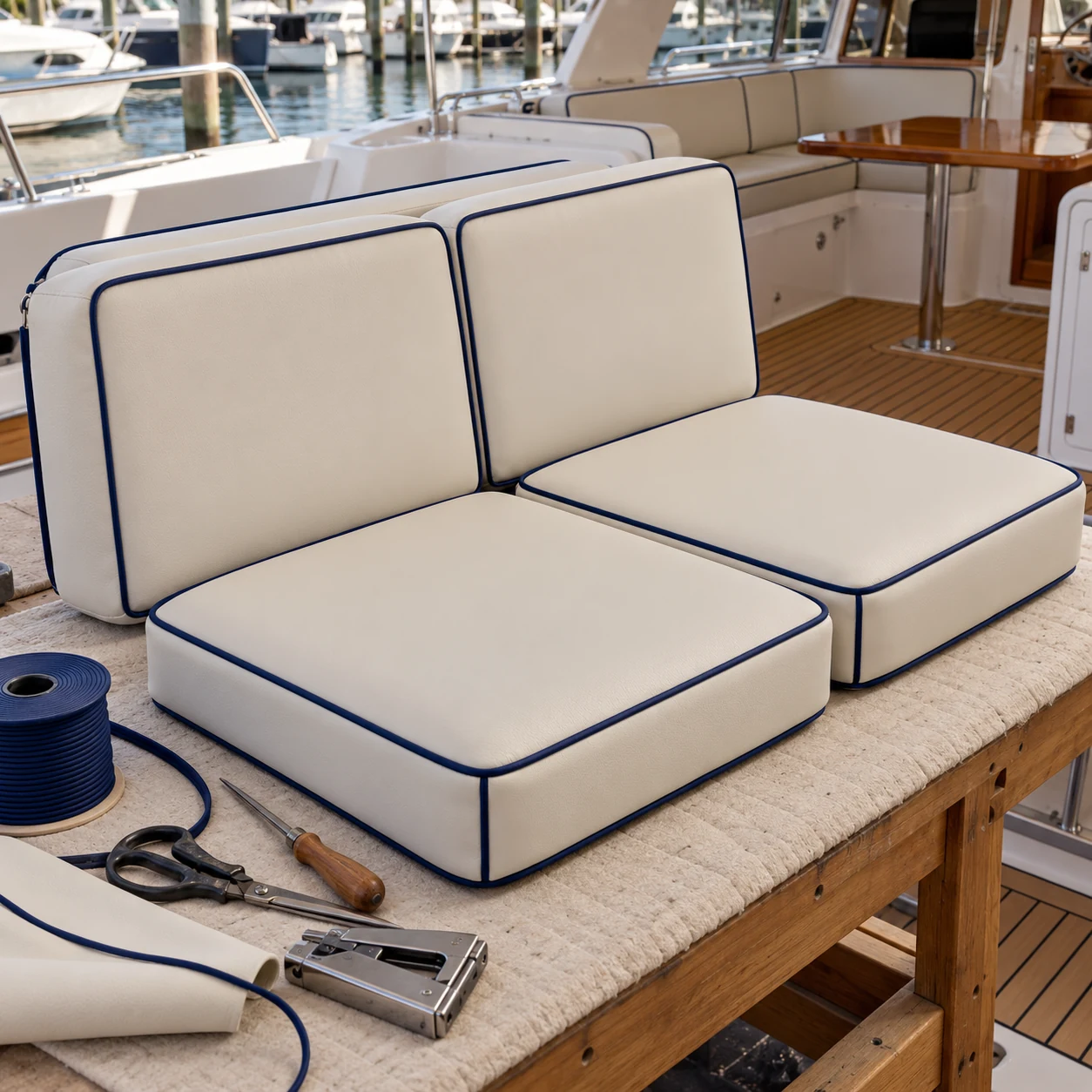
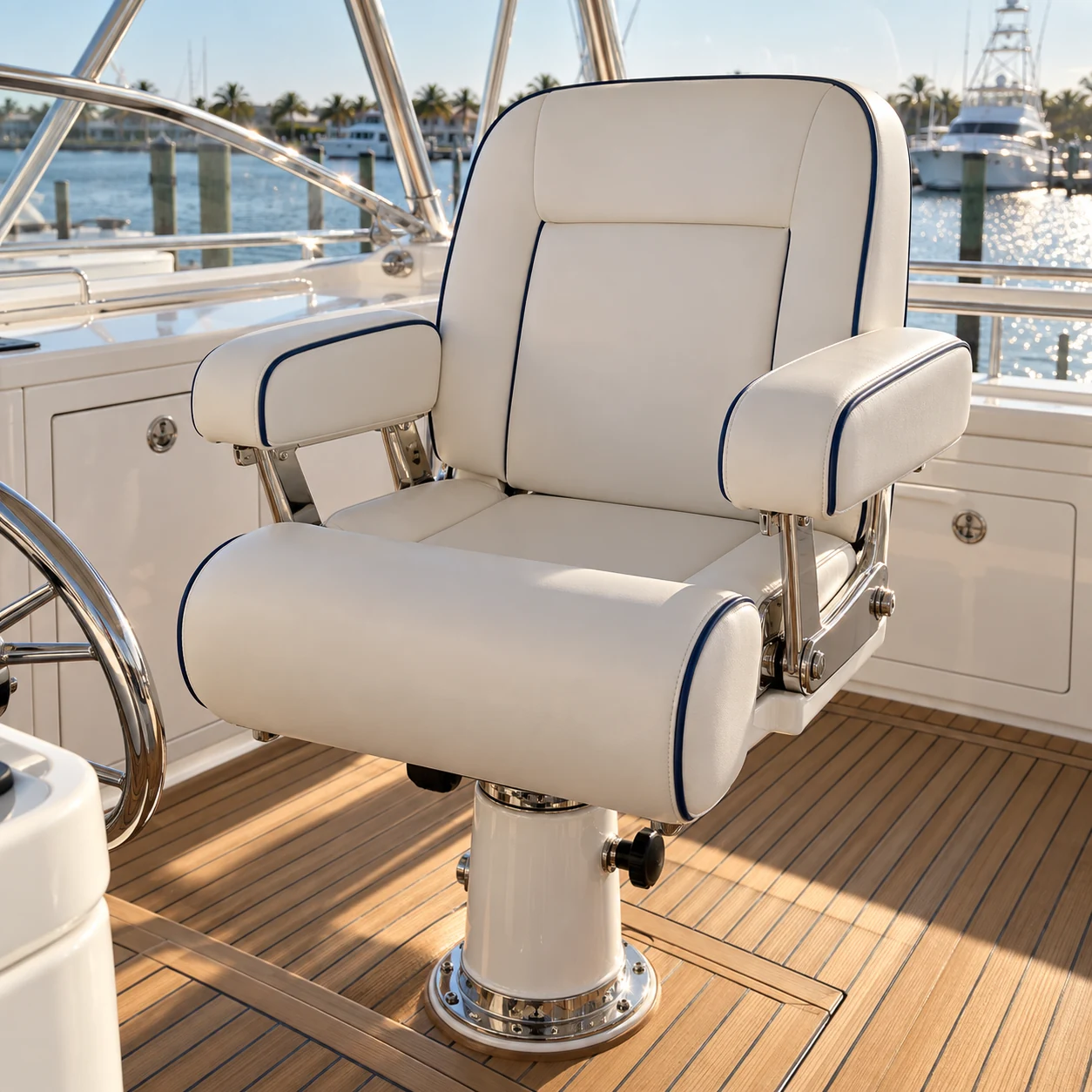
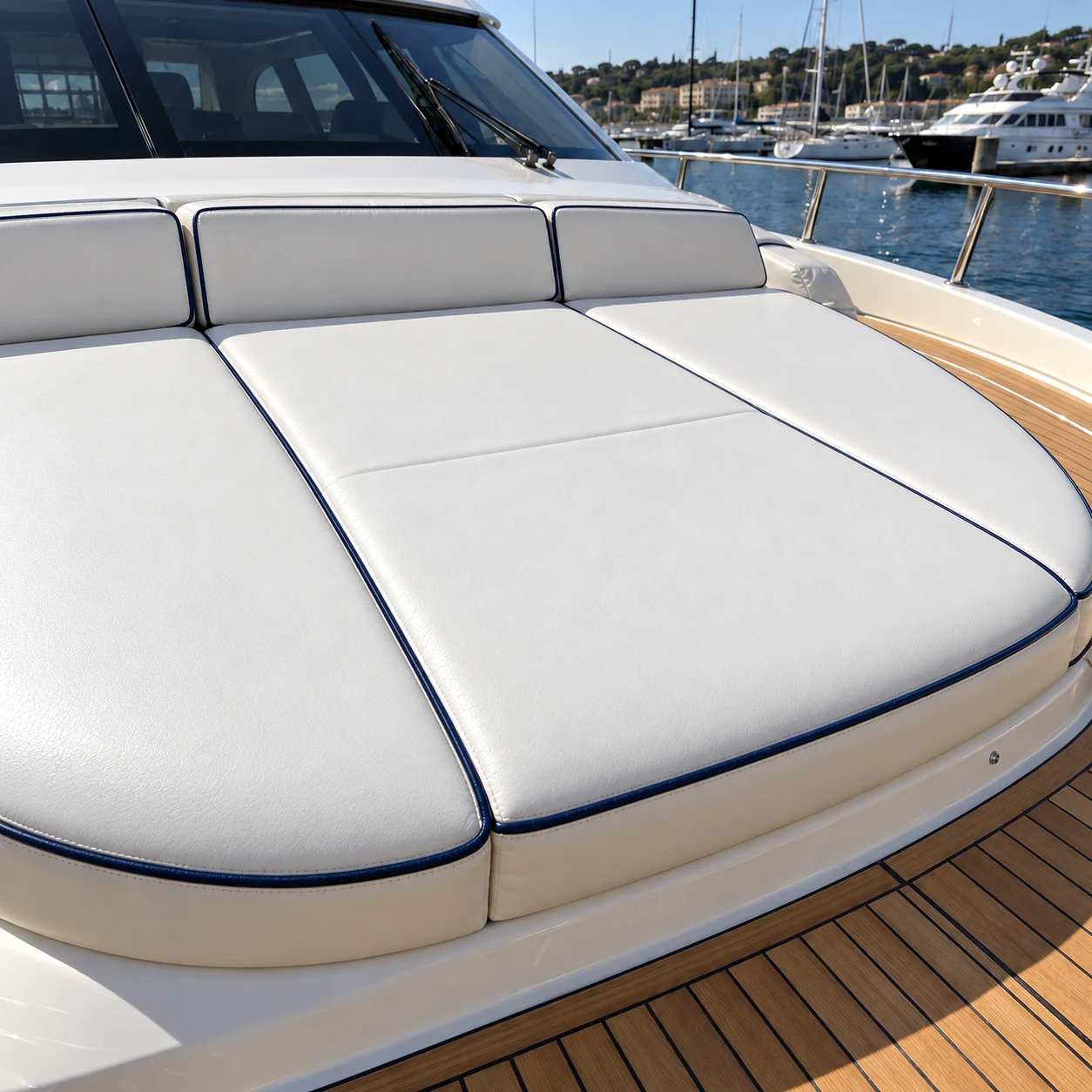
Three pieces, photographed the same way twice
Each pair is one piece before and after, in the same position and the same light. More of them on the before and after page, and in our reviews.
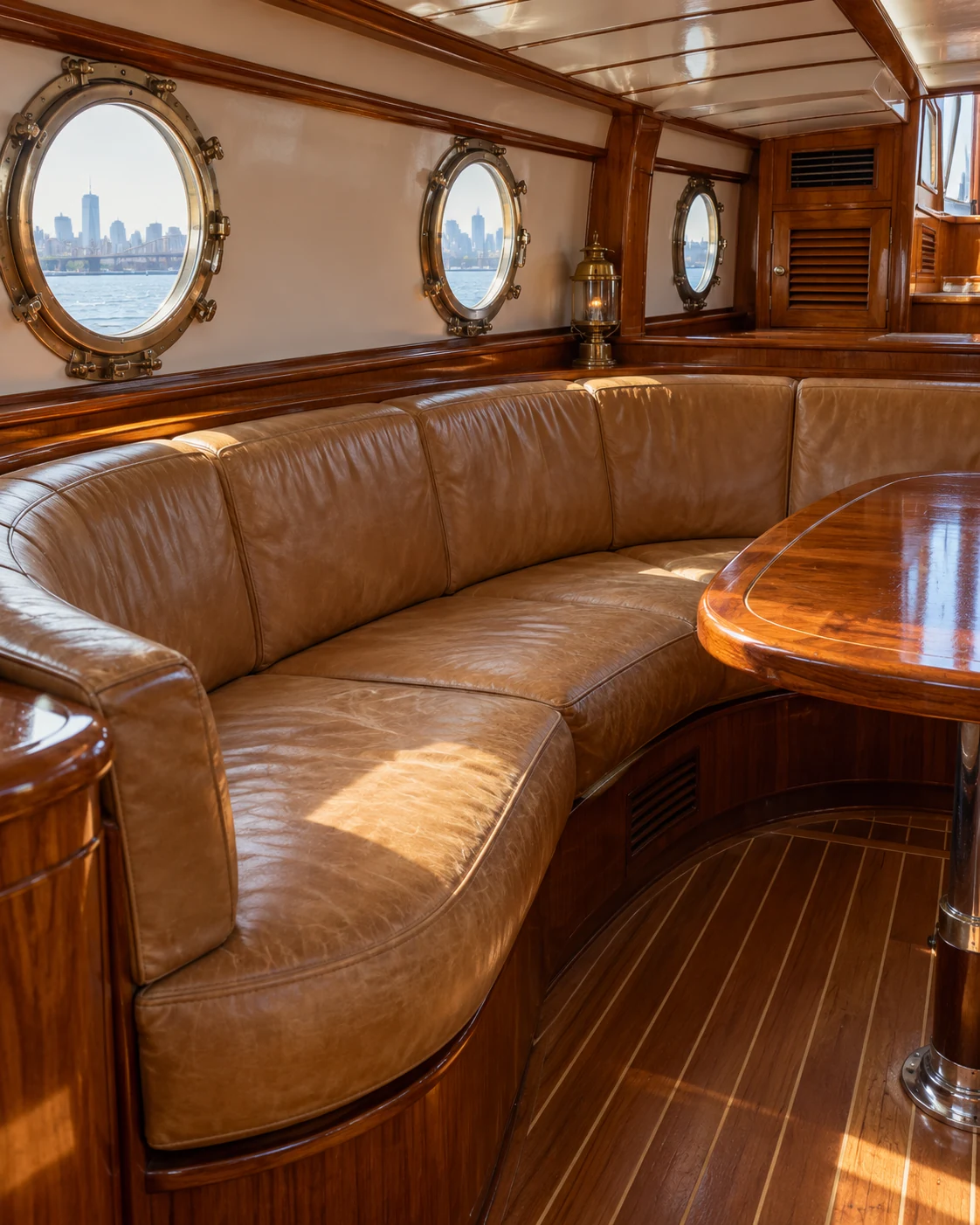 Before
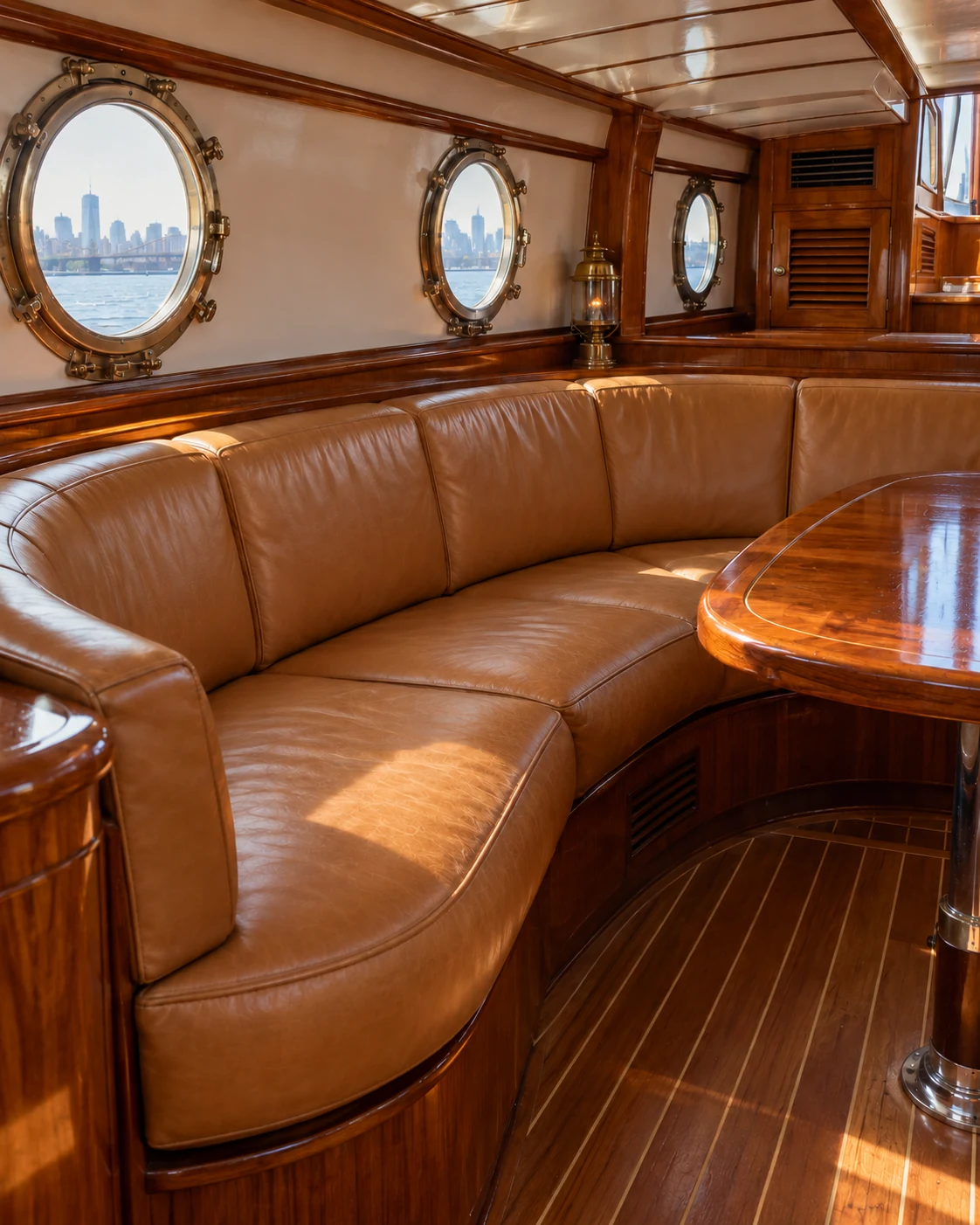 After
After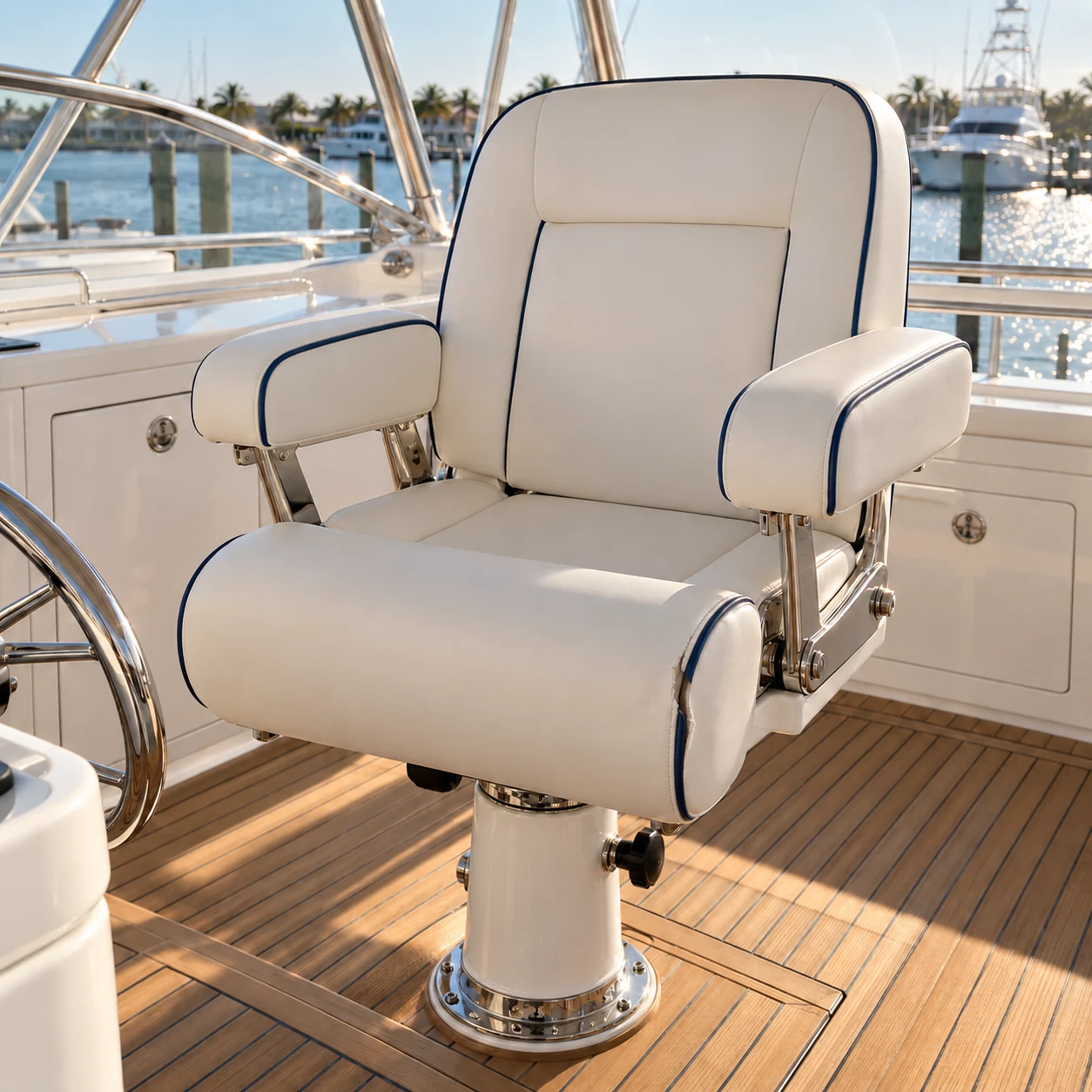 Before
 After
After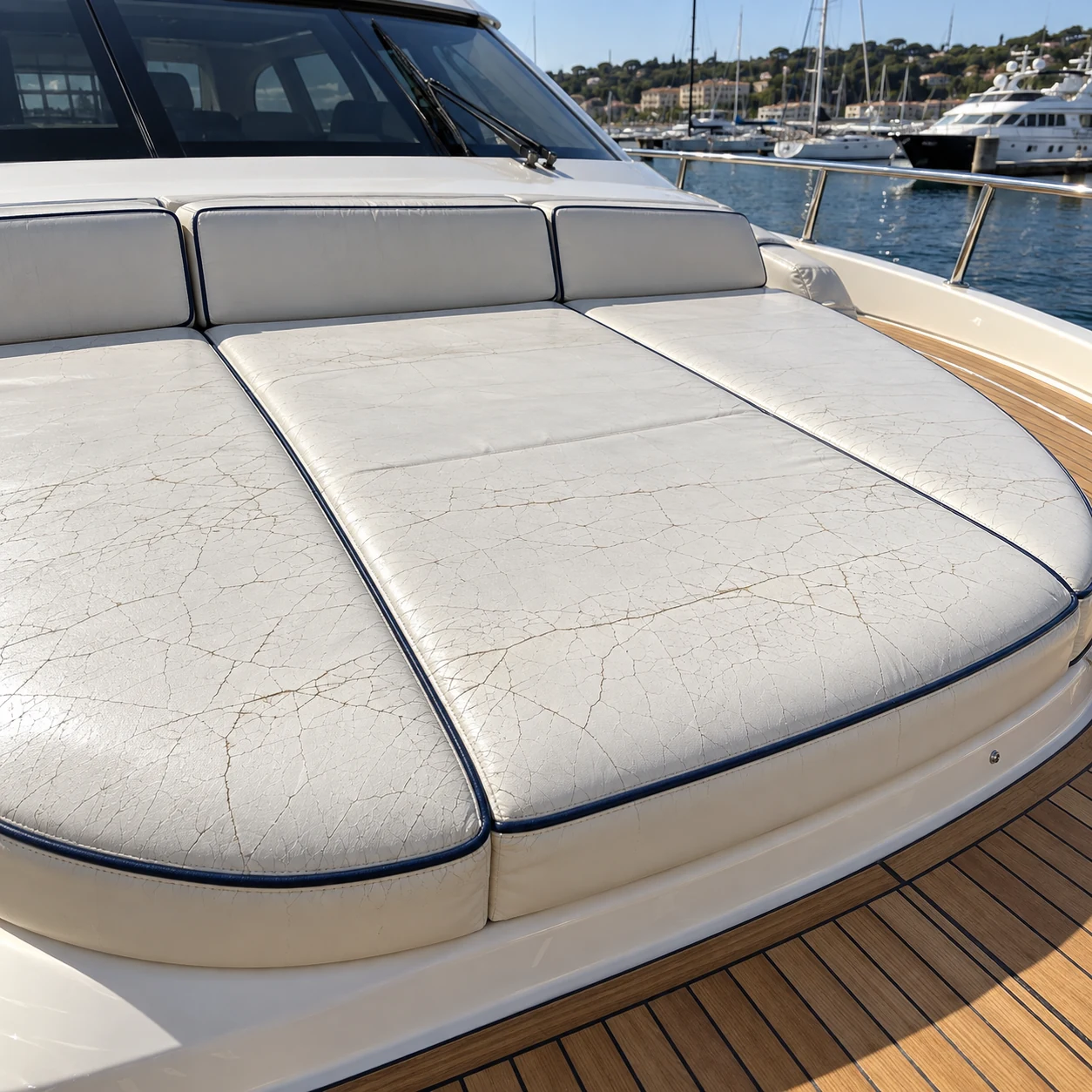 Before
 After
AfterThree vessels, one winter each
Three yacht upholstery refits, each done across a layup so the boat went back in the water complete rather than half matched — the same way we programme an event venue around its calendar.
Yacht upholstery questions
Start with one area rather than the whole boat, or ask for a free estimate. Call (347) 310-7483.
Can you quote yacht upholstery from measurements?
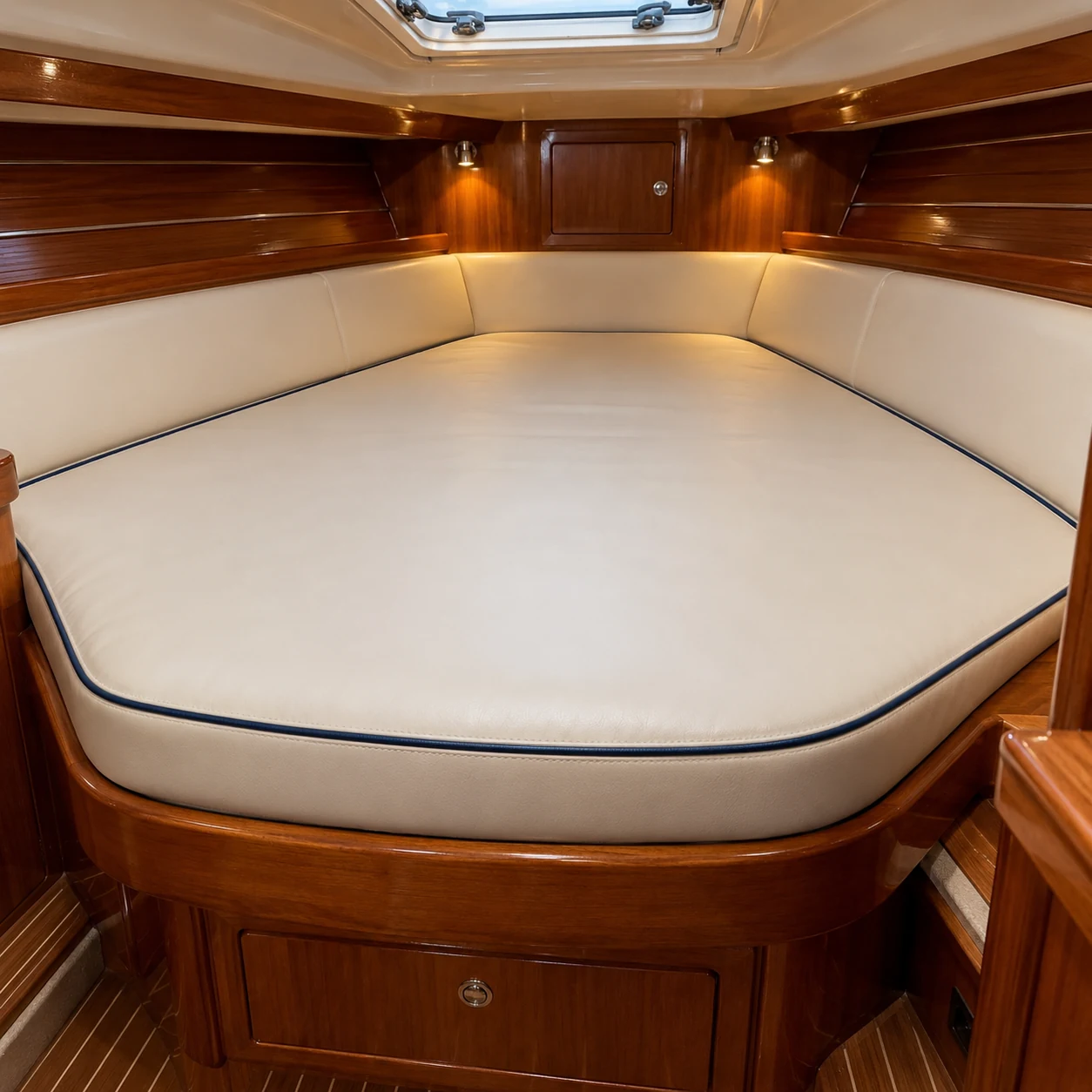
Not reliably. Almost nothing aboard is a rectangle: berth cushions taper to the hull, dinette seats are wedges, settee backs follow a curve that changes along their length. We take a physical template off the boat and work from that. A measurement gets you a price range; a template gets you a cushion that fits.
Do you work at the slip, or does the boat have to be hauled?
Neither. We template at the slip, take the pieces away, and bring them back. The boat stays in the water and stays usable. Only fixed work — a helm seat that cannot be unbolted, a headliner panel — is done aboard.
Should the inside and outside of the boat use the same material?
No, and that is the most common mistake. Below deck can take upholstery leather and finer finishes. Above deck needs marine vinyl or solution-dyed fabric, closed-cell foam and PTFE thread. We specify each for where it lives, then match the two so the vessel reads as one boat.
Why did the stitching fail before the vinyl?
Because polyester thread is the part UV kills first. Seams go while the panels still look sound. Everything we sew above deck uses PTFE thread, which does not degrade in sunlight — the rest of the build is only as good as that.
My cushions feel heavy and never dry. What is that?
Waterlogged foam. Open-cell foam holds water, grows heavier through the season and takes mildew with it. Replacing the cover without replacing that foam wastes the cover. We cut the old foam open and show you before quoting.
When is the best time to do it?
Winter layup. The boat is not being used, the shop is quieter, and a full interior can be done across the off-season instead of in stolen weekends. Booking usually opens in the autumn.

Send us the boat, not the dimensions.
One visit to the slip gives you a piece-by-piece list, a spec for each area, and a price. We open one cushion while we are aboard so the foam is not a guess.